NaOH appeared to adsorb on the surface of the fiber and interfere with matrix/fiber adhesion. The effect of these reactions on the adhesion of the fiber and the matrix polymer was determined by measuring interfacial shear stress.
Experimental
In the first phase of the study, a PAN-based carbon fiber was subjected to electrochemical oxidation under a wide range of conditions. The surface chemistry of the fibers was analyzed by Fourier transform infrared spectroscopy (Mattson Galaxy 3020, Unicam) in diffuse reflectance mode (DRIFT).
Results
Fiber strength
The oxidation was carried out in a continuous process, the treatment time being modified by the linear velocity of the fiber passing through the electrolyte. The fracture surface of the microcomposites after fragmentation was examined by scanning electron microscopy (SEM, JEOL JSM-5600 LV).
Surface chemistry
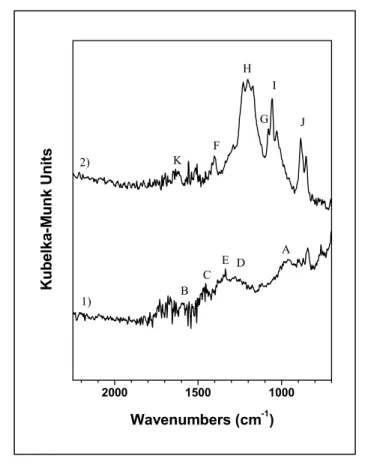
The most intense and sharp absorption band at 1384 cm-1 (A) can be assigned to nitrate ion (NO3-) or nitrile oxide (N→O), which are formed in the reaction of pure carbon fiber with the electrolyte . The intensity of all the characteristic groups (SO2, -OH and quinoidal C=O) of the fiber oxidized in H2SO4 increases with the increase of the electrolyte concentration (Fig. 2.4).

Interfacial adhesion
The fragmentation experiments revealed significant differences in the behavior of the oxidized fibers under varying conditions. The effect of oxidation conditions on fiber/matrix adhesion is also well demonstrated by the SEM micrographs taken of the fracture surface of the microcomposites after the fragmentation test.

Discussion
In the case of sulfuric acid, the measured IFSS values do not correlate at all with the intensity of the integral absorption peak at 1630 cm-1 (Figure 2.3, B). However, the concentration of carboxyl groups is not the only factor influencing the behavior of the fiber oxidized in NaOH.

Conclusion
The surface chemistry is determined by the electrolyte as well as other process conditions. The strength of the interaction is determined by the overall surface chemistry, and not by the concentration of a single functional group.
XPS is widely used to determine the chemical composition of the CF surface [8-12], but FTIR, microscopy, and other techniques are also used [13]. One of the techniques that could be suitable for the characterization of carbon fibers is cyclic voltammetry (CV) [14-20].
Experimental
Results
Surface chemistry
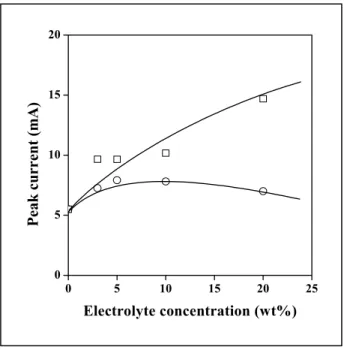
The intensity dependence of the two characteristic absorption bands is shown against the concentration of the electrolyte used for oxidation in Fig. The frequency and intensity of the absorption bands increases with increasing electrolyte concentration.
Cyclic voltammetry
In the measurement configuration used in this study, the following electrochemical process takes place on the surface of the fiber. On the other hand, NaOH has been shown to adsorb on the surface of the fiber.

Interfacial adhesion
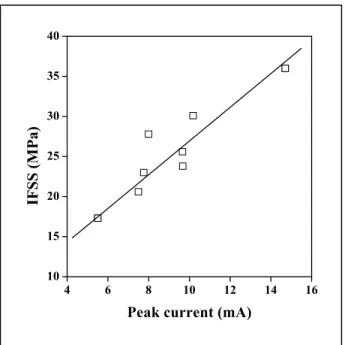
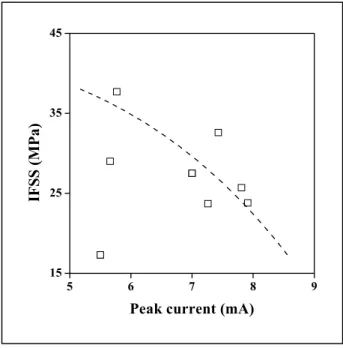
The relationship between the IFSS and the peak current derived from the CV traces is shown in Fig. The correlation is much looser than that shown in the previous figure, and with increasing peak current the IFSS appears to drop drastically. Obviously, the peak current increases slightly with this amount, but the NaOH layer hinders chemical reactions or general interaction on the fiber surface.
Discussion
In this and the previous chapter, quantitative correlations between electrolytic oxidation conditions, fiber surface chemical composition and IFSS were clearly established [23]. Changes in fiber surface quality caused positive (H2SO4) and negative (NaOH) changes in interfacial adhesion. 4] can reveal the existence and role of the weak layer even in the concrete case.
Conclusions
The mechanism for the removal of this layer has not been determined yet, and the role of chemical reactions may change from one composite to another, as indicated by the same authors [4]. The presence of the adsorbed NaOH layer must be proven by direct measurements, and CV must also be performed without electroactive probe molecules to check the existence of active functional groups on the fiber surface. The results of the experiments designed to answer at least part of these questions are reported in the next chapter.
Good adhesion of polymer matrix and fiber is usually achieved by electrolytic oxidation and chemical bonding [1-7]. 8,5] and different functional groups are formed on the fiber surface in quantity depending on the oxidation conditions [10-12]. Interfacial adhesion usually increases as a result, although quantitative correlation can rarely be established between the chemical composition of the fiber surface and the matrix–fiber interaction [12–14] .
Preliminary experiments, considerations
Close quantitative correlations were found between the chemical composition of the fiber, its electrochemical activity and the interfacial shear stress (IFSS) for fibers oxidized in sulfuric acid. However, sodium hydroxide treatment led to controversial results, which indicated electrolyte adsorption on the fiber surface resulting in inferior adhesion [16]. One of the main goals of this study was to verify this unexpected observation.
Experimental
Clearly, the continuous washing procedure used in the experiments removed most of the other electrolytes, but it was ineffective in the case of NaOH, which appears to adhere more strongly to the surface.
Results
Dissolution
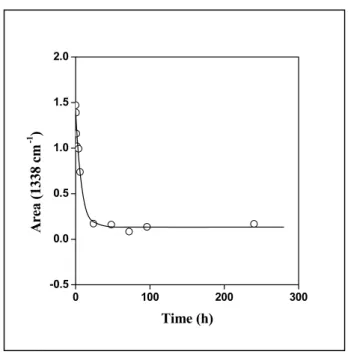
Due to the large scatter of the points, the fit is relatively poor (R, but the correlation actually reflects the time dependence of pH well. The equation shows that 95% of the adsorbed NaOH dissolves from the surface in about 5 h. However, the scatter of values is even greater than for pH (seems that R and the rate of change of concentration are slightly different than in Figure 1).

Fiber characterization
As the soaking time increases, a characteristic peak appears on the CV-trace, and its intensity continuously increases with time. The traces indicate an irreversible reaction of the probe molecule, which is in accordance with literature data [21].
Interfacial adhesion
We assume that water dissolves NaOH from the fiber surface, releasing active groups and reacting during the measurement. This time is about 20 hours, indicating a very strong adsorption of NaOH on the fiber surface. Only long and very intensive washing is able to remove the adsorbed electrolyte from the surface.
Discussion, correlation
There is a clear, practically linear correlation between the two quantities measured independently of each other, proving that the changes are related to the same phenomenon, the removal of NaOH from the fiber surface. Although the phenomenon is clear, the reason for the strong absorption requires further study and explanation.
Conclusions
The application of carbon fiber reinforced composites is expected to increase in all areas of life. Chemical coupling is more complicated in carbon fiber reinforced composites, as the fibers are fairly inactive after carbonization. The chemical structure of the adsorbed layer and the possible coupling reactions were studied by FTIR spectroscopy.
Experimental
The intense absorption caused by the black color of the carbon fiber and the relatively small amount of coupling agent on its surface made the measurement and evaluation very difficult, the spectrum quality was quite poor in most cases.
Results
Bonding
The solution technique applied here was a very effective tool for the study of the surface treatment of particulate fillers [20-23]. On the other hand, the association or reaction of the coupling agent molecules with each other can also lead to the appearance of such a maximum on the decomposition curve. However, the maximum can only be explained with the reaction of the coupling agent molecules with each other.
Reactions, coupling
The image shows the poor quality of the spectra recorded on the fiber. The structure of the resulting polysiloxane layer depends on the structure of the organofunctional group [22]. Bonding to the matrix is supposed to take place through the reaction of reactive amino groups.

Adhesion
Discussion
The preliminary explanation developed is based on the different structure of the polysiloxane layers formed from the two silanes. On the other hand, the epoxy groups in the loose polymer layer formed by EPS have a much higher reactivity, so their reaction with the amine hardener leads to the coupling of the fiber and the matrix and to better adhesion. The photomicrograph clearly shows the inhomogeneous distribution of the coupling agent on the surface of the fiber, as well as the breakage of the interlayer.

Conclusions
In thermoplastics, interfacial adhesion and the properties of the composites are also strongly influenced by the properties of the matrix polymer [4] and by processing conditions [5-9]. Although several studies have been conducted to reveal the factors influencing the properties of these composites and to improve the interfacial adhesion of the components, a number of questions remained open. Several studies focused on the formation of a transcrystalline layer on the surface of the fiber [16,17] and its effect on properties [8].
Experimental
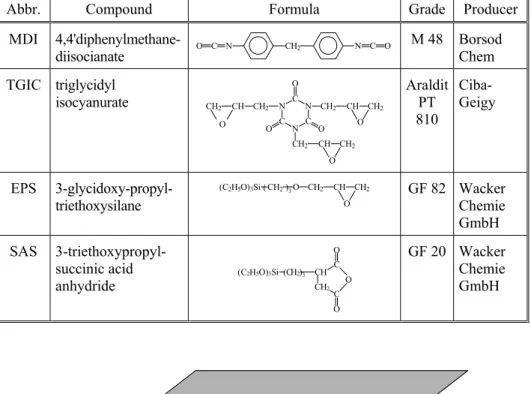
The possible coupling reactions of the selected compounds and the polymer were studied through model reactions. Various amounts of the coupling agents were extruded with the polymer in a single screw laboratory extruder at 280°C. The same procedure was followed in the series of experiments aimed at determining the effect of processing temperature on interfacial adhesion.
Results
- Adsorption and coupling
- Reactions of the matrix
- Interfacial adhesion
- Temperature, molecular weight
The continuous increase of bound coupling agent indicates the polymerization of the isocyanate on the surface of the fiber. The intensity of the peak increases proportionally with the amount of silane used for the treatment (Fig. 6.4), which supports both the scheme and the results of the dissolution experiments presented in Fig. The IFSS exhibits a maximum as a function of the amount of coupling agent used for the treatment of the remaining three compounds.

Conclusions
It is clear that the chemical structure or additive package of Makrolon 2805 differs significantly from that of the other three polymers.
Parts of short fiber reinforced composites are almost exclusively produced by injection moulding, the high shear generated during processing results in a reduction in fiber length [2,3]. However, most of these studies have been performed on short glass fiber reinforced composites [4-12]; much less information is available on such correlations in carbon fiber reinforced thermoplastics. Fiber length and orientation were measured and an attempt was made to establish correlations between the structure and mechanical properties, especially the impact behavior of the composites.
Experimental
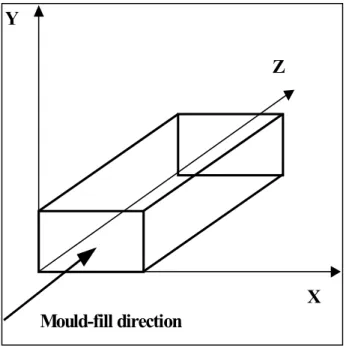
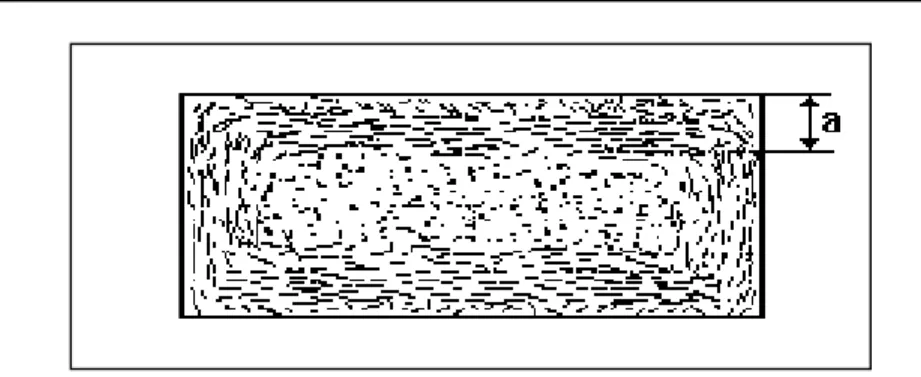
The most important quantities that characterize structure are fiber length and length distribution, as well as orientation and orientation distribution [7,8]. To determine fiber length and length distribution, the polymer was dissolved in formic acid and the dimensions of the fibers were determined by image analysis under a light microscope. The orientation distribution was determined at different depths in the Y-Z plane of the sample (see Fig. 7.1, where Z is the mold filling direction).
Results and discussion
Structure
On the other hand, their orientation was parallel to the flow direction in the middle part of the sample. In this image, the parallel orientation of the fibers with respect to the Z-axis (i.e., the direction of mold filling) is clearly visible. After the maximum, there is a small decrease in fp as we approach the middle of the pattern.
Properties
U = 0 + 7.2, where B and D are the thickness and width of the sample, respectively, and φ is a geometric parameter depending on the notch depth. Similar correlations were obtained for all combinations of variables, indicating that GIc cannot be determined using this method for our composites. Since KIc was independent of notch depth, mean values were calculated for all combinations of variables; are shown according to the fiber content in fig.

Structure-property correlations
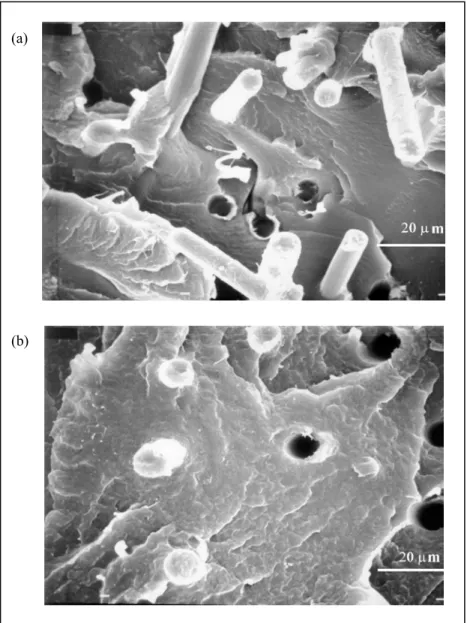
The general features are the same as for KIc, but both the minimum and the effect of injection rate are more pronounced in this case. Apparently, the fibers promote fracture initiation, which can be understood since their diameter is within the range of the radius of the notch. The poor adhesion is also shown by the considerable length of the fibers pulled out of the matrix in Fig.
Conclusions
Experiments carried out with various coupling agents have proven that numerous chemical reactions take place on the surface of the fiber. The structure and properties of the coupling agent layer that forms on the surface significantly influence the strength of adhesion and the properties of the composites. The coupling agents often participate in complex polymerization reactions on the surface of the fiber.