This mechanism leads to a limited uptake of the biocide into the cell with a consequent reduction of the effective biocide concentration (Champlin, et al. 2005; Denyer and Maillard, 2002; Lambert, 2002). The charge property of the cell surface also plays a role in bacterial resistance mechanisms to positively charged biocides such as QACs (Bruinsma et al. 2006). Another possibly involved mechanism could be enzymatic degradation of biocides such as peroxides (Valkova, et al. 2001; Demple, 2001), although it is still not deeply exploited.
Benzalkonium chloride is reported by Romanova et al. 2007) to be 1000 times less effective against Listeria monocytogenes biofilm compared to the planktonic cells. Different explanations for biocide resistance of bacterial biofilms have been produced: (i) limited diffusion of antimicrobial throughout the biofilm thickness, (ii) interaction between biocides and the biofilm matrix, (iii) differentiated metabolic state of cells embedded in the biofilm, (v) presence of efflux pumps and (vii) modifications at the level of outer membrane (Cloete, et al. 2003). Damage to cell membranes as well as the stopping ability of microbial transport systems is also attributed to the antimicrobial capacity of PAA (Hilgren, et al. 2007; Small, 2007).
Resistance of statically grown biofilm to pinosylvin
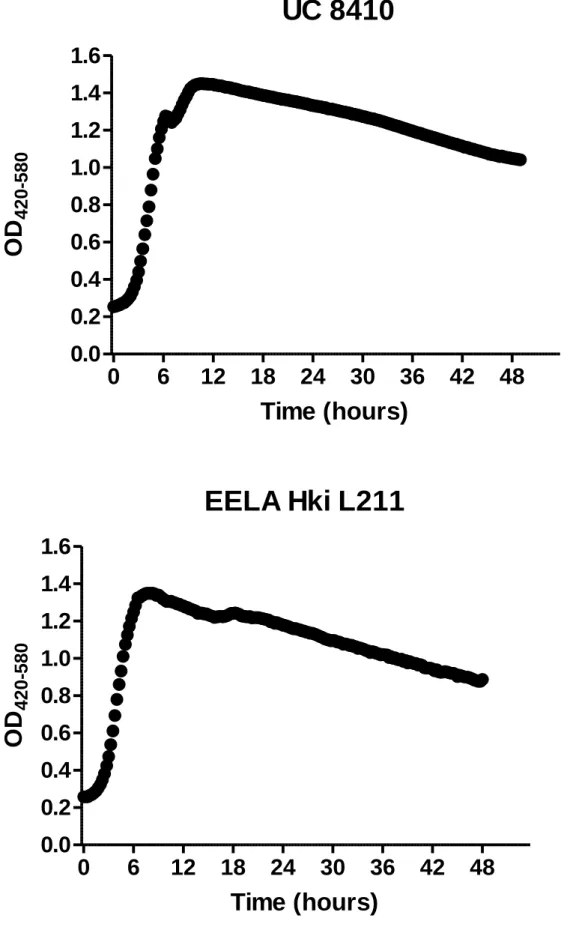
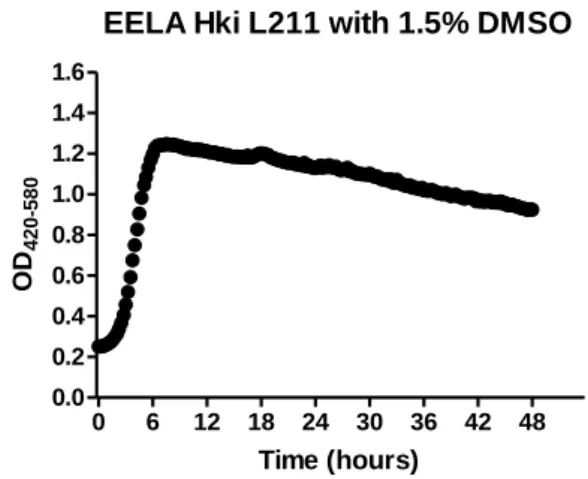
The plates were incubated for 24 hours at 37°C with little shaking and the optical density was read every 15 minutes using a broadband filter (420-580 nm).
Bactericidal efficiency of disinfectants on biofilm grown under dynamic condition
3.9]. Results
Strains susceptibility to tested biocides
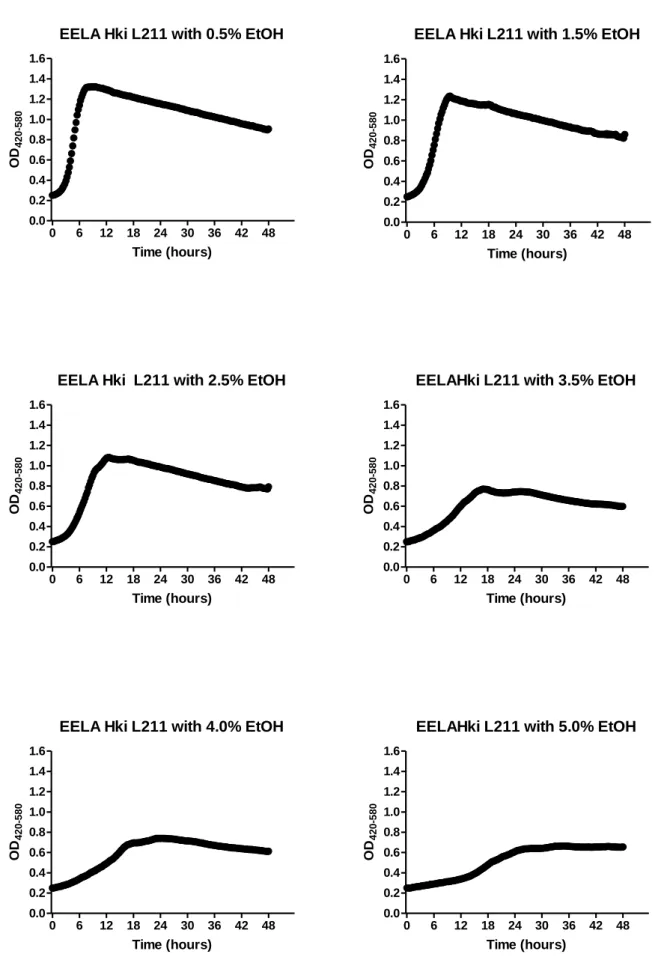
Optical density of 1.0 was the maximum value reached after 18 hours of exposure to 2.5% and a steady decrease to 0.8 units was observed after 48 hours. 4% EtOH, apart from the similar effect on log phase with the treatment mentioned above, led to an overall optical density reduction of 0.7 units. Exposure to 5% EtOH caused a prolonged extension of the delay time to 24 hours; after this period the bacteria grew regularly to reach the final density of 1.2 units after 40 hours.
As the percentage of EtOH increased up to 3.5%, a marked decrease in growth rate was detected and 0.8 units was the maximum growth achieved after 12 h. When EtOH was used at 4%, a further decrease in the growth rate was observed, while the maximum population density at the level of 0.7 units was reached after 18 h. 5% further reduced both growth rate and final bacterial density, which was held at 0.6 units after 30 hours.

Time (hours)OD420-580
EELA Hki L211
Resistance of statically grown bacterial biofilm to antimicrobials
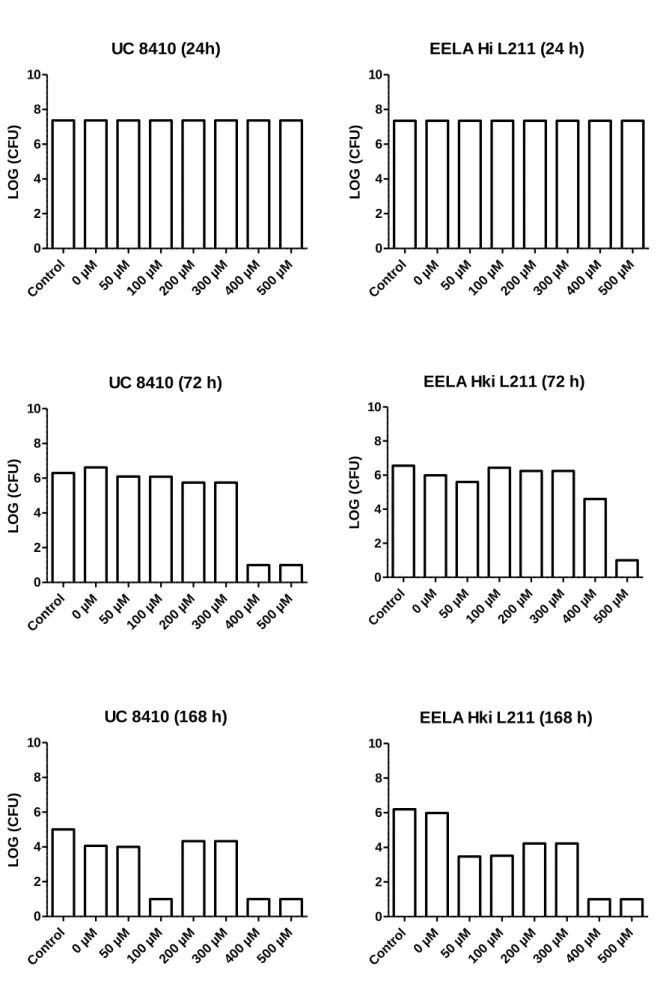
The next step was to evaluate the resistance of Listeria strains to long-term exposure to pinosylvin dissolved in ethanol of the selected strains. Stainless steel coupons were used as the surface, and the removal method was surface wiping with sterile cotton swabs previously dipped in sterile peptone water. Growth was monitored under severe nutrient deprivation using dBHI (according to the experimental protocol mentioned in paragraph I, chapter II).
Although the tested strains showed strong similarities regarding the kinetics of biofilm formation on stainless steel, nutrient depletion more significantly affected the cell recovery of L. Application of 5% EtOH (v/v) to both the aforementioned strains did not lead to any remarkable further reduction in the amount of cells on the tested surfaces: only L. When the cell was attached to stainless steel, the sensitivity was completely modified, because even after 168 hours of exposure to P counts were higher than 102 CFU/cm2.
Control refers to the untreated sample, while the added volume of ethanol with/without pinosylvin is kept constant.
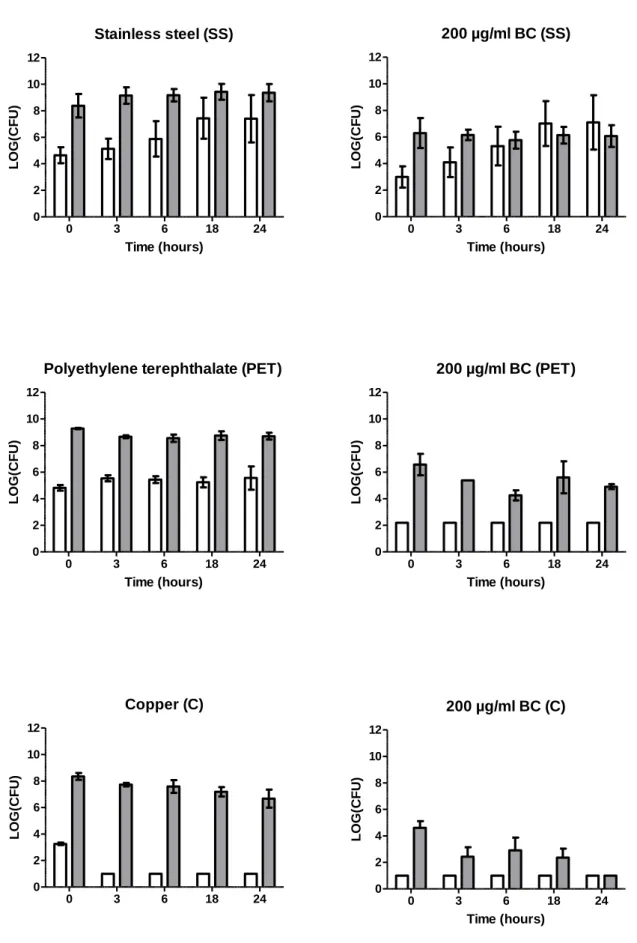
Biocide resistance of biofilms grown under dynamic conditions
White lines represent attached cells, while gray lines refer to cells that were freely suspended in the skim milk flow. White lines represent attached cells, while gray lines refer to cells that were freely suspended in the skim milk flow.
3.10]. Discussion
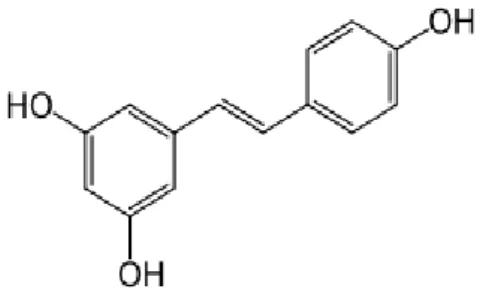
The antimicrobial capacity of selected and specific compounds has also been deeply exploited: Vӓlimaa et al. 2007) demonstrated that the antimicrobial and cytotoxic effect of Pinus spp. Resveratrol is a stilbene present in wine ranging from 0.2 mg/L to 10.6 mg/L (Willfӧr, et al. 2003) and due to its strong structural similarity to pinosylvin (clearly shown in While all the strains examined expressed the same behavior against the studied polyphenols, greater variability of sensitivity was observed with peracetic acid than with benzalkonium chloride (2007) reported a large variability within Listeria spp.
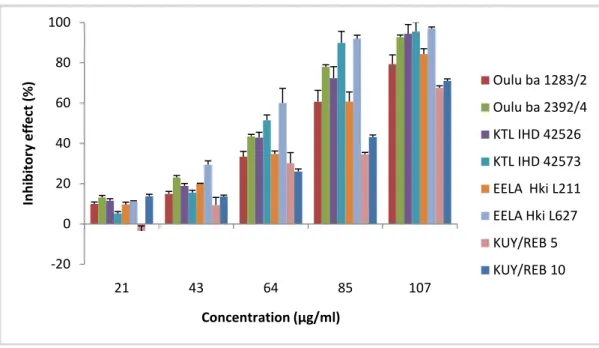
Moreover, although it is well known how both peracetic acid and benzalkonium act against microbial cells, the mechanism of action of phenolic compounds has not been clearly and thoroughly elucidated, as observed by Välimaa et al. In the literature, this instrumentation has been related to growth modeling (Begot, et al. 1996; Augustin, et al. 1999; Cheroutre-Vialette, et al. 1998; McClure, et al. 1989), but some papers using BioscreenC have been used to monitor the antimicrobial susceptibility of various microorganisms, both pathogenic/spoiler as useful (Nazer, et al. 2005; George, et al. 2008; Mandalari, et al. 2010) and also for MIC evaluation (Lambert et al. 2000). The maximum inhibitory effect of pinosylvin was observed at 107 μg/ml, although environmental factors showed a more limited sensitivity to this molecule compared to.
As reported in Moltz and Martin (2005), Bonaventura et al. 2006), no clear correlation between source of origin and antimicrobial resistance was observed. It was hypothesized that the biocidal action of P might be dose-dependent and concentrations greater than 200 μM were investigated for this purpose: any statistically significant difference was observed up to 500 μM, which has a similar effect to the previously tested level of P. Bacterial susceptibility of disinfectants routinely used in food processing environments was evaluated on both liquid culture and dynamically grown biofilms on all materials examined. monocytogenes isolates for BC resistance and found 4-fold differences between the samples examined, although no correlation between serotyping and QAC sensitivity was found, in agreement with Mereghetti et al. 2002) observed some variability between 6 strains of L. monocytogenes tested, which confirmed observations by Soumet et al.
Small discrepancies were described among Listeria spp. monocytogenes strains did not differ significantly from each other. The only reference to MBCof PAA was Aarnisaalo et al. 2007), where different isolates from different food processing sites showed sensitivities between 0.00625 and 0.025%. After exposure to PAA, no detectable colony was observed in both surface and nutrient solution aliquots, confirming previous study by Bore et al.
PAA levels were increased to 5% (higher than the 1% concentration used by Bore et al. and 3% of Somers and Wong), hypothesizing that the multi-layer architecture of the biofilm can be assumed as a physical defense against penetration of the biocide, but our results suggested that this level possessed a strong inhibitory action (attributed to its mechanism of action based on strong oxidizing properties).
3.11]. Bibliografia
Int Comparison of maximum specific growth rates and lag times estimated from absorbance and viable count data by different mathematical models." J Understanding Biofilm Resistance to Antibacterial Agents." Nature Rev Determination of the most bioactive phenolic compounds of rosemary against Listeria monocytogenes: influence of concentration, pH and NaCl." J Redox signaling and gene control in the Escherichia coli soxRS oxidative stress regulon - a review.". Gen Cellular impermeability and uptake of biocides and antibiotics in Gram-negative bacteria." J. 34; Efficacy of disinfectants to reduce Listeria monocytogenes on pre-cut iceberg lettuce." J Biocide use in the food industry and the disinfection resistance of persistent strains of Listeria monocytogenes and Escherichia coli." J SOP (Standard Operating Procedure)." ACE-ART-MDIL, Laboratory for Microbiology, Ghent University, Ghent Listeria monocytogenes biofilm-associated protein (BapL) can contribute to surface attachment of L. monocytogenes, but is absent from many field isolates." Application Improved antioxidant capacity and antimicrobial activity of tannic acid by thermal processing." Food Chem. 2000) "Comparison of Cation Adjusted Mueller-Hinton Broth with Iso-Sensitive Broth for the NCCLS Broth Microdilution Method." J Epigallocatechin gallate inhibits intracellular survival of Listeria monocytogenes in macrophages." Biochem.
2002) "Cellular Permeability and Uptake of Biocides and Antibiotics in Gram-Positive Bacteria and Mycobacteria." J Susceptibility testing: accurate and reproducible minimum inhibitory concentration (MIC) and non-inhibitory concentration (NIC) values. J Variations in growth and stress resistance in culture among Listeria monocytogenes strains of different serotypes and origins. Wickham Antimicrobial Potential of Polyphenols Extracted from Almond Shells." Lett Comparison of the Effects of Sodium Chloride, pH and Temperature on the Growth of Listeria monocytogenes on Gradient Plates and in Liquid Medium." Lett. 34; Effect of peroxyacetic acid and nisin and co-culture with Enterococcus faecium on Listeria monocytogenes biofilm formation." J Biofilm formation by Listeria monocytogenes under different growth conditions." J Resistance of Listeria monocytogenes isolates to heavy metals and benzalkonium chloride from the environment of turkey processing plants." Appl. Food antimicrobial combinations at low levels to inhibit the growth of S. typhymurium: a synergistic effect?" Food Microbiol.
2000) "Growth and resistance of Listeria monocytogenes to sodium hypochlorite in a steady-state multispecies biofilm." J Importance and use of phenolic compounds in the production and quality of milk and dairy products: a review." 2004) "Synthesis and inhibitory effects of pinosylvin derivatives on lipopolysaccharide-induced prostaglandin E2 production in murine macrophage cells." Bioorg. Int Biological /chemoprotective activity of stilbenes and their effect on colon cancer." Planta Med Rapid Methods for Evaluating the Disinfection Efficacy of Benzalkonium Chloride on Listeria monocytogenes Biofilms." J Susceptibility of Listeria monocytogenes to Disinfectants Used in the Meat Processing Industry.".
Appl Pharmacokinetics of selected stilbenes: rhapontigenin, piceatannol and pinosylvin in rats. "J Determination and Assay Validation of Pinosylvin in Rat Serum: Application to Drug Metabolism and Pharmacokinetics." J. SCENHIR, Scientific Committee on Emerging and Newly Identified Health Risks. Int Antimicrobial Activity of 10 Different Plant Polyphenols Against Bacteria Causing Foodborne Disease." Biol Survival of Listeria monocytogenes in Commercial Cleaning Solutions for Food Processing Equipment and Subsequent Sensitivity to Sanitizers and Heat." J Membrane changes in Pseudomonas stutzeri strains resistant to chlorhexidine diacetate and cetylpyridinium chloride.". 34; Cytological changes in chlorhexidine resistant isolates of Pseudomonas stutzeri." J Postadaptive resistance to benzalkonum chloride and subsequent physiochemical modifications of Listeria monocytogenes. "Application Hydrolysis of 4-Hydroxybenzoic Acid Esters (Parabens) and Their Aerobic Transformation into Phenol by the Resistant Enterobacter Cloacae Strain EM.".
34;Autoinducer-2 assay traces call for bioassay standardization Vibrio Harvey Antimicrobial and cytotoxic extracts of knotwood and related pure compounds and their effects on food-associated microorganisms.