A wire brush or polishing wheel is often mounted on one side in place of the grinding wheel and is used to clean or polish workpieces. When carrying out hot work, the on-site PIC must ensure the safety of the work by taking the following measures. Choose an amperage based on material thickness, welding position (about 15 percent less heat for top work compared to a flat weld) and observation of the completed weld.
As a good starting point, the arc length should not exceed the diameter of the metal part (core) of the electrode. When doing a vertical up weld, focus on welding the sides of the joint and the middle will take care of itself. Adjust the travel speed so that the arc stays within the top third of the weld pool.
Otherwise, you can't make sure you're welding the joint, keeping the arc on the leading edge of the puddle, and using the right amount of heat (you may actually see a puddle with too much heat roll out of the joint). For the best view, keep your head off to the side and out of the smoke so you can easily see the puddle. The force of the arc pushes the molten metal through the workpiece and separates the material.
The chemical action of the oxyacetylene flame can be adjusted by changing the volume ratio of oxygen to acetylene.

OXIDISING FLAME
Plasma arc cutting is a process where an open arc can be narrowed by passing through a small orifice, or hole, from the electrode to the workpiece. The gas used is usually air and is combined with an electric current to create a high temperature plasma arc. When brought into contact with an electrically conductive material, the arc passes through the metal, melting a thin area.
For the cutting process, a pilot arc between the nozzle and the cathode is first ignited with high voltage. This low-energy pilot arc prepares the distance between the plasma torch and the workpiece by partial ionization. As soon as the pilot arc touches the workpiece (flying start of cutting or piercing), the main arc is triggered with an automatic increase in capacity.
Oxyacetylene welding, commonly referred to as gas welding, is a process that relies on the combustion of oxygen and acetylene.
NEUTRAL FLAME
CARBURIZING FLAME
Parts for Maintenance .1 Bolts and Nuts
Flanges are used to connect pipes of all lengths, bolted together and inserted with gasket between the faces of both flanges to prevent leakage in the piping systems. The dimensions of flanges in the piping systems are standardized in accordance with the nominal size of the pipes and the pressure rating. The inside diameter of the slip-on flange is slightly larger than the diameter of the mating pipe.
The pipe slides into the flange, welding must be done on both sides (inside & .outside) to prevent leaks. 32A is the nominal size of the pipe against which the flange will be used. In on-board maintenance of piping systems, JIS 5K (used for seawater and fresh water pipes, etc.), JIS10K (used for air and steam return line, etc.) and JIS 16K (used for steam and others) standard flanges are commonly used.
The needle valve is used to make relatively fine adjustments to the amount of fluid flow. Plug valves are often used to direct flow between several different ports through the use of a single valve. The piping system in the engine is not all laid out in a straight line; there are twists, crosses, theses, and sometimes reductive connections.
The threaded end of the pipe and the internal threads of the fittings are usually coated with a special lubricant to seal the joints. Flanged fittings and joints are commonly used when the pipe connection needs to be disassembled from time to time. A = measurement from center to face G = pipe wall thickness Size = nominal pipe size.
Taps and Dies are cutting tools used to cut screw threads in solid materials such as metals, plastics, etc. create, and repair threads on bolts, nuts, thread hole etc. Tap is used to cut the female portion of a matching part, e.g. nuts and dies are used to cut the male part, e.g. bolts. The process of cutting a thread into a hole or repairing a thread is called "tapping" the hole.
Taps and die sizes commonly available on board are in English and metric system measurement and they follow the sizes of the bolts and nuts. Ball bearings are typically used to support axial and radial loads, can tolerate some misalignment of the inner and outer races, and are primarily used for a low load capacity application.
Fabrication Materials
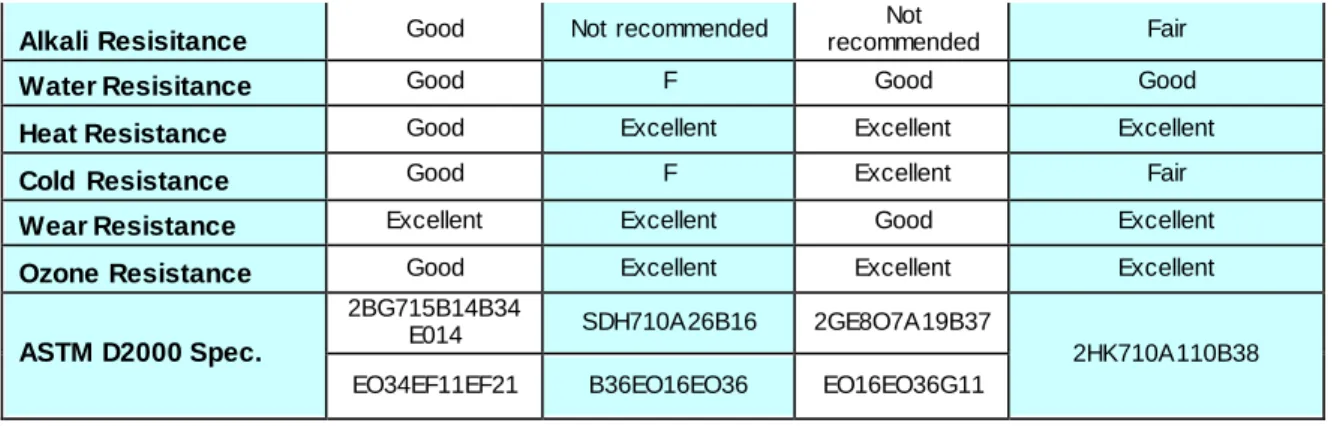
Dash numbers are references to o-ring sizes and the prefix is the materials used as indicated in the table below. Ozone resistance Poor Excellent Excellent Good Excellent Weather resistance Fair Excellent Excellent Good Excellent Heat resistance Fair Excellent Excellent Good Excellent Chemical.
The normative reference JIS K 6301 has been deprecated in accordance with the international conformance plan of the International Standards Organization (ISO). For Piston or Rod Seal Applications (JIS B 2406 O-Ring Housing Dimensions) For this type of housing, a P-type O-ring is used (dynamic use). For static flat sealing applications (JIS B 2406 O-ring housing dimensions) For this application (static application), a G-type O-ring is used.
JIS B 2401 Class 3 P 400
In use, they are identical to the categories of liquid-tight static and dynamic seals. Sealing pressure is created by compression of the seal between the mating surfaces of the gasket and external forces, such as the pressure exerted by the fluid being sealed. In a low pressure application (below 100 psi), seal force is a factor in the ability of the o-ring to deform and create a barrier through compression and lower seal hardness and surface finish of the seal and gasket become critical considerations.
In a high-pressure seal, system pressure activates the seal and seal compression and surface finish are not as important as seal material hardness, cross-section, diametrical clearance, and possible inclusion of back-up rings. In sealing applications, the tolerances of all elements in the system are critical to the effectiveness of the seal. In an application using a standard size O-ring, the tolerances are small relative to the size of the O-ring, and the tolerance stack can be compensated for by specifying a slightly larger O-ring or by changing other factors.
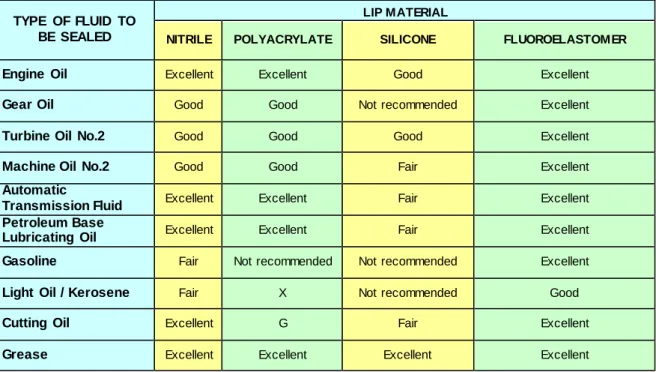
In miniature or micro-miniature O-ring applications, the tolerances are large relative to the O-ring size, and tolerance stacking becomes extremely critical. The function of the oil seal is to prevent the liquid contained in the oil from leaking out of the clearance between the shaft and the housing. The seal can also be used to prevent outside materials, such as dirt, from entering through the clearance.
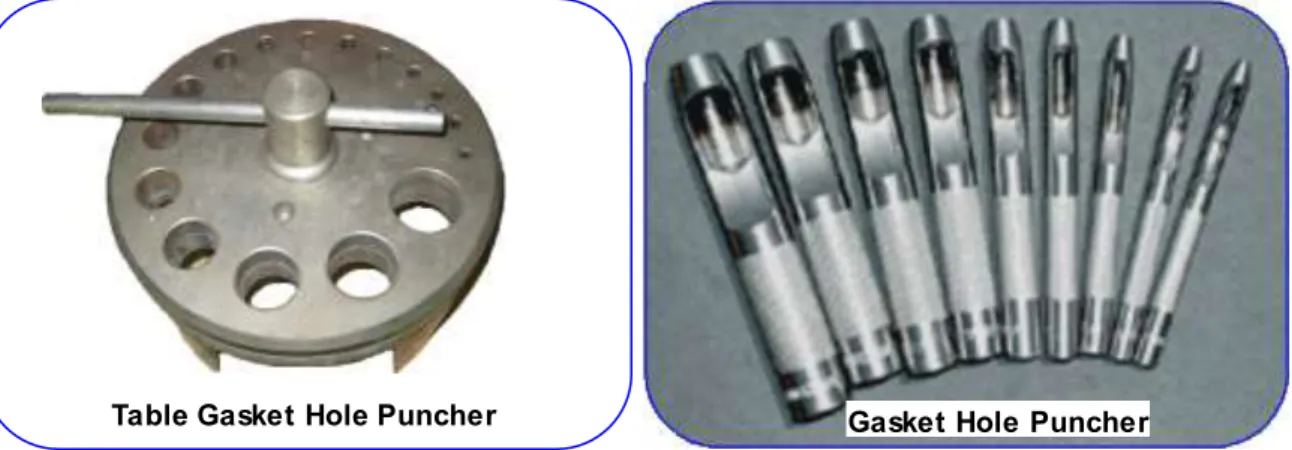
Gaskets or gaskets are used to create a liquid or gas resistant seal between two mating surfaces. This allows the seal or gasket to be tightened to suit operating conditions and allows for later adjustment to account for wear. Different types of materials are available to best suit the applicable working conditions, such as temperature and pressure.
When choosing the type of gasket to use, it must be appropriate for the unit's work application. The metric designations are in accordance with International Standards Organization (ISO) usage and are most often used on the piping system in the engine room. The most important property of the pipe is the capacity and the size is related to the inside diameter.