22 COMPARISON OF THE SPALLATION NEUTRON FIELD ON THE SURFACE OF CARBON AND LEAD TARGETS UNDER 660 MeV PROTON IRRADIATION. Bielewicz et al..34 MEASUREMENTS OF THE INVARIANT Cross sections for forward production of the secondary light nuclei in CC collisions at a beam energy of 20.5 GeV/n on the accelerator U-70 IHEP.
167 PREDICTION OF THE PARTICLE PRODUCTION IN PP COLLISIONS WITH THE MPD SETUP AT THE NICA COLLIDER. We also measured spatial distribution of the (n, y), (n,2n) and (n,fission) reaction rates in the depleted uranium samples.
EVENT RECONSTRUCTION IN THE BM@N EXPERIMENT
The Tsallis distribution has been used in many fields of the physical as well as the social sciences (such as Statistical Mechanics, Geology, Anatomy, Economics, Finance and many more). The process can also be used to probe the gluon density function of the proton.
The test wave function of the muonic molecule in this approach has a Gaussian shape. In addition, some first studies exploring the analytical structure of the BS amplitude in the complex plane k0 will appear [10]. Experiments on the study of the neutron spectrum in accelerator systems are of considerable interest.
We calculate the relevant form factors within the framework of the covariant quark model with an infrared limit. Data analysis has been performed at different energies in the wide ranges of the longitudinal x F and transverse proton momentum pT [1]. Proceedings of the International Conference Nuclear Theory in the Supercomputing Era 2016 (NTSE-2016), Khabarovsk, Russia, September 1923, 2016.
My speech was dedicated to the transformation of the classical gauge field theory into a geometric one. The research was supported by the grant from the Russian Foundation for Basic Research (project mol_a). We discuss a model of the proton and neutron structure functions in the resonance and DIS transition region.
The model uses the results of the empirical fit of the proton structure function in the resonance region [1], as well as the results of the global proton PDF analysis with the NNLO QCD approach [2]. The results in the form of the differential cross-section are analyzed together with the results previously obtained by the ANKE collaboration [1, 2].
Better understanding of the varying structure in the initial states of nuclear interactions is one of the most important problems in heavy ion physics. The experimental data [1] on the 12,14 B e + p elastic scattering differential cross sections at 700 Mev are compared with those obtained by solving the relativistic wave equation with the microscopic optical potential [2] calculated by densities of the 12 , 14 Be now. This allows one to obtain the various sets of the different quark masses that yield the same cross section with the same (gV — gT)2.
The detailed theoretical and experimental investigation of the anisotropic contributions in the considered cross-sections will allow to estimate the mechanisms for removing this degeneracy. The isotropic cross section aPA +PB^ poX strongly depends on the choice of parameters 2b2 in PDF (1) and the corresponding parameter (gV — gT)2. Currently, several experimental groups plan to measure the ground state HFS in muonic hydrogen with a record accuracy of 1 ppm.
In our previous papers [3, 4] we investigated the role of effective exchanges of axial vector and pseudoscalar mesons for the position of the energy levels in muonic hydrogen. The preliminary results of the angular distributions of the vector A y and tensor A yy, AD, analyzing powers in dp-elastic scattering at the energy of 800 M eV, are presented. The dependence of the proton and pion yields on the beam energy has been obtained.
![Figure 1: Total cross section aPA+PB-poX as a function of y/s. [M08], [G98] and [G08]](https://thumb-eu.123doks.com/thumbv2/pdfplayernet/435552.50566/124.918.86.679.91.532/figure-total-cross-section-function-m08-g98-g08.webp)
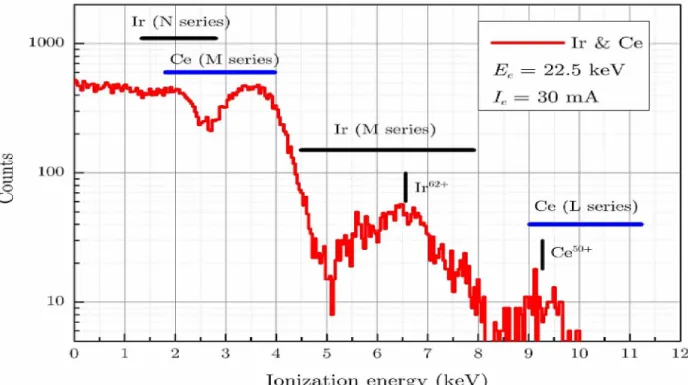
One of the main physical goals of the Multi Purpose Detector (MPD) is to investigate hot and dense baryonic matter in heavy ion collisions at NICA energies for the search for the possible critical end point (CEP). The results of the production of High Charge ions Ir, Ce and Xe in the MaMFIS (Main Magnetic Focus Ion Source) [1] are presented. On the contrary, in the approach based on the t-representation, it is necessary to introduce the effective lifetime of the generated carriers.
In the case of a spherical fireball, we considered two scenarios for the cell velocity: (1) a velocity sphere with a spherical Hubble expansion and (2) a velocity spheroid with a longitudinal Hubble expansion and a transverse radial explosion. However, in the case of a spheroidal fireball, we only considered the spheroidal Hubble expansion for the cell velocity. Results are presented for the energy dependence of the scaled variance of the abundance distribution [1] and for two families of strongly intensive measures [2] of the abundance and transverse fluctuations of the amount of momentum A[PT, N] and X[PT, N].
An increase of the value of X[NF, NB] with the distance between forward and backward pseudorapidity intervals corresponds to the predictions of model of independent quark-gluon strings [4]. In the first of the approaches, the properties of such a medium are described using the covariant Wigner function. The method of Higuchi's fractal dimension estimation is applied to the event distribution at the maximum transverse momenta.
In this talk we present the results of calculations of the invariant mass, the transverse momentum spectrum of Drell-Yan lepton pairs, and the virtual po photo. larization observables in unpolarized pp collisions in the NICA collider energy range which are obtained in the Parton Reggeization Approach. A review of different models and different predictions will be given and compared. Furthermore, new predictions for the most interesting channels where to search for new pentaquark states will be discussed, as it may also be interesting for experimentalists.
Finally, the lowest supermulti of charmonia hybrids - as first predicted in Ref.[1] - will be presented and a potential experimental hybrid candidate, e.g. Karazin National University, Kharkov, Ukraine. The method is based on the unitary coating procedure [1,2] (cf. [3]) which introduces a new representation of the primary total Hamiltonian in terms of operators for the creation and destruction of so-called coated particles, ie. , those particles that can be observed. Continuous clouds of virtual particles are no longer explicitly contained in the coated particle representation (CPR), and their effects are included in the properties of the coated particles (electrons and positrons) and the interactions between them.
The QED Hamiltonian H in CPR and the e-e+ interaction operators in e2 - order are used to find the simplest H eigenvectors with positronium (Ps) properties. In this context, we draw parallels with our calculations of the S and D components of the deuteron wave function (WF), where all components are on their mass shells. Starting from the well-known K - shell WF in the Coulomb field as the lowest order approximation to Ps WF, we obtain a perturbing expansion.
MULTIQUARK CONFIGURATIONS IN BARYONS AND NUCLEI
JINR
When added to the analysis data on the additional decay, further confirmation is obtained of the fact that the basic form of dipion and K K mass spectra in the indicated charmonia and bottomonia decays is explained by a unified mechanism based on the contribution of the nn , K K and щ coupled channels including their interference. The role of the individual f0 resonances in the shape of the dipion mass distributions in the charmonia and bottomonia decays is considered. Nagy, Effect of the K K and щ channels and interference phenomena in the two-pion and K K transitions of charmonia and bottomonia, Phys.
The idea of the first method is to search the neutron energy for the ratio of fission cross section to cross section of the selected actinide isotope from the nuclear database which is equal to the measured ratio of fissioned and captured actinide isotope Np-237. We processed the experimental data from irradiated Np-237 actinide samples and silicon detectors placed directly on sections 2 and 4 of the QUINTA setup without lead shield reflector. These samples were 12 cm from the source of the source of the neutron spatter source, which is about 8 cm closer than before when we placed the actinide samples in the window of the lead shield reflector.
Applying the trial and error method, we find the neutron energy for which the ratio of the fission cross section to the capture cross section of actinide Np-237 from the nuclear database is equal to the measured isotope ratio of the decayed actinides and caught. MEPhI National Nuclear Research University (Moscow Institute of Engineering Physics) Extensive measurements of azimuthal anisotropy in relativistic A + A collisions have provided invaluable insights into the expansion dynamics and transport properties of strongly interacting matter in such collisions. The angular dependence is compared with world experimental data at close energies as well as with theoretical calculations performed in the framework of the relativistic theory of multiple scattering.
ITEP
The scaling behavior of the spectra as a function of collision energy and centrality in z-presentation is verified. Furthermore, processes may occur during the evolution of the fireball that are individual to each collision. A possible reaction mechanism pn^dn0n0 proposed in paper [4] involves the successive excitation and decay of two dibaryon resonances, D 03(2380) and D 12(2150).
Here we apply the two-resonance model [4] to the reaction in question by including the α-meson exchange between the proton and deuteron. We then calculate the highly intensive observables, taking into account the sign of the particle charge. Exotic hadrons reported in the heavy flavor sector have been one of the interesting topics in hadron and nuclear physics [1, 2].
Understanding the potential n J / f — D D * is important in studies of exotic hadrons that couple to a quarkonium. To describe this potential, we introduce the process of quark exchange instead of meson exchange. We also find the difference between the D meson exchange results and the quark exchange calculations.