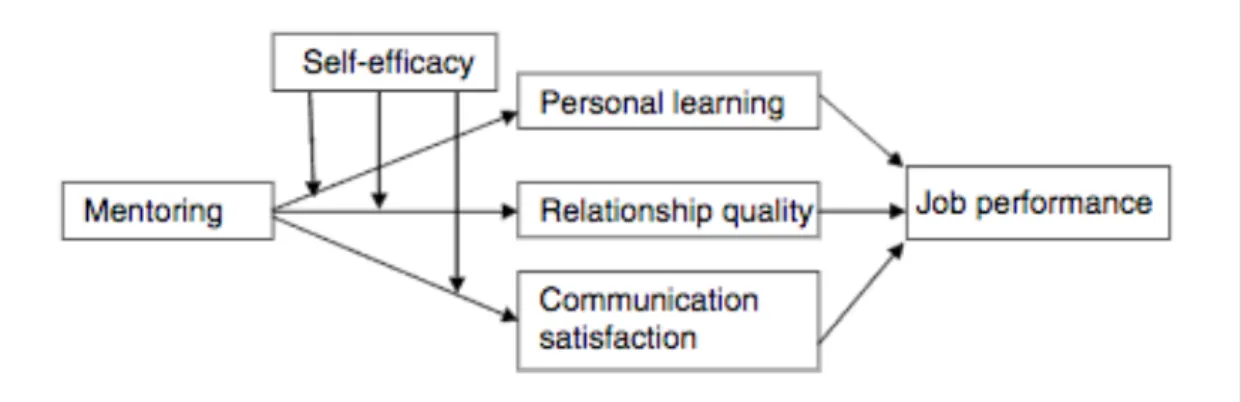
А the master's thesis must be completed by each of the degree candidates individually under the supervision of his or her advisor», and according to paragraph 51 of the Charter of the Federal State Institution for Higher Vocational Education Saint Petersburg State University, a student may be expelled from St. Petersburg University for submitting the course or graduate qualification work developed by another person(s)». More precisely, to find out whether mentoring of a student by an employee can be used by organizations as an effective talent attraction tool; to investigate the specifics and.
MENTORING FROM TALENT MANAGEMENT PERSPECTIVE
Introduction
- Talent Management Background and Practices
- Talent Attraction as the Main Talent Management Practice
- Mentoring Theory Phenomenon
- Mentoring as a Talent Attraction Tool
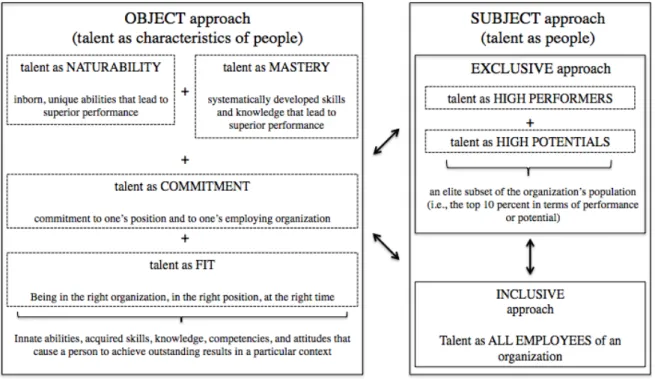
Academics have concluded that meaning of the GTM varies depending on the context in which it occurs (Farndale et al. 2010; Stahl et al., 2012). However, qualitative reputation is intended to be one of the greatest recruitment tools to attract high-performing employees (Rajkumar et al., 2015). Employer branding means how employers position and differentiate themselves from competitors in the labor market (Rajkumar et al., 2015).
Demographic change and migration resulted in an unequal distribution of talented workers in the global market (Ewerlin, 2013; Farndale et al. 2015). That is why the concept of employer brand has received more and more attention in companies (Rajkumar et al., 2015).
RESEARCH METHODOLOGY
Data Collection
The fourth phase of the research involved semi-structured in-depth interviews with respondents and analysis of interview data transcripts. In order to fully understand the issue, in-depth interviews allow creating an atmosphere of trust for the respondent. This section was necessary to prove the background of the company and the respondent to verify the results and confirm the validity of the data.
It is supposed to find out if the company can outsource some of its internal practices. Since the respondents have experience of participating in the external mentoring program (between the student and the employee), these questions tend to reveal all the possible features that should be considered when designing the mentoring program and to understand the issue in depth. The emotional context of the process is explored whether mentoring involves positive, neutral or negative emotions.
Rosenthal (2016) highlights the importance of careful question design, as it directly affects the quality of the data received. The final structure of the questionnaire is based on the analysis of secondary data, such as reports from companies on mentoring, information on mentoring programs available on the company's website. The final step of data collection included conducting an additional interview with an expert and professional coach specialized in internal business mentoring, which took place after the first round of data analysis, to gain an informed view of the results of findings and clarification of inconsistencies revealed during this analysis.
We discussed our findings with reference to sections in the interview guide, therefore this made an additional verification of the questions and results and ensured their additional reliability.
Respondent selection
All interviews were audio recorded with the permission of the participants for the purposes of subsequent transcription and further analysis. All data, including interview transcripts, notes and documents, as collected, were systematized and analyzed. This five-stage research process allowed for the collection and evaluation of different types of empirical evidence from several sources that enabled data triangulation to ensure the reliability of the final conclusions (Elo et al., 2014).
Triangulation was achieved due to the following: multiple informants at different stages of data collection, the same questions in the interview processes, and checking of information throughout the research process. All participants were at least 27 years old (mean = 34 years), with an education level of at least a four-year bachelor's degree. They are employed in multinational corporations in Russia and have easy access to senior management in terms of communicating new ideas.
For research purposes, respondents are numbered from 1 to 21 to ensure anonymity for reasons of confidentiality. To talk about the number of participants involved in this research, it is worth mentioning that deciding on the appropriate sample size for in-depth interviews is an important step in the research process. Nevertheless, “generalizability is not the primary goal of in-depth interviews, but rather the goal is to develop an understanding of the meaning behind behavior” (Rosenthal, 2016, p.511).
Sampling for in-depth interviews is about striking the right balance between the need to obtain a rich experience description from respondents, without compromising the equal representation of experience in the population of potential participants.
Data Analysis
The verification strategy used in this study is consistent with Morse et al. 2014), who argued that the validity and reliability of the results could be ensured by appropriate sampling and methodological consistency. We analyzed the respondents' answers through content analysis and distinguished between the most pronounced themes that referred to talent mentoring. In other words, we used analytic replication technique to determine what constitutes talent mentoring through confirmation throughout the case evidence.
The analysis is based on existing suggestions that when a finding is revealed in more than one case, its generalizability is strengthened (Petty et al., 2012). After completing this phase, data from the final expert interview and secondary sources were integrated to verify the accuracy of the analysis and the validity of the conclusions. The specifics, elements and factors of talent mentoring that result in benefits for the organization have gradually emerged from the data in the process of interview analysis and replication with the literature.
The main value of such an approach is that it leads to an understanding of why talent mentoring can be used as a TA tool and how specific factors can contribute to the successful implementation of a mentoring program. In summary, Chapter I and Chapter II prepare a reader for analysis of the empirical part and discussion of findings. By this time there was a comprehensive explanation of the research problem, objectives, questions and methodology.
The precise description of the method gives the reader a clear understanding of how the process proceeds.
EMPIRICAL PART
Results of Data Analysis and Discussions
- Specifics of Mentoring as a Talent Attraction tool
- Elements of Talent Mentoring
- Factors that affect successful implementation of an external mentoring program as
Moreover, since mentoring involves the development of an employee in a role of mentor, it can be understood as talent attraction as well as talent development, which benefits an organization in several aspects. One of the strongest themes emerging from this research is that mentoring is a rewarding experience for all parties involved. The next important aspect of the mentoring process is whether mentoring should be formal or informal.
By formal mentorship, respondents mean that in addition to a mentor and a mentee, there is a third party, an organization that acts as a facilitator, coordinator, and moderator in these relationships. Without periodic review of the process, it is difficult to assess whether the process is beneficial to all parties. The most discussed challenge is the evaluation of results, as this is an important aspect in the further development of the programme.
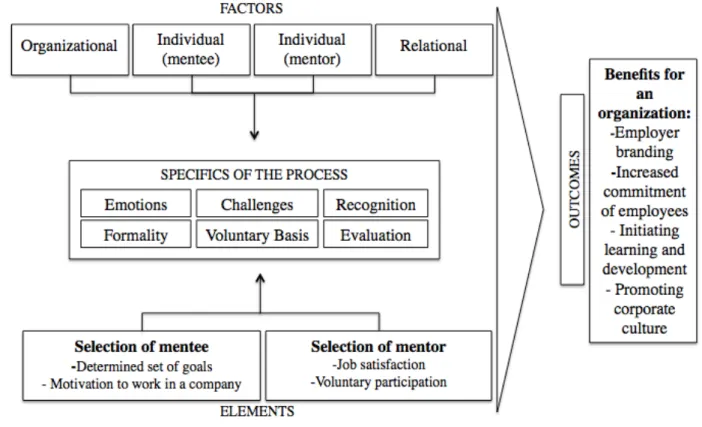
When an organization selects an employee to be a mentor, the main factors to consider are willingness to volunteer and job satisfaction as depicted in chart 2. As can be seen from chart 3 below, the most prominent organizational factor that interviewees mentioned is the transparency of the process. Before engaging in a mentoring program, participants need to understand exactly what an organization expects from them.
The next group of factors shown in Figure 5 relates to individual factors from the mentee's perspective. Another much discussed theme is "Benefits of Mentoring for an Organization" which can be considered as results of talent mentoring for a company. External mentoring practices not only attract young, high-potential candidates to an organization, but are critical to engaging experienced employees.
Research Findings and Recommendations
Such a program can include five phases, but it can be adjusted based on the individual progress of the participants. Furthermore, since employees represent the company's interests before students, the company must arrange training on corporate culture and values before the start of the program. One of the crucial things from a company's perspective is to communicate expectations and goals of the program as well as all organizational details.
It is advisable to ask a mentee to sign a confidentiality agreement, as a mentor will definitely share some of the company's information. If a mentor and a mentee have agreed to work on a specific project, they can hold meetings related to updating the progress. From a company perspective, engaging a student to work on a project under the guidance of professionals is very useful because it reveals skills and abilities of the student and contributes to research and development of the company.
Facilitators can arrange interim meetings to follow the progress of a mentor-mentee pair. "Phase 5" is a final phase of the program, which aims to evaluate the mentee's progress. Second, the interaction between mentor and mentee may be disrupted due to an employee's increased workload.
Our findings on the importance of the selection process for both a mentor and a mentee are consistent with Allen et al. 2008), who emphasized the importance of choosing a mentor and a mentee and their correct matching.
CONCLUSIONS AND IMPLICATIONS
- Conclusions
- Theoretical Contribution
- Managerial Relevance
- Limitations and recommendations for further research
- QUESTIONNAIRE
34;Mentoring gives: Relation to mentor’s career success, personality, and mentoring received." Journal of Vocational Behavior 64, nr. 34;The search for global competence: From international HR to talent management." Journal of World Business 51, nr. 34; Virksomhedens HR-funktions rolle i global talentstyring." Journal of World Business 45, nr.
34; Examining Career-Related Mentoring and Managerial Performance Across Cultures: A Multilevel Analysis." Journal of Vocational Behavior 72, No. 34; Antecedents of Mentoring Support: A Meta-Analysis of Individual, Relational, and Structural or Organizational Factors." Journal of Professional Behavior 84, no. The Effects of Mentor Gender and Supervisor Status on Stability in Mentoring Relationships." Journal of Vocational Behavior 85, no.
34;Supervisory Mentoring and Employee Affective Engagement and Turnover: The Critical Role of Contextual Factors." Journal of Vocational Behavior. 34;The Influence of Underlying Philosophies on Talent Management: Theory, Practice Implications, and Research Agenda.". 34; Global Talent Management and Global Talent Challenges: Strategic Opportunities for IHRM." Journal of World Business 46, No.
34; Challenges and Opportunities Affecting the Future of Human Resource Management." Human Resource Management Review 25, No. 34; Global Talent Management: Literature Review, Integrative Framework, and Suggestions for Further Research." Journal of World Business 45, no. 34;Talent Management and the Relevance of Context: Towards a Pluralistic Approach." Human Resource Management Review 23, no.