Master thesis title "The role of the institutional environment in the creation of different types of new ventures by student entrepreneurs". This master's thesis is a quantitative study of the role of the institutional environment in the creation of different types of new ventures by student entrepreneurs based on the sample of 8660 students from 46 countries from GUESSS. From an academic point of view, this study fulfills the demand for research on the role of the institutional environment in the various aspects of entrepreneurship.
THE NEW VENTURE TYPES AND THE ROLE OF INSTITUTIONAL ENVIRONMENT
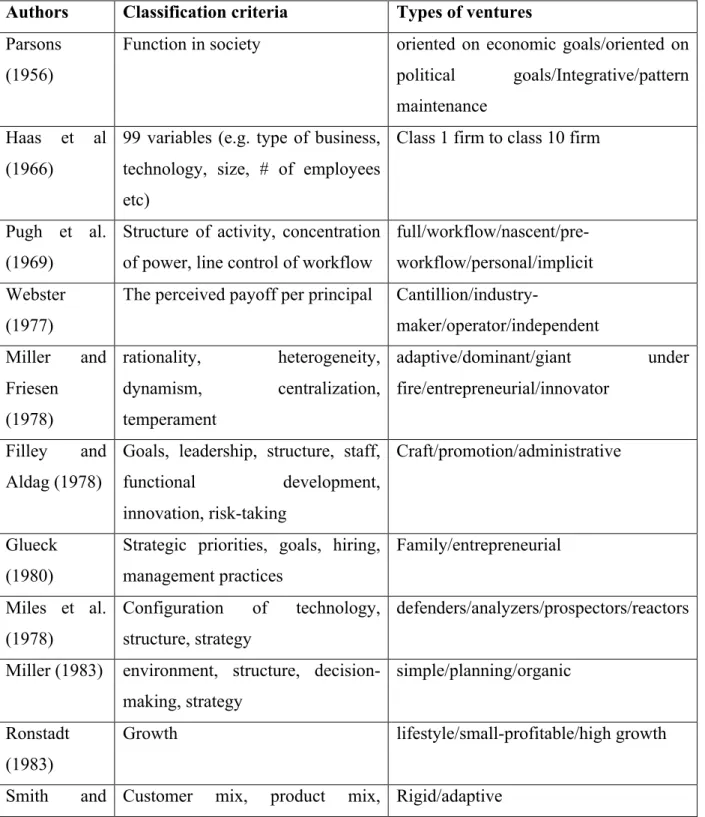
Approaches to classify new ventures in entrepreneurship research
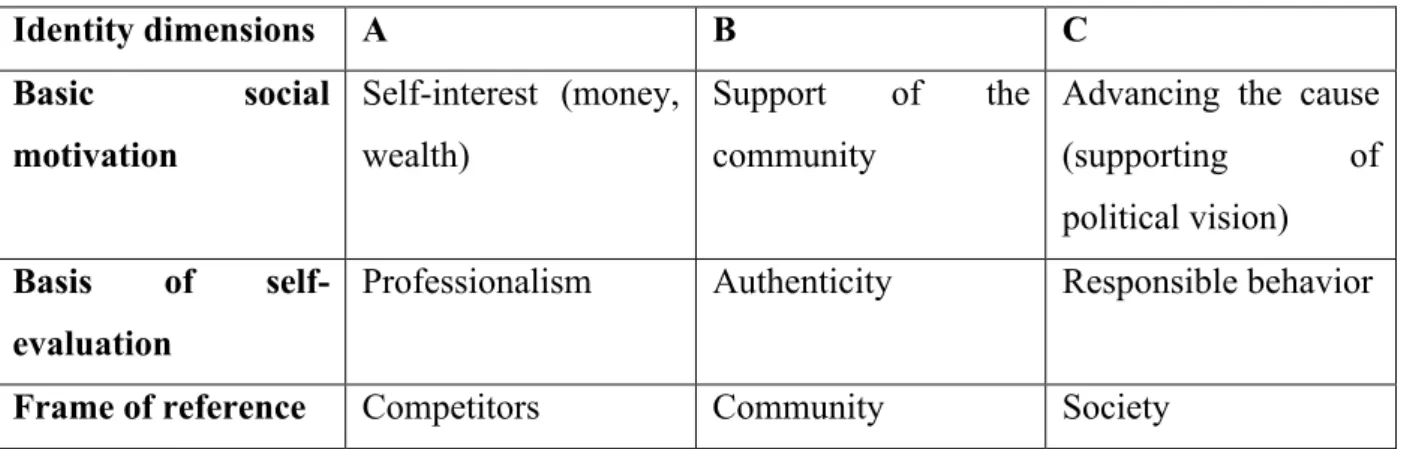
The success of these companies is determined by the personality, strength and stock of knowledge of the leader; b) Planning companies - companies with an emphasis on the smoothness, efficiency and regularity of planning. The thesis will use a classification of companies based on the classification of the identity of the founder (Fauchart and Gruber, 2011). In ventures of this type, we can clearly see a strong brand identification, and the founders believe in the authenticity of their assets and products.
The role of institutional environment in entrepreneurship: literature review
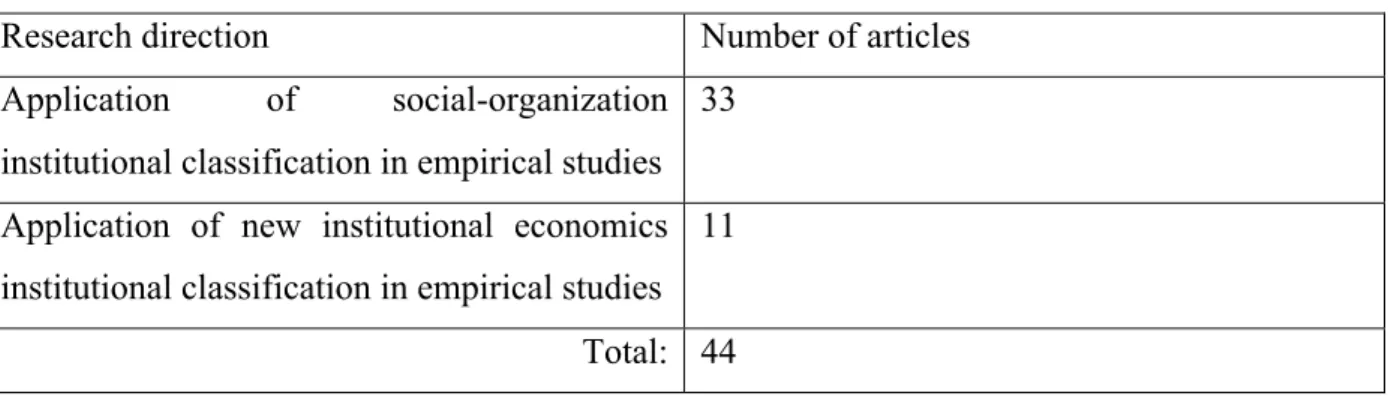
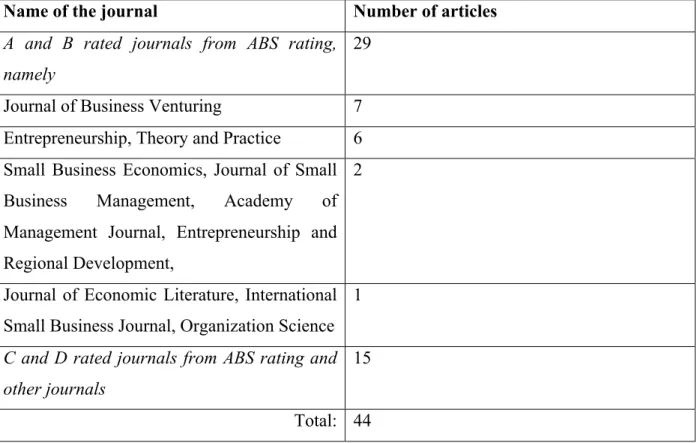
Most articles are published in the following journals: Journal of Business Venturing (7 articles) and Entrepreneurship, Theory and Practice (6). Based on this central insight, various scholars have investigated the role of these cognitive schemas in entrepreneurial activity. This context is the so-called institutional environment, which received more attention at the beginning of the 21st century (Shane, 2003; Williamsson, 2000; Busenitz et al., 2000).
To detect the role of institutional context in entrepreneurship, we can see that they are closely related to decisions about all stages of the entrepreneurial creation process (Tolbert et al, 2011). They identified boosting entrepreneurial activity in the country as a long-term project, which relies on congruence between formal and informal institutions. In another study, Stenholm et al. 2013) wondered whether differences in institutional arrangements influence both the pace and type of entrepreneurial activity in the country.
The empirical result based on 63 countries from the GEM database showed that supportive legislative institutional arrangements are the main driver of the increase in the speed and type of entrepreneurial activity in the country. The largest stream of current research is devoted to identifying the role of specific institutions in entrepreneurship at the country level. Over the past 5 years, many researchers have chosen not to generalize the influence of institutional context, but rather to focus on specific aspects of the institutional environment of the country.
Summary of the empirical studies on the role of institutional environment in entrepreneurship research.
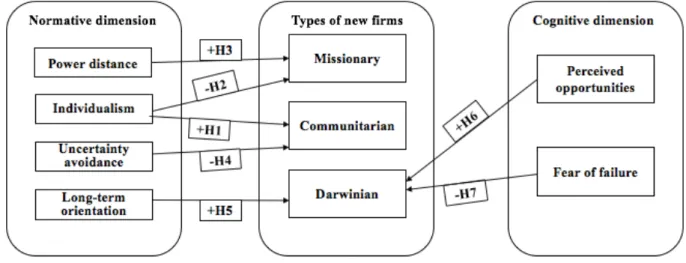
Theoretical model of the role of institutional environment in the creation of different types
Although there is no empirical evidence on the extent or even the presence of individualism in nascent entrepreneurs' expectations, Cooper, Woo and Dunkelberg (1988) observed that existing entrepreneurs reported that their business was significantly more likely to 'make it' than historically and significantly better than the chances of success of other similar companies. Collectivism means the subordination of personal interests to the interests of the group and is based on cooperation and harmony and concern for the welfare of the group. In collectivist cultures, people feel that they are an indispensable part of the group and are not concerned with their own benefit or the possibility that others may take advantage of their efforts (Hui and Triandis 1986).
Hofstede (2001, p. 226) says ''members of the we-group are separate from the other people in society who belong to de-groups or out-groups, and there are many such people and such out-groups. Therefore, you owe lifelong loyalty to your in-group, and breaking this loyalty is one of the worst things a person can do''. Every society should maintain some links with its own past while dealing with the challenges of the present and the future.
To better understand the overall picture of the relationship between the institutional context in the country and the type of new ventures created by entrepreneurs, Figure 1 is presented, which is based on the results of the literature review and theoretical overview of the types of new ventures. With this connection identified from the literature review, the empirical part of the study can begin, where it will be investigated which of these institutions and to what extent influence the type of new business created by student entrepreneurs. In the first chapter of the present study, the theoretical framework was established and hypotheses formulated based on theoretical analysis of typologies of new firms and literature review of the role of institutional environment.
The design of the research, description of the method and variables, as well as the results of the study will be presented in the next chapter.
THE ROLE OF INSTITUTIONAL ENVIRONMENT IN THE CREATION OF DIFFERENT
Method
THE ROLE OF THE INSTITUTIONAL ENVIRONMENT IN THE CREATION OF DIFFERENT TYPES OF NEW VENTURES FROM. 34 for research and recruitment of Russian universities, translation of the survey and distribution of the link to the online survey among national universities. As part of the GUESSS 2016 survey, students were offered to answer questions about their motivation and primary goal in the process of creating a business based on a Likert scale.
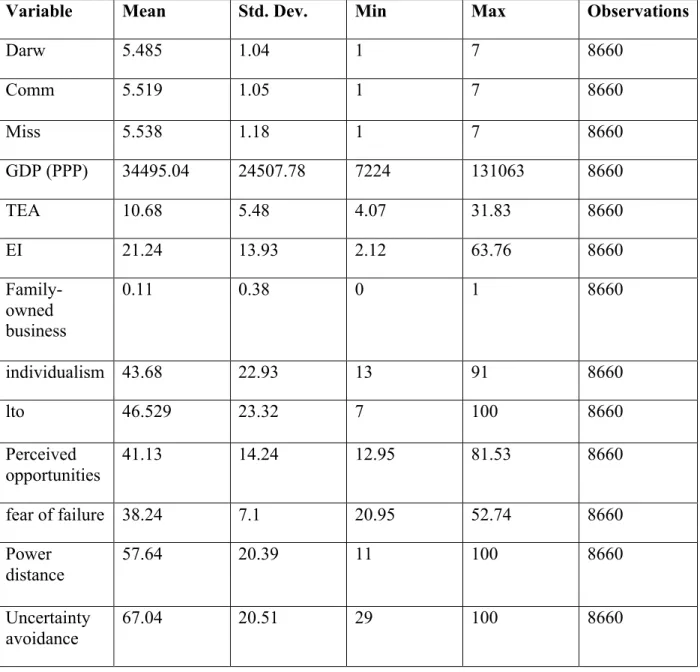
To assess the type of enterprise based on the approach of Urbano and Alvarez (2014), we reviewed the set of statements related to motivation and goals (8.3 2016 GUESSS survey) and grouped these statements to fit one of the enterprise types (Darwinians, Communitarians, Missionaries) as shown in Table 7. The data for the normative dimension is taken from the Hofstede center report on the cultural dimensions at country level. To test the effects of the institutional environment on the type of newly chosen company, it was decided to choose 6 variables, 2 per cognitive dimension and 4 per normative dimension.
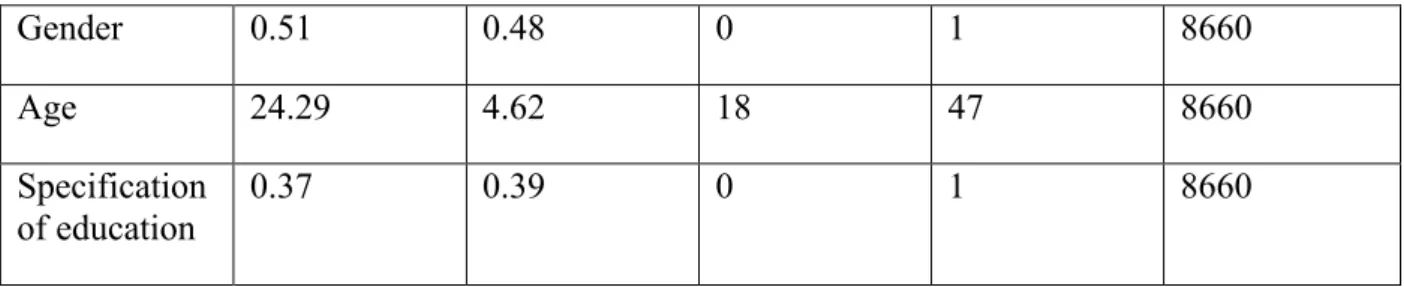
These variables are represented in the existing research (Cullen et al., 2013; Williams and Shahid, 2014) and are closely connected to the enterprise types and suitable for testing our hypotheses. At the country level, we will include GDP per capita (PPP) for 2017 year, taken from World Bank, Total early-stage entrepreneurial activity (TEA) and entrepreneurial intention in the country, both taken from GEM; at the family level we will consist of family business taken from GUESSS; at the individual level we will use age of the respondent, specification of education and gender, all taken from RAAI. Therefore, for the purposes of our study, it was decided to run three linear regression models to understand the effects of institutional environment on the decision to establish one of the three types of enterprises (Darwinian, Communitarian, Missionary).
Our linear regression models will help us determine which factors have the greatest impact on the chosen firm.
Results
The results of the empirical analysis show that there is a statistically significant relationship between individualistic national cultures and the creation of community enterprises (b=0.003; . p=0.006) and our H1 could be accepted. This can be explained by the fact that, due to the nature of the communitarian entrepreneur and his or her desire to promote his or her own vision and serve the group with which he or she associates, it is much more likely to have this type of business in an individualistic culture. At the same time, based on the results, we could conclude that H2 should be rejected, as we found that we did not find significant statistical evidence (p=0.599).
The results show (b=0.016; p=0.000) that for mission firm founders the power distance in society has a sparkling effect and among all other factors in the model, power distance has the highest impact on the dependent variable. This can be explained by the fact that these firm founders are very common in societies where they can draw attention to the current problems, which are not created by the policy makers get attention for that in contrast to low power distance cultures. Next, hypothesis 6 is also proven by our model and we can state that Darwinian founders are more common in high-perceived opportunity cultures (b = 0.003; p=0.018).
Finally, we could accept the negative relationship between fear of failure in society and the creation of Darwinian firms (b=-0.012; p=0.000). Furthermore, we can see that there is no statistically significant relationship between this variable and two other types of companies. For example, it can be seen from an analysis of GDP per capita that the lower the GDP in the country, the higher the probability of establishing a Darwinian firm.
This can be explained by the fact that people in societies with low economic development tend to solve their own financial problems before thinking about social impact and change.
Discussion
The comprehensive literature review of recent empirical studies on the role of the institutional environment is used as a starting point for the empirical study of the role of the institutional environment on the type of new venture created by student entrepreneurs. Based on the literature review, the normative and cognitive dimensions were chosen to test the effects of the institutional context on the type of firm chosen, and linear regression was performed on the sample of 8,660 students from 46 countries obtained from GUESSS. The results suggest that there is a significant relationship between normative and cognitive dimensions and the type of firm chosen, which is stronger than individual and family differences between people at the country level, and the role of culture was proven to be a determining factor in the choice of type of firm from entrepreneurial students.
Hopefully, the results of this study will be found relevant within the academic community, as this article touches on the highly relevant current stream of research attempting to understand the effect of the institutional environment on entrepreneurship. Addressing the existing gap in current research, this study examines the role of the institutional environment in the allocation of entrepreneurial effort in the country based on the type of enterprise – thereby addressing a need emphasized by many respected scholars. First, the study only focused on the sample of student entrepreneurs, limiting the scope of the findings.
Second, the study used a limited number of factors influencing the type of new firm chosen, focusing on country-wide differences obtained by Hofstede. Moreover, this paper provokes the testing of other institutions from the normative and cognitive dimension on the type of new firm chosen. Researchers can try to apply different classifications of institutions to the sample of entrepreneurial students, add additional control variables at the country, household and individual level to understand more deeply the influence of the institutional environment with the moderating effect of other factors.
In summary, the institutional context plays an important role in the type of business chosen by student entrepreneurs, and cross-cultural differences explain differences in the structure of venture types within an economy. An institutional perspective on the role of culture in shaping the strategic actions of technology-focused entrepreneurial firms in China. Early and rapidly internationalizing ventures: similarities and differences between classifications based on the original international new venture and the born world literatures.