Abdullah Abdullah has been appointed to a new post of Chief Executive Officer (CEO) of the government. By the end of FY2014, the United States had provided about $100 billion to Afghanistan since the fall of the Taliban, about 60% of which was to equip and train the ANDSF. Alexander the Great conquered what is now Afghanistan in three years (330 B.C.E. to 327 B.C.E.), albeit at considerable cost and with considerable effort, which required, among other steps, marriage to a native of the conquered territory.
For example, he was unable to completely pacify Bactria, an ancient region spanning what is now northern Afghanistan and parts of it. In the late seventh century, Islam spread in Afghanistan when Arab invaders from the Umayyad dynasty defeated the Persian empire of the Sassanians. In the 10th century, Muslim rulers called Samanids from Bukhara (in what is now Uzbekistan) extended their influence into Afghanistan, and the full conversion of Afghanistan to Islam occurred during the rule of the Gaznavids in the 11th century.
In 1504, Babur, a descendant of the conquerors Tamarlane and Genghis Khan, took control of Kabul and then moved to India and established the Mughal Empire. Babur is buried in the Babur Gardens complex in Kabul, which was renovated with the help of the Agha Khan.
S. Policy Toward the Taliban During Its Rule/Bin Laden Presence
The Clinton administration began negotiations with the Taliban after they captured Qandahar in 1994 and continued to engage the movement after it took power. However, the administration was unable to moderate the Taliban's policies, and the United States withheld recognition of the Taliban as the legitimate government of Afghanistan, formally recognizing no faction as the government. The Taliban's hosting of Al Qaeda's leadership gradually became the Clinton administration's overriding agenda item with the Taliban.
The Taliban's policies led various Afghan factions to join the Tajik core of the anti-Taliban opposition – the ousted Rabbani president, Ahmad Shah Masoud, and their ally in the Herat area, Ismail Khan. Often referred to by some Afghans as one of the "warlords" who rose to power during the anti-Soviet war, Dostam initially joined those seeking to oust Rabbani during his 1992-1996 presidency, but later joined him and factions of other Northern Alliance that opposed the Taliban. Bush Administration's Afghanistan Policy Before the 9/11 Attacks Before the 9/11 attacks on the United States, the Bush administration's policy continued the previous administration's Afghanistan policy by continuing to exert economic and political pressure on the Taliban while maintaining some dialogue with them and refusing to assist the Northern Alliance militarily.
Although the Northern Alliance was provided with Iranian, Russian and Indian financial and military support, the Taliban continued to gain ground even in areas not inhabited by Pashtuns. At the time of the 9/11 attacks, the Taliban controlled at least 75% of the country, including almost all provincial capitals.
Attacks and Operation Enduring Freedom
S. and International Civilian Policy Structure
Women's freedoms have greatly expanded since the fall of the Taliban, with their election to parliament and their presence at many levels of government. The Ministry of Women's Affairs worked with local authorities to improve the implementation of the ordinance. Department of Defense (DOD) report titled "Progress toward security and stability in Afghanistan." The last one was issued in December 2015 and covered the period from 1 June to 30 November 2015.
In this report it will henceforth be referred to as “the last DOD report on Afghanistan”. Alleged pragmatists supporting Mansour include Noorudin Turabi, logistics expert and head of the Taliban's Supreme Shura Council, Shahabuddin Delawar. Some TTP fighters reportedly operate from safe havens in Taliban-controlled areas on the Afghan side of the border.
In December 2014, the United States military returned to Pakistan a member of the Mehsud clan, Latif Mehsud, and two other Pakistani Taliban militants who had been captured during alleged militant activity in Afghanistan.25. All insurgent groups in Afghanistan benefit at least in part from the drug trade. According to the transition and the claim that the killing of Osama bin Laden represented a key achievement of the US core.
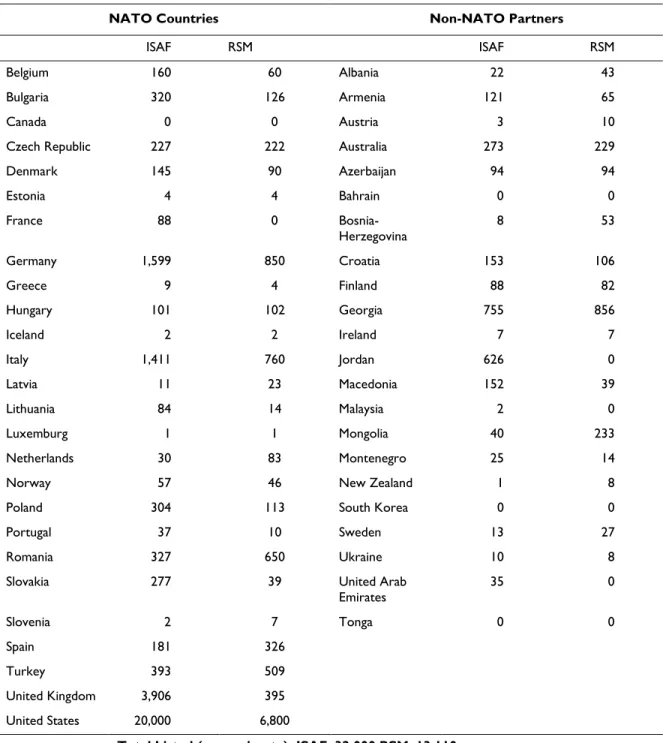
During 2014, the United States and its partners prepared for the end of the ISAF mission. The expansion of the Islamic State's presence in Afghanistan has posed a further threat to the ANDSF and the Afghan government. Key to Afghanistan's security is the effectiveness of the ANDSF, which consists primarily of the Afghan National Army (ANA) and the Afghan National Police (ANP).
In 2012, CSTC-A's mission was reoriented to build the capacity of the Afghan ministries of defense and interior, and to provide resources to the ANDSF. In the immediate aftermath of the ouster of the Taliban regime in 2001, figures from the Northern Alliance assumed key security positions and weighted recruitment for the new ANDSF against ethnic Tajiks. The target size of the ANP, including all forces under the ANP umbrella, is 157,000 personnel.
However, the Taliban have violated agreements with the United States and Qatar by raising a flag belonging to the former Taliban regime and calling the facility the office of the "Islamic Emirate" of Afghanistan - the name the Taliban regime used during its rule. gave to Afghanistan. On 12 June 2011, in the context of Karzai's visit to Islamabad, both countries began full implementation of the agreement.
S.-Pakistan Cooperation on Afghanistan
S. Assistance to Afghanistan
With help from defections, the Taliban seized control of the southern city of Qandahar in November 1994. Tajiks in the National Assembly insisted that at least one of the heads of these security ministries be a Tajik. This wording implies that Iran is arming Pashtun Taliban militants in the core of the combat zone in Afghanistan.
Yet the September 11 attacks on the United States fueled Turkmenistan's fears of the Taliban and its Al Qaeda guests and caused the country to publicly support the US-led war in Afghanistan. More recently, Saudi Arabia has brokered some of the negotiations between the Afghan government and "moderate" Taliban figures. Karzai's two visits to Qatar in 2013 were related to the opening of the Taliban office in Doha.
There was extensive criticism of the bridging solution based on the cost of fuel for the diesel. The total cost of the project, targeted for 2016 completion, is estimated at $580 million, provided by USAID, the Overseas Private Investment Corp., the Asian Development Bank and the Afghan government.