In 2015-2016, we laid the foundations for Citizens Advice to become a strong advocate for energy consumers. Consumer helpline Citizens 2 Advice received 11% more energy-related calls in the two weeks following 'Big Energy Saving Week'. Citizens Advice has worked closely with Ofgem over the past year as it developed its proposed framework and responded positively to the recent regulator.
Citizens Advice has represented the interests of prepaid customers in its response to all these proposals.

Promote ways to eliminate fuel poverty through coordinated energy, housing, health and income policies
In the 2015/16 financial year, Citizens Advice was an important voice in the media, providing a mix of guidance for energy consumers, criticism of corporate misconduct and analysis of the impact of energy policy decisions for households and small businesses. Unsurprisingly, stories about energy prices also drew heavily on Citizens Advice's analysis of the state of the energy market and how consumers can get a better deal by switching. In Scotland, energy efficiency has been identified as a national infrastructure priority in response to long-standing advocacy by Citizens Advice Scotland, working alongside Citizens Advice and other fuel poverty advocacy groups.
Citizens Advice played a central role in guiding the Bonfield Review (also known as 'Every Home Matters'). Citizens Advice led the work on the consumer protection review, chaired workshops, served on the implementation board with the other work streams to develop the recommendations and contribute to the final report. Citizens Advice has helped develop a new fuel poverty assessment tool, which will help local authorities and other local bodies and charities better target fuel poor households.
Local Citizens Advice is advised to use this data to encourage local action to tackle cold homes. Citizens Advice sponsored 3 events to share the findings of KTA's UK Fuel Poverty Monitoring research in Edinburgh, Cardiff and London in March this year. Citizens Advice Scotland published Save Energy, Save Money and Stay Warm - a consumer guide to energy efficiency in Scottish homes, which has been used for a number of consumer energy efficiency training events in Scotland.
Put consumers in control of their energy bills and build consumer confidence in the emerging energy services
Make Energy Better', a campaign that started in February 2016, informs consumers about the rollout of smart meters. Citizens Advice North Liverpool has a group of young volunteers who tackle a variety of issues to make them more accessible and interesting to young audiences. This work revealed that some suppliers had policies in place that failed to provide consumers with appropriate transparency or control over how and when smart meter data is collected.
Citizens Advice commissioned market research with consumers (half of whom had a smart meter installed) to better understand what information was provided to them and what benefits they felt were or would be most useful. The analysis showed a mixed picture of the consumer experience of district heating schemes, showing the need for greater consumer information and support for those on heat networks and much better monitoring of the networks themselves. Citizens Advice also helped shape the rules for the Heat Trust consumer protection scheme.
In addition to these policy developments, over the course of the year we spoke to heat suppliers in the private sector about issues facing their customers. In anticipation of the new proposals, the May 2016 resolution of the European Parliament on the 'new deal' for energy consumers noted the importance of incentives, access to quality information, data protection and interoperability to the required behavioral change by energy consumers. These measures, designed to improve the clarity, credibility and enforcement of the labels, have been priorities in our joint advocacy with BEUC in recent years.
Inform the CMA competition investigation
Regulation Group to the Scottish Government and the feasibility of this option is currently being examined. These contributions were supported by presentations at conferences and workshops organized by the European Commission and representative bodies of national regulators. The new EU regulation setting the framework for energy efficiency labeling is currently expected to be adopted by the European Parliament and the EU Council in 2016-2017.
The CMA has accepted our challenge to reintroduce price caps for the most vulnerable and disengaged households and is proposing to introduce a safeguard tariff which is expected to save the 4 million households on pre-paid meters an average of £80 a year. The CMA referred to our evidence of the shortcomings of the current arrangement in proposing a range of improvements to the way low-carbon generation is procured, which should significantly reduce the costs consumers face in transitioning to a decarbonised energy sector. It also proposed a series of measures that should improve transparency and accountability for the factors that drive consumer bills - a necessary step we have called for to restore consumer confidence.
Our responses to the CMA focused heavily on improving price transparency and resolving issues with renewal contracts; the fact that the CMA has given top priority to these key issues that we have been campaigning for for many years is positive in itself. Our evidence also influenced the CMA to take a closer look at the barriers that discourage tenants from participating in the energy market. Perhaps the strongest endorsement of our strong work on energy competition has come in the fact that the CMA's findings in so many areas reflect that our views and positions have become mainstream thinking on energy policy; its diagnosis confirms our fundamental arguments about areas where the market is failing, and its range of remedies includes many of the interventions we have requested.
Effective industry governance and network regulation
We also work with power grids to help improve our understanding of customer needs, including participation in stakeholder groups at National Grid, Northern Power Grid and SSE. Research into the disruptive consequences of technological and commercial developments which will affect the way consumers deal with the energy market will be published in summer 2016. EHU has a legal duty to help vulnerable energy consumers and post consumers to throughout the United Kingdom by investigating complaints with the relevant service providers.
The EHU works closely with the Citizens Advice energy team, Ofgem and energy suppliers with the aim of improving practices and regulations that impact consumers. The majority of consumers (90%) referred to the EHU are referred by the Citizens Advice consumer service. In addition to providing support to consumers, the EHU operates an 'Ask the Adviser' service, which provides support to other advice providers (including Citizens Advice and CAS Advisers) to help them resolve a consumer's energy or postal complaint customer.
Advice providers can also use EHU's knowledge base, which is a database of frequently asked energy and post questions that EHU advisers use for their case management. 91% of consumers who contacted the EHU were either satisfied or very satisfied with the quality of the service provided by the EHU. 1 minor supplier in particular has caused a lot of work for EHU this year with extensive customer service failures, billing issues and insufficient resources to deal with EHU complaints.
Post
About this work
Our priorities
- postal services and post office network should
- a sustainable post office network that is accessible and offers services and products relevant to each diverse
- consumers expect good services and products at a fair and reasonable price
- keep the consumer voice at the heart of developing UK and European mail and parcel markets
- Water
Citizens' advice is helping to shape the debate about the future of postal services with a focus on consumer needs. Citizens Advice commissioned further research looking at the met and unmet needs of vulnerable consumers, particularly those on low incomes, for essential services through the Post Office network. Outside of POAG, Citizens Advice continued to hold regular bilateral meetings with POL to discuss strategic issues emerging from the NTP, any business as usual changes or policy developments affecting the network and more.
Citizens Advice provides research into Royal Mail's quality of service performance data to ensure that consumers receive a high quality service. In September we published 'The Postcode Penalty', which reflected the findings of research we carried out which examined the change in the incidence and cost of delivery. Citizens Advice has published its fourth round of research into the quality, consistency and accuracy of product and price advice to PO residents.
In the last year, Citizens Advice also embarked on a new project looking at the long-term consumer outcomes from the roll-out of the new models, PO premises and the mains. Citizens Advice had contributed to this debate in parliamentary committee discussions and commissioned a study to assess the possible impact of competition on consumers in the market. Citizens Advice contributed to the consultation on the regulatory review, stressing the importance for consumers of value for money.
Represents the voice and interests of consumers in the governance of the Scottish water industry. Citizens Advice Scotland responds to policy consultations affecting consumers in the water industry, launched by the Scottish Government, by the EU, by the Water Industry Commission for Scotland, by Scottish Water and by other key stakeholders.
What we did in 2015-16
- A consumer focused water industry
- Paying for Water: fair charges and debt management
- Supporting non-domestic water consumers
- Cross-sector
- Consumers get a better deal from infrastructure regulation
- Essential regulated markets treat consumers fairly and consumers can see the difference
- Consumers are in control of data within a trusted and safe system
In addition to our work within the water industry, Citizens Advice Scotland's water team represented the wider consumer base as a member of a Citizens Advice Scotland's research into consumer confidence, including issues around redress, has informed our work with the board. This year, Citizens Advice Scotland worked with Scottish Water to identify where direct or indirect engagement between Scottish Water and the wider consumer base could be improved to deliver a better experience and more.
Citizens Advice Scotland submitted evidence to the Scottish Joint Government and the Scottish Local Authorities Commission Convention on Local Tax Reform, including evidence on the impact of water debt and the need to improve messaging around billing for water and sewerage charges. This raised the profile of Citizens Advice Scotland's Consumer Futures Unit as the leading consumer body in the water industry. Citizens Advice Scotland commissioned independent research into the impact of water and sewerage debt and published a report, 'Swim or Pray'. We ran.
The report raised awareness of water and sewerage debt within the Scottish Government, the Scottish Parliament and in the media. In response to 'Pray or Swim', the Scottish Government held a Round Table event attended by 15 local authorities, Money Advice Scotland, Scottish Water and CAS, to discuss issues related to the introduction of Water Direct. The 'Beg or Swim' report will raise awareness of water and sanitation debt levels and the impact of welfare reform on debt levels.
This will help strengthen CAS's advocacy work in the effort to mitigate the impact of water and sewerage charge debt on low-income consumers. Citizens Advice Scotland's role in the water industry includes representing the interests of SMEs and third sector organizations in the non-domestic market.
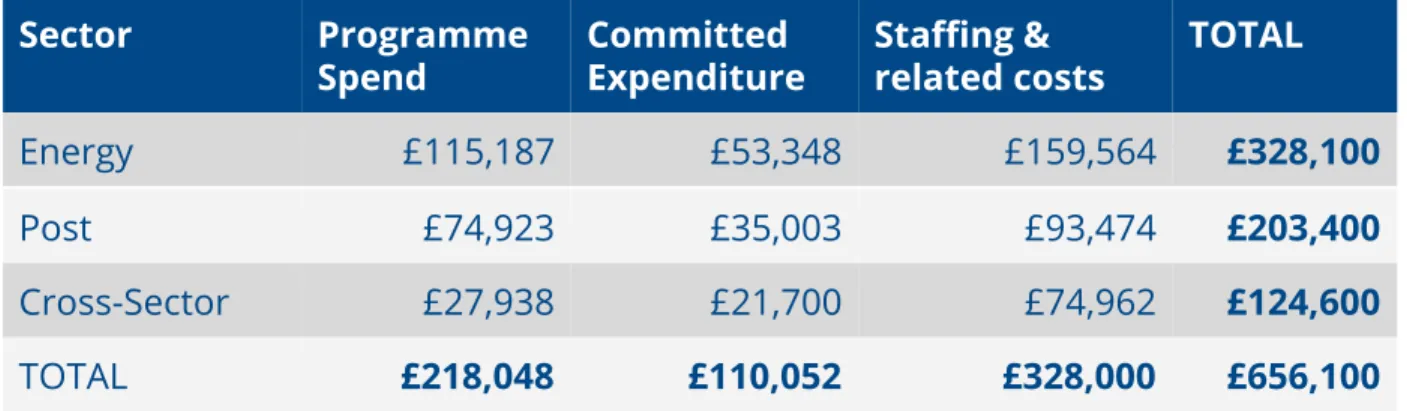
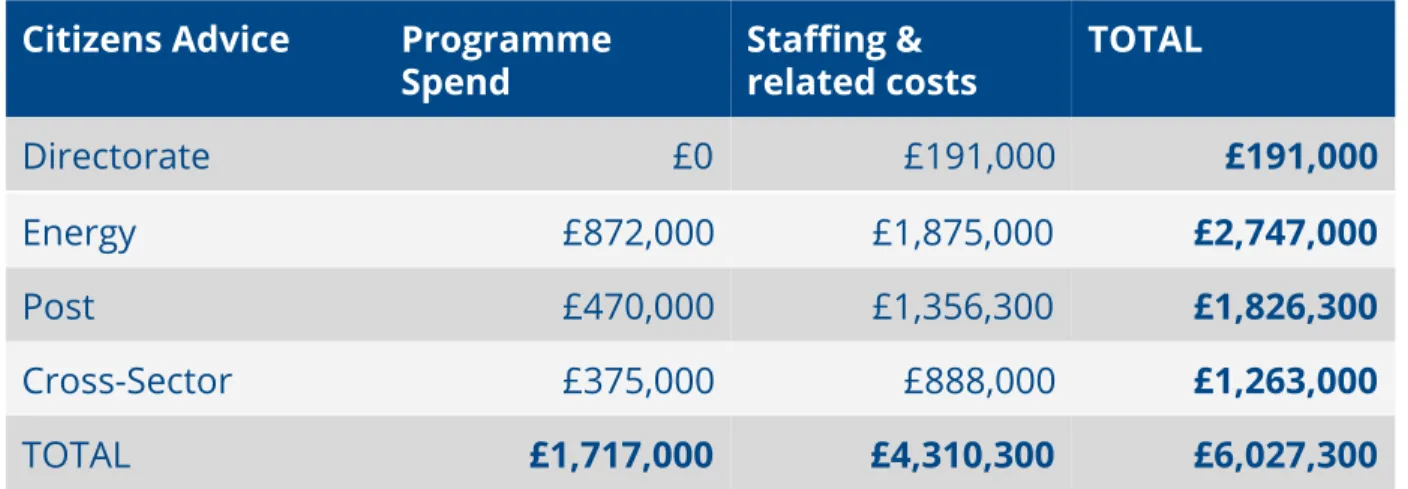
Expenditure in 2015-16