4 NatCen Social Research with Center for Sustainable Energy | Data sharing for fuel poverty targeting. This project seeks to explore how the improved use of data can enable suppliers to improve the targeting and effectiveness of fuel reduction initiatives.
Policy context
2011, with the 2010 target missed and the 2016 target looking unlikely to be met, Professor John Hills was appointed to review both the fuel poverty definition and target. 6 NatCen Social Research with the Center for Sustainable Energy | Data sharing to target fuel poverty.
Fuel Poverty definitions
Not only is it argued that this will lead to cost reductions, both administrative and in relation to customer acquisition, but it will also reduce the need to collect and hold sensitive personal information. This is a particular concern for installers who may not have systems in place to hold sensitive data such as bank details and letters associated with eligible benefits.
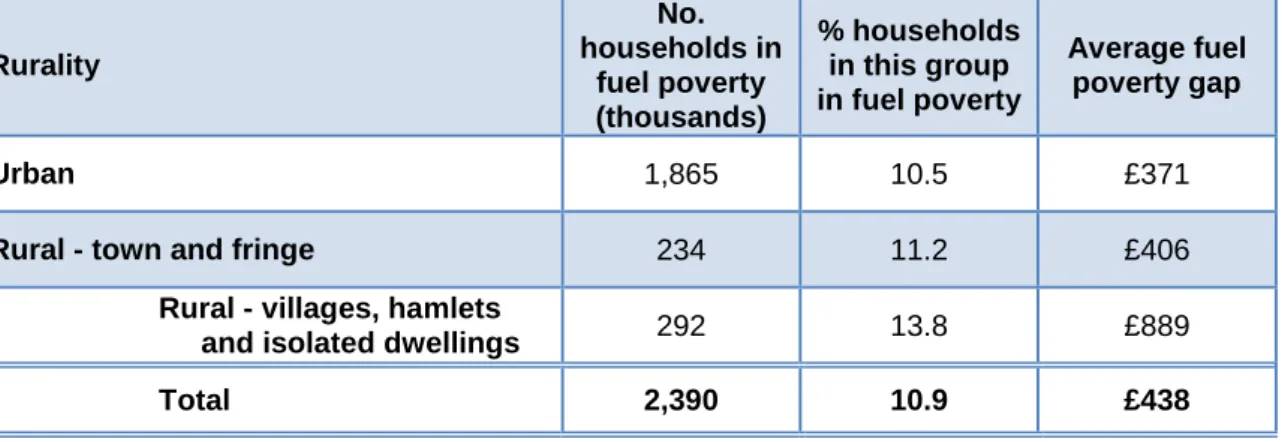
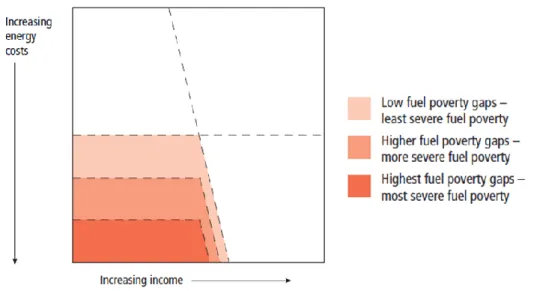
Types of fuel poor households
The greater the additional amount, the greater the depth of fuel poverty and the greater the gap of fuel poverty. 8 NatCen Social Research with the Center for Sustainable Energy | Data sharing to target fuel poverty.
Current policies
The main aspect of the WHD group is considered a largely successful example of data sharing to help alleviate fuel poverty. 10 NatCen Social Research with the Center for Sustainable Energy | Data sharing to target fuel poverty.
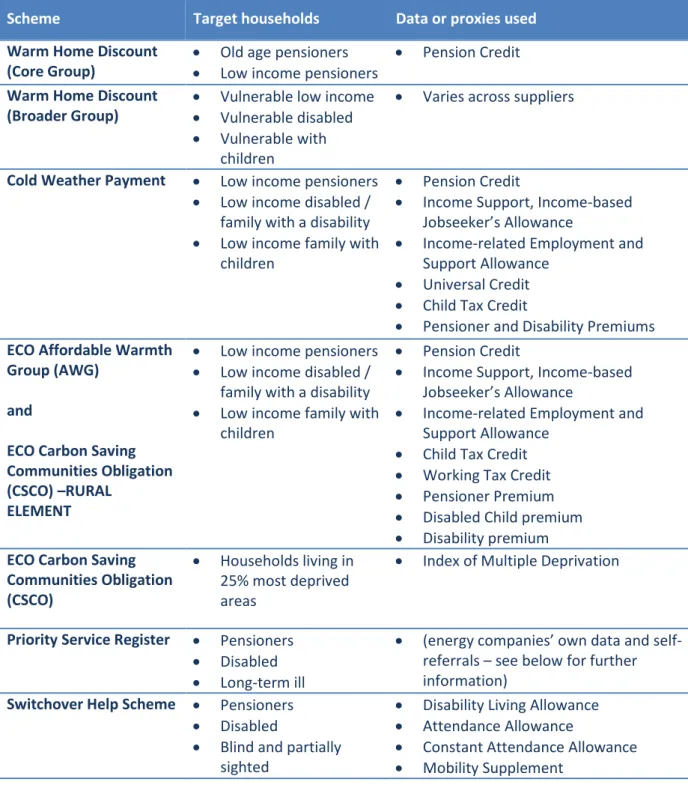
Proxies and targeting efficiency of policies
12 NatCen Social Research with Center for Sustainable Energy | Data sharing for fuel poverty targeting. 14 NatCen Social Research with Center for Sustainable Energy | Data sharing for fuel poverty targeting.
Local fuel poverty schemes
Installed microgeneration technologies (heat pumps, solar PV, solar thermal etc.) HEED now contains at least 1 piece of date-stamped information for approximately 51% of UK homes. 16 NatCen Social Research with the Center for Sustainable Energy | Data sharing to target fuel poverty.
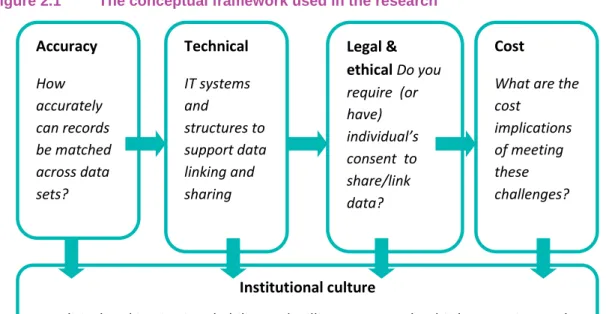
Conceptual framework
Technical: If the data sources being shared or matched are accurate, it must be determined whether sharing or linking is technically possible. Costs: Overcoming challenges has cost implications, and these should be considered alongside the potential cost savings or wider social benefits of data sharing or linkage.
Desk review
In particular, this may require data to be accessible to non-experts and different ICT systems to communicate effectively. Legal and ethical: Depending on the legislative framework and related factors, personal data may have to be collected, together with permission to share it (or consent), from the individuals involved, and the personal data must then be linked to other data sources.
Stakeholder interviews
Stakeholder workshop
Legal advice
Structure of this report
Interpreting and using this report
20 NatCen Social Research with the Center for Sustainable Energy | Data sharing to tackle fuel poverty. This chapter examines the main accuracy and technical issues that currently prevent more practices from being used to share data.
Accuracy
Accuracy is down slightly with 33% of all people in the group suffering from fuel poverty compared to 36% of the current group. Unlike the case of the Main Warming House Discount Group, there is no legislative gateway to allow energy companies and public authorities to share information about the Wider Group.

Technical
26 NatCen Social Research with the Center for Sustainable Energy | Data sharing to tackle fuel poverty. 28 NatCen Social Research with the Center for Sustainable Energy | Data sharing to tackle fuel poverty.
Conclusions
30 NatCen Social Research with the Center for Sustainable Energy | Data sharing to target fuel poverty. The Data Protection Act 1998, which applies to all organizations involved in data sharing, regardless of whether they have specific powers to share data.
Analysis of public authorities’ power to share
Processing is necessary for the purposes of the data controller's own legitimate interests or the legitimate interests of a third party to whom the data is disclosed. As discussed in the section above, express statutory authorizations or gateways for data sharing do not exempt public bodies from DPA requirements.
UK and EU ongoing proposals
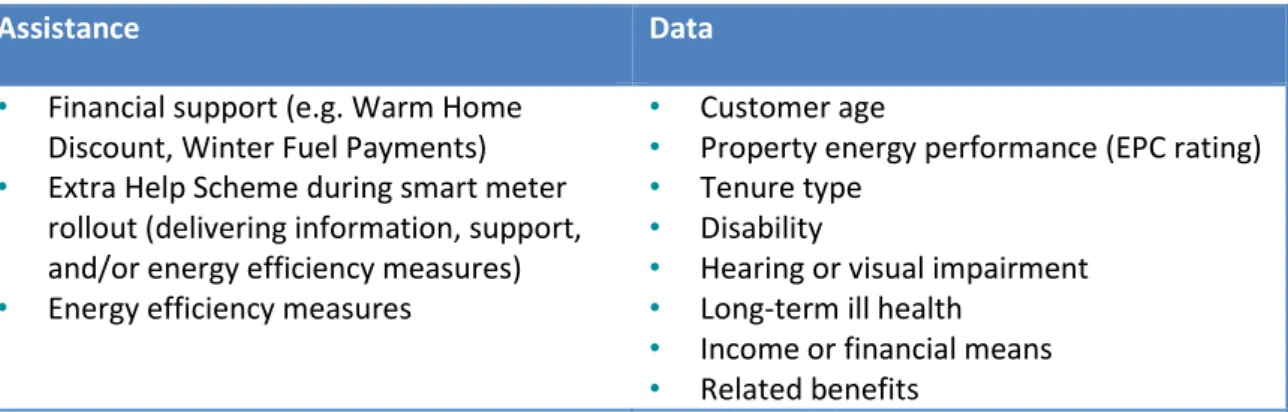
Overall, if we take a principled approach to the types of assistance likely to be provided by fuel poverty relief schemes – financial support, energy efficiency measures and extra support and information during the introduction of smart meters (see table 4.1 above) – our lawyers' advice is that data sharing between public bodies and energy companies without consent is possible under current legislation, but requires careful assessment. This is more likely to be possible if it involves financial support or energy efficiency measures, and the type of data shared does not involve sensitive personal information, such as health or disability.
Policymakers’ views on legal aspects of data sharing
36 NatCen Social Research with the Center for Sustainable Energy | Data sharing to target fuel poverty. While express powers or a legislative gateway may not be necessary to carry out data sharing without consent for every fuel poverty initiative, policymakers believe that this is the case – which may be more for political than legal reasons, as people tend to be more receptive to interventions that bring them immediate and tangible benefits.
Conclusions
38 NatCen Social Research with Center for Sustainable Energy | Data sharing for fuel poverty targeting. Further detailed legal advice and guidance is needed for local and central government bodies, particularly on non-consensual data sharing in relation to fuel poverty relief policies.
Privacy and consent
40 NatCen Social Research with the Center for Sustainable Energy | Data sharing to tackle fuel poverty. Even when consent is obtained in a data sharing exercise, testing questions (related to linking survey and administrative data) has shown that the general public can give consent without fully understanding what is involved (Lightfoot and Dibben, 2013).
Public perceptions
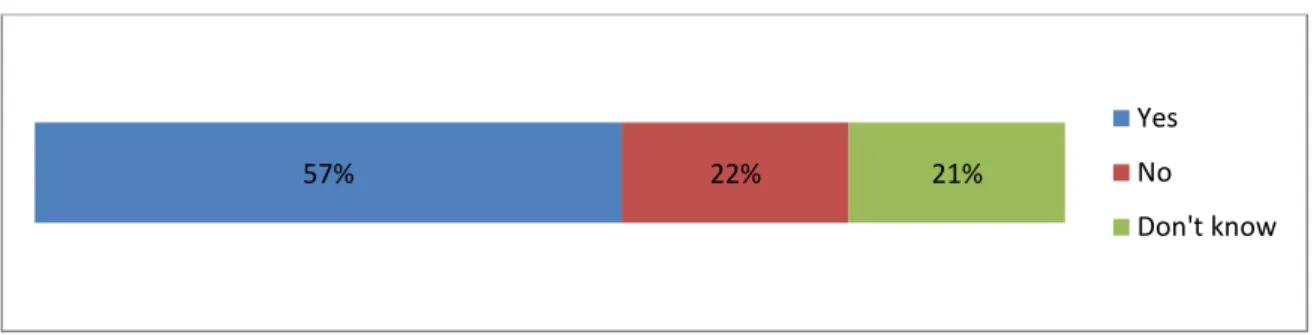
With regard to data sharing activities using energy consumption data (which is relevant to fuel poverty), the Information Commissioners Office's annual Tracking Report on Individual Attitudes and Awareness of Data Protection (2009) found that the majority of respondents were concerned about the handling of their personal information: 93% of respondents were concerned, an increase of 23% since 2004 (Consumer Focus, 2011). Research has found mixed opinions among the public about the security of data sharing exercises.
Conclusions
This may be linked to the fact that health data tends to be more sensitive and older people tend to have more health issues. There appears to be mixed evidence regarding how the public views data sharing and factors such as the motivation of those involved (i.e. the organisations) and the security procedures in place are linked to attitudes towards such exercises.
Targeting costs of existing programmes
Finally, and to illustrate the uncertainty of the cost and range of the reported figures, a DECC representative at the stakeholder workshop mentioned the cost of 14 pence for automatic matching of the core group. The Digital Switchover Final Report (DigitalUK, 2012) contains some useful summary statistics on the impact and costs of the scheme.
Cost-benefits of data sharing
Center for Sustainable Energy (CSE) ran an energy advisory service under CERT;. towards the end of the program energy companies were willing to pay in the region. While these costs were certainly influenced by pressure to meet targets towards the end of the programme, they are nonetheless indicative of what energy companies were willing to pay to find suitable eligible households.
Data costs
52 NatCen Social Research with Center for Sustainable Energy | Data sharing for fuel poverty targeting. 54 NatCen Social Research with Center for Sustainable Energy | Data sharing for fuel poverty targeting.
Seeking Consent
It is not clear how much funding would have been received without using the database. The net financial impact of the database is likely to be lower than this figure.
Solutions
This may require sending letters and setting up a call center for referrals or, in the case of the Warm Home Discount wider group, verifying a household's eligibility. This is a significant cost and must be considered in the context of the specific program in which it would be used.
Benefit system changes
However, for a scheme considering the installation of several thousand pounds worth of energy efficiency measures, most of the finance available for improvement measures (which would represent the bulk of policy costs) could be allocated to fuel-poor households. In addition, the costs of identifying lean fuels will have covered an energy assessment that will determine the most appropriate measures for the property.
Conclusions
None of the policies addressing cold houses specifically target the fuel poor per se, but have used proxies to identify those most likely to experience fuel poverty. The main existing fuel poverty policy, the ECO Affordable Warmth, is estimated to be about 40% efficient targeting fuel poor households (Table 1.3).
ICO Guidance
60 NatCen Social Research with the Center for Sustainable Energy | Data sharing to target fuel poverty. The standout message from the literature and interviews with stakeholders is that there is currently a lack of clarity around the rules for data sharing in terms of what can and cannot be legally shared.
Institutions involved in data-sharing and fuel poverty
62 NatCen Social Research with the Center for Sustainable Energy | Data sharing to tackle fuel poverty. Better data in this area could provide alternative data sharing options to address fuel poverty that do not require the sharing of personal information.
Institutional barriers to data-sharing
64 NatCen Social Research with Center for Sustainable Energy | Data sharing for fuel poverty targeting. In particular, local communities show varying degrees of motivation to explore data sharing for strategies to reduce fuel poverty.
Future directions and recommendations
66 NatCen Social Research with Center for Sustainable Energy | Data sharing to target fuel poverty. Sharing data creates opportunities, but just as important is providing flexibility for those administering fuel poverty initiatives.
Case studies
As an extension of this, there is also a need for greater focus on the success stories of data sharing and how previous projects have generated successful results. 68 NatCen Social Research with Center for Sustainable Energy | Data sharing to target fuel poverty.
Conclusions
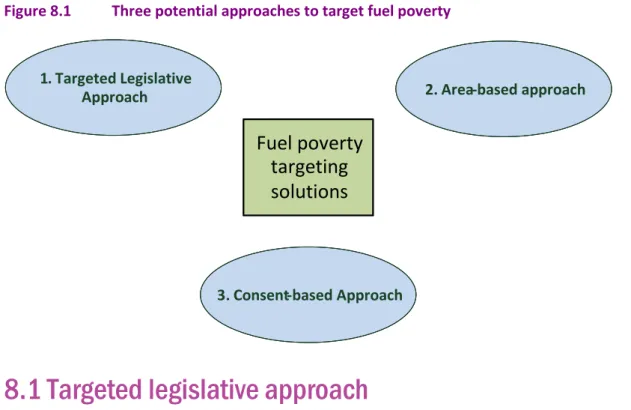
During the research, three generally different approaches were identified as possible options: 1) targeted legislative approach; 2) regional approach; and 3) a consent-based approach. Consent Approach – This would be a program that seeks to obtain the express consent of data subjects to use their personal data for specific purposes that are clearly described when consent is obtained.
Targeted legislative approach
First, a version of this system is already in place and a precedent has already been set in the form of the Warm Home Rebate. An extension of the current system may require data matching of multiple data sets indicating the low income status of households.
Area-based approach
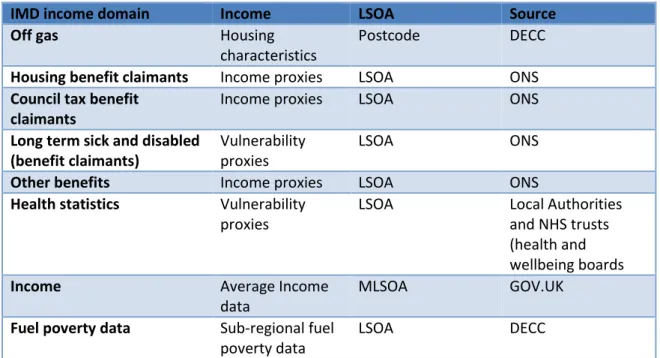
However, household level data will also be important to supplement area level data and focus schemes on certain types of fuel poor or vulnerable. Below we look at some of the data and targeting issues associated with an area-based approach.
Consent based approaches
80 NatCen Social Research with Center for Sustainable Energy | Data sharing for fuel poverty targeting. 88 NatCen Social Research with Center for Sustainable Energy | Data sharing for fuel poverty targeting.
Consent based approaches
90 NatCen Social Research with Center for Sustainable Energy | Data sharing to target fuel poverty. 92 NatCen Social Research with the Center for Sustainable Energy | Data sharing to target fuel poverty. https://www.ofgem.gov.uk/publications-and-updates/warm-home-discount-annual-report- scheme-year-3. 2013).
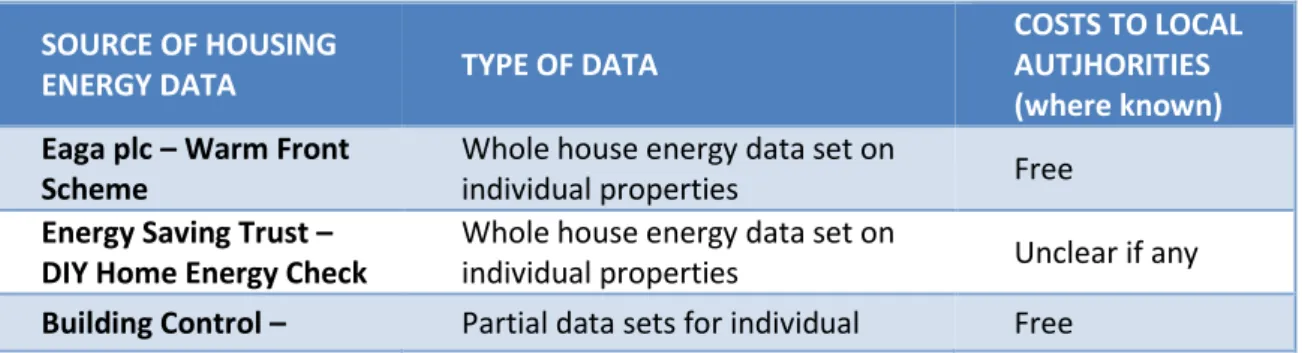
Data sources
2 NatCen Social Research with the Center for Sustainable Energy | Data sharing to target fuel poverty. Possible available only to local authorities, but likely to be able to share with partner organizations and subcontractors.