1 'End-users' are members of the public whose primary purpose in participating in education is to improve their own personal financial capability. Telephone and face-to-face interviews with 15 end-users and 25 front-line staff conducted by MoneyActive volunteers during the last year of the programme.
Project delivery in England and Wales
- Performance against committed outputs and outcomes
- Rationale for applying to deliver MoneyActive
- Marketing the training
- Developing the training
- Delivering the training
- What are the key ingredients for success?
- Delivery models
- Quality control
- Beneficiary groups
- Time and resource requirements for bureaux
Of the 96 project coordinators who responded to MoneyActive's final coordinator survey, just under half said their offices were new to financial capabilities before MoneyActive. Some bureaus have developed quite sophisticated approaches to training during the MoneyActive period.
Volunteers
- Profile of volunteers
- Comparison with CAB volunteer profile
- Recruitment and Induction
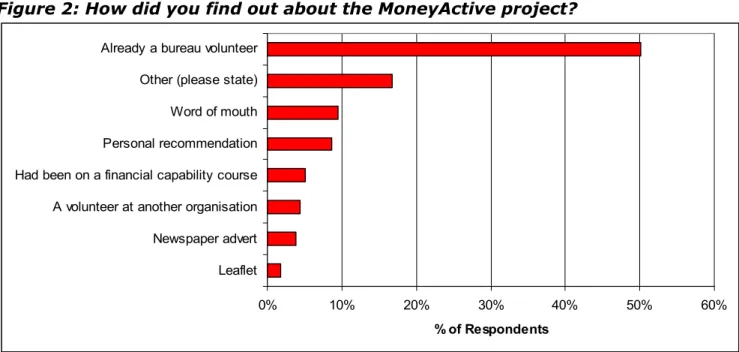
- Finding out about the MoneyActive project
- Motivations for volunteering
- Delivery
- The roles of volunteers
- Time commitment
- Training and support
- Local bureau training and support
- National Citizens Advice training and support Two-day training course
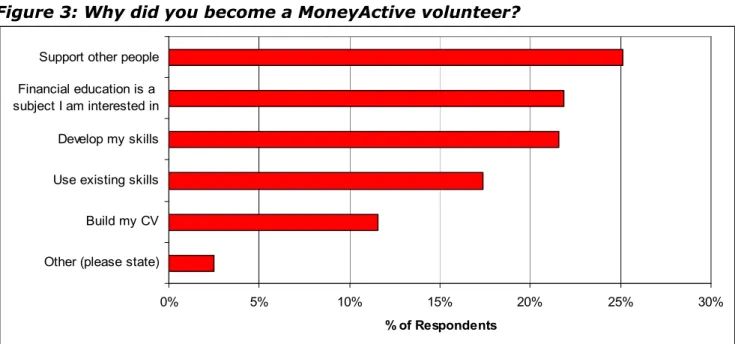
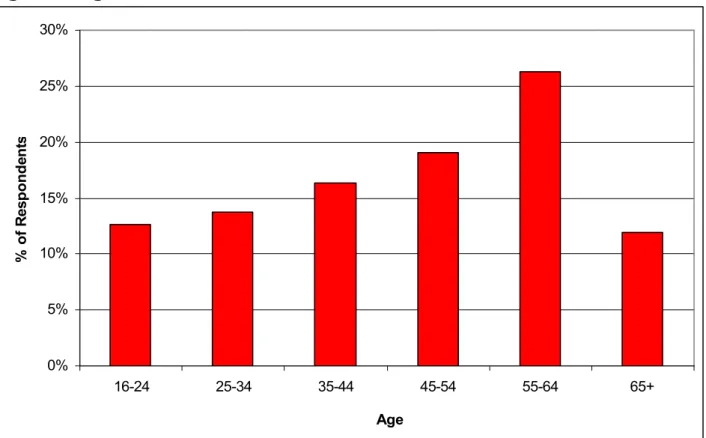
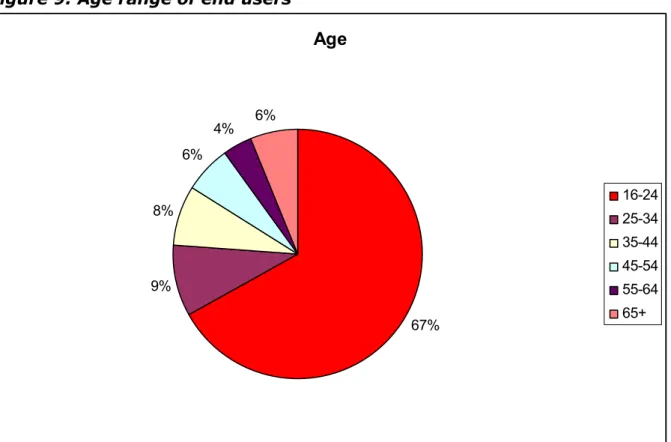
13% of volunteers have a disability or long-term illness, up from 10% in the previous interim report. A quarter of volunteers became MoneyActive volunteers because of the opportunity it provided to support other people. However, the number of volunteers providing one-to-one tutoring increased from a quarter to 34% in the final volunteer survey.
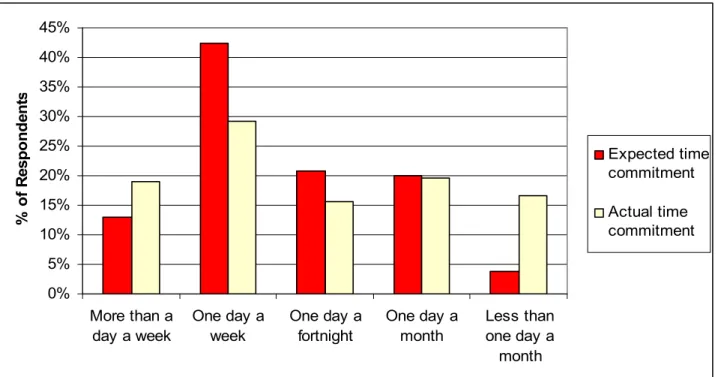
The number of volunteers designing content had dropped very slightly from the mid-term survey, falling from a third to 30%. Similarly, the number of volunteers involved in marketing fell slightly from over a fifth to 18% (see Figure 4 below.). When they joined the project, the largest proportion of volunteers who responded to the final volunteer survey (42%) expected to commit one day a week to MoneyActive.
A small number of volunteers mentioned that they would prefer the training to be more relevant to their specific role, whether it was presentation, marketing or course content design. The 12% of volunteers who did not use CABlink training materials in the delivery of sessions were asked why.
Impact and effectiveness
Outcomes for service users
- Outcomes for end users
- Outcomes for frontline workers
Nine interviewees attended the training on the recommendation of a support worker or friend. Two attended out of "curiosity" after seeing a promotional flyer, while three said they were referred to the training directly by their local offices. Some end users mentioned specific financial difficulties that led them to attend the training.
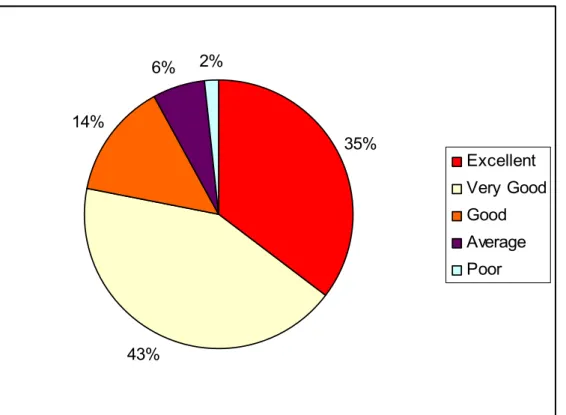
23% of frontline workers classified themselves as "very insecure" or "fairly insecure" before the training, falling to 8% after the training. Around half of the frontline staff interviewed attended the training after being asked to do so by a manager or because it was part of wider training for their role. The overall impression people had of the training was extremely positive, with many commenting that it was useful and engaging.
More than half of the interviewees use the training handouts with their clients and find them a useful resource. Several frontline workers also commented that the training benefited them in their private lives as well as enhancing their working lives by providing opportunities to network with other local organisations.
Outcomes for volunteers
Some of the delegates are already heavily in debt, so limited influence in trying to help them solve their problems. My ideas and thoughts on training have been taken into account as well as those of other trainers." Towards the end of the project it seems to be getting harder to motivate people..some just see it as a total wrap but I see it as just the beginning, a lot of work has gone into getting it off the ground and it will continue even if there is no further funding for it.”.
This is particularly noticeable at this stage of the project, as funding has ended. Many of the 18% who see themselves in paid employment would like to work in financial education or debt counseling and within CAB itself. 30%4 of respondents believe the MoneyActive project will help them "a lot" to get to where they see themselves within six months (see Figure 19 below), down from 36% in the April 2011 report.
When reviewing the data by destination, 80% of the 18% intending to be in paid employment believe the MoneyActive project will help "a great deal" or "quite a lot" to make this possible. Of those who see themselves volunteering at CAB in a new role, 59% believe MoneyActive will help "a great deal" or "quite a lot" in making this possible.

Outcomes for bureaux
- The benefits
- The challenges
- MoneyActive’s relationship with other bureau activities
Some bureaus have overcome resistance from end-users to benefit from financial capability advice along with debt advice by insisting that beneficiaries have a. This package invariably started with the financial capability support and bureau staff were instructed to strictly implement it. In the case of the larger projects where the project leader delivered other financial capabilities and inclusion support projects, MoneyActive tended to fall, and be integrated within that broader portfolio of work.
Financial capability training built on the significant work already delivered as part of the general Energy Best Deal training. One agency noted that its community care team received the majority of its referrals from financial capability support staff. In one bureau in particular, financial capability is completely integrated with the debt advice service.
It insisted that beneficiaries receive an integrated package of financial capability and debt counselling, starting with financial capability. It was generally agreed that the degree to which financial capability training had been integrated into broader agency functions depended largely on the commitment and willingness of the agency head and board.
Continuation
Expanding and deepening existing relationships with agencies that have previously expressed an interest in funding future training courses, including local authority departments; Expanding relationships with Foyer developments to provide a wider package of support to vulnerable young people; The Bureaus expressed concern about the possibility that Bureaus would have to seek multiple sources of funding to provide the service in the future.
If this is the case, the total resources available must be large enough to support central coordination and administration activities. It is important to note that the latest Coordinator Survey found that the role of the MoneyActive-funded Coordinator was key and critical to MoneyActive's success in many agencies. Initially, most coordinators believed that to be sustainable, the project would require full-time staff rather than volunteers.
It was generally felt that recruiting, training and retaining volunteers was too difficult for the bureau's already overburdened staff. However, there is now a growing sense that, as public funding constraints remain severe, there will inevitably be an increased need to rely on volunteers to support the bureaus' activities and deploy volunteers to deliver financial capacity training.
Project delivery in Scotland and Northern Ireland
Context
Project Delivery in Northern Ireland
- Delivery Model
- Time and resource commitment and connecting with other bureaux activity
- Volunteer training and ongoing support
- Benefits for volunteers from the co-ordination/bureaux manager perspective
- What worked really well?
- What have the struggles been?
- Key changes that would have been instituted in hindsight
- Delivery in Northern Ireland from the volunteer perspective
A combination of the Coordinator and the Associate Trainers interviewed the volunteers and the Associate Trainers trained them – both on Citizens Advice in general and the MoneyActive project in particular. The Coordinator felt that earlier and more intensive marketing of the program within the agency network would have fostered greater involvement from the agencies. They reduced the emphasis on designing and structuring the training - the volunteers do not have the primary responsibility for this - although it was considered good practice to involve them in the design process.
However, they felt that training support materials were presented at the level of/in the language of the trainer and volunteer rather than the end user. The co-trainers received inquiries from volunteers about 'broader parts' of the programme, including how volunteers are recruited and whose job it is to recruit them. Although a 'double-edged sword' (see struggle below), the training is free, negating the need for organizations to set aside budgets to pay for training in these financially challenging times.
It was feared that the fact that the advice was free was expected to lead to poor attitudes towards participation on the part of the pupil. The co-workers and the bureau were very complimentary about the quality of support and willingness to help from the Citizens Council (Northern Ireland) co-ordinator.
MoneyActive in Scotland
The above account shows a difference of views between the Regional Coordinator, Bureau Managers and Assistant Trainers on the one hand and the volunteers directly participating in the focus group on the other, regarding the coherence of the training offer with the ongoing support for delivery. . However, volunteers and coordinators felt positive about the project and felt that it had the potential to make a big impact. 34; It would be nice to think that the positive impact of this will be to make people stop and think - even if it's just a little voice in the back of your head telling you to read the fine print."
Reflections
- Context
- Achievement of committed outputs
- Project development and design and delivery of the training
- Beneficiary perspectives
- Sustainable benefits
- Continuation
It is important to create sufficient resources for marketing; understanding the training needs of specific target groups in order to develop the training at an appropriate level/ensure that the content is appropriate; planning/production of projects and trainings and personalization of materials; recruitment, training and continuous development of volunteers; Using existing contacts and networks for marketing proved particularly effective, especially where key decision makers were known to the bureau - it was important to get to the right people as quickly and efficiently as possible. Demonstrating a commitment, willingness and understanding of how to ensure the relevance of the training to the target group was important in terms of content, time, duration and place of development.
Optimizing the use of marketing volunteers has proven to be a valuable additional resource, particularly for those who have not been comfortable with direct delivery of training. It is important to use clear and accessible language both in the organizations acting as intermediaries and in the training itself. Frontline workers generally felt that the training was well structured, balanced, interesting and informative and generally felt that their own knowledge was so.
Most respondents to online surveys at program completion believed they were likely to participate in further financial capability training. They particularly valued training on how to set up a budget, explanations of APR and understanding how to differentiate between priority and non-priority debt.