This edition of the Bulletin is all about learning, from cover to back. Each has held multiple roles at the College and introduced significant improvements to the work of the College.
COLLEGE NEWS
On the first floor there will be a lecture hall with 200 seats, equipped with the most modern audiovisual facilities. Visit the website for regular updates in the Alie Street blog and information about the history of the area and the location of the new building. Significant investment has been made in the development of the College's new website, which will go live within months.
The Medical Training Initiative (MTI) pilot has started and a Clinical Lead from MTI has been appointed. Representatives of the College have contributed to BBC Radio 4 Woman's Hour, the Today programme, Radio 5 Live and Radio 4's The Report.
TRAINING
We were treated to two talks by guest speakers, including findings related to emergency trauma management (a guide for pathologists) and advice on critical analysis of the published literature. There were also updates on the latest developments in designer drugs from a senior toxicologist, the results of the Home Office audit of "missed murders" and assessment and reassessment for forensic pathologists. The highlight of Saturday was, as always, the formal dinner with the guests in their finery.
Here we met our partners, who spent the day on an accompanying per-. The dinner was followed by a lively speech and a wonderful song by the President (although he forgot my name!) and of course the Queen's toast and the obligatory incidentals.
Oliver Memorial Trainee Bursary
The Furness Prize for Science Communication 2015
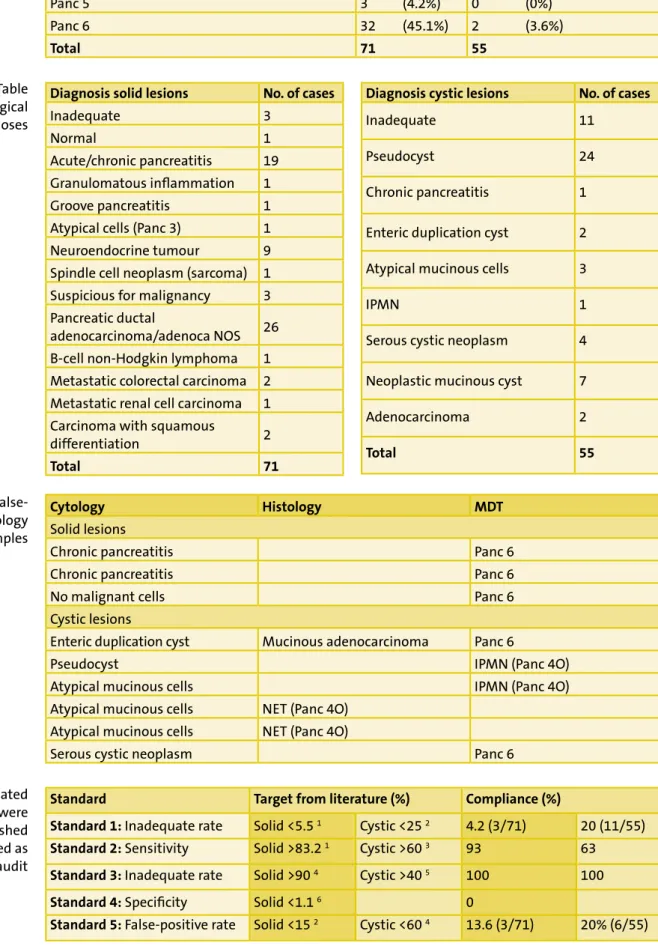
CLINICAL EFFECTIVENESS
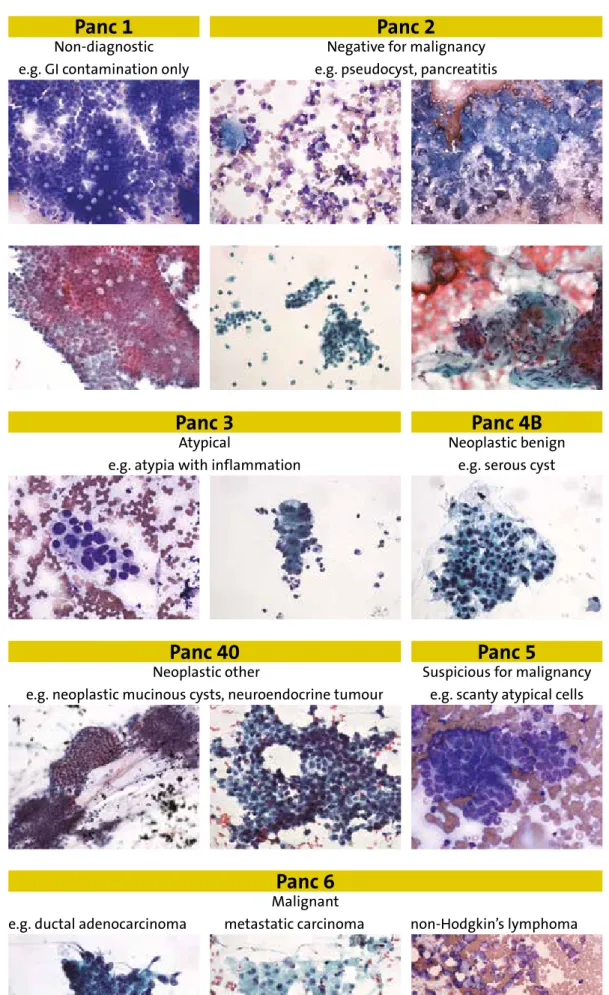
Panc 4B
Panc 2
Action plan
What was the main matter(s) of concern this audit identified?
The lung cancer service at Guy's and St Thomas'. GST) Hospital receives patients for diagnosis from a number of different sources. Patients referred by GPs through the two-week cancer pathway are cared for by a specialist lung cancer team and subject to the 62-day target for diagnosis and treatment. I decided to make lung cancer diagnostic pathways the subject of my A3 project, which was part of the excellent course 'Leading Transformational Cultural Change'.
Define the problem (what problem are you trying to solve?) The care of a patient with lung cancer depends on how inequalities are presented. Lung cancer specialists do not screen all patients in the first stage.
Improving the Lung Cancer Diagnostic Pathway
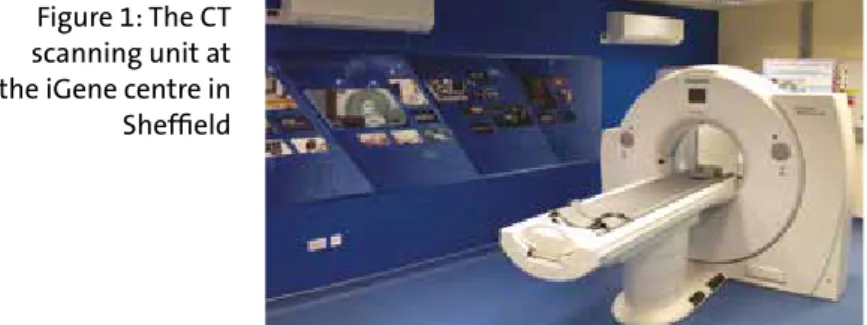
Patients referred by GPs were treated on average 46 days after their CT scan, while patients referred by other routes waited an average of 76 days (Figure 2). Abnormal scans not always responded to immediately (A), specialist team underutilized (B), inappropriate investigations being performed in some cases (C), patients referred to pulmonary MDM before fully worked up (D) - see Figure 1 for location of litter in the road.
Existing lung cancer pathway
Statistical Process Control (SPC) Chart
A single effective lung cancer pathway using a group of lung cancer specialists under the supervision of a cancer waiting group (Figure 3). A consultant upgrade will be triggered by an abnormal scan result, all patients will be followed up by the cancer clinic and referred immediately to the specialist lung cancer team. Results and metrics (what was your PDSA cycle like, how long did you run it, what data did you collect before and after the change, what did you find out.
We will compare the average path lengths before and after the changes, broken down by path of introduction. Any route longer than 62 days will be investigated in depth to find the causes of the delays.
Leadership Journey
Monitor the workload of the lung specialist team to determine if there is a need for additional resources, organize a quarterly meeting to highlight and learn from examples of good and bad practice, and review the policy for monitoring indefinite scans that do not require immediate examination.
Important learning points included
Paul Cane, Consultant Histopathologist and Clinical Lead for Lung Cancer, Guy’s and St Thomas’ Hospital
ON THE AGENDA
- Service use
- Service effectiveness
- Unmet needs
- Accessibility of microbiology services
- Specific improvements to microbiology services
COSD pathology data are based on data items with RCPath cancer datasets and are only a small subset of the data items in RCPath cancer datasets. Many LIMS suppliers are currently in the process of updating their systems to ensure compliance before the required dates. She was lost in the darkness of both the room and her thoughts.
If the donor does not declare potential health problems at that time or in the future, it can lead to legal consequences. The results below summarize some of the more relevant and central findings of the study.
PUBLIC ENGAGEMENT
On Saturday 1 August 2015 the College supported a 'Living Autopsy' event at the Shuffle Festival in Tower Hamlets Cemetery Park, one of the original. Standing over a living volunteer who had wildly dressed for life in the woods to climb onto a table and act dead, Dr. Gopinath to explain why autopsy was important and the many roles pathology plays in our society. This year's theme for the festival – which always incorporates art, science, spoken word, music and community engagement – was 'Movement, Migration and Place', and Dr. Gopinath related his presentation to this theme by including information on the conventions of death and autopsy for different nationalities and faiths.
For simplicity, a single disease, in this case gastroenteritis and diarrhea, was used for the rest of the investigation. Different types of lab tests were discussed, and students plated feces on agar plates while wearing full lab PPE.
National Pathology Week
LETTERS
If we were to provide such training to graduates in the life sciences, either through the development of the Physician Assistant Scheme or our Clinical Scientist program (and thus the Fellowship examination of the Royal College of Pathologists), then opportunities such could be expanded. At the time of writing, we are nearing the final exams of the pilot participants at their conclusion. To prove the concept that histopathology reporting could be safely performed by non-physicians, we limited recruitment to elderly BMS at the start of the pilot.
In subsequent years, the pilot rapidly expanded to now include a large number of histopathology departments, expanding the adoption of the theory of reporting histopathology specimens by appropriately trained and qualified scientists. However, recruitment for the current program, now overseen by a joint Institute for Biomedical Sciences/RCPath board, has slowed.
PEOPLE
Professor Don Kelly was inducted into the RCVS Honors Gala in recognition of his lifetime service to veterinary pathology on the national and international stage. Professor Cheryl Scudamore, Head of Pathology at MRC Harwell and current chair of the Royal College of Pathologists' Specialty Advisory Committee for Veterinary Pathology, received the award. The award of Fellowship is the highest award of the RCVS and is seen by many as the ultimate career goal of a veterinary surgeon.
For three RCVS scholarships to be awarded to veterinary members of the Royal College of Pathologists in a single ceremony highlights the very close links between the RCVS and RCPath, and the importance of a continued partnership in maintaining the quality of veterinary pathology and pathology training comparative research in the UK and beyond. He serves on the editorial board of the Journal of Surgical Pathology and the Journal of Pathology, is the editor-in-chief of the Virchows Archiv, and is the editor-in-chief of the Journal of Hematopathology.
Dr Marian Malone
In recognition of her contribution to child health in the UK, she was awarded an Honorary Fellowship of the Royal College of Paediatrics and Child Health in November 2014. She had a strong religious faith that taunted her but gave her immense inner strength. She had a large extended family in Ireland with whom she was in frequent contact and regularly visited Dublin.
Her last year, despite the difficulty of her treatment, was her busiest ever, and she saw her many friends often and enjoyed their company very much.
Dr George Alan Rose
His 1987 lecture at the Massachusetts Medical School was followed by a seminar on "Conditions of Crystallization in Urine." The following year he was invited to an international conference in Vancouver and in 1990 he presented his papers at an international conference in South Africa. At Wadham College he played in the top team and one year they were River Head.
The following candidates have passed all components of the Hematology part 2 examination (Clinical Scientists) in the spring session 2015. We apologize for their omission in the last edition of the Bulletin.
MEETING REVIEWS
Dr. Fiona Walsh introduced the concept of the microbiome, the genome of a collection of microorganisms residing on the surface in deep layers of the skin, oral mucosa and gastrointestinal tract, and their role as drivers and reservoirs of resistance in zoonotic diseases. pathogens. Dr. Muna Anjum provided a comprehensive account of the various genotypic and phenotypic screening technologies for the characterization of antimicrobial resistance in bacterial isolates. The College – through its role in improving professional education, training and public engagement and strengthening national collaboration with the DoH's professional infection societies, academic departments and public health authorities – is ideally placed to address key areas of action in the fight against antimicrobial resistance .
Keynote lectures included the importance of the morphological pathologist in advances in infectious diseases by Albert Osterhaus, the immune responses to cancer by Wolf Fridman, Fred Bosman on the history of the WHO Blue Books and Simon Herrington on optical imaging for cancer diagnosis. When a new document is posted, we send an email to the members concerned to inform them of the open consultation.
BOOK REVIEWS
The book originally began with Malcolm Anderson's tome The Female Reproductive System in the Symmers Pathology Series in 1991 and became a standalone textbook in 2002. The second edition of 2009 was called Robboy's Pathology of the Female Reproductive Tract in recognition of Stanley's tremendous editorial efforts. Robby. Robboy was appointed president of the College of American Pathologists in 2011 and has contributed to six chapters in the current edition.
High-grade endometrial stromal sarcoma, which was prematurely dismissed in the second edition, has now been revived based on its unique histologic and molecular features. The role of (STIC) in the development of serous ovarian carcinoma is discussed in Chapter 21, including useful practical advice regarding the use of the SEE-FIM protocol for extensive fallopian tube sampling in women with a BRCA gene mutation.
COLLEGE SYMPOSIA
International Pathology Day
November 2015
Screening day
November 2015
Gynaecological pathology: Putting virtual microscopy to the test
January 2016
Liver biopsy in the assessment of medical liver disease
February 2016
Combined RCPath/BNS neuropathology/
May 2016
Uropathology reporting: What really matters – when and why
June 2016
Conference application form and proforma invoice
Screening Day – 26 November 2015 (Leeds)
2016 one-day events
New articles published
Association of Clinical Pathologists
Haematology: preparing for the FRCPath examination
January 2016 Royal Society of Chemistry
February 2016
Autopsy Update Day Friday 4 March 2016
I give to The Royal College of Pathologists ("the College"), registered charity number 261035, the sum of £………. free of all taxes, whether paid in the United Kingdom or overseas for the general purposes of the College, and I declare that the receipt of the Honorary Treasurer of the College will be a sufficient discharge to my executors for the time being.
Pathological Society of Great Britain and Ireland forthcoming meetings
Great Britain and Ireland
The Pathological Society of Great
Britain and Ireland offers several grant schemes, namely
Austin Court Birmingham
Frontiers in Laboratory Medicine
Further
Getting fit for the future
Topics to include
The NHS diagnostic strategy 2015 – how will it affect your laboratory service?
The Carter Review of operational productivity in the NHS – what does the 2015 review mean for
Laboratory services in devolved administrations – lessons from Scotland
The Pathology Value Pyramid – a tool to ensure your laboratory is contributing added-value to
Accreditation – does ISO ensure fitness for purpose?
Big data – using aggregated laboratory data to improve healthcare delivery and public health
Digital Histopathology – what's happening globally?
IT – using middleware to improve operational effectiveness and add value
Integrating health and social care provision – what are the challenges for diagnostics?
New genetic and molecular test technologies – driving centralisation or coming to a lab near you?
Plus
Expert panels with Question Time sessions
Breakouts