We welcome this opportunity to respond to Ofcom's consultation at a crucial time for the postal market. But despite some positive proposals to address specific issues, our overall assessment remains that Ofcom's approach to regulation is not working for consumers.
Ofcom needs an active regulatory approach that puts consumers at its heart
Ofcom should focus on the principles of universality, affordability, consistency and
This is indeed an approach that Ofcom itself seems to favor, emphasizing consumer outcomes in its work plan.19 We are therefore disappointed that postal services are lacking in this. We recommend that Ofcom create consumer outcomes metrics for postal services that aim to ensure the market is universal, affordable, consistent and fair for both private and business consumers.
Ofcom needs to be more proactive and agile in its regulatory approach
We are concerned that the regulator does not take action, even if it is presented with evidence of damage. In the context of the cost of living crisis, it is essential that the regulator is prepared to act to protect.
Ofcom should reshape its regulatory approach to prevent consumer harm
- While we welcome the proposals Ofcom sets out to address specific issues, our overall assessment remains that the
- Ofcom should take the opportunity of this regulatory review to reshape its approach to regulation to be more focused on positive
- We also recommend that Ofcom creates consumer outcome measures for postal services that focus on making sure that the
- Financial sustainability
However, it becomes meaningless if it is not supported by decisive measures in the face of consumer harm. Consumers and the bodies representing them should be confident that Ofcom will not hesitate to investigate and take appropriate enforcement action if it sees evidence of poor outcomes for postal consumers.
Summary
Royal Mail must not rely on price increases, the removal of regulatory safeguards or service
Royal Mail should not rely on price increases for consumers to ensure financial sustainability
USO should be delivered at affordable prices.27 However, our survey found that 4 out of 10 (42%) consumers feel that the cost of sending letters or parcels is unaffordable.28. It would be unacceptable for consumers to shoulder a greater financial burden to provide an efficient service, instead of Royal Mail focusing on its own transformation.31.
Cutting consumer protections would not be an acceptable way to improve financial sustainability
Consumers should not pay the price for an inefficient postal service
As we set out in our response to question 2.1, Ofcom should actively monitor this reporting and take timely action if
Efficiency
Publishing Royal Mail’s progress on efficiency will create a public benchmark
- Citizens Advice welcomes the proposal to publish Royal Mail’s 5-year efficiency forecast annually and to require the company to
- This should create a public benchmark of the Royal Mail’s efficiency assumptions against which the business can be held
- As we set out in our response to question 2.1, Ofcom should actively monitor this publication and take timely action if
- USO letters regulation
Ofcom should also introduce safeguards to preserve the principles of transparency and consultation with consumer groups during regulatory periods of emergency legislation. In the context of missed targets and widespread postal delays during the Covid-19 pandemic, Ofcom should step in and use its regulatory levers to provide consumers with the high level of service they expect.
Safeguard caps
High service quality targets give consumers reassurance and it is right for Ofcom to maintain its current standards.
Safeguard caps offer essential protections to consumers in a monopolistic market
We look forward to providing our input to Ofcom's forthcoming review of Tier 2 caps.
Post should be affordable
We therefore support Ofcom's assessment that "neither affordability nor sustainability considerations provide compelling reasons for reopening the safeguard cap".49 We are confident that caps will remain an important regulatory safeguard to protect access to the universal service after that date and look forward to we will contribute to the upcoming review of class 2 limitations.
Quality of service
Ambitious and stretching quality of service targets remain appropriate to give consumers
Targets are needed to ensure high service levels, including in rural areas
A reduced PCA target could also lead to "a wider variation in USO service quality across the UK and is likely to lead to postal users in some local areas experiencing a poorer level of service".57. People across the country, including those in rural areas, must have a high level of service.
Consumers should receive a high level of service, regardless of their address
Ofcom has highlighted concerns that a reduced PCA target could reduce the incentive for Royal Mail to provide high quality service in rural or remote areas. it is likely to lean on the post. It is not enough to have high service levels on average if customers in some areas are left behind.
Targets should be maintained to incentivise high service levels, but Ofcom should do more to ensure the service is reliable
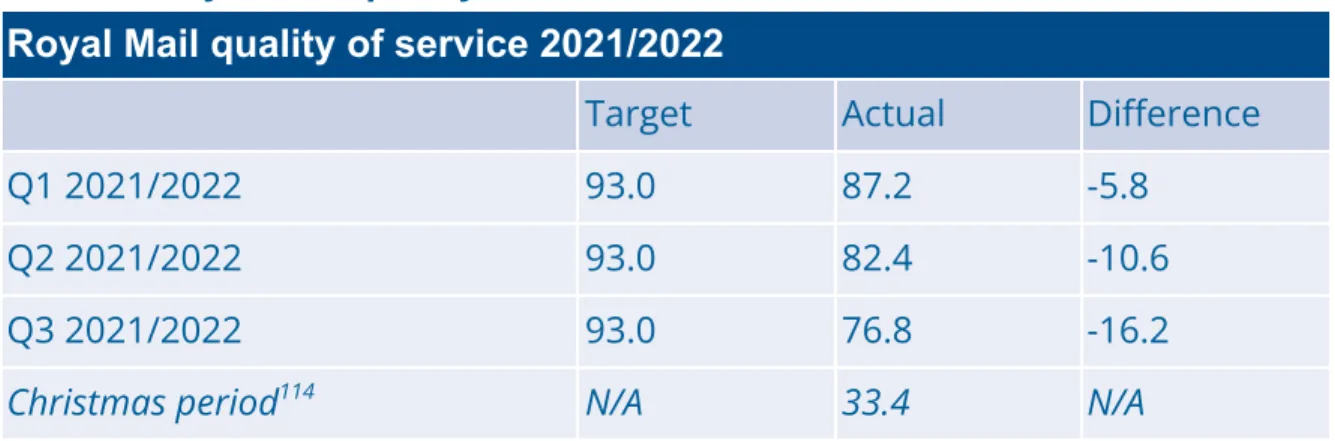
Ofcom should therefore review whether there should be a floor for the Christmas period, rather than a complete suspension of
More detailed reporting would highlight quality of service issues in local areas
We encourage Ofcom to explore whether it can do more to
Quality of service reports in plain English will make this data more accessible to the public.
Quality of service reports in plain English would make this data more accessible to the public
Quality of service targets should be both ambitious and accurately presented
Quality of service throughout the Covid-19 pandemic
More consumers are seeking help with delayed post
Insights from staff at local advice offices across England and Wales confirmed that postal delays are creating an additional burden for those experiencing financial difficulties. The Network Panel Survey is a monthly online survey of local council offices that ask 10-15 policy questions each month.
Citizens Advice research found substantial letter delays in 2021 and 2022
Our survey found that 3 in 10 (28%) people were affected by Royal Mail mail delays from mid-December to mid-January.92. Estimated from Citizens Advice polls, 28% of people experienced delays in letters and ONS population estimates for the UK, England and Wales, Scotland and Northern Ireland between mid-December and mid-January.
Post delays can create unexpected costs and stress for consumers
As we explained in Chapter 5, mail delays affect even those who are not regular mail users themselves. We are particularly concerned that people on lower incomes, who are already struggling to make ends meet, will face unexpected costs due to postal delays.
Post delays continued into 2022
Royal Mail hasn’t met its quality of service target for the past 2 years
In addition to maintaining important quality of service targets, Ofcom must use all regulatory levers to ensure targets are met and delays are avoided. Ofcom should also consider whether it needs additional regulatory leverage to be able to take more immediate action throughout the year.
Consumers must be given appropriate information and recourse when their post is delayed
Royal Mail is no longer in a period of regulatory emergency, and Ofcom must act where Royal Mail is not meeting quality of service targets. When post-delay issues are ongoing, Ofcom should require Royal Mail to provide accessible, actionable and up-to-date information to consumers.
Ofcom should do more to future-proof the regulatory emergency procedures
Royal Mail should continue to be transparent in any future emergency period
This period has also shown that even when data is shared in accordance with requirements, it is not always sufficient to allow Citizens Advice to understand the severity and impact of USO post delays. For example, current reporting only shows if something is delayed, not by how long. And it is not always fine-grained enough to analyze delays at the local level (see paragraphs 4.39-4.47 for more on this).
Access to post
It is important for Royal Mail to notify both Ofcom and Citizens Advice at least one month in advance of any changes to collection times as part of its PO Box. We strongly support the continuation of the free Articles for the Blind service, and agree that it is important that the scope is not reduced.
People in unsafe or non-traditional living situations can’t access their post
80% of people who have experienced rough sleeping have had difficulty accessing their post, as have 54% of survivors of domestic abuse - and people in various types of unsafe or non-traditional housing are also excluded in disproportionate way.130. In addition to very high levels of exclusion among those who have experienced rough sleeping, people who have lived in unsafe or inadequate housing also experience disproportionate harm.
People who can’t access their post can struggle to communicate with essential services
People in these living situations make up a much larger number than rough sleepers. At the end of June 2021, there were 96,600 households in temporary accommodation in England,131 while the 2018–19 English Housing Survey found that 541,000 households reported having someone couchsurfing among them.132.
People who are excluded from post can face serious harm
Nick did not get the letter in time and slept rough for another 3 months before he was offered somewhere else.137. 3 million people faced some financial loss between 2010 and 2020 due to difficulty receiving letters, and lost an average of.
Citizens Advice continues to work towards a solution for people who can’t access their post
Redirections
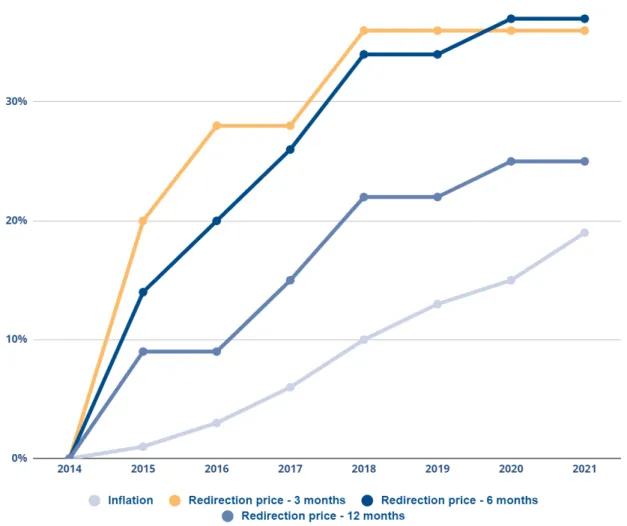
The cost of diversions has risen over the years and consumers are facing a cost of living crisis. Given the huge strain on household budgets, Ofcom should use regulatory controls to protect everyone from prohibitive prices.
Mail redirection is an important service
We are pleased to see Ofcom's research coming to similar conclusions to Citizens Advice that redirects, at full price, are not affordable for everyone. Redirects are intended to be delivered at an "affordable price".148 The service must meet the needs of all, regardless of income.
New qualitative evidence shows missing letters can have serious consequences
Citizens Advice commissioned new qualitative research with house movers to explore in more depth why people on low incomes are unable to pay the full price for redirects and the consequences they may face if they do not redirect.150.
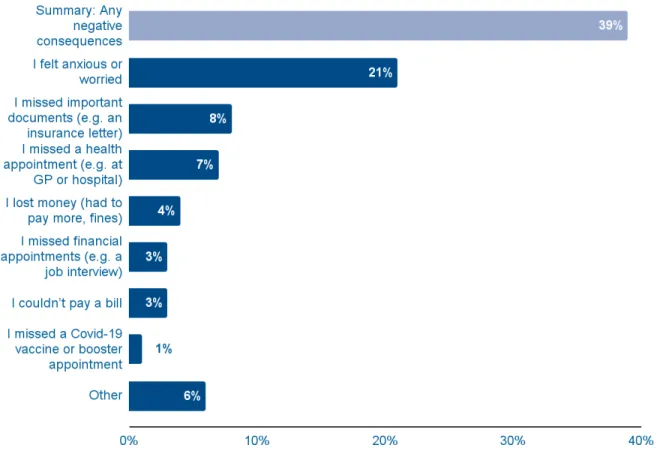
People lost money because they didn’t get their letters
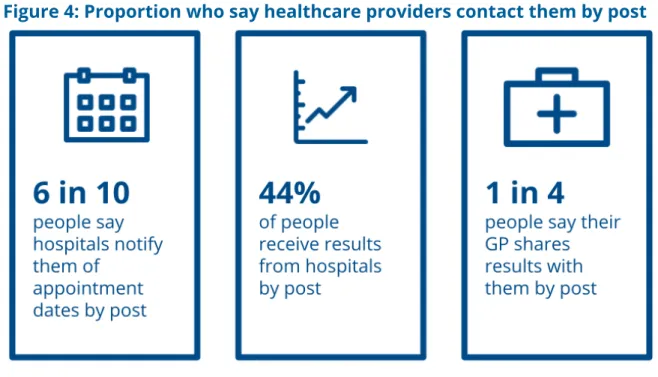
Failure to receive health care letters can lead to missed appointments and loss of sensitive medical information.
Not getting healthcare letters can lead to missed appointments and loss of sensitive medical information
Many underestimate the potential consequences of missing their letters
But when her debit card expired, one creditor informed her through letters to her old address that her payments had stopped. They never received the letters and were told to go to court - but communications about the lawsuit were also sent to the previous address.
Informal workarounds can result in lost or delayed letters 5.18. Ofcom has noted that most consumers who choose not to redirect
She is in debt and was struggling to pay the deposit on a new flat and moving fees. Someone like me who has to watch every penny I spend...would have taken it out of the food budget.
Home movers are under additional financial pressure
Our research shows that many people move during times of upheaval (such as eviction or relationship break-up), which can put additional strain on the budget.174. Ofcom estimates that the price of the most basic switching package jumped by 74% in nominal terms between 2012/13 and.
Royal Mail’s new and improved concessionary rate is a step in the right direction
We welcome the improved discount that the Citizens Advice Bureau has been calling for for a long time.182 And it is a positive step in the right direction from Royal Mail. It's an important lifeline for people on low incomes that they [Royal Mail] offer a discount on redirection.” Megan, 33, England184.
Ofcom must take action to protect the new and improved discount
In our survey, many participants said that an improved discount scheme would enable them to use diversion the next time they move.183 5.34.
Ofcom should monitor uptake of Royal Mail’s redirections discount
Ofcom has already set in place ambitious targets for Royal Mail’s quality of service for USO products. The regulator and Royal Mail
Ofcom should safeguard the discount scheme for the future 5.40. The expanded discount scheme should make redirections more
Ofcom should monitor the use of the enhanced discount and assess whether the company is doing enough to promote it. There is currently no protection for consumers that the effect of the discount is not removed or canceled by a price increase above inflation.
Ofcom should ensure that people can afford redirection
Not everyone on a low income is eligible for the discount 5.44. People should not have to choose between buying postal products
Given the tremendous pressure on people's budgets, Ofcom should consider reassessing the overall affordability of redirects.
Given the immense pressure on people’s budgets, Ofcom should consider re-assessing overall affordability of redirections
We welcome the regulator’s commitment to monitor redirection prices going forward. 198 But Ofcom should clearly set out what
Introducing price controls could help make redirections affordable
Ofcom should do more to safeguard the expanded discount and keep redirections affordable
The expanded discount is a step in the right direction. But Ofcom should ensure that Royal Mail improves awareness and take up of
As well as monitoring and safeguarding the discount scheme, Ofcom should act to protect consumers from rising redirection
Affordability of post
Postal consumers face wider affordability issues
Too many people find post unaffordable
Disabled people who say their disability affects their daily life a lot were 3 times more likely to say that postage is very unaffordable than those without disabilities (20% compared to 7%).206.
The cost of living crisis could leave more people choosing between stamps and essentials
Christmas card because of the price of stamps or could not afford a bus ticket after buying postal products.207. In the most recent Residential Postal Tracker, 12% said they cut back on essentials to afford stamps.208 And 16% said they cut back on stamps to afford these necessities.209 According to According to Ofcom's definition, postal services may be unaffordable to consumers if people are forced to do so by the cost of postage. 210.
And rising bills will lead to more difficult decisions for consumers
The proportion of people cutting back in this way has been steadily increasing and has tripled since 2018, when 4% reported cutting back to buy mail.211 And nearly 3 in 10 (28%) homebound consumers say , that they were left without basic things to buy postage.212 6.12.
Ofcom must ensure it has the best data available to assess affordability conditions
Since the 2019 review, many are also facing increasingly tighter incomes as the cost of living rises. Rising utility bills and rising inflation, coupled with reductions in Universal Credit, leave consumers with less disposable income to spend on products such as mail.
Ofcom should assess spending on post in the context of households’ disposable incomes
The same product represents 11.0% of the remaining income for a household in the lowest decile, compared to 0.4% for those in the highest.218. The most recent ONS data, from 2019-20, showed that households in the lowest income decile spent 54% of their total weekly expenditure on essential items such as housing, food and transport.219 And this figure does not take into account more recent increases inflation and essential household bills, leaving families with even less disposable income.
Ofcom should ensure it is measuring all types of spending on post
There should be a clear definition of “affordable prices”
This does not fit into Citizens Advice's understanding of how an affordable service should work.
Ofcom should take a more proactive approach to addressing consumer harm
Parcels market regulation
While we welcome Ofcom's proposals for handling complaints and meeting the needs of disabled consumers, we disagree with the overall assessment that the parcel market is generally working well for consumers. And while we welcome changes to handling complaints and meeting the needs of disabled consumers, we think Ofcom has gone far enough to protect consumers by preventing problems from happening in the first place.
Complaints processes are poor
If improvements are not made promptly, Ofcom must be
And if the CPCs do not currently allow effective enforcement action to be taken, Ofcom must consider changes to them.
Disabled people face disproportionate harms
We agree with Ofcom's assessment of the difficulties faced by disabled users and welcome the proposed new condition. Our research consistently finds that disabled people and those with special accessibility needs rely more on online shopping and delivery services, but experience more difficulties than others.
But the harms in the market are deeper than these issues
Traffic to our package advice web pages is also significantly higher since the start of the pandemic. 235 Citizens Advice, Citizens Advice response to Ofcom's Call for Inputs: Review of postal regulation, 22 June 2021.
And these harms are not evenly distributed
Ofcom must do more to protect people who can’t let their lives revolve around the supposed convenience of home delivery. We
Ofcom should strengthen regulation around parcel security to combat misdelivery
The number of failed first time deliveries
And while there has been some innovation in the parcel market to increase successful delivery rates, such as the increased use of Pick Up and Drop Off (PUDO) points, they have struggled to achieve a. Pick up Drop off points are not only beneficial for consumers.252 They also offer benefits to workers and the environment.
Ofcom should go further to create a parcels market consumers can rely on
Parcels complaints processes
We agree with Ofcom's assessment that complaints procedures are currently failing consumers in the B2C and C2X segments of the package market, and we welcome the intention of more detailed guidance for operators. Ofcom needs to set out a clearer relationship between outlined expectations and regulations, and there needs to be regular monitoring and review of data by parcel companies as part of the guidance strategy.
Complaints processes are letting consumers down
Barriers to compensation that people face include difficulty finding contact information, having to send multiple emails or make multiple calls, and receiving a slow response.261 Analysis we conducted last year found that over a third of the major package companies do not provide consumers with any online information on how to complain about a delivery problem.262. She tried to contact both the dealer and the delivery company, but it has only been possible to reach.
Guidance alone isn’t sufficient
Maria feels misled and the poor service made it very difficult to get in touch with anyone and find out what was going on. The package company sent photos of a blue door as proof of delivery when she didn't have a blue door, telling her she wasn't home when she waited for delivery at home.
Regulation is needed to ensure effective consumer protection
It is therefore crucial that parcel carriers have a clear and accessible complaints process for consumers. We support Ofcom's proposals to add guidance and more detail on the complaint handling processes operators should put in place.
Ofcom must set out a clearer relationship between guidance and regulation
Guidance must be supported by regulatory action when necessary
Protections for disabled people
We welcome the proposed new condition, which provides a framework for operators to better meet the needs of consumers with disabilities in parcel delivery.
Disabled consumers disproportionately
Over the past year, we've seen disabled consumers continue to be put at the sharp end of the delivery market, especially with the coronavirus pandemic increasing consumers' reliance on online shopping. In August 2021, nearly 1 in 3 disabled consumers (29%) who shopped online in the previous 3 months had a delivery during that time where they didn't get to the door before the delivery driver left.
Disabled consumers face disproportionate impacts when their needs are not met
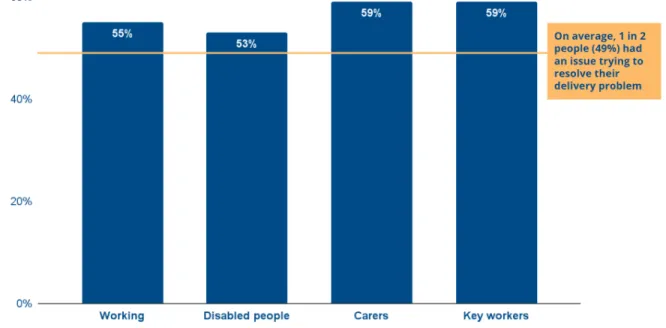
And in our latest research, we found that 3 in 5 (59%) of consumers with accessibility needs had a problem with the last delivery, compared to 36% of people without these needs.287. However, they said they wouldn't, even though there was no reason why they couldn't.
The proposed new condition is a positive step towards meeting disabled consumers’ needs
USO parcels regulation
No, we do not agree with the proposal not to include tracking facilities in First and Second Class USO services. We understand that USO services are designed to be basic, and any change to include tracking in USO has the potential to change market dynamics.
Tracking is valued by consumers
Nevertheless, for the USO to remain relevant, it is imperative that it keep pace with the changing needs and expectations of consumers. When sending and receiving a package, 2 in 5 (42%) of consumers say tracking is essential, while only 4% say tracking is not important.295.
Tracking also protects consumers from harms in the parcels market
Tracking can also provide evidence of a service failure, such as items arriving late or being delivered to the wrong address, making it easier for consumers to seek redress. For consumers or small businesses sending parcels, tracking can be essential to effective dispute resolution.
Tracking is a widely accepted industry standard
Detailed tracking can help consumers find their packages more easily by accessing any data related to geographic location.
Ofcom should consider the consumer need for tracking as well as market dynamics