The use of the Internet as a means of communication is increasing, both within the academic and social context. The instrument aimed to collect basic information on some of the most important aspects of students' use of technology during their studies. The pedagogical models used may depend on the context: the level of study and the institutional program structures.
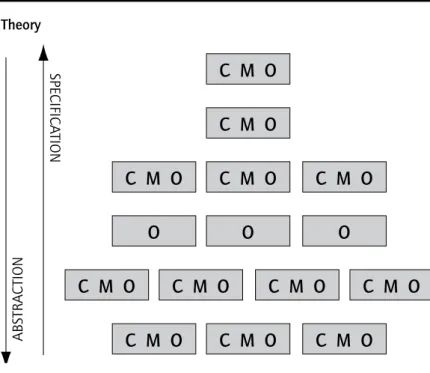
Such theoretical correspondences lent themselves to deeper scrutiny in the second phase of the evaluation. However, it was important to ensure that the explanatory power of the mechanisms that were developed satisfied all stakeholders in the process. This transformative aspect of the evaluation process is key to the Realist Evaluation approach, as the 'value' in the project is thought to lie in the effectiveness of the actions taken as a result of it.
The value for the institutional manager lies in the realism of the advice given. This led to an interpretive and inductive approach to the analysis and evaluation of the findings. However, one of the main problems with the written comments was the legibility of the handwriting (20%).
He stated that the feedback structure had 'changed' first, in relation to the comment sheet, giving the grade ('the thing they are most interested in') and then the justification.
Other Papers
One of the goals of the CALF project is to engage students in the creation and exploration of various probabilities. The first is about the conceptual and methodological challenges of researching students' perceptions of the future of learning. The format of the events included discussion of the digital and online technologies currently in place and the ways in which they can change the future of learning.
The use of the wiki enabled creative collaborative thinking on a wider spectrum of possibilities about the relationship between the present and the future of higher education. The collaborative creative character of the wiki tool addressed another shortcoming of traditional scripts - the time they usually take to develop. Data on the participating students' ideas about the future of learning were collected through observation and student note-taking.
The comparison between the characteristics of the alternatives will be related to cognitive effort - the characteristics are evaluated and their differences are evaluated. The next part of this paper presents a summary of the visions of learning about the future of the students who participated in the events of the CALF project. Instead, it provides a description of trends and ideas about possible futures of learning from the perspective of the students who participated in the CALF project.
Some of the futures the students envisioned focused on technology, others on society, the economy and the environment. A common thread throughout these discussions is the emphasis on the facilitating role of the democratic and participatory debate on the future of learning and the importance of the ability to think creatively and imaginatively in the construction of scenarios. In British Journal for Educational Technology, Vol. 2003) Rumination, imagination and personality: ghosts of the past and future in the present.
British Journal of Educational Technology Vol. 1996) Ways of knowledge, culture, communication and pedagogy of the future. Between the start of the MBA program and the end of DL2, 15% of students left the program. Palloff and Pratt (2007) also discussed some key threats to success in the online classroom.
15% ATTRITION
Learning diaries as locating experience
Learning diaries as dislocating act
These findings provide potentially useful insights for course designers considering the future use of learning diaries.
Pointers for improvement of the function of the learning diaries
The learning diary as part of the course can then actually become much more. One posting refers to the student “confessing” that “the only reason I wasn't very happy with this is due to my own lack of time to complete it.” Although the student accepts responsibility for not gaining any benefit from the learning journal, his admission points to the need to make the benefits of posting reflections in the learning journal more explicit. Both indicate that the purpose of the learning journals was not always clear to students (except as a course requirement).
Amid the uncertainty, this post shows the benefit of having a trail to follow and think about. The conclusion will summarize the effectiveness of BPMS as a teaching-learning tool based on the requirements of the conversation framework. Some of the technologies discussed are in the context of Enterprise Application Integration (EAI), Workflow Management Coalition (WfMC), Extensible Markup Language (XML), Service-Oriented Architecture (SOA), Business Process Modeling Notation (BPMN) and Business Process Execution Language for Web Services (BPEL4WS).
The conclusion will provide an overview of the effectiveness of BPMS as a teaching-learning tool that is based on the requirements defined by the conversational framework. For example, when the right book has been selected and paid for by the buyer, the system must activate a process to find the book from the right place in the warehouse, package the book, and place the packaged item in the next process - the distribution process. Based on the previous learning outcome example, here each of the specific interfaces can be placed according to the defined learning model (process).
Unlike the commercial process, teaching and learning may not be so clearly defined as “the interaction between individual and provider is a very personal contract and learners are not customers, and they are not always right” (Laurillard, 2008b) – the unbalanced, The uncertain and delicate relationships that exist between teachers and students during the teaching-learning process make adapting a commercial technology such as BPMS for education a challenging, but not impossible task. 1 Long Motivate students and inform them about the possibilities of non-intrusive research methods. The teachers who participated in this project concluded that creating podcasts is difficult and can be a very time-consuming task: in addition to “the need to become familiar with the appropriate software”, it is necessary “to write, rehearse and record what one wants to say.” ”.
Most of them also pointed out that “the time spent and the efforts made are not recognized by the institution” and that the possibility of reusing podcasts in other teaching/learning contexts is a major concern for those who want to continue using this tool . These require modification of learned scripts and more critical thinking (Schmidt, Norman, and Boshuizen 1990). The roles (areas of responsibility) of people here) 2. The tasks the intern must perform) 3. Necessary systems and services around the 4. domain).
The use of two observers was helpful in obtaining different perspectives of the learning environment. From our analysis of the workplace so far, we have established design principles for supporting learning in the workplace.