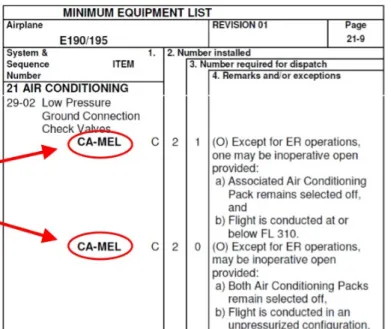
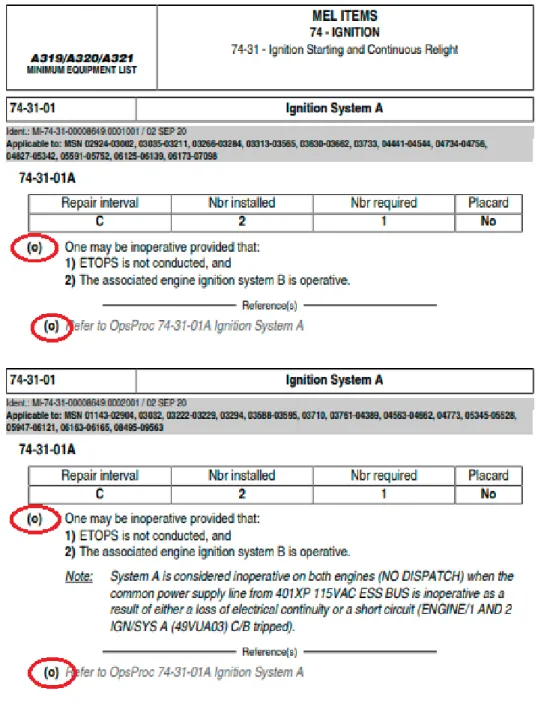
As part of the airworthiness requirements, an aircraft cannot be dispatched with an inoperative equipment or system unless permitted by the Minimum Equipment List (MEL) under any applicable conditions (Obadimu, S. The rationale is to enable the flight to be conducted safely using the specified conditions specified in the manual. Some actions can be deferred to the next scheduled maintenance opportunity as they do not affect the safe execution of the flight.
The intention is to show that most of them could be sent out of service by the pilots without affecting the safety of the flight. A system write-up to the maintenance software will also be performed to keep track of the error and its due date. With this new regulation implemented and fully recognized by the Brazilian Civil Aviation Authority, this research project plans to improve airline On Time.
In this chapter, the conclusion will show how important the impact of unscheduled maintenance is on the on-time performance (OTP) of an airline. Crew Applied MEL or simply CA-MEL is indicated for items whose TLB is different and release of the aircraft can be performed by the captain without the presence of a mechanic. It is prepared by the operator and must be approved by the aviation authority of the country in which the aircraft is registered and operating.
The purpose of the MEL is to assist the captain in deciding whether or not to continue operating the aircraft. The development of these procedures is the responsibility of the operator, who must prepare them based on the guidelines described in the MMEL, the procedures recommended by the manufacturer (such as Deviation Dispatch Instructions - DDPG or Deviation Dispatch Instructions - DDG, if any). ) and in other technical publications of the manufacturer, always in accordance with their latest revisions. In Brazil, ANAC sees this possibility as feasible, has identified opportunities to improve the interpretation of the requirement, has started to develop a draft, but there is not enough support.

Methodology
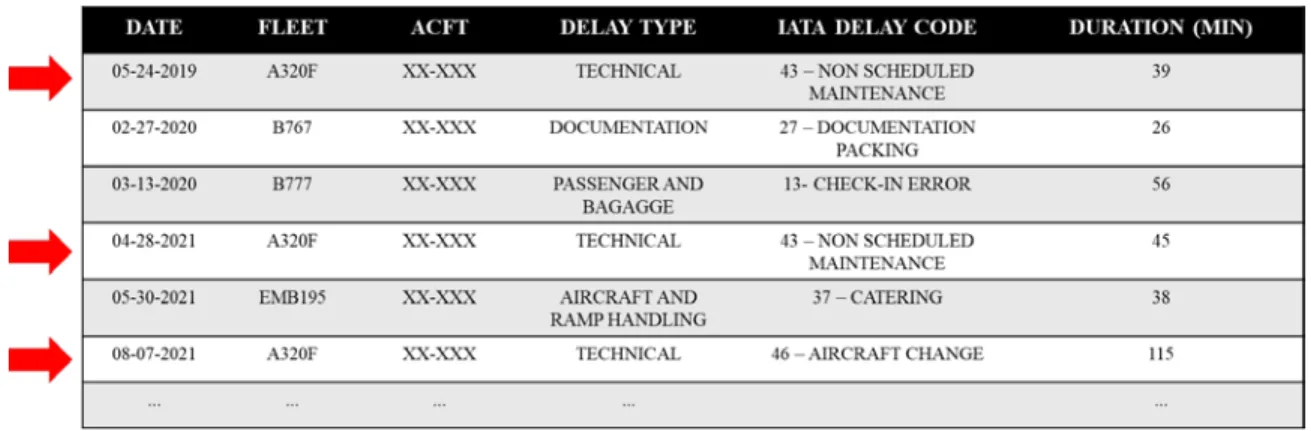
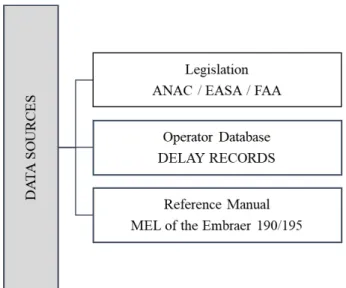
Researchers are aware that manuals differ between different manufacturers, but we believe that these manuals can be used as a starting point for this research. All data presented in this research were secondary, were collected from existing databases, and therefore were not collected by the research. For the purpose of this study, only delays recorded as "maintenance" were used, as the others are not within the scope of this research.
Although the main focus of the work is based on the investigation of delays recorded as "Ground Turn Back", where the aircraft has already left the departure gate towards the runway, delays. The research was conducted by collecting all the delays recorded from 2016 to 2020 and manually refined to get the average, median and total delay time that could be avoided by implementing CA-MEL. Delays recorded as “turning to the ground” when the aircraft returned to the departure gate after a run-in were considered when attributed to maintenance areas.
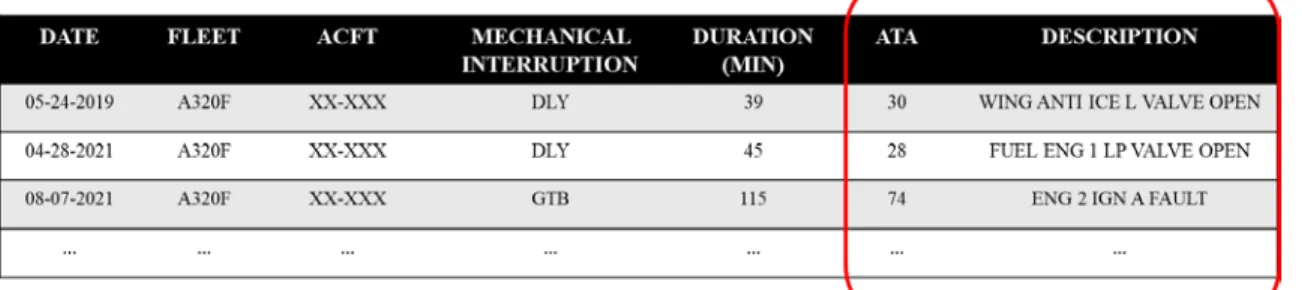
The Airbus A320 family disruption cost model was used to obtain the results identified in the results section of this research. At this stage, the aim is to obtain all delay records of both airlines under study to isolate only technical events related to the Airbus A32F fleet. With separate technical delays for the A320F, the technical reasons for each event and the corresponding ATA code will be obtained.
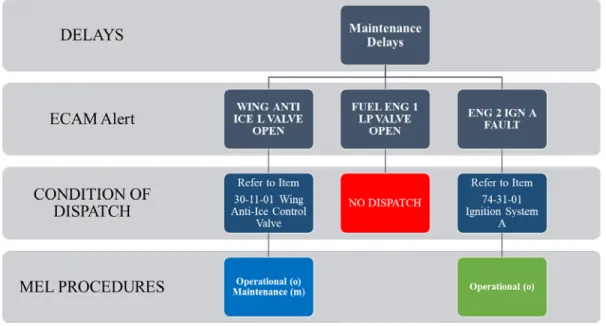
All messages will be analyzed and the release condition of each element will be checked. In addition to the shipping conditions, the type of procedure required will also be checked: operation (o) and/or maintenance (m). In the case of the three events analyzed, only two meet the required release condition, and of those two events for the study in question, only one meets all criteria: MEL Release ONLY by operational procedure.
All these costs take into account the South American average labor costs for both maintenance staff and flight crew, an airline with a medium cost profile. Airports can also charge airlines twice for the gate return, as planes can often occupy a different gate than the original one. These costs tend to be extremely high in Brazil, as the legal system often understands them as "business risks", even if it has been proven that the delay was not on the airline's account (again, for example);.
When considering these costs, it is important to note that some costs are empirical and therefore difficult to predict. These costs are related to loss of revenue due to passenger loyalty and the knock-on effect that these delays can cause in the airline's network (effect on subsequent flights).
Conclusions
The result would save airlines valuable time and money and increase operational efficiency. The implementation of these changes is a collective effort between interested airlines and local regulatory authorities. Our current legislation does not clearly specify where and when an aircraft should be considered.
In Brazil, the only supporting legislation is RBAC part 121.628, but its text is rather vague and the directive has limited impact and its vague wording makes it difficult to enforce. This text places all the responsibility of the procedure on operators' shoulders, and does not act according to the fair and just culture currently offered by airlines. The approved MELs used by major airlines in Brazil compile a total of 463 possible malfunctions that can be presented during the aircraft's operation.
After analyzing all the lists and the information provided, the researchers found that only messages without any maintenance procedures and with only simple operational procedures (such as turning off a switch or turning a knob) could be subject to self-activation. All messages and their consequences were analyzed, and from this amount a total of 95 opportunities were found where the flight crew could have sent it themselves, which would have reduced future impacts. The total GTBs reported were distributed by departure airport, thus increasing the importance of increasing operational efficiency in the airline network at hubs and arms.
These events have a serious impact on an airline's network, as spare aircraft are rarely available and crew rules sometimes entail crew changes as they cannot operate outside their legal barriers. This supporting legislation is extremely important to enable both operators and pilots to carry out these dispatches comfortably, without accountability to future events. For comparison, the following chart shows all hard costs attributed to avoidable GTB events at the two major Brazilian airlines from mid-2016 to mid-2021.
Since the costs depend on the aircraft type (due to the different passenger capacity), an average value has been calculated to allow classification by event, depending on the time of the delay. If you add these costs together, there are a number of costs that are not directly related to the GTB events and cannot be disregarded. For the third recommendation, we found an opportunity to better organize and securely record maintenance events, including MEL and CA-MEL events.
Information is usually out of standard and data recording is not always reliable in terms of accuracy. The conclusion is a recommendation to introduce a new data recording procedure and to standardize the recording of MEL and CA-MEL events.