DISIN
FOR MATION
JOÃO CARLOS CORREIA PEDRO JERÓNIMO
EDS / INÊS AMARAL
LABCOM
COMMUNICATION
& ARTS
STUDIES
DISINFORMATION STUDIES
PERSPECTIVES FROM AN EMERGING FIELD
JOÃO CARLOS CORREIA PEDRO JERÓNIMO INÊS AMARAL /EDS
Title
Disinformation Studies:
Perspectives from An Emerging Field Editors
João Carlos Correia Pedro Jerónimo Inês Amaral LabCom Books www.labcom.ubi.pt Collection
Communication Books Direction
Gisela Gonçalves Graphic Design Cristina Lopes
ISBN978-989-654-861-2 (print) 978-989-654-863-6 (pdf) 978-989-654-862-9 (epub) Legal Deposit
507398/22 Print
Print-on-demand
Universidade da Beira Interior Rua Marquês D’Ávila e Bolama.
6201-001 Covilhã. Portugal www.ubi.pt
Covilhã, 2022
© 2022, João Carlos Correia, Pedro Jerónimo & Inês Amaral
© 2022, Beira Interior University
Publishing copyright authorizations from both articles and images are exclusively the author’s responsibility.
Technical Specification
Contents
Preface 9
Abstracts 13
Chapter 1 — Capturing and dissecting the complexity of production and 23 dissemination of conspiracy theories, hate-based rhetoric, and mis-
and disinformation online
Ardian Shajkovci, Ramón Ruti, Asli Altinbay, Matteo Gregori, Amanda Garry & Allison Mcdowell-Smith
Chapter 2 — The twilight zone: case studies in misinformation 53
& mass media Alyssa M. Brumis
Chapter 3 — When communication meets international relations 87 perspectives: understanding disinformation in a multicentric political
environment
Alessandra Massa & Giuseppe Anzera
Chapter 4 — Fake news, post-truth, and journalism: weaknesses and 115 strategies in 2018 brazilian elections
Luísa Guimarães Torre
Chapter 5 — Opinion-oriented news as a source of polarized disinformation 151 on the EU: a case study analysis during the 2019 EP elections
Rubén Rivas-De-Roca & Mar García Gordillo
Chapter 6 — Lies are all around but who are the liars? Addressing online 171 disinformation platforms in the Czech Republic and Slovakia
Ján Hacek & Lucia Virostková
Chapter 7 — Technologies and fact-checking: a sociotechnical mapping 193 Oscar Westlund, Rebekah Larsen, Lucas Graves,
Lasha Kavtaradze & Steen Steensen
Chapter 8 — The role of fact-checking in fighting the ‘infodemic’ of 237 disinformation on Covid-19: a case study of Polígrafo
Marina Ferreira & Inês Amaral
Chapter 9 — Framing Covid-19: how fact-checking circulate on the 265 Facebook far-right
Raquel Recuero, Taiane Volcan, Felipe Soares, Otávio Vinhas & Luiz Ricardo Huttner
Authors 289
Disinformation is a keyword of our societies. Would it be so? Rephrasing the sentence, one could say that disinformation in all his extension it is a keyword and a condition of all human societies. According to Kahneman, Sibony and Sunstein (2021)1, wherever there is human judgment there is noise. Opinions are not an evil source of error. Only in an ideal world, in a situa- tion of ideal speech and communication each message would works as a kind of magic bullet, and the sender as someone who shares a rifle, firing a single shot in the bull’s eye (Kahneman et al, 2021, p.3).
Communication needs facts but also needs an effort of interpretative hermeneutics. Journalism needs hard news oriented to the facts but also needs good context, thoughtful editorials, and efficient storytelling that help to give cultural meaning to chaotic experiences of everyday life.
The journalistic activity is action-oriented towards the construction of social reality, which is objecti- fied through everyday practices of representation of what happened.
From this perspective, social construction, in the media research sector, is the production of meaning through the action of productive practices and routines that or- ganize the journalistic profession. The news making and statements produced in its realization are not lim- ited to reproducing reality but intervene in the social construction of it. In this perspective, more than sim- ple mirrors of a pre-existing reality, journalists and,
1. Kahneman, Daniel; Sibony, Oliver & Sunstein, Cass (2021). Noise. Lon- don, Harper Collins.
Preface
Preface 10
consequently, the statements produced by them, intervene actively in the construction of the conditions and the way in which reality is perceived.
Thus, “it is impossible to establish a radical distinction between reality and the media that must reflect that reality, because the news helps to build reality itself” (Traquina, 2001, p. 28)2. The social and political world is not a predetermined and rigid reality at journalists reflect. Journalists don’t are passive observers but active participants in the construction of reality.
Facts do not exist in themselves, endowed with evidence and self-sufficient ontological thickness that journalistic utterances would be pure reflexes.
They are the product of an encounter between the facts and their reports, without which, indeed, they would not exist as journalistic facts. Reality is not something completely autonomous and distinct from the way the ac- tors interpret it, internalize it, re-elaborate it, and redefine historically and culturally. The world reported in the news is the result of categorization activities and not a simple act of naming reality as if it were ready to be classified. The journalistic report is not an act of describing or saying in a direct, determined, and precise way an empirical fact that happened in the outside world, but it is an act of presenting a reality that is constituted even with the active participation of the reader.
However, in spite of those well-known assumptions from the epistemolo- gy and sociology well established since Lippmann to Tuchman, Saperas, Traquina, Singer , and many other scholars, reality has some level of resist- ance. That’s to say one may discuss many interpretations about the Ukrania – Russia conflict but that’s difficult to say that The Ukrainian Army Invaded Moscow.
Information /Misinformation has many levels
One level of disinformation has to do with facts and appears mostly related with the deliberated twist of numbers, nature of things, and the furious de- nial of some common sense and taken-for-granted social facts, or even lies.
2. Traquina, Nelson, (2001), “Teorias das Notícias: o estudo do jornalismo no século xx”. In Nelson Tra- quina, Ana Cabrera, Cristina Ponte & Rogério Santos, O Jornalismo Português em Análise de Casos, Lisboa, Caminho.
João Carlos Correia 11
It is boosted by the emotional factors and by the well-known affection law:
people exposed to, understand better, memorize deeply, and share heavily, message, with they agree to, disregarding the fact of being true or false, depending mostly on the gratification they obtain with that message. It is a kind of information that are articulated with the so-called fake news as a particular repertoire of propaganda in my point of view.
Another level of misinformation has to do with ideological frames, media rhetoric, interpretation and context and it happens in all kinds of media.
It’s because of that that I find this book very important.
We thank all authors, and we reassure our commitment to the research on this important issue.
João Carlos Correia
Chapter 1. Capturing and Dissecting The Complexity of Production and Dissemination of Conspiracy Theories, Hate-Based Rhetoric, and Mis-and Disinformation Online
Ardian Shajkovci, Ramón Ruti, Asli Altinbay, Matteo Gregori, Amanda Garry & Allison McDowell-Smith
Fringe independent websites and alternative social me- dia platforms such as Telegram, Parler, and Bitchute have increasingly become major spreaders of mis-and disinformation, conspiracy theories, and hate-based rhetoric. These spaces have also become echo cham- bers that can largely in-fluence online users seeking propaganda related to specific movements. The pur- pose of this chapter is to facilitate an initial discussion on the role of smaller and alternative social media plat- forms, as part of a wider media ecosystem engaged in constructing and communicating conspiracy theories, hate-based rhetoric, and mis-and disinformation. The authors will discuss and introduce innovative tools and methodologies in tracking and analyzing content online, as demonstrated through the case of QAnon conspiracy theory. Furthermore, given that the current political, popular and media conversation about regu- lating social media primarily focuses upon the role of Twitter, Facebook and to a lesser extent YouTube, the arguments presented by the authors herein suggest that such line of contention may be somewhat misplaced and misleading.
Keywords: Mis-and disinformation, alternative plat- forms, QAnon, social media, Saas Tools
Abstracts
Disinformation studies: perspectives from an emerging field 14
Chapter 2. The Twilight Zone: Case Studies in Misinformation & Mass Media
Alyssa M. Brumis
Misinformation and disinformation have arguably always existed in American society. However, over the last three decades, with advancements across mass communication, the spread of misinformation has become much more prevalent. As the landscape of mass media advances, so too, does the problem of misinformation. Misinformation spreads across mass media platforms, such as mainstream news media and social media, reach- ing larger audiences than ever before. The ways in which we consume (mis) information and the speed at which we do so has radically changed. The effects of misinformation leave us relatively defenseless, due to our human inclination to engage in motivated reasoning, or emotion-based reasoning, and due to phenomenon such as the illusory truth effect, or our proclivity to believe false information after repeated exposure. As a surplus of misinfor- mation is disseminated across mass media, we move closer to a “post-truth”
society, which comes with dangerous consequences. This collection of case studies explores the disseminators of disinformation across mass media and the effects of mis/disinformation, illustrating its deadly consequences in America. The overarching theme across each case is the notion that mis/
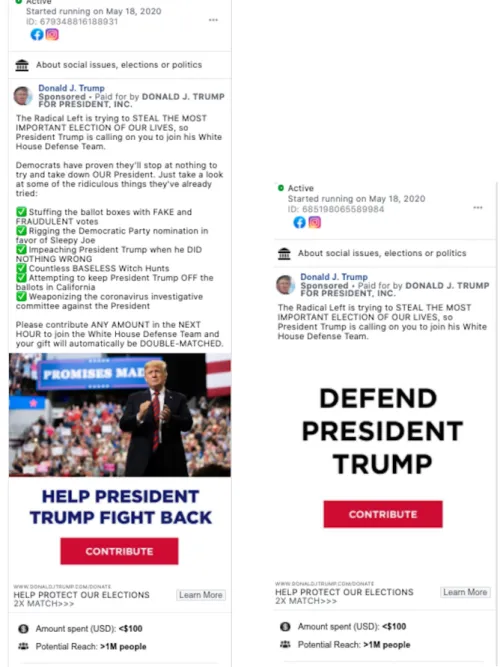
disinformation disrupts our connection to facts, logic, and reality, leaving us incapable of making rational and informed decisions. Utilizing interdis- ciplinary theories from communication studies and the social sciences, I examine the top disseminators of mis/disinformation across three key cas- es: a 2015 disinformation campaign waged against Planned Parenthood, disseminated across mainstream news media; 2020 election-related mis- information disseminated on Facebook, in then-President Donald Trump’s political advertisements; and 2020/2021 coronavirus misinformation disseminated by Fox News and its pundits. These cases expose mis/disin- formation as a threat to public safety, a threat to democracy, and a threat to our public health. When we live in a society that spreads misinformation
Abstracts 15
like wildfire, we can quickly begin living in what resembles an episode of The Twilight Zone.
Keywords: misinformation in mass media, disinformation disseminator, consequences of mis/disinformation
Chapter 3. When Communication Meets International Relations Perspectives: Understanding Disinformation in a Multicentric Political Environment
Alessandra Massa & Giuseppe Anzera
This chapter explores how interpretive concepts from the analytical tra- dition of International Relations (IR) may help explain disinformation in current international politics. As IR interpretative tradition has evolved in recent decades, it has praised openings to practices beyond the traditional power politics focused on tangibles or material resources. Communication and information are becoming competitive assets that states can use to gain citizens’ loyalty, shape international public opinion, and position other actors in the international system. To investigate the link between contemporary disinformation (as a communicative phenomenon) and IR, we will analyze a variety of interpretive perspectives. In questioning IR, the multicentric system explains the setting and proliferation of individual skills, whereas complex interdependence enlightens the ongoing information revolution.
The concept of soft power, then, describes the changes in non-tangible as- pects of power today. Narratives and aesthetic turns are helpful to interpret international reality as a social construct, emphasizing the situated nature of political narratives. A realist approach is then used to explain why po- litical elites deceive, resulting in trust issues affecting popular readings.
IR analytical traditions and media studies must be considered in a mixed approach to explain individual and collective interpretations of the cur- rent disinformation climate, taking into account the multicentric nature of IR. In addition, narrative interpretations and constructivism highlight the
Disinformation studies: perspectives from an emerging field 16
intersubjective process in global politics. In conclusion, realism suggests that lying is merely another tool for governing anarchy, regardless of its ethical implications.
Keywords: international relations; multicentrism; soft power; constructiv- ism; international narratives.
Chapter 4. Fake news, post-truth, and journalism: weaknesses and strate- gies in 2018 Brazilian elections
Luísa Torre
In a post-industrial society in which information plays a fundamental role in social structures (Castells, 2012), rumors, the oldest media in the world (Kapferer, 1993), have come to occupy an important space in the public sphere. The rumors, now mediatized, are called fake news. Another phe- nomenon is added to this: the post-truth (Keyes, 2004), when the truth is closer to an individual’s personal beliefs than to the facts.
Now that the enunciation poles have been multiplied (Pinto, 2000), the re- ceiver is informed through innumerable channels, from news portals to social networks, and he himself decides on which to attribute faith (Primo, 2011). Journalism, which has lost centrality in the production, selection and distribution of information (Bentes, 2015), is facing new challenges - and fake news is a fundamental part of this scenario. In part because, instead of the evaluation of newspaper editors, recommendation algorithms used to create personalization are playing a central role in the selection and dis- tribution of content, becoming new information gatekeepers (Heinderyckx and Vos, 2016).
In this society, organized in a network, power is also exercised in a network (Parente, 2004). If there is no power that can be exercised without discur- sive strategies (Castells, 2015), has this interaction between the issuers of fake news and the traditional news media become a dispute for power?
Abstracts 17
This work will analyze the speech contained in the denials produced by journalists from Grupo Globo, and in the (so classified) fake news debunked, published in the Fato or Fake section between August 31 and October 6, 2018 - between the beginning of electoral campaign and the first round of Brazilian elections. From the critical discourse analysis, we will investigate the discursive strategies used by fake news broadcasters and professional journalists in 8 articles, looking for elements that reveal if there is a discur- sive dispute between them.
Keywords: fake news, journalism, power, social media, critical discourse analysis
Chapter 5. Opinion-Oriented News as a Source of Polarized Disinformation on The EU: A Case Study Analysis During The 2019 EP Elections
Rubén Rivas-de-Roca & Mar García Gordillo
The role of truth for society is undermined in an accelerated digital era, since opinions are more important than facts in the shaping of the public opinion.
Journalists seem to prefer opinionated stories, especially regarding com- plex issues such as the EU. This means a crisis of democratic institutions. In the case of the EU, its news coverage is also affected by a distant approach that overlaps with a feeling of remoteness towards the European project.
Taking these trends into account, the current research aims to conceptu- alize the role of opinionated news in disinformation, as this practice takes advantage of a polarized public opinion. Beyond a theoretical approach, we use the multiple-case study as research strategy to assess the degree of opinion-oriented stories about the European Union (EU). The report of this issue suffers from cultural clashes that threaten its journalistic quality. In the multiple-case study here applied, we compare the coverage of EU affairs in local media from Germany, United Kingdom (UK) and Spain. The anal- ysis is performed on a sample of news items on European issues (n=612), collected over a six-month period during the 2019 European Parliament
Disinformation studies: perspectives from an emerging field 18
(EP) elections. The study focuses on two variables (personalization and neg- ativity) through the analysis of headlines, topics and reader’s comments.
Drawing upon the sample, we argue that the prominence of opinion-orient- ed news about the EU could boost polarized disinformation. Polarization is more frequent in the UK (polarized liberal), while the German press shows approaches that seek a balance from different sources and the Spanish cases present a low negativity. Our theoretical approach reveals how the current state of play of journalism has influenced the success of polarization in the digital sphere. This disruptive communication around individualiza- tion could mean a decline of democratic institutions, as facts are no longer relevant for the audience.
Keywords: Opinionated news; personalization; polarization; disinforma- tion; European Union.
Chapter 6. Lies are all around but who are the liars? Addressing online disinformation platforms in the Czech Republic and Slovakia
Websites publishing fake news share similarities across borders that are not yet fully addressed by global or national policies. As in other aspects of pol- icy-making in this area, there is a conflict between the right of free speech and public interest in preventing social and economic damage caused by the deception of vast groups of society. This chapter offers empirical support to the argument that disinformation is adapted to specific vulnerabilities of concrete media systems and their audiences. In post-communist coun- tries of Central Europe, the main structural weaknesses derive from a high concentration of media ownership and dominance of local oligarchs with real political and economic interests in the media ownership structures.
The negative association connected with oligarchs who are presumed to ex- ert a strong influence on what mainstream media produce has served as one of the key arguments for creating an alternative media landscape. The other important factor behind the gradual build-up of alternative eco-sys- tem in the region is effectively unanimous support of the membership of
Abstracts 19
the European Union and NATO by mainstream media. The sentiment of non-existing public discourse on Europe´s fundamental principles and lib- eral values has been exploited by actors spreading pro-Russian propaganda and inciting polarization. Based on evidence from the Czech Republic and Slovakia, we argue that providers of false content use a distinguishable set of manipulation methods which ultimately enables the detection and system- atic categorization of disinformation outlets. The biggest existing database of untrustworthy websites in the region was established in order to assist advertising companies in selecting secure online marketing placements and prevent negative associations between their clients and controversial online content. Apart from their deliberate use of fake news and misleading con- text, a lack of transparency on authorship, ownership, and funding is also an important attribute of these communication channels. Attempts at ad- dressing insufficient transparency of numerous untrustworthy outlets have not yet resulted in effective policies against disinformation in the region.
Keywords: Disinformation; Pro-Russian propaganda; Online Eco-system;
Czech Republic; Slovakia.
Chapter 7. Technologies and fact-checking: a sociotechnical mapping
Oscar Westlund, Rebekah Larsen, Lucas Graves, Lasha Kavtaradze & Steen Steensen
The fight against misinformation involves both human social actors and digital technologies, as well as a diverse set of institutions. Digital de- velopments both enable and require critical evaluation of sources and information. This chapter assesses and analyzes the sociotechnical infra- structures available to and potentially used in fact-checking, in the form of digital technologies associated with fact-checking. The chapter presents findings from an international and systematic assessment of digital tech- nologies associated with fact-checking. For this assessment, we collected data from primary and secondary sources between fall 2020 and spring 2022. This assessment is guided by a sociotechnical framework that ena-
Disinformation studies: perspectives from an emerging field 20
bles analysis of the interrelationships between humans and technology. It employs a deductive categorization of the three main fact-checking stages of practice. We also then inductively created subcategories of technologies for these three stages. In this chapter, we give a detailed review of each of these categories and subcategories, including descriptions of specific technolo- gies. The chapter offers four main takeaways. First, there is a multitude of technologies associated with fact-checking, many offering affordances that cannot be done by humans alone. Second, most technologies are connected to the identification stage, and are largely owned and controlled by platform and tech companies. Third, the verification stage encompasses a wealth of technological tools by third-party companies that typically require human fact-checkers to manually work with the technology in their fact-check- ing processes. Fourth, distribution takes different forms and shapes, both analogue and digital, and being proprietary as well as non-proprietary to the fact-checkers. Based on the findings in this chapter, we call for future research around fact-checking technologies and practices, furthering and informed by a sociotechnical lens.
Keywords: Fact-checking, misinformation, disinformation, technology, sociotechnical
Chapter 8. The role of fact-checking in fighting the ‘infodemic’ of disinfor- mation on Covid-19: a case study of Polígrafo
Marina Ferreira & Inês Amaral
The Covid-19 pandemic created an unprecedented scenario, not only in terms of public health, with the determination of unprecedented social iso- lation measures, but also of massive information sharing on social networks - classified by the WHO as an “infodemic”. However, several mistakes were made early in political communication about the pandemic, mainly due to the need for more information and scientific evidence about the new dis- ease. In addition, several leaders used the pandemic as a weapon for political
Abstracts 21
combat, disseminating false information according to their governmental needs and personal beliefs.
In response to the alarming amount of misinformation about SARS-CoV-2 and its dangers to public health, widespread mobilisation of fact-checking platforms has been observed to identify and correct false or misleading information. This chapter discusses fact-checkers role in mitigating misin- formation about Covid-19 and the limitations their activity presents in this context. The present study aimed to analyse fact-check articles on Covid-19 published between September and December 2020. To ascertain uninform- ative trends, data were collected regarding the origin of the information studied, the ratings assigned within the Polygraph scale, the topics worked on, the verification methods used and, finally, the countries to which the verified content referred. One of the study’s main conclusions is the predom- inance of verifying facts concerning information classified with a certain degree of falsity. It is also apparent how the evolution of the pandemic and the scientific advances made, for example, through the development of the first vaccine against the disease, affected the amount and type of Covid-19 content checked.
Keywords: Fact-checking, disinformation, Covid-19, Polígrafo.
Chapter 9. Framing Covid-19: How Fact-Checking Circulate On The Facebook Far-Right
Raquel Recuero, Taiane Volcan, Felipe Soares, Otávio Vinhas & Luiz Ricardo Huttner
This research focus on how fact-checking links circulate on Facebook groups/pages that also shared disinformation, particularly, the ones affili- ated with the far-right. Through a three-step method that included content analysis, discursive analysis and social network analysis, we analyzed pub- lic 860 posts and found out that: (1) while fact-checking does circulate on these groups, they tend to be framed as disinformation through posts on far-right ones, which we call “explicit framing”; (2) the far-right groups tend
Disinformation studies: perspectives from an emerging field 22
to cluster around specific fact-checking links that are mostly shared with- out a framing text, but whose theme support their own ideological narrative (which we call “silent framing”) and; (3) both explicit and silent framing tend to happen through populist discourse connections.
Keywords: Covid-19; Fact-checking; Far-right; Populism; Facebook.
CAPTURING AND DISSECTING THE COMPLEXITY OF PRODUCTION AND DISSEMINATION OF
CONSPIRACY THEORIES, HATE-BASED RHETORIC, AND MIS-AND DISINFORMATION ONLINE
Ardian Shajkovci, Ramón Ruti, Asli Altinbay, Matteo Gregori, Amanda Garry & Allison McDowell-Smith1
Introduction
The current social media landscape facilitates a direct spread of harmful, manipulative, and misleading infor- mation online (Hameleers, Powell, van Der Meer & Bos, 2020; Lewis & Marwick, n.d.) One of the major threats of the current online ecosystem is that mis-and disin- formation often has more profound reach and flow than facts themselves (Innes, 2019). At least two-thirds of adult Americans rely on social media for some of their news updates and to react to news stories (Shearer &
Gottfried, 2017). However, this can become dangerous when considering how the online environment can ma- nipulate the soft facts of news stories to spread rumors, conspiracies, and social fragmentation (Innes, 2019;
Christou 2020; Walther & McCoy, 2021; van Der Vegt, Gill, Macdonald & Kleinberg, 2019). Fringe independ- ent websites and alternative social media platforms such as Telegram, Parler, and Bitchute have increasing- ly become major spreaders of mis-and disinformation and extremist rhetoric. These spaces have also become
1. The American Counterterrorism Targeting and Resilience Institute (AC- TRI) and Storyzy. The authors wish to thank ACTRI Research fellow Sa- mantha Walther for her assistance with data collection and analysis.
Chapter 1
Capturing and dissecting the complexity of production and dissemination of conspiracy theories, hate-based rhetoric, and mis-and disinformation online 24
echo chambers of hate-based rhetoric and mis-and disinformation that can largely influence online users seeking propaganda related to specif- ic movements. Alternative social media platforms are increasingly being characterized as spaces that “challenge traditional media” and serve as
“self-perceptive corrective tool of traditional media” (Walther & McCoy, 2021, p.100).
By primarily utilizing QAnon as a case study, the authors relied on automat- ed data collection processes and a digital disinformation detection platform to gather data surrounding the movement of conspiracy theories and mis- -and disinformation online. Given the significant presence of conspiracy theories and mis-and disinformation on smaller and alternative social me- dia platforms that are becoming increasingly popular among many users, the authors also sought to provide insight into innovative methodologies to collecting and analyzing “big data” on social media platforms in general, while also elucidating a larger goal of future collaborations to seek rigor- ous methodological and technological approaches to address the issue at hand. As also discussed in the ensuing sections, alternative platforms are increasingly becoming aggregates for hate-based and mis-and disinforma- tion related posts, warranting further research to prevent such content from gaining further legitimacy and credibility within the online user base and beyond.
Key Considerations of the Evolving Social Media Landscape
In 2016, Facebook, YouTube, and Twitter started struggling with monitoring and content moderation of their platforms. This was in large due to difficul- ties managing the presence and distribution of large amounts of information across diverse and polarized user base (Gillespie, 2018). Despite the initial hands-off approach on dealing with the issue, main platforms started ad- dressing hate speech, conspiracy theories, and other harmful content by tightening their Terms of Service (ToS), Community Standards (CS), or im- plementing more severe actions like censoring content and deplatforming
Ardian Shajkovci, Ramón Ruti, Asli Altinbay, Matteo Gregori,
Amanda Garry & Allison McDowell-Smith 25
users. In February of 2022, in large part in response to COVID-19 crisis, Facebook (Meta) introduced its misinformation strategy dubbed as “remove, reduce, inform.” (Meta, 2022). The platform will remove misinformation in those instances when:
·“When misinformation has the potential to cause imminent physical harm.” (Meta 2022, p.1)
·“When misinformation has the potential to interfere with or suppress vot- ing.” (p.1)
·When content is manipulated in a way that would not be apparent to an average person.” (p.1)
In 2016, Facebook also launched a fact-checking program that “focuses on identifying and addressing viral misinformation, particularly hoaxes with no clear basis in fact.” (Facebook, 2019).
Deplatforming seemed to be an effective intervention to decrease the spread of misinformation, but only in the short term. When users are deplatformed, all their content is removed from the platform, and they can no longer create an account using their real names. Many information technology practition- ers and scholars argue that when an account, website, hashtag, or piece of content is taken down, new ones can be created to replace them accord- ingly (Ali, 2021). Taking down user accounts and censoring their material could be counterproductive and may result in drawing people’s attention to suppressed materials (and hence publicizing extremist’s cause) due to the so-called “Streisand effect” (Tworek, 2020). In fact, while there are ample empirical studies on the efficiency of account takedowns vis-a-vis ex- tremist/terrorist content, little has been done for disinformation networks (Innes, 2021).
Notable cases of misinformation-related deplatformed users are David Icke, influencer of the “New Age” conspiracy theories also tied to Qanon movement, with 800,000 followers on Facebook as of April 2020, and Kate Shemirani, a nurse known for her anti-vaccine and antisemitic rhetoric,
Capturing and dissecting the complexity of production and dissemination of conspiracy theories, hate-based rhetoric, and mis-and disinformation online 26
with thousands of followers at the time of her account removal in September of 2020. A study by Innes & Innes (2021) demonstrated that the deplatform- ing of Shemirani and Icke triggered aided suppressing problematic behavior and content in the short term, but also led to two unintended consequenc- es: (1) the spawning of fake accounts spreading the content produced by the ‘influencer’ off-line or on other platforms and (2) the increasing of the resilience of the network by encouraging them to establish their presence in other platforms. Compared with other problematic extremist content, controlling mis-and disinformation is more challenging given (1) the less clear-cut contested nature of the harm and (2) because its removal may raise concerns about freedom of speech rights (Douek, 2021). Alternative measures to deplatforming have been taken into consideration to tackle the spread of mis-disinformation on online platforms, including content labe- ling and warnings, fact checking, media literacy campaigns, and limits on advertising revenue. However, current literature lacks empirical evidence on their effectiveness to reduce the spread of mis-and disinformation, and the heterogonous nature of disinformation makes intervention difficult to develop (Mena, 2019; Pennicook et al., 2020).
Given these actions to restrict misinformation, disinformation, and conspir- acy theories, many conservative users have and continue to migrate to less regulated and monitored platforms. Gab, for example, after the so-called Twitter “purge” of far-right users in 2016, gained millions of new users in just a few weeks (Rogers, 2020). A study on Twitter, Gab, and Reddit users’
datasets showed that 59% of users who were deplatformed from Twitter created a new account on Gab (Ali et al., 2021). Aliapoulios et. al noted how
“Parler experienced large influxes of new users in close temporal proximity with real-world events related to online censorship and deplatforming on mainstream platforms.” (p. 7)
The far-right/conspiracy theorists’ migration from public-facing to close so- cial media platforms took place principally in 2018, and many described it as massive. Past research analyzing QAnon on Telegram has shown the
Ardian Shajkovci, Ramón Ruti, Asli Altinbay, Matteo Gregori,
Amanda Garry & Allison McDowell-Smith 27
movement’s growth on the platform and observed a 17% increase in group size of QAnon-related groups over 39 days in 2020. (Garry, 2021). The duality of such new platforms allows conspiracy theorists to create open channels, where individuals believing the same theories can spread evi- dence supporting their movement’s thoughts, as well as close, invite-only channels used to further convert more believers. Though the overall num- bers of interactions recorded are generally lower than on mainstream platforms, the content shared in alternative social media is likely to be more toxic (Ali, 2021). A study by Zihiri et Al (2022) indicated that among far- -right QAnon groups in Telegram, the main topics remain race-related in a negative and discriminatory perspective. Besides, the absence of mod- eration of harmful content—unlike on public-facing media—coupled with the anonymity offered by alternative platforms, foster a high-potential radicalization environment (Katz, 2020).
QAnon Case Study
QAnon supporters are considered the pioneers of a distributed infrastruc- ture of disinformation and misinformation that spans multiple platforms, including those often described as isolated, peripheral venues of the internet.
To better understand the QAnon phenomenon, it is necessary to understand how such platforms work as structural bridges of the wider communication ecology. Previous studies demonstrated significant prevalence of deceptive information on smaller platforms relative to mainstream social media plat- forms (Zeng & Schäfer, 2021). Although QAnon originated from a relatively unpopular platform like 4chan, the movement quickly emerged in other mainstream media like Reddit, Twitter, Facebook and most importantly YouTube. QAnon’s presence in the famed video-sharing platform is still moderate, with 868 active channels and 5,352 videos garnering 122,107,633 views as of December 2019 (de Zeeuw et al., 2020). Starting June 2018, QAnon content on the platform evolved from informal, “personal” vlogging style documentaries to professional cinematic videos, aimed at increasing the reach of the movement in the mainstream. Despite QAnon managing to
Capturing and dissecting the complexity of production and dissemination of conspiracy theories, hate-based rhetoric, and mis-and disinformation online 28
push its content through YouTube’s search and recommendation systems, the platform is still quite isolated from the whole online disinformation ecosystem. A study by Gallagher et al. (2020) found that 20.4% of QAnon- -related posts on Facebook redirected to YouTube videos, while only a few of the YouTube videos shared a link to QAnon’s communities on other plat- forms (Gallagher et al., 2020).
Among QAnon followers on 8Kun and Gab, information shared mainly in- volves COVID-19 related content, including news updates and government response, as well as medical discussions about the virus. Among these discussions, Zeng & Schäfer (2021) found that 32% of the posts feature con- spiracy theories content. Such media platforms are not used to produce disinformation but are rather exploited to repost content shared from other sources. As seen in Zeng & Schäfer (2021), YouTube and Twitter are the two most sourced websites on Gab and 8kun (13% of the overall posts). Other prominent sources cited include controversial far-right news websites like ZeroHedge and, not surprisingly, QAnon-related websites like wearethene.
ws and qnotables.com. Similar results have been found while analyzing the data collected by the American Counterterrorism Targeting and Resilience Institute (ACTRI) “Telegram Monitoring Project,” an initiative that monitors and analyzes the activities of groups linked to extremism, violent extrem- ism, conspiracy theories, and mis-and disinformation on Telegram.
As can be seen in Fig. 1 below, links redirecting to video-sharing platforms, namely youtube.com (and mobile version m.youtube.com), rumble.com, bitchute.com, and odysee.com are among the most popular. The latter three websites are known to have a hands-off approach vis-à-vis content mod- eration within their domains; rumble is known to recommend conspiracy theories and harmful content more often than non-controversial content (House et al., 2021). Bitchute has been strongly criticized for allowing po- litically extreme and hateful content, more so than any other platform (Trujillo et al., 2020). Rumble has gained popularity for allowing users to share antisemitic and anti-vaccine content to generate revenue through
Ardian Shajkovci, Ramón Ruti, Asli Altinbay, Matteo Gregori,
Amanda Garry & Allison McDowell-Smith 29
cryptocurrencies (Bogle, 2021). In line with what the authors found utilizing Storyzy data platform, as discussed further below, most news links redi- rect to Russian-based RT websites, an international TV network reportedly promoting anti-Americanism and anti-western sentiment, recently banned by the EU for spreading “toxic and harmful disinformation” following the Ukraine invasion. Interestingly, almost 50% of the overall URLs shared re- direct to another Telegram channel or group (t.me). The result is even more telling when one considers that less than 1% of the links redirect to other alternative social media platforms. While more robust empirical research is warranted to demonstrate the flow of links from alternative social media platfiorms to Telegram channels, this result also suggests that Telegram’s mis-and disinformation communities do not seem to have a need to promote in other places, other than in already existing platforms namely. A snapshot of the partial network can be seen in Fig.2. below. The data collected in the project also revealed several links redirecting to lawful academic and scien- tific papers. This result is consistent with the hypothesis that alt-right and conspiracy theories groups seek to achieve intellectual legitimacy by active- ly engaging with scholarly literature—then moving back to simple lifestyle suggestions and populism.
Figure 1—Number of URLs shared within disinformation groups on Telegram by domain.
Source: Authors
Capturing and dissecting the complexity of production and dissemination of conspiracy theories, hate-based rhetoric, and mis-and disinformation online 30
" Der I I I . W eg" - V ogtland (Der Dritte W eg) /pol/ 4chan
4C han - /POL /H I S/I NT /
AM E R I C AN M I L I T I A FR E E DOM FOR C E S
C hris Patriotic T alk C hannel
Der I I I . W eg (Der Dritte W eg) Digital Soldiers G ermany News
FG News Frag uns doch! Just ask us! W W G 1W G A
G lobal R esistance News G FS
G old News
leftist lasagna L I G H T FOR C E 777
M I L O
National V anguard
Nomad PB -I luminati
NSDAP Oath K eeper National I I I
Official Proud B oys I reland Official Southeast T exas Proud B oys
Patriot Prayer group
Patriot Prayer Joey G ibson
Patriotic Alternative Official Proud B oys Philadelphia
Q NE W S OFFI C I AL T V Q-- W here we go one we go all!
QANON M E M E S T rump's Army
QAnons C hannel
Qlobal-C hange E spana Qlobal-C hange France
R ed H at Frogs T exas T hree percenters
T he G reat Awakening T he Patriots Party
T he W estern C hauvinist
V incent James
∏ W e Are News Now
∏ W e T he Pepe
DAS PAT R I OT E N-NE T
bit.ly
bitchute.com breaking911.com
businessinsider.com
dailymail.co.uk
facebook.com
foxnews.com
gettr.com m.youtube.com
msn.com nypost.com
odysee.com
redvoicemedia.com rt.com
rumble.com
t.co
t.me thegatewaypundit.com
thepostmillennial.com
twitter.com youtu.be
youtube.com zerohedge.com
Figure 2—Social Network of Telegram channels and linked sources from the ACTRI Telegram Monitoring Project Nov. 2021 -Feb. 2022. Red nodes represent web domains, blue nodes represent Telegram channels. For aesthetic reasons, the plot displays only domains shared by at least 15 of the 40 most active channels.Source: Authors
The fact that a large part of the content shared comes from authoritative, neutral, or non-politicized sources lends credence to the idea that QAnon supporters tend to construct conspiratorial explanations of news reported somewhere else, rather than deliberately creating fake news from scratch.
This process of assembling pieces of information (called crumbs) from breaking news events into “coherent” conspiracy narratives is referred to as “baking” (Munn, 2019).
Little empirical research has been conducted on the role of smaller social media platforms when it comes to mis-and disinformation, despite some available evidence indicating that the phenomenon is not just a Facebook or a Twitter problem. In 2016, forum-based social media Reddit, 9gag, and
Ardian Shajkovci, Ramón Ruti, Asli Altinbay, Matteo Gregori,
Amanda Garry & Allison McDowell-Smith 31
Tumblr removed several hundred accounts used to spread divisive narra- tives on Russia’s 2016 elections and a rhetoric to subvert US democracy (Lapowsky, 2018; Russel & Collins, 2018; Thomsen, 2018). New generation social media platforms leverage their open and anonymous (or even encrypt- ed) nature to attract new users and hence represent an ideal entry point to insert mis-and disinformation into the online discussion. The mis-and dis- information content shared in the platform is likely to proliferate across the same platform, and later to different ones, to build credibility around the topic, amplify its impact and eventually hiding its origin. Melesehevich and Schafer (2018) compared the spread of disinformation to “illicit fund laun- dering, “specifically, “Just as ill-gotten money needs to be moved from an illegitimate source into an established financial institution, disinformation is most powerful when a façade of legitimacy is created through “infor- mation laundering.” (p.1) The information laundering process consists of 3 steps: (1) “placement,” i.e., the posting of the misleading information on so- cial media; (2) “layering,” i.e., the spread of disinformation from its point of origin to more credible sources; and (3) “integration,” i.e., the phase where the disinformation is adopted by several sources and disseminated by other users on social media (Melesehevich & Schafer, 2018).
Methodology
The authors have focused several recent articles on the spread of hate- -based rhetoric, conspiracy theories, and mis-and disinformation online.
The research has particularly focused on the prevalence of the aforemen- tioned on smaller, alternative social media platforms such as Telegram.
The authors generated automated data collection processes (“bots”) and relied on Storyzy’s Software-as-a-Service (SaaS) tool. Storyzy developed a SaaS platform that helps to identify and analyze the global spread of online disinformation. This platform allows analysts to analyze disinformation net- works and information environments (Storyzy 2022). In the context of this chapter, the authors utilized Storyzy platform to collect data on the spread of QAnon disinformation. The Storyzy platform offers source analysis,
Capturing and dissecting the complexity of production and dissemination of conspiracy theories, hate-based rhetoric, and mis-and disinformation online 32
topic analysis, article analysis, image analysis, IP address analysis, country analysis, social media analysis, and helps users to analyze disinforma- tion sites, blogs, articles, YouTube channels, alternative video platforms, Telegram channels and tweets. The authors, for instance, were able to input certain topic keywords, such as “QAnon,” into Storyzy’s platform, which would return information on all cited articles, trusted and disinformation, regarding the topic. Storyzy contains a range of source classifications, in- cluding “Trusted, Disinformation, Think Tank, NGO, Academic, Association, Government, IGO, Political Party, Religious and Uncategorized” (Storyzy 2022). The two main categories analyzed in this chapter were “Trusted”
and “Disinformation.” Disinformation is broken down further into subcat- egories which include “Clickbait, Conspiracy, Extreme left, Extreme right, False information, Hate, Propaganda, Pseudoscience, Satire, and Tabloid”
content (Storyzy 2022).
Data Collection
The initial study by the authors relied on the Storyzy platform to gather quantitative data regarding the spread of QAnon related conspiracy theo- ries and disinformation (Garry, Walther, Mohamed & Mohamed, 2021).
The authors utilized Storyzy’s topic analysis feature to study QAnon sites and blogs that were sharing disinformation between March 1, 2020, and November 1, 2020. Simply by inserting the topic “QAnon” into the database and selecting this date range, the Storyzy platform automatically returned results regarding “Article Volume History about QAnon” broken down by source type (trusted sources versus disinformation sources). The results also included information of the 10 most cited articles about QAnon, 10 most cited sources about QAnon, top 10 source locations, a network analysis of the articles, and information on HTML tags to identify possible influence networks. However, the results focused on the article volume history to identify patterns and trends.
Storyzy platform has expanded analytic capabilities to extract data from smaller, alternative social media spaces, particularly focused on Telegram,
Ardian Shajkovci, Ramón Ruti, Asli Altinbay, Matteo Gregori,
Amanda Garry & Allison McDowell-Smith 33
through its “Telegram Analysis” feature. Relying on an initial dataset of 208 Telegram channels classified as spreading hate-based rhetoric on Telegram, Storyzy was able to expand its algorithms to extract data from public chan- nels and is continuously growing its index of channels and messages. To expand on the initial results, the authors also utilized the most recent
“Telegram Analysis” feature provided by Storyzy. The Telegram feature is applied the same way as the topic analysis but analyzing the message volume history and links on Telegram channels rather than independent sites and blogs. The Telegram feature returns results regarding message volume history over the selected date range, the content of the messages by category, top 10 Telegram messages and top 10 Telegram accounts over the selected period, top 10 Telegram messages and top 10 Telegram accounts on the day preceding the request, top 10 sources and top 10 articles shared in Telegram messages, and the Telegram accounts network displaying the links with the shared sources which allows to identify Telegram communi- ties that spread disinformation.
With the Telegram feature being novel, the number of channels in the Storyzy database is a work in progress and continues to grow daily. While the number of channels may be currently limited, it is constantly growing, and the feature provides a cutting-edge means for analyzing disinformation on an alternative social media platforms. Utilizing these features, the re- sults highlight both the vast spread and sources of disinformation related to Qanon and the practicality of multidisciplinary collaborations to track and mitigate the growing threat of disinformation online.
The authors collected data through two distinct time periods: March 2020 through November 2020 and August 2021 through February 2022.
Findings
Finding 1: There was a total of 39,692 articles regarding QAnon released be- tween March 1, 2020, to November 1, 2020, illustrating an 843.4% increase in QAnon publications compared to the eight months prior.
Capturing and dissecting the complexity of production and dissemination of conspiracy theories, hate-based rhetoric, and mis-and disinformation online 34
Articles from both trusted and disinformation sources were included in this search. Focusing on disinformation more specifically, the research analysis revealed that there was a total of 17,152 disinformation publications from the original Q drop on October 28th, 2017, to November 1, 2020 (Chart 1).2 However, 46.8% of all those disinformation publications were released after March 1, 2020, suggesting an alarming rise in QAnon disinformation in the months preceding the 2020 U.S. Presidential election movements.
Chart 1—Volume of QAnon articles published by disinformation sources from October 28th, 2017, to November 1, 2020. Source: Storyzy
Finding 2: The top 10 most cited disinformation sources about QAnon were distributed by a range of independent fringe websites, both from the United States and abroad.
Websites such as the Westernjournal.com, the gatewaypundit.com, breit- bart.com, pjmedia.com, and the federalist.com are all classified as extreme right-wing news sources. These sources listed in Table 1 are the most quot- ed or cited disinformation and misinformation sources for other articles.
2. For a discussion on “Q drop,” please see Garry, A., Walther S., Rukaya R., Mohammed A. (2021, March). QAnon conspiracy theory: Examining its evolution and mechanisms of radicalization.
Ardian Shajkovci, Ramón Ruti, Asli Altinbay, Matteo Gregori,
Amanda Garry & Allison McDowell-Smith 35
This analysis revealed that fringe and biased websites play a large role in the creation of disinformation that then gets re-shared to alternative spaces like Telegram.
Table 1—Top 10 Most Cited Sources about QAnon from March 1, 2020 - November 1, 2020. Source: Storyzy
Finding 3: A comparative analysis of messages across different languages re- vealed that certain languages and regions of the world (Germany, for example) have a higher prevalence of QAnon-related disinformation.
The authors utilized “The Storyzy Telegram” feature and analyzed 2,748 English messages featuring QAnon from March 1, 2020, to November 1, 2020 (Chart 2). Comparatively, there were nearly 8,075 QAnon messages on Telegram in German during the same timeframe, illustrating the dis- parity among the spread of misinformation across different cultures and geographic locations respectively. Close to 6,000 of those messages were from disinformation sources, which indicates that disinformation outlets are the primary driver in circulating this rhetoric.
There were only 265 messages found in Spanish, 1,055 in Russian, 594 in Italian, and 57 in French. Therefore, certain languages and thus the com- munities and countries where those languages are predominately spoken
Capturing and dissecting the complexity of production and dissemination of conspiracy theories, hate-based rhetoric, and mis-and disinformation online 36
may be more prone to spreading QAnon disinformation than others. While this number is most likely a small sample of the true amount of content on Telegram, it reveals a significant discrepancy in the percentage of mes- sages that contain disinformation. This analysis revealed that 1,985 out of the 2,748 (72.2%) messages were from disinformation sources as opposed to trusted sources.
This is a much larger percentage of messages being from disinformation sources on Telegram compared to the overall topic analysis of QAnon con- tent from other sites and blogs. When analyzing the topic of QAnon on other sites and blogs during the same time period, only 20.2% of all publications were from disinformation sources. This suggests that despite most recent publications regarding QAnon being from trusted sources, as conversations move to alternative spaces, the prevalence of disinformation significant- ly increases. Users on Telegram create their messages based heavily off disinformation sources which are then shared throughout the Telegram channels. As Table 2 suggests, not only is disinformation more prevalent than truthful information, but disinformation sources also receive signifi- cantly more views as well.
Chart 2—Telegram Message Volume from March 1, 2020 - November 1, 2020.Source:
Storyzy
Ardian Shajkovci, Ramón Ruti, Asli Altinbay, Matteo Gregori,
Amanda Garry & Allison McDowell-Smith 37
Table 2—Telegram Message Volume from March 1, 2020 - November 1, 2020. Source:
Storyzy
Finding 4: Of the channels currently in the Storyzy database, the QAlerts App channel on Telegram is the most widely viewed QAnon related channel during the eight-month period prior to the election (Table 3).
This channel has over 55k subscribers worldwide and simply re-posts the Q drops to Telegram. This channel does not have a discussion option; howev- er, this is one of the most widely shared channels. The content from QAlerts App channel is posted on other Telegram channels that do allow for conver- sation. Other channels such as QAnon International Info, Qlobal Change USA, and the Conspiracy Hole continue to spread conspiracy and extreme rhetoric surrounding several topics. Most notably, the conversations gen- erally share conspiracy beliefs about the vaccine being a government orchestrated plan to wipe out large portions of the population, election fraud speculation, as well as racist and anti-Semitic rhetoric. Most of the most viewed channels leading up to the election were classified as disinformation and garnered over 7,800,000 views accumulatively.
Capturing and dissecting the complexity of production and dissemination of conspiracy theories, hate-based rhetoric, and mis-and disinformation online 38
Table 3—10 Most Viewed Telegram Channels from March 1, 2020 - November 1, 2020.
Source: Storyzy
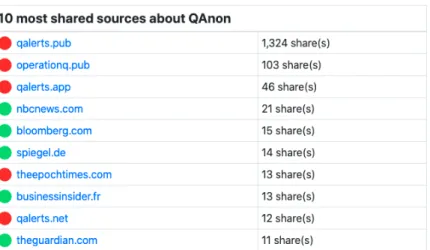
Finding 5: The 10 most shared sources about QAnon and which independent websites were most linked to on Telegram channels (Table 6).
The QAlerts.pub (same site as qalerts.app) has significantly more shares than any other websites, highlighting this site’s role in the flow of QAnon disinformation from the original Q drop, to notifying adherents, and then to being shared on alternative platforms. Speculations can be made as to why certain sources were used more than others, and what elements in each forum were more appealing among adherents. Examining the nu- ances between each website can reveal minute details and tactics that are leveraged to manipulate users online and further radicalize them through conspiracy-based rhetoric.
Ardian Shajkovci, Ramón Ruti, Asli Altinbay, Matteo Gregori,
Amanda Garry & Allison McDowell-Smith 39
Table 6—10 Most Shared Sources about QAnon from March 1, 2020 - November 1, 2020.
Source: Storyzy
Finding 6: There is a solid social network among misinformation sources and their appeal among users on Telegram.
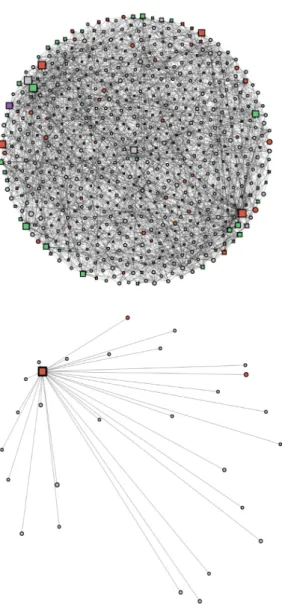
Figure 3 below reveals the Telegram communities that share disinforma- tion sources. The squares represent websites while the circles represent Telegram channels. This social network visualizes which sites and links get shared to individual Telegram channels. The social network visualization below highlights the range and complexity of disinformation-related sourc- es online, across independent websites, news hubs, and blogs, to just name a few. For example, content is being pulled from independent QAnon-related websites, far-right websites, pseudoscience websites, and independent far- -right biased news sources to the Telegram channels. This allows a range of disinformation to then be accumulated onto any singular QAnon channel, exacerbating the range of social problems that QAnon can manipulate into its ideology and rhetoric. The extent of the connectivity and disinformation data flow as it relates to Qanon serves as a barrier to objective reporting, threatening the very fabric of legitimate news and information sources in the fight against conspiracy theories, mis-and disinformation, and hate- -based rhetoric.
Capturing and dissecting the complexity of production and dissemination of conspiracy theories, hate-based rhetoric, and mis-and disinformation online 40
Figure 3—Social Network of Telegram Channels and Linked Sources from March 1, 2020- November 1, 2020. Source: Storyzy
Finding 7: In the eight-month period prior to the 2020 presidential election, disinformation related to QAnon was on the rise.
Disinformation was being produced at greater rates by independent web- sites and new sources, as well as being consumed on Telegram more rapidly than trusted sources. This finding is in line with previous research indicat- ing that falsehoods and disinformation often spread more rapidly and more widely than verified facts (Innes, 2019). The digital environment, especially those on alternative social media platforms such as Telegram, has become
Ardian Shajkovci, Ramón Ruti, Asli Altinbay, Matteo Gregori,
Amanda Garry & Allison McDowell-Smith 41
a primary means for spreading QAnon rhetoric and other lines of extremist thinking. The QAnon movement is unique in the fact that it has evolved from simple disinformation online to one of the most prominent lines of political thinking in the United States and has currently manifested into at least 23 instances of violence, including the Capitol Insurrection on January 6th, 2021.
A major component of the original QAnon study focused on tracking the flow of QAnon disinformation after the initial Q drop. The researchers found that after the original Q drop was shared to 4chan or 8kun, the up- date would make its way down to independent QAnon sites like Qalerts.
app. These sites would serve as aggregates for all Q drops and often notified users of new Q drops. As users became aware of the new information, it was then that they could be reposted to individual blogs and Telegram chan- nels to truly create further echo chambers and conversations. The digital disinformation platform allowed the authors of the article to retrospectively analyze the most popular sources reaching Telegram and the quantity of disinformation on these QAnon Telegram channels.
Finding 8: Continued threat of mis-and disinformation sources and their appeal among users on Telegram.
The recent data collected between August 2021 and February 2022 sug- gest significant user engagement with Qanon content on Telegram, considerably more significant compared to data collected between March 1, 2020-November 1, 2020 (See Table 7). For instance, “Topic Analysis” feature on Storyzy platform revealed over 11 million views of the content on Qanon classified as a disinformation source by the platform.
Capturing and dissecting the complexity of production and dissemination of conspiracy theories, hate-based rhetoric, and mis-and disinformation online 42
Table 7—Telegram Message Volume on QAnon from August 24, 2021 - February 25, 2022.
Source Storyzy
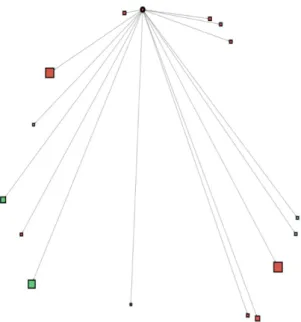
The network link analyses below (Fig. 4, 5) demonstrate signaling behavior between users and information to and within alternative platforms. Put dif- ferently, the network-based visualization below highlights certain aspects of the information travel patterns as it relates to Qanon between Telegram channels.
Squares: Outlet, sources Nodes: Telegram accounts
Ardian Shajkovci, Ramón Ruti, Asli Altinbay, Matteo Gregori,
Amanda Garry & Allison McDowell-Smith 43
Fig. 4. The network visualization reflects Telegram accounts that share a particular post or source of information. For instance, the Telegram account @patriotarmy shared this specif- ic link/outlet: https://www.bitchute.com/video/UimTMFGQb0Br on its Telegram channel Patriot Army – Telegram. This particular Telegram account also shared https://www.
bitchute.com/video/UimTMFGQb0Br on its Telegram channel Patriot Army – Telegram.
This particular Telegram account also shared https://www.thegatewaypundit.com/2021/11/
exclusive-john-pierce-william-shipley-take-defense-qanon-shaman . See table below for addi- tional breakdown. Source: Storyzy
Source: Storyzy
Capturing and dissecting the complexity of production and dissemination of conspiracy theories, hate-based rhetoric, and mis-and disinformation online 44
Squares: Outlet, sources Nodes: Telegram accounts
Fig. 5. The network visualization reflects Telegram accounts that share a particular post or source of information. For instance, @highdmary Telegram channel has shared 21 messag- es containing this particular post https://www.bitchute.com/video/iAd0YVsSpSI1. Other Telegram channels such as @qflys, @archiveanon, @redcapmaga, and @rightmindedpatri- ots similarly shared the same post.
Ardian Shajkovci, Ramón Ruti, Asli Altinbay, Matteo Gregori,
Amanda Garry & Allison McDowell-Smith 45
Source Storyzy
Limitations and Conclusion
This chapter engages with the important issue of the role of smaller social media platforms, as part of a wider media ecosystem engaged in construct- ing and communicating hate-based rhetoric, conspiracy theories, and mis- and disinformation. The authors have attempted to make the point that much of the current political, popular and media conversation about regulating social media focuses upon the role of mainstream social media platforms, namely Twitter, Facebook and to a lesser extent YouTube, which might be somewhat misplaced and misleading. Despite the renewed inter- est on the subject by policymakers and practitioners in the field, it remains a largely neglected topic that requires robust analysis to draw real world implications of the presented argument. The authors have attempted to present an initial discussion focused upon link analysis, signaling behavior between users and information to alternative accounts, and the like. An at- tempt was also made to employ network-based visualization tools to convey certain aspects of the information travel patterns, while highlighting the need for more robust research to data-driven analysis and interpretation in mapping the links between nodes.
The authors have attempted to make the case that a sole focus of main- stream social media platforms like Facebook and Twitter vis-a-vis debates
Capturing and dissecting the complexity of production and dissemination of conspiracy theories, hate-based rhetoric, and mis-and disinformation online 46
on social media regulation may not necessarily capture the complexity of the production and dissemination of hate-based rhetoric, conspiracy theories and mis-and disinformation online. This is especially important considering that Telegram has been explicitly positioning itself in the media ecosystem with a libertarian and freedom of speech protecting ethos, in the United and other western countries included, which does reduce the oppor- tunities for regulation securing traction.
Storyzy database has over 2 million indexed sources of information, with over 42,000 classified as disinformation sources tracked in over 41 languag- es. Storyzy defines disinformation as “any form of intentional manipulation aiming at publishing and spreading false information, conspiracy theories or propaganda so as to deceive the audience,” (Storyzy 2022) classified under 10 categories, with “propaganda, hate, satire, false information, con- spiracy, viral content, extremist, pseudoscience, and tabloid” being some of them (Storyzy 2022). Classification of disinformation sources is achieved through a mix of human-led expertise and artificial intelligence (AI). Such data classification process is deemed important to enable initial data iden- tification and classification (human-led expertise) and then rely on AI to sift through significant data points and generate conclusions that go beyond mere analyst’s collection and interpretation of data.
Storyzy focuses on assessing reliability but not veracity, meaning that not all pieces published by a disinformation outlet are necessarily false and some pieces published by trusted sources can spread false information.
For instance, RT.com may be considered a vector for disinformation but equally some of their output may be considered factually accurate. In this sense, how and why an outlet can objectively be defined as a “disinforma- tion source” may be tricky at times. Likewise, even for Q based Telegram channels, some of what they convey may be true, and much of the traffic may be adherents engaging in ‘social chatter’ and/or commenting or debat- ing particular claims and counterclaims. Such content does not necessarily constitute disinformation. Furthermore, data analysis platforms and tools have strengths and weaknesses that shape and mold what data is and is