Diagnosis of raising hens in the production system of extractivist family farmers in Chapadinha-MA. Study of correlation between calf price and arroba do fat cattle in the state of Paraná.
Aquaculture and fish farming
Ramon Grigio, Marcos Cesar Zanella Júnior, Lilian Carolina Rosa da Silva, Marlise Terezinha Mauerwerk, Hanna Karolyna dos Santos, Fábio Meurer. Ramon Grigio, Marcos Cesar Zanella Júnior, Lilian Carolina Rosa da Silva, Hanna Karolyna dos Santos, Rafael Ernesto Balen, Fábio Meurer.
Food science and animal products
Camila Soares, Vicente Ribeiro Rocha Júnior, Lucas Daniell Alcântara Borges, Luciana Albuquerque Caldeira, Gabriel Santos Souza David, Lucas Gabriel Cardoso, Guilherme Reis de Souza, Joyce Cipriana Pacheco Ramos. 424 Amanda Camila de Oliveira Poppi, Maria Luiza Rodrigues de Souza, Ricardo Souza Vasconcellos, Melina Franco Coradini, Ana Paula Sartório Chambo, Marcos Antonio Matiucci, Gustavo Lazzari, Jaísa Casetta.
Genetics, genomics, animal breeding and reproduction
Evaluation of the ranking of bulls between different climates of the state of Paraná for milk yield in Holstein cattle. Polymorphism in the 5' regulatory region of the goat UCP2 gene and its association with genetic value for milk quality traits.
Grasslands and forages
Enriched foliar fertilization of auxin on the chemical composition of the grass crown Brachiaria brizantha during dry and rainy periods. Productivity of maize (Zea mays) interplanted with Guinea grass (Panicum maximum Jacq.) and Ruzi grass (Brachiaria ruziziensis).
Horse farming
751 Adriele Silva de Sousa, Fernanda Nascimento de Godoi, Raphael Bermal Costa, Chiara Albano Araújo Oliveira, Iana Isabel Carvalho de Jesus, Beatriz Bastos Senes. 757 Adriele Silva de Sousa, Fernanda Nascimento de Godoi, Raphael Bermal Costa, Chiara Albano de Araújo Oliveira, Iana Isabel Carvalho de Jesus, Alana Lacerda dos Santos.
Nonruminant nutrition and production
Levels of energy and protein in the diet of laying hens on egg quality parameters. Nitrogen balance of piglets in the starter fed with different protein sources as a partial replacement for soybean meal.
Ruminant nutrition and production
Circulating blood albumin levels in feedlot bulls fed different sources of dietary nitrogen. Circulating levels of total proteins in the blood of feedlot bulls fed different forms of corn grain processing.
Technology, industry, products and process
1244 Victor Carvalho Machado da Costa, Sirlei Aparecida Maestá, Juliana Andréa Osorio Balan, Ricardo da Fonseca, Luiz Claudio Nogueira Mendes, Thaís Monique de Oliveira Cardoso. Prazo de validade nas propriedades físico-químicas da carne de cordeiro alimentada com oleaginosas.
INVITED
When the newly tested mutations and PLAG1 were included in the Bayes R genomic prediction method, the prediction accuracy for female reproductive traits improved. Using single nucleotide polymorphisms (SNP) as genome-wide genetic markers to calculate estimated breeding values (EBVs) is called genomic prediction. The uptake of genomic prediction in the beef sector has been relatively slow due to the unique challenges faced by this sector.
The multi-breed nature of the beef industry is one of the challenges for genomic prediction in this industry sector (Garrick, 2011; Rolf et al., 2014).
Associated Mutations May Improve Genomic Selection Accuracy
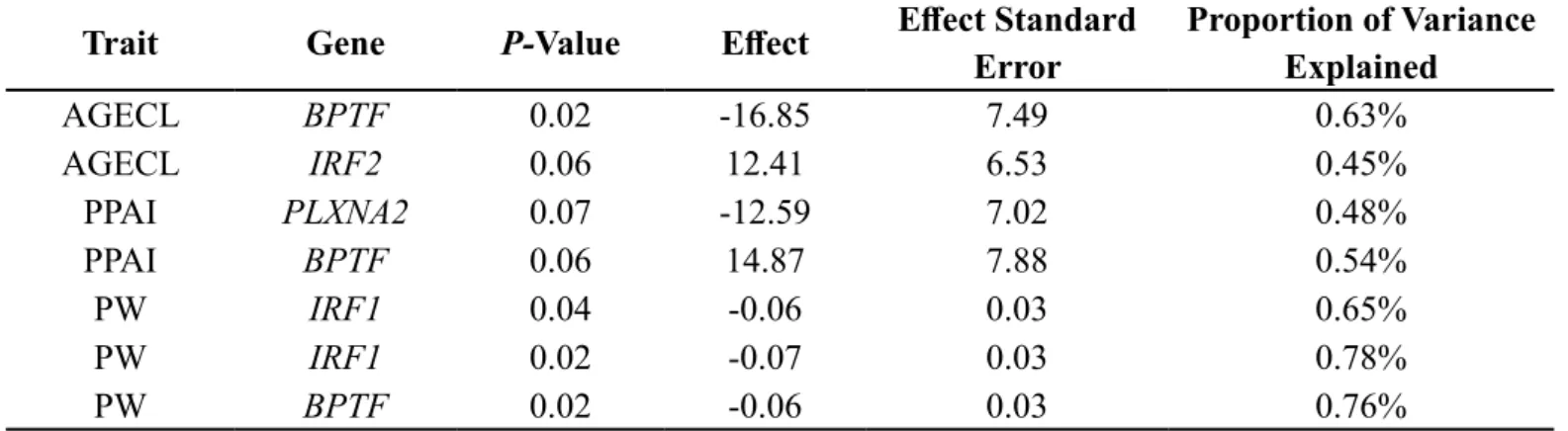
Reproductive traits considered were age at first corpus luteum (AGECL, days), anoestrus interval after parturition (PPAI, days) and a binary trait describing whether the cow ovulated before weaning her first calf (PW, 0-1). The genomic prediction method used was BayesR to fit 29 new SNPs and compare their performance with predictions based on 50,000 genotypes (Illumina SNP chip). This technology has already revolutionized the dairy industry as it has been widely adopted for the selection of Holstein sires worldwide (Barkema et al., 2015; . Boichard et al., 2016).
It has been proposed that genetic markers representing causative mutations will be used to estimate relationships and predict performance across cattle breeds (Saatchi et al., 2014).
Invited
SNP + PLAG1
Bem-estar animal e ética: o novo modelo mundial de negócios
Na cadeia produtiva de suínos, algumas das maiores empresas já anunciaram políticas de compra livre de gaiolas no Brasil e na América Latina. Em 2014, a BRF - maior integradora de suínos do Brasil e proprietária da Sadia e da Perdigão - anunciou a eliminação do uso contínuo de gaiolas de gestação até 2026. A Smithfield Foods, maior produtora mundial de suínos, eliminará gradativamente o uso de gaiolas de gestação em toda a sua cadeia produtiva nos EUA em 2017 e no México em 2022.
A Olymel, maior produtora de carne suína do Canadá, anunciou que sua produção eliminará gradualmente o uso de gaiolas de gestação até 2022.
Challenges for livestock production and animal science in a low carbon economy
- Introduction
- Trends in consumption of animal products
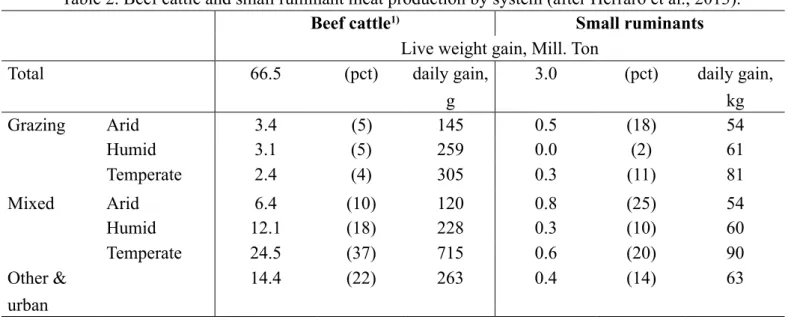
- Global livestock production and livestock production systems
- Ecological impacts related to livestock production
- Challenges and prospects for different livestock production systems
One of the best developed and cited frameworks for identifying these is the concept of planetary boundaries (Rockström et al. 2009). Greenhouse gas emissions from raw milk production at the farm level have a predominant influence (70-90%) on the environmental impact of the carbon footprint of dairy products (Flysjö et al., 2011). Resource use and environmental impact related to feed production, and methane emissions related to feed intestinal digestion.
Uncertainties in the application of the species-area relationship to land-occupancy characterization factors in life-cycle assessment.

Challenges to meat consumption worldwide
At the same time, regional cuisine and the awareness of the cultural heritage it represents are being strengthened again. In addition, we are witnessing the increasing power of communication media and advertising that is increasingly personalized on social networks. For example, Realini et al. 2013) analyzed the acceptability of beef according to the level of intensification of the production system and purchase intention according to origin, type of feeding and price, all for consumers in France, Spain and Great Britain.
Full utilization of the generated by-products throughout the chain, avoiding waste, would result in a higher value per animal unit (Eiras et al., 2016).

Climate change impact and adaptation of grazing systems in Australia and Brazil
- Impacts of climate change on temperate grasslands in Australia
- Climate change impact on livestock in Australia
- Effect of heat stress on animal
- Climate change adaptations in Australian temperate grazing systems
- Climate change impact and adaptations in northern Australian cattle industry
- Impact, adaptation, and mitigation of climate change in Brazilian livestock industries
Contribution of Working Group I to the Fourth Assessment Report of the Intergovernmental Panel on Climate Change (eds Solomon S, Qin D, Manning M, Chen Z, Marquis M, Averyt KB, Tignor M, Miller HL), pp. A contribution of works Group II to the Fifth Assessment Report of the Intergovernmental Panel on Climate Change [Field, C.B., V.R. Contribution of Working Group II to the Fifth Assessment Report of the Intergovernmental Panel on Climate Change.
Contribution of Working Group I to the Fifth Assessment Report of the Intergovernmental Panel on Climate Change [Stocker, T.F., D.
Como o bem-estar animal impacta na sustentabilidade da produção de suínos?
Portanto, os agentes que atuam nessa cadeia de produção de proteína animal devem compreender a estreita relação entre os conceitos de sustentabilidade e bem-estar animal. Ela desenvolveu o Código Sanitário de Animais Terrestres, que contém recomendações e diretrizes práticas para melhorar a saúde e o bem-estar. Com essa abordagem, é possível entender a relação direta e indireta entre o bem-estar animal e humano e os sistemas de produção sustentáveis.
O bem-estar animal deve, portanto, ser incluído nos planos de ação das empresas que atuam no mercado de produção animal, pois representam um elemento de sustentabilidade.
Improved efficiency in temperate grass based dairy systems
Just over 40% of the Earth's surface (excluding Greenland and Antarctica) consists of grasslands with a great diversity of vegetation (White et al, 2000). And early participation, consistent with the onset of grass growth, is critical to the overall success of the grazing season. A meta-analysis of stock effects on the productivity of pasture-based milk production systems.
Effect of stocking rate and calving date on grass production, utilization and nutritive value during the grazing season.

Fitting Brazilian livestock production to changes in natural and political environments
Land Pushing up agricultural production can test the limits of the physical environment, and land availability is an obvious one if the technology of production systems remains unchanged (McMichael et al., 2007; Godfray et al., 2010). The link between beef cattle production and agriculture in Brazil dates back to the first decades of the 20th century and intensified in the 1960s and 1970s when large new areas were opened, especially the Middle East (Cerrados), due to fiscal incentives (Zimmer et al. 2011). The content of sugarcane bagasse in the diet is low, just to provide the fiber requirement for proper rumen function, which in the case of sugarcane bagasse is as low as 9% of the dry matter (Bulle et al., 2002).
In the Midwest, the main cattle production region of Brazil, longer periods of water scarcity are expected (Carvalho et al., 2013; PNMC, 2013) due to climate change.

Livestock and the land: science and sensibility
When examined from the point of view of efficiency of use of competitive efficiency, the picture changes. The calculated values for the efficiency of animal protein synthesis are of the same order. One of the main environmental concerns arising from livestock production is related to methane production.
Cattle grazing was by far the most efficient in terms of the contribution of renewable resources.

Metabolomics and genomics in livestock: taking advantages from the next phenotyping frontiers in animal breeding and selection
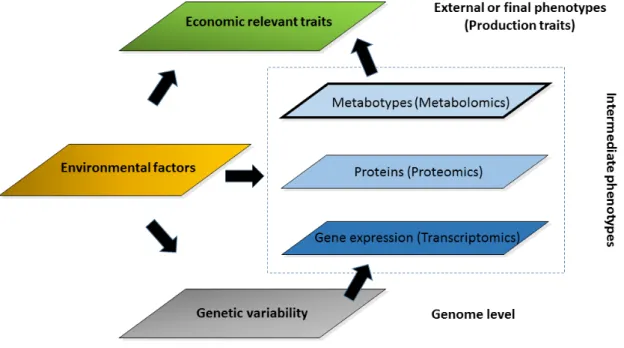
In this way, it would be possible to predict traits that are difficult or expensive to measure or detect, and predict as early as possible traits that can be measured or inferred late in the animal's productive life (Fontanesi, 2016). For example, Buitenhuis et al. 2013) reported genetic correlations between milk metabolites and milk production traits. My research work on metabolomics in animal husbandry was supported by the Italian Ministry of Agriculture, Food and Forestry Policy (MiPAAF), Innovagen project.
Fish poma in chicken eggs is associated with a substitution within a conserved motif of the FMO3 gene.
Multiple roles of grassland and livestock in the ecological and economic strategies of agroecological systems
- The limits of conventional farming systems
- Another way is possible
- Arable land and temporary grasslands
- Permanent grassland and grazing
- Livestock and design of farming systems
- Multiple roles of grasslands in agroecological systems
- Temporary grassland
- Permanent grassland
- Livestock
- Discussion and conclusion
Grasslands are still the basis of the feeding of these 78 million LU grazing animals. Most of these trends went in the exact opposite direction from the principles underlying agroecological systems. It is estimated that CH4 and N2O emissions offset 70% to 80% of the European grassland carbon sink (Ciais et al., 2010).
This holistic approach to the entire system can be defined as agro-ecological (Wezel and Peeters, 2014).
Plant diversity in intensively managed grasslands can improve resource use efficiency and alleviate effects of extreme climate events
This paper is mainly based on research carried out as part of the Agrodiversity (Kirwan et al. 2014), MultiSward (www.multisward.eu) and AnimalChange (www. animalchange.eu) projects. To investigate the sensitivity of yield responses to different relative proportions of functional species, the planting rate of the same four species was systematically varied to produce eleven mixture communities with four different initial levels of evenness (E) (see Kirwan et al ., 2007 ): four mixtures successively dominated by each species (planting proportions of 70% of one species, and 10% of each of the other three species, E = 0.64), six mixtures successively dominated by species pairs (40% of each of two species, and 10% of each of the other two, E = 0.88) and community of equal size (25% of each species, E = 1). Average annual yield over the entire experimental duration of yield of agronomic species planted (excluding weeds) at each of the 31 sites.
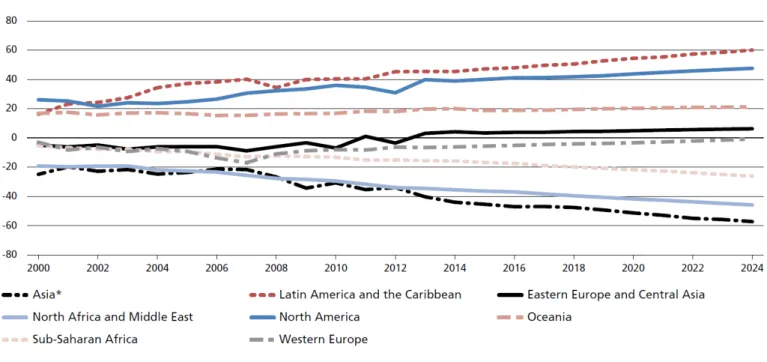
Significant cross-border overproduction is indicated by an asterisk above a location at the top of the panel.