It is important that the facilitator takes the time to learn how each group member learns most easily. Therefore, it is the facilitator's job to be flexible in the use of verbal and visual.
SOME PERSONAL FACTORS THAT MAY AFFECT LEARNING
Arguing that something is good or correct because it is new, or the opposite because it is the tradition. However, it is important to consider people's willingness to interact with other group members.
RECOMMENDATIONS TO CREATE A GOOD LEARNING ENVIRONMENT
A fundamental part of the facilitator's role is to create environments that help people learn. Carrying out activities that allow everyone to know and integrate the teaching into society's values, beliefs and customs.

LEARNING AND DECISION-MAKING ON TECHNOLOGY USE
Both are key criteria in the decision-making process, especially in its early stages when technological innovations are explored. Given the nature of the decision-making process described earlier, it is important to encourage an open dialogue with manufacturers about how they perceive the new technology, to ensure a good understanding of their decision-making methods, and to do good post-decision follow-up.
THE TRAINING PLAN
PRINCIPLES
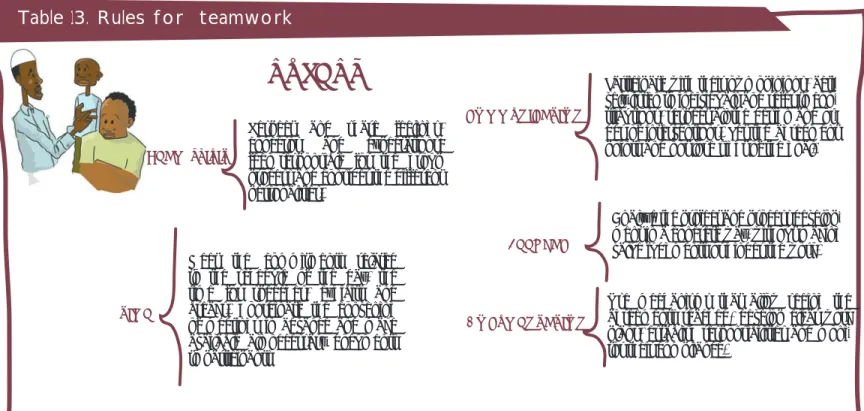
Mutual learning relates to not only the facilitator but also the producer learning from the experience, even if it is motivated by the former. Promoting collective leadership gives the facilitator tools to expand producers' participation and leadership according to their strengths and affiliations, minimizing the development of individual and individualistic leaderships.
TYPE CHARACTERISTICS
TRAINERS AND PRODUCERS ROLES: THEIR COMPETENCES AND RESPONSIBILITIES
In order to understand the different roles of trainers and trainees, it is important to state that in participatory learning processes the facilitator can change his role as technical advisor, "knowledge carrier", to the role of "facilitator", which means transforming his attitude towards the producer and his family and directing his actions towards a collaboration that is responsible for everything rather than the advisor. They can help make the formation process a truly participatory process, which constitutes a learning experience and has positive effects in the medium and long term. File a copy of the maps, sketches, calendars and all graphic material to preserve them for future reference (photographing or videotaping is important).
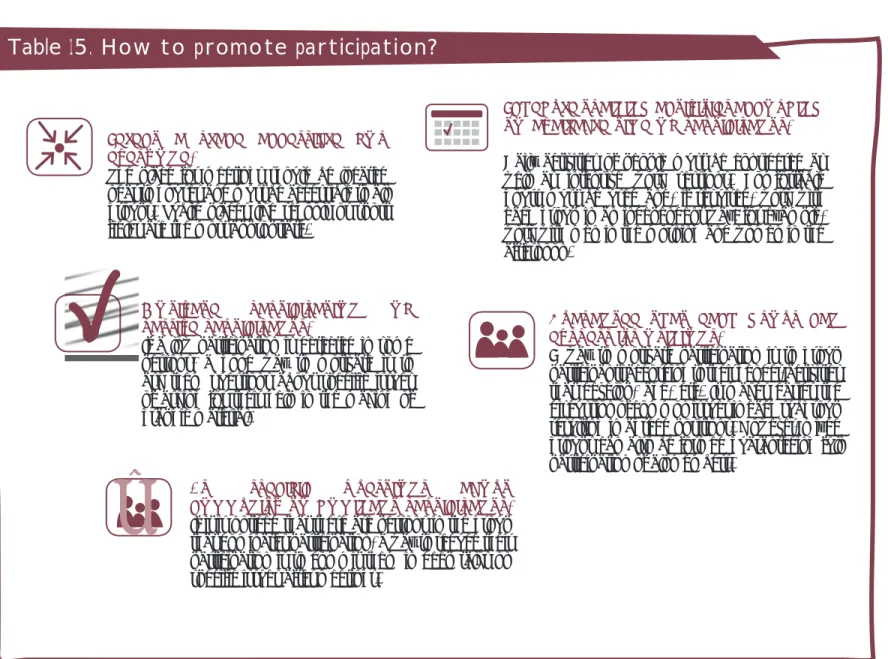
If it is noticed that there are people in the group who dominate participation, one way to reduce their participation is to engage them in deep conversations about specific topics after meetings. Convenient hours should be used, and if necessary work with each group in an independent manner; for example, working with men in the morning and women in the afternoon. If a low participation of some people is detected, a good way to motivate is to ask them questions about specific questions to ask for their help in the production of graphic material.

THE TRAINING PLAN
- THE DIAGNOSIS
- PLANNING: DEVELOPMENT OF TRAINING PLAN
- OPERATIONAL PLAN
These are the ecological, economic, political, social, demographic and cultural characteristics of the community. What are the products that contribute most to meeting the needs of the family. The Daily Routine Clock is a tool that helps identify the routine activities of people in the community (productive, reproductive, and communal).
It is important to remember that reproductive activities take place throughout the year and should therefore be included in the diagram. The basis should be established with the community at the beginning of the training process. It is answered what resources are available in the community and what must come from outside.
TRAINING PLAN
This allows producers and their families to make arrangements so that everyone participates in the Plan. Responsibility: The person or persons responsible for each activity agree with the producers and their families. Evaluation: Establish at the outset that producers and their families, with the support of the facilitator, will evaluate the results of each activity after it is completed.
GRUNDMANN Gesa, STAHL Joachim (2002), Como sal en la sopa: conceptos, métodos y técnicas para profesionalizar el trabajo en organizaciones de desarrollo; Formación, asesoramiento, comunicación, gestión de proyectos y contexto organizativo. ORGANIZACIÓN DE LAS NACIONES UNIDAS PARA LA AGRICULTURA Y LA ALIMENTACIÓN (2001), Análisis socioeconómico y de género ASEG. ORGANIZACIÓN DE LAS NACIONES UNIDAS PARA LA AGRICULTURA Y LA ALIMENTACIÓN (2000), La mujer rural y su papel en la protección de la biodiversidad y la seguridad alimentaria en América Latina y el Caribe.
MONITORING AND EVALUATION
WHAT ARE MONITORING AND EVALUATION?
- MONITORING
- ASSESSMENT
The training plan is constantly monitored to check the achievement of objectives and results, the progress of activities and the overall situation of the group. Monitoring and evaluation also enable measuring the level of acceptance of the Training Plan in the environment in which it is being developed. It is the basis for adopting corrective actions to improve the design, use and quality of results obtained in the Training Plan; moreover, it enables strengthening of the initial positive results.
As with other monitoring activities, such an analysis should include the views of producers and their families on how to improve the comfort and performance of the Training Plan. Evaluation is an activity that seeks to determine regularly and objectively the relevance, performance and success of the Training Plan during its implementation and when it is completed. The evaluation that is carried out in the middle of the development of the Training Plan serves as a means to confirm or correct the initial assessment of the importance, effectiveness and efficiency obtained in the monitoring activities.
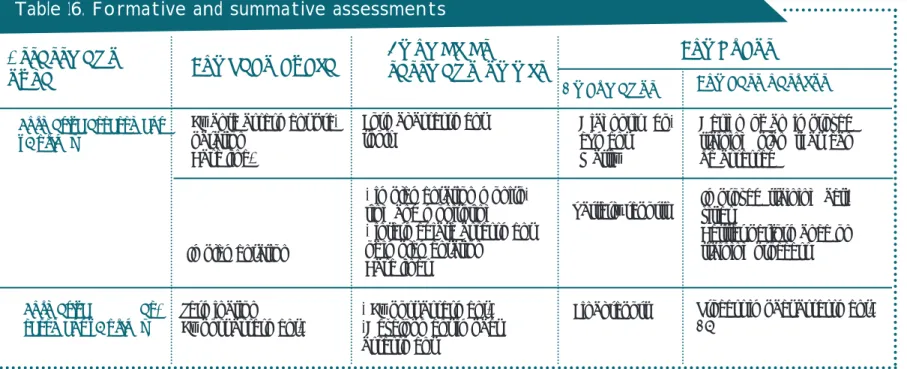
Furthermore, when the aim is to obtain general lessons from the experience of a group of projects in the same sector or to have a specific thematic approach, an evaluation is more appropriate, as monitoring activities are carried out activity by activity, while an evaluation may include several outputs. The essence of credibility is the trust of producers and their families in the results of monitoring and evaluation processes. The moderator should encourage the use of clear tools to ensure community involvement in the evaluation analysis and explain the logical connection between findings and remedial options.
In addition, the needs and perspectives of the various stakeholders and those interested in the evaluation must be taken into account: men, women, young people, the elderly, etc. The measure of the success of the monitoring and evaluation process is its effect on the individuals and organizations that learn from the process. Evaluation should generate information that contributes to feedback on the decision-making process and organizational learning.
PARTICIPATORY MONITORING AND EVALUATION
WHY PARTICIPATION IN MONITORING AND EVALUATION The participation in monitoring and evaluation serves as a support tool to improve the effectiveness and efficiency of communities in activity management and as a learning process through which they increase their awareness and increase the understanding of the various factors that affect their lives. Monitoring and evaluation allows the local community and the facilitator to monitor the progress and impact of the project, establish the feasibility of the objectives and identify and anticipate problems, enabling them to take the necessary measures to prevent or solve them in due course. When implemented together, monitoring and evaluation allow for individual satisfaction, creativity and the exchange of new ideas.
In participatory processes, the community is responsible for implementing the monitoring and evaluation process, with the support of the facilitator in designing the system, monitoring activities and analyzing the information collected. For the monitoring and evaluation process, activities aimed at solving some of the main problems identified have been prioritized. The monitoring and evaluation process combines the recording of specific information with discussion sessions on the progress of the activity and the detection of difficulties.
MONITORING AND EVALUATION OF ACTIVITIES PROGRESS Community name
The principles that guide the participatory monitoring and evaluation approach make it different from conventional approaches, as it requires the adoption of a different way of carrying it out. Try to achieve the objectivity of monitoring and evaluation findings, thereby distancing the external evaluators from stakeholders. They insist that there are various levels of participation (low to high), with different types of stakeholders in the initiation of monitoring and evaluation, the definition of their parameters and their realization.
Los resultados del seguimiento y la evaluación se relacionan con las condiciones locales Las partes interesadas aplican los resultados del seguimiento y la evaluación y promueven su uso para mejorar el proceso de toma de decisiones. Aumentar la capacidad local de seguimiento y evaluación y, por tanto, la autonomía en la ejecución de proyectos. Permite a las partes interesadas comprender mejor sus estrategias y procesos programáticos (lo que funciona, lo que no funciona, por qué). Las Escuelas de Campo (ECAs o FFS, por sus siglas en inglés, Farm Field School) consisten en una experiencia pedagógica articulada en torno a un grupo de productores de una misma comunidad que, con el apoyo de un facilitador local, diagnostican participativamente su realidad y establecen un conjunto de prioridades.
LAS ESCUELAS DE CAMPO PARA AGRICULTORES (ECAS)
- OBJETIVOS DE UNA ECA
- VENTAJAS Y BENEFICIOS DE LAS ECAS
- APRENDIZAJE POR DESCUBRIMIENTO, ASPECTO IMPORTANTE DE LAS ECAS
- ORGANIZACIÓN DE UNA ESCUELA DE CAMPO
- LA PARCELA ECA O PARCELA DE APRENDIZAJE
- Learning and development lines
- Activities
- Learning and practice teachers
- Consider different learning styles
- Portfolio
Es esencial que los fabricantes desempeñen un papel central en el diseño de su propio plan de estudios para garantizar que la capacitación sea relevante y útil. Siembra de parcelas de estudio: Una vez definidos los grupos, se determina la parcela de estudio y las parcelas experimentales. Jornadas de Aprendizaje: El plan de formación es la base del proceso de enseñanza y aprendizaje de la escuela de campo, ya que su contenido refleja las necesidades formativas identificadas en la implementación de la línea base y a ser atendidas en el ciclo de la escuela de campo.
Sesión plenaria y toma de decisiones: en esta actividad, cada grupo de trabajo presenta los resultados de la observación de las parcelas y registro de datos a todo el grupo. Al igual que el día de campo, es una oportunidad para compartir y difundir los conocimientos adquiridos durante la capacitación entre los invitados, mediante la presentación de los resultados de las parcelas de aprendizaje (desempeño, relación costo-beneficio). En este documento se puede encontrar la descripción de la metodología de la escuela de campo aplicada al contexto centroamericano, con énfasis en Nicaragua.

DREAM/DESIGN
Each level is dominated by a learning style: dreamer/designer, thinker, decision maker and creator. In this way, the participants' development and self-development can be guided and deeply understood. After saving them, the participant chooses his best skills and shows them to others, such as his teachers, family or boss.
Based on this presentation, the participant can reflect on their development with their learning teacher. Since 2006, this learning concept has been developed in a project implemented by Solidaridad - CSN, under the leadership of Dirk Jan Vos and with the pedagogical advice of Bernie Jonker. The goal is to develop a system built from the organizations themselves for their continuous improvement and easier access to more certification programs.
THINK
There is a learning style in each phase: the dreamer/designer, the thinker, the decision maker and the.
MAKE
DECIDE
Solidaridad