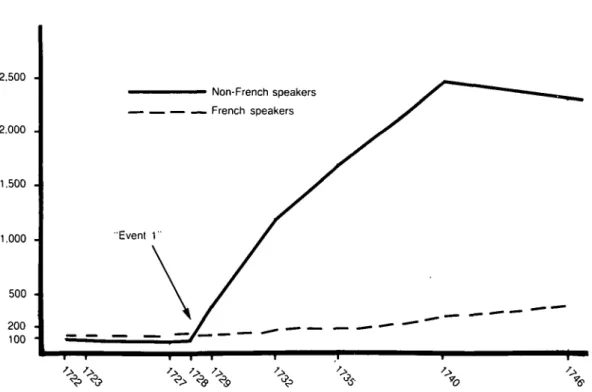
The restrictions on the expression imposed by the grammatical constraints of the pidgin can only be complete. After event 1, the rate of dilution of the dominant language would be determined by the rate of increase in the slave population and the relationship between this rate and the number of slave arrivals before event 1.

A feature F is found in one (or several) Creoles and one (or several) African languages
Speakers of the creole(s) are mainly of African ancestry
Therefore, F was acquired by creole speakers from speakers of African languages
In the remainder of this paper, I briefly analyze some of the implications in these two areas. In other words, where the bioprogram conflicts with the grammar of the target language, there is delayed learning and frequent instances of systematic errors.
Let Daddy hold it hit it (= let Daddy hit the ball with the bat)
What may appear to be unnecessarily restrictive lies in the grammar's limitation on the number of categories, and the consequent absence of complementizers, prepositions and the like, as well as more complex structures such as prepositional phrases. In other words, given structures generated by the grammar of Section 3.3, it is possible to construct from them a series of more complex structures not specifically generated by the bioprogram, even in the absence of appropriate inputs or a developed target model.
Let Daddy get a pen write it (= let Daddy write it with the pen)
Go over there and sit down (24:1)
The preemption principle
If you hear people using a form different from the one you are using, and do not hear anyone using
- Precocious learning
- Language origins
- Conclusion
Although any current treatments can only be speculative, I would like to try to show how LBH suggests some new approaches to the question. A reasonable research assumption could be that the strength of any given capacity (measured by its appearance or non-appearance in the formal structure of creoles) was proportional to the time it had been established in previous species.
Bioprograms and the innateness hypothesis
Above all, note that the universal facts are located in the structure of the cooking problem, and not in the environment per se. However, I think it is reasonable to conclude that the bioprogram for human sexuality does not contain any specific information about cars.
A bioprogram for language: Not whether but how?
In these and other ways, the syntactic and semantic properties of verbs were a major factor in language that contributed to the cognitive demands of its acquisition. However, the extent to which influences on acquisition are specifically linguistic, either from within the child or from the language itself in the context of its acquisition, remains to be determined.
Innate grammars and the evolutionary presumption
If the language used at home was, indeed, the language of the parents themselves, then the creolization of the pidgin took place when the children were old enough to enter the workplace and the street on their own and they learned the pidgin as a second language. At this point, social and economic as well as cognitive variables would have interacted with the demands of the language to determine its acquisition.
On the transmission of substratal features in creolisation
It is significant that so little of the semantic complexity of the Bantu tense-aspect systems appears in MC. The hypothesis is that a large number of creole speakers were bilinguals who transferred the semantics and syntax of verb-fronting structures from their language that had it to that which did not.
Language acquisition: Genetically encoded instructions or a set of processing
This period of massive numerical predominance of Bantu speakers coincides with a decisive period in the emergence of Mauritian Creole (MC): An earlier period of pidginization (of adults) and creolization (of children, with varying input according to their position in ethnosocial space) ended around 1774, when for the first time locally born slaves outnumbered the French-speaking members. It is only where Malagasy and Bantu coincide to a significant degree that there is sufficient impetus to change the "regular" operation of the bioprogram.
In fact, there is strong evidence (Clark 1979) that by the late 18th or early 19th century a type of pidgin had developed between English-speaking seafarers and native Hawaiians that was historically linked to other forms of Pacific pidgin English and to Chinese pidgin English as well ( although rather thin) to the Creole English of the New World. It thus appears that the Creole languages of the New World arose almost entirely as lingua francas among slaves born in Africa rather than among those born locally.
From pidgins to pigeons
The painstaking (and sometimes tedious) work required to show this is underway, at least at the lexicon level. Can it be shown that a certain stage in the development of the concept of individuation is accompanied by the appearance of "you" and "me".
Grades of nativism
Bickerton's argument for LBH is an example of the poverty of the stimulus argument. Bickerton's version of the modularity concept is the language bioprogram hypothesis (LBH), which states that all children bring a biological program specifically designed for language acquisition to the language learning situation.
The relative richness of triggers and the bioprogram
My second reason for caution concerns the high degree of specificity that Bickerton assigns to the bioprogram. Bickerton rejects the parameterized view of the bioprogram solely because it involves more complex innate schemas.
Creolization: Special evidence for innateness?
This involves two serious problems: (i) why should a language ever develop historically so that its grammar departs further and further from that provided by the bioprogram, and, more importantly, (ii) how can it develop a grammar of on-togenetic properties (ie in a growing child) that differ from those given by the bioprogram. When he does, he will almost certainly find that the bioprogram needs to be more open, parameterized.
How degenerate is the input to Creoles and where do its biases come from?
This suggests that an ASL substrate as used by native signers is itself a direct manifestation of the bioprogram. Like first-generation speakers of a creole, second-generation signers (who are native first-generation signers) receive input from linguistically heterogeneous parents who are not native speakers of the language employed at home.
The language bioprogram hypothesis, Creole studies, and linguistic theory
34;first generation sign languages." The remaining 10% are deaf children of deaf parents; this small portion of the deaf community includes all native sign language (ASL) deaf people. Given this demographic context, the vast majority of ASL users are not native signers.
Do Creoles give insight into the human language faculty?
The arguments that can disprove this version of the monogenesis hypothesis are mainly those that can demonstrate a multiple, rather than a single, origin. We should note that there has been a shift in Bickerton's conception of the universal characteristics of Creoles.
Creolization or linguistic change?
In his earlier concept (in particular, the "bioprogram" features of radical creoles do not necessarily appear in all natural languages. The variant of Portuguese spoken in the islands of the Gulf of Guinea appears to be more sociolinguistically similar to French creoles: Bickerton questioned the accuracy of the available descriptions of these idioms, so it would be redundant to discuss them here.
Problems with similarities across Creoles and the development of Creole
Another shortcoming is the lack of explanation of the creation of Creole as a community language. In this regard Bickerton makes two assertions that lead to a greater indeterminacy in the development of the language of the community.
Socioprogrammed linguistics
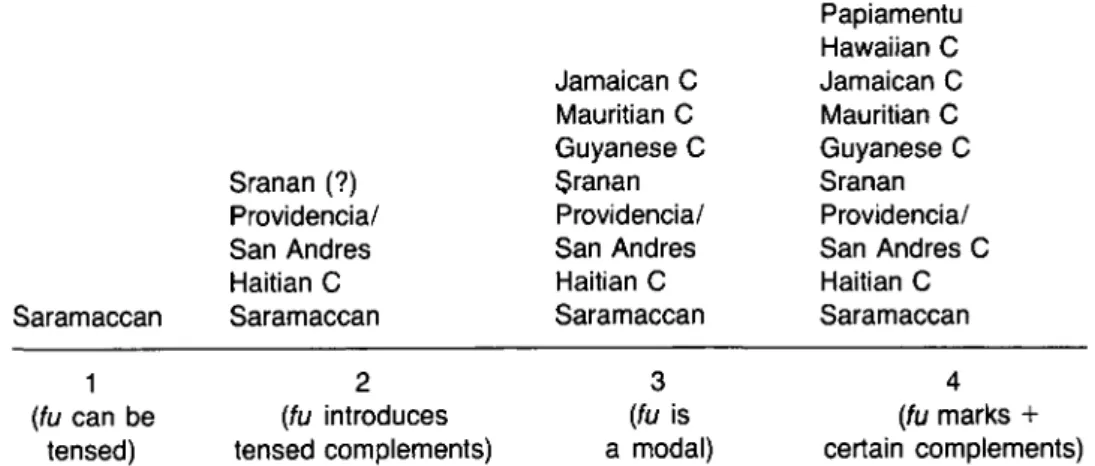
For example, in dealing with /u (and its phonological variants) across Creoles, the LBH gives the impression that the phonological form itself is part of the LBH. 34 "accidental preponderance" is the order that occurs most commonly in the native languages of the people involved in the contact situation.
Do Creoles prove what don't?
This cannot possibly mean that so many languages were involved in each of the Creole evolution. Even where Bickerton might have been able to provide a convincing analysis of the Hawaiian baby speech community, he did not.
Some of the individual points that Bickerton cites as an example seem to disappear upon closer examination. But when it is so easy to find alternatives to the bioprogram hypothesis with respect to those aspects of Bickerton's argument that I can judge, I have to remain skeptical about how much the rest of the argument demonstrates.
The bioprogram hypothesis: Facts and fancy
As Bickerton notes in Chapter 5, his formulations of the LBH find considerable support in the cross-linguistic literature on children's language acquisition. The languages of the world offer a variety of forms for the grammatical expression of certain concepts.
Organum ex machina?
Such structures are everywhere, from scientific taxonomies to planning a day's activities (see Simon 1962). For example, detailed observations on the timing of language acquisition by Creole children are clearly of critical importance to this question.
Why Creoles won't reveal the properties of universal grammar
Saramaccan has no obvious case markers at all, and it would be difficult to reach any firm conclusions about the constituent structure of these examples without the aid of notions of universal grammar developed from a comparative study of more complex languages. The bottom line is that although it is quite possible that when we discover the properties of universal grammar we will find that creoles are fully consistent with it, it does not follow that the study of creoles will reveal those properties to us.
Creole is still king
We can only see its effects if we study the interaction of these universals with a set of non-universal rules in complex languages. So if Bickerton's thesis that the grammatical structures of Creoles are almost entirely determined by the universal grammar and contain few non-universal rules is correct, then ironically Creoles are probably the worst source of data on the universal grammar.
- Hawaiian pidgin was fixed in form by 1888 (Good- man). There does not exist in the literature so much as a
- Juba Arabic is a pidgin (Goodman). Juba Arabic has a substantial native-speaker population and is therefore a
- Fi is a main verb in Jamaican Creole (Mufwene)
- I chose the wrong analysis for my example 37 (Mufwene). Coordinate VP analyses are ruled out under
- Serial complement clauses lack independent propo- sitional content (Muysken). I'm amazed at this grossly
- My property 55 is shared by English (Roberts)
- Table 1 is invalidated by my example 45 (Seuren)
- Haitian question words differ from those in Indian Ocean Creoles (IOC) in that the latter are straight from
The treatment of the substrate issue was by far the most depressing in the comments. Paper presented at the biennial meeting of the Society for Research in Child Development, Detroit. In: Study of the role of second languages in Asia, Africa and Latin America, ed. 1981).
Cognition and communication in infancy, ed. 1973) Historical and linguistic evidence in favor of the relexification theory in the formation of creoles.
The Behavioral