Upjohn Press Upjohn Press Collection
3-19-2020
Institutions, Structures, and Policy Paradigms: Toward Understanding Inequality in Africa in The Political Economy of Inequality: U.S. and Global Dimensions
Howard Stein University of Michigan
Follow this and additional works at: https://research.upjohn.org/up_press Part of the Income Distribution Commons, and the Social Welfare Commons Citation
Stein, Howard. 2020. "Institutions, Structures, and Policy Paradigms: Toward Understanding Inequality in Africa." In The Political Economy of Inequality: U.S. and Global Dimensions, Sisay Asefa and Wei-Chiao Huang, eds. Kalamazoo, MI:
W.E. Upjohn Institute for Employment Research, pp. 117-143. https://doi.org/10.17848/9780880996730.Ch6 This title is brought to you by the Upjohn Institute. For more information, please contact [email protected].
of Inequality
U.S. and Global Dimensions
Sisay Asefa Wei-Chiao Huang
Editors
2020
W.E. Upjohn Institute for Employment Research Kalamazoo, Michigan
Names: Sisay Asefa, 1950–, editor. | Huang, Wei-Chiao, editor.
Title: The political economy of inequality : U.S. and global dimensions / Sisay Asefa, Wei-Chiao Huang, editors.
Description: Kalamazoo : W.E. Upjohn Institute for Employment Research, 2020. | Includes bibliographical references and index. | Summary: “This book encapsulates the six papers delivered during the 54th Werner Sichel Lecture Series, held on the campus of Western Michigan University during the academic year 2017-2018. The book’s title is taken from the theme for that year’s lecture series, ‘The Political Economy of Inequality: U.S. and Global Dimensions.’” — Provided by publisher.
Identifiers: LCCN 2020006532 (print) | LCCN 2020006533 (ebook) | ISBN
9780880996716 (paperback) | ISBN 9780880996723 (cloth) | ISBN 9780880996730 (ebook)
Subjects: LCSH: Income distribution. | Income distribution—United States. | Economic policy. | Retirement—Government policy.
Classification: LCC HB523 .P65 2020 (print) | LCC HB523 (ebook) | DDC 339.2—dc23
LC record available at https://lccn.loc.gov/2020006532 LC ebook record available at https://lccn.loc.gov/20200065633
© 2020
W.E. Upjohn Institute for Employment Research 300 S. Westnedge Avenue
Kalamazoo, Michigan 49007-4686
The facts presented in this study and the observations and viewpoints expressed are the sole responsibility of the authors. They do not necessarily represent positions of the W.E. Upjohn Institute for Employment Research.
Cover design by Allshouse Graphic Design.
Index prepared by Diane Worden.
Printed in the United States of America.
Printed on recycled paper.
117
Institutions, Structures, and Policy Paradigms
Toward Understanding Inequality in Africa
Howard Stein University of Michigan
The trajectory of development in sub-Saharan Africa remains puz- zling to mainstream economists. Poverty stays stubbornly high, growth has been uneven, and life expectancy has continued to lag relative to other regions, despite governments adopting policies inspired by neo- classical economics. Economists have used a host of extraneous expla- nations for what some have called “Africa’s tragedy,” including eth- nicity, geography, colonial history, the legacy of the slave trade, poor governance, poorly developed social capital, and other things. The number of variables purportedly correlated with growth grew dramati- cally over time in the literature, reaching by one count a rather implau- sible 86 regressors by 2000 (Chitonge 2015).
More recently, in line with new concerns about income inequal- ity, orthodox economics has turned to trying to explain the pattern of income distribution in Africa. Contrary to Kuznets’s prediction that regions with low industrialization and a high reliance on agriculture should have an equitable distribution of income, sub-Saharan Africa has had high and worsening income inequality in recent decades, despite evidence of deindustrialization and despite most of its population liv- ing in rural areas. As argued in this chapter, part of the problem with using Kuznets’s formulation is its reliance on the faux naturalism that is embedded in the neoclassical theory of distribution, in which factors of production in a competitive market are supposed to be paid according to their marginal contribution to production.1
The belief in Kuznets’s curve follows this erroneous presumption—
e.g., that peasants received income commensurate with their land and
labor, which is comparatively equitable in economies dominated by rural production. With industrialization, the divide between urban- based wage income and rural income will grow, and income inequality will worsen. Only with the shrinking of the rural sector will equality be restored. When this pattern is not being observed, instead of question- ing the underlying assumption, neoclassicals tend to search for extrane- ous factors that can explain this exceptionalism. As we will argue in this chapter, the eff ort to understand income inequality needs to transcend the faux naturalism of neoclassical economics to focus on the evolution of the institutions, related economic structures, and the way Africa has been integrated into the global economy, all of which determine the current and historical patterns of income distribution. At the core of the explanation are the shifting structures of power which underlie the generation of disparities in material awards.
The chapter begins with a review of trends in income distribution in sub-Saharan Africa, focusing on Gini coeffi cients. The chapter then turns to a critical review of the mainstream economic view of distribu- tion and its applications to understanding inequality in Africa, includ- ing its impact on policy formation, which has contributed to the exa- cerbation of distribution. The paper will then discuss the institutional approach to income distribution. The fi nal section will apply the theory to understanding the patterns we have observed in sub-Saharan Africa.
TRENDS IN INEQUALITY IN SUB-SAHARAN AFRICA
The picture of income distribution in sub-Saharan Africa is not a pretty one. Nel (2018) compiled the Gini coeffi cients on consumption and wealth dispersal for diff erent regions of sub-Saharan Africa based on the latest data he was able to access. These are summarized in Table 6.1.
We can see that while there are enormous variations in the Gini coeffi cients in Africa, there are a surprising number of countries above the 50 threshold, which is considered to be highly unequal. Nearly 25 percent of the countries listed in Nel’s Table 8.1 (p. 107) are above 50.
In contrast, only two countries would be deemed to be highly equitable, or having a Gini below 30 (Kenya in 2007; Niger in 2011). The vast
majority are above 40, which according to Nel is “surprisingly high, given the low level of modernization” (Nel 2018). As we will discuss below, these fi gures are likely to understate the extent of inequality in Africa. One should also recognize the variations of dates in which the surveys were undertaken (these diff erent spans are shown in the col- umn of Table 6.1 titled “Years of survey”). Nel also presents “less reli- able” wealth dispersal Ginis, which seem to be more uniformly and disturbingly high. While this provides a snapshot of the inequality in the region, it does not tell us if distribution is improving or worsening over time.
Jirasavetakul and Lakner (2016) have examined the aggregate trends in the region from 1993 to 2008 based on household budget surveys that also focus on consumption expenditures. The authors’ approach is to use interpersonal inequality, in which everyone is assigned his or her own income, rather than looking at average or weighted averages of countries. They themselves admit that the numbers are bound to be understated, because they do not have data on the most fragile country economies, and because the surveys badly underestimate the consump- tion expenditures of the richest segments of the population. It should be noted that these numbers are also likely understated given the well- known underrepresentation of the poorest segments of the population in household budget surveys. The study also uses 2011 purchasing power parity (PPP), which tends to disproportionately raise lower incomes, given the overrepresentation in international price comparisons of the nontradable goods, which tend not to be consumed by the poor.2 Table 6.1 Inequality of Consumption and Wealth: Various Years
African region
Years of survey
Gini of consumption dispersal—mean
and range
Gini of wealth dispersal—mean
and range
Southern 1994–2010 52.4 75.3
Western 2002–2011 41.1 68.7
Central 2003–2011 44.4 69.8
Sahel 2008–2011 37.5 66.0
Eastern 2002–2011 41.0 69.0
Total 1994–2011 44.0 (29.9–73.5) 70.2 (62.4–82.9) SOURCE: Nel (2018).
Above, Figure 6.1 shows the Lorenz curve, which clearly illustrates negative trends. We can see the steady movement to the right of the Lorenz curve over time, indicating worsening inequality. Data on the Gini coeffi cient confi rm this. The Gini rises from 51.68 in 1993 to 52.16 in 1998, 54.13 in 2003, and 56.12 in 2008. In 2008, sub-Saharan Africa had the highest regional Gini in the world. (In 2007, the world’s mature economies were at 41.1 percent; Russia, Central Asia, and southeastern Europe at 42.7 percent; Latin America and the Caribbean at 52.2 per- cent; and East Asia and the Pacifi c at 45.9 percent.)
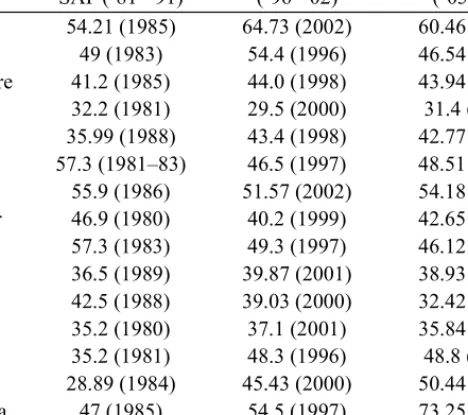
Table 6.2 attempts to follow trends over a longer period of time at the country level. Countries are selected from the UNU/WIDER inequality data set of the United Nations University World Institute for Development Economics Research (UNU/WIDER) based on the avail- ability of information over the three periods. As much as possible, we Figure 6.1 Lorenz Curve for Africa: 1993–2008
SOURCE: Jirasavetakul and Lakner (2016).
0 0.2 0.4 0.6 0.8 1
0 0.2 0.4 0.6 0.8 1
Cumulative population share, p
1993 2008 Equality
have tried to focus on similar methodologies used in each country over time (though this was not always possible) and to have gaps in the data in each country in the three columns of at least fi ve years. What we see on average is a rising trend in inequality over time. As we would expect, the unweighted average is much lower than the interpersonal inequality discussed above. Still, two-thirds of the countries have rising income inequality from the 1980s to the 1990s and early 2000s, and for more than 60 percent of the countries, the latest Gini coeffi cients are above the level of the 1980s. The majority of the declines were tiny—
well under 10 percent. In the column for the latest fi gures, the majority of countries on the list have Ginis above 45, a sign of high inequality which is, as we will see, contrary to what the supporters of Kuznets and the marginal theory of distribution predict.
Country
Gini (year), early SAP (’81–’91)
Gini, middle years (’96–’02)
Gini, latest (’05–’14) Botswana 54.21 (1985) 64.73 (2002) 60.46 (2009)
Cameroon 49 (1983) 54.4 (1996) 46.54 (2014)
Côte d’Ivoire 41.2 (1985) 44.0 (1998) 43.94 (2008)
Ethiopia 32.2 (1981) 29.5 (2000) 31.4 (2011)
Ghana 35.99 (1988) 43.4 (1998) 42.77 (2005)
Kenya 57.3 (1981–83) 46.5 (1997) 48.51 (2005)
Lesotho 55.9 (1986) 51.57 (2002) 54.18 (2010)
Madagascar 46.9 (1980) 40.2 (1999) 42.65 (2010)
Malawi 57.3 (1983) 49.3 (1997) 46.12 (2010)
Mali 36.5 (1989) 39.87 (2001) 38.93 (2006)
Mauritania 42.5 (1988) 39.03 (2000) 32.42 (2014)
Mauritius 35.2 (1980) 37.1 (2001) 35.84 (2012)
Nigeria 35.2 (1981) 48.3 (1996) 48.8 (2010)
Rwanda 28.89 (1984) 45.43 (2000) 50.44 (2013)
South Africa 47 (1985) 54.5 (1997) 73.25 (2011)
Tanzania 35.29 (1991) 37.3 (2000) 37.78 (2011)
Uganda 37.13(1989) 43 (1999) 41.01(2012)
Zambia 48.4 (1991) 57.4 (1998) 55.62(2010)
Mean 43.11 45.86 46.15
Table 6.2 Income Distribution Patterns in a Selection of Sub-Saharan African Countries
SOURCE: Stein (2011); WIDER (2017).
MAINSTREAM THEORY OF DISTRIBUTION
The mainstream literature on inequality has been built around the myth that income is based on ownership of factors of production and that these factors are paid according to their marginal contribution to production.3 To quote John Bates Clark, the wunderkind proponent of the marginalist revolution in America and an early leader in the anti- institutionalist movement, “We may now advance the more general the- sis . . . that, where natural laws have their way, the share of income that attests to any productive function is gauged by the actual product of it.
In other words, free competition tends to give to labor what labor cre- ates, to capitalists what capital creates, and to entrepreneurs what the coordinating function creates” (Clark [1908], p. 13).
Independent of the Cambridge critique of the problematic nature of measuring the value of capital—and hence the contribution of capital to production—which goes back to the 1960s, what we have here is clearly a normative argument dressed up to be objective. The share of income accruing to resource owners is given by the exchange value lost if the resource were held back from the production process. Here the invisible hand of the market ensures that the income received is equiva- lent to the value contributed by the factor of production at the margin (Brown 2005).
Hence, in standard economic texts like Mankiw and Taylor (2011), inequality is linked to the shifts in technology and their availability in the educational system. If the educational system develops at the same pace as technology, the highly educated groups will not gain at the expense of the lower educational ones. However, if it does not, the educated groups with the appropriate skills will be rewarded relative to the low-income groups with less education. Even in the face of rapidly rising inequality for the upper 1 percent, Mankiw defends the theory:
If indeed a year of schooling guaranteed you precisely a 10 percent increase in earnings, then there is no way increasing education by a few years could move you from the middle class to the top 1 percent. But it may be better to think of the return to education as stochastic. Education not only increases the average income a per- son will earn, but it also changes the entire distribution of possible life outcomes. It does not guarantee that a person will end up in the
top 1 percent, but it increases the likelihood. I have not seen any data on this, but I am willing to bet that the top 1 percent are more educated than the average American; while their education did not ensure their economic success, it played a role. (Mankiw [2011], quoted in Syll [2014])
The argument has allowed some of the more prominent members of the economics profession to dismiss concerns about income inequality.
The Nobel Prize winner Robert Lucas (2004), for example, stated, “Of the tendencies that are harmful to sound economics, the most seduc- tive, and in my opinion the most poisonous, is to focus on questions of distribution” (p. 20). How can one mess with the market when people are getting the rewards for the intrinsic worth that they have provided to the production process?
Moreover, inequality for neoclassicals is at the heart of an incen- tive system that compensates people for talents, sacrifi ce, and risk tak- ing. Regimes that fail to properly reward such behavior are doomed to failure and will encourage the human propensity to shirk and free-ride (Brown 2005).
This has led mainstream economists to argue for the classic tradeoff between effi ciency and equity, which is drummed into multiple genera- tions of students. Okun (1975) sums it up nicely: “Any insistence on carving the pie into equal slices would shrink the size of the pie. That fact poses the tradeoff between economic equality and economic effi - ciency” (p. 46).
To Okun, ineffi ciencies arise because redistribution is like a leaky bucket created to move income from the rich to the poor. Sources of leaks include the losses from administrative costs, a reduction and mis- direction of work eff ort, and less motivation to undertake effi ciency- enhancing activity.
To others working outside this paradigm, inequality is a disease that cripples those who are economically and socially disadvantaged from participating more fully in life processes. It is not a product of indi- vidual choices but a result of social dynamics that divide people into gender, race, nationality, religion, and class, which form the core of the divisive separation between those enjoying privilege and those under- going deprivation. The idea of a trade-off between effi ciency and equity is perverse, and it eff ectively justifi es the vested interests associated with the status quo (Dugger 1998).
MAINSTREAM REACTIONS TO HIGH AFRICAN INEQUALITY
While there was some growing concern by the late 1990s about the welfare implications of rising inequality, posed in the works of some mainstream writers like Stiglitz (1998) and Rodrik (1999), other econo- mists were less worried about the pathologies of inequality and more worried about the inconsistency of the pattern relative to the predic- tions arising from its theoretical propositions. Higgins and Williamson (1999) examine the Kuznets hypothesis around the world and claim that the African dummy—the dummy variable used to assess whether a country is African—is responsible for a Gini coeffi cient 10 points higher than predicted.
Milanovic (2003), a member of the Development Research Group of the World Bank (“the Bank”) at the time, attempts to “explain away”
the African dummy by running a series of regressions using 1,067 Gini observations from countries in diff erent regions between 1950 and 2000. He draws on political and social factors to try to explain the deter- minants generating this higher-than-anticipated inequality in Africa.
His independent variables in a series of regressions include variations on real GDP per capita, political measurements like political openness, type of political systems and index of government cohesion, an index of ethnic fragmentation, the extent of commodity independence, an inter- active term for fractionalization, and the Africa dummy. The key is to identify the variables that remove the signifi cance of the Africa dummy.
Milanovic settles on an equation that has a strongly positive inter- active term between the dummy for Africa and ethnicity, while the dummy variable itself becomes insignifi cant. Ethnolinguistic fraction- alization also remains positive. He also fi nds that inequality is related to ethnic fractionalization in a few of his equations, looking only at a much smaller sample of African countries. However, it disappears when adding an interactive party competitiveness variable.
Variables like ethnicity are attractive to econometricians focusing on explaining economic patterns in Africa like inequality or growth, since they avoid the common problem of endogeneity with other vari- ables like governance (Jerven 2015). However, their meaning remains mysterious. Milanovic himself is uncertain how to interpret the results,
since he does not know why inequality is higher in the face of ethnic fractionalization compared to more homogenous societies, nor can he discern any policy implications. This reminds us that correlation is not causation.
However, the real problem here is that Milanovic and others are asking the wrong questions—partly because they are in a faux natural world that assumes a singular direction based on the “laws” of neoclas- sical economics. Hence, the search from their perspective is for some other “natural” cause that explains an outcome that disrupts these laws.
One salient problem is that rising inequality within African countries or between African countries cannot be explained by a variable like eth- nicity, which by its nature is invariant. Second, once one moves away from the “natural” exogenous-type causes of inequality, then one needs to understand the role of policy choices over time, and the way that role has infl uenced the institutions and structures that dictate how income is distributed in domestic and global production.
POLICY AND INCOME DISTRIBUTION
The history of African economic policy refl ects the shifting modali- ties of aid and the policy paradigms associated with development assis- tance. Following independence, government-sponsored planning and industrialization were based on import-substitution models and a heavy emphasis on the expansion of infrastructure. The 1970s saw a greater focus on integrated rural development strategies and social spending.
Both approaches were rather skeptical of the ability of the market to deliver a distribution of income that would raise the standard of living for the majority of the population.
After 1980, African countries began to follow the dictates of the neoclassical-inspired World Bank/IMF structural adjustment poli- cies known to some as the Washington Consensus, with the promise of improved gains in both poverty reduction and income distribution.
The arguments were fi rmly based on the neoclassical theory of distribu- tion. The Berg report, Accelerated Development in Sub-Saharan Africa (World Bank 1981), authored by Elliot Berg, very much set the adjust- ment agenda in that region of the globe. It argued that a country should
specialize in “those things that it can best produce as compared to other countries” (p. 24) and “produce them with the least use of limited resources” (ibid.) or static comparative advantage and static effi ciency gains. In the latter case, the emphasis of the report is on improvements in allocative effi ciency in line with the removal of state-imposed distor- tions that have disrupted the ability of prices to properly refl ect their scarcity values.
The agenda on poverty reduction and income distribution was more implicit in the Berg report.
The fundamental error of African governments was their ‘‘bias against agriculture’’ (World Bank [1981], p. 25)—even though that is the sector in which ‘‘most of the population earns its livelihoods’’ (p.
45)—in favor of urban populations. In other words, African govern- ment policies impeded farmers from producing crops consistent with the comparative advantage of the country, which curtailed the earning power by disrupting the ability of the market to eff ectively reward them in line with their contribution to production. The policies hurt the rural poor and exacerbated income distribution. The bias against agriculture was manifest in a number of ways, including import restrictions (tariff s and quotas), which forced farmers to purchase high-cost local inputs and raised the cost of consumer goods. Trade and exchange-rate poli- cies also reduced the prices farmers received for their export crops.
Price controls by state marketing boards and overvalued exchange rates greatly curtailed the incomes of farmers in local currency terms (p. 26).
The key to raising farmer incomes was through devaluation, privatiz- ing the marketing of input and outputs, removing pan-territorial pricing so farmers could specialize in the crops they produce most effi ciently in their region, and removing subsidies on inputs like fertilizer. In this world, once governments removed the fetters to the operation of the market and specialized according to their comparative advantage in the international market, the standard of living for their population would rise relative to that of the developed world.
The urban bias argument as a cause of inequality has its origins in the work of Lipton (1977) and was adopted by Bates (1981) to explain poor agricultural performance in Africa in the 1980s. The arguments and recommendations to reverse urban bias were promoted by chief economist Anne Krueger in the 1980s and culminated in a fi ve-volume study on the political economy of agricultural pricing (Krueger, Schiff ,
and Valdes 1991). Liberalization aimed at removing urban bias was widespread by the 1980s throughout sub-Saharan Africa. In the pread- justment period, 25 of 28 governments surveyed set export crop prices.
By the mid-1990s, only 11 were still setting prices (Boratav 2001).
The trends were not at all surprising given the ubiquity of structural adjustment.
Karshenas (2001) looks more systematically at the urban bias posi- tion and the attempt to reverse it through liberalization. Contrary to the urban bias arguments, agriculture terms of trade in the preadjustment period were actually rising in sub-Saharan Africa at a rate that exceeded the sample of Asian countries (1.3 percent versus 0.8 percent). How- ever, in the period of liberalization, the reverse occurred, with relative prices declining by an average of 0.6 percent per year, contributing to the rising income inequality. How do we explain this result, which was contrary to the predictions of orthodoxy?
TOWARD AN INSTITUTIONAL THEORY OF DISTRIBUTION WITH APPLICATIONS TO SUB- SAHARAN AFRICA
At the heart of the institutional theory of distribution is the rejec- tion of the idea of value in severalty. Factors of production are inte- grated, and their ability to aff ect production is contingent and interac- tive. Resources, whether human or nonhuman in origin, derive their utility through their integration into a process, as Veblen put it, which
“presupposes the proper working of many other processes” and needs the “running maintenance of interstitial adjustment between the several sub-processes” (1975; quoted in Brown [2005], p. 919). The power of production is found in systems, not in land, capital, and labor. Neoclas- sical economic constructs have been institutionalized and created the dangerous notion that people are paid according to the natural laws of the market and receive what is deemed worthy of their contribution.
They are not a product of human agency but of forces beyond human control (Brown 2005).
In contrast, the institutional theory of distribution points to the need to understand power and its relationship to the contestation of inter-
ests at the heart of the determination of the allocation of the shares of material rewards.4 As Brown (2005) puts it, “A theory of distribution should be indistinguishable from a theory of power.” Brown continues:
“A satisfactory theory of power would, beyond defi ning what power is, elucidate principles to explain how power is established, enlarged or diminished, protected and perpetuated, redistributed, exercised, and rendered legitimate or illegitimate” (p. 920). Power is generally seen as the ability to act in a particular way to aff ect outcomes.
Power is not simply the ability to coerce; rather, it gains eff ective- ness when it is legitimate. Legitimate power arises when it stems from the “internalized values” of those who are subject to that power. Also important are the symbols of power, which are linked to how people interpret situations and, in turn, how they respond to them. Distribu- tive mechanisms are a product of power relations and are institutional- ized processes that are related to habits, customs, rules, and systems of belief. These generate the habits of thought that defi ne the parameters of acceptable behavior.
Power in a market context is related to transactions. “The ratio of exchange,” Commons writes, “measures the degree of power because it measures the ratio between what I give up and what I get back in the exercise of power” (Commons 1924, p. 30). Brown (2005, p. 22) says markets are contained within institutions and should be seen as “clus- ters of working rules that guide conduct of transactions.” The working rules of transaction refl ect the shifting nature of power asymmetries that aff ect the terms of transactions, which better or worsen outcomes of transactions. Understanding the forces that select working rules and that shape and reshape the relative power of the parties to transactions should be at the core of an institutional understanding of the distribu- tion of income in any society. Transactions are not simply those made among domestic players but involve international participants, and the rules of those transactions are aff ected by international institutions.
So how does this explain the pattern of income distribution in sub- Saharan Africa? The key is in understanding the forces that shaped and altered the conditions and rules that aff ected the comparative power of direct producers in transactions over time. “Direct producers” are over- whelmingly peasant farmers in sub-Saharan Africa.
The story of skewed income distribution starts with the colonial experience. Colonization in Africa tended to have low settler popula-
tion, was extractive in nature, and relied on a small, elite group of indi- rect rulers and well-paid administrators to run the country. These people used fi nes and minimum acreage laws to encourage farmers to produce cash crops. Export crops were frequently sold to state marketing boards at a fraction of their value. The income garnered was used to support the high salaries of administrators, not to fi nance economic develop- ment or encourage the intensifi cation of agriculture through improved infrastructure, extension, or better inputs, which could have altered the systems of production and potentially raised farmer incomes (van de Walle 2009). Commerce among Africans was actively discouraged with laws that restricted the access of Africans to credit. Manufacturing was tiny except for that which took place in settler colonies like South Africa and Kenya.
Following independence, many governments Africanized civil ser- vices but frequently left the same pay scales in place, creating an elite of well-paid bureaucrats with earnings well above median incomes. Mar- keting boards were kept in place and sometimes extended to new crops with comparatively little invested in agriculture, although fertilizer was subsidized in a number of countries. In some places, pan-territorial pricing was used, which provided a huge subsidy to farmers in remote areas of the country, and some farmers got access to credit at subsidized interest rates. Income from taxing cash crops was used to expand manu- facturing. However, the power of workers to raise incomes was care- fully controlled. In some countries like Tanzania, pay scales were set by the government, strikes were illegal, and the head of the unions became the Minister of Labor. Though data on income distribution is scarce, it is likely that there were some improvements in income distribution in the early postcolonial period.
However, this changed with the arrival of neoliberalism, which dra- matically altered the terrain of power and the working rules aff ecting the terms of transactions for farmers and workers in African countries.
Spending on agriculture was further curtailed. Fertilizer use collapsed with the removal of subsidies, and farmer incomes plummeted because of the arrival of exploitative middle men and collusive purchasing. Poor roads, declining access to credit, lack of transportation, and a paucity of storage facilities weakened the power of farmers in transactions and forced them to sell their crops at a fraction of their wholesale price. In our nine-year study of 40 villages in Tanzania, we found farmers in
some villages getting as little as 50 percent of the wholesale price of maize. Farmers frequently complained about the exploitative nature of middlemen but felt they had no power to alter the terms and conditions (Maganga et al. 2016).
The structural adjustment period also dramatically cut state or para- statal wage and employment levels, which accounted for most of the formal-sector labor prior to 1980 and dramatically weakened labor’s market power, with implications for inequality. In Kenya, for example, wages and salaries consumed 31.7 percent of the budget but fell after a decade of adjustment to only 15.6 percent by 1990–1991. The propor- tion of spending on economic and social services fell from 33.0 and 35.0 percent in 1975 to 20.5 and 32.9 percent, respectively, with much of the decline going to service debt (Rono 2002).
Austerity combined with liberalization and failed privatizations frequently led to the contraction of economic activity and the loss of employment. For example, of the 183 state divestments in Tanzania through 1998, only 83 were true privatizations. The rest were bankrupt- cies and liquidations of assets, and they carried with them the loss of thousands of jobs (Gibbon 1999).
Beginning in 1981, Malawi adopted a series of structural adjust- ment programs following the global economic crisis of 1979–1981 and local factors like the closure of access to ports through Mozam- bique. Like so many African countries, there was rapid growth of formal-sector employment, which expanded by an average of 9.5 per- cent per annum during the 1970s. While in some countries employment increased more in the public sector, in Malawi, the expansion was 11.5 percent per annum in the private sector, compared to 3.75 percent in the government.
The impact of adjustment on formal-sector employment growth was almost entirely negative, with an increase in only one sector of production—mining and quarrying—compared to the 1970s. Overall growth fell to an average of only 2.96 percent during the adjustment period through 1995. By 1990, formal-sector employment dropped to only 11.6 percent of the labor force. Real monthly average wages fell by an astounding 41 percent. Contrary to the theory held by the proponents of orthodoxy, there was a rise in the ratio of urban to rural wages over the adjustment period. In the wake of the shrinking of the formal labor sector, the informal sector, which generally has much lower wages,
grew and was likely aff ected by the comparative decline in real wages in the formal labor market (Chirwa 1999).
Van der Hoeven (2000) examines the impact on income inequal- ity in labor markets arising from structural adjustment. On a theoreti- cal level, he argues that short-run policy changes under adjustment are generally aimed at improving allocative effi ciency; this is done through cost cutting in labor markets and the removal of impedi- ments like minimum wage regulation, which invariably leads to cuts in formal-sector employment. At the same time, adjustment often deals with balance-of-payment crises, which leads to tightened monetary policy and additional cuts in employment. The feedback eff ect of falling demand further exacerbates formal-sector employment. Along the same lines as with Malawi, Van der Hoeven fi nds widespread declines in formal-sector employment relative to the total labor force in fi ve Afri- can countries studied, led by a drop of 25 percent in the ratio in Uganda between 1990 and 1995. Given the focus of adjustment, the fall in pub- lic-sector employment was particularly acute. In four countries over the same period, it fell by an average of 30 percent to a level of only 6.6 percent of the total labor force. In a fi fth country (Zimbabwe), it stayed roughly constant at an already-low 4.5 percent.
The rapid decline of formal-sector employment weakened labor, which presented implications for workers’ standard of living. The wage share of value added in manufacturing fell in seven African countries undertaking adjustment, for which data was available from the years 1980 to 1985 and 1985 to 1992. In some cases it was to ridiculously low levels (e.g., wage share in Ghana was only 13.8 percent in 1985–1992, or a fall of one-third compared to the late 1970s). Not surprisingly, with falling formal-sector employment and declining wage shares, real wages also declined by an average of 40 percent in fi ve of the African countries between the late 1970s and early 1990s, also contributing to rising inequality.
Trade union density also fell to very low levels in a number of African countries, further weakening the power of labor with implica- tions for the distribution of income (Van der Hoeven 2000). One study showed a highly negative and signifi cant correlation between income inequality and coordination in collective bargaining (−0.597). Coun- tries with signifi cant coordination had a Gini coeffi cient slightly lower
than 30, while countries with lower coordination had an average Gini coeffi cient above 45 (ILO 2000).
Inequality was further exacerbated by an appreciable decline in gov- ernment social spending on health and education. Van Der Hoeven esti- mates that social spending fell to around 5.3 percent of GDP after adjust- ment in sub-Saharan African countries from 5.9 percent. The data on actual expenditures provides an even more depressing picture. A survey of real health expenditures in 12 countries, undertaking some adjust- ment over the 1980s, indicated an average real per capita spending decline of close to 20 percent. These statistics on government expendi- ture, however, were only a small part of the impact of adjustment.
User fees in health and education, which were part of adjustment packages, caused a dramatic decline in attendance at health facilities and, when paid, reduced the real income of the poor (Stein 2015).5 On average, gross enrollment rates in primary and secondary schools in sub-Saharan Africa fell by an average of 0.5 percent per annum during adjustment and −4 percent after adjustment, compared to a rise of 4.7 percent prior to adjustment, potentially harming the earning power of people at the lower spectrum of income (Van der Hoeven 2000). There was a similar impact on higher education.
Following independence, there was enormous emphasis placed on higher education as part of the national development project. The expansion of higher education in almost every African country was seen as a key to overcoming the colonial inheritance and putting in place the resources to train a new generation of Africans that could take on vital new roles as doctors, teachers, lawyers, and civil servants.
But the optimism of the 1960s and early 1970s gave way to growing pessimism and crises in the latter part of the 1970s. The crises pushed African governments to be more dependent on agencies like the World Bank for fi nancial support for higher education, and with that aid came the conditionalities associated with the loans (Samoff and Carrol 2004).
Increasingly in documents in the 1970s and ’80s, the Bank became more hostile to higher education in Africa. Higher education was seen as consuming too many educational resources relative to the educa- tion needs elsewhere and as being inequitable, because higher income groups were overrepresented. Rather than alleviating poverty, higher education was adding to it. Universities were putting out too many graduates and emphasizing the wrong training relative to the needs of
labor markets. Hence, the Bank argued, resources should be directed away from higher to primary education (though in practice primary education also suff ered), which gave higher net rates of return and so would lead to greater effi ciency for the economy. The inevitable cut- backs in higher education would be off set by charging tuition, raising class sizes, cutting back on nonacademic staff , and increasing private education (Samoff and Carrol 2004; Chachage 2016).
The cutbacks imposed by the World Bank and the IMF were devas- tating to universities. Expenditures fell by an average of 74 percent in the 1980s at African universities. Salaries collapsed and staff vacancies rose as universities, in order to cover their expenses, were forced to dra- matically increase the number of students they accepted. For example, by 1991, the University of Dakar was forced to enroll 20,000 students on a campus meant for 3,500 students. In that same year, at Makerere University in Kampala, Uganda, lecturers were earning only $19 a day, and massive staff departures created vacancies of 48 percent. By 1992, the average salary in Nigeria was 10 percent of what had been paid in 1978. At many African universities, infrastructure badly deteriorated and libraries became neglected. A survey of 31 African countries found that by 1990 the number of books per student had fallen by 86 percent (World Bank 1994).
The neglect of higher education had a dramatic impact on the abil- ity of African countries to participate in the global economy in a man- ner that would have improved their standard of living and equality of income. At a time when global production was increasingly moving toward a greater reliance on information and technology, sub-Saharan Africa found itself marginalized and unable to gain the benefi ts from these shifts.
AFRICA AND GLOBAL STRUCTURES OF TRADE AND DISTRIBUTION
On a global scale, the marginal theory of distribution provides the theoretical core of the Heckscher-Ohlin-Samuelson (HOS) model and the factor-price equalization theorem. In the world of HOS, free trade and specializing in producing a commodity that draws on the factor of
relative abundance will lead to a one-world price for labor and capi- tal. The theory can be questioned for its ridiculous assumptions such as pure competition, equal access to technology for all countries, and single commodity prices everywhere. However, none is more absurd than the assumption of factor immobility in a world where capital has increasingly fl owed freely between countries and where the mix of pro- duction in a country is a product of the strategy of large multinational companies.
Inequality has grown with the increasing expansion of global value chains, which have typically been driven by lead fi rms that link the production process, either through affi liates or subcontracting. A value chain “describes the sequence of activities that lead up to the sale of a fi nal product, adding value at each stage of the process. Those activities can be contained within a single fi rm or divided among diff erent fi rms and include, inter alia, design, production, marketing distribution, and postsale service” (UNCTAD 2015, p. 12). Companies divide and sub- divide activities based on a host of production, coordination, transpor- tation, and technological costs. Increasingly, global value chains have become more fragmented as production networks have extended across space with little regard for national boundaries.
World manufacturing trade, as a percentage of world manufactur- ing, tripled from 1970 to 2000 to nearly 130 percent, as trade moved from fi nished goods produced in one country to trade that linked each stage of production under the supply chain of multinationals in multiple countries. This has been driven by changes in technology, deregulation, and fi nancialization. Transportation and the cost of coordination have dramatically declined because of new technologies spurring global value chains.
The ease of doing business internationally has also been driven by deregulation. UNCTAD, for example, estimates that 9 out of every 10 new policy measures linked to the internationalization of production and the related ease of capital fl ows were aimed at increasing liberal- ization. Financialization has also had a profound impact on corporate governance structures by applying heightened shareholder pressures, which altered corporate pay structures. This greatly increased salaries and stock options at the upper end, squeezing labor costs and short- ening horizons, with an emphasis on maximizing shareholder value.
The functional redistribution of income toward profi ts at the expense of
wages abounds. Transnational corporations (TNCs) have been allowed greater space to generate new revenue, protect the rents associated with key assets, and dramatically squeeze the lower levels of the value chain, which is where most African countries fi nd themselves. This is not an inevitable outcome of some law of globalization but a deliberate refl ec- tion of how states have set policy and the nature of the international power structure underlying the terms and conditions in which countries fi nd themselves in the global distribution of value added (UNCTAD 2015).
In Africa, neoliberalism increased the reliance of African countries on exporting unprocessed raw materials and demobilized the ability of governments to alter the terms and conditions of international exchange by removing restrictions on capital fl ows, privatizing state enterprises, and liberalizing trade. Increasingly, value in production has moved to developed countries and off shore tax havens buttressed by international institutional structures, like the WTO, that reinforce the fi nancial and technological power of transnational corporations. Data from UNCTAD indicates that exports in the 2000s in Africa and other developing coun- tries increased substantially without a comparable expansion in domes- tic value added (de Medeiros and Trebat 2017). Being relegated to pri- mary producers in the global value chain has meant that these African nations have had to forgo huge amounts of income because of a lack of value addition. Added to this has been the loss of associated formal- sector jobs that could have helped reverse the trajectory of inequality in African countries. Instead, countries are subject to the vicissitudes of prices, which are driven today more by the speculative activities of hedge funds and other purveyors of global wealth than by the underly- ing producers and users of commodities. (UNECA 2013).
WORLD BANK AND THE POST–WASHINGTON CONSENSUS
Over time, the World Bank and the International Monetary Fund began to shift their attitude toward cutbacks in education and health care, partially due to a new commitment to poverty reduction in line with the acceptance of the 2000 Millennium Development goals. The IMF’s Heav-
ily Indebted Poor Countries (HIPC) Initiative allowed for a large increase in expenditures in social spending in line with the stipulation in the debt relief initiative that money released from debt servicing needed to be reallocated to spending on education and, to some extent, on health care.
Following the Foreign Operations Appropriations Bill of 2001, which ordered the U.S. Executive Director of the World Bank to stop approv- ing loans conditional on charging a user fee, the Bank stopped demand- ing user fees in health care and primary education.
The withdrawal of user fees in a number of countries has had a dra- matic eff ect on enrollment rates in those countries. In Burundi, 234,000 more children were enrolled in 2005 compared to the previous year—
an 88 percent increase—after a $4.50 school fee was abolished. Similar responses have occurred in Tanzania (2001) and Kenya (2003) after the fees were abolished. Net primary-school enrollment rates, which were at 56 percent in sub-Saharan Africa in 1999, improved to 64 percent by 2004 (60 percent for females and 68 percent for males) (Stein 2015).
In line with these trends, mainstream economists continue to focus on the fl awed relationship of productivity to income, discussed above. In this world, the key to improving income inequality is to increase investment in human capital. For decades, since economists came to dominate the World Bank, the argument put forward is that improvements in education will, ipso facto, lead to higher incomes, since “private and social returns to education have consistently been high” (World Bank 2009, p. xxi).
Adjustments in the 1980s, particularly, emphasized cutbacks at the ter- tiary level in education and linked “short- to medium-term overproduc- tion of high-level manpower” to the “growing problems of unemploy- ment and underemployment among graduates” (World Bank 1988, pp.
69–70). After 2000, the bias against tertiary education began to change because “private returns to tertiary education in low-income countries are now frequently on par with the returns from primary education”
(World Bank 2009, p. xxi). Human capital growth is seen as the main route to growth and transformation in the continent and “would enable African economies to increase allocative effi ciency and maximize the returns from (initially) limited supplies of physical capital” (p. xx).
The problem with this approach is that it ignores the broader structural confi guration of African economies, which have performed poorly in gen- erating job opportunities that would improve income distribution. One particularly disturbing element is the poor quality of economic growth in
sub-Saharan Africa. The poverty and employment elasticities of growth are very low in those countries. A percentage increase in GDP leads to a fall in poverty of only 0.95 percent, which is anemic by global stan- dards. Sub-Saharan Africa has the lowest income elasticity of poverty among the six developing areas of the world (Page and Shimeles 2014).
Even more disturbing, sub-Saharan Africa’s elasticity of employment relative to growth declined by nearly 30 percent between 1991–1995 and 1999–2003 (Kapsos 2005).
A key element in poverty reduction is the movement of the labor force from low to higher value-added activities, which has the poten- tial to pay out higher wages. Institutionalists recognize that economic development requires structural transformation of the economy and that markets are not always eff ective in shifting resources between sectors.
Industry, and particularly manufacturing, tends to have higher value- added than the service and agricultural sectors.
On average, in lower-income Africa, productivity in manufactur- ing compared to agriculture is roughly 3.8 to 1. Structurally changing economies, from agriculture to industry, can have a signifi cant impact on income. What is required is a commitment to industrial policy or the selective intervention of governmental policy that attempts to alter the sectoral structure of production toward areas that are expected to off er better prospects for raising incomes. This will mean not only changing the domestic mix of economic sectors but also altering the incentives, organization, and capabilities to improve the position of African produc- tion in the global supply chain (Stein, Kinuthia, and Elhiraika, in prepa- ration). However, that in itself is not suffi cient to improve inequality.
It will also require a systematic change in the confi gurations of power structures in support of labor and farmers to ensure that improvements in value added are passed on as higher incomes.
CONCLUSION
This chapter has documented and assessed competing explanations of income inequality. Gini coeffi cients in sub-Saharan Africa are high, and by some measures they have been worsening in recent years. This is inconsistent with Kuznets’s mainstream distribution, as it predicts that
regions with low industrialization and a high reliance on agriculture should have an equitable distribution of income. The Gini coeffi cient based on household budget surveys adjusted for PPP rose from 51.68 in 1993 to 56.12 in 2008. By 2008, sub-Saharan Africa had the highest regional Gini coeffi cient in the world. The remainder of the chapter has endeavored to explain this pattern.
The mainstream literature on inequality has been based on the notion that income is derived from the ownership of factors of production, and that these factors are paid according to their marginal contribution to production. The argument is fl awed in multiple ways and is largely a normative argument dressed up to be objective. Factors of production are integrated, and their ability to aff ect production is contingent and interactive. The power of production is found in systems, not in land, capital, and labor. Neoclassical economic constructs have been institu- tionalized and have created the dangerous notion that people are paid according to the natural laws of the market and receive what is deemed worthy of their contribution. In other words, the theory espouses that wages are not a product of human agency but of forces beyond human control.
In contrast, the institutional approach to distribution points to the need to understand power and its relationship to the contestation of interests at the heart of the determination of the allocation of the shares of material rewards. Power in a market context is related to transactions in which the working rules of transaction refl ect the shifting nature of power asymmetries. Understanding the forces that select working rules and that shape and reshape the relative power of the parties to transac- tions should be at the core of an institutional understanding of the dis- tribution of income in any society. Transactions are not simply among domestic players but involve international participants, and the rules of those transactions are aff ected by international institutions.
In Africa, much of the deterioration of income distribution in recent decades can be traced to shifting policy regimes often generated by the same fl awed neoclassical economic theories that weakened the power of direct producers in transactions, with implications for their income. On a global scale, the fl awed marginal theory of distribution provided the core of Hecksher-Ohlin-Samuelson theory that free trade would lead to the equalization of income in the world. The theory can be questioned for many ridiculous assumptions, including pure competition and equal
access to technology for all countries. However, none is more absurd than the assumption of factor immobility in a world where capital has increasingly fl owed freely between countries and where the mix of pro- duction in a country is a product of the strategy of large multinational companies.
Inequality has grown with the increasing expansion of global value chains, which have typically been driven by lead fi rms that link the pro- duction process, either through affi liates or subcontracting. In Africa, neoliberalism increased the reliance of African countries on exporting unprocessed raw materials and demobilized the ability of governments to alter the terms and conditions of international exchange. African nations were relegated to being primary producers in the global value chain, which meant they had to forgo huge amounts of income because of a lack of value addition. This carried with it a loss of associated formal-sector jobs, which could have helped reverse the trajectory of inequality in African countries. Instead, countries are subject to the vicissitudes of prices, which are driven today more by the speculative activities of hedge funds.
In recent years, the World Bank, the leading international agency in sub-Saharan Africa, has rediscovered the importance of all forms of education. However, in line with these trends, mainstream economists continue to focus on the fl awed productivity-to-income relationship out- lined in the paper. In this world, the key to improving income inequality is to increase investment in human capital. However, that in itself is insuffi - cient. It will also require changes in institutions to support laborers and farmers by making sure that improvements in value added are passed along to them in the form of higher incomes.
Notes
1. Faux naturalism refers to the false or artifi cial referencing of laws similar to those governing the natural world when presenting economic theories and related behaviors. Typically, in the axiomatic world of neoclassical economics, “laws”
are not rejected; instead, extraneous explanations are introduced that are aimed at perpetuating the “laws.” See Stein (2015) for a discussion of this.
2. For example, the Gini below for Tanzania in 2011 is 37.8. However, our own survey of household imputed income in 40 randomly sampled villages in eight districts in Tanzania between 2010 and 2016 indicates much higher inequality.
The Ginis for districts ranged between 56.3 (Mbarali) and 72.3 (Kasulu), with an
overall level of 66.5. The data is compiled from the project “Transformations in Poverty and Property Rights in Rural Tanzania,” undertaken with my colleagues Faustin Maganga, Rie Odgaard, and Kelly Askew.
3. There is little doubt that the myth that factors of production are paid in accordance to the value of their marginal contribution to production is also buttressed by the neoclassical utility theory of value, which replaced the labor theory of value.
Instead of social classes battling with capitalists over who gets the shares of pro- duction, atomistic utility-maximizing exchanges generate the prices, which in turn help determine the reward given to the individualized contributions to production.
Hence the focus should not be on how much income capitalists were getting com- pared to workers, but on the utility people were deriving. The danger that people might argue that the marginal utility of rich people was lower than that of poor people, and hence utility might be maximized through redistribution, was soon undercut by the introduction of Pareto optimality, which denied the possibility of interpersonal comparisons (Cook 2018).
4. It still is useful to talk of average productivity per worker, income per worker, or value added per worker. Raising productivity is still important for the potential to pay higher incomes to workers. However, productivity does not guarantee higher wages, since any increase can go to greater wages, profi ts, or lower prices, which will be a refl ection of the kinds of power confi gurations discussed in this section.
From an institutionalist perspective, the rise of productivity can come from mul- tiple sources, which may or may not have anything to do with worker eff orts. This possibility is a product of the contingent and interactive nature of production.
5. The World Bank (1986) argued, “One way to increase the effi ciency and equity of a public education system is to impose selective charges” (p. 17). Effi ciency and equity would be improved, since it would get rid of excess demand while giving government revenue to the state to expand the school system with higher spending per pupil. To the Bank there would be little or no eff ect, since “evidence . . . sug- gests that household demand for education is relatively unresponsive to increases in private costs” (p. 18). The reality has been dramatically diff erent. The education of much of a whole generation of Africans was lost following the imposition of user fees.
References
Bates, Robert H. 1981. Markets and States in Tropical Africa: The Political Basis of Agricultural Policies. Berkeley, Los Angeles, and London: Univer- sity of California Press.
Boratav, Korkut. 2001. “Movements of Relative Agricultural Prices in Sub- Saharan Africa.” Cambridge Journal of Economics 25(3): 395–416.
Brown, Christopher. 2005. “Is There an Institutional Theory of Distribution?”
Journal of Economic Issues 39(4): 915–931.
Chachage, Chachage Seithy L. 2016. “The Ghettoisation of Basic Research in
Higher Education.” Kavazi Occasional Paper No. 4. Dar es Salaam, Tanza- nia: Nyerere Resource Centre.
Chirwa, Ephraim W. 1999. “Structural Adjustment Programs and the Labor Mar- ket in Malawi.” Wadonda Consult Working Paper No. WC/06/99. Zomba, Malawi: University of Malawi.
Chitonge, Horman. 2015. Economic Growth and Development in Africa:
Understanding Trends and Prospects. London: Routledge.
Clark, John Bates. 1908. The Distribution of Wealth. New York: Macmillan.
Commons, John R. 1924. The Legal Foundations of Capitalism. Clifton, NJ:
Augustus M. Kelley.
Cook, Eli. 2018. “The Great Marginalization: Why Twentieth-Century Econ- omists Neglected Inequality.” Real World Economics Review 83(March):
20–34. http://www.paecon.net/PAEReview/issue83/whole83.pdf (accessed April 4, 2019).
de Medeiros, Carlos Aguiar, and Nicholas Trebat. 2017. “Inequality and Income Distribution in Global Value Chains.” Journal of Economic Issues 51(2): 401–408.
Dugger, William M. 1998. “Against Inequality.” Journal of Economic Issues 32(2): 286–303.
Gibbon, Peter. 1999. “Privatisation and Foreign Direct Investment in Mainland Tanzania, 1992–98.” CDR Working Paper Subseries, Vol. 99.1. Copenha- gen: Center for Development Research.
Higgins, Matthew, and Jeff rey Williamson. 1999. “Explaining Inequality the World Round: Cohort Size, Kuznets Curve, and Openness.” NBER Working Paper No. 7224. Cambridge, MA: National Bureau of Economic Research.
International Labour Organization (ILO). 2000. Organization, Bargaining and Social Dialogue in a Globalizing World. Geneva: International Labour Organization.
Jerven, Morten. 2015. Africa: Why Economists Get It Wrong. London: Zed Books.
Jirasavetakul, La-Bhus Fah, and Christoph Lakner. 2016. “The Distribution of Consumption Expenditure in Sub-Saharan Africa: The Inequality among All Africans.” Policy Research Working Paper No. 7557. Washington, DC:
World Bank.
Kapsos, Steve. 2005. “The Employment Intensity of Growth: Trends and Macroeconomic Determinants.” Employment Strategy Paper No. 2005/12.
Geneva: International Labour Organization.
Karshenas, Massoud. 2001. “Agriculture and Economic Development in Sub- Saharan Africa and Asia.” Cambridge Journal of Economics 25(3): 315–
342.
Krueger, Anne O., Maurice Schiff , and Alberto Valdes, eds. 1991. The Political
Economy of Agricultural Pricing. Baltimore, MD: Johns Hopkins Univer- sity Press.
Lipton, Michael. 1977. Why Poor People Stay Poor: A Study of Urban Bias in World Development. London: Maurice Temple Smith.
Lucas, Robert. 2004. “The Industrial Revolution: Past and Future.” 2003 Annual Report Essay. Minneapolis: Federal Reserve Bank of Minneapolis.
Maganga, Faustin, Howard Stein, Kelly Askew, and Rie Odgaard. 2016.
“Inequality, Property Right Formalization, and Poverty in Rural Tanzania.”
Paper presented at the African Studies Association Meeting, held in Wash- ington, DC, December 1.
Mankiw, N. Gregory. 2011. “Educating Oligarchs.” Greg Mankiw’s Blog, November 5.
Mankiw, N. Gregory, and Mark P. Taylor. 2011. Economics. Andover, MA:
South-Western Cengage Learning.
Milanovic, Branco. 2003. “Is Inequality in Africa Really Diff erent?” World Bank Working Paper No. 3169. Washington, DC: World Bank.
Nel, Philip. 2018. “Inequality in Africa.” In The Routledge Handbook of Afri- can Development, Tony Binns, Kenneth Lynch, and Etienne Nel, eds. Lon- don: Routledge, pp. 104–119.
Okun, Arthur M. 1975. Equality and Effi ciency: The Big Tradeoff . Washing- ton, DC: Brookings Institution.
Page, John, and Abebe Shimeles. 2014. “Aid, Employment, and Poverty Reduction in Africa.” WIDER Working Paper No. 2014/043. Helsinki:
World Institute for Development Economics Research, United Nations University.
Rodrik, Dani. 1999. “Where Did All the Growth Go? External Shocks, Social Confl ict, and Growth Collapses.” Journal of Economic Growth 4(4): 385–
412.
Rono, Joseph K. 2002. “The Impact of Structural Adjustment Programmes on Kenyan Society.” Journal of Social Development in Africa 17(1): 81–98.
Samoff , Joel, and Bidemi Carrol. 2004. “Conditions, Coalitions, and Infl uence:
The World Bank and Higher Education in Africa.” Paper presented at the Annual Conference for the Comparative and International Education Soci- ety, held in Salt Lake City, March 8–12.
Stein, Howard. 2011. “World Bank Agricultural Policies, Poverty, and Income Inequality in Sub-Saharan Africa.” Cambridge Journal of Regions, Econ- omy, and Society 4(1): 79–90.
———. 2015. Beyond the World Bank Agenda: An Institutional Approach to Development. Chicago: University of Chicago Press.
Stein, Howard, Bethuel Kinuthia, and Adam Elhiraika. In preparation. Insti- tutions and Industrial Policy in Africa: Toward Structural Transformation and Inclusion. To be published by Oxford University Press.
Stiglitz, Joseph. 1998. “Towards a New Paradigm for Development: Strate- gies, Policies, and Processes.” Paper presented as the 1998 Prebisch Lec- ture at the United Nations Conference on Trade and Development, held in Geneva, October 19.
Syll, Lars. 2014. “Piketty and the Limits of Marginal Productivity Theory.”
Real World Economics Review 69(October 7): 36–43.
United Nations Conference on Trade and Development (UNCTAD). 2015.
Global Value Chains and South-South Trade: Economic Cooperation and Integration among Developing Countries. Geneva: United Nations Confer- ence on Trade and Development.
United Nations Economic Commission for Africa (UNECA). 2013. Economic Report for Africa 2013: Making the Most of Africa’s Commodities. Addis Ababa, Ethiopia: United Nations Economic Commission for Africa.
van de Walle, Nicolas. 2009. “The Institutional Origins of Inequality in Sub- Saharan Africa.” Annual Review of Political Science 12(2009): 307–327.
Van der Hoeven, Rolph. 2000. “Labor Markets and Income Inequality: What Are the New Insights after the Washington Consensus?” UNU/WIDER Working Paper No. 209. Helsinki: United Nations University.
Veblen, Thorstein. (1904) 1975. The Theory of Business Enterprise. 1975 reprint. Clifton, NJ: Augustus M. Kelley.
WIDER. 2017. World Income Inequality Data Base. Helsinki: World Insti- tute for Development Economics Research, United Nations University.
https://www.wider.unu.edu/project/wiid-world-income-inequality-database (accessed April 5, 2019).
World Bank. 1981. Accelerated Development in Sub-Saharan Africa: An Agenda for Action. Washington, DC: World Bank.
———. 1986. Financing Education in Developing Countries: An Exploration of Policy Options. Washington, DC: World Bank.
———. 1988. Education in Sub-Saharan Africa: Strategies for Adjustment, Revitalization, and Expansion. Washington, DC: World Bank.
———. 1994. Higher Education: The Lessons of Experience. Washington, DC: World Bank.
———. 2009. Accelerating Catch-Up: Tertiary Education for Growth in Sub- Saharan Africa. Washington, DC: World Bank.