DIIS ∙ DANISH INSTITUTE FOR INTERNATIONAL STUDIES STRANDGADE 56 ∙1401 COPENHAGEN K ∙ DENMARK
TEL +45 32 69 87 87 ∙ [email protected] ∙ www.diis.dk
EU-ACP Economic Partnership Agreements (EPAs) Institutional and Substantive Issues
Amin Alavi, Peter Gibbon and Niels Jon Mortensen
Copenhagen 2007
2
Contents
Abbreviations...5
Introduction ...7
Summary ...9
1. EPAs, Cotonou and the WTO – Legal Dimensions ...13
WTO conformity and reciprocity ...14
What do Cotonou and WTO require? ...16
Alternatives to the EPAs...18
Conclusion...24
2. EPAs: Regional Integration and Configuration Issues ...26
Experiences of regional integration in the ACP group countries ...27
Critiques of the EU regional integration agenda in relation to the ACP ...30
The question of configuration...32
Conclusion...38
3. Rules of Origin, the European Union and the Economic Partnership Agreement Negotiations...39
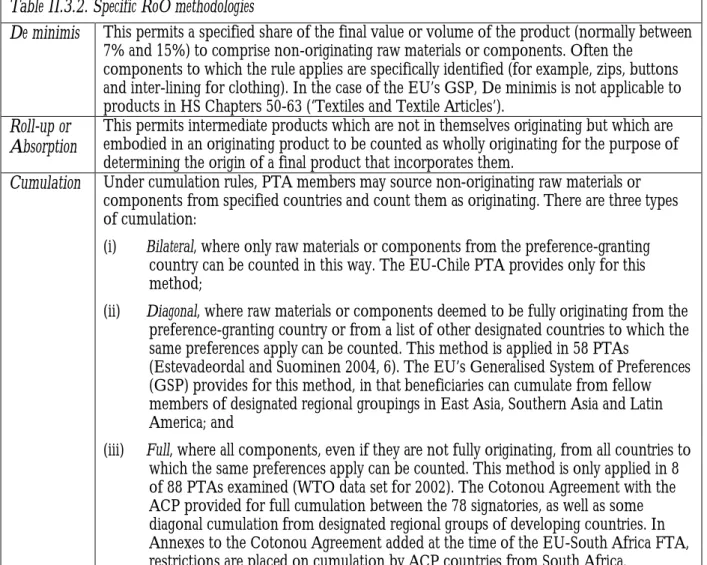
RoO methodologies...39
EU proposals for the reform of its PTA RoO in the context of the EPA negotiations...42
Conclusion...47
4. Trade Defence Provisions in EPAs ...49
EPAs and Anti-Dumping measures ...49
EPAs and Safeguard Measures...50
Conclusion...51
5. Sanitary and Phytosanitary Standards in the EPA Negotiations ...52
Recent development of SPS measures in the EU...52
SPS and WTO...54
ACP and NGO proposals on SPS and the EU’s response...55
Academic and consultant commentary ...58
Conclusions...58
6. WTO+ issues in the EPA negotiations ...60
Conclusion...62
7. Development Benchmarks and Monitoring and Review Mechanisms ...63
EU interpretations of Benchmarking, Monitoring and Review ...64
NGO approaches to Development Benchmarking and Monitoring ...65
ACP government approaches to Development Benchmarking and Review ...66
Conclusions...67
8. The Trade-Aid Relation in the EU-ACP EPA Negotiations ...69
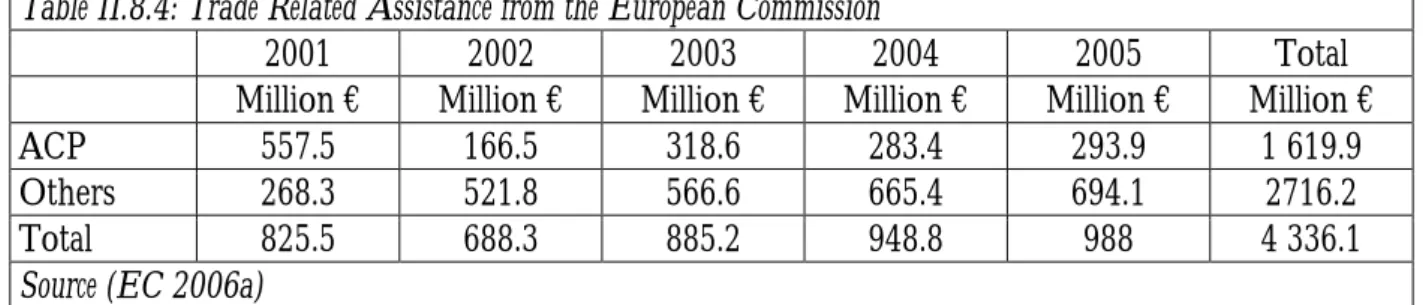
Development assistance from EU to ACP countries ...69
From Trade-related Aid to Aid for Trade ...75
Trade-Related Assistance (TRA)...76
The development dimension of EPAs...78
Controversies ...79
Level and scope of support...80
The ACP perspective...81
Mechanisms for delivery ...83
The linking process ...84
Conclusion...87
References ...91
Appendices 1. Measuring Restrictiveness and its Consequences...101
2. The EU PTA Rules for Fish and Clothing...105
3. Early European Commission definition of trade-related assistance...109
Abbreviations
A4T Aid for Trade
ACP African, Caribbean, Pacific
AGOA African Growth and Opportunity Act CAP Common Agricultural Policy
CARICOM Caribbean Community
Cariforum Caribbean Forum of African, Caribbean and Pacific States
CEMAC Communauté Economique et Monétaire de l’Afrique Centrale (Central African Economic and Monetary Community)
CET Common External Tariff CIF Cost, Insurance and Freight
COMESA Common Market for Eastern and Southern Africa CTC Change of Tariff Classification
CU Custom Union
DG-Trade Directorate General for Trade EBA Everything but Arms
ECDPM European Centre for Development Policy Management ECOWAS Economic Community of West African States
EDF European Development Fund EEZ Exclusive Economic Zone EIB European Investment Bank EPA European Partnership Agreement EU/EC European Union/Community EUOT EU Overseas Territory
FOB Free on Board
FTA Free Trade Area
GAERC General Affairs and External Relations Council GATT General Agreement on Tariffs and Trade GSP Generalized System of Preferences
HS Harmonised System
IMF International Monetary Fund ITC International Trade Centre LDC Least-Developed Countries MEP Member of European Parliament
MERCOSUR El Mercado Común del Sur (The Southern Common Market) MFN Most-Favoured Nation
MRL Minimum Residue Level
NAFTA North American Free Trade Agreement NGO Non-Governmental Organization NIPs National Indicative Programmes OCTs Overseas countries and territories
ORC Other Rules of Commerce PTA Preferential Trade Agreement RI Regional Integration
RIPs Regional Indicative Programmes RoO Rules of Origin
RPTFs Regional Preparatory Task Forces RTA Regional Trade Agreement
SADC Southern African Development Community SDT Special and Differential Treatment
SPS Sanitary and Phytosanitary Standards
STABEX Système de Stabilisation des Recettes d’Exportation
SYSMIN Système de Stabilisation des Recettes d’Exportation de Produits Miniers TBT Technical Barriers to Trade
TR Technical Requirement TRA Trade-Related Assistance
TRIPs Trade-Related Aspects of Intellectual Property Rights UNCTAD United Nation Conference on Trade and Development
VA Value Added
WAEMU West African Economic and Monetary Union WTO World Trade Organization
Introduction
Since 2002, the EU and ACP countries have been engaged in negotiating Economic Partnership Agreements (EPAs). These negotiations are based on the Cotonou Agreement, which inter alia defines the framework and modalities for the coming trade regime between the parties. According to the Cotonou Agreement, the negotiations shall be concluded by 31 December 2007. From this date, the existing non-reciprocal trade relation between the EU and ACP countries is supposed to be re- placed with reciprocal trade relations in the form of free trade areas. In other words, in return for retaining preferential access to the EU market, ACP countries have to gradually open their own markets to the EU. However, as this report shows, this deadline will be difficult to meet – at least in some EPA regions.
Following a request by the Danish Parliament, DIIS and the Institute of Food and Resource Econ- omics, Copenhagen University were requested by the Danish Foreign Ministry to conduct a literature review of the issues under negotiation, in order to identify the most important proposals by the Commission, ACP countries and third parties, to highlight the controversies around these proposals and, to describe the literature’s assessment of their consequences. Within this mandate, the Institute of Food and Resource Economics was asked to review economic estimates of the impact of different EPA-based market access scenarios. DIIS’s Trade and Development Research Unit was asked to review selection of other institutional and substantive issues within the
negotiations. A joint report was presented to the Foreign Ministry in November 2007. Subsequently, the Institute of Food and Resource Economics and DIIS are publishing separately their own
contributions to this report. The current publication is DIIS’s contribution.
Following a Summary, the publication is organised into three sections. Section 1 (Chapters II.1-II.2) discusses the legal and institutional setting of EU-ACP and intra-ACP (regional) relations within which the negotiations are taking place. Section 2 (Chapters II.3-II.6) addresses a range of substantive issues that are addressed in the negotiations, and finally Section 3 (Chapters II.7-II.8) reviews the relation between aid and trade in the EPA negotiations.
The literature described and discussed in this publication dates from September 2007 and earlier.
Because of a natural time lag between proposals being made in the negotiations and their discussion in the literature, most developments in the negotiations subsequent to May 2007 are not covered.
These include the EU market access offer of May 2007 and its new offer on rules of origin of October 2007.
The views expressed in this report are those of the authors alone.
SUMMARY
In reviewing all the involved and interested actors’ contributions to the discussions concerning the political, legal and institutional context of EPAs, two distinct but interrelated areas of controversy may be identified. Firstly, a rather abstract controversy on the merit of reciprocal trade relation between the EU and ACP countries is identified. Here, while the EU advocates that the new era of trade relation, based on asymmetrical liberalization of trade, is in the ACP countries’ own interests, many ACP countries supported by NGOs disagree and argue that ACP countries should continue to enjoy non-reciprocal market access to the EU, or at least be required to liberalize their trade regime over a long transitional time.
As Part I illustrates, almost all economic estimates show that, at least in the short term, many ACP countries will be negatively effected by the EU’s demand for reciprocity. On the other hand, as the EU argues, the existing non-reciprocal trade relation between the countries is not WTO compatible and thus has to be changed (Chapter II.1). Faced with this situation, and as required by the Cotonou Agreement, the question becomes if and how the new trade relation can be both WTO compatible and at the same time not place ACP countries in a worse situation than under Cotonou. As Chapter II.1 concludes, these conflicting goals are difficult, if not impossible, to reconcile. It should be noted that according to the Cotonou, if any ACP decides to opt out of the EPA negotiations, the EU is mandated to explore and offer alternative arrangements. However, the alternative offered shall also be WTO compatible. The question whether there are any alternatives to EPAs, as free trade areas, and whether the EU has investigated the question in a satisfactory manner, is widely debated in literature. In this regard, Chapter II.1 agues that the legal primacy of WTO commitments over the trade rules obligations of Cotonou, and the fact that no ACP country has yet opted out of the EPAs negotiations, explains the absence of practical alternatives to EPAs.
A parallel set of abstract discussions concerns the regional dimension of EPAs (Chapter II.2). The regional as opposed to all-ACP aspect of EPAs, as well as the principle that ACP regional integra- tion shall be trade-driven, reflect the strong wishes of the EU. A considerable part of the literature questions the latter assumption, in terms of the argument that developing country trade integration can be successful only if it builds on non-trade forms of economic integration. More concretely, controversy surrounds the viability of some of the six (now perhaps seven) regional configurations that have emerged during the negotiations on the basis of ACP country choices. In some cases this process has led to configurations where members’ legal commitments will cut across those they already have under existing regional trade agreements.
Against this clouded background, a second broad area of controversy concerns the substantive issues, other than tariff liberalization, which are addressed in the negotiations across the different
EPA configurations – that is, the non-tariff related content of EPAs regardless of the above-men- tioned institutional context. In this regard, there are not only several areas of controversy but also several axes around which it is occurring. Along the first axis (investment, anti-dumping and devel- opment assistance), the EU is internally in conflict. The internal conflict has several dimensions: dis- agreement between EU member states (Chapter II.8 on development assistance to ACP countries), disagreement between EU member states and DG Trade (Chapter II.6 on the absence of a Com- mission mandate to negotiate dispute settlement mechanisms regarding investment rules) and disagreement between DG Trade and DG Development (Chapter II.8 again, on the trade-develop- ment link within EPAs negotiations). Along the second axis, ACP countries are in conflict with each other (Chapter II.6 on their willingness to enter into negotiations with the EU on investment rules).
Along the third, on almost all substantive issues, wide differences of opinion exist between the EU and the ACP countries, supported by NGOs and sometimes by academic analysts (Chapter II.3 on Rules of Origin, Chapter II.4 on anti-dumping rules, Chapter II.5 on sanitary and phytosanitary or SPS measures and Chapter II.7 on development benchmarks). The number and complexity of the resulting disagreements explain the apparent lack of progress in the negotiations.
More explicitly, Chapter II.3 describes the controversy on an appropriate EPA Rule of Origin methodology in terms of the EU’s intention to generalize the use of a Value Added criterion as its preferred method of calculating the origin of traded goods, as against ACP countries’ favouring of a Change of Tariff Classification criterion, which is said to be simpler and less restrictive. At the same time, academic studies differ in their estimation of the likely supply response to a significant change in Rule of Origin methodology.
Chapter II.4, on Trade Defence Mechanisms, especially anti-dumping measures, shows that the EU’s current proposal is widely criticized, as it seems to allow only the EU to use such measures against ACP countries’ exports. Chapter II.5, on SPS measures, shows that the main focus of debate is shifting from provision of new legal remedies to the EU’s introduction of allegedly disproportion- ate measures towards how to best support the improvement of ACP capacity for conforming to EU as well as other international standards. In this regard, the ACP countries are currently focusing mainly on obtaining enhanced technical assistance for upgrading their public capacity in SPS.
Chapter II.6, on WTO-plus issues, shows that – of the original range of issues raised by the EU at the WTO Singapore Ministerial – only investment rules remains a subject of negotiation in the EPA context, and that even this issue has not been discussed in a detailed manner. However, the
discussions that have occurred, illustrate a basic disagreement between the EU and the ACP on the potential merits of such rules for attracting investment and on whether ACP countries have
adequate resources either to negotiate the issue in the first place or (if such rules are adopted) to administer them in an effective way.
In order to neutralize any potential losses entailed by entering into an EPA and, more importantly, in order to be able to fully utilize the potential gains that such an agreement may offer, ACP countries have emphasized that trade liberalization shall be linked to promotion of development, and that the development impacts of EPAs shall be measured and monitored. However, as Chapter II.7 illustrates, differences exist between the EU and ACP concerning the main focus of monitoring efforts and what the resulting assessments should be used for. Meanwhile, the ACP itself has yet to reach agreement on which benchmarks to use.
Another aspect of the relation between trade and development is the question of development assistance, which is addressed in Chapter II.8. Here, while requesting additional resources for meet- ing adjustment costs and building domestic supply capacity, all ACP regions express frustration over the EU’s explicit omission of development assistance from the formal negotiations. Controversies here concern the level and scope of support that will be made available alongside EPAs and the mechanisms for its delivery, as well as the process by which assistance is linked to EPA implement- ation (even if it is not formally linked to the negotiations themselves).
1. EPAs, Cotonou and the WTO – Legal Dimensions
This section is a review of the discussions on legal issues concerning the EPA negotiations by the negotiating parties, NGOs, academics, and other commentators. The theme of these discussions concerns one major controversy with three parameters. The controversy is on the apparent conflict between establishing WTO compatible EPAs (i.e. reciprocal trade agreement) and offering ACP countries a trade regime which is equivalent to their existing situation (non-reciprocal trade agree- ment) while respecting their development status and needs (flexibility). Thus the three parameters in this controversy are: flexibility, reciprocity, and the possible combination of these two shaping possible alternatives to the EPAs.
This controversy stems from Cotonou Art. 37.6, which states that ‘In 2004, the Community will assess the situation of the non-LDCs which, after consultations with the Community decide that they are not in a position to enter into economic partnership agreements and will examine all alternative possibilities, in order to provide these countries with a new framework for trade which is equivalent to their existing situation and in conformity with WTO rules’ (emphasis added). Cotonou itself is silent on the modalities for solving the conflict, the criteria that the alternatives have to fulfil, and what ‘examine’ as stated in the Article shall mean.
Art. 37.6 needs to be read in combination with Art. 37.7, which, states that ‘Negotiations of the economic partnership agreements shall aim notably at establishing the timetable for the progressive removal of barriers to trade between the Parties, in accordance with the relevant WTO rules. … Nego- tiations shall take account of the level of development and the socio-economic impact of trade measures on ACP countries, and their capacity to adapt and adjust their economies to the liberalis- ation process. Negotiations will therefore be as flexible as possible in establishing the duration of a sufficient transitional period, the final product coverage, taking into account sensitive sectors, and the degree of asymmetry in terms of timetable for tariff dismantlement, while remaining in
conformity with WTO rules then prevailing’ (emphasis added).
In short, these two subparagraphs require EPAs to be:
WTO compatible;
Reciprocal;
Flexible;
While at the same time preserving the ‘existing situation’ of the ACP countries.
Within the reviewed literature, a disagreement between EU on one side and ACP countries sup- ported by NGOs on the other side is evident, in relation to what these criteria should mean and what determines their fulfilment (see e.g. Borrmann, Grossman et al 2005; Christian Aid 2005). The conflict can be summarized as EU requiring reciprocal EPAs and finalization of negotiations by the end of 2007 in order to comply with the WTO requirements, while the opponents, as the sub-title in a report by Oxfam states, ‘request a change of approach, more time, and a transition regime’ (Oxfam and TWN Africa 2007: 3). According to the opponents, the EU is ‘placing undue pressure on ACP countries to conclude EPA negotiations in 2007. The EC is using the threat of lower market access to force the hands of ACP negotiators, which would represent a breach of the EU’s obligations under the Cotonou Agreement’ (ibid: 17). More explicitly the following points have been raised:
The required liberalization of ACP countries’ trade regime is contrary to their development policy and will undermine their economies; and
The EU has not fulfilled its obligation under Cotonou to examine and offer alternative arrange- ments to the ACP countries.
WTO CONFORMITY AND RECIPROCITY
EU-ACP trade relations have traditionally been governed by EU granting different forms of non- reciprocal trade schemes resembling or improving upon GSP to the ACP countries. But according to Cotonou, this has to change, which means that EU-ACP trade relations shall be WTO-com- patible and thereby lead to reciprocal EPAs (Martenczuk 2000). As Martenczuk states, Cotonou attempts ‘to set out objectives and principles that will guide ACP-EC development cooperation well into the 21st century. At the same time, it represents a major overhaul of instruments and policies in all fields of ACP-EC development cooperation’ (ibid: 462). The main external reason for the re- placement of Lomé with Cotonou and EPAs has been the WTO rulings in the so called Banana disputes, where parts of the Lomé Conventions were found to be WTO-incompatible because they favored ACP countries against other developing countries (Meyn 2006). The current trade regime between EU and ACP countries is based on a WTO waiver obtained in 2001, which runs until 31.12.2007. From that date, WTO-compatible EPAs are supposed to enter into force.
According to the EU, ‘the aim of the EPAs is to reduce trade barriers between the ACP countries themselves and between the ACP countries and the EU and also to increase cooperation in all areas relevant to trade’ (Bundesministerium für wirtschaftliche Zusammenarbeit und Entwicklung 2007:
1). In other words, ACP countries are supposed to reduce their tariffs in return for market access to the EU. According to the EU, this reciprocity secures compatibility of the EPAs with WTO rules and principles. Legally speaking, this argument is based on GATT Art. XXIV.8.b, which states that
‘A free-trade area shall be understood to mean a group of two or more customs territories in which
the duties and other restrictive regulations of commerce (except, where necessary, those permitted under Articles XI, XII, XIII, XIV, XV and XX) are eliminated on substantially all the trade between the constituent territories in products originating in such territories’ (emphasis added). However, according to the EU, reciprocity within EPAs is to be ‘asymmetrical, thus taking account of the development status of the ACP countries. The instruments to be used for this are long transition periods and exclusion of sensitive products for the ACP countries’ (ibid: 2).
Many NGOs and ACP countries argue that reciprocity in itself is contrary to many ACP countries’
developmental goals and policies, and EPAs shall ‘have sustainable development as a central object- ive and include the principle of non-reciprocity’ (Oxfam 2005: 2). The argument for this is that ACP countries’ trade liberalization would inter alia cause revenue reductions and damage these countries’
industries and as such is against the objectives of the Cotonou Agreement, as stated in Cotonou Art.
1 (Christian Aid 2004). Thus as a joint memorandum by UK NGOs calls on the EU to drop ‘both its demands for offensive issues and its demand for reciprocity in EPA negotiations’ (UK NGOs 2004). Instead, EU must focus on further opening its own market to ACP countries (Oxfam 2006b).
Other commentators argue that the potential impact of reciprocity on ACP countries depends on what ‘substantially all trade’ means, and the ‘amount of asymmetry available to ACP countries’
(PricewaterhouseCoopers 2007) or, as Stevens and Kennan write, ‘ACP countries will have a certain degree of choice because they will not need to liberalise all their trade imports, only ‘substantially all’.
Moreover the tariff cuts that are made will be introduced over a transitional period which is likely to be at least 12 years and, if the recent Africa Commission recommendation were adopted, could be as long as 20 years’ (Stevens and Kennan 2005a: 5).
In short, although commentators may disagree on their recommendations, they agree that reciprocal EPAs impose real problems for many ACP countries, especially African ones. In this connection, some protagonists call for alternatives to EPAs that are both flexible and WTO compatible (UK NGOs 2004; African Union 2007). According to Cotonou, it is the EU’s responsibility to examine and offer such alternatives. The EU, on the other hand, claims that reciprocity is part of Cotonou and that there are no alternatives to reciprocal EPAs (see DG-Trade website
http://ec.europa.eu/trade/issues/bilateral/regions/acp/memo010307_en.htm). However, in the literature some alternatives have been identified and they will be addressed below. These alternatives are:
GSP schemes;
Extension of the current waiver; and/or
Changing the relevant WTO rules.
Against this background, the central questions that have been debated are: What does Cotonou require? What does WTO require? And whether there are any alternatives to reciprocal EPAs?
WHAT DO COTONOU AND WTO REQUIRE?
As mentioned, Cotonou Articles 37.6 and 37.7 define the substantial criteria that EPAs have to fulfill. These criteria are:
1. Progressive removal of barriers to trade between the parties;
2. On the EU side, trade liberalization shall aim at improving current market access for the ACP countries;
3. Review of rules of origin;
4. Flexibility in establishing the duration of a transitional period;
5. Flexibility in final product coverage;
6. Flexibility in the degree of symmetry in tariff dismantlement; and 7. WTO conformity.
At the same time, WTO Article XXIV determines the criteria that a Free Trade Agreement shall fulfill in order to be WTO compatible. These are:
1. It must not raise barriers to trade for non-member countries;
2. It shall eliminate trade restrictions with respect to substantially all trade between the parties.
A central question is to what extent these two sets of criteria are complementary and to what extent they are contradictory. According to the WTO case-law, whether a Free Trade Agreement raises barriers to trade for other countries can be determined by economic modeling and may be subject of WTO’s Dispute Settlement Mechanism. As the Appellate Body report in Turkey – Textiles (DS34) in Para. 55 states, ‘an ‘economic’ test for assessing whether a specific customs union is compatible with Article XXIV’ can be performed. However, since the EPAs have not been negotiated and their exact rules are still unknown, this section will not address this issue, but will focus on flexibility and reci- procal elimination of trade barriers between the member countries. In this regard, reference to GATT 1994 Art. XXIV is essential. Here the keywords are ‘substantially all trade’ and ‘between the parties’ (Lockhart and Mitchell 2005).
Substantially all trade
As ‘substantially all trade’ has not been defined anywhere in the WTO, the only source of interpret- ation is the Appellate Body report in Turkey – Textile (DS34). Paragraph 48 of the report states that
‘neither the GATT CONTRACTING PARTIES nor the WTO Members have ever reached an
agreement on the interpretation of the term ‘substantially’ in this provision. It is clear, though, that
‘substantially all trade’ is not the same as all the trade, and also that ‘substantially all trade’ is some- thing considerably more than merely some of the trade. … Thus we agree with the Panel that the terms of sub-paragraph 8(a)(i) offers ‘some flexibility’ to the constituent members of a customs union when liberalizing their internal trade in accordance with this subparagraph’. It should be stated here that this ruling clarifies Art. XXIV.8.i.a, which covers Custom Unions and not Free Trade Areas which are covered by Art. XXIV.8.b. However, since the terms ‘substantially all trade’
have a similar function in both subparagraphs and that the relevant difference between Custom Unions and Free Trade Areas in this connection is only on the origin of covered goods, it can be assumed that Appellate Body’s interpretation of Art. XXIV.8.a.i can also be applied to Art.
XXIV.8.b.
In this connection, EU understands ‘substantially all trade’ to cover almost 90% of total volume of trade.1 As an example, the EU-South Africa FTA operates with this threshold (EU gives 95% of South African exports improved access to its markets, while South Africa does so for 86% of EU exports). It should be mentioned here that the remaining 10% can include whole sectors and goods, for example most agricultural products.2
Between the parties
The next issue that has to be addressed is whether the requirement to eliminate trade restrictions in
‘trade between the parties’, as EU claims, amounts to one for reciprocity and if it does, how flexible a reciprocal EPA is permitted to be. The short answer to the first question is ‘yes’. All commentators agree that ‘between the parties’ in the subparagraph implies reciprocity. This is supported by a con- textual reading of this sub-paragraph together with the rest of Art. XXIV.
The answer to the second question about flexibility is less clear, as it is not addressed in the WTO nor in the case-law. Thus as it stands now, it is up to the negotiators to determine what flexibility means. The EPA negotiating parties seem to agree that flexibility refers to two issues. The first
1 Within the on-going WTO negotiations on Art. XXIV, EU has also argued that 90% of volume of trade corresponds to ‘substantially all trade’. In response, the US has claimed that ‘substantially all trade’ covers all sectors and products, leaving open the possibility of having some limits within them. The difference is that according to the US, all products shall be covered by a free trade agreement, whereas EU would exclude some products from the list, Since the Doha negotiations are not concluded, there is no consensus on this issue,
2 During the EPA negotiations and in line with recommendations by most commentators, many ACP countries are in the process of defining which product groups should be exempted from reciprocal liberalization. Whether this list can be completed before the end of 2007 and whether it will be accepted by the EU, or become subject of further disagree- ment, time will show.
relates to the coverage of liberalized products and sectors (as stated above) and the second relates to when liberalization shall take place (the transition time).
Cotonou Art. 37.7. states that negotiations shall establish a ‘timetable for the progressive removal of barriers to trade between the parties’. Here, the parties agree that ACP countries should have as long a transition time as possible. Thus the question is how long such a transition time can be. Cotonou makes explicit that the timetable shall be in accordance with the relevant WTO rules. Here the rele- vant WTO rule is Para. 3 of the Understanding, which defines 10 years as the ‘reasonable length of time’ except in ‘exceptional cases’, without specifying what constitutes exceptional cases. Based on this silence, it can be argued that free trade agreements between such unequal parties as in the case of EPAs can be regarded as ‘exceptional cases’. This understanding can also be identified as an implicit factor in the EPA negotiations. Here, while ACP countries and NGOs request long trans- itional periods, EU has not proposed any explicit time-line.
In conclusion it should also be mentioned that according to Cotonou, EPAs should ‘improve cur- rent market access for the ACP countries’. In this regard, the European Commission has recently proposed duty free and quota free access to EU markets for ACP countries (except for sugar and rice) upon entry into force of the EPAs (http://ec.europe.eu/trade/issues/bilateral/regions acp/
pr240507_en.htm). The only condition attached to the Commission’s proposal seems to be con- clusion of the negotiations by the end of 2007. It should be mentioned here that although this proposal was endorsed by EU member-states on 14 May 2007, it has been criticized by some EU countries including France, Poland, Ireland, Germany, and Italy for threatening ‘the balance achieved in reforming the banana and sugar regimes’ (Financial Times: 19 April 2007) and ‘weak- ening the EU’s position in a current legal dispute over bananas with Ecuador and Colombia at the [WTO]’ (ibid.). This illustrates wider internal conflicts in the EU.
Since the negotiations are not progressing as fast as it was initially intended, many question what will happen if the EPA negotiations are not concluded by the end of 2007, when the WTO waiver expires (see e.g. Bilal and Rampa 2006; Stevens 2007), or if one or several ACP countries decide not to enter an EPA. This issue raises another central discussion: whether there are any alternatives to reciprocal EPAs.
ALTERNATIVES TO THE EPAs
Cotonou Art. 37.6 states that ‘in 2004, the Community will assess the situation of the non-LDC which, after consultations with the Community, decide that they are not in a position to enter into economic partnership agreements and will examine all alternative possibilities, in order to provide these countries with a new framework for trade which is equivalent to their existing situation and in con-
formity with WTO rules’ (added emphasis).3 There is disagreement concerning how this paragraph should be understood. Here two areas of discussions can be identified. The first relates to whether EU has honoured its obligation to examine all alternative possibilities. According to the EU, no ACP country has requested the EU to examine alternatives, and moreover there are no WTO- compatible alternatives, except the standard GSP scheme.4
The lack of WTO-compatible alternatives is supported by Meyn (2006), who states that ‘Under current WTO condition [reciprocity and non-discrimination between developing countries] it must be … regarded as doubtful that ‘alternatives’ exist’ (Meyn 2006: 152). On the other hand, NGOs and some ACP countries criticize the Commission for not examining or offering any alternatives to reciprocal EPAs. As a number of NGOs in a letter to the German Presidency of the EU wrote
‘there has been no serious consideration of alternative options to Free Trade Agreements, making it difficult for ACP countries to make informed choices as to what their best options would be’ (Stop Unfair Trade 2007).
The second area of debate is more substantial and deals with whether any alternatives exist. As stated above, the Commission argues that there are no alternatives to EPAs other than the general GSP scheme. On the other hand, some NGOs have suggested three types of alternatives to the EPAs:
1. Continuation of current situation, with or without a new WTO waiver;
2. Preferential treatment of all ACP countries; and
3. Changing WTO rules in order to incorporate new S&DT aspects into GATT Art. XXIV.
Continuation of current situation
The first possible alternative to EPAs, which has been identified by NGOs and some ACP countries, is the continuation of the current situation with a new WTO waiver (Bassilekin 2007).
This suggestion has been raised because it seems that some of the six negotiation groups are not in
3 It should be mentioned that in 2005, EU and ACP countries agreed to disregard from the 2004 deadline stated in this Article.
4 Terms such as explore or examine are hard to test (Alavi 2007). For example, in India – Bed Linen on WTO Anti- Dumping Agreement Art. 15 which states that ‘Possibilities of constructive remedies provided for by this Agreement shall be explored before applying anti-dumping duties where they would affect the essential interests of developing country Members’, the panel wrote: ‘Pure passivity is not sufficient, in our view, to satisfy the obligation to “explore”
possibilities of constructive remedies, particularly where the possibility of an undertaking has already been broached by the developing country concerned’ (WT/DS141/R para. 6.238). Nevertheless, the panel also found that exploring possibilities as stated in the article does not imply any particular outcome.
the position to conclude the negotiations by the end of 2007 (Council of The European Union 2007). However, this option requires a WTO waiver, without which continuation is vulnerable to litigation. Against this, some NGOs argue that the litigation may not come, and even if a case is initiated it may take two years before a ruling is issued (Bilal 2007). Thus EU and ACP countries have sufficient time to continue with the current system. Accordingly, certain NGOs argue that, ‘the waiver issue is an excuse for not getting fully to grips with the substantive issues faced under EPAs, with the threat of the loss of existing preferences being used to encourage (some would say force) ACP governments to sign up to EPAs, over which they still have fundamental reservations’ (ERO 2007b: 12)
Theoretically a waiver may be requested if the negotiations are not concluded with all or some ACP countries by end of December 2007, which links the issue to the pace of negotiations. According to Cotonou, the pace of the negotiations shall be decided by the ACP countries.
Until recently, EU excluded the possibility of asking for a new waiver. According to the EU, the chance of obtaining a new waiver or extending the existing one is minimal, or if it were possible at all, then its ‘political costs’ would be too high (http://ec.europa.eu/trade/issues/bilateral/regions/
acp/memo010307_en.htm).5 The fact that the current waiver was only obtained after two years of negotiations in the WTO and was made possible only after it became part of the overall Doha Round of negotiations supports the EU’s view that a new and long-term waiver is not a realistic option (Abass 2004). This view is also supported by an ECDPM report, which further points to some Latin American and Asian countries’ objections to the existing waiver (Bassilekin 2007).
It should be stated that a new waiver either could be short term to give the negotiations more time to be concluded or long term as an alternative to the EPA. According to some media sources the EU is working on the possibility of extending the negotiations into 2008 and asking for a short-term extension of the current waiver on this basis (Bilaterals.org 2007). This will clearly not satisfy what some of ACP countries and NGOs have in mind, which is a long waiver as an alternative to the EPAs, or at least a two years extension (ECOWAS 2006).
Preferential treatment of ACP countries
The second alternative identified by commentators, is extending an improved version of EU’s GSP scheme, ‘GSP+’, or the Everything But Arms (EBA) regime to all ACP countries (Stevens 2005;
Bilal 2007). This proposal’s main aim is to secure ACP countries’ current market access status without forcing them to liberalize their trade regimes. Legally speaking, a GSP-based trade agree-
5 According to GATT Art. XXIV.10 a waiver for free trade agreements can be obtained by a two-thirds majority vote, but the general practice in this regard is consensus decision-making.
ment will move EU-ACP trade relations out of free trade domain of GATT Art. XXIV and into the area covered by the Enabling Clause. According to the Enabling Clause, developed countries may
‘accord differential and more favourable treatment to developing countries, without according such treatment to other contracting parties’. As the Enabling Clause states, such treatment shall not be reciprocal and must be designed ‘to respond positively to the development, financial and trade needs of developing countries’ (Enabling Clause para. 3.c).
This provision has been addressed in EC – Tariff Preferences (DS246). According to the Appellate Body report in this case, the Enabling Clause permits differentiation of developing countries by the preference granting country, if identical tariff treatment is available to those developing countries that share a particular development, financial (or) trade need (WT/DS246/ABR.para. 165). This means that either all developing countries should be granted the same treatment or that the EU defines some objective criteria which can be applied to ACP countries. Since it is hard to identify such a criteria, it can be assumed that ACP countries as a group cannot be treated differently by the EU than non-ACP developing countries (Abass 2004). It should be mentioned that so far no one has tested which objective criteria could be used as a basis for differentiation between developing countries. However, it could be argued that some countries, for example land-locked countries or small island economies share such features that could probably justify differentiation. Furthermore, within WTO some countries have been grouped as ‘special’ in respect of particular characterization or needs, e.g. net-food importing countries. The fact that this common status has been recognized by the WTO may also justify differentiation.
The EU has acknowledged that its GSP scheme can be used by ACP countries, if EPA negotiations fail. In this regard it should be stated that ACP countries consist of three groups, each of which will be affected differently by reciprocal EPAs:
1. The first group is the LDC countries whose trade with EU could be governed by the Everything But Arms (EBA) scheme. According to a report, the Commission informed a MEP attending the Barbados Joint Parliamentary Assembly in November 2006 ‘if EPAs are not agreed or negotiations are delayed then Least Developed Countries would still have full market access under the Everything But Arms initiative but without the long-term security of EPAs’ (ERO 2007b).6
Under the EBA regime, LDCs have duty-free and quota-free access to the EU. However, this access is not bound and may be revoked. EBA also suffers from more stringent Rules of Origin than Coto-
6 According to the Commission, they also ‘would lose out on all the regional integration benefits of EPAs’
(http://ec.europa.eu/trade/issues/bilateral/regions/acp/memo010307_en.htm). However, these benefits have not been identified.
nou especially for goods from Africa, where there are no current provisions for regional cumulation.
Moreover, there are no linkages to development aid under EBA, as there should be in an EPA, and nor under EBA would LDCs have access to any EPA-related commodity protocols.7 These issues would in practice limit EBA’s potential benefits to LDCs. Nonetheless, the main difference for LDCs between EBA and EPAs would arise in a context where one or more LDCs elect EBA, while other countries that were part of a common Regional Trade Agreement sign an EPA. In such cases, because of the improved market access to the region for EU goods as a result of reciprocal EPA, EU goods would be able to more freely enter any that belong to the same Regional Trade Agree- ment as a signatory of an EPA LDC country. This would mean that LDCs would be de facto parts of reciprocal EPAs whether or not they opt for EBA as an alternative. On the other hand, if no country within a region signed an EPA, then LDC countries would experience less difference in terms of market access to the EU compared to now (Olympio, Bidé et al 2006);
2. Non-LDCs that are not members of WTO. The EU is not obliged to offer these countries WTO- compatible EPAs. Thus, theoretically, they could be granted non-reciprocal access. But in practice, because of WTO’s Most Favoured Nation rule, they cannot be treated better than WTO members;
3. Non-LDCs that are members of the WTO. Currently, these countries cannot rely on EBA. As mentioned, the only existing alternative for these countries is EU’s GSP scheme, which is available to all developing countries and offers them favorable market access for some categories of goods
‘depending on the sensitivity of products and the competitiveness of the DC concerned’ (Bilal 2007:
21).
Existing GSP schemes suffer from some important shortcomings. Firstly, (like EBA) they do not provide stable and predictable basis for trade relations, since they can be changed or removed at short or no notice. Secondly, they have to be offered to all developing countries, which neutralize ACP countries’ current advantage. Thirdly, they also suffer from stricter Rules of Origin than Coto- nou. Fourthly, the GSP margin of preference is lower than that under Cotonou, and would mean
‘the EU taxing ACP exports, generating revenue that compares unfavourably with aspects of Union- level aid, and is likely to result in the complete cessation of some ACP exports to the EU with signi- ficant adverse economic effects’ (ODI 2007b: v). Furthermore, ‘a switch from Lomé/Cotonou pre- ferences to the standard GSP regime in 2008, while fully complying with the WTO rules, would
7 Cotonou Art. 36.4 states that ‘the parties reaffirm the importance of the commodity protocols, attached to annex V of this agreement. They agree on the need to review them in the context of the new trading arrangements, in particular as regards their compatibility with WTO rules, with a view to safeguarding the benefits derived therefrom, bearing in mind the special legal status of the Sugar Protocol.’ See also Orbie (2007) on the future of the commodity protocols.
arguably put the EU at odds with its [Cotonou] obligations, as it would seriously undermine some of the core objectives of the [Cotonou]’ (Bilal 2007: 23).
Some have argued that the improved version of GSP, called GSP+, should be offered as an altern- ative to the EPAs (Andersen 2006; Development Network of Indigenous Voluntary Associations 2007).8 A few even argue that the GSP+ scheme is a better option than EPA (Perez 2006).9 Current- ly, the GSP+ scheme is offered to those countries that fulfil an extended set of criteria and con- ditions and the list of recipient countries is not subject of review before 2009. Of course, EU could amend the GSP+ regulation. But although some argue that such an amendment ‘can be done at anytime and would simply require the approval of the Council by qualified majority. The decision could be taken with the Commission by the Article 133 Committee’ (Bilal 2007: 24), the discussions between EU Member-States on how to proceed with the negotiations suggest that the process of changing the regulation is probably not so simple. Moreover, this option faces similar legal obstacles to those already described if GSP+ is only offered to ACP countries, and ‘would probably be challenged under WTO rules, since the ACP states would then be given preferential treatment relative to other developing countries’ (Narsey 2003: 37). Thus the GSP+ scheme would have to be offered to all developing countries (or those sharing same economic, development and financial needs), which means that the margin of preferences to the ACP countries compared to other developing countries would be eroded. Nevertheless, as Stevens writes ‘The most plausible way to satisfy Cotonou Article 37 (6) – including the requirement for WTO conformity – is to apply the GSP+ to the ACP from the end of 2007, following the precedent established for the Andean and Central American states, and to make special provisions for the handful of products not covered (which could include extending the GSP+ regime in some cases). This would provide a breathing space – which some ACP states may use to complete EPA negotiations’ (ODI 2007b: v).
Changing WTO rules
The third possible option is to change GATT Art. XXIV. The argument is that Article XXIV does not take into account the special needs and status of developing countries (Onguglo and Ito 2003;
2005; South Centre 2005). In other words, the article is not ‘designed for trade agreements between
8 It should be acknowledged that the GSP+ schemes, although providing a better alternative than standard GSP, suffer from similar shortcomings. Thus some have suggested that GSP+ should also be improved on Rules of Origin and the coverage of goods (Perez 2006).
9 GSP+ differs from standard GSP in several aspects. Most importantly, since GSP+ has been designed to encourage the beneficiary countries to pursue certain policies, e.g. good governance, human rights, it provides better terms of trade (lower tariffs or no tariffs on some products) than the standard GSP scheme does. But, GSP+ benefits are only granted to those countries that apply and fulfil two main criteria: they must be vulnerable and have ratified and implemented 27 international conventions.
countries of very different levels of development, such as the EU and ACP countries’ (Christian Aid 2004: 6). In particular, it is argued that some S&DT elements should be included in the Article (Lang 2006). These S&DT elements would relax the reciprocity requirement and introduce longer transition times. To this end, in 2004 and as part of the Doha negotiations on Rules, ACP countries tabled a proposal (WTO document TN/RL/W/155), which suggests that ‘With regard to duties, appropriate flexibility shall be provided for developing countries in meeting the ‘substantially all the trade’ requirement in respect of trade and product coverage, including in terms of the application of favourable methodology and/or lower threshold levels, if to be applied, in the measurement of trade and product coverage of developing country parties to an RTA’ (ibid: para. 11.i). The proposal also suggested that the transition time stated in the Understanding, currently 10 years, ‘should be deter- mined in such a manner that is consistent with the trade, development and financial situation of developing countries, but in any case not [be] less than 18 years’ (ibid: para. 22.ii).
Although some countries, including some developing countries, have criticized the proposal for de facto placing FTAs outside of rule-based system, the EU has officially supported the proposal. How- ever, even if changing the WTO rules may be the best solution to the substantial problem, it cannot be regarded as a solution to the immediate problem that EU and ACP countries are faced with, which is establishing WTO-compatible but non-reciprocal EPAs.
CONCLUSION
This section showed an embedded conflict in the Cotonou agreement: On one hand EPAs shall be WTO compatible (reciprocal) and on the other hand they have to provide ACP countries with equivalent trade opportunities to those currently available. As illustrated, this conflict has been the main source of disagreement between EU and ACP countries supported by NGOs. It has also been shown that although three types of solutions to this conflict have been identified in the literature, none are likely to solve the problem. The current status cannot continue, there are no objective criteria which can justify differential treatment of ACP countries against other developing countries and it is not likely that the relevant WTO rules can be changed in the near future. Thus the
negotiators have to choose one of the two opposing requirements as the basis for EPAs. In this regard, WTO has most likely the upper hand (Cottier and Foltea 2006), and if EPAs are not WTO- compatible, any country may initiate a case against the EU and/or ACP countries before the WTO’s Dispute Settlement Body.
In addition, it has been shown that although GATT Art. XXIV does not differentiate between developing and developed countries, it includes some flexibilities that EU and ACP countries may use. These flexibilities permit transition time and asymmetrical liberalization of trade between the parties. The extent of such flexibilities in the EPAs depends on the will and the negotiation power
of the parties. Here the imbalance between EU and ACP countries’ resources should be taken into account (Borrmann, Grossman et al 2005: 45).
Nevertheless, even if the EPAs include some flexibility, they may place some ACP countries in a worse situation than now. In this case and according to Cotonou Art. 98, the affected ACP country may initiate a case against the EU before the Council of Ministers (of EU and ACP countries) or the Committee of Ambassadors. However, Art. 98 does not explicitly state how such dispute shall be resolved. Arguably, this is the reason why this provision has not been used yet. It should also be mentioned here that this scenario has not been addressed in the literature.
2. EPAs: Regional Integration and Configuration Issues
Since the early 1970s, promotion of regional integration has been a central component of the EU’s political and economic agenda in relation to developing countries. Its Generalised System of Pre- ferences (GSP), launched in 1971, embodied relatively generous provisions for ‘cumulation’, which were seen as encouraging regional integration, it played a strongly supportive role in the creation of Mercosur at the start of the 1990s, and its foreign policy in the Mediterranean area has been built on a series of regional initiatives with the eventual aim of a Euro-Med Free Trade Agreement
(EMFTA). The central reason for this policy has of course been the conviction that the European experience of regional economic cooperation (culminating in a single market) can serve as a model on the global stage.
It is therefore little surprise that the EU strove to include a strong regional integration (RI) element in the Cotonou Agreement. Article 2 of the Agreement states that ‘particular emphasis should be placed on the regional dimension’ in future EU-ACP cooperation arrangements, while Article 35.2 states that ‘economic and trade cooperation shall build on RI initiatives of ACP countries, bearing in mind that RI is a key instrument for integration into the world economy’.
The view that RI is a stepping-stone to integration in the global economy is actually the main argument amongst four that the EU has advanced for re-framing its relations with the ACP on a regional basis. The second of these arguments is that the alternative to regional EPAs would be to establish 78 agreements between the EU and each ACP country. This would be impractical. The third argument that has been advanced, is that EPAs combining EU membership with ACP RI will
‘lock-in’ economic liberalisation (chiefly but not only trade liberalisation), better than agreements between single ACP countries and the EU. This is because regional agreements would create greater loss-of-market-access disincentives to reverse liberalisation than bilateral ones. ‘Lock-in’ is viewed as critical in attracting foreign investment, on the basis of reducing its risk of exposure to policy change. Finally, it has been argued that RI has clear political advantages, principally that it can con- tribute to conflict resolution or consolidation of peace.
On this basis, while it is legally consistent with Cotonou for an individual ACP country to negotiate an EPA with the EU, it seems likely that the EU, except in exceptional circumstances, will oppose this.10
EXPERIENCES OF REGIONAL INTEGRATION IN THE ACP GROUP COUNTRIES
Since the 1970s, there has been a steady stream of efforts at regional economic cooperation on the part of countries in the ACP group. As a result, there are more than a dozen agreements of this kind in Sub-Saharan Africa and at least three each amongst the Caribbean and the ACP Pacific countries respectively.11 On the other hand, there appears to be an inverse relation between the number of agreements entered into and the extent to which additional intra-regional trade has been generated.
In particular, levels of intra-regional trade following the introduction of regional trade agreements, have tended to remain low and stagnant. Amongst current ACP country regional economic associa- tions, CARICOM has the highest level of intra-regional trade (at around 20% of the total imports of member countries, South Centre 2007c) while the Pacific Islands Countries Trade Agreement (PICTA) has the lowest (at 2% of the total imports of member countries, op. cit.).
For Africa, Yang and Gupta (2005) comment: ‘Regional Trade Agreements (RTAs) may have had a positive, but uneven, effect in intra-regional trade, although over the long run the effect seems to have been small or insignificant’. Intra-regional trade appears to be highest in the West African Economic & Monetary Union (WAEMU) (at 13.3% of the total imports of member countries in 2003, Yang and Gupta 2005) and lowest in the Central African Economic and Monetary Commun- ity (CEMAC) (at less than 2% of the total imports of member countries in 2005, Martijn and Tsan- garides 2007). Intra-regional shares of total imports of member countries in 2002 were 11.5% for the Economic Community of West African States (ECOWAS) countries (Yang and Gupta op. cit.), 6.3% for the Southern African Development Community (SADC) ones (op. cit.) and 5.8% for the Common Market of Eastern and Southern Africa (COMESA) ones (op. cit.). Of the main African country groupings, only the members of WAEMU, COMESA and SADC registered higher levels of intra-regional trade in 2003 than in 1980.
10 In September 2006, Cape Verde announced that it was leaving the ECOWAS configuration with a view to negotiating a bilateral EPA. The EU appears to have persuaded it to rejoin.
11 There is no evidence that Africa is unusual in its large number of regional economic cooperation agreements. As of November 2007, there were 334 RTAs notified to the WTO and a further 141 under review. What is more unusual is the large proportion of RTAs in Africa that have the ambition to become Customs Unions (cf. Watson and Do 2006).
Explanations of this in the academic literature and the literature published by the international finan- cial institutions tend to stress two factors. Firstly, levels of commitment to regional trade liberalisa- tion by signatory countries have been generally low. This is mainly ascribed to high levels of fiscal dependence on tariff revenues amongst ACP countries (cf. Khandewal 2004). Low levels of commit- ment are expressed in failures to fully or in some cases even partially implement agreements as well as in the general absence of mechanisms to pool and redistribute tariff revenues.12
Examples of failures to implement agreements are abundant (Hinkle and Newfarmer 2005, Yang and Gupta 2005, Khandewal 2004, Gasiorek and Walters 2004). Where agreements take the form of FTAs, some signatories typically decline to participate, while the tariff reduction schedules of those who do are heavily back-loaded and/or haltingly implemented and numerous exemptions granted.
Where, as is increasingly common, they take the form of Customs Unions, it proves difficult to agree on design of a Common External Tariff (CET)13 and even more difficult to secure its imple- mentation. In the cases of both FTAs and Customs Unions in the ACP, non-tariff barriers continue to abound, for example in the form of non-acceptance of origin certificates and cumbersome and inconsistent customs procedures. Non-convertibility of currencies within ACP FTAs also hinders effective utilisation, even where implementation is on track.
It is usually argued that levels of commitment to RI by member countries is closely related to another reason for its failure, namely widespread overlapping membership of agreements, resulting in a dilution of human and technical resources, high administrative costs and inconsistent oblig- ations. As a result, the multiple integration organisations and agendas in each of the main ACP regions and sub-regions are often in conflict with each other. The most glaring example is in Eastern and Southern Africa, in relation to the East African Community, COMESA and SADC. Seven countries are members both of COMESA and SADC.14 Four COMESA countries and one SADC country are members of the East African Community, which is a Customs Union. COMESA is in the process of adopting a CET and SADC has plans to adopt a CET. Another SADC country (Swaziland) is a member both of COMESA, SADC and of a Customs Union (SACU) within SADC.
12 Low commitment is also expressed in the member countries’ failure to pay assessed contributions to regional econ- omic organisations, or to introduce any instance of supranational authority within them (UNECA 2006).
13 Problems of CET design include determining the number of tariff bands, determining what levels of tariff to apply to them, and (generally most contentious) determining which tariff lines should be allocated to which band (Khandewal op.
cit.).
14 Some SADC members are also members of the Economic Community of Central African States (ECCAS) or the Indian Ocean Commission (IOC). Some COMESA members are also members of ECCAS, IOC or the Inter-Govern- mental Authority on Development.
Figure 1: Regional Economic Cooperation Agreements in Africa
This second group of factors is also highlighted by NGOs supporting what they see as the ACP cause. The factors in question are structural, rather than political: low levels of product complement- arity and lack of infrastructural integration (cf. Khandewal 2004, Powell 2007, Action Aid 2004).
On product complementarity, Khandewal (2004) measured the similarity between member country export and import baskets for both COMESA and SADC, in order to determine the trade potential of these groupings. On a scale of 0-100 with 0 representing zero complementarity and 100 repre- senting perfect complementarity, South Africa within SADC had a complementarity of 53.0, while other member countries ranged between 10.3 and 23.4. In COMESA, Egypt and Kenya had com- plementarities of 43.0 and 38.6, respectively, while all other members ranged between 3.2 and 20.0.
Khandewal states that these results raise issues not only of low potential, but also of possible polar- isation within these groupings. Furthermore, he notes that the potential for polarisation exists in the absence of evidence that Egypt, Kenya and South Africa are internally diverse and dynamic enough to serve as ‘growth poles’ for their respective groupings.
NGO contributions to this discussion go on to argue that dependence on similar export baskets and low levels of infrastructural integration demonstrate that prioritising regional trade integration over other forms of political cooperation and economic integration in the ACP is mistaken. Rather, ACP regions and sub-regions would more clearly benefit from a combination of improved infrastructural integration, political trust-building and development assistance aimed at economic diversification (Powell 2007, Action Aid op. cit.).
CRITIQUES OF THE EU REGIONAL INTEGRATION AGENDA IN RELATION TO THE ACP
To a large extent, the EU is alone in postulating that its RI agenda will both accelerate regional econ- omic development in the ACP countries and promote the latter’s global economic integration.
Academics, economists associated with the international financial institutions, economists working for regional organisations in Africa, and NGOs all see the EU’s priorities as misguided.
Gunning (2002), on the basis of a theoretical argument that will be referred to in a moment, con- cludes that in the ACP, where there are binding constraints on intra-bloc trade deriving from similarities in factor endowments and high transport costs, there is indeed scope for regional initiatives. However, a trade bloc is the wrong instrument for this purpose. Trade blocs may yield indirect benefits, such as improved security or cooperation around common infrastructural projects, but these do not require changes in trade policy. Nor, in the ACP case, will RI lead to the other main trade-related benefit normally associated with blocs (increased negotiating power), since the institutionalisation of ACP regions will be at the expense of the effective disintegration of the ACP
itself.15 These arguments are echoed in the analyses of EPAs by other economists (e.g., Meyn 2003), the World Bank (e.g., de la Rocha 2003), IMF (e.g., Yang and Gupta 2005) and NGOs (Powell op cit., Action Aid op. cit.), although the NGOs certainly would not subscribe to certain of the central foundations of the main argument advanced by Gunning, nor to some of the other conclusions that accompany it.
The first reason that Gunning and other economists advance for why trade blocs are inappropriate where there are binding constraints on intra-bloc trade, is that in these circumstances there is greater likelihood that they will be associated with trade diversion from the rest of the world, in favour of the most efficient country in the bloc. In this scenario, producers in the most efficient country gain, but consumers throughout the bloc lose due to higher prices, and governments and producers in less efficient countries lose from reductions in tariff revenue and closure of less efficient industries.
This outcome is mitigated somewhat where economies of scale rather than constant marginal costs of production are assumed, although welfare losses from reduced competition also need to be taken into account in this revised scenario.
The second reason advanced by economists concerns issues of polarisation and RI. The argument here is that, where a bloc as a whole is ‘capital poor’ but there are significant differences between member countries in factor endowments before the bloc is formed, then income differences will increase as benefits accrue to the member countries that are relatively similar to the rest of the world in terms of capital endowments (cf. World Bank 2000). Where a North-South dimension is added to the scenario, the South-South polarisation will re-appear in a new form and there will be a decline in South-South integration. The richest Southern country loses access to other Southern country mark- ets to the benefit of the Northern bloc member. This will be partly offset by the richest country being the only Southern country in a position to benefit from Northern market access. But RI, in the sense of South-South trade, will decline.16
The basic assumption underlying these economic arguments is that trade blocs promote internal freedom of trade only on the basis of preserving or (more frequently17) of increasing barriers to external trade. Since free trade is assumed to be the most welfare-maximising option, and since the
15 Bilal (2005) argues that this has been a strategic intention of the EU, expressed inter alia in what he depicts as EU efforts to foreshorten and undermine the first (all-ACP) phase of the EPA negotiations.
16 Results obtained by studies modelling changes in intra-COMESA trade following fully reciprocal EU-ACP liberal- isation by Karingi et al (2005) and Mwega (2005) appear to support this conclusion.
17 It is argued that, in free trade areas, common external tariffs are normally set close to the level of the most industrialised country – which is typically the most protected one. There is certainly evidence for this in relation to African FTAs (cf. Claeys and Sindzingre (2003) on WAEMU).
adjustment costs that free trade implies are probably higher than those associated with joining trade blocs only for the most efficient/rich developing country in the bloc, then Most Favoured Nation (MFN) trade liberalisation is always to be preferred over the creation of blocs (cf. Gasiorek and Winters op. cit., Khandewal op. cit.). A related conclusion is that, if trade blocs are going to be imposed anyway for political reasons, then their negative welfare implications will best be mitigated if their CETs are set as low as is politically possible.
Thus, the many critiques of the EU approach to RI share the perspective that deeper infrastructural and communications integration, upgrading worker skills and cross-sectoral cooperation in areas such as trade facilitation, energy, water resources, environmental management and conflict manage- ment are all politically more worthwhile objectives for the ACP regions and sub-regions than form- ing EPAs. Of course they differ diametrically, in respect of which trade policies are advocated as alternatives to forming EPAs.
THE QUESTION OF CONFIGURATION
According to the Cotonou Agreement, the make-up of subsequent regional and sub-regional group- ings of ACP countries was up to the ACP countries themselves. On the other hand, during the first phase of EPA negotiations it seems that the EU envisaged that EPAs would take shape around specific existing regional economic groupings. This is stated explicitly in ‘Orientations on the quali- fication of ACP Regions for the Negotiation of EPAs’ (EC 2001), according to which negotiations should be with existing ‘functioning’ and ‘effective’ regional groupings, and that ‘regional integration initiatives…which have not been implemented…for which legally binding interim agreements do not exist or are not effectively implemented ... should not be considered’ (section 4.1). This led contemporary commentators (including Gunning op. cit.) to state that the EU’s aim was to have the four African Customs Unions (WAEMU, CEMAC, SACU and the EAC) as the core of four distinct EPAs in the African region. Gunning also stated that the EU was envisaging that non-members of Customs Unions would evolve slowly towards membership of these groups, with Everything But Arms (EBA) and GSP as interim alternative offers for LDC and non-LDC non-members. The EU’s early plans in the Caribbean and Pacific are not discussed in the literature.
Claeys and Sindzingre (2003) state that the idea of centring African EPAs on CUs was dealt a decisive blow by the near-collapse of Cote d’Ivoire, the centre of gravity of WAEMU. Furthermore, there were obvious problems involved in centring a Southern Africa EPA on SACU, since its overwhelmingly dominant member (South Africa) was not a full ACP member and had already concluded a bilateral FTA with the EU in 1999.
Figure 2 African EPA Configuration, January 2007
The result was indeed the spontaneous emergence of a constellation of African country groupings, only one of which (the Central African group) is co-extensive with a Customs Union.18 The con- stellation, which is still shifting (see below), reflects political and historical alignments and rivalries as well as economic interests. As such, it adds a further layer of complexity – some would say
confusion – to ACP countries’ already tangled obligations.
18 Even the CEMAC EPA group is not 100% co-extensive with the CEMAC Customs Union, since it also includes São Tomé & Principe, which is not a CEMAC member.
The remainder of this section will focus upon problems associated with the evolving EPA con- figurations listed in Figure 2. These are identified in the literature as including internally divergent entitlements in relation to Cotonou, internally divergent trade interests, shallow political foundations and failure to resolve the problem of conflicting obligations.
Internally divergent entitlements in relation to Cotonou
Articles 35.3 and 85.1 of the Cotonou Agreement mandate special and differentiated treatment (SDT) in terms of ‘flexibility’ and ‘asymmetry’ to LDCs, small, landlocked and island states. As noted elsewhere in this report, the EU has chosen to interpret flexibility and asymmetry in terms of differential paces and product coverage of trade liberalisation in the ACP countries themselves, rather than in terms of non-reciprocity. Since EPAs include both LDCs and non-LDC members, this implies that, if LDCs seek continued non-reciprocal access by availing of Everything But Arms (or rather, if they are allowed to do so), they will have to maintain tariff barriers in relation to non- LDC members in order to prevent goods from the EU under tariff lines that are still protected from entering their markets. Where they are already members of the same FTA or CU as the non-LDC members of the EPA, this will entail a reversal of the regional trade liberalisation attained under these agreements (Bilal 2005, Hinkle and Newfarmer 2005). If this right is exercised in the context of membership of Customs Unions, it will also entail a probable breach of GATT Article XXIV 8(a)(ii).19
So far within the Phase II negotiations, the issue of divergent entitlements has been raised in relation to Mozambique, Ango