Beyond indifferent players: On the existence
of Prisoners Dilemmas in games with
amicable and adversarial preferences
Andrew W. Horowitz, Renato Galv ˜ao Fl ˆores Junior
Os artigos publicados são de inteira responsabilidade de seus autores. As opiniões
neles emitidas não exprimem, necessariamente, o ponto de vista da Fundação
Beyond Indifferent Players:
On the Existence of Prisoners Dilemmas in games with amicable and adversarial preferences
(October 2004)
JEL C7, D6, H4
Keywords: Prisoners Dilemmas, Game Theory, Non-Cooperative Games
By
Andrew W. Horowitz*
and
Renato G. Flôres Jr**
Department of Economics EPGE
Sam M. Walton College of Business Fundação Getulio Vargas
University of Arkansas, Rio de Janeiro
Fayetteville, AR 72701 Brasil
Abstract: Why don’t agents cooperate when they both stand to gain? This question ranks among the most fundamental in the social sciences. Explanations abound. Among the most compelling are various configurations of the prisoner’s dilemma (PD), or public goods problem. Payoffs in PD’s are specified in one of two ways: as primitive cardinal payoffs or as ordinal final utility. However, as final utility is objectively unobservable, only the primitive payoff games are ever observed. This paper explores mappings from
primitive payoff to utility payoff gamesand demonstrates that though an observable game is a PD there are broad classes of utility functions for which there exists no associated
utility PD. In particular we show that even small amounts of either altruism or enmity may disrupt the mapping from primitive payoff to utility PD. We then examine some implications of these results.
* [email protected]; phone: (1)-479-575-6228 ** [email protected]; phone (55)-21-25595909.
We thank Arilton Teixeira, Aloisio Pessoa de Araújo, Amy Farmer, Cary Deck, Joel Carron, and seminar participants at Fundação Getulio Vargas (Rio de Janeiro), IOB – University of Antwerp, ISEG – Technical University of Lisbon, Ibmec-Rio, Walton College of Business, and Federal University of Rio Grande de Sul. The usual disclaimers apply.
1. Introduction
Prisoner dilemmas (PDs) have been employed across the social and business
sciences, philosophy, and biology as prime examples of the tension between individual
and collective rationality.1 They constitute powerful illustrations of the gains foregone
when strategic structure precludes cooperation as an equilibrium strategy.
The payoffs in PD’s have two forms. First, they may be cardinal observable
payoffs (e.g., years in prison, nuclear warheads, or advertising budgets). We refer to such
games as Primitive Prisoner’s Dilemmas (PPDs). Alternatively, payoffs may be specified as final utility, which is inherently unobservable. We refer to these games as
Utility Prisoner’s Dilemmas (UPDs). In either case there is an implicit mapping between observable payoff and final utility that has received scant attention in the literature.
Though this neglect may be innocuous for some mappings we show that when a player
has amicable or adversarial inclination towards the other player there are broad classes of
utility functions for which it is impossible for a PPD to map into a UPD. We identify classes of utility functions under which games that are not prisoners dilemmas in observable payoffs are, in fact, prisoner’s dilemmas in the unobserved utility game.
Why our focus on amicable and adversarial preferences? First, there exists a large
body of experimental evidence (see Fehr and Gachter 2000 for a survey) that casts doubt
on the indifference of players with regard to the payoffs of other players. We will
demonstrate that only in the case of truly indifferent players will a game that is a PD in
1
observable payoffs necessarily be a PD in the unobserved utility game. In fact, the body
of experimental evidence cited above indicates unambiguously that pure neutrality
towards the welfare of the other players is the exception, rather the rule. Beyond the
experimental literature, the potential for altruism in strategic environments has long been
recognized. For example, strategic frameworks are frequently employed to model
intra-household interactions (see Browning and Chiaporri 1998). Moreover, intra-intra-household
and kin altruism is implied by evolutionary biology.
Adversarial relationships, in the sense of competition, arise in virtually all
economic environments. However in the typical strategic setting adversarial incentives are inherent in the payoff-structure rather than embodied in preferences. Thus, the
incentive to adopt a particular strategy is typically governed by own payoff maximization
rather than explicit consideration of rivals’ payoff.2 In contrast, we consider strategic
behavior when a player’s utility is decreasing in the other player’s cardinal payoff. Such preferences may correspond to conventional notions envy or malice. These terms,
“envy” and “malice,” have precise economic meanings (see Hammond 1987 and Brennan
1973), and though this literature addresses issues tangentially related to this paper, it
never addresses the implications of such utility mappings on the existence of the PD.
For those who remain skeptical of amicability or enmity in preferences per-se, there
exists an alternative motivation that is also entirely consistent with the model and results.
Namely, if the observable payoff of one player yields an externality (in utils) to others,
the analysis is identical. Formally, these externalities would create a wedge between the
2 In zero sum games these objectives would be equivalent. But as noted, our analysis does not concern
observable payoff game and the unobservable “welfare” game that is formally equivalent
to either amicable or adversarial preferences.3 Such an interpretation opens a plethora of
applications in economics as well as political science.
The remainder of the paper is organized as follows. Section 2 introduces notation
and definitions necessary to analyze PDs with neutral, amicable, and adversarial players.
Section 3 presents our most general existence results and specific congruence results for
amicable, adversarial, indifferent, and asymmetric players. A Cobb-Douglas example is
also provided in Section 3. Section 4 summarizes and concludes.
2. Notation and Definitions
The Game
Consider a two-player game and call the players A and B and their cardinal (observable) payoffs α and β respectively. Each player has two strategies. Denote the players’ strategy sets and strategy choice as respectively: Sp = {1, 2} and sp for p = A, B. So the joint strategy space has four elements and denote the associated observable
primitive (cardinal) payoff vectors as πij = [αij, βij] where i = sA and j = sB with the
payoff space denoted as Π⊂ R2. Let rp(s) denote the best response of player p to strategy s by the other player. Without loss of generality, payoffs are non-negative and when the clarity constraint permits we suppress the subscripts on α and β. The one-stage
3 Yet another motivation is a game where joint strategies map into two-good payoffs with one of the
game defined by the above triplet Γ = [P, S, Π] will be called the primitive game. All its elements are observable and fully known by both players.
A primitive prisoner’s dilemma (PPD) occurs when the Nash Equilibrium of the primitive game yields a payoff (π) that is vector dominated by some non-equilibrium
payoff.4 Without loss of generality let sp = 1 for (p = A, B) be the strategies that map to the vector dominated primitive payoff and sp = 2 for (p = A, B) the strategies that map to the vector dominant payoff. Using the notation introduced above the payoff vectors are:
π22 > π11, where a vector inequality indicates vector dominance.
Each player has unobservable preferences over the primitive payoff space that are
complete, transitive, and reflexive. In a slight (but innocuous) abuse of notation that
yields considerable notational economy we denote the unobservable utility functions as:
A(α, β), B(α, β). Let Uij= [A(πij), B(πij)] be the vector of final utility payoffs when
player A plays strategy i and B plays strategy j (where i may equal j ). The functions
A(πij) and B(πij) may map non-monotonically from own-primitive-payoff (α for A, β for
B) to final own-utility due to either amicable or adversarial preferences. For a given U
every Primitive Game maps to an associated Utility Game (UG) and we define the associated UG as V(Γ) = [P, S, U(Π)]. If U does not order payoffs as in the observable primitive game, V will be a weakly better predictor of players’ strategic behavior than Γ. For expositional convenience we will assume henceforth that the utility functions are
4 For ease of exposition we consider Prisoners Dilemmas where the equilibrium is strictly inferior for both
differentiable. Extension to well-behaved non-differentiable utility functions is
straightforward for virtually the entire analysis.
A number of indifference curves will have special significance in our analysis and we
employ the following notation: Aij = { π ∈ Π: π ~ πij) for player A, while analogously Bij
denotes player B’s indifference set with πij where i, j = 1, 2. So A11 is the set of all joint
payoffs that A finds indifferent to π11. We use strong versions of the upper and lower
contour sets of πij for player p, defining them respectively as follows: UCS = ijp
{π ∈ Π: π πij for player p ), LCS = {ijp π ∈ Π: π πij for player p). Again, all
propositions hold with weak forms of the upper and lower contour sets, though the
exposition is more tedious. The required modification of the proofs with weak contour
sets is indicated subsequently.
Payoff Space Partitions
The following payoff space partitions are central to our analysis. We will
subsequently provide graphically illustrations of these sets for amicable, adversarial, and
indifferent players. Note that all sets are subsets of the primitive joint payoff space.
(1). Superior Set (S) S = UCS11A ∩UCS11B
(2). Far Set (F)
F = UCS22A ∩UCS22B
(3). Central Set (C)
(4). Dominant Set of player p (Dp)
p p
p
LCS UCS
D = 22∩ 11− , where – p indicates player “not p.”
(5). Central Set of player p (Cp)
p p
p p
LCS LCS
UCS
C = 11∩ 11 ∩ 22
−
(6). Far Set of player p (Fp)
p p
p p
UCS LCS
UCS
F = 22 ∩ 22− ∩ 11−
Payoff Partitions When Both Players are Indifferent
Since players’ subjective amicable, adversarial, or indifferent attitude towards one
another are not directly observable the standard assumption is one of indifference – that is,
each player’s strategy choices are governed by their own cardinal payoffs alone. Of course,
it is also possible that such indifference is in fact a player’s true preference towards others.
Letting subscripts denote partials the indifferent player’s preferences are:
Aα > 0, Aβ = 0, Bβ > 0, Bα = 0, and indifference curves are linear in the joint-payoff space. Figure 1 below illustrates the payoff-space partition for indifferent players. These sets have
different topology for amicable or adversarial players and we will rigorously characterize
Payoff Partitions When Both Players are Amicable
We say player A is amicable at π, if Aα(π) > 0 and Aβ(π) > 0 and a globally amicable if the inequalities hold at all π. A similar definition applies for player B. An extreme form of amicability is altruism. Player A is an altruist at π if and only if ∂lnA(π)/∂lnβ > ∂lnA(π)/∂lnα and a global altruist if the condition holds at all π. When
comparing preferences A°(π) and A*(π) we say that A° is more amicable than A* at π if
-A°α / A°β > -A*α / A*β. Given our definitions an amicable player’s indifference curves
of are downward sloping in the joint payoff-space. Figure 2 illustrates a payoff-space
partition for amicable players, with indifferent players’ partitions indicated by the dashed
lines.
β
α
β
ιιβ
22α
ιια
22 A D π22 CFigure 1-
The Payoff Partition -- Indifferent Players
A11 π11
A22
B11 B22
B D A F F B F A C B C B A F F F C
The juxtaposition Figure 2 and 1 provides a striking illustration of the distortions
of the payoff-partitions vis-à-vis the indifferent player. We will demonstrate that this
non-congruence has critical implication for the interpretation and existence of PDs in the
unobserved utility game.
Payoff Partitions When Both Players are Adversarial
We say player A is an adversary (or has enmity) at π ifAα(π) > 0 and Aβ(π) < 0 and a global adversary if the inequalities hold at all π. Indifference curves of a player with enmity are upward sloping (with finite slope) in the joint payoff space. We say that
β
α
A22
B22
α
11β
11Figure 2
The Payoff Partition – Amicable Players
β
22α
22Far Set (F)
A11
DB
B11
A11
DA
C
CB CA
player A has strong enmity for the other player at π if: ∂lnA(π)/∂lnβ > ∂lnA(π)/∂lnα, and that preferences A° display less enmity than A* at π if -A°α / A°β > -A*α / A*β at π. Figure 3 below illustrates a payoff-space partition for adversaries, with indifferent
players’ partitions again in the background.
As in the case of amicable preferences, Figure 3 reveals dramatic “distortions” in
the payoff-space partitions – though they are markedly different. Note that for these
adversaries, as opposed to indifferent and amicable players, the Far Sets (F, FA, FB) are
now bounded. Also note that the Central Set (C) has remained bounded in all scenarios.
We now move to consideration of the existence of PD under these various preferences.
β
α
A22α
11β
11Figure 3
The Payoff Partition -- Adversaries
β
22α
22F
D
B
A11
C
CB CA
FB FA
B11
D
A
3. Prisoners Dilemmas under Alternative Preferences
3.1 Necessary and Sufficient Conditions for Prisoners Dilemmas in the Utility Game
We are now in a position to connect the existence of PDs with the payoff-space partitions. We begin by defining two forms of PDs: Strong and Weak.
- Strong Prisoners Dilemma (SPD)
A game is a SPD if the strategy yielding the Pareto Inferior payoff is a dominant strategy for both players.
- Weak Prisoners Dilemma (WPD)
A game is a WPD if the strategy yielding the Pareto Inferior payoff is a dominant strategy for only one player.
The following Propositions provide the necessary and sufficient conditions for the various
forms of PDs, for multiple equilibrium, and for no equilibrium in our framework. We note
that Propositions 1-5 hold for any types of attitudes between the players: amicable,
adversarial, and indifferent.
Proposition 1. Given any π11 and π22 ∈ S, πij ∈
p
D for i,j = 1, 2 i≠j and p = A, B are necessary and sufficient conditions for the unique Nash Equilibrium to be a SPD.
Proof: Sufficient: First consider player A’s best responses. Given the above conditions: π12
∈ A
UCS22 and π21 ∈
A
LCS11, therefore s
A
= 1 is a dominant strategy for A. An analogous argument holds for B. Necessary: Again first consider player A. Suppose the conditions
Proposition 1 are not satisfied. If π12 ∉ DA then either π12 ∉ UCS22A or π12 ∉
B LCS11. If
π12 ∉
A
UCS22, π12 ∈
A
LCS22 (recall our strong definitions of UCS and LCS) and rA(2) = 2
so that sA = 1 is no longer a dominant strategy. If π12 ∉ LCS11B, π12 ∈
B
UCS11 so that r
B
(1)
Corollary 1: A necessary condition for the existence of a SPD is that B11 ∩ A22≠φ and B22
∩ A11≠φ.
Proof: Immediate given Theorem 1. If B11 ∩ A22 = φ, DVA is empty.
Proposition 2: Given any π11 and a π22 ∈ SV, a sufficient condition for a unique Nash
Equilibrium which is a WPD is: πij∈Dpand πji∈C−p for i, j = 1, 2 where i≠j .
Proof: First consider the case where π12 ∈DAand π21 ∈CB. Then π12 ∈
A
UCS22 and π21 ∈
A
LCS11, therefore s
A
= 1 is a dominant strategy for A. For player B, π12 ∈ LCS11B so r
B
(1)
= 1 and π21 ∈ LCS22B so r
B
(2) = 2. So B has no dominant strategy and s = {1,1} is the
unique Nash Equilibrium. An analogous argument holds for the case of π21 ∈DB and
π12∈CA, in which case player B is the player with the dominant strategy.
Proposition 3: Given any π11and a π22 ∈ SV if πij ∈ Dpand πji∈FB i≠j , i,j = 1, 2, then (j, i)
is the unique Nash equilibrium of the game.
Proof: First consider the case where π12∈DA and π21 ∈FB. Then π12 ∈ UCS22A and π21 ∈
A
UCS11, so rA(2) = 1 and rA(1) = 2. For player B, π12 ∈
B
LCS11 so rB(1) = 1 and π21 ∈
B
UCS22 so rB(2) = 1. So B has a dominant strategy and s = {2,1} is the unique Nash Equilibrium – which is not a PD. An analogous argument holds for the case of π21
∈ B
D and π12∈FA, in which case player A has the dominant strategy.
Proposition 4: Given any π11 and a π22 ∈ SV if πij ∈
p
D and πji ∈C i≠j , i,j = 1, 2 then the
Proof: First consider the case where π12 ∈DA and π21 ∈ C. Then π12 ∈ UCS22A and π21 ∈
A
UCS11, so rA(2) = 1 and rA(1) = 2. For player B, π12 ∈ LCS11B so r
B
(1) = 1 and π21 ∈
B
UCS11 so rB(2) = 1. So there is no Nash Equilibrium. An analogous argument holds for the case of π21∈DB and π12∈C.
Proposition 5: Given any π11and a π22 ∈ SV, both s= {1, 1}and s’= {2, 2} are equilibrium
if: π12∈CA and π21∈CB.
Proof: π12 ∈ LCS22A so r
A
(2) = 2 and π21 ∈ LCS11A so r
A
(1) = 1. For player B π12 ∈ LCS11B
so rB(1) = 1 and π21 ∈ LCS22B so r
B
(1) = 1 and rB(2) = 2 ∴
Discussion
Propositions 1 through 5 make clear that it is the membership of the πij payoffs in the
various partitions of the joint-payoff space that determine the nature of the equilibrium,
or lack thereof. Of critical relevance to the existence of Prisoner’s Dilemmas is the
membership of at least one of the πij payoffs in a player’s Dominant Set. The Figures of
Section 2 suggest that under amicable or adversarial preferences the Players’ Dominant
Sets contract and expand respectively. An immediate implication is that though the
observable payoff structure of a game suggests a Prisoners Dilemma equilibrium,
unobserved amicable or adversarial attitudes of the players may transform the utility
game to one with a different equilibrium. The mechanism of this transformation is the
“migration” of πij payoffs between Payoff-space Partitions as we move from the
primitive game, with the implied indifference of players, to a utility game with amicable
or adversarial preferences. Only in the case of truly indifferent player can we be certain
3.2 Payoff-Space Partition Congruence with non-Indifferent Players
The Figures of Section 2 were merely suggestive of the types of Payoff-space Set
transformation that may occur when non-indifferent players are present. We now
formally characterize these transformations. Note that in the prior and proceeding
analysis, multiple-crossing of an indifference curve of an amicable player with a particular indifference curve of another amicable player would complicate the analysis.
To keep the paper of manageable length we focus on single crossing indifference curves
of amicable players and note that the results would be modified in fairly obvious ways in
the presence of multiple crossing curves. To facilitate presentation of the next results we
introduce the following additional notation: for each set of the payoff-space partition let
the subscripts Γ or V indicate respectively the primitive or utility game partition. For
example, DΓp is player p’s Dominant Set in observable payoffs while DVpis player p’s Dominant Set in the utility game.
Both Players are Adversaries
Proposition 6. With adversarial preferences a player’s Primitive Dominant Set is a strict sub-set of their Utility Dominant Set: DΓp ⊂ DVp.
Proof. Consider the point π’ = (α22, β11). With adversarial preferences π’ ∈UCS22A and
π’ ∈ LCS11B, so π’∈DVA. With regard to the primitive game π’∉ A
DΓ , since π’ ∈ A22
and π’ ∈ B11. A similar argument holds for player B. To see that every element of DΓi must be an element of DVi simply note that because of the finite upward slope of
indifference curves with adversarial preferences∀π ∈ DΓA, π ∈ UCS22A and π ∈
Note that even if the upper and lower contour sets were defined weakly we could find
a point in an open ball centered on π’ that is an element of DVi but not i
DΓ. This general argument holds for all subsequent propositions, and will not be repeated.
Proposition 7. If both players have adversarial preferences the Utility Central Set is a strict sub-set of the Primitive Central Set: CV ⊂ CΓ
Proof: CΓ is the quadrilateral defined by {π | π11 <π< π22}. Given that B11 and A22 have
finite positive slopes and pass through π11 and π22 respectively, they must intersect in the
interior of CΓ since B11 cannot intersect B22 which also passes through π22. . Likewise
for A11 and B22. Therefore CV ⊂ CΓ∴
Proposition 8. With adversarial preferences the Superior Set of the utility game is a strict sub-set of the primitive Superior Set: SV ⊂ SΓ.
Proof. SΓ is the quadrant defined by π > π11. Since adversarial indifference curves have
finite positive upward slope A11 and B11 are contained in SΓ for all π > π11. The
intersection of the upper contour sets for π > π11 must therefore be empty or contained
in SΓ. So every element of SV must also be an element of SΓ. To see that not every
element of SΓ is an element of SV let (π')
c e
B be a closed ball of radius e centered on
π’∈ A11 for some π' > π11, where we choose e such that Bec(π') ⊂ SΓ. By the Jordan
We can make the following stronger characterization of SV when both players are both
strong adversaries.
Proposition 9. SV is either empty or bounded if players are strong global adversaries.
Proof: With α on the ordinate and β the abscissa, as in Figure 3, A’s and B’s indifference curves are respectively convex and concave with positive finite slope.
(i). If the indifference curves are tangent at π11 the intersection of the upper
contour sets is empty.
(ii). If the slope of A11 exceeds that of B11 at π11 the intersection of the upper
contour sets must lie to the southwest of π11 and is contained in the
bounded set: {π : α < α11, β < β11 }.
(iii.) If the slope of B11 exceeds that of A11 at π11 the indifference curves must
intersect again (since B11 is strictly concave and A11 strictly convex). Call
this intersection π’. In this case the contour sets intersection must lie to the southwest of π’: in the bounded set {π : α < α’and β < β’}∴
Corollary to Proposition 9. If players are strong adversaries FV is either empty or bounded.
Proof: Simply repeat the above proof substituting π22 for π11, A22 for A11, and B22 for B11.
The following very strong proposition is the principal non-existence results of our analysis.
Proposition 10. If players are strong adversaries at π11 a game which is PD in observable
payoffs can never be a PD in the utility game.
Proof: Suppose in contradiction to Proposition 10 a game which is a PD in cardinal payoffs is also a PD in the utility game. Then π22 ∈ SV, and A(π22) > A(π11) and B(π11)
<B(π22). As both preference functions are continuously differentiable, there exists an
open ball Be(π11), and a π’ = (α11+dα, β11+dβ) ∈ Be(π11), with dα, dβ > 0, such that
the signs of the partial derivatives these inequalities yield: Aα(π11) / Aβ(π11) < Bα(π11)
/ Bβ(π11). By the definition of strong adversaries at π11, however, Aα(π11) / Aβ(π11) >
Bα(π11) / Bβ(π11), a contradiction∴
Proposition 10 extends an important implication of Proposition 9. That is, when players
are global strong adversaries a primitive Prisoner’s Dilemma can never be a UPD. It also
provides a dramatic example of a more general result which holds for all forms of
adversarial preferences. Namely, adversarial behaviour reduces from an infinite to a finite
(Lebesgue) measure the set of primitive payoffs that could possibly be associated with a
utility prisoner’s dilemma. Moreover, in the strong adversary case of Proposition 10 the
bounded set FV will never include π22. Since all prisoners dilemmas (primitive or utility)
require a Pareto dominant payoff, the non-existence of the utility prisoners dilemma
follows. This non-congruence of the observable primitive game and the inherently
unobservable utility game has profound implications for the interpretation of a wide range
of economic applications – including the public goods problem.
Both Players are Amicable
Proposition 11. If both players are amicable the Dominant Sets of the utility game (if they exist) are strict sub-sets of their primitive game Dominant Sets:DVi ⊂
i DΓ.
Proof. Since both A22 and B11 have negative finite slope their intersection must occur in
A
DΓ , if at all. Thus every element of DVA is also an element of A
DΓ . By Corollary 1 A22 and B11 must intersect for DVA to be non-empty. If it occurs call the intersection
point π’ ∈ DΓA. Now consider an e>0 such that the closed ballBec(π') ⊂
A
partitions Bec(π') into distinct domains one of which contains elements of
A LCS22, which are not members of A
V
D but are elements of A DΓ ∴
Proposition 12. If both players have amicable preferences the Primitive Central Set is a strict sub-set of the Utility Central Set: CΓ⊂ CV.
Proof: CΓ is the quadrilateral defined by {π | π11 <π< π22}. Given that B11 and A22 have
finite negative slopes and pass through π11 and π22 respectively, they must intersect in the
interior of DΓ, if at all. Likewise for A11 and B22. Therefore CΓ ⊂ CV∴
Proposition 13. With amicable preferences the Superior Set of the primitive game is a strict sub-set of the Superior Set of the utility game: SΓ⊂ SV.
Proof. Immediate. With amicable preferences the indifference curves A11 and Bll are
support functions for SΓ∴
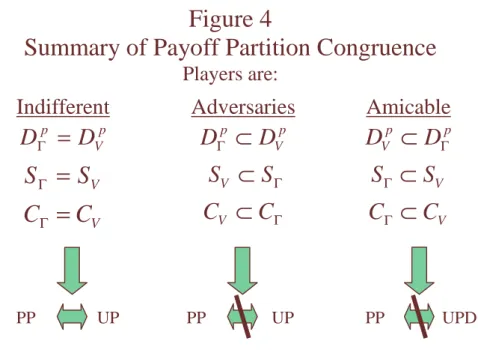
Figure 4 below provides a summary of the principal results of this sub-section.
Figure 4
Summary of Payoff Partition Congruence
Players are:
Indifferent
p V
p
D
D
Γ=
V
S
S
Γ=
V
C
C
Γ=
Adversaries
p V
p
D
D
Γ⊂
Γ
⊂
S
S
V Γ⊂
C
C
VAmicable
p p VD
D
⊂
ΓV
S
S
Γ⊂
V
C
C
Γ⊂
PP UP PP UP PP UPD
Note that the likelihood of a PPD having an associated UPD is reduced in
different ways for adversaries and amicable players. In the case of adversaries the
likelihood that the Pareto Superior payoff in the primitive game is also Pareto Superior in
the utility game is reduced. For amicable players the likelihood that the “off diagonal”
payoff provides defection incentive from the Pareto Superior payoff is reduced.
Asymmetric Attitudes and the Central Set as a Measure of Amicability
Asymmetric attitudes across players generate a rich set of possibilities. In this
sub-section we briefly explore congruence properties of the Central Set when players
have asymmetric attitudes. We focus on the Central Set since its boundedness properties
and sensitivity to alternative preferences render it a good measure of general amicability.
Proposition 14. Suppose player B is neutral. If player A is amicable CΓ⊂ CV while if
player A is an adversary: CV ⊂ CΓ.
Proof. Immediate given slight adaptations of Propositions 7 and 12.
As attitudes move from indifference to amicability, the defection incentive that
gives rise to the PPD is attenuated and the potential for no-equilibrium increases. By
Propositions 7 and 12 the Central Set expansion comes at the expense of the Dominant
Sets. The following result, which combines amicable and adversarial players, is also
immediate:
Proposition 15. Suppose player A is amicable and B adversarial. Ceteris paribus, i). the larger the ratio -Bα / Bβ on the interval [α11, α22 ], the smaller CV.
ii). the smaller the ratio -Aα / Aβ on the interval [α11, α22 ], the smaller CV.
Together Propositions 7, 12, 14, and 15 suggest that the area of the Central Set is
an intriguing metric of the aggregate “friendliness” of the players. Recall that the Central
Set is always bounded when both players are indifferent or adversarial. As preferences
move from adversarial to indifference to amicability the area of Central Set increases
monotonically. When at least one player is amicable, the Central Set is no longer
necessarily bounded, though it remains bounded under many well behaved utility
functions and its area increases uniformly with increasing amicability as defined earlier.
The Cobb-Douglas example of the following section will further illustrate this property.
3.3. A Cobb-Douglas Example
We begin with amicable preferences and to simplify exposition express B’s
preferences in terms of primitive payoffs “a” for player A and “b” for own primitive
payoff. The utility functions are then:
(7) A (α, β) = αxβ1-x
B (a, b) = a1-y by,
where x and y are non-negative. Note that if x ∈ (0,1), Player A is amicable, and is an
altruist if x ∈ (0,1/2).
By Corollary 1, A22 and B11 must intersect for DA to exist and membership of a
π12 in DA is a necessary condition for the existence of a SPD. Let B11 and A22be the
utility levels associated with indifference curves B11 and A22. For an arbitrary α = a, b
≠ β in these indifference sets except for a point of intersection. Considering an arbitrary
α=a, substituting α for “a” in (7), defining =a≡ b α
β
| R(α; x, y), and rearranging (7)
(8) R(α; x, y) = (A22y/B1−x 11 ) α
1-(x+y)
.
Proposition 16. The Dominant Sets are non-empty if either: i). both players are amicable but not altruists; ii). one is an altruist and one merely amicable, with x+y > 1.
Proof: For either i) or ii) above at α = α11, β > b so R(α11; x, y) >1. Moreover if either i)
or ii) are satisfied x + y >1 and lim α↑∞ R(α; x, y) = 0 so the indifference curves cross at
some α, with the intersection obtained by solving R(α; x, y) = 1 ∴
Proposition 17. The Dominant Sets are empty if either: i). both players are altruists; ii). one is an altruist and the other merely amicable, with x+y < 1; iii). players are amicable
with x+y = 1.
Proof: Reasoning similar to the Proof of (16) implies for i) and ii) the curves never intercept at α > α11. If x+y = 1, the β is independent of α, and lim α↑∞ R(α; x, y) = lim
α↓0 R(α; x, y) = A22y/
x B1−
11 , a constant. Thus the curves are either parallel or coincide, but
never cross.
These Propositions indicate that when both players are amicable and at least one
is sufficiently altruistic, a utility Prisoner’s Dilemma will never occur. With these explicit utility functions we can also compute the “gains and losses” in the Dominant Set
from different attitudes. For example, for simplicity letting x=y we can derive a lower
bound for the reduction in the dominant sets when both players are amicable. Using (8)
the intersection occurs at: α* = (A22) x / 1-2x
(B11) 1-x / 1-2x
. Recalling that A22 and B22 pass
(9) α22 = (A22 ) x / 1-2x
(B22) 1-x / 1-2x
, so that
α* / α22 = (B11 / B22) 1-x / 1-2x
> 1 .
Therefore player A’s utility dominant set relative to primitive dominant set, is reduced by
at least the area: β11 . α22 [ (B22/B11)
1-x / 2x-1
– 1] . To this it must be added the area
beyond point α* and below the indifference curve A22. Computing this integral yields:
(10) (A22) 1 / 1-x
(1-x / 2x-1) α* 1-2x / 1-x = (1-x / 2x-1)( A22) 1 / 1-x
(B11/B22)α22 1-2x / 1-x
.
In spite of curve B11 going to zero, Player’s A utility dominant set (which remains
unbounded) does not have finite measure. A more precise bound may be obtained by
computing the area outside the UDS between B11 and the vertical line passing through π11
until an α’>α*. We shall not pursue this computation here. The above results suggest the
following proposition.
Proposition 18. If x=y and 2x > 1, the lower bound to the reduction in Player’s A utility dominant set is increasing with the ratio rB = B22 / B11 whenever rB > (A22)
1 / 1-x
(1 /β11)
(α22) 1-x / 1-2x and decreasing if the reverse occurs.
Proof. The increasing result is immediate. For the decreasing it suffices to compute the
derivative, w.r.t. rB, of the combined area.
The main importance of Proposition 18 is to emphasize that it is the normalized
utility values at points π11 and π22 that are crucial in determining the distortions in the
Adversarial Preferences
For adversaries additional flexibility is obtained if we re-specify the Cobb-Douglas utility
functions as follows:
(11) A (α, β) = αxβ-y
B (α, β) = awbz ,
with all exponents non-negative and x and z less than 1. Note that if y>x and w>z both
players have strong global enmity. In this case all indifference curves emanate from origin and have a single-crossing property. If x>y and w<z, the concavities of
indifference curves are reversed, though all indifference curves still emanate from the
origin. Finally, if x>y and w>z, or x<y and w<z, multiple crossing of indifference curves
are possible and a set of complex possibilities arise.
Now return to the strong global enmity case (y>x and w>z). Proposition 9
states that FV is either empty or bounded. It follows that the area of F can be obtained.
Proposition 18. With strong global enmity the area of FV shrinks from an infinite
(Lebesgue-measure) value to α22 . β22 [ (wy – zx)/(w+z)(x+y) ] .
Proof : The A22 and B22 curves intercept at (0, 0) and (α22, β22). With α on the ordinate
A22 is “below” B22 on the interval (0;α22) and we have the function: F(α) = (A22) -1/yαx/y
-
(B22) 1/z αw/z
. Integrating this function on the interval and recalling that: (A22) -1/yα
22x/y
= β22 = (B22) 1/zα
22w/z, one arrives at the result. Notice that the relationship between the
4. Summary and Conclusion
Prisoner’s dilemmas provide a fundamental paradigm of the tension between
individual and collective rationality. Analysis of their structure and operation has
provided insight into issues ranging from the public goods problem to arms races. Yet
the predictive power of the paradigm depends critically on implicit assumptions on the
nature of the mapping from observable primitive payoff to unobservable final utility.
When unobservable final utility depends only on own-primitive-payoff the equilibrium
of a primitive-payoff-game and the associated utility-games are identical. Under this
circumstance the specific properties of the unobservable utility function are immaterial
for predictions of strategy choice and a primitive game with a PD equilibrium is a perfect
proxy for the unobservable final utility game. However, when linkages exist between the
primitive payoff of one player and the utility of another, PD equilibrium in the
observable game may not correspond to equilibrium in the utility game. Moreover, as
discussed previously, a large body of experimental evidence is generally inconsistent
with pure indifference of players to the payoffs of others.
This paper explores the implications of two types of linkages between the players’
final utility and the other player’s primitive payoff: adversarial and amicable preferences.
We demonstrate that such non-indifference generates specific non-congruencies of the
“primitive-dominant-set” and “utility-dominant-sets,” which has the consequence of
mapping apparent PD’s into other (non-PD) equilibrium. On the other hand, utility PDs
may arise in games that do not exhibit PD structure in primitive payoffs.
To appreciate the implications of this non-congruence consider a standard
cooperation than competition, though the temptation of defection precludes cooperation
as a non-cooperative equilibrium. It would therefore seem that players have incentive to
create institutions that can support the Pareto-superior payoffs. Indeed, we observe many
situations where institutions supporting the Pareto Superior outcome are created and the
gains from cooperation can be realized. However, we also observe many situations
where such institutions do not emerge and where all players appear to reap inefficiently
low returns. This paper proposes a new explanation for such phenomenon. Namely, that
the joint-strategy Pareto superior utility-payoffs do not in fact exist. The Kyoto Protocol, and the “2003 WTO Cancun Meeting”, could be examples of this phenomenon. On the
flip side, equilibrium that appears Pareto optimal in primitive payoffs may in fact be PDs
in utility payoffs. Ongoing research applies this theory to the successes and failures of a
References
Brams, S. J. 1994. Theory of Moves. Cambridge, UK: Cambridge University Press.
Brennan, G. 1973. “Pareto Desirable Redistribution in the Case of Malice and Envy,” Journal of Public Economics 2, 173-83.
Browning, Martin, and Pierre André Chiappori. 1998. “Efficient Intra-household
Allocations: A General Characterization and Empirical Tests.” Econometrica v66, n6 (November): 1241-78
Fehr, Ernst and Simon Gachter. 2000. “Fairness and Retaliation: The Economics of Reciprocity.”
The Journal of Economic Perspectives. Vol 14(3). 159-81.
Hammond, P. 1987. “Envy,” in Eatwell, Milgate, and Newman eds, The New Palgrarve
Dictionary of Economics. New York: The Stockton Press.
Rapoport, Anotol. 1987. “Prisoner’s Dilemma,” in Eatwell, Milgate, and Newman eds, The New
[550] Jo˜ao Victor Issler e Rachel Couto Ferreira. Avaliando pesquisadores e depar-tamentos de economia no Brasil a partir de citac¸˜oes internacionais. Ensaios Econˆomicos da EPGE 550, EPGE–FGV, Jun 2004.
[551] Humberto Luiz Ataide Moreira e David Martimort.Common agency with infor-med principals. Ensaios Econˆomicos da EPGE 551, EPGE–FGV, Jun 2004.
[552] Luiz Renato Regis de Oliveira Lima e Zhijie Xiao. Purchasing power parity and the unit root tests: A robust analysis. Ensaios Econˆomicos da EPGE 552, EPGE–FGV, Jul 2004.
[553] Daniel Gottlieb, Aloisio Pessoa de Ara´ujo, e Humberto Luiz Ataide Moreira. A model of mixed signals with applications to countersignaling an the GED. Ensaios Econˆomicos da EPGE 553, EPGE–FGV, Jul 2004.
[554] Lucas J´over Maestri e Carlos Eugˆenio Ellery Lustosa da Costa. The risk– properties of human capital and the design of government policies. Ensaios Econˆomicos da EPGE 554, EPGE–FGV, Jul 2004.
[555] Daniel Gottlieb e Lucas J´over Maestri. Banning information as a redistributive device. Ensaios Econˆomicos da EPGE 555, EPGE–FGV, Jul 2004.
[556] Leonardo Pio Perez e Pedro Cavalcanti Gomes Ferreira. Efeitos macroe-conˆomicos e custos sociais de uma transic¸˜ao entre regimes de previdˆencia no Brasil. Ensaios Econˆomicos da EPGE 556, EPGE–FGV, Jul 2004.
[557] Rubens Penha Cysne. Inflation and income inequality: A link through the job– search process. Ensaios Econˆomicos da EPGE 557, EPGE–FGV, Ago 2004.
[558] Rubens Penha Cysne. A search–theoretic explanation for the negative correla-tion between labor income and impatience. Ensaios Econˆomicos da EPGE 558, EPGE–FGV, Ago 2004.
[559] Rubens Penha Cysne.Income inequality:The role of impatience in a job–search process. Ensaios Econˆomicos da EPGE 559, EPGE–FGV, Ago 2004.
[560] Rubens Penha Cysne. Towards a measure of income inequality freed from the volatility caused by variations in the rate of unemployment. Ensaios Econˆomicos da EPGE 560, EPGE–FGV, Ago 2004.
Econˆomicos da EPGE 562, EPGE–FGV, Ago 2004.
[563] Marcelo Cˆortes Neri e Marcelo Casal Xerez.Aspectos dinˆamicos de um sistema de metas sociais. Ensaios Econˆomicos da EPGE 563, EPGE–FGV, Ago 2004.
[565] Marcelo Cˆortes Neri e Marcelo Casal Xerez. Desenho de um sistema de metas sociais. Ensaios Econˆomicos da EPGE 565, EPGE–FGV, Set 2004.
[566] Paulo Klinger Monteiro, Rubens Penha Cysne, e Wilfredo Maldonado.Inflation and Income Inequality: A Shopping–Time Aproach (Forthcoming, Journal of Development Economics). Ensaios Econˆomicos da EPGE 566, EPGE–FGV, Set 2004.
[567] Rubens Penha Cysne. Solving the Non–Convexity Problem in Some Shopping– Time and Human–Capital Models. Ensaios Econˆomicos da EPGE 567, EPGE– FGV, Set 2004.
[568] Paulo Klinger Monteiro.First–Price auction symmetric equlibria with a general distribution. Ensaios Econˆomicos da EPGE 568, EPGE–FGV, Set 2004.
[569] Samuel de Abreu Pessˆoa, Fernando A. Veloso, e Pedro Cavalcanti Ferreira. On The Tyranny of Numbers: East Asian Miracles in World Perspective. Ensaios Econˆomicos da EPGE 569, EPGE–FGV, Out 2004.
[570] Rubens Penha Cysne. On the Statistical Estimation of Diffusion Processes – A Partial Survey (Revised Version, Forthcoming Brazilian Review of Econome-trics). Ensaios Econˆomicos da EPGE 570, EPGE–FGV, Out 2004.
[571] Aloisio Pessoa de Ara´ujo, Humberto Luiz Ataide Moreira, e Luciano I. de Cas-tro Filho.Pure strategy equilibria of multidimensional and Non–monotonic auc-tions. Ensaios Econˆomicos da EPGE 571, EPGE–FGV, Nov 2004.
[572] Paulo C´esar Coimbra Lisbˆoa e Rubens Penha Cysne. Imposto Inflacion´ario e Transferˆencias Inflacion´arias no Mercosul e nos Estados Unidos. Ensaios Econˆomicos da EPGE 572, EPGE–FGV, Nov 2004.
[573] Renato Galv˜ao Flˆores Junior. Os desafios da integrac¸˜ao legal. Ensaios Econˆomicos da EPGE 573, EPGE–FGV, Dez 2004.
[574] Renato Galv˜ao Flˆores Junior e Gustavo M. de Athayde. Do Higher Moments Really Matter in Portfolio Choice?. Ensaios Econˆomicos da EPGE 574, EPGE– FGV, Dez 2004.