Provider-Initiated Late Preterm Births in
Brazil: Differences between Public and Private
Health Services
Maria do Carmo Leal1, Ana Paula Esteves-Pereira1*, Marcos Nakamura-Pereira1,2, Jacqueline Alves Torres3, Rosa Maria Soares Madeira Domingues4, Marcos Augusto Bastos Dias2, Maria Elizabeth Moreira2, Mariza Theme-Filha1, Silvana Granado Nogueira da Gama1
1Department of Epidemiology and Quantitative Methods in Health, Sérgio Arouca National School of Public Health, Oswaldo Cruz Foundation, Rio de Janeiro, Brazil,2National Institute of Women, Children and Adolescents Health Fernandes Figueira, Oswaldo Cruz Foundation, Rio de Janeiro, Brazil,3National Health Agency, Ministry of Health, Rio de Janeiro, Brazil,4National Institute of Infectious Diseases, Oswaldo Cruz Foundation, Rio de Janeiro, Brazil
Abstract
Background
A large proportion of the rise in prematurity worldwide is owing to late preterm births, which may be due to the expansion of obstetric interventions, especially pre-labour caesarean section. Late preterm births pose similar risks to overall prematurity, making this trend a concern. In this study, we describe factors associated with provider-initiated late preterm birth and verify differences in provider-initiated late preterm birth rates between public and private health services according to obstetric risk.
Methods
This is a sub-analysis of a national population-based survey of postpartum women entitled
“Birth in Brazil”, performed between 2011 and 2012. We included 23,472 singleton live births. We performed non-conditional multiple logistic regressions assessing associated factors and analysing differences between public and private health services.
Results
Provider-initiated births accounted for 38% of late preterm births; 32% in public health ser-vices and 61% in private health serser-vices. They were associated with previous preterm birth (s) and maternal pathologies for women receiving both public and private services and with maternal age35 years for women receiving public services. Women receiving private health services had higher rates of provider-initiated late preterm birth (rate of 4.8%) when compared to the ones receiving public services (rate of 2.4%), regardless of obstetric risk–
adjusted OR of 2.3 (CI 1.5–3.6) for women of low obstetric risk and adjusted OR of 1.6 (CI 1.1–2.3) for women of high obstetric risk.
a11111
OPEN ACCESS
Citation:Leal MdC, Esteves-Pereira AP, Nakamura-Pereira M, Torres JA, Domingues RMSM, Dias MAB, et al. (2016) Provider-Initiated Late Preterm Births in Brazil: Differences between Public and Private Health Services. PLoS ONE 11(5): e0155511. doi:10.1371/ journal.pone.0155511
Editor:Roger C. Young, PreTel Inc, UNITED STATES
Received:November 25, 2015
Accepted:May 1, 2016
Published:May 19, 2016
Copyright:© 2016 Leal et al. This is an open access article distributed under the terms of theCreative Commons Attribution License, which permits unrestricted use, distribution, and reproduction in any medium, provided the original author and source are credited.
Data Availability Statement:All relevant data are within the paper and its Supporting Information files.
Conclusion
The high rates of provider-initiated late preterm birth suggests a considerable potential for reduction, as such prematurity can be avoided, especially in women of low obstetric risk. To promote healthy births, we advise introducing policies with incentives for the adoption of new models of birth care.
Introduction
Numbers of preterm births have recently risen in middle and high-income countries [1]. This leads to increased costs for the healthcare system, as well as potential harm to newborns and their families [2,3]. In 2005, a committee of experts organized by the National Institute of Child Health and Human Development of the National Institutes of Health (NIH) in the USA suggested the term“late preterm”should be used for newborns with GA between 34 0/7 and 36 6/7 weeks [3]. The rise of preterm births worldwide is largely due to late preterm [4], which is partially related to increased obstetric interventions designed to reduce maternal and fetal com-plications, such as labour induction and pre-labour caesarean section (C-section) [5]. Never-theless, there is often not enough evidence to recommend these interventions in many cases where they have been performed [6]; i.e., the medical records fail to show appropriate medical indications, suggesting they are not indicated. Brazil is known for having one of the world’s highest rates of C-section [7]. In 2013, levels reached 56%; 43% among women receiving public healthcare and 88% among women receiving private healthcare at childbirth [8]. Many C-sec-tions are reported as conducted for non-medical reasons [9], including those among preterm births (S1 Table) [10].
The impact of late prematurity on newborn health was long neglected as the length and weight of these infants are similar to full-term infants, and they appear not to require much extra healthcare at birth [11]. However, the last weeks before completing 40 weeks gestation are a critical period for brain and lung development [4]. Therefore, being born even slightly before reaching full-term (39–40 weeks gestation) may have significant implications for new-born health [12]. The first studies to suggest that late prematurity poses similar risks to overall prematurity (although at lower frequency and severity) were published a decade ago [3,13]. Compared with those born at full-term, late preterm infants are more likely to experience respiratory distress syndrome, intraventricular haemorrhage, neonatal or infant death, and long-term neurodevelopmental problems [14–16].
According to the WHO, Brazil is among the 10 countries that contribute most to the burden of prematurity worldwide [17]. However, the magnitude of late prematurity in the country was unknown until 2012, because official health statistics reported gestational ages (GA) at broad intervals [18]. The first national survey into labour and birth was performed in Brazil in 2011 [19,20]. This described the prevalence of prematurity, its subtypes and associated factors. The study found a prematurity rate of 11.5%, among which 74% were late-premature and 39% were provider-initiated (either determined by labour induction or pre-labour C-section) (S2 Table) [21].
Public and private health services in Brazil employ the same birth care professionals, but organise obstetric care differently [22]. In public health services, medical practitioners work in shifts and pregnant women receive prenatal care in Health Units with obstetric physicians or nurses. Women receive birth care by the staff on duty in the hospital to which they are referred. In private health services, the same physician who provides prenatal care usually provides birth Competing Interests:The authors have declared
care in a hospital with an open clinic staff; a factor associated with its higher C-section rates [22]. It is unknown, however, whether these idiosyncrasies of public and private obstetric care in Brazil lead to differences in the rates of provider-initiated late preterm birth.
Therefore, this study aims to verify differences in the rates of provider-initiated late preterm birth between public and private health services, in women of low and high obstetric risk. We also describe the subtypes and factors associated with provider-initiated late preterm birth in both sources of healthcare provision.
Materials and Methods
Data source
The“Birth in Brazil study”was a national population-based study of postpartum women and their newborns, conducted from February 2011 to October 2012. It recruited a complex sample of 266 hospitals, with 90 postpartum women interviewed in each hospital and a total 23,894 women. Further information about the sample is detailed elsewhere [23]. In the sampled hospi-tals, women were invited to participate if they gave birth to a live newborn (regardless of weight or GA) or to a stillborn (with birth weight500g and/or GA22 weeks) during the observa-tion period.
Face-to-face interviews were held with the postpartum women during their hospital stay. Further data about the women and their newborns were collected from their medical records and extracted from photographs of prenatal care cards. Women and newborns remaining as inpatients, including those transferred to other hospitals, were tracked for up to 28 days and 42 days, respectively. Further details on data collection have been published elsewhere [19].
Participants
For the current analysis, we excluded stillbirths, women with unknown GA and multiple pregnancies.
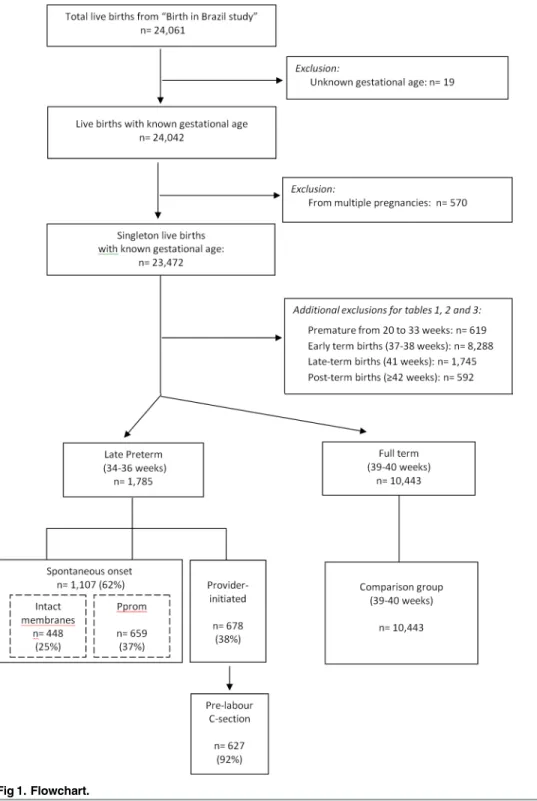
Our final sample included 23,472 singleton live births with known GA. Of these, 10,443 were full-term, defined as GA at birth between 390/7and 406/7weeks of gestation and 1,785 were late preterm, defined as GA at birth between 340/7and 366/7weeks of gestation. A further 11,244 newborns were of other GA at birth. Gestational age was calculated using an algorithm that primarily relied upon early ultrasound estimates [18]. For analysis of provider-initiated-late-preterm birth associated factors we also excluded premature deliveries at 20–33 weeks ges-tation, term deliveries at 37, 38 or 41 weeks gestation and all post-term deliveries (42 weeks gestation) (Fig 1). Excluding these selected GA ranges ensured a comparison group with a lower prevalence of factors related to early or late GA.
Outcome variable
The primary outcome was the incidence of provider-initiated late preterm births, i.e., those triggered by an obstetric intervention (induction of labour or pre-labour C-section), as opposed to spontaneous late preterm births, which either initiated spontaneously or by premature rup-ture of membranes (pProm).
Exposure variables and definitions
We evaluated maternal age, years of schooling, parity, previous preterm birth(s), previous C-section, non-cephalic presentation, and obstetric risk characteristics, which were analysed sep-arately and in combination. Women were classified to have high obstetric risk if they had maternal and/or newborn health problems, as well as obstetric complications. These included Fig 1. Flowchart.
hypertensive disorders (chronic hypertension, preeclampsia, and HELLP syndrome); eclamp-sia; pre-existing and gestational diabetes; renal, cardiac or autoimmune diseases; severe infec-tion at admission for birth; placental abrupinfec-tion; placental previa; intrauterine growth restriction (IUGR); or severe newborn malformations (those potentially related to indication for C-section and/or prematurity). Age and schooling were collected through interviewing the mother, and all other variables were extracted from medical records.
The obstetric risk was independently performed and validated by two obstetricians who also classified the prematurity determining factor (as spontaneous, Pprom or provider-initiated).
Women who gave birth in public or mixed-funding hospitals, but who were not covered by private health insurance plans, were classified as receiving public health services/care at child-birth. Women whose birth was covered by a private health insurance plan, and those who gave birth in private hospitals regardless of coverage by a health insurance plan, were classified as receiving private health services/care at childbirth.
Statistical analysis
We analysed differences in participant characteristics between public and private health ser-vices using chi square. Differences in the distribution of the determining factor (spontaneous, Pprom or provider-initiated) between public and private health services were also analysed using chi square.
To assess provider-initiated late prematurity associated factors relative to full-term births, we performed non-conditional multiple logistic regressions stratified by source of healthcare provision (public or private). We report the estimated crude odds ratio (OR) and adjusted odds ratio (adjOR) with 95% confidence intervals (CI).
We analysed differences in the rate of provider-initiated late preterm births between public and private health services by means of non-conditional multiple logistic regressions, stratified by maternal obstetric risk (low or high). We report the estimated crude OR and adjOR with 95% CI. We performed two different adjustments for confounders. First, we adjusted for maternal age, years of schooling, parity, previous preterm birth(s), and non-cephalic presenta-tion. Second, we adjusted for all these variables plus previous C-secpresenta-tion.
In all statistical analyses, the complex sampling design was taken into consideration. A sig-nificance level of 5% was adopted for all analyses. The statistical program used was SPSS, ver-sion 20.0 (SPSS Inc., Chicago, IL, USA).
Ethical approval
This study was carried out in accordance with the National Health Council Resolution n. 196/ 96. The ethics committee of the Sérgio Arouca National School of Public Health, Oswaldo Cruz Foundation (CEP/ENSP), approved this study under the research protocol CAAE: 0096.0.031.000–10 (approval date: May 11th2010). All hospital directors and postnatal women gave written informed consent.
Results
Of the 1,785 late preterm births identified in this study, 1,107 (62%) were spontaneous: 448 (25%) with spontaneous onset of labour and 659 (37%) with Pprom. The remaining 678 (38%) were provider-initiated, among which 627 (92%) were by pre-labour C-section (Fig 1).
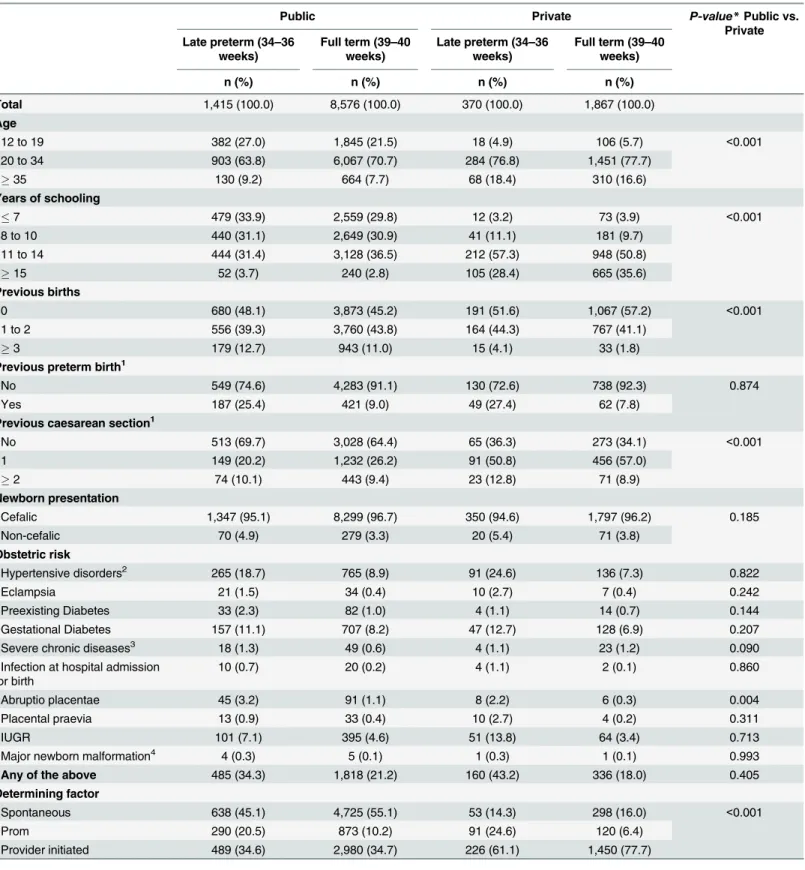
except for placental abruption, which was higher in public services. Among late preterms, 64% were born to mothers with no obstetric risk, without significant difference between type of health services received (Table 1).
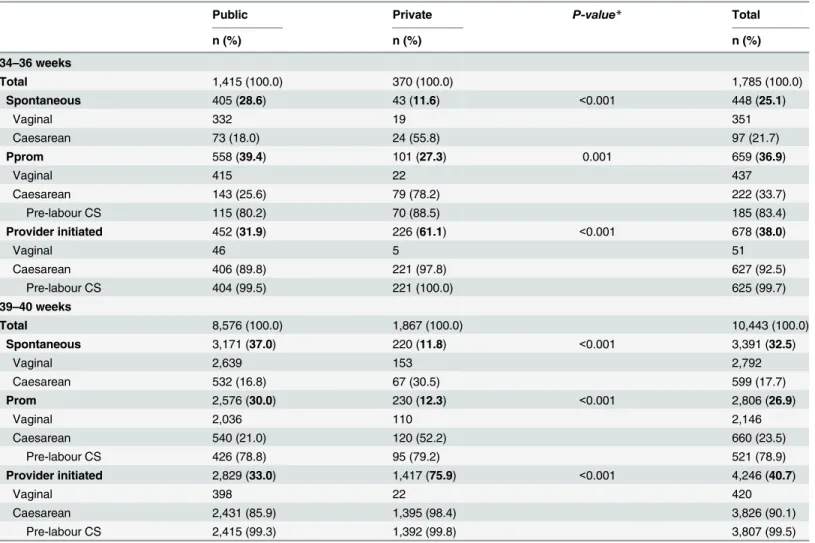
Regarding late preterms in women receiving public healthcare, 28.6% of labours began spon-taneously, 39.4% were preceded by Pprom, and 31.9% were provider-initiated. In women receiv-ing private healthcare, these values were 11.6%, 27.3%, and 61.1%, respectively. For full-term infants, most births in women receiving public healthcare were spontaneous or preceded by Pprom, while in women receiving private healthcare 75.9% were provider-initiated (Table 2).
In public health services, 18.0% of women who went into late preterm spontaneous labour and 25.6% who had a Pprom underwent a C-section. In women receiving private care, C-sec-tion proporC-sec-tions were three-fold higher for these two groups. C-secC-sec-tion procedures were mostly pre-labour, regardless of the determining factor (Pprom or provider-initiated), gesta-tional age (late preterm or full term) or type of health services (public or private) (Table 2).
In the adjusted analysis, factors associated with provider-initiated late prematurity were the same in public and private health services, except for age above 35 and previous C-section, which were only associated with public healthcare provision. The strength of the association was higher for almost all pathologies in women receiving private healthcare (Table 3).
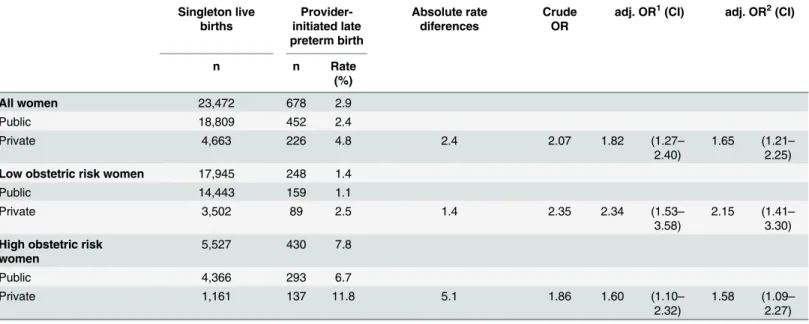
The rate of provider-initiated late preterm birth was of 2.9%–2.4% for women receiving public health services and 4.8% for women receiving private health services. After adjusting for con-founders, women receiving private healthcare had higher odds of provider-initiated late preterm birth regardless of obstetric risk. For women of low obstetric risk the adjusted OR was of 2.3 (CI 1.5–3.6) and for the ones of high obstetric risk the adjusted OR was of 1.6 (CI 1.1–2.3) (Table 4).
Discussion
Main Findings
In Brazil, one in nine births is preterm (S2 Table) [21]. In this study, late prematurity accounted for 75% of all preterm births, and around 40% of these were provider-initiated births. Labour induction practice was low in public health services, and almost nil in private health services. Pro-vider-initiated late prematurity was associated with previous preterm birth(s) and maternal pathologies in both health services, and with maternal age35 years in public health services only. The higher rate of provider-initiated late preterm birth in women receiving private health-care compared with the ones receiving public health-care was independent of obstetric risk.
Strengths and Limitations
The strength of this study is that we have used a representative nationwide survey, with pri-mary data collected from medical records. This allowed, for the first time, a description of the national late prematurity rate and its determinants, as well as a more accurate gestational age estimate calculated by an algorithm that primarily relied upon early ultrasound estimates [18]. Furthermore, we stratified the analysis by source of healthcare provision (public or private) and according to obstetric risk (low or high). The obstetric risk was independently performed and validated by two obstetricians who also classified the prematurity determining factor (as spontaneous, Pprom or provider-initiated). Nonetheless, we failed to analyse whether C-sec-tion indicaC-sec-tion was appropriate on a case-by-case basis.
Interpretation
Table 1. Characteristics of women by gestational age and type of childbirth care in singleton live births.Birth in Brazil, 2011–2012.
Public Private P-value*Public vs.
Private Late preterm (34–36
weeks)
Full term (39–40 weeks)
Late preterm (34–36 weeks)
Full term (39–40 weeks)
n (%) n (%) n (%) n (%)
Total 1,415 (100.0) 8,576 (100.0) 370 (100.0) 1,867 (100.0)
Age
12 to 19 382 (27.0) 1,845 (21.5) 18 (4.9) 106 (5.7) <0.001
20 to 34 903 (63.8) 6,067 (70.7) 284 (76.8) 1,451 (77.7)
35 130 (9.2) 664 (7.7) 68 (18.4) 310 (16.6)
Years of schooling
7 479 (33.9) 2,559 (29.8) 12 (3.2) 73 (3.9) <0.001
8 to 10 440 (31.1) 2,649 (30.9) 41 (11.1) 181 (9.7)
11 to 14 444 (31.4) 3,128 (36.5) 212 (57.3) 948 (50.8)
15 52 (3.7) 240 (2.8) 105 (28.4) 665 (35.6)
Previous births
0 680 (48.1) 3,873 (45.2) 191 (51.6) 1,067 (57.2) <0.001
1 to 2 556 (39.3) 3,760 (43.8) 164 (44.3) 767 (41.1)
3 179 (12.7) 943 (11.0) 15 (4.1) 33 (1.8)
Previous preterm birth1
No 549 (74.6) 4,283 (91.1) 130 (72.6) 738 (92.3) 0.874
Yes 187 (25.4) 421 (9.0) 49 (27.4) 62 (7.8)
Previous caesarean section1
No 513 (69.7) 3,028 (64.4) 65 (36.3) 273 (34.1) <0.001
1 149 (20.2) 1,232 (26.2) 91 (50.8) 456 (57.0)
2 74 (10.1) 443 (9.4) 23 (12.8) 71 (8.9)
Newborn presentation
Cefalic 1,347 (95.1) 8,299 (96.7) 350 (94.6) 1,797 (96.2) 0.185
Non-cefalic 70 (4.9) 279 (3.3) 20 (5.4) 71 (3.8)
Obstetric risk
Hypertensive disorders2 265 (18.7) 765 (8.9) 91 (24.6) 136 (7.3) 0.822
Eclampsia 21 (1.5) 34 (0.4) 10 (2.7) 7 (0.4) 0.242
Preexisting Diabetes 33 (2.3) 82 (1.0) 4 (1.1) 14 (0.7) 0.144
Gestational Diabetes 157 (11.1) 707 (8.2) 47 (12.7) 128 (6.9) 0.207
Severe chronic diseases3 18 (1.3) 49 (0.6) 4 (1.1) 23 (1.2) 0.090
Infection at hospital admission for birth
10 (0.7) 20 (0.2) 4 (1.1) 2 (0.1) 0.860
Abruptio placentae 45 (3.2) 91 (1.1) 8 (2.2) 6 (0.3) 0.004
Placental praevia 13 (0.9) 33 (0.4) 10 (2.7) 4 (0.2) 0.311
IUGR 101 (7.1) 395 (4.6) 51 (13.8) 64 (3.4) 0.713
Major newborn malformation4 4 (0.3) 5 (0.1) 1 (0.3) 1 (0.1) 0.993
Any of the above 485 (34.3) 1,818 (21.2) 160 (43.2) 336 (18.0) 0.405
Determining factor
Spontaneous 638 (45.1) 4,725 (55.1) 53 (14.3) 298 (16.0) <0.001
Prom 290 (20.5) 873 (10.2) 91 (24.6) 120 (6.4)
Provider initiated 489 (34.6) 2,980 (34.7) 226 (61.1) 1,450 (77.7)
*χ2 test.
1 Considering women with at least one previous birth (public 34–36, n: 736; public 39–40, n:4704; private 34–36 n:179; private 39–40 n:800). 2 Chronic hypertension, pre-eclampsia and hellp syndrome.
be attributed to the indiscriminate use of interventions in private health services, independent of a patient’s characteristics, as well as the high prevalence of the interventions in the full-term comparison group. Nakamura-Pereira et al. (2016) have previously observed that in private health services C-section rate in cephalic presentation preterms was 77%, even among women at low obstetric risk (S1 Table) [10].
Women receiving public healthcare live in poorer socioeconomic conditions and face barri-ers of access to prenatal care more frequently [24,25]. However, the prevalence of maternal morbidities was comparable to women receiving private healthcare. On the other hand, we observed a stronger association between these morbidities and provider-initiated late prematu-rity in private health services. This may indicate greater anticipation of birth even under the same health conditions. Possible explanations would be the easier access to neonatal ICU in private hospitals, as well as unawareness or minimization of the risks of late preterm infants, who are generally still immature [22].
In the short term, late preterm infants are vulnerable to thermal instability, breastfeeding difficulties, hypoglicemia, hyperbilirubinemia, infections, and respiratory morbidities. This leads to a greater need for neonatal ICU and readmission after birth [26,27]. In the long term, they have a higher risk of respiratory diseases, infant hospitalisation, neurodevelopmental Table 2. Determining factor and type of delivery by gestational age and type of childbirth care in singleton live births. Birth in Brazil, 2011–2012.
Public Private P-value* Total
n (%) n (%) n (%)
34–36 weeks
Total 1,415 (100.0) 370 (100.0) 1,785 (100.0)
Spontaneous 405 (28.6) 43 (11.6) <0.001 448 (25.1)
Vaginal 332 19 351
Caesarean 73 (18.0) 24 (55.8) 97 (21.7)
Pprom 558 (39.4) 101 (27.3) 0.001 659 (36.9)
Vaginal 415 22 437
Caesarean 143 (25.6) 79 (78.2) 222 (33.7)
Pre-labour CS 115 (80.2) 70 (88.5) 185 (83.4)
Provider initiated 452 (31.9) 226 (61.1) <0.001 678 (38.0)
Vaginal 46 5 51
Caesarean 406 (89.8) 221 (97.8) 627 (92.5)
Pre-labour CS 404 (99.5) 221 (100.0) 625 (99.7)
39–40 weeks
Total 8,576 (100.0) 1,867 (100.0) 10,443 (100.0)
Spontaneous 3,171 (37.0) 220 (11.8) <0.001 3,391 (32.5)
Vaginal 2,639 153 2,792
Caesarean 532 (16.8) 67 (30.5) 599 (17.7)
Prom 2,576 (30.0) 230 (12.3) <0.001 2,806 (26.9)
Vaginal 2,036 110 2,146
Caesarean 540 (21.0) 120 (52.2) 660 (23.5)
Pre-labour CS 426 (78.8) 95 (79.2) 521 (78.9)
Provider initiated 2,829 (33.0) 1,417 (75.9) <0.001 4,246 (40.7)
Vaginal 398 22 420
Caesarean 2,431 (85.9) 1,395 (98.4) 3,826 (90.1)
Pre-labour CS 2,415 (99.3) 1,392 (99.8) 3,807 (99.5)
*χ2 test.
problems, and poorer school performance [26–28]. Probably many infants in Brazil are unnec-essarily being placed at risk for these outcomes.
Our data reaffirm that the prevalence of provider-initiated births in Brazil is one of the high-est worldwide. This is especially true in private health services, which shows an inverted pattern of two thirds of births determined by an obstetric intervention. In contrast, two thirds of Table 3. Factors associated with provider-initiated late preterm birth (34–36 wks) relative to full term birth (39–40 wks) by type of childbirth care in singleton live births. Birth in Brazil, 2011–2012.
Public (n = 452 provided-initiated late preterm vs. 8,576 full term)
Private (n = 226 provided-initiated late preterm vs. 1,867 full term)
Exposure variables OR OR adj.1 CI OR OR adj.1 CI
Age
12 to 19 1.03 1.07 (0.79–1.44) 0.90 1.03 (0.41–2.60)
20 to 34 1.00 1.00 - 1.00 1.00
35 1.76 1.69 (1.20–2.39) 1.25 1.20 (0.75–1.93)
Years of schooling
7 0.59 0.59 (0.33–1.04) 0.42 0.37 (0.14–1.00)
8 to 10 0.59 0.63 (0.35–1.13) 1.03 1.03 (0.57–1.88)
11 to 14 0.66 0.70 (0.41–1.20) 1.07 1.07 (0.77–1.49)
15 1.00 1.00 - 1.00
-Previous births
0 1,12 1.12 (0.84–1.50) 0.82 0.81 (0.60–1.09)
1 to 2 1.00 1.00 - 1.00 1.00
3 1.38 1.33 (0.87–2.04) 1.77 1.51 (0.44–5.13)
Previous preterm birth
No 1.00 1.00 - 1.00 1.00
-Yes 4.09 3.74 (2.54–5.52) 4.40 4.53 (2.35–8.75)
Previous caesarean section
No 1.00 1.00 - 1.00 1.00
-Yes 1,78 1.64 (1.21–2.22) 1.13 1.04 (0.52–2.12)
Newborn presentation
Cefalic 1.00 1.00 - 1.00 1.00
-Non-cefalic 2,78 2.67 (1.76–4.06) 1.01 0.95 (0.52–1.73)
Obstetric risk
Hypertensive disorders2 6,56 5.99 (4.33
–8.29) 7.37 8.18 (5.68–11.8)
Eclampsia 10,16 9.54 (4.90–18.57) 11.51 11.82 (3.38–41.39)
Preexisting Diabetes 5,01 4.73 (2.38–9.43) 1.64 1.38 (0.31–6.26)
Gestational Diabetes 2,51 2.36 (1.69–3.29) 2.80 2.66 (1.73–4.08)
Severe chronic diseases3 3,98 3.66 (1.06
–12.64) 1.62 1.59 (0.59–4.32)
Infection at hospital admission for birth 2,92 1.78 (0.53–6.02) 14.60 12.74 (2.33–69.55)
Placental abruption 6,11 5.40 (3.01–9.75) 10.40 9.25 (3.09–27.67)
Placental praevia 4,85 3.55 (1.08–11.68) 16.73 15.02 (4.63–48.81)
IUGR 3.88 3.83 (2.51–5.82) 6.95 6.73 (2.96–15.28)
Severe newborn malformation4 9,76 5.08 (0.64–39.98) 7.33 7.67 (0.55–106.42)
Any of the above (high obstetric risk) 6,63 6.34 (4.63–8.69) 7.00 7.10 (5.32–9.48)
1 Adjusted for age, years of schooling, parity, previous preterm bith, previous CS, non-cefalic presentation and obstetric risk. 2 Chronic hypertension, pre-eclampsia and hellp syndrome.
3 Chronic renal diseases, chronic cardiac diseases and auto-imune diseases. 4 Malformations potentially related to caesarean section indication and/or prematurity.
preterm births from high-income countries occur spontaneously [6,15]. The major interven-tion characterising Brazilian obstetric care is C-secinterven-tion. We observed that 53% of late preterm births were by C-section, among which 86% were pre-labour C-section. Unsurprisingly, labour induction practice corresponded to less than 10% of births; around 20% in public health ser-vices and only 4% in the private.
Brazilian private health services schedule birth care to optimise physician’s time and usually the same physician provides both prenatal and birth care. As such, several deliveries are set for the same date, in agreement with the pregnant women [8,29,30]. Thus, receiving prenatal and birth care from the same practitioner turned out to be the highest risk factor for having a C-sec-tion [22]. This is probably the main reason rates of pre-labour C-section are particularly high in Brazilian private health services. [7,10,22,29].
section can impact negatively woman's obstetric life. There is substantial evidence that C-section increases the risk of placenta previa and accreta in subsequent pregnancies [31], severe acute maternal morbidity [32], and mortality [33]. In addition, newborns endure losses in breastfeeding [12] and have smaller diversification of the intestinal microbiota [34], which has been related to chronic diseases in adult life [35–38].
We found higher odds of provider-initiated late preterm birth in women receiving private care compared with the ones receiving public healthcare. This was regardless of the obstetric risk classification of the women (low or high) and adjustment for confounding variables. How-ever, when adjusted for previous C-section, there was a reduction in the OR for low-risk women. This implies that, for low-risk women, the association was partially explained by a higher prevalence of previous C-section in private health services. This was not evident in the adjusted model ofTable 3owing to the extremely high frequency of mothers with previous C-section in the full-term comparison group from private health services.
According to recommendations from the American Congress of Obstetricians and Gynecol-ogists [39], most women with one previous C-section with a low-transverse incision are Table 4. Private childbirth care associated with provider-initiated late preterm rate (%) in singleton live births.Birth in Brazil, 2011–2012.
Singleton live births
Provider-initiated late preterm birth
Absolute rate diferences
Crude OR
adj. OR1(CI) adj. OR2(CI)
n n Rate
(%)
All women 23,472 678 2.9
Public 18,809 452 2.4
Private 4,663 226 4.8 2.4 2.07 1.82 (1.27–
2.40)
1.65 (1.21–
2.25)
Low obstetric risk women 17,945 248 1.4
Public 14,443 159 1.1
Private 3,502 89 2.5 1.4 2.35 2.34 (1.53–
3.58)
2.15 (1.41–
3.30)
High obstetric risk women
5,527 430 7.8
Public 4,366 293 6.7
Private 1,161 137 11.8 5.1 1.86 1.60 (1.10–
2.32)
1.58 (1.09–
2.27)
1 Adjusted for age, years of schooling, parity, previous preterm bith and non-cefalic presentation.
2 Adjusted for age, years of schooling, parity, previous preterm bith, non-cefalic presentation and previous CS.
candidates for and should be counselled about vaginal birth after cesarean (VBAC) and offered a trial of labour after C-section [40]. Studies have referred to a 70% VBAC success rate [41], which should be incorporated into Brazilian obstetric practice, as repetitive C-section further increases the risk of haemorrhage, abnormal placenta [31], and uterine rupture [42] in subse-quent pregnancies.
In the USA, it has been quantified that one in five late preterm births were not registered as indicated for an intervention in the medical records [6]. Therefore, it was suggested that other non-clinical factors might have influenced the decision at the moment of intervention. The authors of the study strongly recommended the reduction of iatrogenic interventions, and sug-gested the use of guidelines to optimise and plan the timing and route of delivery. The Institute of Medicine (IOM) estimated a burden of prematurity in the USA of about $26 billion or $51,600 per child [43]. It is worth noting that provider-initiated prematurity has been reduced recently in the USA [44].
Excessive perinatal interventions (in mothers and newborns), independent of obstetric/fetal risks, have previously been reported in private health services of Brazil [9,12] and Australia [45]. Our study estimated the effect on rates of prematurity if, among low-risk women, rates of provider-initiated late preterm births were the same in private services as in public services. We found that the prematurity rate would decrease to 11% (from 9.5% to 8.4%) in private health services. This would indicate an annual reduction of approximately 6,600 preterm births nationally. It is essential to highlight that there would be a higher impact on preterm birth rates if provider-initiated late preterm births were prevented in women of high obstetric risk as well. Although this group corresponded to 24% of women, provider-initiated late preterm birth rate was more than five times higher when compared to women of low obstetric risk; with addi-tional differences between public and private services. Moreover, the potential for reduction of preterm birth rates in Brazil can be of greater magnitude if the comparison group is external (from high-income European countries) rather than Brazilian public health services, which is yet quite interventionist.
Conclusion
We found a very high rate of provider-initiated late preterm births in Brazil, mostly performed by pre-labour C-section. It has been demonstrated that many of the indications for interven-tions to anticipate birth were not based on scientific evidence. This suggests a considerable potential for reduction as such prematurity can be avoided, as opposed to cases of spontaneous occurrence with an unknown cause. Excessive use of C-section will likely lead directly to increased costs for the healthcare system due to surgery, greater use of neonatal ICU, and maternal near misses. A further indirect cost is the association with short- and long-term mor-bidity of women and children. To reduce iatrogenic prematurity and promote healthy births, it is advisable to introduce policies with incentives for the adoption of new models of birth care in Brazil. In particular, these should be directed to adequate prenatal care for women with obstetric pathologies and appropriate indication of the timing of birth.
Supporting Information
S1 File. Database.(ZIP)
S1 Table. Proportion of caesarean section by source of payment of childbirth and obstetric risk.Birth in Brazil study, 2011–2012.
S2 Table. Preterm delivery according to gestational age and determining factor.Birth in Brazil study, 2011–2012.
(DOCX)
Acknowledgments
The authors wish to thank the regional and state coordinators, supervisors, data collectors, and all of the staff at the participating health facilities. We also thank the mothers who participated and made this study possible.
Author Contributions
Conceived and designed the experiments: MCL APE MN. Performed the experiments: MCL APE MN JAT RMSMD MABD MEM MT SGNG. Analyzed the data: MCL APE MN. Contrib-uted reagents/materials/analysis tools: MCL APE MN JAT RMSMD MABD MEM MT SGNG. Wrote the paper: MCL APE MN JAT RMSMD MABD MEM MT SGNG.
References
1. Chang HH, Larson J, Blencowe H, Spong CY, Howson CP, Cairns-Smith S, et al. Preventing preterm births: analysis of trends and potential reductions with interventions in 39 countries with very high human development index. Lancet. 2013; 381(9862):223–34. doi:10.1016/S0140-6736(12)61856-X PMID:23158883; PubMed Central PMCID: PMC3572865.
2. Loftin RW, Habli M, Snyder CC, Cormier CM, Lewis DF, Defranco EA. Late preterm birth. Rev Obstet Gynecol. 2010; 3(1):10–9. PMID:20508778; PubMed Central PMCID: PMC2876317.
3. Raju TN, Higgins RD, Stark AR, Leveno KJ. Optimizing care and outcome for late-preterm (near-term) infants: a summary of the workshop sponsored by the National Institute of Child Health and Human Development. Pediatrics. 2006; 118(3):1207–14. doi:10.1542/peds.2006-0018PMID:16951017.
4. Spong CY, Mercer BM, D'Alton M, Kilpatrick S, Blackwell S, Saade G. Timing of indicated late-preterm and early-term birth. Obstetrics and gynecology. 2011; 118(2 Pt 1):323–33. doi:10.1097/AOG. 0b013e3182255999PMID:21775849; PubMed Central PMCID: PMC3160133.
5. Morisaki N, Togoobaatar G, Vogel JP, Souza JP, Rowland Hogue CJ, et al. Risk factors for spontane-ous and provider-initiated preterm delivery in high and low Human Development Index countries: a sec-ondary analysis of the World Health Organization Multicountry Survey on Maternal and Newborn Health. BJOG: an international journal of obstetrics and gynaecology. 2014; 121 Suppl 1:101–9. doi: 10.1111/1471-0528.12631PMID:24641540.
6. Reddy UM, Ko CW, Raju TN, Willinger M. Delivery indications at late-preterm gestations and infant mortality rates in the United States. Pediatrics. 2009; 124(1):234–40. doi:10.1542/peds.2008-3232 PMID:19564305; PubMed Central PMCID: PMC2802276.
7. Victora CG, Aquino EM, do Carmo Leal M, Monteiro CA, Barros FC, Szwarcwald CL. Maternal and child health in Brazil: progress and challenges. Lancet. 2011; 377(9780):1863–76. doi: 10.1016/S0140-6736(11)60138-4PMID:21561656.
8. Domingues RM, Dias MA, Nakamura-Pereira M, Torres JA, d'Orsi E, Pereira AP, et al. Process of deci-sion-making regarding the mode of birth in Brazil: from the initial preference of women to the final mode of birth. Cadernos de saude publica. 2014; 30 Suppl 1:S1–16. PMID:25167169.
9. Carmo Leal M, Pereira AP, Domingues RM, Theme Filha MM, Dias MA, Nakamura-Pereira M, et al. Obstetric interventions during labor and childbirth in Brazilian low-risk women. Cadernos de saude publica. 2014; 30 Suppl 1:S1–16. PMID:25167177.
10. Nakamura-Pereira M, Leal MC, Esteves-Pereira AP, Domingues RMS, Torres JA, Moreira ME, et al. Use of Robson classification to assess cesarean section rate in Brazil: the role of source of payment for childbirth. Reproductive health. 2016; IN PRESS.
11. Goldenberg RL, Gravett MG, Iams J, Papageorghiou AT, Waller SA, Kramer M, et al. The preterm birth syndrome: issues to consider in creating a classification system. American journal of obstetrics and gynecology. 2012; 206(2):113–8. doi:10.1016/j.ajog.2011.10.865PMID:22177186.
12. Moreira ME, Gama SG, Pereira AP, Silva AA, Lansky S, Souza Pinheiro R, et al. Clinical practices in the hospital care of healthy newborn infant in Brazil. Cadernos de saude publica. 2014; 30 Suppl 1:S1–
13. Raju TN. Epidemiology of late preterm (near-term) births. Clin Perinatol. 2006; 33(4):751–63; abstract vii. doi:10.1016/j.clp.2006.09.009PMID:17148002.
14. Engle WA. Morbidity and mortality in late preterm and early term newborns: a continuum. Clin Perinatol. 2011; 38(3):493–516. doi:10.1016/j.clp.2011.06.009PMID:21890021.
15. Shapiro-Mendoza CK, Lackritz EM. Epidemiology of late and moderate preterm birth. Semin Fetal Neo-natal Med. 2012; 17(3):120–5. doi:10.1016/j.siny.2012.01.007PMID:22264582.
16. Teune MJ, Bakhuizen S, Gyamfi Bannerman C, Opmeer BC, van Kaam AH, van Wassenaer AG, et al. A systematic review of severe morbidity in infants born late preterm. American journal of obstetrics and gynecology. 2011; 205(4):374 e1-9. doi:10.1016/j.ajog.2011.07.015PMID:21864824.
17. Blencowe H, Cousens S, Chou D, Oestergaard M, Say L, Moller AB, et al. Born too soon: the global epi-demiology of 15 million preterm births. Reproductive health. 2013; 10 Suppl 1:S2. doi: 10.1186/1742-4755-10-S1-S2PMID:24625129; PubMed Central PMCID: PMC3828585.
18. Pereira AP, Leal Mdo C, da Gama SG, Domingues RM, Schilithz AO, Bastos MH. Determining gesta-tional age based on information from the Birth in Brazil study. Cadernos de saude publica. 2014; 30 Suppl 1:S1–12. PMID:25167191.
19. Leal MC, Moura da Silva AA, Dias MA, Nogueira da Gama SG, Rattner D, Moreira ME, et al. Birth in Brazil: national survey into labour and birth. Reproductive health. 2012; 9(1):15. Epub 2012/08/24. 1742-4755-9-15 [pii] doi:10.1186/1742-4755-9-15PMID:22913663.
20. Declercq E. Is medical intervention in childbirth inevitable in Brazil? Cadernos de saude publica. 2014; 30 Suppl 1:S23–4. PMID:25167186.
21. Leal MC, Esteves-Pereira AP, Nakamura-Pereira M, Torres JA, Theme-Filha M, Domingues RMS, et al. Prevalence and risk factors related to preterm birth in Brazil Reproductive health. 2016; IN PRESS.
22. Torres JA, Domingues RM, Sandall J, Hartz Z, Gama SG, Theme Filha MM, et al. Caesarean section and neonatal outcomes in private hospitals in Brazil: comparative study of two different perinatal mod-els of care. Cadernos de saude publica. 2014; 30 Suppl 1:S1–12. PMID:25167181.
23. Vasconcellos MT, Silva PL, Pereira AP, Schilithz AO, Souza Junior PR, Szwarcwald CL. Sampling design for the Birth in Brazil: National Survey into Labor and Birth. Cadernos de saude publica. 2014; 30 Suppl 1:S1–10. PMID:25167189.
24. d'Orsi E, Bruggemann OM, Diniz CS, Aguiar JM, Gusman CR, Torres JA, et al. Social inequalities and women's satisfaction with childbirth care in Brazil: a national hospital-based survey. Cadernos de saude publica. 2014; 30 Suppl 1:S1–15. PMID:25167175.
25. Viellas EF, Domingues RM, Dias MA, Gama SG, Theme Filha MM, Costa JV, et al. Prenatal care in Brazil. Cadernos de saude publica. 2014; 30 Suppl 1:S1–15. PMID:25167194.
26. Mahoney AD, Jain L. Respiratory disorders in moderately preterm, late preterm, and early term infants. Clin Perinatol. 2013; 40(4):665–78. doi:10.1016/j.clp.2013.07.004PMID:24182954.
27. Colin AA, McEvoy C, Castile RG. Respiratory morbidity and lung function in preterm infants of 32 to 36 weeks' gestational age. Pediatrics. 2010; 126(1):115–28. doi:10.1542/peds.2009-1381PMID: 20530073; PubMed Central PMCID: PMC3000351.
28. Lipkind HS, Slopen ME, Pfeiffer MR, McVeigh KH. School-age outcomes of late preterm infants in New York City. American journal of obstetrics and gynecology. 2012; 206(3):222 e1-6. doi:10.1016/j.ajog. 2012.01.007PMID:22381605.
29. Ramires de Jesus G, Ramires de Jesus N, Peixoto-Filho FM, Lobato G. Caesarean rates in Brazil: what is involved? BJOG: an international journal of obstetrics and gynaecology. 2015; 122(5):606–9. doi:10.1111/1471-0528.13119PMID:25327984.
30. Torres JA. Análise da contribuição de um programa perinatal multifacetado para a redução da preva-lência de cesarianas em um hospital privado: um subprojeto da pesquisa“Nascer no Brasil’. PhD. The-sis, National School of Public Health, Oswaldo Cruz Foundation. 2014. Available:http://www.ans.gov. br/images/stories/Materiais_para_pesquisa/Materiais_por_assunto/analise_da_contribuicao_de_um_ programa_perinatal_multifacetado_para_a_reducao_da_prevalencia.pdf
31. Silver RM, Landon MB, Rouse DJ, Leveno KJ, Spong CY, Thom EA, et al. Maternal morbidity associ-ated with multiple repeat cesarean deliveries. Obstetrics and gynecology. 2006; 107(6):1226–32. doi: 10.1097/01.AOG.0000219750.79480.84PMID:16738145.
32. Dias MA, Domingues RM, Schilithz AO, Nakamura-Pereira M, Diniz CS, Brum IR, et al. Incidence of maternal near miss in hospital childbirth and postpartum: data from the Birth in Brazil study. Cadernos de saude publica. 2014; 30 Suppl 1:S1–12. PMID:25167176.
34. Gronlund MM, Lehtonen OP, Eerola E, Kero P. Fecal microflora in healthy infants born by different methods of delivery: permanent changes in intestinal flora after cesarean delivery. Journal of pediatric gastroenterology and nutrition. 1999; 28(1):19–25. PMID:9890463.
35. Horta BL, Gigante DP, Lima RC, Barros FC, Victora CG. Birth by caesarean section and prevalence of risk factors for non-communicable diseases in young adults: a birth cohort study. PloS one. 2013; 8(9): e74301. doi:10.1371/journal.pone.0074301PMID:24040224; PubMed Central PMCID: PMC3767800.
36. Cardwell CR, Stene LC, Joner G, Cinek O, Svensson J, Goldacre MJ, et al. Caesarean section is asso-ciated with an increased risk of childhood-onset type 1 diabetes mellitus: a meta-analysis of observa-tional studies. Diabetologia. 2008; 51(5):726–35. doi:10.1007/s00125-008-0941-zPMID:18292986.
37. Thavagnanam S, Fleming J, Bromley A, Shields MD, Cardwell CR. A meta-analysis of the association between Caesarean section and childhood asthma. Clinical and experimental allergy: journal of the British Society for Allergy and Clinical Immunology. 2008; 38(4):629–33. doi:10.1111/j.1365-2222. 2007.02780.xPMID:18352976.
38. Mesquita DN, Barbieri MA, Goldani HA, Cardoso VC, Goldani MZ, Kac G, et al. Cesarean Section Is Associated with Increased Peripheral and Central Adiposity in Young Adulthood: Cohort Study. PloS one. 2013; 8(6):e66827. doi:10.1371/journal.pone.0066827PMID:23826150; PubMed Central PMCID: PMC3694972.
39. American College of O, Gynecologists. ACOG Practice Bulletin: Clinical Management Guidelines for Obstetrcian-Gynecologists: Number 38, September 2002. Perinatal care at the threshold of viability. Obstetrics and gynecology. 2002; 100(3):617–24. PMID:12220792.
40. Scott JR. Intrapartum management of trial of labour after caesarean delivery: evidence and experience. BJOG: an international journal of obstetrics and gynaecology. 2014; 121(2):157–62. doi:10.1111/ 1471-0528.12449PMID:24044760.
41. Guise JM, Denman MA, Emeis C, Marshall N, Walker M, Fu R, et al. Vaginal birth after cesarean: new insights on maternal and neonatal outcomes. Obstetrics and gynecology. 2010; 115(6):1267–78. doi: 10.1097/AOG.0b013e3181df925fPMID:20502300.
42. Al-Zirqi I, Stray-Pedersen B, Forsen L, Daltveit AK, Vangen S. Uterine rupture: trends over 40 years. BJOG: an international journal of obstetrics and gynaecology. 2015. doi:10.1111/1471-0528.13394 PMID:25846698.
43. McCabe ER, Carrino GE, Russell RB, Howse JL. Fighting for the next generation: US Prematurity in 2030. Pediatrics. 2014; 134(6):1193–9. doi:10.1542/peds.2014-2541PMID:25367536.
44. Martin JA, Hamilton BE, Osterman MJ, Curtin SC, Matthews TJ. Births: final data for 2013. Natl Vital Stat Rep. 2015; 64(1):1–65. PMID:25603115.