August 2012
Universidade Nova de Lisboa
Escola Nacional de Saúde Pública
“Obama’s Law – Analysis of a
Breakthrough Law on Healthcare Access
and Lessons for the Portuguese Health
System Management”
João José Francisco da Silva
VI Master Course in Healthcare Management
2010 – 2012
Prof. Paula Lobato de Faria
“The world is accustomed to thinking of the law as an instrument of justice, but not as an instrument of health (…) it is time that the tools of law be harnessed in the service of global health and global justice.”
Acknowledgements
After a year of hard work my dissertation is finally finished and yet, as the American Novelist, Don Williams, Jr said “our lessons come from the journey, not the destination”. And what a journey it was. How the man I was is no longer the man I am. How can a research have such a profound impact on how I perceived my surroundings and my life?
As always in a journey of this magnitude there are several people that believed and helped me, even if indirectly, to achieve the goals I proposed myself.
I thank everyone from the bottom of my heart that in a way contributed to the making of this research.
However I need to give special thanks for some unique and precious people, whom I would like to highlight:
To my parents, Maria and Carlos, for their unconditional love and unfantable patience for my bad mood. For giving me the necessary stability to pursue my dreams. For always having the right word for the right time.
My brother and sister-in-law, Rui and Tatiana, for understanding how difficult it can be to achieve ones dreams, and for always offering their help.
To both of my nephews, Salvador and Santiago, for cheering my life like no one can. For always having a smile to give without expecting anything in return, well almost anything.
To all my family, especially my Grandmother, Rosa.
To the best friends anyone can have in the whole world, André Lagartinho, Francisco Lourenço, João Felisberto, André Rosa and Tânia Silva, for always being there and for always providing a good laugh.
For my friends that made this difficult journey with me, Francisco Lucas, Rita Oliveira, Tiago Carvalho, José Dias among others.
To my friends and colleagues from ENSP.
A very special thanks to the best friends I could make in Boston, Gina, Alicia and Matt. For helping me in making my trip to Boston possible. For showing me the fair city of Boston. And for making me feel like Boston was home.
To the Department of Health Law, Bioethics and Human Rights of Boston University School of Public Health
To Fundação Calouste Gulbenkian for sponsoring my research through the project LEXBIOLAB.
To the Director of ENSP, Prof. João Pereira and the coordinator of the VI Master Course of Health Care Management, Prof. Céu Mateus, for the support and belief in my work.
To Rita Marques for her friendship and readiness in helping me in this research.
Last but to least, I would like to give a special thank you for both my advisors, Prof. Wendy Mariner and Prof. Paula Lobato de Faria.
IV
Resumo
O Patient Protection and Affordable Care Act abalou recentemente as bases do sistema de saúde dos EUA, possibilitando a todos os cidadãos Americanos o acesso aos cuidados de saúde, alterando os mecanismos em que a indústria de seguros de saúde funcionava naquele país. Ao assinar a citada lei a 23 de Março de 2010, o Presidente Obama afirmou que defendia "o princípio fundamental de que todos devem ter alguma segurança básica quando se trata dos seus cuidados de saúde". Ao contrário dos EUA, o artigo 64 º da Constituição da República Portuguesa prevê desde 1976 o direito de acesso universal aos cuidados de saúde. No entanto, enfrentando uma forte crise económica, Portugal tem, sob a vigilância da Troika, um calendário apertado para implementar medidas que permitam melhorar a eficiência do Serviço Nacional de Saúde. Ambos os países se encontram, pois, apesar das situações serem diferentes, numa conjuntura de reforma e de utilização de novas medidas de gestão em saúde.
O presente trabalho, utilizando uma metodologia (qualitativa) de pesquisa documental, analisa essencialmente o Affordable Care Act de forma a descrever os seus princípios e mecanismos de aplicação. O sistema de saúde português e as medidas a cumprir na área da saúde, ao abrigo do Memorandum da Troika são também analisadas no sentido de descrever a realidade portuguesa.
O conjunto desta análise tem como finalidade, não só dar a conhecer a inovadora lei norte-americana, mas, sobretudo tentar encontrar algumas medidas inovadoras que pudessem servir a gestão da saúde em Portugal. Identificámos essencialmente as Exchanges e os Wellness Programs, as quais descrevemos no âmbito do trabalho, deixando a ideia de uma possível utilização das mesmas no sistema de saúde nacional.
V
Abstract
The Patient Protection and Affordable Care Act shook the foundations of the US health system, offering all Americans access to health care by changing the way the health insurance industry works. As President Obama signed the Act on 23 March 2010, he said that it stood for “the core principle that everybody should have some basic security when it comes to their health care”. Unlike the U.S., the Article 64 of the Portuguese Constitution provides, since 1976, the right to universal access to health care. However, facing a severe economic crisis, Portugal has, under the supervision of the Troika, a tight schedule to implement measures to improve the efficiency of the National Health Service. Both countries are therefore despite their different situation, in a conjuncture of reform and the use of new health management measures.
The present work, using a qualitative research methodology examines the Affordable Care Act in order to describe its principles and enforcement mechanisms. In order to describe the reality in Portugal, the Portuguese health system and the measures imposed by Troika are also analyzed.
The intention of this entire analysis is not only to disclose the innovative U.S. law, but to find some innovative measures that could serve health management in Portugal. Essentially we identified the Exchanges and Wellness Programs, described throughout this work, leaving also the idea of the possibility of using them in the Portuguese national health system.
VI
Contents
Acknowledgements ... II Resumo ... IV Abstract ... V Contents ... VI List of Tables ... VIII List of Figures ... VIII List of Abbreviations ... VIII
1. Introduction ... 1
1.1 On the theme ... 1
1.2 Objectives ... 5
1.3 Work Structure ... 6
2. Methodology ... 7
2.1 The Process of Investigation ...10
2.2 Particular Features of the Methodology ...13
2.3 Limitations of the Study ...14
3. Comparison of Health Expenditure ...15
4. Introduction to the Portuguese Health System Legal Framework ...19
4.1 The Portuguese Health System ...19
4.2 An Overlapping System ...27
4.3 Troika imposed Healthcare Sector Measures ...31
5. U.S. Health Care Reform ...38
5.1 The Patient Protection and the Affordable Care Act ...41
5.2 Health Insurance Companies ...46
5.3 Private Insurance and Exchanges ...49
5.4 Medicare and Medicaid ...55
5.5 Wellness Programs ...60
5.6 The ACA and the Massachusetts Health Reform Law ...65
VII
6.1 Expenditure and Resource Management ...69
6.2 Insurance Exchanges ...72
6.3 Wellness Programs ...74
7. Conclusion ...76
8. References ...79
VIII
List of Tables
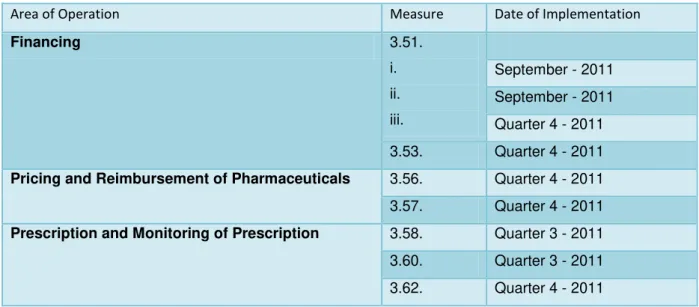
Table 4.3-1: Measures of the Memorandum of Understanding ...36
Table 5.2-1: Nonelderly Population with Selected Sources of Health Insurance Coverage, 2009 ...47
Table 5.3-1: Sources of Health Care Payments, 2012 ...50
Table 10-1: The health care system: historical background and recent reform trends – timeline ...88
List of Figures
Figure 2.1-1: Process of Investigation ...11Figure 3.1-1: Trends in healthcare expenditure as a share (%) of GDP in Portugal and selected countries, 1995-2008 ...16
Figure 3.1-2: Health Expenditure as a Share of GDP, OECD countries, 2010 ...16
Figure 3.1-3: Health Expenditure per capita, public and private expenditure, OECD countries, 2010 ...18
Figure 4.2-1 - Overview chart of the Portuguese Health System ...29
Figure 4.2-2: Main Organizational Chart of the Ministry of Health ...31
Figure 5.0-1: Health Insurance Coverage in the US, 2009 (Total = 303. million) ...39
Figure 5.0-2: Uninsured Rates among Nonelderly by State, 2008-2009 ...41
Figure 5.3-1: Percentage of All Firms Offering Health Benefits, 1999-2011 ...53
Figure 5.3-2: Average Annual Health Insurance Premiums and Worker Contributions for Family Coverage, 2005 vs. 2010 ...54
Figure 5.4-1: Health Insurance Coverage among the Nonelderly 2000-2010 ...57
Figure 5.4-2: Health Insurance Coverage Among Children, 2000-2010 ...58
Figure 5.4-3: US Unemployment Rate, 2000-2010 ...59
List of Abbreviations
Ac.: Acórdão (Judicial Decision)
ACA: Patient Protection andAffordable Care Act ACO: Accountable Care Organization
IX ADSE: Health subsystem for civil servants ARSs: Regional Health Departments Art.: Article
BBA: Balanced Budget Act
CBO: Congressional Budget Office
CHIP: Children’s Health Insurance Program CNS: National Health Council
CRP: Constitution of the Portuguese Republic – Constitutional Law DGS: Directorate-General for Health
DL: Decree-Law
DN: Despacho Normativo (Order implementing the Law)
EC: European Commission ECB: European Central Bank EPE: Entrepreneurial Public Entities ERS: Health Regulatory Agency EU: European Union
FFE: Federally Facilitated Exchange FPL: Federal Poverty Level
GDP: Gross Domestic Product
HHS: Department of Health and Human Services HMO: Health Maintenance Organization
IGAS: General-Inspectorate for Health IMF: International Monetary Fund
X
INFARMED: National Authority of Medicine and Health Products INSA: National Health Institute Dr. Ricardo Jorge
IOM: Institute of Medicine
IPST: The Portuguese Blood and Transplantation Institute IT: Information Technology
MMA: Medicare Prescription Drug, Improvement and Modernization Act MoU: Memorandum of Understanding
NHS: National Health Service OGE: General State Budget OOP: Out-of-pocket (Payments)
OPSS: Portuguese Observatory of Health Systems Port: Portaria (Implementing Order)
PPPs: Public-private Partnerships
PREMAC: Plan for the Reduction and Improvement of the Central Administration SG: General-Secretariat
SHOP: Small Business HealthOptions Programs
SICAD: Service for Intervention in Addictive Behavior and Dependencies SPMS: Central Purchasing Authority
ULS: Local Unit of Health US: United States
USF: Family Health Unit
1
1. Introduction
1.1
On the theme
The present work is a dissertation project within the VI Master Course in Health Care Management of the National School of Public Health of the New University of Lisbon.
Major changes are happening in the US health system and in the Portuguese health system. One to allow affordable healthcare to its citizens and the other to contain the rise of costs in healthcare. As an added incentive these shifts in healthcare are happening at the same time, which seems important when proposing some orientations. The Patient Protection and Affordable Care Act (ACA) contains methods for organizing and managing the financing of health care that could be useful to Portugal. Furthermore several of the changes proposed by the ACA are planned in the long-term which would allow a gradual assessment of the outcomes. An extra motivation for the elaboration of this work was the possibility of studying the ACA in the US enabling a closer look to this reform.
To understand why the study of this theme seems so propitious the following explanation of what is happening in both countries is important.
As it is well-known a financial crisis has swept the so called “western countries”. Portugal is one of the most affected European countries and so the need to implement new measures of financial nature in a variety of sectors is upon us, the healthcare sector being amongst them. However the healthcare sector is not a typical commercial sector, from a financial perspective, and some financial measures are going to be implemented along with measures of clinical governance.
Consequently in order to implement these measures new Laws need to be enacted and older ones need to be updated. The Law field is once again placed as a cornerstone of the healthcare sector.
As Faria and Lupi (2009) argue, Ethics and Law are simultaneously components of clinical governance and essential instruments for the accomplishment of its objectives. Without ethical principles and fundamental rights a Healthcare System cannot serve the patient, and good clinical governance cannot exist (Faria & Lupi, 2009).
2
understanding what their responsibilities, both individual and collective are. To do this, both the areas of Ethics and Law are crucial elements since they create bridges of integration between the individual and collective dimension, between the public and the private sector, also, between the health sector and the social sector, regulatory links that are extremely important for a good clinical governance (Faria & Lupi, 2009). To sum up the foregoing Law is essential in the making and maintenance of the health care sector.
Article 64 of the Portuguese Republic Constitution (CRP) states that “all citizens have the right to health protection and the duty to promote health and defend it” and this right is obtained through the existence of a universal National Health Service (NHS), approximately free-of-charge (the fees have raised in the last months) and taking into account the citizens’ social and economic conditions (Lei Constitucional nº 1/2005). Moreover the Portuguese Healthcare services have an historical Christian background based in the charity spirit of helping the poor, the sick and the handicapped (Faria, 2010).
Given these facts, the right to health protection is directly linked to the universal access of the healthcare services. The Portuguese NHS is, by all means, based on social justice and solidarity, being financed through direct and indirect taxes, coming from the General State Budget (OGE).
Unfortunately the financial crisis has affected Portugal deeply. Several sectors of the country struggle to maintain a financial equilibrium. A joint effort from a team of three different elements: the European Commission (EC); the European Central Bank (ECB) and the International Monetary Fund (IMF), also known as troika, and the XIX Portuguese Government elaborated a programme, were the goals are: “to restore competitiveness and to put Portugal’s economy back on the path of sustainable growth, sound public finances and job creation”. One of the documents present in this programme is the Memorandum of Understanding (MoU) which details the general economic policy conditions on granting Union financial assistance to Portugal (European Commission, 2011). Concerning the healthcare sector the MoU elaborated a series of measures in order to improve the efficiency and effectiveness of the health care system.
3
On the other side of the Atlantic, Barack Obama was elected President of the United States (US) in 2008 and with him the healthcare sector suffered a massive new reform embodied in ACA of March 2010. President Obamas’ agenda of implementing a new health reform started to be given a form by the escalating number of state laws to expand access to health insurance, control costs and monitor the quality of care (Mariner, 2007).
In the past, the American health system was based in the corporate welfare, meaning that the majority of American citizens with good jobs had good health plans and citizens with average jobs had average health plans. But as Faria (2004) noticed, by the year 2004, this system led to a situation where approximately 42.3 million American citizens didn’t have any health insurance which meant that except the cases of an emergency or lack of income (and the proof of it), all those citizens would have to pay from their own pockets their healthcare services and medicine (Faria, 2004). By the year 2010 the number of uninsured nonelderly American citizens was 49 million, so as we can see after 6 years the problem remains (Holahan & Chen, 2011).
Quoted by Rodwin (2011), in 2009 Himmelstein et al mentioned that, illness is a leading cause of personal bankruptcy, even for insured individuals (Rodwin, 2011).
Moreover several healthcare reforms where attempted in the US, but none has achieved what the ACA already did. And there is still more to come.
With the new reform, the ACA, President Barack Obama tries to fight the paper work and social injustice prevalent in the US healthcare system. The ACA intends to allow: a better health security using private and public health insurance companies; a lower cost in health care services; a greater responsibility for the insurance companies; more quality in healthcare; a possibility of choice regarding the insurance companies and a universal coverage.
However it is a well-known fact that the ACA will take years to be fully implemented. Some of the more prominent and complex regulations are still schedule to be written. The rule-making process stretches to 2018, and therefore it stays more susceptible to the intervention of the Congress or to regulatory shifts. In order to prevent this and to boost the popular support for the law, many attractive features of the reform have been implemented ahead of schedule (Kersh, 2011).
4
In 2011 Rodwin stated: “the US lacks the means to effectively control price increases and an oversupply of services”. Even worse, our medical economy is designed to generate expenditures. It rewards insurers, medical facilities, and providers for increasing their price, theirs costs, or the volume of services, without regard to the value to patients or society” (Rodwin, 2011).
The US health care system is heavily dependent on the private insurance companies. 15 to 20% of premiums are meant to administration and profit, which make the private insurance more expensive than the public insurance (Rodwin, 2011).
In 2004, it was projected that the US health spending would exceed the annual growth in GDP by two percentage points, and that by 2013 the total national health spending would absorb as much as 18.4 percent of the US GDP (Reinhardt, Hussey & Anderson, 2004). We are now in 2012 and the total national health spending is 17.9 percent (Martin et al, 2012). Especially in a country as the US which became mythical in the defense of its citizens rights and freedoms (Faria, 2004) it is very interesting to study the importance of the ACA and its impact in the years to come, such as to observe if this measures can make the US health care system similar to the one currently existent in Portugal. It is also important to assess to what extent the financial crisis is affecting Portugal, especially in the healthcare sector and how the new measures implemented in the NHS are going to change or not the access to medical care and universal coverage in the country.
With the rising of health expenditure in both Portugal and the US, measures to contain them are needed as it was already mentioned. Besides, financial conflicts of interest have the ability to distort the medical care practice, which is never a good thing, especially for the patients.
In the US with the rise of expenditures in health care, leading insurers and employers shift costs to policy holders, cutting benefits or raising premiums, deductibles, and co-payments, increasing the burden on individuals, and even private insurance with comprehensive benefits often limit the access and fail to provide economic security to its holders (Rodwin, 2011).
5
like the Exchanges and Wellness programs seem to have potential, especially in a health system with universal coverage like the Portuguese one.
It is true that both health system are distinct, with different backgrounds and with a different history but that does not invalidate that an opportunity for learning and improvement is at hand and that sometimes the best ideas come from the most unexpected places.
1.2
Objectives
In order to better understand both health systems and acquire the necessary answers for this research the following objective were established:
a. To describe the NHS and its main reforms until the present time;
b. To understand the need for the new healthcare management measures;
c. To study the ACA and its major impact in the healthcare coverage of the US population;
d. To describe how the former objective is going to affect the access to health care services and how the insurance companies are going to be involved in the new reform;
e. To refer the innovative legal instruments of the ACA;
f. To indicate possible orientations for the Portuguese health system.
In Portugal, the systemic fails in health management cannot be solemnly imputed to the health care sector. We need to comprehend that they are reflected by our degree of progress, our political system culture, and the quality of State institutions, science contribution, technology, learning systems, and finally the behavior of our own society (Observatório Português dos Sistemas de Saúde, 2010).
It is essential that the improvement of the Portuguese NHS sustainability which should always be a priority of the State never puts in risk the principle of the universality in the access to health care (Faria, 2004). This could be a very difficult dilemma to solve.
Also, in 2005, the 58th session of the World Health Assembly endorsed a resolution, urging
6
In truth different countries have different problems in the Healthcare System but the majority aims to a universal and sustainable health system. Having different backgrounds both Portugal and the US have difficult times ahead but maybe a platform for learning is at hand.
1.3
Work Structure
Bearing in mind the principal objective of this work - describing a breakthrough Law in healthcare access and proposing some orientations for the Portuguese health system - the present research is structured in the following chapters:
1. Introduction – in this chapter a brief summary of the subject studied is presented, as well as the reasons for conducting the study, its importance and its objectives. It also performs a brief description of the structure of the work.
2. Methodology – the second chapter is dedicated to the methodology chosen for this work, in this case the qualitative method. It contains the process of investigation, how the information was gathered and the limitations of the study.
3. Comparison of Health Expenditure – this chapter offers a comparison between the health expenditure of both countries. It shows the differences on how Portugal and the US spend their money in health and it gives a better understanding in the need for reforms in both health systems.
4. Introduction to the Portuguese Health System Legal Framework – in order to comprehend the need for the new healthcare measures imposed by troika, it is crucial to understand how the Portuguese health system came to be and how it is organized. This chapter allows a better understanding of the health system and its changes. 5. US Health Care Reform – this chapter presents the ACA, the new healthcare reform
of the US. It focuses on the private insurance companies and how they are being used to make health affordable to all citizens. It describes which measures are being applied in order to make universal coverage possible in the US health system. Public programs like Medicaid and Medicare are also covered. The innovative structures contained in the ACA, the wellness programs and the exchanges are described in this chapter. The Massachusetts Health reform law which served as a model for the ACA and may give some insight on what it is to come is briefly analyzed here.
7
chapter, as well as the innovative tools that could be applied in Portugal, the Exchanges and the Wellness Programs.
7. Conclusion – the last chapter brings closure to this work with a few thoughts and opinions regarding the changes that are happening in both health systems.
2. Methodology
“The scientific fact is conquered, constructed and established” by Gaston Bachelard (cit. Quivy & Campenhoudt, 2008)
The methodology of a science is the reflection of its own activity. It is not only meant to describe the methods used in science but also to understand them, i.e., its needs, its justification and its limits. The need and the justification of a method derive from the meaning, from the structural specificity of the object we plan on studying (Larenz, 1991). Bearing this in mind, the following chapter will be dedicated to the methodological choice for this research. The present work makes its analysis through the study of documents, texts and laws. This analysis is not compatible with the quantitative method since this method is extensive and it is based on the frequency of appearance of certain content characteristics or the correlation between them (Quivy & Campenhoudt, 2008).
The method of legal science could be a valid choice when studying the right to health care access, especially if a strictly legal approach is made.
Bearing this approach in mind, Cordeiro (1989) stated that considering a broader aspect, the Law is a way of solving concrete cases, which leads to its particular aptitude of adhering to reality. Throughout history it always looked for possible solutions. Furthermore in the XVII and XVIII centuries, the French doctrine tried to find a rational system that corresponded to the need of finding an order for learning and understanding the Law (Cordeiro, 1989).
Cordeiro (1989) also referred that with Savigny and the historical school of Law a purely juridical method was elaborated (Cordeiro, 1989). Furthermore any Law methodology is based on a theory of Law or at least implies it (Larenz, 1991). It should be also clear that the science of law is, first of all, the science of solving concrete cases: the renewal is assumed at the end of the century as a rethinking of dogmatic solutions (Cordeiro, 1989).
8
this methodology no longer seems suitable to realization of the present research work. Bearing the latter into consideration this methodology was not used.
There is no doubt that the qualitative method is the most suitable one to use in this research, since the former deals with policies and its consequences and tries to form theories regarding possible outcomes and solutions for the problems that are going to affect the Portuguese and the American health system.
According to Graça (2010) the qualitative method is an exploratory and descriptive research. The data are collected in the form of words, pictures and not numbers. The data to be presented and discussed are summarized in the form of quotes, interview transcripts, field notes, photographs, drawings, videos, life stories, narratives, etc…(Graça, 2010).
The research focus is given to the results as well as to the process. Inductive-deductive thinking is where the emphasis is placed when analyzing the data and finally, importance is given to the meaning, to the perspective of the actors in their context. To define the problem, the subject of the study means to answer and explain the questions the researcher has. That is, starting by asking: What? How? Why? Who? How much? How many? (Graça, 2010). Quivy and Campenhoudt (2008) refer to the qualitative method as extensive and based on the frequency of appearance of certain characteristics of contents or the correlation between them. Furthermore the analysis of this content focuses on messages as diverse as literary works, articles of journals, official documents, audiovisual programs, policy statements, minutes of meetings or reports.
Quivy and Campenhoudt consider this type of method especially suitable for:
a. Analysis of ideologies, systems of values, representations and aspirations and their transformations;
b. Examination of the logic of operations of the organizations because of the documents they produce;
c. The study of artistic and cultural productions;
d. Analysis of the processes of dissemination and socialization;
e. Analysis of strategies, of what is at stake, of interpretations, reactions; f. The reconstitution of past non-material realities: mentalities, sensibilities.
9
Also as Shortell (1999) mentioned regarding health services, qualitative research methods can play a major role in developing a science of “evidence-based implementation”. However the rapid pace of change occurring within the health care sector (changes as the new measures for the Portuguese NHS and the ACA in the US) make it increasingly difficult to use existing data sets to address the issues at hand, yet, the ongoing qualitative examination of these rapidly occurring changes offer a fruitful approach for shedding light on emerging forces (Shortell, 1999).
One important point noted on Shortells’ work in 1999 (which is still true in our time) is the fact that complex problems facing health systems throughout the world require multiple methods and approaches for their solution. The complexity of the theme chosen for this work embodies this concept furthermore the qualitative method is particularly appropriate when dealing with the ACA since at present relatively little is known regarding the effects that the reform is going to have in the US health system.
Foremost, the best qualitative research is systematic and rigorous and it seeks to reduce the bias and error, and to identify evidence that disconfirms initial or emergent hypotheses (Sofaer, 1999).
Sofaer (1999) referred that despite the qualitative method being more frequently used in theory development and refinement they can be used in testing theories. This method is also useful in constructing or developing theories or conceptual frameworks or, in other words, the making of hypotheses (Sofaer, 1999).
Indubitably one of the best advantages of the qualitative method is how it enhances the capacity not only to describe events but to understand how and why the “same” events are often interpreted in a different way by different stakeholders. Moreover when dealing with policy research in particular, this method has been used to document perspectives and interactions among multiple stakeholders which are of great value in studies of policymaking, policy implementation, and even of policy consequences (Sofaer, 1999).
The qualitative method has been frequently used for a long time in health services and health policy evaluation mainly because, as Sofaer (1999) states, one of its fundamental strengths is “their ability to explore meanings and, in particular, meanings ascribed to events and circumstances by actors rather than observers” (Sofaer, 1999).
10
2.1
The Process of Investigation
Kaplan (1969) mentioned that the methodology used in a research does not have the final product of the former one as its main objective but the entire process of its elaboration (cit. Graça, 2010).
In 1992 Granger argued that the classic definition of method allows us to better understand the strengths and the limitation of our own scientific process, i.e., the production of knowledge (cit. Graça, 2010):
a. “One method is to follow rules” (…);
b. “The method searches for the economy of forces” (…);
c. “The method preserves us from error (never assume what is false as truthful) or, more generally, of missteps” (…);
d. “The methodical action is exhaustive and cumulative: it allows for a steady growth in science if the goal is knowledge, or obtain partial results if the objective is different”. Nevertheless in order to do a research and although they are not strict, a series of procedures must be adopted by every researcher in any discipline. According to Quivy and Campenhoudt (2008) and referred by Graça (2010) there are seven steps divided by three acts in a process of investigation.
11
Figure 2.1-1: Process of Investigation
Source: Adapted from Graça, L. - Guião para o desenho de um projecto de investigação, 2010.
Concerning the three Acts is important to comprehend what each of them comprises:
1. Rupture: it is the first act of scientific procedure and is where the researcher ruptures with the prejudices and false evidence that give us the illusion of understanding; 2. Construction: the rupture can only take place if it is performed by an organized
conceptual system capable of expressing the logic behind the basis of the phenomenon. It is through this theory that the researcher can raise explanatory propositions of the phenomenon being study and predict which research plan he should use, which operations he should apply and which consequences he should expect at the end of the research;
3. Verification: a proposition can only be entitled to the scientific status insofar as it can be verified by the facts.
12
Similar to a work elaborated by Marques (2008) this research followed two criteria: it should incorporate legal issues related to health, mainly the health systems and the field of management also related to health.
This fundamental right is intimately related to the access to health care services. It notes that the primary duty of the State to ensure the right to health protection is ,as it is written in n.º3 a), “To guarantee access by every citizen, regardless of his economic situation, to preventive, curative and rehabilitative medical care” (Lei Constitucional nº 1/2005). Consequently the new measures proposed for the NHS (created by the Arnaut Law), are going to impact the access to health care in Portugal especially the ones that implement cost-containment in the Portuguese Health System.
It is in this context that a look to the new American Healthcare reform, the ACA, is taken. As President Obama has voiced the ACA stood for “the core principle that everybody should have some basic security when it comes to their health care”. And although the most visible goal of the ACA is to expand access to health benefit coverage (similar to our universal coverage) to the majority of the uninsured, underlying this goal is an equally important one: the bending of the cost curve or reducing the increase rate of health care expenditures which in the US is almost 18 percent of the GDP (Mariner, 2012b). Nevertheless and contrarily to the Portuguese health measures (which are planned in a short-term), the ACA does not directly regulate the cost of care. Many of its provisions are intended to develop new ways to slow down both the public and the private spending for health care (Mariner, 2012b).
Still, contrary to the Portuguese Health System, the Insurance Companies have long been, since the beginning of the health market, a major player or force in the US health system. And despite the new provisions of the ACA that greatly introduces major changes in the Insurance Companies, the latter are a well establish concept in the US health system.
Converging the changes made to both systems the starting question for this research takes form: Which changes is the ACA going to make to the US health system and can the Portuguese health system learn anything from it?
Of course secondary questions arise: What measures are being implemented in Portugal? How does, the Affordable Care Act, use private Insurance companies to cover everyone? Which legal instruments are truly innovative in the US health reform and what lessons can the Portuguese health system undertake?
13
written, two types of methods seem to arise as logical choices, the method of Legal Science and the qualitative method.
2.2
Particular Features of the Methodology
Having some background regarding the Portuguese NHS and its making and a very small knowledge about the US health system and how their juridical framework works, the qualitative approach was chosen for this research.
The need to ensure a greater identification with the object of the study and to deepen the knowledge and acquire information regarding the two health system left no other choice regarding the method moreover as Polit and Hungler (1993) referred, the qualitative analysis shows concern with the individual and its environment with all their complexities and allows the researcher to be free from any control or limitation concerning other methods. They considered qualitative analysis as holistic and naturalistic (Polit & Hungler, 1993).
As it was already remarked in order to produce a scientific research three essential approaches are needed: a descriptive or analytical approach; an historical or documentary approach and a causal or experimental one (Graça, 2010). However this is not a rigid process, the research does not need to apply all of the approaches during the research. It is possible to use only one, two or all of the approaches during the research.
During this investigation the researcher made particular use of the first two approaches, the descriptive and the documentary. Regarding the new measures for the Portuguese NHS and the new health reform in the US, the ACA, the descriptive approach was very useful and as Fortin (2000) affirmed: “from the description of the phenomenon and the identification of the several concepts inherent to it, a base could be established for the development of a theory or the formulation of hypotheses” (Fortin, 2000).
Moreover in order to understand how both health systems came to be, a critical interpretation of past or known facts was needed. The historical or documentary approach assumed that role.
14
As it was mentioned before, the data necessary for the elaboration of this research was obtained primarily through analysis of documents and literature reviews. Nevertheless regarding the US health system and their new reform, the ACA, the study was mainly made at a three months stay in the Department of Health Law, Bioethics and Human Rights of Boston University School of Public Health. The research in this Department was made possible by a Scholar Exchange Program, a collaboration program between the Department of Health Law, Bioethics and Human Rights of Boston University School of Public Law and the National School of Public Health of the New University of Lisbon.
The research on the US health system and the ACA at Boston University was conducted under supervision of Prof. Wendy Mariner. This allowed the researcher to have some guidance regarding the characteristics of this health system, by some of the vanguard of the Public Health sector in the US. Furthermore in order to comprehend the impact of the ACA in the US health system and its influence in the Insurance Companies the researcher attended some classes of Health Reform, Health Insurance and the Law taught by Professor Wendy Mariner.
In addition, the researcher, attended three seminars concerning the ACA, and was allowed to interact with the speakers, posing questions and deepening his knowledge about the American health system and the expected outcome of the ACA reforms.
The period spend at Boston University was very important, I may even say, crucial, since it allowed a better understanding of the US health system and how the ACA is going to affected it. Many of the documents studied were acquired first hand which permitted, almost, a daily update of what was happening in this field. Furthermore with the supervision of Prof. Wendy Mariner, any misconceptions or mistakes regarding the ACA were quickly corrected. The study of these documents permitted a better understanding of the right of access to health care, both in Portugal and the US, as well as insights into what changes are expected to occur in the near future.
2.3
Limitations of the Study
15
In the present work the first limitation felt by the researcher was his own lack of experience in the elaboration of this type of project. The quantity of references and documents needed for a research of this magnitude can be difficult to manage. Maintaining the focus on the objectives becomes a necessity for a successful research.
To go to the Department of Health Law, Bioethics and Human Rights of Boston University School of Public Health in order to acquire the expertise necessary to comprehend the US health system the researcher needed a visa so that he could enter in the USA. Since 2001, the US has imposed extensive and time-consuming requirements to obtain such a visa, which took up time that would otherwise have been devoted to research.
Perhaps the greatest obstacle or limitation of this research is the fact that both health systems are in flux. During the investigation there were some laws enacted and altered which rendered some earlier research and documents outdated. There was the need to keep the information gathered updated.
3. Comparison of Health Expenditure
The following chapter is fundamental in order to comprehend what is happening in Portugal, and in a way in the US. The imposed measures of the MoU are directly linked to the health expenditure; moreover, since both health systems are very distinct, a comparison between their expenditure with health may shed some light in what it is to come with the new reforms. There is no doubt that both in Portugal and the US the total health spending is rising, despite being different health systems with different backgrounds. Even regarding the average of OECD countries both Portugal and the US have unsustainable health expenditures as a share of the GDP.
Between 2000 and 2009 the Portuguese economy faced a period of very low and sometimes even negative growth. The NHS has not adopted any major reform since 1990 despite the growth in healthcare expenditure (Barros, Machado & Simões, 2011), and now Portugal is facing a tight calendar to implement measures in order to improve the efficiency of the NHS, many of them also aiming to control the spending in healthcare.
16
Figure 3.1-1: Trends in healthcare expenditure as a share (%) of GDP in Portugal and selected countries, 1995-2008
Source: WHO Regional Office for Europe, 2011
It is plain to see that Portugal had a rapidly growth in healthcare expenditures as a share of the GDP along the years.
Furthermore, the chart below shows the latest data available regarding healthcare expenditures as a share of GDP, as well as public and private spending, of both countries.
Figure 3.1-2: Health Expenditure as a Share of GDP, OECD countries, 2010
Note:1 In the Netherlands, it is not possible to distinguish clearly the public and private share for the part of health expenditure related to investments.
2 Total expenditure excluding investments.
17
Both Portugal and the US have a percentage of health expenditure as a share of the GDP above the average of the OECD countries.
The latest year available in Portugal is 2010, and our total health spending accounted for 10.7 percent of our GDP (OECD, 2012). The US are by far, the country that spends the most on health as a share of its economy, with 17.9 percent of its GDP allocated to health in 2010 (it is a little higher than the share from 2009 which was 17.6 percent) (Martin et al, 2012; Keehan et al, 2011). The total health spending in the US increased in real terms by 4.3 percent per year on average between 2000 and 2009 however this growth rate slowed significantly to 2.7 percent between 2009 and 2010(OECD, 2012).
Taking into account that the average for the OECD countries is 9.5 percent (OECD, 2012), these health expenditures should be targeted for cost-containment measures. Moreover having a share of GDP in health expenditure eight percent points higher than the OECD average (OECD, 2012) and being a country that does not possess a truly universal coverage, the US needs to tread carefully with the new health reform in order not to risk escalating health expenditure.
As Mushlin and Ghomrawi noted, changes in coverage and care delivery must in fact be guided by knowledge about what is valuable to preserve in the health care system (Mushlin & Ghomrawi, 2010). This is both valid in relation to the ACA and its goal of making health care affordable to all American citizens and the new measures proposed for the Portuguese NHS. Changes are being made in both systems. Even though coverage is not an issue in the Portuguese health system, mainly because article 64 of the CRP gives the citizens the right to health protection, alterations in care delivery should not be made blindly. The impact of changes needs to be thoroughly analyzed and predicted.
A further comparison of spending in health care between the two countries leads us to health expenditure per capita. Despite spending a high proportion of its GDP in health, Portugal spent only 2728 US dollars on health per capita in 2010. What is surprising about this is the fact that this value is a lower figure than the OECD average of 3268 US dollars in 2010. In other words Portugal has health expenditure as a share of the GDP higher than the average of the OECD countries and at the same time a lower spending per capita in health than the average of the OECD countries. With its unique health system, the US spent by far the most on health per capita in 2009. The average spending per capita on health in the US was 8233 US dollars (OECD, 2012).
18
Figure 3.1-3: Health Expenditure per capita, public and private expenditure, OECD countries, 2010
Note:1 In the Netherlands, it is not possible to distinguish clearly the public and private share for the part of health expenditure related to investments.
2 Total expenditure excluding investments.
Data are expressed in US dollars adjusted for purchasing power parities (PPPs), which provide a means of comparing spending between countries on a common base. PPPs are the rates of currency conversion that equalize the cost of a given ‘basket’ of goods and services in different countries.
Source: OECD 2012
It is important to note that in the majority of the OECD countries the public sector is the main source of health funding, with the exception of Chile, Mexico and of course, the US. By the year 2010, Portugal had 65.8 percent of health spending being funded by public sources, which is less than the OECD average of 72.2 percent (OECD, 2012). Regarding the data of 2011 there was a slight increase of health spending funded by public sources both in Portugal and the OECD countries (in Portugal the spending was 65.1 percent regarding the year 2008 and the OECD average 71.7 percent). Since in most countries health spending is largely financed out of taxes or social security contributions with private insurance and OOP payments playing a significant but secondary role it is normal for the public sector to be the major funder. The US is one of the few countries where less than 50 percent of health spending is publicly financed, 48.2 percent in 2010 to be precise. On the other hand, the overall level of health spending in the US is so high that public, i.e., the Federal Government, spending on health per capita is still greater than in almost all the countries of the OECD (OECD, 2012).
19
4. Introduction to the Portuguese Health System Legal
Framework
4.1
The Portuguese Health System
In 1976 the Portuguese Constitution was enacted, being amended for the last time in the year of 2005. In it was Article 64, the most important article regarding healthcare, which stated (Lei Constitucional nº 1/2005):
1. “Everyone shall possess the right to health protection and the duty to defend and promote health.
2. The right to health protection shall be fulfilled:
a) By means of a national health service that shall be universal and general and, with particular regard to the economic and social conditions of the citizens who use it, shall tend to be free of charge;
b) By creating economic, social, cultural and environmental conditions that particularly guarantee the protection of childhood, youth and old age; by systematically improving living and working conditions and also promoting physical fitness and sport at school and among the people; and by developing both the people’s health and hygiene education and healthy living practices. 3. In order to ensure enjoyment of the right to the protection of health, the state shall be
under a primary duty:
a) To guarantee access by every citizen, regardless of his economic situation, to preventive, curative and rehabilitative medical care;
b) To guarantee a rational and efficient nationwide coverage in terms of healthcare units and human resources;
c) To work towards the public funding of the costs of medical care and medicines;
d) To regulate and inspect corporate and private forms of medicine and articulate them with the national health service, in such a way as to ensure adequate standards of efficiency and quality in both public and private healthcare institutions;
e) To regulate and control the production, distribution, marketing, sale and use of chemical, biological and pharmaceutical products and other means of treatment and diagnosis;
20
4. The National Health Service shall possess a decentralized and participatory management system.”
The first two revisions to the Constitution, Constitutional Law 1/81 and Constitutional Law 1/89 added to article 64 the determination that “the management of the NHS should be decentralized and participated” and “considering the economic and social conditions of the citizens it should tend to be free of charge” (Campos, 2001).
Following Article 64 of the 1976 Democratic Constitution which enacted the “right to health protection”, the process of healthcare services restructure met its culmination with the creation of the NHS in 1979 by the Arnaut Law, Law 56/1979, of Sep. 15. This law defined the type of healthcare that the NHS would provide, how it should be structured, the personnel status, the funding and the articulation with the private sector (Barros, Machado & Simões, 2011; Campos, 2001).
The Arnaut Law established principles of centralized control but with a decentralized management. In order to achieve a decentralized management central, regional and local bodies were established (Barros, Machado e Simões, 2011). Still even after being progressively developed by other statutes between 1979 and 1982, the Arnaut Law, according to Campos (2001) was never fully implemented, especially regarding the structure of the central and regional services, the participation and the decentralization of the health system (Campos, 2001).
Despite the creation of the NHS, the legislation field of the Portuguese health system was and still is in a constant change (which is in fact, one of its main traits). Along the years, and as Faria (2010) mentioned, Portugal passed through different health policies phases that strongly influenced the structure of the health system (Faria, 2010).
The first phase, happened after the revolution, from 1976 to 1990, and the prevalent idea was to subordinate the private sector to a social medicine concept in order to make the NHS the only healthcare provider in the country. This concept was expressed in the original version of Article 64, without the two revisions made to the Constitution: Constitutional Law 1/81 and Constitutional Law 1/89, where it was said that the State should “orient its actions to the socialization of medicine” (Faria, 2010).
21
health care professionals and decentralized, this is, organized though the proximity to the population it serves (Barros, Machado & Simões, 2011; Faria, 2010).
As mentioned in the Acórdão Constitucional (Ac. – Judicial Decision) 39/84, of May 5, by creating the NHS, the Arnaut Law is considered an instrument to the achieving of the fundamental right to health protection, fulfilling also Article 2 of the CRP which states that (Acórdão n.º 39/84):
“The Portuguese Republic shall be a democratic state based on the rule of law, the sovereignty of the people, plural democratic expression and organization, respect for the guarantee of the effective implementation of fundamental rights and freedoms, and the separation and interdependence of powers, all with a view to achieving economic, social and cultural democracy and deepening participatory democracy.” (Lei Constitucional nº 1/2005).
In the mentioned Arnaut Law the Parliament defined the general basis for the juridical regime of the NHS, entrusting the Government to make the legal developments through its legislative powers by “Decree-Laws” (DL).
It is important to stress here that the right to health protection, such as the majority of social rights, has two distinct components (Acórdão n.º 39/84):
1. A “negative side”, by which citizens have the prerogative to demand that no one, not even the State, acts or makes any measure that violates the fundamental right (in this case the right to health protection);
2. A “positive side”, that consists in bestowing the citizen the right to demand from the State the installments and activities necessary to the healthcare protection.
Hence, the creation of the NHS by the Arnaut Law is an essential milestone in the legislative context regarding the right to health protection.
To sum up the foregoing, in 1979 the Portuguese health system had the following characteristics:
1. Legislation that would establish the right to health protection to all citizens; 2. A guaranteed right to universal coverage and free healthcare under the NHS;
3. Access through the NHS to all citizens independently of their economic or social background;
4. Integrated healthcare, including health promotion, disease surveillance and prevention;
22
Still within the first phase, in 1986, Portugal became a member of the former European Economic Community now known as European Union (EU), therefore becoming eligible for European funding for social and economic infrastructures development which include the healthcare sector. With this funding the NHS facilities were able to expand in a better and more sustained way (Faria, 2010).
After the Article 64 of the CRP and the Arnaut Law, the second phase in the legislation field went from 1990 to 2002 and was initiated with a big reform in the Portuguese health system, the approval of the Health Bases Law (LBS), Law 48/90 of August 24th (Faria, 2010). This
law altered the whole philosophy of the health system, the citizens were now considered primarily responsible for their own health, having the duty to promote and defend it (Campos, 2001).
The LBS served as a milestone in the shaping of the entire health sector in Portugal. It embodied the rights and duties of the citizens as users of the system, the organization of the main structure of the healthcare system; the main powers of the public entities in the health system; the responsibility of the State, etc. This Law was a major step in defining our present Health System not only as state responsibility but in involving the citizens and the private entities of the health sector.
Base I of the LBS has four general principles that demonstrate the responsibility of the State, the community and the citizens in the health protection, the delimitation of the health care provided by the State in light of the resources and financial capability, and finally, the definition of the range of action of private medicine in health care (Lei n.º 48/90):
1. “The Health protection right constitutes a right of the individuals and the community that is accomplishable by a conjoint responsibility from the State, society and citizens, with the freedom to search for health care as it is written in the law and Constitution; 2. The State promotes and assures health care access to all citizens according to the
technical, financial and human resources available;
3. The defense and promotion of public health is assured through the action of the State and other public entities. Civil society organizations are also able of being associated to this action;
4. Health care is provided by services and institutes of the State or, under its control, by public or private entities (social or profit aimed).”
23
i. The integration of the NHS in a real Health System context;
As mentioned above, the creation of the NHS was meant to subordinate the private sector to a social medicine concept, which led to a disregard of the existence of a very important private and social sector in the health framework. The LBS created for the first time in Law terms the concept of Health System. According to the Base XII of the law, besides Ministry of Health dependent public hospitals and health centers, i.e., the NHS, the private health care institutions that had contracts with the NHS were inserted in it (Faria, 2010; Lei nº 48/90).
ii.
The birth of private management in the public health sector;
This new law aimed to stimulate the Portuguese private health sector and mainly the private management of the NHS facilities (Faria, 2010). Besides the principle of entrepreneurial management of the health care units, innovating experiences of administration of services through management contracts were encouraged (Campos, 2001). The starting point for this was the hospital Fernando da Fonseca; a new 600 bed public hospital near Lisbon built by the State and opened in 1995, and with Portaria (Port) 27/95 under the management contract with a private consortium (Portaria n.º 27/1995).
Furthermore, in 1993, the DL 11/93 of January 15th was approved which establish the
separation between service and system. The NHS is a fundamental piece of the health system but it is not his exclusive piece in order to ensure the right to health protection. The health system is constituted by public agents but also by private agents (Campos, 2001). Article 28, n.º 1 e 2 of this DL also allowed the Ministry of Health through management contracts to authorize the delivery of management of Health care services and institutions of the NHS to public or private entities. However this was revoked by DL 185/2002 of August 20th (Decreto-Lei n.º 11/93; Decreto-Lei n.º 185/2002).
The third phase begins in the year 2002 with the first and only amendment to the Health Bases Law; Law 27/2002, of November 8th, and is still going on. This law permitted the
transformation of 34 public hospitals in 31 SA companies (Sociedades Anónimas – Joint Stock Companies) switching these institutions from the state administrative sector, with public statute and management, to the state entrepreneurial sector, private statute and management. Law 27/2002 of November 8th added a number 3 to Base XXXVI of the LBS
stating (Faria, 2010; Faria & Campos, 2003; Simões, 2004; Lei n.º 27/2002):
24
By January, 2003, approximately 30% of the Portuguese public hospitals, which corresponded to roughly 50% of the public sector bed capacity, were managed under a private legal framework. However, 2005 brought a new switch in the legal nature of hospitals. The DL 233/2005 of December 29th transformed the 31 SA hospitals into 31 “EPEs”
hospitals, i.e., Entrepreneurial Public Entities. The management of these hospitals was once again integrated in the public sector rules. The main reason for this change was the possibility of extinction of the SA hospitals by bankruptcy, according to Companies Commercial Code (Código das Sociedades Comerciais) (Faria, 2010; Rego & Nunes, 2009).Still one of the major changes to the transformation of the SA hospitals into EPE hospitals is the State Responsibility, i.e., change in the legal regime with the increase of the State amplitude as an instrument of economic intervention. The tutelage is exercised by the Ministers of Finance and Health just like in the SA hospitals (Observatório Português dos Sistemas de Saúde, 2005). Hospital Fernando Fonseca became an EPE by the year 2008 with DL 203/2008 of October 10th, leaving the private management and returning to State
control (Decreto-Lei n.º 203/2008).
Despite the health policy divergences that punctuated this period it has also been marked by the solidification of the entrepreneurial management scheme in public health units. As Faria (2010) referred this assertion may be seen in hospitals by the Public-Private Partnership (PPPs) initiative and the creation of the Family Health Units (USFs) in health centers (Faria, 2010).
i. The PPPs
Under the PPPs framework, private investment, public financing and private management, ten new public funded and owned hospitals were expected to be constructed in the next few years. The PPPs are defined by DL 86/2003 of April 26th, art. 2/1 as a Union of Contracts
25
However, lately, this initiative has been questioned since the costs of the PPPs have been too high to the public sector.
ii. The USFs
When they appeared, the Family Health Units represented the main innovation of the management of primary health care units making use a variety of market mechanism within the public sector. The USF possess a strong and close relationship with the local Health Centers and as primary health care units they mainly use contract based management tools to set a basic series of health services that should be accessible to all population (Faria, 2010).
It is important to stress that despite the LBS setting primary health care as a priority the Portuguese Healthcare System has been too Hospital centered. The USFs appeared as a breakthrough in the primary care public sector strategies and an embodiment of the new implemented policies that aim to reduce Hospital over-utilization, rationing the use of resources and create incentives for citizens to have a family doctor, offering a range of basic health care services in close proximity to the population. Their management model introduced a new dynamic in the health care system because it reinforced the shared responsibility between health care professionals to comply with the performance agreements. In the past, health centers were mainly focused in the physician’s responsibility and the management was not based on the performance levels (Faria, 2010).
With the MoU the number of USFs contracting with regional authorities is going to increase in order to have a more effective provision of primary health care and a reduction of its costs (European Commission, 2011).
So as it is noticed by Barros and Simões (2007), between 2002 and 2005 the NHS due to its interaction between the public sector and the private sector, and its integration of the primary, secondary and long-term care became a mixed system (Barros & Simões, 2007). From 2005 to 2009 the Portuguese Health Policy aimed to combine the universal coverage provided by the NHS and the promotion of effectiveness and efficiency (Barros, Machado & Simões, 2011). Furthermore one of the priorities for the health system in the National Health Plan of 2004-2010 was providing the citizen a timely quality service (improvement of access), with effectiveness, humanity and with sustainable costs over time (Ministério da Saúde, 2004).
Overall, at the end of the first decade of the 21st century the major challenges faced by
26
a. The rising of health expenditures and difficulties in cost-containment;
b. The continuous impact of technology and innovation in medical practice on the growth of expenditures;
c. The increasing role of IT in health promotion and health care delivery in order to make them effective tools in bringing health care services in remote locations closer to the population;
d. An ageing population associated to a pressure in continuous and long-term care; e. Difficulty in reducing mortality due to life style related diseases and traffic accidents. With the need to face all these challenges and with the financial crisis affecting Portugal we may be on the break of a new phase. A phase initiated with troikas’ imposed measures for the healthcare sector.
In 2011, April 7th Portugal requested financial assistance which was endorsed by the
European Commission on 10 of May 2011. This endorsement was negotiated between the Portuguese authorities and officials with troika and resulted in a programme of economic adjustment for the period between 2011 and 2014. Portugal will receive up to EUR 78 billion in loans and in return will implement measures to promote growth and jobs, fiscal measures to reduce the public debt and deficit, and measures that will ensure the financial sector stability (European Commission, 2011).
As document of the economic adjustment programme, MoU, also had measures for the healthcare sector. The goal of these measures is to improve efficiency and effectiveness of the health care system.
Furthermore and as it is written in the Despacho Normativo (DN) 10783 – A/2011 of August 31th, the MoU signed by the Portuguese Government with the IMF, EC, and the ECB predicts
a more strict control on the debt level of the State business sector to which belongs the health Entrepreneurial Public Entities (EPE), i.e. the majority of Portuguese hospitals. Many of the most important measures focus in the hospital services area (Despacho n.º 10783-A/2011).
27
Besides what is stated in the 2012 Performance Plan, the DN 10783 – A/2011 emitted by the Ministries of Finance and Health, signed 30 of August 2011 (Diário da República, 31 of August 2011) refers as aim for the year 2012 the reduction of the operational cost of Hospitals, Hospital centers and local units of health (ULS), all of them integrated in the State Entrepreneurial sector. The goal is a fixed value of 11% inferior to that of the year of 2011 (Despacho n.º 10783-A/2011).
For the aforementioned reasons, the constant changes of government and the need to comply with Troika measures (which will be addressed further on) it seems that the reforms in health tend to bet more on an entrepreneurial management of Hospitals where there is an evident reduction of direct State involvement in planning, managing and providing health care.
4.2
An Overlapping System
After comprehending the legal framework that embodied the creation of the Portuguese Health System an overview of the organizational aspect of the system is important to understand how new policies and measures are implemented.
According to Barros, Machado and Simões (2011) the current Portuguese Healthcare System is characterized by three coexisting and overlapping systems:
a. The (universal) NHS;
b. The “healthcare subsystems”, i.e. public and private insurance schemes pertaining to certain professions (e.g. civil servants; bankers; judges);
c. And private voluntary health insurance (VHI).
Taking into account the LBS of 1990, the NHS already covers every Portuguese citizen, however the healthcare subsystems and the VHI have gradually position themselves as complementary insurance regarding the NHS. The cases of people with double coverage have been multiplying. Currently, approximately 25 percent of the population has a healthcare subsystem and 10 to 20 percent have a VHI (some citizens have both). In 2008 the number of citizens with a VHI was two million (Ministério da Saúde. CSFSNS, 2007; Barros, Machado & Simões, 2011; Deloitte, 2011).
28
leads to the higher costs with health being supported by the public system (Barros, Machado & Simões, 2011; Deloitte, 2011). Furthermore the healthcare subsystems functions just like a regular health system with a considerable number of citizens benefiting from protection mechanisms when in need of medical attention (in addition to the protection provided by the NHS). According to Campos (2007) the healthcare subsystems introduce an inequitable factor in the Portuguese Health System. Citizens with double coverage have privilege access to healthcare services and differential public financing from various sources (for example transfers for the ADSE through the Ministry of Finance) which should not exist in a universal and general NHS (Ministério da Saúde. CSFSNS, 2007).
Regarding the VHI market in Portugal, it is a fairly recent as it came to existence in the early nineties offering a limited amount of products in terms of coverage and benefits offered. The insurance sector defines itself as complementary and supplementary to the Portuguese NHS (Ministério da Saúde. CSFSNS, 2007). This market is also growing in Portugal, according to Barros, Machado and Simões (2011) in the year 2008 the growth of the health insurance sector was 9.6 percent which was higher than the 8.2 percent growth rate of the year 2007. The justification for this growth was the increase in group insurance (Barros, Machado & Simões, 2011).
It was already referred that Health care in Portugal is mainly financed by public funds. This assumes a bigger role when taking into account healthcare subsystems and VHI because their activity is relevant for the financing of the Portuguese Health System creating stimuli to the provision of public and private healthcare services (Faria, 2010; Ministério da Saúde. CSFSNS, 2007).
29
Figure 4.2-1 - Overview chart of the Portuguese Health System
SOURCE: From Simões, J.A. - Portugal : Health system review, 2011 pp. 16
Barros, Machado and Simões (2011) argued that the healthcare delivery system in Portugal consists in a network of public and private health care providers connected in its own way to the Ministry of Health and to the patients. In addition they can have different agreements regarding the financial aspect, ranging from historically based budgets to purely prospective payments. Baroos, Machado and Simões (2011) also mentioned that the Out-of-pocket (OOP) payments assume a significant portion of the financial flows of the system (Barros, Machado & Simões, 2011).
Also the Portuguese State has a multiple role in the governance of healthcare. It assumes the role of supervisor, regulator, payer and shareholder making it hard to ensure an optimum performance in all of the functions and creating conflicts of interest and a lack of transparency (Deloitte, 2011).