ISSN 1553-6203
© 2012 Science Publications
Corresponding Author: Anjana D., Research and Development, Laila Pharmaceuticals Pvt. Ltd., Chennai, Tamilnadu, India 41
Development of Curcumin
Based Ophthalmic Formulation
1
Anjana, D.,
1K. Anitha Nair,
1N. Somashekara,
1
M.
Venkata,
1R. Sripathy,
2Rajesh Yelucheri,
3
H. Parmar,
3R. Upadhyay,
4S. Rama Verma and
1C.N. Ramchand
1
Research and Development, Laila Pharmaceuticals Pvt. Ltd., Chennai, Tamilnadu, India
2
Research and Development,
Laila Impex-R and D Centre, Vijayawada andhra Pradesh, India
3
P.D. Patel Institute of Applied Sciences, Charotar University of Science and Technology,
Anand, Gujarat, India
4
Department of Biotechnology, Indian Institute of Technology-Madras, Chennai, India
Abstract: Problem statement: Ophthalmic drug delivery system has been a major challenge due to the distinctive and unique anatomy of the eye. The use of phytochemicals for the application in ocular disease has not been investigated much, due to poor pharmacokinetics of phytochemical and hence poor therapeutic efficacy. Approach: Curcumin is one such phytochemical known for its medicinal properties, but its usage has been limited due to its poor bioavailability. Therapeutic ocular application of curcumin for indications such as allergic conjunctivitis and use of nanotechnology based delivery system for increasing its bioavailability haven’t been explored much. Thus the objective of current study was to develop a nanoemulsification based formulation for curcumin with enhanced bioavailability and efficacy for ophthalmic therapeutic application. Different surfactants and oils were screened based on its ability to solubilize hydrophobic curcumin for developing formulation. Ultrasonication was used for dispersion of curcumin in surfactants and nanoemulsification. Charecterization of the selected formulation was done based on particle size, Transmission Electron Microscope (TEM) and Scanning Electron Microscope (SEM) analysis and tested for different physiochemcial properties. Results: A novel formulation was developed through nanoemulsification technology by ultrasonication using carefully selected nonionic surafactants. Acconon and Tween 80 were chosen after thorough screening studies. The ratio of curcumin: Acconon: Tween80: water (0.12:1:7:1) was found to be optimum for the formulation. Particle size analysis showed that the nano droplets are in the range of 8-22 nm. Further the TEM and SEM studies also confirmed that the nanodroplets are in spherical shape. Formulation was found to be stable as ascertained by phase separation and observational studies. Conclusion: The studies ensured the stability and formation of characteristic nanodroplets with curcumin entrapment as a result of the developed formulation. The so developed formulation is expected to have higher ophthalmic bioavailability, which further needs to be confirmed through in vitro and in vivo studies.
Key words: Critical Micellar Concentration (CMC), Hydrophilic Lipophilic Balance (HLB), HLB values, Drug delivery, anatomical factors, ophthalmic drug, medicinal properties, ophthalmic therapeutic, nanoemusified formulation
INTRODUCTION
Drug delivery to the eye is hampered by anatomical factors, including the corneal epithelium, the blood-aqueous barrier and the blood-retinal barrier (Gaudana
et al., 2010). Approximately 1% or less of an applied dose will be absorbed across the cornea to reach anterior segment tissues of the eye. An instilled
aqueous solution will be eliminated from the precorneal area within 90 sec. Hence, designing a drug delivery system to target a particular tissue of the eye has become a major challenge for scientists in the field (Vincent et al., 1986; Abu-Al-Basalc, 2009).
commonly called diferuloyl methane, is a hydrophobic polyphenol derived from the rhizome (turmeric) of the herb Curcuma longa. It has been used traditionally for many ailments because of its wide spectrum of pharmacological activities. The biological and medicinal properties of curcumin have been well documented. It has been shown to have antioxidant, anti inflammatory, antimicrobial, anti-allergic, anticarcinogenic activities (Shishodia et al., 2007; Anand et al., 2008) anti tumor activities (Saeed et al., 2010), anti vira activities (Saeed et al., 2010). However, the main difficulty of translating these beneficial effects of curcumin to human medicinal purposes is its bioavailability (Anand et al., 2007). Formulations of diverse types were employed to increase the aqueous solubility of curcumin thereby improving its bioavailability and pharmacokinetic properties.Addition of piperine (Shoba et al., 1998), microemulsions (Cuia
et al., 2009; Shaikha et al., 2009), nanotechnological processes like nanoemulsions (Wang et al., 2008) and liposomes (Chena et al., 2009) are few such examples. Nanotechnology based formulations are gaining popularity as they are found to be effective in delivering the drug and among these nano-emulsion technology has been the well accepted technology used for improving the pharmacokinetic profile of the poorly bioavailable drugs. Though the use of plant/ plant extracts for novel delivery systems have been tried (Nagi et al., 2010), there use in ophthalmic application has been few and far between.
Nanoemulsion is one of the most promising drug delivery system, which is being applied to enhance the oral bioavailability of the poorly soluble drugs. Nanoemulsions are thermodynamically stable, transparent (or translucent); Dispersions of oil and water stabilized by an interfacial film of surfactant molecules having the droplet size less than 100 nm. The nanosized droplets influence the transport properties of the drug, which is an important factor in sustained and targeted drug delivery (Constantinides, 1995).
However, nanoemulsions also have their problems with regard to stability. The most common ones are creaming, flocculation and coalescence. Emulsions in general can be defined as dispersions of one liquid (internal phase) into another (the continuous or external phase), both liquids being mutually immiscible. Here the continuous phase plays a fundamental role in the preparation, stabilization and characteristics of emulsions (Rodriguez-Abreu and Lazzari, 2008). Flocculation describes the process by which the dispersed phase comes out of suspension in flakes.
Coalescence is another form of instability, which describes when small droplets combine to form progressively larger ones. Emulsions can also undergo creaming, the migration of one of the substances to the top (or the bottom, depending on the relative densities of the two phases). A more common term associated with the instability of nanoemulsions is the Ostwald’s ripening. It is an observed phenomenon in solid solutions or liquid sols which describes the change of an inhomogeneous structure over time. In other words, over time, small crystals or sol particles dissolve and redeposit onto larger crystals or sol particles (McNaught and Wilkinson, 1997). This is due to the thermodynamically-driven spontaneous process occurs because larger particles are more energetically favored than smaller particles (Ratke and Voorhees, 2002). This stems from the fact that molecules on the surface of a particle are energetically less stable than the ones in the interior. The aim of current study was to develop a nanoemulsion based formulation of curcumin with enhanced stability, bioavailability and efficacy for different ophthalmic therapeutic application.
MATERIALS AND METHODS
Materials: Curcumin (95%) was obtained from Laila Impex, Tween 80 (Merck), PEG 400 (Loba), Soyabean oil (Ruchi soya foods), Olive oil (Bilginogla), Castor oil (Indian Pharmaceutics), Almond oil (Queens), Virgin coconut oil (Pastorinha), Peanut oil, Coconut oil, Sunflower oil and Sesame oil were obtained from the products available in the market. Acconon MC 8/2, Captex Capmul PG 12 Capmul PG 8 were got from Abitech. MilliQ water was used for all the analysis. The solvents used for HPLC analysis namely, methanol and acetonitrile were of HPLC grade and obtained from Merck; Orthophosphoric acid (Merck) and MilliQ were also used.
Selection of surfactant and oils: Selection of oils and surfactants were done by literature review based on CMC and HLB value. The various ingredients short listed were optimized as mentioned in Table 1
Screening of oils and surfactants: Solubility test for curcumin in different surfactants and oils was done using ultrasonication. Surfactants and oils were individually tested for its ability to solubilize maximum amount of curcumin upon sonication for 30 min using probe sonicator (VibraCell). The conditions for sonication were constantly set as follows:
Energy: 20 Khz Pulser: 5 sec Amplitude: 30% Temperature: 4°C
43 The samples were cooled intermittently, to maintain the temperature. The sonication was carried out till a clear solution was obtained. The maximum solubility of curcumin in each surfactant and oil was determined by adding increased amount of curcumin gradually into oil/surfactant and sonicating to obtain the clear solution. The surfactant with maximum curcumin solubility and stability were selected for the development of formulation.
Excipient compatibility test: The oil/surfactant which showed the maximum solubility was taken and their compatibility was checked by mixing two surfactants at selected ratios. This was followed by centrifugation at 3000 rpm for 10 min and visual observation for phase separation. Highly compatible surfactant combinations (without phase separation) were selected for nanoemulsion preparation as mentioned in Table 2.
Preparation of formulation: The method of ultrasonic disintegration was used for dissolving curcumin in the selected surfactants and oils. Desired concentration of curcumin and surfactants were weighed and taken in a beaker. The curcumin was mixed with the surfactants to form a uniform mixture using a glass rod. This was sonicated with the desired sonicator conditions as mentioned above. Sonication was carried out with intermittent cooling until a clear solution was obtained without any undissolved particulate matters. Water was added to this clear solution and was sonicated again for 2 min to get a clear and uniform nanoemulsion.
Parameters such as water content and the effect of surfactant on the stability of the formulation were studied. Ratio of curcumin, surfactants and water for the preparation of ideal, stable and clear nanoemulsion were also optimized. The sample which was stable for more than 30 days was taken for further characterization.
Phase separation study: The prepared formulation was centrifuged at 3500 rpm for 30 min and checked for phase separation by visual observation.
Analysis of curcumin percentage in formulation by
High Performance Liquid Chromatography
(HPLC): The HPLC (Shimadzu, Japan) with C-18 column (250 mm length, 4.6 mm diameter) was used for the estimation and analysis of curcumin in the formulation. The HPLC conditions used were as follows, Mobile phase 52 (0.1% phosphoric acid): 48 (Acetonitrile), Flow rate of 1mL min−1 and detector was set at 424 nm. 20 µL of sample was injected for every run. The preparations of samples were done briefly as below: Accurately weighed 30 mg of curcumin
formulation was taken and made up to 50 mL using methanol. Different concentrations of standard and samples were prepared. All samples were filtered through 0.2 filters (Rankem). A standard graph was obtained for both standard curcumin solution and nanoemulsion of curcumin.
Refractive index : Refractive index of the
nanoemulsion formulation was determined using a refract meter (Metler) according to the manual provided with the instrument.
Particle size analysis: The mean diameters of nanoemulsions were measured using a 90 plus particle size analyzer (Brookhaven Instrument Corporation). The nanoemulsion samples were checked with and without dilution on an average of 5 runs for each sample. Samples were diluted up to 50 times. All the samples were filtered through 0.2 filter before analysis.
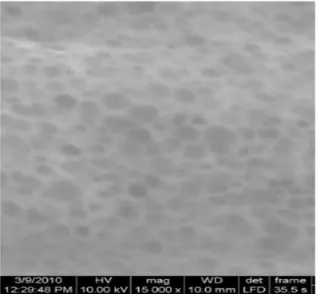
Morphological analysis by SEM: The formulation was lyophilized for SEM analysis. The method was adapted with brief changes from the method proposed by Li et al. (2008). 1 mL of the samples was taken and 0.2g of sucrose and lactose was added. The samples were taken in duplicates. The samples were frozen at -80°C for 12 h and then transferred to the freeze dryer (Virtis). The samples were kept for lyophilization for 72 h with the condenser temperature at -53°C. These were then transferred to -80°C again till the day of analysis. On the day of analysis, the samples were then vacuum dried using a dessicator with anhydrous calcium chloride as the dessicant for a period of 2 h to remove moisture. The samples were analyzed in FEI Quanta FEG 200-High Resolution Scanning Microscope.
Morphological analysis by TEM: The morphology and structure of the nanoemulsion were studied using TEM. A combination of bright-field imaging at increasing magnification and off diffraction mode was used to determine the form and size of the emulsion. To perform the TEM observations, the nano-emulsion formulation was diluted with water (1/100). A drop of the diluted nano-emulsion was directly deposited on the film grid and observed after drying.
RESULTS
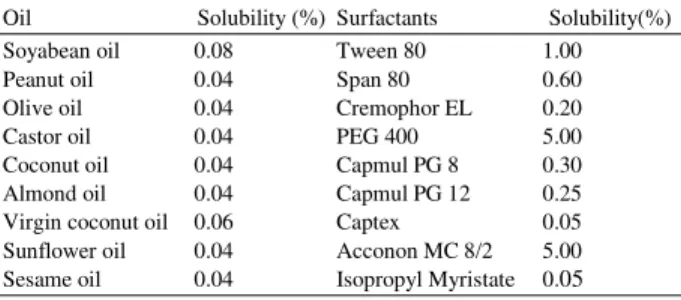
Selection of oils and surfactants: As shown in Table 1, curcumin was sparingly soluble in oil and hence the surfactants in which it had shown maximum solubility were taken for further analysis, namely: Tween80, PEG400 and Acconon. All three are non ionic surfactants and are proven to be safe for pharmaceutical applications. Also, the HLB values of Tween 80, PEG400 and Acconon MC8-2 is: 15, 13.1 and 14 respectively. For the formation of oil in water nanoemulsions, the optimum HLB value should be above 10 (Kommuru et al., 2001). The solubility of curcumin in oils was found to be extremely sparse. Its solubility in surfactants seemed to be much better. The results are given in Table 1 and 2. Compared to oil, surfactants showed better curcumin solubility. Acconon, Tween 80 and PEG 400 were taken for further studies as the solubility was highest (5, 1 and 5% respectively) in these surfactants. Also, the compatibility between the three surfactants was seen to be optimum as observed from Table 2.
Preparation of nanoemulsion based formulation:
The stability and efficacy of curcumin in the formulation is affected by the system’s compositions and their physicochemical characteristics (Lopes-Montilla et al., 2002). This shall be achieved by right blend of low and high Hydrophilic Lipophilic Balance (HLB) surfactants leading to the formation of a stable nanoemulsion formulation (Craig et al., 1995).
The preparation of nanoemulsion was done by using ultrasonication method. Curcumin was dissolved in the surfactants or combination of surfactants using ultrasonic disintegration. The dissolved emulsion was then transferred to the aqueous phase, wherein due to the concept of Critical Micellar Concentration (CMC), nanodroplets are expected to be formed in the aqueous phase. This solution was observed for stability. Water was added as an additional ingredient during the process of ultrasonication as it was observed that the addition of water resulted in less precipitation of curcumin.
Table 2 and 3 lists the details of different formulations studied during formulation development and its stability. Precipitation was observed in all the formulation’s with PEG400 may be due to self aggregation of micelles. Among all different formulations tested, the combination of curcumin, acconon, tween80 and water in the ration of 0.12:1:7:1 was found to be stable at 0.06% concentration under the
conditions studied. At higher concentration’s like 0.09 and 0.12% precipitation was seen to occur within 24-48 h and hence the concentration of the final formulation was set at 0.06%. The surfactant HLB value of the selected T14 formulation was calculated to be 11.2, optimum for the formation of o/w nanoemulsions. As this formulation was comparatively stable for longer period and possesses ideal HLB range for o/w nanoemulsion formation, this was further taken up for the characterization studies (Table 4-6).
Phase separation study: The T14 formulation was found to be stable without any phase separation, after centrifugation at 3500 rpm for 30 min. The sample was kept for observation at room temperature for any precipitation or phase separation and was found to be stable and clear after 30 days at a concentration of 0.06% of curcumin.
Table 1:Solubility of curcumin in oils and SurfactantsSolubility
Oil Solubility (%) Surfactants Solubility(%) Soyabean oil 0.08 Tween 80 1.00 Peanut oil 0.04 Span 80 0.60 Olive oil 0.04 Cremophor EL 0.20 Castor oil 0.04 PEG 400 5.00 Coconut oil 0.04 Capmul PG 8 0.30 Almond oil 0.04 Capmul PG 12 0.25 Virgin coconut oil 0.06 Captex 0.05 Sunflower oil 0.04 Acconon MC 8/2 5.00 Sesame oil 0.04 Isopropyl Myristate 0.05
Table 2: Compatibility studies
Acconon: Acconon: Tween80:
Surfactant Tween80 PEG400 PEG 400
Compatibility (1:1) + + +
Table 3: Composition of formulation in different trials (g m sec)
--- Trail no. Curcumin PEG 400 Tween 80 Acconon Water Total
T1 1.330 25.00 23.60 0 0.00 49.930
T2 1.455 24.27 24.27 0 0.00 49.995
T3 1.200 20.00 20.00 0 10.00 51.200
T4 0.030 0.50 0.50 0 48.97 50.000
T5 1.200 10.00 10.00 0 30.00 51.200
T6 1.200 17.50 17.50 0 15.00 51.200
T7 1.200 15.00 15.00 0 30.00 51.200
T8 1.200 50.00 0.00 0 0.00 51.200
T9 1.200 0.00 50.00 0 0.00 51.200
T10 1.200 0.00 36.00 4 4.00 45.200
T11 1.600 0.00 36.00 4 4.00 45.600
T12 1.200 0.00 36.00 12 12.00 61.200
T13 0.500 0.00 4.00 20 4.00 28.500
T14 0.500 0.00 28.00 4 4.00 36.500
T15 0.700 0.00 28.00 4 4.00 36.700
45
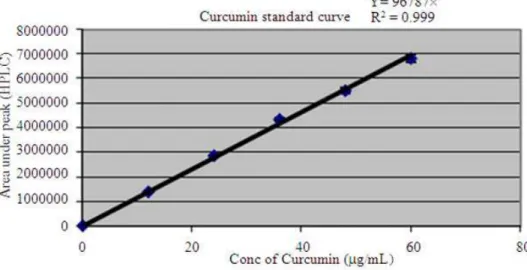
Fig. 1: Standard Graph of curcumin estimated using HPLC
Table 4: Other pharmaceutically approved excipients
Ingredients Concentration per mg100 mL
Benzalkonium chloride 20.0
EDTA 100.0
Borax 23.3
Sodium chloride 795.0
HPMC 100.0
Table 5: Observational Analysis of nanoemulsions for stability
Trial Observation
T1 Stable for 15 days
T2 Precipitation seen after 12 h
T3 Precipitation seen after 12 h
T4 Immediate turbidity after preparing the formulation
T5 Immediate turbidity
T6 Immediate turbidity
T7 Immediate turbidity
T8 Immediate turbidity
T9 Precipitation observed after 48 h
T10 Slight precipitation observed after 48 h
T11 Slight precipitation observed after 12 h
T12 Slight precipitation observed after 12 h
T13 Stable for 2 weeks
T14 Stable for more than a month
T15 Slight precipitation observed after 12 h
T16 Slight precipitation observed after 12 h
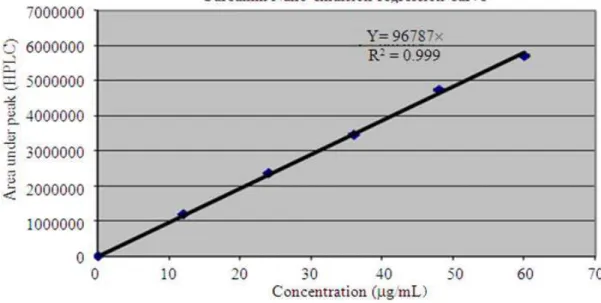
Analysis of curcumin concentration in T14 formulation: The T14 formulation, being more stable was analyzed for curcumin concentration using a standard in house HPLC method. The curcumin standard curve had a R2 = 0.997. Similar graph was plotted for curcumin present in nanoemulsion and it had a R2 = 0.999 (Fig. 1 and 2). Compared to the standard, curcumin concentration in the nanoemulsion was found to be between 78 and 82%. The difference in the concentration of curcumin in the formulation was due process loss during formulation.
Refractive index: Refractive index is the net value of the components of nanoemulsion and indicates the isotropic nature of the formulation. Refractive index of tear fluid is 1.340-1.360. It is recommended that eye drops should have refractive index values not higher than 1.47. Also, Refractive index measurements detect possible impairment of vision or discomfort to the patient after administration of eyedrops. The refractive index of T14 was found to be 1.3384 at 28°C.
Particle size analysis: The Particle size of the formulation was determined after filtering the samples through 0.2 filter. The mean droplet size was found to be around 22 nm with a polydispersity index of 0.108 for undiluted samples and 0.167 for diluted samples indicating good uniformity amongst the samples. However after dilution with distilled water (1:2), it was found that the mean particle size was 9.8 nm. The Baseline index (B. I) was seen to be 100% for this trial. The B.I is relative to the accuracy of the data and hence it can be ascertained that the average particle size could be around 9.8 nm, an ideal particle size for the delivery of drugs (Fig. 3 and 4).
Fig. 2: Standard Graph of curcumin formulation estimated using HPLC
47 Table 6: High performance liquid chromatography results
Corcumin standard analysis Formulation analysis
--- ---
Conc ( g) /20 L Avg. area S.D Conc ( g) /20 L Avg. Area S.D
0.24 1382321 32644 0.24 1195390 10184
0.48 2858443 67192 0.48 2370770 14506
0.72 4342752 76240 0.72 3464345 21346
0.96 5516905 126970 0.96 4744276 30287
1.2 6831885 165235 1.20 5714498 28695
Fig. 4: Particle size of Formulation T14 (Diluted)
Fig. 5: Scanning electron micrograph representation of curcumin formulation
Fig. 6: Transmission electron micrograph representation of curcumin formulation
according to the relation: η=σ/γ. T14 formulation was determined to have a viscosity of 1.67cps.
Morphological study by TEM: The morphology of T14 formulation was observed under TEM and the particle size of the nanodroplets were found to be in the range of nanometers. Also, the shape of the nanodroplets was found to be spherical (Fig. 6). These particles were randomly dispersed and distributed without any agglomeration, thorough out the field as observed under TEM.
DISCUSSION
The important criterion for selection of materials for any nanoemulsion formulation development is that the components are pharmaceutically acceptable for ophthalmic application, nonirritant and no sensitizing to the skin and fall under the Generally Regarded as Safe (GRAS) category. Surfactants can be broadly defined as surface active agents, amphiphilic in nature and have the property of reducing the surface tension of the liquid. Also, the hydrophile-lipophile balance, commonly called HLB values has to be considered for selection of surfactants for formulating an aqueous ophthalmic solution. Non-ionic surfactants are less toxic than ionic surfactants. The higher solubility of the drug in the oil phase is important for the nanoemulsion to maintain the drug in solubilized form. The right blend of low and high Hydrophilic Lipophilic Balance (HLB) surfactants leads to the formation of a stable formulation. The current formulation has been arrived at with a suitable HLB complex of surfactants.
An another important concept in the formation of micellar particles is the spontaneous emulsification based on the Critical Micellar Concentration (CMC). This can be defined as the concentration of surfactants above which micelles are spontaneously formed. Upon introduction of surfactants into an aqueous system they will initially partition into the interface, reducing the system free energy by lowering the energy of the interface and by removing the hydrophobic parts of the surfactant from contacts with water. Subsequently, when the surface coverage by the surfactants increases and the surface tension decreases, the surfactants start aggregating into micelles. This decreases the system's free energy by decreasing the contact area of hydrophobic parts of the surfactant with water. Upon reaching CMC, any further addition of surfactants will just increase the number of micelles (in the ideal case) (Leibler et al., 1983). Based on these, pharmaceutically approved inactive ingredients for the ocular
formulation, were selected with an aim to maintain the physiological balance of the eye.
For an opthalmic formulation, certain physiochemical properties ply a significant role like viscocity and refractive index. Since the refractive index measurements falls well within the optimal range of eye drops refractive index, the current formulation shall well be considered for the ophthalmic application. It has been assumed that ophthalmic instillation of a formulation should influence the normal behavior of tears as little as possible. Systems with low viscosity allow good tolerance with little blinking pain. In contrast, systems with enhanced viscosity, although less tolerant, induce an increase in ocular contact time by reducing the drainage rate and, as a consequence, improve bioavailability .Viscosity of eye drops is required to be not higher than 20.0 cps (Ammar et al., 2009).
The particle size and morphology of the formulation consistently exhibits the presence of nanosized micellar particles. Considering all the above mentioned factors, the current forumulation will be an ideal application of curcumin for ophthalmic purposes. Further investigations though are required for testing the extent of efficacy.
CONCLUSION
49
REFERENCES
Abu-Al-Basalc, M.A., 2009. In vitro and in vivo anti-microbial effects of Nigella sativa Linn. Seed extracts against clinical isolates from skin wound infections. Am. J. Applied Sci., 6: 1440-1447. DOI: 10.3844/ajassp.2009.1440.1447 Ammar, H.O., H.A. Salama, M. Ghorab and A.A.
Mahmoud, 2009. Nanoemulsion as a potential ophthalmic delivery system for dorzolamide hydrochloride. AAPS. Pharm. Sci. Tech., 10: 808-819 DOI: 10.1208/s12249-009-9268-4
Anand, P., A.B. Kunnumakkara, R.A. Newman and B.B. Aggarwal, 2007. Bioavailability of curcumin: Problems and promises. Mol. Pharm., 4: 807-818. DOI: 10.1021/mp700113r
Anand, P., S.G. Thomas, A.B. Kunnumakkara, C. Sundaram and K.B. Harikumar et al., 2008. Biological activities of curcumin and its analogues (Congeners) made by man and mother nature. Biochem. Pharmacol., 76: 1590-1611. PMID: 18775680
Chena, C., T.D. Johnstona, H. Jeona, R. Gedalya and P.P. McHugha et al., 2009. An in vitro study of liposomal curcumin: Stability, toxicity and biological activity in human lymphocytes and Epstein-Barr virus-transformed human B-cells. Int. J. Pharm., 366: 133-139. DOI: 10.1016/J.IJPHARM.2008.09.009
Constantinides, P.P., 1995. Lipid microemulsions for improving drug dissolution and oral absorption: Physical and biopharmaceutical aspects. Pharm.
Res., 12: 1561-1572. DOI:
10.1023/A:1016268311867
Craig, D.Q.M., S.A. Barker, D. Banning and S.W. Booth, 1995. An investigation into the mechanisms of self-emulsification using particle size analysis and low frequency dielectric spectroscopy. Int. J. Pharm., 114: 103-110. DOI: 10.1016/0378-5173(94)00222-Q
Cuia, J., B. Yuc, Y. Zhaoe, W. Zhua and H. Li et al., 2009. Enhancement of oral absorption of curcumin by self-microemulsifying drug delivery systems. Int. J. Pharmaceutics, 371: 148-155. DOI: 10.1016/J.IJPHARM.2008.12.009
Gaudana, R., H.K. Ananthula, A. Parenky and A.K. Mitra, 2010. Ocular drug delivery. AAPS. J., 12: 348-360. PMID: 20437123
Kommuru, T.R., B. Gurley, M.A. Khan and I.K. Reddy, 2001. Self-Emulsifying Drug Delivery Systems (SEDDS) of coenzyme Q10: Formulation development and bioavailability assessment. Int. J. Pharm., 212: 233-246. DOI: 10.1016/S0378-5173(00)00614-1
Leibler, L., H. Orland and J.C. Wheeler, 1983. Theory of critical micelle concentration for solutions of block copolymers. J. Chem. Phys., 79: 3550-3557. DOI: 10.1063/1.446209
Li, T., T. Wang, H.B. He, X. Tang, 2008. The properties of bufadienolides-loaded nano-emulsion and submicro-emulsion during lyophilization. Int. J. Pharm., 349: 291-299. DOI: 10.1016/j.ijpharm.2007.08.011
Lopes-Montilla, J.C. and P.E.S. Herrera-Morales and D.O. Pandey, 2002. Spontaneous emulsification: Mechanisms, physicochemical aspects, modeling and applications. J. Dispers. Sci. Technol., 23: 219-268. DOI: 10.1080/01932690208984202 McNaught, A.D. and A. Wilkinson, 1997. Compendium
of Chemical Terminology: IUPAC Recommendations. 2nd Edn. Blackwell Science, Oxford, ISBN-10:0865426848, pp: 450.
Ratke, L. and P.W. Voorhees, 2002. Growth and Coarsening: Ostwald Ripening in Material Processing. 1st Edn., Springer, ISBN-10: 3540425632, pp: 295.
Rodriguez-Abreu, C. and M. Lazzari, 2008. Emulsions with structured continuous phases. Curr. Opinion Coll. Interface Sci., 13: 198-205. DOI: 10.1016/j.cocis.2007.09.004
Saeed, B.A., K.Y. Saour, R.S. Elias, N.A. Al-Masoudi and P.L. Cola, 2010a. Antitumor and quantitative structure activity relationship study for dihydropyridones derived from curcumin. Am. J. Immunol., 6: 7-10. DOI:10.3844/ajisp.2010.7.10 Shaikha, J., D.D. Ankolab, V. Beniwal, D. Singh and
M.N.V.R. Kumarb, 2009. Nanoparticle encapsulation improves oral bioavailability of curcumin by at least 9-fold when compared to curcumin administered with piperine as absorption enhancer, Eur. J. Pharmac. Sci., 37: 223-230. DOI: 10.1016/j.ejps.2009.02.019
Shishodia, S., M.M. Chaturvedi and B.B. Aggarwal, 2007. Role of curcumin in cancer therapy. Curr. Problems Cancer, 31: 243-305. DOI: 10.1016/j.currproblcancer.2007.04.001
Shoba, G., D. Joy, T. Joseph, M. Majeed and R. Rajendran et al., 1998. Influence of piperine on the pharmacokinetics of curcumin in animals and human volunteers. Planta. Med., 64: 353-356. DOI: 10.1055/s-2006-957450
Vincent, H., L. LEE and J.R. Robinson, 1986. Topical ocular drug delivery: Recent developments and future challenges. J. Ocular Pharmacol. Therapeutics, 2: 67-108. PMID: 3332284
Wang, X., Y. Jiang, Y. Wang, M. Huang and C. Ho et al., 2008. Enhancing anti-inflammation activity of curcumin through O/W nanoemulsions. Food
Chem., 108: 419-424. DOI: