Comparative Genomics and Drug Resistance of a
Geographic Variant of ST239 Methicillin-Resistant
Staphylococcus aureus
Emerged in Russia
Tatsuo Yamamoto1*, Tomomi Takano1, Wataru Higuchi1, Yasuhisa Iwao1, Olga Singur1,2, Ivan Reva1, Yuta Otsuka3, Toru Nakayashiki3, Hirotada Mori3, Galina Reva2, Vladimir Kuznetsov2, Vladimir Potapov2 1Division of Bacteriology, Department of Infectious Disease Control and International Medicine, Niigata University Graduate School of Medical and Dental Sciences, Niigata, Japan,2Vladivostok State Medical University, Vladivostok, Russia,3Graduate School of Biological Sciences, Nara Institute of Science and Technology, Nara, Japan
Abstract
Two distinct classes of methicillin-resistantStaphylococcus aureus(MRSA) are spreading in hospitals (as hospital-acquired MRSA, HA-MRSA) and in the community (as community-acquired MRSA, CA-MRSA). Multilocus sequence type (ST) 239 MRSA, one of the most worldwide-disseminated lineages, has been noted as a representative HA-MRSA. Here, we isolated ST239 MRSA (spatype 3 [t037] and staphylococcal cassette chromosomemec[SCCmec] type III.1.1.1) and its novel variant with ST239/spa351 (t030)/SCCmecIII.1.1.4 (SCCmecIIIR) not only from hospitals but also from patients with urethritis in the community in Russia. The Russian variant (strain 16K) possessed a hybrid genome consisting of CC8 and CC30, similar to the
ST239/spa3/SCCmecIII.1.1.1 HA-MRSA (TW20) genome, but with marked diversity. The 16K9CC30 section had SCCmecIIIR
carrying the dcs-carrying unit (which corresponded to the SCCmecIVc J3 joining region of ST30 CA-MRSA), lacked
SCCmercury, and possessed a novel mobile element structure (MES16K) carrying the ccrC-carrying unit (with the
recombinase geneccrC1allele 3) and drug resistance tranposons. The Russian variant included strains with a high ability to transfer its multiple drug resistance by conjugation; e.g., for strain 16K, the transfer frequency of a chloramphenicol resistance plasmid (p16K-1 with 2.9 kb in size) reached 1.461022, followed by Tn554conjugative transfer at 3.66l024. The Russian variant, which has been increasing recently, included divergent strains with different plasmid patterns and pulsed field gel electrophoresis profiles. The data demonstrate the alternative nature of ST239 MRSA as CA-MRSA and also as a drug resistance disseminator, and its micro but dynamic evolution in Russia.
Citation:Yamamoto T, Takano T, Higuchi W, Iwao Y, Singur O, et al. (2012) Comparative Genomics and Drug Resistance of a Geographic Variant of ST239 Methicillin-ResistantStaphylococcus aureusEmerged in Russia. PLoS ONE 7(1): e29187. doi:10.1371/journal.pone.0029187
Editor:Sebastien Gagneux, Swiss Tropical and Public Health Institute, Switzerland
ReceivedNovember 4, 2010;AcceptedNovember 22, 2011;PublishedJanuary 19, 2012
Copyright:ß2012 Yamamoto et al. This is an open-access article distributed under the terms of the Creative Commons Attribution License, which permits unrestricted use, distribution, and reproduction in any medium, provided the original author and source are credited.
Funding:This study was supported, in part, by a grant from Heiwa Nakajima Foundation, Japan. The funder had no role in study design, data collection and analysis, decision to publish, or preparation of the manuscript.
Competing Interests:The authors have declared that no competing interests exist.
* E-mail: [email protected]
Introduction
Methicillin-resistantStaphylococcus aureus(MRSA) was isolated in the early 1960s and has continued to be a life-threatening multiple drug-resistant bacterium in hospitals [1,2]. MRSA is generated from methicillin-susceptibleS. aureus(MSSA) by the acquisition of staphylococcal cassette chromosomemec(SCCmec) at the 39end of
orfX(SCCmecinsertion site,att) [3]. It is considered that this has occurred only a limited number of times, resulting in the current epidemics in hospital settings [3–5].
Of these clones, ST239 MRSA is one of the most worldwide-disseminated lineages [4,6], and is evolutionarily of interest, because it is the first example of a bacterial hybrid, consisting of two distinct MRSA belonging to clonal complex (CC) 30 (founder, ST30) and CC8 (founder, ST8) [7,8]. The ST239 MRSA lineage exhibits marked geographic variations [6] in terms of the protein A gene (spa) type, SCCmec type III structures, and pulsed-field gel electrophoresis (PFGE) patterns. Many terms have been used to accommodate this variation [4], e.g., Brazilian clone [9], Portuguese clone [10,11], Hungarian clone [12–14], Viennese clone [15], and British EMRSA-1, -4, and -11 clones [16,17].
Of those, the Brazilian clone (first ST239 MRSA) spread among hospitals in Brazil in 1992 [18], and then caused intercontinental spread to hospitals in Portugal, possibly linked to Brazil-to-Portugal migration of human populations since 1992–1993 [11,19]. The Hungarian clone emerged in hospitals in Hungary in 1993, became predominant in hospitals until 1998, and then almost disappeared in 2003–2004 from Hungary [12–14]; however, there is no single reference addressing the molecular typing or characteristics of MRSA strains (Hungarian clone) isolated in Hungary. SCCmec types were SCCmecIIIA for the Brazilian clone (e.g., strain HU25) while SCCmecIII for the Hungarian clone (e.g., strain HU106) [19].
Moreover, the ST239 TW clone (strain TW20) was noted as intensive care unit (ICU)-associated MRSA in London between 2002 and 2004 [20], and the complete genome of TW20 was described [8]. Harris et al. [6] have recently described the comparative genomics of globally-collected ST239 strains using Illumina genome analysis and the TW20 genome as a reference, demonstrating the global geographic structure within ST239 MRSA, based on genome-wide single nucleotide polymorohisms (SNPs). The ST239 lineage consisted of more than five MRSA
clades reflecting the continental origin, such as Asia, North America, South America, Europe (with marked divergence), and Australia, albeit with some intercontinental transmission cases. According to the study of Harris et al. [6], TW20 clustered within the Thai clade (most probably suggesting transmission from southeast Asia to London), the Brazilian clone (e.g., strain HU25) clustered within the South America clade, and Hungarian isolates (during 1993–1996) exhibited divergent European phylogeny in SNPs.
In the community, another class of MRSA, called community-acquired MRSA (CA-MRSA), emerged during the period from 1997 to 1999 [2,21,22]. CA-MRSA includes clones belonging to (e.g.) ST8 (USA300), ST30, and ST80 [2,22,23]. CA-MRSA generally exhibits SCCmecIV or V, a narrow range of drug resistance, and mecA-mediated low-level resistance to b-lactam agents (oxacillin and imipenem) [1,2,22–24].
The term, hospital-acquired MRSA (HA-MRSA), which includes MRSA isolated in the nosocomial environment, has been used since the description of CA-MRSA. In this study, we isolated MRSA, including ST239 MRSA, from patients in hospitals and also from patients with nongonococcal urethritis in the community in Russia, and examined the molecular characteristics of these MRSA strains. We also investigated the comparative genomics of an ST239 variant (strain 16K) with unique features in terms of evolution and drug resistance using the TW20 genome as a reference.
Materials and Methods Patients and bacterial strains
Thirteen outpatients were enrolled in this study, all of whom were male outpatients (age range, 19–40 years; mean age, 29 years) of two hospitals in Vladivostok, Russia, through the period from 2006 to 2008. All outpatients had discharge (pus) from the urethra, discomfort inside the urethra, and discomfort while passing urine. Examination of swabs (discharge) from the urethra revealed the presence of polymorphonuclear neutrophils and MRSA in all cases; no other pathogens, such asNeisseria gonorrhea,
Chlamydia, Ureaplasma, Mycoplasma, Candia, Trichomonasand
STD-associated viruses, were detected; therefore, outpatients were diagnosed with nongonococcal urethritis due to MRSA. No nosocomial or familial transmissions were observed. The 13 MRSA (including strain 16K) were epidemiologically diagnosed as CA-MRSA; in this study, CA-MRSA was defined as MRSA isolated from outpatients who had no history of hospitalization within at least the past year and presented with no other established risk factors for MRSA infections, such as surgery, residence in a long-term care facility, dialysis, or indwelling percutaneous medical devices and catheters; and HA-MRSA was defined as MRSA isolated from inpatients 48 h after hospitaliza-tion [2,22].
In this study, 18 HA-MRSA strains, isolated from inpatients (age, 34–71 years; mean age, 51.8 years) in four hospitals in Vladivostok between 2004 and 2008, were also examined; they were isolated from surgical wound infections, pneumonia, and blood stream infection (including sepsis). Five HA-MRSA strains were isolated from inpatients (age, 3–64 years; mean age, 26.6 years) in two hospitals in Vladivostok in 2011 from surgical wound infections and burn infections. This study was complied with the ethics review board Niigata University School of Medicine, Niigata, Japan. Written informed consent was obtained from patients.
The epidemic HA-MRSA-type strains included ANS46 (refer-ence strain isolated in 1982 in Australia; ST239/SCCmecIII),
HU25 (Brazilian clone; ST239/SCCmecIIIA), BK2464 (New York/Japan clone; ST5/SCCmecII), BM18 (Pediatric clone; ST5/SCCmecIVa), HDE288 (Pediatric clone; ST5/SCCmecVI), HAR22 (EMRSA-15 clone; ST22/SCCmecIV), HAR24 (EMRSA-16 clone; ST36/SCCmecII), HAR38 (Berlin clone; ST45/SCCmecIVa), HPV107 (Iberian clone; ST247/SCCmecIA), and COL (Archaic clone; ST250/SCCmecI); they were kindly provided by H. de Lencastre. CA-MRSA strain NN1 (ST30/ SCCmecIVc), which was positive for the collagen adhesin gene (cna), was isolated from a child with bullous impetigo in the community [25,26].
Genotyping and virulence gene analysis
MRSA typing was performed as described previously [27]. The
spa type was analyzed by PCR using reference strains, and determined using public spa type databases, eGenomics (http:// tools.egenomics.com/) or Ridom SpaServer (http://spaserver. ridom.de/). Typing ofagrwas carried out by PCR with previously reported primers [28,29] or by sequencing the variable region [30]. SCCmectypes (I to V) were analyzed by PCR using reference strains [31,32]. The subtypes of SCCmecIII were described expressing the differences in the J1, J2, and J3 joining regions, according to the guidelines described in 2009 [33]. For virulence gene analysis, the target genes included 46 genes; 3 leukocidin genes (lukPVSF, lukE-lukD, andlukM), 5 hemolysin genes (hla,hlb,
hlg,hlg-v, andhld), 18 staphylococcal enterotoxin (SE) genes (tst,sea,
seb,sec,sed,see,seg,seh,sei,sej,sek,sel,sem,sen,seo,sep,seq, andser), 1 putative staphylococcal enterotoxin gene (seu), 3 exfoliative toxin genes (eta, etb, and etd), an exotoxin-like gene cluster (set), the epidermal cell differentiation inhibitor gene (edin), and 14 adhesin genes (icaA,icaD,eno,fib,fnbA,fnbB,ebpS,clfA,clfB,sdrC,sdrD,sdrE,
cna, andbbp) [27].
PFGE analysis
Bacterial DNA was digested with SmaI and the digested DNA was applied to PFGE (1.2% agarose), as described previously [34]. A lambda ladder (Bio-Rad Laboratories, Tokyo, Japan) was used as the molecular size standard.
Plasmid analysis
Plasmid DNA of MRSA strains was prepared using a Plasmid Midi Kit (QIAGEN Sciences, Tokyo). Plasmid DNA was introduced into MRSA by electroporation using a Gene Pulser II electroporator (Bio-Rad).
Conjugative transfer
Donor strains were mated with S. aureus RN2677 (recipient strain, which is restriction-negative and resistant to rifampicin and novobiocin) on membrane filters on tryptic soy agar (Difco, Sparks, MD, USA) (filter mating), as previously described [25]; RN2677 was used as a recipient because it carried no plasmids and had non-transmissible drug resistance (recipient) markers. In some experiments, donor and recipient cultures were mixed at 1:2, centrifuged, and spotted on tryptic soy agar without filters (non-filter mating). Alternatively, donor and recipient cultures were mixed in tryptic soy broth (Difco) (liquid mating). The resistance genes of donor strains and transconjugants were examined by PCR as previously described [27].
Susceptibility testing
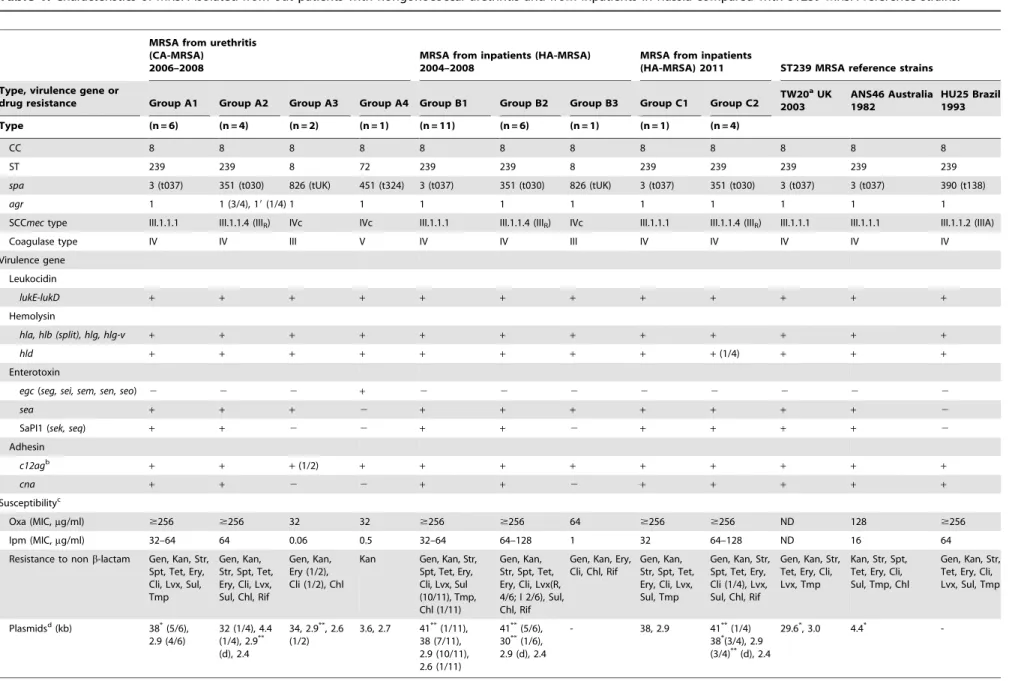
Table 1.Characteristics of MRSA isolated from out patients with nongonococcal urethritis and from inpatients in Russia compared with ST239 MRSA reference strains.
MRSA from urethritis (CA-MRSA)
2006–2008
MRSA from inpatients (HA-MRSA) 2004–2008
MRSA from inpatients
(HA-MRSA) 2011 ST239 MRSA reference strains
Type, virulence gene or
drug resistance Group A1 Group A2 Group A3 Group A4 Group B1 Group B2 Group B3 Group C1 Group C2 TW20
aUK
2003
ANS46 Australia 1982
HU25 Brazil 1993
Type (n = 6) (n = 4) (n = 2) (n = 1) (n = 11) (n = 6) (n = 1) (n = 1) (n = 4)
CC 8 8 8 8 8 8 8 8 8 8 8 8
ST 239 239 8 72 239 239 8 239 239 239 239 239
spa 3 (t037) 351 (t030) 826 (tUK) 451 (t324) 3 (t037) 351 (t030) 826 (tUK) 3 (t037) 351 (t030) 3 (t037) 3 (t037) 390 (t138)
agr 1 1 (3/4), 19(1/4) 1 1 1 1 1 1 1 1 1 1
SCCmectype III.1.1.1 III.1.1.4 (IIIR) IVc IVc III.1.1.1 III.1.1.4 (IIIR) IVc III.1.1.1 III.1.1.4 (IIIR) III.1.1.1 III.1.1.1 III.1.1.2 (IIIA)
Coagulase type IV IV III V IV IV III IV IV IV IV IV
Virulence gene
Leukocidin
lukE-lukD + + + + + + + + + + + +
Hemolysin
hla, hlb (split), hlg, hlg-v + + + + + + + + + + + +
hld + + + + + + + + +(1/4) + + +
Enterotoxin
egc(seg, sei, sem, sen, seo) 2 2 2 + 2 2 2 2 2 2 2 2
sea + + + 2 + + + + + + + 2
SaPI1 (sek, seq) + + 2 2 + + 2 + + + + 2
Adhesin
c12agb
+ + +(1/2) + + + + + + + + +
cna + + 2 2 + + 2 + + + + +
Susceptibilityc
Oxa (MIC,mg/ml) $256 $256 32 32 $256 $256 64 $256 $256 ND 128 $256
Ipm (MIC,mg/ml) 32–64 64 0.06 0.5 32–64 64–128 1 32 64–128 ND 16 64
Resistance to nonb-lactam Gen, Kan, Str, Spt, Tet, Ery, Cli, Lvx, Sul, Tmp
Gen, Kan, Str, Spt, Tet, Ery, Cli, Lvx, Sul, Chl, Rif
Gen, Kan, Ery (1/2), Cli (1/2), Chl
Kan Gen, Kan, Str,
Spt, Tet, Ery, Cli, Lvx, Sul (10/11), Tmp, Chl (1/11)
Gen, Kan, Str, Spt, Tet, Ery, Cli, Lvx(R, 4/6; I 2/6), Sul, Chl, Rif
Gen, Kan, Ery, Cli, Chl, Rif
Gen, Kan, Str, Spt, Tet, Ery, Cli, Lvx, Sul, Tmp
Gen, Kan, Str, Spt, Tet, Ery, Cli (1/4), Lvx, Sul, Chl, Rif
Gen, Kan, Str, Tet, Ery, Cli, Lvx, Tmp
Kan, Str, Spt, Tet, Ery, Cli, Sul, Tmp, Chl
Gen, Kan, Str, Tet, Ery, Cli, Lvx, Sul, Tmp
Plasmidsd(kb) 38*(5/6),
2.9 (4/6)
32 (1/4), 4.4 (1/4), 2.9**
(d), 2.4
34, 2.9**, 2.6
(1/2)
3.6, 2.7 41**(1/11),
38 (7/11), 2.9 (10/11), 2.6 (1/11)
41**(5/6),
30**(1/6),
2.9 (d), 2.4
- 38, 2.9 41**(1/4)
38*(3/4), 2.9
(3/4)**(d), 2.4
29.6*, 3.0 4.4*
-Genome
and
Resistance
of
Russian
ST239
MRSA
PLoS
ONE
|
www.plos
one.org
3
January
2012
|
Volume
7
|
Issue
1
|
Genome analysis
The MRSA 16K genome was analyzed by pyrosequencing using a genome sequencer FLX system with the assembler software GSDe Novo Assembler version 2.0 (Roche Diagnostics, Branford, CT, USA); pyrosequencing analysis yields contigs of larger sizes than Illumina genome analysis. In this study, 274,241 reads yielded 111 Mb raw sequences, corresponding to approx-imately 37-fold of the genome size; GenBank accession numbers for the 16K genome (107 contigs with $20 bp in size) are BABZ01000001-BABZ01000107. Constructed contigs were mapped on the 3,043,210-bp complete TW20 genome [GenBank accession number FN433596; 6] using MUMmer software
MRSA groups A2, B2, and C2 represent the Russian variant of ST239 MRSA. aThe d ata of TW20 are from G enBank accession numbers FN433596, FN433597, and FN433598. A 29.6-kb plasmid (pTW20_1) is a heavy metal resistance plasmid [8]. bc12ag ,core 12 adhesin genes shared b y all (or most) strains: icaA , icaD (for b iofilm formation); eno (for laminin-adhesin); fnbA , fnbB (for fibronectin-adhesin) ; ebpS (for e lastin-adhesin); clfA , clfB , fib , sdrC , sdrD , sdrE (for fibrinogen). cOxa, oxacillin; Imp, imipenem; Gen, gentamicin; K an, kanamycin; Str, streptomycin; Spt, spectinomycin; Ery, erythromycin; C li, clindamycin; T et , tetracycline; Lvx, levofloxacin; Sul, sulfamethoxazole; Tmp, trimethoprim; Chl, chloramphenicol; Rif, rifampicin. M ICs o f rifampicin: 256 m g/ml for groups A2, B2, and C2; 8 m g/ml for group B3. ND, not determined. dResistance plasmids w ere examined by conjugation and electroporation. *, plasmid encoding for cadmium resistance; **, plasmid encoding for chloramphenicol resistance. In group A2, strain 49K carried 3 2-kb and 4 .4-kb plasmids in addition to 2.9-kb and 2.4-kb plasmids. (2 ), no plasmid. doi:10.1371/journal.pone. 0029187.t001 Table 1. Cont.
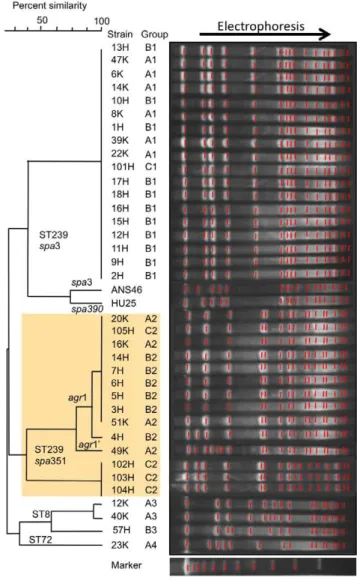
Figure 1. PFGE patterns of MRSA isolated from outpatients with nongonococcal urethritis and from inpatients in Russia compared with ST239 reference strains.MRSA groups (A1–A4, B1– B3, and C1 and C2) are described in Table 1. The Russian variant of ST239 MRSA (groups A2, B2, and C2) is marked with shading (yellow). Strains 6K to 51K (n = 13) are isolated from outpatients during 2006– 2008: (group A1) 6K, 8K, 14K, 22K, 39K, 47K; (group A2) 16K, 20K, 49K, 51K; (group A3) 12K and 40K; (group A4) 23K. Strains 1H to 18H (n = 18) are isolates from inpatients during 2004–2008: (group B1) 1H, 2H, 8H, 9H, 11H, 12H, 13H, 15H, 16H, 17H, 18H; (group B2) 3H, 4H, 5H, 6H, 7H, 14H; (group B3) 10H. Strains 101H to 105H (n = 5) are isolates from inpatients in 2011: (group C1) 101H; (group C2) 102H, 103H, 104H, 105H.
(http://mummer.sourceforge.net/). The gene or open reading frame (orf) was searched for using the software in silico MolecularCloning (version 4.2) (In Silico Biology, Yokohama, Japan).
Phylogenetic and homology analysis
Phylogenetic tree analysis was performed using TreeViewX software (version 0.5.0) (http://taxonomy.zoology.gla.ac.uk/rod/ treeview.html). The bootstrap value (1000) represents the accuracy of a branch in the phylogenetic tree (analysis was repeated 1,000 times). Homology analysis was performed using the software
BLAST (http://blast.ddbj.nig.ac.jp/top-e.html) and FASTA (http://fasta.ddbj.nig.ac.jp/top-j.html).
Results
Characteristics of MRSA from outpatients with urethritis in the community
Data are summarized in Table 1 and Figure 1. Thirteen MRSA strains were classified into four groups (A1 to A4) (Table 1). Group A1 (n = 6) exhibited ST239/spa3/SCCmecIII.1.1.1 and shared the same genotype with ST239 reference strains, TW20 and ANS46,
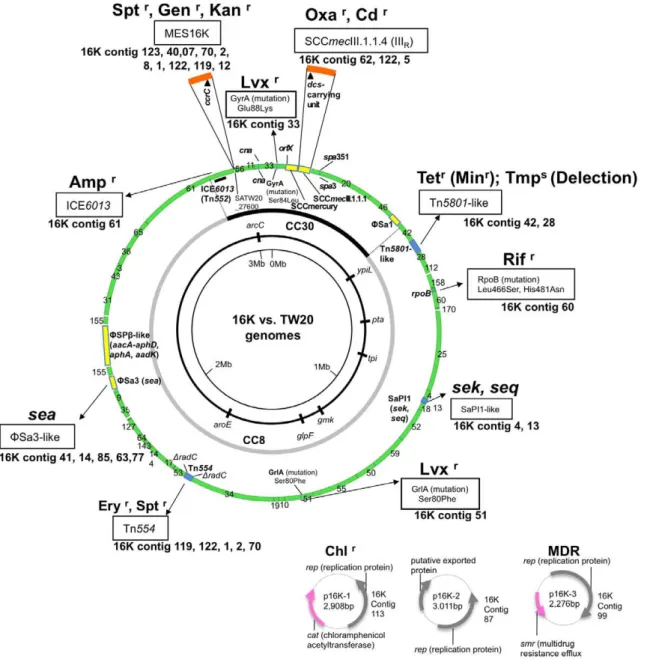
Figure 2. Genome information for ST239 MRSA strain 16K in comparison with ST239 MRSA strain TW20.The genome information includes drug resistance genetic traits (related structures and mutations), virulence genes, superantigen-associated phages, and plasmids. The 16K genome contigs, obtained by pyrosequencing, were mapped on the 3,043,210-bp TW20 genome (GenBank accession number FN433596; shown as a circle). The information on the 16K and TW20 genomes is presented outside and inside the genome circle, respectively. Colored regions in the 16K genome map: green, highly homologous to TW20; yellow, non- or less homologous to TW20; blue, slightly divergent from TW20; brown, insertion. Drug resistance (r): Oxa, oxacillin; Tet, tetracycline; Min, minocycline; Rif, rifampicin; Lvx, levofloxacin; Chl, chloramphenicol; Ery, erythromycin; Spt, spectinomycin; Gen, gentamicin; Kan, kanamycin; Amp, ampicillin; Ery, erythromycin. MDR, multiple drug resistance. The three plasmids of strain 16K are shown at the right bottom of the figure. The CC30 and CC8 genome sections are from Holdenet al.[8].
doi:10.1371/journal.pone.0029187.g002
Genome and Resistance of Russian ST239 MRSA
Figure 3. The SCCmecIIIRstructure of ST239 MRSA strain 16K.GenBank accession number for SCCmecIIIRis AB539727. The data for strain
TW20 are from GenBank accession number FN433596. Homologous regions are shaded. In A, when the structure of SCCmecIIIRwas compared with
SCCmercury/SCCmecIII.1.1.1 of TW20 (upper part of figure), the SCCmecIII core was shared by the two, but the left side regions (flanked byattand IS431) of SCCmecIIIRand SCCmecIII.1.1.1 showed no homology. Moreover, Strain 16K lacked SCCmercury. Thedcs-carrying unit (marked in pink) was
shared by SCCmecIIIR, SCCmecIV, SCCmecII, and SCCmecI (lower part of figure). The data for strains JCSC6668, NN1, 80s-2, CA05, N315, and
NCTC10442 were from GenBank accession numbers AB425823, AB245470, AB245471, AB063172, NC_002745, and AB033763, respectively. In B, the mosaic SCCmecIIIRstructure was specifically detected by multiplex PCR. Multiplex PCR detects targets: P1 and P2 in the SCCmecIII core, P3 in the left
side region (attM-pT181) of SCCmecIII.1.1.1, P4 in the left side region (dcs-carrying unit) of SCCmecIIIR, and PM1 (in anorf) and PM2 in SCCmercury or
but was distinct from HU25. Group A1 strains shared the same PFGE pattern (Figure 1).
Group A2 (n = 4) was a variant of the ST239 lineage. These strains (including 16K) exhibitedspa351/SCCmecIII.1.1.4 (named SCCmecIIIR), were resistant to chloramphenicol and rifampicin
and susceptible to trimethoprim, and possessed a 2.9-kb chloramphenicol-resistance plasmid (Table 1). Group A2 strains shared the same PFGE pattern, except for one strain (49K) (Figure 1); 49K exhibited a divergentagrsubtype (namedagr1’; see Fig. S1 for detailed analysis) and plasmid profile (Table 1).
Group A3 (n = 2; ST8/SCCmecIVc) and group A4 (n = 1; ST72/SCCmecIVc) exhibited a narrow range of drug resistance and low oxacillin and imipenem resistance levels (Table 1), similarly to CA-MRSA [24].
The ST239 lineage strains, but not ST8 or ST72 strains, were positive for the collagen adhesin gene (cna). Of the epidemic-type HA-MRSA clones, EMRSA-15 (ST22), EMRSA-16 (ST36), and Berlin (ST45) were alsocna-positive.
Characteristics of MRSA from inpatients
Data are summarized in Table 1 and Figure 1. Of 18 MRSA strains epidemiologically diagnosed as HA-MRSA during 2006– 2008, 11 strains belonged to group B1 (ST239/spa3/SCC me-cIII.1.1.1) and corresponded to group A1; one strain (strain 2H) possessed a 41-kb chloramphenicol-resistance plasmid. Six strains belonged to group B2 (ST239/spa351/SCCmecIIIR) and
corre-sponded to group A2, although most B2 strains possessed a 41-kb chloramphenicol-resistance plasmid. The remaining strain be-longed to group B3 (ST8/SCCmecIVc) and resembled group A3. Therefore, around 2006, the ST239/spa3/SCCmecIII.1.1.1 type was the most prevalent and the variant (ST239/spa351/SCC me-cIIIR) type was the second most prevalent, not only in the
community but also in hospitals.
Of the five MRSA strains epidemiologically diagnosed as HA-MRSA in 2011, one strain (group C1) corresponded to group A1 or B1. Four strains (group C2) exhibited the same genotype as group A2 or B2, indicating the increase of the ST239 variant type in 2011; however, of four C2 strains, three strains exhibited slightly distinct PFGE profiles and plasmid patterns (containing 2.9-kb chloramphenicol resistance and 38-kb cadmium resistance plas-mids) (Table 1 and Figure 1).
Comparative genomics of the ST239 Russian variant (strain 16K)
The 16K genome sequence was compared with the TW20 genome (Figure 2). The 16K genome was estimated to be at least 2.8 Mb in size, showing approximately 99.9% homology with the TW20 region (in green), excluding four large non- or less homologous regions (283.6-Kb, in yellow). The CC30 and CC8 hybrid regions on the genome were assigned according to Holden
et al. [8].
In the CC30 section, 16K possessed SCCmecIIIR instead of
SCCmecIII.1.1.1. Moreover, 16K lacked SCCmercury, but possessed a novel mobile element structure (MES16K), which carried the recombinase gene (ccrC)-carrying unit [36], similarly to SCCmercury.
There were several phage deletions in16K:WSa1 andWSPb-like were absent; and a part ofWSa3 was lacking (Figure S2A). Moreover, marked divergence was observed with SaPI1 (Figure S2B).
In 16K, the blaz gene (encoding ampicillin resistance) was located in ICE6013 (Figure 2), and the tetM gene (encoding tetracycline and minocycline resistance) was in a smaller Tn5801 -like structure, which lacked dfrG (encoding trimethoprim resis-tance) (Figure S2C). Rifampicin resistance (MIC, 256mg/ml) was due to Leu 466Ser and His481Asn mutations in rpoB, and levofloxacin resistance (MIC, 4mg/ml) was due to mutations Ser80Phe ingrlAand Glu88Lys ingyrA(Figure 2).
Strain 16K possessed three plasmids, 2.9-kb chloramphenicol resistance plasmid (p16K-1), 3.0-Kb putative exported protein plasmid (p16K-2), which corresponded to 3.0-Kb pTW20_2 of TW20, and 2.3-Kb multidrug resistance efflux protein plasmid (p16K-3), which showed similarity to 2.4-Kb pPSK108 of S. epidermidis.
SCCmecIIIR structure of strain 16K
The complete sequence of 16K SCCmecIIIR was determined
(Figure 3A). It was 31,198 bp in size, and consisted of 15-bpattL
(adjacent toorfX), 2,208-bpdcs-carrying unit (J3 region), 28,960-bp SCCmecIII core region (carryingmecAcomplex andccrcomplex), and 15-bpattR. The J3 region of 16K showed no homology with the 6,266-bp J3 region of TW20. Thedcs-carrying unit (J3) was shared by 16K SCCmecIIIR, SCCmecI, SCCmecII, and SCCmecIV
(Figure 3A); of those, the sequences of 16K SCCmecIIIR and
SCCmecIVc (of ST30 CA-MRSA strains NN1 and 80s-2) were identical, suggesting that the dcs-carrying unit (J3) of 16K SCCmecIIIR was acquired by recombination. The mosaic
SCCmecIIIR structure was identified by multiplex PCR
(Figure 3B), although PCR (PM1 and PM2) detected MES16K in strain 16K (which lacked SCCmercury).
MES16K structure of strain 16K
The complete sequence of MES16K was determined (Figure 4A). It was 30,818 bp in size and flanked by 16-bp inverted repeats (IRs). MES16K was inserted into theorfon the 16K genome, corresponding to SATW20_27600 of TW20; theatt
(target) sequence was 8-bp long, and was duplicated at both ends of MES16K. The 8-bpatt and 16-bp IR sequences showed no homology to the 15-bpattsequences for SCCmecIII or SCCmer-cury. MES16K shared a similarccrC-carrying unit with SCCmer-cury, albeit withccrC1allele 3 for 16K andccrC1novel allele 10 for TW20 (Figure 4B) and also with IS insertion inccrC1in TW20 (but not in 16K). Tn554 was present in both MES16K and SCCmercury, but in MES16K, Tn4001 was inserted into the
ermAgene of Tn554.
Conjugative transfer of drug resistance
The ST239/spa351/SCCmecIIIR variant (especially group A2)
transferred its drug resistance to S. aureus RN2677 by bacterial mating on agar plates, in the order of chloramphenicol, erythromycin, gentamicin, cadmium, and tetracycline resistance (Table 2).
Plasmids were detected only in chloramphenicol-resistant transconjugants (Tables 1 and 2). For group A2 MRSA (isolated from the community during 2006–2008), the size of chloram-phenicol-resistance plasmids was 2.9-kb. The sequence of the chloramphenicol-resistance plasmid (GenBank accession number, AB539725), donated from strain 16K (group A2), was consistent with p16K-1 in Figure 2. In contrast, for MRSA strains from
P4) for SCCmecIIIRand two bands (PM1 and PM2, marked with arrows) for MES16K. PCR band P4 was shared by SCCmecIIIRand SCCmecIVc (and
SCCmecIVa, SCCmecII, and SCCmecI). The combination of P1, P2, P4, PM1, and PM2 was unique to the Russian variant (strain 16K). doi:10.1371/journal.pone.0029187.g003
Genome and Resistance of Russian ST239 MRSA
Figure 4. MES16K structure and phylogenetic tree analysis for theccrCgenes.The SCCmercury data for strain TW20 are from GenBank accession number FN433596. The GenBank accession number of MES16K is AB666466. Homologous regions are shaded. In A, for strain TW20, the
ccrC-carrying unit was located within SCCmercury; theccrCgene (marked in yellow) was split by the insertion of IS (IS200 family). For strain 16K, the
ccrC-carrying unit was located within a mobile element structure MES16K, which was inserted into theorf(corresponding to SATW20_27600 of TW20) on the 16K genome, as shown in Fig. 2; theccrCgene (marked in yellow) was intact. The attachment sequence (att) of MES16K showed no homology to that (att) of theorfX, SCCmecIII.1.1.1 or SCCmercury. Arrowheads PM1 and PM2 represent PCR targets for detection of SCCmercury of ST239/ SCCmecIII.1.1.1 MRSA and MES16K of the Russian variant (strain 16K) by multiplex PCR (Fig. 3). In B, theccrCgene sequence of strain 16K and that of strain TW20 (expected intactccrCgene sequence, obtained by excluding the inserted IS200-family sequence) were analyzed for phylogenetic diversity, as described previously [36]. TheccrCgene of strain TW20 was a novelccrC1allele (namedccrC1allele 10) and that of strain 16K was assigned asccrC1allele 3, unambiguously demonstrating evolutionary diversity between them; moreover, theccrC1gene of ST398 MRSA strain S0385 was also a novel allele (namedccrC1allele 11).
hospitals during 2004–2008 (one B1 strain [strain 2H] and B2 strains), the plasmid size was 41-kb or 30-kb. And, for MRSA from hospitals in 2011, the plasmid size in one strain (strain 105H) was 41-kb, while the plasmid size in three strains (strains 102H, 103H, and 104H) was 2.9-kb, indicating periodical changes of chloram-phenicol-resistance plasmids.
No transfer or low-level transfer was observed for ST239/spa3/ SCCmecIII.1.1.1 strains (groups A1, B1, and C1), except for strain 2H (group B1) which donated a 41-kb chlorampenicol resistance plasmid (Table 2). Moreover, group A1 strain 6K carrying p16K-1,
which was constructed by introduction of p16K-1 DNA into strain 6K by electroporation, gave no transconjugants, indicating that p16K-1 transfer occurred in a host (strain 16K)-dependent manner. In mating between 16K and RN2677, erythromycin-resistant transconjugants (including RN2677-16KEmA2) possessed Tn554
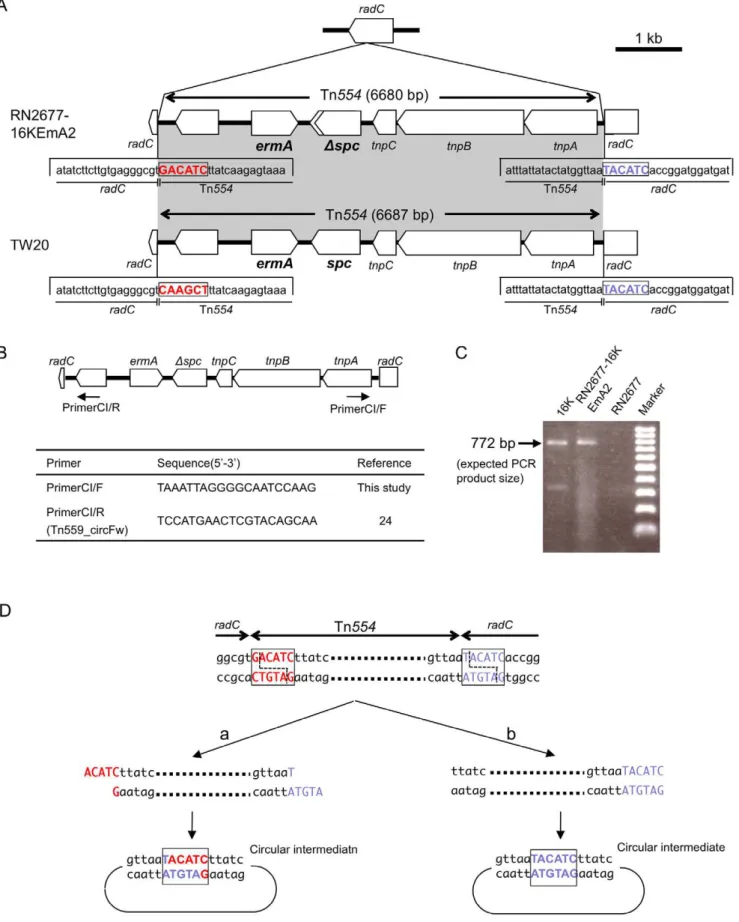
(GenBank accession number, AB539726) inserted into the radC
gene (Figures 2 and 5A). There were no repeats at either terminus of Tn554and no repeats of the ‘‘target’’ sequence, unlike other transposons (as reported previously [37–39]). The hexanucleo-tide sequence at the left end of Tn554 in RN2677-16KEmA2
Table 2.Conjugative transfer of drug resistance from Russian MRSA strains toS. aureusRN2677.
Donor MRSA strainsa Strains examined (n) Transfer frequencyb: drug-resistant recipients/donor
(recipient, RN2677)
Chloramphenicol resistance
Erythromycin resistance
Gentamicin resistance
Tetracycline resistance
Oxacillin resistance
Cadmium resistance
Russian isolates
Group A1 6 –c
,1.061029 ,1.061029 ,1.061029 ,1.061029 ,1.061029
(ST239/spa3)
Group A2 4 1.461022– 3.6
61024– 1.0
61025– 2.8
61028– ,1.0
61029 2.1
61026–
(ST239/spa351) 5.361024d 6.761025 6.961026 5.661029 1.861027
(cat/p2.9) (ermA) (aacA-aphD) (tetM) (cadA)
Group A3 2 9.561025– 1.8
61025 ,1.0
61029 –c ,1.0
61029 ,1.0
61029
(ST8/spa826) 3.061026 (ermA)
(cat/p2.9)
Group A4 1 –c –c –c –c ,1.0
61029 ,1.0
61029 (ST72/spa3451)
Group B1
(ST239/spa3) 10 –c ,1.0
61029 ,1.0
61029 ,1.0
61029 ,1.0
61029 ,1.0
61029 (ST239/spa3) 1e
2.361023
,1.061029 ,1.061029 ,1.061029 ,1.061029 ,1.061029
(2/p41)
Group B2 6 1.161022– 4.2
61027– 3.7
61028– ,1.0
61029 ,1.0
61029 ,1.0
61029
(ST239/spa351) 9.761023
1.661028
1.661028
(2/p41 or p30) (ermA) (aacA-aphD)
Group C1 1 –c ,1.0
61029 ,1.0
61029 ,1.0
61029 ,1.0
61029 ,1.0
61029 (ST239/spa3)
Group C2
(ST239/spa351) 1f 6.5
61023 5.5
61024 5.7
61025 ,1.0
61029 ,1.0
61029 3.9
61027
(2/p41) (ermA)
(ST239/spa351) 3g 3.3
61026– 5.261027– ,1.061029 ,1.061029 ,1.061029 6.461027–
1.261027 2.061027 1.561027
(cat/p2.9) (ermA) (cadA,cadD/
p38)
ST239 reference strains
ANS46 ,1.061029 9.5
61028 –c ,1.0
61029 ,1.0
61029 ,1.0
61029 (ermA)
HU25 –c 6.0
61026 ,1.061029 ,1.061029 ,1.061029 ,1.061029
(ermA)
aGroups of MRSA strains from Russia are from Table 1.
bDrug resistance genes acquired by transconjugants are shown in parentheses (
cat, chloramphenicol resistance;ermA, erythromycin and clindamycin resistance; aacA-aphD, gentamicin and kanamycin resistance;tetM, tetracycline and minocycline resistance;cadA, cadmium resistance;2, no previously-described sequences). Plasmid size was described after the resistance gene in parentheses.
cDonor MRSA strains were susceptible to each drug (resulting in no transconjugants).
dResistance transfer frequencies (average data in two or three experiments) for four group2 isolates were 1.4
61022, 6.561023, 1.061023, and 5.361024.
e, f, gStrain 2H; 105H; and 102H, 103H, and 104H, respectively. doi:10.1371/journal.pone.0029187.t002
Genome and Resistance of Russian ST239 MRSA
Figure 5. The structure of Tn554 and its circular intermediate in erythromycin-resistant transconjugants (RN2677-16KEmA2).
Transconjugant RN2677-16KEmA2 was obtained by mating between strain 16K (donor) andS. aureusRN2677 (recipient). The data for strain TW20 are from GenBank accession number FN433596. In A, Tn554was integrated into theradCgene in RN2677, at exactly the same site as the Tn554
integration site inradCfor strain TW20; theradCright-side hexanucleotide sequence, immediately adjacent to Tn554, is marked in blue. The Tn554
(59-GACATC) was distinct from that of Tn554within the TW20
radCgene (59-CAAGCT) (Figure 5A; sequence in red), reflecting the former target site sequence [37–39] in each case. The free circular intermediate of Tn554was present for both donor strain 16K and transconjugant RN2677-16KEmA2 (Figure 5B–D). For Tn554 in the transconjugant, there was a deletion in spc
(Figure 5A), although it still conferred spectinomycin resistance. Conjugative transfer of erythromycin resistance was also observed for group A3, group B2, group C2, and ST239 reference strains ANS46 and HU25 (Table 2); these transconjugants also carried spectinomycin resistance gene (spc) and were positive for a Tn554circular intermediate by PCR (data not shown).
Discussion
The ST239 MRSA lineage is a representative multiple drug-resistant HA-MRSA circulating worldwide [2,4–6,8]; for example, it includes TW20, which emerged in an ICU in London [20]. Harris et al. [6] recently demonstrated, based on genome-wide SNPs, that the ST239 lineage consisted of more than five MRSA clades, such as Asia, North America, South America, Europe, and Australia. In this study, we isolated two divergent ST239 MRSA groups with spa3/SCCmecIII.1.1.1 andspa351/SCCmecIIIR from
Russia; the latter has tended to increase recently. According to Harris et al. [6], spa3 (t037) represents the ancestral (most prevalent) ST239 spa type, and the spa3 type is distributed worldwide, including North and South America, Australia, Europe, and Asia. In contrast, the spa351 (t030) type has been found only in areas of Europe. Based on this, together with the deletion patterns of genomic islands and mobile genetic elements by Harris et al. [6], the Russian ST239/spa351/SCCmecIIIR
variant may belong to the European clade, suggesting possible transmission from Europe to Far Eastern Russia (although SCCmecIII subtypes or sequences have not been described by Harris et al. [6]).
The two ST239 MRSA groups in Russia were isolated not only from patients in hospitals but also from patients with nongonococcal urethritis in the community; therefore, MRSA may be an agent of sexually transmitted disease in Russia, which would cause great concern about the potential to spread in the community. When the Russian ST239 MRSA strains (spa3/ SCCmecIII.1.1.1 orspa351/SCCmecIIIR) from hospitals and the
community were compared, there was a marked divergence in plasmid patterns; e.g., a 2.9-kb chloramphenicol-resistance plasmid in group A2 vs. a 41-kb chloramphenicol-resistance plasmid in group B2. Moreover, the ST239/spa351/SCCmecIIIR
variant isolated recently (in 2011) showed a slightly divergent PFGE pattern, suggesting micro but dynamic evolution in Russia.
The CC30 genome section of the ST239 hybrid genome (16K) carried two mobile elements, SCCmecIIIR and MES16K, and
three potential virulence genes,spa[40,41],cna[26,42], and psm-mec(encoding a peptide cytolysin [43]). SCCmecIIIRwas a mosaic
SCCmec, consisting of the SCCmecIII core anddcs-carrying unit (as a J3 region). An identical dcs-carrying unit was found in
SCCmecIVc of ST30 CA-MRSA (strains NN1 and 80s-2 in Japan [25,44] and also strain RS08 in Russia [45]), indicating that the
dcs-carrying unit of the Russian variant could originate in ST30 CA-MRSA. Thedcs-carrying unit corresponds to a region with the
ccrC-carrying unit in SCCmecVII [36] (now renamed SCCmecV [33]). This region flanked byorfX(attL) and IS431seems to be a hot spot for recombination.
In strain 16K, the ccrC-carrying unit, found in SCCmecV and SCCmercury [36], was located in MES16K, which carried a composite transposon. MES16K is markedly distinguished from SCCmer or SCCmercury, even in terms of the attachment sequence (att). TheccrCgene is highly variable; for example, it is
ccrC1allele 3 for strain 16K,ccrC1 allele 8 for ST59 CA-MRSA
strain PM1 [36], andccrC1allele 10 (novel allele type) for ST239 HA-MRSA strain TW20.
One of the most striking features of the Russian variant is its behavior as a multiple drug resistance disseminator. To our knowledge, this is the first demonstration of multiple drug resistance transfer in the ST239 MRSA lineage. For mating, close contact of donor and recipient cells on agar plates is needed, but the use of filters is not essential. There is a possibility that during close-contact mating, plasmids in donor (16K) cells are preferably transferred into recipient bacterial cells, as in the case of p16K-1. For Tn554, which transposes through the circular intermediate [38,39], the circular intermediate may be transferred, followed by subsequent integration into the recipient genome, thus exhibiting lower transfer frequency than a chloramphenicol plasmid (p16K-1).
In conclusion, the ST239/spa3/SCCmecIII.1.1.1 MRSA and its variant (ST239/spa351/SCCmecIIIR) have emerged not only in
hospitals but also in the community, associated with nongonococ-cal urethritis, in Russia. The Russian variant showed high similarity to TW20 in terms of the bulk of the hybrid genome, but was markedly divergent from TW20, such asspa351 vs.spa3, novel mosaic SCCmecIIIR vs. SCCmecIII.1.1.1, MES16K vs.
SCCmercury, and the presence vs. absence of small chloram-phenicol-resistance plasmids. The Russian variant behaved as a drug resistance disseminator, mediating chloramphenicol-resis-tance plasmid transfer and conjugative Tn554 transposition. Micro but dynamic evolution of ST239 MRSA is proceeding in Russia.
Supporting Information
Figure S1 Theagrsubtyping for the Russian variant strain 49K. In A, PCR primers foragrtyping are shown as an arrow. Strains: agr1,agr1 type strain; agr2, agr2 type strain; 49K, the Russian variant strain 49K. Strain 49K produced a product only for primer sets (Pan and agr1), and not for (Pan and agr2), assigning strain 49K asagr1. However, in the other PCR assay, strain 49K produced a product both for primer sets (agr1 forward and agr1 reverse) and for agr2 forward and agr2 reverse, resulting in no precise assignment. In B, the agr subtypes were examined by phylogenetic tree analysis, based on the nucleotide sequences of the agr variable region, as described previously [30]. GenBank
previous target site sequences for each Tn554(note that the orientation of the Tn554structure in the figure is opposite, when compared with previously described Tn554structures [37–39]). The spcgene on Tn554in a transconjugant (RN2677-16KEmA2) had a single base substitution, resulting in a truncated gene product (lacking 27-aa at the 39-end); the mutatedspcgene still conferred spectinomycin resistance. In B, since Tn554
transposes through a circular intermediate [38–39], PCR primers to detect a Tn554circular intermediate were designed for Tn554originated in strain 16K. In C, the PCR primer set (CI/F and CI/R, shown in B) exactly detected a Tn554circular intermediate in strains 16K and RN2677-16KEmA2 (PCR product size, 772 bp) in PCR assay; there were no such bands for strain RN2677. In D, when the sequence of the PCR product, obtained in C, was determined, the Tn554circular intermediate in RN2677-16KEmA2 possessed theradChexanucleotide (59-TACATC; marked in blue), but not the Tn554
hexanucleotide sequence (59-GACATC; marked in red). doi:10.1371/journal.pone.0029187.g005
Genome and Resistance of Russian ST239 MRSA
accession number for the variable region sequence of strain 49K is AB592345. Based on the data, strain 49K was assigned as agr19. (TIF)
Figure S2 Deletions in drug resistance or virulence genetic traits in 16K, in comparison with TW20. The data of strain TW20 are from GenBank accession number FN433596. Homologous regions are shaded. In A, contigs 41, 14, 85, and 63 (and probably 77) of strain 16K constituted the bulk of the WSa3 phage sequence, showing the presence of theseagene (encoding superantigen SEA, a virulence factor associated with severe invasive infections) in strain 16K; no right side sequence of WSa3 was present. In B, contigs 4 and 13 of strain 16K constituted the left and right side regions of the SaPI1 superantigen-associated pathogenicity island, showing the presence of the superantigen genessekandseqin strain 16K. In C, contigs of 42 and 28 of strain 16K constituted the Tn5801-like sequence (including 20-bp direct repeat at both ends),
but with deletion of thedfrG gene sequence (encoding trimetho-prim resistance) in contig 28. Strain 16 was also negative fordfrG
by PCR assay. (TIF)
Acknowledgments
We thank Wei-Chun Hung and Akihito Nishiyama for technical assistance and H. de Lencastre for epidemic HA-MRSA-type strains.
Author Contributions
Conceived and designed the experiments: TY VP. Performed the experiments: TY TT WH OS YI IR. Analyzed the data: TY TT WH OS YI IR YO TN HM. Contributed reagents/materials/analysis tools: TY TT WH OS YI IR YO TN HM GR VK. Wrote the paper: TY TT.
References
1. rundmann H, Aires-de-Sousa M, Boyce J, Tiemersma E (2006) Emergence and resurgence of meticillin-resistantStaphylococcus aureusas a public-health threat. Lancet 368: 874–885.
2. Yamamoto T, Nishiyama A, Takano T, Yabe S, Higuchi W, et al. (2010) Community-acquired methicillin-resistantStaphylococcus aureus: community trans-mission, pathogenesis, and drug resistance. J Infect Chemother 16: 225–254. 3. Noto MJ, Kreiswirth BN, Monk AB, Archer GL (2008) Gene acquisition at the
insertion site for SCCmec, the genomic island conferring methicillin resistance in
Staphylococcus aureus. J Bacteriol 190: 1276–1283.
4. Enright MC, Robinson DA, Randle G, Feil EJ, Grundmann H, et al. (2002) The evolutionary history of methicillin-resistantStaphylococcus aureus(MRSA). Proc Natl Acad Sci U S A 99: 7687–7692.
5. Aires de Sousa M, Conceic¸a˜o T, Simas C, de Lencastre H (2005) Comparison of genetic backgrounds of methicillin-resistant and -susceptibleStaphylococcus aureus
isolates from Portuguese hospitals and the community. J Clin Microbiol 43: 5150–5157.
6. Harris SR, Feil EJ, Holden MT, Quail MA, Nickerson EK, et al. (2010) Evolution of MRSA during hospital transmission and intercontinental spread. Science 327: 469–474.
7. Robinson DA, Enright MC (2004) Evolution ofStaphylococcus aureusby large chromosomal replacements. J Bacteriol 186: 1060–1064.
8. Holden MT, Lindsay JA, Corton C, Quail MA, Cockfield JD, et al. (2010) Genome sequence of a recently emerged, highly transmissible, multi-antibiotic-and antiseptic-resistant variant of methicillin-resistant Staphylococcus aureus, sequence type 239 (TW). J Bacteriol 192: 888–892.
9. Teixeira LA, Resende CA, Ormonde LR, Rosenbaum R, Figueiredo AM, et al. (1995) Geographic spread of epidemic multiresistantStaphylococcus aureusclone in Brazil. J Clin Microbiol 33: 2400–2404.
10. Sanches IS, Aires de Sousa M, Cleto L, de Campos MB, de Lencastre H (1996) Tracing the origin of an outbreak of methicillin-resistantStaphylococcus aureus
infections in a Portuguese hospital by molecular fingerprinting methods. Microb Drug Resist 2: 319–329.
11. Aires de Sousa M, Sanches IS, Ferro ML, Vaz MJ, Saraiva Z, et al. (1998) Intercontinental spread of a multidrug-resistant methicillin-resistantStaphylococcus aureusclone. J Clin Microbiol 36: 2590–2596.
12. de Lencastre H, Severina EP, Milch H, Thege MK, Tomasz A (1997) Wide geographic distribution of a unique methicillin-resistantStaphylococcus aureusclone in Hungarian hospitals. Clin Microbiol Infect 3: 289–296.
13. Aires de Sousa M, de Lencastre H (2004) Bridges from hospitals to the laboratory: genetic portraits of methicillin-resistantStaphylococcus aureusclones. FEMS Immunol Med Microbiol 40: 101–111.
14. Conceic¸a˜o T, Aires-de-Sousa M, Fu¨zi M, To´th A´ , Pa´szti J, et al. (2007) Replacement of methicillin-resistantStaphylococcus aureusclones in Hungary over time: a 10-year surveillance study. Clin Microbiol Infect 13: 971–979. 15. Witte W (1999) Antibiotic resistance in gram-positive bacteria: epidemiological
aspects. J Antimicrob Chemother 44 Suppl A: 1–9.
16. Marples RR, Cooke EM (1985) Workshop on methicillin-resistantStaphylococcus aureusheld at the headquarters of the Public Health Laboratory Service on 8 January 1985. J Hosp Infect 6: 342–348.
17. Kerr S, Kerr GE, Mackintosh CA, Marples RR (1990) A survey of methicillin-resistantStaphylococcus aureusaffecting patients in England and Wales. J Hosp Infect 16: 35–48.
18. Oliveira D, Santos-Sanches I, Mato R, Tamayo M, Ribeiro G, et al. (1998) Virtually all methicillin-resistantStaphylococcus aureus(MRSA) infections in the largest Portuguese teaching hospital are caused by two internationally spread multiresistant strains: the ‘Iberian’ and the ‘Brazilian’ clones of MRSA. Clin Microbiol Infect 4: 373–384.
19. Oliveira DC, Tomasz A, de Lencastre H (2001) The evolution of pandemic clones of methicillin-resistantStaphylococcus aureus: identification of two ancestral
genetic backgrounds and the associatedmecelements. Microb Drug Resist 7: 349–361.
20. Edgeworth JD, Yadegarfar G, Pathak S, Batra R, Cockfield JD, et al. (2007) An outbreak in an intensive care unit of a strain of methicillin-resistantStaphylococcus aureussequence type 239 associated with an increased rate of vascular access device-related bacteremia. Clin Infect Dis 44: 493–501.
21. From the Centers for Disease Control and Prevention (1999) Four pediatric deaths from community-acquired methicillin-resistant Staphylococcus aureus -Minnesota and North Dakota, 1997-1999. MMWR Morb Mortal Wkly Rep 48: 707–710.
22. Zetola N, Francis JS, Nuermberger EL, Bishai WR (2005) Community-acquired meticillin-resistantStaphylococcus aureus: an emerging threat. Lancet Infect Dis 5: 275–286.
23. Vandenesch F, Naimi T, Enright MC, Lina G, Nimmo GR, et al. (2003) Community-acquired methicillin-resistantStaphylococcus aureuscarrying Panton-Valentine leukocidin genes: worldwide emergence. Emerg Infect Dis 9: 978–984. 24. Takano T, Higuchi W, Yamamoto T (2009) Superior in vitro activity of carbapenems over anti-methicillin-resistant Staphylococcus aureus (MRSA) and some related antimicrobial agents for community-acquired MRSA but not for hospital-acquired MRSA. J Infect Chemother 15: 54–57.
25. Takizawa Y, Taneike I, Nakagawa S, Oishi T, Nitahara Y, et al. (2005) A Panton-Valentine leucocidin (PVL)-positive community-acquired methicillin-resistant Staphylococcus aureus(MRSA) strain, another such strain carrying a multiple-drug resistance plasmid, and other more-typical PVL-negative MRSA strains found in Japan. J Clin Microbiol 43: 3356–3363.
26. Shi D, Ishii S, Sato T, Yamazaki H, Matsunaga M, et al. (2010) Staphylococcal scalded skin syndrome in an extremely low-birth-weight neonate: molecular characterization and rapid detection by multiplex and real-time PCR of methicillin-resistantStaphylococcus aureus. Pediatr Int 53: 211–217.
27. Takano T, Higuchi W, Otsuka T, Baranovich T, Enany S, et al. (2008) Novel characteristics of community-acquired methicillin-resistantStaphylococcus aureus
strains belonging to multilocus sequence type 59 in Taiwan. Antimicrob Agents Chemother 52: 837–845.
28. Gilot P, Lina G, Cochard T, Poutrel B (2002) Analysis of the genetic variability of genes encoding the RNA III-activating components Agr and TRAP in a population ofStaphylococcus aureusstrains isolated from cows with mastitis. J Clin Microbiol 40: 4060–4067.
29. Strommenger B, Cuny C, Werner G, Witte W (2004) Obvious lack of association between dynamics of epidemic methicillin-resistant Staphylococcus aureusin central Europe andagrspecificity groups. Eur J Clin Microbiol Infect Dis 23: 15–19.
30. Higuchi W, Hung WC, Takano T, Iwao Y, Ozaki K, et al. (2010) Molecular characteristics of the Taiwanese multiple drug-resistant ST59 clone of Panton-Valentine leucocidin-positive community-acquired methicillin-resistant Staphylo-coccus aureusfrom pediatric cellulitis. J Infect Chemother 16: 144–149. 31. Oliveira DC, de Lencastre H (2002) Multiplex PCR strategy for rapid
identification of structural types and variants of themecelement in methicillin-resistantStaphylococcus aureus. Antimicrob Agents Chemother 46: 2155–2161. 32. Zhang K, McClure JA, Elsayed S, Louie T, Conly JM (2005) Novel multiplex
PCR assay for characterization and concomitant subtyping of staphylococcal cassette chromosomemectypes I to V in methicillin-resistantStaphylococcus aureus. J Clin Microbiol 43: 5026–5033.
33. International Working Group on the Classification of Staphylococcal Cassette Chromosome Elements (IWG-SCC) (2009) Classification of staphylococcal cassette chromosome mec (SCCmec): guidelines for reporting novel SCCmec
elements. Antimicrob Agents Chemother 53: 4961–4967.
methicillin-resistant Staphylococcus aureus isolates from the community and hospitals. Antimicrob Agents Chemother 50: 4077–4086.
35. Clinical and Laboratory Standards Institute (2008) Performance standards for antimicrobial susceptibility testing: 18th informational supplement M100-S18, Wayne, PA, USA: Clinical and Laboratory Standards Institute.
36. Higuchi W, Takano T, Teng LJ, Yamamoto T (2008) Structure and specific detection of staphylococcal cassette chromosomemectype VII. Biochem Biophys Res Commun 377: 752–756.
37. Murphy E, Lo¨fdahl S (1984) Transposition of Tn554does not generate a target duplication. Nature 307: 292–294.
38. Haroche J, Allignet J, El Solh N (2002) Tn5406, a new staphylococcal transposon conferring resistance to streptogramin a and related compounds including dalfopristin. Antimicrob Agents Chemother 46: 2337–2343. 39. Kadlec K, Schwarz S (2010) Identification of the noveldfrK-carrying transposon
Tn559in a porcine methicillin-susceptibleStaphylococcus aureus ST398 strain. Antimicrob Agents Chemother 54: 3475–3477.
40. Go´mez MI, O’Seaghdha M, Magargee M, Foster TJ, Prince AS (2006)
Staphylococcus aureusprotein A activates TNFR1 signaling through conserved IgG binding domains. J Biol Chem 281: 20190–20196.
41. Kahl BC, Peters G (2007) Microbiology. Mayhem in the lung. Science 315: 1082–1083.
42. de Bentzmann S, Tristan A, Etienne J, Brousse N, Vandenesch F, et al. (2004)
Staphylococcus aureus isolates associated with necrotizing pneumonia bind to basement membrane type I and IV collagens and laminin. J Infect Dis 190: 1506–1515.
43. Queck SY, Khan BA, Wang R, Bach TH, Kretschmer D, et al. (2009) Mobile genetic element-encoded cytolysin connects virulence to methicillin resistance in MRSA. PLoS Pathog 5: e1000533.
44. Taneike I, Otsuka T, Dohmae S, Saito K, Ozaki K, et al. (2006) Molecular nature of methicillin-resistant Staphylococcus aureus derived from explosive nosocomial outbreaks of the 1980s in Japan. FEBS Lett 580: 2323–2334. 45. Baranovich T, Potapov V, Yamamoto T (2007) The first isolation of
Panton-Valentine leukocidin (PVL) positive community-acquired methicillin-resistant
Staphylococcus aureus(CA-MRSA) in Russia. Euro Surveill 12: E070315 4.
Genome and Resistance of Russian ST239 MRSA