Introduction
Brucellosis is the most usual zoonotic disease around the world especially in the Middle East, Mediterranean and Indian sub-continent areas. This bacterium has ten species among which Brucella melitensis is the most important cause of human brucellosis. This infection is transmitted to human by wounds, bacterial inhalation and consump-tion of septic dairy products such as raw milk, cream and butter. Brucellosis as a systemic disease can involve many organs of the patients which may have symptoms such as fever, night sweating and backache. This infection can be divided into acute, sub-acute and chronic forms according to the manner of clinical presentation.
Aminoglycosides have been a group of important antibac-terial antibiotics since the 1940s. The reported incidence of aminoglycoside-induced nephrotoxicity is 0%-50%; however, an incidence of 5%-15% is more frequently cited (1,2). This inconsistency is due to differences in the defi-nition of nephrotoxicity, the number of performed tests, test methods, and the underlying kidney diseases.
Treatment-induced kidney injury has been reported as the primary cause of acute renal failure (3). Although the ami-noglycoside-induced reduction in GFR is low and often non-oliguric, and anuric-oliguric kidney injury leading to dialysis is rare (4). Kidney injury is a serious condi-tion with serious consequences if not diagnosed in time. Therefore, adoption of diagnostic tests for early diagnosis and prevention of kidney injury in patients treated with aminoglycosides is necessary.
Serum creatinine, which is currently being used as an indicator of renal function/dysfunction, is unacceptably insensitive. As a result, when renal dysfunction is diag-nosed following an increased serum creatinine, satisfac-tory clinical interventions would no longer be possible. Unfortunately, even small increases in serum creatinine levels cause complications. Thus, it is clear that the serum creatinine is an insensitive and delayed marker in the de-termination of kidney dysfunction. Serum creatinine lev-els are also influenced by increased total water content of the body (dilution) immediately after the hospitalization. Abstract
Objective:Treatment with aminoglycosides is a preventable cause of acute kidney injury (AKI). Early predictive markers of AKI are crucial in preventing this condition. This study aimed to examine the role of serum neutrophil gelatinase-associated lipocalin (NGAL) level as a predictive marker of AKI in patients receiving gentamicin.
Materials and Methods: In this prospective study, 37 patients with brucellosis (23 males, 14 females; mean age = 10.7 ±
33.7 years) were studied in a health center between March 2013 and March 2014. Serum creatinine and NGAL levels at baseline, and 3, 5 and 7 days after the administration of gentamicin were measured. In this study, a 25% increase in the serum creatinine levels compared with the baseline levels was considered a criterion for AKI risk.
Results: The frequencies of patients prone to AKI at the first, third, fifth and seventh day of administration of gentamicin were 0%, 8.1%, 18.9%, and 13.5%, respectively. In total, 24.3% of the patients (n = 9) were prone to AKI. No statistically significant difference was observed between NGAL levels before and after the administration of gentamicin (P = .082).
Conclusion: The serum NGAL level is not a sensitive and specific predictor of AKI following the administration of gentamicin. Therefore it is recommended to increase the frequency of sNGAL measurement and using more sensitive kits in more patients.
Keywords: Serum neutrophil gelatinase-associated lipocalin, Acute kidney injury, Brucellosis, Gentamycin
Comparison of Changes in Serum Creatinine and PNGAL in
Predicting Renal Damage in Brucellosis Patients Receiving
Gentamycin
Freidoon Poorshahbaz1, Afsane Karami1, Manigheh Jozpanahi1, Ayyub Pezeshki2, Sograt Fagihzadeh3, Abdolreza
Esmailzadeh4, Rogayeh Moosazadeh5, Mohammadreza Behmanesh6, Mina Kiafar6, Mahshid Kashkuli6
Open Access Original Article
Crescent Journal of Medical and Biological Sciences
Received 28 March 2015, Accepted 2 August 2015, Available online 1 October 2015
1Department of Infectious Diseases and Tropical Medicine, Zanjan University of Medical Sciences, Zanjan, Iran. 2Department of Nephrology, Zanjan University of Medical Sciences, Zanjan, Iran. 3Department of Statistics, Zanjan University of Medical Sciences, Zanjan, Iran. 4Department of Immunology, Zanjan University of Medical Sciences, Zanjan, Iran. 5Women’s Reproductive Health Research Center, Tabriz University of Medical Sciences, Tabriz, Iran. 6Department of Internal Medicine, Zanjan University of Medical Sciences, Zanjan, Iran.
eISSN 2148-9696
These factors potentially and greatly limit the ability to intervene during the early stages of kidney injury and pre-vent its progression to acute renal failure. Hence, the need for a sensitive biomarker in this area seems necessary. Neutrophil gelatinase–associated lipocalin (NGAL) is a proteinase of lipocalin family which is synthetized at the distal tubules of the kidney and then enters the blood and urine. Both blood and urine levels of NGAL are reliable predictors of acute kidney injury (AKI) (5,6).
Given the importance of the renal side effects of antibiot-ics, if a marked and early increase in pNGAL/creatinine ratio occurs in patients receiving such drugs, this test can be used to control the nephrotoxicity of drugs with high nephrotoxicity in order to prevent the progression of the complications and reduce its associated cost and morbidity.
Materials and Methods
All eligible patients with brucellosis who were hospital-ized in the infectious diseases unit in Vali-Asr hospital in Zanjan and treated with intravenous gentamycin entered the study through convenience or randomized nonproba-bility census.
After providing the necessary explanations to subjects and obtaining their written consent, basic information in-cluding patient’s demographic data (age, gender), medical history, and medications were obtained and recorded in a questionnaire. Then, before administering of gentamicin, daily blood samples (about 2 cc) were obtained from each patient and sent to the hospital laboratory to determine the serum creatinine and NGAL levels. Other information regarding follow-ups (including duration of hospitaliza-tion, daily serum creatinine levels, and the incidence of
kidney injury, etc.) were collected after discharge through reviewing the patients’ records.
It should be noted that the durability of blood samples at 20°C is one month, and blood samples are more durable at 70°C. Therefore, to increase the test accuracy and reduce the number of kits required for the calibration of the ELI-SA instruments, all samples sent to the laboratory were centrifuged, and the resulting samples were kept at -70°C after coding and labeling the micro-tubes. All samples were simultaneously tested once the sampling was com-pleted. The serum NGAL levels were measured using ELI-SA kits (Cristal Day Biotech, China).
The criterion to determine the AKI risk was a 25% or higher increase in the maximum serum creatinine level compared to its baseline level upon the start of treatment with intravenous gentamicin.
Data were analyzed using SPSS 22, descriptive statistics, ANOVA, Mann-Whitney U test, and repeated measure ANOVA. The Kolmogorov-Smirnov test was used to de-termine the normality of variables. Difference between data was considered statistically significant at P < .05.
Results
A total of 37 patients with brucellosis hospitalized in Vali-Asr hospital in Zanjan were enrolled in the study. Among them, 23 (62.2%) were male and 24 (37.8%) were female.
Laboratory evaluations showed normal baseline serum creatinine levels in all patients (minimum: 0.6 mg/dL; maximum: 1.2 mg/dL).
Test results and the results of the Huynh-Feldt test indi-cated a significant relationship between mean serum cre-atinine levels and the time of measurements (P < .0001;
Table 1. The Average Level of Serum Creatinine in Studied Patients Based on the Time Measurement of Serum Creatinine Levels
Time of Measurement
Levels of Serum Creatinine
Standard deviation ± Mean Minimum Maximum
Before prescribing drug 0.85 ± 0.14* 0.6 1.2
The irst day of prescribing drug 0.84 ± 0.13 0.7 1.2
The third day of prescribing drug 0.92 ± 0.14 0.7 1.4
The ifth day of prescribing drug 0.96 ± 0.23 0.6 2
The seventh day of prescribing drug 0.92 ± 0.16 0.6 1.3
*Milligrams per deciliter; P < .001.
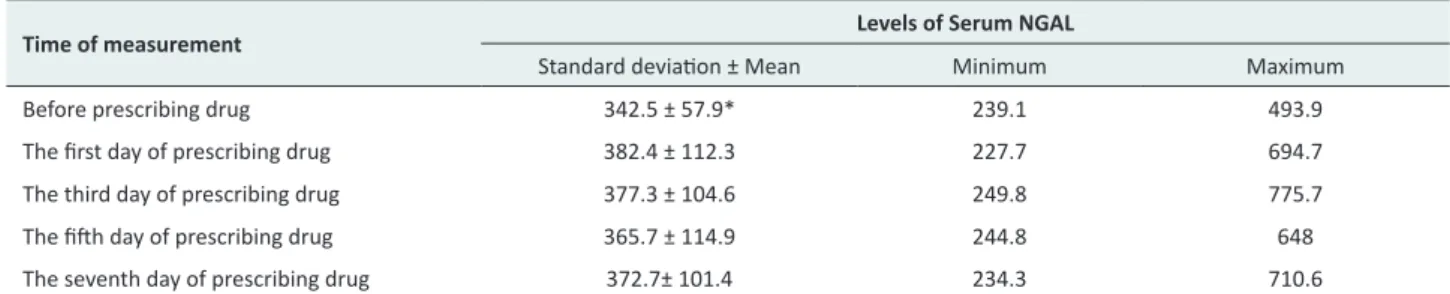
Table 2. The Average Level of Serum Lipocalin Associated With NGAL in Studied Patients Based on the Time Measurement
Time of measurement
Levels of Serum NGAL
Table 1). In other words, the administration of gentamicin gradually increased the serum creatinine level; however, this increase was within the normal range. The serum creatinine levels on the third, fifth and seventh days of medication was significantly increased compared to the baseline level and the level in the first day of medication. Based on the measured serum creatinine levels in the first, third, fifth and seventh of administration, the frequencies of patients prone to AKI were 8.1% (n = 3), 18.9% (n = 7), 13.5% (n = 5), respectively. In total, 24.3% of patient (n = 9) were prone to AKI.
Serum NGAL measurements showed that the levels of this biomarker increased one day after administration of gen-tamicin; however, its levels were reduced gradually from the third day. The results of the Huynh-Feldt test showed no statistically significant difference between the serum NGAL levels before and after administration of genta-micin (Table 2). The Bonferroni test results revealed no significant difference between the serum NGAL levels at different times. Table 2 shows the mean serum NGAL lev-els in patients at different times.
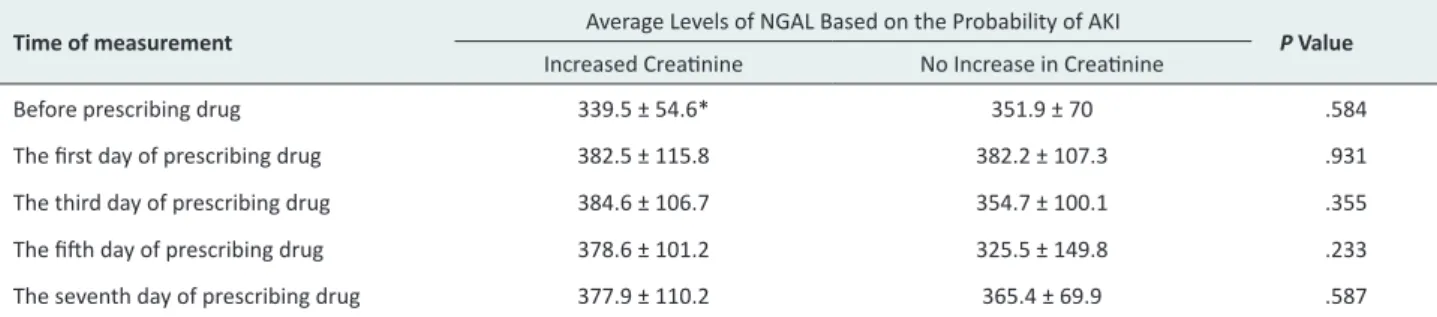
Moreover, no statistically significant difference was ob-served between the serum level of NGAL in patients prone to AKI and those not prone to any kind of kidney problems in any of the time intervals measured (in all cas-es: P > .05; Table 3).
Comparison of mean serum creatinine levels at different measurement times showed that gender did not signifi-cantly affect the variations in the levels of this biomarker (P = .168). This means that the administration of gentami-cin resulted in a significant increase in serum creatinine levels in both male and female patients. Based on the par-tial eta squared values, gender explained only 5.4% of the variations in serum creatinine levels.
The results of comparing mean serum NGAL levels by gender indicated that the variations in levels of this bio-marker were statistically significant between the two gen-ders (P = .012). On the first day after administration of gentamicin, the levels of the biomarkers were increased among men, with a gradual decline starting from the third day. But among women, following the administration of gentamicin, the mean level of the biomarker was always less than the baseline. Based on the partial eta squared val-ues, gender explained 16.7% of the variations in the serum NGAL levels.
Discussion
Given the lack of significant statistical difference between the serum NGAL level before and after administration of Gentamycin, and the lack of significant statistical differ-ence between the serum levels of this biomarker between patients prone and not prone to AKI at all measurement times, it seemed that serum levels of the biomarker is not in any way a suitable predictive factor for AKI risk in pa-tients treated with intravenous gentamicin.
To the authors’ knowledge, no research has been conduct-ed on the role of serum NGAL level as a prconduct-edictive marker for AKI in patients treated with nephrotoxic drugs. Most previous studies were performed on patients undergoing cardiac surgery or kidney transplant (8). Thus, it was not practically possible to compare the present study with the field’s literature. Here, the results of other studies were only reviewed and analyzed.
In a study by Bennett et al (7) on 196 children who had undergone cardiopulmonary bypass, AKI, which was de-fined as a 50% increase in serum creatinine level, was ob-served in 51% of the patients. However, diagnosis based one serum creatinine levels had a 2-3 day delay after sur-gery. In contrast, the average urine NGAL was increased 15 times at 2 hours after surgery. It was increased 25 times at 4 and 6 hours after surgery. The urine NGAL level at 2 hours after surgery had a high correlation with severity and duration of AKI, duration of hospitalization, the need for dialysis, and mortality. Therefore, it was suggested that accurate measurement of urine NGAL, as an effective bio-marker, can predict AKI following cardiopulmonary by-pass; however, in the present study, such relationship was not significant.
In a study by Sargentini et al (8) on the role of NGAL as an early biomarker for the diagnosis of AKI in adults undergoing cardiac surgery, urine NGAL levels were sig-nificantly increased (4 and 24 hours after surgery) com-pared to the time of admission only in patients who was diagnosed with AKI afterwards; however, considering the serum creatinine levels, the diagnosis of AKI became pos-sible only 24 hours after surgery.
Another study conducted to evaluate the association be-tween urine NGAL and acute renal failure after cardiac surgery on 81 patients reported that urine NGAL con-centration was significantly higher in the early first hours after surgery in patients with acute renal failure (20% of Table 3. Comparing the Average Level of Serum Lipocalin Associated With NGAL in Studied Patients According to the Risk of AKI
Time of measurement Average Levels of NGAL Based on the Probability of AKI P Value
Increased Creainine No Increase in Creainine
patients) compared with those not diagnosed with the condition (10). The mean concentration of urine NGAL in patients with acute renal failure still remained at very high levels in 3 and 18 hours after cardiac surgery. It was concluded that urine NGAL can be effectively used as a biomarker for the diagnosis of acute renal failure after car-diac surgery (9). However, in our study, such predictive power was not observed in brucellosis patients receiving gentamicin.
Wan et al (10) examined 33 patients who had undergone cardiac surgery and reported that 27% of the patients were suffering from acute renal failure. The diagnosis of renal failure using the serum creatinine was possible only 12 to 48 hours after the cardiac surgery, while the concentra-tion of urine NGAL at 2 and 4 hours after cardiac sur-gery was significantly higher in patients with acute renal failure compared to before the surgery. The concentration of urine NGAL after surgery in patients with acute renal failure was significantly higher than those without acute renal failure. Urine NGAL concentration at 2 hours after the cardiac surgery was significantly correlated with se-rum creatinine 12 hours after surgery. It was concluded that urine NGAL is an independent and powerful predic-tor of acute renal failure.
However, the evaluation of urine NGAL levels in 426 pa-tients who had undergone cardiac surgery between 2004 and 2006 in a medical center with a 20% AKI incidence rate showed that although the urine NGAL levels imme-diately after surgery, and at 3, 18, and 24 after surgery were significantly higher than before the surgery, urine NGAL, which is defined through changes in serum creatinine af-ter cardiac surgery, has a limited diagnostic accuracy (11). The results of the above-mentioned studies emphasized the positive and effective role of determination of urine NGAL levels in the prediction of AKI. However, our re-sults suggested that although administration of aminogly-cosides increases serum creatinine and NGAL levels, the changes in the serum NGAL, as a biomarker, occurring immediately after drug administration is not statistically significant.
The average serum creatinine levels on the first day af-ter drug administration was reduced compared to before the medication, a fact which may be due to the patient’s hydration. However, average serum creatinine levels in-creased in other days.
Conclusion
According to our studies, no significant difference was observed between serum NGAL levels before and after medication. Variations in serum NGAL levels were wide, a fact which indicated the low sensitivity of the test. Wide range of variations in serum NGAL levels indicated that the variations are associated with several other factors apart from kidney injury.
No statistically significant difference was observed be-tween the serum NGAL levels in patients prone to AKI (patient with rise of creatinine) and those not prone to AKI (patient without rise of creatinine) in any of the
mea-sured time intervals.
Various reasons may cause the inefficiency of serum NGAL levels in the determination of the AKI risk such as low sensitivity and specificity of the kits used to deter-mine the NGAL levels, inappropriate sampling intervals, low number of samples, and not addressing the patient’s hydration and urine output.
On the other hand, due to the low number of female sub-jects in this study, and wide variations in serum NGAL levels, the observed differences between the two genders in terms of NGAL levels were not reliable.
Given all the findings, it appeared that the serum NGAL level is not a sensitive and specific predictor of AKI fol-lowing the administration of Gentamycin. Therefore it is recommended to increase the frequency of NGAL mea-surement and using more sensitive kits in more patients.
Ethical issues
The study has been approved by the local ethics commit-tee.
Conflict of interests
Authors declare that they have no conflict of interests.
Acknowledgments
This work was supported fully by research center of Zan-jan University of Medical Sciences.
References
1. Lerner SA, Schmitt BA, Seligsohn R, Matz GJ. Comparative study of ototoxicity and nephrotoxicity in patients randomly assigned treatment with amikacin and gentamicin. Am J Med. 1986;80(6B):98-104.
2. Hou SH, Bushinsky DA, Wish JB, Cohen JJ, Harrington JT. Hospital-acquired renal insufficiency: a prospective study. Am J Med. 1983;74(2):243-248. 3. Trollfors B. Gentamicin-associated changes in renal
function reversible during continued treatment. J Antimicrob Chemother. 1983;12(3):285-287.
4. Lee YJ, Hu YY, Lin YS, et al. Urine neutrophil gelatinase-associated lipocalin (NGAL) as a biomarker for acute canine kidney injury. BMC Vet Res. 2012;8:248. doi: 10.1186/1746-6148-8-248. 5. Flower DR, North AC, Sansom CE. The lipocalin
protein family: structural and sequence overview. Biochim Biophys Acta. 2000;1482(1-2):9-24.
6. Uttenthal O. NGAL: a marker molecule for the distressed kidney? Clin Lab Internat. 2005;29:39-41 7. Bennett M, Dent CL, Ma Q, et al. Urine NGAL
predicts severity of acute kidney injury after cardiac surgery: a prospective study. Clin J Am Soc Nephrol. 2008;3(3):665-673. doi:10.2215/CJN.04010907. 8. Sargentini V, Mariani P, D’ Alessandro M, et al.
Assessment of NGAL as an early biomarker of acute kidney injury in adult cardiac surgery patients. J Biol Regul Homeost Agents. 2012;26(3):485-493.
RN, et al. Association between increases in urinary neutrophil gelatinase-associated lipocalin and acute renal dysfunction after adult cardiac surgery. Anesthesiology. 2006;105(3):485-491.
10. Wan X, Cao CC, Chen Y, et al. Association between urinary neutrophil gelatinase-associated lipocalin and acute kidney injury after cardiac surgery (In Chinese).
Zhonghua Yi Xue Za Zhi. 2008;88(19):1318-22. 11. Wagener G, Gubitosa G, Wang S, Borregaard N, Kim
M, Lee HT. Urinary neutrophil gelatinase-associated lipocalin and acute kidney injury after cardiac surgery. Am J Kidney Dis. 2008;52(3):425-433. doi:10.1053/j. ajkd.2008.05.018.