Original Article
Potential of xylose-fermented yeast isolated from sugarcane bagasse waste
for xylitol production using hydrolysate as carbon source
Kusumawadee Thancharoen
1*, Sirirat Deeseenthum
1, and Kanit Vichitphan
2,31 Department of Biotechnology, Faculty of Technology,
Mahasarakham University, Kantharawichai, Maha Sarakham, 44150 Thailand.
2 Department of Biotechnology,
3 Fermentation Research Center for Value Added Agricultural Products,
Faculty of Technology, Khon Kaen University, Mueang, Khon Kean, 40002 Thailand.
Received: 1 July 2015; Accepted: 18 January 2016
Abstract
Xylitol is a high value sugar alcohol that is used as a sweetener. In the past years, the biological process of D-xylose from lignocellulosic material into xylitol has gained increasing interest as an alternative production method. In this study, sugarcane bagasse was used as raw material for xylitol production because of its high efficiency, reduced industrial cost, and high concentration of xylose. Pre-treatment of sugarcane bagasse with sulfuric acid was performed with various conditions. The results showed that the optimum condition was exhibited for 3.1% sulfuric acid at 126°C for 18 min producing 19 g/l xylose. Isolated yeasts from the sugarcane bagasse were selected and tested for xylitol ability from xylose. Results showed that Candida tropicalis KS 10-3 (from 72 isolates) had the highest ability and produced 0.47 g xylitol/ g xylose in 96 hrs of cultivation containing 32.30 g/l xylose was used as the production medium.
Keywords: acid hydrolysate, sugarcane bagasse composition, xylose-fermenting yeast, xylitol
1. Introduction
Xylitol (C5H12O5) is a natural five-carbon sugar alcohol; recently it has become very interesting because of its use as an industrial food sweetener which can be used by diabetics’ patients, as it enters the bloodstream slowly and is a natural insulin stabilizer. Xylitol is anticacinogenic and prevents the formation of acids that attack the tooth enamel. Moreover, xylitol has the ability to inhibit the growth of oral bacterial species, which cause acute otitis medium including
Streptococcus pneumonia and Haemophilus influenza, (Rao
et al., 2006; Jeevan et al., 2011; Rubio et al., 2012). Xylitol is found in various fruits and vegetables, but some are not used
for xylitol extraction because their low content, less than 9 mg/g, makes manufacturing expensive (Rubio et al., 2012). Xylitol is currently produced on an industrial scale by a catalytic reduction (hydrogenation) of xylose obtained from wood sources, such as white birches. There are some dis-advantages because a xylose purification step is necessary and makes the process expensive. The hydrogenated solu-tion produced requires further processing (chromatographic fractionation, concentration and crystallization) to attain pure xylitol. About 50-60% of the xylose is converted into xylitol, and the refining and separation steps are more effective. Xylose obtained from hemicellulose hydrolysates can be used for xylitol production by hydrogenation of xylose sugar at 80-140°C and hydrogen pressures of up to 50 atm in the presence of Raney nickel catalyst (Paraj et al., 1998). How-ever, the biotechnological process based on the utilization of various microorganisms, such as bacteria, mold, and yeasts
* Corresponding author.
Email address: [email protected]
that can convert xylose into xylitol, a highly specific and economic process since 80% of the sugar is transformed into sugar alcohol. The biotechnological method uses mostly potential agricultural waste as substrate which is low cost and environmental friendly (Rubio et al., 2012). Microbial xylitol production from agricultural wastes containing hemicellu-loses could be suitable because this effectively uses renew-able resources. In general, among xylose-producing micro-organisms, the best xylitol producers are yeasts especially genus Candida (Fabio et al., 2008) such as Candida parapsilosis,C.guilliermondii, C. intermedia, C. boidinii, C. mogii, C. shehatae, C. tenuis, C. tropicalis, C. utilis, Debar-vomvces hansenii, Hansenula anomala, Kluvveromvces franilis, K. marxianus, Pachysolen tannophilus, Pichia stipites and Schizosaccharomyces pombe (Winkelhuazen and Kuzmanova, 1998; Fabio et al., 2008; Ghindea, 2010).
Sugarcane bagasse, Saccharum officinarum L., is a byproduct of the extraction process in sugar production. For each mill the generated bagasse makes 35-40% of the weight of the milled sugarcane. Bagasse contains mostly lignocellu-loses composed of lignin, cellulose, and hemicellulose. Lignocellulose from sugarcane bagasse is a substrate which is available in abundance, widespread, cost effective, and an economical source of biomass. There are many sources of sugarcane bagasse all over MahaSarakham Province in Thailand because of a high number of sugarcane factories for processing sugarcane cultivation. Sugarcane bagasse is composed of hemicellulose, a good resource for producing xylitol, glucose, galactose, mannose, xylose, D-arabinose and D-glucuronic acid with acetyl side chains (Chen et al., 2010). The objective of this research was to iso-late xylose fermenting-yeast from sugarcane bagasse waste and evaluate the xylitol production using the bagasse acid hydrolysate as a carbon source.
2. Materials and Methods
2.1 Preparation of sugarcane bagasses hydrolysate
The sugarcane bagasse was pretreated with different concentrations of sulfuric acid with a sugarcane bagasse and sulfuric acid ratio of 1:10, hydrolysis including 1%, 2%, and 3.1% v/v to determine the highest yield of xylose. After pre-treatment the sugarcane bagasses were hydrolyzed under different temperatures based on the acid concentration by 1% v/v) H2SO4 concentration 121°C, 60 min, Rao et al., 2006), 2% v/v) H2SO4 134°C, 60 min, Jeon et al., 2010) and 3.1% v/v) H2SO4 126°C, 18 min, modified of Paiva et al., 2008) in an autoclave. The liquid fraction was then filtered through Whatman no.1 filter paper and the pH was raised to 9 with calcium oxide and then decreased to 5.5 using phosphoric acid. After this, the hydrolysate was mixed with activated charcoal concentration 1, 2.5 and 3% w/v, and agitated 150 rpm, 30°C, 60 min. The hydrolysate was then concentrated under vacuum at 70°C to increase the xylose concentration
using an evaporator (Buchi Rotavapor 215+v-700/ v-855).
The sugarcane bagasses hydrolysate was used as a fermenta-tion medium for xylitol producfermenta-tion.
2.2 Isolation of xylose fermenting-yeasts and culture conditions
Samples of sugarcane bagasse waste were obtained from sugar factories in MahaSarakham and Khon Kaen Province, Thailand. For screening, 10 g of each sample was placed into 90 ml of malt extract-xylose-yeast extract-peptone, MXYP, medium containing 30 g/l xylose, 3 g/l yeast extract, 3 g/l malt extract, and 5 g/l peptone, in a 250 ml Erlenmeyer flask and incubated at 30°C for 72 hrs The enriched cells were spread on MXYP agar plates, 100 g/l xylose. After incubation at 30°C for 48 hrs, the cross streak method was used to obtain pure isolates individual colonies of micro-organism. The isolated yeast were picked up and maintained on slant YM agar (containing 4 g/lyeast extract; 10 g/l malt extract, 4 g/l glucose and 20 g/l agar) at 30°C for 48 hrs, maintained at 4°C and subcultured at regular intervals. The assays were carried out in MXYP medium, containing 10 ml MXYP medium (initial xylose 30 g/l) and cultivated on a shaker incubator at 150 rpm/ min and 30°C. Cell growth was measured by optical density at 600 nm. After 48 hrs cultiva-tion, samples of each strain were analyzed.
2.3 Inoculum development
Six isolated xylose fermented-yeasts from xylose assimilation tests including C. guilliermondii from the Thailand Institute of Scientific and Technological Research, TISTR, were used for xylitol production. From the sub-culture, one loopful of yeast cells was inoculated into 100 ml Erlenmeyer flasks containing 50 ml of MXYP medium, and then cultivated at 30°C for 24 hrs on a rotary shaker at 150 rpm. Inoculated cells were counted using a haemacytomer; final cell concentration was 1x10⁸ cells/ ml and used as an
inoculum in xylitol fermentation process.
2.4 Fermentation
Flask batch fermentations were performed by shaking in 125 ml Erlenmeyer flasks containing 50 ml of sugarcane bagasses hydrolysate (initial xylose concentration 32.30 g/l) into a fermentation medium, containing 2 g/l (NH4)2SO4, 0.5 g/l MgSO4.7H2O, 10 g/l yeast extract, 20 g/l peptone, 0.5 g/l KH2PO4, and 0.5 g/l K2HPO4, and cultivated in a rotary-shaker at 150 rpm, 30°C for 96 hrs. They were inoculated to a final concentration of 108 cells/ ml. The samples were collected
2.5 Strain identification
Partial sequences of the D1/D2 domain approximately 600-800 bp of the LSU rDNA and the SSU rDNA were determined from PCR products from genomic DNA extracted from yeast cells by using a slightly modified version of the method (Lachance et al., 2001). A divergent 5’ domain of the gene was amplified by a PCR with the forward primer NL-1 (5’-GCATATCAATAAGCGGAGGAAAAG) and the reverse primer NL-4 (5’-GGTCCGTGTTTCAAGACGG) (O’Donnell, 199); amplification of the SSU rDNA was done with the forward primer P1 and the reverse primer P2 (Sjamsuridzal
et al., 1997). DNA product was subjected to electrophoresis on 3% agarose gel, recovered using the QIAquick purifica-tion kit (Qiagen) and cycle-sequenced using the ABI Big Dye terminator cycle sequencing kit, version 3.1 (Applied Biosystems), with the external primers NL-1 and NL-4 for the D1/D2 domain (Kurtzman and Robnett, 1998) and eight primers, P1–P8, for the SSU rDNA (Yamada et al., 1999). The sequences were determined with an ABI PRISM 3100 auto-mated DNA sequencer (Applied Biosystems) according to the instructions of the manufacturer. Sequences data base was compared with the BLASTN homology search (http:// www.ncbi.nlm.nih.gov/BLAST/, NCBI) and generated sequences were aligned with related species retrieved from GenBank using the CLUSTAL X, version 1.81 (Thompson
et al., 1994).
2.6 Analytical methods
Xylose, glucose, arabinose, acetic acid, HMF, furfural, phenolic compound and Xylitol concentrations were deter-mined using HPLC with an Aminex HPX-87H, (Biorad, USA) carbohydrate column (300 x 7.8 mm) at 45°C, using 5 mM H2SO4, as an eluent. A flow rate of 0.5 ml/min and a sample volume of 20 l were maintained. The eluate was monitored with refractive index (RI) detector. Peaks were identified and quantified by comparison with the retention times of authentic standards (Xylose and Xylitol purchased from Sigma Company).
3. Results and Discussion
3.1 Sugarcane bagasses hydrolysis
Sugarcane bagasse is a lignocellulosic material waste from sugar mills consisting of cellulose, hemicellulose, lignin and other compounds particularly various types of sugar containing five and six carbon atoms it is commercially used as a carbon source to produce a variety of products. The sugars produced from sugarcane bagasse are glucose, galac-tose, mannose, xylose, and arabinose. Galacturonic acid can be produced from dilute acid or base hydrolysis. For the remaining sugars in the bagasse there is a breakdown of the beta-glucosidic bond that has a monosaccharide. Chandel
et al. (2011) illustrate that auto hydrolysis is a simple method
to break down the hemicellulosic backbone into monomeric sugar constituents with fewer by-products. However, a signi-ficant fraction of hemicellulosic may remain with the substrate after the auto hydrolysis. To overcome this problem, dilute acid hydrolysis is used for maximum degradation of hemi-celluloses into monomers. Compared to other pretreatment methods, dilute acid hydrolysis is more useful for the con-version of maximum hemicellulosic fraction into xylose and other sugars, which can be fermented by specialized micro-organisms.
The results showed that the maximum xylose con-centration of 19.0 g/l was obtained at 3.1% sulfuric acid concentration (126°C, 18 min) (Table 1). The increase in sulfuric acid concentration enhanced the decomposition of lignin and the xylose sugars released from the sugarcane bagasses during acid hydrolysis more other methods. Lignin was broken down into phenolic compounds, such as vanillin, syringaldehyde, 4-hydroxybenzoic acid and ferulic acid which have a toxic effect on microbial growth and xylose metabolism in yeast cells.
According to recent research on the use of dilute sulfuric acid to digest sugarcane bagasse Rao et al. (2006) found that using sulfuric acid concentration of 1% v/v under a temperature of 121°C, 60 min produced xylose, glucose and arabinose at 56, 15, and 24%, respectively. Paiva et al. (2009) have reported that sulfuric acid concentrations of 3.1% v/v at a temperature of 126°C, 18 min gave xylose at 266.73 mg/g dry weight of sugarcane bagasse. Jeon et al. (2010) used sulfuric acid concentrations of 2% v/v under a temperature of 134°C, 60 min. and produced xylose, glucose and arabinose at 21, 5.4, and 3 g/l, respectively. They used dilute acid as a catalyst in the hydrolysis. Hemicellulose and lignin dissolved mostly at low concentrations (0.05-5%) this will minimize damage to products and offer the highest sugar yield at the end of the process. Furthermore, dilute acid enhances the economic potential for industrial production, since it is easy to control and can treat large amounts of the biomass in a short time. The mechanism of the reaction of acid hydrolysis are as follows, (1) diffusion of protons through the matrix of lignocellulosic wet, (2) heterocyclic cyclic bonding of oxygen protons and sugar monomers, (3) the ether bond is broken, (4) intermediate carbocation, (5) the solubility of carbocation with water, (6) the restoration of protons with the sugar energy monomer, (7) the distribution of the reaction in the liquid phase, and (8) the resumption of the second stage, which is developed from the experiments model (Aguilar
et al., 2002).
and formic acids, (2) furan derivatives, e.g. furfural and 5-hydroxymethylfurfural, and (3) phenolic compounds. Several detoxification methods have been reported to overcome the inhibitory effect of these compounds during fermentation by yeasts, such as adaptation of microorganisms to the medium, treatments with molecular sieves, ion-exchange resins or charcoal, steam stripping and overtitration to remove various inhibitory compounds from lignocellulosic hydrolysates, especially charcoal cane effective remove some toxin compounds owing to the toxic substance attaches to the surface of the charcoal. Kamal et al. (2011) and Aguilar et al. (2002) presented activated charcoal that has been widely used in the removal of carbon compounds hydrolysate concentration; contact time greatly influenced the removal of toxicity compounds. Different proportions varying from 1% to 30% in addition, they observed that 1% of charcoal was enough to remove 94% of the phenolic compounds. Mussatto and Roberto (2001) reported an increase in xylitol production by Candida guilliermondii using cells in the past appro-priate to hemicellulosic hydrolysate of rice straw. This work, detoxification using activated charcoal concentration 3% (w/v) benefits the xylitol production by removing inhibitors because the toxic substance attaches to the surface of the charcoal and maximizes xylose residual sugar from the hydrolysate.
3.2 Isolation of xylose fermented-yeasts and culture conditions
Isolation xylose fermenting-yeasts have the ability to use xylose as a carbon source. Samples of sugarcane bagasse
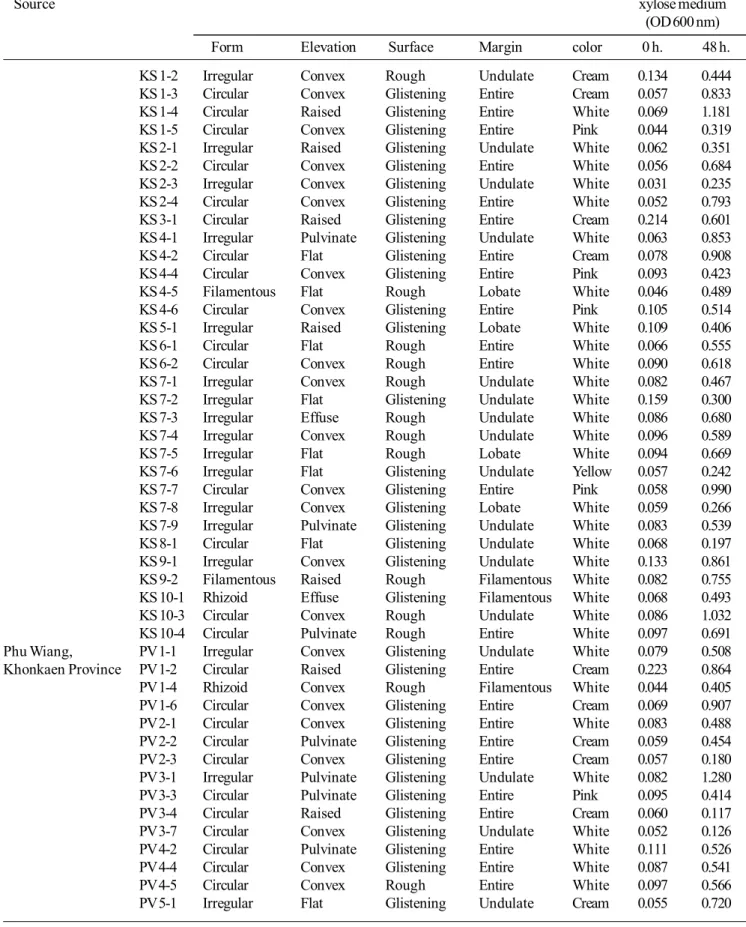
waste, collected from sugar factories in Kosum Phisai, MahaSarakham Province and Phu Wiang, Khon Kaen Province, led to the isolation of yeasts, 34 and 38 isolates, respectively. Morphological characteristics shown in Table 3 demonstrate xylose-fermenting yeast of sugarcane bagasse waste, from sugar factories, at Kosum Phisai, MahaSarakham Province, 34 isolates exhibit 25 isolates of white colony, 4 isolates of cream colony, 4 isolates of pink colony and 1 isolate of yellow colony. From Phu Wiang, Khon Kaen Province, 38 isolates presented 25 isolates of white colony, 11 isolates of cream colony, 1 isolate of pink colony and 1 isolate of yellow colony.
The sugar xylose contains five-carbon atoms and is converted into xylitol by microbial fermentation using bacteria, fungi and yeast. The best known xylitol producers are yeasts, with special emphasis on the genus Candida
(Ikeuchi et al., 1999; Kang et al., 2005; Guo et al., 2006; Sampaio et al., 2008) and Debaryomyces (Altamirano et al., 2000; Sampaio et al., 2008; Prakash et al., 2011). Microbial Table 1. Sugar composition of sugarcane bagasse pre-treatment by
different conditions.
Sugar composition (g/l) Condition
Xylose Glucose Arabinose
H2SO4 1%Temp. 121C, 60 min. 18.51 2.42 2.20
H2SO4 2%Temp. 134C, 60 min. 12.06 3.23 2.17
H2SO4 3.1%Temp. 126C, 18 min. 19.00 2.75 2.63
Table 2. Sugarcane bagasse hydrolysate composition.
Sugar composition (g/l) Toxic compound (g/l) Treatment
Xylose Glucose Arabinose HMF Furfural Acetic Phenolic
acid compound
Original 14.95 1.27 3.13 0.02 0.03 3.90 5.24
Evaporation 44.58 5.50 8.00 0.07 0.09 5.54 7.78
H + Charcoal 1% 32.13 5.98 7.59 0.03 0.05 2.37 0.25
H + Charcoal 2.4% 31.62 5.78 7.54 0.03 0.04 1.85 0.19
H + Charcoal 3% 32.30 5.90 7.60 0.02 0.04 1.56 0.15
H = Hydrolysate
Table 3. Morphology and growth ability in xylose medium of the xylose fermented-yeasts isolated from sugarcane bagasses waste.
Sample Isolated Morphology Characteristics Growth on
Source xylose medium
(OD 600 nm)
Form Elevation Surface Margin color 0 h. 48 h.
KS 1-2 Irregular Convex Rough Undulate Cream 0.134 0.444
KS 1-3 Circular Convex Glistening Entire Cream 0.057 0.833
KS 1-4 Circular Raised Glistening Entire White 0.069 1.181
KS 1-5 Circular Convex Glistening Entire Pink 0.044 0.319
KS 2-1 Irregular Raised Glistening Undulate White 0.062 0.351
KS 2-2 Circular Convex Glistening Entire White 0.056 0.684
KS 2-3 Irregular Convex Glistening Undulate White 0.031 0.235
KS 2-4 Circular Convex Glistening Entire White 0.052 0.793
KS 3-1 Circular Raised Glistening Entire Cream 0.214 0.601
KS 4-1 Irregular Pulvinate Glistening Undulate White 0.063 0.853
KS 4-2 Circular Flat Glistening Entire Cream 0.078 0.908
KS 4-4 Circular Convex Glistening Entire Pink 0.093 0.423
KS 4-5 Filamentous Flat Rough Lobate White 0.046 0.489
KS 4-6 Circular Convex Glistening Entire Pink 0.105 0.514
KS 5-1 Irregular Raised Glistening Lobate White 0.109 0.406
KS 6-1 Circular Flat Rough Entire White 0.066 0.555
KS 6-2 Circular Convex Rough Entire White 0.090 0.618
KS 7-1 Irregular Convex Rough Undulate White 0.082 0.467
KS 7-2 Irregular Flat Glistening Undulate White 0.159 0.300
KS 7-3 Irregular Effuse Rough Undulate White 0.086 0.680
KS 7-4 Irregular Convex Rough Undulate White 0.096 0.589
KS 7-5 Irregular Flat Rough Lobate White 0.094 0.669
KS 7-6 Irregular Flat Glistening Undulate Yellow 0.057 0.242
KS 7-7 Circular Convex Glistening Entire Pink 0.058 0.990
KS 7-8 Irregular Convex Glistening Lobate White 0.059 0.266
KS 7-9 Irregular Pulvinate Glistening Undulate White 0.083 0.539
KS 8-1 Circular Flat Glistening Undulate White 0.068 0.197
KS 9-1 Irregular Convex Glistening Undulate White 0.133 0.861
KS 9-2 Filamentous Raised Rough Filamentous White 0.082 0.755
KS 10-1 Rhizoid Effuse Glistening Filamentous White 0.068 0.493
KS 10-3 Circular Convex Rough Undulate White 0.086 1.032
KS 10-4 Circular Pulvinate Rough Entire White 0.097 0.691
Phu Wiang, PV 1-1 Irregular Convex Glistening Undulate White 0.079 0.508
Khonkaen Province PV 1-2 Circular Raised Glistening Entire Cream 0.223 0.864
PV 1-4 Rhizoid Convex Rough Filamentous White 0.044 0.405
PV 1-6 Circular Convex Glistening Entire Cream 0.069 0.907
PV 2-1 Circular Convex Glistening Entire White 0.083 0.488
PV 2-2 Circular Pulvinate Glistening Entire Cream 0.059 0.454
PV 2-3 Circular Convex Glistening Entire Cream 0.057 0.180
PV 3-1 Irregular Pulvinate Glistening Undulate White 0.082 1.280
PV 3-3 Circular Pulvinate Glistening Entire Pink 0.095 0.414
PV 3-4 Circular Raised Glistening Entire Cream 0.060 0.117
PV 3-7 Circular Convex Glistening Undulate White 0.052 0.126
PV 4-2 Circular Pulvinate Glistening Entire White 0.111 0.526
PV 4-4 Circular Convex Glistening Entire White 0.087 0.541
PV 4-5 Circular Convex Rough Entire White 0.097 0.566
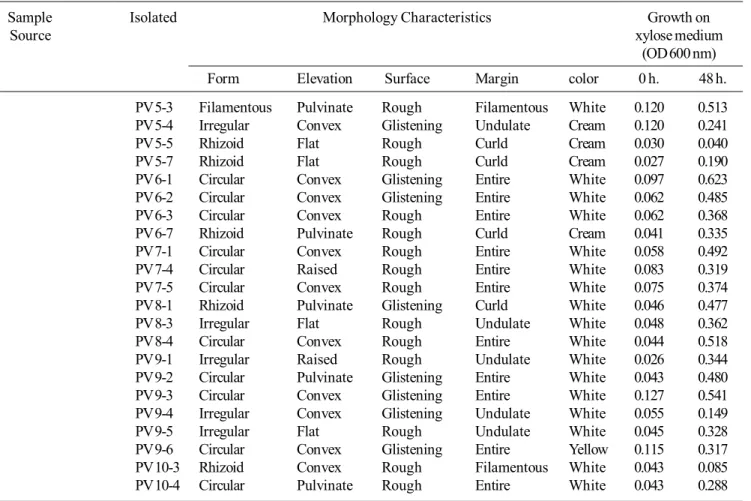
Table 3. Continued
Sample Isolated Morphology Characteristics Growth on
Source xylose medium
(OD 600 nm)
Form Elevation Surface Margin color 0 h. 48 h.
PV 5-3 Filamentous Pulvinate Rough Filamentous White 0.120 0.513
PV 5-4 Irregular Convex Glistening Undulate Cream 0.120 0.241
PV 5-5 Rhizoid Flat Rough Curld Cream 0.030 0.040
PV 5-7 Rhizoid Flat Rough Curld Cream 0.027 0.190
PV 6-1 Circular Convex Glistening Entire White 0.097 0.623
PV 6-2 Circular Convex Glistening Entire White 0.062 0.485
PV 6-3 Circular Convex Rough Entire White 0.062 0.368
PV 6-7 Rhizoid Pulvinate Rough Curld Cream 0.041 0.335
PV 7-1 Circular Convex Rough Entire White 0.058 0.492
PV 7-4 Circular Raised Rough Entire White 0.083 0.319
PV 7-5 Circular Convex Rough Entire White 0.075 0.374
PV 8-1 Rhizoid Pulvinate Glistening Curld White 0.046 0.477
PV 8-3 Irregular Flat Rough Undulate White 0.048 0.362
PV 8-4 Circular Convex Rough Entire White 0.044 0.518
PV 9-1 Irregular Raised Rough Undulate White 0.026 0.344
PV 9-2 Circular Pulvinate Glistening Entire White 0.043 0.480
PV 9-3 Circular Convex Glistening Entire White 0.127 0.541
PV 9-4 Irregular Convex Glistening Undulate White 0.055 0.149
PV 9-5 Irregular Flat Rough Undulate White 0.045 0.328
PV 9-6 Circular Convex Glistening Entire Yellow 0.115 0.317
PV 10-3 Rhizoid Convex Rough Filamentous White 0.043 0.085
PV 10-4 Circular Pulvinate Rough Entire White 0.043 0.288
production of xylitol has the advantage of being a more attractive process, since its downstream processing is simple, and its fermentation process provides high cell density, thus resulting in high xylitol yields. Moreover, it is more economic and can be achieved in the industry without high pressure, temperature or xylose purification (Silva et al., 1999; Kang
et al., 2005). Ideally microorganism xylitol producers are easy to cultivate, highly capable of productivity and have special resistance to pressure and toxins. According to recent research, the used of a variety of wild type yeast strains mostly genera Candida has shown potential production on an industrial scale including C. boidinii (Vandeska et al., 1995), C. guilliermondii (Zagustina et al., 2001; Rodrigues
et al., 2003), C. parapsilosis (Oh et al., 1998), C. peltata
(Saha et al., 1999) and C. tropicalis (Kim et al., 2002; López
et al., 2004). Sirisansaneeyakul et al. (1995) selected a xylitol producer as C. mogii ATCC 18364 from 11 strains of D-xylose, utilizing yeasts they have screened in previous research. Their results indicated maximum xylitol yield of Yp/s = 0.62 g/g and a specific rate for product formation that was more than the other yeasts. Ikeuchi et al. (Ikeuchi et al., 1999) demonstrate microorganisms with the ability to produced xylitol from high concentrations of xylose were screened from 1,018 types of soil from farms and parks in Osaka, Japan by enrichment culture. A chemically defined (CD) medium using
xylose as a sole carbon source for primary selection was obtained from yeast strain capable of metabolizing xylose and showed rapid growth on media containing xylose con-centrations of 200 g/l. Results showed that 102 isolates and secondaries were selected using a semi defined (SD) medium with xylose concentration 250 g/l found that yeast 559-9 strain gave the maximum result at 204 g/l and this was identified as
Candida sp. reference ‘The Yeasts’ (3rd edition) (Baz et al.,
2011). In this strain, the biochemical and morphological characteristics are similar to Candida sp. Altamirano et al.
(2000) isolated thirty-three yeast strain from natural resources, including corn silage (ASM strains) and viticulture residues (SJV strains) with growth on a medium with xylose as a carbon source. These strains were identified as C. membranifaciens,
18S rRNA sequence analyses. This strain obtained high xylitol yield at 77% and a productivity amount of 2.57 g/l/h from 200 g/l of xylose concentration. Guo et al. (2006) explained the principles of xylitol producer screening for forty-five isolates, from 274 isolates grown on solids and broth with xylose as a carbon source. They comprised 9 genera. Saccharomyces, Schizoblastosporion, Candida, Geo-trichum, Pichia, Hansenula, Trichosporon, Sporobolomyces,
and Rhodotorula. Five species were selected for further experiments, toward the high utilization of xylose and D1/D2 of 26S rDNA identified as C. guiliermondii Xu280 and C. maltosa Xu316 which produced the highest xylose consump-tion and xylitol yield in batch fermentaconsump-tion under micro-aerobic conditions.
3.3 Xylose assimilation tests
Seventy-two isolates from sugarcane bagasse were tested for their abilities to assimilate xylose. All strains showed significant growth on liquid medium with xylose as the sole carbon source. Analysis of optical determination (OD600) showed that the strains, which grew well on xylose medium consumed xylose rapidly up to 48 hours. From these 72 strains, six strains including KS 4, KS 7-7, KS 10-3, PV 1-6, PV 3-1 and PV 5-1 were chosen for further study because of their high-growth rates on xylose medium. Results are shown in Table 3.
Previously different methods have been used for selecting the best xylitol producer yeasts from several strains, because different yeasts break down xylose at different rates because of species diversity. To ferment xylitol using all yeast species is difficult and it is necessary to find a method of selecting the best yeast culture to demonstrate the potential of using xylose as a carbon source. Altamirano et al. (2000) studied the isolation and identification of xylitol-producing yeasts from agricultural residues. Thirty-six yeast strains were primary screened for their capacities to convert D-xylose into xylitol using a conventional method by TLC adapted for easy determination of xylose and xylitol production. This technique is suitable for the first steps of a screening program to select xylitol-producing yeasts from natural environments.
C. tropicalis ASM III (NRRLY-27290), isolated from corn silage had to high xylitol yield of 0.88 g xylitol/g of xylose consumed. Guo et al. (2006) accurately cultivated 274 strains on both solid and liquid screening media with xylose as the sole carbon resource. Five strains were selected based on significant high growth of assimilated xylose, which showed that the strains with rapid growth rate also consumed xylose rapidly. This method demonstrated that in the early testing it is easy to select varieties that produce high xylitol yields, and further study the conditions that affect xylitol production. Xylitol production using all yeast strains from isolation in the flask scale may be difficult, since it is time consuming, inconvenient to harvest and will increase the cost of the analysis. Therefore, this study used the primary screening method by Guo et al. (2006), which preliminary selected the
yeast which used xylose quickly within 48 hours, observed from changes in the growth of yeast in the broth and signifi-cant turbidity increase.These strains were selected as inocu-lum for yeast fermentation of xylose in sugarcane bagasse hydrolysate to compare their ability to produce xylitol production, in the secondary screening of xyltitol-yeast producers from the xylitol yields.
3.4 Xylitol fermentation
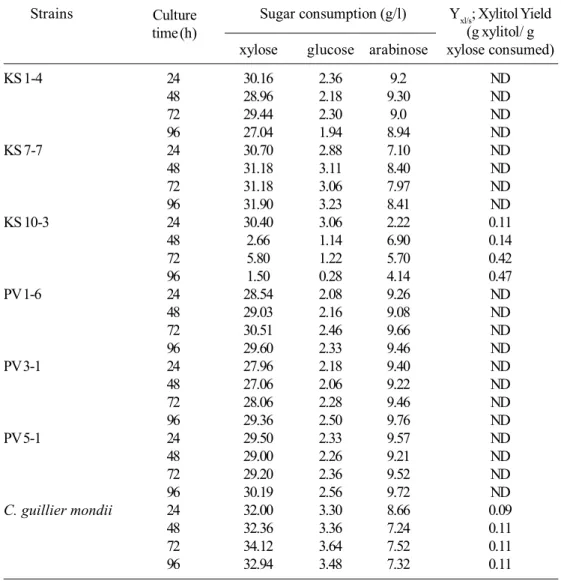
Owing to their abilities to assimilate xylose rapidly, six strains were selected for further evaluation. Physiological behavior of these strains on hydrolysate fermentation medium (xylose concentration 32.30 g/l) was investigated. Xylitol production accompanied xylose consumption during yeasts growth. KS 10-3 exhibited the highest xylitol yield as shown in Table 4. The results in Table 4 show the six yeast strains (KS 1-4, KS 7-7, KS 10-3, PV 1-6, PV 3-1, and PV 5-1) primarily selected using xylitol fermentation of xylose in sugarcane bagasse hydrolysate compared to the reference strain C. guilliermondii. In batch fermentation was carried out with flask level (initial xylose 32.30 g/l) and time variation. Results showed that KS 10-3 strain gave maximum xylitol yield of 0.47 g/g with 96 hours at 30C. Sequence D1/D2 of 26S rDNA analysis results identified this strain as Candida tropicalis KS 10-3 because 100% sequence identity is strain to that in database (length 576 nucleotides). 26S ribosomal RNA gene, partial sequence showed
AAACCAACAGGGATTGCCTTAGTAGCGGCGAGTGAAG CGGCAAAAGCTCAAATTTGAAATCTGGCTCTTTCAGAG TCCGAGTTGTAATTTGAAGAAGGTATCTTTGGGTCTGG CTCTTGTCTATGTTTCTTGGAACAGAACGTCACAGAGG GTGAGAATCCCGTGCGATGAGATGATCCAGGCCTATGT AAAGTTCCTTCGAAGAGTCGAGTTGTTTGGGAATGCA GCTCTAAGTGGGTGGTAAATTCCATCTAAAGCTAAATA TTGGCGAGAGACCGATAGCGAACAAGTACAGTGATGG AAAGATGAAAAGAACTTTGAAAAGAGAGTGAAAAA GTACGTGAAATTGTTGAAAGGGAAGGGCTTGAGATCA GACTTGGTATTTTGTATGTTACTTCTTCGGGGGTGGCCT CTACAGTTTATCGGGCCAGCATCAGTTTGGGCGGTAGG AGAATTGCGTTGGAATGTGGCACGGCTTCGGTTGTGTG TTATAGCCTTCGTCGATACTGCCAGCCTAGACTGAGG ACTGCGGTTTATACCTAGGATGTTGGCATAATGATCTT AAGTCGCCCGTCT.
Moreover, this result shows that sugarcane bagasse as waste from the sugar factory is a good local alternative to use as a low cost substrate, with added value since residual xylose and other sugar especially xylose, is a substrate in xylitol production. Results agree with the Silva et al. (2011) study of glucose:xylose ratio effect to C. guilliermondii
during fermentation of sugarcane bagasse and show that the glucose:xylose ratio of 1:5 has the highest xylitol yield at 0.59 g/g and demonstrates that glucose, arabinose and acetic acid all assist in the fermentation.
C. guilliermondii FTI 20037 high xylitol yields were 0.69, 0.75 and 0.81 g/g from xylose initial concentrations 30, 48, and 80 g/l, respectively. C. guilliermondii has a xylitol yield of 0.59 g/g from 45 g/l of xylose. C. langeronii RLJ Y-019 present xylitol yield 0.40 g/g from 47.2 g/l xylose concentra-tion. Reports of recent research suggest that C. guillier-mondii has a high potential of xylitol yield from sugarcane bagasse hydrolysate. Previous results show that C. tropicalis
is a xylitol-yeast which produces a high xylitol yield similar to
C. guilliermondii. Such findings suggest that the maximum xylitol yield of 0.45 g/g was achieved with the sugarcane bagasse hydrolysate but xylitol yields were lower with mixed sugar because of the limited yeast growth rate and inhibitor effect on cell adaptation (Rao et al., 2006). Results are similar to these observed in xylitol production by Baz et al. (2011) using C. tropicalis under different condition such as rice bran, ammonium sulfate and xylose resulting in xylose giving
a maximum xylitol yield of 57.2% obtained from xylose 20 g/l, rice bran 15 g/l and ammonium sulfate 1 g/l pH 5.5. However, xylitol increased to 72.5% when initial xylose was 50 g/l. Xylitol production on a large scale requires oxygen aeration by semi-synthetic media and hydrolysate. Using C. tropicalis
AY2007 under a limit of O2 0.3 vvm gave xylitol 36 g/l in 59 hours of fermentation and increase aeration of 1.5 vvm obtained 30.99 g/l. In comparison, xylitol yield from semi-synthetic media and hydrolysate were 0.704 and 0.783 g/g, respectively.
For this work, KS 10-3 gave the maximum xylitol yield at 0.47 g/g obtained at 32.30 g/l of xylose lower than some report in Table 5 towards initial xylose is low and necessary optimized condition suitable for this xylitol-yeast producer strain of xylitol production particularly xylose concentration and agitation rate influence cell yeast growth and increase xylitol production efficiency.
Table 4. Xylose fermentation of selected strains cultivated on a hydrolysate fermentation medium under micro-aerobic conditions. Initial xylose concentration was 32.30 g/l.
Strains Sugar consumption (g/l) Yxl/s; Xylitol Yield (g xylitol/ g
xylose glucose arabinose xylose consumed)
KS 1-4 24 30.16 2.36 9.2 ND
48 28.96 2.18 9.30 ND
72 29.44 2.30 9.0 ND
96 27.04 1.94 8.94 ND
KS 7-7 24 30.70 2.88 7.10 ND
48 31.18 3.11 8.40 ND
72 31.18 3.06 7.97 ND
96 31.90 3.23 8.41 ND
KS 10-3 24 30.40 3.06 2.22 0.11
48 2.66 1.14 6.90 0.14
72 5.80 1.22 5.70 0.42
96 1.50 0.28 4.14 0.47
PV 1-6 24 28.54 2.08 9.26 ND
48 29.03 2.16 9.08 ND
72 30.51 2.46 9.66 ND
96 29.60 2.33 9.46 ND
PV 3-1 24 27.96 2.18 9.40 ND
48 27.06 2.06 9.22 ND
72 28.06 2.28 9.46 ND
96 29.36 2.50 9.76 ND
PV 5-1 24 29.50 2.33 9.57 ND
48 29.00 2.26 9.21 ND
72 29.20 2.36 9.52 ND
96 30.19 2.56 9.72 ND
C. guillier mondii 24 32.00 3.30 8.66 0.09
48 32.36 3.36 7.24 0.11
72 34.12 3.64 7.52 0.11
96 32.94 3.48 7.32 0.11
ND = Not Detected
4. Conclusions
In summary, we reported a xylose fermented-yeast had the ability to use xylose as a carbon source from sugarcane bagasse, KS 10-3 can grew well on xylose medium consumed xylose rapidly and produced a higher xylitol yield than C. guilliermondii. Therefore, a better understanding of the regulation of xylose metabolism will contribute to the design of xylose reductase and xylitol dehydrogenase activity to enhance the xylitol production and optimization that affect xylitol yield. Together with the complete genome sequence available from related strains, detailed genetic studies are expected to provide some clues for this information. This strain is expected to be a good candidate for studying xylitol production in large scale fermentation.
Acknowledgements
Authors are grateful to National Research Council of Thailand and Rajabhat MahaSarakham University, for financial support. We would also like to thank the Depart-ment of Biotechnology, MahaSarakham University for the use of instruments support and technical help.
References
Aguilar, R., Ramírez, J.A., Garrote, G., and Vázquez, M. 2002. Kinetic study of acid Hydrolysis of sugarcanebagasse. Journal Food Engineering. 55, 309-318.
Altamirano, A., Vazquez, F., and Figueroa, L.I.C. De. 2000. Isolation and Identification of Xylitol-Producing Yeasts from Agricultural Residues. Folia Microbial. 45, 255-258.
Baz, A.F.El., Shetaia, Y. M., and Elkhouli, R. R. 2011. Kinetic behavior of Candida tropicalis during xylitol produc-tion using semi-synthetic and hydrolysate based media. African Journal of Biotechnology. 10, 16617-16625.
Chandel, A.K., Chandrasekhar, G., Radhika, K., Ravinder, R., and Ravindra, P. 2011. Bioconversion of pentose sugars into ethanol: A review and future directions. Biotechnology and Molecular Biology Review. 6, 008-020.
Chen, X., Jiang, Z., Chen, S., and Qin, W. 2010. Microbial and Bioconversion Production of D-xylitol and Its Detec-tion and ApplicaDetec-tion. InternaDetec-tional Journal of Biologi-cal Sciences. 6, 834-844.
Felsenstein, J. 1985. Confidence limits on phylogenies: an approach using the bootstrap. Evolution. 39, 783-791. Ghindea, R., Csutak, O., Stoica, I., Tanase, A., and Vassu, T. 2010. Production of xylitol by yeasts. Romanian Bio-technological Letters. 15, 5217-5222.
Guo, C., Zhao, C., Lu, P., He, D., Shen, A., and Jiang, N. 2006. Screening and Characterization of Yeasts for Xylitol Production. Journal of Applied Microbiology. 101, 1096-1104.
Ikeuchi, T., Azuma, M., Kato, J., and Ooshima, H. 1999. Screening of microorganisms for xylitol production Table 5. Summary using sugarcane bagasse hydrolysate for xylitol production by genus Candida.
Yeast strain Condition Initial xylose Yp/s Qp Time Reference
(g/l) (g/g) (g/l/hr) (hour)
C. guilliermondii Temperature at 30C, 48 0.75 0.57 22 Felipe et al., 1997
FTI20037 agitation rate 300 rpm
C. langeronii Temperature at 42C, 47.2 0.40 0.97 - Nigam, 2000
RLJ Y-019 agitation rate 700 rpm
C. guilliermondii Temperature at 30C, 30 0.69 0.68 - Martinez et al., 2003
FTI20037 agitation rate 300 rpm
C. guilliermondii Temperature at 30C,
agitation rate 500 rpm 45 0.59 0.53 48 Silva et al., 2007
C. guilliermondii Temperature at 30C
FTI20037 agitation rate 200 rpm 80 0.81 0.60 48 Arruda et al., 2011
C. tropicalis Temperature at 30C
agitation rate 200 rpm 56% 0.45 - 48 Rao et al., 2006
C. tropicalis Temperature at 30C
agitation rate 200 rpm 50 36.25 g/l - 96 Baz et al., 2011
C. tropicalis AY2007 Temperature at 30C, 29.8 0.783 0.239 94 Baz et al., 2011
agitation rate 200 rpm, 45.5 0.704 0.506 65
aeration 0.3 vvm
C. tropicalis Temperature at 30C
and Fermentation behavior in high concentrations of Xylose. Biomass and Bioenergy. 16, 333-339.
Jeon, Y.J., Xun, Z., and Rogers, P.L. 2010. Comparative evaluations of cellulosic raw materials for second generation bioethanol production. Letter in Applied Microbiology. 51, 518-524.
Jeevan, P., Nelson, R., and Rena, E.A. 2011. Microbial Pro-duction of Xylitol from Corn Cob Hydrolysate Using
Pichia sp. Advances in Environmental Biology. 5, 3613-3619.
Kamal, S., Nurul, M., Mohamad, L., Abdullah, G., and Abdullah, N. 2011. Detoxification of sago trunk hydrolysate using activated charcoal for xylitol production. Procedia Food Science. 1, 908-913.
Kang, Heui-Yun, Kim, Y.S., Kim, G.J., Seo J.H., and Ryu, Y.W. 2005. Screening and Characterization of Flocculent Yeast, Candida sp. HY200, for the Production of xylitol from D-xylose. Journal of Microbiology and Biotechnology. 15, 362-367.
Kim J.H., Han K.C., Koh Y.H., Ryu Y.W., and Seo J.H. 2002. Optimization of fed-batch fermentation for xylitol pro-duction by Candida tropicalis. Journal of Industrial Microbiology and Biotechnology. 29, 16-19.
Kimura, M. 1980. A simple method for estimating evolutionary rates of base substitutions through comparative studies of nucleotide sequences. Journal of Molecular Evolution. 16, 111–120.
Kreger-Van Rij and N. J. W. 1984. The Yeasts, a Taxonomic Study, no.3. Amsterdam: Elsevier, Netherland, pp 17-21.
Kurtzman, C.P. and Robnett, C.J. 1998. Identification and phylogeny of ascomycetous yeasts from analysis of nuclear large subunit (26S) ribosomal DNA partial sequences. Antonie van Leeuwenhoek. 73, 331-371. Lachance, M.-A., Starmer, W. T., Rosa, C. A., Bowles, J. M.,
Barker, J. S. F., and Janzen, D.H. 2001. Biogeography of the yeasts of ephemeral flowers and their insects. FEMS Yeast Research. 1, 1-8.
López, F., Delgado, O.D, Martínez, M.A., Spencer, J.F., and Figueroa, L.I. 2004. Characterization of a new xylitol-producer Candida tropicalis strain. Antonie Van Leeuwenhoek. 85, 281-286.
Mussatto, S. and Roberto, I. 2001. Hydrolysate detoxification with activated charcoal for xylitol production by
Candida guilliermondii. Biotechnology Letters. 23, 1681-1684.
O’Donnell, K. 1993. Fusarium and its near relatives. In The Fungal Holomorph: Mitotic and Pleomorphic Specia-tion in Fungal Systematics. CAB InternaSpecia-tional Wallingford, U.K., pp. 225-233.
Oh, D.K., Kim, S.Y., and Kim, J.H. 1998. Increase of xylitol production rate by controlling redox potential in
Candida parapsilosis. Biotechnology and Bioengi-neering. 20, 440-4.
Paiva, J.E., Maldonade, I.R., Adilma, R., and Scamparini, P. 2009. Xylose production from sugarcane bagasse by surface response methodology. Revista Brasileira de Engenharia Agrícolae Ambiental. 13,75-80.
Paraj, J.C., Dominguez, H., and Domfunguez, J.M. 1998. Bio-technological Production of Xylitol. Part 1: Interest of Xylitol and Fundamentals of Its Biosynthesis. Bio-resource Technology. 65, 191-211.
Prakash, G., Varma, A.J., Prabhune, A., Shouche, Y., and Rao, M. 2011. Microbial production of xylitol from D-xylose and sugarcane bagasse hemicellulose using newly iso-lated thermotolerant yeast Debaryomyces hansenii. Bioresource Technology. 102, 3304-3308.
Rao, R., Jyothi, C., Prakasham, R.S., Sarma, P.N., and Rao, L. 2006. Xylitol production from corn fiber and sugar-cane bagasse hydrolysates by Candida tropicalis. Bioresource Technology. 97, 1974-1978.
Rodrigues, R.C.L.B., Felipe, M.G.A., Roberto, I.C., and Vitolo, M. 2003. Batch xylitol production by Candida guilliermondii FTI 20037 from sugarcane bagasse hemicellulosic hydrolysate at controlled pH values. Bioprocess Biosystems Engineering. 26, 103-107. Rubio, C., Latina, C., and Navarro, A. 2012. Fermentation of
Corncob Hydrolysate for xylitol Production. Bio-technologia. 16, 48-63.
Saha, B. and Bothast, R. 1999. Production of xylitol by
Candida peltata. Journal of Industrial Microbiology and Biotechnology. 22, 633-636.
Saitou, N. and Nei, M. 1987. The neighbor-joining method: a new method for reconstructing phylogenetic trees. Molecular Biology and Evolution. 4, 406-425.
Sampaio, F.C., Virginia, C.M., Attilio, C., Flavia, L.M., Jorge, L., and Coelho, C. 2008. Influence of cultivation con-ditions on xylose-to-xylitol bioconversion by a new isolate of Debaryomyces hansenii. Bioresource Technology. 99, 502-508.
Sirisansaneeyakul, S., Staniszewski, M., and Rizzi, M. 1995. Screening of Yeasts for Production of Xylitol from D-xylose. Journal of Fermentation and Bioengineering. 80, 565-570.
Silva, S. S., Vitolo, M., Pessoa, J.R., A., and Felipe, M.G.A. 1996. Xylose reductase And xylitol dehydrogenase activities of D-xylose-xylitol-fermenting Candida guilliermondii. Journal of Basic Microbiology. 36, 187-191.
Sjamsuridzal, W., Tajiri, Y., Nishida, H., Thuan, T.B., Kawasaki, H., Hirata, A., Yokota, A., and Sugiyama, J. 1997. Evo-lutionary relationships of members of the genera
Taphrina, Protomyces, Schizosaccharomyces, and related taxa within the Archiascomycetes:integrated analysis of genotypic and phenotypic characters. Mycoscience. 38, 267-280.
progres-sive multiple sequence alignment through sequence weighting, position-specific gap penalties and weight matrix choice.Nucleic Acids Research. 22, 4673-4680. Vandeska, E., Amarty, S., Kuzmanova, S., and Jeffries, T.
1995. Effects of environmental conditions on produc-tion of xylitol by Candida boidinii.World Journal of Microbiology and Biotechnology. 11, 213–218. Winkelhuazen, E. and Kuzmanova, S. 1998. Review,
Micro-bial Conversion of D-Xylose to Xylitol. Journal of fermentation and Bioengineering. 86, 1-14.
Yamada, Y., Kawasaki, H., Nagatsuka, Y., Mikata, K., and Seki, T. 1999. The phylogeny of the cactophilic yeasts based on the 18S ribosomal RNA gene sequences: the proposals of Phaffomyces antillensis and Starmera caribaea, new combinations. Bioscience Biotechno-logy and Biochemistry. 63, 827-832.