Submitted 29 May 2015 Accepted 18 June 2015 Published23 July 2015
Corresponding author Madeleine J.H. van Oppen, [email protected]
Academic editor M ´onica Medina
Additional Information and Declarations can be found on page 13
DOI10.7717/peerj.1092
Copyright 2015 van Oppen et al.
Distributed under
Creative Commons CC-BY 4.0
OPEN ACCESS
A population genetic assessment of coral
recovery on highly disturbed reefs of the
Keppel Island archipelago in the
southern Great Barrier Reef
Madeleine J.H. van Oppen1,2,3, Vimoksalehi Lukoschek3, Ray Berkelmans1, Lesa M. Peplow1and Alison M. Jones4 1Australian Institute of Marine Science, Queensland, Australia2School of BioSciences, The University of Melbourne, Parkville, Melbourne, Victoria, Australia 3ARC Centre of Excellence for Coral Reef Studies, James Cook University, Townsville,
Queensland, Australia
4Central Queensland University, Rockhampton, Queensland, Australia
ABSTRACT
regrowth of small amounts of remaining live tissue in apparently dead coral colonies. This is likely supplemented by recruitment of larvae from genetically similar, less disturbed populations at nearby reefs, particularly following extreme flood events.
Subjects Ecology, Genetics, Marine Biology
Keywords Acropora millepora, Microsatellites, Gene flow, Population structure, Genetic diversity, Coral reef management
INTRODUCTION
Coral reefs along the East Australian coastline are shaped by a range of factors and forces that include coastal geomorphology, freshwater inundation and sediment runoff, hydrodynamics, unusually warm summer sea surface temperatures caused by climate warming, as well as local weather patterns. These forces cause recurring perturbations and in some regions result in frequent, high levels of coral mortality. One of the largest inshore reef systems of the southern Great Barrier Reef (GBR) is comprised of the fringing reefs surrounding the 15 islands of Keppel Bay, located∼12 km from the mainland coast.
The Keppel Islands are renowned for their high disturbance regime, causing repeated widespread coral mortality. A major flooding event occurred here in 1991 (Byron & O’Neill, 1992;Furnas, 2003;Jones & Berkelmans, 2014), which caused bleaching and a mortality of almost 85% of all corals and total mortality ofAcroporaspp. down to 1.3 m below lowest tide level (van Woesik, DeVantier & Glazebrook, 1995). Thermal mass coral bleaching affected>60% of the corals in this area in 1998, 2002 and 2006 and caused significant coral cover loss (e.g.,∼40% loss in 2006;Jones, Berkelmans & Houston, 2011),
particularly in shallow (0–6 m) reef areas (Berkelmans et al., 2004;Jones et al., 2008; Diaz-Pulido et al., 2009).
Typically, larval recruitment on tropical reefs occurs either from local, sexually mature and healthy corals or from nearby and occasionally distant source populations. Spatial and temporal patterns of recruitment are often variable and can be driven by factors such as local wind patterns, prevailing winds, the direction and strength of wind-driven currents, the proximity of other reefs, water depth, and structural complexity (Hughes et al., 2000; Whitaker, 2004;Underwood et al., 2007;van Oppen et al., 2008;Almany et al., 2009). Prelim-inary genetic analyses indicate the Keppel Islands are likely an isolated system (van Oppen et al., 2011). Because larval input from external sources is generally considered crucial for recovery on reefs that have suffered extensive coral mortality (Lukoschek et al., 2013), it is important to validate that larval dispersal into the Keppel Island archipelago is restricted. However, the importance of external larval sources may be overestimated if partial, rather than whole colony, mortality is common and rapid regrowth of surviving tissues ensues (Riegl & Piller, 2001;Gilmour et al., 2013), a process that is a key mechanism of recovery from bleaching forAcroporaspp. in the Keppel Islands (Diaz-Pulido et al., 2009).
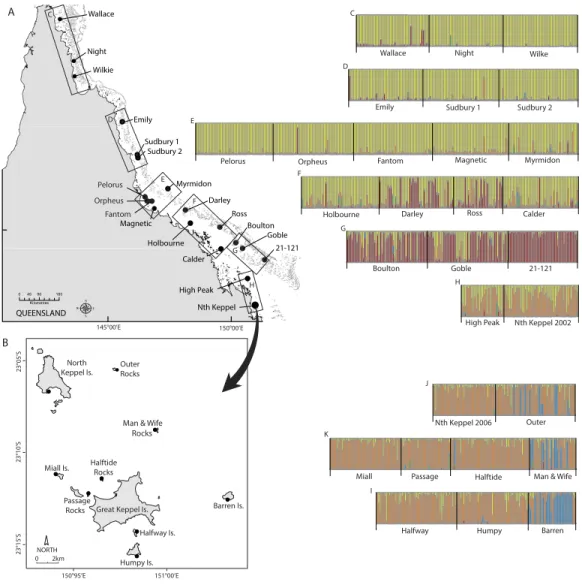
Figure 1 Maps of sampling locations ofAcropora millepora(black circles) from: (A)van Oppen et al. (2011)and (B) this study.Colour plots (C) to (I) are TESS results using the admixture model andK=5,
in which each bar represents an individual coral colony and the five colours represent the five genetic clusters. Plots (C) to (H) correspond to reefs sampled in boxes (C) to (H) on map (A), while plots (J) to (I) correspond to reefs sampled in map (B).
a population genetics approach. Specifically, we explore genetic structure, connectivity and diversity on nine shallow reefs throughout the Keppel Island region using high-resolution DNA microsatellite markers. We also compare population genetic diversity and local population genetic structure ofA. milleporain the Keppel Islands to that of 19 reefs spanning much of the latitudinal range of the GBR and including one of the nine Keppel Island reefs sampled six years earlier (van Oppen et al., 2011). We discuss the implications of our findings in terms of the future management of the Keppel Island reefs.
MATERIAL AND METHODS
The Keppel Bay Island archipelago lies∼30 km north of the mouth of the Fitzroy
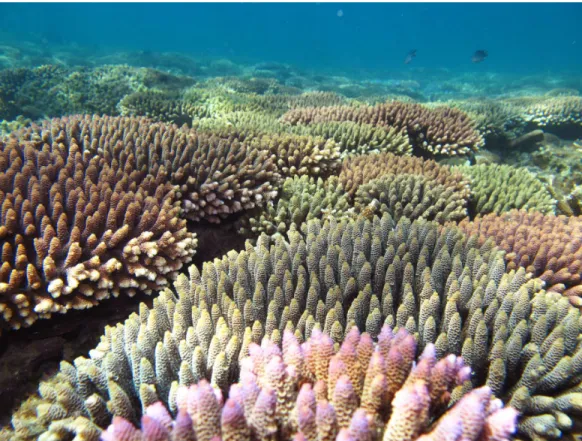
Figure 2 Image showing a typical shallow water reef in the Keppel Island archipelago, dominated by
Acropora millepora.Photo credit: Alison Jones.
fringe the bay heads of the islands and, to a lesser extent, the rocky coastal headlands (Hopley, 2006). Wherever substantial reefs exist, these are dominated by large stands of fast-growing ‘structural’ species such as the acroporids, pocilloporids and poritids (Jones, Berkelmans & Houston, 2011). One such coral,A. millepora (Scleractinia: Acroporidae), grows prolifically between 0–6.0 m (lowest astro-nomical tide) forming shallow, expansive reef flats on the leeward shores of is-lands in the Bay (Fig. 2). A. milleporais a common and ecologically important species on the GBR, particularly on the inshore reefs. Like most Acroporidae, A. milleporareproduces sexually via a single annual broadcast spawning event, and to a lesser extent via asexual reproduction through fragmentation (Smith & Hughes, 1999).
CORAL SAMPLING
At each site, 29–50 samples were collected from colonies located at depths between 0–6.0 m by removing a single branch from each colony. Samples were preserved in absolute ethanol. Samples at each site were collected from areas less than 500 m2, targeting colonies >5 m apart on haphazard swim trajectories using SCUBA. This approach minimises the likelihood of sampling colonies generated asexually via fragmentation from the source colony, as fragments ofA. milleporaon reef flat habitats are rarely dispersed further than 4 m from their source colonies and typically have low survival and reattachment rates (Smith & Hughes, 1999).
GENETIC CHARACTERISATION
DNA was extracted from the preserved samples based on a slightly modified version of the method byWilson et al. (2002). PCR primers and protocols for the ten microsatellite loci are described invan Oppen et al. (2011)andWang, Zhang & Matz (2009). Twelve microsatellite markers were used in the PCR reactions and run in four multiplex reactions (Table S1); however, two loci were not used because of inconsistent amplification success.
DATA ANALYSIS
MegaBACE Genetic Profiler Software Suite version 2 (GE Healthcare, Little Chalfont, UK) was used to determine the fragment sizes (alleles) of all samples. All automatic scoring was checked manually, and samples that yielded ambiguous or no signal were re-amplified and re-run or removed from the analysis. The new data acquired in this study were first analysed separately and subsequently combined with previously obtained data on the same species and using the same loci, but from 20 GBR locations spanning 12◦of latitude
(van Oppen et al., 2011) and including one site in the Keppel Islands (Nth Keppel Island). Because thevan Oppen et al. (2011)data were scored with a different software package (CEQ8800 system software, version 10), the possibility existed that alleles were scored differently and a shift in allele size had occurred between the two methods. A subset of 3–5 samples from thevan Oppen et al. (2011)data set harbouring the most common alleles was therefore selected for each locus, and rescored using the MegaBACE software. Based on this comparison, the allele sizes of all samples and loci were adjusted to match thevan Oppen et al. (2011)study. The combined data set of the two studies is available inData S1.
The probabilities of identity by random sexual mating (Waits, Luikart & Taberlet, 2001) were calculated using an AMOVA (Analysis of Molecular Variance) approach (Excoffier, Smouse & Quattro, 1992) in GenAlEx v6.501 (Peakall & Smouse, 2006). Individuals sharing the same multilocus genotype (MLG) were inferred to be clone mates if probabilities of identity by random sexual mating were small. If asexual reproduction was inferred, all but one individual with this MLG were removed prior to further data analysis.
instances of deviations from HWE (Table S2), all analyses were therefore conducted on data uncorrected for null alleles.
Genetic diversity, population structure, gene flow and isolation by distance
Various aspects of genetic diversity and uniqueness were estimated in GenAlEx v6.501 including the number of alleles per locus (Na), allelic richness (Ar), allelic evenness (Ae), observed (HO) and expected (HE) heterozygosities and private alleles. Differences
in rarefacted allelic richness (using 22 individuals per site, the smallest sample size in the data set) between the nine Keppel Island sites and the 19 other sites from throughout the GBR were assessed in FSTAT 2.9.3 using a Mann–Whitney U test (Goudet, 1995).
Populations that have experienced a recent reduction in their effective population size exhibit a reduction in the allele numbers and transient heterozygous (HO) excess at
polymorphic loci compared to that under HWE (HE) (Cornuet & Luikart, 1996). If HWE
is assumed (i.e., no recent bottleneck), there is an equal probability of having a positive or a negative difference between the observed and the expected heterozygosities. In contrast, following a recent bottleneck, heterozygous excess is expected to occur more often than heterozygous deficit. Therefore, if the number of loci for which there is heterozygous excess is significantly larger than that for which there is a heterozygous deficit, a recent bottleneck can be inferred (Luikart & Cornuet, 1998). The heterozygosity distribution under the assumption of HWE and the infinite allele mutation model was calculated for each of the nine Keppel Island sites and for each locus in the software package Bottleneck 1.2.02. Bottlenecks are also expected to change the allele frequency distribution (Cornuet & Luikart, 1996). Therefore, the allele frequency distribution was established to see whether it was approximately L-shaped (as expected under HWE) or not.
Population structure within the Keppel Islands and the combined data sets was esti-mated usingFSTvalues calculated using an AMOVA approach (Excoffier, Smouse &
Quat-tro, 1992) in GenAlEx v6.501 (Peakall & Smouse, 2006) with significance tested using 999 permutations. Genetic differentiation between sites was estimated in the following ways: (1)FSTvalues were calculated using an AMOVA approach in GenAlEx v6.501. To assess the
significance of differentiation between sites, we applied a Fisher exact test (Goudet, 1995) using Genepop v4.0 with the default Markov chain parameters. Statistical significance for all pairwise tests was adjusted for multiple comparisons by the B-Y False Discovery Rate (FDR) method (Narum, 2006). (2)Jost’s (2008) actual measure of differentiation (Dest) was
computed in SMOGD version1.2.5 (Crawford, 2010). To visualise the genetic relationships among populations, the genetic distance measures between pairs of Keppel Island sites were plotted using a Principal Coordinates Analysis (PCoA) with GenAlEx v6.501. To determine whether there was a pattern of isolation-by-distance (IBD), pairwiseDestvalues
were regressed onto over-water distances between sites and significance tested using Mantel permutation test in IBD Web Service (Jensen, Bohonak & Kelley, 2005).
for the Keppel Islands (n=370) and Keppel Islands plus the GBR (n=1,292) datasets.
STRUCTURE analyses were conducted using both the admixture and no-admixture models, each with correlated allele frequencies, using the sampling sites as prior (LOCPRIOR), which has been shown to better resolve genetic structure when there is low genetic divergence (Hubisz et al., 2009). MCMC chains used a burn-in of 50,000 chains followed by 500,000 of MCMC replications. Ten independent chains were run for eachK fromKof 1 to 9 for the KI data andKof 1 to 15 for the combined data. In each case, the most likely value ofKwas evaluated using the method ofEvanno, Regnaut & Goudet (2005) as implemented in STRUCTURE HARVESTER (Earl, 2009). STRUCTURE implements an algorithm that puts a strong emphasis on the prior of the existence of clusters, which may make it prone to errors when geographical sampling is discrete along clines (Chen et al., 2007). TESS aims to address this issue by using a spatially continuous prior based on the geographical coordinates of each sampled individual. TESS was run using the CAR admixture model, which assumes spatial autocorrelation of the genomes of individuals in closer geographical proximity compared with those further apart. The strength of this autocorrelation is represented by a spatial interaction parameter (ψ), which was set to the default value of 0.6 for analysis. TESS was run with a burn-in of 10,000 sweeps followed by 25,000 sweeps, with 20 independent runs conducted for each value ofKfromKof 2 to 9 for the KI data andKof 2 to 15 for the combined KI plus GBR data (TESS does not implement analyses forK=1). For each value of K, the ten runs with the lowest DIC scores were used
to calculate the average DIC and evaluate the most likely number of genetic clusters. The coefficient of ancestry was calculated for each individual across all runs for the most likely value ofKin CLUMPP version 1.1.2 (Jakobsson & Rosenberg, 2007) and results visualized with the program DISTRUCT version 1.1 (Rosenberg, 2004).
GeneClass2 (Piry et al., 2004) was used to examine first generation migrants (i.e., recent gene flow) within the Keppel Island archipelago (only the Keppel Island data were used for this analysis). In the first step of this analysis, migrants were identified using the criteria and computational algorithm ofRannala & Mountain (1997)with 10,000 simulated genotypes and an alpha of 0.01. The test statisticLhwas used as not all potential source
populations had been sampled (Paetkau et al., 2004). Migrants were excluded from the data set, and this adjusted data set served as the reference data set to which migrants were assigned. Migrants were assigned to populations if the assignment probabilities were greater than 0.1.
RESULTS
Genetic diversity
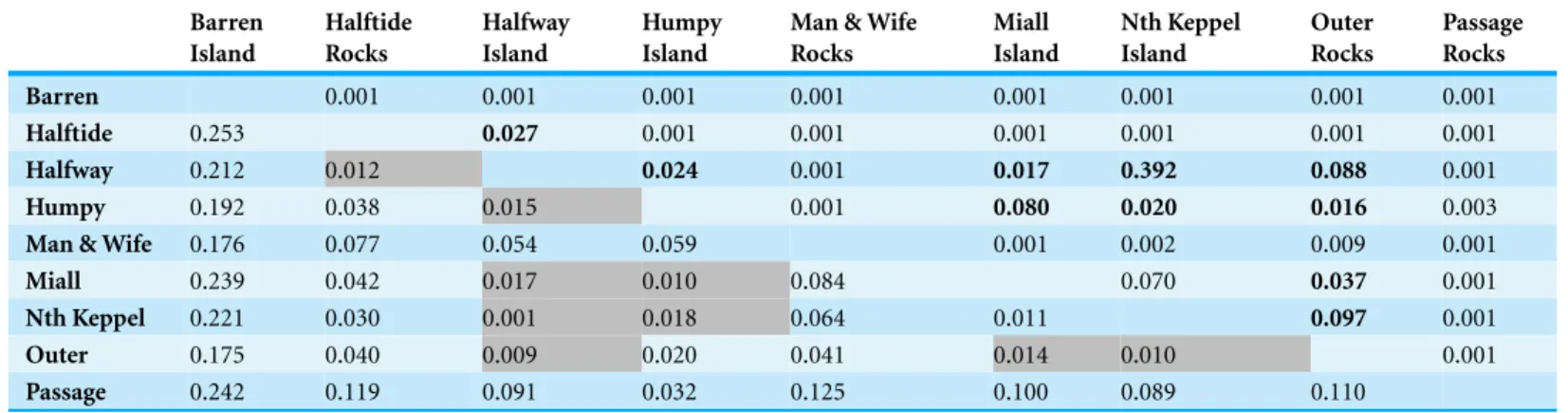
Table 1 PairwiseDestvalues, below diagonal,p-values above diagonal.
Barren Island
Halftide Rocks
Halfway Island
Humpy Island
Man & Wife Rocks
Miall Island
Nth Keppel Island
Outer Rocks
Passage Rocks
Barren 0.001 0.001 0.001 0.001 0.001 0.001 0.001 0.001
Halftide 0.253 0.027 0.001 0.001 0.001 0.001 0.001 0.001
Halfway 0.212 0.012 0.024 0.001 0.017 0.392 0.088 0.001
Humpy 0.192 0.038 0.015 0.001 0.080 0.020 0.016 0.003
Man & Wife 0.176 0.077 0.054 0.059 0.001 0.002 0.009 0.001
Miall 0.239 0.042 0.017 0.010 0.084 0.070 0.037 0.001
Nth Keppel 0.221 0.030 0.001 0.018 0.064 0.011 0.097 0.001
Outer 0.175 0.040 0.009 0.020 0.041 0.014 0.010 0.001
Passage 0.242 0.119 0.091 0.032 0.125 0.100 0.089 0.110
Notes.
Most values are statistically significant; non-significant values have shaded background, andp-values larger than adjustedαare printed in bold face (adjustedα=0.012).
pairwise comparisons within each population) of LD were observed in Barren Island, Outer Rocks, Man & Wife Rocks, Halftide Rocks, Nth Keppel Island, Humpy Island, and Passage Rocks, respectively (Table S3). No cases of LD were observed in the Miall and Halfway Island populations.
In the combined data set, rarefacted allelic richness was slightly, but statistically significantly lower between the Keppel Island populations and all other GBR populations included in this study (6.7 vs. 7.3 alleles respectively,p=0.006). Plots of allelic evenness
(Figs. S1AandS1B) confirm that, with the exception of Man & Wife Rocks, genetic diversity is consistently lower in the Keppel Islands compared to elsewhere on the GBR. The Bottleneck analyses indicated all loci in all populations fit the mutation-drift equilibrium, and there were no deviations from an L-shaped allele frequency distribution, suggesting no recent bottlenecks have occurred.
Private alleles were found in 54 out of 1,292 colonies ofA. milleporafrom the combined GBR-Keppel Islands data set, 23 (43%) of which occurred in the Keppel Islands. Given the relatively small sample size from Keppel Island populations (320 out of 1,292, i.e., 25% of the total sample size), private alleles are overrepresented in this archipelago. Twenty-one of the 23 Keppel Island samples with private alleles were from the outer island group.
Population structure, gene flow and isolation by distance
AMOVA showed that 5% of the total variance in the Keppel Island data set was partitioned among populations (GlobalFST=0.055,p<0.001). PairwiseFSTvalues were significant
for all comparisons (B-Y FDR;αCRIT =0.012) except for Halfway Island-Miall Island, Halfway Island-Nth Keppel Island and Miall Island-Nth Keppel Island (Table S4). The Barren Island population was highly divergent, with mostFSTvalues>0.1. Twenty-six
of 36 pairwiseDestvalues were statistically significant, and theDestvalues also indicated
that the Barren Island population was highly divergent, with most values>0.2 (Table 1). This pattern is clearly visualised in the PCoA of pairwiseDestvalues (Fig. S2). There was
no evidence of IBD (r2=0.07,p=0.150;Fig. S3), which is consistent with the pattern
Island vs. Nth Keppel Island; Humpy Island vs. Nth Keppel Island;Table 1), while other geographically proximate sites are genetically divergent (e.g., Man & Wife Rocks vs. Halftide Rocks;Table 1).
Forty-two of the 370 Keppel Island individuals included in this study were identified as first generation migrants based on the GeneClass2 analysis (Table S5). In the outer Keppel Islands, five out of 29 (Barren), three out of 28 (Man & Wife) and six out of 50 (Outer) were identified as recent migrants. Four of these could not be assigned (i.e., had assignment probabilities<0.1 to all sampled populations), seven had the greatest probabilities for assignment to other outer reefs, three had high assignment probabilities to both inner and outer Keppel Island populations, while none were assigned to inner island populations only. Of the 28 migrants identified in the inner islands, 19 were assigned. Eight of these were assigned to one or more of the outer island populations, six to both inner and outer populations, and five to other inner island populations. These results suggest recent gene flow has occurred both within and between island groups, and that gene flow occurs from east to west and vice versa, but likely more frequently from east (outer islands) to west (inner islands).
STRUCTURE using the admixture model indicated that two or three genetic clusters best explained the genetic patterns of the multilocus genotypes of the 370 colonies of A. milleporain the Keppel Islands, with highestΔKforK=2 followed byK=3 (Fig. S4).
Similarly, TESS DIC scores declined sharply betweenK=2 andK=3 and then declined
much more slowly while variances in DIC increased markedly, providing support for three genetic clusters (Fig. S4). STRUCTURE using the no-admixture model did not provide a clear result. TESS and STRUCTURE using the admixture model forK=2 returned almost
identical genetic patterns, with Passage Rocks, Halftide Rocks, Halfway, Humpy, Miall and Nth Keppel Islands forming a panmictic cluster, while Barren Island, Man & Wife and Outer Rocks had some individuals from the panmictic cluster and others from the second genetic cluster (Fig. S5). TESS forK=3 returned a similar pattern toK=2 except that
Man & Wife Rocks was distinct from Barren Island and Outer Rocks, with colonies that did not belong to the panmictic cluster belonging to the third genetic cluster (Fig. S5). By contrast, STRUCTURE forK=3 found admixture between the panmictic and the
third genetic cluster within all individuals at Passage Rocks and approximately half the individuals at Humpy Island (Fig. S5). This result, combined with the higherΔKforK=2
thanK=3 suggests that, unlike TESS, the algorithm implemented in STRUCTURE was
unable to resolve Man & Wife Rocks as a distinct genetic cluster.
For the combined GBR plus Keppel Island data set, STRUCTURE results showed that ΔKwas highest forK=2 followed byK=3 and then peaked again atK=5, while TESS
DIC values declined steeply betweenK=2 andK =5 and then declined more slowly
(Fig. S6). AlthoughΔKforK=5 (ΔK=20) was smaller than forK=2 (ΔK=230) and
K=3 (ΔK=35), all were much larger than for all other values ofK(typicallyΔK<1).
Given that TESS clearly delineated three genetic clusters for the Keppel Islands alone, we presentK=5 for the combined dataset. All sites in the Keppel Island archipelago
GBR reefs, as well as most southern GBR reefs except High Peak (Fig. 1), which may receive larvae from the Keppel Islands via the predominantly north-east flowing sea surface currents in this part of the GBR (Luick et al., 2007). In particular, Barren Island and some individuals from Man & Wife and Outer Rocks belonged to a genetic cluster not found elsewhere on the GBR. Temporal samples from Nth Keppel Island (July 2002,van Oppen et al., 2011;van Oppen et al., 2008, this study) were genetically similar (Fig. 1) and hadFST
values not significantly different from zero (results not shown).
DISCUSSION
Limited gene flow between inner and outer island clusters
The Barren Island population is a genetic outlier withDestvalues ranging from 0.175 to
0.253 (Table 1), and most of the individuals sampled belong to a genetic cluster distinct from any other cluster observed on the GBR (Fig. 1). The reasons underlying the extreme genetic distinctiveness of this population are unclear. Outer and Man & Wife Rocks have smaller numbers of individuals of the same distinct genetic affinity. Despite this, all three outer island populations contain some individuals that are of the inner islands genetic affinity. Further, they show a signature of admixture with some colonies being comprised of the distinct as well as the more typical inner island genetic cluster, suggesting some level of gene flow exists between outer and inner islands. This was confirmed by assignment tests, which in addition suggested gene flow is higher from east to west than from west to east, consistent with the predominant direction of sea surface currents (Luick et al., 2007). A genetic parentage study of two coral reef fish species found that recent dispersal rates were higher among the inner Keppel Islands than between Barren Island and the inner islands (Harrison et al., 2012), consistent with our observations forA. millepora.
Coral larval competency is unlikely a limiting factor for gene flow ofA. milleporaas larvae of this species are competent to metamorphose and settle around 4–5 days after spawning (Babcock & Heyward, 1986), with maximum rates of metamorphosis occur at eight days after spawning (Heyward & Negri, 1999). Maximum longevity ofAcropora coral larvae in the water column, however, is much longer (∼60–200 days) (Nishikawa,
Mechanisms of recovery
A. milleporapopulations in the Keppel Island archipelago are genetically isolated from most other populations on the GBR (Fig. 1) and are therefore largely self-sustaining. Along the GBR, south easterly trade winds dominate throughout the year but are seasonally displaced by northerly monsoonal winds during the austral summer (Pickard, 1977). The nearest mid-shelf reefs to the Keppel Islands are those of the Capricorn Bunker Group, >65 km to the east. South easterly winds could theoretically drive recruitment between the Capricorn Bunkers and the Keppel Island group, butA. milleporais relatively rare in the former (M van Oppen, pers. obs., 2012) and these reefs therefore unlikely serve as a source of larvae for the Keppel Island populations.A. milleporahas a relatively high dispersal potential due to its broadcast-spawning mode of reproduction and long larval competency period. We hypothesise that, in the Keppel Islands, other coral species with similarly high dispersal potential toA. millepora, as well as species that disperse over shorter spatial distances, will also consist of primarily self-sustaining populations (although the Capricorn Bunkers may be a source for high dispersal coral species that occur at higher abundance there). This suggests that the archipelago is vulnerable to perturbations that cause widespread high coral mortality, as recovery through the arrival of recruits from reefs outside the Keppel Islands will be slow.
The 2002 Nth Keppel Island sample (collected prior to the 2002 bleaching event) exhibited no evidence of a genetic bottleneck, which was unexpected given the high mortality experienced during the 1998 mass bleaching event (Berkelmans et al., 2004). The same population showed anFSTvalue not significantly different from zero when
compared with the 2008 sample from the same location. In addition to the 2002 bleaching event, a mass bleaching episode occurred in the Keppel Islands in 2006, causing∼40%
Jones & Berkelmans, 2010) appear to be key to this atypically rapid coral cover recovery following disturbance.
Preliminary observations show that the speed of recovery following flood events is slower than that following bleaching, likely reflecting the more common occurrence of whole colony mortality in areas affected by fresh water inundation, despite its more spatially restricted impact. For example, the 1991 flooding event (Byron & O’Neill, 1992; Furnas, 2003;Jones & Berkelmans, 2014) caused total mortality ofAcroporaspp. down to 1.3 m below lowest tide (van Woesik, DeVantier & Glazebrook, 1995). Average coral cover at the southern/western side of Nth Keppel Island (site 4 inByron & O’Neill, 1992) dropped from pre-flood levels of 51–75% to 10% post-flood (Byron & O’Neill, 1992) and had not yet fully recovered by February 1995 (∼40%, R Berkelmans, 1995, unpublished data).
Similarly coral cover on the southern/western side of Halfway Island (site 20 inByron & O’Neill, 1992) dropped from 76–100% before the 1991 flood to 50% post-flood but were fully recovered by August 1996 (∼84%, R Berkelmans, 1996, unpublished data). However,
reefs on the northern and eastern sides of these islands generally showed little coral loss (Byron & O’Neill, 1992;van Woesik, DeVantier & Glazebrook, 1995). Our interpretation of these observations, in light of the population genetic results presented here, is that while whole colony mortality is more prominent during floods than bleaching, flooding has a spatially more variable impact within the Keppel Islands. The slower recovery of flood impacted southern and western sides of the islands was likely mostly due to larval recruitment from northern and eastern sites.
Management implications
The lack of evidence for genetic erosion in this study demonstrates that, despite four high mortality events including flooding in 1991, and bleaching in 1998, 2002 and 2006, the resilience of coral populations in the Keppel Islands was high prior to late 2008—early 2009 when the sampling for this study was conducted. However, in this isolated reef system, recruitment from external sources is limited, potentially placing future recovery at risk if disturbance events are too frequent or are severe enough to cause widespread whole-colony mortality.
CONCLUSIONS
Our microsatellite genotyping results demonstrate that populations of the common reef builder,A. millepora, in the Keppel Islands fall into two clusters with limited gene flow; those at the inner islands vs. those at the outer islands (i.e., Barren Island, Outer Rocks and Man & Wife Rocks). Further, populations of this species in the Keppel Island archipelago are self-sustaining and receive very little input from populations elsewhere on the GBR. Genetic diversity analyses suggest coral recovery in the Keppel Islands often occurs from surviving colony regrowth rather than by recruitment from external sources, especially following bleaching. However, when whole colony mortality is widespread within a reef but variable among reefs (as is the case with floods), recruitment from external, nearby reefs that suffered low mortality can facilitate recovery.
ACKNOWLEDGEMENT
The authors would like to thank Scott Gardner for assistance with sampling.
ADDITIONAL INFORMATION AND DECLARATIONS
Funding
This research was supported by a Central Queensland University Research Advanced Award Scheme Postdoctoral Fellowship to AM Jones, and the Australian Institute of Marine Science. The funders had no role in study design, data collection and analysis, decision to publish, or preparation of the manuscript.
Grant Disclosures
The following grant information was disclosed by the authors: Central Queensland University.
Australian Institute of Marine Science.
Competing Interests
The authors declare there are no competing interests.
Author Contributions
• Madeleine J.H. van Oppen conceived and designed the experiments, analyzed the data,
contributed reagents/materials/analysis tools, wrote the paper, prepared figures and/or tables, reviewed drafts of the paper.
• Vimoksalehi Lukoschek analyzed the data, wrote the paper, prepared figures and/or
tables, reviewed drafts of the paper.
• Ray Berkelmans conceived and designed the experiments, contributed
reagents/materials/analysis tools, wrote the paper, reviewed drafts of the paper.
• Lesa M. Peplow performed the experiments.
• Alison M. Jones conceived and designed the experiments, performed the experiments,
Field Study Permissions
The following information was supplied relating to field study approvals (i.e., approving body and any reference numbers):
Great Barrier Reef Marine Park Authority collection permit numbers G09/30237.1 and G08/26114.1
Supplemental Information
Supplemental information for this article can be found online athttp://dx.doi.org/ 10.7717/peerj.1092#supplemental-information.
REFERENCES
Almany G, Connolly S, Heath D, Hogan J, Jones G, McCook L, Mills M, Pressey R,
Williamson D. 2009.Connectivity, biodiversity conservation and the design of marine reserve networks for coral reefs.Coral Reefs28:339–351DOI 10.1007/s00338-009-0484-x.
Babcock RC, Heyward A. 1986.Larval development of certain gamete-spawning scleractinian
corals.Coral Reefs5:111–116DOI 10.1007/BF00298178.
Berkelmans R, De’ath G, Kininmonth S, Skirving WJ. 2004.A comparison of the 1998 and 2002
coral bleaching events on the Great Barrier Reef: spatial correlation, patterns, and predictions.
Coral Reefs23:74–83DOI 10.1007/s00338-003-0353-y.
Byron GT, O’Neill JP. 1992.Flood induced coral mortality on fringing reefs in Keppel Bay. In:Workshop on the impact of flooding. Townsville: Great Barrier Reef Marine Park Authority.
Chen C, Durand E, Forbes F, Franc¸ois O. 2007.Bayesian clustering algorithms ascertaining spatial population structure: a new computer program and a comparison study.Molecular Ecology Notes7:747–756DOI 10.1111/j.1471-8286.2007.01769.x.
Cornuet JM, Luikart G. 1996.Description and power analysis of two tests for detecting recent population bottlenecks from allele frequency data.Genetics144:2001–2014.
Crawford NG. 2010.smogd: software for the measurement of genetic diversity.Molecular Ecology
Resources10:556–557DOI 10.1111/j.1755-0998.2009.02801.x.
Diaz-Pulido G, McCook LJ, Dove S, Berkelmans R, RoffG, Kline DI, Weeks S, Evans RD,
Williamson DH, Hoegh-Guldberg O. 2009.Doom and boom on a resilient reef: climate
change, algal overgrowth and coral recovery.PLoS ONE4:e5239
DOI 10.1371/journal.pone.0005239.
Earl DA. 2009.Structure harvester. v 0.56.3.Available athttp://taylor0.biology.ucla.edu/struct harvest/.
Evanno G, Regnaut S, Goudet J. 2005.Detecting the number of clusters of individuals
using the software STRUCTURE: a simulation study. Molecular Ecology14:2611–2620
DOI 10.1111/j.1365-294X.2005.02553.x.
Excoffier L, Smouse PE, Quattro JM. 1992.Analysis of molecular variance inferred from metric distances among DNA haplotypes: application to human mitochondrial DNA restriction data.
Genetics131:479–491.
Franc¸ois O, Durand E. 2010.Spatially explicit Bayesian clustering models in population genetics.
Molecular Ecology Resources10:773–784DOI 10.1111/j.1755-0998.2010.02868.x.
Gilmour JP, Smith LD, Heyward AJ, Baird AH, Pratchett MS. 2013.Recovery of an isolated coral reef system following severe disturbance.Science340:69–71DOI 10.1126/science.1232310.
Goudet J. 1995.Fstat version 1.2: a computer program to calculate Fstatistics.Journal of Heredity
86:485–486.
Graham EM, Baird AH, Connolly SR. 2008.Survival dynamics of scleractinian coral larvae and
implications for dispersal.Coral Reefs27:529–539DOI 10.1007/s00338-008-0361-z.
Harrison HB, Williamson DH, Evans RD, Almany GR, Thorrold SR, Russ GR, Feldheim KA,
Van Herwerden L, Planes S, Srinivasan M, Berumen ML, Jones GP. 2012.Larval export from
marine reserves and the recruitment benefit for fish and fisheries.Current Biology22:1023–1028
DOI 10.1016/j.cub.2012.04.008.
Heyward A, Negri A. 1999.Natural inducers for coral larval metamorphosis.Coral Reefs
18:273–279DOI 10.1007/s003380050193.
Hoegh-Guldberg O, Hughes L, McIntyre S, Lindenmayer DB, Parmesan C, Possingham HP,
Thomas CD. 2008.Assisted colonization and rapid climate change.Science321:345–346
DOI 10.1126/science.1157897.
Hopley D. 2006.Coral reef growth on the shelf margin of the Great Barrier Reef with special reference to the Pompey Complex.Journal of Coastal Research22:150–174
DOI 10.2112/05A-0012.1.
Hubisz MJ, Falush D, Stephens M, Pritchard JK. 2009.Inferring weak population structure
with the assistance of sample group information.Molecular Ecology Resources9:1322–1332
DOI 10.1111/j.1755-0998.2009.02591.x.
Hughes TP, Baird AH, Dinsdale EA, Moltschaniwskyj NA, Pratchett MS, Tanner JE, Willis BL. 2000.Supply-side ecology works both ways: the link between bethic adults, fecundity, and larval recruits.Ecology81:2241–2249DOI 10.1890/0012-9658(2000)081[2241:SSEWBW]2.0.CO;2.
Jakobsson M, Rosenberg NA. 2007.CLUMPP: a cluster matching and permutation program
for dealing with label switching and multimodality in analysis of population structure.
Bioinformatics23:1801–1806DOI 10.1093/bioinformatics/btm233.
Jensen JL, Bohonak AJ, Kelley ST. 2005.Isolation by distance, web service.BMC Genetics
6:13DOI 10.1186/1471-2156-6-13.
Jones A, Berkelmans R. 2010.Potential costs of acclimatization to a warmer climate: growth of a reef coral with heat tolerant vs. sensitive symbiont rypes. PLoS ONE5:e10437
DOI 10.1371/journal.pone.0010437.
Jones AM, Berkelmans R. 2011.Tradeoffs to thermal acclimation: energetics and reproduction of a reef coral with heat tolerant Symbiodinium type-D.Journal of Marine Biology2011:185890
DOI 10.1155/2011/185890.
Jones AM, Berkelmans R. 2014.Flood impacts in Keppel Bay, southern Great Barrier Reef in the
aftermath of cyclonic rainfall.PLoS ONE9:e84739DOI 10.1371/journal.pone.0084739.
Jones AM, Berkelmans R, Houston W. 2011.Species richness and community structure on
a high latitude reef: implications for conservation and management.Diversity3:329–355
DOI 10.3390/d3030329.
Jones AM, Berkelmans R, van Oppen MJH, Mieog JC, Sinclair W. 2008.A community change
in the algal endosymbionts of a scleractinian coral following a natural bleaching event: field evidence of acclimatization.Proceedings of the Royal Society B-Biological Sciences275:1359–1365
Jost L. 2008. G(ST) and its relatives do not measure differentiation. Molecular Ecology
17:4015–4026DOI 10.1111/j.1365-294X.2008.03887.x.
Luick JL, Mason L, Hardy T, Furnas MJ. 2007. Circulation in the Great Barrier Reef
Lagoon using numerical tracers andin situdata.Continental Shelf Research27:757–778
DOI 10.1016/j.csr.2006.11.020.
Luikart G, Cornuet JM. 1998. Empirical evaluation of a test for identifying recently bottlenecked populations from allele frequency data.Conservation Biology12:228–237
DOI 10.1046/j.1523-1739.1998.96388.x.
Lukoschek V, Cross P, Torda G, Zimmerman R, Willis BL. 2013.The importance of coral larval
recruitment for the recovery of reefs impacted by cyclone Yasi in the Central Great Barrier Reef.
PLoS ONE8:e65363DOI 10.1371/journal.pone.0065363.
Michalek-Wagner K, Willis BL. 2001.Impacts of bleaching on the soft coralLobophytum
compactum. I. Fecundity, fertilization and offspring viability.Coral Reefs19:231–239
DOI 10.1007/s003380170003.
Narum SR. 2006.Beyond Bonferroni: less conservative analyses for conservation genetics.
Conservation Genetics7:783–787DOI 10.1007/s10592-005-9056-y.
Nishikawa A, Katoh M, Sakai K. 2003. Larval settlement rates and gene flow of
broadcast-spawning (Acropora tenuis) and planula-brooding (Stylophora pistillata) corals.
Marine Ecology Progress Series256:87–97DOI 10.3354/meps256087.
Omori M. 2010.Degradation and restoration of coral reefs: experience in Okinawa, Japan.Marine
Biology Research7:3–12DOI 10.1080/17451001003642317.
Paetkau D, Slade R, Burden M, Estoup A. 2004.Genetic assignment methods for the direct,
real-time estimation of migration rate: a simulation-based exploration of accuracy and power.
Molecular Ecology13:55–65DOI 10.1046/j.1365-294X.2004.02008.x.
Peakall R, Smouse PE. 2006.GENALEX 6: genetic analysis in Excel. Population genetic software
for teaching and research.Molecular Ecology Notes6:288–295
DOI 10.1111/j.1471-8286.2005.01155.x.
Pickard GL. 1977.A review of the physical oceanography of the Great Barrier Reef and Western
Coral Sea Australia 1. The Great Barrier Reef.Australian Institute of Marine Science Monograph Series2:1–60.
Piry S, Alapetite A, Cornuet JM, Paetkau D, Baudouin L, Estoup A. 2004.GENECLASS2: a
software for genetic assignment and first-generation migrant detection.Journal of Heredity
95:536–539DOI 10.1093/jhered/esh074.
Prada C, Hellberg ME. 2014.Strong natural selection on juveniles maintains a narrow adult hybrid zone in a marine broadcast spawner.American Naturalist184:702–713DOI 10.1086/678403.
Pritchard JK, Stephens M, Donnelly P. 2000.Inference of population structure using multilocus
genotype data.Genetics155:945–959.
Rannala B, Mountain JL. 1997.Detecting immigration by using multilocus genotypes.
Proceedings of the National Academy of Sciences of the United States of America94:9197–9201
DOI 10.1073/pnas.94.17.9197.
Raymond M, Rousset F. 1995.GENEPOP (version 1.2): population genetics software for exact
tests and ecumenicism.Journal of Heredity86:248–249.
Riegl B, Piller WE. 2001.“Cryptic” tissues insideAcroporaframe works (Indonesia): a mechanism to enhance tissue survival in hard times while also increasing framework density.Coral Reefs
Rosenberg NA. 2004.DISTRUCT: a program for the graphical display of population structure.
Molecular Ecology Notes4:137–138DOI 10.1046/j.1471-8286.2003.00566.x.
Smith LD, Hughes TP. 1999.An experimental assessment of survival, re-attachment and
fecundity of coral fragments.Journal of Experimental Marine Biology and Ecology235:147–164
DOI 10.1016/S0022-0981(98)00178-6.
Underwood JN, Smith LD, van Oppen MJH, Gilmour JP. 2007.Multiple scales of genetic
connectivity in a brooding coral on isolated reefs following catastrophic bleaching.Molecular Ecology16:771–784DOI 10.1111/j.1365-294X.2006.03187.x.
van Oppen MJH, Lutz A, De’ath G, Peplow L, Kininmonth S. 2008.Genetic traces of recent
long-distance dispersal in a predominantly self-recruiting coral.PLoS ONE 3:e3401
DOI 10.1371/journal.pone.0003401.
van Oppen MJH, Peplow LM, Kininmonth S, Berkelmans R. 2011. Historical and
contemporary factors shape the population genetic structure of the broadcast spawning coral.Acropora millepora, on the Great Barrier Reef.Molecular Ecology 20:4899–4914
DOI 10.1111/j.1365-294X.2011.05328.x.
van Oppen MJH, Puill-Stephan E, Lundgren P, De’ath G, Bay LK. 2014.First generation
fitness consequences of interpopulational hybridisation in a Great Barrier Reef coral and its implications for assisted migration management.Coral Reefs 33:607–611
DOI 10.1007/s00338-014-1145-2.
van Woesik R, DeVantier LM, Glazebrook JS. 1995.Effects of cyclone ’Joy’ on nearshore coral communities of the Great Barrier Reef.Marine Ecology-Progress Series128:261–270
DOI 10.3354/meps128261.
Waits LP, Luikart G, Taberlet P. 2001. Estimating the probability of identity among
genotypes in natural populations: cautions and guidelines.Molecular Ecology10:249–256
DOI 10.1046/j.1365-294X.2001.01185.x.
Wang S, Zhang LL, Matz M. 2009.Microsatellite characterization and marker development
from public EST and WGS databases in the reef-building coralAcropora millepora(Cnidaria, Anthozoa, Scleractinia).Journal of Heredity100:329–337DOI 10.1093/jhered/esn100.
Whitaker K. 2004. Non-random mating and population genetic subdivision of two
broadcasting corals at Ningaloo Reef, Western Australia.Marine Biology144:593–603
DOI 10.1007/s00227-003-1220-7.
Wilson K, Li Y, Whan V, Lehnert S, Byrne K, Moore S, Pongsomboon S, Tassanakajon A,
Rosenberg G, Ballment E, Fayazi Z, Swan J, Kenway M, Benzie J. 2002.Genetic mapping
of the black tiger shrimpPenaeus monodonwith amplified fragment length polymorphism.