ISSN 0976-2612, Online ISSN 2278–599X, Vol-7, Special Issue3-April, 2016, pp2075-2082 http://www.bipublication.com
Case Report
Effect of Three Different Types of Honey on Passive Avoidance
Memory Process in the Male Diabetic Rats
1
Farzaneh Sadeghmanesh and 2Irajsalehi
1
Islamic Azad university Hamedan faculty of basic sciences
2
Neurophysiology research center, Hamadan University of medical science, Iran
ABSTRACT
Background: Honey is a natural product which has been known to have various nutritional benefits.
Objectives: This study aimed to investigate the effect of oral administration of honey (sort of Yazd, Strabillus and Acacia) on memory impairment in diabetes using passive avoidance learning test.
Materials and Methods: 64 male Wistar rats (180-220 g) were randomly divided into 8 groups (n = 8 each), including normal (control), diabetic control, honey-treated normal groups and honey-treated diabetic groups. The honey-treated groups were administrated by 1 g/kg/BW dose of organic honey (sort of Acacia, Strabillus and Yazd) for the 8 weeks. Diabetes was induced by intrapritoneally injection of Streptozotocin (60 mg/kg). Passive avoidance learning test was used to evaluate learning and memory. Data were analyzed using SPSS 20 and One-Way ANOVA and Kruskal-Wallis post-hoc tests.
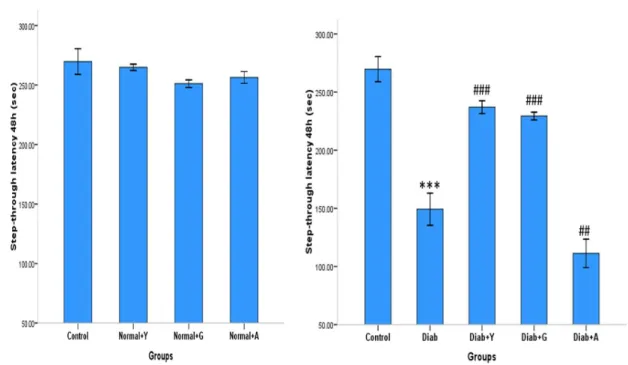
Results: Diabetic control group showed a significant increase in STLa compared with control group (P < 0.001). Diabetic groups received Yazd, Strabillus and Acacia honey compared to diabetic control group showed a significant decrease in STLa (P < 0.001). 24 and 48 hours after learning, diabetic groups received Yazd and Strabillus honey showed a significant increase (P < 0.001) and diabetic group received Acacia honey showed a significant decrease (P < 0.05) in STLr compared to diabetic control group. In the retrieval test, diabetic group received Yazd and Strabillus honey (P < 0.001) and diabetic group received Acacia honey (P < 0.01) showed a significant decrease in TDC compared to diabetic control group.
Conclusions: Treatment with honey can improve memory possibly via reducing oxidative stress in the diabetic rats. It also possibly can affect some nerve pathways in certain areas of the brain effective on learning and memory.
Keywords: Passive Avoidance Learning;Memory; Honey
1. BACKGROUND
Diabetes mellitus is considered as a public health problem and as one of the five leading causes of death, globally. It is associated with several neurological complications such as cognitive impairment and memory deficit. It has been reported that learning strategies are less effective in diabetic patients and they can remind fewer words in the science-based
memory tests (1). Cognitive/memory
impairment has been also observed in the Streptozotocin STZ-induced diabetes as an experimental model of diabetes type one (2, 3). In diabetes, hyperglycemia causes a reduction in
used to limit the progression of diabetes and its
related complications including memory
impairment (7, 8, 9).
Calendula officinalis (10), Teucriumpolium
(11), and Vitamin E (12) have been demonstrated effective to improve learning and memory impairments via their antioxidant activity.
Honey is a natural product which is a collection of nectar from several types of plants processed by honey bees. Carbohydrates are the main components of the honey. It also contains proteins, amino acids, and vitamins. It has recently been shown that there are 30 different polyphenols in honey (13).
Ellagic acid, gallic acid, chrysin, naringenin, myricetin, kaempferol etc. are the most common flavonoids can be found in the honey (14). It is said that honey shows a hypoglycemic effect and improves oxidative stress in kidneys of STZ-induced diabetic rats (15).
Erejuwa et al. demonstrated that the
combination of glibenclamide or metformin with honey results in improving glycemic control, and can also provide additional metabolic benefits, which is not observed with either glibenclamide or metformin alone (16). It has also been reported that Tualang honey can improve the morphology of memory-related brain areas, reduce brain oxidative stress, increase brain-derived neurotrophic factor (BDNF) and acetylcholine (ACh) concentrations (17).
2. OBJECTIVES
This study aimed to investigate the effect of oral administration of honey (sort of Yazd, Strabillus and Acacia) on memory impairment in diabetes using passive avoidance learning test.
3. MATERIALS AND METHODS
In this experimental-intervention study, 64 male Wistar rats (180 - 220 g) were purchased from Pasteur institute of Iran. They were kept in the animal house of Hamedan University of Medical Sciences with 12-h dark/light cycles at ambient temperature of 25 ± 2°C. The rats had free access to laboratory chow and tap water. All animal experiments were approved by the
veterinary ethics committee of the Hamadan University of Medical Sciences and were done in accordance with the national institutes of health guide for care and use of laboratory animals.
The rats were randomly divided into 8 groups (n = 8 each) including normal (control) receiving 0.5 mL water, diabetic control receiving 0.5 mL water, treated normal groups and honey-treated diabetic groups receiving Acacia, Strabillus, and Yazd honey (1 g/kg/BW).
The 1 g/kg/BW dose of organic honey (sort of
Acacia, Strabillus, and Yazd) were
administrated by oral gavage for the 8 weeks. Diabetes was induced by intrapritoneally injection of STZ (60 mg/kg) (Sigma; Germany). The rats were considered diabetic if plasma glucose levels exceeded 250 mg/dL.
The passive avoidance test was used to evaluate learning and memory (18, 19). In general, the passive avoidance apparatus (shuttle box)
consists of lightened and darkened
compartments (20 × 40 × 20 cm) connected to each other by a guillotine door (8 × 8 cm). Both floors are made of stainless steel bars spaced 1 cm apart.
A shock generator is used to electrify the floor of dark compartment. The rat was placed in the light compartment facing away from the guillotine door, and 5 s later the door was raised. After entrance to the dark part, the door was closed, and a 50 Hz square wave, 1.2 mA constant current shock was applied for 1.5 s. They received a foot shock each time if reentered the dark part.
Training was terminated when the rat remained in the light compartment for 120 consecutive seconds. 48 h later, the retention test was carried out in which the rat was placed in the light part and the door was opened 5 s later and the time latency to the dark compartment (STLr) and the time spent in the dark compartment (TDC) were recorded.
4. RESULTS
The results of One-way ANOVA indicated that there was a significant difference in the STLa between normal (control) and the normal Yazd honey-treated group before the administration of the electrical shock (P < 0.001). There was a
significant difference in the STLa between diabetic control group compared with normal (control) group (P < 0.001), and also between Strabillus (P < 0.001) and Acacia-treated diabetic groups (P < 0.01) compared with diabetic control group (Figure 1).
Figure 1.The results of STLa before shock administration in (A) normal and (B), diabetic groups.٭٭P < 0.01;
٭٭٭P < 0.001;## P < 0.01; ### P < 0.001.
There was no significant difference in the STLr between normal groups 24 and 48 h after shock administration. But there was a significant difference between diabetic (control) and normal (control) groups (P < 0.001) and also between Yazd and Strabillus (P < 0.001) and Acacia-treated diabetic groups (P < 0.05; 24 h later) (P < 0.01; 48 h later) compared with diabetic control group (Figure 2).
A B
Figure 2.The results of STLr (A) 24 h and (B) 48 h after shock administration in normal and diabetic groups.٭٭٭P < 0.001; ### P < 0.001; # P < 0.05.
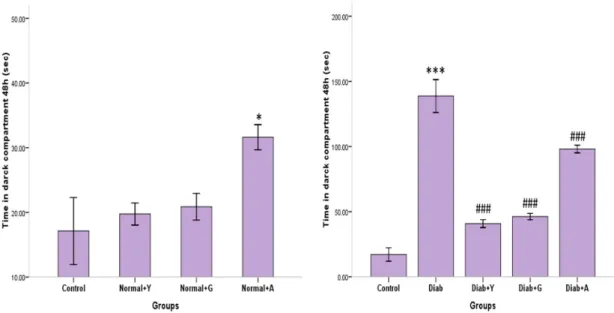
The results showed that although there was no significant difference in the TDC between normal groups 24 h after shock, but a significant difference was seen in the TDC between Acacia-treated normal group and normal (control) group 48 h after shock. A significant difference was observed in TDC between diabetic (control) and normal (control) (P < 0.001) and also between Yazd and Strabillus (P < 0.001) and Acacia-treated diabetic group (P < 0.01) compared with diabetic control group 24 and 48 h after shock administration (Figure 3).
B
A
Figure 3.The results of TDC, (A) 24 h and (B) 48 h after shock administration in normal and diabetic groups.٭P < 0.05; ٭٭٭P < 0.001; ### P < 0.001; ## P < 0.01.
Regarding the number of received shock (trials), no significant difference was found in the normal groups. But, there was a significant difference in diabetic (control) and normal (control) (P < 0.001) and Strabillus (P < 0.01) and Acacia-treated diabetic group (P < 0.01) compared with diabetic control group (Figure 4).
Figure 4.The number of received shocks in (A) normal and (B), diabetic groups.٭٭P < 0.01; ## P < 0.01.
5. DISCUSSION
The results of this study revealed that oral administration of Yazd and Strabillus honey for 8 weeks improved PAL and memory of the rats and alleviated the negative influence of diabetes on learning and memory, as well. 24 and 48
hours after learning, diabetic groups received Yazd and Strabillus honey showed a significant increase and diabetic group received Acacia honey showed a significant decrease in STLr. In the retrieval test, diabetic groups received Yazd, Strabillus, and Acacia honey showed a
significant decrease in TDC. The number of trials was decreased in Strabillus and Acacia-treated diabetic groups. In fact, the increased STLr and decreased TDC indicate a positive effect on memory processes.
The increased production of reactive oxygen species (ROS), enhanced oxidative stress and changes in the antioxidant capacity are seen in diabetes. Diabetic rats exhibit predicted impaired cognitive function. Learning and memory impairment in the diabetic groups may be associated with the increased oxidative stress in diabetic animal's brain. Consumption of fruits and vegetables with high antioxidant activity and neural protective factors may reduce the risk of memory impairment (20).The efficacy of honey in improving learning and memory impairments has also been reported in several different studies. The chronic administration of honey in rats has a positive effect on spatial memory leading to spatial memory improvement (21).It has been demonstrated that antioxidant activity of honey is due to its phenolic compounds. ROS as a factor for oxidative damage is increased in the diabetes and chronic hypoglycemia conditions. Acid Gallic as one of the phenolic compounds found in the most types of honey is greatly capable of ROS scavenging such as superoxide anion, hydrogen peroxide, hydroxyl and hypochlorite radicals. The effect of acid Gallic to improve learning and memory has been reported and can be regarded as a factor for memory improvement in this study, as well (22).
Apigenin is the common flavonoid which is frequently diagnosed in honey. It is suggested that Apigenin can stimulate neurogenesis and improve learning and memory (23). Other remarkable antioxidants present in honey including Caffeic acid (24), Catechin (25), Chlorogenic Acid (26), Chrysin (27), Ellagic acid (28), Kaemoferol (29), Naringenin (30), and myricetin (31) have also been noted to have positive effects on learning and memory.
Hypoglycemia is the main cause of many complications of diabetes. In fact, chronic hyperglycemia in diabetes leads to cognitive disorders (32). Erejuwa et al. in their study, indicate the hypoglycemic and antioxidant
effects of honey in the STZ-induced diabetic rats. Therefore, the observed improvement in learning following the administration of honey can be related to its hypoglycemic effects (15). Honey contains acetylcholine and choline esters acting as neurotransmitter (33). These neurotransmitter systems play an important role in learning and memory (34). As a result, another possible mechanism of the positive effect honey on learning and memory observed in this study can be attributed to the activity of these neurotransmitters.
In general, inducing diabetes in rats can lead to passive avoidance learning impairment and treatment with honey improves memory possibly via reducing oxidative stress in the diabetic rats. It also possibly can affect some nerve pathways in certain areas of the brain effective on memory and learning. It can be concluded that the honey can be used as an associated medication to improve cognitive disorders caused by diabetes.
REFERENCES
1. Fox, M. A., Chen, R. S. and Holmes, C. S. (2003). Gender differences in memory and learning in children with insulin-dependent diabetes mellitus (IDDM) over a 4-year follow-up interval. J PediatrPsychol, 28(8)569_578.
2. Spruce, M. C., Potter, J. and Coppini, D. V. (2003). The pathogenesis and management of painful diabetic neuropathy: a review. Diabet Med, 20(2): 88-98.
3. Hasanein P, Shahidi S. The effect of long term administration of ascorbic acid on the learning and memory deficits induced by diabetes in rat. Tehran Univ Med J. 2010; 68 (1) :12-18.
4. Sharma R, Buras E, Terashima T, Serrano F, Massaad CA, Hu L, Bitner B, Inoue T, Chan L, Pautler RG. (2010). Hyperglycemia induces oxidative stress and impairs axonal transport rates in mice. PloS One. 5 (10): e13463.
6. Wei W, Liu Q, Tan Y, Liu L, Li X, Cai L. (2009). Oxidative stress, diabetes, and diabetic complications. Hemoglobin. 33 (5): 370-377.
7. Fenercioglu AK, Saler T, Genc E, Sabuncu H, Altuntas Y. (2010). The effects of polyphenol-containing antioxidants on oxidative stress and lipid peroxidation in
Type 2 diabetes mellitus without
complications. J Endocrinol Invest. 33 (2): 118-124.
8. Johansen JS, Harris AK, Rychly DJ, Ergul A. (2005). Oxidative stress and the use of antioxidants in diabetes: linking basic
science to clinical practice.
CardiovascDiabetol. 4 (1): 5-12.
9. Maritim AC, Sanders RA, Watkins JB. (2003). Diabetes, oxidative stress and
antioxidants: A review. J
BiochemMolToxicol. 17: 24-38.
10.Moradkhani S, Salehi I, Abdolmaleki S, Komaki A. (2015). Effect of Calendula officinalishydroalcoholic extract on passive
avoidance learning and memory in
streptozotocin-induced diabetic rats. AncSci Life. 34 (3): 156-61.
11.Hasanein P, Shahidi S. Preventive effect of Teucriumpolium on learning and memory deficits in diabetic rats. (2012). Med SciMonit. 18(1): BR41-46.
12.Salehi I, Karamian R, Komaki A, Tahmasebi L, Taheri M, Nazari M, Shahidi S, Sarihi A. (2015). Effects of vitamin E on lead-induced
impairments in hippocampal synaptic
plasticity. Brain Res. 10;1629:270-81. 13.Khalil, M. I. and Sulaiman, S. A. (2010). The
potential role of honey and its polyphenols in preventing heart diseases: a review. Afr J Tradit Complement Altern Med, 7(4): 315-321.
14.Khalil, M. I., Alam, N., Moniruzzaman, M., Sulaiman, S. A. and Gan, S. H. (2011). Phenolic acid composition and antioxidant properties of Malaysian honeys. J Food Sci, 76(6): C921-928.
15.Erejuwa, O. O., Gurtu, S., Sulaiman, S. A., AbWahab, M. S., Sirajudeen, K. N. and Salleh, M. S. (2010). Hypoglycemic and antioxidant effects of honey supplementation
in streptozotocin-induced diabetic rats. Int J VitamNutr Res, 80(1): 74-82.
16.Erejuwa, O. O., Sulaiman, S. A., Wahab, M. S., Sirajudeen, K. N., Salleh, M. S. and
Gurtu, S. (2011). Glibenclamide or
metformin combined with honey improves glycemic control in streptozotocin-induced diabetic rats. Int J BiolSci, 7(2): 244-252. 17.Othman, Z.; Zakaria, R.; Hussain, N.H.N.;
Hassan, A.; Shafin, N.; Al-Rahbi, B.; Ahmad, A.H. Potential Role of Honey in Learning and Memory. Med. Sci. 2015, 3, 3-15.
18.Sarihi A, Yazdi M, Heshmatian B, Saleh I, Behzadi G, Naghdi N, et al. (2011). The effects of lidocaine reversible inactivation of the dorsal raphe nucleus on passive
avoidance learning in rats. Basic
ClinNeurosci. 2: 27-35.
19.Khodamoradi N, Komaki A, Salehi I, Shahidi S, Sarihi A. (2015). Effect of vitamin E on lead exposure-induced learning and memory impairment in rats. PhysiolBehav. 144: 90-4.
20.Tiwari, V., Kuhad, A., Bishnoi, M. and Chopra, K. (2009). Chronic treatment with tocotrienol, an isoform ofvitamin E, prevents
intracerebroventricularstreptozotocin-induced cognitive impairment and
oxidative-nitrosative stress in rats.
PharmacolBiochemBehav, 93(2): 183-189. 21.Chepulis, L. M., Starkey, N. J., Waas, J. R.
and Molan, P. C. (2009). The effects of long-term honey, sucrose or sugar-free diets on memory and anxiety in rats. PhysiolBehav, 97(3-4): 359-368.
22.Rafieirad M, ValipourChardahcherik S. (2013). Gallic acid improves the memory and pain in diabetic rats. Yafteh. 15 (2) :33-41. 23.Rezai-Zadeh, K., Ehrhart, J., Bai, Y.,
Sanberg, P. R., Bickford, P., Tan, J. and Shytle, R. D. (2008). Apigenin and luteolin modulate microglial activation via inhibition of STAT1-induced CD40 expression. J Neuroinflammation. 5: 41.
Morsch, V. M. and Schetinger, M. R. (2012). Effects of caffeic acid on behavioral
parameters and on the activity of
acetylcholinesterase in different tissues from adult rats. PharmacolBiochemBehav, 103(2): 386-394.
25.Unno, K., Takabayashi, F., Yoshida, H., Choba, D., Fukutomi, R., Kikunaga, N., Kishido, T., Oku, N. and Hoshino, M. (2007). Daily consumption of green tea catechin delays memory regression in aged mice. Biogerontology, 8(2): 89-95.
26.Kwon, S. H., Lee, H. K., Kim, J. A., Hong, S. I., Kim, H. C., Jo, T. H., Park, Y. I., Lee, C. K., Kim, Y. B., Lee, S. Y. and Jang, C. G.
(2010). Neuroprotective effects of
chlorogenic acid on scopolamine-induced amnesia via anti-acetylcholinesterase and anti-oxidative activities in mice. Eur J Pharmacol, 649(1-3): 210-217.
27.He, X. L., Wang, Y. H., Bi, M. G. and Du, G. H. (2012). Chrysin improves cognitive deficits and brain damage induced by chronic cerebral hypoperfusion in rats. Eur J Pharmacol, 680(1-3): 41-48.
28.NurulSyazana, M. S., Gan, S. H., Halim, A. S., Shah, N. S., Gan, S. H. and Sukari, H. A. (2013). Analysis of volatile compounds of Malaysian Tualang (Koompassiaexcelsa) honey using gas chromatography mass spectrometry. Afr J Tradit Complement Altern Med, 10(2): 180-188.
29.Park, S. H., Sim, Y. B., Han, P. L., Lee, J. K. and Suh, H. W. (2010). Antidepressant-like Effect of Kaempferol and Quercitirin, Isolated from Opuntiaficus-indica var. saboten. ExpNeurobiol, 38-30: (1).
30.Baluchnejadmojarad, T. and Roghani, M.
(2006). Effect of naringenin on
intracerebroventricularstreptozotocin-induced cognitive deficits in rat: a behavioral analysis. Pharmacology, 78(4): 193-197. 31.Molina-Jimenez, M. F., Sanchez-Reus, M. I.,
Andres, D., Cascales, M. and Benedi, J (2004), Neuroprotective effect of fraxetin and myricetin against rotenone-induced apoptosis in neuroblastoma cells. Brain Res, 1009(1-2): 9-16.
32.Biessels, G. J., Kerssen, A., de Haan, E. H. and Kappelle, L. J. (2007). Cognitive dysfunctionand diabetes: implications for primary care. Prim Care Diabetes, 1(4): 187-193.
33.Goldschmidt, S. and Burkert, H. (1955). Hydrolysis of the cholinergic substance and
other choline esters of honey by
cholinesterases, and their inhibition in honey. Hoppe Seylers Z PhysiolChem, 301(1-2): 78-89.