A Survey of Dog Owners in Remote Northern
Australian Indigenous Communities to
Inform Rabies Incursion Planning
Emily G. Hudson1, Navneet Dhand1, Salome Dürr2, Michael P. Ward1*
1Faculty of Veterinary Science, The University of Sydney, Camden, New South Wales, Australia,
2Veterinary Public Health Institute, University of Bern, Bern, Switzerland
Abstract
Australia is underprepared for a rabies incursion due to a lack of information about how a rabies outbreak would spread within the susceptible canine populations and which control strategies would be best to control it. The aim of this study was to collect information to parameterize a recently developed dog rabies spread model as well as use this information to gauge how the community would accept potential control strategies. Such information–
together with model outputs–would be used to inform decision makers on the best control strategies and improve Australia’s preparedness against a canine rabies incursion. The parameters this study focussed on were detection time, vaccination rates and dog-culling and dog movement restriction compliance. A cross-sectional survey of 31 dog-owners, using a questionnaire, was undertaken in the five communities of the Northern Peninsular Area (NPA) in northern Australia regarding community dog movements, veterinary visits, reporting systems, perceptions of sick dogs and potential human behaviours during hypo-thetical rabies outbreaks. It highlighted the significant shortfalls in veterinary care that would need to be vastly improved during an outbreak, who educational programs should be tar-geted towards and which dog movements should be restricted. The results indicate that men were significantly more likely than women to allow their dogs to roam and to move their dogs. The current low vaccination rate of 12% highlighted the limited veterinary services that would need to be substantially increased to achieve effective rabies control. Participa-tion in mass vaccinaParticipa-tion was accepted by 100% of the respondents. There was lower acceptance for other possible rabies control strategies with 10–20% of the respondents stating a resistance to both a mass culling program and a ban on dog movements. Conse-quently, movement bans and mass dog culling would have limited effectiveness as a control strategy in the NPA community. More than half of the respondents said that they would report their sick dogs within a week. This would lead to a much more optimistic rabies detec-tion time than observed in other regions with recent dog rabies outbreaks. Findings from this study can be used to parameterize a recently developed dog rabies spread model as well as to develop informed policies for managing a future rabies incursion, thus improving Australia’s preparedness against a canine rabies incursion.
a11111
OPEN ACCESS
Citation:Hudson EG, Dhand N, Dürr S, Ward MP (2016) A Survey of Dog Owners in Remote Northern Australian Indigenous Communities to Inform Rabies Incursion Planning. PLoS Negl Trop Dis 10(4): e0004649. doi:10.1371/journal.pntd.0004649
Editor:Charles E Rupprecht, American Heart Association, UNITED STATES
Received:October 23, 2015
Accepted:March 30, 2016
Published:April 26, 2016
Copyright:© 2016 Hudson et al. This is an open access article distributed under the terms of the
Creative Commons Attribution License, which permits unrestricted use, distribution, and reproduction in any medium, provided the original author and source are credited.
Data Availability Statement:All relevant data are within the paper and its Supporting Information files.
Funding:This study was funded by the Australian Department of Agriculture and Water Resources through the Wildlife Exotic Disease Preparedness Program. The funders had no role in study design, data collection and analysis, decision to publish, or preparation of the manuscript.
Author Summary
Australia is underprepared for a rabies incursion due to limited information about how a rabies outbreak would behave and which control strategies would be best to control it. A disease spread model of rabies has been developed to help policy-makers decide on the best response to a rabies incursion. However, data to inform this model are lacking. There-fore, the aim of this study was to gather information to parameterize the existing rabies spread model and to gauge how the community would accept potential control strategies. A survey of dog-owners, using a questionnaire, was undertaken in five remote, indigenous communities in northern Australia. We found that compared to women, men were more likely to allow their dogs to roam and to move their dogs. The current vaccination rates in these dog populations are low due to limited veterinary services. This would make delivery of vaccine in the event of a rabies incursion potentially challenging. However, compliance of dog owners with mass vaccination campaigns would be high. However, compliance with movement control of dogs might be problematic, as would the mass culling of dogs, although, rabies detection following an incursion could optimistically occur within a week.
Introduction
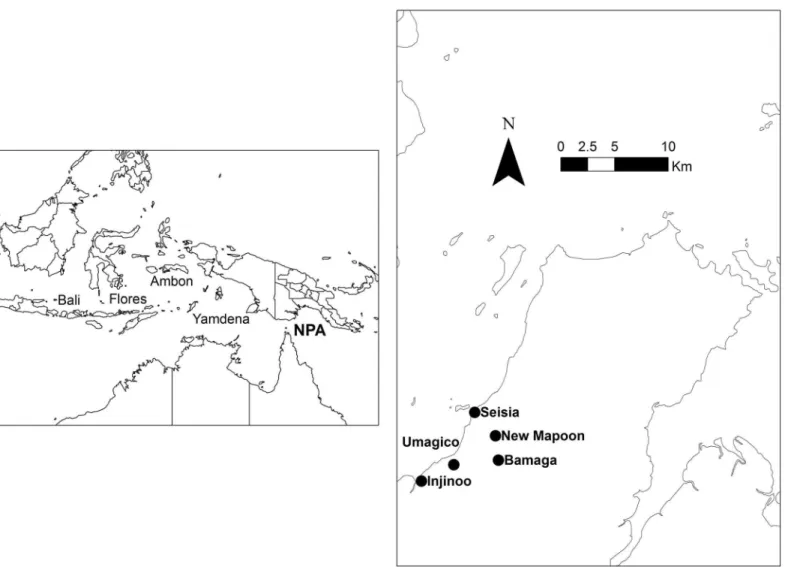
Rabies is an acute viral zoonosis that causes approximately 60,000 human deaths annually, despite being preventable [1]. The disease occurs worldwide, with half of the annual deaths occurring in Asia [1,2]. Although Australia is one of the few countries free of canine rabies [3], the increasing number of islands becoming infected in Indonesia−including Bali, Flores,
Ambon and Yamdena−has brought rabies within 300km of Australia (Fig 1) and the risk of
an incursion is escalating [4–6].
The Northern Peninsula Area (NPA)−located in far north Queensland and adjacent to the
Torres Strait−is the most likely location for a rabies incursion [7,9]. Not only is it close to
Indonesia, the NPA has similar characteristics to Bali, which experienced an incursion in 2008 [4,7]. These include large populations of free roaming domestic dogs that can facilitate disease spread, inefficient surveillance and vaccination, plus limited access for dog owners to health resources [6,8]. It is vital to understand how a rabies outbreak would spread in such high-risk areas of northern Australia in order to develop response plans [9,10]. It is also necessary to understand community attitudes and perceptions towards control strategies to anticipate potential barriers to implementation. However, such information is lacking because−except
for one isolated incursion in the 1860s−there has never been an outbreak of rabies in
addition, the study assessed community attitudes towards potential control strategies, and thus their efficacy in the event of a rabies incursion into the NPA.
Methods
Survey Area
A household survey was conducted in the NPA, which is a local government area located at the northern tip of Cape York (Fig 1). The NPA has a land area of 105,691 ha and consists of five communities: Bamaga, Umagico, Injinoo, New Mapoon and Seisia with the distances between individual communities ranging from 2 to 5 km. In 2011 there were 811 households in the NPA and a population of 2,298 [16]. A census of dogs in the NPA, conducted in 2009, estimated the total dog population to be 437 within 276 households, with 1.6 dogs per household [17].
Questionnaire Design
A questionnaire was designed (S1 Questionnaire) with a combination of closed- and open-ended questions. The majority were closed questions with yes/no options. Some hypothetical
Fig 1. Map of the study sites where a questionnaires survey of dog owners about rabies control strategies was conducted.Left: The Northern Peninsular Area (NPA) in relation to the rest of Australia. Right: Arrangement of communities within the NPA.
questions were included to gauge what respondents would do if there were a rabies outbreak in community dogs. The questionnaire had four sections: 1. human and dog demographics; 2. dog movements within the community; 3. current dog vaccination rates; and 4. estimated detection time for rabies. Section 1 sought information on human demographics and the age, sex and number of dogs owned in that household. In Section 2, questions were asked about dog movements, either free roaming movements or human mediated movements, and whether the respondents ever restricted their dogs in the preceding 12 months. Some questions also focussed on whether the owners would hypothetically change their dog restriction practices if there were a rabies outbreak. In Section 3, the current level of vaccination (such as for canine parvovirus, distemper and infectious hepatitis) in the dog population was estimated based on when the dogs were last taken to a veterinarian, when their last vaccination was and what it was given for. Respondents were also asked whether they would hypothetically vaccinate their dogs if a rabies outbreak occurred in their community as well as if they would euthanize their dogs during an outbreak. Section 4 focused on estimating a potential detection time of a disease outbreak by asking questions about how respondents would describe sick dogs, how long they would wait until seeking advice about their sick dog and where they would go for veterinary services if they had been bitten by a dog in the last 12 months, if their dog had been bitten by another dog in the last 12 months and if they had reported any of these incidents.
Survey Procedure
The survey was conducted from June 15 to 18, 2015. The questionnaire was administered with the assistance of the local NPA Animal Management Worker (AMW), who identified eligible and willing participants, explained the reasons for the survey and provided information regard-ing confidentiality and confirmed verbal consent to participate prior to the interview. The AMW is a community member and local government employee who has undergone basic training in animal management and handling and is usually the first point of contact for com-munity members for animal related problems. They are also responsible for distribution of ani-mal related information within the community. All questionnaires were administered in person as face-to-face interviews by the first author. Only community residents who were dog owners were selected. For ethical reasons, an age restriction of 18 years or older was also applied for the respondent selection. All questions were asked and answers were given in English, with interpretation help from the AMW as needed. Questionnaires were generally conducted at the dog owner’s place of residence, with their dogs usually being present. A small number of interviews were conducted at the respondents’workplace. The survey was approved by The University of Sydney’s Human Research Ethics Committee (number 2013/757).
Association Analysis
was used to identify significant associations. The analyses were carried out using the R statisti-cal program (Version 0.98.1091) [18].
Results
Human and Dog Demographics
Thirty-one dog owners were interviewed in the survey with each person representing one house-hold. Based on the 2009 survey, which estimated 276 dog-owning households, this represents approximately 11% of the dog owning households in the NPA [17]. All five communities were represented in the survey. Umagico and Seisia were both overrepresented: the percentage of dog owning houses surveyed (14% and 29%, respectively) was greater than the overall survey per-centage. Bamaga and New Mapoon were under represented (each approximately 7%) and Inji-noo was substantially underrepresented (3%). The age of most respondents was between 40−49
(42%) years and most (81%) were male. This differs from the overall population in 2011, when the median age was 22 years and there was nearly a 1:1 male to female ratio (Table 1) [16]. The difference in population ages between the study and the census data was a result of the ethics restrictions allowing for only owners over the age of 18. This skewed the study age towards the older end of the scale compared to the census data that includes all ages.
A total of 74 dogs were owned by the 31 respondents, an average of 2.4 dogs per household (range 1−5). Most dogs in these households were 1−4 years of age (Table 2). However, a large
proportion (34%) of dogs were of unknown age (Fig 2). The dog sex ratio was equally distrib-uted (51% males, 49% females) and a small proportion were de-sexed (18%).
Dog Movements within the Communities
More than half of the interviewed community members (58%) allowed their dogs to roam within their community of residence and many dogs had been moved by owners during the preceding 12 months, mostly for pig hunting and camping (Table 3). Most respondents had imposed some sort of restriction on the movement of their dogs in the last 12 months, by clos-ing the gate, chainclos-ing the dogs or keepclos-ing them inside the house. In the event of a disease out-break the proportion of respondents who would restrict their dogs' movements increased by 6% from 87% to 93% (Table 3). Of the respondents that would restrict their dogs during a dis-ease outbreak, most would impose more restrictive conditions than in normal circumstances. For instance, if the gate was closed in normal circumstances, the owner would chain or keep the dog inside during a disease outbreak. Likewise, if the dog were chained normally, during an outbreak the owner would keep the dog inside.
Current Dog Vaccination Rates
However, the number of respondents opposed to euthanasia increased by 6% if they were forc-ibly told to euthanize their dogs by a non-local government official.
Estimated Detection Time
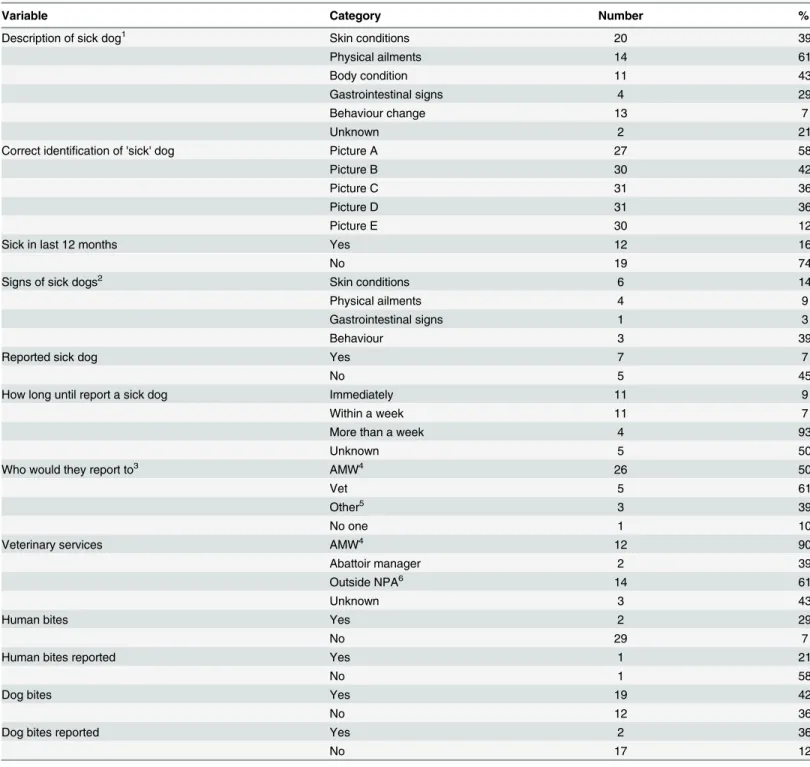
The most common signs respondents used to determine if a dog was sick were physical ail-ments (scratches, limping, pus) and skin conditions (mange and hair loss). Other signs identi-fied were body condition (skinny), behavioural changes (not coming when called or very lethargic) and gastrointestinal signs (diarrhoea and vomiting) (Table 5). Most respondents would wait a few days before reporting their sick dog and the majority would report it to the animal management worker. A small number of respondents would report a sick dog to the veterinarian (5), ranger (1), hospital (1) and manager of the local abattoir (1). Half (50%) of the Table 1. Demographics of 31 surveyed dog-owner respondents in the Northern Peninsular Area (NPA), Australia in 2015 compared to 2011 census data.
Variable Category (No.) % ABS census data (%)
Community of residence Bamaga 26 (8) 45.6
Seisia 32 (10) 8.8
Injinoo 3 (1) 20.7
New Mapoon 13 (4) 12.6
Umagico 26 (8) 12.2
Human gender Female 19 (6) 51.5
Male 81 (25) 48.5
Human age 20–29 10 (3) 15.9
30–39 19 (6) 13.0
40–49 42 (13) 10.7
50–59 23 (7) 9.0
60+ 7 (2) 6.6
Employment Casual 10 (3) Not reported
Part 3 (1) 20.9
Full 77 (24) 64.5
Retired 3 (1) Not reported
Unemployed 3 (1) 8.6
No answer 3 (1)
Education1 TAFE2 3 (1) Not reported
Year 10 29 (9) Not reported
Year 11 16 (5) Not reported
Year 12 36 (11) Not reported
University 3 (1) Not reported
No answer 13 (4)
Ethnicity Aboriginal 13 (4) 27.6
Torres Strait Islander 52 (16) 51.4
Both3 19 (6) Not reported
Non indigenous 16 (5) 7.9
1Highest education received by respondents asked in this study. 2Technical and Further Education
3The ABS does not report those who identi
fied as both Aboriginal and Torres Strait Islander. These people had to choose one or the other.
respondents who were bitten by dogs reported their injury and the event. Conversely, only 10% of respondents reported that their dogs had been bitten by other dogs.
Association Analysis
There were few significant associations between human demographic and behavioural and knowledge variables (Tables6and7). Men were 9.8 times more likely to allow their dogs to roam than women and only men took their dogs outside of the community, mainly for pig hunting (P = 0.007 and P = 0.059 respectively;Table 6). Having two or less dogs in a house meant there was significantly lower chance of one of the dogs being sick in the last 12 months compared to houses with three or more dogs (P = 0.008;Table 7), whilst younger dog owners were 5.01 times more likely to have had more dogs sick in the last 12 months than older dog owners (P = 0.058;Table 6). Although not statistically significant, there was a trend between having>2 dogs in the house and having more dog-dog bites (P = 0.15;Table 7) as well as more
human mediated movements (P = 0.15;Table 7).
Discussion
This survey collected information about dog management–including dog movements, vaccina-tion rates, reporting systems and owners’knowledge and attitudes–in the remote, indigenous communities of the NPA, Australia. Although the survey was limited by small numbers, the information is invaluable for parameterizing a recently developed rabies model, which relies upon variables such as detection time, vaccination rates and dog movement and dog culling compliance, and was previously based on limited empirical data [9]. With these data the model could now reliably inform decision makers on which control strategies would best contain a rabies outbreak in the area and improve Australia’s preparedness against rabies. The informa-tion generated is also useful for providing context for dog health and management programs in rural indigenous regions, and could inform the control of other zoonotic diseases.
Table 2. Demographic data for the 74 dogs owned by the 31 respondents in a survey conducted in the indigenous communities of the Northern Peninsular Area (NPA), Australia, 2015.
Variable Category Number %
Dog gender Female 36 49
Male 38 51
Desexed Yes 13 18
No 61 82
Dog age (years) <1 6 8
1 to 4 28 38
5 to 8 11 15
9+ 4 5
Unknown 25 34
Dog birth place Local1 41 55
Weipa 5 7
Cairns 13 18
Other2 7 10
Unknown 8 11
1Local = within Northern Peninsula Area Communities 2
Other includes Lockhart, Archer River, Torres Strait Islands, Townsville and Thursday Island (all locations are in North Queensland).
Study results suggest that men have a significant influence on the health and management of dog populations at the study site, which could be relevant for the mitigation of potential dis-ease spread during and outbreak. The survey was heavily biased towards men because of the survey design and the requirement for informed consent from the person considered to be in Fig 2. Frequency distribution of dog ages in communities of the Northern Peninsular Area (NPA), Australia.Most dogs were between 1 and 4 years of age. The maximum age was 10 years old. Twenty-five dogs were of unknown age. The 31 participants owned a total of 74 dogs (average 2.39 dogs per household). The range of dogs owned was 1–5 dogs per house.
doi:10.1371/journal.pntd.0004649.g002
Table 3. Dog movements between and within communities of the Northern Peninsular Area (NPA), Australia as reported by dog owners in a survey conducted in 2015.
Variable Category Number %
Dog roaming Yes 18 58
No 13 42
Human mediated movement Yes 16 52
No 15 48
Where moved to Camping 4 25
Hunting 11 69
Beach 1 6
Restriction Yes 27 87
No 4 13
Disease restriction Yes 29 93
No 2 7
Increased restrictions1 Yes 23 79
No 6 21
1Of the respondents that said
“Yes”to restricting their dog, which respondents would impose harsher restrictions than normal i.e. from closed gate in normal situations to chaining or keeping dog(s) inside during a disease outbreak
charge of the household dog(s) (Table 1). This is likely to be a cultural construct because women may not identify as dog owners, despite living in houses with dogs and potentially being the primary caregiver. The greater proportion of male ownership found in this study was expected: similar studies conducted in rural areas of Tanzania and Taiwan also found that dog ownership was skewed towards men [19,20]. Men were 9.8 times more likely than women to allow their dogs to roam and it was only men who moved their dogs outside the community. Both of these behaviours could facilitate rabies spread throughout the communities in this region, should an incursion occur. Men were found to own most of the dogs and to allow all of the reported dog movements; therefore they should be targeted for any potential movement bans during a rabies or other contagious disease outbreak, as well as broader educational pro-grams about dog health and disease management.
Despite having limited significant associations due to the small sample size, the associa-tion analysis provides valuable insights into certain trends among the dog owning popula-tion towards rabies control strategies which could be further investigated in future studies. For example, it is important to know that men are more involved in dog movements between Table 4. Dog health treatment details for the 74 dogs surveyed in the Northern Peninsular Area (NPA), Australia, 2015.
Variable Category Number %
Last veterinary visit 2015 1 3
2014 7 23
2013 and earlier 15 48
Never 7 23
Unknown 1 3
Needle in lifetime Yes 21 68
No 9 29
Unknown 1 3
Latest needle1 2015 3 14
2014 4 19
2013 and earlier 13 62
Unknown 1 5
Reason for latest needle2 Worming/mange 16 57
Vaccination 11 39
Other3 1 4
Vaccination if disease Yes 31 100
No 0 0
Vaccination if told to Yes 31 100
No 0 0
Euthanize if disease Yes 28 90
No 2 7
Unsure 1 3
Euthanize if told to Yes 26 84
No 4 13
Unsure 1 3
1Percentages of the 21 respondents that replied“Yes”to if their dog had a needle in their lifetime. 2
Some dogs had more than one needle so the percentage is derived from the total number of needles given, which were 28.
3Other reasons for needle were arthritis treatments
Table 5. Dog owners' responses to sick dogs in the Northern Peninsular Area (NPA), Australia that encompasses identification of sick dogs, reporting systems, veterinary services, human-dog bites and dog-dog bites from a survey of dog-owners conducted in the NPA in 2015.
Variable Category Number %
Description of sick dog1 Skin conditions 20 39
Physical ailments 14 61
Body condition 11 43
Gastrointestinal signs 4 29
Behaviour change 13 7
Unknown 2 21
Correct identification of 'sick' dog Picture A 27 58
Picture B 30 42
Picture C 31 36
Picture D 31 36
Picture E 30 12
Sick in last 12 months Yes 12 16
No 19 74
Signs of sick dogs2 Skin conditions 6 14
Physical ailments 4 9
Gastrointestinal signs 1 3
Behaviour 3 39
Reported sick dog Yes 7 7
No 5 45
How long until report a sick dog Immediately 11 9
Within a week 11 7
More than a week 4 93
Unknown 5 50
Who would they report to3 AMW4 26 50
Vet 5 61
Other5 3 39
No one 1 10
Veterinary services AMW4 12 90
Abattoir manager 2 39
Outside NPA6 14 61
Unknown 3 43
Human bites Yes 2 29
No 29 7
Human bites reported Yes 1 21
No 1 58
Dog bites Yes 19 42
No 12 36
Dog bites reported Yes 2 36
No 17 12
1Many respondents replied with multiple signs so percentages derived from a total of 64 responses
2Only respondents that said their dogs were sick in the last 12 months replied to this and many saw more than one sign so percentage based on a total of
14 signs
3Some respondents may report a sick dog to more than one person so percentages based on a total of 35 answers 4AMW = animal management worker
5Other includes rangers, hospital and local abattoir manager 6Outside the NPA includes Thursday Island, Cairns and Weipa
Table 6. Association analysis using Fisher’s exact test between human demographics data (gender and age) and selected variables from a survey of dog-owners conducted in the Northern Peninsula Area (NAP), Australia in 2015. A liberal significance level of 0.1 was used to determine significant associations.
Human Gender Human Age
M F Total OR P- Value Young Old Total OR P-value
Dog roaming
Yes 17 1 18 5 13 18
No 8 5 13 4 9 13
Total 25 6 31 9.8 0.0592 9 22 31 0.87 1
Human mediated movement
Yes 16 0 16 3 9 12
No 9 6 15 6 13 19
Total 25 6 31 N/A3 0.0072 9 22 31 0.73 1
Movement restriction
Yes 21 6 27 9 18 27
No 4 0 4 0 4 4
Total 25 6 31 0 0.56 9 22 31 N/A 0.3
Disease restriction
Yes 23 6 29 9 20 29
No 2 0 2 0 2 2
Total 25 6 31 0 1 9 22 31 N/A 1
Veterinary visit
Yes 17 6 24 7 16 24
No 7 0 7 2 5 7
Total 24 6 301 0 0.29 9 21 301 1.09 1
Needle in life
Yes 16 5 21 5 16 21
No 8 1 9 4 5 9
Total 24 6 301 0.41 0.64 9 21 301 0.4 0.39
Picture A
Yes 21 6 27 9 18 27
No 4 0 4 0 4 4
Total 25 6 31 0 0.56 9 22 31 N/A 0.3
Picture B
Yes 24 6 30 9 21 30
No 1 0 1 0 1 1
Total 25 6 31 0 1 9 22 31 N/A 1
Picture E
Yes 1 0 30 0 1 1
No 24 6 1 9 21 30
Total 25 6 31 N/A 1 9 22 31 0 1
Sick in last 12 months
Yes 9 3 12 6 6 12
No 16 3 19 3 16 19
Total 25 6 31 0.57 0.65 9 22 31 5.01 0.062
How long until report
Within a week 19 3 22 5 17 22
More than a week 2 2 4 2 2 4
Total 21 5 261 5.72 0.15 7 19 261 3.11 0.29
communities compared to women, so as to better target information campaigns and educa-tional programs.
Understanding the current vaccination level in the study dog population provides insight into how feasible a mass vaccination program would be. We found evidence of high willingness and acceptance of a vaccination campaign; all respondents said they would vaccinate their dog (s) during an outbreak. However, the opportunity for vaccination in this remote area of Austra-lia is poor. Only four respondents–who together owned a total of nine dogs–had their dogs vac-cinated in the last 12 months (Table 4).
This indicates a current overall vaccination rate of just 12%. The majority of vaccinations coincided with the most recent, local council organized veterinarian visit, which was in 2012 (Table 4). The closest veterinary clinic is located on Thursday Island approximately 35km away in the Torres Strait, but a visit would require a government-issued permit to transport live animals back to mainland Australia. The two closest veterinary clinics on the Australian mainland are located in Weipa and Cairns, a distance (via unsealed roads and river crossings) of approximately 430km and 960km, respectively. As these locations are largely inaccessible to most community members, the majority of dog owners report their sick dog to the AMW despite the limited treatments and advice available. This highlights the lack of available veteri-nary services in the area and explains the low vaccination rate reported.
Studies conducted in rabies endemic Tanzania revealed similar findings of dog owners hav-ing a high willhav-ingness to vaccinate their dogs, but havhav-ing minimal opportunity to do so due to the lack of accessible veterinary facilities [21,22]. This causes suboptimal vaccination coverage and consequently makes rabies eradication problematic [21]. If a rabies incursion occurred in NPA–which has been assessed as a high risk for such an event–accessibility under the current veterinary infrastructure and care services may be the limiting factor for vaccination strategy success rather than dog-owner attitudes towards the strategy. Also, because there is limited dog population control (only about 18% of dogs in this survey were reported to have been de-sexed,Table 2), there is likely to be high a population turnover rate. Developing an effective vaccination response strategy is therefore a priority.
Table 6. (Continued)
Human Gender Human Age
M F Total OR P- Value Young Old Total OR P-value
Bitten by dog
Yes 2 0 2 0 2 2
No 23 6 29 9 20 29
Total 25 6 31 N/A 1 9 22 31 0 1
Dog bitten by dog
Yes 17 2 19 5 14 19
No 8 4 12 4 8 12
Total 25 6 31 4.04 0.17 9 22 31 0.72 0.7
Number of dogs above median (2)
Yes 11 2 19 4 9 13
No 14 4 22 5 12 17
Total 25 6 31 1.54 1 9 22 31 1.06 1
1Some respondents replied with“I’m not sure”which was excluded, leading to the variation in totals. 2Indicates association was considered significant
3N/A = odds ratio was calculated as infinity
Table 7. Association analysis using Fisher’s exact test between human demographics data (ethnicity and number of dogs owned) and selected variables from a questionnaire survey of dog owners conducted in the Northern Peninsula Area (NPA), Australia in 2015. A liberal significance level of 0.1 was used to determine significant associations.
Ethnicity Number of Dogs
Torres Strait Islander Other Total OR P-value 2 3 Total OR P-value
Dog roaming
Yes 6 3 9 10 8 18
No 10 12 22 8 5 13
Total 16 15 31 2.33 0.43 18 13 31 0.79 1
Human movement
Yes 7 9 16 7 9 16
No 9 6 15 11 4 15
Total 16 15 31 0.53 0.48 18 13 31 0.3 0.15
Restriction
Yes 14 13 27 15 12 27
No 2 2 4 3 1 4
Total 16 15 31 1.07 1 18 13 31 0.43 0.62
Disease restriction
Yes 14 15 29 16 13 29
No 2 0 2 2 0 2
Total 16 15 31 0 0.48 18 13 31 0 0.5
Veterinary visit
Yes 12 11 23 12 11 23
No 4 3 7 6 1 7
Total 16 14 301 0.82 1 18 12 301 0.19 0.19
Needle in life
Yes 10 11 21 10 11 21
No 6 3 9 7 2 9
Total 16 14 301 0.47 0.44 17 13 301 0.27 0.23
Picture A
Yes 13 14 27 17 10 27
No 3 1 4 1 3 4
Total 16 15 31 0.32 0.6 18 13 31 4.83 0.28
Picture B
Yes 16 14 30 17 13 30
No 0 1 1 1 0 1
Total 16 15 31 N/A3 0.48 18 13 31 0 1
Picture E
Yes 0 1 1 1 0 1
No 16 14 30 17 13 30
Total 1 15 31 0 0.48 18 13 31 N/A3 1
Sick in last 12 months
Yes 8 4 12 3 9 12
No 8 11 19 15 4 19
Total 16 15 31 2.66 0.27 18 13 31 0.1 0.0082
How long until report
Within a week 10 14 24 12 10 22
More than a week 3 1 4 3 1 4
Total 13 13 261 0.25 0.31 15 11 261 0.41 0.61
Restricting dog movements, either within or between communities, has previously been used as a strategy to control rabies outbreaks with varying success [4,9]. To understand how such a strategy would be implemented in the study area, it was vital to understand dog owners’
attitudes towards a potential restriction. Most (90%) of the respondents stated that they would voluntarily impose restrictions on their dogs during an outbreak (Table 3). The 10% of owners that responded in the negative would consist of both those that refuse to control the roaming behaviour of their dogs, and those stating that their dogs were capable of escaping imposed confinement. This highlights the need for more restrictive confinement of dogs during a dis-ease outbreak, with which only around 80% of dog owners in the area would comply. With this compliance being less than 100%, a movement ban may only be effective in slowing the spread–rather than reducing the size–of an outbreak [9]. Despite being potentially ineffective as a standalone strategy, restricting dog movements (including human mediated movements) could still be beneficial in the study area because such restrictions complement vaccination strategies by reducing the chance of rabies spreading to and unvaccinated areas [15]. A previ-ous study conducted in the NPA calculated home ranges of most of the community dogs to be around 0.2–0.4 ha, mainly around the owner’s house [17]. However, some dogs’home ranges were upwards of 104 ha, spanning multiple communities [17]. These dogs are of particular interest for rabies transmission and need to be targeted for movement bans. This is of particu-lar interest for male dogs because they often occupy particu-larger home ranges than female dogs [17]. Pig hunting represents an interesting problem for rabies transmission because owners and their dogs often assemble from different communities of the NPA, creating conditions for inter-community rabies transmission. As most human mediated movements are for pig hunt-ing, this type of movement should also be targeted during a rabies outbreak.
Mass culling programs have been used in past rabies outbreaks as a strategy to contain and limit the spread of the disease [4,6,9,11]. However, they have been shown to be ineffective. This would likewise be the result in our study area. Although the majority of respondents stated that they would consider euthanizing their dog during an outbreak voluntarily or if suggested Table 7. (Continued)
Ethnicity Number of Dogs
Torres Strait Islander Other Total OR P-value 2 3 Total OR P-value
Bitten by dog
Yes 0 2 29 1 1 2
No 16 13 2 17 12 29
Total 16 15 31 0 0.23 18 13 31 0.77 1
Dog bitten by Dog
Yes 12 7 19 9 10 19
No 4 8 12 9 3 12
Total 16 15 31 3.29 0.15 18 13 31 0.31 0.15
Number of dogs above median (2)
Yes 6 7 13
No 10 8 18
Total 16 15 31 0.72 0.72
1Some respondents replied with“I’m not sure”which was excluded, leading to the variation in totals. 2indicates association was considered significant
3N/A = odds ratio was calculated as infinity
by the local AMW, most would only comply if their dog was sick. This immediately decreases the effective population of dog owners willing to allow a cull program. Also, 6% fewer respon-dents were willing to euthanize their dogs if a non-local official told them to, which suggests resistance to such a strategy and might indicate that some respondents could try to avoid a compulsory cull. Hiding dogs to avoid culling has not only been shown to hinder the effective-ness of such strategies, but also exacerbates disease spread because community members may move latently infected animals into rabies free zones [4,15]. The number of respondents that stated they would euthanize their dog might also be an overestimate, since the question was hypothetical. Attempts to euthanize dogs for a variety of health and welfare issues in Indige-nous communities are usually met with resistance from dog owners. Based on experience from Bali (where dogs were euthanized to limit rabies spread [4,6,22]), preliminary model predic-tions [9] and community attitudes in NPA, euthanasia should only play a minor role in response to a rabies incursion.
The final aim of the study was to estimate a potential detection time for the first rabid dog in the study region. Owners were asked what signs they recognised as indicators of a sick dog. In this study, signs considered typical of rabies (increased aggression, paralysis, hypersalivation, change of voice) did not make up the most distinguishable signs of a sick dog. However, the two categories they fell under (behavioural changes and physical ailments) together accounted for just under half the signs noted as indicators of sick dogs (Table 5). Therefore, rabid dogs are likely to be recognized as ill, since they show obvious signs. More than half the respondents said they would report their sick dog either immediately or within a week. However, of the owners that had sick dogs within the last 12 months, only half of them reported it (Table 5). The owner’s perception of the severity of the illness may influence whether they seek advice and may only do so when they think their dog is very ill. Assuming that the signs of rabies are severe and will finally lead to death, owners are more likely to report the dog and therefore a detection time of less than a week might be a reasonable estimate. This is a more optimistic detection time than has been used in preliminary modelling of the spread of rabies in this region (i.e. 2–4 weeks) [9]. In some other rabies outbreaks, detection times have ranged from 1 to 7 months [23].
The questionnaires could only be completed during working hours because of the need to be accompanied by an indigenous AMW. This limited the amount of dog–owners approached to participate in the survey, resulting in the small number of respondents. Although we achieved a substantial sampling fraction of 11%, the limited sample size meant that the confidence intervals around our estimates were wide. A sample size of 31 would only be sufficient to achieve a mar-gin of error of 14% with 90% confidence, for a 50% proportion. That is, if some proportion is estimated to be 50%, then we can be 90% confident that the population proportion is between 36% and 64%. However, the confidence interval will be narrower for proportions less than or more than 50%; hence the study would be able to achieve a margin of error of 10% for a 15% proportion. Therefore, interpretation of our results should take these uncertainties into account.
A second limitation was that many questions were hypothetical and asked respondents to predict future behaviours. Whilst this gives valuable insights for modelling, such responses need to be considered with caution because actual actions do not always match planned behav-iour. Also, the survey does not reflect the selected indigenous communities as a whole and can-not be used to extrapolate information about the wider community’s perceptions. Further investigation needs to be conducted to analyse the long-term impacts of control strategies on the wider community.
Finally, this study did not consider the potential contact between domestic dogs and the wild canine population (dingoes and their hybrids) because it was out of the scope of this study. Further investigation into the interface between domestic and wild dogs is necessary for a more complete preparedness plan against a rabies incursion as these canines could have sig-nificant impacts on the size and spread of an outbreak.
Conclusion
This study successfully collected information on dog health management in remote, northern Australian indigenous communities to better parameterize a rabies epidemiological model. It revealed potential flaws in a dog movement ban, as the compliance of dog owners was not 100%, and emphasised significant shortfalls in veterinary care that would need to be vastly improved during an outbreak to reach the 70% coverage recommended to control rabies. The detection time was optimistic compared to the current model estimation and other rabies detection times seen in previous foreign outbreaks. The study also provided useful information on how the control programs of dog vaccination, culling and movement bans would be accepted by the dog-owning community and highlighted issues to be targeted by educational programs and potential barriers to implementation (such as potential decreased compliance when non-local government officials are involved). Both types of information could be used to better inform decision makers on best practice for containing a potential rabies outbreak in this high-risk region and therefore improve preparedness against a rabies incursion. However, more detailed information is needed to understand potential barriers to implementation of control strategies, and the impacts of rabies control strategies on the wider community.
Supporting Information
S1 Dataset. Data collected in a questionnaire survey of dog owners conducted in the North-ern Peninsula Area (NPA), Australia in 2015.
(XLSX)
S1 Questionnaire. Questionnaire used to survey dog owners in the Northern Peninsula Area (NPA), Australia in 2015.
Acknowledgments
We thank Frank Mau, George Mara and Ron Wapau and the Northern Peninsula Area Regional Council for facilitating the study, and the community members that participated in this study. We also thank Beth Cookson for feedback on the pilot questionnaire.
Author Contributions
Conceived and designed the experiments: EGH MPW. Performed the experiments: EGH MPW. Analyzed the data: EGH ND MPW. Contributed reagents/materials/analysis tools: EGH ND SD MPW. Wrote the paper: EGH ND SD MPW.
References
1. Hampson K, Coudeville L, Lembo T, Sambo M, Kieffer A, Attlan M, et al. Estimating the global burden of endemic canine rabies. PLoS Neglected Trop D. 2015; 9(4):e0003709. doi:10.1371/journal.pntd. 0003709
2. Knobel DL, Cleaveland S, Coleman PG, Fèvre EM, Meltzer MI, Miranda MEG, et al. Re-Evaluating the burden of rabies in Africa and Asia. B World Health Organ. 2005; 83(5):360–8. PMC2626230.
3. World Health Organisation WHO Expert Consultation on Rabies: Second Report. WHO Technical Report Series. 2013;(982):1–139, back cover. 1444584597; 24069724.
4. Putra AA, Hampson K, Girardi J, Hiby E, Knobel D, Mardiana IW, et al. Response to a Rabies epidemic, Bali, Indonesia, 2008–2011. Emerg Infect Dis. 2013; 19(4):648–51. doi:10.3201/eid1904.120380 PMID:23632033; PubMed Central PMCID: PMC3647408.
5. Tenzin Ward MP. Review of rabies epidemiology and control in South, South East and East Asia: Past, Present and Prospects for Elimination. Zoonoses and Public Hlth. 2012; 59(7):451–67. PMID: 23180493.
6. Windiyaningsih C, Wilde H, Meslin FX, Suroso T, Widarso HS. The rabies epidemic on Flores Island, Indonesia (1998–2003). J Med Assoc Thai. 2004; 87(11):1389–93. Epub 2005/04/14. PMID: 15825719.
7. Sparkes J, Fleming PJ, Ballard G, Scott-Orr H, Durr S, Ward MP. Canine rabies in Australia: A review of preparedness and research needs. Zoonoses and Public Hlth. 2014; 63:237–53. doi:10.1111/zph. 12142PMID:24934203.
8. Clifton M. How not to fight a rabies epidemic: A history in Bali. Asian Biomed. 2010; 4(4):663–71.
9. Dürr S, Ward MP. Development of a novel rabies simulation model for application in a non-endemic environment. PLoS Neglected Trop D. 2015; 9(6):e0003876. doi:10.1371/journal.pntd.0003876 PMC4482682.
10. Hampson K, Dushoff J, Cleaveland S, Haydon DT, Kaare M, Packer C, et al. Transmission dynamics and prospects for the elimination of canine rabies. PLoS Biol. 2009; 7(3):e53. doi:10.1371/journal.pbio. 1000053PMID:19278295
11. Cleaveland S, Beyer H, Hampson K, Haydon D, Lankester F, Lembo T, et al. The changing landscape of rabies epidemiology and control. The Onderstepoort Journal of Veterinary Research. 2014; 81(2):1– 8. 1546008804; PMID:25005807.
12. Kitala PM, McDermott JJ, Coleman PG, Dye C. Comparison of vaccination strategies for the control of dog rabies in Machakos District, Kenya. Epidemiol and Infect. 2002; 129(1):215–22. PMC2869868.
13. Russell CA, Real LA, Smith DL. Spatial control of rabies on heterogeneous landscapes. PLoS ONE. 2006; 1(1):e27. doi:10.1371/journal.pone.0000027PMC1762310.
14. Smith DL, Lucey B, Waller LA, Childs JE, Real LA. Predicting the spatial dynamics of rabies epidemics on heterogeneous landscapes. P Natl Acad Sci USA. 2002; 99(6):3668–72. doi:10.1073/pnas. 042400799PMC122581.
15. Townsend SE, Sumantra IP, Pudjiatmoko, Bagus GN, Brum E, Cleaveland S, et al. Designing pro-grams for eliminating canine rabies from islands: Bali, Indonesia as a case study. PLoS Neglected Trop D. 2013; 7(8):e2372.
17. Dürr S, Ward MP. Roaming behaviour and home range estimation of domestic dogs in Aboriginal and Torres Strait Islander communities in Northern Australia using four different methods. Prev Vet Med. 2014; 117(2):340–57. doi:10.1016/j.prevetmed.2014.07.008PMID:25096735.
18. R Core Team. R: A language and environment for statistical computing. R foundation for statistical computing. Vienna, Austria. 2014. URL:http://www.R-project.org/
19. Hsu Y, Severinghaus LL, Serpell JA. Dog keeping in Taiwan: Its contribution to the problem of free-roaming dogs. J Appl Anim Welf Sci. 2003; 6(1):1–23. Epub 2003/06/11. doi:10.1207/
s15327604jaws0601_01PMID:12795855.
20. Knobel DL, Laurenson MK, Kazwala RR, Boden LA, Cleaveland S. A cross-sectional study of factors associated with dog ownership in Tanzania. BMC Vet Res. 2008; 4(1):5-. doi:10.1186/1746-6148-4-5
21. Sambo M, Lembo T, Cleaveland S, Ferguson HM, Sikana L, Simon C, et al. Knowledge, attitudes and practices (KAP) about rabies prevention and control: A community survey in Tanzania. PLoS Neglected Trop D. 2014; 8(12):e3310. doi:10.1371/journal.pntd.0003310c PMC4256472.
22. Bardosh K, Sambo M, Sikana L, Hampson K, Welburn SC. Eliminating rabies in Tanzania? Local understandings and responses to mass dog vaccination in Kilombero and Ulanga Districts. PLoS Neglected Trop D. 2014; 8(6):e2935. doi:10.1371/journal.pntd.0002935PMC4063706.
23. Townsend SE, Lembo T, Cleaveland S, Meslin FX, Miranda ME, Putra AAG, et al. Surveillance guide-lines for disease elimination: A case study of canine rabies. Comp Immunol Microb. 2013; 36(3):249– 61. doi:10.1016/j.cimid.2012.10.008
24. Frey J, Mindekem R, Kessely H, Doumagoum Moto D, Naïssengar S, Zinsstag J, et al. Survey of animal bite injuries and their management for an estimate of human rabies deaths in N’djaména, Chad. Trop Med Int Health. 2013; 18(12):1555–62. doi:10.1111/tmi.12202PMID:24118491
25. Mustiana A, Toribio J-A, Abdurrahman M, Suadnya IW, Hernandez-Jover M, Putra AAG, et al. Owned and unowned dog population estimation, dog management and dog bites to inform rabies prevention and response on Lombok Island, Indonesia. PLos ONE 2015; 10(5): e0124092. doi:10.1371/journal. pone.0124092PMID:25932916
26. Tenzin, Dhand NK, Gyeltshen T, Firestone S, Zangmo C, Dema C, et al. Dog bites in humans and esti-mating human rabies mortality in rabies endemic areas of Bhutan. PLoS Neglected Trop D. 2011; 5 (11):e1391. doi:10.1371/journal.pntd.0001391PMC3222627.
27. Lapiz SMD, Miranda MEG, Garcia RG, et al. Implementation of an intersectoral program to eliminate human and canine rabies: The Bohol Rabies Prevention and Elimination Project. Zinsstag J, ed. PLoS Neglected Trop D. 2012; 6(12):e1891. doi:10.1371/journal.pntd.0001891