Control Programmes: A Case Study from Colombo City,
Sri Lanka
Barbara Ha¨sler1,2*, Elly Hiby3, Will Gilbert1, Nalinika Obeyesekere4, Houda Bennani1,
Jonathan Rushton1,2
1Veterinary Epidemiology Economics and Public Health Group, Royal Veterinary College, North Mymms, Hatfield, United Kingdom,2Leverhulme Centre for Integrative Research on Agriculture and Health, Royal Veterinary College, North Mymms, Hatfield, United Kingdom,3Conservation Research Ltd, Great Shelford, Cambridge, United Kingdom,4Blue Paw Trust, Colombo, Sri Lanka
Abstract
Background:One Health addresses complex challenges to promote the health of all species and the environment by integrating relevant sciences at systems level. Its application to zoonotic diseases is recommended, but few coherent frameworks exist that combine approaches from multiple disciplines. Rabies requires an interdisciplinary approach for effective and efficient management.
Methodology/Principal Findings: A framework is proposed to assess the value of rabies interventions holistically. The economic assessment compares additional monetary and non-monetary costs and benefits of an intervention taking into account epidemiological, animal welfare, societal impact and cost data. It is complemented by an ethical assessment. The framework is applied to Colombo City, Sri Lanka, where modified dog rabies intervention measures were implemented in 2007. The two options included for analysis were the control measures in place until 2006 (‘‘baseline scenario’’) and the new comprehensive intervention measures (‘‘intervention’’) for a four-year duration. Differences in control cost; monetary human health costs after exposure; Disability-Adjusted Life Years (DALYs) lost due to human rabies deaths and the psychological burden following a bite; negative impact on animal welfare; epidemiological indicators; social acceptance of dogs; and ethical considerations were estimated using a mixed method approach including primary and secondary data. Over the four years analysed, the intervention cost US$1.03 million more than the baseline scenario in 2011 prices (adjusted for inflation) and caused a reduction in dog rabies cases; 738 DALYs averted; an increase in acceptability among non-dog owners; a perception of positive changes in society including a decrease in the number of roaming dogs; and a net reduction in the impact on animal welfare from intermediate-high to low-intermediate.
Conclusions:The findings illustrate the multiple outcomes relevant to stakeholders and allow greater understanding of the value of the implemented rabies control measures, thereby providing a solid foundation for informed decision-making and sustainable control.
Citation:Ha¨sler B, Hiby E, Gilbert W, Obeyesekere N, Bennani H, et al. (2014) A One Health Framework for the Evaluation of Rabies Control Programmes: A Case Study from Colombo City, Sri Lanka. PLoS Negl Trop Dis 8(10): e3270. doi:10.1371/journal.pntd.0003270
Editor:Joseph Raymond Zunt, University of Washington, United States of America ReceivedMarch 21, 2014;AcceptedSeptember 14, 2014;PublishedOctober 23, 2014
Copyright:ß2014 Ha¨esler et al. This is an open-access article distributed under the terms of the Creative Commons Attribution License, which permits unrestricted use, distribution, and reproduction in any medium, provided the original author and source are credited.
Data Availability:The authors confirm that all data underlying the findings are fully available without restriction. All relevant data are within the paper and its Supporting Information files.
Funding:This study received financial support from the World Society for the Protection of Animals (WSPA). BH acknowledges financial support from the Leverhulme Centre for Integrative Research on Agriculture and Health (LCIRAH). A former staff member of WSPA (EH) provided information and data on the rabies situation and the ongoing rabies control programme in Colombo City which formed the basis for the development of the study design. LCIRAH had no role in study design, data collection and analysis, decision to publish, or preparation of the manuscript.
Competing Interests:The authors have declared that no competing interests exist. * Email: [email protected]
Introduction
The One Health paradigm aims to effectively manage complex risks affecting human, animal, and environmental health by forging new interdisciplinary partnerships and collaborations. Rabies, an acute progressive encephalomyelitis with almost 100% case fatality rate caused by viruses in the genus Lyssavirus, is a zoonotic disease that is responsible for an estimated 55,000 human deaths, tens of millions of human exposures, and substantial
animal losses annually [1]. It requires a generalised approach if it is to be managed effectively and efficiently [2].
quali-tative (constructivist) data which may be viewed differently by disciplines. It has been suggested that using both approaches in the same study provides, in combination, a superior understanding of research problems than either approach alone [4]. Another important barrier is the current institutional architecture in which public funds are allocated to specific ministries thereby hindering development of joint public health programmes, which in the case of zoonotic diseases can result in a fragmented approach to control.
The most important vector for maintenance of rabies virus and transmission to humans is the domestic dog, with over 90% of human cases attributable to dog bites. The tools to eliminate rabies from animal populations exist, yet relatively few countries are currently rabies-free placing a major strain on public health budgets. Nearly all human rabies deaths occur in developing countries because they are lacking the resources and capacity to provide both adequate pre-exposure prophylaxis and post-exposure prophylaxis (PEP) in humans and effective management of the virus in animal populations. The World Health Organisa-tion estimates that the annual cost of rabies may be in excess of US $6 billion per year including an estimated US$1.6 billion for PEP [5]. Where rabies control has been successful, efforts have been based on quarantine in an advantageous geographical location (e.g. United Kingdom) or the systematic mass vaccination of domestic and wild host populations (e.g. mainland Europe). In the long term, controlling rabies in the dog population through mass dog vaccination has been shown to be more cost-effective than human PEP alone [6]. The World Health Organisation, the World Organisation for Animal Health, and the Food and Agriculture Organisation of the United Nations acknowledge the need for intersectoral collaboration to manage rabies [5]. However, the systematic control of rabies in animal populations requires financial resources, and the technical capacity to plan, implement and evaluate the vaccination campaign; aspects that are often lacking in affected countries.
Sustaining control demands political, societal and financial backing to maintain the campaign as well as the logistic and human resource capacity to deliver vaccine, and knowledge of, and access to, target populations. On-going collection of data through surveillance systems to monitor and evaluate the economic and technical efficiency of campaigns is necessary to ensure objectives are being achieved, and surveillance must be continuous following eradication to detect re-emergence of the virus promptly. Many of these components need the active support of the public in affected areas. In many countries where rabies is endemic these requisite criteria are not met, and interventions against other diseases are given a higher priority. As a result rabies is considered a neglected disease.
Modern science tends to abstract phenomena and reduce reality into smaller portions that can be easily understood and, as much as possible, be expressed in mathematical terms. While these mathematical abstractions are critical in modelling the dynamics of disease in a population and to assess the effectiveness of interventions, they do not provide an understanding of the support for rabies control measures in society nor do they shed any light on wider-reaching issues such as ethical concerns or animal welfare, in short, they oversimplify reality. For example, anecdotal evidence suggests that some people are not supportive of rabies control measures such as dog culling and actually jeopardise the process by hiding or moving their dogs. Thus, both reductionist in-depth studies, as well as collaboration with other disciplines are needed to understand and plan sustainable and publicly accept-able control programmes.
Many projects have focused on individual components of rabies impact, for example the use of pre-exposure prophylaxis and PEP in humans [7–10], the effectiveness of different strategies for dog vaccination [11,12], willingness-to-pay for dog vaccination [13] and the indirect costs of rabies exposure [14]. However, they have all been assessed independently. Assessed in conjunction, they provide important insights into the positive and negative consequences of rabies management and build a robust basis for informed decision-making.
This paper proposes a generic framework for the assessment of rabies interventions encompassing a wide range of positive and negative consequences and local conditions in order to assess economic efficiency and illustrates its use by applying it to the rabies control programme in Colombo City, Sri Lanka.
Methods
The framework
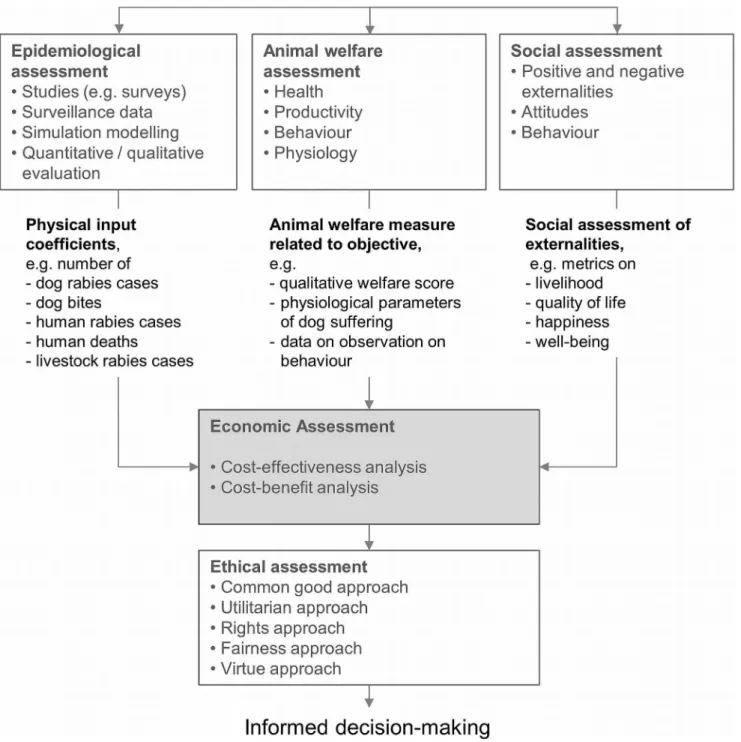
Overview. The heart of the framework is the economic assessment that compares the additional costs and benefits of an intervention in monetary and non-monetary terms taking into account epidemiological, animal welfare, societal impact and cost data (Figure 1). The economic assessment is complemented by an ethical assessment that provides an additional perspective. These components are connected as described below, establishing a framework for the assessment of rabies control. While the underlying principles and concepts are generic, the focus and the resulting data needs are presented here for rabies.
Economic assessment. All rational decision-making in-volves an evaluation of relevant pros and cons; the logic of assessing the positive and negative consequences of a decision is unarguable and intuitively appealing [15]. Any investment in rabies control can be considered worthwhile if the additional outcome outweighs the additional costs. Two popular formalised techniques for decision-making based on the fundamental economic principle of marginality are cost-benefit analysis Author Summary
(CBA), where positive and negative aspects of a decision are expressed in monetary terms; and cost-effectiveness analysis (CEA), where the outcomes are expressed in terms of monetary costs per unit of effect (e.g. cost per life year gained) [16].
The societal impact of rabies expressed in monetary terms includes PEP and treatment costs for humans and animals following exposure (e.g. wound treatment, application of immu-noglobulin and vaccines), production losses (e.g. mortality of livestock or companion animals), expenditures for surveillance in animals and humans (e.g. recording of the number of dog bites or dog rabies cases), expenses for intervention measures (e.g. mass vaccination campaigns in dogs, educational programmes to avoid exposure), epidemiological investigations (e.g. disease outbreak
investigation), and indirect loss of income due to absence from work (e.g. caring for diseased family members).
Expressing effectiveness in non-monetary terms is particularly appealing for disease control objectives where outcomes have a value to society, but are difficult to measure in money units. The interpretation or value of the effectiveness measure depends on the importance, worth, or usefulness society attaches to something, reflecting peoples’ judgement of what is relevant in life. Consequently, decision thresholds related to such effectiveness measures may vary according to the evaluation context [17]. Such measures include human rabies deaths and psychological distress due to fear, anxiety or other feelings (commonly expressed in disability-adjusted-life-years - DALYs), and animal welfare. Figure 1. Overview of a conceptual integrated framework for the assessment of rabies control strategies.
The value of animal welfare is a ‘‘reflection of a natural human reaction, the satisfaction, assurance and comfort derived from the knowledge that a sentient being is being treated in an appropriate manner’’ and is based on ethical or cultural values, individual preferences or sensitivities [18]. If animal disease causes a sense of discomfort and unease in people by, for example, evoking fear of rabies infection or disgust because of animals in the population being ill, this is expressive of a disutility or loss of benefit, which affects peoples’ quality of life or happiness. Implementation of a disease control programme in animals that improves the environmental and social wellness of people causes positive externalities which can be assessed by using happiness or quality of life metrics available, such as self-perceived quality of life or gross national happiness [19,20], or by defining a suitable effectiveness measure that allows quantifying the positive exter-nality taking into account for example lifestyle stress, living environment, or life-satisfaction.
Epidemiological assessment. Veterinary epidemiology de-scribes the ‘‘frequency of disease occurrence and how disease, productivity, welfare and well-being are affected by the interaction of different factors or determinants’’ [21]. These determinants can then be manipulated to reduce the frequency of disease occurrence by creating effective risk mitigation programmes to improve the health of populations. Essentially, in epidemiological analysis, data are gathered which are then analysed using qualitative or quantitative approaches or hypotheses. Epidemiological studies therefore provide information about the technical efficiency of disease control measures, a pre-requisite for any economic analysis of animal disease control. Forex postanalyses, empirical data may be collected on the technical impact control activities had on disease in the population (e.g. changes in prevalence or incidence), while epidemiological models provide critical inputs for ex ante economic assessments by predicting patterns of disease occurrence and studying the effect of mitigation strategies on the disease dynamics in a population.
Animal welfare assessment. Animal welfare science iden-tifies the various factors that affect the welfare state of the animal (e.g. nutrition, health, pain and discomfort, anxiety or frustration, vitality, behavioural freedom) with the inference that improvement in any of these variables leads to better welfare. The methods used for animal welfare assessment can be broadly divided into two groups depending on the parameters they take into account, namely animal-based and environment-based assessments [22]. The first group assesses a change in physiological and behaviour responses indicative of a change in animal welfare through direct behavioural observations (e.g. flight distance, lethargy, vocaliza-tion) and stress measurements (e.g. glucocorticoid, heart rate, opioids) that reflect the underlying physical and psychological states of the animals. The second group includes indirect methods that focus on the environmental aspects thought to be relevant to animal welfare, such as space allowance, or social contact [23], and is less demanding in terms of ease of recording, necessary experience and time.
There is no single, reliable measure of an animal’s welfare [24]. The best indicators of an animal’s welfare depend on the species of animal involved, and the context in which it is being assessed. From the animal’s viewpoint, a reaction to a control measure such as poisoning is independent of the context, but the selection of animal welfare measures for an economic analysis needs to reflect the context and value system of the society in question. Positive and negative consequences of a programme on animal welfare can, for example, take into account parameters on health (unhealthy animals may experience pain or discomfort), produc-tivity (potentially valuable for measuring progress in animal
welfare in environments that systematically monitor animal welfare, such as laboratories), behaviour (provides an immediate reflection of the animal’s emotional state) and physiology (quantitative approach useful for before-and-after assessments).
Social assessment. With respect to impact, animal disease and its control produces externalities; for example emotional distress experienced when performing or witnessing the culling of animals, frustration, anger, feelings of loss of control, fear and uncertainty, and the loss of social (support) structures due to movement bans as experienced by the farming community during the foot-and-mouth disease outbreak in the United Kingdom in 2001 [25]. If disease control leads to an improved quality of life, the use of one of the many approaches available to measure this change may be indicated, which evolve around three principal concepts: 1) the availability of resources and commodities, 2) the notion of subjective well-being, and 3) the fulfilment of individual capabilities [26].
The second principal aspect of a social assessment in relation to disease control revolves around peoples’ attitudes, judgments, beliefs and behaviour related to disease control. Social-cognitive models, such as the theory of planned behaviour have been widely applied within the health and disease control fields [27–29]. These theories devise a model linking people’s attitudes to intent to perform particular behaviours. They have been proven effective in predicting and explaining behaviours and are considered useful tools in disease management [28,29]. A social assessment, including a survey of attitudes toward disease control, provides a degree of insight into how people are likely to respond to control measures. Public support or antipathy for disease control may drastically influence the effectiveness of intervention programmes.
Ethical assessment. Five standard ethical approaches are recommended to be used to assess the ethical dimension of rabies and its control: 1) the common good approach argues that relationships in society are the basis of ethical reasoning and calls attention to the welfare of everyone (hence, options which best serve the community as whole and not just some members are preferable); 2) the utilitarian approach emphasizes that the ethical action is the one that produces the greatest balance of good over harm; 3) the rights approach assesses which option best respects the rights of all who have a stake; 4) the fairness approach assesses which option treats individuals equally or proportionately; and 5) the virtue approach assesses which option allows people to act as the sort of person they want to be.
Application of the framework to a case study in Colombo City, Sri Lanka
public areas. The stakeholders involved in the intervention hypothesised that the new measures would lead to a decrease in the number of dog rabies cases, an associated reduction in the administration of PEP to people, an increased acceptance of dogs in society, and overall a positive net value of the intervention in Colombo City. The aim of this case study was to assess the economic value of the intervention explicitly taking into account monetary and non-monetary consequences resulting from the change in rabies prevalence, animal welfare and social acceptance.
Study site and data collection. The case study focused on Colombo City, which is composed of 47 wards or sub-districts. An ex post assessment was conducted for a four year duration of implementation of the intervention from its start in June 2007 up to June 2011. To inform the economic assessment, primary and secondary data were collected and collated between May and September 2011 taking into account the components described in the framework outlined above.
Ethics statement. For the primary data collection, namely the focus group discussions for the social acceptance assessment, ethical approval was received from the Royal Veterinary College’s Ethics and Welfare Committee (approval number URN 2014 0108H-R). Focus groups participants were informed about the purpose and procedures of the study. Oral informed consent was obtained and recorded, as not all participants were literate. The use of oral consent was approved by the Royal Veterinary College’s Ethics and Welfare Committee. Participation was completely voluntary and participants could withdraw from the focus group discussion at any time. All results were coded and treated confidentially.
General overview, software, and sensitivity analysis.
The study comprised four main steps, namely 1) identification of intervention and baseline options to be assessed; 2) identification of their monetary and non-monetary costs and benefits including epidemiological, social and animal welfare consequences; 3) measurement and valuation of the monetary and non-monetary costs and benefits; and 4) comparison of costs and benefits of the options identified. The assessment was complemented by a discussion on ethical considerations.
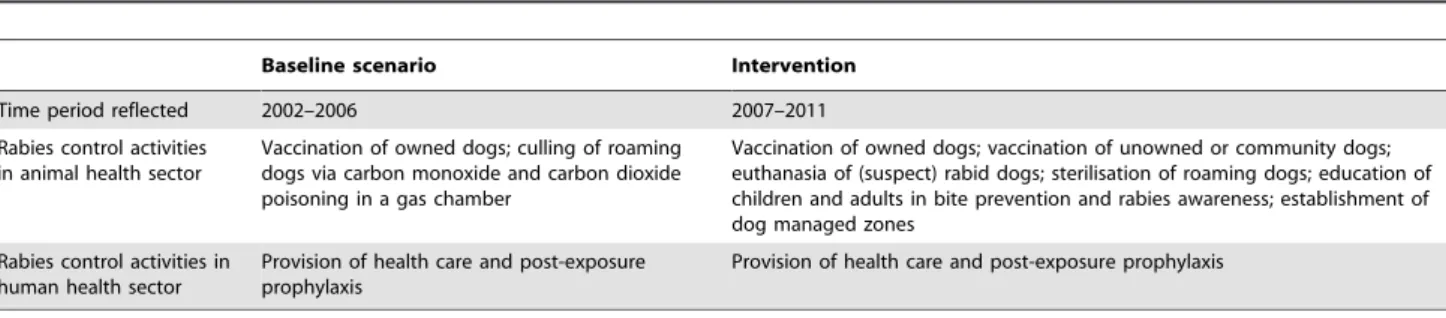
An overview of the intervention activities and relevant data were obtained by reading reports, articles and guidelines referring to the intervention and by consulting staff members involved in the planning and implementation. The two options included for analysis were the rabies control activities in place from 2002 to 2006 (‘‘the baseline scenario’’) and the new intervention with the activities summarised in Table 1.
The following effects were estimated both for the intervention and the baseline scenario: 1) Monetary expenditures (in 2011 US $) for the implementation of the rabies control activities in the human and dog populations; 2) DALYs lost due to human rabies deaths and psychological distress following a bite from a suspect
rabid dog; 3) Impact of the rabies control activities in the dog population on animal welfare expressed in animal welfare scores; and 4) People’s acceptance of dogs in society expressed in acceptance scores and qualitative descriptions. Next, the net values were estimated by calculating the difference of these effects between the baseline scenario and the intervention (described in detail in subsequent sections). Livestock losses due to rabies in Colombo City were not reported and therefore not considered in the analysis.
Deterministic spreadsheet models for the economic analyses were developed using Microsoft Excel. All monetary values were expressed in US$(1 Sri Lankan Rupee = 0.009 US$at the time of analysis and 1 British Pound = 1.60 US $; 2011 values). Expenditures derived from bookkeeping spreadsheets of the organisations involved in the rabies control activities were adjusted for inflation using the GDP deflator index data from the knoema.com data atlas and the following equation:
YearY:value:in:year2011prices~
yearYvalue:
index:number:for:year:2011 index:number:for:year:y
Sensitivity analyses were performed on all the variables that influenced the monetary and non-monetary human health costs. The selection of these variables was done taking into account the uncertainty attached to them and their hierarchical position in the spreadsheet model. The expenditures for the control activities in the dog populations were not included in the sensitivity analysis, as these were nominal values derived from the bookkeeping records of the organisations involved and therefore deemed certain. First, a single factor sensitivity analysis was conducted, where the variables were changed one by one by215% and+15% from the base value to assess how the outcome changed. Next, the most influential variables were varied across a wider range in relation to the outcome of interest. Finally, key variables were varied in goal-seek analyses in Microsoft Excel to determine the values where the additional expenditures for the intervention would be recovered by savings in monetary human health costs.
The economic assessment. The rabies impact was estimat-ed from a societal perspective. To calculate expenditures for the intervention and the baseline scenario, detailed activities were listed systematically taking into account planning, preparation, supervision, sampling, laboratory testing, implementation of intervention strategies, data collection, transfer and administra-tion, data analysis and interpretaadministra-tion, dissemination and commu-nication of results, and revision and adaptation of the implement-ed measures. Each activity was either classifiimplement-ed as labour or operations and expenses. The cost for rabies control activities (CC) was calculated as follows:
Table 1.Description of the baseline scenario and intervention considered in the analysis.
Baseline scenario Intervention
Time period reflected 2002–2006 2007–2011
Rabies control activities in animal health sector
Vaccination of owned dogs; culling of roaming dogs via carbon monoxide and carbon dioxide poisoning in a gas chamber
Vaccination of owned dogs; vaccination of unowned or community dogs; euthanasia of (suspect) rabid dogs; sterilisation of roaming dogs; education of children and adults in bite prevention and rabies awareness; establishment of dog managed zones
Rabies control activities in human health sector
Provision of health care and post-exposure prophylaxis
Provision of health care and post-exposure prophylaxis
CC~X n
i~1
LBizOEi ð ÞzX
n
j~1
LBjzOEj
WhereLBis the labour cost andOEthe cost for operations and expenses in the context of surveillance (e.g. laboratory testing) and intervention activities (e.g. vaccination)iandj, respectively. The labour cost was calculated by multiplying the number of working hours spent per activity by the wage rate. The cost for operations and expenses was calculated by multiplying the number of units used per activity (e.g. vaccines, laboratory testing) by the price per unit (e.g. price of vaccine or laboratory test).
Medical costs related to a dog bite included health service costs after a potential exposure, which consisted of history taking, wound treatment, and application of equine immunoglobulin and cell culture, intradermal vaccines (PCEC and Virorab) following international WHO guidelines for rabies prevention [5]. These costs as well as non-patient related overhead costs were fully covered by the Sri Lankan government. For the patient, costs accrued from the loss of income due to absence from work to seek treatment as well as transport costs. Wider societal losses due to downward multiplier effects resulting from changes in productive activity were not considered. To estimate the total monetary health costs (MHC) for the intervention (x) and the baseline scenario (y), respectively, the following equation was used:
MHCx,y~Nx,y½ð1{propVÞðPHzPWzLIzPTzPOHÞ zpropV(propIGx,y:PIGzPHzPW
zPIzPVz4LIz4PTz4POH)
WhereNis the number of people seeking health care following a dog bite (see ‘‘epidemiological input parameters’’ below),PropV is the proportion of people presented receiving post-exposure prophylaxis (95% for both the baseline scenario and the intervention), and PropIG the proportion of people presented receiving equine immunoglobulin (1.5% for the baseline scenario, 7% for the intervention). All other variables are listed in Table 2. Data on PropV and PropIG were provided by the national hospital and prices related to the PEP were provided by the Public Health Inspector of the Lady Ridgeway Children Hospital Colombo and transport costs were derived from data provided by the Blue Paw Trust. The income loss per person and hospital visit was calculated by multiplying the average daily per capita Gross National Income in Asia of 3.5 US $ by the number of working days lost per hospital visit. The number of working days
lost was assumed to be 1 taking into account long transport times in Colombo City due to heavy traffic and potential waiting times at the health care facility.
The average DALYs lost per human rabies death for Asia were calculated based on published estimates from Knobelet al.[1] by dividing the estimated 994,607 DALYs lost due to human rabies death in Asia (composite score of the years of life lost due to premature mortality and the years of life lived with a disability) by the estimated 31,539 human rabies deaths in Asia. This resulted in a loss of 27.99 DALYs per human rabies death. The total DALYs lost due to human rabies deaths for the baseline scenario and the intervention, respectively, were calculated by multiplying the 27.99 DALYs lost per human rabies death by the number of recorded human rabies deaths in Colombo City (see ‘‘epidemio-logical input parameters’’ below).
Human wellbeing was expected to be affected by the psychological burden of fear and trauma induced by bites from dogs that may be rabies infected. To estimate the DALYs lost per dog bite, data from the literature concerning the psychological burden of rabies and the number of dog bites in Asia was used. The psychological burden of rabies of 139,893 DALYs lost each year in Asia derived from the World Health Organisations’s expert consultation on rabies [30] were divided by 3,529,300, the estimated number of bites from suspected rabid dogs in Asia [1], to estimate the DALYs lost per dog bite. This resulted in 0.040 DALYs lost per dog bite. The total loss of DALYs related to the distress experienced following a dog bite for the baseline scenario and the intervention, respectively, were calculated by multiplying the 0.040 DALYs lost per dog bite by the number of dog bites occurring in Colombo City (see ‘‘epidemiological input parame-ters’’ below).
Finally, the loss of DALYs resulting from human rabies deaths and psychological distress were summed to estimate the total DALYs lost for the baseline scenario and the intervention, respectively.
The animal welfare assessment. A qualitative scoring system was developed to assess the impact of rabies and its control on dog welfare. The situations identified where rabies and its control have a potential impact on dog welfare are listed in Table 3. For each situation, a set of conditions potentially affecting animal welfare was identified, e.g. pain, physical injuries, and dyspnoea (Table 3). An impact scale was used for assigning a grade to reflect the level of impact of each condition listed. Scores were attributed to the frequency (proportion of animals in the situation that are affected), severity and duration of the condition according to the following scheme: 0 = no impact, 1 = mild impact, 2 = moderate impact, 3 = severe impact and 4 = extreme impact.
Table 2.Direct and indirect human health costs in Colombo City related to the treatment of one dog bite.
Cost item Notation Value (2011 US $)
Cost history taking PH 0.45
Cost wound treatment PW 0.90
Material cost for anti-rabies vaccination for a full course (4 injections) PI 1.80
Equine rabies immunoglobulin PIG 3.66
Anti-rabies vaccine: Cost for a full course (4 injections) PV 6.55
Overhead cost per hospital visit POH 33.57
Income loss per person per hospital visit LI 3.5
Transport cost per hospital visit PT 0.36
The attribution of scores was based on data collected during field visits, viewing of videos taken and a literature review of the physiological and clinical signs that can occur with each situation. It was assumed that the conditions causing pain and discomfort in humans would also do so in animals. The scores were allocated by assessing the information available related to a particular situation such as distress, pain and suffering of animals (based on different symptoms). The scores were allocated relative to each other by first identifying the least stressful and painful method and then assigning scores to other scenarios in comparison to this reference point. First, scores were allocated to the different conditions and then combined to an overall score for the situation. In a next step, the number of dogs in the situations for the baseline scenario and intervention was taken into account and the final score per situation assigned judging whether the score would change if few or very many dogs would be in the situation. Finally, an overall animal suffering score for the baseline scenario and the intervention was assigned.
The scores were attributed by a group of three animal health scientists, namely a professor in animal welfare physiology, a veterinary scientist with expertise in economics and epidemiol-ogy; and a veterinary public health specialist. First, the scores were attributed by each scientist individually using the informa-tion provided as listed in the Text S1. Next, the three scientists met to discuss the attributed scores and agree on a common score. All three group members respected the opinions of the others and contributed to an objective and professional discussion.
Epidemiological input parameters. Epidemiological data needed for inclusion in the economic assessment were the number of dog bites, the number of people presenting with dog bites at health centres, the number of human rabies deaths, the number of dog rabies cases, the number of dogs vaccinated, the number of dogs sterilised, and the number of dogs culled by different means. Various secondary data sources were used to gather these data; there was no primary data collection.
The number of dog bites in Colombo City was estimated based on two independent surveys (not related to this study) conducted by members of the non-government organisation Blue Paw Trust and supported by the World Society for the Protection of Animals (unpublished data). Wards were chosen using random selection from 47 wards in the Colombo Municipal Council, one ward initially selected was removed due to the largely inaccessible military area it contained and replaced with another ward. This
resulted in a sample of seven wards; namely Wards 1, 7, 15, 31, 39, 41, 47 and a sampling fraction of 0.15. The first survey which represented the baseline scenario was conducted in June and July 2007 on a representative sample of 277 households. The second survey which represented the intervention was conducted in September 2010 on a representative sample of 117 households in four wards (Wards 1, 7, 15, 41; Wards 31, 39 and 47 were excluded in the second survey, because of low participation rates in the first survey); a sampling fraction of 0.09. Every 10th household encountered was included, starting from a convenient central point within the ward. A questionnaire was administered by one person of a team of trained interviewers to every eligible dog-owning household, and to every 10th non-dog-owning household. A household was considered eligible for interview if at least one adult occupant ($16 years) was present and from whom consent was obtained for the interview. The questionnaire contained sections on household demographics, dog ownership, care provision and welfare status of any dogs present, and attitudes towards dogs.
The number of human deaths in Colombo City for the duration of the intervention was derived from data provided by the Colombo City Municipal Council based on official public health statistics. The average number of residents presenting with dog bites was provided by the national hospital based on their hospital records. The rate of reporting was defined as the number of residents presenting with dog bites divided by the estimated number of dog bites based on the survey data for the intervention and the baseline scenario, respectively.
The numbers of dogs per situation as described in the animal welfare assessment were derived from data provided by the Veterinary Department of Colombo Municipal Council and the Blue Paw Trust based on their own statistics. Figures for the intervention were directly taken from these statistics, apart from inputs for the situations ‘number of dogs caught in a net and vaccinated’ and ‘number of dogs held by owners’, where the BPT vaccination teams were asked to record the proportion of each category during five weeks in summer 2011 while vaccinating dogs. This proportion was multiplied by the total number of dogs vaccinated by the BPT to get an approximation of the number of dogs in these two situations. The dogs vaccinated by the staff from the animal control facility during the intervention were either vaccinated at peoples’ homes or brought for vaccination to the animal control facility by their owners. Hence, they were not caught by net, but handled by their owners, i.e. all fell under the
Table 3.Situations and conditions impacting on animal welfare in relation to rabies and its control in Colombo City, assessed for the intervention and/or the baseline scenario.
Situation Condition Intervention Baseline scenario
Holding by owners and/or people from community and vaccination
Stress/fear, pain, physical injuries, side effects x x
Dogs suffering from rabies Distress, fever, malaise, painful swallowing, dyspnoea, dehydration, starvation
x x
Euthanasia of (suspect) rabid dogs Stress/fear, pain x
Catching in a net and vaccination Stress/fear, pain, physical injuries, side effects x Sterilisation Stress/fear, pre-operative pain, post-operative
complications, post-operative pain
x
Culling of roaming dogs and (suspect) rabid dogs using a mixture of carbon monoxide and dioxide in a gas chamber
Fear/distress, pain, dyspnoea/breathlessness x
second situation. Assumptions were made for the baseline scenario as follows: It was assumed that the number of dog rabies cases would be comparable to the situation before implementation of the presidential decree and under guidance of the same veterinary officer in charge of the animal control facility (i.e. the period 2001 to 2005). The number of dogs culled in a gas chamber using carbon monoxide and carbon dioxide from a combustion engine was approximated using the annual average of dogs culled in Colombo City from 1999 to 2005. The government veterinary service in the past did not catch dogs using a net for vaccination and it was assumed that they would not have changed their practices. The number of dogs caught in a net and vaccinated for the baseline scenario was therefore set to zero. For the number of dogs held by owners and vaccinated it was assumed that the frequency of vaccination by staff from the animal control facility would have stayed at the same level as in previous years under the guidance of the same veterinary office in charge of the animal control facility (i.e. the period 2001 to 2005).
The social acceptance assessment. Eleven attitude state-ments from the two surveys conducted as described above were used as an indicator of the level of acceptance of dogs in the population. They all used a seven level Likert scale (strongly disagree, moderately disagree, slightly disagree, unsure, slightly agree, moderately agree, strongly agree) and were as follows:
1. Street dogs pose a danger to people 2. I like having dogs around on my street 3. The welfare of street dogs is important to me 4. Street dogs should be looked after by the community 5. I like dogs very much
6. People should not feed street dogs 7. I don’t like being close to dogs
8. Street dogs should not be allowed to breed
9. If a dog of mine got a skin disease, I would not want it around the house
10. It is not acceptable to kill dogs 11. Dogs add happiness to people’s lives
A summative score per respondent was generated to reflect individuals’ acceptance of dogs. Scores of 1 to 7 were attributed with 1 meaning ‘strongly disagree’ with the statement and 7 ‘strongly agree’. The scores of negative statements were reversed (i.e. statements 1, 6, 7, 8 and 9) so that all of the individual item scores had the same direction, which allowed obtaining an overall score indicating acceptance. With this scoring system a minimum score of 11 meant total non-acceptance and a maximum score of 77 total acceptance. Descriptive statistics, Kruskal-Wallis and Wilcoxon rank-sum tests were used to compare the acceptance scores between dog owners and non-dog owners in 2007 and 2010. Finally, Wilcoxon rank-sum tests were used to compare the overall total score from 2007 with the overall total score from 2010. The significance level was set at 5%.
The two surveys were complemented by nine focus groups held with 61 participants. The participants were asked to consider the current situation and think back to five years previously, before the intervention started, in order to establish a public perception of what had changed. They were specifically asked to express any concerns regarding roaming dogs and indicate what size roaming dog population would be acceptable to them. It was assumed that people not expressing any concerns regarding roaming dogs would have a high acceptance. Further, the support of rabies control and dog population management measures as well as peoples’ behaviour in case of dog bites was assessed. From August to
September 2011, nine focus group discussions were organised, facilitated and summarised by staff members from the Blue Paw Trust. The community liaison officers in Wards 30, 31, 33, 34, and 43 were contacted and asked to invite mixed groups of people (mixed gender, age, professions, non-dog owners and dog owners) from two income strata; high income and low income. The community liaison officers identified the main community leader in each of the sample wards who was familiar with the project. This person then got in touch with people from the community to organise two groups of 10 people each from high and low socio-economic backgrounds. The selection of wards and participants was based on convenience. No payments were offered for participation, but refreshments were provided. In each focus group, participants were:
1- Provided with a map of the ward and asked to indicate the locations of roaming dogs
2- Encouraged to list and rank the concerns regarding roaming dogs in the past (five years ago) and at present. 3- Asked to discuss what an acceptable dog population was and to indicate the following figures: Number of houses in their ward, estimated number of roaming dogs before 2007, estimated number of roaming dogs now, acceptable number of ownerless roaming dogs, and acceptable total roaming dogs.
4- Invited to describe how the present situation was compared to 5 years ago
5- Asked to discuss what interventions should be imple-mented if the number of dogs increased substantially
6- Posed the question: ‘‘What do you do/would you do when bitten? Have you ever been bitten? Would you react differently now than a couple of years ago and if yes, why?’’
One enumerator facilitated the discussion, while another one took notes. The facilitator made sure to create a comfortable atmosphere and to encourage people to openly share their thoughts and concerns. Participants were assured that the data would be handled anonymously and that their answers did not have any negative consequences for them. The notes were summarised afterwards and translated into English by the enumerators. Descriptive statistics were presented and the number of dog related problems compared in the past and present compared using Wilcoxon test and McNemar’s test. The significance level was set at 5%.
Results
Epidemiological data
period. The national hospital reported that in May 2006, 131 people sought care following dog bites and in May 2011, 160 people were recorded. These monthly figures were multiplied by 48 to estimate proxies for the number of people seeking medical attention for dog bites in Colombo City for the baseline scenario (n = 6,288) and the intervention (n = 7,680), respectively. The estimated rate of reporting was 0.11 for the baseline scenario and 0.21 for the intervention, respectively.
The number of dog rabies cases was 19 for 2007 (proportionally estimated from annual figure for the period June to December), 17 in 2008, 20 in 2009, 10 in 2010, and 2 in 2011 (until June). For the baseline scenario, the estimated average number of dog rabies cases per year was 43, i.e. 172 for the four year duration. The number of dogs culled with a mixture of carbon monoxide and dioxide in the exhaust fumes produced by a freestanding combustion engine was zero in the intervention due to the presidential decree in 2006 that stopped the elimination of dogs and an estimated 9,384 in the baseline scenario for the four years. Field data from Colombo City collected by the BPT from 5 July to 13 August 2011 during 24 vaccination sessions in 12 different wards (total dogs vaccinated = 658) showed that a mean 28% (SD = 21.9%) of the total dogs vaccinated were held by people from the community (owner or other people) and the remaining dogs were caught in a net for vaccination. Using this proportion to estimate the number of dogs in the situation ‘dogs held by owner and vaccinated’ resulted in 36,300 dogs for the intervention and 25,013 dogs for the baseline scenario for the four years. The number of dogs in the situation ‘catch in net and vaccinate’ was estimated at 10,740 for the four years of intervention. The number of dogs sterilised in the intervention during the four years was 5,323 in total based on records from the Blue Paw Trust.
Comparison of non-monetary and monetary costs and benefits
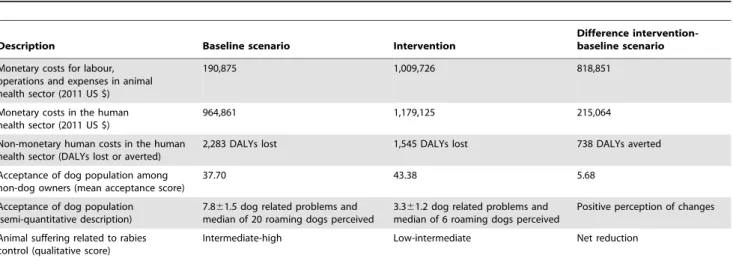
Table 4 summarises the additional investment and the addi-tional outcomes in monetary and non-monetary terms resulting from the intervention when compared with the baseline scenario over a time period of four years. The overall costs of the intervention were US $1.03 million, which was the sum of the additional investment of US$818,851 for the control measures in the animal health sector and the additional US$215,064 spent on
monetary human health costs. The net benefits from the intervention were 738 DALYs averted resulting from the reduction in dog bites, increased acceptance of roaming dogs in society and improved animal welfare. The detailed findings are presented below.
Costs of dog rabies control activities
Table 5 illustrates the total costs incurred for dog rabies control activities for the intervention from different organisations involved (Sri Lankan government, Blue Paw Trust). Table 6 lists the total costs incurred by the Sri Lankan government for dog rabies control in the years 2002 to 2006 which reflect the control costs in the baseline scenario. In the intervention, the largest proportion of the total costs was staff costs (33%), followed by implementation costs (21%), other costs (19%), and planning and preparation costs (11%). In the baseline scenario, the costs for implementation activities contributed most (about 92%) to the total annual costs in all years. The difference in costs between the baseline scenario and the intervention over a time period of four years was US$818,851.
Monetary and non-monetary human health costs
The total human health cost per dog bite was estimated at US $159 without using immunoglobulin, US $163 with equine immunoglobulin and US $39 for the people who only needed medical care, but not vaccination. The total human health costs for the four years of intervention and the baseline scenario were US $1,179,925 and US $964,861, respectively (Table 4). The difference between the two was US$215,064.
The total DALYs lost for the four years related to psychological distress were 1,461 for a total 36,864 dog bites in the intervention and 2,199 for a total 55,484 dog bites in the baseline scenario, respectively. The total DALYs lost for a four year period related to human deaths were 83.97 for both the intervention and the baseline scenario with three human deaths each. The total number of DALYs averted in the intervention period as compared to the baseline scenario for the four year period was 738.
The sensitivity analyses on the input variables that determined the outcomes ‘‘difference in monetary human health costs’’ and ‘‘DALYs averted’’ over the four years are illustrated in Figures 2 and 3. For the outcome ‘‘difference in monetary human health costs’’ the most influential variables were the number of people
Table 4.Additional investment for rabies control in Colombo City and related additional monetary and non-monetary outcomes that result when comparing the intervention with the baseline scenario over a four year time period.
Description Baseline scenario Intervention
Difference intervention-baseline scenario Monetary costs for labour,
operations and expenses in animal health sector (2011 US $)
190,875 1,009,726 818,851
Monetary costs in the human health sector (2011 US $)
964,861 1,179,125 215,064
Non-monetary human costs in the human health sector (DALYs lost or averted)
2,283 DALYs lost 1,545 DALYs lost 738 DALYs averted
Acceptance of dog population among non-dog owners (mean acceptance score)
37.70 43.38 5.68
Acceptance of dog population (semi-quantitative description)
7.861.5 dog related problems and median of 20 roaming dogs perceived
3.361.2 dog related problems and median of 6 roaming dogs perceived
Positive perception of changes
Animal suffering related to rabies control (qualitative score)
Intermediate-high Low-intermediate Net reduction
bitten and seeking treatment in the intervention (outcome changed by 82%) and the baseline scenario (outcome changed by 67%), respectively, followed by the overhead cost per hospital visit (outcome changed by 13%) and the proportion of people presented with dog bites receiving PEP (outcome changed by 11%). All other input variables caused changes in outcome of 1% or less (Figure 2). The difference in monetary human health costs when varying the two most influential inputs number of people bitten and seeking treatment in the intervention and baseline scenario, respectively, between 230% and +30% from the base is shown in Table 7. The results demonstrate by how much the inputs need to change for the intervention to create a benefit in terms of monetary human health costs. When keeping the base value for the baseline scenario constant, a reduction of the intervention input by at least 20% would lead to a monetary benefit in the human health sector. The additional expenditures for the intervention spent by the animal health sector could be recovered by monetary human health benefits if, ceteris paribus, the input people seeking treatment in the intervention was 950 (12% of the base value) or the input people seeking treatment in the baseline scenario was 13,026 (207% of the base value).
For the outcome ‘‘DALYs averted’’ the most influential variables were the number of dog bites in the baseline scenario (outcome changed by 45%) and in the intervention (outcome changed by 30%), respectively, followed by the DALYs lost per dog bite due to psychological distress (outcome changed by 15%). The DALYs lost per human rabies death did not influence the outcome (Figure 3).
Animal welfare assessment
Table 8 and Table 9 illustrate the score per situation without taking into account dog numbers and the score per situation taking into account dog numbers. For the intervention, the qualitative estimates ranged between very low and high. For the baseline scenario, the estimates ranged between very low and very high. The overall score was estimated as low-intermediate for the intervention and intermediate-high for the baseline scenario.
Social acceptance assessment
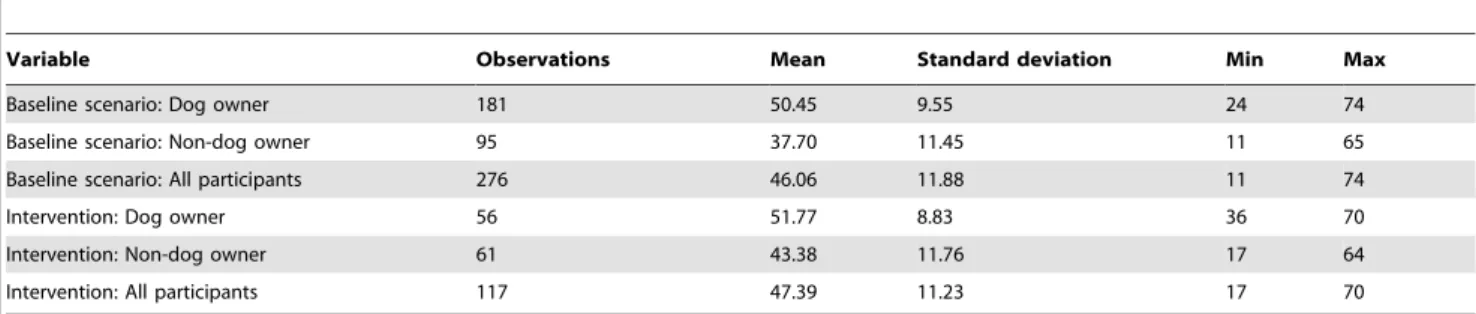
Table 10 summarises the overall acceptance scores for the baseline scenario and the intervention among dog owners and non-dog owners derived from the two surveys. The Kruskal-Wallis rank test to compare different groups showed that the differences between the four groups of dog owners and non-dog owners were statistically significant (p = 0.001). The post-hoc Wilcoxon rank-sum tests yielded a significant difference between dog owners and non-dog owners in 2007 (z = 8.22, p,0.0001), dog owners and non-dog owners in 2010 (z = 3.836, p = 0.0001), and non-dog owners in 2007 and 2010 (z =22.71, p = 0.0068). There was no significant difference between all participants in the baseline scenario and the intervention (z =20.938, p = 0.35).
Of the 61 focus group participants, 53 were women and 8 were men. There were 17 housewives and 28 who did not indicate their professions. The rest of the occupations included salesmen, students, nursery teachers, garment makers, an architect and business people. When asked about dog-related issues in the past, the groups described significantly more problems for the past than the present, specifically past problems 7.861.5 and present
Table 5.Costs (in 2011 US $) for dog rabies control activities in Colombo City for the years 2007–2011.
Cost categories 2007–08 2008–09 2009–10 2010–11 Total
Planning and preparation 38,624 34,459 18,753 20,418 112,254
Staff costs 73,230 88,974 85,282 81,498 328,984
Education costs 11,064 29,627 19,055 9,467 69,213
Transport costs 28,174 23,667 24,515 7,881 84,237
Implementation of vaccination and sterilisation
57,782 52,774 55,160 48,090 213,807
Sample taking and testing of rabid dogs 137 213 81 0 431
Communication 3,903 5,536 1,721 1,046 12,206
Other materials, maintenance, administrative expenses, meetings and accommodation, animal control facility
59,803 70,119 46,286 12,386 188,595
Total 272,718 305,369 250,853 180,786 1,009,726
doi:10.1371/journal.pntd.0003270.t005
Table 6.Costs (in 2011 US$) for dog rabies control activities in Colombo City from 2002–2005 (reflects the baseline scenario).
Cost categories 2002 2003 2004 2005 Total
Planning 728 752 730 853 3,064
Preparation 1,042 1,564 5,623 1,268 9,497
Implementation 38,544 32,624 53,374 51,923 176,466
Data collection & analysis 299 320 312 342 1,274
Communication 137 145 138 155 575
Total 40,749 35,406 60,178 54,542 190,875
problems 3.361.2 (Wilcoxon test, p,0.01). Figure 4 illustrates the number of dog related problems reported by the nine focus groups. Significantly fewer groups mentioned rabies and breeding or puppies as problems at present than in the past (Mc Nemar’s test, p,0.05). The stark decrease in the perception of rabies as a problem was explained by workshop participants as being due to possession of knowledge about the disease and knowing what to do when bitten by a dog.
The population control measures mentioned by participants were sterilisation, vaccination, shelter, re-homing, treatments, birth control injection, dumping, education, and awareness campaigns. The highest preference across all groups was given to sterilisation, vaccination and education. None of the groups mentioned culling as a means of population control.
All focus groups indicated that their behaviour following a dog bite had changed. Many groups reported the application of Murunga (a local plant) in the past, but would nowadays wash the wound with soap and running water and go to a hospital to seek treatment.
The mean acceptable total number of roaming dogs reported in the vicinity (i.e. street) was 2 (SD 2, range 0 to 10). There was a significant difference in levels of roaming dogs reported for the past and the present across all focus groups (p,0.001) (Table 11). There was no significant difference in the total number of roaming dogs reported by income levels (p = 0.184), whether the household reared dogs (p = 0.708), gender (p = 0.535), and occupation of participants (p = 0.696).
Ethical considerations
The economic analysis showed that the use of an additional US $818,851 in the animal health sector to combat rabies and manage the dog population in Colombo City had both negative and positive consequences in society when contrasting the intervention and the baseline scenario. Non-monetary benefits included an increase in the acceptance of roaming dogs among non-dog owners and dog owners, a reduction in animal suffering, and 738 DALYs averted. The increased acceptance of roaming dogs and the DALYs averted increased well-being of society. While Figure 2. Influence of input variables on monetary health costs.Sensitivity analysis results where distinct input variables were varied by 615% and the impact measured on the difference in monetary human health costs (in 2011 US $) between the intervention and the baseline scenario (BS).e= base value = US $ -215,064.
reducing animal suffering overall, the intervention strategy at the same time compromised animal welfare (e.g. due to sterilisation or catching in a net). Negative consequences included an increase of US$215,064 in human health costs related to seeking health care following dog bites. Hence, there was a net cost to society in monetary terms of US$1.03 m and a net benefit in non-monetary terms. The lower number of estimated dog bites and the improvement in reporting of bites and treatment of people indicated that the risk to people of contracting rabies was decreasing. The intervention was shown to be effective, as the official number of dog rabies cases decreased from an average of 43 cases per year (2001 to 2005) to just two cases in the first six months of 2011.
Ethical aspects relating to the rights and fairness approach in dogs and humans as well as the virtue approach in people included the following:
In people:
N
Rights: The right of people not to be injured was promoted in the intervention by an estimated decrease in the number of dog bites. The culling of dogs in the baseline scenario violated the right to follow religious beliefs, because it was against the norms of the mainly Buddhist population in Colombo City (http://www.statistics.gov.lk).N
Fairness: In both scenarios all dog owners were treated equally, because they all had the same possibilities to get their dogs vaccinated. In the intervention, non-dog owners were also targeted as part of the education activity, which was not the case in the baseline scenario.N
Virtue: By not taking life or taking life without suffering, veterinarians implementing the rabies control measures were given the possibility to be good practitioners (intervention). By treating all dogs and their owners equally, policy and decision-makers planning and implementing the rabies control measures showed fairness and generosity (both scenarios). People valuing dogs as companions were reinforced in their feelings of love and fidelity by observing the Blue Paw Trust team working in the field (intervention). Not having to hide dogs to avoid their culling indirectly promoted virtue (intervention).In dogs:
N
Rights: The baseline scenario violated the right to life becausedogs were culled on a large scale for the purpose of population and rabies control. The intervention respected the right to life by pursuing a strategy without culling. The dogs’ right to live their lives without molestation was violated by sterilisation and catching, but prevented more suffering and harm than it imposed on them.
N
Fairness: In the intervention, all dogs were included in thevaccination campaign, while in the baseline scenario only owned dogs were vaccinated. Also, the culling activities in the baseline scenario were unfair, because they only targeted roaming dogs.
The judgement if the good of the intervention outweighed the harm (the utilitarian approach) and if it best served the community as whole and not just some members (the common good approach) depends on how decision-makers prioritise ethical issues. It might be argued that the avoidance of animal suffering and the increased well-being of people justified the net monetary cost of the strategy. Others might attribute more weight to monetary values resulting from the control activities.
Discussion
The article proposes a comprehensive framework for assessing multiple aspects of rabies control and combining them in an economic analysis. It is composed of five components (epidemi-ological, economic, social, animal welfare and ethical assessments) that are all interlinked to guide decision-making and the allocation of resources. While almost all parts were covered individually in previous studies, to the authors’ knowledge there are no publications on rabies control that cover all these aspects in the spirit of One Health and link them in an economic analysis. The advantage of the framework is its comprehensive nature that provides decision-makers with a wide array of information that they need to be able to take informed decisions on disease management. However, it requires capacity in multiple disciplines, extensive data collection and an acknowledgment of the multi-factorial processes of decision-making. Similar elements essential Figure 3. Influence of input variables on non-monetary health costs.Sensitivity analysis results where distinct input variables were varied by 615% and the impact measured on the Disability Adjusted Life Years (DALYs) averted.e= base value = 738 DALYs averted.
seeking treatment in the baseline scenario (Input 1, row values) and the number of people bitten and seeking treatment in the intervention (Input 2, column values) between2
30% and+30% from the base.
5376 (230%)
5760 (225%)
6144 (220%)
6528 (215%)
6912 (210%)
7296 (25%)
7680 (base)
8064 (+5%)
8448 (+10%)
8832 (+15%)
9216 (+20%)
9600 (+25%)
9984 (+30%)
4402 (230%) 2150,540 2209,535 2268,529 2327,524 2386,518 2445,512 2504,507 2563,501 2622,496 2681,490 2740,485 2799,479 2858,474
4716 (225%) 2102,299 2161,293 2220,287 2279,282 2338,276 2397,271 2456,265 2515,260 2574,254 2633,249 2692,243 2751,238 2810,232
5030 (220%) 254,057 2113,051 2172,046 2231,040 2290,035 2349,029 2408,024 2467,018 2526,013 2585,007 2644,002 2702,996 2761,990
5345 (215%) 25,815 264,810 2123,804 2182,799 2241,793 2300,788 2359,782 2418,777 2477,771 2536,765 2595,760 2654,754 2713,749
5659 (210%) 42,426 216,568 275,563 2134,557 2193,552 2252,546 2311,541 2370,535 2429,529 2488,524 2547,518 2606,513 2665,507
5974 (25%) 90,668 31,673 227,321 286,316 2145,310 2204,305 2263,299 2322,293 2381,288 2440,282 2499,277 2558,271 2617,266
6288 (base) 138,909 79,915 20,920 238,074 297,068 2156,063 2215,057 2274,052 2333,046 2392,041 2451,035 2510,030 2569,024
6602 (+5%) 187,151 128,156 69,162 10,168 248,827 2107,821 2166,816 2225,810 2284,805 2343,799 2402,794 2461,788 2520,783
6917 (+10%) 235,393 176,398 117,404 58,409 2585 259,580 2118,574 2177,569 2236,563 2295,558 2354,552 2413,546 2472,541
7231 (+15%) 283,634 224,640 165,645 106,651 47,656 211,338 270,333 2129,327 2188,322 2247,316 2306,310 2365,305 2424,299
7546 (+20%) 331,876 272,881 213,887 154,892 95,898 36,903 222,091 281,085 2140,080 2199,074 2258,069 2317,063 2376,058
7860 (+25%) 380,117 321,123 262,128 203,134 144,139 85,145 26,151 232,844 291,838 2150,833 2209,827 2268,822 2327,816
8174 (+30%) 428,359 369,364 310,370 251,375 192,381 133,387 74,392 15,398 243,597 2102,591 2161,586 2220,580 2279,575
The figures in italic reflect the input combinations that produce a net benefit in monetary human health costs. doi:10.1371/journal.pntd.0003270.t007
Rabies
Control
in
Sri
Lanka:
A
Holistic
Evaluation
Neglected
Tropical
Diseases
|
www.plosntds
.org
13
October
2014
|
Volume
8
|
Issue
10
|
Situation Condition Frequency score Severity score Duration score
Overall score per situation
Total no of dogs in situation
Overall score taking into account dog numbers
Catch in net and vaccinate Stress/fear 4 2 1 Low 10,740 Low
Pain 4 1 1
Physical injuries 0 0 0
Side effects 0 0 0
Holding dog & vaccinate Stress/fear 4 1 1 Very low 36,300 Very low
Pain 0 0 0
Physical injuries 0 0 0
Side effects 0 0 0
Sterilisation Stress/fear 3 2 1 Intermediate 5,323 Intermediate
Pre-operative pain 4 1 1
Post-operative complications 0 0 0
Post-operative pain 4 2 2
Rabies cases Distress 4 3 3 Very high 68 High
Fever 3 2 1
Malaise 3 3 4
Painful swallowing 3 4 3
Dyspnoea 3 3 3
Dehydration 4 4 3
Starvation 4 4 3
Euthanasia Stress/fear 4 2 1 Low 68 Low
Pain 4 1 1
doi:10.1371/journal.pntd.0003270.t008 Rabies
Control
in
Sri
Lanka:
A
Holistic
Evaluation
Neglected
Tropical
Diseases
|
www.plosntds
.org
14
October
2014
|
Volume
8
|
Issue
10
|
Situation Condition Frequency Severity Duration
Overall score per situation
Total no of dogs in situation
Overall score taking into account dog numbers
Holding dog and vaccinate Stress/fear 4 1 1 Very low 25,013 Very low
Pain 0 0 0
Physical injuries 0 0 0
Side effects 0 0 0
Culling of dogs using a mixture of carbon monoxide and dioxide in a gas chamber
Fear/Distress 4 4 4* High 9,384 Very high
Pain 4 2{
2
Dyspnoea/Breathlessness 4 3{
2
Rabies cases Distress 4 3 3 Very high 172 High
Fever 3 2 1
Malaise 3 3 4
Painful swallowing 3 4 3
Dyspnoea 3 3 3
Dehydration 4 4 3
Starvation 4 4 3
* The duration includes keeping the dogs in the animal control facility for a prolonged time period. Without that waiting phase, the duration would be a 3 (when compared to euthanasia with pentobarbitone that takes seconds). {Depending on carbon dioxide concentration and the tuning of the carburettor. With appropriate tuning, these could be 1 and 2, respectively.
doi:10.1371/journal.pntd.0003270.t009
Rabies
Control
in
Sri
Lanka:
A
Holistic
Evaluation
Neglected
Tropical
Diseases
|
www.plosntds
.org
15
October
2014
|
Volume
8
|
Issue
10
|
for One Health decision making have also been identified by others. For example, a framework published after this study was conducted for the estimation of the economic costs of zoonoses [31] conceptually linked epidemiological and economic models and placed them in the context of wider risk management strategies including assessment of the context, hazard identifica-tion, risk assessment, capacity building and communication. The approach proposed here can be considered as an expansion of the risk assessment and risk management steps described in the other framework, whilst providing more detail on a specific disease (i.e. rabies) and the associated effects.
The comparison of additional costs with both monetary and non-monetary outcomes required presenting the results in an unconventional way. On the one hand, this presentation allowed reflecting the complexity of the real world and the various economic consequences related to a decision. On the other hand, the combination of negative monetary and positive non-monetary outcomes made the interpretation more challenging than a conventional net present value or cost-benefit ratio. Cost-benefit analysis is an approach that is intuitively appealing, because it assesses the positive and negative consequences of a strategy in a common unit, generally money. Cost-effectiveness analysis uses the same basic approach, but presents the outcome of a strategy in non-monetary units. The selection of an appropriate measure of effectiveness is critical, and must be in accordance with the control objective. A ‘‘CEA is only as valid as its underlying measures of
effectiveness and cost’’ [32], but unlike in health economics, where attempts have been made to harmonise CEA methodologies and encourage comparability of studies [33], there are no specific guidelines available yet for its application in animal health. Currently, due to variability of interests, approaches, designs, capacity and resource availability of organisations involved in rabies control, any incremental cost-effectiveness analyses going beyond human health will vary depending on the outcome measures defined. If the scientific community was to find an agreement on a standardised approach to measure outcomes of rabies control in an integrated way, the economic efficiency of such control measures could be compared internationally and the best approach chosen. As long as there is no standardisation of effectiveness measures for rabies or disease control in general, the variety in outcomes will make a meta-analysis difficult or even impossible. The presented framework is a starting point that may help to create awareness and stimulate discussion.
A range of approaches were used in the case study to cover the multifaceted control measures implemented which were expected to decrease the number of dog rabies cases, to reduce the number of PEP applied to people, to increase acceptance of dogs in society, and to generate a positive net value overall. The case study illustrates the various components of the proposed framework in a developing country context. Because of the limited availability of resources for the case study, secondary data were used whenever possible and where primary data collection was necessary, low-cost
Table 10.Summary table for the dog acceptance scores of dog owners and non-dog owners for the baseline scenario and the intervention.
Variable Observations Mean Standard deviation Min Max
Baseline scenario: Dog owner 181 50.45 9.55 24 74
Baseline scenario: Non-dog owner 95 37.70 11.45 11 65
Baseline scenario: All participants 276 46.06 11.88 11 74
Intervention: Dog owner 56 51.77 8.83 36 70
Intervention: Non-dog owner 61 43.38 11.76 17 64
Intervention: All participants 117 47.39 11.23 17 70
doi:10.1371/journal.pntd.0003270.t010
Figure 4. Dog related problems listed in Colombo City, Sri Lanka.The number of focus groups (1 to 9) that listed specific dog related problems perceived for the years 2006 (blue line) and 2011 (red line) in Colombo City, Sri Lanka.