FUNDAÇÃO GETULIO VARGAS
ESCOLA BRASILEIRA DE ADMINISTRAÇÃO PÚBLICA E DE EMPRESAS MESTRADO EXECUTIVO EM GESTÃO EMPRESARIAL
AN EXPLORATORY STUDY ON HOW TO IMPROVE THE ECONOMY
OF AMERICAN SAMOA
D
ISSERTAÇÃO APRESENTADA ÀE
SCOLAB
RASILEIRA DEA
DMINISTRAÇÃOP
ÚBLICA E DEE
MPRESAS PARA OBTENÇÃO DO GRAU DEM
ESTREFicha catalográfica elaborada pela Biblioteca Mario Henrique Simonsen/FGV
Toma, Johnny Victor
An exploratory study on how to improve the economy of American Samoa / Johnny Victor Toma. – 2014.
177 f.
Dissertação (mestrado) - Escola Brasileira de Administração Pública e de Empresas, Centro de Formação Acadêmica e Pesquisa.
Orientadora: Carmen Pires Migueles.
Inclui bibliografia.
1. Samoa, Ilhas – Condições econômicas. 2. Política econômica. 3.
Investimentos estrangeiros. I. Migueles, Carmen Pires. II. Escola Brasileira de Administração Pública e de Empresas. Centro de Formação Acadêmica e Pesquisa.
III. Título.
TABLE OF CONTENTS
LIST OF TABLES ... 1
LIST OF FIGURES ... 1
1. INTRODUCTION ... 3
1.1. RESEARCH QUESTION ... 7
1.2. OBJECTIVE OF THE PAPER ... 8
1.3. LIMITATION OF THE RESEARCH ... 8
2. FRAME OF REFERENCE ... 8
3. REVIEW OF THEORY ... 9
3.1. GOVERNMENT ... 10
3.2. CULTURE ... 12
3.3. RELIGION ... 14
4. RESEARCH METHODOLOGY ... 15
5. ANALYSIS ... 25
6. CONCLUSION ... 45
LIST OF TABLES
Table 1: Advantages vs. Disadvantages of doing business in American Samoa ... 7
Table 2: American Samoa Trade at a Glance ... 31
Table 3: American Samoa Agricultural Products ... 32
Table 4: Tourists Arrival in American Samoa ... 32
LIST OF FIGURES Figure 1: Statistics of Facebook Survey Participants ... 17
Figure 2: Survey Question # 1. ... 17
Figure 3: Survey Question # 2. ... 18
Figure 4: Survey Question # 3 ... 18
Figure 5: Survey Question # 3 ... 19
Figure 6: Survey Question # 4 ... 19
Figure 7: Survey Question # 5 ... 20
Figure 8: Survey Question # 6 ... 20
Figure 9: Survey Question # 7 ... 21
Figure 10: Survey Question # 8 ... 21
Figure 11: Survey Question # 9 ... 22
Figure 12: Survey Question # 10... 22
Figure 13: Survey Question # 11... 23
Figure 14: Survey Question # 12... 23
Figure 15: Survey Question # 13... 24
Figure 16: Survey Question # 14... 24
Figure 17: Survey Question # 15... 25
Figure 19: Atualevao Asifoa Farm... 37
Figure 20: Avegalio Farm ... 37
Figure 21: McDonald’s Restaurant in Fagatogo & Tafuna ... 38
Figure 22: Samoa Sports, Inc. and Bill Satele & Associates, inc. ... 38
Figure 23: Tafuna Mini Mart and Tautua Mo Oe ... 39
1. INTRODUCTION
Deep in the South Pacific region about 2,300 miles southwest of the Hawaiian islands1 lies a
United States territory that many Americans have never heard of nor known anything about.
However, some famous Americans such as Troy Polamalu of the Pittsburgh Steelers, semi retired
professional wrestler Dwayne “The Rock” Johnson, and Hawaii Congresswoman Tulsi Gabbard
have genealogical roots there. More importantly, many of the Territory’s sons and daughters have
served and lost their lives for the United States flag and the cause of freedom around the world. This
place is called American Samoa, a collection of seven islands that if glued together would have a
total landmass of approximately 76 square miles, just a tad bigger than the capital city of the United
States. According to the United States Census Bureau, there were 55,519 residents of American
Samoa in 2010.1The majority of them are ethnic Samoans, a Polynesian sect that traces its history
back to early migrants from Southeast Asia who settled the islands around 1500 B.C.2 3
The climate is warm all year long and the forests along the mountains are ripe with
vegetation. The main island is Tutuila with its beautiful and coveted landlocked harbor that was
used as a coaling station by the United States naval ships during World War II. In fact, it was the
Pago Pago Harbor that diminished the impact of the 2009 Tsunami that devastated the Samoan
islands by channeling the waters of the Pacific Ocean towards the end of the harbor instead of
flooding many other villages surrounding the Pago Pago Bay area. Lives and property were
destroyed near the end of the Harbor but it could have been worse for the entire Bay area. Locally
grown foods include coconut, taro, banana, guava, sugar cane, papaya, yam, pineapple, and
breadfruit. It is completely surrounded by the Pacific Ocean from which the locals obtain a variety
of seafood. There is a popular saying in Samoa that goes, “In Samoa, it is impossible to starve
1 American Samoa Department of Commerce, 2012 Statistical Yearbook,
http://www.doc.as/wpcontent/uploads/2011/06/2012-Statistical-Yearbook-1.pdf
2U.S. Census Bureau News, U.S. Census Bureau Releases 2010 Census Population Counts for American Samoa,
http://www.census.gov/2010census/news/releases/operations/cb11-cn177.html (Aug. 24, 2011).
3
3
because people live off of the land’s and the ocean’s abundant resources.”
To the west of American Samoa lies a larger group of four islands that make up the
Sovereign State of Samoa, which became independent from New Zealand in 1962. Samoa and
American Samoa share the same language, culture, and religion but are divided by government and
political systems. The focus of this study will be on American Samoa, which became a United
States territory in 1900 when the principal chiefs of Tutuila (the largest island in American Samoa)
ceded the islands to the United States.
Despite its long and “privileged” history as part of the United States family, the economy of
American Samoa seriously lags behind the rest of the country and many of her residents live in third
world conditions with an estimated unemployment rate of 33%4 after Chicken of the Sea closed its
operations in September 2009. Before that time, half of its workforce was in the public sector and
the other half was employed by the private sector. The following statistics show the general
population’s demographics, education, and earnings levels based on the 2010 Census:5
Gender:
Male 50.7% Female 49.3%
Age:
15–19 11.3% 20–34 19.3% 35–44 13% 45–54 10.9% 55–59 3.7% 60+ 6.8%
Academic Achievement:
4
U.S. Department of Labor, American Samoa National Emergency Grant: Workforce Development Plan
Draft, March 30, 2011.
http://americansamoarenewal.org/sites/default/files/resource_documents/Am%20Sam%20Disast er%20NEG%20WFD%20Plan.pdf
5 U.S. Census Bureau, 2010 American Samoa Demographic Profile
Bachelors and Higher 9.9% Associates Degree 8.6% Some College 15.3% HS Diploma/GED 48.3% Non-HS Graduates 18%
Median Earnings:
Male full-time, year round $11,621 ($5.70/hr based on 2,040 hrs/yr) Female full-time, year round $12,061 ($5.91/hr based on 2,040 hrs/yr)
Many people barely make ends meet because they not only have to pay for their personal
expenses and utilities, they are also financially obligated to their family chiefs (landlords), extended
families, village, and church affiliations. Others have left the Territory to seek economic
opportunities in Hawaii and the continental United States. Furthermore, the local government’s
attempts to develop a larger and broader economy are seriously limited by Samoa’s remote
location, its limited transportation avenues, and its devastating hurricane seasons among other
factors.
A 2008 study prepared by Malcolm D. McPhee & Associates and funded by a grant from
the U.S. Department of Interior showed the following advantages and disadvantages for potential
foreign direct investment in American Samoa. Due to the lack of local research firms, this federally
funded study is priceless and the insight it provides is invaluable for business leaders.
ADVANTAGES DISADVANTAGES
1. Physical Infrastructure 1. Physical Infrastructure
-extensive commercial freight docks in -lacks an international fiber optic link
protected deep-draft harbor -congested roads in need of repair
-dock-side container storage yard -general lack of reliability (i.e., internet &
-international airport electricity)
-industrial electricity 2. Social Infrastructure and Business
-U.S. grade water, wastewater and solid waste Environment
-roads unpredictable
-Industrial Park -limited access to capital and higher
-cannery operations, including buildings and borrowing costs
infrastructure, food grade facility -strict government regulations and slow
2. Social Infrastructure and Business delivery of public service
Environment -limited air links due to U.S. cabotage laws -security and stability of being part of the -below U.S. standard healthcare services
United States family (i.e., presence of FBI, 3. Concerns of Business Community
FAA, TSA, and U.S. Postal system; part of regarding business environment
U.S. court and banking systems; USDA food -unlevel playing field due to local politics
inspectors, stable base of federal financial -difficulty in obtaining business licenses in a
support, good reputation of Samoans in the timely manner
U.S. military, free enterprise capitalism) -high taxes, duties, and fees
3. U.S. style tax code -higher tax scheme for foreign corporations
4. U.S. trade advantages -no title insurance and limited financial
-tariff protection, Jones Act, Nicholson Act infrastructure
-“Made in America” labeling -federal government indifference
5. Long History of success with tuna -loss of historic federal advantages (i.e.,
processing Section 936, special minimum wage
provisions
6. American Samoa Government business and declining importance of duty-free access to
incentives the U.S.)
-tax exemptions possible (local control over -perceived lack of urgency or interest amongst
taxation) local population as it relates to business
-job training assistance available development
-small business counseling and other forms of -negative publicity from Daewoosa and other
assistance corruption issues
-no property tax 4. Human Capital
7. Intact society/culture -limited local labor pool
8. Lower wages relative to the U.S. and -lack of immigration security for foreign labor
other industrialized places -wages that are higher than what must be
paid
services low that they lead to a “brain drain” in many
10. Friendly and welcoming people areas (i.e., nurses, teachers, and other
skilled
11. Human capital workers)
-skilled personnel and management at -limited number of CPAs or equivalent
canneries and elsewhere -American Samoan students have lowest
-unskilled labor pool scores in United States in national assessment
-access to wider labor pool through
immigration (local control over immigration)
- English speaking population - U.S. based education system
12. South Pacific location
- located between United States and Australasia
- low levels of higher education attainment 13. Natural Resources
-deep and protected harbor -ocean resources
-plentiful fresh water
-natural beauty/low pollution
-a few areas with good diving, surfing, fishing, etc.
tests.
- Problem affects efficacy of Community
- College, which must enroll almost all students in developmental classes. Low ASVAB test scores prevent many school leavers from achieving their desire of enlisting
- proximity to fishing grounds in U.S. armed forces
5. Geography
- low distance to markets and sources of supply, compounded by not being located near major transpacific shipping lanes - remoteness makes for expensive shipping
- remoteness and small size contributes to expensive electricity
- remoteness and small size makes for expensive telecommunications (and lack of redundancy)
6. Natural Resources
-limited land mass and developable land -limited arable land -few and small beaches
-few world class dive or surf spots
1.1. RESEARCH QUESTION
Table 1:Advantages vs. Disadvantages of doing business in American
American Samoa’s Economy: What can we do to improve it?
1.2. OBJECTIVE OF THE PAPER
The main goal of this study is to explore the different ways in which the people of American Samoa can save their struggling economy. It is a combination of theoretical and empirical research.
1.3. LIMITATION OF THE RESEARCH
This research is limited to searches on the internet and the availability of experts on American Samoa’s economy.
2. FRAME OF REFERENCE
This research is critical because of three main reasons. Firstly, I am sensitive to the economic security of this place where I was born and raised. I know first hand the importance of my role and connection to the overall well being of American Samoa because I was a beneficiary of funds co-sponsored by the American Samoan government and Star-Kist Samoa, Inc., that financed my undergraduate college education overseas. I returned home after graduation to contribute to the local work force and to this day, I have been working and continuing my studies abroad not only for me and my family’s benefit but also with hopes that
my education and professional experiences overall will equip me for some type of public service to the people of American Samoa someday.
Secondly, I would like to use this research as a means to obtain an in depth knowledge of the nature of American Samoa’s economy and the major factors and players in its growth and
ways to become competitive with the rest of the world and usher in a new era of economic prosperity or else it will become a welfare state and fall further behind the global economy.
In other words, it is my desire to contribute in some fashion to American Samoa’s economic development plans for the future and enable me to bring the unique talents and resources of a remote place to the attention of emerging markets elsewhere which may be interested in forging business alliances with American Samoa and vice versa.
3. REVIEW OF THEORY
One of the key questions is what would a diversified private sector-based economy look like? According to Malcolm D. McPhee and Associates, the main characteristics of a diversified economy specifically tailored for American Samoa are as follows:
1. It is not dependent on one industry or company.
2. It increases local standards of living by being export-based.
3. It provides jobs and business opportunities for school leavers with limited education and training.
4. It provides local jobs and business opportunities for Samoans who have obtained high levels of education or job experience, locally or off-island.
5. It provides sufficient income and job opportunities so that Samoans do not feel compelled to move off-island.
6. It does not injure American Samoa’s environment or cultural integrity. 7. It facilitates shipping and telecommunication links to the wider world.6
The main appeal is that it would increase American Samoa’s economic independence and
reduce its dependence on foreign aid. The commission recommended the establishment of call
centers, manufacturing plants, and tourism development. To combat its lack of foreign direct
investment, the government can come up with all kinds of alternative ideas for economic
development but if they do not have the support of the traditional cultural and church leaders, they
will not survive. This is due to the fact that American Samoans have a deep-seated view that
6
Malcolm D. McPhee & Associates, American Samoa’s Economic Future and the Cannery Industry,
government, culture, and religion are the three main institutions that hold natural authority in
Samoan society. As a result, innovation and entrepreneurship must be at harmony with all these
facets of Samoan life in order to grow and flourish. Therefore, these main institutions can be both
enablers and barriers of American Samoan innovation. The more critical question is how can they
foster innovation?
3.1. GOVERNMENT
In American Samoa, there is a general feeling that the federal government (the United
States) keeps it promises. After all, it is “Uncle Sam” who primarily feeds and funds the local
American Samoan government. People in general trust the federal government but they are less
trustful of their local government. Historically, the American Samoa government has been
plagued by red tape and corruption.
The tsunami that devastated the Samoan islands in September 2009 not only exposed the
bottom of the Pacific Ocean, it also uncovered a culture of corruption and patronage politics in the
American Samoa government.
Public records showed that the Department of Homeland Security had awarded millions of federal dollars in grants for disaster preparedness here, including the construction of an island-wide siren warning system. But all the federal funding was frozen in early 2007 after DHS inspectors found that the local American Samoan government had been diverting millions of those dollars for its own uses.
Furthermore, an inspector general's report by the Department of Homeland Security issued in May 2007 cited numerous examples of American Samoan officials misusing federal grant money. The report's findings included the purchase of six flat-screen televisions for more than $25,000; purchase of executive leather chairs for $4,000; spending $77,000 on equipment no auditor could find; and extensive travel and entertainment charges, including money spent in Las Vegas, Nevada, by a Samoan
official for a conference he was scheduled to have attended in Colorado.7
Unfortunately, even in Paradise there exists a system of patronage politics that is based on
“who you know” versus “what you know.” This behavior among all levels of society drains itself
7 Drew Griffin and David Fitzpatrick, “Tsunami Warning Funds Squandered in American Samoa,” CNN.com,
into the government’s role in economic development or impairment. It grants special favors to one
business entity at the expense of another. It unbalances the playing field and slows down
innovation. According to the 2006 report published by the U.S. Department of Interior: “A Private
Sector Assessment for American Samoa,”8
the business community wants greater transparency,
less complex business licensing procedures, lower and less complex taxes, a more skilled labor
pool, etc.
Fortunately, the U.S. Department of Labor awarded American Samoa with its largest ever
National Emergency Grant (NEG) in the amount of USD $25 million to aid in its recovery process
in the wake of the 2009 tsunami. One of the key components of its recommendations for American
Samoa was advancing innovation and enterprise, while effectively managing risk. The NEG Grant
report stated:
As American Samoa moves away from a developmental approach dependent on low wages to one that prioritizes higher skills and creative enterprises, it must experiment with new
approaches – supporting self-employment, prioritizing emerging sectors and clusters, and
advancing workplace-based development initiatives. The NEG program provided opportunities to pilot new ideas, like the culinary training program. The Work Experience Internship and OJT programs engaged dozens of private sector employers, many of them small. Finding ways to attract resources, scale effective initiatives, and vet and test ideas while balancing potential risk are critical capacities needed across sectors among American Samoa’s workforce leaders.9
One form of innovation is scientific innovation, which is encouraged by the local
Department of Education and the territory’s one and only institute of higher learning, the American
Samoa Community College. For example, science fairs are held at the elementary and secondary
levels every year where students from all over the islands compete with the latest and greatest local
innovations.
8
Jocelyn L.M. Doane and Sara E. Gray, as quoted by Malcolm D. McPhee & Associates, A Private Sector
Assessment for American Samoa, in American Samoa’s Economic Future and the Cannery Industry, February 2008. http://www.spc.int/prism/country/as/stats/canneries.pdf
9
Social Policy Research Associates. From Tsunami to Renewal: A Review of American Samoa’s National
Emergency Grant, December 2012.
In April 2012, the American Samoa Community College sponsored an invention
competition open to all of the college’s student clubs.10
The All Saints Club came up with a
mini-water filtration system that could purify polluted water and make it safe to drink. They filled
up a large soda bottle with a system of natural purifying elements that purified the dirty water by the
time it reached the bottom of the bottle. The Student Government organization showed how a used
light bulb could be turned into a small kerosene lantern by using 100% cotton material as the wick
of the lantern; and the New Generation Club displayed an unusual method of cooking by using an
old tire and glass window louvers. A small cooking pot was placed within the circumference of the
tire and the glass louvers were positioned on top of that circumference. The glass would intensify
the sunlight to such a degree that it would slowly begin to cook the contents of the pot. These types
of innovations should be encouraged and developed so that they might become profitable
enterprises in the future.
3.2. CULTURE
Another recommendation that the NEG report outlined was engaging the extended family
(aiga) network. There may not be a whole lot of corporations in American Samoa but there are
plenty of knowledge networks that exist within the extended families spread across the globe that
could be harnessed for innovation. The report stated:
We saw countless examples of American Samoans returning from the U.S. mainland or elsewhere to assist their families after the tsunami, leading game-changing initiatives by engaging their off-island networks. Chef Sualua Tupolo, who launched the American Samoa Culinary Academy, is one example. At the same time, there are thousands of networks in the U.S. comprised of American Samoans who are working or attending school. Families, churches, and now workforce programs are engaging these networks in ways that
help students and new arrivals succeed. American Samoa’s leaders must build and support
networks that enable opportunities for off-island education, training, development for residents of American Samoa, and opportunities for U.S. mainlanders and Pacific islanders to learn and work in American Samoa. Reaching out to those who have returned home from military service, education, or off-island holds tremendous promise as a low-cost,
10
James Kneubuhl, “Invention Contest encourages Innovation,” Samoa News, April 26, 2012.
high-impact workforce for development strategy.11
The NEG report stressed the importance of family networks, which are critical for the
traditional and cultural acceptance of innovation as a worthwhile and essential component in
American Samoa’s economic recovery and development. The family and not the individual is the
most basic unit of Samoan culture. Therefore, it is generally considered that what is good for the
family is good for the culture.
Another form of innovation that the Samoan culture can help to cultivate and enhance is
agricultural innovation. A study conducted by Cluny MacPherson of the University of Auckland in
the late 1980’s showed that Samoan families and villages awarded their agricultural innovators with
chiefly titles and leadership roles in society. The study was based in Western Samoa (now
Independent Samoa) but the dynamics and circumstances are the same as those in American Samoa.
Therefore, one cannot conclude that Samoan culture would be indifferent or even hostile towards
individual innovation because it would benefit not only the innovator but also his or her family and
society as a whole. Cluny concluded that, “This sector’s (agriculture) failure to attain productivity
lies not solely, or even primarily, in the social organization of the village, but in rational
consideration of the costs and benefits of various economic alternatives.”12
It does not take rocket science to figure out that the major economic alternatives directly at
odds with agricultural innovation in American Samoa is the exodus of American Samoa’s young,
able, and college educated workforce to Hawaii and the United States in search of better paying
jobs. Parents are increasingly encouraging their sons and daughters from an early age to pursue
military, college, or sports (primarily National Football League) opportunities abroad that would
bring wealth and income into the family. The lack of an agricultural labor force and limited arable
and developable land in American Samoa are preventing this section of the economy from
11
Social Policy Research Associates. From Tsunami to Renewal: A Review of American Samoa’s National
Emergency Grant,
Http://americansamoarenewal.org/sites/default/files/American_Samoa_Executive_Summary.pdf
12
Cluny MacPherson, “The Road to Power is a Chainsaw: Villages and Innovation in Western Samoa,” Pacific
Studies Volume 11, No. 2 (March 1988).
advancing to the next level in growth and innovation.
However, there is plenty of innovative technology that is hidden behind the obvious uses of
the crops that are grown locally. For instance, the coconut tree serves a variety of different
purposes. The coconut meat, juice, and cream can be consumed. The coconut leaves can be used to
weave baskets and make other handicrafts for home and business décor; and the stems of the leaves
can be used for making the bristles of a broom. Families or clans can develop their plantations into
factories for making these ancient and yet innovative business products to make large profits if
given the proper training in business management and financial support from the government. An
immigrant labor force can be leveraged to run the plantation or factories. After all, just as American
Samoans are leaving their homeland for better opportunities abroad, there are many non-Americans
in the neighboring Pacific islands and countries that would like to take advantage of the benefits of
living in a United States territory such as American Samoa. If nothing else, it is a stepping-stone to
Hawaii and the U.S. mainland.
3.3. RELIGION
The Church has a unique role in American Samoa’s economic development. In addition to
the cultural institutions, religion is where the majority of American Samoans invest their money and
efforts. Samoans are a deeply religious people. The culture is married to religion. Samoan students
still pray in public schools, and all public events start and end with a prayer. Church is the place
where education, musical innovation and talent are developed. It is where networking and financial
transactions take place. It is also not a secret that the pastors of large congregations are among the
wealthiest people in American Samoa because the faithful pay for their salaries and living expenses.
Many Samoans give generously to the Church at the expense of their own personal needs and
wants.
Churches also raise thousands of dollars through raffle tickets, bake sales, car washes,
the largest and most beautiful structures in the villages. The Church is a profit making business in
American Samoa. It also helps struggling families by giving them spiritual as well as economic
support. Whether it is formally aware of it or not, American Samoa has relied heavily on the good
nature of the Samoan churches to help its struggling economy and like the government and the
culture, can be a stimulator of innovation.
In summary, it is difficult for American Samoa to reach the grand scales of the larger
emerging markets in the developing world due to its small size and remote location. Instead it is
learning and seeking new ways to become economically independent with the help of the federal
government by developing and retaining local skill and innovation, and building networks around
the globe. However, innovation cannot succeed without support from the local government, the
traditional leaders, and the Church, which are considered the most important institutions in Samoan
society. These theoretical viewpoints were “put out there” to garner public opinion via survey.
4. RESEARCH METHODOLOGY
As part of this exploratory study, I used social media to collect public opinion and input on
the Economy of American Samoa. A poll was conducted on Facebook from July 30, through
August 15, 2014. It was closed after the 200th participant completed it. This number in itself was a
gift since it was a challenge to gain public interest and support for this project in a limited amount of
time.
A very sincere and earnest effort was made in order to publicize the Survey to collect as
much input as possible from a variety of people. Firstly, I shared the link on my own personal
Facebook page and my Amerika Samoa: An Economy of Warriors Facebook page.13The latter is
based on my thesis research. I asked my Facebook “friends” to take the survey and to share it with
their connections. Secondly, I filmed myself requesting support for the survey and posted the video
13
14
on my Facebook pages and on other notable Samoan Facebook pages such as Samoa News
American Samoa, Café Koko Samoa, Samoan Pride, Manu’atele Community Worldwide, Samoa
mo Samoa, Itulau mo Samoa, and my high school class’s Facebook group page entitled Class of
1994 Hardcore.
Despite these attempts, the momentum was not moving as fast as I would like. According to
the statistics about the Survey (see Figure 1), 503 people viewed it but only 200 of them (40%)
answered the questions. Of those who took the survey, 41 of them (just 21%) shared the Survey.
Finally, only 11 people (6%) invited their Facebook friends to participate. These were not
enthusiastic numbers. It gave me the impression that the Economy of American Samoa was not a
very popular topic of interest on social media. If only 40% of visitors participated, that means that
60% of them only peeked at it but didn’t do it. The Survey was cleverly orchestrated so that an
individual would only be able to view each question one at a time. The average time that took to
complete the poll was 5 minutes and 40 seconds.
14 Johnny Toma, “Video about the Survey on the Economy of American Samoa,” Facebook,
Figure 1: Statistics of Facebook Survey Participants15
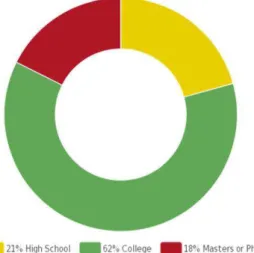
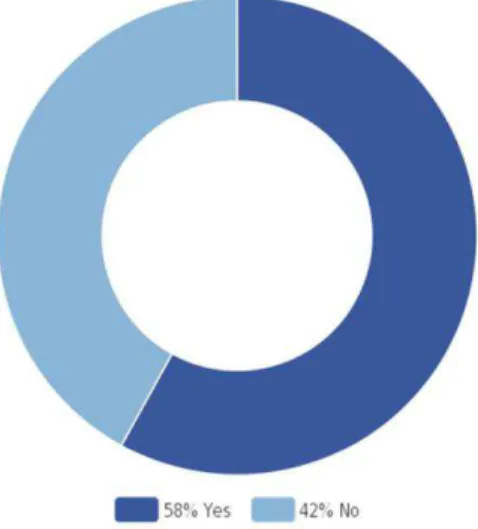
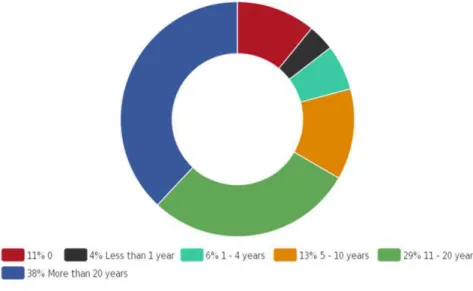
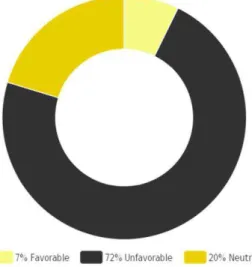
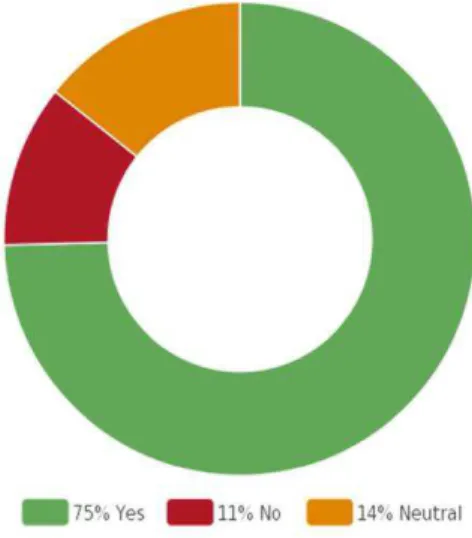
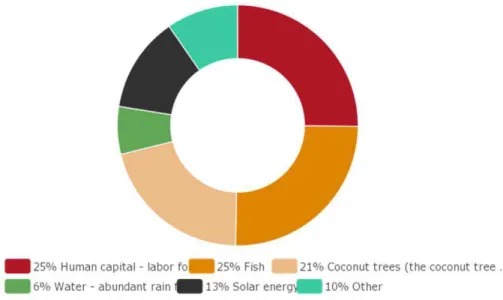
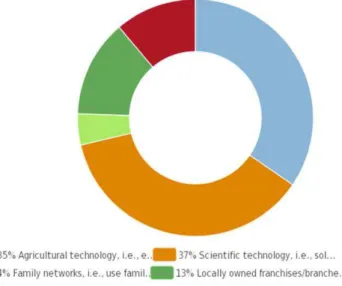
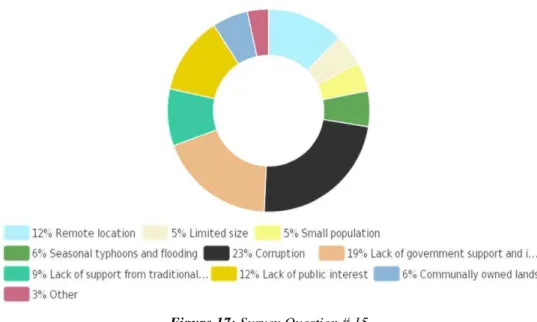
The following Figures 2 -17 display the results of the poll in pie chart format.
Figure 2: Survey Question # 1. 16
15 Johnny Toma, American Samoa’s Economy: What can we do to improve it?, Survey, Facebook,
Figure 3: Survey Question # 2.
Figure 4: Survey Question # 3
16 All survey Questions from: Johnny Toma, American Samoa’s Economy: What can we do to improve it?,
Figure 5: Survey Question # 3
Figure 7: Survey Question # 5
Figure 9: Survey Question # 7
Figure 11: Survey Question # 9
Figure 13: Survey Question # 11
Figure 15: Survey Question # 13
Figure 17: Survey Question # 15
5. ANALYSIS
So what information did the Facebook survey reveal? The first seven questions served to
paint a picture of the demographics of those who participated in the poll. Almost ¾ of the
respondents were below 46 years of age (see Figure 2). 79% of them held a college or graduate
degree (see Figure 3). The majority of them, 68%, were female versus 32% male (see Figure 4).
This is an interesting statistic.
One can draw several assumptions from the latter data. One could assume, for instance, that
more females were interested in the topic of the Survey versus their male counterparts. Another
notion could be that more females were concerned and had ideas about the economy of American
Samoa than males. They also could have even been biased towards the surveyor as a male. No one
can know for sure since this was a public opinion poll on social media and it would be a far stretch
to assume that females have more access to the internet than males. However, what is known about
U.S. Census, the median annual income for females was $440 higher than males.17This data is a
significant improvement on the part of wages for women because ten years earlier, it was the
opposite. The median annual earnings for men outweighed those of women by $706 according to
the U.S. Census in the year 2000.18
58% of those who took the Facebook survey were born in American Samoa (see Figure 5).
Coincidentally, that is the same percentage of American Samoa’s population who were born there
according to the 2010 U.S. Census.1932% of the respondents were living in American Samoa at the
time of the survey (see Figure 6). 89% of the participants had resided in American Samoa at some
point in their lives or were living in American Samoa during the time of the poll. 38% lived there for
more than 20 years (see Figure 7). Therefore, one can draw a conclusion from these statistics that
the majority of the respondents had knowledge of and experience with American Samoa. 40% of
the survey takers worked for the government while 26% worked for the private sector, followed by
14% who were unemployed, 8% self-employed, 7% in military duty, and 5% retired (see Figure 8).
In other words, this was a diverse group of people in terms of job sector.
The remaining nine questions of the survey were focused on extracting the opinions of these
individuals about the American Samoan economy. Most of them, 72%, had an unfavorable view of
the economy in American Samoa (see Figure 9). Only 8% of the poll respondents thought that the
government leaders in American Samoa were doing a good job at managing the local economy (see
Figure 10). That is a dire figure. In fact, they chose corruption (23%), lack of government support
17
U.S. Census Bureau, 2010 American Samoa Demographic Profile
http://factfinder2.census.gov/faces/tableservices/jsf/pages/productview.xhtml?pid=DEC_10_DP AS_ASDP3&prodType=table
18
U.S. Department of Labor, American Samoa National Emergency Grant: Workforce Development Plan Draft http://americansamoarenewal.org/sites/default/files/resource_documents/Am%20Sam%20Disast
er%20NEG%20WFD%20Plan.pdf
19 U.S. Census Bureau, 2010 American Samoa Demographic Profile
and infrastructure (19%), and lack of public interest (12%) as the top three factors that undermined
economic progress in American Samoa (see Figure 17). 3/4 of the poll participants thought that
American Samoa was too dependent on the United States for financial support and the same
percentage thought that American Samoa should become more economically self-sufficient (see
Figures 11 & 12).
The survey respondents thought that the American Samoa Government could best improve the
local economy by doing a better job at managing the funds from the United States Federal
Government (40%), investing in local innovation by providing business mentoring,
coaching, training, and support (31%), and encouraging foreign investment (12%) (see Figure
13). A significant percentage of the public poll thought that the economy of American Samoa
would greatly improve if the American Samoa Government did not mismanage the funds from
the United States. Millions of dollars are poured into American Samoa by the federal
government each year for various programs but unfortunately, are not used properly for local
benefit. The following is a summary of the December 2004 report to Congressional requesters
by the U.S. Government Accountability Office (GAO) and it is quite telling of the accountability
problem in American Samoa:
To better understand the role of federal funds in American Samoa, GAO (1) examined the uses of 12 key grants in fiscal years 1999-2003, (2) identified local conditions that affected the grants, and (3) assessed accountability for the grants.
What GAO Found:
In fiscal years 1999-2003, 12 key federal grants supported essential services in American Samoa. These services included support for government operations, infrastructure improvements, nutrition assistance, the school system, special education, airport and highway infrastructure improvements, Medicaid, and early childhood education.
A shortage of adequately trained professionals, such as accountants and teachers, as well as inadequate facilities and limited local funds hampered service delivery or slowed project
completion for many of the grants. For example, American Samoa’s only hospital lacked an
adequate number of U.S.-certified medical staff. Further, the hospital had persistent and serious fire-safety code deficiencies that jeopardized its ability to maintain the certification required for Medicaid funding.
failure, and instances of theft and fraud limited accountability for the 12 grants to American Samoa. The American Samoa government did not comply with the Single Audit Act during fiscal years 1998-2003. The 1998-2000 audit reports, completed in 2003, and the 2001 audit report, completed in 2004, cited pervasive governmentwide and program-specific
accountability problems. Despite the audits’ delinquency, federal agencies were slow, or
failed, to communicate concern to the American Samoa government or to take corrective action. In addition, accountability for all of the grants was potentially undermined by instances of theft and fraud. For example, the American Samoa Chief Procurement Officer, whose office handles procurements for most of the
grants GAO reviewed, was convicted of illegal procurement practices.20
American Samoans have known their government to be a failure in terms of accountability.
There is more than enough money from the U.S. Government to feed and support a mere population
of 55,519 people, which is the equivalent of a small city in the United States. Unfortunately, that is
not happening and until the local government gets its act together, continuing to rely on external
sources of funding will not fix the problem. It’s like the old adage, “You can’t keep throwing money
at the problem hoping that it would solve it on its own.” If you don’t have the right diagnosis, an
appropriate strategy or the necessary human resources, money will only be used to put a bandage on
the surface but it won’t get at the root of the issue. Like a cancer it will continue to spread if it is not
properly treated.
A whopping 90% of those who took the Facebook survey thought that American Samoa
should invest more in its natural resources (see Figure 15). They thought that the most profitable of
American Samoa’s natural resources were fishing and human capital with 25% each, followed by
coconut trees at 21% and solar energy at 13% (see Figure 14). It is not a surprise that fishing was a
popular choice because it is a well known fact that canned tuna is the Territory’s largest and most
lucrative export (see Table 2). 95% of American Samoa’s total exports from 2007 to 2012 were
canned tuna.
Furthermore, Table 2 shows that the value of American Samoa’s total exports during that
six-year period had consistently outweighed the value of its imports.21An observer could easily
20
Government Accountability Office, American Samoa: Accountability for Key Federal Grants Needs
Improvement: GAO-05-41, http://www.gao.gov/assets/250/244973.html (December, 2004).
21 American Samoa Department of Commerce, American Samoa At a Glance Report,
notice that tuna is a successful enterprise for American Samoa but who is pocketing all the
wealth while the majority of the local residents continue to live in poverty? Questions like this
are all too frequently asked among the general public. Sadly, top off-island executives are the
usual beneficiaries at the expense of the local fishermen and fish cleaners at the bottom of the
organizational chart who earn below the continental U.S. minimum wage.
That is probably the main reason why local American Samoan workers do not benefit
from the successful tuna canning industry in American Samoa. James Sterk of the Heritage
Foundation explained the special bind that American Samoan workers are in during his
testimony before the Health, Education, Labor, and Pensions Committee of the United States
Senate on June 25, 2013. It offers a decent crash course on American Samoa’s particular
minimum wage plight:
American Samoans have a largely separate economy and considerably lower incomes than residents of the continental United States: the average Samoan worker made $12,000 in 2009. The tuna canning industry makes up a significant portion of their private sector.
Until recently American Samoa had a different minimum wage schedule than the continental United States. A committee within the Department of Labor set Samoan wage minimums according to local economic conditions. In January 2007 the minimum wage in the canning industry stood at $3.26 an hour. Unfortunately for American Samoa, Congress applied the 2007 federal minimum wage increase to the territory. The legislation aligned the Samoan minimum wage with the U.S. rate of $7.25 an hour in 50 cent annual increments.
Almost every hourly worker in the tuna canning industry makes less than $7.25 an hour. At that level the minimum wage would cover 80 percent of the islands’ hourly workers. This would be the economic equivalent of raising the minimum wage to $20.00 an hour in the continental U.S.
By May 2009 the third scheduled minimum wage increase in Samoa took effect, rising to $4.76 an hour and covering 69 percent of canning workers. This did not increase purchasing power, stimulate demand, and raise living standards, as many minimum wage
proponents theorize. Instead StarKist—one of the two canneries then located in Samoa—
laid off workers, cut hours and benefits, and froze hiring. The other cannery—Chicken of
the Sea—shut down entirely in September 2009. The Government Accountability Office
The Democratic Governor of American Samoa, Togiola Tulafono, harshly criticized this GAO report for understating the damage done by the minimum wage hike. Testifying before
Congress Gov. Tulafono objected that “this GAO report does not adequately, succinctly or
clearly convey the magnitude of the worsening economic disaster in American Samoa that has resulted primarily from the imposition of the 2007 US minimum wage mandate.” Gov. Tulafono pointed out that American Samoa’s unemployment rate jumped from 5 percent before the last minimum wage hike to over 35 percent in 2009. He begged Congress to stop increasing the islands’ minimum wage:
“We are watching our economy burn down. We know what to do to stop it. We need to bring the aggressive wage costs decreed by the Federal Government under control. But we are ordered not to interfere …Our job market is being torched. Our businesses are being
depressed. Our hope for growth has been driven away…Our question is this: How much
does our government expect us to suffer, until we have to stand up for our survival?”
Samoan employers responded to higher labor costs the way economic theory predicts: by hiring fewer workers. Congress hurt the very workers it intended to help. Fortunately, Congress heeded the Governor’s plea and suspended the future scheduled minimum wage increases.22
Given that the livelihood of American Samoan workers, like everyone else in capitalist
societies around the world, are at the mercy of their employers, why shouldn’t they strive to
work for themselves and take control of their own economic well being by becoming
entrepreneurs? According to the Facebook survey, the types of local innovation that the
respondents would support the most were scientific technology, i.e., solar energy at 37%;
agricultural technology, i.e., Samoan brooms made from coconut trees at 35%; and locally
owned franchises or branches of international companies at 13% (see Figure 16). So it really
does beg the question with the issue of innovation and entrepreneurship: Why don’t American
Samoans use their wonderful natural resources to develop solar energy, an agricultural (fruits and
vegetables) industry, or even a tourism industry? What are the local conditions that prevent private
citizens from developing their own businesses?
22
Table 2: American Samoa Trade at a Glance23
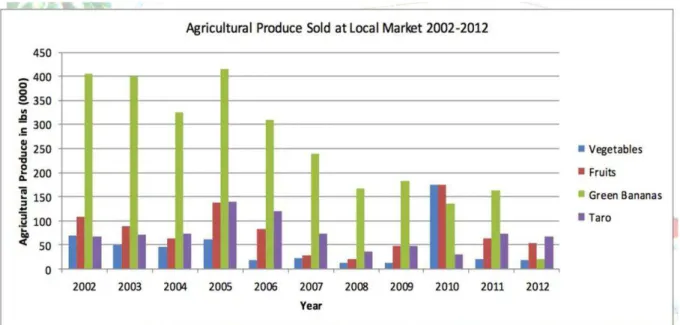
Tables 3 and 4 clearly display the downward trend in the agricultural and tourism
industries in American Samoa from 2006 through 2012. One can deduce from this data that the
American Samoans had gradually given up on farming and on persuading outsiders to visit their
beautiful islands over this seven-year period. In fact
Figure 18 offers revealing data about where the tourists came from. Most were obviously
from the United States at 56%, followed by New Zealand and Australia at 29% and 11%
respectively. Europe, Asia, and Canada barely made it on the pie chart. In our globalized
environment, something is wrong and right about this picture. It is wrong because Africa and Latin
America are missing from the pie chart but it is also right because it means that there is a huge
opportunity to explore avenues of business with the rest of the developing world. In a way, this thesis will introduce American Samoa’s economic situation to Latin American scholars and
23
American Samoa Department of Commerce, American Samoa At a Glance Report, http://www.doc.as.gov/wp-content/uploads/2011/06/RevisedAtaGlance2014.pdf
Table 3: American Samoa Agricultural Products24
Table 4: Tourists Arrival in American Samoa25
24 American Samoa At a Glance Report,
http://www.doc.as.gov/wpcontent/uploads/2011/06/RevisedAtaGlance2014.pdf
25
Figure 18: Tourist Arrivel by Citizenship for 201226
According to Professor Carmen Migueles of Brazil:
Brazil also has a lot of resources and natural riches, but especially the northern part is rather poor. There is a rich culture, traditions, parties and all, but also persistent poverty. The intriguing question is: Why?
In Brazil, the problem of persistent local poverty is localized in some regions. The Japanese immigrated en masse to Brazil around 1910 and although very poor and moving nowhere else but the countryside, nowadays they are the largest producers of fruits and vegetables there. The same happened to the Dutch. They came in small numbers to the country side of São Paulo state, lost all of what they brought with them from Europe, and now Holambra
(Holland + Brazil) – the name of the city they founded, is Latin America’s largest exporter
of flowers. This city is now one of the richest. The same happened with the Italians in Caxias do Sul City and with the Germans in Porto Alegre. Now they are totally assimilated in
Brazil and in the culture. They consider themselves “pure Brazilians…” – but they are rich.
What makes them different from other communities? They were more capable of cooperating for mutual profit. There is a huge amount of economic theory on the role of
trust and cooperation on fostering development. And it leads to the role of culture in it.27
The Professor made a good point. A similar phenomenon is happening in American
Samoa where 89% of the population is of Samoan ancestry28but 80% of retail businesses there are
26 Idem.
27
Carmen Pires Migueles, email to author, September 5, 2014
28
U.S. Census Bureau, 2010 American Samoa Demographic Profile
owned by minorities, namely Asians – Koreans, Chinese and Filipinos 29 who emigrated to the
Territory like the Japanese, Dutch, and Italians did in Brazil. They obviously took the
entrepreneurship route and became self-employed, earned profits, and in turn employed others.
This may seem startling to some native Samoan people but it is an obvious fact in American
Samoa. Many of the grocery and department stores; as well as restaurants and sewing shops, are
owned by American Samoa’s Asian minority. So is there a problem with the Samoans? Why aren’t
a majority of these types of businesses owned by the majority ethnic group? That is “the secret” that
this research will now aim to unravel. It seems that the majority of Samoans are not “empowered”
or in control of their economic situation and if the resources are available, why are they not
accessing and taking advantage of them like the Asians are? Are they being “lazy” and living off of
the benefits of American nationalism or is there something deeper below the surface?
It is hard to find any evidence of laziness on the part of the Samoans because they are
naturally a hard working people. As hunters and gatherers, they happily lived off of their lands, the
ocean, and other natural resources for millennia totally oblivious of the material possessions of
industrialized societies in other parts of the world. In his Stone Age Economics, Marshall Sahlins
referred to this phenomenon as “material plenty.” His analysis of the Bushmen and
Kalaharis of Africa, the Labradors of North America, and the Murngins of Australia has a
similarity to the dynamics of ancient Samoa and those who still live this way today:
Analysis of hunter-gatherer production is usefully divided into two spheres, as Mrs. Marshall has done. Food and water are certainly "important exceptions," best reserved for separate and extended treatment. For the rest, the nonsubsistence sector, what is here said of the Bushmen applies in general and in detail to hunters from the Kalahari to Labrador--or to Tierra del Fuego, where Gusinde reports of the Yahgan that their disinclination to own more than one copy of utensils frequently needed is "an indication of self-confidence." "Our Fuegians," he writes, "procure and make their implements with
29
Faleomavaega Eni Hunkin, Faleomavaega Welcomes American Samoa Business Coalition,
U.S. House of Representatives,
little effort.”
In the nonsubsistence sphere, the people's wants are generally easily satisfied. Such "material plenty" depends partly upon the ease of production, and that upon the simplicity of technology and democracy of property. Products are homespun: of stone, bone, wood, skin materials such as "lay in abundance around them." As a rule, neither extraction of the raw material nor its working up take strenuous effort. Access to natural resources is typically direct-"free for anyone to take"--even as possession of the necessary tools is general and knowledge of the required skills common. The division of labor is likewise simple, predominantly a division of labor by sex. Add in the liberal customs of sharing, for which hunters are properly famous, and all the people can usually participate in the going prosperity, such as it is.
But, of course, "such as it is": this "prosperity" depends as well upon an objectively low standard of living. It is critical that the customary quota of consumables (as well as the number of consumers) be culturally set at a modest point. A few people are pleased to consider a few easily-made things their good fortune: some meagre pieces of clothing and rather fugitive housing in most climates; l1 plus a few ornaments, spare flints and sundry other items such as the "pieces of quartz, which native doctors have extracted from their patients"; and, finally, the skin bags in which the faithful wife carries all this, "the wealth of
the Australian savage.”
For most hunters, such affiuence without abundance in the nonsubsistence sphere need not be long debated. A more interesting question is why they are content with so few possessions-for it is with them a policy, a "matter of principle" as Gusinde says and not a misfortune.
Want not, lack not. But are hunters so undemanding of material goods because they are themselves enslaved by a food quest "demanding maximum energy from a maximum number of people," so that no time or effort remains for the provision of other comforts? Some ethnographers testify to the contrary that the food quest is so successful that half the time the people seem not to know what to do with themselves. On the other hand, movement is a condition of this success, more movement in some cases than others, but always enough to rapidly depreciate the satisfactions of property. Of the hunter it is truly said that his wealth is a burden. In his condition of life, goods can become "grievously oppressive," as Gusinde observes, and the more so the longer they are carried around. Certain food collecters do have canoes and a few have dog sleds, but most must carry themselves all the comforts they possess, and so only possess what they can comfortably carry themselves. Or perhaps only what the women can carry: the men are often left free to react to the sudden opportunity of the chase or the sudden necessity of defense.
technological equipment.”30
Today Samoans are all too aware of their poverty in comparison to residents of first
world countries in the 21st century. It used to be that as long as there was food on the table, life
was good and there was no need for material possessions. To the contrary, quality education and
affordable health care are becoming increasingly important to the lives of many Samoans. Like
everyone else in global capitalism, they send their kids to school to get a good education, serve
in the United States military, excel in national sports, and relocate to foreign lands in search of
better economic opportunities for themselves and their families. They are forced to leave their
beloved homeland because they need to make more money to support themselves and their
families. That is why entrepreneurship is making more and more sense to explore as people seek
new ways to survive and make a living in American Samoa.
However, it is not like American Samoan entrepreneurs do not exist. Despite their small
number in contrast to the Asian business owners, there exists a decent number of them and they
have made a big and lasting impact on the local economy for decades. Figures 19 through 24 are just
a few examples of successful businesses in American Samoa owned by native Samoans.
30 Marshall Sahlins, Stone Age Economics (Chicago, Illinois: Aldine Atherton, Inc., 1972), 10
Figure 19: Atualevao Asifoa Farm31
Figure 20: Avegalio Farm32
31
American Samoa Government, 2014 American Samoa Business Directory: Celebrating Business Legacies
(Pago Pago, American Samoa, 2014), 4.
http://doc.as.gov/wpcontent/uploads/2014/04/AS-Business-Directory-2014-reduced-for-website.pdf
32
2014 American Samoa Business Directory: Celebrating Business Legacies (Pago Pago, American Samoa,
Figure 21: McDonald’s Restaurant in Fagatogo & Tafuna33
Figure 22: Samoa Sports, Inc. and Bill Satele & Associates, inc.34
33
2014 American Samoa Business Directory: Celebrating Business Legacies (Pago Pago, American Samoa,
2014), 8. http://doc.as.gov/wp-content/uploads/2014/04/AS-Business-Directory-2014-reduced-for-website.pdf
34
2014 American Samoa Business Directory: Celebrating Business Legacies (Pago Pago, American Samoa,
Figure 23: Tafuna Mini Mart and Tautua Mo Oe35
Figure 24: Tisa’s Barefoot Bar36
If these particular Samoans and American Samoa’s Asian minority have achieved economic
success, how come the majority of native Samoans still live in poverty? One theory for the issue of
35 2014 American Samoa Business Directory: Celebrating Business Legacies (Pago Pago, American Samoa,
2014), 12. http://doc.as.gov/wp-content/uploads/2014/04/AS-Business-Directory-2014-reduced-for-website.pdf
36
2014 American Samoa Business Directory: Celebrating Business Legacies (Pago Pago,
American Samoa, 2014), 13. American Samoa, 2014), 13.
complacency when it comes to economic independence or individualism for the majority of native
Samoans in American Samoa could be the tribal or communal culture of the Samoan people.
Historically, there is no sense of individualism in the Fa’a-Samoa (Samoan way) but rather a sense
of communal existence. For example, many households consist of members of an extended family
including parents, grandparents, uncles, aunts, and cousins. The income of each person goes to feed
and support himself or herself and the rest of the members of the household. There exists a shared
sense of responsibility and collective ownership of the resources of the aiga (family or clan). It is
why many Samoans, like hunters and gatherers, did not hoard personal wealth. Moreover, the head
of the family had the final say in the distribution
of income and benefits for the entire family.
It is therefore tempting to think that this sense of community rather than individualism
would easily translate from the clan to the greater and wider benefit of the Territory as a whole.
Elinor Ostrom in her book entitled, “Governing the Commons: The Evolution of Institutions for
Collective Action,” referred to this popular assumption as the “grand optimism expressed in
group theory: that individuals with common interests would voluntarily act so as to try to further
those interests.”37However, it couldn’t be more further from the truth. Mancur Olson debunked
this theory in 1965:
The view that groups act to serve their interests presumably is based upon the assumption that the individuals in groups act out of self-interest. If the individuals in a group altruistically disregarded their personal welfare, it would not be very likely that collectively they would seek some selfish common or group objective. Such altruism, is, however, considered exceptional, and self-interested behavior is usually thought to be the rule, at least when economic issues are at stake; no one is surprised when individual businessmen seek higher profits, when individual workers seek higher wages, or when individual consumers seek lower prices. The idea that groups tend to act in support of their group interests is supposed to follow logically from this widely accepted premise of rational, self-interested behavior. In other words, if the members of some group have a common interest or objective, and if they would all be better off if that objective were achieved, it has
37
Elinor Ostrom, Governing the Commons: The evolution of Institutions for Collective Action (Cambridge,
England: Cambridge University Press, 1990), 5.
been thought to follow logically that the individuals in that group would, if they were rational and self-interested, act to achieve that objective.
But it is not in fact true that the idea that groups will act in their self-interest follows logically from the premise of rational and self-interested behavior. It does not follow, because all of the individuals in a group would gain if they achieved their group objective, that they would act to achieve that objective, even if they were all rational and self-interested. Indeed, unless the number of individuals in a group is quite small, or unless there is coercion or some other special device to make individuals act in their common interest, rational, self-interested individuals will not act to achieve their common or group interests. In other words, even if all of the individuals in a large group are rational and self-interested, and would gain if, as a group, they acted to achieve their common interest or objective, they will still not voluntarily act to achieve that common or group interest. The notion that groups of individuals will act to achieve their common or group interests, far from being a logical implication of the assumption that the individuals in a group will rationally further their individual interests, is in fact inconsistent with that assumption...
If the members of a large group rationally seek to maximize their personal welfare, they will not act to advance their common or group objectives unless there is coercion to force them to do so, or unless some separate incentive, distinct from the achievement of the common or group interest, is offered to the members of the group individually on the condition that they help bear the costs or burdens involved in the achievement of the group objectives. Nor will such large groups form organizations to further their common goals in the absence of the coercion or the separate incentives just mentioned. These points hold true even when there is unanimous agreement in a group about the common good and the methods of achieving it.
The widespread view, common throughout the social sciences, that groups tend to further their interests, is accordingly unjustified, at least when it is based, as it usually is, on the (sometimes implicit) assumption that groups act in their self-interest because individuals do. There is paradoxically the logical possibility that groups composed of either altruistic individuals or irrational individuals may sometimes act in their common or group interests. But, as later, empirical parts of this study will attempt to show, this logical possibility is usually of no practical importance. Thus the customary view that groups of individuals with common interests tend to further those common interests appears to have little if any
merit.38
According to Ostrom:
Olson's argument rests largely on the premise that one who cannot be excluded from obtaining the benefits of a collective good once the good is produced has little incentive to contribute voluntarily to the provision of that good. His book is less pessimistic than it is asserted to be by many who cite this famous passage. Olson considers it an open question whether intermediate-size groups will or will not voluntarily provide collective benefits. His definition of an intermediate-size group depends not on the number of actors involved but on how noticeable each person's actions are.
38