Hormones in the Barnacle
Balanus amphitrite
: Evidence
of Roles in Larval Settlement
Xing-Cheng Yan1, Zhang-Fan Chen1, Jin Sun2, Kiyotaka Matsumura1, Rudolf S. S. Wu3, Pei-Yuan Qian1*
1Division of Life Science, The Hong Kong University of Science and Technology, Clear Water Bay, Kowloon, Hong Kong SAR, China,2Department of Biology, Hong Kong Baptist University, Kowloon Tong, Hong Kong SAR, China,3School of Biological Sciences, University of Hong Kong, Hong Kong SAR, China
Abstract
The barnacleBalanus amphitriteis a globally distributed marine crustacean and has been used as a model species for intertidal ecology and biofouling studies. Its life cycle consists of seven planktonic larval stages followed by a sessile juvenile/adult stage. The transitional processes between larval stages and juveniles are crucial for barnacle development and recruitment. Although some studies have been conducted on the neuroanatomy and neuroactive substances of the barnacle, a comprehensive understanding of neuropeptides and peptide hormones remains lacking. To better characterize barnacle neuropeptidome and its potential roles in larval settlement, an in silicoidentification of putative transcripts encoding neuropeptides/peptide hormones was performed, based on transcriptome of the barnacleB. amphitritethat has been recently sequenced. Potential cleavage sites andstructure of mature peptides were predicted through homology search of known arthropod peptides. In total, 16 neuropeptide families/subfamilies were predicted from the barnacle transcriptome, and 14 of them were confirmed as genuine neuropeptides by Rapid Amplification of cDNA Ends. Analysis of peptide precursor structures and mature sequences showed that some neuropeptides ofB. amphitriteare novel isoforms and shared similar characteristics with their homologs from insects. The expression profiling of predicted neuropeptide genes revealed that pigment dispersing hormone, SIFamide, calcitonin, and B-type allatostatin had the highest expression level in cypris stage, while tachykinin-related peptide was down regulated in both cyprids and juveniles. Furthermore, an inhibitor of proprotein convertase related to peptide maturation effectively delayed larval metamorphosis. Combination of real-time PCR results and bioassay indicated that certain neuropeptides may play an important role in cypris settlement. Overall, new insight into neuropeptides/peptide hormones characterized in this study shall provide a platform for unraveling peptidergic control of barnacle larval behavior and settlement process.
Citation:Yan X-C, Chen Z-F, Sun J, Matsumura K, Wu RSS, et al. (2012) Transcriptomic Analysis of Neuropeptides and Peptide Hormones in the BarnacleBalanus amphitrite: Evidence of Roles in Larval Settlement. PLoS ONE 7(10): e46513. doi:10.1371/journal.pone.0046513
Editor:Sam Dupont, University of Gothenburg, Sweden
ReceivedMay 28, 2012;AcceptedSeptember 1, 2012;PublishedOctober 2, 2012
Copyright:ß2012 Yan et al. This is an open-access article distributed under the terms of the Creative Commons Attribution License, which permits unrestricted use, distribution, and reproduction in any medium, provided the original author and source are credited.
Funding:This work was supported by a research grant (DY125-15-T-02) from China Ocean Mineral Resources Research and Development Association and an Award (SA-C0040/UK-C001) from King Abdullah University of Science and Technology (KAUST) to PY Qian. The funders had no role in study design, data collection and analysis, decision to publish, or preparation of the manuscript.
Competing Interests:The authors have declared that no competing interests exist.
* E-mail: [email protected]
Introduction
Neuropeptides constitute the largest class of intercellular messenger molecules and play key roles in many physiological processes, e.g. reproduction, homeostasis and locomotion [1]. In general, they are produced from endocrine cells or neurons as precursors (preprohormones) and become biologically active after post-translational modifications. Secreted neuropeptides can have autocrine, paracrine and hormonal effects, by binding to membrane receptors of organ systems [2]. The earliest traceable ancestral neuropeptides date back to primitive metazoans, i.e. cnidarians [3,4]. In arthropods, neuropeptide studies have so far been limited to insects and decapods. For instance, eclosion hormone and ecdysis triggering hormone are the most well-known neuropeptides extensively studied in the mothManduca sextaand the fruit flyDrosophila melanogaster[5]. Prothoracicotropic hormone has been characterized in various insects and proposed to initiate larval metamorphosis through stimulating prothoracic glands via G protein-coupled receptor/cAMP [6]. The crustacean
hypergly-cemic hormone family, originally isolated from X-organ-sinus gland (XO-SG) complex of decapods, was involved in regulating energy and ionic metabolism, or inhibiting molting and repro-duction [7]. Besides insects and decapods, only very limited information is available on arthropod neuropeptides.
Bioinformatics-based mining of neuropeptides from Expressed Sequence Tag (EST) library, transcriptome and genome has been recently conducted and numerous novel peptides have been uncovered in several species [17,18]. The barnacle has been subjected to deep sequencing of EST recently [19]. In our study, we obtained the transcriptome of the barnacle Balanus amphitrite
using 454 pyrosequencing technology, which contained more than 90,000 predicted open reading frames [20]. This rich source of transcriptomic information made large-scale in silicodiscovery of peptides feasible since we can overcome the difficulties of collecting and sectioning enough amounts of nervous tissues from
B. amphitritelarvae for mass spectrometry analysis. In this study, we conducted in silico transcriptome mining of neuropeptides/ peptide hormones inB. amphitrite, and quantified their expression levels at different developmental stages. We then examined the effect of proprotein convertase inhibitor on larval settlement to explore the possible function of the neuropeptides characterized. Our results provide a comprehensive catalog of neuropeptidome of B. amphitrite, and insights on the possible functional roles of some neuropeptides in barnacle larval settlement.
Materials and Methods
1. Sample Preparation
Adult barnacles were collected from the Pak Sha Wan public piers, Hong Kong (22u219450 N, 114u159350 E). No specific permits were required for the field collection. The field studies did not involve any endangered or protected species. Broods were isolated from adult barnacle in the laboratory and nauplii were hatched and cultured according to Thiyagarajan & Qian 2008 [21], and larvae were collected once they reached cypris stages after 4 days’ culture. For expression analysis of peptide precursor
genes, nauplii II, nauplii VI, cyprids, newly metamorphosed juveniles, and adults were collected. Total RNA extraction and cDNA synthesis were conducted according to Chen et al. 2011 [20]. Briefly, total RNA of barnacles of different developmental stages was extracted with TRIzolHreagent (Invitrogen, Carlsbad, CA, USA). Trace DNA contaminants were removed by TURBO DNA-freeTM Kit (Ambion Inc, Austin, TX, USA). cDNA was synthesized using M-MLV reverse transcriptase (USB, Cleveland, OH, USA) with oligo dT primer for Rapid Amplification of cDNA Ends (RACE) reactions and real-time PCR assays.
2. Database Mining of Neuropeptide Precursors
Several methods from recent publications [17,18,22] were combined and modified to search for neuropeptide/peptide hormone encoding genes in barnacle transcriptome, which contains 23,451 contiguous sequences including 182 contigs, 23,269 isotigs and 77,785 singletons [20]. Protein sequences of the known neuropeptides and peptide hormones in arthropod were obtained from UniProt Knowledgebase (http://www. uniprot.org/) using ‘‘neuropeptide’’, ‘‘hormone’’ and ‘‘peptide’’ as search keywords without "receptor", "signal anchor", or "transmembrane". NCBI non-redundant protein sequences (http://www.ncbi.nlm.nih.gov/) were also used for known arthropod peptides extraction, since different databases tend to use different key-word searching criteria which may lead to different results. After removing the unrelated sequences, such as enzymes and transcription factors, the remaining sequences were transformed into FASTA format to generate a local arthropod neuropeptide database. The program ‘‘tBLASTn’’ was used to mine for putative cDNA sequences that encode for active peptides in the barnacle transcriptome via queries using
Table 1.Neuropeptide/peptide hormones predicted based on transcriptome mining ofBalanus amphitrite.
Peptide family
Barnacle accession No.
Reference accession No.&
RACE
confirmed E-value Score
A-type allatostatin JQ864191 BAF64528.1 + 1E-22 1122
B-type allatostatin JQ864192 NP_001036890.1 + 7E-22 249
C-type allatostatin JQ864193 P85798.1 + 5E-23 94
Bursicona JQ864194 XP_003485714.1 + 3E-60 193
Bursiconb JQ864195 ADI86243.1 + 5E-43 148
Calcitonin-like diuretic hormone-isoform A JQ864196 EEZ99367.1 + 2E-14 71.6
Calcitonin-like diuretic hormone-isoform B JQ864197 ACX47068.1 + 4E-21 90.5
Corticotrophin-like diuretic hormone isotig15071# UniRef100_P82373
2 0.005 36.6
Eclosion hormone JQ864198 EGI68318.1 + 3E-11 64.7
Insulin-related peptide JQ864199 NP_001233285.1 + 1E-08 57.4
Ion transport peptide GBQDZ6L01AXT7W#
UniRef100_E0VME9 2 5E-19 89.4
GBQDZ6L01BA9KU# UniRef100_E2BEL2
2 0.003 37.4
Neuropeptide F JQ864200 UniRef100_C9EAB8 + 0.005 36.6
Orcokinin JQ864201 EFX70781.1 + 3E-27 110
Pigment dispersing hormone JQ864202 JC4756 + 4E-14 70.1
SIFamide JQ864203 NP_001161182.1 + 7E-06 47.8
Sulfakinin JQ864204 NP_492344.2 + 1E-06 51.2
Tachykinin-relate peptide GBQDZ6L01CRRE4# BAD06363.1
2 0.0002 32
JQ864205 BAC82426.1 + 3E-15 78.6
&Reference accession No. is the accession No. of the known neuropeptide that has the highest hit against barnacle transcript.
#
NCBI accession numbers were not designated to sequences that were not confirmed by RACE. doi:10.1371/journal.pone.0046513.t001
arthropod neuropeptide sequences mentioned above. For each query, the top three blast hits with an E-value lower than 0.01 were screened out and chosen as candidates and manually checked for homology to known peptides.
3. Peptide Prediction
Neuropeptide candidate sequences generated by database mining were translated using ExPASy translate tool (http://web. expasy.org/translate/). Three typical neuropeptide precursor criteria, which are signal sequence, pro-hormone processing sites and length less than 300 amino acids, were applied to evaluate candidate sequences. Signal peptide identification was deduced by online program SignalP 3.0, using both the neural networks and Hidden Markov Model algorithms [23]. Pro-hormone cleavage sites were predicted based on work by Veenstra 2000 [24], and Neuropred online program (http://neuroproteomics.scs.illinois. edu/neuropred.html) and/or by homology to the known arthro-pod precursors. Sulfation state of Tyr residues was predicted using the online program Sulfinator [25] and/or by homology to known arthropod neuropeptides. In some cases, other post-translational modifications, e.g. cyclization of N-terminal Glu/Gln residues and C-terminal amidation were predicted mainly by homology to known peptide isoforms.
4. RACE Sequencing and Peptide Confirmation
Since neuropeptide precursor sequences generated from tran-scriptome are usually fragmented or incomplete, further confir-mation on the predicted neuropeptide candidates by full length open reading frame (ORF) is required. Two sets of specific primers were designed from the partial cDNA sequences obtained from the transcriptome database. For RACE, a first run of amplification
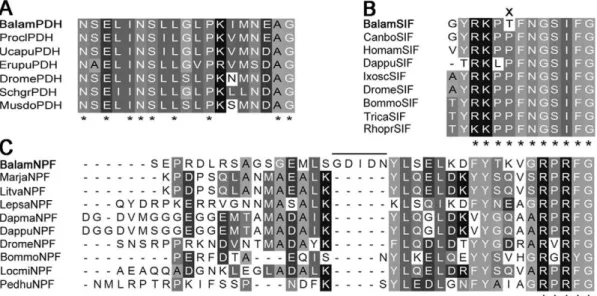
Figure 1. Sequence alignment of barnacle pigment dispersing hormone, SIFamide and neuropeptide F with arthropods. (A) Sequence alignment of mature pigment dispersing hormone. Decapods peptide sequences are from:Uca pugilatorP08871,Procambarus clarkii
Q9TWW7 andCancer productusABV68725; isopod peptide is fromEurydice pulchraACX49752; insect peptides are from:Drosophila melanogaster
AAL49303,Schistocerca gregariaACY02888 andMusca domesticaQ76JT9. (B) Alignment of barnacle SIFamide mature peptides. Sequences are from: decapodsHomarus americanus,Cancer borealis; branchiopodDaphnia pulex; insectsDrosophila melanogaster,Tribolium castaneum,Bombyx mori,
Rhodnius prolixusandIxodes scapularis[38]. (C) Alignment of barnacle NPF mature peptide. Insect NPF are from:Drosophila melanogasterAF117896,
Bombyx mori NP_001124361, Locusta migratoria CO854418 and Pediculus humanus EEB15547. Decapods NPF are from shrimps Marsupenaeus japonicusCI998017 and Litopenaeus vannameiAEC12204; copepod NPF is from Lepeophtheirus salmonisFK933794; branchiopods NPF are from
Daphnia magnaEG565358 andDaphnia pulexEFX90018. Asterisks ‘‘*’’ represent typical motif residues of each peptide. ‘‘x’’ indicates unique amino acid residues ofB. amphitritecompared to other arthropods. Line marks the unique five amino acids insertion of NPF inB. amphitrite.
doi:10.1371/journal.pone.0046513.g001
Figure 2. Comparison of barnacle sulfakinin peptide with other arthropods. (A) Sequence alignment of mature sulf. (B) Precursor structure of barnacle sulf compared with other crustaceans and insects. Insects Sulf are from: Drosophila melanogaster AAF52173, Tribolium castaneum EFA04708, Anopheles gambiae AAR03495, Bombyx mori
NP_001124354 andCulex quinquefasciatusXP_001846221; branchiopod is from Daphnia pulex EFX80896; decapods Sulf are from Homarus americanusandPenaeus monodon[38]. Asterisks ‘‘*’’ represent typical motif residues of each peptide. ‘‘x’’ indicates unique amino acid residues ofB. amphitritecompared to other arthropods.
was performed using gene specific primer 1st and adaptor with oligo (dT)/oligo (dG) primer. Then gene specific primer 2nd (up or down to primer 1st) and adapter primers were used for second run PCR amplification. RACE products were cloned and sequenced. Complete amino acid sequences of candidate genes were submitted to NCBI BLAST again and checked manually for the precursor structure. If BLAST result of the new sequence didn’t match the corresponding neuropeptide genes, it was excluded.
5. Sequence Analysis
Corresponding neuropeptide sequences from crustaceans and insects were searched and collected. All the crustacean neuropep-tide genes and proteins discovered through in silicodata mining, cloning or mass spectrometric approach were compiled. Predicted mature peptide sequences were used for alignment using ClustalW (version 2.0) with default parameters and manually checked.
6. Quantitative Real-time PCR
Gene specific primers were designed manually based on nucleotide sequences from the barnacle transcriptome database. Details of the primers are listed in Table S3 as additional information. The cytochrome b gene was used as the inner reference for normalizing the expression levels of target genes [26]. All real-time PCR assays for each peptide-encoding gene were performed on Stratagene Mx3005P QPCR System (Agilent, Santa Clara, CA, USA), using KAPATM SYBRH FAST qPCR Kit Master Mix (2X) Universal (KAPA Biosystems, Woburn, MA, USA). For each neuropeptide gene, three replicates were conducted using each batch of larvae, and three batches of larvae
were collected for real-time PCR analysis. Generated qRT-PCR Ct values were analyzed by 2-DDCt method [27] and further tested by using one-way ANOVA, followed by Tukey test post-hoc analysis. Gene expression level in juvenile stage was standardized in order to better characterize genes that are up-regulated in cypris stage and down-regulated after metamorphosis, which might be involved in settlement regulation.
7. Proprotein Convertase Inhibitor Assay
To test the hypothesis that neuropeptides/peptide hormones are involved in larval settlement, we incubated cyprids in solution of peptidyl chloromethylketone (Enzo life sciences, Farmingdale, NY, USA) and compared the percentage of metamorphose between the treatment and control. This compound is a highly specific and potent inhibitor against proprotein convertases responsible for maturation of bioactive peptides [28]. Specifically, stock solution (20 mM) was prepared by dissolving the compound in dimethyl sulfoxide (DMSO) and stored at 220uC. Experiments were conducted in triplicates and repeated three times with different batches of cyprids. Around 20 cyprids were added to each well of a 24-well plate (#3047, BD FalconTM, Franklin Lakes, NJ, USA) each containing 1 mL of test solution. The treatment group consisted of three concentrations (1, 10, and 100mmolL–1), with two negative controls, i.e. autoclaved filtered seawater (AFSW) only and 0.5% DMSO in AFSW. The plates were incubated at 28uC in darkness for 48 hours, and the number of metamorphosed
Figure 3. Comparison of barnacle tachykinin-related peptide with that of insects and crustaceans.(A) TRP sequence alignment. Decapods TRP are from:Cancer borealis[72] andHomarus americanus ACB41786; isopod TRP is fromEurydice pulchraCO869025; branchiopod TRP is from Daphnia pulex [38]. Insects TRP are from: Tribolium castaneumEFA09176,Drosophila melanogasterAAF89172,Bombyx mori
NP_001124364 and Rhyparobia maderaeAAX11211. (B) Barnacle TRP precursor structure compared with other crustaceans and insects. Decapods TRP are from:Homarus americanus ACB41786 and Procam-barus clarkiaBAC82426. Insects TRP are from:Drosophila melanogaster
AAF89172,Camponotus floridanusEFN66667 andPeriplaneta americana
AAX11212. Branchiopod TRP is fromDaphnia pulex[38]. Asterisks ‘‘*’’ represent typical motif residues of each peptide.
doi:10.1371/journal.pone.0046513.g003
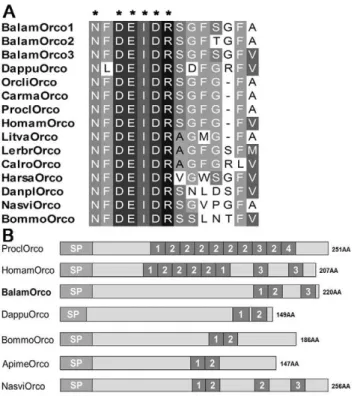
Figure 4. Comparison of barnacle orcokynin with other arthropods. (A) Sequence alignment mature orco. (B) Precursor structure of barnacle orco compared with other crustaceans and insects. Sequences of insects Orco are from: Nasonia vitripennis
XP_003426062, Bombyx mori NP_001124366, Danaus plexippus
EHJ77769, Harpegnathos saltator EFN80782 and Apis mellifera
XP_001120650; copepods Orco are from: Calius rogercresseyi and
Lernaeocera branchialis [22]; decapods Orco are from: Litopenaeus vannamei [1], Marsupenaeus japonicas [73], Homarus americanus
ACD13197, Procambarus clarkii [73], Carcinus maenas [74] and
Orconectes limosus [75]. Branchiopod Orco is from Daphnia pulex
EFX70781. Asterisks ‘‘*’’ represent typical motif residues of each peptide. doi:10.1371/journal.pone.0046513.g004
and swimming cyprids was counted under a dissecting microscope every 24 hours. Three replicates were conducted for each batch of larvae and treatment, and in total three batches of larvae were collected for bioassay. Percentage of larval metamorphosis was calculated and arcsine transformed prior to one-way ANOVA analysis followed by Tukey test post hoc analysis.
Results and Discussion
1. Neuropeptides Predicted fromB. amphitrite
In this study, a combination ofin silicoprediction of putative neuropeptide-encoding genes ofB. amphitriteand molecular cloning verification were performed using known peptides in Arthropoda as queries. As a result, 16 neuropeptide families were predicted, and 14 of them were confirmed by peptide homology and gene cloning (Table 1), generating 64 predicted mature peptides (Table S1). Since many neuropeptides are relatively fragmented (10–30 amino acids) in the transcriptome dataset, the BLAST score tended to be low with a high E-value. Their full length open reading frames were cloned by RACE, which not only served as a secondary proof of thein silicopredictions, but also provided large coverage of peptide isoforms as possible. The neuropeptide precursor sequences and predicted structures are listed in Table S2. In comparison with the previous studies in which only pigment dispersing hormone, crustacean cardioactive peptide and RFa-mide family had been characterized by immunohistochemistry [29,30,31], our results tremendously expand our knowledge of the molecular endocrinology of barnacle species.
The neuropeptides identified in this study included A-type allatostatin (ASTA), B-type allatostatin (ASTB), C-type allatostatin (ASTC), bursicon subunit a (BurA), bursicon subunit b (BurB), calcitonin-like diuretic hormone (Calci), eclosion hormone (EH), insulin-related peptide (IRP), neuropeptide F (NPF), orcokinin (Orco), pigment dispersing hormone (PDH), SIFamide, sulfakinin
(Sulf) and tachykinin-related peptide (TRP) (Table 1). Among these predicted neuropeptides, pigment dispersing hormone was previously also detected in all of the three barnacle species tested by Webster 1998 [28]. In our in silico prediction, it was characterized with precise amino acid sequence as NSE-LINSLLGLPKIMNEAamide (Figure 1A, Table S1), which highly resembledb-PDH discovered in the crabUca pugilator[22]. Two previously detected neuropeptides through immunohistochemis-try, namely FMRF-like neuropeptide and crustacean cardioactive peptide (CCAP), were not found in our study. It might be because they were not covered by the transcriptome using 454 sequencing, or too fragmented to pass our screening criteria.
2. Neuropeptide Sequences Analysis
Although most of the neuropeptides identified in the present study are widely distributed among arthropod species, we found some isoform variants that appeared to be unique, including those that had previously been thought to be highly conserved in arthropods. For instance, SIFamide family consists of two major isoforms, namely Gly-SIFamide and Val-SIFamide, which are extremely conserved among arthropods and only differ at one N-terminal residues [32]. Gly-SIFamide peptide discovered in
B. amphitritein this study was highly similar to that of other insects and decapods, but with one amino acid Pro6being changed into Thr6 (Figure 1B). Likewise, NPF of B. amphitrite possessed extra five-residues insertion between positions 19–23 from C-terminal, which was a novel isoform for NPF peptide family (Figure 1C). Furthermore, clear differences existed between sulfakinins from barnacle and their arthropod counterparts. The precursor of barnacle sulfakinin encoded for two more mature peptides than that of other arthropods (Figure 2B). In addition, compared with C-terminal typical signature YGHM/LRFamide with sulfated or nonsulfated Tyr in other species, sulfakinin-2/3/4 inB. amphitrite
possessed Lys8 rather than the ubiquitous Arg8, and Met6/Phe6 instead of His6 in all known arthropod sulfakinin variants (Figure 2A). Further support was derived from barnacle ASTC with the mature sequence of SYWKQCSFNAVSCFamide (Table S1). The typical motif of ASTC is either X6CYFNPISCF with N-terminal blocked by pyro-Glu or SXWKQCAFNAVSCFamide [33], where X represents a variable residue. Thus ASTC of
B. amphitritehighly resembled that of other decapods and insects, but with the broadly conserved Ala7being substituted by Ser7.
During evolution, the non-synonymous mutations may either radical, or promote or impair the neuropeptide’s biological function [34]. Plenty of structural function studies on neuropep-tides suggested even small variations of amino acid sequence can lead to substantial functional changes in the potency of the peptides, depending on the position of changes [35]. For instance, the allatostatin Pea-AST2 of the cockroachPeriplaneta americanawas reported to be more potent than Pea-AST1 over a 400-fold range, in terms of their ability of inhibiting juvenile hormone synthesis [36]. Thereby, unique neuropeptide structures found in barnacle may implicate that their functional efficiency has been altered. Whether, and in what way modified peptide sequences would alter their bioactivity and subsequently physiological processes in barnacles remains to be investigated.
3. Some Neuropeptides ofB. amphitrite Indicate Closer Relationship with Insects Rather than Decapods
Insects and decapods are two major groups of arthropods widely studied in comparative endocrinology and neuropeptide physiol-ogy. Thorough comparison of neuropeptide structures and sequences revealed that some neuropeptides of barnacle were structurally similar to their insect homologs. The first instance was
Figure 5. Comparison of barnacle B-type allatostatin with other arthropods. (A) Mature ASTB sequences alignment. (B) Precursor structure of barnacle ASTB compared with other crustaceans and insects. Insects ASTB are from: Bombyx mori P82003, Tribolium castaneum B8XQ58 and Gryllus bimaculatus Q5QRY7; branchiopod ASTB is fromDaphnia pulexE9GSK4. Asterisks ‘‘*’’ represent conserved motif residues.
based on precursor structure of both the TRP and Orco genes of
B. amphitrite. Decapods’ TRP precursor generally gave rise to several copies of a single TRP isoform or only one additional TRP isoform [37], while the TRP precursor of insects tended to encode multiple diverse isoforms [38]. The TRP precursor ofB. amphitrite
contained four copies of different TRP mature peptides (Figure 3, Table S2), which is structurally more similar to insects. In the case of Orco, mature Orco of both insects andB. amphitriteencoded for 14 amino acids, while the Orco of decapods was strictly 13 amino acids long (Figure 4A). Besides, comparison of their precursor structures also indicated that barnacle Orco resembled that of insects, with less mature peptides than crustaceans (Figure 4B).
The barnacle ASTB revealed in this study (Figure 5) lends further support to our postulation above. Among the 10 peptide isoforms encoded by ASTB precursor of B. amphitrite, 9 of them showed high similarity with the ASTB of insects. In addition, sequence alignment of IRP also indicated a similar result (Figure 6). In general, the IRP precursor contains contiguous B-C-A peptides. After maturation, A- and B-chain peptides are linked together by two interchain disulfide bonds and one intrachain disulfide bond. C-chain peptide assists the formation of linkage and will be clipped
off at the cleavage sites afterwards [39]. IRP of B. amphitrite
structurally resembled that of insects, with one more amino acid between the two Cys on B-chain and four amino acids gap between the second and third Cys of the A-chain (Figure 6). One contradiction came from the ASTA ofB. amphitrite, which resemble that from decapods. Among predicted ASTA peptides of
B. amphitrite, ASTA-1/4/5/6/8/9 were similar to ASTA peptides from the giant fresh water prawnMacrobrachium rosenbergii, while the rests shared similarities with the lobster Panulirus interruptus
(Figure 7). Sequence comparison of other neuropeptides including BurA/B, Calci and EH were shown in Figure 8 and 9, revealing their conserved structures among arthropod species.
Based on molecular studies in the past decades, it is now widely accepted that hexapods are associated with crustaceans, forming a group called Pancrustacea within arthropods. However, the inner relationships among Pancrustacean constituent lineages are far from being resolved [40]. A recent phylogenetic analysis of protein-coding nuclear genes demonstrates that Hexapoda is most closely related to the crustacean Branchiopoda, Cephalocarida and Remipedia, while Malacostraca including decapods are grouped with Cirripedia (barnacles) making the traditional
Figure 6. Peptide alignment of insulin-related peptide ofBalanus amphitritewith arthropods.Isopods IRP are from:Armadillidium vulgare
AB029615 andPorcellio dilatatusAB089811; decapods IRP are from:Marsupenaeus japonicusAB029615,Penaeus monodonGU208677.1 andCherax quadricarinatusDQ851163; branchiopod IRP is fromDaphnia pulex[38]; insects IRP are from:Bombyx moriNP_001233285,Locusta migratoriaP15131,
Drosophila melanogasterCG14173,Anopheles gambiaeAAQ89693 andCamponotus floridanusEFN61735. Asterisks ‘‘*’’ mark the conserved Cysteine residues, black frame indicates specific amino acids insertion and deletion in IRP of isopod and decapod species, compared to insects, branchiopod and barnacle.
doi:10.1371/journal.pone.0046513.g006
crustacean class Maxillopoda with copepod [41]. However in
B. amphitrite, neuropeptides such as TRP, Orco, IRP and ASTB, were much similar to their homologs from insects rather than decapods, as supported by structure comparison and sequence alignment. High sequence similarity among different species may represent independent evolution under shared evolutionary constraints, which maintains structural and functional conserva-tion of protein products [38]. The closer relaconserva-tionship of these neuropeptides between B. amphitrite and insects inferred much about their similar function in these two groups. Since molecular neuroendocrine information of arthropods other than decapods and insects is limited, data on neuropeptides from other taxa would be helpful.
4. Neuropeptides that are Specifically Up/down Regulated in Cyprid Stage
To further explore the potential involvement of neuropeptide genes in larval settlement ofB. amphitrite, late nauplius VI, cyprid, early juvenile and adult were chosen to assess developmental variation of neuropeptide genes. Fourteen predicted neuropeptide genes were subjected to quantitative real-time PCR (Figure 10). Since the expression level of bursiconasubunit has already been measured by Chen et al. [20], this gene was omitted in the current developmental profiling. Using gene expression level in the juvenile stage as a standard, calcia (A isoform of calcitonin-like diuresis hormone), sif (SIFamide), pdh (pigment dispersing hormone) and astb (B-type allatostatin) were found to be specifically up-regulated in either late naupliar stage or cypris stage but down-regulated in early juvenile and adult stages (Tukey test,p,0.05).trp(Tachykinin-related peptide) was down-regulated in cypris and early juvenile stage compared to naupliar and adult stages (Tukey test,p,0.05);irp(Insulin-related peptide) was down regulated in early juvenile compared to other stages (p,0.05, One-way ANOVA); expression level of npf (neuropeptide F), burb
(bursicon subunit b), calcib (B isoform of calcitonin-like diuresis hormone),orco(orcokinin),sulf(sulfakinin),eh(eclosion hormone),
astaand astc (A- and C- type allatostatin) remained unchanged among naupliar VI, cypris, juvenile stages, but were down-regulated in adults. The down regulation of neuropeptide genes in adults could be due to the degenerated neural system since the central nervous system of adult barnacle is highly reduced in the sessile mode [29,42]. There was, however, an exception, which is the high expression of tachykinin-related peptide (trp) in both naupliar VI and adult stages. Since the nervous system of cyprid larva is specifically cater for sensing settlement cues [43], we thus expect that peptide B-type allatostatin, A isoform of calcitonin-like diuresis hormone (Calci-A), pigment dispersing hormone and SIFamide are involved in cypris attachment and metamorphosis, or at least performs a specific function during these two stages, since they were higher expressed in larval stage but down-regulated after metamorphosis.
4.1 B-type allatostatin. All three families of ASTs were found in the transcriptome ofB. amphitrite, but only ASTB was up-regulated in both naupliar VI and cypris stages, being almost 3-fold higher than the juvenile stage (Figure 10B). Different developmental expression patterns of these three types of ASTs in B. amphitrite indicates that each type may be respectively involved in different physiological processes, such as juvenile hormone synthesis, stomatogastric or cardiac neuromuscular functions reported in insects [44,45]. One major function of ASTs in the insects studied is inhibiting juvenile hormone (JH) synthesis [46]. JH is responsible for the maintenance of juvenile character-istics during development, and prevents metamorphosis during larval stage. Methyl farnesoate (MF), the unepoxidised form of JH III discovered in crustacean, was recently considered as function-ally equivalent to insect JH [47]. In barnacle, high concentration of exogenous MF induced precocious metamorphosis without attachment [14], while physiologically-relevant concentration of natural isomer of MF inhibited larval settlement [16]. Further-more, Yamamoto et al. [13] suggested that the balance of JH and 20-Hydroxyecdysone could regulate cypris metamorphosis, espe-cially molting. Since ASTB was reported to have JH-inhibiting
Figure 7. Sequence comparison of barnacle A-type allatostatin with homologs in arthropods.Decapod ASTAs are fromMacrobrachium rosenbergiiQ1AHE3,Panulirus interruptusA6BL33 andProcambarus clarkiiQ3LI53; insect ASTAs are fromBombyx moriNP_001037036,Drosophila melanogasterAAF97792. Asterisk ‘‘*’’ represents typical motif residues of ASTA peptide.
effects in other species, we presume that high expression level of ASTB in late cyprid stage would suppress JH synthesis and subsequently regulates metamorphosis.
4.2 Calcitonin-like diuretic hormone. In our study, two isoforms of calcitonin-like diuretic hormone (CalciA and CalciB) located at different transcripts were identified and distinct expression patterns were detected. CalciA was highly expressed in both Nauplii VI and cyprid compared with juvenile stage, while
CalciB’s expression didn’t significantly change during settlement (Figure 10E, F). Calci belongs to the diuretic hormone (DH) family and could promote fluid secretion of Malpighian tubule in insects [48], acting as mosquito natriuretic peptide that can stimulate Na+
rich urine [49], or modulated diuresis-related hindgut activity [50]. In crustaceans, Calci was characterized in the American lobsterHomarus americanusand functioned as an intrinsic modulator of cardiac output [51]. Thus barnacle CalciA may be involved in
Figure 8. Sequence alignment of barnacle bursicon peptides.(A) Alignment of bursiconasubunit. Sequences are from: euphausiacean
Euphausia superba[22]; decapodsLitopenaeus vannamei[22],Homarus gammarusADI86242.1 andCarcinus maenasEU139428; branchiopodDaphnia pulex[38]; insectsTribolium castaneumDQ138190,Drosophila melanogasterNM_142726,Apis melliferaNM_001098234,Musca domesticaEF424614 andBombyx moriNM_001098375; chelicerateIxodes scapularisXM_002407468. (B) Alignment of bursiconbsubunit. Sequences are from: decapods
Homarus americanus[22],Homarus gammarusADI86243.1,Litopenaeus vannamei[22] and Carcinus maenas EU139429; branchiopodDaphnia pulex
[38]; insectsTribolium castaneumDQ156997,Drosophila melanogasterNM_135868,Apis melliferaNM_001040262,Musca domesticaEF424613 and
Bombyx moriNM_001043824; chelicerateIxodes scapularisXM_002407469. Asterisk ‘‘*’’ mark the conserved cysteine that will form dimers. doi:10.1371/journal.pone.0046513.g008
maintaining ionic homeostasis of hemolymph during barnacle development.
4.3 Pigment dispersing hormone. The expression level of PDH was 4-fold higher in cyprid than that in juvenile (Figure 10K). Crustacean PDH is homolog to pigment dispersing factor (PDF) discovered in insects. In insects, PDF served as a major output signal in the biological clock for fruit fly and cockcroach [52254], which in turn regulated physiological processes and behavior related to daily rhythms. PDF was also located at visual interneurons in the synaptic neuropil (lamina) underlying the compound eye of the houseflyMusca domestica[55]. In crustaceans, PDH has been reported to induce pigment movements in chromatophores and retinal pigment cells [56], or affected electrical response to photic stimulation of the compound eyes [57]. According to Webster 1998 [30], strong PDH immunore-activity was found in perikarya on the surface of the neuropil of the ventral ganglion and supra-esophageal ganglia in adult barnacle species, and thus PDH was suggested to have neuromodulatory roles in somatic extensions in adult barnacles. At this moment no information is available for localization of the PDH in barnacle larvae. The nervous system of cyprid is more complicated than adult, and only cypris larva has a pair of morphologically well-differentiated compound eyes. Higher expression of PDH in the cypris stage and its general function in vision suggest that it may be related to the photoreception of compound eyes in cyprids during larval settlement.
4.4 SIFamide. The expression level of SIFamide was nearly 6-fold higher in the cypris stage than in juvenile (Figure 10L). SIFamide peptide family is broadly distributed among arthropod
and highly conserved. It has diverse functions and acts as a local autocrine/paracrine modulator. In Drosophila, SIFamide could modulate sexual behavior [58], while in crustaceans, it was related to dominance hierarchy of the prawn M. rosenbergii [59], or modulating pyloric neural circuit in the lobsterH. americanus[60]. Immunohistochemistry work showed that SIFamide was densely accumulated in the olfactory lobe in the crayfishProcambarus clarkii, indicating its function in olfactory systems [59]. Another study confirmed the presence of SIFamide in the eyestalk neuropils of a crayfish and suggested its role in visual signal processing [61]. The choice of substratum for permanent attachment of competent cyprid relies on sensitive response to both physical and chemical characteristics of environment as well as conspecific biogenic cues [62]. Since SIFamide is related to processing high-order, multimodal input and transmitting tactile, olfactory and visual stimuli [32], a higher expression level in cypris stage is required for transmitting neural signals and detecting exogenic cues in the settlement processes.
4.5 Tachykinin-related peptide. Expression of TRP in barnacle was down-regulated in the cypris and juvenile stages, compared to its relatively high expression in naupliar VI and adult stages (Figure 10N). The TRP family represents one of the largest neuropeptide families in the animal kingdom and is widely distributed across invertebrate, protochordate, and vertebrate species [63]. Previous researches suggested that TRP might function as both central neuromodulators and circulating hormones [64]. The TRPs display multiple functions in the nervous system and different kinds of muscle, and most importantly in gut tissue among insects [65]. TRP is related to
Figure 9. Sequence alignment of calcitonin and eclosion hormone of barnacle.(A) Sequence alignment of barnacle calcitonin isoform A and B. Sequences are from: decapods Homarus americanus ACX46386.1; copepods Caligus clemensi[22], Lepeophtheirus salmonisADD38663; branchiopodDaphnia pulexEFX90445; insectsTribolium castaneumEEZ99367,Drosophila melanogasterNP_523514,Anopheles gambiaeXP_321755,
Bombyx moriNP_001124379,Camponotus floridanusEFN61187 andNasonia vitripennisXP_001599948. (B) Alignment of barnacle eclosion hormone. Sequences are from: decapodsCallinectes sapidusCV224237,Penaeus monodon[22],Marsupenaeus japonicus[22]; branchiopodsDaphnia pulex[37],
Triops cancriformis[22]; insectsAcromyrmex echinatiorEGI68318,Anopheles gambiaeXP_001230805,Drosophila melanogasterNP_524386,Bombyx moriNM_001043842 andTribolium castaneumXP_969164. Asterisks ‘‘*’’ mark the six conserved Cysteine residues in EH.
feeding status in locust evident by a decrease in immunoreactivity after 48 hours of starvation [66]. In crustaceans, TRP was first discovered in the crabCancer borealisand exactly the same sequence was then found in other seven crab species [37]. In general, TRP is related to food intake and digestion related functions. Since the cyprid larvae do not feed, the subsequent habitat selection and settlement behavior are dependent on energy reservation [67], i.e. lipids and vitellin-like protein [68]. During settlement, barnacle larvae undergo tremendous morphological changes and begin to feed from 2 to 5 days afterward [69]. TRP expression attained a relatively low level in the two non-feeding stages, cyprid and early juvenile, indicating its paracrine/hormonal control of feeding-related behavior of barnacle.
5. Prohormone Convertase Inhibitor Effectively Delayed Larval Settlement ofB. amphitrite
Neuropeptides are derived from larger proprotein precursors which carry one or more mature peptides. Highly regulated posttranslational transformation is required for generating mature peptides with biological functions. After cleavage of N-terminal signal peptide, proprotein convertase (PC) cleaves at the mono- or diabasic cleavage sites of the remaining part of precursor, giving rise to peptide products that will undergo subsequent peptidase modification [70]. Two members of proprotein convertase family, PC2 and PC1/PC3, appear to play a preeminent role in neuroendocrine precursor maturation process in both mammalian and invertebrates [71]. In Caenorhabditis elegans, HPLC-MALDI-TOF analysis indicated a drastic reduction of types and
abundance of neuropeptides in KPC-2/KPC-3 (PC homologs) mutant strains compared to wild type strains [70]. Thekpc-2/egl-3
mutant was still viable, but its responsiveness to mechanical stimuli and egg-laying behavior were impaired [70].
To further explore peptidergic control of larval settlement ofB. amphitrite, we performed settlement This inhibitor is the most potent commercial compound that specifically inhibits peptide production and maturation [28]. Bioassay result showed that this inhibitor effectively delayed larval attachment and metamorphosis ofB. amphitrite, on a dose dependent manner. After 24 hours, larval metamorphosis was significantly inhibited when the inhibitor concentration$10mmolL–1(Tukey test, **p,0.01, ***p,0.001), compared with cyprids incubated in AFSW or 0.5% DMSO as the control, while no significant effect was observed at 1mmolL–1 (Tukey test,p= 0.081). The inhibition was unlikely to be caused by toxicity of PC inhibitor since the unsettled cyprids in treatment group were swimming normally. After incubation for 48 hours, most of the swimming cyprids in the treatment group settled and metamorphosed normally into early juveniles, and larval meta-morphosis percentage among the controls and treatments was not different (Tukey test, p.0.05) (Figure 11). No mortality was observed for all the tested concentrations within the experimental duration. We may deduce that PC inhibitor restrained peptide maturation and thus cyprids delayed metamorphosis into juvenile. The real concentration of the compound in cyprids might be lower than the nominal concentration [11], and the peptide may be degraded by enzymes in hemolymph 48 hours after treatment. The complimentary peptide maturation pathways in addition of
Figure 10. Real-time PCR results of predicted neuropeptide genes in four developmental stages.Stages include the late nauplius VI (NauVI), cyprid (Cyp), young juvenile (Juv) and the adult (Adu). Gene expression was measured for (A) A-type allatostatin (asta), (B) B-type allatostatin (astb), (C) C-type allatostatin (astc), (D) bursicon subunitb(burb), (E) calcitonin-like diuretic hormone isoform A (calcia), (F) calcitonin-like diuretic hormone isoform B (calcib), (G) eclosion hormone (eh), (H) insulin-related peptide (irp), (I) neuropeptide F (npf), (J) orcokinin (orco), (K) pigment dispersing hormone (pdh), (L) SIFamide (sif), (M) sulfakinin (sulf), (N) tachykinin-related peptide (trp). Values are showed as mean6SD from three biological replicates. Asterisks indicate significant difference detected by one-way ANOVA comparing to gene expression level in juvenile stage (Tukey test,* p,0.05, **p,0.01).
doi:10.1371/journal.pone.0046513.g010
Figure 11. Proprotein convertase inhibitor bioassay result.Autoclaved filtered seawater (AFSW) and 0.1% DMSO served as positive control. Error bar represents mean6SD for three biological replicates. Asterisks indicate significant difference detected by one-way ANOVA comparing the treatments to the positive control (Tukey test, **p,0.01 and ***p,0.001).
PC could be another reason why settlement was not completely blocked by inhibitor.
Conclusion
In conclusion, we discovered fourteen neuropeptide and peptide hormone families/subfamilies through in silico transcriptome mining ofBalanus amphitrite. The analysis of mature structure and sequence of the predicted neuropeptides provided a new evidence on evolution of barnacle neuropeptides. B-type allatostatin, calcitonin, pigment dispersing hormone and SIFamide were up-regulated in cypris stage and down-up-regulated after metamorphosis. Together with our bioassay result of proprotein convertase inhibitor, we demonstrated the involvement of neuropeptides in larval metamorphosis. Our neuropeptidome data also provide a platform for further elucidating the physiological functions of individual peptide. Specifically, synthetic peptide could be raised based on the predicted peptide structure, for exploring their spatial expression pattern through specific antibodies, or forin vivotest of their functions in barnacle through peptide treatment. Given that
B. amphitrite is an important biofouling species worldwide, neuropeptide genes and their postulated functional role in larval settlement revealed in this study may shed light on the future development of novel antifouling compounds.
Supporting Information
Table S1 Mature neuropeptides/peptide hormones predicted fromBalanus amphitrite.
(PDF)
Table S2 Precursor sequences of neuropeptides and peptide hormones from Balanus amphitrite. Signal peptides are marked as green letter, precursor related peptides are marked as blue letter, and mature neuropeptides are marked as red letter. The putative mono-, di- or tribasic cleavage sites are underlined, and amino acid residues that predicted to be sulfated are shaded as pink. (PDF)
Table S3 Primers used for real-time PCR amplification. (PDF)
Author Contributions
Conceived and designed the experiments: X-CY P-YQ. Performed the experiments: X-CY Z-FC. Analyzed the data: X-CY JS ZF-C KM. Wrote the paper: X-CY Z-FC JS KM RW P-YQ.
References
1. Ma M, Gard AL, Xiang F, Wang J, Davoodian N, et al. (2010) Combiningin silicotranscriptome mining and biological mass spectrometry for neuropeptide discovery in the pacific white shrimpLitopenaeus vannamei. Peptides 31: 27243. 2. Boonen K, Landuyt B, Baggerman G, Husson SJ, Huybrechts J, et al. (2008)
Peptidomics: the integrated approach of MS, hyphenated techniques and bioinformatics for neuropeptide analysis. J Sep Sci 31: 427–445.
3. Li B, Predel R, Neupert S, Hauser F, Tanaka Y, et al. (2008) Genomics, transcriptomics, and peptidomics of neuropeptides and protein hormones in the red flour beetleTribolium castaneum. Genome Res 18: 113–122.
4. Grimmelikhuijzen CJP, Williamson M, Hansen GN (2002) Neuropeptides in cnidarians. Can J Zool 80: 1690–1702.
5. Clark CA, del Campo ML, Ewer J (2004) Neuroendocrine control of larval ecdysis behavior in Drosophila: complex regulation by partially redundant neuropeptides. J Neurosci 24: 428324292.
6. Riehle MA, Garczynski SF, Crim JW, Hill CA, Brown MR (2002) Neuropeptides and peptide hormones in Anopheles gambiae. Science 298: 1722175.
7. Montagne´ N, Desdevises Y, Soyez D, Toullec JY (2010) Molecular evolution of the crustacean hyperglycemic hormone family in ecdysozoans. BMC Evol Biol 10: 62.
8. Fusetani N (2004) Biofouling and antifouling. Nat Prod Rep 21: 942104. 9. Matsumura K, Nagano M, Fusetani N (1998) Purification of a larval
settlement-inducing protein complex (SIPC) of the barnacle,Balanus amphitrite. J Exp Zool 281: 12–20.
10. Matsumura K, Nagano M, Kato2Yoshinaga Y, Yamazaki M, Clare AS, et al. (1998) Immunological studies on the settlement inducing protein complex (SIPC) of the barnacleBalanus amphitriteand its possible involvement in larva-larva interactions. Proc R Soc Lond B 265: 182521830.
11. Yamamoto H, TachibanaA, Kawaii S, Matsumura K, Fusetani N (1996) Serotonin involvement in larval settlement of the barnacle,Balanus amphitrite. J Exp Zool 275: 3392345.
12. Yamamoto H, Shimizu K, Tachibana A, Fusetani N (1999) Roles of dopamine and serotonin in larval attachment of the barnacle,Balanus amphitrite. J Exp Zool 284: 746–758.
13. Yamamoto H, Kawaii S, Yoshimura E, Tachibana A, Fusetani N (1997) 20-Hydroxyecdysone regulates larval metamorphosis of the barnacle, Balanus amphitrite. Zool Sci 14: 8872892.
14. Yamamoto H, Okino T, Yoshimura E, Tachibana A, Shimizu K, et al. (1997) Methyl farnesoate induces larval metamorphosis of the barnacle, Balanus amphitritevia protein kinase C activation. J Exp Zool 278: 349–355. 15. Freeman JA, Costlow JD (1983) The cyprid molt cycle and its hormonal control
in the barnacleBalanus amphitrite. J Crustacean Biol 3: 1732182.
16. Smith PA, Clare AS, Rees HH, Prescott MC, Wainwright G, et al. (2000) Identification of methyl farnesoate in the cyprid larva of the barnacle,Balanus amphitrite, and its role as a juvenile hormone. Insect Biochem Mol Biol 30: 885– 890.
17. Christie AE (2008) Neuropeptide discovery in Ixodoidea: anin silicoinvestigation using publicly accessible expressed sequence tags. Gen Comp Endocrinol 157: 1742185.
18. Liu F, Baggerman G, D’Hertog W, Verleyen P, Schoofs L, et al. (2006)In silico identification of new secretory peptide genes inDrosophila melanogaster. Mol Cell Proteomics 5: 5102522.
19. De Gregoris TB, Rupp O, Klages S, Knaust F, Bekel T, et al. (2011) Deep sequencing of naupliar-, cyprid- and adult-specific normalised Expressed Sequence Tag (EST) libraries of the acorn barnacleBalanus amphitrite. Biofouling
27: 3672374.
20. Chen Z-F, Matsumura K, Wang H, Arellano SM, Yan X, et al. (2011) Toward an understanding of the molecular mechanisms of barnacle larval settlement: a comparative transcriptomic approach. PLoS One 6: e22913.
21. Thiyagarajan V, Qian P-Y (2008) Proteomic analysis of larvae during development, attachment, and metamorphosis in the fouling barnacle,Balanus amphitrite. Proteomics 8: 3164–3172.
22. Christie AE, Durkin CS, Hartline N, Ohno P, Lenz PH (2010) Bioinformatic analyses of the publicly accessible crustacean expressed sequence tags (ESTs) reveal numerous novel neuropeptide-encoding precursor proteins, including ones from members of several little studied taxa. Gen Comp Endocrinol 167: 164–178.
23. Bendtsen JD, Nielsen H, von Heijne G, Brunak S (2004) Improved prediction of signal peptides: SignalP 3.0. J Mol Biol 340: 7832795.
24. Veenstra JA (2000) Mono- and dibasic proteolytic cleavage sites in insect neuroendocrine peptide precursors. Arch Insect Biochem Physiol 43: 49263. 25. Monigatti F, Gasteiger E, Bairoch A, Jung E (2002) The Sulfinator: predicting
tyrosine sulfation sites in protein sequences. Bioinformatics 18: 7692770. 26. Bacchetti De Gregoris T, Borra M, Biffali E, Bekel T, Burgess JG, et al. (2009)
Construction of an adult barnacle (Balanus amphitrite) cDNA library and selection of reference genes for quantitative RT-PCR studies. BMC Mol Biol 10: 62. 27. Livak KJ, Schmittgen TD (2001) Analysis of relative gene expression data using
real-time quantitative PCR and the 2(-Delta Delta C(T)) method. Methods 25: 402–408.
28. Basak A (2005) Inhibitors of proprotein convertases. J Mol Med 83: 8442855. 29. Gallus L, Ferrando S, Bottaro M, Diaspro A, Girosi L, et al. (2009) Presence and distribution of FMRFamide-like immunoreactivity in the cyprid of the barnacle Balanus amphitrite(Cirripedia, Crustacea). Microsc Res Tech 72: 1012109. 30. Webster SG (1998) Peptidergic neurons in barnacles: An immunohistochemical
study using antisera raised against crustacean neuropeptides. Biol Bull 195: 2822289.
31. Semmler H, Wanninger A, Høeg JT, Scholtz G (2008) Immunocytochemical studies on the naupliar nervous system of Balanus improvisus (Crustacea, Cirripedia, Thecostraca). Arthropod Struct Dev 37: 3832395.
32. Verleyen P, Huybrechts J, Schoofs L (2009) SIFamide illustrates the rapid evolution in arthropod neuropeptide research. Gen Comp Endocrinol 162: 27235.
33. Weaver RJ, Audsley N (2009) Neuropeptide regulators of juvenile hormone synthesis: structures, functions, distribution, and unanswered questions. Ann N Y Acad Sci 1163: 316–329.
34. Holmgrena S, Jensena J (2001) Evolution of vertebrate neuropeptides. Brain Res Bull 55: 723–735.
35. Tobe SS, Zhang JR, Bowser PRF, Donly BC, Bendena WG (2000) Biological activities of the allatostatin family of peptides in the cockroach,Diploptera punctata, and potential interaction with receptors. J Insect Physiol 46: 231–242. 36. Weaver RJ, Edwards JP, Bendena WG, Tobe SS (1998) Structures, functions
and occurence of insect allatostatic peptides. In: Coast GM, Webster SG, editors. Recent advances in arthropod endocrinology. Cambridge: Cambridge University Press. 3232.
37. Stemmler EA, Peguero B, Bruns EA, Dickinson PS, Christie AE (2007) Identification, physiological actions, and distribution of TPSGFLGMRamide: a novel tachykinin-related peptide from the midgut and stomatogastric nervous system ofCancercrabs. J Neurochem 101: 135121366.
38. Dircksen H, Neupert S, Predel R, Verleyen P, Huybrechts J, et al. (2011) Genomics, transcriptomics, and peptidomics ofDaphnia pulexneuropeptides and protein hormones. J Proteome Res 10: 447824504.
39. Wu Q, Brown MR (2006) Signaling and function of insulin-like peptides in insects. Annu Rev Entomol 51: 1–24.
40. Regier JC, Shultz JW, Zwick A, Hussey A, Ball B, et al. (2010) Arthropod relationships revealed by phylogenomic analysis of nuclear protein-coding sequences. Nature 463: 107921083.
41. Cook CE, Yue Q, Akam M (2005) Mitochondrial genomes suggest that hexapods and crustaceans are mutually paraphyletic. Proc Biol Sci 272: 129521304.
42. Gwilliam GF, Cole ES (1979) The morphology of the central nervous system of the barnacleSemibulanus curiosus(Pallas). J Morphol 159: 2972310.
43. Harrison PJH, Sandeman DC (1999) Morphology of the nervous system of the barnacle cypris larva (Balanus amphitriteDarwin) revealed by light and electron microscopy. Biol Bull 197: 1442158.
44. Skiebe P, Schneider H (1994) Allatostatin peptides in the crab stomatogastric nervous system: inhibition of the pyloric motor pattern and distribution of allatostatin-like immunoreactivity. J Exp Biol 194: 1952208.
45. Jorge-Rivera JC, Marder E (1997) Allatostatin decreases stomatogastric neuromuscular transmission in the crabCancer borealis. J Exp Biol 200: 2937– 2946.
46. Lorenz MW, Kellner R, Hoffmann KH (1995) Identification of two allatostatins from the cricket,Gryllus bimaculatusde Geer (Ensifera: Gryllidae): additional members of a family of neuropeptides inhibiting juvenile hormone biosynthesis. Regul Peptides 57: 227–236.
47. Nagaraju GPC (2007) Is methyl farnesoate a crustacean hormone? Aquaculture 272: 39254.
48. Furuya K, Milchak RJ, Schegg KM, Zhang J, Tobe SS, et al. (2000) Cockroach diuretic hormones: characterization of a calcitonin-like peptide in insects. Proc Natl Acad Sci U S A 97: 646926474.
49. Coast GM, Garside CS, Webster SG, Schegg KM, Schooley DA (2005) Mosquito natriuretic peptide identified as a calcitonin-like diuretic hormone in Anopheles gambiae(Giles). J Exp Biol 208: 328123291.
50. Brugge VA, Schooley DA, Orchard I (2008) Amino acid sequence and biological activity of a calcitonin2like diuretic hormone (DH31) fromRhodnius prolixus. J Exp Biol 211: 3822390.
51. Christie AE, Stevens JS, Bowers MR, Chapline MC, Jensen DA, et al. (2011) Identification of a calcitonin-like diuretic hormone that functions as an intrinsic modulator of the american lobster,Homarus americanus, cardiac neuromuscular system. J Exp Biol 213: 1182127.
52. Na¨ssel DR (2002) Neuropeptides in the nervous system ofDrosophilaand other insects: multiple roles as neuromodulators and neurohormones. Prog Neurobiol 68: 1284.
53. Renn SC, Park JH, Rosbash M, Hall JC, Taghert PH (1999) A PDF neuropeptide gene mutation and ablation of PDF neurons each cause severe abnormalities of behavioral circadian rhythms inDrosophila. Cell 99: 7912802. 54. Petri B, Stengl M (1997) Pigment-dispersing hormone phase-shifts the circadian
pacemaker of the cockroachLeucophaea maderae. J Neurosci 17: 408724093. 55. Meinertzhagen IA, Pyza E (1996) Daily rhythms in cells of the fly’s optic lobe:
taking time out from the circadian clock. Trends Neurosci 19: 285–291.
56. Rao KR, Riehm JP, Zahnov CA, Kleinholz LH, Tarr GE, et al. (1985) Characterization of a pigment dispersing hormone in eyestalks of the fiddler crab Uca pugilator. Proc Natl Acad Sci U S A 82: 5319–5322.
57. Meelkop E, Temmerman L, Schoofs L, Janssen T (2010) Signalling through pigment dispersing hormone-like peptides in invertebrates. Prog Neurobiol 93: 1252147.
58. Terhzaz S, Rosay P, Goodwin SF, Veenstra JA (2007) The neuropeptide SIFamide modulates sexual behavior in Drosophila. Biochem Biophys Res Commun 352: 3052310.
59. Va´zquez-Acevedo N, Rivera NM, Torres-Gonza´lez AM, Rullan-Matheu Y, Ruı´z-Rodrı´guez EA, et al. (2009) GYRKPPFNGSIFamide (Gly-SIFamide) modulates aggression in the freshwater prawnMacrobrachium rosenbergii. Biol Bull 217: 3132326.
60. Stemmler EA, Cashman CR, Messinger DI, Gardner NP, Dickinson PS, et al. (2007) High-mass-resolution directtissue MALDI-FTMS reveals broad conser-vation of three neuropeptides (APSGFLGMRamide, GYRKPPFNGSIFamide and pQDLDHVFLRFamide) across members of seven decapod crustaean infraorders. Peptides 28: 2104–2115.
61. Polanska MA, Yasuda A, Harzsch S (2007) Immunolocalisation of crustacean SIFamide in the median brain and eyestalk neuropils of the marbled crayfish. Cell Tissue Res 330: 3312344.
62. Clare AS, Matsumura K (2000) Nature and perception of barnacle settlement pheromones. Biofouling 15: 57271.
63. Severini C, Improta G, Falconieri2Erspamer G, Salvadori S, Erspamer V (2002) The tachykinin peptide family. Pharmacol Rev 54: 2852322. 64. Winther AM, Na¨ssel DR (2001) Intestinal peptides as circulating hormones:
release of tachykinin-related peptide from the locust and cockroach midgut. J Exp Biol 204: 126921280.
65. Vanden Broeck J, Torfs H, Poels J, Van Poyer W, Swinnen E, et al. (1999) Tachykinin-like peptides and their receptors. A review. Ann N Y Acad Sci 897: 374–387.
66. Lange AB (2001) Feeding state influences the content of FMRFamide- and tachykinin-related peptides in endocrine-like cells of the midgut of Locusta migratoria. Peptides 22: 2292234.
67. Lucas MI, Walker G, Holland DL, Crisp DJ (1979) An energy budget for the free-swimming and metamorphosing larvae of Balanus balanoides (Crustacea: Cirripedia). Mar Biol 55: 221–229.
68. Shimizu K, Satuito CG, Saikawa W, Fusetani N (1996) Larval storage protein of the barnacle,Balanus amphitrite: biochemical and immunological similarities to vitellin. J Exp Zool 276: 87–94.
69. Rainbow PS, Walker G (1977) The functional morphology and development of the alimentary tract of larval and juvenile barnacles (Cirripedia: Thoracica). Mar Biol 42: 3372349.
70. Husson SJ, Clynen E, Baggerman G, Janssen T, Schoofs L (2006) Defective processing of neuropeptide precursors inCaenorhabditis eleganslacking proprotein convertase 2 (KPC-2/EGL-3): mutant analysis by mass spectrometry. J Neurochem 98: 199922012.
71. Rouille´ Y, Duguay SJ, Lund K, Furuta M, Gong Q, et al. (1995) Proteolytic processing mechanisms in the biosynthesis of neuroendocrine peptides: the subtilisin-like proprotein convertases. Front Neuroendocrinol 16: 3222361. 72. Christie AE, Lundquist CT, Na¨ssel DR, Nusbaum MP (1997) Two novel
tachykinin-related peptides from the nervous system of the crabCancer borealis. J Exp Biol 200: 227922294.
73. Yasuda-Kamatani Y, Yasuda A (2000) Identification of orcokinin gene-related peptides in the brain of the crayfishProcambarus clarkiiby the combination of MALDI-TOF and on-line capillary HPLC/Q-Tof mass spectrometries and molecular cloning. Gen Comp Endocrinol 118: 1612172.
74. Ma M, Bors EK, Dickinson ES, Kwiatkowski MA, Sousa GL, et al. (2009) Characterization of theCarcinus maenasneuropeptidome by mass spectrometry and functional genomics. Gen Comp Endocrinol 161: 3202334.