UNIVERSIDADE FEDERAL DE MINAS GERAIS
P
ROGRAMA DEP
ÓS-G
RADUAÇÃO EMN
EUROCIÊNCIASR
ICARDO DEL
INS EH
ORTAC
ONSEQUENCES OF ADVERSITY ON THE DEVELOPMENT OF ATTACHMENT-RELATED NEUROTRANSMITTER SYSTEMS
:
INTEGRATIVE REVIEW AND ANALYSISOF
B
RAZILIAN FEDERAL POLICIES FORE
ARLY CHILDHOODB
ELOH
ORIZONTER
ICARDO DEL
INS EH
ORTAC
ONSEQUENCES OF ADVERSITY ON THE DEVELOPMENT OF ATTACHMENT-RELATED NEUROTRANSMITTER SYSTEMS
:
INTEGRATIVE REVIEW AND ANALYSISOF
B
RAZILIAN FEDERAL POLICIES FORE
ARLY CHILDHOODThesis committee:
Professor Vitor Geraldi Haase (Advisor)
Professor Francisco Gaetani
Professor Leandro Malloy-Diniz
Submitted in partial fulfillment of the requirements for the degree of
Master in Neurosciences
UNIVERSIDADE FEDERAL DE MINAS GERAIS
i
ABSTRACT
Decades of research have shown that abuse and neglect in early childhood increase the probability of unhealthy and psychopathological outcomes in adulthood. However, mechanisms concerning mediator and moderator variables are not completely clear. D a i g f o Bo l s Attachment Theory and evolutionary-developmental models, this work aims to uncover the effects of gene-environment interactions in neurotransmitter systems related to attachment styles. It is hypothesized that early adversity affects the development of decision making, emotion regulation and social bonding behaviors in a lifelong perspective, due to phylogenetically and evolutionary causes. Using the integrative review method, literature on gene-environment interplay and attachment behavior is analysed, particularly experiments on genetic polymorphisms linked to dopamine, serotonin, oxytocin/vasopressin and opioid neurotransmitter systems. Results of experiments so far conducted are not
straightforward, due mainly to design limitations and to the multilevel complexity between genetic polymorphisms and social behavior. However, research does provide good evidence on the importance and efficacy of early intervention. In an evidence-based policy perspective, it is claimed that Brazilian federal policies toward children have significantly advanced since 1988, but there is still much to be done. Neuroscientific, genetic and epigenetic studies may help to explain why changing early environments is so important and what are the most effective ways to do it, considering the existing political and institutional constraints and the dynamic reality of policy networks.
ii For Oyama,
iii
TABLE OF CONTENTS
Abbreviations and Acronyms ...iv
Summary of Tables ...vi
Summary of Figures... vii
Acknowledgements ... viii
1. General Introduction ... 1
1.1. An interdisciplinary approach ... 2
1.2. Problem and hypothesis ... 5
1.3. Considerations on the scope of the review ... 7
1.4. Scientific background ... 9
1.5. Evolutionary and developmental models: an overview ... 30
2. Early adversity consequences on the development of attachment-related neurotransmitter systems: an integrative review ... 42
2.1. Introduction ... 42
2.2. Methods ... 51
2.3. Results ... 53
2.4. Discussion ... 71
2.5. Conclusions ... 75
3. Implications for policy: Brazilian federal policies addressed to early childhood since 1988 .. 76
3.1. Theoretical framework: evidence-based policy ... 76
3.2. Brazilian legislation and policy on child protection since 1988 ... 82
3.3. Political and institutional constraints on a unified federal program focused on early childhood ... 88
4. Conclusions: genes, brain, environment and policy – Brazil and child protection in the post-genomic era ... 95
References ... 101
Appendix I: A Simplified Tale of Child Development for Policymakers ... 131
iv
Abbreviations and Acronyms
5-HT 5-Hydroxytriptamine (Serotonin)
5-HTT Serotonin Transporter
5-HTTLPR Serotonin-transporter-linked polymorphic region
AAI Adult Attachment Interview
ACC Anterior Cingulate Cortex
ADHD Attention Deficit-Hyperactivity Disorder
AVPR Arginine Vasopressin Receptor
BDNF Brain-Derived Neurotrophic Factor
bp Base pair (of nucleotides)
COMT Catechol-O-methyltransferase
CONANDA Conselho Nacional de Direitos da Criança e do Adolescente
CNV Copy Number Variation
CSF Cerebrospinal Fluid
DNA Deoxyribonucleic acid
DRD4 Dopamine D4 Receptor
ECA Estatuto da Criança e do Adolescente
fMRI Functional Magnetic Ressonance Imaging
GWAS Genome-Wide Association Studies
HPA Hipothalamic-pituitary-adrenal (axis)
v NAcc Nucleus Accumbens
NPY Neuropeptide Y
OFC Orbitofrontal Cortex
OPRM Mu-opioid receptor
OXTR Oxytocin Receptor
PAG Periaqueductal Gray
PCR Polymerase Chain Reaction
PFC Prefrontal Cortex
RNA Ribonucleic acid
mRNA Messenger RNA
SES Socioeconomic Status
SNP Single Nucleotide Polymorphism
SSP Strange Situation Procedure
SUS Sistema Único de Saúde
VNTR Variable Number Tandem Repeat
vi
Summary of Tables
Table 1.1. Relevant notions in Genetics……….. 12
Table 1.2. Relevant notions in Epigenetics……… 14
Ta le . . Ti e ge s fou uestio s applied to the atta h e t s ste ………. 30
Table 1.4. Attachment systems: Causal levels in an evolutionary-developmental perspective……….. 41
Table 2.1. Attachment-related candidate gene polymorphisms and its effects………… 51
Table 2.2. Behavioral, cognitive, and attachment instruments frequently used in sample……….55
Table 2.3. Dopamine polymorphism studies……….. 56
Table 2.4. Serotonin polymorphism studies………. 59
Table 2.5. Oxytocin-vasopressin polymorphism studies………. 61
Table 2.6. Opioid polymorphism studies……… 62
Table 2.7. Various neurotransmitter polymorphism studies……….. 64
Table 3.1. Government seen in a Network Perspective……….. 78
vii
Summary of Figures
Figure 1.1. Levels of Analysis concerning human behavior……….. 3 Figure 1.2. Initial hypothesis……….. 6 Figu e . . Waddi gto s Epige eti La ds ape etapho ………. 13 Figure 1.4. Germline inherintance and context/experience-dependent inheritance 16 Figu e . . Fathe s eha io s a esult i lo g-lasting epigenetic change in
offspring……… 17 Figure 1.6. Rhesus monkey infants find comfort in cloth mother surrogates,
as Harry Harlow noticed………. 25 Figure 1.7. Diathesis–stress/dual risk model versus Differential Susceptibility
viii
Acknowledgements
This thesis undoubtedly faced early adversity. Entering a Maste s P og a i a new and challenging area, moving to Brasilia, assuming a high-responsibility position in the very core of federal government, taking planes in a weekly basis to get to classes in Belo Horizonte on time, getting married, structuring a home with my wife – it all overlapped in an intense, rapid and often stressful manner in the last two years. Given these conditions, planning and writing this thesis, while working in an insane daily rhythm, seemed like having to accomplish a physical and mental marathon. Hopefully, in spite of this, the outcome could not be more rewarding, fruitful and encouraging.
This would not have been possible without the fundamental role played by many people: a highly supportive family, valuable lifelong friends, intelligent work
fellows from Casa Civil and elsewhere in the federal government, as well as peers in discussion foruns Grupo de Estudos Indisciplinares and Repensar a Esquerda. I start by thanking them all. But I would also like to dedicate a few more words on some people that were especially important in these last two years.
First of all, I owe this project of bridging the gap of natural and social sciences through neuroscience to Vitor Haase. I still remember one afternoon when I met him in an Evolutionary Psychology course. His acute intelligence, unquiet mind, together with his unconfounding white beard and cackling immediately captivated me. A fruitful and stimulant intellectual relation emerged, and I have enjoyed it ever since. Vitor taught e ho a o so ial s ie tist s easo i g a e if it dis o side s the o de ful ethods a d fi di gs of t ue s ie e; the alue of the o d io i the e p essio iops hoso ial ; a d to e skepti al of intellectuals who claim knowledge without embracing scientific rigor.
ix Studying neuroscience in an interdisciplinary approach was especially fun
because I had by my side the company of Pedro Pinheiro-Chagas, a brilliant fellow who knows well how poetry, cooking, photographing and understanding the brain can all be merged together in amusing and insightful conversations. Living the human comedy would be pointless without good friends like him around.
Coming to Brasilia in 2010 made sense particularly due to three outstanding people, who are unequivocally responsible for a continuous, encouraging and intense learning experience. First, Beto Vasconcelos, one of the most intelligent guys I have ever known. He believed in that nerd that once appeared in the front of him wanting to come to the Presidential Office, and since then, working for him has been an honor and a great challenge. Second, Celina Pereira, an exemplary public servant, who shows how competence and commitment work together – and who, nonetheless, laughed together with me so many times when things seemed to get really bad. Last, but not least, Clarice Calixto, a longtime friend, a role model of idealism in a harsh world, an inspiration in workplace, and the main reason why I was saved from being a lawyer after helplessly graduating in Law school. I am a lucky guy of having them three around daily.
The greatest happiness I had in this period has a name: Oyama. Even in my best dreams I could not figure how a single person could make everything make sense. She is always by my side in stressful days, insomnious nights, difficult decisions, as well as in joyful and loving moments, with all her passion, delicacy and swetness. More than anything I have ever done, marrying with such a beautiful person is undoubtedly my greatest reward in life. This is why I dedicate this work to her.
Finally, the research was possible due to one of the most important policies in science and technology from the Brazilian government in the last decades: the CAPES Portal of scientific journals. It may seem strange to thank those who implemented it, but, as Vitor once said, in Brazil, there is research before and research after the CAPES Portal. Knowledge should have no frontiers, barriers, or restrictions.
x access to scientific books and texts that otherwise would not be available for research.
The child shall enjoy special protection, and shall be given opportunities and facilities, by law and by other means, to enable him to develop physically, mentally, morally, spiritually and socially in a healthy and normal manner and in conditions of freedom and dignity. In the enactment of laws for this purpose, the best interests of the child shall be the paramount
co sideratio . … The child, for the full a d har o ious
development of his personality, needs love and understanding. He shall, wherever possible, grow up in the care and under the responsibility of his parents, and, in any case, in an atmosphere
of affectio a d of oral a d aterial security .
United Nations Declaration of the Rights of the Child (1959)
It is usual for every creature that is born—and the human child as much as any— to utter at once a loud outcry; and, what is more, the child is the most liable of them all to be afflicted with
tears as ell as outcries. … Whe urses are tryi g to disco er
what a baby wants, they judge by these very same signs in
offeri g it thi gs. … If it re ai s sile t he the thi g is offered,
they conclude that it is the right thing, but the wrong thing if it weeps and cries out. Thus infants indicate what they like by means of weepings and outcries—truly no happy signals!—and this period of infancy lasts not less than three years, which is no
s all fractio of o e's ti e to spe d ill or ell … Well the ,
suppose one should try to secure by every available means that our nursling should experience the least possible amount of grief or fear or pain of any kind, may we not believe that by this means the soul of the nursling would be rendered more bright and
cheerful? .
Plato, Laws, Book VII, 791e-792b.
"Is evolution a theory, a system, or a hypothesis?
It is much more: it is a general postulate to which all theories, all hypotheses, all systems much henceforward bow and which they must satisfy in order to be thinkable and true. Evolution is a light which illuminates all facts, a trajectory which all lines of though must follow – this is what evolution is .
Pierre Teilhard de Chardin, quoted in: Dobzhansky, T (1973). Nothing in Biology Makes Sense Except in the Light of Evolution.
1
1. General Introduction
This is an interdisciplinary work. As such, it employs methods and references from various disciplines in order to better understand a specific problem, going further than each individual research field could do only by itself. Moreover, we share the belief that the natural and social sciences should not be separated by an abyss, but should instead accept some common notions – namely, the reality of social constructs, social learning processes, mind-body monism, gene-culture coevolution, an evolutionary-developmental approach, the need for and usefulness of multimethodological convergence – to truly understand human social behavior and the decision making process in a consilient manner1.
Simply put, the idea that guides this investigation is: environmental conditions interact with individual genomes, influencing gene expression; environmental stressors such as child abuse (physical, sexual, emotional), maltreatment and neglect are risk factors that bring different impacts to each person and interfere with the formation of attachment bonds between parents and offspring; altered gene expression in neurotransmitter systems may influence attachment patterns, which by their turn act as moderator variables that, in the course of the developmental process, can lead to unfavorable outcomes. It is also presupposed that evidence-based intervention in environments can change this reality and avoid these unfavorable outcomes.
Understanding the mechanisms underlying these processes can help governments formulate better policies toward infants. In a country like Brazil, with a significant population of children facing risky environments, this is even more relevant, since targeted government action can change the fate of millions of children. The aim of this work, therefore, is to elaborate a framework out of neurobiological and social science models, to advance in the comprehension of this phenomenon and inform policymakers.
1
2 1.1. An interdisciplinary approach
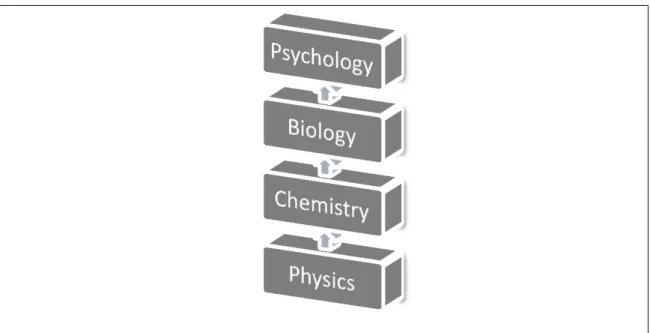
According to neuroeconomist Paul Glimcher, a scientific approach to behavior consists in different levels of analysis. From physics to chemistry, and then to biology, and finally to psychology, light is shed upon many phenomena that ultimately cause human behavior. Some concepts can be reduced from one science to another, whereas others do not: some phenomena emerge only in a certain level of analysis.
Figure 1.1. Levels of Analysis concerning human behavior
For instance, it is impossible to explain how the pancreas works counting solely on the description of the chemical molecules within it, the same way it is impossible to understand what an ecosystem is just by isolating its constituent parts – both are complex systems, with properties that emerge in higher levels of integration (a fact already pointed out by Mayr, 1961). Notwithstanding occasional failures of reduction, an attempt to synthesize findings from these sciences in an interdisciplinary basis should, in some cases, be tried (Glimcher, 2011).
3 We draw attachment theory from psychology. The neurobiological substrates
of social bonds come from cognitive neuroscience. The mechanisms concerning gene and environment interaction are guided by molecular and behavioral genetics. Policy implications are examined in the light of policy analysis literature.
Attachment theory is not new. It has been proposed by psychologists from different perspectives, and decades of research have been made on attachment issues. Joh Bo l s theo of atta hment (Bowlby, 1969/1982), nonetheless, is the one that best integrates social and biological evidence. Bowlby posited that we could understand the bonds between infants and caregivers – which serve as references for social bonds throughout life – using an ethological approach. For Bowlby, the nature of hild s ties to its othe , in humans and other animals alike, derive from a biological predisposition, resultant of natural selection, that constitutes a behavioral system responsible for balancing the need for, on one hand, a secure base for protection, and on the other hand, the drive to explore the outside world (Cassidy, 2008).
Crucially, Bowlby suggested that the patterns of attachment set in early childhood influenced internal mental representations of the self and of attachment figures. These mental representations were called Internal Working Models IWM s, which guide emotion regulation throughout life and shape the way the individual manages relationships in adulthood (Coan, 2008).
Attachment theory, then, clearly provides a conceptual framework on early ad e sit s i pli atio s o the lo g u . Not surprisingly, much work has been done in searching for the neurobiology of attachment (Coan, 2008; Fox & Hane, 2008; Polan & Hofer, 2008).
4 Brain networks consist of neurons, which are cells specialized in signaling.
Neurotransmitters are molecules that promote or block chemical communication between neurons in the synaptic cleft2. Neurotransmitter release, reuptake, synthesis or degradation interfere directly in the flow of signals and consequently in the dynamics of specific circuits (Baars & Gage, 2010). It can thus be hypothesized that changes in the expression of genes concerning neurotransmitters may somehow alter behavioral traits. That matter is addressed by chapter 2.
In chapter 3, the goal is to trace an overview of Brazilian federal policies turned to early childhood since 1988, when the Constitution brought new rules on child protection. Based on this, it shall be analyzed if what has been done ever since aligns with the scientific evidence concerning child developmental processes and attachment theory findings.
In putting these things together, the aim of the present work is to reduce the distance between natural and social sciences, theory and practice, university and government.
2Some basics of neurotransmission for social scientists: information passes within neurons because of
action potentials, that is, ionic differences between the cell membrane and its surroundings. When the
5 1.2. Problem and hypothesis
The aim of this work is to understand what are the mechanisms through which genes and environments interact in shaping neurotransmitter systems concerning attachment patterns.
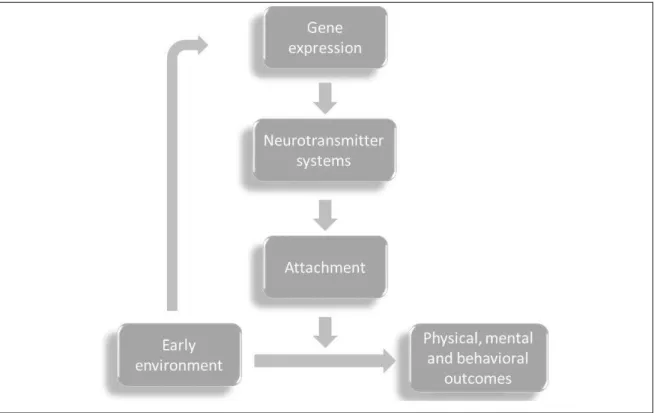
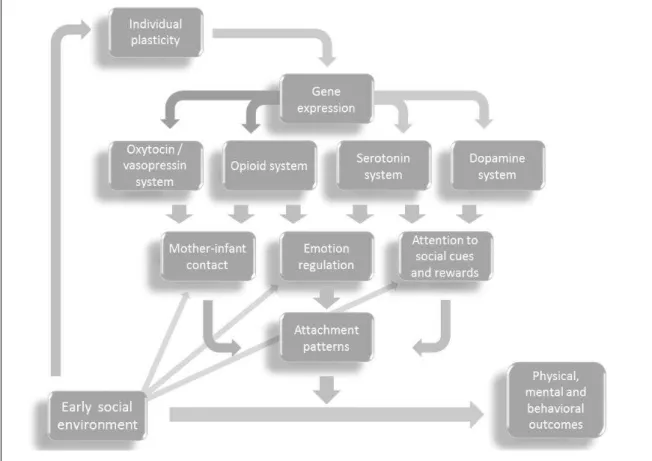
The first working hypothesis3 is that social environment interacts with individual genomes, leading to changes in specific neurotransmitter systems, which affectformation of attachment bonds,which, by their turn, will moderate4 the association between early adversity and future physical, mental and behavioral outcomes (Figure 1.2).
Figure 1.2. Initial hypothesis
3A good theory in developmental- eha io al pediat i s has the follo i g featu es: (1) a clarity of focus; (2) a developmental emphasis; (3) the ability to address limitations of previous research; (4) specifications of predictors (i.e., independent variables)and outcomes (i.e., dependent variables), with a clear rationale for each; (5) a clear articulation of links between predictors and outcomes (that sometimes involves specification of mediational and moderational effects) with accompanying testable hypotheses; and (6) clear implications for interventions Holmbeck et al., 2008:14).
4 A ediato is a e pla ato li k i the elatio ship et ee t o othe a ia les. Ofte a ediator variable is conceptualized as the mechanism through which one variable (i.e., the predictor) influences another variable (i.e., the criterion). … A moderator, unlike a mediator, is a variable that influences the
6 Based on this framework, we then try to understand how policy aimed at child
7 1.3. Considerations on the scope of the review
As an interdisciplinary work, the effort in putting together contributions of several fields brings in the need to clear notions and concepts that are presupposed in the integrative review of chapter 2. First, in section 1.4, we present basic notions on gene-environment interactions and attachment theory. Then, in section 1.5, we present review some models that are useful to interpret the results of original studies reviewed in chapter 2.
We thus recommend those already familiar to the fields of Genetics and Neuroscience, and also on the literature on attachment and evolutionary-developmental theories, to skip straight to chapter 2.
Importantly, since the formation of social bonds is a complex phenomenon, and its neurobiological substrates are many, it was necessary to concentrate on some neurotransmitter systems. Our choice was to concentrate on five neurotransmitter systems traditionally implied in attachment behavior: oxytocin, vasopressin, dopamine, serotonin, and opioids.
Hence, the literature linking early adversity to epigenetic and developmental consequences on the HPA axis was left aside from the review. There are already several good and comprehensive published reviews on this issue (to mention a few: McEwen, 2007; Gunnar & Quevedo, 2007; Kapoor et al., 2008; Dedovic et al., 2009; Loman & Gunnar, 2010; McEwen & Gianaros, 2010; McCrory et al., 2010; Harris & Seckl, 2011; McClelland et al., 2011). When relevant, these studies with humans and animal models, together with its conclusions, will be mentioned.
For a similar reason, other neurotransmitter or neuromodulator systems, which have been less studied, and only in the last years have received some attention, were not included. Such is the case of Neuropeptide Y (NPY). NPY is a neuropeptide which has four kinds of G protein-coupled receptors5 (Y1, Y2, Y4 and Y5), some of which are
5
8 densely expressed in the cortex, hippocampus, and amygdala, areas associated with
mood disorders, stress responses and memory processing. Research on humans and animals have pointed out to the role of NPY in reducing the anxiogenic effects of stress, what could suggest a clinical role in depression (for a review, see Morales-Medina et al., 2010). There are already studies linking genetic polymorphisms of the NPY gene, early adversity, and stress responses (for a recent example, see Witt et al., 2011). Nevertheless, more studies are clearly necessary to truly understand its role in affective behavior.
Another candidate that has been growingly implied in epigenetic process related to early adversity is the Brain-Derived Neurotrophic Factor (BDNF) gene. BDNF belongs to the group of neurotrophins, regulatory factors that mediate differentiation, proliferation and survival of neurons. BDNF is expressed throughout the brain, especially in the PFC and hippocampus. In the last years, several studies have linked BDNF to mechanisms related to plasti it a d e o Sa itz et al., ; D Souza & Craig, 2010; Moreira et al., 2011; Roth & Sweatt, 2011b). A recent review of animal model experiments pointed out that DNA methylation in the BDNF gene is a plausible mechanism for lifelong structural and functional changes in the brain due to early adversity. Interestingly, treating adult rats with zebularine, a demethylating agent, resulted in reversion of gene expression patterns incited by early-life adversity, what suggests that epigenetic markers could be modified into adulthood (Roth & Sweatt, 2011a). Future developmental models of epigenetic change will probably have to incorporate the role of BDNF (Curley et al., 2011a).
While all these aspects are essential to understand neurobiology of attachment and epigenetic transmission of attachment behavior, the goal of the present work is not to provide a definite and comprehensive account on attachment, but specifically to better understand some lines of evidence on gene-environment interaction mechanisms and attachment behavior.
9 1.4. Scientific background
Since this is an interdisciplinary work, it is important not to presuppose that people from different areas will be familiar with every concept and discussion. This section then tries to summarize recent findings and promising hypotheses.
I o de to full u de sta d the state of the a t i De elop e tal Cog iti e Neuroscience, one must first turn to the last advances in Molecular and Behavioral Genetics, together with Epigenetics.
From Genetics to Epigenetics
Genetics as a science has conventionally begun in 1900, year in which works of three botanists – Hugo de Vries, Carl Correns, and Erich von Tschermak – on heredity in plants were published, confirming the breeding experiments the Czech monk Gregor Mendel had done forty years before. The a e Ge eti s as oi ed Willia
Bateson in 1905, and te ge e was first used by Wilhelm Johannsen in 1909. Its etymological root is the Greek o d έ ος, génos (origin). The defi itio of ge e , nonetheless, remained somewhat abstract, since its structure was unknown by that time. I the s, T.H. Mo ga ega orking with mutations in the fruitfly
Drosophila melanogaster (Jablonka & Lamb, 2005; Gerstein et al., 2007).
10 fitness, and decrease the frequency of those which diminished it (Bateson &
Gluckman, 2011).
In 1953, Watson and Crick described the three-dimensional structure of DNA, allowing scientists to explore how DNA coded for enzymes and proteins (Gerstein et al., 2007; Danchin et al., 2011). I the s a d s, a e ge e atio of biologists, such as John Maynard Smith, George C. Williams, William D. Hamilton, Richard D. Alexander, E. O. Wilso a d Ri ha d Da ki s, k o as eo-Da i ists , advanced the Modern Synthesis framework, some suggesting the gene as the basic unit of natural selection (Jablonka & Lamb, 2005).
During the second half of the 20th century, the e t al dog a of ge eti s came to be widely accepted, according to which there was a unidirectional flow of information-carrying molecules: DNA-DNA replication; transcription from DNA to mRNA; and translation from mRNA to proteins. Together with this view, came the notion that one gene would code for one protein each; and that DNA was basically formed of coding material (Baars & Gage, 2010). But by the end of the century, this dogma had been severely challenged, especially after the conclusion of the Human Genome Project, in 2001.
We now know that there are immense portions of the genome that do not code for specific proteins, but in turn exhibit regulatory functions. Among many findings, it is now widely accepted that gene expression affects how transcription occurs; that many genes code for more than one protein; that genes interact with the environment, and can be activated or silenced according to the molecular environment; and that non-genetic information can be inherited from parents to offspring (Gerstein et al., 2007; Carvalho et al., 2009; Danchin et al., 2011; Charney, in press).
11
Table 1.1. Relevant notions in Genetics
DNA: DNA is organized in a double helix structure, with two nucleotide strands each side. The strand is formed by a sequence of different combinations of four different nucleotides (bases composed by a sugar-phosphate group and one of the following bases: adenine, guanine, thymine, and cytosine).
Gene: Unit of genetic inheritance. The concept is still evolving, but it can be said that a gene is a sequence of DNA that is transcribed into mRNA and then translated into proteins and RNA molecules. Genes vary in their size: some are a few thousand nucleotide bases in length, while others are over a million bases long. Gene regions may be introns or exons (see below).
Genome: The whole sequence of DNA for a particular organism. The human genome is composed of a double strand of 3 billion base pairs (bps) of DNA.
Chromosome: Each human cell has 46 chromosomes, divided into 23 pairs. DNA sequences lie within the chromosomes.
Locus (pl. loci): Location of a specific gene within the chromosome.
Allele: Generally, each cell has two copies of a gene. These copies, which can have alternative forms, are called alleles. When both of the alleles for a given gene are identical, then one is
homozygous for that gene; when the alleles differ, one is heterozygous.
Genotype: The alleles of an individual in a specific locus.
Phenotype: Expressed characteristics of an organism.
Endophenotype: In the psychiatric discussion of disease symptoms, it has been posited that it is possible to characterize a specific disease or trait in a level of analysis closer to genes. An endophenotype may be neurophysiological, biochemical, endocrinological, neuroanatomical, cognitive, or neuropsychological. They are measurable expressed characteristics, unseen by the unaided eye, that stand along the pathway between disease and distal genotype.
Exon: Sequence of the gene that is transcribed into mRNA and transported out of the nucleus for processing into protein.
Intron: Non coding region of the gene, not transcribed into mRNA. Introns often contain regulatory domains, which mean they can influence exon splicing.
Promoter: Region of DNA where proteins known as transcription factors bind, in order to initiate the process of gene transcription.
Regulatory region: Segment of DNA where transcription factors and other regulatory proteins preferentially bind.
Genetic polymorphisms: When two or more variations of an allele for a single gene occur in greater than 1% frequency of a given population, it is called a polymorphism. If it occurs in less than 1% of the population, it is known as a mutation.
Single Nucleotide Polymorphism (SNP): The most common kind of polymorphism, occurring usually every 500 bps, consisting in the change of a single nucleotide in the sequence.
Copy Number Variation (CNV): Variation in the copy number of DNA sequences. CNV are stretches of DNA at least a thousand bp (Kbp) long, containing bps that are either deleted or
p ese t i ultiple opies, elati e to a o al ge o e.
Variable Number Tandem Repeat (VNTR): Nucleotide sequences may be repeated within DNA. The repetition may be of two nucleotides (dinucleotide repeat), microsatellites (repeat units of 2–8 bp), minisatellites (more than 8 bp), or even a larger or unknown number of nucleotides, clustered and adjacent to each other (tandem repeats). Individuals usually have different VNTRs in a specific allele – for example, the dopamine D4 receptor gene may appear as a 4-repeat, or as a 7-repeat, 4 or 7 indicating the number of base pair sequence repetitions in that part of the chromosome.
12 The genetic dimension of inheritance, central to the Modern Synthesis, is
currently considered only one of various dimensions. It has been proposed that transgenerational transmission of information depends not only on DNA sequences, but also on other non-genetic mechanisms, such as DNA patterns of activity (epigenetic inheritance), niche construction and modification (ecological inheritance), parental influences on offspring environment (parental effects), social information learning and transmission, and even symbolic information (cultural inheritance) (Jablonka & Lamb, 2005; Danchin et al., 2011).
The te Epige eti s as oi ed in 1957 by Conrad Waddington, whose idea was to put together developmental biology and genetics. Without the molecular understanding at that time, Waddington looked for an explanation on how inherited genotype could be influenced during the development of the organism, so as to p odu e phe ot pes. I his etapho of the ge eti la ds ape , a all olls do a hill, with many valleys in which it may fall. The more it rolls down, the less are the available possibilities to changing its fate. This increasing determination of the organism, which is constrained by is path, recalls how the phenotypic character is de elop e tall canalized . Epige eti s ould e the dis ipli e ai ed to e plai this process (Holliday, 2006; Bateson & Gluckman, 2011).
13 Ba k i the s, studies al ead suggested that DNA could undergo methylation processes. I the s, studies sho ed that DNA eth latio lead to gene expression silencing. Soon, animal studies indicated that these changes in gene expression could be inherited, and it was progressively accepted that epigenetic change could have transgenerational effects. Presently, Epigenetics is a bourgeoning scientific field, and gene expression, epistasis and gene-environment interactions form the basic vocabulary of whole areas of research (Holliday, 2006; McClung & Nestler, 2008; Champagne & Mashoodh, 2009; Francis, 2011).
Table 1.2 summarizes some important concepts regarding Epigenetics.
Table 1.2. Relevant notions in Epigenetics
Gene-environment interaction (GxE): occurs when the effects of exposure to environment are
o ditio al o a pe so s ge ot pe. In other words, different individuals display different sensitivity to the impacts of environmental experiences.
Gene-environment correlation (rGxE): occurs when genetic factors interfere with the
i di idual s e posu e to pa ti ula e i o e ts. Disti t pe so alit t aits, fo i sta e, lead
to different relations and reactions to the surrounding environment. Because of this, certain individuals may even select certain environmental niches, reinforcing idiosyncratic tendencies.
Chromatin: DNA is tightly packed around octamers of the histone proteins. The assembling of DNA and proteins composes the chromatin. Histone proteins can be modified, allowing DNA to unwind and transcription factors to bind, leading to gene activation.
Histones: Proteins that tightly pack DNA in order to reduce its overall size. Histone proteins can be modifiedto allow the DNA to unwind and permit transcription factorbinding and gene activation. In turn, othermodifications to histone proteins can inhibit transcription factor binding.
Transcription factor: Protein that transiently binds to chromatin, allowing DNA information to be transcribed into mRNA. Dynamic interactions of transcription factors arephysiologically relevant regulatory mechanism in gene expression.
Methylation: Gene activation is linked to histone or DNA methylation. Histone methylation leads to condensed chromatin and transcriptional repression.DNA methylation occurs when a methyl group is added to cytosine residues in the 5-position of the pyrimidine ring, within a gene sequence. DNA methylation patterns that occur during early childhood result in long-lasting, but reversible, changes in gene expression that affect adult behavior. Methylation is catalyzed by DNA Methyltransferase (DNMT) enzyme.
Acetylation: The binding of an acetyl group into DNA. Acetylation decreases the affinity between protein tail and DNA, relaxing chromatin and promoting gene transcription. Thus, gene activation is linked to histone acetylation. Acetylation is catalyzed by a histone acetyltransferase (HAT) enzyme.
Epistasis: Interactions between genes, which may cause one to suppress the phenotypic effects of another. Epistasis play a prominent role in evolutionary processes such as divergence and speciation, and can affect fitnessandevolvability of organisms.
14 The Epigenetic turn is relevant because it proved that it is not possible to
understand inheritance without turning to a developmental approach. The Mode S thesis ie , a o di g to hi h de elop e t as al ead p og a ed i ge es, proved to be implausible: instead, genes, cells, and physical, biological and social environments are in constant interaction in the developmental process (Lickliter & Honeycutt, 2010). Many molecular events take place between the DNA template and the functional protein. In other words, phenotypes are not the result of genes only: instead, a network of genetic events somehow lead to phenotypes (Robertroux et al., 2010).
Compelling experiments made with rat pups suggest that maternal tactile stimulation dampens the stress response patterns in a lifelong and transgenerational manner because of epigenetic mechanisms. In the postnatal handling design, the experimenter manipulates rat pups, separating them from the mother for a few minutes, in a way that simulates normal periods of separation that occur in the natural environment. Longer periods of maternal separation may also be induced. Handling produced more othe s licking and grooming in pups – another naturally occurring behavior, which reinforces mother-infant bonds – while long periods of separation reduced it. Moreover, rat pups of high licking and grooming mothers exhibited milder stress responses due to increased hippocampal glucocorticoid receptor gene expression6 whereas pups of low licking and grooming mothers presented diminished glucocorticoid receptor gene expression (Meaney, 2001).
More interestingly though is the fact that if the rat pups were cross-fostered, and pups of low licking and grooming mothers came to be reared by high licking and grooming ones, the stress reactivity and gene expression patterns would be the same of highly licked and grooming pups. This evidence clearly indicates that the behavioral trait was not genetically inherited, but conversely, that gene expression could be affected by parenting. By its turn, the following generation – offspring of these foster-reared pups – displayed the same behavioral stress reactivity patterns as their parents, suggesting a transgenerational transmission of gene expression (Meaney, 2001).
15 Recently, a distinction has been drawn upon context-dependent epigenetic
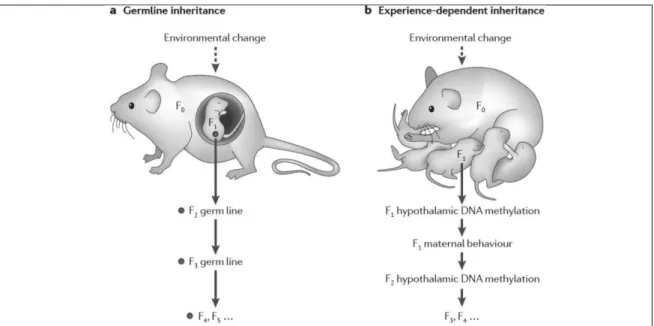
change and germline-dependent epigenetic change. While the former refers to cases in which epigenetic change is maintained as long as factors that bring epigenetic change (e.g. contamination, maternal behavior) remain in the environment and originate it over and over; the latter would happen when epigenetic imprint is mediated through the germline, even though the original environmental stressor is already gone. Crucially, context-dependent would be a reversible process, whereas germline-dependent would not. According to this view, only germline-germline-dependent would truly be a transgenerational phenomenon (Crews, 2011).
Figure 1.4. Germline inherintance and context/experience-dependent inheritance. From: Danchin et al., 2011.
16
Figure 1.5. Fathe ’s ehavio s ay esult i lo g-lasting epigenetic change in offspring. From: Curley et al., 2011b.
Genes, brain, and behavior
Social Cognitive Neurosciences ai is to uncover the neural underpinnings of behaviors that had already been studied by social psychology since its inception. It egu the e d of s, when several neuroscientists started investigating social behaviors and traits such as empathy, fairness, social pain, moral reasoning and theory of mind using neuroimaging techniques, particularly fMRI. The name of the field was first used in a scientific publication in year 2000 (for an historical account, see Lieberman, in press).The notion that what the brain does is information processing is one of central presuppositions of Social Cognitive Neuroscience (Haase et al., 2009).
17 Closely related to this research field, there is a tradition that identifies itself as
Affective Neuroscience . It congregates studies with animals and humans, and tries to identify neural circuits linked to socioemotional aspects (for an overview, see Dalgleish et al., 2009). Both interdisciplinary fields have consistently revealed how some brain structures are associated with social interaction. What is beginning to become clear is how specific genes code for proteins, enzymes, receptors and neurotransmitters within these structures, and how gene expression may affect their functioning.
Individual differences and gene-environment interactions
Before passing on to the next section, two more aspects must be treated. The first is the research design that is utilized in studies that will be reviewed in chapter 2. Finally, some important notions of attachment theory will be briefly exposed.
Behavior geneticists have long known that social behavior has strong genetic backgrounds. Before gene association studies became common, this knowledge came from quantitative genetic designs such as twin and adoption studies.
The principle underlying twin and adoption studies is that differences between individuals not attributed to genetic similarity arise from environmental influence. Identical, monozygotic twins (MZ) share the whole same genotype, whereas fraternal, dizygotic twins (DZ) share 50% of genes only; biological offspring share 50% of the genotype with each parent, while adopted children have no such genetic similarity. The variance of a certain trait attributed to genetics is called heritability. Variance attributed to environmental factors, by its turn, can be due to either shared environment, or non-shared environment (Plomin & Asbury, 2005).
18 2001; Plomin & Asbury, 2005). As a result, it is now generally accepted that non-shared
environmental factors operate through mechanisms that make offspring different rather than similar – in other words, siblings are no more alike than individuals selected at random from the population (Petronis, 2010).
Decades of research had pointed out that there is high heritability in mental illnesses such as schizophrenia and autism, personality traits, cognitive disabilities and abilities, behaviors like drug use and abuse, and even social behaviors such as altruism and empathy (Plomin & Asbury, 2005; Ebstein et al., 2010). However, in the last few years, another trend has emerged, and this division of variation in traits in three components – genes, common environment and non-shared environment – has been challenged for numerous reasons (Turkheimer, 2011).
First, this partition of variance turned out to be no more than a statistical finding, not an explanation for causation. Second, it was figured that the proportions of variance of a determined trait vary across population samples. In other words, in a certain environment, variance attributable to an environmental factor is not the same variance verifyied in another situation (Turkheimer, 2011). It has been suggested that the concept of non-shared environment variance in behavior should be replaced for the notion of epigenetic stochasticity. Hence, phenotypic differences in siblings who share the same genes would actually be a result of GxE processes in the course of development (Petronis, 2010).
These points have been remarkably stated as it follows:
19 … Individual differences in complex human characteristics do not, in general, have causes, neither genetic nor environmental. Complex human behaviour emerges out of a hyper-complex developmental network into which individual genes and individual environmental events are inputs. The systematic causal effects of any of those inputs are lost in the developmental complexity of the network. Causal explanations of complex differences among humans are therefore not going to be found in individual genes or environments any more than explanations of plate tectonics can be found in the chemical composition of individual rocks. Some new paradigm, unglimpsed at present, will be required before meaningful progress can be made on the causal structure of either the family dynamics or genomics underlying the parent–child relationship. (Turkheimer, 2011:600)
In the current debate, therefore, the complex relationships between genes and environments invite some to elaborate better developmental models, whereas others feel it is time to embrace chance and randomness in the complexity of behaviors, giving up models of linear causation and recognizing a dead end for research (for a th illi g a ou t o this gloo p ospe t , see S ith, 7.
But let us return to the road opened by Behavior Geneticists and heritability studies around thirty years ago. Polymorphism studies blossomed in the last decade, due mostly to the development of the field Molecular Genetics.
Importantly, although twin and sibling studies allowed an overall estimate of heritability, the number of genes and the effect size of each gene could not be fully determined. Since the number of genes involved and their effect sizes could not be determined, research indicated that the heuristic value of quantitative estimates of heritability was limited. Nevertheless, techniques and tools have arisen with Molecular Genetics, allowing scientists to discover the location of specific chromosomal loci linked to phenotypic traits.
20 Traditional gene association studies compared individual traits and checked for spe ifi a didate ge es , based on previous hypotheses, in order to establish how allele variation could interfere with it. In the last years, Genome-Wide Association Studies (GWAS) permitted large-scale genotyping, sampling the entire genome, in a hypothesis-free manner. Many polymorphisms and loci linked to phenotypic variance have been discovered since then.
However, a noteworthy discovery was that multifactorial traits such as complex behaviors derive not from a specific or a few genes, but else from the combination of several genes, with small effect magnitudes each (Ebstein et al., 2010). In addition, the individual and cumulative effects of these polymorphisms are small and do not approach the size derived from heritability studies (Petronis, 2010). It should be noted that the identification of a SNP or another polymorphism and its relation to a certain phenotype does not say much about the pathway through which genetic variability can i te fe e i the i di idual s de elop e tal p o ess.
In the past decade, experimental neuroscience, genetics and epidemiology have joined forces, trying to integrate accumulated knowledge on causes of psychopathology and gene-environment interplays. The starting point is the conclusion that mental disorders have environmental causes, but also that people respond heterogeneously to them. In addition, as mental functioning is related to neural substrate activity, then genes related to the disorder must in some fashion affect brain functioning. It is then possible to formulate hypotheses based on what is known on gene expression in the brain, brain areas linked to mental disorders, and specific environmental pathogens (Caspi & Moffitt, 2006).
21 findings, that hostile environments impact differently individuals carrying specific
genetic polymorphisms.
The pioneering study by Avshalom Caspi, Terrie Moffitt and coworkers, published in 2002 (Caspi et al., 2002), suggested that the influence of child maltreatment on adult antisocial behavior was moderated by a functional polymorphism coding Monoamine Oxidase A (MAOA), an enzyme linked to monoamine (e.g. serotonin, dopamine, adrenaline, noradrenaline) degradation in the synaptic cleft. The polymorphisms analyzed where two different VNTRs in the p o ote ge e of the MAOA ge e, o e ha a te ized as high a ti it , a d the othe as lo a ti it . The sa ple a e f o the Du edi lo gitudi al stud oho t, hi h had records with rigorous on measures of child maltreatment.
The effect of childhood maltreatment on adolescent antisocial behavior was found to be conditional on the MAOA polymorphism they carried. Males with a maltreatment history which had the low-MAOA activity genotype where more likely to develop conduct disorder, antisocial personality, disorder symptoms, and to be convicted for violence in adulthood; while in males with the high-MAOA activity allele, child maltreatment did not mean more risk of these antisocial outcomes, even if they were abused in childhood. The results suggested that child maltreatment alone did not account for the outcome, since there was a genetic moderation effect (Caspi et al. 2002).
This study provided an interesting response to a question long unanswered by social science models of behavior: why do some children that are maltreated in childhood become antisocial adults, whereas others who experienced similar hostile environments do not? Gene-environment interaction studies suggest that individual differences linked to genetic polymorphisms account for some of the divergence in these developmental pathways.
22 individuals carrying one or two of the short alleles of the 5-HTTLPR gene displayed
higher association to depressive symptoms, diagnosable depression and suicidality in relation to stressful events than maltreated individuals with the long allele of the same gene (Caspi et al., 2003). Several replications have been made since then, most with positive findings, although some failed to replicate it. Importantly, positive replications outnumber failures of replication (Caspi et al., 2011; Rutter, 2011).
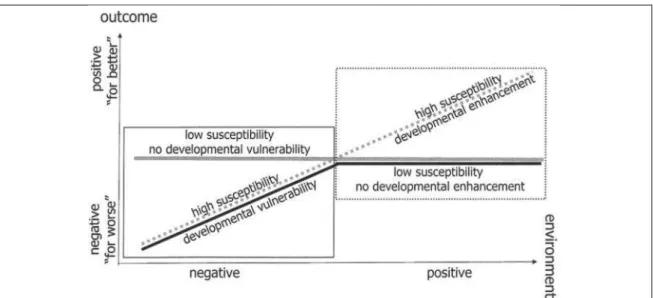
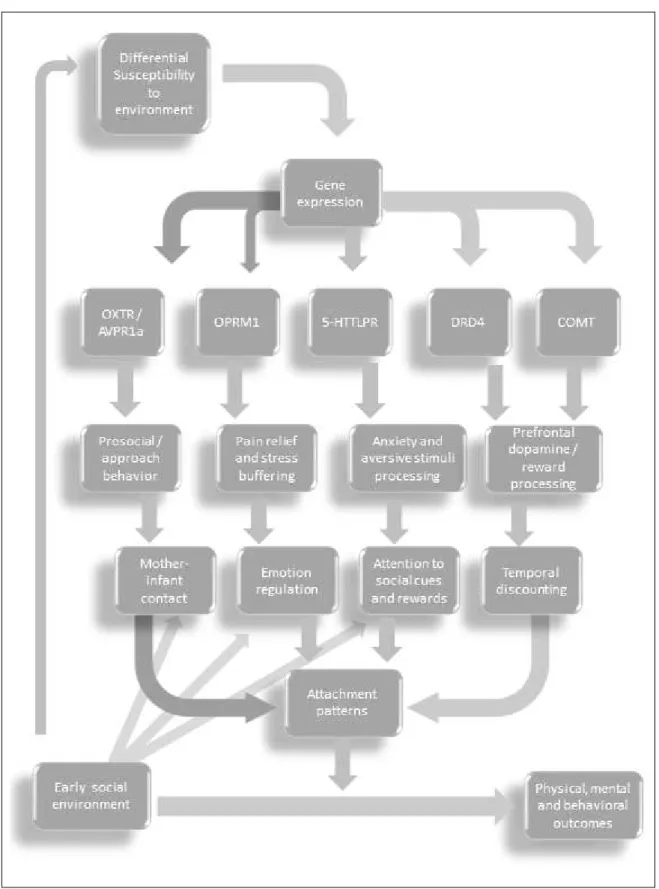
These results were usually interpreted according to a diathesis-stress model (also known as dual risk model). According to this model, some individuals have a specific vulnerability (diathesis), which acts as a potential individual risk factor. This vulnerability may interplay with the environmental risk (stress), resulting in unfavorable outcomes. The dichotomy then emerges between vulnerability factors (carrying specific polymorphisms that predispose to psychopathological outcomes, if there is environmental risk) and protective factors (carrying genes that do not predispose to these outcomes, even if environment is hostile). This notion will be relevant on section 1.5, where we review the alternative model of differential susceptibility (Belsky et al., 2009).
Some caveats concerning this research design of gene-environment interaction must be stressed. Gene-environment interaction studies must follow some requirements, and face diverse challenges. We next turn to them, for a better understanding of studies presented in the next chapter.
23 environmental pahtogen. Fifth, interaction must be tested using statistical methods.
The most informative design for data collection and testing, as the authors emphasize, is epidemiological longitudinal cohorts. If the interaction is obtained, then it should be evaluated if it persists if one of the components of the triad gene-environmental pathogen-disorder is replaced by another. Finally, if the six previous steps have confirmed GxE, replications and meta-analysis should be done (Moffitt et al., 2005).
It should be noted that this gold sta da d of G E esea h is not only expensive and time consuming, but faces significant challenges. Genetic and non-genetic factors interplay in various and confounding forms. Many risk or protective environmental factors derive from human behavior: e.g., marital conflict or breakup, social support, loss of jobs. Environments are not objective: individuals conceptualize and interpret them, and hence environmental effects may vary in their effects according to the perceiver. It has been noted that current environmental measures are far from the quality standards needed to postulate that a statistic association truly reflects environmentally mediated causation8 (Rutter, 2011; Rutter & Dodge, 2011).
As we shall see in chapter 2, several lines of evidence point to GxE involving polymorphisms related to attachment systems. The elements discussed in this section will return when some remarks on methodological issues concerning them are made.
Attachment Theory
British psychiatrist and psychoanalyst John Bowlby proposed attachment theory drawing heavily from an ethological perspective. In his formulation, attachment is a biologically based desire for proximity between infant and caregiver, derived of a natural selection process, an instinct common to humans and other mammals. In an evolutionary perspective, genetic selection would have favored attachment behaviors
8When it comes to child maltreatment, the challenge is even harder. There are animal models of early maltreatment, but their generalizability to humans is not straightforward. Ethical concerns obviously forbid certain designs that mean intended harm for children. Disentangling negative effects from co-occurring risk factors, such as poverty, require controls that are not often available. Moreover, environmental measures are far from being simple: children experience and interpret maltreatment
24 because they increased the likelihood of child-infant proximity and thus enhanced the hild s p ote tio a d ha e of su i al. Infant-caregiver bond provides the child with a se u e ase f o hi h e i o e t a e e plo ed Cassid , ; Main et al., 2008; Polan & Hofer, 2008).
The i o atio of Bo l s theo a ot e do pla ed, si e he it as first suggested, psychoanalytical theories affi ed that the i fa t s elatio ship to the mother emerged only because she fed the child and then provided a pleasurable experience of no longer feeling hungry (Cassidy, 2008). This theory was falsified when another researcher, Harry Harlow, proved that rhesus monkey infants preferred staying in close contact to cloth mother surrogates rather than wire mother surrogates, notwithstanding the latter provided them with milk (Harlow, 1958).
Figure 1.6. Rhesus monkey infants find comfort in cloth mother surrogates, as Harry Harlow noticed.
From: Harlow, 1958.
25 e olutio a adapted ess (Belsky & Simpson, 2008), and thus it can be hypothesized that natural selection would have favored strategies to deal with it.
Ma Ai s o th s studies that led to the eatio of the St a ge Situatio Procedure (SSP) targeted precisely this phenomenon. In this experimental design, the child enters a room in which he or she can play with toys next to his or her caregiver. Next, he or she lives a strange situation when a stranger walks in. Then, the caregiver walks away, inducing the stress of separation. Finally, the caregiver returns. While observing how infants would behave when exploring the environment, their reactions after being left in the room and when the caregiver returns, Ainsworth observed different patterns of attachment behavior (Cassidy, 2008; Main et al., 2008).
She characterized them as Secure Attachment, Insecure-Avoidant Attachment, and Insecure-Ambivalent Attachment. Securely attached children use their caregivers as secure bases of world exploration. When left alone, they experience distress, but when parent returns, they soon feel soothed and calm down. Insecure children do not seem to feel as if they had a secure base to explore the environment. Insecure-avoidant children exhibit minimal distress when left alone; when reunited to caregiver, show little or no interest, avoiding to look upon him, focusing on toys instead. Insecure-a i ale t i fa ts si ila l do t feel o fo ted the pa e t s etu , a d may alternate the bid for contact with signs of angry rejection and of being upset (Solomon & George, 2008).
26 from 15% in normal, non-clinical samples, to 80% in clinical samples
(Bakermans-Kranenburg & van IJzendoorn, 2007).
Traditionally, these differences have been attributed to maternal responsivity to the hild s eeds; as it shall e see ahead, hild e s i di idual diffe e es, originated in genotype variance, each day receive more attention through Molecular Genetic studies (Bakermans-Kranenburg & van IJzendoorn, 2007).
It is noteworthy that, although most attachment studies stressed the desi a ilit of se u e atta h e t as the est o o al patte , a t ul ethologi al approach should consider each attachment pattern a different behavioral strategy, which can be adaptive in one situation, but not in another. In this view, attachment behavior patterns respond to contextual conditions in a flexible manner (Belsky, 2008).
O e of Bo l s ai ideas is that atta h e t elatio ships in early childhood somehow serve as references that shape adult social bonds. Infant-caregiver relationship provided the child with mental representations of himself or herself, as well as representations of the caregiver and of others. These representations were alled I te al Wo ki g Models IWM s , a d i flue ed elatio ships late i life. Procedures for assessing adult attachment were developed; the most widely used being the Adult Attachment Interview (AAI), created by Carol George and Nancy Kaplan (Main et al., 2008). I the AAI, ased o the adult s o e pe ie es i hildhood a d ho it shaped atta h e t ep ese tatio s, his o he IWM s a e assessed, and classified as Secure-Autonomous, Dismising, Preoccupied or Unresolved-Disorganized (Hesse, 2008).
In the last decades, Attachment Theory was used in an uncountable number of studies, many of which with longitudinal cohort designs. Animal models for attachment theory have traditionally been rhesus monkeys, rats, voles, and sheep9
9
27 (Ross & Young, 2009; Insel, 2010). Human attachment has been analyzed in a mental
health perspective, together with constructs as antisocial behavior or temperament, either with adopted or institutionalized children, and also using different data collection methods. Some of the results of this long-lasting tradition can be found in (Grossman et al., 2008).
It is noteworthy that attachment patterns seem to be universal even in a cross-cultural perspective. Research in diverse cross-cultural niches, from African hunter-gatherer societies to Israeli kibbutzim, from Chinese single children families to Muslim homes, indicate that the four styles of infant-caregiver relationship proposed by Attachment Theory are shared by all human beings. It is true that these studies suggest that there are idiosyncrasies and contextual influences, such as some variation in the relative frequency of specific attachment styles, as well as certain culture-specific behavioral markers. Nevertheless, around all cultures, most children tend to display a secure attachment pattern, and parents tend to prefer secure children. These findings i di ate that Bo l s o st u t is ot est i ted to iddle-class Western societies, what underscores the validity of Attachment Theory (van IJzendoorn & Sagi-Schwartz, 2008).
Once it was accepted that the Attachment System plays an important evolutionary role, many studies with animals begun to search for the neurobiological basis for attachment behavior. Attachment is a complex phenomenon, and Bowlby had already noted that many behavioral systems are involved with it. Psychobiologists have traditionally implied, in attachment studies, the Hipothalamic-Pituitary-Adrenal (HPA) and Autonomic Nervous System (ANS) stress axis activation and down-regulation (by the hypothalamus and hippocampus, respectively), dopaminergic pathways of the brain reward circuitry, emotion regulation systems linked to the amygdala and prefrontal areas, and also oxytocinergic and opioid activity (Fox & Hane, 2008; Coan, 2008).
28 From an evolutionary biology viewpoint, this data can be assembled together in
different levels of analysis. Ethological science provides an interesting heuristic tool to do so.
Discussing the matter of cause and effect in biology in a classical conference paper, Ernst Mayr stated that causation in biology may bear different meanings. From a fu tio al poi t of ie , the e is the uestio o ho a e tai phe o e o happens, related to the operation and interaction of structural elements. On the other ha d, iologists a look fo e olutio a auses, efe ed to h a dete i ed phenomenon may have arisen in the course of history. In this perspective, an animal behavior may be explained both by its ultimate causes, shaped by natural selection, and by its proximate causes, linked to the physiological and environmental factors of that specific organism (Mayr, 1961).
In another classical paper, ethologist Nikolaas Tinbergen posited that the biological study of behavior faced four major problems – which later would be known as Ti e ege s fou uestio s . A a i al eha io a e a al zed i fou disti t perspectives: causation, ontogeny, survival value, and evolution – the former two
ei g p o i ate fa to s , a d the latte t o distal fa to s Bateso , .
29
Ta le . . Ti e ge ’s fou uestio s applied to the attachment system
Levels of causality What is attachment behavior?
Proximate questions
Mechanism/causation Behavioral systems linked to stress reactivity, emotion regulation, attention, reward, memory and social bonding. Ontogenesis Children develop different patterns of bonding to their
primary caregiver, according to caregiver sensitivity to i fa t s ues. These patterns relate to the IWM that will be reference for future social relationships.
Distal/Ultimate questions
Survival value/ adaptation
Babies that searched for close contact with mothers would have more chances of being protected from environmental risk.
Phylogenetics Evolution has selected attachment behavior in social species, favoring the development of a hardwired parental and child brain in mammals.
30 1.5. Evolutionary and developmental models: an overview
In the last decades, the biopsychosocial approach has appeared as an alternative to the biomedical model. This new paradigm tries to assume a richer notion of health, including not only illness-related aspects, but also the notion of wellbeing. Some biopsychosocial models integrate brain, organism, and physical and social environments, in an ecological perspective. Behavioral traits are multifactorial, and arise from complex and interwoven biological, psychological and social causes (Haase, 2009).
Several models concerning early environments and adult physical and mental health suggest mechanisms for the interaction between predictor and outcome variables, as well as the moderator or mediator variables. In this section some of the recently proposed models concerning the development of human attachment are briefly reviewed, while we refine the model of four questions sketched in the last section.
Mechanism: cognitive and emotional social information processing
In course of individual history, environmental input leads to differential development of cognitive and emotional systems important for social bonds.
Emotion regulation is crucial for social behavior. The balance between cognitive and affective domains determines how aversive or appetitive stimuli will be processed in brain areas. E otio s a e modes of functioning, shaped by natural selection, that coordinate physiological, cognitive, motivational, behavioral, and subjective responses in patterns that increase the ability to meet the adaptive challenges of situations that have recurred over evolutionary time Nesse & Ellsworth, 2009:129). Social emotions such as trust, guilt, rejection and lust are part of everyday life in which social exchange occurs (Nesse & Ellsworth, 2009).
31 cortex), and the balance between them affects motivated behavior. During the course
of neural development, this equilibrium changes: for instance, in adolescence, while the prefrontal cortex is still immature, and unable to counteract a fully developed dopaminergic circuitry in the striatum. As a result, adolescents tend to exhibit more impulsive, risk-taking and present-oriented behavior (Ernst et al., 2009). Emotion regulation has obvious implications in attachment behavior, since it may provoke more or less intense approaching or aversive behavior.
A othe i po ta t odel is Ke eth Dodge s so ial i fo atio p o essi g. Based on information processing theories, Dodge suggested that early adversity could interfere with processes of encoding, representing and retrieving information derived from social cues. During social interactions, individuals perceive stimuli, represent and interpret them, select an appropriate reaction, and finally exhibit behavioral responses in different manners. A same social stimulus can be perceived as hostile or neutral, and behavioral reactions may be evaluated as morally acceptable or not by the individual. In clinical cases of depression or aggressive behavior, a common feature is the presence of biases and deficits in some of these stages of processing (Dodge, 1993).
Aggressive children usually pay more attention to hostile environmental stimuli, attribute them a harmful bias more often, have a smaller repertoire of possible reactions – such as retaliatory or physically aggressive ones –, and therefore tend to show externalizing behavior more frequently. Depressive children, on the other hand, filter more environmental information related to loss, failure or negative self-reference, usually interpret their own performance as negative, and exhibit relatively few assertive responses to their difficulties, showing similar patterns of biased information processing (Dodge, 1993).