Gene therapy: Current status and future
perspectives
Najmul Hasan*, Dr. Savita Saini**
*Department of Pharmacology, Pacific Medical College and Hospital, Udaipur, Rajasthan, India
**Department of Pharmacology, Sardar Patel Medical College, Bikaner, Rajasthan, India
Email: [email protected]
Abstract
The concept of transferring genes to tissues for clinical applications has been discussed for nearly half a century. Advances in molecular biology and biotechnology have helped to understand the genetic basis of inherited diseases and have brought gene therapy to the forefront of medical research. Gene therapy is the process of introducing foreign genomic materials into host cells to elicit a therapeutic benefit. While originally conceived as a way to treat life-threatening disorders refractory to conventional treatment, gene therapy now is considered for many non-life –threatening conditions, including those adversely affecting a patient’s quality of life. Although gene therapy is still at a fairly primitive stage, however, the possibility of success of gene therapy now appears much closer. This is a consequence of the significant improvements made in the development of both in vivo and ex vivo systems for gene delivery and the identification of novel classes of therapeutic genes. Although as of now, gene therapy has not offered any permanent cure to any human patients, a breakthrough may come anytime. The recent results obtained by gene therapy of inherited blindness and of some neurodegenerative disorders encourage firm optimism on the eventual success of this discipline.
Keywords: gene therapy, gene delivery, viral & non-viral vectors, pros and cons
Introduction
James Watson was quoted as saying “we used to think that our fate was in our stars, but now we know, our fate is in our genes.” Genes, the basic functional unit of heredity are specific base sequences that carries information needed to make specific proteins. Variations in the DNA sequence or code of a gene are called mutations, which often are harmless but sometimes can lead to serious disease. Gene therapy is a technique in which a functional gene replaces the defective gene so that the body can make the functional protein and therefore eliminate the root cause of the disease. One of the following approaches may be used to correct the faulty genes responsible for genetic disorder (1,2):
A normal gene could be inserted into a nonspecific location within the genome to replace the
non-functional gene (most common approach)
An abnormal gene could be swapped for a normal gene through homologous recombination
An abnormal gene could be repaired through selective reverse mutation
Regulation of a particular gene could be altered
In the last few years, there have been several breakthroughs that have made it possible for clinical trials in gene
therapy to begin. Current and possible candidates for gene therapy include autosomal or X‑linked recessive
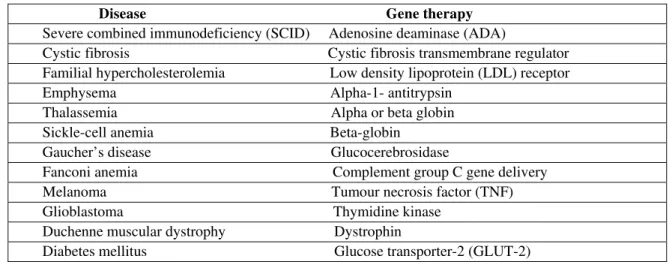
Table 1: Human gene therapy trials(4)
Disease Gene therapy Severe combined immunodeficiency (SCID) Adenosine deaminase (ADA)
Cystic fibrosis Cystic fibrosis transmembrane regulator Familial hypercholesterolemia Low density lipoprotein (LDL) receptor
Emphysema Alpha-1- antitrypsin Thalassemia Alpha or beta globin Sickle-cell anemia Beta-globin
Gaucher’s disease Glucocerebrosidase
Fanconi anemia Complement group C gene delivery Melanoma Tumour necrosis factor (TNF) Glioblastoma Thymidine kinase
Duchenne muscular dystrophy Dystrophin
Diabetes mellitus Glucose transporter-2 (GLUT-2)
Concept of gene therapy
Originally, the term gene therapy referred to proposed treatments of genetic disorders by replacing a defective gene with its normal counterpart. Currently, it includes all treatments in which there is an introduction of genetic material into body cells to treat a variety of diseases.
Approaches for gene therapy
There are two approaches to achieve gene therapy:
1) Somatic gene therapy- It involves the insertion of a functional and expressible gene into a target somatic cell to correct a genetic disease. It represents the mainstream line of current basic and clinical research where any modifications and effects will not be inherited by the patient’s offspring or later generations.
Somatic gene therapy is viewed as a more conservative and safer approach because it affects only the targeted cells in the patient and is not passed on to future generations; however, somatic cell therapy is short lived because the cells of most tissues ultimately die and are replaced by new cells. In addition, transporting the gene to the target cells or tissue is also problematic. Regardless of these difficulties, however, somatic cell gene therapy is appropriate and acceptable for many disorders (5).
2) Germline gene therapy- In this approach, functional genes are introduced into germ cells (sperm or egg). Therefore the changes due to therapy would be heritable. Although this approach is highly effective in counteracting genetic and hereditary diseases, but for safety, ethical and technical reasons, germline gene therapy is not being attempted at present.
The genetic alterations in somatic cells are not carried to the next generations. Therefore, somatic gene therapy is preferred and extensively studied with an ultimate objective of correcting human diseases(6).
Types of gene therapy
There are two types of gene therapy as described in Fig.1(7):-
1. Ex vivo gene therapy : This technique involves the following steps-
a) Isolate cells with genetic defect from a patient
b) Grow the cells in culture
c) Introduce the therapeutic gene to correct gene defect
d) Select the genetically corrected cells and grow
e) Transplant the modified cells to the patient
Fig. 1: In-vivo and Ex-vivo gene transduction(7)
2. In vivo gene therapy: The direct delivery of the therapeutic gene into the target cells of a particular tissue constitutes in vivo gene therapy. Many tissues are the potential candidates for this approach. For example liver, muscle, skin, spleen, lung, brain and blood cells etc.
The success of in vivo gene therapy mostly depends on the following parameters:
• The efficiency of the uptake of the therapeutic gene by the target cells
• Intracellular degradation of the gene and its uptake by nucleus
• The expression capability of the gene
Techniques of gene transfer (Vectors in gene therapy)
The most fundamental requirement for gene therapy to be successful is to effectively deliver the therapeutic gene to the target cell. The carrier particles or molecules used to deliver genes are referred to as vectors. There are different viral and non-viral vectors for gene delivery. The ideal gene delivery vector should be very specific, capable of efficiently delivering one or more genes of the size needed for clinical application and unrecognized by the immune system. Finally, a vector should be able to express the gene for as long as is required.
Gene delivery by viruses
Viruses are one of the most promising vectors currently being used for gene therapy. Viruses are actually genes wrapped in a protein coat. This coat contains special proteins that can bind to the surface of cells. Once bounded they either force their way in or are sucked into the cell itself. Scientists have tried to take advantage of this capability and manipulate the viral genome and replace them with working human gene. Once the transplanted gene is ‘switched on’ in the right location within the cells of an infected person, it can then issue instructions for making specific proteins (8).
Some of the different types of viruses used as vectors in gene therapy: • Retroviruses
Retroviruses were the first viruses to be used as vectors in gene therapy experiments. They contain the enzyme reverse transcriptase which can create double- stranded DNA copies of their RNA genomes. These copies of its genome can be integrated into the chromosome of host cell. Although retroviruses have been used in most gene therapy experiments, there are some drawbacks.
However, with development of our understanding of the function of nucleases such as zinc finger nucleases in humans, the genes encoding nucleases are incorporated into chromosomes; the expressed nucleases then “edit” the chromosome, disrupting genes causing disease. Treatment of the X- linked severe combined immune deficiency using retroviral vector represent the most successful application of gene therapy till date (11).
• Adenoviruses
Adenovirus type 2 and 5 can be utilized for transferring both dividing and non-dividing cells and have low host specificity so can be used for gene delivery into large range of tissues. The vectors based on adenovirus are generally used for therapeutic strategies that require the therapeutic gene to be active for only a short time. However, it is a disadvantage where sustained gene activity is required for many months such as in the treatment of some tumours, neurodegenerative disease and HIV infection. Natural and acute immunologic responses against adenoviruses have made their clinical application limited to a few tissues, such as liver, lung (especially for Cystic Fibrosis), or localized cancer gene therapy (12,13).
Although the risk of serious disease following natural adenovirus infection is rare and the viral genome would not integrate into the host genome, gene therapy by adenoviral vectors has caused serious bad side effects and even death of some patients. Recently, in addition to safety of these vectors, several essential genes have been deleted so that viral replication can only occur under control and also most of the viral genome is deleted to obtain sufficient space for transgene particles, this kind of adenoviruses are called “gutless” or “pseudo” adenoviruses.
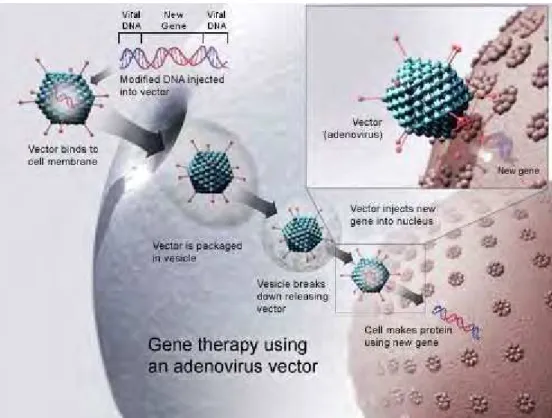
Fig.2 shows gene therapy using an adenovirus vector.(14)
Fig. 2: Adenovirus as a gene delivery vector (14)
• Adeno- associated viruses[AAVs]
AAVs are small viruses (parvovirus family) with a single stranded DNA genome. These are like adenoviral vectors in their features but because of having some deficiency in their replication and pathogenicity, are safer than adenoviral vectors. In human, AAVs
are not associated with any disease. It can insert genetic material at a specific site on chromosome 19 with near 100% certainty and do not provoke an immune response. AAVs have been used in the treatment of some diseases, such as Cystic Fibrosis, haemophilia B, Leber congenital amaurosis, and Alpha 1 antitrypsin deficiency.(15)
• Herpes Simplex Virus (HSV)
It is mostly used for gene transfer in nervous system. Presence of large genome compared to other viruses makes HSV suitable for the treatment of disorders caused by more than one gene defect. Ability to infect a wide range of tissues including neurons makes HSV an ideal vector for gene delivery (16).
• Lentivirus
Lentiviruses are a subclass of retroviruses. They haverecently been used as gene delivery vectors due totheir
ability to naturally integrate with non-dividing cells, which is the unique feature of lentiviruses as compared
with other retroviruses, which can infect only the dividing cells.Because lentiviruses have strongtropism for
neural stem cells, extensively used for ex vivo gene transfer in central nervous system with no significant
immune responses and no unwanted side effects. Lentiviral vectors have the advantages of high efficiency
infection of dividing and non-dividingcells, long term stable expression of a transgene, lowimmunogenicity,
and the ability to accommodate larger transgenes (17)
Gene delivery by non-viral systems
Non-viral systems comprise all the physical and chemical systems except viral systems. Efficiency of this
system is less than viral systems in gene transduction, but their cost effectiveness, availability, and more importantly less induction of immune system and no limitation in size of transgenic DNA compared with viral
system have made them more effective for gene delivery than non-viral delivery systems todate.(18)
Physical methods of gene delivery
Physical methods applied for in vitro and in vivo gene delivery are based on making transient penetration in cell membrane by mechanical, electrical, ultrasonic or laser based energy.
Naked DNA
Naked DNA alone is able to transfer a gene into skin, thymus, cardiac muscle, and especially skeletal muscle
and liver cells when directly injected, also it has been applied directly. Long term expression has been
observed in skeletal muscle following injection for more than 19 months. Although naked DNA injection is a safe and simple method, its efficiency for gene delivery is low so it is only proper for some applications, such as DNA vaccination. Clinical trials to inject naked DNA plasmids have been performed successfully, however, the expression has been very low in comparison to other methods of transfection(19,20).
Electroporation- It is temporary destabilization of the cell membrane targeted tissue by insertion of a pair of electrodes into it so that DNA molecules in the surrounding media of the destabilized membrane would be able to penetrate into cytoplasm and nucleoplasm of the cell but unfortunately the trangene can integrate only to 0.01% of the treated cells. A high rate of cell death following electroporation has limited its use.(21)
Gene guns-DNA particle bombardant by gene gun is an ideal alternative technique to injection of naked DNA.
Gold or tungsten spherical particles (1–3 μm diameter) are coated with plasmid DNA and then accelerated to
high speed by pressurized gas to penetrate into target tissue cells.(22)
Sonoporation- In this method, Ultrasonic frequencies are used to make nanomeric pores in membrane to facilitate intracellular delivery of DNA particles into cells of internal organs or tumors, so the size and concentration of plasmid DNA have great role in efficiency of the system.The most important limitation of the system is low efficiency.(23)
Magnetofection- In this method the magnetic fields are used to concentrate particles containing nucleic acid into the target cells. Magnetofection is a simple and efficient transfection method that has the advantages of the nonviral biochemical (cationic lipids or polymers) and physical (electroporation, gene gun) transfection systems in one system while excluding their inconveniences, such as low efficiency and toxicity.(24)
Chemical methods of gene delivery
Chemical systems are more common than physical methods and generally are nanomeric complexes, which include compaction of negatively charged nucleic acid by polycationic nanomeric particles, belonging to cationic liposome/micelle or cationic polymers.
Lipoplex and polyplex :The nanomeric complex between a cationic liposome and nucleic acids is called lipoplex; but polyplex is the nanomeric complex formed between a cationic polymer and nucleic acids.
Oligonucleotides- The aim of using synthetic oligonucleotides in gene therapy is to inactivate the genes involved in the disease. One strategy uses antisense specific to target gene to disrupt the transcription of the faulty gene. Another approach uses small molecules of RNA called as short interfering RNA or Si RNAs which signal the cell to cleave specific sequences in the mRNA transcript of the faulty gene, disrupting translation of the faulty mRNA. This RNA interference or gene silencing may be used to treat Huntington’s disease.
Hybrid methods- Recently there have been some hybrid methods developed that combine two or more techniques. For example- Vibrosomes that combine liposome with an inactivated HIV or influenza virus. This has been shown to have more efficient gene transfer in respiratory epithelial cell than either method alone.
Human artificial chromosome- Researchers are also experimenting with introducing a 47th (artificial human) chromosome into target cells. Scientists anticipate that it would be able to carry substantial amount of genetic code and because of its autonomy and construction, would not be attacked by body’s immune system.
Historical Perspectives and Current status of Clinical Trials
The first successful gene therapy trial was performed on a 4 year old girl named Ashanti Desilva, with a rare genetic immune system disorder called severe combined immune deficiency (SCID) on 14 September 1990 at
the National Institute of Health, under the direction of professor William French Anderson(25). In 1992, Claudio
Bordignon of Italy performed the first procedure of gene therapy using hematopoietic stem cells as vectors to correct hereditary disease.(26)
In 2003, Los Angeles research team used liposome coated in a polymer to insert genes into brain. This method has potential for treating Parkinson’s disease. The transfer of genes into brain is a significant achievement
because viral vectors are too big to get across the blood brain barrier.(27) One of the first demonstrations of
effectiveness of gene therapy in treating cancer comes from the success of the scientists at the National Institute of Health who successfully treated metastatic melanoma in two patients using killer T cells genetically retargeted to attack the cancer cells.
In 2007, Moorefield’s Eye Hospital and University College London’s Institute of Ophthalmology announced the world’s first gene therapy trial for a type of inherited retinal disease i.e. Leber’s Congenital amaurosis, which is caused by a mutation in the RPE65 gene. Sub-retinal delivery of recombinant AAV carrying RPE65 gene yielded positive results with no apparent side- effects.(28)
A paper by Komaromy et al. published in April 2010, deals with gene therapy for a form of achromatopsia (complete colour blindness) in dogs. It is presented as an ideal model to develop gene therapy directed to cone
photoreceptors. In July 2012, the European Medicines Agency recommended approval of a gene therapy
treatment called Adipogene tiparvovec (Glybera) which compensates for the lipoprotein lipase deficiency.(29,30)
In April 2013, researchers in the UK and the US performed gene therapy experiments to combat heart disease. The clinical trials were designed to increase the level of SERCA2a protein in the heart muscles to improve their function.(31)In July 2013, the Italian San Raffaele Telethon Institute for gene therapy reported that the treatment of two severe hereditary diseases i.e. Metachromatic Leukodystrophy and Wiskott- Aldrich Syndrome yielded positive results after 7-32 months of gene therapy.(32)
In January 2014, researchers at the University of Oxford reported an improvement in the sight of six people suffering from choroideremia, an inherited genetic eye disease. These patients had been treated with a
genetically engineered AAV with a copy of REP1 gene.(33)
In March 2014, researchers at the University of Pennsylvania reported that 12 patients with HIV had been treated since 2009 in a trial with a genetically engineered virus with a rare mutation known to protect against
HIV (CCR5 deficiency).(34)
Speculative uses for gene therapy Gene doping
A number of gene therapies have potential applications to athletic enhancement and the gene therapy
technologies might be abused to improve athletic performance. This is known as gene doping.(35)
Human genetic engineering
It has been speculated that genetic engineering could be used to change physical appearance, metabolism and even improve physical capabilities and mental faculties. These speculations have led to ethical concerns and claims, including the belief that every foetus has an inherent right to remain genetically unmodified.(36)
Pros and cons of gene therapy
The positive aspect of gene therapy is apparent. Gene therapy is a “medicine” for the future since it can wipe out genetic diseases before they can begin and eliminate suffering for future. However, no therapy is without some associated risks. Some of the problems associated with gene therapy are:
• Immune response- Genes injected with a virus may trigger an immune response in the body.
• Multigene disorders- Disorders arising from single gene mutation are best candidates for gene therapy.
Unfortunately, some of the most commonly occurring diseases, such as heart disease, hypertension, Alzheimer’s disease, arthritis and diabetes are multigene disorders.
• Insertional mutagenesis- If the DNA is integrated in wrong place in the genome, for example in a
tumour suppressor gene, it could induce a tumour.
• Short-lived nature
There are several ethical and legal issues associated with gene therapy. A review board, the Recombinant Advisory Committee (RAC) has been developed to address these concerns. The consequences of gene therapy are many.
The first issue targets putting human fate in our own hands. Some people are concerned that gene therapy could be used for any genetically linked trait such as eternal appearance, personality or physical enhancement.
Another great concern is religion. Some consider it sinful to manipulate DNA. If religion is a factor then somatic cell therapy should be applied which allows the next generation to make their own decision. In addition to ethical issues, one of the major concerns is the cost of gene therapy. However, scientists are optimistic that the cost will be much cheaper in future.
The last but not the least is the risk of the procedure. Since gene therapy is still in its developmental stage, finding the precise location of the gene and replacing with a normal one is definitely a challenge. But it is true that with the invention of new and advanced techniques, researchers will soon be able to achieve a great success in this applied modern science.(37)
Conclusion
Theoretically, gene therapy is the permanent solution for genetic diseases. But it is not as simple as it appears since gene therapy has several inbuilt complexities. Gene therapy is both beneficial and harmful depending on how it is applied. The advantage of gene therapy is to cure someone who is born with a genetic disorder or who develops deadly diseases like AIDS, cancer etc. The government, the public groups and the scientific society should cooperate and walk hand in hand to encourage gene therapy applications. A breakthrough may come anytime and a day may come when almost every disease will have a gene therapy, as one of the treatment modalities.
References
[1] 1.Verma IM, Weitzman MD. Gene therapy: Twenty-first century medicine. Annu Rev Biochem 2005; 74: 711-38 [2] Miller DA. Human gene therapy comes of age. Nature 1992; 375: 455-60
[3] Knoell DM, Yiu IM. Human gene therapy for hereditary diseases: a review of trials. Am J Health Syst Pharma 1998; 55:899-904 [4] Dube ID,Cournoyer D. Gene therapy: here to stay. Can Med Assoc J 1995;152 : 1605-1613.
[5] Bank A. Human Somatic Cell Gene Therapy 1996; 18:999-1007.
[6] Mathews QL, Curiel DT. Gene Therapy: Human Germline Genetics Modifications-Assessing the Scientific, Socioethical, and Religious Issues. Southern Medical Journal 2007; 100:98-100
[7] Gardlik R, Paiffy R, Hodosy J, Lukacs J, Twrna J, Celec P et al. Vectors an delivery system in gene therapy. Med Sci Monit 2005; 11:110-21.
[8] Walther W, Stein U. Viral vector for gene transfer: a review of their use in the treatment of human disease. Drug 2000; 60:249-71. [9] Rochat T, Morris MA.Viral vector for gene therapy. J Aerosol Med 2002; 15 : 229-35.
[10] Baun C, Dullman J, Li Z. Side effects of retroviral gene transfer into hematopoietic stem cells. Blood 2003; 101:2099-114.
[11] Durai S, Mani M, Kandavelou K, Wu J, Porteus MH, Chandrasegaran S et al. Zinc finger nuclease: custom designed molecular scissors for genome engineering of plants and mammalian cells. Nucleic Acid Res 2005; 33:5978-90.
[12] Peng Z. Current status of Gendicine in China: Recombinant Human Ad-p53 Agent for Treatment of Cancers. Human Gene Therapy 2005; 16:1016-27.
[13] Sibbald B. Death but one unintended consequence of gene therapy trial. CMAJ 2001; 164:1612. [14] Gene therapy using an adenovirus vector (http://en.wikipedia.org/ Wiki / file: gene_therapy.Jpg) [15] Teramato S, Ishii T, Matsuse T. Crisis of adenoviruses in human gene therapy. Lancet 2000; 355:1911‑2.
[16] 16.Varghese S, Robkin DS. Oncolytic herpes simplex virus vector for cancer virotherapy. Cancer Gene Therapy 2002; 9:967-78. [17] Goss JR, Mata M, Goins WF, Wu HH, Glorioso JC, Fink DJ et al. Antinociceptive effect of a genomic herpes simplex virus‑based
vector expressing human proenkephalin in rat dorsal root ganglion. Gene Ther 2001; 8:551‑6.
[18] Wolff JA, Malone RW, Williams P. Direct gene transfer into mouse muscle in vivo. Science 1990; 247:1465-68.
[19] Wagner E, Curiel D, Cotton M. Delivery of drugs, proteins and genes using transferring as a ligand for receptor-mediated endocytosis. Adv Drug Deliv Rev 1994 ;14:113-135.
[20] Varga CM, Hong K, Lanf Furburger DA. Quantitative analysis of synthesis gene delivery vector design properties. Mol Ther 2001; 4:438-46
[21] Klein TM, Arentzen R, Lewis PA, Fitzpatrick McElligoutt S. Transformation of microbes, plants and animals by particle
bombardment. Biotechnology 1992;10: 286‑91
[22] Wolff JA, Ludtke JJ, Acsadi G, Williams P, Jani A. Long term persistence of plasmid DNA and foreign gene expression in mouse muscle. Hum Mol Genet 1992;1: 363-9
[23] Jiang J, Yamato E, Miyazaki J. Intravenous delivery of naked plasmid DNA for in vivo cytokine expression. Biochem Biophys Res Commun 2001;289:1088-92
[24] Yang J, Chen S, Huang L, Michalopoulos GK, Liu Y. Sustained expression of naked plasmid DNA encoding hepatocyte growth factor in mice promotes liver and overall body growth. Hepatology 2001; 33:848-59.
[25] Blaese RM. Development of gene therapy for immunodeficiency: adenosine deaminase deficiency. Pediatr Res 1993;33(suppl):S49-S55
[26] Abott A. Gene therapy.Italians first to use stem cells. Nature 1992; 356:465-99.
[27] Pardridge WM. Tyrosine Hydroxylase Replacement in Experimental Parkinson’s disease with Transvascular gene therapy. Neuro Rx 2005; 2:129-138
[29] Komaromy A, Alexander J, Rowalon J, Garcia M, Chiodo V, Kaya A et al. Gene therapy rescues cone function in congenital achromatopsia. Human Molecular Genetics 2010;19: 2518-2593.
[30] Pollack, Andrew (20 July 2012) European Agency Backs Approval of a Gene Therapy, New York Times
[31] (8 September 2013) First gene therapy trial for heart failure begins in UK. The Physicians Clinic, Retrieved 28 April 2014
[32] Biffi A, Montini E, Lorioli L, Cesani M, Fumagalli F, Plati T et al (2013). "Lentiviral hematopoietic stem cell gene therapy benefits metachromatic leukodystrophy". Science 341 (6148): 1233158. doi:10.1126/science.1233158. PMID 23845948.
[33] MacLaren RE, Groppe M, Barnard AR, Cottriall CL, Tolmachova T, Seymour L et al. (2014). "Retinal gene therapy in patients with choroideremia: initial findings from a phase 1/2 clinical trial". Lancet 383 (9923): 1129–37. doi:10.1016/S0140-6736(13)62117-0. PMID 24439297.
[34] Tebas P, Stein D, Tang WW, Frank I, Wang SQ, Lee G et al. (2014). "Gene Editing of CCR5in Autologous CD4 T Cells of Persons Infected with HIV". New England Journal of Medicine 370 (10): 901. doi:10.1056/NEJMoa1300662. PMID 24597865.
[35] "WADA Gene Doping". WADA . Retrieved September 27, 2013.
[36] Powell R and Buchanan A (2011). "Breaking evolution's chains: the prospect of deliberate genetic modification in humans". J Med Philos 36 (1): 6–27. doi:10.1093/jmp/jhq057. PMID 21228084.