Clinical Audits in Outpatient Clinics for
Chronic Obstructive Pulmonary Disease:
Methodological Considerations and
Workflow
Jose Luis López-Campos
1,2*
, María Abad Arranz
1, Carmen Calero Acu
ñ
a
1,2,
Fernando Romero Valero
3, Ruth Ayerbe García
4, Antonio Hidalgo Molina
3, Ricardo
Ismael Aguilar Pérez-Grovas
4, Francisco García Gil
5, Francisco Casas Maldonado
6,
Laura Caballero Ballesteros
5, María Sánchez Palop
6, Dolores Pérez-Tejero
7,
Alejandro Segado
7, Jose Calvo Bonachera
8, Bárbara Hernández Sierra
8,
Adolfo Doménech
9, Macarena Arroyo Varela
9, Francisco González Vargas
10, Juan
Jose Cruz Rueda
101Unidad Médico-Quirúrgica de Enfermedades Respiratorias, Instituto de Biomedicina de Sevilla (IBiS), Hospital Universitario Virgen del Rocío/Universidad de Sevilla, Seville, Spain,2CIBER de Enfermedades Respiratorias (CIBERES), Instituto de Salud Carlos III, Madrid, Spain,3Hospital Puerta del Mar, Cádiz, Spain,4Hospital Juan Ramón Jiménez, Huelva, Spain,5Hospital Universitario Reina Sofía, Córdoba, Spain,6Hospital Universitario San Cecilio, Granada, Spain,7Hospital Infanta Margarita, Cabra, Córdoba, Spain,8Hospital Torrecárdenas, Almería, Spain,9Hospital Regional Universitario de Málaga, Spain, 10Hospital Universitario Virgen de las Nieves, Granada, Spain
Abstract
Objectives
Previous clinical audits for chronic obstructive pulmonary disease (COPD) have provided
valuable information on the clinical care delivered to patients admitted to medical wards
because of COPD exacerbations. However, clinical audits of COPD in an outpatient setting
are scarce and no methodological guidelines are currently available. Based on our previous
experience, herein we describe a clinical audit for COPD patients in specialized outpatient
clinics with the overall goal of establishing a potential methodological workflow.
Methods
A pilot clinical audit of COPD patients referred to respiratory outpatient clinics in the region of
Andalusia, Spain (over 8 million inhabitants), was performed. The audit took place between
October 2013 and September 2014, and 10 centers (20% of all public hospitals) were invited
to participate. Cases with an established diagnosis of COPD based on risk factors, clinical
symptoms, and a post-bronchodilator FEV
1/FVC ratio of less than 0.70 were deemed eligible.
The usefulness of formally scheduled regular follow-up visits was assessed. Two different
databases (resources and clinical database) were constructed. Assessments were planned
over a year divided by 4 three-month periods, with the goal of determining seasonal-related
changes. Exacerbations and survival served as the main endpoints.
OPEN ACCESS
Citation:López-Campos JL, Abad Arranz M, Calero Acuña C, Romero Valero F, Ayerbe García R, Hidalgo Molina A, et al. (2015) Clinical Audits in Outpatient Clinics for Chronic Obstructive Pulmonary Disease: Methodological Considerations and Workflow. PLoS ONE 10(11): e0141856. doi:10.1371/journal. pone.0141856
Editor:Anna Nolan, New York University School of Medicine, UNITED STATES
Received:June 12, 2015
Accepted:October 14, 2015
Published:November 6, 2015
Copyright:© 2015 López-Campos et al. This is an open access article distributed under the terms of the
Creative Commons Attribution License, which permits unrestricted use, distribution, and reproduction in any medium, provided the original author and source are credited.
Data Availability Statement:All relevant data are within the paper.
Funding:This study was financially supported by an unrestricted grant from Laboratorios Menarini, SA (Barcelona, Spain). The funders had no role in study design, data collection and analysis, decision to publish, or preparation of the manuscript.
Conclusions
This paper describes a methodological framework for conducting a clinical audit of COPD
patients in an outpatient setting. Results from such audits can guide health information
sys-tems development and implementation in real-world settings.
Introduction
Despite the availability of guidelines, there is evidence that several diseases are frequently managed
in a manner that is not in line with recommendations [
1
]. To a degree, this may reflect variations
in clinical presentation, patient characteristics, and/or limited awareness of recommendations [
2
].
In this context, the critical analysis of medical records through an audit may prove useful in
amending clinical practice [
3
,
4
], with the ultimate goal of improving patient outcomes [
5
].
Clinical audits to assess the quality of care delivered and the attainment of treatment goals are
paramount for the management of various chronic diseases, including chronic obstructive
pul-monary disease (COPD). COPD is a major public health problem, greatly impacting morbidity
and mortality [
6
], quality of life [
7
], and healthcare costs [
8
]. In this scenario, audits represent
powerful tools for the creation of positive changes and improvements in COPD management.
Clinical audits in the field of COPD have been implemented in the United Kingdom [
9
],
Spain [
10
,
11
], and several other countries [
2
,
12
,
13
]. Recently, a European Clinical COPD
Audit has been carried out through 13 European countries [
14
,
15
]. The results of these
in-hos-pital audits have provided valuable information on the clinical care provided to patients
admit-ted to medical wards because of COPD exacerbations [
15
], as well as the available resources
[
16
] and the interrelationships between health resources and clinical practice [
17
].
Unfortu-nately, clinical audits of COPD in an outpatient setting are scarce [
18
] and no general
method-ological guidelines are currently available. Insight into the success rate of implementation of
guidelines and recommendations for COPD on an outpatient basis has the potential to
improve long-term outcomes. Based on our previous experience in the field [
11
], herein we
describe a clinical audit for COPD patients in specialized outpatient clinics with the overall
goal of establishing a potential methodological workflow. The results for the current study can
guide health information systems development and implementation in real-world settings.
Methodology
Audit implementation
We conducted a pilot clinical audit of COPD patients referred to respiratory outpatient clinics
in the region of Andalusia, Spain (eight provinces with over 8 million inhabitants). The
princi-pal investigator and a project manager (both pulmonologists with expertise in auditing) were
responsible of the design of the audit and periodically supervised the conduct of research
(including research meetings and on-demand requests). In each center, there were two
investi-gators: a local investigator (in charge of supervising the audit procedures, obtaining
permis-sions, and coordinating the project) and a local data manager (in charge of recruiting cases and
collecting data).
Selection of hospitals
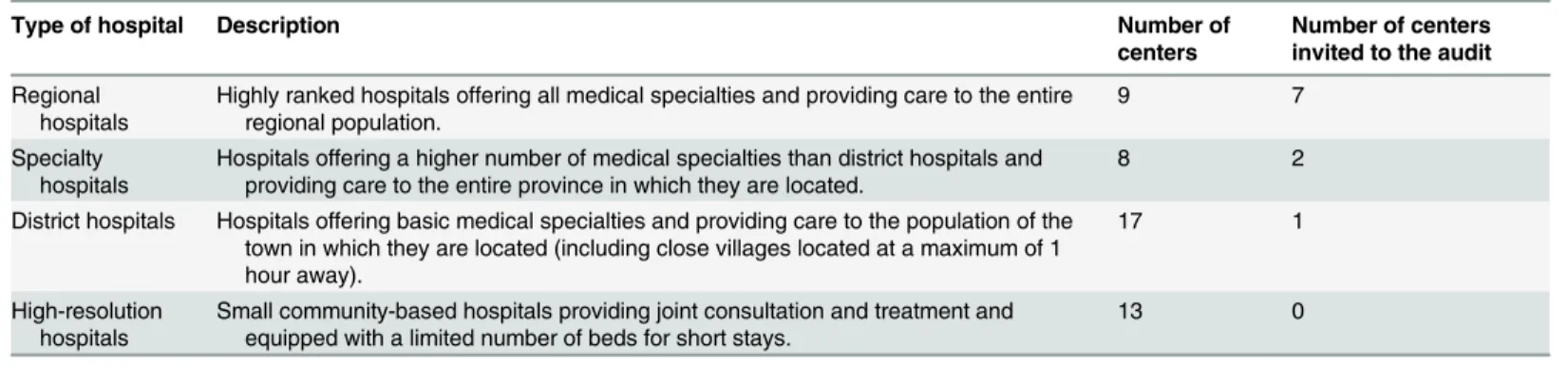
Andalusian public hospitals are divided into four categories (
Table 1
). The goal of the current
audit was to include 20% of all public hospitals located in the region (n = 47). Consequently, a
the authors' adherence to PLOS ONE policies ontotal of 10 hospitals were invited to participate. Randomization was not performed because we
did not aim to achieve a representative sampling. The selection of candidate hospitals was
based on the following two criteria: 1) participation in previous in-hospital audits, and 2)
expression of interest after an initial proposal of the audit. Both large university hospitals and
small community-based centers with respiratory outpatient clinics were considered for
inclu-sion. However, participation rates were higher for regional hospitals (
Table 1
).
Inclusion and exclusion criteria
Cases with an established diagnosis of COPD based on risk factors, clinical symptoms, and a
post-bronchodilator FEV1/FVC ratio of less than 0.70 were deemed eligible [
19
]. Because our
goal was to assess the usefulness of formally scheduled regular follow-up visits, only cases with
at least 1 year of follow-up were included in the audit. Patients who underwent a first
diagnos-tic visit or presented with an exacerbation were not eligible. Similarly, subjects with significant
comorbidities that could have an impact on the COPD treatment approach were excluded at
the local investigator
’
s discretion. Based on our previous experience, we estimated that 80 cases
per center would be required for this pilot study. As of September 2013, assessments were
planned over a year divided by 4 three-month periods (i.e., trimesters), with the goal of
deter-mining seasonal-related changes. Investigators were instructed to identify consecutive COPD
cases at the beginning of each trimester until the desired sample size of 20 was reached.
Enroll-ment was aimed at achieving a male to female ratio of 1:1 and including a proportionate
distri-bution of COPD severity stages according to the degree of spirometric impairment (
Table 2
).
Data collection
The audit was based on two different datasets, i.e., the resources database and the clinical
data-base. The resources database included information on resources and organization of outpatient
Table 1. Types of hospitals in Andalusia and their participation in the audit.Type of hospital Description Number of
centers
Number of centers invited to the audit
Regional hospitals
Highly ranked hospitals offering all medical specialties and providing care to the entire regional population.
9 7
Specialty hospitals
Hospitals offering a higher number of medical specialties than district hospitals and providing care to the entire province in which they are located.
8 2
District hospitals Hospitals offering basic medical specialties and providing care to the population of the town in which they are located (including close villages located at a maximum of 1 hour away).
17 1
High-resolution hospitals
Small community-based hospitals providing joint consultation and treatment and equipped with a limited number of beds for short stays.
13 0
doi:10.1371/journal.pone.0141856.t001
Table 2. Cases included in the audit according to the enrollment period, sex, and COPD severity stages.
Fourth trimester 2013 (M:F) First trimester 2014 (M:F) Second trimester 2014 (M:F) Third trimester 2014 (M:F) Total (M:F)
GOLD 1 5 (3:2) 5 (2:3) 5 (3:2) 5 (2:3) 20 (10:10)
GOLD 2 5 (3:2) 5 (2:3) 5 (3:2) 5 (2:3) 20 (10:10)
GOLD 3 5 (3:2) 5 (2:3) 5 (3:2) 5 (2:3) 20 (10:10)
GOLD 4 5 (3:2) 5 (2:3) 5 (3:2) 5 (2:3) 20 (10:10)
Total 20 (12:8) 20 (8:12) 20 (12:8) 20 (8:12) 80 (40:40)
care in each participating center. This dataset was compiled one time for each hospital before
starting the collection of clinical data. All COPD patient data were included in the clinical
data-base. The variables to be included in the clinical database were proposed by the study
coordina-tors and then discussed via e-mail and subsequently in a face-to-face meeting (held on July
2013 in Antequera, Málaga, Spain) with all of the investigators. The methodological aspects of
the audit were thoroughly discussed during the meeting. Finally, a standardized questionnaire
including 55 variables for the resources database and 182 variables for the clinical database was
developed. The resources variables comprised the following information: 1) type and size of
the center, 2) organization and performance of the outpatient facilities, 3) complementary
diagnostic tools available for routine use, and 4) availability of specific COPD treatments. The
clinical variables included 1) personal data, 2) general medical history, 3) history of COPD, 4)
current clinical status, 5) complementary studies, 6) complete diagnostic information, and 7)
assigned treatment.
Web-based data entry system
A web-based data entry and management system was specifically developed for the audit by a
quality freelance programmer. Access to the database was hierarchical, with local researchers
hav-ing access to their own cases only and the study coordinators havhav-ing the ability to retrieve and
download all of the study data. Moreover, a computer program was made available to the
coordi-nators for converting data directly into an SPSS system file format suitable for statistical analysis.
Study protocol
The 1-year audit took place between October 2013 and September 2014. Recruitment was
per-formed along 4 three-month periods (October
–
December 2013, January
–
March 2014, April
–
June 2014, and July
–
September 2014). At the beginning of each period, investigators were
instructed to review the list of patients attending their outpatient clinics and identify eligible
COPD cases who met the inclusion criteria according to their medical history. After
comple-tion of the 1-year follow-up, the number of emergency room visits or acute hospital admissions
for COPD exacerbations as well as data on the vital status were collected from the medical
rec-ords. Results were not disclosed to the physicians being audited to avoid changes in their
clini-cal practice. Moreover, they were unaware of the timeframe of the year being audited. When
necessary, the principal investigator provided additional instructions on the general conduct of
the audit as well as the methodology to collect the variables. Moreover, a dedicated telephone
line was established to respond to questions arising from audit sites in a timely manner. The
project manager was in charge of identifying missing values, outliers, and inconsistencies,
requiring the participation of local investigators to correct these.
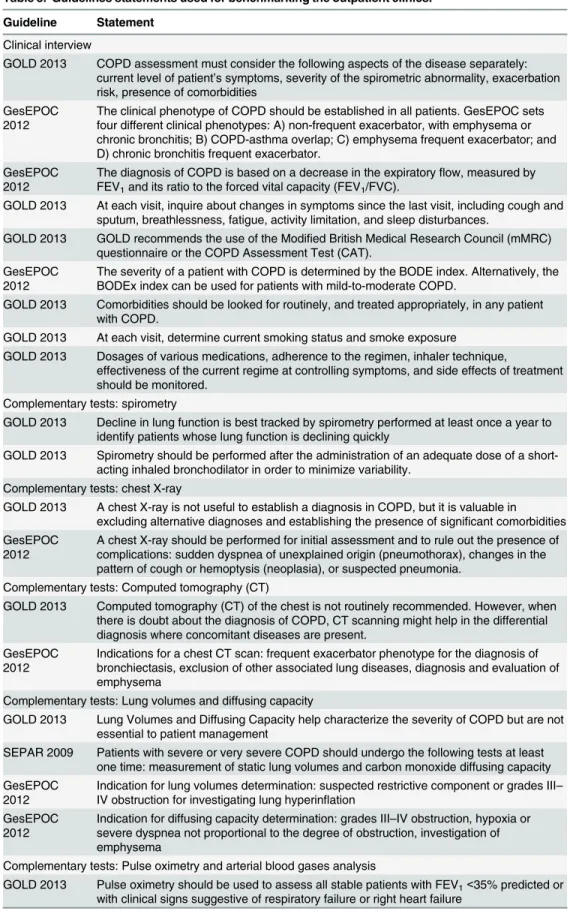
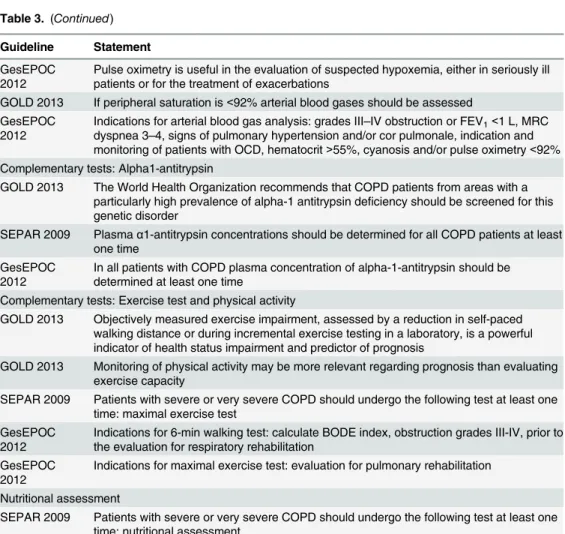
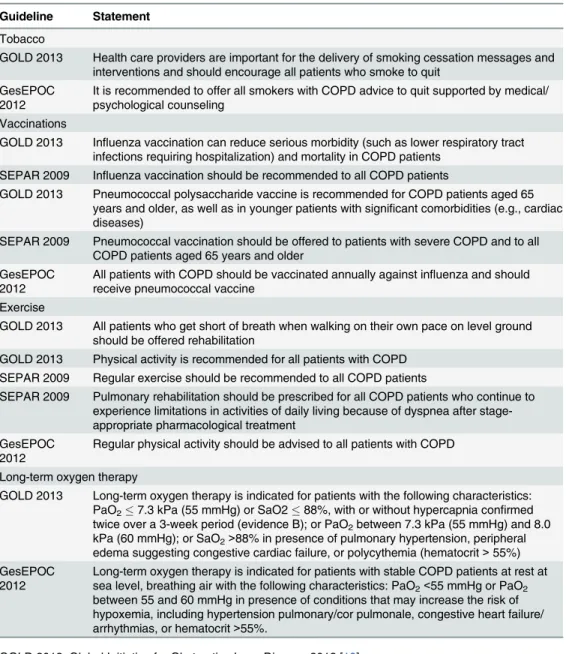
Guidelines benchmarking
The performance of the outpatient clinics was benchmarked against clinical guidelines
avail-able at the time of the audit. Throughout the study period, two guidelines
–
including GOLD
2013 [
19
] and the Spanish National Guideline for COPD (GesEPOC) [
20
]
–
were widely and
uniformly used in Spain. We therefore carefully reviewed the two guidelines to extract the
main statements for the purpose of benchmarking the audited performances. We also
consid-ered the 2009 Spain Health-Care Quality Standards in COPD that were active at the time of the
audit [
21
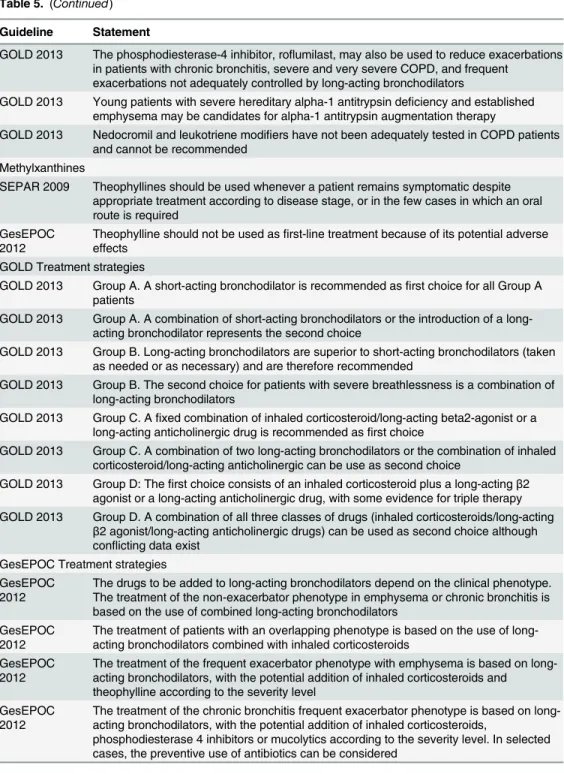
]. The guideline statements used for benchmarking are summarized in Tables
3–5
.
The appropriateness of the outpatient performances in relation to such statements was
catego-rized as follows: excellent (
>
80%), good (60
−
80%), adequate (40
−
59%), inadequate (20
−
39%),
Table 3. Guidelines statements used for benchmarking the outpatient clinics.
Guideline Statement
Clinical interview
GOLD 2013 COPD assessment must consider the following aspects of the disease separately: current level of patient’s symptoms, severity of the spirometric abnormality, exacerbation risk, presence of comorbidities
GesEPOC 2012
The clinical phenotype of COPD should be established in all patients. GesEPOC sets four different clinical phenotypes: A) non-frequent exacerbator, with emphysema or chronic bronchitis; B) COPD-asthma overlap; C) emphysema frequent exacerbator; and D) chronic bronchitis frequent exacerbator.
GesEPOC 2012
The diagnosis of COPD is based on a decrease in the expiratoryflow, measured by FEV1and its ratio to the forced vital capacity (FEV1/FVC).
GOLD 2013 At each visit, inquire about changes in symptoms since the last visit, including cough and sputum, breathlessness, fatigue, activity limitation, and sleep disturbances.
GOLD 2013 GOLD recommends the use of the Modified British Medical Research Council (mMRC) questionnaire or the COPD Assessment Test (CAT).
GesEPOC 2012
The severity of a patient with COPD is determined by the BODE index. Alternatively, the BODEx index can be used for patients with mild-to-moderate COPD.
GOLD 2013 Comorbidities should be looked for routinely, and treated appropriately, in any patient with COPD.
GOLD 2013 At each visit, determine current smoking status and smoke exposure GOLD 2013 Dosages of various medications, adherence to the regimen, inhaler technique,
effectiveness of the current regime at controlling symptoms, and side effects of treatment should be monitored.
Complementary tests: spirometry
GOLD 2013 Decline in lung function is best tracked by spirometry performed at least once a year to identify patients whose lung function is declining quickly
GOLD 2013 Spirometry should be performed after the administration of an adequate dose of a short-acting inhaled bronchodilator in order to minimize variability.
Complementary tests: chest X-ray
GOLD 2013 A chest X-ray is not useful to establish a diagnosis in COPD, but it is valuable in excluding alternative diagnoses and establishing the presence of significant comorbidities GesEPOC
2012
A chest X-ray should be performed for initial assessment and to rule out the presence of complications: sudden dyspnea of unexplained origin (pneumothorax), changes in the pattern of cough or hemoptysis (neoplasia), or suspected pneumonia.
Complementary tests: Computed tomography (CT)
GOLD 2013 Computed tomography (CT) of the chest is not routinely recommended. However, when there is doubt about the diagnosis of COPD, CT scanning might help in the differential diagnosis where concomitant diseases are present.
GesEPOC 2012
Indications for a chest CT scan: frequent exacerbator phenotype for the diagnosis of bronchiectasis, exclusion of other associated lung diseases, diagnosis and evaluation of emphysema
Complementary tests: Lung volumes and diffusing capacity
GOLD 2013 Lung Volumes and Diffusing Capacity help characterize the severity of COPD but are not essential to patient management
SEPAR 2009 Patients with severe or very severe COPD should undergo the following tests at least one time: measurement of static lung volumes and carbon monoxide diffusing capacity GesEPOC
2012
Indication for lung volumes determination: suspected restrictive component or grades III– IV obstruction for investigating lung hyperinflation
GesEPOC 2012
Indication for diffusing capacity determination: grades III–IV obstruction, hypoxia or severe dyspnea not proportional to the degree of obstruction, investigation of emphysema
Complementary tests: Pulse oximetry and arterial blood gases analysis
GOLD 2013 Pulse oximetry should be used to assess all stable patients with FEV1<35% predicted or
with clinical signs suggestive of respiratory failure or right heart failure
Ethical statement
The audit was approved by the Ethics Committee of the Hospital Universitario Virgen del Rocío
(code: 2013PI/201). Clinical records were anonymized in the database by assigning a numerical
code through an algorithm. No personal information was registered that could be used directly
or indirectly to identify an individual. The relationship between the audit code and the clinical
history number was kept locally under the local investigator
’
s responsibility. Because of the
retro-spective nature of the study, the annonimization of data, and the lack of active research
interven-tions, the need for informed consent was waived. The Ethics Committee was aware of this
circumstance, clearly explained in the protocol, and approved this procedure.
Statistical analysis
All computations were performed using the Statistical Package for Social Sciences, version 20.0
(SPSS; IBM Corporation, Somers, NY, USA). Clinical variables are presented as means and
standard deviations or absolute and relative frequencies, as appropriate. Quantitative variables
were analysed using the unpaired Student
’
s
t
-test for independent data, preceded by the Levene
Table 3. (Continued)Guideline Statement
GesEPOC 2012
Pulse oximetry is useful in the evaluation of suspected hypoxemia, either in seriously ill patients or for the treatment of exacerbations
GOLD 2013 If peripheral saturation is<92% arterial blood gases should be assessed GesEPOC
2012
Indications for arterial blood gas analysis: grades III–IV obstruction or FEV1<1 L, MRC
dyspnea 3–4, signs of pulmonary hypertension and/or cor pulmonale, indication and monitoring of patients with OCD, hematocrit>55%, cyanosis and/or pulse oximetry<92% Complementary tests: Alpha1-antitrypsin
GOLD 2013 The World Health Organization recommends that COPD patients from areas with a particularly high prevalence of alpha-1 antitrypsin deficiency should be screened for this genetic disorder
SEPAR 2009 Plasmaα1-antitrypsin concentrations should be determined for all COPD patients at least one time
GesEPOC 2012
In all patients with COPD plasma concentration of alpha-1-antitrypsin should be determined at least one time
Complementary tests: Exercise test and physical activity
GOLD 2013 Objectively measured exercise impairment, assessed by a reduction in self-paced walking distance or during incremental exercise testing in a laboratory, is a powerful indicator of health status impairment and predictor of prognosis
GOLD 2013 Monitoring of physical activity may be more relevant regarding prognosis than evaluating exercise capacity
SEPAR 2009 Patients with severe or very severe COPD should undergo the following test at least one time: maximal exercise test
GesEPOC 2012
Indications for 6-min walking test: calculate BODE index, obstruction grades III-IV, prior to the evaluation for respiratory rehabilitation
GesEPOC 2012
Indications for maximal exercise test: evaluation for pulmonary rehabilitation
Nutritional assessment
SEPAR 2009 Patients with severe or very severe COPD should undergo the following test at least one time: nutritional assessment
test to evaluate homogeneity of variances. Categorical data were compared using the
χ
2test.
The variables associated with exacerbations and mortality during the 1-year follow-up were
identified using hierarchical multilevel multivariate logistic regression analysis, as previously
described [
23
]. The alpha error was set at 0.05.
Discussion
This paper describes a methodological framework for conducting a clinical audit of COPD
patients in an outpatient setting. Because of the substantial burden of COPD on both patients
and healthcare systems, the lack of implementation of evidence-based guidelines in clinical
Table 4. Guidelines statements used for benchmarking non-pharmacological therapeutic options.Guideline Statement
Tobacco
GOLD 2013 Health care providers are important for the delivery of smoking cessation messages and interventions and should encourage all patients who smoke to quit
GesEPOC 2012
It is recommended to offer all smokers with COPD advice to quit supported by medical/ psychological counseling
Vaccinations
GOLD 2013 Influenza vaccination can reduce serious morbidity (such as lower respiratory tract infections requiring hospitalization) and mortality in COPD patients
SEPAR 2009 Influenza vaccination should be recommended to all COPD patients
GOLD 2013 Pneumococcal polysaccharide vaccine is recommended for COPD patients aged 65 years and older, as well as in younger patients with significant comorbidities (e.g., cardiac diseases)
SEPAR 2009 Pneumococcal vaccination should be offered to patients with severe COPD and to all COPD patients aged 65 years and older
GesEPOC 2012
All patients with COPD should be vaccinated annually against influenza and should receive pneumococcal vaccine
Exercise
GOLD 2013 All patients who get short of breath when walking on their own pace on level ground should be offered rehabilitation
GOLD 2013 Physical activity is recommended for all patients with COPD SEPAR 2009 Regular exercise should be recommended to all COPD patients
SEPAR 2009 Pulmonary rehabilitation should be prescribed for all COPD patients who continue to experience limitations in activities of daily living because of dyspnea after stage-appropriate pharmacological treatment
GesEPOC 2012
Regular physical activity should be advised to all patients with COPD
Long-term oxygen therapy
GOLD 2013 Long-term oxygen therapy is indicated for patients with the following characteristics: PaO27.3 kPa (55 mmHg) or SaO288%, with or without hypercapnia confirmed
twice over a 3-week period (evidence B); or PaO2between 7.3 kPa (55 mmHg) and 8.0
kPa (60 mmHg); or SaO2>88% in presence of pulmonary hypertension, peripheral
edema suggesting congestive cardiac failure, or polycythemia (hematocrit>55%) GesEPOC
2012
Long-term oxygen therapy is indicated for patients with stable COPD patients at rest at sea level, breathing air with the following characteristics: PaO2<55 mmHg or PaO2
between 55 and 60 mmHg in presence of conditions that may increase the risk of hypoxemia, including hypertension pulmonary/cor pulmonale, congestive heart failure/ arrhythmias, or hematocrit>55%.
Table 5. Guidelines statements used for benchmarking pharmacological therapeutic options.
Guideline Statement
Bronchodilators
GOLD 2013 Bronchodilator medications are given on either an as-needed basis or a regular basis to prevent or reduce symptoms
GesEPOC 2012
Short-acting bronchodilators (β2 agonists and/or anticholinergic drugs) should be used on demand for immediate relief in patients with COPD as an add-on to basal treatment regardless of disease severity
GesEPOC 2012
Long-acting bronchodilators should be used asfirst-line treatment in all patients with chronic symptoms
GesEPOC 2012
Tiotropium should preferred to salmeterol in patients with stable COPD who require a sustained action bronchodilator as monotherapy and had experienced at least one previous exacerbation requiring hospitalization and/or treatment with systemic corticosteroids and/or antibiotics during the previous year
GesEPOC 2012
The choice of the bronchodilator in patients with stable COPD who require a sustained action bronchodilator as monotherapy should be based on 1) the patient’s preferences, 2) the individual response to the drug, and 3) pharmacoeconomic considerations
GesEPOC 2012
Combinations of long-acting bronchodilators should be considered for COPD patients with persistent symptoms despite monotherapy
Inhaled steroids combinations
GOLD 2013 Long-term treatment with inhaled corticosteroids is recommended for patients with severe and very severe COPD and frequent exacerbations not adequately controlled by long-acting bronchodilators
GOLD 2013 Long-term monotherapy with inhaled corticosteroids is not recommended in COPD because it is less effective than the combination of inhaled corticosteroids with long-actingβ2 agonists
GesEPOC 2012
Inhaled corticosteroids should invariably be used in association with long-acting bronchodilators
GesEPOC 2012
Combinations of long-actingβ2 agonist and inhaled corticosteroids should be used in patients with COPD who present frequent exacerbations despite treatment with long-acting bronchodilators
GesEPOC 2012
Triple therapy (addition of a long-acting antimuscarinic agent to a long-actingβ2 agonist and inhaled corticosteroids) should be used in patients with severe or very severe COPD and poorly controlled symptoms despite treatment with long-acting bronchodilators SEPAR 2009 Triple therapy (addition of a long-acting antimuscarinic agent to a long-actingβ2agonist
and inhaled corticosteroids) is justified in patients with severe or very severe COPD in presence of symptomatic deterioration despite treatment with long-acting bronchodilators Oral steroids
GOLD 2013 Long-term monotherapy with oral corticosteroids is not recommended in COPD SEPAR 2009 Oral corticosteroids are not recommended for maintenance therapy in stable COPD Antibiotics
GOLD 2013 The use of antibiotics (other than for treating infectious exacerbations of COPD and other bacterial infections) is not currently indicated
GesEPOC 2012
The coexistence of COPD with frequent exacerbations and bronchiectasis with chronic bronchial infection should be treated with antibiotics, in line with the recommendations for bronchiectasis
Mucolytics
GOLD 2013 Mucolytics: the widespread use of these agents cannot be recommended at present GOLD 2013 There is some evidence that treatment with mucolytics (such as carbocysteine and
N-acetyl-cysteine) may reduce exacerbations in COPD patients not receiving inhaled corticosteroids
GesEPOC 2012
Carbocysteine is suggested as a maintenance treatment in patients with stable COPD, an exacerbator phenotype, and chronic bronchitis
Other treatments
practice remains a major concern for professional respiratory societies [
24
]. In this context,
clinical audits may have an important role in the drive to improve the quality of COPD care.
Outpatient-based clinical audits have been previously performed in different disease conditions
[
25–27
]. However, most audits in the field of respiratory diseases have been conducted in an
Table 5. (Continued)Guideline Statement
GOLD 2013 The phosphodiesterase-4 inhibitor, roflumilast, may also be used to reduce exacerbations in patients with chronic bronchitis, severe and very severe COPD, and frequent
exacerbations not adequately controlled by long-acting bronchodilators
GOLD 2013 Young patients with severe hereditary alpha-1 antitrypsin deficiency and established emphysema may be candidates for alpha-1 antitrypsin augmentation therapy
GOLD 2013 Nedocromil and leukotriene modifiers have not been adequately tested in COPD patients and cannot be recommended
Methylxanthines
SEPAR 2009 Theophyllines should be used whenever a patient remains symptomatic despite appropriate treatment according to disease stage, or in the few cases in which an oral route is required
GesEPOC 2012
Theophylline should not be used asfirst-line treatment because of its potential adverse effects
GOLD Treatment strategies
GOLD 2013 Group A. A short-acting bronchodilator is recommended asfirst choice for all Group A patients
GOLD 2013 Group A. A combination of short-acting bronchodilators or the introduction of a long-acting bronchodilator represents the second choice
GOLD 2013 Group B. Long-acting bronchodilators are superior to short-acting bronchodilators (taken as needed or as necessary) and are therefore recommended
GOLD 2013 Group B. The second choice for patients with severe breathlessness is a combination of long-acting bronchodilators
GOLD 2013 Group C. Afixed combination of inhaled corticosteroid/long-acting beta2-agonist or a long-acting anticholinergic drug is recommended asfirst choice
GOLD 2013 Group C. A combination of two long-acting bronchodilators or the combination of inhaled corticosteroid/long-acting anticholinergic can be use as second choice
GOLD 2013 Group D: Thefirst choice consists of an inhaled corticosteroid plus a long-actingβ2 agonist or a long-acting anticholinergic drug, with some evidence for triple therapy GOLD 2013 Group D. A combination of all three classes of drugs (inhaled corticosteroids/long-acting
β2 agonist/long-acting anticholinergic drugs) can be used as second choice although conflicting data exist
GesEPOC Treatment strategies GesEPOC
2012
The drugs to be added to long-acting bronchodilators depend on the clinical phenotype. The treatment of the non-exacerbator phenotype in emphysema or chronic bronchitis is based on the use of combined long-acting bronchodilators
GesEPOC 2012
The treatment of patients with an overlapping phenotype is based on the use of long-acting bronchodilators combined with inhaled corticosteroids
GesEPOC 2012
The treatment of the frequent exacerbator phenotype with emphysema is based on long-acting bronchodilators, with the potential addition of inhaled corticosteroids and
theophylline according to the severity level GesEPOC
2012
The treatment of the chronic bronchitis frequent exacerbator phenotype is based on long-acting bronchodilators, with the potential addition of inhaled corticosteroids,
phosphodiesterase 4 inhibitors or mucolytics according to the severity level. In selected cases, the preventive use of antibiotics can be considered
in-hospital scenario [
15
]. Clinical audits of COPD in an outpatient setting are scarce [
28
,
29
]
and no methodological guidelines are currently available. In 2011, the ALT-BPCO
(Appropri-ateness of Long Term treatment of COPD) project has been launched with the overall goal of
auditing the applicability of COPD guidelines in an Italian region (Campania) and identifying
potential obstacles to their implementation [
18
]. The audit was conducted in 29 respiratory
units (65.8% of the total regional units), with patients being followed-up for 6 months. The
authors identified significant gaps between current practice and guideline recommendations
with regard to both medical practice (mean agreement: 25%) and health organization (mean
agreement: 48%). Of note, significant improvements were observed after 6 months both in
terms of clinical practice (60.7%) and organization (54.7%) [
18
].
Genuine auditing demands more comprehensive efforts than simply recording and
analyz-ing clinical information. In this regard, the overall goal of clinical audits is to improve the
qual-ity of care through its systematic assessment against a defined standard [
30
], with all levels of
staff being involved in reviewing activities [
4
,
11
]. A number of methodological considerations
need to be taken into account when planning an outpatient clinical audit. The main limitation
of this audit lies in its lack of representativeness. Participating facilities should be representative
(both in terms of type and number) of all centers located in the area under investigation.
Because of the pilot nature of the current audit, we did not aim to obtain a representative
sam-ple of all Andalusian outpatient facilities for COPD. In general, large hospitals
(overrepre-sented in the current study) may have more resources in place for delivering better clinical care
[
31
]. However, the European COPD audit demonstrated that hospital size was positively
related to clinical performances only for a minority of indicators and that differences in
guide-line adherence in relation to hospital size were lower than expected [
16
]. Nonetheless, auditing
a random selection of outpatient centers for COPD will be paramount in the future because
dif-ferences in guidelines adherence alone are not sufficient to explain the variance in COPD care
[
32
]. Another limitation of the present auditing protocol is its focus on the cross-sectional
eval-uation of a single, specific clinical visit. Such an approach allowed assessing the performance of
only one doctor during a routine clinical visit. It is also expected that former clinical acts could
have had an impact on the visit under investigation (e.g., lack of spirometry if already recently
performed). These limitations should be kept in mind when the final results will be available.
Because of its pilot nature, the number of collected variables was extensive but not
comprehen-sive. Notably, the audit was designed based on our previous experience. These caveats
notwith-standing, the current report will be helpful to guide the selection of the study variables in
future, larger audits being performed in an outpatient setting.
The potential clinical applicability of the current protocol was carefully considered when
the audit was designed. Clinical audits are aimed at summarizing the clinical performance of
healthcare over a specified period of time. In general, they allow health professionals to assess
and adjust their performance. We are confident that the proposed protocol can be
imple-mented in a prompt manner. To this aim, we believe it is important that investigators and/or
their representative sampling are implicated in the following milestones that should be
achieved in real practice: 1) the conception of the audit, 2) determination of the temporal
cov-erage, 3) selection of variables to be collected, and 4) identification of the main clinical outcome
measures.
and the clinical relevance of data. However, their expertise in auditing may be limited and
poli-cies to maintain internal auditors
’
objectivity should be implemented. In the present study, we
relied on a selected number of internal auditors (pulmonologists with expertise in COPD) who
participated in previous audits. In the initial stages of study implementation, the study protocol
was thoroughly reviewed in a joint investigator meeting. In addition, adequate supervision was
provided throughout the audit and results were not disclosed to the physicians being audited to
avoid changes in their clinical practice. Because recruitment was performed along 4
three-month periods, auditors were unaware of the timeframe of the year under investigation.
Finally, the personnel in charge of data analysis were external to the participating outpatient
clinics.
The source of information to be used in clinical audits remains a matter of debate. The
cur-rent audit was based on a retrospective review of prospectively included cases extracted from
medical records. The two main consequences of this approach include 1) the occurrence of
missing values and 2) the heterogeneity of clinical documents and sources (e.g., medical charts,
nurses
’
notes, administrative databases) used for data extraction [
23
]. One possible solution to
this problem would lie in the use of electronic health records [
33
]. Because improvements in
the quality of the underlying data lead to more reliable audit results, a careful data cleaning
(aimed at keeping the number of errors and missing data as low as possible and gather
maxi-mum data for analysis) was performed in our study.
The number of candidate variables to be gathered and the choice of benchmark also pose
significant methodological challenges for clinical audits [
30
]. Concerning the problem of
vari-able selection, investigators should balance the inclusion of all of the useful varivari-ables with the
efficiency of data analysis and the potential increases in statistical complexity and computation
times. In turn, the selection of statements used for benchmarking should be informed by
guide-lines currently implemented in a specific geographic area (e.g., Spain for the current audit) [
19
,
21
,
22
].
Finally, an adequate data management is a critical phase for the generation of reliable
con-clusions from clinical audits. Quality control of data processing should be undertaken at
regu-lar intervals to minimize missing data, inconsistent data, and deviations from the protocol.
Discrepancy management should include joint reviewing of discrepancies before declaring
them as irresolvable. In addition, most of the data used for clinical audits are characterized by a
hierarchical (multilevel) structure. Because standard multivariate regression methods tend to
ignore this aspect (resulting in a loss of statistical efficiency and, in some cases, wrong
conclu-sions), multilevel modeling is strongly recommended when hierarchical data structures are
present [
34
]. Although the impact of a hierarchical structure is deemed to be minor when
sam-ple sizes are small (as in the current audit), multilevel modeling will be applied to identify
vari-ables significantly associated with outcomes in a follow-up study [
23
].
In summary, herein we have provided a methodological framework for conducting a clinical
audit of COPD patients in an outpatient setting. Challenges to be considered when auditing
current practice against a defined standard include a careful assessment of both patients
’
char-acteristics and physicians
’
attitude and knowledge. Hopefully, the methodology proposed in
the current paper can guide health information systems development and implementation in
real-world settings, with the ultimate goal of supporting a process of continuous quality
improvement for COPD care.
Acknowledgments
Author Contributions
Conceived and designed the experiments: JLLC. Performed the experiments: JLLC MAA CCA
FRV RAG AHM RIAPG FGG FCM LCB MSP DPT AS JCB BHS AD MAV FGV JJCR. Wrote
the paper: JLLC MAA CCA.
References
1. Asch SM, Kerr EA, Keesey J, Adams JL, Setodji CM, Malik S, et al. Who is at greatest risk for receiving poor-quality health care? The New England journal of medicine. 2006; 354(11):1147–56. Epub 2006/ 03/17. doi:10.1056/NEJMsa044464PMID:16540615.
2. Agabiti N, Belleudi V, Davoli M, Forastiere F, Faustini A, Pistelli R, et al. Profiling hospital performance to monitor the quality of care: the case of COPD. The European respiratory journal: official journal of the European Society for Clinical Respiratory Physiology. 2010; 35(5):1031–8. doi:10.1183/09031936. 00056209PMID:19840969.
3. McIntyre N. Evaluation in clinical practice: problems, precedents and principles. Journal of evaluation in clinical practice. 1995; 1(1):5–13. Epub 1995/09/01. PMID:9238553.
4. Flottorp SA. Using audit and feedback to health professionals to improve the quality and safety of health care. Copenhagen European Observatory on Health Systems and Policies,: WHO. regional office for Europe;; 2010. IX, 42 p. p.
5. Berwick DM, James B, Coye MJ. Connections between quality measurement and improvement. Medi-cal care. 2003; 41(1 Suppl):I30–8. Epub 2003/01/25. PMID:12544814.
6. Lopez-Campos JL, Ruiz-Ramos M, Soriano JB. Mortality trends in chronic obstructive pulmonary dis-ease in Europe, 1994–2010: a joinpoint regression analysis. The lancet Respiratory medicine. 2014; 2 (1):54–62. doi:10.1016/S2213-2600(13)70232-7PMID:24461902.
7. Nonato NL, Diaz O, Nascimento OA, Dreyse J, Jardim JR, Lisboa C. Behavior of Quality of Life (SGRQ) in COPD Patients According to BODE Scores. Archivos de bronconeumologia. 2015. Epub 2015/01/28. doi:10.1016/j.arbres.2014.02.017PMID:25622995.
8. Kim C, Yoo KH, Rhee CK, Yoon HK, Kim YS, Lee SW, et al. Health care use and economic burden of patients with diagnosed chronic obstructive pulmonary disease in Korea. The international journal of tuberculosis and lung disease: the official journal of the International Union against Tuberculosis and Lung Disease. 2014; 18(6):737–43. Epub 2014/06/07. doi:10.5588/ijtld.13.0634PMID:24903947. 9. Roberts CM, Ryland I, Lowe D, Kelly Y, Bucknall CE, Pearson MG, et al. Audit of acute admissions of
COPD: standards of care and management in the hospital setting. The European respiratory journal: official journal of the European Society for Clinical Respiratory Physiology. 2001; 17(3):343–9. PMID:
11405509.
10. Pozo-Rodriguez F, Alvarez CJ, Castro-Acosta A, Melero Moreno C, Capelastegui A, Esteban C, et al. [Clinical audit of patients admitted to hospital in Spain due to exacerbation of COPD (AUDIPOC study): method and organisation]. Archivos de bronconeumologia. 2010; 46(7):349–57. doi:10.1016/j.arbres. 2010.04.004PMID:20554103.
11. Lopez-Campos JL, Asensio-Cruz MI, Castro-Acosta A, Calero C, Pozo-Rodriguez F, Audipoc, et al. Results from an audit feedback strategy for chronic obstructive pulmonary disease in-hospital care: a joint analysis from the AUDIPOC and European COPD audit studies. PloS one. 2014; 9(10):e110394. doi:10.1371/journal.pone.0110394PMID:25333953; PubMed Central PMCID: PMC4198296. 12. Liaaen ED, Henriksen AH, Stenfors N. A Scandinavian audit of hospitalizations for chronic obstructive
pulmonary disease. Respiratory medicine. 2010; 104(9):1304–9. doi:10.1016/j.rmed.2010.03.007
PMID:20363605.
13. Pretto JJ, McDonald VM, Wark PA, Hensley MJ. Multicentre audit of inpatient management of acute exacerbations of chronic obstructive pulmonary disease: comparison with clinical guidelines. Internal medicine journal. 2012; 42(4):380–7. doi:10.1111/j.1445-5994.2011.02475.xPMID:21395962. 14. Lopez-Campos JL, Hartl S, Pozo-Rodriguez F, Roberts CM, European CAt. European COPD Audit:
design, organisation of work and methodology. The European respiratory journal: official journal of the European Society for Clinical Respiratory Physiology. 2013; 41(2):270–6. Epub 2012/05/19. doi:10. 1183/09031936.00021812PMID:22599361.
15. Roberts CM, Lopez-Campos JL, Pozo-Rodriguez F, Hartl S, European CAt. European hospital adher-ence to GOLD recommendations for chronic obstructive pulmonary disease (COPD) exacerbation admissions. Thorax. 2013; 68(12):1169–71. Epub 2013/06/05. doi:10.1136/thoraxjnl-2013-203465
PMID:23729193.
journal: official journal of the European Society for Clinical Respiratory Physiology. 2014; 43(3):754– 62. doi:10.1183/09031936.00074413PMID:23988775.
17. Pozo-Rodriguez F, Castro-Acosta A, Alvarez CJ, Lopez-Campos JL, Forte A, Lopez-Quilez A, et al. Determinants of between-hospital variations in outcomes for patients admitted with COPD exacerba-tions: findings from a nationwide clinical audit (AUDIPOC) in Spain. International journal of clinical prac-tice. 2015. doi:10.1111/ijcp.12601PMID:25651319.
18. Nardini S, Cicchitto G, De Benedetto F, Donner CF, Polverino M, Sanguinetti CM, et al. Audit on the appropriateness of integrated COPD management: the "ALT-BPCO" project. Multidisciplinary respira-tory medicine. 2014; 9(1):40. Epub 2014/08/07. doi:10.1186/2049-6958-9-40PMID:25097757; PubMed Central PMCID: PMCPMC4122534.
19. Vestbo J, Hurd SS, Agusti AG, Jones PW, Vogelmeier C, Anzueto A, et al. Global strategy for the diag-nosis, management, and prevention of chronic obstructive pulmonary disease: GOLD executive sum-mary. American journal of respiratory and critical care medicine. 2013; 187(4):347–65. doi:10.1164/ rccm.201204-0596PPPMID:22878278.
20. Miravitlles M, Soler-Cataluna JJ, Calle M, Molina J, Almagro P, Quintano JA, et al. Spanish guideline for COPD (GesEPOC). Update 2014. Archivos de bronconeumologia. 2014; 50 Suppl 1:1–16. Epub 2014/02/11. doi:10.1016/S0300-2896(14)70070-5PMID:24507959.
21. Soler-Cataluna JJ, Calle M, Cosio BG, Marin JM, Monso E, Alfageme I. [Health-care quality standards in chronic obstructive pulmonary disease]. Archivos de bronconeumologia. 2009; 45(4):196–203. Epub 2009/03/24. doi:10.1016/j.arbres.2008.05.008PMID:19304362.
22. Miravitlles M, Soler-Cataluna JJ, Calle M, Molina J, Almagro P, Quintano JA, et al. Spanish COPD Guidelines (GesEPOC): pharmacological treatment of stable COPD. Spanish Society of Pulmonology and Thoracic Surgery. Archivos de bronconeumologia. 2012; 48(7):247–57. doi:10.1016/j.arbres. 2012.04.001PMID:22561012.
23. Pozo-Rodriguez F, Castro-Acosta A, Alvarez CJ, Lopez-Campos JL, Forte A, Lopez-Quilez A, et al. Determinants of between-hospital variations in outcomes for patients admitted with COPD exacerba-tions: findings from a nationwide clinical audit (AUDIPOC) in Spain. International journal of clinical prac-tice. 2015. Epub 2015/02/05. doi:10.1111/ijcp.12601PMID:25651319.
24. Heffner JE, Mularski RA, Calverley PM. COPD performance measures: missing opportunities for improving care. Chest. 2010; 137(5):1181–9. doi:10.1378/chest.09-2306PMID:20348199.
25. Trevest K, Treadway H, Hawkins-van der Cingel G, Bailey C, Abdelhafiz AH. Prevalence and determi-nants of anemia in older people with diabetes attending an outpatient clinic: a cross-sectional audit. Clin Diabetes. 2014; 32(4):158–62. Epub 2015/02/04. doi:10.2337/diaclin.32.4.158PMID:25646941; PubMed Central PMCID: PMCPMC4220597.
26. Gerber JS, Prasad PA, Fiks AG, Localio AR, Bell LM, Keren R, et al. Durability of benefits of an outpa-tient antimicrobial stewardship intervention after discontinuation of audit and feedback. JAMA: the jour-nal of the American Medical Association. 2014; 312(23):2569–70. Epub 2014/10/16. doi:10.1001/ jama.2014.14042PMID:25317759.
27. Hunter MG, Post JJ. An audit of pneumococcal and hepatitis vaccination in an outpatient HIV clinic. Sex Health. 2012; 9(5):495–6. Epub 2012/09/07. doi:10.1071/sh11192PMID:22950965.
28. Stewart IC, McHardy GJ. Audit in a chest clinic. Health Bull (Edinb). 1984; 42(1):45–50. Epub 1984/01/ 01. PMID:6706561.
29. Simpson FG, Wilson J, Peake MD, Cooke NJ. Audit of work-load of physicians with a special interest in respiratory medicine. British journal of diseases of the chest. 1987; 81(2):150–4. Epub 1987/04/01. PMID:3651308.
30. Esposito P, Dal Canton A. Clinical audit, a valuable tool to improve quality of care: General methodol-ogy and applications in nephrolmethodol-ogy. World J Nephrol. 2014; 3(4):249–55. Epub 2014/11/07. doi:10. 5527/wjn.v3.i4.249PMID:25374819; PubMed Central PMCID: PMCPMC4220358.
31. Joynt KE, Harris Y, Orav EJ, Jha AK. Quality of care and patient outcomes in critical access rural hospi-tals. JAMA: the journal of the American Medical Association. 2011; 306(1):45–52. doi:10.1001/jama. 2011.902PMID:21730240; PubMed Central PMCID: PMC3337777.
32. Hosker H, Anstey K, Lowe D, Pearson M, Roberts CM. Variability in the organisation and management of hospital care for COPD exacerbations in the UK. Respiratory medicine. 2007; 101(4):754–61. doi:
10.1016/j.rmed.2006.08.016PMID:17045788.
33. Blumenthal D, Tavenner M. The "meaningful use" regulation for electronic health records. The New England journal of medicine. 2010; 363(6):501–4. doi:10.1056/NEJMp1006114PMID:20647183. 34. Merlo J. Multilevel analytical approaches in social epidemiology: measures of health variation