Leasing – why are some companies averse to capitalise their
operating lease contracts?
Written by: Øystein Aspøy Thesis tutor: Ricardo F. Reis
Dissertation submitted in partial fulfilment of requirements for the degree of Master of Science in Business Administration, at the Universidade Católica Portuguesa, 14 January 2013.
“
One of my great ambitions before I die is to fly in an
aircraft that is on an airline’s balance sheet
.”
Sir David Tweedie, Chairman of IASB
Abstract
In august 2010 IASB and FASB published an Exposure Draft with proposed changes to the current IAS 17 -‐ leases. To get an understanding of how the affected companies perceive the changes, I assessed a large number of the letters. Based on this, I created a taxonomy of six different sectors to categorise their views. As expected, there was a stark contrast between the comment letters across the sectors. However, what I found more interesting was a significant deviation in the opinions within two of the sectors I assessed. These were not only about minor changes but also regarding the major change; elimination of differentiation between an operating and finance lease. To find an explanation to why some supported the change and others were in disfavour of it, I created a data set with different explanatory variables. I tested the variables against the companies that were supportive and disfavoured the elimination in a regression model to see if there was any pattern. The results showed evidence that disagreeing companies were more exposed to operational leases. However, the specific reason to this is not clear from the result. Based on a combination of the findings in the taxonomy and statistical results, one may argue that it could be a combination of how the leasing intensive companies are able to comply with the changes and whether or not they are worried about how the consequences of the exposure draft will affect their financial ratios.
Acknowledgements
I would like to take the opportunity to thank some people who have been important for my last piece of work as a student. Firstly, I would like to thank my thesis tutor, Ricardo F. Reis, for advice throughout the process. I would also like to thank my former professor in my IFRS course, Cristina Neto de Carvalho, for making IAS 17 – leases very interesting when this accounting standard was brought up. I also want to thank my former colleagues in this course, Ana Maria Perestrello and Robert V.L. Stenmark. We were a very well collaborating group and took the work very seriously when working on different topics in IFRS. I also want to thank my friend, Thomas Dales Bennett, for being a very good and
Table of Contents
1 INTRODUCTION -‐-‐-‐-‐-‐-‐-‐-‐-‐-‐-‐-‐-‐-‐-‐-‐-‐-‐-‐-‐-‐-‐-‐-‐-‐-‐-‐-‐-‐-‐-‐-‐-‐-‐-‐-‐-‐-‐-‐-‐-‐-‐-‐-‐-‐-‐-‐-‐-‐-‐-‐-‐-‐-‐-‐-‐-‐-‐-‐-‐-‐-‐-‐-‐-‐-‐-‐-‐-‐-‐-‐-‐-‐-‐-‐-‐-‐-‐-‐-‐-‐-‐ 5 1.1 ABBREVIATIONS -‐-‐-‐-‐-‐-‐-‐-‐-‐-‐-‐-‐-‐-‐-‐-‐-‐-‐-‐-‐-‐-‐-‐-‐-‐-‐-‐-‐-‐-‐-‐-‐-‐-‐-‐-‐-‐-‐-‐-‐-‐-‐-‐-‐-‐-‐-‐-‐-‐-‐-‐-‐-‐-‐-‐-‐-‐-‐-‐-‐-‐-‐-‐-‐-‐-‐-‐-‐-‐-‐-‐-‐-‐-‐-‐-‐-‐-‐-‐-‐-‐ 5 1.2 DEFINITIONS -‐-‐-‐-‐-‐-‐-‐-‐-‐-‐-‐-‐-‐-‐-‐-‐-‐-‐-‐-‐-‐-‐-‐-‐-‐-‐-‐-‐-‐-‐-‐-‐-‐-‐-‐-‐-‐-‐-‐-‐-‐-‐-‐-‐-‐-‐-‐-‐-‐-‐-‐-‐-‐-‐-‐-‐-‐-‐-‐-‐-‐-‐-‐-‐-‐-‐-‐-‐-‐-‐-‐-‐-‐-‐-‐-‐-‐-‐-‐-‐-‐-‐-‐-‐-‐ 6 1.3 BACKGROUND -‐-‐-‐-‐-‐-‐-‐-‐-‐-‐-‐-‐-‐-‐-‐-‐-‐-‐-‐-‐-‐-‐-‐-‐-‐-‐-‐-‐-‐-‐-‐-‐-‐-‐-‐-‐-‐-‐-‐-‐-‐-‐-‐-‐-‐-‐-‐-‐-‐-‐-‐-‐-‐-‐-‐-‐-‐-‐-‐-‐-‐-‐-‐-‐-‐-‐-‐-‐-‐-‐-‐-‐-‐-‐-‐-‐-‐-‐-‐-‐-‐-‐-‐-‐ 7 1.4 OBJECTIVES -‐-‐-‐-‐-‐-‐-‐-‐-‐-‐-‐-‐-‐-‐-‐-‐-‐-‐-‐-‐-‐-‐-‐-‐-‐-‐-‐-‐-‐-‐-‐-‐-‐-‐-‐-‐-‐-‐-‐-‐-‐-‐-‐-‐-‐-‐-‐-‐-‐-‐-‐-‐-‐-‐-‐-‐-‐-‐-‐-‐-‐-‐-‐-‐-‐-‐-‐-‐-‐-‐-‐-‐-‐-‐-‐-‐-‐-‐-‐-‐-‐-‐-‐-‐-‐-‐ 8 2 LITERATURE REVIEW -‐-‐-‐-‐-‐-‐-‐-‐-‐-‐-‐-‐-‐-‐-‐-‐-‐-‐-‐-‐-‐-‐-‐-‐-‐-‐-‐-‐-‐-‐-‐-‐-‐-‐-‐-‐-‐-‐-‐-‐-‐-‐-‐-‐-‐-‐-‐-‐-‐-‐-‐-‐-‐-‐-‐-‐-‐-‐-‐-‐-‐-‐-‐-‐-‐-‐-‐-‐-‐-‐-‐-‐-‐-‐ 9 3 EXPOSURE DRAFT -‐-‐-‐-‐-‐-‐-‐-‐-‐-‐-‐-‐-‐-‐-‐-‐-‐-‐-‐-‐-‐-‐-‐-‐-‐-‐-‐-‐-‐-‐-‐-‐-‐-‐-‐-‐-‐-‐-‐-‐-‐-‐-‐-‐-‐-‐-‐-‐-‐-‐-‐-‐-‐-‐-‐-‐-‐-‐-‐-‐-‐-‐-‐-‐-‐-‐-‐-‐-‐-‐-‐-‐-‐-‐-‐-‐-‐ 12 4 EFFECTS OF THE CHANGES -‐-‐-‐-‐-‐-‐-‐-‐-‐-‐-‐-‐-‐-‐-‐-‐-‐-‐-‐-‐-‐-‐-‐-‐-‐-‐-‐-‐-‐-‐-‐-‐-‐-‐-‐-‐-‐-‐-‐-‐-‐-‐-‐-‐-‐-‐-‐-‐-‐-‐-‐-‐-‐-‐-‐-‐-‐-‐-‐-‐-‐-‐-‐-‐-‐ 134.1 CURRENT IAS 17 – FINANCE LEASE -‐-‐-‐-‐-‐-‐-‐-‐-‐-‐-‐-‐-‐-‐-‐-‐-‐-‐-‐-‐-‐-‐-‐-‐-‐-‐-‐-‐-‐-‐-‐-‐-‐-‐-‐-‐-‐-‐-‐-‐-‐-‐-‐-‐-‐-‐-‐-‐-‐-‐-‐-‐-‐-‐-‐-‐-‐-‐ 13 4.1.1 Classification of the lease contract -‐-‐-‐-‐-‐-‐-‐-‐-‐-‐-‐-‐-‐-‐-‐-‐-‐-‐-‐-‐-‐-‐-‐-‐-‐-‐-‐-‐-‐-‐-‐-‐-‐-‐-‐-‐-‐-‐-‐-‐-‐-‐-‐-‐-‐-‐-‐-‐-‐-‐-‐-‐ 13
4.1.2 Effects on financial statements -‐-‐-‐-‐-‐-‐-‐-‐-‐-‐-‐-‐-‐-‐-‐-‐-‐-‐-‐-‐-‐-‐-‐-‐-‐-‐-‐-‐-‐-‐-‐-‐-‐-‐-‐-‐-‐-‐-‐-‐-‐-‐-‐-‐-‐-‐-‐-‐-‐-‐-‐-‐-‐-‐-‐-‐-‐ 14
4.2 CURRENT IAS 17 – OPERATIONAL LEASE -‐-‐-‐-‐-‐-‐-‐-‐-‐-‐-‐-‐-‐-‐-‐-‐-‐-‐-‐-‐-‐-‐-‐-‐-‐-‐-‐-‐-‐-‐-‐-‐-‐-‐-‐-‐-‐-‐-‐-‐-‐-‐-‐-‐-‐-‐-‐-‐-‐-‐-‐-‐ 17
4.2.1 Classification of the lease contract -‐-‐-‐-‐-‐-‐-‐-‐-‐-‐-‐-‐-‐-‐-‐-‐-‐-‐-‐-‐-‐-‐-‐-‐-‐-‐-‐-‐-‐-‐-‐-‐-‐-‐-‐-‐-‐-‐-‐-‐-‐-‐-‐-‐-‐-‐-‐-‐-‐-‐-‐-‐ 17
4.2.2 Effects on financial statements -‐-‐-‐-‐-‐-‐-‐-‐-‐-‐-‐-‐-‐-‐-‐-‐-‐-‐-‐-‐-‐-‐-‐-‐-‐-‐-‐-‐-‐-‐-‐-‐-‐-‐-‐-‐-‐-‐-‐-‐-‐-‐-‐-‐-‐-‐-‐-‐-‐-‐-‐-‐-‐-‐-‐-‐-‐ 18
4.3 IAS 17 BASED ON THE EXPOSURE DRAFT -‐-‐-‐-‐-‐-‐-‐-‐-‐-‐-‐-‐-‐-‐-‐-‐-‐-‐-‐-‐-‐-‐-‐-‐-‐-‐-‐-‐-‐-‐-‐-‐-‐-‐-‐-‐-‐-‐-‐-‐-‐-‐-‐-‐-‐-‐-‐-‐-‐-‐-‐-‐ 19
4.3.1 Definition of a lease -‐-‐-‐-‐-‐-‐-‐-‐-‐-‐-‐-‐-‐-‐-‐-‐-‐-‐-‐-‐-‐-‐-‐-‐-‐-‐-‐-‐-‐-‐-‐-‐-‐-‐-‐-‐-‐-‐-‐-‐-‐-‐-‐-‐-‐-‐-‐-‐-‐-‐-‐-‐-‐-‐-‐-‐-‐-‐-‐-‐-‐-‐-‐-‐-‐-‐-‐-‐-‐-‐-‐ 19
4.3.2 Effects on financial statements -‐-‐-‐-‐-‐-‐-‐-‐-‐-‐-‐-‐-‐-‐-‐-‐-‐-‐-‐-‐-‐-‐-‐-‐-‐-‐-‐-‐-‐-‐-‐-‐-‐-‐-‐-‐-‐-‐-‐-‐-‐-‐-‐-‐-‐-‐-‐-‐-‐-‐-‐-‐-‐-‐-‐-‐-‐ 19
4.4 BRITISH AIRWAYS AND THE EXPOSURE DRAFT -‐-‐-‐-‐-‐-‐-‐-‐-‐-‐-‐-‐-‐-‐-‐-‐-‐-‐-‐-‐-‐-‐-‐-‐-‐-‐-‐-‐-‐-‐-‐-‐-‐-‐-‐-‐-‐-‐-‐-‐-‐-‐-‐-‐-‐-‐ 24
4.5 SUMMARY OF THE MAIN DIFFERENCES -‐-‐-‐-‐-‐-‐-‐-‐-‐-‐-‐-‐-‐-‐-‐-‐-‐-‐-‐-‐-‐-‐-‐-‐-‐-‐-‐-‐-‐-‐-‐-‐-‐-‐-‐-‐-‐-‐-‐-‐-‐-‐-‐-‐-‐-‐-‐-‐-‐-‐-‐-‐-‐-‐-‐ 25 5 TAXONOMY -‐-‐-‐-‐-‐-‐-‐-‐-‐-‐-‐-‐-‐-‐-‐-‐-‐-‐-‐-‐-‐-‐-‐-‐-‐-‐-‐-‐-‐-‐-‐-‐-‐-‐-‐-‐-‐-‐-‐-‐-‐-‐-‐-‐-‐-‐-‐-‐-‐-‐-‐-‐-‐-‐-‐-‐-‐-‐-‐-‐-‐-‐-‐-‐-‐-‐-‐-‐-‐-‐-‐-‐-‐-‐-‐-‐-‐-‐-‐-‐-‐-‐-‐-‐-‐ 26
5.1 OVERALL SUMMARY -‐-‐-‐-‐-‐-‐-‐-‐-‐-‐-‐-‐-‐-‐-‐-‐-‐-‐-‐-‐-‐-‐-‐-‐-‐-‐-‐-‐-‐-‐-‐-‐-‐-‐-‐-‐-‐-‐-‐-‐-‐-‐-‐-‐-‐-‐-‐-‐-‐-‐-‐-‐-‐-‐-‐-‐-‐-‐-‐-‐-‐-‐-‐-‐-‐-‐-‐-‐-‐-‐-‐-‐-‐-‐-‐ 26
5.2 SUMMARY OF EACH INDUSTRY SECTOR -‐-‐-‐-‐-‐-‐-‐-‐-‐-‐-‐-‐-‐-‐-‐-‐-‐-‐-‐-‐-‐-‐-‐-‐-‐-‐-‐-‐-‐-‐-‐-‐-‐-‐-‐-‐-‐-‐-‐-‐-‐-‐-‐-‐-‐-‐-‐-‐-‐-‐-‐-‐-‐-‐-‐ 28 5.2.1 Leasing companies -‐-‐-‐-‐-‐-‐-‐-‐-‐-‐-‐-‐-‐-‐-‐-‐-‐-‐-‐-‐-‐-‐-‐-‐-‐-‐-‐-‐-‐-‐-‐-‐-‐-‐-‐-‐-‐-‐-‐-‐-‐-‐-‐-‐-‐-‐-‐-‐-‐-‐-‐-‐-‐-‐-‐-‐-‐-‐-‐-‐-‐-‐-‐-‐-‐-‐-‐-‐-‐-‐-‐-‐ 28 5.2.2 Investment banks -‐-‐-‐-‐-‐-‐-‐-‐-‐-‐-‐-‐-‐-‐-‐-‐-‐-‐-‐-‐-‐-‐-‐-‐-‐-‐-‐-‐-‐-‐-‐-‐-‐-‐-‐-‐-‐-‐-‐-‐-‐-‐-‐-‐-‐-‐-‐-‐-‐-‐-‐-‐-‐-‐-‐-‐-‐-‐-‐-‐-‐-‐-‐-‐-‐-‐-‐-‐-‐-‐-‐-‐-‐-‐ 29 5.2.3 Retail -‐-‐-‐-‐-‐-‐-‐-‐-‐-‐-‐-‐-‐-‐-‐-‐-‐-‐-‐-‐-‐-‐-‐-‐-‐-‐-‐-‐-‐-‐-‐-‐-‐-‐-‐-‐-‐-‐-‐-‐-‐-‐-‐-‐-‐-‐-‐-‐-‐-‐-‐-‐-‐-‐-‐-‐-‐-‐-‐-‐-‐-‐-‐-‐-‐-‐-‐-‐-‐-‐-‐-‐-‐-‐-‐-‐-‐-‐-‐-‐-‐-‐-‐-‐-‐-‐-‐-‐-‐ 29 5.2.4 Energy -‐-‐-‐-‐-‐-‐-‐-‐-‐-‐-‐-‐-‐-‐-‐-‐-‐-‐-‐-‐-‐-‐-‐-‐-‐-‐-‐-‐-‐-‐-‐-‐-‐-‐-‐-‐-‐-‐-‐-‐-‐-‐-‐-‐-‐-‐-‐-‐-‐-‐-‐-‐-‐-‐-‐-‐-‐-‐-‐-‐-‐-‐-‐-‐-‐-‐-‐-‐-‐-‐-‐-‐-‐-‐-‐-‐-‐-‐-‐-‐-‐-‐-‐-‐-‐-‐-‐-‐ 30 5.2.5 Transport -‐-‐-‐-‐-‐-‐-‐-‐-‐-‐-‐-‐-‐-‐-‐-‐-‐-‐-‐-‐-‐-‐-‐-‐-‐-‐-‐-‐-‐-‐-‐-‐-‐-‐-‐-‐-‐-‐-‐-‐-‐-‐-‐-‐-‐-‐-‐-‐-‐-‐-‐-‐-‐-‐-‐-‐-‐-‐-‐-‐-‐-‐-‐-‐-‐-‐-‐-‐-‐-‐-‐-‐-‐-‐-‐-‐-‐-‐-‐-‐-‐-‐-‐-‐ 30 5.2.6 Telecommunicatios -‐-‐-‐-‐-‐-‐-‐-‐-‐-‐-‐-‐-‐-‐-‐-‐-‐-‐-‐-‐-‐-‐-‐-‐-‐-‐-‐-‐-‐-‐-‐-‐-‐-‐-‐-‐-‐-‐-‐-‐-‐-‐-‐-‐-‐-‐-‐-‐-‐-‐-‐-‐-‐-‐-‐-‐-‐-‐-‐-‐-‐-‐-‐-‐-‐-‐-‐-‐-‐-‐-‐ 31 6 BINOMINAL REGRESSIONS -‐-‐-‐-‐-‐-‐-‐-‐-‐-‐-‐-‐-‐-‐-‐-‐-‐-‐-‐-‐-‐-‐-‐-‐-‐-‐-‐-‐-‐-‐-‐-‐-‐-‐-‐-‐-‐-‐-‐-‐-‐-‐-‐-‐-‐-‐-‐-‐-‐-‐-‐-‐-‐-‐-‐-‐-‐-‐-‐-‐-‐-‐-‐-‐-‐-‐ 32
6.1 HYPOTHESIS BEHIND THE SELECTED INDEPENDENT VARIABLES -‐-‐-‐-‐-‐-‐-‐-‐-‐-‐-‐-‐-‐-‐-‐-‐-‐-‐-‐-‐-‐-‐-‐-‐-‐-‐-‐-‐ 32
6.2 THE INDEPENDENT VARIABLES -‐-‐-‐-‐-‐-‐-‐-‐-‐-‐-‐-‐-‐-‐-‐-‐-‐-‐-‐-‐-‐-‐-‐-‐-‐-‐-‐-‐-‐-‐-‐-‐-‐-‐-‐-‐-‐-‐-‐-‐-‐-‐-‐-‐-‐-‐-‐-‐-‐-‐-‐-‐-‐-‐-‐-‐-‐-‐-‐-‐-‐-‐-‐ 36
6.3 SAMPLE AND DATA COLLECTION -‐-‐-‐-‐-‐-‐-‐-‐-‐-‐-‐-‐-‐-‐-‐-‐-‐-‐-‐-‐-‐-‐-‐-‐-‐-‐-‐-‐-‐-‐-‐-‐-‐-‐-‐-‐-‐-‐-‐-‐-‐-‐-‐-‐-‐-‐-‐-‐-‐-‐-‐-‐-‐-‐-‐-‐-‐-‐-‐-‐-‐-‐ 38
6.4 STATA -‐-‐-‐-‐-‐-‐-‐-‐-‐-‐-‐-‐-‐-‐-‐-‐-‐-‐-‐-‐-‐-‐-‐-‐-‐-‐-‐-‐-‐-‐-‐-‐-‐-‐-‐-‐-‐-‐-‐-‐-‐-‐-‐-‐-‐-‐-‐-‐-‐-‐-‐-‐-‐-‐-‐-‐-‐-‐-‐-‐-‐-‐-‐-‐-‐-‐-‐-‐-‐-‐-‐-‐-‐-‐-‐-‐-‐-‐-‐-‐-‐-‐-‐-‐-‐-‐-‐-‐-‐-‐ 39
6.5 RESULTS -‐-‐-‐-‐-‐-‐-‐-‐-‐-‐-‐-‐-‐-‐-‐-‐-‐-‐-‐-‐-‐-‐-‐-‐-‐-‐-‐-‐-‐-‐-‐-‐-‐-‐-‐-‐-‐-‐-‐-‐-‐-‐-‐-‐-‐-‐-‐-‐-‐-‐-‐-‐-‐-‐-‐-‐-‐-‐-‐-‐-‐-‐-‐-‐-‐-‐-‐-‐-‐-‐-‐-‐-‐-‐-‐-‐-‐-‐-‐-‐-‐-‐-‐-‐-‐-‐-‐-‐ 40 6.5.1 Regressions -‐-‐-‐-‐-‐-‐-‐-‐-‐-‐-‐-‐-‐-‐-‐-‐-‐-‐-‐-‐-‐-‐-‐-‐-‐-‐-‐-‐-‐-‐-‐-‐-‐-‐-‐-‐-‐-‐-‐-‐-‐-‐-‐-‐-‐-‐-‐-‐-‐-‐-‐-‐-‐-‐-‐-‐-‐-‐-‐-‐-‐-‐-‐-‐-‐-‐-‐-‐-‐-‐-‐-‐-‐-‐-‐-‐-‐-‐-‐-‐-‐-‐ 40
6.5.2 Coefficients -‐-‐-‐-‐-‐-‐-‐-‐-‐-‐-‐-‐-‐-‐-‐-‐-‐-‐-‐-‐-‐-‐-‐-‐-‐-‐-‐-‐-‐-‐-‐-‐-‐-‐-‐-‐-‐-‐-‐-‐-‐-‐-‐-‐-‐-‐-‐-‐-‐-‐-‐-‐-‐-‐-‐-‐-‐-‐-‐-‐-‐-‐-‐-‐-‐-‐-‐-‐-‐-‐-‐-‐-‐-‐-‐-‐-‐-‐-‐-‐-‐-‐ 43
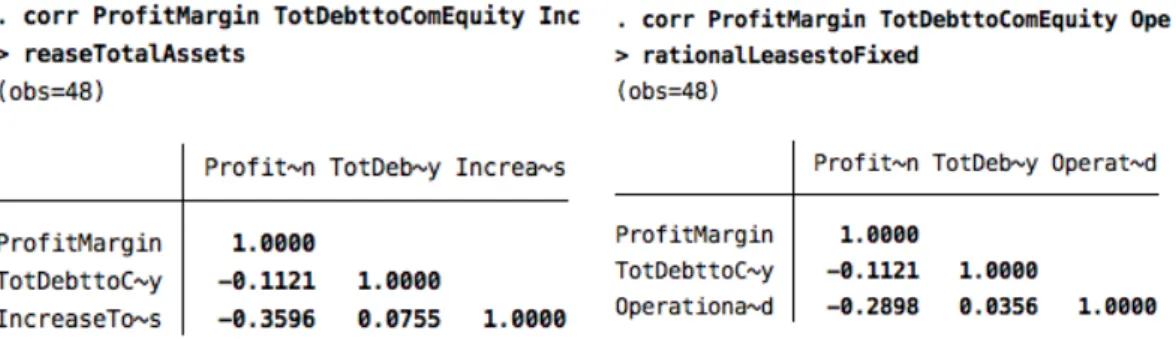
6.5.3 Correlations -‐-‐-‐-‐-‐-‐-‐-‐-‐-‐-‐-‐-‐-‐-‐-‐-‐-‐-‐-‐-‐-‐-‐-‐-‐-‐-‐-‐-‐-‐-‐-‐-‐-‐-‐-‐-‐-‐-‐-‐-‐-‐-‐-‐-‐-‐-‐-‐-‐-‐-‐-‐-‐-‐-‐-‐-‐-‐-‐-‐-‐-‐-‐-‐-‐-‐-‐-‐-‐-‐-‐-‐-‐-‐-‐-‐-‐-‐-‐-‐-‐ 44
6.5.4 Differences in mean -‐-‐-‐-‐-‐-‐-‐-‐-‐-‐-‐-‐-‐-‐-‐-‐-‐-‐-‐-‐-‐-‐-‐-‐-‐-‐-‐-‐-‐-‐-‐-‐-‐-‐-‐-‐-‐-‐-‐-‐-‐-‐-‐-‐-‐-‐-‐-‐-‐-‐-‐-‐-‐-‐-‐-‐-‐-‐-‐-‐-‐-‐-‐-‐-‐-‐-‐-‐-‐-‐-‐ 45
6.5.5 Robustness test results -‐-‐-‐-‐-‐-‐-‐-‐-‐-‐-‐-‐-‐-‐-‐-‐-‐-‐-‐-‐-‐-‐-‐-‐-‐-‐-‐-‐-‐-‐-‐-‐-‐-‐-‐-‐-‐-‐-‐-‐-‐-‐-‐-‐-‐-‐-‐-‐-‐-‐-‐-‐-‐-‐-‐-‐-‐-‐-‐-‐-‐-‐-‐-‐-‐-‐-‐ 47
6.6 DISCUSSION -‐-‐-‐-‐-‐-‐-‐-‐-‐-‐-‐-‐-‐-‐-‐-‐-‐-‐-‐-‐-‐-‐-‐-‐-‐-‐-‐-‐-‐-‐-‐-‐-‐-‐-‐-‐-‐-‐-‐-‐-‐-‐-‐-‐-‐-‐-‐-‐-‐-‐-‐-‐-‐-‐-‐-‐-‐-‐-‐-‐-‐-‐-‐-‐-‐-‐-‐-‐-‐-‐-‐-‐-‐-‐-‐-‐-‐-‐-‐-‐-‐-‐-‐-‐ 49 6.6.1 Both industries -‐-‐-‐-‐-‐-‐-‐-‐-‐-‐-‐-‐-‐-‐-‐-‐-‐-‐-‐-‐-‐-‐-‐-‐-‐-‐-‐-‐-‐-‐-‐-‐-‐-‐-‐-‐-‐-‐-‐-‐-‐-‐-‐-‐-‐-‐-‐-‐-‐-‐-‐-‐-‐-‐-‐-‐-‐-‐-‐-‐-‐-‐-‐-‐-‐-‐-‐-‐-‐-‐-‐-‐-‐-‐-‐-‐-‐ 49
6.6.2 Differences between Energy and Retail -‐-‐-‐-‐-‐-‐-‐-‐-‐-‐-‐-‐-‐-‐-‐-‐-‐-‐-‐-‐-‐-‐-‐-‐-‐-‐-‐-‐-‐-‐-‐-‐-‐-‐-‐-‐-‐-‐-‐-‐-‐-‐-‐-‐-‐-‐-‐ 52 7 CONCLUDING THOUGHTS -‐-‐-‐-‐-‐-‐-‐-‐-‐-‐-‐-‐-‐-‐-‐-‐-‐-‐-‐-‐-‐-‐-‐-‐-‐-‐-‐-‐-‐-‐-‐-‐-‐-‐-‐-‐-‐-‐-‐-‐-‐-‐-‐-‐-‐-‐-‐-‐-‐-‐-‐-‐-‐-‐-‐-‐-‐-‐-‐-‐-‐-‐-‐-‐-‐-‐-‐ 53 8 BIBLIOGRAPHY -‐-‐-‐-‐-‐-‐-‐-‐-‐-‐-‐-‐-‐-‐-‐-‐-‐-‐-‐-‐-‐-‐-‐-‐-‐-‐-‐-‐-‐-‐-‐-‐-‐-‐-‐-‐-‐-‐-‐-‐-‐-‐-‐-‐-‐-‐-‐-‐-‐-‐-‐-‐-‐-‐-‐-‐-‐-‐-‐-‐-‐-‐-‐-‐-‐-‐-‐-‐-‐-‐-‐-‐-‐-‐-‐-‐-‐-‐-‐-‐ 54 9 APPENDIX -‐-‐-‐-‐-‐-‐-‐-‐-‐-‐-‐-‐-‐-‐-‐-‐-‐-‐-‐-‐-‐-‐-‐-‐-‐-‐-‐-‐-‐-‐-‐-‐-‐-‐-‐-‐-‐-‐-‐-‐-‐-‐-‐-‐-‐-‐-‐-‐-‐-‐-‐-‐-‐-‐-‐-‐-‐-‐-‐-‐-‐-‐-‐-‐-‐-‐-‐-‐-‐-‐-‐-‐-‐-‐-‐-‐-‐-‐-‐-‐-‐-‐-‐-‐-‐-‐-‐ 58
1 Introduction
1.1 Abbreviations
IFRS International Financial Reporting Standards GAAP Generally Accepted Accounting Principles IAS International Accounting Standards
IAS 17 -‐ Leases Prescribes the accounting policies and disclosures applicable to
leases, both for lessees and lessors. (IASB u.d.)
FASB Since 1973, Financial Accounting Standards Board, has been responsible
for establishing FASB standards, known as GAAP. (FASB u.d.)
IASC International Accounting Standards Committee. Formed in 1973.
Established the IAS’. (Zeff 2012)
IASB International Accounting Standards Board, the independent standard-‐
setting body of the IFRS Foundation. Continued the work of IASC from 2001. Improves the IAS’ and develops IFRS’. (Zeff 2012)
IFRS Foundation the legal entity under which the IASB operates. (Deloitte u.d.) ED Exposure Draft, proposes new accounting methods for the current IAS 17.
(IASB 2010)
1.2 Definitions
Lease: A contract in which the right to use a specified asset (the underlying
asset) is conveyed, for a period of time, in exchange for consideration. (IASB 2010)
Lessee An entity that enters into a contract to provide another entity with
consideration in return for the right to use an asset for a period of time. (IASB 2010)
Lessor An entity that enters into a contract to provide another entity with the
right to use an asset for a period of time in return for consideration. (IASB 2010)
Finance lease A lease is classified as a finance lease if it transfers substantially
all the risks and rewards incident to ownership. There will be an asset and liability arising from such lease contract. (European Commission 2010)
Operating Lease Leases that does not meet the definition as a finance lease by
the classification at the inception of the lease. There will be no asset or liability arising from such lease contract. (European Commission 2010)
1.3 Background
Financial statements are an important source of information for investors and lenders in their economic decision making process. Therefore, it is crucial that the numbers in the financial statements reflect the true and actual values. The consequences of directly false and/or misleading financial statements may be severe not only for the investors or lenders but for all the stakeholders the company may have. To avoid this from happening, the IASB develops accounting standards with an objective “to develop, in the public interest, a single set of high quality, understandable, enforceable and globally accepted financial reporting standards based upon clearly articulated principles. These standards should require high quality, transparent and comparable information in financial statements and other financial reporting to help investors, other participants in the world’s capital markets and other users of financial information make
economic decisions.” (Deloitte 2012). For the time being, IAS 17 distinguishes
between two types of lease contracts; finance and operational lease. The main difference between these two is that the asset is not capitalised when having an operational lease. Essentially, this means that companies can avoid reporting the asset and corresponding liability arising from a lease contract as long as it falls under the operating lease category. This is happening even though companies are committed to annual payments over several years and the payments are measurable. In my opinion, this can be viewed as a violation of the main objectives of the IASB. This may give ground to an imperfect market due to the asymmetric information and moral hazard. IASB has over the last six years discussed a change in the IAS 17. They want to eliminate the current differentiation between lease contracts, meaning companies with operational leases have to capitalise the asset instead of having it off their balance sheet and only disclose information about their lease contracts in the notes. In August 2010, the IASB released an Exposure Draft with several changes to IAS 17. The major change is the elimination of the current distinction between an operational and financial lease. In practice, this means that all types of lease contracts will have to be recorded on the balance sheet regardless of the terms
in the contract. The new accounting treatment for lease contracts will have huge effects for companies with a high operating leasing intensity.
The public was given 120 days to give their comments about the Exposure Draft. IASB received 786 comment letters from all over the world across a vast variety of business sectors. For the time being, IASB is working on a re-‐exposure Draft with an expected release in 2013. Despite the criticism to the already released Exposure Draft, IASB is still agreeing on capitalising the assets and liabilities arising from lease contracts (IASB 2012).
1.4 Objectives
The main objective for this thesis is to find possible explanatory factors to the deviation in companies’ opinion about the upcoming accounting change for leases. However, besides of having a main objective, there is one sub-‐objective for each of its six parts. Part 2, the literature review, aims at understanding the background behind the criticism against the current accounting method for lease contracts. Part 3 and 4 focus on the Exposure Draft and how the proposed accounting method will financially affect companies. Part 5 presents some findings on how different industry sectors perceive the Exposure Draft. Part 6 presents and discusses the findings from my self-‐made data set. The conclusion will clarify whether or not I have met my aims and identify problems that occurred during the work. There will also be a suggestion for further research.
2 Literature review
Traditional finance theory suggests that leasing and corporate debt are substitutes, an increase in one should be compensated with a similar decrease in the other. However, Delof, Lagaert and Verschueren (2007) argue that the empirical evidence on this issue is conflicting. Research by Marston and Harris (1983) found strong evidence of these two methods to finance a company’s assets are substitutes. That said, in the same research there was also found some evidence that firms do not view leases and debt on a dollar-‐for-‐dollar basis. Results from a more recent study by Yan (2006) rejected the hypothesis that leases and debt are complements. However, the same results could not reject the hypothesis that they are substitutes. A contrasting result to this was found by Ang and Peterson (1984). The research indicated that greater debt is associated with a higher leasing intensity. The article mentions an inefficient market for debt and debt-‐like securities as one possible explanation to why they are not complements. She also refers to a report by Abdel-‐Khalik (1981), which, based on a survey, reveils that a high percentage of lenders for some reason ignore operational leases. Another finding that suggests that lease contracts may contribute to an inefficient market is from research by Zechman (2010) in an investigation of synthetic leases (an operational lease). The research showed that managers of firms with incentives to use off-‐balance sheet financing do not provide transparent disclosure of their synthetic leases. A research paper by Myers and Majluf (1984) states that inside information among the managers that is not conveyed will affect the investment decision of an investor. Harper, Mister and Strawser (1987) rejected their hypothesis stating that “There are no differences between debt-‐numerator responses of subjects receiving pension information in the Balance Sheet format versus the footnote format”, after having bankers and students to determine a company’s debt-‐to-‐equity ratio1 The same study also rejected their hypothesis stating that “There are no differences between the debt-‐numerator response regardless whether it is a sophisticated or less sophisticated user”. These findings may be a reason to why overseas bankers
1 There were 51 bankers and 82 undergraduate accounting students participating in the experiment. They were categorised as sophisticated and less sophisticated users, respectively.
in the UK ranked “amount of ‘off-‐balance sheet’ financing to be incorporated in the balance sheet” as the highest prioritised area when asked how published accounting information could be improved in a survey by Berry and Robertson (2006). According to the World Leasing Yearbook of 2010, the total annual leasing volume in 2008 for the top 50 countries amounted for $644 billion. However, the lease contracts categorised as operational leases will not appear on the balance sheet of the companies. These are only disclosed in the notes Branswijcki, Longueville and Everaert (2011). Feldman and Carter (2002) explain in an article how difficult and time consuming it is to calculate the real value of a company’s obligations when excluding operational leases from the balance sheet. Barth and Schipper (2008) argue that the current distinction between an operating and financing lease gives ground to significant different accounting treatments by only making minor changes in the contractual terms. When Abdel-‐Khalik (1981) surveyed American companies he discovered that they actually did take advantage of the distinction, as they tended to renegotiate their leasing contracts when Statement 13 (FASB’s version of IAS 17 (FASB 1976)) was issued in 1976. Beattie, Goodrace and Thomson (2006) argue that a vast range of well known and used performance ratios be significantly affected if operating leases were required to be recognised on the lessee’s balance sheet rather than merely disclosed in a footnote. Beattie, Edwards and Goodacre (1998) found evidence from companies in the UK that approximately 39 per cent of long term-‐liabilities do not appear on the balance sheet due to the current accounting treatment of operational leases. Capitalising these would increase gearing (net debt to equity) by 260 per cent. Concerns regarding the off-‐balance-‐sheet nature of operating leases have led the IASB and FASB to eliminate the difference between the two types of leasing contracts as IAS 17 does today (Branswijcki, Longueville and Everaert 2011). There were, however, concerns about this matter among the FASB members even when statement 13 was first introduced. In a FASB meeting in 1979 a majority of the Board members expressed that they would support recognition of all types of lease contracts if Statement 13 was to be reconsidered (Abdel-‐khalik 1981). In the spring of 2006 IASB and FASB both discussed a proposal to add a leasing project to its agenda. On the 17th of August 2010, after different stages and hearings, the
IASB and the FASB jointly published an Exposure Draft for public comment proposals to improve the reporting of lease contracts (IFRS Foundation 2010). As expected, the draft did require balance sheet recognition of all leases. Only leases of twelve months or less would be given simplified requirements for lessees and lessors. (IASB 2010). Evidently, this would have a large impact both for lessees and lessors. Leone (2010) explains in an article how the Exposure Draft has been criticised, both by lessees and lessors, for being, naive, lacking value and in need of serious re-‐evaluation. The feedback in the comment letters sent from all across the world was also mixed after the ED was released, and many argued that this would have severe impact on their financial ratios (FASB u.d.). Beattie et al. (1998) did research about how capitalisation of the operating leasing agreements would affect key accounting ratios. Calculations showed that capitalization had a significant impact on different financial ratios. Goodacre (2003) also found statistical evidence that capitalising the operating leases in the retail sector in the UK would lead to an increase in all of the nine financial ratios tested for. For instance; net debt to equity increased from 17 to 157 per cent, ROA decreased and ROE increased after capitalising the operating leases. The average impact on net profit was, however, relatively small. These findings are consistent with research by Fülbier, Silva and Pferdehirt (2008) among listed German companies. The results showed a significant impact on both profitability and gearing ratios.2 When breaking them into industry sectors, the retail and fashion sector showed a particular strong effect across all ratios. The effect in EBIT and net income was moderate and insignificant, respectively.3
To summarise, many of the findings from former research could suggest that leasing contracts, especially operational leases, may violate the objectives of IASB when they are treated according to IAS 17. Hence, these findings can be
used to justify the capitalisation requirement for all types of lease contracts.
2 Major changes in financial ratios occurred primarily for the gearing ratios. The profitability
ratios showed minor, but still significant, effects.
3 The moderate effect in EBIT is due to operating lease expense being only slightly higher than
the depreciation expense. The insignificant effect in net income is due to the interest and depreciation expense being somewhat similar to the operating lease expense.
3 Exposure Draft
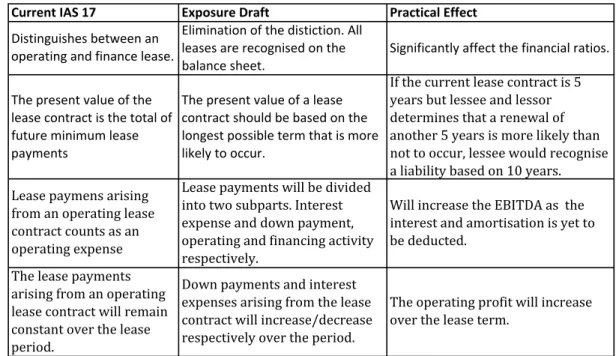
The following is based on the Exposure Draft Leases published by the IASB 17th of August 2010 (IASB 2010). The draft was jointly developed by IASB and FASB. The boards developed the proposals after considering responses to their discussion paper Leases: Preliminary Views, published in March 2009. The public was given up until 15 December 2010 (120 days) to send in their comments about the proposed changes in the current IAS 17. The Exposure Draft argues the way leases are treated on companies’ balance sheets need to change as the current IAS 17 fails to meet the needs of users of financial statements because they do not provide a faithful representation of leasing transactions, both for lessees and lessors. Consequently, the IASB and FASB initiated a joint project to eliminate the current distinction between a finance and operating lease. The new approach would ensure that assets and liabilities arising under leases are recognised in the statement of financial position. The proposed requirement would affect any entity that enters into a lease, with some specified exemptions. The main proposals in the Exposure Draft which will affect a lessee concerns 1) the accounting method and 2) measurement of the leased asset and liability.
1. The accounting method: “a lessee would recognise an asset representing its right to use the leased (‘underlying’) asset for the lease term (the ‘right-‐of-‐use’ asset) and a liability to make lease payments.
2. Assets and liabilities recognised by lessees would be measured on a basis that:
a) assumes the longest possible term that is more likely than not to occur, taking into account the effect of any options to extend or terminate the lease.
b) uses an expected outcome technique to reflect the lease payments, including contingent rentals and expected payments under term option penalties and residual value guarantees, specified by the lease.
c) is updated when changes in facts or circumstances indicate that there would be a significant change in those assets or liabilities since the previous reporting period.
4 Effects of the changes
To get a better understanding of how the current IAS 17 treats different types of lease contracts and also how the proposed changes will affect lease contracts, there are three examples below. The two first examples will examine the effects on lease contracts that meet the current definition of a finance and operational lease, respectively. Then, in example 3, the operational lease contract in example 2 will be treated with the proposed rules in the Exposure Draft. There will also be a real life example for how British Airways will be affected.
4.1 Current IAS 17 – Finance lease
Example 1
The newly started company GULP Inc. wants to have a car for their frequent contact with clients in various locations. Since the company just stared their business, they do not have the funds to by the car outright and their bank is reluctant to give a loan to finance the car until they can show a good and stable income for at least two years. However, GULP Inc. needs the car now and contacts LEASEIT, a well-‐known leasing company. They offer GULP Inc. to lease a new Landrover for ten years. The annual lease payment will be 32.549,08 EUR and
interest rate is 10 per cent4. The car is depreciated over a straight-‐line-‐basis over
ten years with a salvage value of zero. By the end of the lese period, the ownership of the car will be transferred from LEASEIT to GULP Inc. A similar car can be bought outright today for 200.000 EUR. GULP Inc. is responsible for insuring the car as well as potential repairs and maintenance during the lease period.
4.1.1 Classification of the lease contract
IAS 17.8 and IAS 17.10 can be used to classify the lease contract as either an operational or finance lease.
4 The discount rate used to determine the present value of lease payments for lessors is the rate that the lessor charges the lessee.
IAS 17.8: The information about who is responsible for insurance, repairs and maintenance suggests that all risk and returns are transferred from LEASEIT to GULP Inc. A lease is classified as a finance lease if it transfers substantially all the risks and rewards incidental to ownership.
IAS 17.10:The lease contract between LEASEIT and GULP Inc. is classified as a finance lease based on:
1. The ownership of the Landrover will transfer from LEASEIT to GULP Inc. by the end of lease period.
2. The expected lifetime of such vehicle is ten years. The lease period of ten years is therefore a major part of the economic life of the asset.
3. The interest rate of ten per cent, annual payments of 32.549,08 EUR and lease period of ten years result in a present value of 200.000 EUR, which is equal to the fair value of the car. Therefore, the lease payments amount to substantially all of the fair value of the leased asset.
4.1.2 Effects on financial statements
Below gives an overview of how a finance lease will affect the financial statements of an entity if IAS 17 was to be followed.
According to IAS 17.20, when having a finance lease a lessee shall recognise the lease contract as an asset and liability equal to the lower of the fair value of the asset and the present value of the minimum lease payments. In this scenario, the fair value and present value of aggregate minimum lease payments (32.549,08) over ten years with an interest rate of 10 per cent is equal to
PV = 32,549,08 EUR 1−(1+0,1)
0,1 −10
200.000 EUR. Therefore, GULP Inc. debit asset and credit liabilities equal to 200.000 EUR.
IAS 17.25 states that finance lease payments shall be apportioned between the interest expense and the reduction of the outstanding liability. Consequently, in
the statement of cash flows, the interest expense will be reported under operating cash flow and the down payment will be under financing cash flows. In the income statement the interest expense will be considered as an operational expense. As the liability is decreasing, the interest expense will decline and the proportion of down payment of the annual lease payment.
According to IAS 17.27, a finance lease results in a depreciation expense as well as a finance expense each period. The depreciation method shall be consistent with that for owned depreciable assets. The depreciation recognised shall be calculated in accordance with IAS 16 and IAS 385. By depreciating the asset using a straight-‐line method, the annual depreciation expense will be 20 000 EUR, given a salvage value equal to zero and no additional acquisition costs. The depreciation expense will credit the asset and debit the equity side of the balance sheet. In the income statement, it will count as an operational expense and added back in the cash flow statement.
According to IAS 17.30, GULP Inc should apply IAS 366 to determine whether or not the leased asset has become impaired during the period.
5 IAS 16 and IAS 38 are the accounting standards for Property, Plant and Equipment and
Intangible assets, respectively.
The graphs in figure 1 show the evolution of the cash flows and expenses arising from the lease contract in this particular example with the mentioned assumptions. The corresponding lease liability amortisation table that shows all the exact values can be found in exhibit 1 in the appendix.
Figure 1: The figure shows cash flows and expenses arising from the lease contract.
The figure shows that while the annual lease payments are constant throughout the whole period, the interest expense and down payment decreases/increases, respectively. This is due to the reduction in the lease liability, subsequently the interest part of the lease payment decreases. At the same time, the down
payment increases to keep the annual lease payment constant.
!"!#!!!! !"!$%&&&'&&!! !"!(&%&&&'&&!! !"!($%&&&'&&!! !"!)&%&&&'&&!! !"!)$%&&&'&&!! !"!*&%&&&'&&!! !"!*$%&&&'&&!! !"!+&%&&&'&&!! !"!+$%&&&'&&!! (! )! *! +! $! ,! -! .! /! (&! 0123!
!"#$%&'(#%")*%+,-+)#+#%'.+/%0$+%1+"#+%0+/2%
45613176!1891571! :;<5!92=>156! :1931?@2A;5!B!@5613176! 1891571! C55D2E!E1271!92=>1567!4.2 Current IAS 17 – Operational lease
Example 2
The well-‐established company Ben-‐Port Inc has experienced a rapid growth recently. They need an extra car to visit their clients. Even though Ben-‐Port Inc has the financial stability needed to either buy the car or get a loan to fund it, they would like to have the flexibility to change the car after three years. Also, they do not want to deteriorate their financial ratios by adding more debt and assets to their balance sheets. They decide to contact LEASEIT, which has an available Landrover they offer to lease for the three year period the car is needed. The car is insured by LEASEIT during the whole period. They will also be responsible for repairs in the event of any damages to the car. Moreover, they will bear the loss in the event of impairment. The market value of similar Landrover is 200.000 EUR. The annual lease payment will be 32.549,08 EUR and interest rate of 10 per cent. They also give Ben-‐Port Inc the opportunity to extend the leasing contract with another one or two years if needed. For the time being, there is a 30 per cent chance that the lease contract will only last for the initial three years. There is a 30 per cent chance that Ben-‐Port Inc will exercise the option of extend it with another year and 40 per cent change they will extend it with another two. Given this, the lease term that is more likely to occur is five years, the initial three plus the option to extend it with another two years.
4.2.1 Classification of the lease contract
IAS 17.8 and IAS 17.10 can be used to classify the lease contract as either an operational or finance lease.
IAS 17.8: Based on the information about insurance, repairs and impairment it is evident that all risk and returns still held by LEASEIT and not transferred from to Ben-‐Port Inc. A lease is classified as an operating lease if it does not transfer substantially all the risks and rewards incidental to ownership.
IAS 17.10: The lease contract between LEASEIT and Ben-‐Port Inc is classified as an operational lease contract based on:
1) The lease does not transfer the ownership of the asset by the end of the lease term.
2) Ben-‐Port Inc Inc has not the option to purchase the car at any point. 3) The expected lifetime of such vehicle is ten years. The lease period of
three years is therefore not a major part of the economic life of the asset. 4) The interest rate of ten per cent, annual payments of 32.549,08 EUR and
lease period of three years will amount the present value of the minimum lease payments to PV = 32,549,08 EUR 1−(1+0,1)
0,1 −3
80.944,74 EUR. This is only 40 per cent of the Landrover’s present fair value and is therefore not substantially all of the fair value of the leased asset.
4.2.2 Effects on financial statements
Below gives an overview of how an operating lease will affect the financial statements of an entity if IAS 17 was to be followed.
There is no asset or liability arising from an operational lease contract. Subsequently, there is no depreciation expense. According to IAS 17.33, lease payments under an operating lease shall be recognised as an expense on a straight-‐line basis over the lease term, unless another systematic basis is more representative of the time pattern of the user’s benefit. The lease payments will remain constant over the lease period and be treated as an operational expense both in the income and cash flow statement. The purple line in figure 1 illustrates the lease payments’ straight-‐line basis.
4.3 IAS 17 based on the Exposure Draft
To get a better understanding of how the proposed changes will affect leases currently classified as operational leases, the lease contract with its assumptions from example 2 between Ben-‐Port Inc and LEASEIT will now be treated according to the new accounting rules in the exposure draft.
4.3.1 Definition of a lease
The Exposure Draft proposes to define a lease as a contract in which the right to use a specified asset is conveyed for a period of time in exchange for consideration. Since the asset will be transferred (conveyed) from LEASEIT to Ben-‐Port Inc over a period of time in exchange for lease payments (consideration), one can state that the definition of a lease contract is met.
4.3.2 Effects on financial statements
Since the definition of a lease contract is met, Ben-‐Port Inc will have to recognise an asset representing its right to use and underlying asset during the lease term, and a liability to make lease payments. The lease payments and discount rate will be the same as in example 2. Ben-‐Port Inc will have to measure the right-‐of-‐use asset at the amount of the liability to make lease payments plus any initial direct costs incurred by the lessee. There are no initial direct costs incurred by the lessee. Ben-‐Port Inc shall select the amortisation method and review the amortisation period in accordance with IAS 38. The amortisation expense shall present the amortisation separately from other amortisation expenses. By using a straight-‐line amortisation method and salvage value of zero, the annual amortisation expense will be 20 000 EUR. The asset and liability will be measured based on the longest possible term that is more likely than not to occur, taking into account the effect of any options to extend or terminate the lease. This means Ben-‐Port Inc has to take into account the probability that the