Received: 04/04/2015 Approved: 08/29/2015 REVIEW ARTICLE
Corresponding author: Angela Maria Geraldo Pierin Av. Dr. Enéas de Carvalho Aguiar, 419 – Cerqueira César
CEP 05403-000 – São Paulo, SP, Brazil [email protected]
1 Universidade de São Paulo, Escola de Enfermagem, Programa Interunidades, Pós-Graduação em Enfermagem na Saúde do Adulto, São Paulo, SP, Brazil.
2 Universidade Federal do Amazonas, Escola de Enfermagem, Programa Interunidades, Pós-Graduação em Enfermagem na Saúde do Adulto, Manaus, AM, Brazil.
3 Universidade de São Paulo, Escola de Enfermagem, Departamento de Enfermagem Médico-Cirúrgica, São Paulo, SP, Brazil.
ABSTRACT
Objective: Evaluating the evidence of hypertension prevalence among indigenous
populations in Brazil through a systematic review and meta-analysis. Methods: A search
was performed by two reviewers, with no restriction of date or language in the databases of PubMed, LILACS, SciELO, Virtual Health Library and Capes Journal Portal. Also, a meta-regression model was designed in which the last collection year of each study
was used as a moderating variable. Results: 23 articles were included in the review. No
hypertension was found in indigenous populations in 10 studies, and its prevalence was increasing and varied, reaching levels of up to 29.7%. Combined hypertension prevalence in Indigenous from the period of 1970 to 2014 was 6.2% (95% CI, 3.1% – 10.3%). In the regression, the value of the odds ratio was 1.12 (95% CI, 1.07 – 1.18; p <0.0001), indicating a 12% increase every year in the probability of an indigenous person presenting
hypertension. Conclusion: here has been a constant increase in prevalence despite the
absence of hypertension in about half of the studies, probably due to changes in cultural, economic and lifestyle habits, resulting from indigenous interaction with non-indigenous society.
DESCRIPTORS
Hypertension; Indigenous Population; Prevalence; Review.
Hypertension prevalence among indigenous populations
in Brazil: a systematic review with meta-analysis
Prevalência de hipertensão arterial em indígenas do Brasil: uma revisão sistemática com meta-análise
Prevalencia de hipertensión arterial en indígenas de Brasil: una revisión sistemática con meta-análisis
Zilmar Augusto de Souza Filho1,2, Alaidistânia Aparecida Ferreira1,2, Bernardo dos Santos3, Angela Maria Geraldo Pierin3
INTRODUCTION
Transformations of the modern world through the pro-cess of industrialization and urbanization led to changes in lifestyle, culture, rural exodus and the rise of chronic non-communicable diseases, among them being cardiovascular diseases(1). hese impacts were also noticeable in Brazilian
indigenous populations, driven by changes in socio-cul-tural, economic and lifestyle habits resulting from Indian interaction with non-indigenous society. In addition, the destruction of ecosystems located on indigenous lands or surroundings also interferes signiicantly in many aspects of daily life of indigenous peoples, modifying their health pro-ile, making them more vulnerable and contributing to the increase in chronic diseases(2-3). Nowadays, cardiovascular
diseases are considered the leading cause of morbidity and mortality of individuals in the world, in developed countries and in developing countries, accounting for approximately 30% of all deaths in the world and 80% of deaths in under-developed countries(4).
Hypertension stands out in this context as a major pub-lic health problem, as it is one of the major risk factors for cardiovascular disease(5). However, there are no studies of
a national magnitude that relect the prevalence of hyper-tension in Brazil. Observational Data of risk factors and protection for chronic diseases through telephone survey (VIGITEL) obtained in all state capitals and the Federal District show that the prevalence was 24.1% in 2013(6),
val-ues below other regional studies(7-9).
In studies conducted in the indigenous population in the 1970’s and 1980’s(10-12), hypertension was virtually
non-existent. However, research conducted with an Indigenous village in Jaguapiru (Brazil, MS) in 2011 showed hyperten-sion prevalence of 29.7% among all participating subjects and 67.5% among diabetics and individuals with impaired glucose tolerance. It was also found that 4.5% had diabetes mellitus, 2.2% had glucose intolerance, and 14% of men and 30% of women were obese(13).
hus, it is considered that the changes in the lifestyle of Indigenous populations in Brazil combined with the adop-tion and incorporaadop-tion of behaviors and values stimulated by the new challenges of the contemporary world have led those people into dynamic processes of disease, such as car-diovascular disease, especially from hypertension. herefore, this study aimed to evaluate the evidence of the prevalence rates of hypertension in indigenous populations of Brazil, through a systematic review and meta-analysis.
METHOD
his is a bibliographic study, a systematic review and meta-analysis of the prevalence of hypertension among in-digenous populations in Brazil.
SearchStrategy
In order to construct a database of articles published on cardiovascular risk factors in indigenous populations of Brazil, searches were carried out between August and Octo-ber 2014 in the following electronic data sources: National
Center for Biotechnology Information (NCBI/PubMed), Virtual Health Library (VHL), Scientiic Electronic Li-brary Online (SciELO), Latin American and Caribbean Health Sciences Literature (LILACS) and in Capes Jour-nal Portal. he descriptors available in Health Sciences De-scriptors (DeCS) were used.
here was no date, sample size or language restrictions for assessing publications, however, the selected publica-tions were only in Portuguese and English. PRISMA protocol(14)was used as a guide for the systematic review.
Considering hypertension as one of the main risk factors of cardiovascular disease, the terms used for the search were: “fator de risco cardiovascular,” “hipertensão/hypertension,” “pressão arterial/blood pressure,” “diabetes” “obesidade/obe-sity,” “síndrome metabólica/metabolic syndrome,” using the Boolean terms “and” to include terms “índios,” “indígena/ indigenous” in the search ields “search,” “assunto” and “pala-vras do título,” without restriction of the publication period, but including only those whose data were collected from indigenous populations residing in Brazil. he references in the articles identiied by the search strategy were also consulted and searched manually in order to summarize the work and literature review.
IncluSIonandexcluSIoncrIterIa
Inclusion criteria were: original exploratory studies us-ing quantitative methodology on indigenous people, from any ethnicity or village of Brazil, without age restriction, and whose results presented data on the prevalence of hy-pertension. Exclusion criteria were: studies investigating other cardiovascular risk factors in isolation, such as diabetes mellitus, obesity, dyslipidemia and sedentary lifestyle among Indigenous peoples; studies involving only a description of anthropometric data, body mass index, nutritional and metabolic proiles; cancer screening studies among indig-enous people; letters, notes, abstracts, dissertations, theses, duplicate articles, monography and case studies.
IdentIfIcatIon, StudySelectIonanddataextractIon
Two evaluators separately read the titles and abstracts of each pre-selected reference in order to identify only the studies that properly met the inclusion criteria. his was fol-lowed by reading the articles separately, in order to ensure the criteria of the systematic review. In case of disagree-ment between the two reviewers, a third party evaluated the manuscript, and by consensus, a decision was made for inclusion. Manuscripts were evaluated with the instrument Strengthening the Reporting of Observational Studies in Epi-demiology Statement (STROBE)(15).
dataanalySIS
For statistical analysis, data were included in a meta-analysis model of random-efects adjusted for restricted maximum likelihood. he continuity correction was used for studies with zero prevalence and applied to the logistic transformation across all data. A meta-regression model was also done, for which the last year of collection of each study was used as a moderating variable. All analyzes were performed in the statistical package R 3.1.2, and the coni-dence level set at 95%.
RESULTS
StudyIdentIfIcatIonandSelectIonofStudIeS
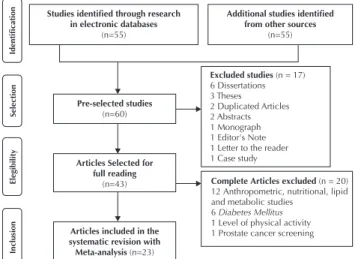
Of the 60 references gathered by the search strategy, 43 full papers were obtained for reading. Of these, twelve studies were excluded because they conducted investiga-tions about anthropometric, nutritional, lipid, metabolic and diabetes mellitus proiles, revealing no information about the blood pressure of the indigenous population studied. Also excluded were theses, dissertations and monographies, there were three articles published in databases which were the result of a thesis and two dissertations; these were included in this review. Finally, 23 met the proposed inclusion criteria for the systematic review and meta-analysis (Figure 1), being characterized by the year and publishing journal, the location of the study including ethnicity and village, period of data collection, number of participants, stratiied participants by sex and age, blood pressure measurement and the prevalence of hypertension rates among the indigenous studied.
Studies identiied through research in electronic databases
(n=55)
Pre-selected studies
(n=60)
Articles Selected for full reading
(n=43)
Articles included in the systematic revision with Meta-analysis (n=23)
Additional studies identiied from other sources
(n=55)
Identiication
Selection
Elegibility
Inclusion
Excluded studies(n = 17) 6 Dissertations 3 Theses 2 Duplicated Articles 2 Abstracts 1 Monograph 1 Editor's Note 1 Letter to the reader 1 Case study
Complete Articles excluded (n = 20) 12 Anthropometric, nutritional, lipid and metabolic studies
6 Diabetes Mellitus
1 Level of physical activity 1 Prostate cancer screening
Figure 1 – Flowchart of publication selection on the prevalence of hypertension in indigenous populations of Brazil – São Paulo, SP, Brazil, 1975-2014.
generalcharacterIStIcSoftheSelectedStudIeS
It was found that the studies on the prevalence of hy-pertension in indigenous populations in Brazil have been published in scientiic journals since the 1970s, and they intensiied from the year 2000 to the present day: there were nine publications in the period 1975-2000 and 14 articles from 2001 to 2014. here was a balance between national (12) and international (11) publications. here was a pre-dominance of journals with a public health theme (9) and
cardiology (8), while the rest were distributed among other health care journals (2), human biology (2) and Endocrinol-ogy and Metabolism (1).
he geographical distribution of indigenous groups studied showed that residents of the Central-West were an-alyzed in 10 studies (Terena, Zoró, Suyá, Kalapalo, Kuikuro, Matipu, Nahukwá, Mehináku, Waurá, Yawalapití, Guaraní, Tupinikin, Suruí, Xavantes, Khisêdjê and Jaguapiru village); another 10 publications included those conducted in north-ern lands (Ianomâmi, Suruí, Tembé, Amondaua, Parkatêjê, Suruí); and only two publications on ethnic groups located in the southeast and south (Guaraní-Mbyá, Kaingangs). We point out that there was only one study of broader scope that included indigenous residents in the Northeast. his study had nationwide inter-ethnic coverage, and included 113 indigenous ethnic groups: 60 located in the Northern region, 22 in the Northeast, 13 in the Central-West and 18 in the South and Southeast of Brazil.
overvIewof reSultS
With the 23 selected articles about the prevalence of hy-pertension in the indigenous peoples of Brazil, it was pos-sible to identify that no cases of hypertension were detected in 10 of them, and the others had varied prevalence, with minimal rates of 1.0% to a maximum of 29.7% (Chart 1).
It may be observed from the years presented in the ar-ticles as data collection periods that the indigenous people’s blood pressure levels began to be measured for research purposes from the mid-1960s to 2012. Only one study(27)
did not specify the period of data collection. he age range was varied, including children and adolescents, even those with values above or equal to 69 years. Ages greater than or equal to 20 years was established as a criterion for inclusion in most studies (10). We point out that age was estimated from the indigenous phenotype and by morphological and behavioral characteristics in three studies(12,16,23), due to lack
of identiication records and unawareness of their age by some of the indigenous people.
It is important to mention that three articles(18,24,26)
presented a diferent number of participants in the sample from those who had their blood pressure measured and presented in the results. Almost all the studies (21) were performed with both genders, except for one study(11) that
investigated only men and another(31) that investigated only
indigenous women.
As a criterion for hypertension, most studies (18) used values equal to or above 140 mmHg and/or 90 mmHg for systolic and diastolic blood pressure, respectively. In two studies, the cutof point was equal to or above 160 mmHg for the systolic and/or 95 mmHg in diastolic blood pres-sure. One study(19) evaluated hypertension compared to the
two cutof points mentioned above. It is noteworthy that one study(30) established the largest cutof as higher than or equal
to 130/85 mmHg, and one study(10) showed no diagnostic
criteria. It is also noteworthy that in seven studies(11,23,26-28,30,33),
Chart 1 – Prevalence of hypertension in publications of indigenous populations in Brazil by ethnic groups/villages, data collection period and sample of participants in a systematic review – São Paulo, SP, Brazil, 1975-2014.
Publication Ethnic group, Location, Villages
Data collection period Number of Participants (Age, years)
Gender Prevalence of
Hypertension (%)
Men Woman
Oliver JV et al. Circulation. 1975; 52:146-151(10)
Ianomâmi (RR) – (16 villages – Brazil, Venezuela)
1966 to
1968 506 (0-50) 244 262 NoneΨ
Mancilha-Carvalho JJM et al. Arq Bras Cardiol. 1983;40(2):115120(11).
Terena, Miranda and Aquidauana Cities (MT)
1976 to
1978 151 (20-70) 151 - 7.2#
Mancilha-Carvalho JJM et al. Arq Bras Cardiol.1992;59(4):275-283(16).
Ianomâmi, Maturacá and Maiá Rivers (AM), Serra do Surucucu and
Catrimani and Ajarani Rivers, (RR)
1982, 1985, 1986 and
1987
663 (≥15) 321 342 None¥
Mancilha-Carvalho JJ et al. Arq Bras Cardiol. 1991; 56(6):477-482(12)
.
Ianomâmi (RR) 1985 254 (>14) 125 129 None ¥
Mancilha-Carvalho JJ et al. Hypertension. 1989;14(3):238-46(17).
Ianomâmi, Serra do Surucucu (RR) –
(10 villages) 1986 195 (≥20-59) 99 96 None ¥
Fleming-Moran M et al. Hum Biol. 1991:63(6):835861(18)
.
Zoró, Aripuanã Indigenous Park (MT)
1988 88 (≥18) 44 44 None
#
Suruí, Aripuanã Indigenous Park (RO) 114 (≥18) 60 54 None # Bloch KV et al. Cad. Saude Publica.
1993;9(4):428-438(19). Ianomâmi, Serra do Surucucu (RR) 1992 51 (≥18) 29 22 None# ¥
Nascimento JRL et al. Rev Para Med. 1998;12(3):4548(20).
Tembé – (03 Turé-Mariquita, Acará-Mirim and Urumateua Villages –
Tomé-Açú City, (PA)
1997 23 (≥18) 12 11 None¥
Pavan L et al. J Hypertens.
1999,17:749-756(21). Amondaua (RO) 1997 30 (15-58) 13 17 None¥
Salvo VLMA et al. Rev Bras Epidemiol. 2009, 12(3):458-68(22).
Suyá, Xingu Indigenous Park (Médio
Rio Xingu) (MT) 1999 86 (≥20) 45 41 4.65¥
Cardoso AM et al. Cad. Saude
Publica. 2001;17(2):345-354(23). Guaraní Mbyá (RJ) 2000 145 (≥15+50) 77 68 4.8¥
Gimeno SGA et al. J Epidemiol Community Health. 2009;63:299-304(24).
Kalapalo, Xingu Indigenous Park (MT)
2000 and 2003
95 (≥20) 53 42 None¥
Kuikuro, Xingu Indigenous Park (MT) 116 (≥20) 54 62 5.6¥
Matipu Xingu Indigenous Park (MT) 13 (≥20) 5 8 None¥
Nahukwá, Xingu Indigenous Park
(MT) 27 (≥20) 13 14 15.4¥
Gimeno SGA et al. Cad. Saude Publica. 2007;23(8):1946-1954(25).
Mehináku, Waurá and Yawalapití, Xingu River (MT)
2000 to
2002 201 (≥20) 102 99 7.6¥
Tavares EF et al. Arq Bras Endocrinol Metab. 2002; 46(3);260-268(26).
Parkatêjê, Indigenous area Mãe
Maria, Bom Jesus City, Tocantins, (PA) 2002 90 (≥20) 56 34 4.4¥
Mancilha-Carvalho JJ; Silva NAS. Arq Bras Cardiol. 2003; 80(3):295-300(27).
Ianomâmi (RR) Not
speciied
25 (25-59) Not speciied None ¥ Xingu Indigenous Park (MT) 25 (25-59) Not speciied 1.0 ¥
Meyerfreund D et al. J Hypertens. 2009; 27(9):1753-1760(28).
Guaraní, Aracruz Indigenous Reserve
(MT) 2003 and
2004
60 (≥20) 24 36 1.5¥
Tupinikin, Aracruz Indigenous
Reserve (MT) 496 (≥20) 246 250 20.8¥
Tavares FG et al. Cien Saude Colet, 2013;18(5):1399-1409(29).
Suruí, Sete de Setembro Indigenous
Land (RO and MT) – (11 villages) 2005 251 (>20) 124 127 2,8¥ Oliveira GF et al. Rev Panam Salud
Publica. 2011; 29(5):315-321(13) Jaguapiru Village, Dourados City (MS) 2007 to 2008 606 (18-69) 268 338 29.7%¥ Anjos HNK et al. Braz arch biol
technol. 2011; 54(1):81-89(30). Kaingangs, Terra indígena Faxinal, Cândido de Abreu City (PR) 2008 82 (≥15) 49 33 26.8§
Coimbra Jr CEA et al. BMC Public He alth.2013;13(52):1471-1490(31)
.
Interethnicity study/123 North, northeast, central-west, southeast and
south region villages (BR)
2008 to
2009 6.692 (15-49) - 6.692 13.2¥
Dal Fabbro AL et al. Ethn Dis. 2014; 24:35-40(32).
Xavantes/ Sangradouro Volta Grande
village (MT) 2008 to
2012
318 (≥20) 162 156 17.5¥
Xavantes/São Marcos Village (MT) 630 (≥20) 301 329 17.2¥ Oliveira GF et al. PLoSOne.2014;9(1)
:e86278-284(33). Jaguapiru Village, Dourados City (MS)
2009 to
2011 1.608 (≥18) 729 879 29.5¥ Santos KM et al. Cad. de Saude
Publica. 2012; 28(12):2327-38(34). Khisêdjê, Xingu Indigenous Park (MT)
2010 and
2011 170 (≥20) 102 68 6.8¥
ΨNo known cutoff established for the diagnosis of hypertension
# Cutoff point for hypertension diagnosis ≥160 mmHg (SBP) and/or ≥95 mmHg (DBP)
¥ Cutoff point for hypertension diagnosis ≥140 mmHg (SBP) and/or ≥90 mmHg (DBP)
§ Cutoff point for hypertension diagnosis ≥130 mmHg (SBP) and/or ≥85 mmHg (DBP)
Regarding the blood pressure measurement procedures in the evaluated studies, the auscultation technique was the most used (19), using mercury sphygmomanometer (08), aneroid devices (05), Random-Zero (04), and two used both mercury sphygmomanometer as well as the aneroid. Automated instruments with the oscillometric technique were used in four studies. Only three studies mentioned the calibration gauge.
he sitting position was the most used and mentioned
in performing blood pressure measurements in the ma-jority of studies (20), as well as making reference to the time interval between the two or three measurements (19). Previous processes leading up to the measurements were seldom mentioned; these were: emptying bladder (02) and rest (03), and less than half indicated who per-formed the measurement. Among them were members of the nursing team (06), doctors (03) and indigenous health agents (03) (Chart 2).
Chart 2 – Blood pressure measurement criteria in publications with indigenous population in Brazil – São Paulo, SP, Brazil, 1975-2014.
Measurement criteria Number of PublicationsN (ref)
Equipment used for measurements
Mercury column 08 (11-12,18,21-22,24,29,30)
Aneroid 05(13,19-20,26,33)
Mercury column and/ or Aneroid 02(10,25)
Random-Zero 04(1-17,23,27)
Semi-automatic 04(28,31-32,34)
Procedures prior measuring blood pressure
Resting before measurement 03(17,27,33)
Emptying bladder 02(17,27)
Not specified 18
Positioning for blood pressure measurement
Supine position 01(10)
Sitting with feet flat on the floor 21(11-13,16-22,24-29,30-34)
Not specified 01 (23)
Number of measurements made
Two 19(11-13,16-27, 29,30-31,33)
Three 03(28,32,34)
Not specified 01(10)
Interval between measurements
Up to 05 minutes 06(12,17,20-21,30,33)
05 to 10 minutes 06(11,16,18,28-29,31)
10 to 15 minutes 07(13,19,22,24,26,31,34)
Not specified 04(10,23,25,27)
Responsible for blood pressure measurements
Nursing staff 06(11,16,22,25,31,34)
Doctor 03(11,21,34)
Indigenous Health Agent 03(22,25,31)
Other health professionals 03(16,31,34)
Students of health sciences 01(11)
Figure 2 presents evidence from the meta-analysis that combines the prevalence of hypertension of 13,811 indig-enous people, selected from diferent ethnic groups and vil-lages in the Brazilian national territory. With regards to the number of participants from indigenous studies, it is highlighted that 18 studies assessed blood pressure levels of
all indigenous present for the data collection. In ive stud-ies, the number of indigenous participants was deined by sample calculation.
publications of the decades following (1980-1990). How-ever, it is noteworthy that in the 1990s there were twice as many published studies (6) on hypertension in indigenous populations in Brazil when compared to previous decades (3). Also noteworthy during this period was that only one indigenous group in Brazil, Terena (MT), presented hyper-tension with a prevalence of 7.2%. From the year the 2000, it can be seen that there has been an increase in hypertension.
Data presented in Figure 2 show wide variation in the prevalence rates of hypertension in the ive decades included in the meta-analysis. In the 1970s, hypertension among in-digenous populations was virtually non-existent: 0.1% (95% CI = 0.0% – 0.6%). In the following period in 1983, there
was an increase to 7.3% (95% CI = 3.7% – 12.0%), although a study at the end of the decade (1989) pointed to lower levels: 0.3% (95% CI = 0.0% – 1.4%). In the 1990s, no stud-ies found hypertension in indigenous populations, so the higher estimates were 1.6% (95% CI = 0.0% – 8.9%) and 2.1% (95% CI = 0.0% – 11.4%). In the 2000s, the results of the meta-analysis showed variations of 2.0% (95% CI = 0.0% – 7.7%) up to 16.3% (95% CI = 12.0 – 21.2%). How-ever, it was between 2011 and 2014 that the largest estimate was observed: 29.7% (95% CI = 26.1% – 33.4%), showing evidence of the presence and the increased prevalence of hypertension. From the 16 indigenous ethnic groups stud-ied, only three showed no hypertension during this period.
Figure 2 – Forest plot of hypertension prevalence in indigenous populations of Brazil – São Paulo, SP, Brazil, 1975-2014.
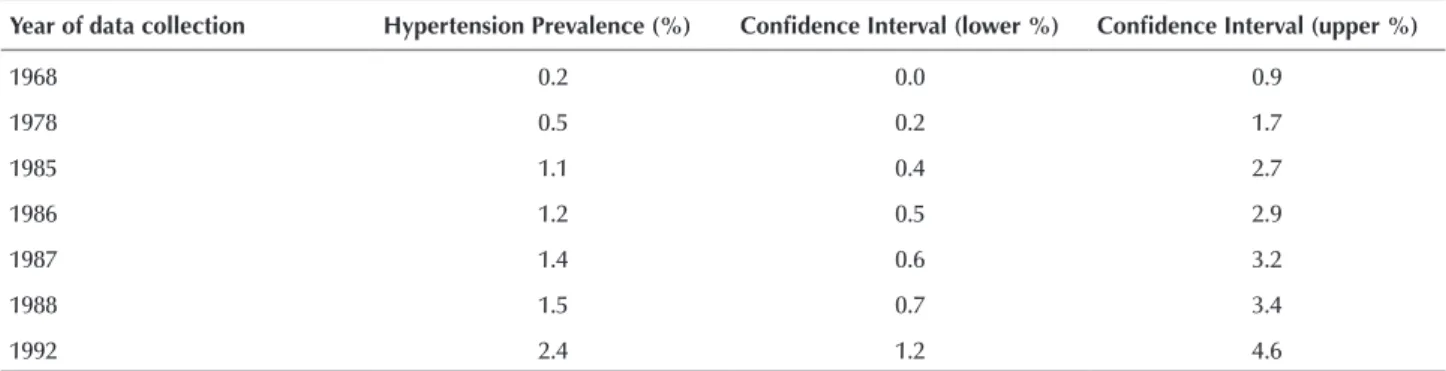
In the data presented in Table 1, the results of the meta-re-gression model were calculated from the inal year of collection of assessed each study. It can be observed that there has been in-creasing prevalence of hypertension in indigenous populations, from a virtually non-existent value (0.2%) up to rates of 19.2%.
he odds ratio (OR) adjusted for each year collection of studies was 1.12 (95% CI = 1.07–1.18; p <0.0001), in-dicating a 12% increase in the probability of occurrence of hypertension in an Indigenous person in Brazil, for each year studied.
Table 1 – Meta-regression model according to the last year of data collection for each study – São Paulo, SP, Brazil, 1975-2014.
Year of data collection Hypertension Prevalence (%) Conidence Interval (lower %) Conidence Interval (upper %)
1968 0.2 0.0 0.9
1978 0.5 0.2 1.7
1985 1.1 0.4 2.7
1986 1.2 0.5 2.9
1987 1.4 0.6 3.2
1988 1.5 0.7 3.4
1992 2.4 1.2 4.6
Year of data collection Hypertension Prevalence (%) Conidence Interval (lower %) Conidence Interval (upper %)
1997 4.2 2.5 6.9
1999 5.2 3.1 8.3
2000 5.7 3.5 9.2
2002 7.1 4.4 11.3
2003 7.9 4.9 12.5
2004 8.7 5.4 13.9
2005 9.7 5.9 15.6
2008 13.1 7.6 21.7
2009 14.5 8.2 24.2
2011 17.5 9.5 29.9
2012 19.2 10.2 33.1
OR (odds ratio) = 1.12; 95% CI (Conidence Interval) = 1.067 – 1.18, p< 0.0001. ...continuation
DISCUSSION
In this study, the main inding showed that the combined prevalence of hypertension among Indigenous people in the period 1970-2014 was 6.2%, and in the regression analysis the odds ratio was 1.12. herefore, there was a 12% increase in the possibility of a Brazilian indigenous person showing hypertension for each year of the study period. Mortality rates from infectious and parasitic diseases in Brazil were high, and were higher than those of non-communicable and chronic cardiovascular diseases for the general popula-tion; the health of Brazilian indigenous people also sufered consequences of the transformations that have occurred in the health-disease process(1). Infectious and parasitic diseases
were and still are a major contributing factor to the increase in morbidity and mortality rates in Brazil. With the process of epidemiological transition, chronic and cardiovascular dis-eases and external causes of illness and death began to exert strong pressure on the disease and death proiles among in-digenous populations in the country(2). In this manner, some
epidemiological studies(25,29,34) began to reveal the increase
in cases of chronic diseases in various indigenous peoples of Brazil. In this sense, they have attributed the possible causes of increased hypertension to a change in habits and lifestyles due to the Westernization that has been adopted by the in-digenous population.
In the present review, initially hypertension was not present in indigenous people in Brazil, as revealed in al-most half of the studies. However, the prevalence has been increasing and varied, reaching levels of up to 29.7%. his result approaches the study indings where the prevalence of hypertension in non-indigenous populations from 72 Brazilian cities of ive regions of the country was 28.5%(35).
However, compared to VIGITEL results in 2013, the prev-alence of hypertension in indigenous people was slightly higher than what was referred to in this review (24.1%)(6).
A systematic review and meta-analysis in the general Bra-zilian population showed a decrease in hypertension rates in national publications between the periods 1980, 1990 and 2000, whose indings were 36.1%, 32.9% and 28.7%, respectively (p<0.001)(36).
In Brazil, a study(16) conducted in the northern region
with the Ianomâmi indigenous, an ethnic group separate from an urban area, considered that the lifestyle, food, and cultural habits when not westernized have a low risk of car-diovascular disease and chronic diseases.
he diet in this context has been widely discussed and emphasized in the transformation process of indigenous life, highlighting the nutritional transition experienced by indigenous populations arising from changes in their life-styles. Studies(13,29,30,31,34) that address this transition have
pointed out that the blood pressure levels of indigenous changed after the consumption of high amounts of sodium, vegetable oil, sugar, processed and high-calorie foods, to-bacco and alcoholic beverages. his scenario was also ap-proached in other studies(10-12,16-17,19,27) carried out with the
Ianomâmi ethnic group, in which an increase in blood pres-sure was not identiied, noting that they had a low intake of sodium, potassium, and iber, and they performed physical activity regularly. hese actions when maintained can con-tribute to preventing the disease process of cardiovascular disease, especially high blood pressure/hypertension.
he irst publication(10) which was part of this review
he authors concluded that hormonal adjustments for low sodium intake throughout life are similar to those achieved in the acute sodium restriction in non-indigenous people. High levels of aldosterone and renin were probably the norm for most of human evolution, and suggest that the values ob-served in non-indigenous control groups were suppressed by excessive consumption of salt in their diet.
Also in the north region, two studies were carried out with the Suruí ethnic group, and there was an increased prevalence of hypertension in the period between 1988 and 2005. In the irst study, the data collected from 114 indigenous people from the Aripuanã Indigenous land in the state of Rondônia did not detect hypertension(18). But in the second, conducted in
2005 with 251 indigenous Suruí from eleven villages of the indigenous territory of Sete de Setembro located on the bor-der between the states of Rondônia and Mato Grosso, the In-dians showed hypertension prevalence of 2.8%(26). Obesity was
also evident among the Suruí indigenous in 22% of women and 9.7% of men, with a signiicant diference between the genders (p=0.007). he percentage values of changed anthro-pometric measurements were also higher among indigenous women than in men; waist circumference (70.1% vs 27.4%; p <0.000) and waist/hip ratio (85% vs 54%; p<0.000). hese val-ues showed an inversion, primarily with weight measurements among the Suruí indigenous evaluated in 1988, in which men showed higher average weight than women.
It should be noted that among the analyzed publica-tions, there were assessments that were not only restricted to hypertension. Studies(13,22-23,26,32-33) performed with
difer-ent ethnic groups such as Suyá, Guaraní, Suruí, Kaingangs, Xavante and Jaguapiru village showed that, unlike the data from the studies with the Ianomâmi, other cardiovascular risk factors were found in addition to hypertension. he studies revealed the presence of: diabetes mellitus, physi-cal inactivity, metabolic syndrome, elevated body fat levels relected in waist circumference, presence of overweight, obesity and dyslipidemia. Indigenous people belonging to the Jaguapiru village in the city of Dourados, MT had the highest rates of hypertension. In a publication from 2014(33),
1608 Indigenous people were evaluated and the prevalence was 29.5%, and in 2011(13) it was 29.7%. Smoking (18.9%)
and the presence of unfavorable socioeconomic factors such as 64.6% with a monthly household income less than one minimum wage at the time (US$ 200.17) were also found, and 12.5% were illiterate(13). hus, it can be assumed that
these Indigenous people have adopted the way of life of non-indigenous populations, which can be justiied by the urban location of their homes. In the 2014 study, among the Indigenous people who had a previous diagnosis of hypertension, only 19% had controlled blood pressure(33).
his is extremely important data considering these people are prone to complications of diseases that damage target organs with the possibility of stroke, acute myocardial in-farction and kidney damage.
In the Southeast of Brazil, in a 2008 study of the indig-enous Kaingangs ethnicity in the city of Cândido de Abreu of the Faxinal land in the state of Paraná, the hypertension prevalence found was also high (26.8%)(30). It is noteworthy
that the main objective in this study was to evaluate the meta-bolic syndrome, in which the recommended cutofs for evalu-ating blood pressure are lower. hus, the values used were 130 mmHg for systolic pressure and/or 85 mmHg for diastolic pressure, which may explain the higher prevalence found. Still in the Southeast region, the lowest prevalence found was in a study in the state of Rio de Janeiro in the indigenous Guaraní ethnic group from the villages of Sapukai, Paraty-Mirim and Araponga, in 2000, with 4.8% hypertension(23).
In the Midwest region, in addition to the study that identiied the highest rate of hypertension as previously discussed, data collected between 2008 and 2012 revealed intermediate rates in the range of 17.2%(32) to 20.8%(28). In
the only study not regionalized in covering the diferent regions of the country, the prevalence of hypertension was slightly lower (13.2%)(31), but the primary objective in this
study was to only identify hypertension in women, which might have contributed to the lower rate of hypertension.
With regards to the blood pressure measurement proce-dure adopted in the assessed publications, some aspects are worth mentioning. Among the studies using the auscultation technique, only three made reference to the calibration of the sphygmomanometer, and other studies(37-38) have shown that
aneroid devices tend to decalibrate easily. As for automated in-struments with oscillometric technique, only those that have been validated according to speciic protocol of recommenda-tions can be used(39). he care of the participants before the
pres-sure meapres-surement were also very little cited, such as having an empty bladder, not having practiced any physical activity, drunk alcohol, cofee, or smoked. However, more than one blood pres-sure meapres-surement being performed as recommended by the guidelines(5) was adopted by most studies. Regarding
hyper-tension diagnostic criteria, the cutof point for hyperhyper-tension at 140 mmHg for systolic pressure and/or 90 mmHg for diastolic pressure was the most used in accordance with current recom-mendations, as with the current Brazilian guidelines(5). Only
three studies used 160/95 mmHg, the former criterion of the World Health Organization(40), probably due to previous
rec-ommendations at the time of the studies(11) whose data were
collected between 1976-1978 from the Terena Indians in the city of Miranda and Aquidauana (MT). he other two stud-ies(18-19) also adopted this criterion for higher blood pressure
levels, and hypertension was non-existent, revealing that if the current cutof points, which are lower, had been applied, the result would not have been diferent.
he main limitation of this study relates to the universe of the indigenous population in Brazil that was studied, re-sulting in the evaluation of diferent ethnic groups and a di-versity of indigenous communities in diferent regions and at diferent stages of assimilation to culture, and probably with varied epidemiological proiles. Another inding was that the distribution of the samples was not homogeneous, especially among the variables of age and gender; this was perhaps due to the fact that it was easier to recruit women and the unavailability of male participation, depending on work activities outside the tribe.
the white coat hypertension syndrome phenomenon, which has favorable aspects because it minimizes the inluence of the observer and environment in measuring blood pressure.
CONCLUSION
From the assessment of the evidence on the preva-lence rates of hypertension in the indigenous peoples of Brazil, it was concluded that although the meta-analysis has shown a low aggregate value (6.2%), and there was an absence of hypertension in 10 of 23 studies, there has been an increase of 12% every year in the chance of an indig-enous person having hypertension. hese indings are prob-ably the result of cultural, habitual, economic and lifestyle changes, resulting from the interaction of the indigenous populations with non-indigenous society. he nutritional transition was the most prominent change, with increased
ingestion of sodium, saturated fats, processed products and a reduction in potassium and iber intake is a major issue for cardiovascular risk factor. Other factors are also related to high blood pressure, such as being overweight and obese, physical inactivity, diabetes mellitus and metabolic syndrome, as well as possibilities of diicult access to health services being experienced by this population. his review suggests the need for vigilance in the control and prevention of risk factors, especially in the work of nurses in primary care and indigenous health, also including the cultural universe of the Indigenous populations to promote interventions and practices related to health and disease. his study may also contribute to assist other health professionals and manag-ers in the implementation of health policies and actions that prioritize the indigenous populations, considering their ethnic diversity, customs and behavior.
RESUMO
Objetivo: Avaliar as evidências sobre a prevalência de hipertensão arterial em indígenas brasileiros por meio de uma revisão sistemática
e realização de meta-análise. Método: Realizou-se busca por dois revisores, sem restrição de data e idioma nas bases de dados PubMed,
LILACS, SciELO, Biblioteca Virtual em Saúde e Portal de Periódicos da Capes. Também foi feito um modelo de meta-regressão em
que o último ano de coleta de cada estudo foi utilizado como variável moderadora. Resultados: Foram incluídos 23 artigos na revisão.
Houve ausência de hipertensão nos indígenas em 10 estudos e as prevalências foram crescentes e variadas, atingindo níveis de até 29,7%. A prevalência combinada de hipertensão nos indígenas no período de 1970 a 2014 foi de 6,2% (IC95%, 3,1% – 10,3%). Na regressão, o valor da razão de chances foi de 1,12 (IC95%, 1,07 – 1,18; p < 0,0001), indicando aumento de 12% a cada ano, na chance de um
indígena apresentar hipertensão arterial. Conclusão: Houve aumento crescente na prevalência, apesar da ausência de hipertensão, em
cerca da metade dos estudos, provavelmente decorrente de mudanças de hábitos culturais, econômicos e de estilo de vida, resultantes da interação do índio com a sociedade não indígena.
DESCRITORES
Hipertensão; População Indígena; Prevalência; Revisão.
RESUMEN
Objetivo: Evaluar las evidencias acerca de la prevalencia de hipertensión arterial en indígenas brasileños por medio de una revisión
sistemática y la realización de metanaálisis. Método: Se llevó a cabo la búsqueda por dos revisores, sin restricción de fecha e idioma en
las bases de datos PubMed, LILACS, SciELO, Biblioteca Virtual en Salud y Portal de Periódicos de Capes. También se hizo un modelo
de metarregresión en que el último año de recolección de cada estudio fue utilizado como variable moderadora. Resultados: Fueron
incluidos 23 artículos en la revisión. Hubo ausencia de hipertensión en los indígenas en 10 estudios y las prevalencias fueron crecientes y variadas, alcanzando niveles de hasta el 29,7%. La prevalencia combinada de hipertensión en los indígenas en el período de 1970 a 2014 fue del 6,2% (IC95%, 3,1% – 10,3%). En la regresión, el valor de la razón de probabilidades fue de 1,12 (IC95%, 1,07 – 1,18; p < 0,0001),
indicando un incremento del 12% cada año en la probabilidad de que un indígena presente hipertensión arterial. Conclusión: Hubo
aumento creciente en la prevalencia, pese a la ausencia de hipertensión, en cerca de la mitad de los estudios, probablemente consecuente de cambios de hábitos culturales, económicos y de estilo de vida, resultantes de la interacción del indio con la sociedad no indígena.
DESCRIPTORES
Hipertensión; Población Indígena; Prevalencia; Revisión.
REFERENCES
1. Coimbra Junior CEA, Santos RV, Escobar AL. Epidemiologia e saúde dos populações indígenas no Brasil. Rio de Janeiro: Fundação Oswaldo Cruz; 2003.
2. Basta PC, Orellana JDY, Arantes R. Peril epidemiológico dos povos indígenas no Brasil: notas sobre agravos selecionados. In: Garnelo L,
Pontes AL, organizadoras. Saúde indígena: uma introdução ao tema. Brasília: Mec-Secadi; 2012. p. 60-107.
3. Moura PG, Batista LRV, Moreira EAM. População indígena: uma relexão sobre a inluência da civilização urbana no estado nutricional
e na saúde bucal. Rev Nutr. 2010;23(3):459-65.
4. Go AS, Mozaffarian D, Roger VL, Benjamin EJ, Berry JD, Blaha MJ, Dai S, et al. Heart disease and strok estatistics – 2014 update: a report from the American Heart Association. Circulation. 2014;129(3):e28-e292.
5. Sociedade Brasileira de Cardiologia; Sociedade Brasileira de Hipertensão; Sociedade Brasileira de Nefrologia. VI Diretrizes Brasileiras de Hipertensão. Arq Bras Cardiol. 2010;95 (1 Supl.1):1-51.
6. Brasil. Ministério da Saúde; Secretaria de Vigilância em Saúde. Vigitel Brasil 2013: vigilância de fatores de risco e proteção para doenças crônicas por inquérito telefônico Brasília: MS; 2014.
8. Lyra R, Silva RS, Montenegro Junior RM, Matos MV, Cézar NJ, Fernandes VO, et al. High prevalence of arterial hypertension in a Brazilian Northeast population of low education and income level, and its association with obesity and metabolic syndrome. Rev Assoc Med Bras. 2012;58(2):209-14.
9. Piccini RX, Facchini LA, Tomasi E, Siqueira FV, Silveira DSd, Thumé E, et al. Promoção, prevenção e cuidado da hipertensão arterial no Brasil. Rev Saúde Pública. 2012;46(3):543-50.
10. Oliver WJ, Cohen EL, Neel JV. Blood pressure, sodium intake, and sodium related hormones in the Yanomamo Indians, a “no-salt” culture. Circulation.1975;52(1):146-51.
11. Mancilha-Carvalho JJ, Silva NAS, Oliveira JM, Argulles E, Silva JAF. Pressão arterial e grupos sociais: estudo epidemiológico. Arq Bras Cardiol.1983;40(2):115-20.
12. Mancilha-Carvalho JJ, Silva NAS, Carvalho JV, Lima JAC. Pressão arterial em seis Aldeias Yanomami. Arq Bras Cardiol. 1991;56(6):477-82.
13. Oliveira GF, Oliveira TRR, Rodrigues FF, Corrêa LF, Ikejiri AT, Casulari LA. Prevalência de diabetes melito e tolerância à glicose diminuída nos indígenas da Aldeia Jaguapiru, Brasil. Rev Panam Salud Pública. 2011:29(5):315-21.
14. Moher D, Liberati A, Tetzlaff J, Altman DG. Preferred reporting items for systematic reviews and meta-analyses: the PRISMA statement. PLoS Med. 2009;6(7):e1000097.
15. Vandenbroucke JP, Von Elm E, Altman DG, Egger M, Pocock SJ, Gotzsche PC, et al. The Strengthening the Reporting of Observational Studies in Epidemiology (STROBE) statement: guidelines for reporting observational studies. Epidemiology. 2007;18(6):805-35.
16. Mancilha-Carvalho JJ, Carvalho JV, Lima JAC, Silva NAS. Ausência de fatores de risco de doença coronária em índios Yanomami e inluência
da aculturação na pressão arterial. Arq Bras Cardiol. 1992;59(4):275-83.
17. Mancilha-Carvalho JJ, Baruzzi RG, Howard PF, Poulter N, Alpers MP, Franco LJ, et al. Blood pressure in four remote populations in the INTERSALT Study. Hypertension. 1989;14(3)238-46.
18. Fleming-Moran M, Santos RV, Coimbra Junior CEA. Blood pressure levels of the Suruí and Zoró indians of the Brazilian amazon: group and sex-speciic effects resulting from body composition, health status, and age. Hum Biol.1991;63(6):835-61.
19. Bloch KV, Coutinho ESF, Lôbo MSC, Oliveira JEP, Milech A. Pressão arterial, glicemia capilar e medidas antropométricas em uma população Yanomámi. Cad Saúde Publica 1993;9(4):428-38.
20. Nascimento JRL, Miranda RA, Xavier FB, Menezes RC. Hipertensão arterial em índios adultos da tribo Tembé, nordeste do Pará. Rev Para Med. 1998;12(3):45-8.
21. Pavan L, Casiglia E, Braga LMC, Winnicki M, Puato M, Pauletto PE, et al. Effects of a traditional lifestyle on the cardiovascular risk proile:
the Amondava population of the Brazilian Amazon. Comparison with matched African, Italian and Polish populations. J Hypertens. 1999;17(6):749-56.
22. Salvo VLMA, Rodrigues D, Baruzzi RG, Pagliaro H, Gimeno SGA. Peril metabólico e antropométrico dos Suyá. Parque Indígena do Xingu,
Brasil Central. Rev Bras Epidemiol. 2009;12(3):458-68.
23. Cardoso AM, Mattos IE, Koifman RJ. Prevalência de fatores de risco para doenças cardiovasculares na população Guaraní-Mbyá do Estado do Rio de Janeiro. Cad Saude Publica. 2001;17(2):345-354.
24. Gimeno SGA, Rodrigues D, Canón EN, Lima EES, Schaper M, Pagliaro H, et al. Cardiovascular risk factors among Brazilian Karib indigenous peoples: Upper Xingu, Central Brazil, 2000-3. J Epidemiol Community Health. 2009;63(4):299-304.
25. Gimeno SGA, Rodrigues D, Pagliaro H, Canón EN, Lima EES, Baruzzi RG. Peril metabólico e antropométrico de índios Aruák: Mehináku,
Waurá e Yawalapití, Alto Xingu, Brasil Central, 2000/2002. Cad Saúde Pública. 2007;23(8):1946-1954.
26. Tavares EF, Vieira-Filho JPB, Andriolo A, Franco LJ. Relação da homocisteinemia com a sensibilidade à insulina e com fatores de risco cardiovascular em um grupo indígena brasileiro. Arq Bras Endocrinol Metab. 2002;46(3):260-8.
27. Mancilha-Carvalho JJ, Silva NAS. The Yanomami Indians in the INTERSALT Study. Arq Bras Cardiol. 2003;80(3):295-300.
28. Meyerfreund D, Gonçalves CP, Cunha RS, Pereira AC, Krieger JE, Mill JG. Age-dependent increase in blood pressure in two different Native American communities in Brazil. J. Hypertens. 2009;27(9):1753-60.
29. Tavares FG, Coimbra CEA, Cardoso AM. Níveis tensionais de adultos indígenas Suruí, Rondônia, Brasil. Ciên Saúde Coletiva 2013;18(5):1399-409.
30. Anjos HNK, Toledo MJO, Mota LT, Previdelli ITS, Anjos AF, Saruhashi TR, et al. Prevalence of metabolic syndrome among Kaingang Native Americans in Southern Brazil. Braz Arch Biol Technol. 2011;54(1):81-9.
31. Coimbra Junior CEA, Santos RV, Welch JR, Cardoso AM, Souza MC, Garnelo L, et al. The irst national survey of indigenous people’s health
and nutrition in Brazil: rationale, methodology, and overview of results. BMC Public Health. 2013;13(52)1471-90.
32. Dal Fabbro AL, Franco LJ, Silva AS, Sartorelli DS, Soares LP, Franco LF, et al. High prevalence of type 2 diabetes mellitus in Xavante Indians from Mato Grosso, Brazil. Ethn Dis. 2014;24(1):35-40.
33. Oliveira GF, Oliveira TRR, Ikejiri AT, Andraus MP, Galvão TF, Silva MT, et al. Prevalence of hypertension and associated factors in an indigenous community of central Brazil: a population-based study. PLoS One. 2014;9(1):e86278.
34. Santos KM, Tsutsui MLS, Galvão PPO, Mazzucchetti L, Rodrigues D, Gimeno SGA. Grau de atividade física e síndrome metabólica: um estudo transversal com indígenas Khisêdjê do Parque Indígena do Xingu, Brasil. Cad Saúde Pública. 2012;28(12):2327-38.
35. Nascimento Neto RM, coordenador. Atlas: corações do Brasil. São Paulo: Sociedade Brasileira de Cardiologia; 2005. Dados nacionais atuais sobre a prevalência, projeções e impacto dos fatores de risco; p. 38-54.
37. Seraim TS, Toma GA, Gusmão JL, ColósimO FC, Stael SBES, Pierin AMG. Evaluation of the conditions of use of sphygmomanometers in hospital services. Acta Paul Enferm. 2012;25(6):940-6.
38. Tolonen H, Koponen P, Naska A, Männistö S, Broda G, Palosaari T et al. Challenges in standardization of blood pressure measurement at the population level. BMC Med Res Methodol. 2015;15(1):33-40.
39. O’Brien E, Atkins N, Stergiou G, Karpettas N, Parati G, Asmar R, et al. European society of hypertension international protocol revision
2010 for the validation of blood pressure measuring devices in adults. Blood Press Monit. 2010;15(1):23-38.
40. World Health Organization. Hypertension and coronary heart disease: classiication and criteria for epidemiological studies. Geneva: