The study of severe asthma in Latin America and
Spain (1994-2004): characteristics of patients
hospitalized with acute severe asthma*
,**
Estudo sobre Asma Grave na América Latina e Espanha (1994-2004): características dos pacientes hospitalizados com asma aguda grave
Gustavo Javier Rodrigo, Vicente Plaza, Jesús Bellido-Casado, Hugo Neffen, María Teresa Bazús, Gur Levy, Joseph Armengol
Abstract
Objective: Studies assessing the characteristics and management of patients hospitalized with asthma have been limited to a small number of facilities and have evaluated short time periods. The present study evaluated long-term changes among hospitalized asthma patients at a large number of facilities. Methods: This was a retrospective, hospital-based observational case series, designated the Study of Severe Asthma in Latin America and Spain, which was conducted in Spain and in eight Latin-American countries. We reviewed the hospital records of 3,038 patients (age range, 15-69 years) hospitalized with acute severe asthma at one of nineteen tertiary-care hospitals in 1994, 1999 and 2004. Results: Over time, the use of inhaled corticosteroids and long-acting β2 agonists increased significantly, whereas the use of theophylline as a controller medication decreased. The utilization of pulmonary function tests also increased. There was a significant reduction in the mean hospital stay (8.5 days, 7.4 days and 7.1 days in 1994, 1999 and 2004, respectively, p = 0.0001) and a significant increase in the mean of the lowest arterial pH at hospital admission. In contrast, there was a significant decrease in the proportion of cases in which PEF was determined in the emergency room (48.6% in 1994 vs. 43.5% in 2004, p = 0.0001). We found the quality of asthma management and care to be generally better in Spain than in Latin America. Conclusions: Although there have been certain improvements in the management of asthma between severe exacerbations and during hospitalization, asthma management remains suboptimal in Spain and, especially, in Latin America.
Keywords: Status asthmaticus; Asthma/therapy; Hospitalization.
Resumo
Objetivo: Estudos que avaliem as características e o gerenciamento de pacientes asmáticos hospitalizados têm sido limitados a um número pequeno de serviços e a curtos períodos de duração. O presente estudo avaliou alterações de longo prazo de pacientes asmáticos hospitalizados em um grande número de serviços. Métodos: Estudo retros-pectivo, observacional, de base hospitalar, denominado Estudo sobre Asma Grave na América Latina e Espanha, realizado na Espanha e em oito países da América Latina. Foi realizada uma revisão dos registros hospitalares de 3.038 pacientes (variação de idade, 15-69 anos) hospitalizados com asma aguda grave em um dos 19 hospitais terciários em 1994, 1999 e 2004. Resultados: Ao longo do tempo, o uso de corticosteroides inalatórios e de β2-agonistas aumentou significativamente, ao passo que o uso de teofilina, como medicação de controle, decaiu. A utilização de testes de função pulmonar também aumentou. Houve uma redução significativa da média do tempo de internação (8,5 dias, 7,4 dias e 7,1 dias em 1994, 1999 e 2004, respectivamente; p = 0,0001) e um aumento significativo da média do menor pH arterial na admissão. Em contrapartida, houve uma diminuição significativa na proporção de casos submetidos ao PFE no pronto-socorro (48,6% em 1994 vs. 43,5% em 2004; p = 0,0001). O tratamento e o gerenciamento da asma foram, de forma geral, melhores na Espanha que na América Latina.
Conclusões: Embora tenha havido avanços no gerenciamento da asma entre exacerbações graves e durante a hospitalização, esse gerenciamento continua subotimizado na Espanha e, em especial, na América Latina.
Descritores: Estado asmático; Asma/terapia; Hospitalização.
* Study carried out at the following locations: the Department of Emergency Services, Hospital Central de las Fuerzas Armadas, Montevideo, Uruguay; the Department of Pulmonology, Hospital de la Santa Creu i Sant Pau, Barcelona, Spain; the Department of Respiratory Medicine, Hospital de Niños “O. Allassia”, Santa Fe, Argentina; the Department of Pulmonology, National Silicosis Institute, Oviedo, Spain; the Department of Pulmonology, Hospital Universitario de Caracas, Central University of Venezuela, Caracas, Venezuela; and the Department of Pulmonology, Hospital de Terrassa, Terrassa, Spain.
Correspondence to: Gustavo Javier Rodrigo. Departamento de Emergencia, Hospital Central de las Fuerzas Armadas, Av. 8 de Octubre 3020, Montevideo, 11600, Uruguay.
Tel 5982 487-0165. Fax 5982 487-2506. E-mail: [email protected]
Financial support: This study received financial support from AstraZeneca, Spain, as part of the Programa de Investigación Integrada (PII, Integrated Investigation Program) of the Asthma Section of the Sociedad Española de Neumología y Cirugía Torácica (SEPAR, Spanish Society of Pulmonology and Thoracic Surgery). AstraZeneca was not involved in data collection or interpretation, nor was it involved in the writing of the manuscript.
Submitted: 8 January 2009. Accepted, after review: 26 February 2009.
ethics committees approved the study design. The analysis was restricted to the last admission of each patient in each year. We conducted a detailed review of the records in order to collect data related to the following: age; gender; year and month of admission; use of inhaled corticosteroids and long-acting β2 agonists; use of theophylline as a controller medication; dose of inhaled corticosteroids (micrograms of beclomethasone or equivalent); asthma severity, according to the Global Initiative for Asthma criteria(1); measurements of allergenicity (skin-prick test, radioallergosorbent test or other); previous pulmonary function tests; previous hospitalizations for asthma; probable cause of exacerbation; lowest arterial pH at hospital admission; FEV1/PEF ratio in the emergency room; admission to and length of stay in the ICU; overall length of hospital stay; cardiopulmonary arrest; intubation/mechanical ventilation during hospitalization; duration of intubation/mechan-ical ventilation; and in-hospital mortality. For the study of seasonal variations in the number of hospital admissions, the seasons were defined as follows: summer, July through September in the northern hemisphere and January through March in the southern hemisphere; fall, October through December in the northern hemisphere and April through June in the southern hemi-sphere; winter, January through March in the northern hemisphere and July through September in the southern hemisphere; and spring, April through June in the northern hemisphere and October through December in the southern hemisphere.
All data were analyzed using the program Statistical Package for the Social Sciences, version 12.0 for Windows (SPSS Inc., Chicago, IL, USA). For continuous variables, values were expressed as mean ± standard deviation. Differences between groups were evaluated using one-way or two-way ANOVA. For categorical variables, the chi-square test with Yates’ correction or Fisher’s exact test was used. All statistical tests were two-tailed, and values of p < 0.05 were considered significant. Standard formulas were used in order to calculate 95% CIs.
Results
A total of 3,038 asthma patients (37.5% between 15 and 34 years of age; 32.5% between 35 and 55 years of age; and 30.0% between
Introduction
Asthma is one of the most common chronic diseases worldwide.(1) In the United States, it is responsible for more than 1.5 million emergency room visits, approxi-mately 500,000 hospitalizations and almost 5,000 deaths each year.(2) In the last decade, there have been various improvements in the diag-nosis and treatment of asthma. The emphasis has shifted toward patient education, objective measures of the degree of bronchial obstruc-tion and the use of inhaled corticosteroids for the prevention of exacerbations.(3) Despite these improvements, many authors have reported underuse of inhaled corticosteroids and inadequate assessment of airway obstruc-tion.(4) However, there have been few studies that assessed the changes in asthma management over time. In general, such studies have evaluated cases over short periods of time and have been limited in their scope: conducted in individual facilities, limited to a small number of facili-ties or restricted to prescribed urban areas.(5-8) In view of this lack of information, we conducted a study to evaluate modifications in the character-istics of patients hospitalized with acute severe asthma over a ten-year period (1994-2004), in Spain and in eight Latin-American countries.
Methods
PEF was determined in the emergency room decreased significantly (from 33.3% in 1994 to 26.1% in 2004, p = 0.0001). However, there was also a significant decrease in the mean length of hospital stay (8.5 days in 1994, 7.4 days in 1999 and 7.1 days in 2004, p = 0.0001). There were no significant changes in the frequency of ICU admission, cardiopulmonary arrest, intuba-tion/mechanical ventilation or in-hospital death, although there was a trend toward lower in-hos-pital mortality.
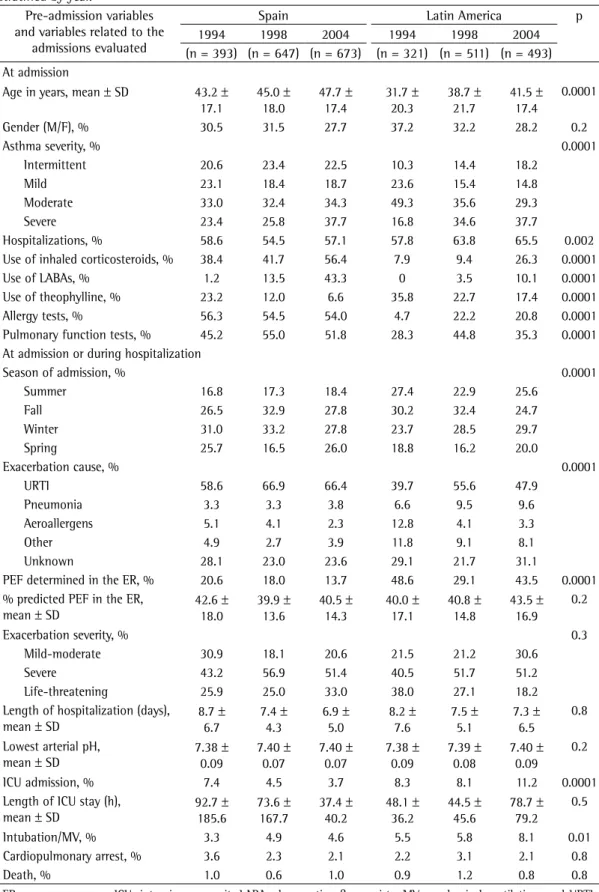
The comparison between the hospitaliza-tions occurring in Spain and those occurring in Latin America (stratified by year) showed that the patients hospitalized in Latin America were younger and more often had moderate or severe asthma. As can be seen in Table 3, the proportion of patients using inhaled corti-costeroids was significantly lower among those hospitalized in Latin America than among those hospitalized in Spain (26.3% vs. 56.4% in 2004, p = 0.0001), as was the proportion of those using long-acting β2 agonists (10.1% vs. 43.3% in 2004, p = 0.0001). However, the proportion of patients using theophylline as a controller medication was significantly higher among those hospitalized in Latin America (17.4% vs. 6.6% in 2004, p = 0.0001). Upper respiratory tract infections were less often the cause of asthma exacerbation in patients hospitalized in Latin America than among those hospitalized in Spain, and the number of hospital admissions during the summer months was lower among the latter group. In addition, measurements of allergenicity were less frequently employed in Latin America. Furthermore, the patients hospitalized in Latin America presented higher rates of previous hospital admission and of intubation/mechanical ventilation. However, 56 and 69 years of age) met the inclusion criteria
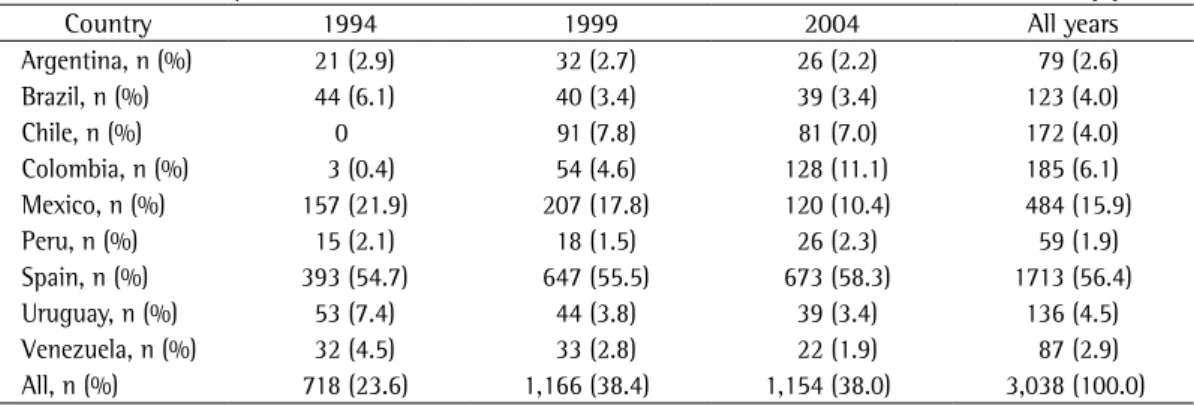
and were evaluated (Table 1). Many of the patients presented severe, life-threatening exac-erbations (PEF, 30-50% of predicted in 49.2% of the sample).
In the analysis of data collected at hospital admission (stratified by year), we found that, over the years evaluated, there was a signifi-cant increase in age, in the proportion of female patients (72% in 2004) and in asthma severity (Table 2). Most patients presented persistent asthma (moderate or severe). More than 50% of the patients had previously been hospital-ized due to asthma exacerbation. Although the overall use of inhaled corticosteroids and long-acting β2 agonists was low, it increased over the course of the ten-year study period, whereas the use of theophylline decreased over the same period. We found that the use of inhaled corti-costeroids correlated significantly with asthma severity (p = 0.001). Finally, there was a slight increase in the proportion of patients reporting being submitted to pulmonary function tests, and only a few patients reported having been submitted to allergy tests.
We found that the majority of hospitali-zations occurred during the fall and winter seasons. Over the study period, there was a significant increase in the frequency of upper respiratory tract infections, together with a decrease in the number of cases in which the asthma attack had been triggered by aeroal-lergens. In addition, the proportion of patients with severe exacerbations increased significantly, although there was a decrease in the number of life-threatening attacks. Furthermore, the mean of the lowest arterial pH at admission increased significantly over the years evaluated. Moreover, we found that the proportion of cases in which
Table 1 - Patients hospitalized with acute severe asthma in the nine countries evaluated, stratified by year.
Country 1994 1999 2004 All years
Argentina, n (%) 21 (2.9) 32 (2.7) 26 (2.2) 79 (2.6)
Brazil, n (%) 44 (6.1) 40 (3.4) 39 (3.4) 123 (4.0)
Chile, n (%) 0 91 (7.8) 81 (7.0) 172 (4.0)
Colombia, n (%) 3 (0.4) 54 (4.6) 128 (11.1) 185 (6.1) Mexico, n (%) 157 (21.9) 207 (17.8) 120 (10.4) 484 (15.9)
Peru, n (%) 15 (2.1) 18 (1.5) 26 (2.3) 59 (1.9)
Spain, n (%) 393 (54.7) 647 (55.5) 673 (58.3) 1713 (56.4)
Uruguay, n (%) 53 (7.4) 44 (3.8) 39 (3.4) 136 (4.5)
Venezuela, n (%) 32 (4.5) 33 (2.8) 22 (1.9) 87 (2.9)
allergy tests than were those hospitalized in Latin America. Over the course of the study period, the patients hospitalized in Spain also presented an increase in the mean of the lowest arterial pH at admission, a significant reduction in the length of the hospital stay and a significant decrease PEF determination in the emergency room was
more often employed at the hospitals in Latin America, although there were no differences in the percentage of predicted PEF.
Patients hospitalized in Spain were more often submitted to pulmonary function tests and
Table 2 - Characteristics of all patients hospitalized with acute severe asthma, stratified by year. Pre-admission variables and variables
related to the admissions evaluated
1994 1999 2004 p All years
(n = 718) (n = 1,166) (n = ,1154) (n = 3,038) Pre-admission
Age in years, mean ± SD 38.0 ± 19.5 42.2 ± 20.0 45.1 ± 17.7 0.0001 42.3 ± 19.2 Gender (M/F), % 33.6/66.4 31.8/68.2 28.0/72.0 0.02 30.7/69.3
Asthma severity, % 0.0001
Intermittent 15.7 18.9 20.5 18.7
Mild 23.3 16.9 16.9 18.3
Moderate 40.8 34.0 31.9 34.9
Severe 20.2 30.2 30.7 28.1
Hospitalizations, % 58.2 58.6 59.7 0.7 58.9
Use of inhaled corticosteroids, % 23.8 27.0 43.5 0.0001 32.6 ICS dose (µg), mean ± SD 847 ± 506 833 ± 450 966 ± 421 0.0001 897 ± 452
Use of LABAs, % 0.6 8.9 29.1 0.0001 14.5
Use of theophylline, % 29.1 16.7 11.2 0.0001 17.3
Allergy tests, % 33.5 38.5 41.5 0.02 38.2
Pulmonary function tests, % 37.6 50.6 44.9 0.0001 45.4
At admission or during hospitalization Season of admission,%
Summer 21.6 19.8 21.4 0.0001 20.8
Fall 28.1 32.7 26.5 29.3
Winter 27.7 31.1 28.6 29.4
Spring 22.6 16.4 23.5 20.5
Exacerbation cause, % 0.0001
URTI 50.1 61.9 28.8 57.8
Pneumonia 4.8 6.1 6.2 5.8
Aeroallergens 8.6 4.0 2.6 4.6
Other 7.9 5.5 5.7 6.3
Unknown 28.6 22.5 26.7 25.5
PEF determined in the ER, % 33.3 22.9 26.1 0.0001 26.6
% predicted PEF in the ER, mean ± SD 41.5 ± 17.5 40.4 ± 14.3 43.7 ± 16.3 0.04 42.6 ± 16.3 Exacerbation severity, %
Mild-moderate 24.7 19.9 26.0 0.01 23.6
Severe 41.4 53.9 51.3 49.2
Life-threatening 33.9 26.2 22.7 27.2
Length of hospitalization (days), mean ± SD 8.5 ± 7.2 7.4 ± 4.7 7.1 ± 5.6 0.0001 7.5 ± 5.7 Lowest arterial pH, mean ± SD 7.38 ± 0.09 7.40 ± 0.08 7.40 ± 0.08 0.0001 7.39 ± 0.08
ICU admission, % 7.8 6.1 6.8 0.3 6.3
Length of ICU stay (h), mean ± SD 71.2 ± 136.6 56.4 ± 112.6 65.9 ± 71.3 0.7 67.7 ± 106.3
Intubation/MV, % 5.0 5.6 6.6 0.3 5.3
Cardiopulmonary arrest, % 2.9 2.7 1.8 0.2 2.4
Death, % 1.0 0.9 0.7 0.7 0.8
ER; emergency room; ICU; intensive care unit; LABAs; long-acting β2 agonists; MV; mechanical ventilation; and URTI;
Table 3 - Differences between asthma patients hospitalized in Spain and those hospitalized in Latin America, stratified by year.
Pre-admission variables and variables related to the
admissions evaluated
Spain Latin America p
1994 1998 2004 1994 1998 2004
(n = 393) (n = 647) (n = 673) (n = 321) (n = 511) (n = 493) At admission
Age in years, mean ± SD 43.2 ± 17.1
45.0 ± 18.0
47.7 ± 17.4
31.7 ± 20.3
38.7 ± 21.7
41.5 ± 17.4
0.0001
Gender (M/F), % 30.5 31.5 27.7 37.2 32.2 28.2 0.2
Asthma severity, % 0.0001
Intermittent 20.6 23.4 22.5 10.3 14.4 18.2
Mild 23.1 18.4 18.7 23.6 15.4 14.8
Moderate 33.0 32.4 34.3 49.3 35.6 29.3
Severe 23.4 25.8 37.7 16.8 34.6 37.7
Hospitalizations, % 58.6 54.5 57.1 57.8 63.8 65.5 0.002
Use of inhaled corticosteroids, % 38.4 41.7 56.4 7.9 9.4 26.3 0.0001
Use of LABAs, % 1.2 13.5 43.3 0 3.5 10.1 0.0001
Use of theophylline, % 23.2 12.0 6.6 35.8 22.7 17.4 0.0001
Allergy tests, % 56.3 54.5 54.0 4.7 22.2 20.8 0.0001
Pulmonary function tests, % 45.2 55.0 51.8 28.3 44.8 35.3 0.0001 At admission or during hospitalization
Season of admission, % 0.0001
Summer 16.8 17.3 18.4 27.4 22.9 25.6
Fall 26.5 32.9 27.8 30.2 32.4 24.7
Winter 31.0 33.2 27.8 23.7 28.5 29.7
Spring 25.7 16.5 26.0 18.8 16.2 20.0
Exacerbation cause, % 0.0001
URTI 58.6 66.9 66.4 39.7 55.6 47.9
Pneumonia 3.3 3.3 3.8 6.6 9.5 9.6
Aeroallergens 5.1 4.1 2.3 12.8 4.1 3.3
Other 4.9 2.7 3.9 11.8 9.1 8.1
Unknown 28.1 23.0 23.6 29.1 21.7 31.1
PEF determined in the ER, % 20.6 18.0 13.7 48.6 29.1 43.5 0.0001 % predicted PEF in the ER,
mean ± SD
42.6 ± 18.0
39.9 ± 13.6
40.5 ± 14.3
40.0 ± 17.1
40.8 ± 14.8
43.5 ± 16.9
0.2
Exacerbation severity, % 0.3
Mild-moderate 30.9 18.1 20.6 21.5 21.2 30.6
Severe 43.2 56.9 51.4 40.5 51.7 51.2
Life-threatening 25.9 25.0 33.0 38.0 27.1 18.2
Length of hospitalization (days), mean ± SD
8.7 ± 6.7
7.4 ± 4.3
6.9 ± 5.0
8.2 ± 7.6
7.5 ± 5.1
7.3 ± 6.5
0.8
Lowest arterial pH, mean ± SD
7.38 ± 0.09
7.40 ± 0.07
7.40 ± 0.07
7.38 ± 0.09
7.39 ± 0.08
7.40 ± 0.09
0.2
ICU admission, % 7.4 4.5 3.7 8.3 8.1 11.2 0.0001
Length of ICU stay (h), mean ± SD
92.7 ± 185.6
73.6 ± 167.7
37.4 ± 40.2
48.1 ± 36.2
44.5 ± 45.6
78.7 ± 79.2
0.5
Intubation/MV, % 3.3 4.9 4.6 5.5 5.8 8.1 0.01
Cardiopulmonary arrest, % 3.6 2.3 2.1 2.2 3.1 2.1 0.8
Death, % 1.0 0.6 1.0 0.9 1.2 0.8 0.8
Of the 3,038 patients who were hospital-ized during the years evaluated, 206 (6.8%) were admitted to ICU (Table 4). These patients, compared with those who were not admitted to the ICU, presented greater asthma severity. In addition, the proportion of patients who had previously been hospitalized was higher among those admitted to the ICU, as was the propor-in the frequency of ICU admission. Regardless
of the degree of asthma severity, the propor-tion of patients receiving inhaled corticosteroids was higher among those hospitalized in Spain than among those hospitalized in Latin America. However, there were no differences between the two groups in terms of the frequency of cardi-opulmonary arrest or the mortality rate.
Table 4 - Characteristics of all hospitalized patients stratified by intensive care unit admission and in-hospital death.
Pre-admission variables and variables related to the admissions
evaluated
ICU Admission p Death p
Yes No Yes No
(n = 206) (n = 2831) (n = 23) (n = 3015) At admission
Age in years, mean ± SD 43.5 ± 19.6 42.2 ± 19.3 0.3 58.6 ± 18.8 42.2 ± 19.1 0.0001 Gender (M/F), % 32.0/68.0 30.7/69.3 0.7 8.0/92.0 31.0/69.0 0.02
Asthma severity, % 0.0001 0.001
Intermittent 10.3 19.4 0 18.9
Mild 9.2 19.1 8.7 18.5
Moderate 33.3 34.9 26.1 34.9
Severe 42.1 26.7 65.2 27.7
Hospitalizations, % 72.7 57.9 0.0001 70.8 58.8 0.3
Use of inhaled corticosteroids, % 29.6 32.9 0.3 41.7 32.6 0.3
Use of LABAs, % 11.1 15.3 0.1 18.2 15.0 0.9
Use of theophylline, % 32.1 16.3 0.0001 41.7 17.2 0.004
Allergy tests, % 45.6 42.2 0.3 54.7 48.0 0.6
At admission or during hospitalization
Season of admission,% 0.9 0.03
Summer 19.9 20.9 8.0 20.9
Fall 30.1 29.2 32.0 29.2
Winter 29.1 29.4 52.0 29.2
Spring 20.9 20.5 8.0 20.6
Exacerbation cause, % 0.0001 0.3
URTI 31.7 59.6 40.0 58.0
Pneumonia 12.1 5.3 16.0 5.7
Aeroallergens 7.5 4.4 0 4.6
Other 17.0 5.6 12.0 6.3
Unknown 31.7 25.1 32.0 25.4
PEF determined in the ER, % 34.0 26.0 0.01 24.0 26.6 0.9 % predicted PEF in the ER,
mean ± SD
34.1 ± 12.7 42.7 ± 16.2 0.0001 27.0 ± 9.1 42.1 ± 16.1 0.002
Length of hospitalization (days), mean ± SD
11.0 ± 8.3 7.3 ± 5.4 0.0001 11.9 ± 12.2 7.5 ± 5.6 0.0001
Lowest arterial pH, mean ± SD 7.25 ± 0.15 7.41 ± 0.06 0.0001 7.20 ± 0.1 7.40 ± 0.08 0.0001
ICU admissions, % 68.0 6.3 0.0001
Intubation/MV, % 20.9 4.2 0.0001 16.0 5.3 0.05
Cardiopulmonary arrest,% 33.0 0.2 0.0001 72.0 1.8 0.0001
Deaths, % 8.3 0.3 0.0001
nonsurviving patients. Nearly all (95%) of the deaths occurred in female patients. There was a relationship between death and patient age, most of the asthma-related deaths occurring in patients > 50 years of age (< 35 years, 12%; 35-50 years, 20%; and > 50 years, 68%). Among the nonsurviving patients, hospital stays were longer, and the proportion of patients using theophylline was higher. Unlike ICU admis-sions, in-hospital death from asthma presented a seasonal variation, peaking during the winter months.
Discussion
The objective of this retrospective, interna-tional, multicenter study was to evaluate changes in the characteristics of patients hospitalized for acute severe asthma during a ten-year period in Spain and in eight Latin-American countries. To that end, we reviewed all hospital records for patients admitted at nineteen tertiary-care hospitals in 1994, 1999 and 2004. The data obtained indicate a significant overall improve-ment in the manageimprove-ment of asthma patients between severe attacks and during hospitaliza-tions (in terms of controller medication use and length of hospital stay).
The severe asthma patients hospitalized later in the study period presented less physiological severity, as evidenced by higher arterial pH at admission and higher percentage of predicted PEF in the emergency room. These trends have been reported previously.(5,9) In addition, we observed a trend toward a reduction of in-hos-pital mortality. The in-hosin-hos-pital mortality rate for all patients hospitalized during the three years studied was 0.8% (95% CI: 0.6-1.2), which is in accordance with previous estimates of in-hos-pital mortality at individual hosin-hos-pitals and in ICU units, as well as with nationally representative data.(9,10) Furthermore, there was a reduction in the frequency of cardiopulmonary arrest (2.9% in 1994, 2.7% in 1999 and 1.8% in 2004) although the difference was not statistically significant (p = 0.2).
Any optimism generated by the apparent improvements in certain aspects of asthma care over the course of the period studied is tempered by the lack of such improvements, or even a decline in the standard of care, in other aspects. One such aspect is the use of PEF measure-ment in the emergency room, which decreased tion of those who used theophylline, those with
a history of pneumonia and those in whom the asthma attack had been triggered by aeroal-lergens. Furthermore, upper respiratory tract infections were less common among patients admitted to the ICU. Although the majority of ICU admissions occurred during the fall and winter seasons, there was no difference between patients admitted and not admitted to the ICU in terms of the season of admission. The patients admitted to the ICU presented greater exacer-bation severity (lower mean arterial pH, lower mean PEF and longer length of hospital stay), as well as higher rates of intubation/mechanical ventilation, cardiopulmonary arrest and in-hos-pital death.
There were 23 in-hospital deaths (0.8% of all hospitalized patients) during the three years studied. As would be expected, the rates of cardiopulmonary arrest, intubation/mechan-ical ventilation and ICU admission were higher among the asthma patients who died during hospitalization. Among the patients admitted to the ICU, the overall mortality rate was 8.3% and the mortality rate for those who suffered cardi-opulmonary arrest was 24.7%. The mortality rate among hospitalized patients who were submitted to intubation/mechanical ventilation was 2.5% (Figure 1). Asthma severity and the frequency of previous exacerbations were greater among the
30
25
20
15
10
5
0
Mortality (%)
Cardiopulmonary
arrest
Hospitalized
Intubation/MV
ICU admi
ssion
tions was also lower. The proportion of patients receiving inhaled corticosteroids and long-acting β2 agonists was higher in Spain, whereas that of those using theophylline as a controller medication was lower. Accordingly, the degree of asthma severity was lower among the patients hospitalized in Spain, and those patients appar-ently received better in-hospital care (rates of ICU admission and intubation/mechanical ventilation were lower). Regardless of geographic location, there was a direct correlation between the use of inhaled corticosteroids and asthma severity. However, one disturbing finding was that the use of anti-inflammatory drugs among patients with moderate-to-severe persistent asthma was low (≈20%) in Latin America, suggesting that a considerable number of these patients received suboptimal treatment.
We found that, in Spain and in Latin America, there was insufficient objective monitoring of asthma between exacerbations. Despite the fact that one of the goals of the Global Initiative for Asthma is to achieve normal or near normal lung function,(1) pulmonary function tests had previously been performed in only 51.8% of the patients hospitalized in Spain and in only 35.5% of the patients hospitalized in Latin America. These data are in agreement with those obtained in previous studies conducted in Europe and Latin America.(21,22)
Our data regarding ICU admissions and in-hospital deaths are consistent with previous findings.(7) In the present study, 6.7% of all hospitalized asthma patients required ICU admission, and the mortality rate among patients admitted to the ICU was 8.3%. Few patients were submitted to intubation/mechan-ical ventilation, and the mortality rate among such patients was low (2.5%). Similarly, several studies conducted during the last two decades have reported mortality rates ranging from 0% to
6%.(23-25) In contrast, mortality was significantly
higher among patients suffering cardiopulmo-nary arrest (24.7%). Deaths occurred almost exclusively in female asthma patients and in patients > 55 years of age. Factors associated with mortality were analyzed in a separate publi-cation based on the EAGLE data.(26)
This study has a number of limitations. Despite its international and multicenter char-acter, it was performed retrospectively, and the analysis was restricted to three discrete significantly. A recent prospective study on the
management of patients hospitalized with acute asthma in Spain reported that PEF had been determined in only 30% of the patients.(11) It is well established that measurements of lung function, such as FEV1/PEF, provide an objective evaluation of airway obstruction and constitute an integral part of the assessment of disease severity (static assessment) and of the response to therapy (dynamic assessment) in any patient over 5 years of age.(1,3,12) This suggests that acute asthma patients are being admitted, treated and discharged inappropriately. The reasons for the lack of more intensive use of PEF determina-tion in emergency rooms are not clear, although influencing factors include emergency room congestion and physician time fragmentation, both of which are inherent to the day-to-day practice of emergency medicine.(13,14) In the present study, other important variables, such as ICU admission (in 6.5%), history of previous admissions (in 58.9%) and intubation/mechan-ical ventilation (in 5.3%), remained unchanged or trended lower over the ten-year study period. We found that mean patient age and the proportion of female patients increased over the course of the study period, This is in agree-ment with previous findings,(15,16) and it has been suggested that gender-related differences are attributable to hormonal influences, although no specific mechanism has been postulated.(17) There was a seasonal distribution of asthma-related hospitalizations, admissions peaking during the fall and winter seasons. This seasonal peak occurred in months without peak pollen counts and tended to be more closely correlated with the viral respiratory season.(9,18) Viral respiratory tract infections have been associ-ated with asthma exacerbations in children and adults.(19,20) In fact, the seasonal peak observed in the present study was related to an increase in the frequency of upper respiratory tract infections and of pneumonia, as well as with a decrease in the proportion of cases in which the asthma attack was triggered by aeroallergens.
hospitaliza-Terrassa, Terassa), S Bardagí (Hospital de Mataró, Mataró), MT Bazús (National Silicosis Institute, Oviedo), J Bellido (Hospital de la Santa Creu i Sant Pau, Barcelona), AJ Cosano (Hospital Rein Sofí, Córdoba), A Lopez-Viña (Hospital Puerta de Hierro, Madrid), E Martinez Moragón (Hospital de Sagunto, Sagunto), M Perpiñá (Hospital La Fe, Valencia), V Plaza (Hospital de la Santa Creu i Sant Pau, Barcelona), G Rodriguez-Trigo (Hospital Juan Canalejo, La Coruña) and J Sanchis (Hospital de la Santa Creu i Sant Pau, Barcelona), Uruguay: L Piñeyro (Hospital Maciel, Montevideo) and GJ Rodrigo (Hospital Central de las Fuerzas Armadas, Montevideo); Venezuela: G Levy (Hospital Universitario, Caracas).
References
1. Global Initiative for Asthma - GINA [homepage on the Internet]. Bethesda: National Heart, Lung and Blood Institute. National Institutes of Health, US Department of Health and Human Services; c2000 [cited 2008 Nov 15]. Available from: http://www.ginasthma.org 2. Centers for Disease Control and Prevention [homepage
on the Internet]. Atlanta: Centers for Disease Control and Prevention. [cited 2008 Sep 10]. Asthma. Available from: www.cdc.gov/asthma/asthmadata.htm.
3. Rodrigo GJ, Rodrigo C, Hall JB. Acute asthma in adults: a review. Chest. 2004;125(3):1081-102.
4. Salmeron S, Liard R, Elkharrat D, Muir J, Neukirch F, Ellrodt A. Asthma severity and adequacy of management in accident and emergency departments in France: a prospective study. Lancet. 2001;358(9282):629-35. 5. Han P, Cole RP. Evolving differences in the presentation
of severe asthma requiring intensive care unit admission. Respiration. 2004;71(5):458-62.
6. Kuo E, Kesten S. A retrospective comparative study of in-hospital management of acute severe asthma: 1984 vs 1989. Chest. 1993;103(6):1655-61.
7. Afessa B, Morales I, Cury JD. Clinical course and outcome of patients admitted to an ICU for status asthmaticus. Chest. 2001;120(5):1616-21.
8. Vargas MH, Díaz-Mejía GS, Furuya ME, Salas J, Lugo A. Trends of asthma in Mexico: an 11-year analysis in a nationwide institution. Chest. 2004;125(6):1993-7. 9. Krishnan V, Diette GB, Rand CS, Bilderback AL, Merriman
B, Hansel NN, et al. Mortality in patients hospitalized for asthma exacerbations in the United States. Am J Respir Crit Care Med. 2006;174(6):633-8.
10. Pendergraft TB, Stanford RH, Beasley R, Stempel DA, Roberts C, McLaughlin T. Rates and characteristics of intensive care unit admissions and intubations among asthma-related hospitalizations. Ann Allergy Asthma Immunol. 2004;93(1):29-35.
11. Borderías Clau L, Zabaleta Murgionda M, Riesco Miranda JA, Pellicer Ciscar C, Hernández Hernández JR, Carrillo Díaz T, et al. Coste y manejo de una crisis asmática en el ámbito hospitalario de nuestro medio (estudio COAX en servicios hospitalarios). Arch Bronconeumol. 2005;41(6):313-321.
time periods. Therefore, it is possible that not all patient charts were located in the studied years, and that continuous data do not present the same trends in patients hospitalized with acute severe asthma. In addition, there were no standardized admission criteria, and some patients, especially those over 50 years of age (typical of patients with COPD), might there-fore have been misdiagnosed. The study was designed to permit temporal changes to be observed and not to explain the reasons for such changes. Furthermore, although we selected a large sample of hospitalized asthma patients from nineteen hospitals in Spain and Latin America, the results are not necessarily repre-sentative of all patients hospitalized with acute severe asthma. In fact, due to the sample char-acteristics, patients hospitalized in Spain were probably much better represented than were their counterparts in Latin America. Moreover, it is likely that there are significant differences between Spain and Latin America, as well as among Latin-American countries, in terms of the characteristics of their health care systems. The potential impact of these differences should be considered in the evaluation of the character-istics of hospitalized asthma patients.
In conclusion, our findings suggest that there have been some improvements in the manage-ment of asthma between severe exacerbations and during hospitalizations. However, over the ten-year study period, the standard of care apparently decreased in certain aspects (e.g., PEF determination in the emergency room), and some indicators (rates of mortality, intuba-tion/mechanical ventilation and ICU admission) remained unchanged. In general, asthma patients hospitalized in Spain had access to a better standard of management and care than did those hospitalized in Latin America.
Acknowledgments
asthma exacerbations in children: a search for etiology. J Allergy Clin Immunol. 2005;115(1):132-8.
20. Sykes A, Johnston SL. Etiology of asthma exacerbations. J Allergy Clin Immunol. 2008;122(4):685-8.
21. Rabe KF, Vermeire PA, Soriano JB, Maier WC. Clinical management of asthma in 1999: the Asthma Insights and Reality in Europe (AIRE) study. Eur Respir J. 2000;16(5):802-7.
22. Neffen H, Fritscher C, Schacht FC, Levy G, Chiarella P, Soriano JB, et al. Asthma control in Latin America: the Asthma Insights and Reality in Latin America (AIRLA) survey. Rev Panam Salud Publica. 2005;17(3):191-7. 23. Zimmerman JL, Dellinger RP, Shah AN, Taylor RW.
Endotracheal intubation and mechanical ventilation in severe asthma. Crit Care Med. 1993;21(11):1727-30. 24. Shapiro JM. Intensive care management of status
asthmaticus. Chest. 2001;120(5):1439-41.
25. Stow PJ, Pilcher D, Wilson J, George C, Bailey M, Higlett T, et al. Improved outcomes from acute severe asthma in Australian intensive care units (1996 2003). Thorax. 2007;62(10):842-7.
26. Rodrigo GJ, Plaza V, Forns BS, Tordera MP, Salas J. Factors associated with mortality in patients hospitalized in Spain and Latin America for acute severe asthma in 1994, 1999, and 2004. J Bras Pneumol. 2008;34(8):546-51.
12. Rodrigo G, Rodrigo C. Early prediction of poor response in acute asthma patients in the emergency department. Chest. 1998;114(4):1016-21.
13. Kellermann AL. Crisis in the emergency department. N Engl J Med. 2006;355(13):1300-3.
14. Derlet RW. Overcrowding in emergency departments: increased demand and decreased capacity. Ann Emerg Med. 2002;39(4):430-2.
15. Johnston NW, Sears MR. Asthma exacerbations . 1: epidemiology. Thorax. 2006;61(8):722-8.
16. Otero González I, Blanco Aparicio M, Montero Martínez C, Valiño López P. Verea Hernando H. Características epidemiológicas de las exacerbaciones por EPOC y asma en un hospital general. Arch Bronconeumol. 2002;38(6):256-62.
17. Brenner BE, Holmes TM, Mazal B, Camargo CA Jr. Relation between phase of the menstrual cycle and asthma presentations in the emergency department. Thorax. 2005;60(10):806-9.
18. Johnston SL, Pattemore PK, Sanderson G, Smith S, Campbell MJ, Josephs LK, et al. The relationship between upper respiratory infections and hospital admissions for asthma: a time-trend analysis. Am J Respir Crit Care Med. 1996;154(3 Pt 1):654-60.
19. Johnston NW, Johnston SL, Duncan JM, Greene JM, Kebadze T, Keith PK, et al. The September epidemic of
About the authors
Gustavo Javier Rodrigo
Physician. Department of Emergency Services, Hospital Central de las Fuerzas Armadas, Montevideo, Uruguay.
Vicente Plaza
Physician. Department of Pulmonology, Hospital de la Santa Creu i Sant Pau, Barcelona, Spain.
Jesús Bellido-Casado
Physician. Department of Pulmonology, Hospital de la Santa Creu i Sant Pau, Barcelona, Spain.
Hugo Neffen
Physician. Department of Respiratory Medicine, Hospital de Niños “O. Allassia”, Santa Fe, Argentina.
María Teresa Bazús
Physician. Department of Pulmonology, National Silicosis Institute, Oviedo, Spain.
Gur Levy
Physician. Department of Pulmonology, Hospital Universitario de Caracas, Central University of Venezuela, Caracas, Venezuela.
Joseph Armengol