Clinical trials field strategies with novel vaccines produced in Brazil
Estratégias de campo em ensaios clínicos com novas vacinas produzidas no BrasilEstrategias de campo en ensayos clínicos con nuevas vacunas producidas en Brasil
Emília de Faria Carniel1, Maria Ângela R. G. M. Antônio2, Maria de Lurdes Zanolli2, Maria Marluce S. Vilela3
Instituição: Departamento de Pediatria da Faculdade de Ciências Médicas da Universidade Estadual de Campinas (Unicamp), Campinas, SP, Brasil 1Doutora em Saúde da Criança e do Adolescente pela Unicamp; Enfermeira
Sanitarista do Departamento de Pediatria da Faculdade de Ciências Médicas da Unicamp, Campinas, SP, Brasil
2Doutora em Saúde da Criança e do Adolescente pela Unicamp; Professora
Doutora do Departamento de Pediatria da Faculdade de Ciências Médicas da Unicamp, Campinas, SP, Brasil
3Pós-doutora pela Toyama Medical and Pharmaceutical University;
Professora Titular do Departamento de Pediatria da Faculdade de Ciências Médicas da Unicamp, Campinas, SP, Brasil
ABSTRACT
Objective: To report field strategies applied to clinical trials with vaccines developed by Instituto Butantan in Campinas, Brazil, in 2004 and 2006.
Methods: This report describes the planning and the operational issues of two clinical trials conducted to evalu-ate immunogenicity and safety of recombinant Hepatitis B vaccine combined with BCG vaccine (BCG/VrHB-IB) and quadrivalent diphteria-tetanus-Haemophilus influenzae type b-cellular pertussis vaccine with low lipopolysaccharide (DTPm/Hib).
Results: The main field strategies applied were: a) Partnership between the researchers and managers from Municipal Health Department and b) Research procedures at home or in Health Centers attended by participants. In the first study, BCG vaccine and VrHB-IB (combined or separated) were given to 552 newborns in the maternity, followed by two subsequent doses of VrHB-IB vaccine in households. The second study included 241 infants at Health Centers, which were vaccinated with DTPm/Hib vaccines concomitantly to the others recommended by the National Immunization Program. In both studies, blood samples were taken at home. No adverse events occurred during the experimental period. The field strategies used in those clinical trials allowed adherence by 90.2 and 93.8% of the participants of the first and second study, respectively. The vaccines were given according to the recommendation of
National Immunization Program and blood samples were obtained according to the protocol schedules.
Conclusions: The field strategies were important to guarantee enrollment and protocol compliance, causing little interference in families’ daily routine, pediatrics ap-pointments and children’s vaccine.
Key-words: clinical trial; vaccination; child health (public health).
RESUMO
Objetivo: Relatar as estratégias de campo utilizadas em dois ensaios clínicos com vacinas desenvolvidas pelo Instituto Butantan, em 2004 e 2006.
Métodos: Estudo do tipo relato de experiência, em que se descreve o planejamento e a operacionalização dos ensaios clínicos, que avaliaram a imunogenicidade e a segurança da vacina BCG combinada com a vacina da hepatite B (VrHB-IB) e da tetravalente bacteriana modificada pela extração do lipo-polissacarídeo (LPS) do componente pertussis (DTPm/Hib). Resultados: As principais estratégias de campo utiliza-das foram: a) Parceria entre os pesquisadores e os gestores da Secretaria Municipal de Saúde e b) Realização dos pro-cedimentos da pesquisa nos domicílios ou nos Centros de Saúde frequentados pelos participantes. No primeiro estudo, foram vacinados 552 recém-nascidos na maternidade com a
Endereço para correspondência: Emília de Faria Carniel
Rua Tessália Vieira de Camargo, 126 CEP 13083-887 – Campinas/SP E-mail: [email protected]
Fonte financiadora: Fundação de Amparo à Pesquisa do Estado de São Paulo (Fapesp) – Processo 02/05666-2 – e Financiadora de Estudos e Projetos (Finep) – Processo 01040957/0
Conflito de interesse: nada a declarar
BCG/VrHB-IB (combinadas ou separadas) e nos domicílios, com as duas doses subsequentes de VrHB-IB. O segundo estudo incluiu 241 lactentes em Centros de Saúde da rede municipal, vacinados com tetravalente bacteriana (com componente pertussis total ou modificado). Em ambos os estudos, amostras de sangue foram colhidas nas residências. Não houve relatos de eventos adversos. A adesão foi de 90,2% para o primeiro estudo e 93,8%, para o segundo. As vacinas foram administradas nas datas preconizadas pelo Programa Nacional de Imunizações e as coletas de sangue, de acordo com o cronograma dos estudos.
Conclusões: As estratégias utilizadas facilitaram o re-crutamento das crianças e garantiram cumprir o protocolo da pesquisa com alta adesão, sem interferir no vínculo da família com o Serviço de Saúde, no calendário vacinal ou no seguimento pediátrico dos participantes.
Palavras-chave: ensaio clínico; vacinação; saúde da criança.
RESUMEN
Objetivo: Relatar las estrategias de campo utilizadas en dos ensayos clínicos con vacunas desarrolladas por el Instituto Butantan, en 2004 y 2006.
Métodos: Estudio de tipo relato de experiencia, en que se describe la planificación y la operacionalización de los ensayos clínicos, que evaluaron la imunogenicidad y la seguridad de la vacuna BCG combinada con la vacuna de la hepatitis B (VrHB-IB) y de la tetravalente bacteriana modificada por la extracción del lipopolisacárido (LPS) y del componente pertussis (DPTm/Hib).
Resultados: Las principales estrategias de campo utili-zadas fueron: a) Colaboración entre los investigadores y los gestores de la Secretaría Municipal de Salud y b) Realización de los procedimientos de la investigación en los domicilios o Centros de Salud frecuentados por los participantes. En el primero estudio, se vacunaron 552 recién nacidos en la ma-ternidad con la BCG/VrHB-IB (combinadas o separadas), y en los domicilios, con las dos dosis subsiguientes de VrHB-IB. El segundo estudio incluyó a 241 lactantes en Centros de Salud de la red municipal, vacunados con tetravalente bacteriana (con componente pertussis total o modificado). En ambos estudios, muestras de sangre fueron recogidas en las residencias. No hubo relato de eventos adversos. La adhesión fue de 90,2% para el primero estudio y de 93,8% para el segundo. Las vacunas fueron administradas
en las fechas preconizadas por el Programa Nacional de Inmunizaciones y las muestras de sangre fueron recogidas conforme al cronograma de estudios.
Conclusiones: Las estrategias utilizadas facilitaron el recluta-miento de los niños y garantizaron cumplir con el protocolo de la investigación con alta adhesión, sin interferir en el vínculo de la familia con el Servicio de Salud, en el calendario de vacunas o en el seguimiento pediátrico de los participantes.
Palabras clave: ensayo clínico; vacunación; salud del niño.
Introduction
The Brazilian National Immunization Program (NIP) is one of the most successful experiences in Public Health in Brazil. The NIP offers all the population free vaccines, serum and immunoglobulin in different public services around the country, being almost all of these items purchased in national pharmaceutical companies(1,2).
Since its creation, many measures have been implemented, aiming at the qualiication and self-sustainability of the program, such as: the investment in the industrial park of vaccinations and in the cooling network, the creation of the National Program for Self-Suficiency in Immunobiologicals, the National Institute of Quality Control, the National Immunobiological Storing and Distribution Center, the establishment of the System for Surveillance of adverse effects following immunization and the PNI System of Information and Evaluation, among others(3-5).
In this perspective, several products have been developed in the country, such as the recombinant hepatitis B vaccine (VrHB-IB) produced by the Butantan Institute (BI), the combined vaccines against diphtheria, tetanus, pertussis and Haemophilus inluenzae type b (Bio-Manguinhos/Fiocruz/ RJ and BI) and the rabies vaccine produced in Vero cells (BI). Clinical trials that aimed to demonstrate the im-munogenicity and safety of these vaccines have shown satisfactory results, allowing the incorporation of these products to the NIP(6-9).
However, despite the importance of these tests, Barros et al(10)
reported that longitudinal studies are rare in less developed countries, possibly because of high costs and the dificulty in patients’ compliance and follow-up. In a research carried out in Rio Grande do Sul, which followed a cohort of live births during a year, the loss rate was of 18%, despite the use of vari-ous strategies to minimize them(11). In clinical trials with two
the immunogenicity and safety of the VrHB-IB, the percentage of losses were 13.6, 17.8 and 25.7%, respectively. The main reasons were the dificulty in locating children who did not return, the children who received vaccines in other locations and the discontinuation of participation in the research(12,13).
Thus, during the planning of prospective studies, it is important to adopt ield strategies that minimize losses, avoiding, thereby, the compromise and the delay in obtain-ing the results, the waste of resources and the consequent rise in the costs of research.
This article aimed to report the ield strategies used in two clinical trials with vaccines developed by the Butantan Institute (BI).
Method
This is an experience report study, which describes the planning and operation of clinical trials, conducted in 2004 and 2006, which assessed the immunogenicity and safety of the BCG vaccine combined with VrHB-IB and of the bacterial tetravalent modiied by the extraction of lipopolysaccharide (LPS) of the pertussis component (DTPm/Hib). The main re-sults of these studies are available in other publications(14-16).
The tests were carried out in Campinas, a municipality in the state of São Paulo, Brazil, with approximately 1 million inhabitants (approximately 98% in urban area), which has the eighth human development index of the state and an infant mortality rate in 2009, of 11.3 per thousand births. Almost 100% of households have treated water and garbage collection and more than 80% have sewage system(17). Its
public health system is organized according to principles and guidelines of the public Uniied Health System (SUS) and is decentralized in ive districts. It consists of 61 Health Centers (HCs), responsible for the primary care of the inhabitants of a given territory and by several average and high complexity services which are public, tertiary or hired(18).
The studies were planned, coordinated and op-erationalized into four teams: planning, composed of pediatricians and a nurse; fieldwork, coordinated and supervised by a nurse; laboratory; and database and sta-tistical analysis, composed by independent researchers. Until the completion of the studies, professionals not involved with fieldwork were unaware of the allocation of participants in groups.
These studies were approved by the Research Ethics Committee of the School of Medical Sciences of the Universidade Estadual de Campinas (Unicamp).
Results
BCG Vaccine combined with hepatitis B recombinant vaccine
The study performed a phase II clinical trial, randomized, open, with two groups of healthy NB, children of mothers from the municipality of Campinas, whose births occurred in the Maternity and the Center for Integral Attention to Women’s health at Unicamp, where most births take place in the municipality. All the NBs who were born in these hospi-tals, were eligible to participate, once respected the inclusion and non-inclusion criteria. The inclusion criteria were: family living in the municipality of Campinas; child of a mother aged 18 or older or with guardians authorization to take part in the study; infants without neonatal complications; and acceptance of participation in the study by parents or guardians after signing an informed consent form (ICF). The criteria of non-inclusion were: child of a mother carrying the surface antigen of B hepatitis (HbsAg+); child of a mother who is HIV or syphilis positive; NBs with a family history of tuberculosis, patients with congenital malformation, genetic disease or serious medical condition; birth weight below 2,000 g and/ or gestational length less than 35 weeks; and those submit-ted to the administration of intravenous immunoglobulin or blood transfusion until the date of vaccination.
Although there was no restriction on the participation of users of private health plans, the invitation was made only to users of SUS, by orientation of the hospitals managers. The selection occurred between February 27 and June 2004. The NBs allocated in Group I received BCG and VrHB-IB combined and the allocated in Group II received BCG and VrHB-IB separately. The ieldwork lasted 18 months.
Before the start of the ieldwork, the objectives and the stages of the study were presented to the directors of the Municipal Health Secretary of Campinas (MHS) and of the hospitals involved. The directors of the hospitals and of the MHS spread the information to health professionals; who contributed by guiding parents about the study procedures and the illing of forms and by providing support to the ield staff. The administration of the other NIP vaccines was maintained at the HCs to avoid alterations on the vaccination routine and the pediatric monitoring of the child.
The technique of via intramuscular (IM) vaccine administra-tion in children was standardized according to the Manual of Procedures on Vaccination(3) and via intradermal (ID),
ac-cording to the Manual of Procedures for Training: tuberculin test and BCG-ID vaccine(19). All other vaccines were stored in
an exclusive refrigerator and kept in suitable temperature, as recommended by the NIP(20); the storage control was under
the responsibility of the coordinator.
The children who were recruited in hospitals received the BCG and the irst dose of VrHB-IB. Recruitment, welcome interview and vaccination were performed by three nurses and a nurse technician, who worked 20 hours a week, for 4 months. Subsequent doses of VrHB-IB, monitoring of adverse effects and blood collections were performed at the households of the participants by six nursing techniques, working 20 hours a week, during 15 months. For home vis-its, a private transportation service was hired. Appointments were scheduled by a student hired for 30 hours per week. The ield coordinator supervised this work, through regular visits to hospitals and visits to some households. The appointments were made with the responsible professional.
The recruitment of the NBs occurred after the assessment of data on the mother’s admission form, pre-natal card and medical records of the mother and the newborn. The ICF was presented to mothers and, in case they accepted to participate in the study, they illed the identity card as a participant, with detailed information regarding the child, the home and work addresses of the parents, their telephone numbers and the telephone numbers of relatives and contacts. The vaccines were registered in the identiication form and on the vaccination card of the NIP, in which a participant sticker was pasted, allowing the professionals of the HCs to identify the children taking part in the study.
To perform the home-based procedures, children were grouped by health districts, which allowed a better use of home visits. Two days before the date scheduled for the visit, parents were reminded of the visit by phone contacts. The researchers tried to perform the visits in the most appropriate time and place indicated by the families. During the visits, the ield workers questioned about the child’s health, medical events, medication use, adverse reactions to vaccination and recorded the information in standardized forms. The site of administration of the BCG was examined and the stage of evolution was examined. The scheduled procedure was per-formed and the family was instructed about future visits.
Blood samples were collected at six and seven months of age and the results were sent to parents by post. The child
who did not have protective titers for hepatitis B received a fourth dose of the vaccine and repeated the anti-HB dosing after a month. The ield workers returned to the households in order to fulill the planned activity, as many times as nec-essary. There were 1,800 visits to families from all regions of the municipality and in municipalities in the region, totaling about 45,000km.
Thus, in this study, 552 neonates were selected, from which 498 followed the protocol. From these, 245 (116 boys and 129 girls) received BCG and VrHB-IB combined and 253 (146 boys and 107 girls) received the vaccines sepa-rately, showing a balanced distribution between the subjects of the two groups (Figure 1). Two patients were excluded from the study: one infant from Group I, because he took the VrHB-IB in the HC, and one from Group II, who died at two months of age (Figure 1).
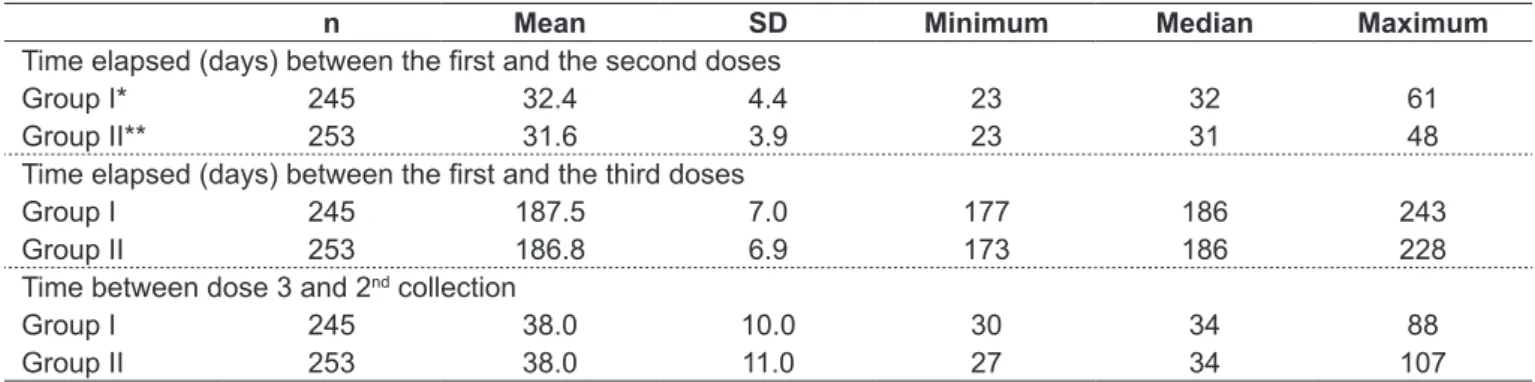
Table 1 shows the time interval between the administra-tion of the irst and second doses, between the irst and third doses and between the third dose and the second blood collec-tion. The vaccines were administered on the dates prescribed by the NIP and the blood samples were collected according to the study schedule. It was found that 15 children from
Figure 1 - Number of selected children, out of children who completed the study**** and reasons for abandonment
Combined vaccines Separate vaccines
(Group I*) (Group II**)
264 552 288
253 245
15 - Moving 03 - Abandonement
01 - VHB in HC***
21 - Moving
01 - Death 13 - Abandonement
Group I and 21 from Group II discontinued the participation in the study because they moved to another municipality, while three families from Group I and 13 from Group II gave up their participation in the research. Adherence to protocol was of 90.2% (Figure1).
No adverse effect was reported regarding the VrHB-IB. Two participants (one from each group) developed ulcer greater than one centimeter at the site of the BCG, which evolved naturally to healing. The scar, at the site of the vac-cine administration, found in about 95% of those vaccinated with BCG(21), occurred in all children, except for one who,
after six months of age, was referred to the HC for revac-cination, according to the rules of NIP(1).
Tetravalent bacterial vaccine modified by lipopolysaccharide removal on pertussis component (DTPm/Hib)
Phase I clinical trial, randomized, with two parallel groups, double-blind, which compared immunogenicity and reactogenicity of tetravalent bacterial vaccine with whole cell pertusis (DTPw/Hib), with the one with modiied pertussis (DTPm/Hib).
The study recruited children from 2 months old, allocated in two groups which received the DTPw/Hib (Group I) or the DTPm/Hib (Group II). The ieldwork was carried out from March 2006 to May 2007.
The project presented to the managers of the MHS has been approved to be developed in HCs within the munici-pality, ensuring the administration of the studied vaccines, simultaneously with the ones from the NIP, facilitating the participation of the families. The vaccines were stored in the MHS warehouse, which is the location for storage and distribution of the imunnobiologicals used in the public
sector of the municipality. Thus, using the MHS already structured services, unnecessary costs with equipment and professionals were avoided and the proper conservation of vaccines was guaranteed.
The ieldwork was carried out in the HCs which per-formed the largest number of vaccination doses and whose coordinators agreed to collaborate with the study. The assistants were selected by the ield coordinator among nursing professionals of those HCs who had experience in vaccination and were interested in participating. The training of the assistants, conducted by the coordinator, involved discussion of the goals and routine of the study, presentation and training for the appropriate illing of the forms (ICF, form of identiication of the child and monitor-ing of adverse effects).
The recruitment of the participants was held in the irst visit of the child to the HC. After the veriication of the suitability for inclusion, the ield staff presented the justii-cation, the objective and the procedures of the study to the parents. If willing to participate, the signature of the ICF was requested, the child’s vaccination card was identiied and the irst dose was scheduled for two months of age. The identiication form was illed with detailed informa-tion about the child, parents’ names, addresses, residential and work telephones of parents, caretakers, close relatives and neighbors.
These children received three doses of DTPw/Hib or DTPm/Hib, according to the allocation group, at 2, 4 and 6 months of age, along with other NIP vaccines. In all vis-its, before the administration of the vaccines, the ield staff questioned the family about health complications with the child in the last 60 days, medication use and adverse reac-tions to previous doses. To monitor reacreac-tions to vaccines,
n Mean SD Minimum Median Maximum
Time elapsed (days) between the irst and the second doses
Group I* 245 32.4 4.4 23 32 61
Group II** 253 31.6 3.9 23 31 48
Time elapsed (days) between the irst and the third doses
Group I 245 187.5 7.0 177 186 243
Group II 253 186.8 6.9 173 186 228
Time between dose 3 and 2nd collection
Group I 245 38.0 10.0 30 34 88
Group II 253 38.0 11.0 27 34 107
Table 1 - Distribution of time elapsed between the administration of the irst and the second doses and between the irst and the third doses of the hepatitis B vaccine and between the third dose and the second collection of blood sample ‑ Campinas, 2005
parents illed a speciic form on the day of vaccination and on the 3 following days. The assistants made telephone contact with the family, in the second and fourth day after post-vaccination, checking for occurrences with the child and clarifying doubts in illing up the form of adverse events.
Blood samples were collected in the households at seven months of age by a nursing assistant accompanied by a re-search assistant. At the end, parents were informed about which vaccines the child received, the results of the sero-logical tests and were instructed about the continuity of the vaccination schedule at the HC.
The ield coordinator followed all the steps of the studies, in the various places where they were developed. Her main tasks were: to contact the institutions involved in the trials; to select and train the ield staff; to monitor the activities in hospitals, HC and homes; to identify the dificulties and to correct procedures in violation of the protocol. The records of the participants were checked for unilled ields, inconsisten-cies or incomplete data and, if necessary, the family members were contacted to complement the information.
Thus, in this study, 241 children were recruited, from which 226 (51.8% male and 48.2% female) completed the protocol. Out of these, 113 received the DTPm/Hib and 113 the DTPw/Hib (Figure 2). The distribution of children ages in the irst, second and third doses and in the blood collection is presented in Table 2. There was no interference in the vaccination schedule, since the average age of dose administration respected what was proposed by the NIP.
Four children who received DTP/Hib were excluded and 11 children discontinued their participation in the research: six by abandonment, two for having moved and three from the DTPm/Hib group who did not have blood collected (Figure 2). The adherence rate was of 93.8%.
Adverse events reported in order of occurrence were: fever ≥38ºC, swelling, pain and hyperemia at the vaccination site, at similar frequencies to those reported by Clemens, Azevedo and Homma(6).
n Mean SD Minimum Median Maximum
1st dose DTPm/Hib 113 63.8 5.0 61.0 62.0 104.0
DTPw/Hib 113 65.0 8.9 61.0 63.0 149.0
2nd dose DTPm/Hib 113 126.6 6.7 118.0 125.0 167.0
DTPw/Hib 113 128.2 11.4 119.0 126.0 233.0
3rd dose DTPm/Hib 113 190.7 8.3 180.0 188.0 230.0
DTPw/Hib 113 191.9 13.8 178.0 188.0 309.0
Blood collection
DTPm/Hib 113 234.0 15.2 213.0 231.0 286.0
DTPw/Hib 113 233.8 18.2 180.0 230.0 343.0
Table 2 - Distribution in relation to age (days) in which the tetravalent bacterial modiied vaccine and tetravalent bacterial with whole‑cell pertussis vaccine and the blood collections were performed – Campinas, 2007
n: Absolute number of children; SD: standard deviation; DTPm/Hib: tetravalent bacterial vaccine modiied by the extraction of the lipopolysac‑
charide from the pertussis component (diphtheria, tetanus, Haemophilus inluenza type b, pertussis); DTPw/Hib: tetravalent bacterial vaccine with whole-cell pertussis component (diphtheria, tetanus, Haemophilus inluenza type b, pertussis)
Figure 2 – Number of children selected, out of children who completed the study**** and reasons for abandonment
DTPmHib DTPwHib
(Group I*) (Group II**)
123 241 118
113 113
1 - Moving 2 - Abandonement 4 - DTPwHib in the Health Center***
1 - Moving 4 - Abandonement
*DTPm/Hib: tetravalent bacterial vaccine modiied by the extrac‑ tion of the lipopolysaccharide from the pertussis component (diphtheria, tetanus, Haemophilus inluenzae type b, pertussis); **DTPw/Hib: tetravalent bacteria vaccine with whole‑cell pertus‑ sis (diphtheria, tetanus, Haemophilus inluenzae type b, pertus‑ sis); ***tetravalent bacterial vaccine with whole‑cell pertussis administered in the Health Center outside the research protocol; ****assessment of the humoral and cellular response of infants
vaccinated with cellular pertussis (DTP) and modiied cellular
Discussion
The adherence of the participants of 90.2%, in the irst test, and of 93.8%, in the second, were determinant for the managing of the study, to reduce biases and for the credibility of the obtained results. The strategy used, which respected the bond of the families with the HC, their routines, the vac-cination schedule and the follow-up of the children’s health, were essential for these results. Although, in both studies, three doses of each vaccine have been applied and, at least, one blood collection was made, this high adherence suggests that the users rely on the NIP and on the health services in which the families are registered. On the other hand, the support and promotion partnership of the projects among researchers and managers of the MHS and the hospitals has, certainly, inluenced this adherence. Moreover, the structure of the municipal health network, which invests in assistance programs, simpliies the access to services and aims to ensure the completeness of health care assistance, was an aspect that contributed to the adherence of families to the research.
Losses of follow-up in prospective studies, particularly in clinical trials, are inevitable, even in those properly designed and well developed. There is still no universal criterion accept-able for losses. For clinical trials of therapeutic intervention with new drugs, it is suggested that losses lower than 5% are not of concern, while losses greater than 20% may incur in serious problems of internal validity of the study(22).
The losses in some clinical studies with the NIP vaccines were variable (0–54%), having as causes the occurrence of diseases in participants, post-vaccination adverse effects, change of munici-pality, abandonment of participation in the study, dificulties in inding the family, the administration of other vaccines than the ones scheduled for the study, among others(6-9,23-25). In studies
developed in HCs, the follow-up failures were either zero or very little, even in that study with one thousand participants followed by at least seven months. Possibly, the relationship of healthcare services with families ensured that success(9,25).
In the studies described here, various procedures were adopted aiming to minimize losses. Besides trying to ensure
that the families understood the object, the products and the procedures of the study, the researchers tried to respect the routine particularities of each family.
With detailed information on addresses and phone num-bers of neighbors, relatives and caregivers, references of the residential locations, work of father and mother, institution that the child would attend, besides the persistence of the ield staff to carry out the planned activities, the losses of follow-up in the irst study were of 9.8%.
The development of the ieldwork of the second survey in HCs attended by the families, keeping the vaccination routine of the children, contributed for an increase in the monitoring rate, so failures of follow-up were about 6%.
The frequent telephone contacts with the family, the visits, the administration of the vaccines and the blood col-lection in the households may have helped in reducing losses which, in 55% of cases, occurred due to the moving of the families to other municipalities.
The participation of the ield coordinator, at all stages, integrating the various participant groups (families, MHS, hospitals, ield, laboratory, database, and statistics) was es-sential for the achievement of the purposes of the studies.
Vaccination is, undoubtedly, one of the most effective measures in preventing diseases of relevance(2,26) and, the
autochthonous development of vaccines and the improve-ment of products used in the country are among the measures necessary for the sustainability of the NIP policies.
The ield strategy used in these studies began with the partnership of the BI, the Center for Research in Pediatrics-Ciped-Unicamp and the Campinas MHS on public policies for the child. As a result, we elected and promoted: information for the family about the content of the study; data collection with details, allowing to locate even those participants who changed their address; adequacy to families routines; comple-tion of the ield work in well-structured health services, with credibility of the population and with local professionals. These criteria were relevant for the high adherence of the participants and the completion of the projects, according to the protocol and budget initially established.
References
1. Temporão JG, Nascimento MV, Maia ML. Programa Nacional de Imunizações (PNI): história, avaliação e perspectivas. In: Buss PM, Temporão JG, Carvalheiro JR, editors. Vacinas, soros & imunizações no Brasil. Rio de Janeiro: Fiocruz; 2005. p. 101-23.
2. Brasil. Ministério da Saúde [homepage on the Internet]. Coordenadoria Geral
do Programa Nacional de Imunizações [cited 2010 Oct 18]. Available from: http://www.saude.gov.br/svs
4. Ponte CF. Vaccination, quality control, and vaccine production in Brazil since 1960. Hist Cienc Saude Manquinhos 2003;10 (Suppl 2):S619‑53.
5. Temporão JG. Brazil’s national immunization program: origins and development. Hist Cienc Saude Manquinhos 2003;10 (Suppl 2):S601‑17. 6. Clemens SC, Azevedo T, Homma A. Feasibility study of the immunogenicity
and safety of a novel DTPw/Hib (PRP-T) Brazilian combination compared to a licensed vaccine in healthy children at 2, 4, and 6 months of age. Rev Soc Bras Med Trop 2003;36:321‑30.
7. Martins RM, Bensabath G, Arraes LC, Oliveira ML, Miguel JC, Barbosa GG
et al. Multicenter study on the immunogenicity and safety of two recombinat vaccines against hepatitis B. Mem Inst Oswaldo Cruz 2004;99:865-71. 8. Costa WA, Cunha RS, Bolzan VL, Silva AC, Caporale GM, Chaves LB et al.
Immunogenicity and safety of a new Vero cell rabies vaccine produced using serum‑free medium. Vaccine 2007;25:8140‑5.
9. Martins RM, Camacho LA, Marcovistz R, Noronha TG, Maia ML, Santos EM et al. Immunogenicity, reactogenicity and consistency of production of a Brazilian combined vaccine against diphtheria, tetanus, pertussis and Haemophilus inluenzae type b. Mem Inst Oswaldo Cruz 2008;103:711-8. 10. Barros FC, Victora CG, Horta BL, Gigante DP. Methodology of the Pelotas
birth cohort study from 1982 to 2004-5, Southern Brazil. Rev Saude Publica 2008;42 (Suppl 2):7‑15.
11. Victora CG, Barros FC, Tomasi E, Menezes AM, Horta BL, Weiderpass E et al. Trends and defferentials in maternal and child health: design and methodology of the 1982 and 1993 birth cohort studies in Pelotas, Rio Grande do Sul. Cad Saude Publica 1996;12 (Suppl 1):S7‑14.
12. Luna EJ, Moraes JC, Silveira L, Salinas HS. Eficacy and safety of the Brazilian vaccine against hepatitis B in newborns. Rev Saude Publica 2009;43:1014‑20.
13. Moraes JC, Luna EJ, Grimaldi RA. Immunogenicity of the Brazilian hepatitis B vaccine in adults. Rev Saude Publica 2010;44:353‑9.
14. Mazzola TN, Silva MT, Moreno YM, Lima SC, Carniel EF, Morcillo AM et al. Robust gammadelta+ T cell expansion in infants immunized at birth with BCG vaccine. Vaccine 2007;25:6313‑20.
15. Carniel EF, Morcillo AM, Blotta MH, Silva MT, Mazzola TN, Antonio MA et al. Immunogenicity and safety of combined intradermal recombinant Hepatitis B
with BCG vaccines at birth. Vaccine 2008;26:647‑52.
16. Zorzeto TQ, Higashi HG, Silva MT, Carniel EF, Dias WO, Ramalho VD et al. Immunogenicity of a whole‑cell pertussis vaccine with low lipopolysaccharide content in infants. Clin Vaccine Immunol 2009;16:544‑50.
17. Brasil Prefeitura Municipal de Campinas [homepage on the Internet]. Campinas: Secretaria Municipal de Planejamento, Desenvolvimento Urbano e Meio Ambiente [cited 2010 Aug 20]. Available from: http: http://www.campinas. sp.gov.br/governo/seplama/dados‑do‑municipio/cidade/
18. Brasil. Prefeitura Municipal de Campinas [homepage on the Internet]. Campinas: Secretaria Municipal de Saúde [cited 2010 Aug 20]. Available from: http://2009.campinas.sp.gov.br/saude
19. Brasil ‑ Governo do Estado de São Paulo [homepage on the Internet]. São Paulo: Centro de Vigilância Epidemiológica Professor Alexandre Vranjac - Manual de Procedimentos para Treinamentos: teste tuberculínico e vacina BCGid, 1992 [cited 2010 Oct 18]. Available from: http://www.cve.saude. sp.gov.br
20. Brasil. Ministério da Saúde; Fundação Nacional da Saúde. Manual de rede de frio. Brasília: Ministério da Saúde, 2007.
21. Brasil. Ministério da Saúde; Fundação Nacional da Saúde. Manual de eventos adversos pós-imunizações. Brasília: Ministério da Saúde, 2007.
22. Fewtrell MS, Kennedy K, Singhal A, Martin RM, Ness A, Hadders‑Algra M et al.
How much loss to follow‑up is acceptable in long‑term randomised trials and prospective studies? Arch Dis Child 2008;93:458‑61.
23. Baldy JL, Lima GZ, Morimoto HK, Reiche EM, Matsuo T, de Mattos ED et al.
Immunogenicity of three recombinant hepatitis B vaccines administered to students in three doses containing half the antigen amount routinely used for adult vaccination. Rev Inst Med Trop Sao Paulo 2004;46:103‑7.
24. Oliveira MD, Martins RM, Matos MA, Ferreira RC, Dias MA, Carneiro MA et al. Seroepidemiology of hepatitis B virus infection and high rate of response to
hepatitis B virus Butang® vaccine in adolescents from low income families in
Central Brazil. Mem Inst Oswaldo Cruz 2006;101:251-6.
25. Isolani AP, Sversuti CS, Sell AM, Moliterno RA. Protection against hepatitis B by the Butang recombinant vaccine in newborn children in South Brazil. Mem Inst Oswaldo Cruz 2006;101:551-3.