Reasons for non-adherence to obesity treatment in children
and adolescents
Razões do abandono do tratamento de obesidade por crianças e adolescentes
Motivos del abandono del tratamiento de obesidad por niños y adolescentes
Thaïs Florence D. Nogueira1, Mariana Porto Zambon2
Instituição: Ambulatório de Obesidade na Criança e no Adolescente do Hospital das Clínicas da Universidade Estadual de Campinas (Unicamp) e Departamento de Pediatria da Faculdade de Ciências Médicas da Unicamp, Campinas, SP, Brasil
1Graduanda do Curso de Medicina da Faculdade de Ciências Médicas da Unicamp, Campinas, SP, Brasil
2Professora-Doutora do Departamento de Pediatria da Faculdade de Ciências Médicas da Unicamp; Responsável pelo Ambulatório de Obesidade na Criança e no Adolescente do Hospital das Clínicas da Unicamp, Campinas, SP, Brasil
ABSTRACT
Objective: To analyze the reasons for non-adherence to follow-up at a specialized outpatient clinic for obese children and adolescents.
Methods: Descriptive study of 41 patients, including information from medical records and phone recorded ques-tionnaires which included two open questions and eight closed ones: reason for abandonment, financial and struc-tural difficulties (distance and transport costs), relationship with professionals, obesity evolution, treatment continuity, knowledge of difficulties and obesity complications.
Results: Among the interviewees, 29.3% reported that adherence to the program spent too much time and it was difficult to adjust consultations to patients’ and parents’ schedules. Other reasons were: children’s refusal to fol-low treatment (29.3%), dissatisfaction with the result (17.0%), treatment in another health service (12.2%), dif-ficulty in schedule return (7.3%) and delay in attendance (4.9%). All denied any relationship problems with profes-sionals. Among the respondents, 85.4% said they are still overweight. They reported hurdles to appropriate nutrition and physical activity (financial difficulty, lack of parents’ time, physical limitation and insecure neighborhood). Among the 33 respondents that reported difficulties with obesity, 78.8% had emotional disorders such as bullying, anxiety and irritability; 24.2% presented fatigue, 15.1% had difficulty in dressing up and 15.1% referred pain.
The knowledge of the following complications prevailed: cardicac (97.6%), aesthetic (90.2%), psychological (90.2%), presence of obesity in adulthood (90.2%), diabetes (85.4%) and cancer (31.4%).
Conclusions: According to the results, it is possible to create weight control public programs that are easier to access, encouraging appropriate nutrition and physical activities in order to achieve obesity prevention.
Key-words: patient dropouts; obesity; child; adolescent.
RESUMO
Objetivo: Analisar as razões de abandono do acompa-nhamento de tratamento da obesidade, em ambulatório especializado, por crianças e adolescentes obesos.
Métodos: Estudo descritivo com 41 pacientes, incluindo informações de prontuários e de questionário realizado e gra-vado por telefone, com duas questões abertas e oito fechadas: motivo do abandono, dificuldades estruturais e financeiras (distância e custo de transporte), relação com profissionais, evolução da obesidade, continuidade do tratamento, conhe-cimento das dificuldades e complicações da obesidade.
Resultados: Nas entrevistas, 29,3% relataram tempo elevado despendido e dificuldade em adaptar os horários das consultas às atividades dos pacientes e pais. Outros motivos foram: recusa das crianças em realizar o tratamento (29,3%), insatisfação com o resultado (17,0%), acompanhamento
Endereço para correspondência: Mariana Porto Zambon
Rua Botafogo, 151/491 CEP 13104-064 – Campinas/SP E-mail: [email protected]
Fonte financiadora: Fundo de Apoio ao Ensino, à Pesquisa e à Extensão (Faepex),nº 98.610 e Programa Institucional de Bolsas de Iniciação Científica (PIBIC)/CNPq
Conflito de interesse: nada a declarar
em outro serviço (12,2%), dificuldade em agendar retorno (7,3%) e demora no atendimento (4,9%). Todos negaram problemas de relacionamento individual ou em grupo com profissionais. Dos entrevistados, 85,4% afirmaram que continuam acima do peso. Relataram-se barreiras para alimentação e realização de exercícios físicos adequados (di-ficuldade financeira, falta de tempo dos pais, limitação física e falta de segurança). Dos 33 entrevistados que relataram dificuldades com a obesidade, 78,8% tinham transtornos emocionais como bullying, ansiedade e irritabilidade; 24,2% apresentaram cansaço; 15,1%, dificuldades no momento de se vestir e 15,1%, dor. Foi mais frequente o conhecimento das seguintes complicações: cardíacas (97,6%), estéticas (90,2%), psicológicas (90,2%), permanência da obesidade no adulto (90,2%), diabetes (85,4%) e câncer (31,4%).
Conclusões: A partir dos resultados, podem-se elaborar programas públicos de controle de peso que sejam de mais fácil acesso quanto à localidade do atendimento e com incen-tivo a alimentação e atividades físicas adequadas à prevenção da obesidade.
Palavras-chave: pacientes desistentes do tratamento; obesidade; criança; adolescente.
RESUMEN
Objetivo: Analizar los motivos de abandono del segui-miento, en ambulatorio especializado, por niños y adoles-centes obesos.
Métodos: Estudio descriptivo, con 41 pacientes, incluyen-do informaciones de prontuarios y de cuestionario realizaincluyen-do y grabado por teléfono, con dos cuestiones abiertas y ocho cerradas: motivo del abandono, dificultades estructurales y financieras (distancia y costo de transporte), relación con profesionales, evolución de la obesidad, continuidad del tra-tamiento, conocimiento de las dificultades y complicaciones de la obesidad.
Resultados: En las entrevistas, el 29,3% relataron tiempo elevado empleado y dificultad en adaptar los horarios de las consultas a las actividades de los pacientes y padres. Otros motivos fueron: recusa de los niños en realizar el tratamiento (29,3%), insatisfacción con el resultado (17%), seguimiento en otro servicio (12,2%), dificultad en marcar el retorno (7,3%) y demora en la atención (4,9%). Todos negaron pro-blemas de relación individual o en grupo con profesionales. De los entrevistados, el 85,4% afirmaron que continúan con más peso que lo recomendado. Se relataron barreras para
alimentación y realización de ejercicios físicos adecuados (dificultad financiera, falta de tiempo de los padres, limita-ción física y falta de seguridad). De los 33 entrevistados que relataron dificultades con la obesidad, el 78,8% tenían tras-tornos emocionales como bullying, ansiedad e irritabilidad; el 24,2% presentaron cansancio; el 15,1%, dificultades en el momento de vestirse y el 15,1%, dolor. Fue más frecuen-te el conocimiento de las complicaciones a continuación: cardíacas (97,6%), estéticas (90,2%), psicológicas (90,2%), permanencia de la obesidad en el adulto (90,2%), diabetes (85,4%) y cáncer (31,4%).
Conclusiones: A partir de los resultados, se pueden elaborar programas públicos de control de peso que sean de más fácil acceso respecto a la localidad de la atención y con incentivo a la alimentación y actividades físicas adecuadas a la prevención de la obesidad.
Palabras clave: pacientes desistentes del tratamiento; obesidad; niño; adolescente.
Introduction
The prevalence of obesity in children and adolescents in developed and developing countries, including Brazil, has increased signiicantly over the past three decades, and is now considered a chronic public health problem(1-3).
In children and adolescents, it is important to note that obesity can impact quality of life and lead to psycho-social disorders, such as bullying, low self-esteem, lack of conidence, and worsening in body image, factors that favor greater dificulties for losing weight(4-6). Obesity also
affects life expectancy because it is related to obesity in adult life, to metabolic and cardiovascular complications, besides orthopedic disorders, sleep apnea, and higher risk of cancer, which are increasingly diagnosed in childhood and adolescence(2,7,8). Such concerns increase, as the leading
cause of death in adults is cardiovascular disease, directly related to overweight(9).
To avoid increasing the pandemic of obesity, prevention programs, although scarce, both in healthy and in overweight children, have been recommended, with promising results. It is believed that if these programs were longer lasting, better results would be obtained(10). The treatment
apparently asymptomatic chronic disease, dificult to accept both by the patient and the parents/guardians, it results in poor response to long-term treatment and loss to follow-up. In this context, the present study identiied reasons for the abandonment of treatment by children and adolescents followed at an outpatient obesity unit.
Method
This is a prospective, descriptive study of patients of both sexes, who abandoned follow-up at the Obese Children and Adolescents outpatient clinic at Hospital das Clínicas da Universidade Estadual de Campinas (Unicamp), from 2005 to 2009. Based on a previous study, which followed 150 patients and observed 43% of aban-donment, 25% already in the irst consultation(13), selected
96 patients and performed 41 interviews with parents, recorded by telephone, from March to June 2011. Other patients were not contacted due to unknown address or telephone number. The study considered the individuals who abandoned treatment, who did not receive discharge
from outpatient care, and who did not attend the outpa-tient clinic for longer than 6 months after the last visit. This information was obtained from medical records, as well as clinical data.
At the outset of the phone call, the characteristics and objectives of the study were presented, and recorded ver-bal consent was obtained. After consent, the questionnaire was used. Patients whose parents or guardians presented deafness, mental or phonoaudiological problems that would prevent them from responding to the question-naires were excluded.
The interview consisted of two open and eight closed questions, and many were correlated. The questions ad-dressed different dimensions: assessment of the parent
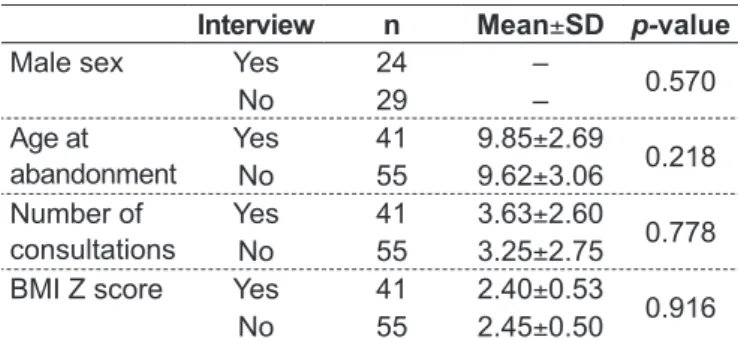
Table 1 - Characteristics of the 96 patients who abandoned
treatment according to whether they were interviewed or not
Interview n Mean±SD p-value
Male sex Yes 24 –
0.570
No 29 –
Age at abandonment
Yes 41 9.85±2.69
0.218
No 55 9.62±3.06
Number of consultations
Yes 41 3.63±2.60
0.778
No 55 3.25±2.75
BMI Z score Yes 41 2.40±0.53
0.916
No 55 2.45±0.50
BMI: body mass index; SD: standard deviation
Table 2 - Reports of the 41 parents about reasons for treatment
abandonment
Reasons n (%)
Dificulty adjusting schedules of consultations
with activities of parents and patients
12 (29.3)
Refusal to return to treatment by children (rebellion, dissatisfaction)
12 (29.3)
Unsuccessful Treatment (they could not lose weight)
7 (17.0)
Performance of new treatment at another health service
5 (12.2)
Dificulty in scheduling a return
appointment
3 (7.3)
Long waiting hours 2 (4.9)
Table 3 - Exploratory questions to determine possible reasons
for non-compliance to treatment, answered by the 41 parents in telephone interviews
Interviewees n %
Origin Campinas 12 29.3
*Distance<50km 18 43.9
*Distance>50km 11 26.8
Type of transport Municipal health 21 51.2
Own car 10 24.4
Bus 10 24.4
Transportation cost >R$ 20,00 14 34.2
Time of transportation >30 minutes 36 87.9
Kind of service Individual 41 100
Group 13 31.7
Treatment after abandonment
Yes 12 29.2
No 29 70.7
Success in new treatment
Yes 4 9.8
No 8 19.5
Perception of current weight and during treatment
Increase 15 36.6
Decrease 15 36.6
No change 10 24.4
Related disorders No 8 19.5
Emotional 26 78.8
Fatigue 8 24.2
Pain 5 15.1
Dificulty getting
dressed
5 15.1
Knowledge of complications
Heart 40 97.6
Esthetical 37 90.2
Psychological 37 90.2
Obesity in adulthood
37 90.2
Diabetes 35 85.4
Cancer 14 34.1
with regard to what led the son to abandon the treatment, inancial and structural dificulties (distance and transporta-tion costs), relatransporta-tionship with professionals working at the outpatient clinic, participation in group care, dietary and physical activity guidelines, advances regarding obesity, continuity of treatment, related disorders, and knowledge about the complications of the disease.
All data were computed on a medical record and analyzed by the Statistical Package for the Social Sciences(SPSS) pro-gram, version 13.0. The study was approved by the Research Ethics Committee of Unicamp, under opinion n. 555/2010.
Results
Among selected patients and interviewed patients, there was no statistically signiicant difference regarding sex, age at abandonment, number of consultations performed, and Z score for body mass index (BMI) (Table 1). Parents were questioned, and 32 (78.1%) interviews were performed with mothers, six (14.6%) with the father, two (4.9%) with the grandmother and one (2.4%) with both parents. On average, there were 3.6 years after abandonment of treatment and the mean age of the patients was 14.0 years.
The reasons for abandonment — including dificulty adjusting scheduled appointments of parents and patients (29.3%) and refusal of children to returning to treatment, such as rebellion, dissatisfaction, etc. (29.3%) — are de-scribed in Table 2.
The assessment of the structural and inancial dificulties (distance and cost of transportation), the type of care, the evolution regarding the treatment and obesity, the related disorders and knowledge of complications of the disease are described in Table 3.
None of the respondents reported relationship prob-lems with the staff at the outpatient clinic. Among the respondents, 34.1% said they participated in group care, and, of these, 35.7% considered it excellent, 42.9%, good, and 21.3%, bad.
Regarding dietary guidelines, 80.5% reported having received guidance from a nutritionist. Among these, 12.2% presented dificulty in understanding it; however, most of them reported that the main dificulty was to follow it. Among the dificulties, parents mentioned that they could not deny food to their children and that they had no control over what the kids ate, since they worked during the day and had inancial dificulties to purchase appropriate foods to follow the diet. Most parents of
children who followed the diet mentioned that, after the interruption, there was weight gain.
Regarding physical activities, 61% of respondents received speciic guidance from a physical educator. Among these, 55.9% reported some kind of dificulty for implementation of activities; and among the most cited reasons are: inancial dificulty to perform the recommended activity, such as swim-ming and gym; time limitation of children and parents, associ-ated to the lack of public safety and the patients’ own physical limitations due to obesity. In the period of follow-up, 17.9% did not practice any kind of physical exercise, 5.1% practiced only once a week, 23.1%, twice a week, 28.2%, three, 5.1%, four, 7.7%, ive and 12.8%, seven times a weeks. On the date of the interview, 24.4% said they did not practice any kind of physical exercise, 7.3% practiced physical education only once a week, 19.5%, twice a week, 7.3%, three times a week, 12.2%, four, 17.1%, ive and 12.2%, seven times a week.
It was also observed that 85.4% of individuals were still overweight, and 36.6% had gained weight since treatment abandonment, 36.6% lost weight, and, 24.4%, had no change.
Among the respondents, 29.2% started treatment else-where. Among these, 49.8% started treatment at Health Centers, 24.9%, in private practices and 16.7%, in another hospital. Among patients who initiated new monitoring, 66.5% said they were not successful.
Regarding the dificulties that obesity causes to their chil-dren, eight (19.5%) parents denied this problem. Among the other 33 patients, 26 (78.8%) reported emotional disorders such as bullying, anxiety, and irritability; eight (24.2%), tiredness; ive (15.1%), dificulties in getting dressed, and ive (15.1%) reported pain, especially osteoarticular.
Regarding the risk of morbidities related to obesity, 97.6% of respondents knew the association of the disease with heart problems, 90.2%, with psychological dificulties, 90.2%, with esthetic changes, 90.2%, with permanence of obesity in adult life, 85.4%, with diabetes, and 31.4%, with cancer.
Discussion
The Clinic of Obesity in Children and Adolescents at Hospital das Clínicas da Unicamp aims to act through inter-ventions that raise awareness of patients and their families on the risks of the disease and its consequences, besides offering treatment for complications arising from obesity, nutritional guidelines, and encouraging increased physical activity(12,13).
of professors and irst-year residents in Pediatrics, as well as nutritionist, physical educator, psychologist, and physio-therapist, according to what the literature recommends(14,15).
The patients are monitored once a week, and seven to ten patients are assisted per day. However, a previous study with patients in the same clinic found abandonment of follow-up in 43%, with no statistically signiicant differences between age, sex, age of onset, Z score for weight, height, and BMI, or laboratory indings that justify this attitude(13).
In interviews with the patients, it was veriied that the reasons for abandonment are related mainly to the dificulty in adapting the schedules of consultations to the activities of patients and parents, the refusal to perform treatment by the children, dissatisfaction with the results, and, in a smaller number, to the change of monitoring site, dificulty in sched-uling return appointments, and long waiting time for consul-tations. These data are similar to other indings that obtained as causes of abandonment the focus of treatment, distance, and scheduling conlicts(16,17). A Canadian study reported physical
barriers, of clinical organization and the educational program as factors related to the interruption of follow-up(18).
In this study, among the structural dificulties, stand out: distance, time spent, and cost. Most interviewees were not from the municipality of Campinas, with approximately 40% living in distant cities located more than 50km from the municipality. The distance between the house and the site of care was also mentioned as a barrier in other studies(19,20). In this research, the
transportation time between home and the site of care, in most patients, was longer than 1 hour. Furthermore, as approximately 50% used municipal health transport, this meant spending the whole day at the hospital. This delay creates dificulty adjusting the schedules of consultations with activities of patients and parents, as observed in other studies(21). For those who spend all
day at the hospital, there is an increase in the cost of food. A simi-lar study showed that 25% of patients abandoned treatment of obesity due to the time and dificulty adjusting the times of consultation and activities of patients and parents, 27.9% due to missing school, 23.3% because of the distance, and 10.3% because of the costs(16).
Approximately 30% of respondents participated in the group care. This form of assessment has lower dropout rates, according to data from Minniti etal(22). Interestingly, none
of the respondents mentioned relationship problems with the clinic staff, unlike a study, which noted dissatisfaction with the team and with the focus of treatment(16).
In nutritional counseling, few patients reported dificul-ties in understanding it, but most have trouble doing it. It
was found that parents have problems for controlling the child’s diet, either due to inancial dificulties for the pur-chase of recommended foods, or because most parents work and can not control the child’s diet, besides the dificulty in denying food to the child. These factors have also been reported by other authors(23).
Regarding physical activity, it is clear that, after the abandonment of treatment, there was an increase in the number of patients who did not practice any kind of physi-cal exercise. In addition, most reported some dificulty in doing it. Among the obstacles, inancial hardship to provide appropriate treatment, little time availability of parents to supervise their children, and unsafe neighborhoods, as mentioned in other investigations(24-26).
Interestingly, 29.3% sought a new place for treatment after the abandonment, but only 12.2% mentioned this justiica-tion. Furthermore, most patients who looked for a new service declared unsuccessful treatment as a justiication, which may lead to the hypothesis that the abandonment occurs due to multiple social causes that discourage follow-up(16-18,26).
Besides structural factors, in this study there were cases of abandonment due to rebellion and dissatisfaction, besides lack of success in the treatment. As the result is not immedi-ate, on the contrary, weight loss occurs in the long term, this may discourage the patient(23,27). The dissatisfaction of the
child may inluence the parents and guardians who often feel frustrated, ashamed, and guilty, because they do not know how to help their children lose weight(5). Regardless of the
response to treatment, 85.4% of the parents consider that their children are overweight and, even if there was some weight loss during the treatment, they start gaining weight again after the abandonment. According to the literature, only 5% of adolescents who lose weight manage to keep it after 5 years of treatment(27), justifying one of the dificulties of monitoring.
As in other studies, it was observed that most parents recognize the dificulties that obesity causes, emphasizing the emotional aspect, reporting relationship problems with friends and family, as well as in daily activities (fatigue and pain), pejorative nicknames that affect self-esteem, bullying, irritability, and dificulty in getting dressed(5,6,23,28). These
problems may lead to marginalization of the child and adolescent, taking them away from recommended physical activities and increasing their time in front of the television, videogame, and computer. The psychological complica-tions, though frequent, are dificult to characterize and it is argued whether they are causes or consequences of obesity(5).
References
1. Wang Y, Monteiro CA, Popkin BM. Trends of obesity and underweight in older children and adolescents in the United States, Brazil, China, and Russia. Am J Clin Nutr 2002;75:971-7.
2. World Health Organization. WHO forum and technical meeting on population-based prevention strategies for childhood obesity. Geneva: WHO; 2009. 3. Brasil. Ministério do Planejamento, Orçamento e Gestão. Instituto Brasileiro
de Geograia e Estatística. Diretoria de pesquisas. Coordenação de trabalho e rendimento. Pesquisa de orçamentos familiares 2008-2009: antropometria e estado nutricional de crianças, adolescentes e adultos no Brasil. Rio de Janeiro: IBGE; 2010.
4. Daniels SR. The consequences of childhood overweight and obesity. Future Child 2006;16:47-67.
5. Warder Wal JS, Mitchell ER. Psychological complications of pediatric obesity. Pediatr Clin North Am 2011;58:1393-401.
6. Porter JS, Bean MK, Gerke CK, Stern M. Psychosocial factors and perspectives on weight gain and barriers to weight loss among adolescents enrolled in obesity treatment. J Clin Psychol Med Settings 2010;17:98-102.
7. Daniels SR. Complications of obesity in children and adolescents. Int J Obes (Lond) 2009;33 (Suppl 1):S60-5.
8. Ferreira JS, Aydos RD. Prevalence of hypertension among obese children and adolescents. Cienc Saude Coletiva 2010;15:97-104.
9. Sociedade Brasileira de Cardiologia. VI Diretrizes Brasileiras de Hipertensão. Rev Bras Hipertens 2010;17:1-64.
10. Mitka M. Programs to reduce childhood obesity seem to work, say Cochrane reviewers. JAMA 2012;307:444-5.
11. Lenders CM, Gorman K, Lim-Miller A, Puklin S, Pratt J. Practical approaches to the treatment of severe pediatric obesity. Pediatr Clin North Am 2011;58:1425-38.
12. Waters E, de Silva-Sanigorski A, Hall BJ, Brown T, Campbell KJ, Gao Y et al. Interventions for preventing obesity in children. Cochrane Database Syst Rev 2011:CD001871.
13. Zambon MP, Antônio MA, Mendes RT, Barros Filho AA. Obese children and adolescents: two years of interdisciplinary follow-up. Rev Paul Pediatr 2008;26:130-5.
14. Sociedade Brasileira de Pediatria [homepage on the Internet]. Obesidade na infância e adolescência: manual de Orientação. Departamento de Nutrologia. Rio de Janeiro: SBP; 2012 [cited 2013 Jun 4]. Available from: http://www.sbp. com.br/PDFs/Man%20Nutrologia_Obsidade.pdf
15. Barlow SE; Expert Committee. Expert Committee recommendations regarding the prevention, assessment, and treatment of child and adolescent overweight and obesity: summary report. Pediatrics 2007;120:S164-92.
16. Barlow SE, Ohlemeyer CL. Parent reasons for nonreturn to a pediatric weight management program. Clin Pediatr (Phila) 2006;45:355-60.
17. Moroshko I, Brennan L, O’Brien P. Predictors of dropout in weight loss interventions: a systematic review of the literature. Obes Rev 2011;12:912-34. 18. Kitscha CE, Brunet K, Farmer A, Mager DR. Reasons for non-return to a
pediatric weight management program. Can J Diet Pract Res 2009;70:89-94. 19. Lara MD, Baker MT, Larson CJ, Mathiason MA, Lambert PJ, Kothari SN.
Travel distance, age, and sex as factors in follow-up visit compliance in the post-gastric by pass population. Surg Obes Relat Dis 2004;1:17-21. 20. Sivagnanam P, Rhodes M. The importance of follow-up and distance from
centre in weight loss after laparoscopic adjustable gastric banding. Surg Endosc2010;24:2432-8.
21. Stewart L, Chapple J, Hughes AR, Poustie V, Reilly JJ. Parents’ journey through treatment for their child’s obesity: a qualitative study. Arch Dis Child 2008;93:35-9.
22. Minniti A, Bissoli L, Di Francesco V, Fantin F, Mandragona R, Olivieri M et al. Individual versus group therapy for obesity: comparison of dropout rate and treatment outcome. Eat Weight Disord 2007;12:161-7.
23. Venturini LP. Obesidade e família – Uma caracterização de famílias de crianças obesas e a percepção dos familiares e das crianças de sua imagem corporal [tese de mestrado]. Ribeirão Preto (SP): USP; 2000.
24. Keeton VF, Kennedy C. Update on physical activity including special needs populations. Curr Opin Pediatr 2009;21:262-8.
25. Palma A. Atividade física, processo saúde-doença e condições sócio-econômicas: uma revisão da literatura. Rev Paul Educ Fis 2000;14:97-106. 26. Skelton JA, Beech BM. Attrition in paediatric weight management: a review
of the literature and new directions. Obes Rev 2011;12:e273-81. 27. Muller RC. Obesidade na adolescência. Pediatr Mod 2001;37:45-8. 28. Lee YS. Consequences of childhood obesity. Ann Acad Med Singapore
2009;38:75-7.
29. Skelton JA, Beech BM. Attrition in paediatric weight management: a review of the literature and new directions. Obes Rev 2011;12:e273-81.
30. Skelton JA, DeMattia LG, Flores G. A pediatric weight management program for high-risk populations: a preliminary analysis. Obesity (Silver Spring) 2008;16:1698-701.
more often, but are also those with higher rates of failure in weight loss and treatment abandonment(5,6). Therefore,
psychological counseling is recommended, because it is a factor that inluences response to the treatment of obesity(5,6).
Parents also have information regarding clinical complica-tions: cardiac risks, metabolic risks, and even higher risk of cancer. It is interesting to note that his knowledge did not generate stimulus for continuing the treatment. Therefore, the structural and psychological dificulties seem more in-luential on treatment adherence or abandonment(23).
The present study, even with the small number of patients assessed, due to the dificulty of contact (approximately half of those selected) and the large interval of time for the interview, pointed out the main reasons for abandonment. Therefore, further and larger studies should be conducted. Despite this limitation, it was observed that the parents are aware that obesity is a disease, with its comorbidities, but
there are physical and economic barriers that hinder changes in lifestyle, as observed in another study(29). Psychological
changes are relevant and recognized, which can be associated to the abandonment by dissatisfaction and rebellion and to the search for “magic solutions.”
The decrease in the prevalence of obesity has achieved little success in developing and developed countries, de-spite the large increase in speciic programs and studies for this purpose. With data from this survey, it can be suggested that the locations for weight control programs be easier to access, and dietary guidelines and physical activities be adaptable to family socioeconomic condi-tions(11,30), along with the assessment of emotional aspects.