AR
TICLE
1 Centro de Ciências Biológicas e da Saúde, Universidade Estadual de Montes Claros. Av. Rui Braga, Vila Mauricéia. 39401-089 Montes Claros MG Brasil.
Factors associated with Chronic Obstructive Pulmonary Disease
among the elderly
Abstract This study aimed to identify factors associated with Chronic Obstructive Pulmonary Disease (COPD) among non-institutionalized elderly people. It involved a cross-sectional study conducted on the basis of a household survey, followed by spirometry. People diagnosed with COPD were compared with those with normal spirometry, through bivariate analysis, followed by multivariate regression analysis. We identi-fied 53 elderly people were identiidenti-fied with COPD. After multivariate analysis, the following factors associated with COPD were identified: past or current smoking (OR: 3.74; 95% CI: 1.65-8.46), presence of chronic sputum (OR: 4.92; 95% CI: 2.03-11.95), pulse oximetry at rest ≤ 90% (OR: 8.74; 95%CI: 1.27-60.07), self-reported asthma (OR: 3.41; 95% CI: 1.01-11.57). The results re-veal associated factors that highlight the need to review the selection criteria for patients at risk of COPD among the elderly.
Key words Chronic Obstructive Pulmonary
Dis-ease, Elderly, Risk factors
Ana Teresa Fernandes Barbosa 1
Jair Almeida Carneiro 1
Gizele Carmen Fagundes Ramos 1
Maísa Tavares Leite 1
B
ar
b
osa A
Introduction
Chronic Obstructive Pulmonary Disease (COPD) is known worldwide as a common cause of mor-bidity and mortality1. The clinical picture in the
initial phases show the symptoms being attribut-ed to smoking in which cough and the presence of chronic sputum is common, which makes it necessary to obtain a diagnosis by establishing a correlation with the presence of an obstruction to the air flow using the spirometry2-4. Wheezing
and tightness of the chest are unspecific symp-toms and they can vary throughout the day being more common in the elderly and in periods of exacerbated infections1.
In Latin America, some studies describe the important prevalence of the illness and reiterat-ed the importance of identifying the associatreiterat-ed risk factors, making reference to sub-diagnosis5-7.
Amongst these risk factors classically discussed as associated with COPD, is that which has been highlighted namely smoking (being current or in the past) and the exposure to smoke such as from a wood stoves and coal1,8.
It is important to highlight that, many times, the diseases’ symptoms are not given value and show a progressive gravity of the obstruction of the air flow which can be determined by the mea-surement known as the spirometry test from the final expiratory volume forced in the first second of the post-bronchodilator (VEF1%-PBD)9. For
the elderly, other factors are also cited as possi-ble complicators and thus increase the mortality chances associated with COPD. These are a per-son’s nutritional state, the reduced capacity to carry out physical exercise and the presence of a chronic diseases such as osteoporosis, cardiovas-cular diseases, diabetes mellitus and depression2.
It is important to highlight that even if in the population of elderly people the presence of car-diovascular alteration, osteoarticular and neuro-logical problems can become sub-clinical COPD symptoms as a consequence of the limitations in physical activities or can overlap in relation to similar symptoms, this can be the case for oth-er chronic diseases. Facing the sub-diagnosis of the COPD in an elderly person, the need for new studies for this group was highlighted2.
The works published in Brazil on COPD were carried out in the capitals and cities with popula-tions of over 500,000 inhabitants7,10. There is not
much data on COPD in the country’s inner states. The northern region of Minas Gerais showed socio-demographic characteristics and cultural ones that contain risk factors for COPD as the use of domestic wood stoves11 and a population with
many elderly people, since age is a risk factor con-nected to COPD1. In the face of the particularities
in the diagnostics of COPD in elderly people, this study had the objective of identifying the factors associated with COPD in non-institutionalized elderly people being a population based study in a city that is a part of a wider region.
Methods
This was a transversal study where the partici-pants were selected randomly based on a house-hold epidemiological survey which was a part of a study on the health conditions of elderly people in Minas Gerais.
The selection of the individuals was conduct-ed inside of a wider analysis of the health condi-tions of elderly people in the municipality. In the initial stage the selection was a random sample in two stages. In the first stage, we used a unit sam-ple from a census area where we randomly select-ed 42 census areas amongst 362 urban sectors in the municipality. In the second stage, we set the number of households to be used according to the population density of individuals aged ≥ 60 years. In this stage the calculation of the number of households to be in the random selection was done based on the expected average of elderly people per household (ratio people/household), in other words, the sectors with higher numbers of older people had more households allocat-ed which creatallocat-ed a more representative sample. Older people whose carers/family members con-sidered them to be unable to fill in the question-naire form in the study, were excluded.
For the interview, a form was used with in-strumental questions that had been previously validated10,12 and that was applied by the team
made up of three nurses especially trained with the aim of identifying the individuals that filled the selection criteria: 60 or older, smoking or ex-posure to smoke with a cough affecting the respi-ratory system, wheeziness or dyspnea.
Were identified 403 elderly people based on the aforementioned criteria from a sample that had 686 elderly people and all of them were in-vited to appear at the specialist outpatient unit to evaluate their pulmonary function and the collection of anthropometric data and oximetry pulse data. From the spirometry exams that were conducted, the elderly with or without COPD were identified.
The spirometry test was conducted with the device that was duly calibrated (KoKo®) by
aúd
e C
ole
tiv
a,
22(1):63-73,
2017
to follow the standards from the Brazilian Society for Pneumology and Tisiology13 and it was done
by an experienced pulmonologist. All the patients were submitted to the bronchodilator test using the criteria for the definition of fixed obstruction with the presence of a list covering Forced Expi-ratory Volume in the first second divided by the Force Vital Capacity (VEF1/CVF) being below the lesser limit of normalcy after the use of the bron-chodilator and having as a reference, data from the Brazilian population13. The oximetry in rest
test was conducted with the pulse oximetry device that is portable (Onyx II® values9550; Nonin Medi-cal, Inc., Plymouth, MN, USA) and that was put on the indicator finger for 5 minutes for the stabiliza-tion of the sensor and the measurement was noted down before the use of the spirometry. None of the patients used supplements for oxygen.
Socio-demographic data was collected as well as the following information: the presence of re-spiratory symptoms such as coughing, wheezi-ness, chronic sputum without having a cold or dyspneia, in addition to information on the loss of weight (yes x no) annual flu vaccines (yes x no), the use of more than 5 medications or polyphar-macy (yes x no), self-perception of health state (Really bad, bad, Regular x Very good, good), the presence of depression measured by the Geriatric Depression Scale the reduced version Geriatric Depression Scale or GDS-5 (presence x absent), reports on been hospitalized in the last year (yes x no), the carrying out of the spirometry test previously (yes x no), the category of health ser-vice that is most used (the Brazil Nation Health Service x private health care), self-perception of systematic arterial hypertension, diabetes melli-tus, osteoporosis, asthma and Arthritis / Osteoar-thritis, smoking (smoker and ex-smoker x never smoked), exposure to smoke from wood stove, coal, burning grass / straw or corn cob (yes x np) and pulse oximetry in rest (SatO2 ≤ 90% x SatO2 > 90%). The quantified load of the cumulative exposure in relation to smoking was estimated using the relation between age\pack of cigarettes (the number of cigarettes smoked per day multi-plied by the number of years that the person has smoked for divided by 20). The load of exposure to smoke from wood stoves was calculated using the number of years of contact with wood fire smoke multiplied by the number of hours of dai-ly exposure (hours\years).
The age of the elderly was described by means and standard deviation The categorical variables or the categorized were described by the distribution of frequencies, absolutes and relative distributions. Bivariate analysis was conducted to check for any
associations between the independent variables and the variable outcomes (COPD confirmed by the spirometry χ2) through the chi-squared test (χ2).
In the final analysis of the associated factors the multiple regression model was used and the variables that presented descriptive levels from up to 25% (p < 0.25) in the bivariate analysis was included in this step. For the multiple regres-sion model, the procedure known as Backward stepwise was adopted and what remained in the final model was just the variables that showed descriptive levels of up to 5% (p < 0.05) register-ing the Odds Ratios and the respective intervals of confidence as 95%. To evaluate the quality of the adjustment of the model, the Hosmer & Le-meshow and the Pseudo-R2 test was used. All of
the analysis was conducted using the statistical program Statistical Package for the Social Scienc-es- 18.0 (SPSS Inc., Chicago, IL, USA).
All of the steps of the study followed the ethical principles for research on human beings pursuant to Resolution 466/2012 of the National Council for Health. The study was approved by the Ethics Committee on Research at the insti-tution where the research took place. The partic-ipants filled in and signed a consent form when being recruited to take part. Those that were unable to or did not know how to sign the form agreed to participate in the research through the registering of a finger print.
Results
Out of the 403 elderly that met the criteria for conducting the spirometry test, 203 turned up. Amongst these, three did not consent to the car-rying out of the exam after the procedure was ex-plained. One case was excluded because the person had asthma (with a diagnosis after the spirometry test) and 20 were excluded for not managing to reach the acceptable and reproductive curves on the spirometry. The analysis of the data was com-pleted consequently with a total of 179 elderly.
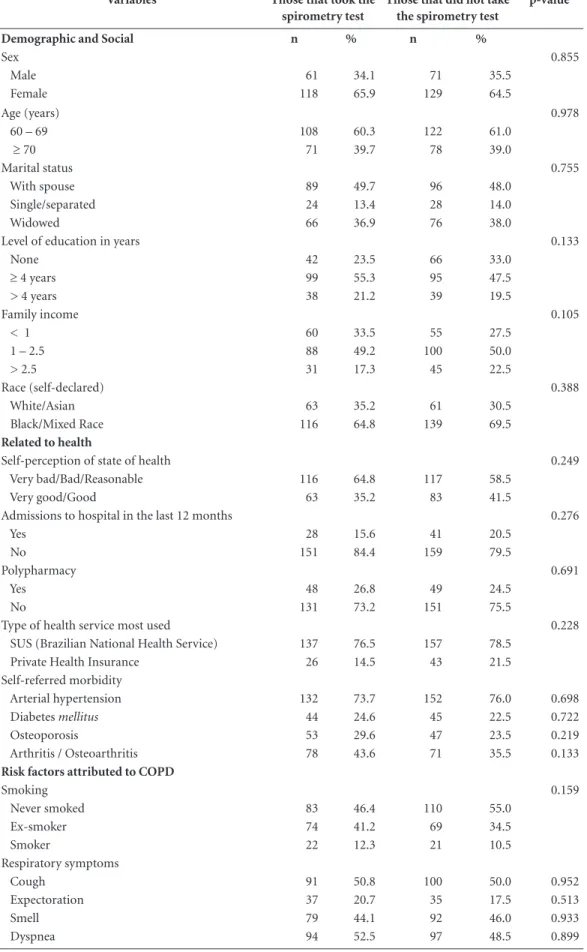
Table 1 shows a comparison between de-mographic and social variables related to health and problems related to the respiratory system amongst patients that turned up for the spirom-etry test and those that did not take up the invi-tation. No significant differences were registered between the frequencies of the evaluated variables compared through the chi-squared test (p > 0.05).
sec-B
ar
b
osa A
Table 1. Characteristics of the elderly in communities based on taking the spirometry test, 2014.
Variables Those that took the
spirometry test
Those that did not take the spirometry test
p-value
Demographic and Social n % n %
Sex 0.855
Male 61 34.1 71 35.5
Female 118 65.9 129 64.5
Age (years) 0.978
60 – 69 108 60.3 122 61.0
≥ 70 71 39.7 78 39.0
Marital status 0.755
With spouse 89 49.7 96 48.0
Single/separated 24 13.4 28 14.0
Widowed 66 36.9 76 38.0
Level of education in years 0.133
None 42 23.5 66 33.0
≥ 4 years 99 55.3 95 47.5
> 4 years 38 21.2 39 19.5
Family income 0.105
< 1 60 33.5 55 27.5
1 – 2.5 88 49.2 100 50.0
> 2.5 31 17.3 45 22.5
Race (self-declared) 0.388
White/Asian 63 35.2 61 30.5
Black/Mixed Race 116 64.8 139 69.5
Related to health
Self-perception of state of health 0.249
Very bad/Bad/Reasonable 116 64.8 117 58.5
Very good/Good 63 35.2 83 41.5
Admissions to hospital in the last 12 months 0.276
Yes 28 15.6 41 20.5
No 151 84.4 159 79.5
Polypharmacy 0.691
Yes 48 26.8 49 24.5
No 131 73.2 151 75.5
Type of health service most used 0.228
SUS (Brazilian National Health Service) 137 76.5 157 78.5 Private Health Insurance 26 14.5 43 21.5 Self-referred morbidity
Arterial hypertension 132 73.7 152 76.0 0.698
Diabetes mellitus 44 24.6 45 22.5 0.722
Osteoporosis 53 29.6 47 23.5 0.219
Arthritis / Osteoarthritis 78 43.6 71 35.5 0.133
Risk factors attributed to COPD
Smoking 0.159
Never smoked 83 46.4 110 55.0
Ex-smoker 74 41.2 69 34.5
Smoker 22 12.3 21 10.5
Respiratory symptoms
Cough 91 50.8 100 50.0 0.952
Expectoration 37 20.7 35 17.5 0.513
Smell 79 44.1 92 46.0 0.933
aúd
e C
ole
tiv
a,
22(1):63-73,
2017
ond divided by the forced vital capacity (VEF1\ CVF) below the lower limit of normality13. The
rest of the elderly that carried out the spirometry test did not show obstructive alterations.
Table 2 shows the specific bivariate analysis for the group that carried out the spirometry test, comparing people with and without COPD in relation to socio-demographic variables. The average age in the group was 69.2 years old (DP ± 7,1) varying from 60 to 93 years old, with the ma-jority being female. There was a predominance of people being black or mixed race with 58.5% in the COPD being one of the aforementioned and 67.5% in the group with an illness falling into one of the above. The majority of the population stated that they had fewer than four years’ worth of formal education (78.8%) and approximate-ly a quarter were illiterate. With reference to the economic conditions, 53.6% received a pension and stated that they had a family income of be-tween 1 to 2.5 minimum salaries (49.2%).
Table 3 shows the bivariate analysis for the health conditions amongst those with and with-out COPD. It was registered that the majority of the older people had a negative perception on their health. The polypharmacy was referred to by 26.8% of the respondents. The majority of those studied received annual flu vaccines. Approxi-mately 94% had at least one doctor’s appointment in the last year and about 15% stated that they had been admitted to hospital in the 12 months preceding the study. The morbidity that was most referred to by both the group with COPD and the one without CPOD was arterial hypertension.
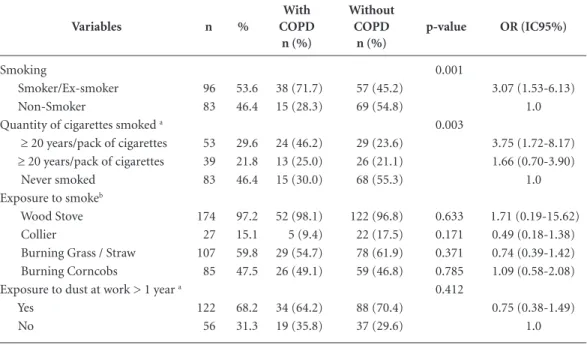
Table 4 shows the results of the associations based on the bivariate analysis for the researched signs and symptoms including the pulse oxime-try, and Table 5 shows the same analysis referring to smoking and the exposure to smoke and dust. After the multi-variate analysis, we observed associations with the following factors with the group with COPD: past and current
smok-Table 2. Socio-demographic data on elderly people non-institutionalized with or without COPD (Bivariate
Analysis).
Variables
n %
With COPD
n (%)
Without COPD
n (%)
p-value OR (IC95%)
Sex 0.001
Male 61 34.1 28 (52.8) 33 (26.2) 3.16 (1.62-6.17)
Female 118 65.9 25 (47.2) 93 (73.8) 1.0
Age (years) 0.096
≥ 70 71 39.7 26 (49.1) 45 (35.7) 1.73 (0.91 - 3.21) 60 – 69 108 60.3 27 (50.9) 81 (64.3) 1.0
Marital status 0.012
With spouse 89 49.7 34 (64.2) 55 (43.7) 2.31 (1.19-4.48) With spouse 90 50.3 19 (35.8) 71 (56.3) 1.0
Literate 0.169
No 42 23.5 16 (30.2) 26 (20.6) 1.66 (0.80-3.45) Yes 137 76.5 37(69.8) 100 (79.4) 1.0
Level of education in years 0.616
≥ 4 years 141 78.8 43 (81.1) 98 (77.8) 0.61 (0.32-1.17) > 4 years 38 21.2 10 (18.9) 28 (22.2) 1.0
Retired 0.133
Yes 96 53.6 33 (62.3) 63 (50) 1.22 (0.59-2.49)
No 83 46.4 20 (37.7) 63 (50) 1.0
Family Income (in minimum salary)* 0.995
< 1 60 33.5 18 (34.0) 42 (33.3) 0.98 (0.39-2.40) 1 – 2.5 88 49.2 26 (49.1) 62 (49.2) 0.95 (0.37-2.47)
> 2.5 31 17.3 9 (17.0) 22 (17.5) 1.0
Race 0.251
White/Asian 63 35.2 22 (41.5) 41 (32.5) 1.47 (0.76-2.85) Black/Mixed Race 116 64.8 31 (58.5) 85 (67.5) 1.0
B
ar
b
osa A
ing (OR:3.74; IC95%:1,65-8,46; p = 0,002), the presence of chronic sputum as a respirato-ry symptom (OR:4,92; IC95%:2,03-11,95 p < 0,001)), pulse oximetry in rest ≤ 90% (OR:8,74; IC95%:1,27-60,07 p = 0,028) and self-report asthma (OR:3,40; IC95%:1,00-11,57; p = 0,05). The dyspnea account showed neighboring values in the final model (OR = 2,11; IC95% = 0,95-4,69;p = 0,066). The Hosmer and Lemeshow test (χ2 HL) with p-valor = 0.526; Pseudo-R2 = 0.306; -2logv = 174.04 was shown.
Discussion
The results of this work showed the need for the revision of the selection criteria for the patients at risk of COPD amongst the elderly people. This is in light of the fact that we identified, as factors associated with COPD in the elderly, the presence of habitual smoking that was current and had oc-curred in the past. We also noted the presence of chronic sputum as a respiratory symptom as well as self-diagnosed asthma and the saturation pres-ence of ≤ 90% for pulse oximetry at rest.
Table 3. Characteristics related to the health amongst elderly people non-institutionalized with or without
COPD (Bivariate Analysis).
Variables With
COPD
Without
COPD p-value OR (IC95%)
n % n (%) n (%)
Self-perception of state of health 0.571
Very bad/Bad/Reasonable 116 64.8 36 (67.9) 80 (63.5) 1.22 (0.62-0.41) Very good/Good 63 35.2 17 (32.1) 46 (36.5) 1.0 Admissions to hospital in the last 12
months
0.749
Yes 28 15.6 9 (17.0) 19 (15.1) 1.15 (0.48-2.74) No 151 84.4 44 (83.0) 107 (84.9) 1.0 Use of antibiotics (in the last year) 0.030
Yes 10 5.6 6 (11.3) 4 (3.2) 3.89 (1.05-4.42) No 169 94.4 47 (88.7) 122 (96.8) 1.0
Previous Spirometry Test 0.740
Yes 40 22.3 11 (20.8) 29 (23.0) 1.14 (0.52-2.49) No 139 77.7 42 (79.2) 97 (77.0) 1.0
Polypharmacy 0.771
Yes 48 26.8 15 (28.3) 33 (26.2) 1.11 (0.54-2.28) No 131 73.2 38 (71.7) 93 (73.8) 1.0
Annual flu vaccine 0.546
No 45 25.1 15 (28.3) 30 (24.0) 0.80 (0.39-1.65) Yes 133 74.3 38 (71.7) 95 (76.0) 1.0 Doctors appointment in the last year 0.459
No 10 5.6 4 (7.5) 6 (4.8) 1.63 (0.44-6.03)
Yes 169 94.4 49 (92.5) 120 (95.2) 1.0 Type of health service most used* 0.021
SUS (Brazilian National Health Service) 137 76.5 47 (94) 90 (79.6) 4.00 (1.14-14.03) Private Health Insurance 26 14.5 3 (6.0) 23 (20.4) 1.0 Self-referred morbidity
Arterial hypertension 132 73.7 37 (69.8) 95 (75.4) 0.438 0.75 (0.37-1.54) Diabetes mellitus 44 24.6 11 (20.8) 32 (25.4) 0.507 0.77 (0.35-1.67) Osteoporosis 53 29.6 13 (26.0) 40 (32.5) 0.399 0.73 (0.35-1.52) Asthma 20 11.2 13 (24.5) 7 (5.6) 0.000 5.53 (2.06-14.81) Arthritis / Osteoarthritis 78 43.6 17 (33.3) 61 (49.2) 0.055 0.52 (0.26-1.02) Depressive symptoms 53 29.6 18 (34.0) 35 (37.8) 0.408 1.34 (0.67-2.66)
aúd
e C
ole
tiv
a,
22(1):63-73,
2017
The study which was conducted in São Paulo showed, after the analysis was adjusted, that the following factors independently were associated with COPD: smoking, becoming tired very eas-ily, being over the age of 60, health problems in the last 15 days and a lack of physical activity in their free time14. However, the study that was
re-ferred to, covered self-diagnosed COPD which represents an important limitation for the con-dition which is not well known by the general population5,15. Some authors highlight that even
amongst health care professionals COPD is not well known. There are often inaccuracies in differ-ential diagnosis between asthma and COPD7,15,16.
It is worth mentioning that even though this study adopted the diagnosis of COPD according to the lower limit of normality in relation to the spirometry exam, after using the bronchodilator it had as a reference the data on the Brazilian popu-lation. The use of the lower limit of normality for specific populations has tended to be the criteria adopted internationally in order to avoid the ex-cess of false diagnosis for the elderly population17.
In the study evaluating the prevalence and associated factors which was also conducted in Brazil, the authors highlighted that COPD was positively associated with age and smoking and inversely with a person’s body mass index18.
In a recent study that compared the preva-lence of asthma and COPD in the United States in intervals greater than ten years, the authors highlighted that there still remained, as factors associated with COPD, smoking, low levels of ed-ucation, nutritional disorders and the exposure to dust and occupational smoke19.
Therefore, smoking is indicated in all stud-ies as a factor closely associated with COPD and it represents an important problem in public health care1,20. A study conducted in some
re-gions of Latin America identified the greatest prevalence of COPD associated with the high-est levels of smoking21. The intensity of smoking
and the persistence of the habit even after the diagnosis, showed direct relations with mortali-ty rates from COPD22. The stopping of smoking
is described as the most effective intervention in the reduction of the development of pulmonary problems increasing the chances of survival and reducing morbidity23. This study found
associa-tions amongst current and past smoking habits with the presence COPD in elderly as described in the literature7,10,11,22,23 without there being
ev-idence associated with the smoking burden in the group with COPD which might be related to memory limitations since the studied public was older people.
Table 4. Respiratory signs and pulse oximetry in rest amongst elderly people non-institutionalized with or
without COPD (Bivariate Analysis).
Variables n %
With COPD
n (%)
Without COPD
n (%)
p-value OR (IC95%)
Cough 0.184
Yes 91 50.8 31(58.5) 60 (47.6) 1.54 (0.81-2.97) No 88 49.2 22(41.5) 66 (52.4) 1.0
Lack of air 0.090
Yes 94 52.5 33(62.3) 61 (48.4) 1.76 (0.91-3.39) No 85 47.5 20(37.7) 65 (51.6) 1.0
Wheeziness 0.029
Yes 79 44.1 30(56.6) 49 (38.9) 2.05 (1.07-3.93) No 100 55.9 23(43.4) 77 (61.1) 1.0
Expectoration 0.000
Yes 37 20.7 21(39.6) 16 (12.7) 4.51 (2.11-9.65) No 142 79.3 32(60.4) 110 (87.3) 1.0
Loss of weight 0.994
Yes 71 39.7 21(39.6) 50 (39.7) 0.99 (0.52-1.92) No 108 60.3 32(60.4) 76 (60.3) 1.0
Pulse Oximetry 0.004
B
ar
b
osa A
The presence of chronic sputum as the only respiratory symptom associated with COPD in the studied older people, differs in the data from the literature on the symptoms since there is a greater emphasis on coughs and dyspnea1,24. This
was a transversal study based on a population of elderly people numbering 3,954 which involved evaluating the role of the respiratory symptoms in the diagnosis of the obstruction to the flow of air referring to smokers and non-smokers pres-ence in both groups amongst three respiratory symptoms (coughs, wheeziness or chronic spu-tum) almost doubling the chances of COPD4.
However just the presence of the respiratory symptoms and smoking are not sufficient for the diagnosis of COPD as it is necessary to confirm the presence of the obstruction through the spi-rometry test25,26. The presence of chronic sputum
in COPD is more commonly associated with smoking1. The absence of the respiratory
symp-toms’s classic association in the studied older people with COPD may interfere in the recog-nition of the clinical picture contributing to the sub-diagnosis in the population2,3.
The absence of statistical significance for the presence of dyspnea associated with COPD ob-served in this study was also described in another study27 but this does not negate the study’s
clini-cal importance. Dyspnea was, in general, present
since the initial phases of the disease assisting in the patients searches for diagnosis and presenting direct correlations with the severity of the
dis-ease1,10,28. Dyspnea caused by pulmonary
hyper-inflation gets worse during exercise and reduces the patient’s capacity to exercise1. The
self-per-ception of dyspnea in older people is influenced by the reduction of mobility as a geriatric prob-lem that is common in this group. This limits the conducting of exercise tests and may interfere in the responses on the scale of dyspnea - the modi-fied Medical Research Council (MRC) and COPD Assessment Test (CAT) usually applied in medical practices2,24. In this context, new parameters for
evaluating dyspnea in older people as a factor as-sociated with COPD has become necessary in the search for criteria that facilitate the identification of patients with the disease.
The sub-diagnosis of COPD results in the patient not being treated and as a consequence there is increasing morbidity and the risks of complication since the reduction in capacity to exercise implies a reduction in the ability to do daily activities with poor quality of life. As a re-sult, this reduction in capacity to exercise may be a causal and aggravating factor of the comorbid-ities in COPD such as skeletal muscular dysfunc-tions, cardiovascular diseases, obesity and meta-bolic syndrome28,29.
Table 5. Exposure to Tabaco, smoke, occupational dust amongst elderly people non-institutionalized with or
without COPD (Bivariate Analysis).
Variables n %
With COPD
n (%)
Without COPD
n (%)
p-value OR (IC95%)
Smoking 0.001
Smoker/Ex-smoker 96 53.6 38 (71.7) 57 (45.2) 3.07 (1.53-6.13) Non-Smoker 83 46.4 15 (28.3) 69 (54.8) 1.0 Quantity of cigarettes smoked a 0.003
≥ 20 years/pack of cigarettes 53 29.6 24 (46.2) 29 (23.6) 3.75 (1.72-8.17) ≥ 20 years/pack of cigarettes 39 21.8 13 (25.0) 26 (21.1) 1.66 (0.70-3.90) Never smoked 83 46.4 15 (30.0) 68 (55.3) 1.0 Exposure to smokeb
Wood Stove 174 97.2 52 (98.1) 122 (96.8) 0.633 1.71 (0.19-15.62) Collier 27 15.1 5 (9.4) 22 (17.5) 0.171 0.49 (0.18-1.38) Burning Grass / Straw 107 59.8 29 (54.7) 78 (61.9) 0.371 0.74 (0.39-1.42) Burning Corncobs 85 47.5 26 (49.1) 59 (46.8) 0.785 1.09 (0.58-2.08) Exposure to dust at work > 1 year a 0.412
Yes 122 68.2 34 (64.2) 88 (70.4) 0.75 (0.38-1.49)
No 56 31.3 19 (35.8) 37 (29.6) 1.0
aúd
e C
ole
tiv
a,
22(1):63-73,
2017
The association of self-diagnosed asthma in the group with COPD permits a discussion fo-cused on the current literature. Asthma is not un-common in elderly people being either a reoccur-rence of a childhood disease or one which appear later on in life. The search for information on the progressive history of asthma, atopy, trigger-ing factors, responses to corticosteroids and the reversal of the obstruction of the air flow after the application of the bronchodilator test in the spirometry has produced data that corroborates in the presence of asthma amongst the elderly2,30.
Recent studies highlight the difficulties of mak-ing a distinction between asthma and COPD in relation to smokers and ex-smoker30,31.
The GOLD and Global Initiative for Asthma (GINA) in 2014 defined the criteria for the syn-drome of overlap between asthma and COPD as the presence of previous historical data favors asthma in smokers and ex-smokers with the ob-struction partially reversed and the bronchodi-lator test being overwhelming positive (increase from 400ml and from 12% in the value of VEF1 basal) on the spirometry25. In the population
se-lected for this study a patient identified asthma and presented spirometry readings that were compatible with asthma and thus was excluded from the study. Amongst the patients with COPD only one older person had an overwhelming pos-itive test with self-diagnosis of asthma which opens up the possibility of overlap to be unlikely.
It is possible to assume that self-diagnosis of asthma is due to the perception on the part of the elderly person of a chronic respiratory disease without diagnosis. This means that the respiratory symptoms would be assumed by the elderly per-son as a symptom of asthma where they have no knowledge of COPD but without a definition of an accurate diagnosis. a situation already pointed out in another study2 . Recent studies on the
diag-nosis of COPD suggest the need to train primary health care professional to seek out patients that are at risk as a key point for early diagnosis6,7,32.
The association found in this study with a satu-ration of ≤ 90% on the oximetry at rest which was associated with the COPD in the elderly, showed a correlation with the data in the literature, being common in patients with more severe air flow ob-struction and emphysema1,33. The presence of
satu-ration with pulse oximetry of ≤ 90 % and induced hypoxemia through exercise is associated with high-er levels of mortality34,35. The indication of the use of
pulse oximetry at rest on its own to predict desatu-ration on exercising, is controversial in the literature. The works used different methodologies and ex-cluded patients with comorbidities and limitations
to the exercise tests33,35. In the protocol proposed by
GOLD the use of pulse oximetry is recommended for indication and titration of the flow for oxygen therapy. Recently the presence of hypoxemia as a cri-terion for the classification of the severity of COPD has been excluded1. The presence of low oxygen
sat-uration registered by the pulse oximetry at rest in this group of older people with COPD in which dys-pnea and coughs are not associated, draws attention to the possibility of the use of pulse oximetry in the search for individuals that are at the greatest risks to COPD33 in which the diseases are presence without
being diagnosed even at advance stages.
Although some studies show the exposure to smoke and the presence of more than one respiratory symptom (cough or dyspnea) as fac-tors associated with COPD1,3,4,8, these variables
did not show themselves to be associated in the group that was studied. The authors attribute this result possibly to limitations in memory due to those being treated are older people. What is described in the literature are the accounts of more respiratory symptoms in patients with pri-or diagnosis of COPD20. Previous data was not
collected on the clinical factors associated with asthma in elderly people who stated that they had this condition in the group with COPD, which was a limitation in the study.
It is relevant to highlight the limitation due to the loss of older people who did not turn up to carry out the spirometry test. However, it is also important to highlight that the comparison between the group that conducted the exam and the group that did not turn up for the exam did not show differences. This represents a counter-point to the limitations of the losses or portrayed losses that are not different.
B
ar
b
osa A
References
1. Global Initiative for Chronic Obstructive Lung Disease (GOLD). Global strategy for the diagnosis, manage-ment and prevention of chronic obstructive pulmo-nary disease. [cited 2014 Apr 15]. Available from: www. goldcopd.org
2. Incalzi RA, Scarlata S, Pennazza G, Santonico M, Pe-done C. Chronic Obstructive Pulmonary Disease in the elderly. Eur J Intern Med 2014; 25(4):320-328. 3. Kobayashi S, Yanai M, Hanagama M, Yamanda S. The
burden of chronic obstructive pulmonary disease in the elderly population. Respir Investig 2014; 52(5):296-301.
4. Medbo A, Melbye H. What role may symptoms play in the diagnosis of airflow limitation? A study in an elderly population. Scand J Prim Health Care 2008; 26(2):92-98.
5. Moreira GL, Manzzano BM, Gazzoti MR, Nascimento AO, Perez-Padilha R, Menezes AMB, Jardim JR. PLATI-NO, estudo de seguimento de nove anos sobre DPOC na cidade de São Paulo: o problema do subdiagnóstico.
J Bras Pneumol 2013; 40(1):30-37.
6. Casas A, Rey A, Ramirez A., Varela MVL, Moreno D, Schiavi E, Jardim JR, Stirbulov R, Zabert G, Mercurio S, Aguirre CE, Di Boscio V, Montes de Oca M. COPD Under-Diagnosis And Misdiagnosis In Primary Care Population At High Risk In Four Latin America Coun-tries: The Puma Study. Am J Respir Crit Care Med 2014; 189:A2945.
7. Queiroz MC, Moreira MA, Rabahi MF. Underdiagno-sis of COPD at primary health care clinics in the city of Aparecida de Goiania, Brazil. J Bras Pnemol 2012; 38(6):692-699.
8. Moreira MAC, Moraes MR, Silva DGST, Pinheiro TF, Vasconcelos Júnior HM, Maia LFL, Couto DV. Estudo comparativo de sintomas respiratórios e função pul-monar em pacientes com doença pulpul-monar obstrutiva crônica relacionada à exposição à fumaça de lenha e de tabaco. J Bras Pneumol 2008; 34(9):667-674.
9. Espinosa Monteros MJ, Pena C, Soto Hurtado EJ, Jare-no J, Miravitlles M. Variability of respiratory symptoms in severe COPD. Arch de Bronconeumol 2012; 48(1):3-7. 10. Menezes AM, Perez-Padilla R, Jardim JR, Muiño A, Lo-pez MV, Valdivia G, Montes de M, Talamo C, Hallal PC, Victora CG. Chronic obstructive pulmonary disease in five Latin American cities (the PLATINO study): a prevalence study. Lancet 2005; 366(9500):1875-1881. 11. Hu G, Zhou Y, Tian J, Yao W, Li J, Li B, Ran P. Risk of
COPD from exposure to biomass smoke: a metaanaly-sis. Chest 2010; 138(1):20-31.
12. Brasil. Mistério da Saúde (MS). Secretaria de Vigilância em Saúde. Secretaria de Gestão Estratégica e Participa-tiva. Vigitel Brasil 2010: vigilãncia de fatores de risco e proteção para doenças crônicas por inquérito telefônico. Brasília: MS; 2011.
13. Pereira CAC. Diretrizes para Testes de Função Pulmo-nar. J Bras Pneumol 2002; 28(S3):S1-82.
14. Sousa CA, César CLG, Barros MBA, Carandina L, Goldbaum M, Pereira JCR. Doença pulmonar obstruti-va crônica e fatores associados em São Paulo, SP, 2008-2009. Rev Saude Publica 2011; 45(5):887-896. Collaborations
aúd
e C
ole
tiv
a,
22(1):63-73,
2017
15. Nascimento OA, Camelier A, Rosa FW, Menezes AMB, Pérez-Padilla R, Jardim JR, Latin American Project for the Investigation of Obstructive Lung Disease (PLATI-NO) Group. Chronic obstructive pulmonary disease is underdiagnosed and undertreated in São Paulo (Bra-zil). Results of the PLATINO Study. Braz J Med Biol Res
2007; 40:887-895.
16. José BP, Camarmos PA, Cruz Filho AA, Correa RA. Diagnostic accuracy of respiratory diseases in primary health units. Rev Assoc Med Bras 2014; 60(6):599-612. 17. Miller MR, Mark L Levy ML. Chronic obstructive
pul-monary disease: missed diagnosis versus misdiagnosis.
BMJ 2015; 351:h3021.
18. Menezes AMB, Jardim JR, Pérez-Padilla R, Camelier A, Rosa F, Nascimento O, Hallal PC, PLATINO Team. Prevalence of chronic obstructive pulmonary disease and associated factors: the PLATINO Study in São Pau-lo, Brazil. Cad Saude Publica 2005; 21(5):1565-1573. 19. Halldin CN, Doney BC, Hnizdo E. Changes in
prev-alence of chronic obstructive pulmonary disease and asthma in the US population and associated risk fac-tors. Chron Respir Dis 2015; 12(1):47-60.
20. Lindberg A, Bjerg A, Ronmark E, Larsson LG, Lundback B. Prevalence and underdiagnosis of COPD by disease severity and the attributable fraction of smoking Re-port from the Obstructive Lung Disease in Northern Sweden Studies. Respir Med 2006; 100(2):264-272. 21. Schiavi E, Stirbulov R, Hernández Vecino R, Mercurio
S, Di Boscio V, en nombre del Equipo Puma. Detección de casos de EPOC en atención primaria en 4 países de Latinoamérica: metodología del Estudio PUMA. Arch Bronconeumol 2014; 50:469-474.
22. Rycroft CE, Heyes A, Lanza L, Becker K. Epidemiology of chronic obstructive pulmonary disease: a literature review. Int J Chronic Obstruct Pulmo Dis 2012; 7:457-494.
23. Tonnesen P. Smoking cessation and COPD. Eur Respir Rev 2013; 22(127):37-43.
24. Kobayashi S, Yanai M, Hanagama M, Yamanda S. The burden of chronic obstructive pulmonary disease in the elderly population. Respirator Investig 2014; 52(5):296-301.
25. Diagnosis of Diseases of Chronic Airflow Limitation: Asthma, COPD and Asthma – COPD Overlap Syn-drome (ACOS). Based on the Global Strategy for Asth-ma Management and Prevention and the Global Strat-egy for the Diagnosis, Management and Prevention of Chronic Obstructive Pulmonary Disease 2014. [cited 2014 Apr 15]. Available from: http://www.goldcopd. org/uploads/users/files/AsthmaCOPDOverlap.pdf 26. Ghattas C, Dai A, Gemmel DJ, Awad MH. Over
diag-nosis of chronic obstructive pulmonary disease in an underserved patient population. Int J Chronic Obstruct Pulmo Dis 2013; 8:545-549.
27. Moreira MA, Barbosa MA, Jardim JR, Queiroz MC, Inacio LU. Chronic obstructive pulmonary disease in women exposed to wood stove smoke. Rev Assoc Med Bras 2013; 59(6):607-613.
28. Remoortel H, Hornikx M, Langer D, Burtin C, Ever-aerts S, Verhamme P, Boonen S, Gosselink R, Decramer M, Troosters T, Janssens W. Risk Factors and Comor-bidities in the Preclinical Stages of Chronic Obstructive Pulmonary Disease. Am J Respir Crit Care Med 2014; 189(1):30-38.
29. Miravitlles M, Soriano JB, Garcia-Rio F, Muñoz L, Du-ran-Tauleria E, Sanchez G, Sobradillo V, Ancochea J. Prevalence of COPD in Spain: impact of undiagnosed COPD on quality of life and daily life activities. Thorax
2009; 64(10):863-868.
30. Abramson MJ, Perret JL, Dharmage SC, McDonald VM, McDonald CF. Distinguishing adult-onset asthma from COPD: a review and a new approach. Int J Chron-ic Obstruct Pulmo Dis 2014; 9(1):945-962.
31. Zeki AA, Schivo M, Chan A, Albertson TE, Louie S. The Asthma-COPD Overlap Syndrome: A Common Clini-cal Problem in the Elderly. J Allergy 2011; 2011:861926. 32. Csikesz NG, Gartman EJ. New developments in the
assessment of COPD: early diagnosis is the key. Int J Chronic Obstruct Pulmo Dis 2014; 9:277-286
33. Crisafulli E, Iattoni A, Venturelli E, Siscaro G, Beneven-ti C, Cesario A, Clini EM. PredicBeneven-ting walking-induced oxygen desaturations in COPD patients: a statistical model. Respir Care 2013; 58(9):1495-1503.
34. Trauer JM, Gielen CA, Aminazad A, Steinfort CL. Am-bulatory oximetry fails to predict survival in chronic obstructive pulmonary disease with mild-to-moderate hypoxaemia. Respirology 2013; 18(2):377-382. 35. Andrianopoulos V, Franssen FM, Peeters JP, Ubachs TJ,
Bukari H, Groenen M, Burtin C, Vogiatzis I, Wouters EF, Spruit MA. Exercise-induced oxygen desaturation in COPD patients without resting hypoxemia. Respir Physiol Neurobiol 2014; 190:40-46.
Article submitted 27/02/2016 Approved 19/07/2016