Carolina Justus Buhrer Ferreira Neto
I, Andressa Schaia Rocha
I, Larissa Schmidt
I,
Fernanda Pailo de Almeida
I, Jhenifer Carvalho Dutra
I, Maria Dagmar da Rocha
III State University of Ponta Grossa, Pharmacy Course, Department of Pharmaceutical Sciences, Ponta Grossa, Paraná, Brazil. II State University of Ponta Grossa, Nursing Course, Department of Nursing and Public Health. Ponta Grossa,Paraná, Brazil.
How to cite this article:
Ferreira Neto CJB, Rocha AS, Schmidt L, Almeida FP, Dutra JC, Rocha MD. Risk assessment of patient falls while taking medications ordered in a teaching hospital. Rev Bras Enferm. 2015;68(2):278-83.
DOI: http://dx.doi.org/10.1590/0034-7167.2015680217i
Submitted: 12-06-2014 Approved: 02-15-2015
ABSTRACT
Objective: to stratify prescribed medication in a fall risk scale, identifying subgroups of drugs and inpatient units with higher risk of falls. Method: retrospective study on prescription order forms given by medical clinic, surgical clinic, and general intensive care unit. Risk factors under consideration: 1) orthostatic hypotension; 2) arterial hypotension; 3) arterial hypertension; 4) bradycardia; 5) psychomotor agitation; 6) mental confusion; 7) dizziness; 8) drowsiness/sedation; 9) reduced eyesight; 10) seizures; 11) atonia/dystonia/muscle weakness; 12) hypoglycemia; 13) urgent urination and 14) urgent defecation/diarrhea. Risk levels adopted: 0: 0 factor; I: 1-2 factors; II: 3-5 factors; III: 6-9 factors; IV: 10-14 factors. Results: 3893 drugs were analyzed and stratifi ed in levels: 0 22.7%; I 33.5%; II 28%; III 15.1%; IV 0.7%. Levels III and IV more often refer to drugs for stomach acid disorders, 22.6%, and psycholeptics, 100%. Conclusion: knowing the risk factors associated with medication may help prevent and reduce falls, especially when therapeutic regimens cannot be modifi ed.
Key words: Safety Management; Quality of Health Care; Accidental Falls.
RESUMO
Objetivo: estratifi car medicamentos prescritos em escala de risco de queda, identifi cando subgrupos de medicamentos e unidades de internação com maior risco de queda. Método: estudo retrospectivo em prescrições de clínica médica, clínica cirúrgica, unidade de terapia intensiva geral. Fatores de risco considerados: 1) hipotensão ortostática; 2) hipotensão arterial; 3) hipertensão arterial; 4) bradicardia; 5) agitação psicomotora; 6) confusão mental; 7) tontura; 8) sonolência/sedação; 9) diminuição da visão; 10) convulsões; 11) atonia/distonia/fraqueza muscular; 12) hipoglicemia; 13) urgência micção e 14) urgência defecação/diarreia. Estabeleceu-se graus de risco: 0: 0 fator; I: 1-2 fatores; II: 3-5 fatores; III: 6-9 fatores e IV: 10-14 fatores. Resultados: foram analisados 3893 medicamentos, estratifi cados como graus: 0 22,7%; I 33,5%; II 28%; III 15,1%; IV 0,7%. Os graus III e IV referiram-se mais frequentemente a fármacos para distúrbios da acidez gástrica, 22,6%, e psicolépticos, 100%. Conclusão: conhecer fatores de risco associados aos medicamentos pode contribuir para prevenção e diminuição de quedas, sobretudo quando regimes terapêuticos não podem ser modifi cados.
Descritores: Gerenciamento de Segurança; Qualidade da Assistência à Saúde; Acidentes por Quedas.
RESUMEN
Objetivo: estratifi car medicamentos prescriptos en escala de riesgo propuesta, identifi cando subgrupos de drogas y unidades de hospitalización con mayor riesgo de caídas. Método: estudio retrospectivo en prescripciones de clínica médica, clínica quirúrgica, unidad de cuidados intensivos. Factores de riesgo considerados: 1) hipotensión postural; 2) hipotensión arterial;
Risk assessment of patient falls while taking
medications ordered in a teaching hospital
INTRODUCTION
A fall is an unintentional displacement of the body to a level that is lower than the initial position without having the ability to timely correct it. It is determined by multifactor cir-cumstances that compromise stability(1).
Patient falls are the most frequent adverse events in hos-pitals, with consequences such as the compromise of physi-cal and mental well-being of patients and increased inpatient time and economic and social costs(2-3). With this concern in mind, national(4-7) and international(2,8) accreditation and regu-latory bodies recommend that health care services establish strategies and actions for fall prevention.
Most falls have multifactor etiology. These events may come as a result of several risk factors that must be known in order to reduce its probability of occurrence(9-11).
Risk factors for falls can be categorized as intrinsic, which are those directly associated with the individual, or extrinsic, which are those related to environmental factors. Intrinsic fac-tors include age, sex, certain drug effects, and clinical con-ditions, such as heart disease, osteoarticular disorder, neuro-logic and mental state, gait disorders, sedentary lifestyle, and nutritional deficiency. Extrinsic factors include poor lighting, obstacles, irregular or slippery floor, protection bars without elevation, and the lack of banisters(3,9-15).
Most inpatient adult falls, 85-90%, are related to intrinsic factors(9). This information is very important, because extrinsic factors may be changed, or even eliminated, but intrinsic fac-tors many times cannot be modified.
Several studies indicate drugs as important intrinsic factors for the risk of falls(11-12,15-16). The relevant ones are: antidiabet-ics(11); drugs acting on the cardiovascular system, especially those for hypertension(3,11), diuretics(3,11,16-17) and beta block-ers(11); drugs acting on the central nervous system, in particular benzodiazepines(11-12,15-17); antipsychotics(11,15-17), and antidepres-sants(12,16), especially selective serotonin reuptake inhibitors(11).
The purpose of this study was to verify the frequency of drugs ordered in medical clinic, surgical clinic, and general intensive care unit, stratified in a scale of risk for patient falls.
METHOD
A retrospective study was conducted on prescription order forms of inpatients of a teaching hospital at the countryside
the state of Paraná, Brazil, which were sent to the Hospital Pharmacy Service between June 1st and 15th of 2013, totaling 309 prescription orders.
Data collection included a structured form, divided into two parts: 1) inpatient units and 2) risk levels for falls of pa-tients under ordered drugs.
Inclusion Criteria
All standard drugs of the institution that were ordered for adult male and female inpatients who were at the medical clinic, surgical clinic and general intensive care unit (ICU) during the data collection period were analyzed.
Standard drugs in use were considered, as approved by the Institutional Therapeutics and Pharmacy Commission.
Exclusion Criteria
Medical prescription orders of inpatients of units that were not included in the study and non-standard ordered medica-tions were excluded.
Drug Classification
Drug assessment was based on the Anatomical Therapeutic Chemical (ATC) Classification System of the WHO Collaborating Centre for Drug Statistics Methodology - World Health Organiza-tion - Drug UtilizaOrganiza-tion Research Group (WHO-DURG). ATC di-vides and codes drugs into 14 main anatomical groups (1st level of classification), according to the body or system on which they act. The drugs in each anatomical group are arranged in thera-peutic subgroups (2nd level) and sequentially in pharmacologi-cal (3rd level) and chemipharmacologi-cal (4th level) subgroups, and the 5th level is the drug itself. Based on the ATC, the drug N05BA01, for example, corresponds to: N nervous system, 05 psycholeptics, B anxiolytics, A benzodiazepine derivatives and 01 diazepam.
This investigation adopted the 2nd level of classification: therapeutic subgroups.
Risk Factors
The determination of risk factors for patient falls was done by reviewing the relevant literature.
The effects of drugs most often described in the studied literature were considered as risk factors for patient falls: 1) or-thostatic hypotension(2,6,12,17-18); 2) arterial hypotension(18); 3) ar-terial hypertension(13,17); 4) bradycardia(3,13); 5) psychomotor ag-itation(2-3,12,14); 6) mental confusion(2-3,12,14); 7) dizziness(3,6,12,17); Carolina Justus Buhrer Ferreira Neto E-mail: [email protected]
CORRESPONDING AUTHOR
3) hipertensión arterial; 4) bradicardia; 5) agitación psicomotora; 6) confusión mental; 7) mareos; 8) somnolencia/sedación; 9) convulsiones; 10) disminución visión; 11) atonía/distonía/debilidad muscular; 12) hipoglucemia; 13) urgencia orinar; 14) urgencia defecar/diarrea. Grados de riesgo establecidos: 0: 0 factores; I: 1-2 factores; II: 3-5 factores; III: 6-9 factores, IV: 10-14 factores. Resultados: analizados 3893 medicamentos estratificados como grados: 0 22,7%; I 33,5%; II 28%; III 15,1%; IV 0,7%. Fueron más frecuentes para los grados III y IV: fármacos para trastornos de la acidez gástrica, 22,6%, y psicolépticos, 100%, respectivamente. Conclusión: conocer factores de riesgo asociados con la medicación puede contribuir para prevenir y reducir caídas, sobre todo cuando regímenes terapéuticos no pueden ser cambiados.
8) drowsiness or sedation(2-3); 9) reduced eyesight(3,10,12-13,18); 10) convulsion(2-3,12,14); 11) atonia, dystonia or muscle weak-ness(3,10,12,17); 12) hypoglycemia(2,6); 13) urgent urination(2,6,12,14) and 14) diarrhea or urgent defecation(2,14).
Verification of the effects of the drugs classified as risk factors for patient falls
The internet-based Micromedex® 2.0 Truven Health
Analyt-ics Inc database was used to verify the effects of drugs clas-sified as risk factors for patient falls upon review. Only the effects in recommended dosage and described as the most common or that took place 5% of the time or more were con-sidered. Effects described as rare, very rare, occasional, iso-lated or not proven were excluded.
Levels of risk for falls
Risk levels for patient falls were described as: Level 0: 0 factor; Level I: 1-2 factors; Level II: 3-5 factors; Level III: 6-9 factors, and Level IV: 10-14 factors.
Data Analysis
Data were typed, revised, processed and analyzed using the program Microsoft® Office Excel 2010, and submitted to
descriptive analysis.
This study was approved by the Research Ethics Committee of the State University of Ponta Grossa, as per Opinion No. 347625/2013.
RESULTS
This study analyzed 309 prescription orders; of these, 138 (44.7%) came from the medical clinic, 77 (24.9%) came from the surgical clinic, and 94 (30.4%) came from the general in-tensive care unit of a teaching hospital.
During data collection, 3893 drugs were ordered, out of which 46.2% (1797/3893) in the medical clinic, 10.4% (406/3893) in the surgical clinic, and 43.4% (1690/3893) in the general intensive care unit.
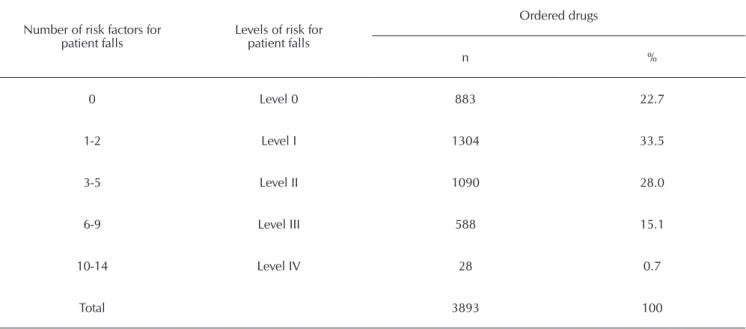
Table 1shows that from the total of 3893 ordered drugs, 22.7% (883) were stratified as Level 0, 33.5% (1304) as Level I, 28.0% (1090) as Level II, 15.1% (588) as Level III, and only 0.7% (28) as Level IV.
When analyzing the ordered medication stratified as Level 0 for risk of falls (0 factor), 84.4% (745/883) belonged to the thera-peutic subgroup B05 Blood substitutes and perfusion solutions. Of the 1304 ordered drugs stratified as Level I for risk of falls (1-2 factors), those that belonged to the corresponding therapeutic subgroups were: 22.7% (296) to B05 Blood substitutes and per-fusion solutions, 20.4% (266) to B01 Antithrombotics, 16.7% (218) to N02 Analgesics, according to Table 2. Out of the 1090 ordered drugs stratified as Level II for risk of falls (3-5 factors), 18.6% (203) were part of the subgroup A10 Drugs used for dia-betes, and 16.2% (177) belonged to C03 Diuretics. Regarding the ordered medication stratified as Level III for risk of falls (6-9 factors), the most often observed therapeutic subgroups were A02 Drugs for stomach acid disorders, with 22.6% (133/588), A03 Drugs for functional gastrointestinal disorders, with 22.4% (132/588), and N05 Psycholeptics, with 19.7% (116/588). As for the 28 ordered drugs stratified as having the highest risk of falls, Level IV (10-14 factors), 100% (28) belonged to the thera-peutic subgroup N05 Psycholeptics (Table 2).
At the medical clinic, 34.6% (622/1797) of the drugs were stratified as Level I (1-2 factors) and 29% (521/1797) as Level II (3-5 factors).In the surgical clinic, 32.0% (130/406) of the or-dered drugs were stratified as Level I (1-2 factors).With respect to the drugs ordered in the general intensive care unit, 32.6% (552/1690) were stratified as Level I (1-2 factors) and 29.5% (498/1690) as Level II (3-5 factors). (Table 3).
Table 1 - Number of risk levels and factors for patient falls and medication ordered. HURCG, Ponta Grossa, Paraná, 2013
Number of risk factors for
patient falls Levels of risk for patient falls
Ordered drugs
n %
0 Level 0 883 22.7
1-2 Level I 1304 33.5
3-5 Level II 1090 28.0
6-9 Level III 588 15.1
10-14 Level IV 28 0.7
DISCUSSION
The highest number of ordered drugs took place in the medical clinic (46.2%) and in the ICU (43.4%). The use of drugs is an intrinsic factor strongly related to patient falls(13,15), and the risk of falls increases with the number of ordered drugs. Ziere et al (2006)(17)analyzed falls in a population aged 55 years or older and found a higher percentage of falls, 60% versus 25% respectively, in individuals who received six or more drugs than those who received only one. In another study(11) 81 drugs with risk associated with patient falls were analyzed. During the period of study, 151 patients fell, and out of these, 144 (95.4%) were taking at least 1 drug classified by the authors as a high-risk medication.
The frequency of ordered medications stratified as Level II (3-5 factors) at the surgical clinic (17.5%) was lower when
compared to the medical clinic (29.0%) and to the ICU (29.5%). However, the ordered drugs stratified as Level III (6-9 factors), therefore with higher risk, were more often ordered (26.1%) at the surgical clinic, in comparison with the ones ordered at the medical clinic (12.9%) and the UCI (14.8%).
Regarding the ordered medication stratified as Level III, we noted that the therapeutic groups most often observed were A02 Drugs for stomach acid disorders (22.6%) and A03 Drugs for functional gastrointestinal disorders (22.4%). However, they were not mentioned in the studied literature, although drugs in these subgroups, such as ranitidine and metoclo-pramide, show many of the risk factors included in this study. Several studies have shown that drugs acting on the cen-tral nervous system have higher risk for patient fall, especially benzodiazepine and antipsychotics(10-12,15,17). In this investiga-tion, 19.7% of the psycholeptics showed6-9 risk factors for Table 2 - Therapeutic subgroups of ordered medications and levels of risk for patient falls, HURCG, Ponta Grossa, Paraná, 2013
Therapeutic Subgroups
Levels of risk
Level 0 Level I Level II Level III Level IV
n % n % n % n % n %
A02 Drugs for stomach acid disorders 0 0 90 6.9 13 1.2 133 22.6 0 0
A03 Drugs for functional gastrointestinal disorders 5 0.6 2 0.2 145 13.3 132 22.4 0 0
A10 Drugs used for diabetes 0 0 1 0.1 203 18.6 0 0 0 0
B01 Antithrombotics 2 0.2 266 20.4 0 0 0 0 0 0
B05 Blood substitutes and perfusion solutions 745 84.4 296 22.7 6 0.6 0 0 0 0
C03 Diuretics 0 0 0 0 177 16.2 0 0 0 0
N02 Analgesics 17 1.9 218 16.7 48 4.4 52 8.8 0 0
N05 Psycholeptics 0 0 0 0 50 4.6 116 19.7 28 100
Others 114 12.9 431 33.0 448 41.1 155 26.5 0 0
Total 883 100 1304 100 1090 100 588 100 28 100
Table 3 - Levels of risk for patient falls on medication ordered at inpatient units, HURCG, Ponta Grossa, Paraná, 2013
Levels of risk for falls
Inpatient Units
Medical Clinic Surgical Clinic General ICU
n % n % n %
Level 0 397 22.1 99 24.4 387 22.9
Level I 622 34.6 130 32.0 552 32.6
Level II 521 29.0 71 17.5 498 29.5
Level III 232 12.9 106 26.1 250 14.8
Level IV 25 1.4 0 0 3 0.2
falls (Level III). Psycholeptics alter cognitive function such as attention, memory and orientation, which are important for postural control and balance. In addition, they cause seda-tion, psychomotor changes, muscle relaxation and adrenergic blockade, which increase orthostatic hypotension(13), regarded by many authors as a great risk factor for falls(2,6,12,17-18).
In this study, only 0.7% of the ordered drugs were stratified as having a higher risk for falls, Level IV (10-14 factors); however, 100%belonged to the therapeutic subgroup N05 Psycholeptics. As for the inpatient units, only 1.4% and 0.2% of the total medi-cation ordered at the medical clinic and the ICU, respectively, were stratified as Level IV. This is important information because inpatients under intensive care, despite having more severe clinical conditions, are assisted full time, and in most cases they are sedated, and so they have a lower risk of falling. Inpatients of medical clinic units may feel self-sufficient to perform basic activities, such as walking around and going to the toilet, and therefore they are more exposed to extrinsic risk factors.
It was also noted that 18.6% of the ordered medications strati-fied as Level III belonged to the subgroup A10 Drugs used for dia-betes. The main effect of this therapeutic subgroup that may cause falls is hypoglycemia. In the work of Johnston et al.(19), patients with episodes of hypoglycemia had 70% higher probability of having fall-related fractures than patients without hypoglycemia.
Some authors point toC03 Diuretics as high-risk drugs for falls(3,11,17). In this research, diuretics were stratified as Level II (3-4 factors) and accounted for 16.2% of the ordered medica-tions in this category. Diuresis is associated with arterial hypo-tension, atonia, dystonia or muscle weakness, urgent urination and, like many N05 Psycholeptics, with orthostatic hypotension.
It is important to stress that falls are a multifactor care risk that may occur due to previous patient conditions, that is, conditions that were present at the time of admission to the hospital, as well as when care was provided during the stay. During the development of this study, the authors did not con-sider causal or interfering factors such as age, clinical condi-tion, pathologies, and especially medication currently in use or previously used by the patient. The focus of this study was to contribute to the knowledge about the medication used in the hospital so that specific safety prevention measures could be implemented in order to preserve the health of patients and quality of care.
CONCLUSION
Although this research had a descriptive nature whose pur-pose was not to infer cause and effect among the several risk factors for falls, it was possible to find results that were similar to the ones found in the scientific literature on the subject.
The knowledge of risk factors associated with medications can contribute to the prevention and reduction of falls, espe-cially when therapeutic regimes cannot be changed.
It is important to constantly train all healthcare profession-als on the intrinsic and extrinsic risk factors to implement prevention strategies including not only actions toward medi-cations but also the rehabilitation of the functional capacity, education for self-care and increased surveillance of nurses in times and places with the highest number of falls, thus de-creasing these adverse events and walking the path toward excellence in care.
REFERENCES
1. Buksman S, Vilela ALS, Pereira SRM, Lino VS, Santos VH;
Sociedade Brasileira de Geriatria e Gerontologia. Projeto Di-retrizes. Quedas em idosos: prevenção [Internet]. São Paulo: Associação Médica Brasileira, Conselho Federal de Medici-na; 2008 [cited 2012 May 23]. Available from: http://www. projetodiretrizes.org.br/projeto_diretrizes/082.pdf
2. National Health Services. National Patient Safety Agency.
The third report from the patient safety observator: slips, trips and falls in hospital [Internet]. London (UK): NHS; 2007 [cited 2014 Jun 14]. Available from: http://www.nrls.npsa.nhs.uk/ EasySiteWeb/getresource.axd?AssetID=61390&type=full
3. Paiva MCMS, Paiva SAR, Berti HW, Campana AO.
Characte-rization of patient falls according to the notification in adver-se event reports. Rev Esc Enferm USP [Internet]. 2010 [cited 2012 Sep 21];44(1):134-8. Available from: http://www.scie lo.br/pdf/reeusp/v44n1/en_a19v44n1.pdf
4. Agência Nacional de Vigilância Sanitária (BR). Resolução -
RDC nº. 63, de 25 de novembro de 2011. Dispõe sobre os requisitos de boas práticas de funcionamento para os servi-ços de saúde [Internet]. Diário Oficial da União 31 dez 2011 [cited 2013 Apr 22]. Available from: http://portal.anvisa.gov. br/wps/wcm/connect/3fcb208049af5f1e96aeb66dcbd9c6 3c/RDC+36+de+25_11_2011+Vers%C3%A3o+Publica
da.pdf?MOD=AJPERES
5. Ministério da Saúde (BR). Portaria nº. 529, de 1 abril de
2014. Institui o Programa Nacional de Segurança do Pacien-te (PNSP) [InPacien-ternet]. Diário Oficial da União 02 abr 2013 [cited 2013 Apr 30]. Available from: http://bvsms.saude.gov. br/bvs/saudelegis/gm/2013/prt0529_01_04_2013.html
6. Agência Nacional de Vigilância Sanitária (BR). Programa
Nacional de Segurança do Paciente. Anexo 01: Protocolo de prevenção de quedas [Internet]. Brasília: Ministério da Saúde; 2013 [cited 2013 Sep 14]. Available from: http:// proqualis.net/sites/proqualis.net/files/Protocolo%20-%20 Prevenção%20de%20Quedas.pdf
7. Agência Nacional de Vigilância Sanitária (BR). Assistência
segura: uma reflexão teórica aplicada à prática [Internet]. Brasília: ANVISA; 2013 [cited 2013 Jun 14]. Available from: http://www20.anvisa.gov.br/segurancadopaciente/images/ documentos/livros/Livro1-Assistencia_Segura.pdf
8. Joint Commission International (US). Joint Commission
9. Hendrich A. Inpatient falls: lessons from the field [Internet]. Marietta (US): Patient Safety & Quality Healthcare; 2006 [ci-ted 2012 May 23]:[about 4 p.]. Available from: http://psqh. com/mayjun06/falls.html
10. Hartikainen S, Lönnroos E, Louhivuori K. Medication as a risk factor for falls: critical systematic review. J Gerontol A Biol Sci Med Sci [Internet]. 2007 Oct [updated 2015 Mar 16; cited 2012 May 23];62(10):1172-81. Available from: http:// www.ncbi.nlm.nih.gov/pubmed/17921433
11. Cashin RP, Yang M. Medications prescribed and occurrence of falls in general medicine inpatients. Can J Hosp Pharm [Internet]. 2011 Sep [updated 2015 Mar 16; cited 2012 May 23];64(5):321-6. Available from: http://www.ncbi.nlm.nih. gov/pubmed/22479083
12. Ganz DA, Bao Y, Shekelle PG, Rubenstein LZ. Will my pa-tient fall? JAMA [Internet]. 2007 [updated 2015 Mar 16; ci-ted 2012 May 23];297(1):77-86. Available from: http://www. ncbi.nlm.nih.gov/pubmed/17200478
13. Ferreira DCO, Yoshitome AY. [Prevalence and features of falls of institutionalized elders]. Rev Bras Enferm [Internet]. 2010 Nov-Dec [updated 2015 Mar 16; cited 2012 May 23];63(6):991-7. Available from: http://www.scielo.br/pdf/ reben/v63n6/19.pdf Portuguese.
14. Correa AD, Marques IAB, Martinez MC, Laurino PS, Leão ER, Chimentão DMN. The implementation of a hospital’s fall management protocol: results of a four-year follow-up. Rev Esc Enferm USP [Internet]. 2012 [updated 2015 Mar 16; cited 2012 Sep 22];46(1):67-74. Available from: http://www.
scielo.br/pdf/reeusp/v46n1/en_v46n1a09.pdf
15. Neutel CI, Perry S, Maxwell C. Medication use and risk of falls. Pharmacoepidemiol Drug Saf [Internet]. 2002 Mar [updated 2015 Mar 16; cited 2012 Sep 22];11(2):97-104. Available from: http://www.ncbi.nlm.nih.gov/pubmed/11998544
16. Woolcott JC, Richardson KJ, Wiens MO, Patel B, Marin J, Khan KM, Marra CA. Meta-analysis of the Impact of 9 me-dication classes on falls in elderly persons. Arch Intern Med [Internet]. 2009 Nov [updated 2015 Mar 16; cited 2012 Sep 22];169(21):1952-60. Available from: http://www.ncbi.nlm. nih.gov/pubmed/19933955
17. Ziere G, Dieleman JP, Hofman A, Pols HA, van der Cam-men TJM, Stricker BHCH. Polypharmacy and falls in the middle age and elderly population. Br J Clin Pharmacol [In-ternet]. 2006 Feb [updated 2015 Mar 16; cited 2012 Sep 22];61(2):218-23. Available from: http://www.ncbi.nlm.nih. gov/pubmed/16433876
18. Heitterachi E, Lord SR, Meyerkort P, Mccloskey I, Fitzpatrick R. Blood pressure changes on upright tilting predict falls in ol-der people. Age Ageing [Internet]. 2002 [updated 2015 Mar 16; cited 2012 Sep 22];31(3):181-6. Available from: http:// ageing.oxfordjournals.org/content/31/3/181.full.pdf+html