ISSN 0102-695X http://dx.doi.org/10.1590/S0102-695X2012005000073 Received 14 Dec 2011 Accepted 5 Jan 2012 Available online 29 May 2012
anatoxin-a(s) on the cardiac rhythm of
Leurolestes circunvagans
Vania Rodríguez,
1Bruno Mori,
1Felipe A. Dörr,
1Cháriston A.
Dal Belo,
2Pio Colepicolo,
3Ernani Pinto
*,11Faculdade de Ciências Farmacêuticas, Universidade de São Paulo, Brazil,
2Universidade Federal do Pampa, Campus São Gabriel-RS, Brazil,
3Universidade de São Paulo, Instituto de Química, Departamento de Bioquímica,
Brazil.
Abstract: This work presents the effects of an anatoxin-a(s) containing extract on a cockroach semi-isolated heart preparation and the results supporting the extract’s
biological activity on acetylcholinesterase (purii ed from eel). The presence of the toxin
in cyanobacterial strains Anabaena spiroides (ITEP-024, ITEP-025 and ITEP-026)
isolated from the Tapacurá reservoir in Pernambuco, Brazil, was coni rmed by means of
liquid chromatography coupled to an ion-trap mass spectrometer. The anticholinesterase
activity was assessed biochemically by the Ellman test and was coni rmed by measuring
the cockroach’s heart rate. The concentration of the extract containing the tested
anatoxin-a(s) (antx-anatoxin-a(s)) (10, 16 and 100 μg.μL-1) inhibited the eel acetylcholinesterase (AChE) by
more than 90%. The cockroach cardiac frequency increased by a maximum of about 20% within 29 min after the addition of 2.5x10³ μg of extract containing antx-a(s).g-1 bw (n=9,
p<0.05). Our results strongly indicate that antx-a(s) is capable of exerting biological effects on cockroach, indicating that more research might be conducted to determine its role in the environment, especially on insects.
Keywords:
Anatoxin-a(s) anticholinesterasic agents
Anabaena spiroides
cyanotoxins cockroach
Introduction
Cyanobacteria are ancient, ubiquitous
photosynthetic microorganisms that play an important role in the oxygenation of the terrestrial atmosphere. Cyanobacteria may produce a broad of compounds as pigments which have not been detected in eukaryotic algae and toxins (Sigaud-Kutner et al., 2002; Pinto et al., 2003; Guaratini et al., 2005; Guaratini et al., 2009; Aráoz et al., 2010). Nevertheless, these organisms raise public-health concerns, due to their ability to form blooms in the freshwater environment worldwide and to produce a diversity of toxins, called cyanotoxins (Sivonen & Jones, 1999; Hummert et al., 2001; Bittencourt-Oliveiraet al., 2005; Frias et al., 2006; Kujbida et al., 2006; Dorr et al., 2010).
Anatoxin-a(s) (antx-a(s)) is a cyanobacterial neurotoxin structurally unrelated to the other neurotoxic alkaloids also produced by cyanobacteria. Its mechanism of action is the irreversible inhibition of acetylcholinesterase (Mahmood & Carmichael, 1986). Antx-a(s) acts by a similar mechanism as the organophosphates and carbamate insecticides, such as paraoxon, physostigmine and pyridostigmine (Cook et al., 1988), and the chemical-warfare agent sarin (Pita
et al., 2003). An important characteristic of antx-a(s) is that it is unable to cross the blood-brain barrier, being a peripheral cholinesterase inhibitor (Cook et al., 1988; Cook et al., 1989). Matsunaga et al. (1989) characterized this toxin through the positive Fast Atom Bombardment Mass Spectrometry (FABMS) and Nuclear Magnetic Resonance (NMR) techniques
as a unique N-hydroxyguanidine methyl phosphate
ester with a molecular mass of 252 Da. Antx-a(s) was
originally characterized from the strain Anabaena
flos-aquae Bréb. Ex Bornet & Flahault NRC 525-17 (Carmichael et al., 1977; Carmichael & Gorham, 1978). Since then, other cyanobacterial strains within the Anabaena genus, such as Anabaena lemmermanii
P. Richter and A. spiroides Klebahn, have also been
reported as antx-a(s)-producers (Molica et al., 2005; Onodera et al., 1997). Among the countries where antx-a(s) has already been identified are Canada (Carmichael et al., 1977), the United States (Mahmood et al., 1988), Denmark (Onodera et al., 1997), and Brazil (Molica et al., 2005). This low level of incidence, when compared with that of other cyanotoxins, such as microcystins, could be explained by antx-a(s)’s instability in an alkaline medium (Matsunaga et al., 1989; Dorr et al., 2010). However, the main problem related to
a(s) monitoring is the lack of a commercially available analytical standard or reference material. Therefore, the development of a reliable and specific method for its detection has been proposed (Dorr et al., 2010).
Data on the biological activity of antx-a(s) in arthropods are nonexistent. Several researchers, however, have used bioassays in cockroach hearts to evaluate the possible effects on arthropods of venoms,
pharmacological agents, neurotransmitters and
organophosphate insecticides (Miller & Metcalf, 1968; Schaefer & Miles, 1970; Majori et al., 1972; Klowden et al., 1992). Indeed, acetylcholinesterase (AChE, E.C. 3.1.1.7) has been found to be the predominant esterase for acetylcholine hydrolysis in the cholinergic synapses of both vertebrates and invertebrates (Nachmansohn & Rothenberg, 1945; Augustinsson et al., 1961; Corbett, 1974; Panda & Sahu, 2004).
The aim of this work was to investigate the
presence of antx-a(s) in A. spiroides extracts using
spectrometric analyses and by monitoring the effect of this toxin on semi-isolated heart preparations from
Leurolestes circunvagans.
Materials and Methods
Chemicals
Electric-eel AChE (type V-S lyophilized
powder, 480 U.mg-1 solid, 530 U.mg-1 protein),
acetylthiocholine iodide (ATCI), 5,5’-dithio-bis-2-nitrobenzoic acid (DTNB), bovine serum albumin (BSA), ammonium formate and formic acid were
obtained from Sigma-Aldrich (St. Louis, USA). Merck (Darmstadt, Germany) supplied HPLC-grade ethanol,
methanol, acetonitrile and acetic acid. All other chemicals were of analytical grade. Throughout the AChE assay, 50 mM Tris-HCl buffer, pH 8.0 was used as a buffer unless otherwise stated. The lyophilized
enzyme was prepared in the buffer to obtain a 1 U.mL-1
stock solution. The enzyme stock solution was stored at -80 ºC. Enzyme working solutions were dissolved in buffer containing 0.1% BSA. DTNB was dissolved in
buffer containing 0.1 M NaCl and 0.02 M MgCl2. ATCI
was dissolved in ultra-pure water.
Preparation of extracts containing anatoxin-a(s)
The antx-a(s) producer cyanobacterial strains ITEP-024, ITEP-025 and ITEP-026 were isolated from the Tapacurá freshwater reservoir in Pernambuco-Brazil by Molica et al. (2005). The three strains were
previously confirmed as antx-a(s) producers by
LC-MS/MS (Dorr et al., 2010). They were cultivated in laboratory conditions in ASM1 medium using a light/ dark photoperiod of 12:12 h and an irradiance of
66560 E.m-2.s-1 (Gorham et al., 1964). A pool of the
lyophilized, culture-harvested material was extracted according to the method proposed by Henriksen et al. (1997) with some modifications. Briefly, 100 mg of the lyophilized cyanobacterial cells were resuspended in 5
mL of ethanol/acetic acid 0.1 M (20:80), sonicated for
3 min in ice and centrifuged at 6300 g for 15 min. The
supernatant was applied to a pre-conditioned (5 mL of methanol followed by 5 mL of ethanol/acetic acid
0.1 M 20:80) C18 cartridge (Sep-Pack, Waters, MA, USA) to retain the pigments. Eluates were dried in an SPD121P Speed Vac system (Thermo Scientific, MA,
USA) and resuspended in 1 mL of acidified methanol.
One aliquot of the pre-purified extract was used for the
LC-MS analysis, and another was dried under N2 flow
and resuspended in saline solution (NaCl 0.15 M) for the AChE assay.
LC-MS characterization
Chromatographic and mass spectrometric analysis conditions were set according to the method proposed by Dorr et al. (2010). An ion-trap mass spectrometer (Esquire HCT, Bruker Daltonics, MA, USA) equipped with an electrospray source and coupled to a Shimadzu Prominence liquid chromatograph (Shimadzu Co., Japan) was used for sample analysis. Separation was conducted under gradient conditions
in a ZIC-HILIC column (150x2.0 mm, 5 μm, SeQuant,
Umeå, Sweden) using a mixture of (A) water containing 5 mM ammonium formate and 0.05% formic acid and
(B) acetonitrile. The flow rate of 0.2 mL.min-1 was split
into a 1:4 ratio before entering the mass spectrometer source, which was operated in the positive-ion mode.
Microplate assay for AChE activity
The in vitro inhibition of AChE was evaluated according to the assays described by Ellman et al. (1961)
and Ingkaninan et al. (2003) with some modiications. In brief, 162.5 µL of TRIS-HCl buffer pH 8.0, 12.5 µL of 30
mM DTNB, 25 µL of 0.28 mM U.mL-1AChE and 25 µL
of inhibitor (0.5; 2.5; 5; 10; 16 and 100 µg.µL-1 of
antx-a(s) containing extract) were pre-incubated for 5 min at
37 ºC; 25 µL of 15 mM ATCI was later added to the wells.
Semi-isolated cockroach heart preparation
A semi-isolated cockroach heart bioassay was used to evaluate the biological effects of antx-a(s) containing extract (Baumann & Gersch, 1982; Klowden
et al., 1992). L. circunvagans adult cockroaches were
anesthetized with ether until immobile and placed ventral side up. The lateral margins of the abdomen were cut along each side, and the ventral abdominal body wall was peeled up to expose the viscera. The viscera were carefully moved aside to expose the heart, which was still contracting while attached to the dorsal body wall. The heart preparations were washed by bathing them in drops of insect saline solution (0.15 mM
NaCl) at room temperature (21-24 oC). After 5 min of
heart beat stabilization, 200 µL of antx-a(s)-containing
extract (2.5x10², 1.25x10³, 2.5x10³, 5x10³ and 8x10³
µg.g-1 bw) were added to the exposed heart. The mean
beats.min-1 in the first 5 min was taken as a reference.
Heartbeat frequency was monitored for 30 min under a stereoscopic microscope. Nine cockroaches were used for each group. In the control group, only saline solution was added.
Statistical analysis
The results are expressed as the mean±SE as appropriate. Statistical comparisons were performed using the Student’s unpaired t-test or with ANOVA/ MANOVA for repeated measures. A significance value
of p<0.05 was used.
Results and Discussion
LC-MS anatoxin-a(s) characterization
Although antx-a(s) is one of the most potent neurotoxins produced by cyanobacteria that may be present in polluted water, it is not included in the
Guidelines Values for Drinking Water Quality from
the World Health Organization. Its low stability in an alkaline medium and the lack of commercially available analytical standards hamper the assessment of antx-a(s). However, some strategies have been developed to improve the evaluation of the toxicological potential of environmental samples with the intent of measuring exposure to antx-a(s).
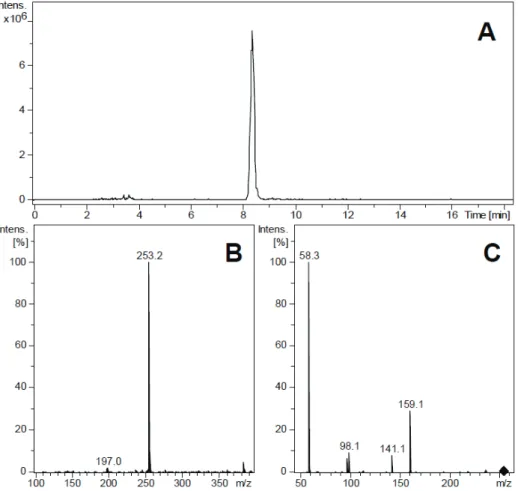
Figure 1. Identiication of antx-a(s) in an Anabaena spiroides extract using LC-MS/MS. (A) Extracted ion chromatogram of m/z 253, the (M+H)+ ion of antx-a(s); (B) MS Scan spectrum; (C) MS/MS fragmentation spectrum of m/z 253,exhibiting the
Villatte et al. (2002) and Devic et al.
(2002) developed electrode biosensors using
acetylcholinesterase enzymes from various organisms
and a mutated enzyme from Drosophila melanogaster
Meigen 1830, respectively, to detect antx-a(s).
Several researchers have been employing
the HPLC-UV method proposed by Mahmood &
Carmichael (1986) to purify and quantify antx-a(s). In assessing this chromatography method, at least two considerations can be noted. Because antx-a(s) is very
polar (CLog P=-1,7), its retention in a cyanopropyl
chromatographic column (most commonly used and reported for this toxin) can vary significantly. In fact, the same authors mentioned above observed a completely different retention level for antx-a(s) using the same chromatography conditions (Mahmood et al., 1988). Moreover, the lack of chromophore groups in antx-a(s) makes its detection by UV difficult because many matrix impurities may absorb in the same wavelength where antx-a(s) is detected (220 and 230 nm). Indeed, James et al. (1998) criticized the use of low wavelength values for the monitoring of anatoxins. For these reasons, we decided to employ an alternative
extraction procedure that was monitored by an
LC-MS method proposed by Dorr et al. (2010). Panel A of
Figure 1 exhibits an extracted ion chromatogram of m/z
253, which is the protonated ion ([M+H]+) of antx-a(s).
A sharp peak is clearly evident, and the scan spectrum with the characteristic ion is presented in Panel B. Panel C depicts the MS/MS spectrum obtained after
collision-induced dissociation of the ion at m/z 253. According to
Dorr et al. (2010) the few characteristic fragment ions revealed in this panel confirm the presence of antx-a(s) in the extract. Therefore, measurable levels of antx-a(s) were confirmed in the extracts prepared with cultures of the ITEP 24, 25 and 26 cyanobacterial strains.
In vitro acetylcholinesterase assay
As previously mentioned, the mechanism of action of antx-a(s) is related to cholinesterase inhibition. Therefore, the rate of hydrolysis of acetylthiocholine by
eel AChE was evaluated in vitro by incubating the
antx-a(s) containing extract with the eel AChE enzyme. The eel AChE was chosen because of the extremely high activity
values found in Electrophorus electricus Linnaeus 1766
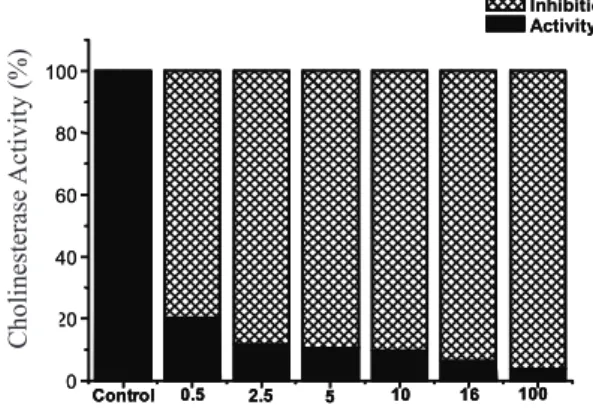
(Toutant, 1989). Figure 2 shows the relationship between eel AChE activity and antx-a(s) containing extract solutions. Interestingly, the lowest tested concentration of
antx-a(s) containing extract still caused signiicant AChE
inhibition (approximately 80%). These results corroborate the previous report of Mahmood & Carmichael (1987), which found that four different antx-a(s) concentrations
(0.16 to 0.80 µg.mL-1) inhibited 0.25 U of eel AChE. In that study, the two higher concentrations tested (speciically,
4.8x10⁻⁴ and 8x10⁻³ µg.µL-1) produced levels of AChE
inhibition ranging from 75-90%, which is close to the percentage of inhibition we obtained with concentrations
ranging from 0.5 to 10 µg.µL-1. However, at the same time, no signiicant difference in the percentage of AChE
inhibition was observed in the overall range of extract concentrations tested. This strong inhibition of AChE, even for the lowest antx-a(s) concentration we tested, could be explained by the binding of antx-a(s) with the catalytic site of AChE. The attraction between the enzyme and acetylcholine takes place through an electrostatic interaction between the positive charge of the quaternary ammonium of the substrate (i.e., acetylcholine) and the negative charge(s) of the anionic subsite (Toutant, 1989). While acetylcholine hydrolysis occurs through an acetylation-deacetylation cycle, antx-a(s) occupies both the anionic and the estearic subsites and phosphorylates the enzyme. The adduct formed with the serine hydroxyl group does also not undergo induced hydrolysis by reactivators. Therefore, like some synthetic organophosphates, antx-a(s) causes AChE to degrade rapidly (Hyde & Carmichael, 1991).
According to our results, based on 2.5-10 µg.µL-1 of
a(s) containing extracts, the interaction of antx-a(s) with the AChE catalytic sites leads to a high degree of inhibition regardless of the concentrations used in this study (see Figure 2).
Following the biochemical determination of the biological effect of antx-a(s), a further investigation of its biological activity was conducted using semi-isolated preparations of the cockroach heart.
0 20 40 60 80 100 Inhibition Activity
Control 0.5 2.5 5 10 16 100
Anatoxin -a(s) extract (g.l-1)
C h o lin e s te ra s e A c ti v ity (% ) 0 20 40 60 80 100 Inhibition Activity
Control 0.5 2.5 5 10 16 100
Anatoxin -a(s) extract (g.l-1)
C h o lin e s te ra s e A c ti v ity (% )
Control 0.5 2.5 5 10 16 100
Anatoxin -a(s) extract (g.L-1)
C h o lin e s te ra s e A c ti v ity (% )
Figure 2. In vitro AChE activity/inhibition after 5 min of incubation with antx-a(s) containing extract. The rate of ATCI hydrolysis was measured spectrophotometrically for 3 min at 405 nm. The tested antx-a(s) containing extract
concentrations were 0.5, 2.5, 5, 10, 16 and 100 µg.µL-1.
Effects of cyanobacterial extract containing anatoxin-a(s) on semi-isolated cockroach hearts
Chol ine st era se A ct ivi ty (%)
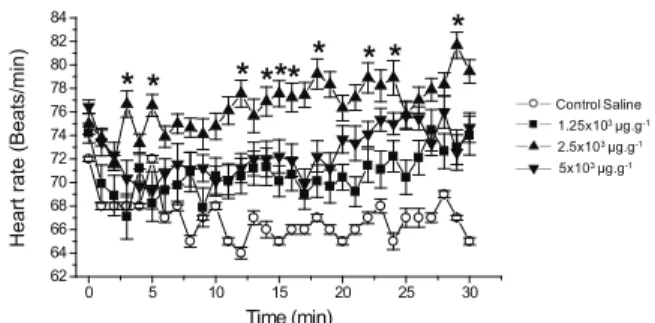
Figure 3 shows the effects of various doses of antx-a(s) containing extract on cockroach heartbeats. Specifically, after treatment with several doses, there was a gradual increase in the frequency of beats
by increasing the doses to 1.25x10³ μg.g-1. When a
dose of 2.5x10³ μg.g-1 was added to the preparation,
a maximum increase of 18±3% was seen at 29 min
(with averages of 67 and 80 heartbeats.min-1 for the
control group and the group treated with 2.5x10³ μg.g-1,
respectively; n=9, p<0.05) (Figure 3). At higher doses,
the positive chronotropic effect diminished, but the heart rate remained above control levels after 30 min (Figure 3). It is also noteworthy that, in some animals,
when the addition of a concentration of 8x10³ μg.g-1
led to a cardiac arrest after 15 min of monitoring. In the semi-isolated cockroach heart, the addition of anticholinesterase drugs or acetylcholine may increase or decrease the frequency of beats, depending on the concentration tested (Fox, 1981). In our set of experiments, we observed both increases and decreases in cardiac rhythm caused by the optimal dose of extract
containing antx-a(s) (2.5x10³ μg.g-1, n=9, p<0.05).
Thus, the inhibitory effects on AChE activity found in the biochemical tests can be correlated with the cardio modulatory effects after being inhibited by antx-a(s) containing extract. Nevertheless, the decrease in the effect of the antx-a(s) extract at higher doses may be a result of acetylcholine accumulation in the cockroach cardiovascular system. Indeed, in experiments, this hypothesis is supported by the cardiac arrest observed in some cockroaches during treatment with higher concentrations of extract containing antx-a(s).
0 5 10 15 20 25 30
62 64 66 68 70 72 74 76 78 80 82 84
*
*
*
*
*
*
*
*
*
*
H
e
a
rt
ra
te
(Be
a
ts/
mi
n
)
Time (min)
Control Saline
1.25x10³µg.g-1
2.5x10³µg.g-1
5x10³µg.g-1
Figure 3. Effect of various doses of anatoxin-a(s)-containing extract (µg.g of cockroach-1) on the actual cockroach heart
rate over the course of 30 min. Each point represents the mean±SE of nine hearts for each dose tested. *Significance is defined as p<0.05.
In cockroaches, acetylcholine binds to the cholinergic receptors present not only in the heart but also in the nerves of the paired cardiac system (Collins & Miller, 1977; Fox, 1981). Discrepancies regarding the effect of acetylcholine on the rate of the cockroach heartbeat have been noted in the literature. Although some authors have demonstrated that concentrations
ranging from 10-3 to 10-7 M can increase the heart rate
(Naidu, 1953; Collins & Miller, 1977), others have suggested that acetylcholine (at concentrations between
10-2 and 10-6 M) can slow the heart rate (Richards,
1963; Schaefer & Miles, 1970). Consequently, the
response obtained with 2.5x10³ μg.g-1 of antx-a(s)
containing extract (18% increase) is similar to the results described by Collins & Miller (1977). It is also important to consider the slight differences in the kinetics and phylogeny of AChE between vertebrates and invertebrates (Kim et al., 2006).
The inhibition of insect AChE is toxicologically
signiicant, as this process is the main mechanism of action
of organophosphates and carbamates, which are commonly used as pest management agents (Siegfried & Scott, 1990). Indeed, studies with insect acetylcholinesterase have mainly been undertaken to investigate insecticide resistance (Matsumura & Madhukar, 1980). Regarding this subject, Revuelta et al. (2009) employed spectrophotometric and zymogram measurements to demonstrate the existence of
two AChE genes in Blattella germanica Linnaeus 1767,
Bgace1 and Bgace2. The BgAChE1 (ace1) proteins usually represent 65-75% of the total active AChE in the
B. germanica nerve tissue, which is the main target of organophosphate insecticides in cockroaches. Considering the use of praguicides in agriculture and in insect control may represent a potential danger, the search for new
insecticides that might act on a speciic residue of the
insect AChE, be free of resistance and be less toxic for
mammals, birds and ish is still in progress (Badea et al.,
2006, Polsinelli et al., 2010). The effects of antx-a(s) in the environment should be further investigated, as there are few reports about its biological activity in different species, such as insects. Only a couple of published toxicological
reports have conirmed the effect of antx-a(s) in dogs and
birds (Mahmood et al., 1988). Also, considering that antx-a(s) is a natural organophosphate that cannot cross the blood-brain barrier; this compound should be subjected to further study for possible insecticide activity.
This work presents confirmatory information about the effect of a natural organophosphate on the semi-isolated cockroach heart, suggesting that antx-a(s) may play an important role in insects control and can be considered an alternative source for the development of novel selective insecticide molecules.
Acknowledgments
References
Aráoz R, Molgó J, Tandeau de Marsac N 2010. Neurotoxic cyanobacterial toxins. Toxicon 56: 813-825.
Augustinsson K, Jonsson G, Sparrman B 1961. Effects of ionizing radiation on arylesterase and cholinesterase.
Acta Chem Scand 15: 141-150.
Badea M, Romanca M, Draghici C, Marty J-L, Marques
CVVCO, Mendes DR, Amarante Jr. OP, Nunes GS 2006. Multidisciplinary collaboration for environmental protection using biosensors: detection of organophosphate insecticides in aqueous medium.
J Brazil Chem Soc 17: 807-811.
Bittencourt-Oliveira MC, Kujbida P, Cardozo KHM, Carvalho VM, Moura AN, Colepicolo P, Pinto E 2005. A novel rhythm of microcystin biosynthesis is described in the cyanobacterium Microcystis panniformis Komárek.
Biochem Bioph Res Co 326: 687-694.
Baumann E, Gersch M 1982. Purification and identification of neurohormone-D, a heart accelerating peptide from the corpora cardiaca of the cockroach Periplaneta americana. Insect Biochem 12: 7-14.
Carmichael WW, Gorham PR 1978. Anatoxins from clones of Anabaena flos-aquae isolated from lakes of western Canada. Mitt Internat Verein Limmol 21: 285-295.
Carmichael WW, Gorham PR, Biggs DF 1977. 2 Laboratory
case studies on oral toxicity to calves of freshwater cyanophyte (blue-green-alga) Anabaena flos-aquae
NRC-44-1. Can Vet J 18: 71-75.
Collins C, Miller T 1977. Studies on action of biogenic-amines on cockroach heart. J Exp Biol 67: 1-15. Cook WO, Beasley VR, Dahlem AM, Dellinger JA, Harlin
KS, Carmichael WW 1988. Comparison of effects of anatoxin-a(s) and paraoxon, physostigmine and pyridostigmine on mouse-brain cholinesterase activity. Toxicon 26: 750-753.
Cook WO, Dellinger JA, Singh SS, Dahlem AM, Carmichael WW, Beasley VR 1989. Regional brain cholinesterase activity in rats injected intraperitoneally with anatoxin-a(s) or paraoxon. Toxicol Lett 49: 29-34. Corbett J 1974. The biochemical mode of action of pesticides.
London: Academic Press.
Devic E, Li DH, Dauta A, Henriksen P, Codd GA, Marty JL, Fournier D 2002. Detection of anatoxin-a(s) in
environmental samples of cyanobacteria by using a biosensor with engineered acetylcholinesterases. Appl Environ Microb 68: 4102-4106.
Dorr FA, Rodriguez V, Molica R, Henriksen P, Krock B, Pinto E 2010. Methods for detection of anatoxin-a(s) by liquid chromatography coupled to electrospray ionization-tandem mass spectrometry. Toxicon 55: 92-99.
Ellman GL, Courtney KD, Andres V, Featherstone RM
1961. A new and rapid colorimetric determination of acetylcholinesterase activity. Biochem Pharmacol 7:
88-95.
Fox P 1981. Cyrculatory system. New York: Springer. Frias HV, Cardozo KHM, Carvalho VM, Mendes MA,
Tomazela D, Colepicolo P, Pinto E 2006. Use of electrospray tandem mass spectrometry for identification of microcystins during a cyanobacterial bloom event. Biochem Bioph Res Co 344: 741-746.
Gorham PR, McLachlan J, Hammer UT, Kim WK 1964.
Isolation and culture of toxic strains of Anabaena flos-aquae (Lyngb.) de Bréd. Verh Internat Verein Limnol 15: 796-804.
Guaratini T, Vessecchi R, PintoE, Colepicolo P, Lopes NP
2005. Balance of xanthophylls molecular and quasi -molecular ions in electrospray ionization. J Mass Spectrom 40: 963-968.
Guaratini T, Cardozo KHM, Pinto E, Colepicolo P 2009. Comparison of diode array and electrochemical
detection in the C30 reverse phase HPLC analysis of
algae carotenoids. J Brazil Chem Soc 20: 1609-1616.
Hummert C, Reichelt M, Weiss J, Liebert HP, Luckas B
2001. Identification of microcystins in cyanobacteria from the Bleiloch former drinking-water reservoir (Thuringia, Germany). Chemosphere 44: 1581-1588. Hyde EG, Carmichael WW 1991. Anatoxin-a(s), a
naturally-occurring organophosphate, is an irreversible active site-directed inhibitor of acetylcholinesterase (EC-3.1.1.7). J Biochem Toxicol 6: 195-201.
Ingkaninan K, Temkitthawon P, Chuenchom K, Yuyaem T, Thongnoi W 2003. Screening for acetylcholinesterase inhibitory activity in plants used in Thai traditional rejuvenating and neurotonic remedies. J Ethnopharmacol 89: 261-264.
James KJ, Furey A, Sherlock IR, Stack MA, Twohig M, Caudwell FB, Skulberg OM 1998. Sensitive determination of anatoxin-a, homoanatoxin-a and their degradation products by liquid chromatography with fluorimetric detection. J Chromatogr A 798: 147-157.
Kim JI, Jung CS, Koh YH, Lee SH 2006. Molecular,
biochemical and histochemical characterization of two acetylcholinesterase cDNAs from the German cockroach Blattella germanica. Insect Mol Biol 15: 513-522.
Klowden MJ, Vitale AJ, Trumble MJ, Wesson CR, Trumble WR 1992. A bioassay for cobra cardiotoxin activity using semi isolated cockroach heart. Toxicon 30: 295-301.
Kujbida P, Hatanaka E, Campa A, Colepicolo P, Pinto E 2006. Effects of microcystins on human polymorphonuclear leukocytes. Biochem Bioph Res Co 341: 273-277. Mahmood NA, Carmichael WW 1986. The pharmacology of
anatoxin-a(s), a neurotoxin produced by the fresh-water cyanobacterium Anabaena flos-aquae NRC 525-17. Toxicon 24: 425-434.
anticholinesterase from the cyanobacterium Anabaena
los-aquae NRC-525-17. Toxicon 25: 1221-1227. Mahmood NA, Carmichael WW, Pfahler D 1988.
Anticholinesterase poisonings in dogs from a cyanobacterial (blue-green-algae) bloom dominated by Anabaena flos-aquae. Am J Vet Res 49: 500-503. Majori G, Bettini S, Casaglia O 1972. Effect of black widow
spider venom on cockroach heart. J Insect Physiol 18: 913-927.
Matsumura F, Madhukar BV 1980. Exposure to insecticides.
Pharmacol Therapeut 9: 27-49.
Matsunaga S, Moore RE, Niemczura WP, Carmichael WW 1989. Anatoxin-a(s), a potent anticholinesterase from
Anabaena flos-aquae. J Am Chem Soc 111: 8021-8023.
Miller T, Metcalf RL 1968. Site of action of pharmacologically
active compounds on heart of Periplaneta americana L. J Insect Physiol 14: 383-394.
Molica RJR, Oliveira EJA, Carvalho PVC, Costa A, Cunha
MCC, Melo GL, Azevedo S 2005. Occurrence of
saxitoxins and an anatoxin-a(s)-like anticholinesterase in a brazilian drinking water supply. Harmful Algae 4: 743-753.
Nachmansohn D, Rothenberg MA 1945. Studies on cholinesterase. 1. On the specificity of the enzyme in nerve tissue. J Biol Chem 158: 653-666.
Naidu MB 1953. Physiological action of certain drugs and insecticides on an insect heart. T Roy Soc Trop Med H 47: 266-266.
Onodera H, Oshima Y, Henriksen P, Yasumoto T 1997. Confirmation of anatoxin-a(s), in the cyanobacterium
Anabaena lemmermannii, as the cause of bird kills in Danish lakes. Toxicon 35: 1645-1648.
Panda S, Sahu SK 2004. Recovery of acetylcholine esterase activity of Drawida willsi (Oligochaeta) following application of three pesticides to soil. Chemosphere 55: 283-290.
Pinto E, Nieuwerburgh LV, Barros MP, Pedersén M, Colepicolo
P, Snoeijs P 2003. Density-dependent patterns of thiamine and pigments in production in Nitzschia microcephala. Phytochemistry 63: 155-163.
Pita R, Anadon A, Martinez-Larranaga MR 2003. Neurotoxins
with anticholinesterase activity and their possible use as warfare agents. Med Clin-Barcelona 121: 511-517. Polsinelli GA, Singh SK, Mishra RK, Suranyi R, Ragsdale
DW, Pang Y-P, Brimijoin S 2010. Insect-specific irreversible inhibitors of acetylcholinesterase in pests
including the bed bug, the eastern yellow jacket, German and American cockroaches, and the confused flour beetle. Chem-Biol Interact 187: 142-147.
Revuelta L, Piulachs MD, Belles X, Castanera P, Ortego F,
Diaz-Ruiz JR, Hernandez-Crespo P, Tenllado F 2009. RNAi of ace1 and ace2 in Blattella germanica reveals their differential contribution to acetylcholinesterase activity and sensitivity to insecticides. Insect Biochem Molec 39: 913-919.
Richards AG 1963. The effect of temperature on heart-beat frequency in the cockroach, Periplaneta americana. J Insect Physiol 9: 597-606.
Schaefer CW, Miles J 1970. Inhibition by acetylcholine of cockroach heart (Gromphadorhina portentosa). Comp Gen Pharmacol 1: 426-430.
Siegfried BD, Scott JG 1990. Properties and inhibition of acetylcholinesterase in resistant and susceptible German cockroaches (Blattella germanica L.). Pestic
Biochem Phys 38: 122-129.
Sigaud-Kutner TCS, Pinto E, Okamoto OK, Latorre LR,
Colepicolo P 2002. Changes in superoxide dismutase activity and photosynthetic pigment content during growth of marine phytoplankters in batch-cultures.
Physiol Plantarum 114: 566-572.
Sivonen K, Jones G 1999. Cyanobacterial toxins. In: Chorus I, Bartram J (eds.). Toxic cyanobacteria in water-A guide to their public health consequences, monitoring and management. London: E & FN Spon, p. 41-110.
Toutant JP 1989. Insect acetylcholinesterase - catalytic properties, tissue distribution and molecular-forms.
Prog Neurobiol 32: 423-446.
Villatte F, Schulze H, Schmid RD, Bachmann TT 2002. A disposable acetylcholinesterase-based electrode biosensor to detect anatoxin-a(s) in water. Anal Bioanal Chem 372: 322-326.
*Correspondence
Ernani Pinto
Universidade de São Paulo, Faculdade de Ciências Farmacêuticas, Departamento de Análises Clínicas e Toxicológicas
Av. Prof. Lineu Prestes, 580, 05508-000 São Paulo-SP,