PROMOTING THE QUALITY OF INDIVIDUALIZED EDUCATION PLAN (IEP) AND INDIVIDUALIZED FAMILY SERVICE PLANS (IFSP) GOALS AND OBJECTIVES
Tânia C. Boavida D. S.
Supervisors:
Cecília Aguiar, PhD
[
ISPA-Instituto Universitário de Ciências Psicológicas, Sociais e da Vida – 2009-2011 Instituto Universitário de Lisboa (ISCTE-IUL), Cis-IUL – 2012-2013]R. A. McWilliam, PhD
(Siskin Children’s Institute, Chattanooga, TN, USA)
Tese submetida como requisito parcial para obtenção do grau de
Doutoramento de Psicologia
Área de especialidade………..Psicologia do Desenvolvimento
Tese apresentada para cumprimento dos requisitos necessários à obtenção do grau de Doutor em Psicologia na área de especialização de Desenvolvimento realizada sob a orien
Professor Doutor R. A. McWilliam, apresentada no ISPA Universitário no ano de 2013.
O presente trabalho foi financiado
Tecnologia, através de uma Bolsa de Doutorame (SFRH/BD/44286/2008
Tese apresentada para cumprimento dos requisitos necessários à obtenção do grau de Doutor em Psicologia na área de especialização de Desenvolvimento realizada sob a orientação da Professora Doutora Cecília Aguiar e do Professor Doutor R. A. McWilliam, apresentada no ISPA
Universitário no ano de 2013.
O presente trabalho foi financiado pela Fundação para a Ciência e Tecnologia, através de uma Bolsa de Doutorame
SFRH/BD/44286/2008).
Tese apresentada para cumprimento dos requisitos necessários à obtenção do grau de Doutor em Psicologia na área de especialização de Desenvolvimento tação da Professora Doutora Cecília Aguiar e do Professor Doutor R. A. McWilliam, apresentada no ISPA - Instituto
pela Fundação para a Ciência e Tecnologia, através de uma Bolsa de Doutoramento
À Leonor e à Felícia
Um agradecimento muito especial
À Professora Doutora Cecília Aguiar e ao Professor Doutor Robin McWilliam, que tornaram este trabalho possível e me proporcionaram uma oportunidade de crescimento e aprendizagem únicos.
A todos os elementos da UIPCDE, que me acompanharam ao longo destes anos e foram um apoio constante neste trabalho que, muitas vezes, se torna solitário.
Ao Siskin Children’s Institute, que me acolheu tão calorosamente e, em particular, à Azusa Dance.
A todos os profissionais que participaram neste estudo, e em especial aos que se disponibilizaram até ao fim.
À (minha) equipa de intervenção precoce, onde este caminho começou. Aos meus amigos.
À minha família, que sempre me apoiou e sem quem esta tarefa teria sido impossível. Ao José e à Indira.
Palavras-chave:
Intervenção Precoce; Objetivos; Desenvolvimento Profissional; Key words:
Early Intervention; Goals/Objectives; Professional Development; Categorias de Classificação da tese
(PsycINFO Classification Categories and Codes): 2800 Developmental Psychology
2900 Social Processes & Social Issues 2956 Childrearing & Child Care
3400 Professional Psychological & Health Personnel Issues 3410 Professional Education & Training
RESUMO
.
Uma intervenção eficaz em intervenção precoce é crucial para que todas as crianças consigam alcançar o seu potencial desenvolvimental e funcional. A ciência do desenvolvimento evoluiu de um modelo centrado na criança para um modelo centrado na família, que suporta o desenvolvimento total de competências e funcionalidades. O mesmo não parece ter acontecido com as práticas já que as crenças e valores dos profissionais não parecem ser concordantes com as práticas recomendadas. O objetivo deste trabalho é contribuir para a compreensão e disseminação de estratégias que permitam diminuir o hiato existente entre a teoria e a prática, através de uma formação em Intervenção Precoce Baseada nas Rotinas (IPBR; McWilliam, 2010). Com base no primeiro estudo, que avaliou a qualidade dos objetivos dos programas educativos individuais (PEI) em Portugal e produziu conhecimento inovador e consistente com estudos anteriores e posteriores que demonstravam que tanto os PEI como os planos individuais de intervenção precoce (PIIP) incluíam objetivos de baixa qualidade, desenvolvemos uma formação assente na IPBR. Esta foi projetada especificamente para melhorar a qualidade dos objetivos dos PEI e dos PIIP e diminuir o seu número excessivo. O segundo estudo fundamenta e descreve, em detalhe, a formação projetada, permitindo futuras replicações, e apresenta os resultados na melhoria dos objetivos de 80 profissionais. A entrevista baseada nas rotinas (EBR; McWilliam, 2005) é uma parte fundamental da IPBR e, como tal, teve um foco especial ao longo da formação. A ferramenta mais importante no ensino da EBR foi a lista de verificação da EBR (Rasmussen & McWilliam, 2010), cujas propriedades psicométricas foram investigadas no terceiro estudo. Por fim e no último estudo, centrámo-nos novamente na eficácia da formação e investigámos (a) a validade social, (b) os outcomes a médio prazo da eficácia da formação com inclusão de uma condição de controlo e (c) as variáveis associadas ou explicativas das mudanças na qualidade dos objetivos.
Os nossos resultados contribuíram para o campo da intervenção precoce, e especificamente da IPBR (e.g., Hwang, Chao, & Liu, 2013; McWilliam, et al., 2009). Isto porque corroboraram e adicionaram evidências sobre a eficácia da formação nas práticas recomendadas e baseadas na evidência (e.g., Campbell & Halbert, 2002; Jung & Baird 2003). Também encontrámos suporte para (1) a eficácia da nossa formação na promoção de objetivos de qualidade nos PEI e nos PIIP, (2) o papel central da EBR neste processo, e (3) a fiabilidade da lista de verificação da EBR como um instrumento de implementação.
A realização deste estudo permitiu dar esta formação, que se revelou eficaz, a mais de 200 profissionais, trabalhando com cerca de 40% das Equipas Locais de Intervenção (ELI) da área de Lisboa e Vale do Tejo, onde vive, aproximadamente, 35% da população de Portugal continental.
ABSTRACT
Effective intervention is crucial to achieve every child’s developmental and functional full potential in Early Childhood Intervention (ECI). Early childhood development science has evolved from a child-centered and remedial model to one that is family-centered and supportive of capacities and functionality. Practices in the field have not changed at the same rate as the research, revealing a gap between professionals’ beliefs and values and recommended practices. The intent of this work was to contribute to the understanding and dissemination of strategies that bridge the gap between research and practice through in-service training in Routines-Based Early Intervention (RBEI, McWilliam, 2010).
The first study assessed the quality of Portuguese-IEP goals and objectives and produced knowledge that was new but consistent with previous and subsequent studies showing that both IEPs and IFSPs included low-quality goals and objectives. We then developed an in-service training program based on RBEI, specifically designed to improve the quality of IEP/IFSP goals and objectives while decreasing their excessive number. The second study substantiated and described in detail the above mentioned training, allowing for future replication, and presented findings about the improvement of the goals and objectives from 80 professionals. The Routines-Based Interview (RBI; McWilliam, 2005) is a centerpiece of the RBEI and, therefore, was the main focus throughout the training program. The most important tool to teach trainees on the RBI was the RBI Implementation Checklist (Rasmussen & McWilliam, 2010), the psychometric properties of which were investigated in the third study. Finally, in the last study, we turned once more to training effectiveness and investigated (a) the social validity, (b) the medium-term outcomes of the training with inclusion of a control condition, (c) and variables associated with or explaining changes in the quality of goals and objectives.
Our results contribute to the ECI field to the extent that they corroborate and add new evidence on the effectiveness of in-service training in recommended and evidence-based practices in ECI (e.g., Campbell & Halbert, 2002; Jung & Baird 2003), and specifically in RBEI (e.g., Hwang, Chao, & Liu, 2013; McWilliam, et al., 2009). Our findings provide support for (1) the effectiveness of our training in promoting the quality of EIPs/IFSPs goals and objectives, (2) the central role of the RBI in the process, and (3) the reliability of the RBI Implementation Checklist as a good implementation fidelity instrument.
In conducting this study, we provided this training, which was shown to be effective, to over 200 professionals working in the field, training about 40% of the LITs of the Lisbon and Tagus Valley Region, were about 35% of the Portuguese continental population lives.
TABLE OF CONTENTS
CHAPTER I ... 1
General Introduction ... 1
REFERENCES ... 11
CHAPTER II ... 15
Quality of Individualized Education Program Goals of Preschoolers with Disabilities ... 15
ABSTRACT ... 16 INTRODUCTION ... 17 METHOD ... 18 RESULTS ... 23 DISCUSSION ... 27 REFERENCES ... 30 CHAPTER III ... 33
A Training Program to Improve IFSP/IEP Goals and Objectives through the Routines-Based Interview... 33 ABSTRACT ... 34 EVALUATION ... 49 DISCUSSION ... 51 REFERENCES ... 54 CHAPTER IV ... 59
Rasch Analysis of the Routines-Based Interview Implementation Checklist ... 59
ABSTRACT ... 60 INTRODUCTION ... 61 METHOD ... 65 RESULTS ... 69 DISCUSSION ... 72 REFERENCES ... 75
CHAPTER V ... 79
Results from a Training Program to Improve IFSP/IEP Goals and Objectives Through the Routines-Based Interview ... 79 ABSTRACT... 80 INTRODUCTION ... 81 METHOD ... 84 RESULTS ... 88 DISCUSSION ... 93 REFERENCES ... 97 CHAPTER VI ... 102 Final Discussion ... 102 REFERENCES ... 109
INDEX OF TABLES
CHAPTER II.
Quality of Individualized Education Program Goals of Preschoolers with Disabilities
Table 1. ABILITIES Index dimensions (In Simeonsson & Bailey, 1991) ... 20
Table2. Percentage of goals per IEP rated positively on each GORI quality indicator ... 23
Table 3. Mean quality of goals by developmental domain ... 24
Table 4. Post hoc comparisons, using Mann-Whitney tests, on IEP goals quality indicators by developmental domains ... 26
Table 5. Spearman’s rho correlation among IEP goal quality variables ... 26
CHAPTER III. A Training Program to Improve IFSP/IEP Goals and Objectives through the Routines-Based Interview Table 1. Training organization ... 40
CHAPTER IV Rasch Analysis of the Routines-Based Interview Implementation Checklist Table 1. RBI Implementation Checklist Items ... 66
Table 2 Average item Statistics ... 70
CHAPTERV Results from a Training Program to Improve IFSP/IEP Goals and Objectives Through the Routines-Based Interview Table 1. Training organization ... 83
Table 2. Participant characteristics ... 86
Table 3. Training strengths and weaknesses most frequent categories and subcategories ... 89
Table 4. Spearman’s Rank Order Correlation among study variables (n between 27 and 36) ... 92
INDEX OF FIGURES
CHAPTER II
Quality of Individualized Education Program Goals of Preschoolers with Disabilities
Figure 1. Pre and post-training overall mean quality by GFS III item ... 51
CHAPTER VI
Rasch Analysis of the Routines-Based Interview Implementation Checklist
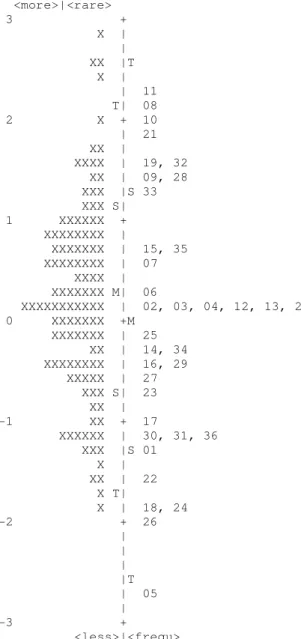
Figure 1 Person-Item Map for the RBI Implementation Checklist ... 71
CHAPTER V
Results from a Training Program to Improve IFSP/IEP Goals and Objectives Through the Routines-Based Interview
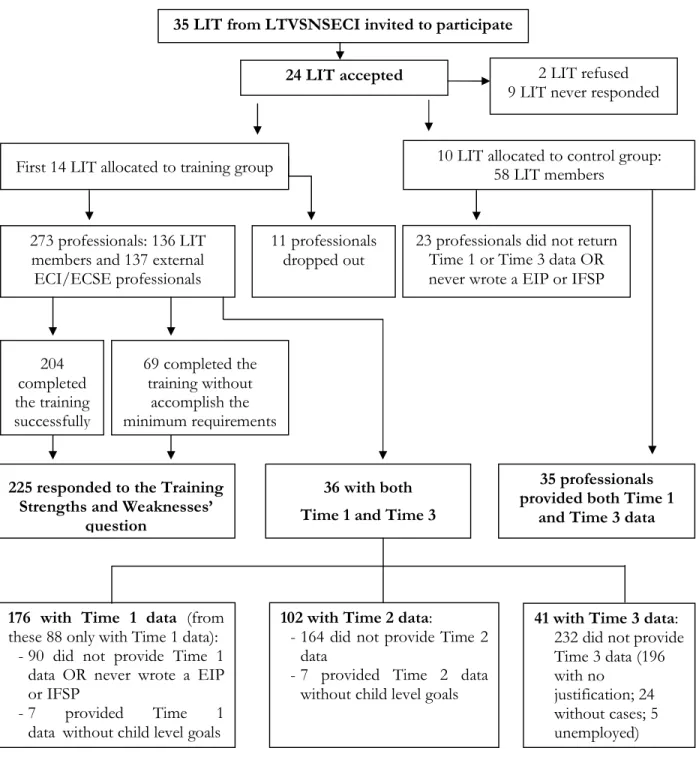
Figure 1. Participants’ flow throughout the study ... 85 Figure 2. Interaction effect between group (training and control conditions) and time (pre-training and follow-up after one year). ... 91
CHAPTER I
General Introduction
As the rapidly evolving science of early child development continues to grow, its complexity will increase and the distance between the working knowledge of service providers and the cutting edge of the science will be staggering. The professional challenges that this raises for the early childhood field are formidable. (Shonkoff & Phillips, 2000, pp.12)
Early Childhood Development
Assuming a constructivist perspective, realities are apprehended in the form of multiple, intangible mental constructions, socially and experientially based. They are local and specific in nature and their form and content are dependent on the individual or group that owns the constructions, which are changeable like their associated "realities”. Investigator and the investigated object are interactively connected, in a transactional and subjective relationship, in the process of a consensus construction more informed and sophisticated than the previous constructions. These different constructions are interpreted using conventional hermeneutical techniques and are compared and contrasted through a dialectical interchange (Guba & Lincoln, 1994).
Psychology studies the “changing relations among psychological and environmental aspects of holistic units” (Altman & Rogoff, 1987), aspects that coexist as intrinsic characteristics inseparable from the whole. Change is seen as a characteristic of the holistic units, and is not associated with an ideal predetermined status that, when achieved, implicates the absence of new changes. The transactional vision in psychology is centered in persons’ configurations, psychological processes and contexts, and changing relationships (Altman & Rogoff). Theoretical models prevalent in Developmental Psychology consider human development as a result of processes of reciprocal and dynamic interaction between the person and the context. This vision is central to the transactional model (Sameroff & Fiese, 1990, 2000) and the bioecological model (Bronfenbrenner & Morris, 1998).
In the transactional model, development is seen as a complex function of the interaction between the child and the environment over time, resulting in continuous and dynamic interactions of the child and the experiences offered by the child’s family and social context. Development outcomes are, therefore, the product of the combination of an individual and his experience, with equal emphasis given to the effects of the child and the environment, so that the experiences provided by the environment and the child cannot be seen as independent (Sameroff & Fiese, 1990, 2000). This model also introduces the regulation model of development, according to which the child's behavior is a result of transactions between genotype (source of biological
organization), phenotype (the child) and environtype [source of external experiences - subsystems that do not only transact with the child, but also between them - and that operates through codes: (a) the cultural code, which corresponds to socialization, control, and support of culture beliefs; (b) the family code, which corresponds to patterns of family interaction and intergenerational history; and (c) the personal code, which corresponds to the beliefs, values, and personality of the parents] (Sameroff & Fiese). From birth the child is involved in relationships with others and it is by external regulation that self-regulation will develop and progressively take ground. Considering the complexity of the regulation, the purpose, the level, and the nature of representations of the child's contribution, Sameroff and Fiese (1990) divided the development regulations in three categories, organized at different levels of the environtype: (1) Macroregulations, that are predominantly large intentional changes in experience and that continue for long periods of time, and the modal form of regulation in cultural code; (2) Miniregulations, that are predominantly daily activities of care, and the modal shape of the family code, and (3) Microregulations, that are almost automatic patterns and momentary interactions that take place at the interpersonal level (Sameroff & Fiese, 1990, 2000).
According to the bioecological model, human development is seen as taking place “through processes of progressively more complex reciprocal interaction between an active, evolving biopsychological human organism and the persons, objects, and symbols in its immediate external environment” (Bronfenbrenner & Morris, 1998, p. 996). The effectiveness of an interaction depends on its regularity over extended periods of time. These forms of continued interaction in the immediate environment are called proximal processes (Bronfenbrenner & Morris). The proximal processes function as engines of development, involving a transfer of energy between human beings in development and persons, objects, and symbols of the immediate environment. The transfer can occur in one direction or in both, separately or simultaneously. The proximal processes are distinguished in terms of two types of development results produced: (1) competence, related with demonstrated acquisition of knowledge, skills, and abilities; and (2) dysfunction, related with recurrent manifestations of difficulties (Bronfenbrenner & Morris). To understand the difference between these two types of results we can turn to the dimensions of the extent of contact maintained between the developing person and proximal processes in which the person engages (exposure), and that are: duration, frequency, interruption (predictability), timing (adjustment) and intensity (Bronfenbrenner & Evans, 2000). The influence of proximal processes depends on its four interrelated elements - form, power, content, and direction - that vary systematically as a function of the characteristics of the developing person, the immediate and remote environmental context in which the processes are taking place, the social continuities and changes that occur throughout the course of life, the historical period in
which the person lives, and the nature of development outcomes in consideration (Bronfenbrenner & Evans).
Recently, Sameroff (2010), advocating that researchers need to be aware that they are just studying a part of the whole which consists of multiple interacting dynamic systems, proposed a unifying theory of development. This theory integrates in a comprehensive view, the models presented above (the transactional model – a regulation model - and the bioecological model – a contextual model), the personal change model (seen as a process of stages in which a period of stability of functioning is followed by a transition to a structurally different period of stability presumed to reflect a wider cognitive and social functioning), and the representational model (which describes how representations are an internal summary of the external world, more or less elaborate, that serve an adaptive function of bringing order to the changing world, producing a set of expectations of how things should fit), containing, according to the author, the influences of life known path (Sameroff).
Sameroff (2010) formulates the structure of this model from the biopsychosocial aspects of the person in context. These aspects include a self-regulation system, a biopsychological self system (composed of psychological domains overlapping in cognitive and emotional spheres of intelligence, mental health, social competence, and identity, among others, which are facilitated by, and interact with, a set of interacting biological processes), which interacts with the external regulation system, composed by the different contexts of interaction of the social ecology, including family, school, neighborhood, community, global and geopolitical influences. The formulation of the process adds the temporal dimension of personal change to the biopsychosocial model. All aspects of the model described above are impregnated by representations of the interacting identities, attitudes, beliefs, and attributions of child, the family, the culture and the organizational structure of social institutions. The unifying theory of development specifies what will be required to explain any phenomenon of development without making specific predictions (Sameroff).
These models emphasize the importance of reciprocal influence processes, which occur in the contexts in which the child directly moves, on development results. The transactional model emphasizes the importance of the experience of regulation promoted by caregivers in self-regulation, namely through micro and miniregulations (Sameroff, 2010; Sameroff & Fiese, 1990, 2000). In turn, in the bioecological model (Bronfenbrenner & Evans, 2000), the dimensions of the contact maintained between the developing person and proximal processes in which the person engages allow for the recognition of the kind of results in development (competence vs. dysfunction). Based on the ecological model, Garbarino and Ganzel (2000) define sociocultural opportunities and risks as social influences operating in psychological or sociological terms.
Opportunities for development in a microsystem (the immediate context in which the individual develops) are related to the availability of continuous, reciprocal, and multifaceted relationships that enhance play, work, and love over time; in turn, opportunities within a mesosystem depend on the number and quality of its connections.
The crucial role that families and communities play in the process of reciprocal influence, highlighted by the models referred above, providing the supportive relationships and positive learning experiences that children need for a healthy development is supported by decades of research. This extensive, complex, and multidisciplinary body of research was reviewed in the late 2000 by a committee on integrating the Science of Early Childhood Development, established by the National Research Council and the Institute of Medicine, and culminated in a report entitled “From Neurons to Neighborhoods: The Science of Early Childhood Development”(Shonkoff & Phillips, 2000). The report conclusions enhance: (1) the dynamic and continuous interaction between genetics and environment as well as the significant developmental impacts of early life experiences, caregiving relationships, and environmental threats; (2) how the early relationships are crucial to a healthy development, being the source of adaptation or dysfunction; (3) the extraordinary development, during the first months and years of life, of emotional, social, regulatory, and moral capabilities as well as linguistic and cognitive skills, all intertwined; and (4) that well-designed interventions, that combine child-focused activities with explicit attention to parent-child relationships, with clearly defined (and measurable) goals matched by clear delineation of intervention strategies, can shift the odds in favor of more adaptive developmental outcomes (Shonkoff & Phillips).
The National Institute of Child Health and Human Development (NICHD) began in the 90s a large scale, longitudinal, and prospective study on the effects of early child care on children's development, the Study of Early Child Care and Youth Development (SECCYD) (NICHD Early Child Care Research Network, 2006). The results of this study, designed with the aim of describing the associations between quality, quantity, and type of care, using a single model, and comparing the magnitude of the effects of these aspects with the effects of parenting, showed that both the family and early childhood education and care affect the development of children attending, and allowed for the identification of specific features of family and care that affect children's development (see NICHD Early child Care Research Network, 2006).
Early Childhood Intervention
Early childhood intervention (ECI) is premised in the belief that formalized services can increase adaptive development outcomes in children that are experiencing a delay between what they are able to do across one or more developmental domains and what is expected for their
age, regardless of the reason for this delay (biological risk, environmental risk, established risk, or a combination) (Bruder, 2010; Shonkoff & Phillips, 2000). This population is as heterogeneous as the general population regarding the diversity of backgrounds, family structures, and developmental disabilities and, therefore, in the report mentioned above early childhood intervention is described as “an individualized strategy designed to increase the probability of a desired outcome, and not as a developmental panacea for all children under all circumstances. It is the art of the possible, based on the science of early childhood development” (Shonkoff & Phillips, p. 32).
By the end of 2000, the Division for Early Childhood (DEC) published an update on the work conducted in 1993 regarding Recommended Practices in Early intervention and Early Childhood Special Education. They field validated 240 practices synthesized from the information collected through (1) the review of research literature for practices that resulted in improved outcomes, from over 1000 articles from 48 journals; and (2) the conduction of focus groups with researchers and stakeholders (parents, practitioners, and administrators). These recommended practices are organized in 7 strands (5 of direct service practices and 2 of indirect supports) and grouped under unifying statements rooted in family-centeredness (where professionals and family work collaboratively and family is expected to make decisions regarding planning, delivery, and evaluation), and in a clear focus on natural and inclusive environments (where children’s development is promoted through systematic procedures within and across environments, activities, and routines) (Sandall, McLean, & Smith, 2000).
Research continued to ground these standards. A meta-analysis on family-centered practices by Dunst, Trivette, and Hamby (2007) concluded that these should incorporate respect for families’ decision making and opportunities for families to make choices, since the effect of professional practices on intervention outcomes is mediated by self-efficacy beliefs. In the same year, Dunst (2007) presented a definition of Early (Childhood) Intervention, based on these standards, as:
the experiences and opportunities afforded infants and toddlers with disabilities by children’s parents and other primary caregivers that are intended to promote the children’s acquisition and use of behavioral competencies to shape and influence their prosocial interactions with people and objects. (p. 162
)
An U.S. workgroup assembled by the Office of Special Education Programs Technical Assistance (OSEP TA) Community of Practice on Part C Settings: Services in Natural Environments produced, among other documents, the Mission and Key Principles for Providing Early Intervention Services in Natural Environments (Workgroup on Principles and Practices in
Natural Environments (2008a), and Seven Key Principles: Looks Like/Doesn’t Look like (Workgroup on Principles and Practices in Natural Environments (2008b), for providing high-quality early intervention services validated through research, model demonstration, and outreach projects. The seven principles are the following:
1. Infants and toddlers learn best through every day experiences and interactions with familiar people in familiar contexts.
2. All families, with the necessary supports and resources, can enhance their children’s learning and development.
3. The primary role of service provider in early intervention is to work with and support the family members and caregivers in a child’s life.
4. The early intervention process, from initial contacts through transition, must be dynamic and individualized to reflect the child’s and family member’s preferences, learning styles, and cultural beliefs.
5. Individualized Family Service Plans (IFSP) outcomes must be functional and based on children’s and families’ needs and priorities.
6. The family’s priorities needs and interests are addressed most appropriately by a primary provider who represents and receives team and community support.
7. Interventions with young children and family members must be based on explicit principles, validated practices, best available research, and relevant laws and regulations.
Despite the consensual nature of the content of these different documents, research shows that practices often do not match evidence-based or recommended practices, namely family centeredness and functionality, in early childhood intervention (Campbell & Halbert, 2002; Dunst, 2007). Aiming to understand the persistent gap between recommended and actual practices, in this work we focus on the features of the goals and objectives that drive intervention efforts within ECI and Early Childhood Special Education, addressing one of the key principles for providing high-quality early intervention services in natural environments. Such a focus is based on the assumption that poor intervention outcomes for children can be, at least partially, explained, as Goodman and Bond (1993) argued, by poorly written goals and objectives that are difficult to link to the program and its evaluation. Note that goals and objectives have been found to present low functionality and measurability as well as an insufficient focus on natural routines and environments in both Individualized Education Programs (IEP; Goodman & Bond, 1993;
Grisham-Brown & Hemmeter, 1998; Pretti-Frontczak & Bricker, 2000; Yell & Stecker, 2003), and IFSP (Bailey, Winton, Rouse, & Turnbull, 1990; Jung & Baird, 2003; McWilliam et al., 1998).
Goals and Objectives
Acording to Hornby, Ashby, and Wehmeier (2001), a goal is “something that you hope to achieve: to pursue/ achieve a goal”; an objective is “something that you are trying to achieve: the main / primary / principal objective; to meet/ achieve your objectives”, and an outcome is “the result or effect of an action or event”. Throughout this dissertation, the terms “goals” and “objectives” will be used interchangeably to refer to outcome statements that are written in IEPs and IFSPs and that specify the desired effects of the intervention program or plan.
When written IEP goals and objectives began to be a requirement, pre-service training in this area was not provided in special education and school psychology programs and there were mainly three procedures for writing them: (1) classical behavioral objectives, with the constraint that educators did not seem to know what behavior to measure and got into a “more is better” exercise; (2) develop goals through norm-reference tests, that do not meaningfully measure any relevant functional skills; and (3) broad, vague, but “understandable” goals, that do not specify how progress will be measured and constrain progress evaluation (Shinn & Shinn, 2000). In some cases, these dated ways of writing goals continue to be observed to the present day. Additionally, multidisciplinary teams with discipline specific views of how to write goals and objectives have struggled with this issue.
In the goal setting theory, goals are described as immediate precursors and regulators of human action, meaning that what people will do and how well they will perform in a task is influenced by the goals they have (Locke & Latham, 1990). Even though the vast body of research that supports this theory comes from industrial and organizational psychology (Locke & Latham, 2002), we can find some supporting evidence in rehabilitation (Playford, Siegert, Lavack, & Freeman, 2009). Its specific contribution comes from the fact that it “specifies the factors that affect goals and their relationship to action and performance” (Locke & Latham, 1990, p. 6). According to this theory, there are four mechanisms that mediate goal setting effects: three direct mechanisms brought into play more or less automatically (effort, persistence, and direction) and one indirect mechanism more conscious or deliberated (task strategy development) (Locke & Latham, 1990). Thereby, goals: (1) direct attention and effort toward activities that are relevant to goals and away from the ones that are irrelevant, serving a directive function, particularly if goals are clear and specific - direction; (2) affect intensity of effort by leading to a greater physical effort, rate of work, subjective effort or physiological arousal in more difficulty goals, providing that the individual has the necessary abilities and knowledge, serving an energizing function -
effort; (3) affect persistence, prolonging effort over time in harder goals than in easier or vague ones – persistence; and (4) affect action indirectly by activating stored knowledge and skills relevant to the task and triggering the development of knew task strategies, active problem-solving, and creative insights – task strategy development (Locke & Latham, 1990, 2002). These mechanisms are moderated by (1) goal commitment that refers to people’s determination to attain the goal and is facilitated by the next two moderators; (2) importance, that translates how important is the goal attainment to the person and is benefited from the information exchange that arises from participating in decision-making; and (3) self-efficacy, that is how the person evaluates his or her capacity to determine, organize, and execute the necessary courses of action, and that can be raised by adequate training, role modeling, and information about strategies, among others; (4) feedback regarding progress in relation to the goal, which allows for the adjustment of level or direction of the effort, or of the performance strategies; and (5) task complexity, that states that complex tasks require greater use of cognitive and other skills and can benefit from the decomposition in proximal outcome goals and feedback (Lee, Locke, & Latham, 1989; Locke & Latham, 2002).
These mechanisms and moderators theoretically support the criteria to meet high-quality goals described by researchers in the early childhood intervention field such as Bailey et al. (1998), Jung and McWilliam (2005), McWilliam (2010), and McWilliam et al. (1998): (a) be appropriate for the context, supporting natural caregivers’ and families’ routines and reflecting real-live situations; (b) reflect family priorities; (c) address meaningful skills necessary or useful for the child’s participation in family, classroom, and community routines; (d) be free of jargon; (e) be specific and measurable, with meaningful criteria for generalization and timeliness. Thus, our belief is that, when services and professionals assimilate family-centeredness and functionality premises, goals will be of higher quality because, as parents and caregivers are effective participants in the process of assessment, planning, and implementation, the chosen goals will be of actual importance to them, they will be more committed with the goals, and present increased self-efficacy. In addition, professionals have a fundamental role in adjusting task complexity through feedback and disassembling of more complex goals. Goal-setting theory has also translation in the actual implementation of the goals and in goals achievement. However, that is out of the scope of our task with this dissertation.
Present Work
Research shows that the quality of U.S. IEP and IFSP goals is low (Goodman & Bond, 1993; Grisham-Brown & Hemmeter, 1998; Jung & McWilliam, 2005; Pretti-Frontczak & Bricker, 2000; Yell & Stecker, 2003), raising concerns about the effectiveness of interventions based on
such goals in enhancing children’s developmental outcomes and the need of specific professionals’ training in this area. Considering the scarcity of studies that investigated the quality of Portuguese EIP and IFSP goals and objectives, in the first study we aimed to assess the quality of goals and objectives developed by Portuguese professionals in early childhood special education, thereby confirming if their quality level is in line with international studies.
Having confirmed the low quality of Portuguese IEPs’ goals and objectives and hypothesizing that such low quality is associated with a lack of full understanding of family-centered practices, we set out to develop a training targeting ECI professionals skills in writing high-quality goals and objectives, by addressing knowledge and skills consistent with a family-centered conceptual framework (Jung & McWilliam, 2005). In designing this training we assumed that even more important than how goals and objectives are written is the process that leads to their setting and how it incorporates professionals and families beliefs and underlying philosophy. Thus, the second study describes a training program focused on improving the quality of goals and objectives developed by early childhood intervention professional by using the Routines-Based Early Intervention approach (RBEI, McWilliam, 2010). In Chapter III, we describe how such training was developed, piloted, and implemented. We further describe its content and methods, detailing the specific strategies for adult learning in which we grounded our options. Finally, the first training results are presented.
The Routines-Based Interview (RBI) is a central component in the RBEI and, consequently, in the training which is the centerpiece of the work presented in this dissertation. As part of our effort to understand how to reliably assess the fidelity of implementation of this fundamental process, we investigated the psychometric properties of the RBI Implementation Checklist (Rasmussen & McWilliam, 2010), a measure used in the training to monitor the implementation of the RBI and produce feedback for trainees. Therefore, the third study reported in this dissertation used Rash Analysis to address this goal, thus including a methodological contribution to the field.
The fourth and final study was designed to investigate the social validity of the training and further understand its effectiveness. We listed to participants “voices” by asking them about the strengths and weaknesses of the training and thus getting a deeper understanding of their satisfaction. We investigated the medium-term outcomes of the training by adding a comparison condition (i.e., data from a control group) that helped eliminate alternative explanations for the obtained effects. Finally, we investigate the associations between improvement in the quality of IEP/IFSP goals and objectives and selected features of trainees and training procedures, aiming to further comprehend the conditions for its effectiveness.
REFERENCES
Altman, I., & Rogoff, B. (1987). World views in psychology: Trait, interactional, organismic, and transactional perspectives. In D. Stokols & I. Altman (Eds.), Handbook of environmental psychology (pp. 7-40). New York, NY: John Wiley.
Bailey, D. B., Jr., McWilliam, R. A., Darkes, L. A., Hebbler, K., Simeonsson, R. J., Spiker, D., & Wagner, M. (1998). Family outcomes in early intervention: A framework for program evaluation and efficacy research. Exceptional Children, 64, 313-328.
Bailey, D. B., Jr., Winton, P. J., Rouse, L., & Turnbull, A. P. (1990). Family goals in infant intervention: Analysis and issues. Journal of Early Intervention, 14, 15-26.
Bronfenbrenner, U., & Evans, E. W. (2000). Developmental science in the 21st century: Emerging questions, theoretical models, research designs and empirical findings. Social Development, 9, 115-125.
Bronfenbrenner, U. & Morris, P. (1998). The ecology of developmental processes. In R. M. Lerner (Vol. Ed.) & W. Damon (Series Ed.), Handbook of child psychology, Vol. 1: Theoretical models of human development (5th ed.), (pp. 993-1028). New York, NY: Wiley.
Bruder, M. B. (2010). Early childhood intervention: A promise to children and families for their future. Exceptional Children, 76 (3), 339-355.
Campbell, P. H., & Halbert, J. (2002). Between research and practice: Provider perspectives on early intervention. Topics in Early Childhood Special Education, 22(4), 211-224.
Dunst, C. J. (2007). Early intervention for infants and toddlers with developmental disabilities. In S. L. Odom, R. H. Horner, M. Snell, & J. Black (Eds.), Handbook of developmental disabilities (pp. 161-180). New York, NY: Guilford Press.
Dunst, C. J., Trivette, C. M., & Hamby, D. W. (2007). Meta-analysis of family-centered helpgiving practices research. Mental Retardation and Developmental Disabilities Research Reviews, 13, 370-378.
Garbarino, J., & Ganzel, B. (2000). The human ecology of early risk. In S. J. Meisels & J. P. Shonkoff (Eds.), Handbook of early childhood intervention (2nd ed.) (pp. 76-93). Cambridge: Cambridge University Press.
Goodman, J., & Bond, L. (1993). The individualized education program: A retrospective critique. Journal of Special Education, 26, 408-422.
Grisham-Brown, J. F., & Hemmeter, M. L. (1998). Writing IEP goals and objectives: Reflecting an activity-based approach to instruction for young children with disabilities. Young Exceptional Children, 1(3), 2-10.
Guba, E. G., & Lincoln, Y. S. (1994). Competing paradigms in qualitative research. In N. K. Denzin & Y. S. Lincoln (Eds.), Handbook of qualitative research (pp. 105-117). Thousand Oaks: Sage.
Hornby, A. S., Ashby, M., & Wehmeier, S. (2001). Oxford advanced learner's dictionary of current English. Oxford: Oxford University Press.
Jung, L. A., & Baird, S. M. (2003). Effects of service coordinator variables on individualized family service plan. Journal of Early Intervention, 25, 206-218.
Jung, L. A., & McWilliam, R. A. (2005). Reliability and validity of scores on the IFSP Rating Scale. Journal of Early Intervention, 27, 125-136.
Lee, T. W., Locke, E. A., & Latham, G. P. (1989). Goals setting theory and job performance. In L. A. Percein (Ed.), Goals concepts in personality and social psychology (pp. 291-326). Hillsdale, N.J.: Lawrence Erlbaum Associates.
Locke, E. A., & Latham, G. P. (1990). A theory of goal setting and task performance. New Jersey: Prentice-Hall, Inc.
Locke, E. A., & Latham, G. P. (2002). Building a practically useful theory of goal setting and task motivation: A 35-year odyssey. American Psychologist, 57 (9), 705-717. DOI:10.1037//0003-066X.57.9.705
McWilliam, R. A. (2010). Routines-based early intervention: Strategies for supporting young children with disabilities. Baltimore, MD: Brookes Publishing.
McWilliam, R. A., Ferguson, A., Harbin, G. L., Porter, P., Munn, D., & Vandivier, P. (1998). The family-centeredness of individualized family service plans. Topics in Early Childhood Special Education, 18, 69-83.
Nacional Institute of Child Health and Human Development Early Child Care Research Network (2006). Child care effect sizes for the NICHD Study of Early Care and Youth Development. American Psychologist, 61, 99-116.
Playford, E. D., Siegert, R., Lavack,W., & Freeman, J. (2009). Areas of consensus and controversy about goal setting in rehabilitation: a conference report. Clinical Rehabilitation, 23(4), 334-344. Doi: 10.1177/0269215509103506.
Pretti-Frontczak, K., & Bricker, D. (2000). Enhancing the quality of Individualized Education Plan (IEP) goals and objectives. Journal of Early Intervention, 23, 92-105.
Rasmussen, J. L., & McWilliam, R. A. (2010). RBI Implementation Checklist. In R. A. McWilliam (Ed.), Working with families of young children with special needs (pp. 44-47). New York, NY: The Guilford Press.
Sameroff, A. (2010). A unified theory of development: A dialectic integration of nature and nurture. Child Development, 81(1), 6-22.
Sameroff, A. J., & Fiese, B. H. (1990). Transactional regulation and early intervention. In S. J. Meisels & J. P. Shonkoff (Eds.), Handbook of early childhood intervention (pp. 119-149). Cambridge: Cambridge University Press.
Sameroff, A. J., & Fiese, B. H. (2000). Transactional regulation: The developmental ecology of early intervention. In S. J. Meisels & J. P. Shonkoff (Eds.), Handbook of early childhood intervention (2nd ed.) (pp. 135-159). Cambridge: Cambridge University Press.
Sandall, S., McLean, M., & Smith, B. (2000). DEC recommended practices in early intervention/ early childhood special education. Longmont, CO: Sopris West.
Shinn, M. R., & Shinn, M. M. (2000). Writing and evaluating IEP goals and making appropriate revisions to ensure participation and progress in the general curriculum. In C. F. Telzrow & M. Tankersley (Eds.), IDEA Amendments of 1997: Practice guidelines for school-based teams (pp. 351-381). Bethesda, MD: National Association of School Psychologists.
Shonkoff, J.P., & Phillips, D. (Eds)(2000). From neurons to neighborhoods: The science of early childhood development. Washington, DC: National Academy Press.
Workgroup on Principles and Practices in Natural Environments, OSEP TA Community of Practice-Part C Settings. (2008a, March). Agreed upon mission and key principles for providing services in natural environments. Retrieved August 5, 2013, from
http://ectacenter.org/~pdfs/topics/families/Finalmissionandprinciples3_11_08.pdf. Workgroup on Principles and Practices in Natural Environments, OSEP TA Community of
Practice-Part C Settings. (2008b, March). Seven key principles: Looks like/ doesn’t look like. Retrieved August 5, 2013, from
http://ectacenter.org/~pdfs/topics/families/Principles_LooksLike_DoesntLookLike3_ 11_08.pdf
Yell, M. L., & Stecker, P. M. (2003). Developing legally correct and educational meaningful IEPs using curriculum-based measurement. Assessment for Effective Intervention, 28, 73-88.
CHAPTER II
Quality of Individualized Education Program Goals of
Preschoolers with Disabilities
ii
Boavida, T., Aguiar, C., McWilliam, R. A., & Pimentel, J. (2010). Quality of Individualized Education Program goals of Portuguese preschoolers with disabilities. Infants and Young Children, 23(3), 233–243.
ABSTRACT
Individualized education programs (IEPs) are a fundamental mechanism for making special education services unique for the child and for enhancing the developmental outcomes of children with disabilities. If written IEP goals diverge, however, from recommended practices, they might result in ineffective interventions. This study investigated the quality of Portuguese IEP goals written for 83 preschoolers with disabilities attending public preschool classrooms from 21 school groups from the District of Lisbon, Portugal. The quality of IEP goals was measured using the Goal Functionality Scale III (McWilliam, 2009) and the IEP/Individualized Family Service Plan Goals and Objectives Rating Instrument (Notari, 1988). Results showed that IEP goals were too broad, lacked functionality and measurability, and did not appropriately address skills within the context of natural routines and settings. Moreover, findings indicate that measurability was slightly higher the more severe children’s disabilities were and that autonomy (i.e., self-help) goals were somewhat more functional and measurable than were social, language, cognitive, and motor goals. Findings raise concerns about the effectiveness of interventions based on such goals in enhancing children’s developmental outcomes and suggest the need for clear guidelines on the development of effective IEPs and for teacher training on developing high-quality goals.
INTRODUCTION
In Portugal, where special education schools have been progressively converted into (and accredited as) resource centers for inclusion (Ministério da Educação, 2007), special education and early intervention legislation emphasizes inclusion (Decreto-Lei n.º 3/2008; Decreto –Lei n.º 281/2009). The last national reports indicated that approximately 2% of children enrolled in public preschool had disabilities (Inspecção-Geral da Educação, 2009) and that 33% of preschool classrooms included at least one child with disabilities (Ministério da Educação, 2007).
Early childhood inclusion is a recommended practice because it embodies every child’s right to full participation and, one hopes, to reaching his or her full potential (DEC/NAEYC, 2009). Positive results of inclusion are reported for both children with disabilities and children with typical development (Odom, 2000). Thus, the most appropriate intervention settings in early childhood are the contexts where same-age, typically developing children spend their time— that is, the family home and the child care or preschool classroom (Gamelas, 2003). Odom et al (2004) cite several studies suggesting that the inclusion of children with disabilities in preschool has benefits for children both with and without disabilities and for their families and communities. They note, however, that many of the benefits occur only with intentional and planned intervention. Wolery (2000) maintains that the acquisition of important developmental skills in children with disabilities is possible only through effective mediation by the adult, the establishment of individualized goals, and the definition of strategies to achieve and monitor them. DEC/NAEYC’s first recommendation addresses the creation of high expectations for every child considering that sharing of such expectations leads to the selection of appropriate goals.
The individualized education program (IEP) has been a fundamental mechanism for the individualization of teaching. The goals and objectives of the IEP, if developed through a systematic evaluation process and directly connected to intervention, can contribute to the individualization of services and to improved development of children (Pretti-Frontczak & Bricker, 2000). Quality goals and objectives are important (a) for professionals and natural caregivers to know what, how, when, and where to teach; (b) for monitoring children’s progress; and (c) for evaluating and reporting the effects of the intervention. IEP goals and objectives often diverge, however, from recommended practices, because they are poorly written and are not functional or contextualized (Grisham-Brown & Hemmeter, 1998; Pretti-Frontczak & Bricker; Yell & Stecker, 2003), potentially resulting in ineffective interventions for children (Goodman & Bond, 1993).
High-quality IEP goals and objectives must be family centered and reflect recommended practices, which means that they should (a) be context appropriate and supportive of natural caregivers and families’ routines, (b) address skills necessary or useful to the child’s participation in these routines, (c) be measurable (i.e., specific), (d) and have meaningful generalization and timeframe criteria (Bailey et al., 1998; Jung & McWilliam, 2005; McWilliam, in press; McWilliam et al., 1998).
Although in Portugal IEPs have been required by law since 1991 (Decreto-Lei nº 319/91), we were not able to find any Portuguese data concerning the quality of IEP goals and objectives. The recent Decree-Law number 281/2009, which established the national early childhood intervention system, included a very general requirement for an individual early intervention plan, with little guidance as to content. The other recent decree-law, number 3/2008 (Decreto-Lei nº3/2008), upgraded the 1991 special education law and included changes related to the process for developing IEPs and to the structure of IEPs: It required that IEPs be jointly developed by the classroom teacher, the special education teacher, and parents. The law also defined the International Classification of Functioning, Disability and Health – Children and Youth (World Health Organization, 2007; ICF-CY) as the method for documenting children’s functioning and the environmental facilitators and barriers to social and educational participation. Despite these requirements, no official guidelines on the formulation of IEPs goals and objectives are provided, and professional training on writing high-quality outcomes for children is virtually nonexistent.
In this study, we aimed to (a) document the quality of the goals (or objectives when goals were merely indications of the developmental domain being addressed) in IEPs of Portuguese children with disabilities attending inclusive public preschool settings; (b) investigate the associations among children’s severity of disability, teacher education and experience in special education, and the quality of IEP goals; and (c) investigate the quality of IEP goals as a function of developmental domain. Based on the literature mentioned earlier, we expected goals to be of lower quality when the child’s disability was more severe and of higher quality when the teachers involved were better educated and more experienced.
METHOD
Participants
Data were collected from 21 randomly selected school groups from the existing 145 in the District of Lisbon (a District with around 2,200,000 inhabitants). In Portugal, a school group
is a conglomerate of schools across ages, with some groups having resources for specific needs. From the website of the Direcção Regional de Educação de Lisboa (Lisbon Regional Education Directorate), a list of the 145 school groups of the District of Lisbon was made. After assigning numbers to all groups, a random-number sequence (developed from an internet program) was applied. Letters of invitation describing the research and soliciting information about inclusive preschool classrooms (i. e., classrooms with at least one child with disabilities) in the school group were sent to the board of directors of the first 50 groups randomly selected. The sample-size goal was 100 children, determined through power analysis. Because of a low positive response rate (32%) from the first 50 groups, letters to the next 50 groups were sent. Once school groups expressed interest in the study, meetings with all the classroom teachers and the special education teachers from the interested school groups were held. In these meetings, written information describing the research and consent forms were distributed to all potential participants, including families of children with disabilities. The result of this recruitment procedure was 32 special education teachers from 21 school groups. (Classroom teacher participation was not relevant for this analysis).
Eighty-three preschoolers with disabilities participated, meaning their IEPs written by 32 special education teachers were collected. Therefore, IEPs were nested within teachers at a range of 1-8 per teacher. Teachers’ age averaged 43.83 years (SD = 9.29), teachers’ education averaged 17.41 years (SD =1.27), and teachers’ experience in special education averaged 9.39 years (SD =6.42). Children’s age averaged 67.24 months (SD = 13.36), and 37% of them presented global development delay, 25.9% were diagnosed with an autism spectrum disorder, 8.6% had cerebral palsy, 8.6% had multiple disabilities, and the remaining 19.7% had other types of disability.
Measures and Procedures
Special education teachers were instructed to complete a questionnaire about themselves and the child with disabilities, including a measure of children’s (dis)ability , and to submit it with the child’s IEP.
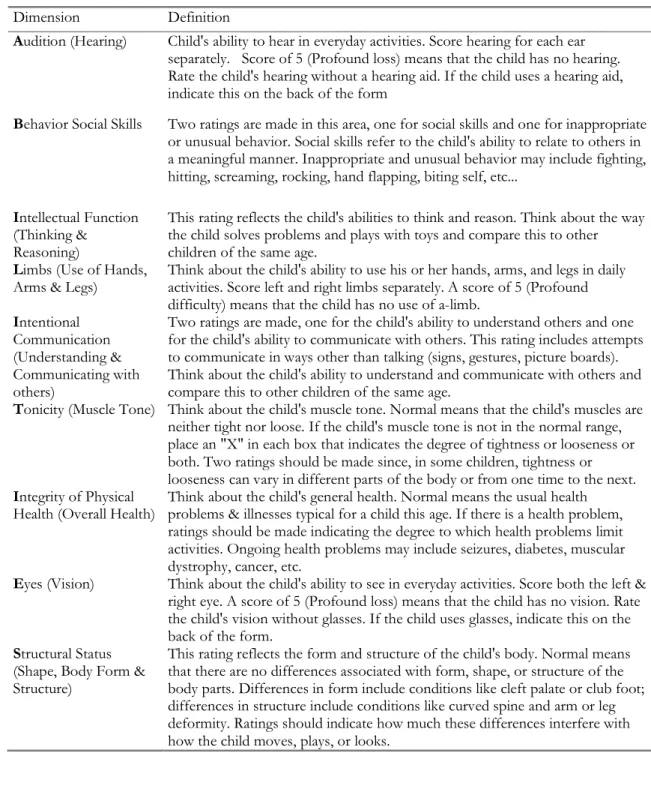
ABILITIES Index. The profiles of the children’s abilities and limitations were based on the ABILITIES Index (Simeonsson & Bailey, 1991). ABILITIES is an acronym for a tool covering nine dimensions shown in Table 1. It was designed to include the following characteristics: (a) a relatively stable and comprehensive profile of a child’s abilities in nine areas; (b) for each dimension or area, a definition of functioning by 6 ordinal levels of difficulty (1 = normal, 2 = suspected difficulty, 3 = mild difficulty, 4 = moderate difficulty, 5 = severe difficulty, 6 = profound difficulty); (c) ordinal levels characterized in functional terms and not in technical terms to facilitate the classification by caregivers, including parents and professionals;
Table 1. ABILITIES Index dimensions (In Simeonsson & Bailey, 1991) Dimension Definition
Audition (Hearing) Child's ability to hear in everyday activities. Score hearing for each ear separately. Score of 5 (Profound loss) means that the child has no hearing. Rate the child's hearing without a hearing aid. If the child uses a hearing aid, indicate this on the back of the form
Behavior Social Skills Two ratings are made in this area, one for social skills and one for inappropriate or unusual behavior. Social skills refer to the child's ability to relate to others in a meaningful manner. Inappropriate and unusual behavior may include fighting, hitting, screaming, rocking, hand flapping, biting self, etc...
Intellectual Function (Thinking &
Reasoning)
This rating reflects the child's abilities to think and reason. Think about the way the child solves problems and plays with toys and compare this to other children of the same age.
Limbs (Use of Hands, Arms & Legs)
Think about the child's ability to use his or her hands, arms, and legs in daily activities. Score left and right limbs separately. A score of 5 (Profound difficulty) means that the child has no use of a-limb.
Intentional Communication (Understanding & Communicating with others)
Two ratings are made, one for the child's ability to understand others and one for the child's ability to communicate with others. This rating includes attempts to communicate in ways other than talking (signs, gestures, picture boards). Think about the child's ability to understand and communicate with others and compare this to other children of the same age.
Tonicity (Muscle Tone) Think about the child's muscle tone. Normal means that the child's muscles are neither tight nor loose. If the child's muscle tone is not in the normal range, place an "X" in each box that indicates the degree of tightness or looseness or both. Two ratings should be made since, in some children, tightness or looseness can vary in different parts of the body or from one time to the next. Integrity of Physical
Health (Overall Health)
Think about the child's general health. Normal means the usual health problems & illnesses typical for a child this age. If there is a health problem, ratings should be made indicating the degree to which health problems limit activities. Ongoing health problems may include seizures, diabetes, muscular dystrophy, cancer, etc.
Eyes (Vision) Think about the child's ability to see in everyday activities. Score both the left & right eye. A score of 5 (Profound loss) means that the child has no vision. Rate the child's vision without glasses. If the child uses glasses, indicate this on the back of the form.
Structural Status (Shape, Body Form & Structure)
This rating reflects the form and structure of the child's body. Normal means that there are no differences associated with form, shape, or structure of the body parts. Differences in form include conditions like cleft palate or club foot; differences in structure include conditions like curved spine and arm or leg deformity. Ratings should indicate how much these differences interfere with how the child moves, plays, or looks.
(d) classification able to be made on the basis of observation, prior knowledge of the child, or other specific information; (e) classifications reflecting more relative than absolute standards for ability or disability levels; (f) classifications to establish a holistic profile of intra-individual differences; (g) a profile emphasizing the abilities and disabilities relevant to individualized intervention; and (h) a profile rather than simply a label, thereby minimizing simplistic categorization of children (Simeonsson, Bailey, Smith, & Buysse, 1995).
For research purposes (and not as a way to generate a composite score for clinical use) one can calculate an overall severity score by multiplying the assigned rating in each of the nine dimensions by the following experimental weights proposed by Simeonsson (R. J. Simeonsson, personal communication, September 9, 2006): Audition = 1.8; Social Skills = 1.4; Inadequate Behavior = 1.7; Intellectual Function= 2.0; Limbs, Hands= 1.5; Limbs, Arms = 1.4; Limbs, Legs = 1.6; Understanding = 1.2; Communicating with others = 1.0; Tonicity, Tightness = 1.5; Tonicity, Looseness = 1.4; Overall Health = 1.5; Vision = 1.7; Structural Status = 1.3. In this study, Cronbach's alpha coefficient for all 19 items was .87.
To evaluate the quality of IEP goals written by the special education teachers, two instruments were used: the Goal Functionality Scale III (GFS III; McWilliam, 2009) and the IEP/Individualized Family Service Plan (IFSP) Goals and Objectives Rating Instrument (GORI; Notari, 1988). A total of 3,158 goals from 83 IEPs were coded individually, first with GFS III and second with GORI. Within every IEP, all goals were first coded using item number 1, and then all goals were coded using item number 2, and so forth. The use of two instruments was to determine convergent validity of the scores and to capture quality features that each instrument idiosyncratically included.
Goal Functionality Scale III. The GFS III was designed to evaluate the quality of IFSP/IEP goals/outcomes. It consisted of seven items: (a) indication of participation in routines (engagement), (b) specificity of the desired behavior, (c) necessity of the skill, (d) quantification of the acquisition criterion, (e) relevance of the acquisition criterion, (f) relevance of the generalization criterion, and (g) relevance of the timeframe criterion. Each goal/outcome was rated independently on a scale of 1-4: not at all, somewhat, much, or very much. The overall quality of a specific goal/outcome was the sum of the scores across the items, so the higher the score for a goal/outcome the higher the quality.
GFS III ratings of IEP goals were made by two researchers who were trained to a criterion of 98% of exact agreement and an intraclass correlation coefficient (ICC) of .58. One of the researchers rated all of the IEPs and the other one 20% of them. The obtained agreement was 99.24% for the item “participation in routines,” with a weighted kappa (Kw) of .62 and an ICC of .75; 95.72% for the item “measurability,” with a Kw of .59, and an ICC of .61; and 92.18% for the item “necessity or usefulness,” with a Kw of .54, and an ICC of .56.
Items 5, 6, and 7 on the GFS III are about the quality of criteria for accomplishing the goal. Although these items were rated, no variance was found (i.e., all goals were rated with a score of 1, so they were excluded from further analyses. Item 4, also related to criteria, was also
excluded because, although exact agreement was 99.62%, Kw and ICC were not acceptable (.13 and .45, respectively). Therefore, only three GFS III items remained for analysis.
IEP/IFSP Goals and Objectives Rating Instrument. The GORI was designed to evaluate IFSP/IEP goals and objectives in five dimensions: (a) functionality, (b) generality, (c) instructional context, (d) measurability, and (e) hierarchical relationships among objectives (i.e., how closely the objective is related to the goal). Each goal was rated independently to determine the presence or absence of 10 different quality indicators. A score of 0 or 1 was assigned to the absence or presence (respectively) of the indicator. To examine the hierarchical relationship between an objective and its corresponding goal, an additional indicator was used with scores of 0, 1, or 2, if the objective was completely unrelated to the goal, if it simply restated the goal, or if it was a necessary step toward attainment of the goal, respectively. For further description of indicators included in each quality dimension see Table 2. The overall quality of a specific goal was the sum of the scores across the quality indicators, so the higher score for a goal the higher the quality (Pretti-Frontczak & Bricker, 2000). In this study, because Cronbach’s alpha coefficient for all 11 indicators was .92, a single composite measure – the GORI overall mean score – computed as the mean of scores across all goals, was used. For each goal, we computed the sum of scores and, for each IEP, we computed the mean of scores across all goals. The possible range for this composite score was 0-12.
GORI was rated by only one researcher, who conducted intrarater agreement checks in 15% of all IEPs, one week later. In this study, mean exact intrarater agreement was 97% and mean kappa was .79. Previously, Pretti-Frontczak and Bricker (2000) reported an interrater percent agreement of over 80% and a mean kappa of .72.
Data Analysis
Descriptive data on ABILITIES, GFS III, and GORI were examined to determine the level of functioning of participating children, the number of goals in each IEP, and the quality of IEP goals. Analysis of variance (Kruskal Wallis Test) and post hoc assessment of independent samples (Mann-Whitney) were run to determine whether the quality of IEP goals varied by developmental domain. Nonparametric statistics were chosen due to violations of the normality assumption on scores of the quality of IEP goals. The first author assigned each goal to one of five domains -motor, autonomy (i.e., self-help), language, social, and cognition. Finally, to determine the convergent validity of the scores of GFS III and GORI and the associations between IEP quality indicators and children’s degree of disability, Spearman’s rho correlation coefficients were computed.
RESULTS
Fifteen percent of participating children were rated by special education teachers as having a profound disability in at least one domain on the Abilities Index. Using the same criterion of one domain, 46% were rated as having a severe disability, 27% were rated as having a moderate disability, 10% were rated as having a mild disability, and 2% were rated as having a suspected disability.
The number of goals per IEP varied widely, ranging from 4 to 95 (M = 38.18, SD = 20.75). The frequency of each GORI indicator (per IEP) ranged from 0% to 46.72%, with hierarchical relations among objectives and inclusion of performance criteria virtually nonexistent and generality related to likelihood of adaptation to a variety of disabilities characterizing almost half the goals (see Table 2).
Table2. Percentage of goals per IEP rated positively on each GORI quality indicator
Dimension Indicator % M SD
Functionality 1. Skill needed to participate in most or all daily activities 25.52 15.35 2. Skill needed to complete most or all daily activities 8.30 7.79
Generality
3. Skill represents a general concept or class of responses 10.57 8.98 4. Skill can be adapted to a variety of disabilities 46.72 25.70 5. Skill can be generalized across a variety of settings, materials,
and/or people
27.88 16.77
Context
6. Skill can be taught across daily activities 30.50 17.64 7. Skill can be taught by various team members during everyday
situations
24.33 15.02
Measurability
8. Skill can be seen or heard 33.57 20.58
9. Skill can be counted or measured 10.58 10.49
10. Inclusion of performance criterion 2.00 3.52
Hierarchical relations
11.1.The objective restated the goal 0.12 0.61
11.2.The objective was a necessary step toward attainment of the goal 0.00 0.00
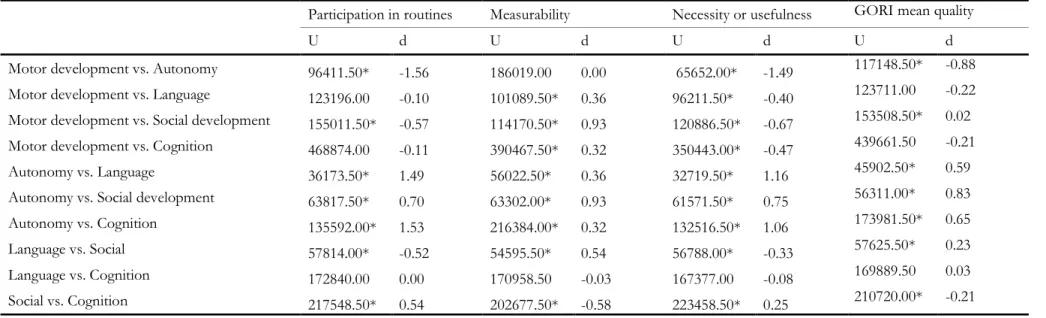
Table 3 presents the mean scores obtained on GFS III items and on the GORI composite measure. It also includes descriptive statistics of IEP goal quality indicators by five developmental domains. Computation of a Kruskal-Wallis test with developmental domains as independent variables and GFS III indicators and GORI mean quality as dependent measures indicated that all four measures of IEP goal quality varied as a function of developmental domain: for participation in routines, H(4) = 1037.28, p < .001; for measurability, H(4) = 178.33, p <.001; for necessity or usefulness, H(4) = 546.36, p < .001; and for the GORI mean quality score, H(4) = 191.51, p < .001.