Received 04 Nov., 2012 Accepted 03 May, 2013 (005923)
1 Centro de Biotecnologia Vegetal, Faculdade de Ciências e Tecnologia, Universidade do Algarve – UAlg, Faro, Portugal, e-mail: [email protected] 2 Faculdade de Ciências e Tecnologia, Universidade do Algarve – UAlg, Faro, Portugal
*Corresponding author
Phenols, flavonoids and antioxidant activity of aqueous and methanolic extracts of
propolis (
Apis mellifera
L.) from Algarve, South Portugal
Maria Graça MIGUEL1*, Susana NUNES2, Susana Anahi DANDLEN2, Ana Maria CAVACO2, Maria Dulce
ANTUNES1
1 Introduction
Propolis is a resinous substance collected by honeybees from leaf buds and exudates from various plant sources, which is employed to seal and repair honeycomb. Propolis has several functions in beehives: seal holes in the hives, exclude draught, protect against external invaders, and mummify their carcasses. In addition to these functions, propolis is also important for bees in the prevention of growth and decomposition of micro-organisms (Pietta et al., 2002; Santos et al., 2002; Salomão et al., 2004).
Usually, propolis is not used as raw material but rather as an extract, and several solvents have been used to obtain these extracts. Ethanol 70 %, methanol, or water have been referred as good solvents to extract polyphenolic compounds from propolis (Gómez-Caravaca et al., 2006; Martos et al., 1997; Cao et al., 2004; Nakajima et al., 2007).
Propolis generally contains several types of compounds, such as polyphenols (flavonoids and phenolic acids and their esters), terpenoids, steroids, and aminoacids (Kumazawa et al., 2004). Polyphenols that can be found in the resinous part of raw propolis have been proved to inhibit specific enzymes, stimulate some hormones and neurotransmitters, scavenge free radicals, and prevent multiplication of micro-organisms (Cao et al., 2004; Sforcin, 2007). However, such properties can change depending on the composition and polyphenols content that in turn depend on several factors including season, vegetation of the area, geographical origin, and the state of propolis (fresh or aged) (Cao et al., 2004).
In Brazil, there is legislation to regulate the quality of ethanol extract of propolis (Tagliacollo & Orsi, 2011); however, in Portugal, only very recently has there been studies concerning the chemical and biological properties of propolis from Portugal (Falcão et al., 2010; Miguel et al., 2010; Cardoso et al., 2011; Valente et al., 2011; Silva et al., 2012).
In the present study, two solvents, water and methanol, were used to extract phenols, including flavonoids, from propolis collected in various areas of Algarve, south Portugal, during two different seasons (winter and spring). Gum rockrose, rosemary, lavender, strawberry tree, and carob tree predominated in the areas where the samples of propolis were collected.
2 Materials and methods
2.1 Propolis
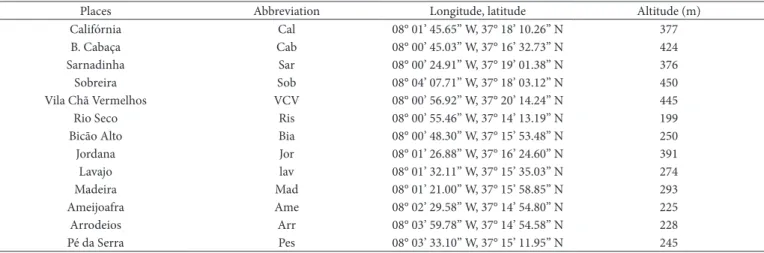
Several samples of propolis were collected in various areas of Algarve during two collection times (winter and spring 2008/2009) for analysis of phenol content and antioxidant activity (Table 1).
2.2 Analysis
Aqueous and methanolic extracts
Propolis (1.0 g) was divided into small pieces and extracted with 10 mL of water at 80 °C for 3 h, as reported elsewhere
Abstract
Propolis is a resinous substance collected by honeybees to seal honeycomb, which has been used in folk medicine due to its antimicrobial and antioxidant properties. In the present study, water and methanol were used to extract phenols and flavonoids from propolis collected in thirteen different areas in the Algarve region during the winter and spring. The ABTS•+, DPPH•, and O2•- scavenging capacity, and metal chelating activity were also evaluated in the propolis samples. Methanol was more effective than water in extracting total phenols (2.93-8.76 mg/mL) (0.93-2.81 mg/mL). Flavones and flavonols were also better extracted with methanol (1.28-2.76 mg/mL) than with water (0.031-0.019 mg/mL). The free radical scavenging activity, ABTS (IC50=0.006-0.036 mg/mL), DPPH (IC50=0.007-0.069 mg/mL) and superoxide (IC50=0.001-0.053 mg/mL), of the samples was also higher in methanolic extracts. The capacity for chelating metal ions was higher in aqueous extracts (41.11-82.35%) than in the methanolic ones (4.33-29.68%). Propolis from three locations of Algarve region were richer in phenols and had better capacity for scavenging free ABTS and DPPH radicals than the remaining samples. These places are part of a specific zone of Algarve known as Barrocal.
ABTS+ free radical-scavenging activity
The determination of ABTS•+ radical scavenging activity was carried out as reported by Dorman & Hiltunen (2004). Briefly, the ABTS•+ radical was generated by the reaction of an (7 mM) ABTS aqueous solution with K2S2O8 (2.45 mM) in the dark for 16 h adjusting the absorbance at 734 nm to 0.700 at room temperature. The samples (10 µL) were added to 1490 µL ABTS•+, absorbance at 734 nm was read immediately (A0) and after 6 min (A1). Several concentrations were measured, and the percentage inhibition [(A0-A1/A0) x 100] was plotted against the phenol content and IC50 was determined (concentration of total phenol able to scavenger 50% of ABTS•+ free radical).
DPPH free radical-scavenging activity
Fifty microlitres of various concentrations of propolis samples were added to 2 mL of 60 µM methanolic solution of DPPH. Absorbance measurements were read at 517 nm after 20 min of incubation time at room temperature (A1). Absorbance of a blank sample containing the same amount of methanol and DPPH solution acted as the negative control (A0). The percentage inhibition [(A0-A1/A0) × 100] was plotted against the phenol content and IC50 was determined.
Scavenging ability of superoxide anion radical
Scavenging ability of superoxide anion radical was evaluated as previously reported by Nagai et al. (2003). The procedure was initiated by mixing 1.2 mL of 0.05 M sodium carbonate buffer (pH 10.5), 0.1 mL of 3 mM xanthine, 0.1 mL of 3 mM ethylenediaminetetraacetic acid disodium salt (EDTA), 0.1 mL of 0.75 mM nitroblue tetrazolium (NBT), and 0.1 mL of propolis sample.After holding at 25 °C for 10 min, the reaction was started by adding 6 mU xanthine oxidase (XOD) and was carried out at 25 °C for 20 min. Next, the reaction was stopped by adding 0.1 mL of 6 mM CuCl2. The absorbance of the reaction mixture was measured at 560 nm. The amount of the formazan that was reduced from NBT by superoxide was measured, and the inhibition rate was determined. IC50 was calculated by (Midorikawa et al., 2001). This extract was used for analysis
of the aqueous extract. The residue was further extracted with methanol (100 mL) under reflux for 3 h, filtered, and evaporated under reduced pressure without reaching dryness; the final volume was adjusted with methanol. This extract was used for analysis of the methanolic extract.
Total phenolic content
Total phenolic content was determined according to the Folin-Ciocalteau colorimetric method (Singleton; Rossi, 1965). Pinocembrin was used as standard for the calibration curve. The sample (0.5 mL) and 2 mL of sodium carbonate (75 g/L) were added to 2.5 mL of 10% (w/v) Folin-Ciocalteau reagent. After 30 min of reaction at room temperature, absorbance was measured at 765 nm.
Flavone and flavonol content
The content of these groups of compounds was quantified as described by Ahn et al. (2007). Briefly, 0.5 mL of 2% AlCl3 -ethanol solution was added to 0.5 mL of sample or standard. After 1 h at room temperature, absorbance was measured at 420 nm. Quercetin was used as a standard for the construction of the calibration curve.
Flavanone and dihydroflavonol content
The total quantification of flavanone and dihydroflavonol compounds was performed as reported by Popova et al. (2004). Briefly, an aliquot (1 mL) of the sample or standard and 2 mL DNP (2,4-dinitrophenylhydrazine) solution (1 g DNP in 2 mL 96% sulphuric acid, diluted to 100 mL with methanol) were heated at 50 °C for 50 min. After cooling at room temperature, the mixture was diluted to 10 mL with 10% KOH in methanol (w/v). A sample (1 mL of the resulting solution) was added to 10 mL methanol and diluted to 50 mL with methanol. Absorbance was measured at 486 nm.
Table 1. Propolis collection places and their coordinates.
Places Abbreviation Longitude, latitude Altitude (m)
Califórnia Cal 08° 01’ 45.65’’ W, 37° 18’ 10.26’’ N 377
B. Cabaça Cab 08° 00’ 45.03’’ W, 37° 16’ 32.73’’ N 424
Sarnadinha Sar 08° 00’ 24.91’’ W, 37° 19’ 01.38’’ N 376
Sobreira Sob 08° 04’ 07.71’’ W, 37° 18’ 03.12’’ N 450
Vila Chã Vermelhos VCV 08° 00’ 56.92’’ W, 37° 20’ 14.24’’ N 445
Rio Seco Ris 08° 00’ 55.46’’ W, 37° 14’ 13.19’’ N 199
Bicão Alto Bia 08° 00’ 48.30’’ W, 37° 15’ 53.48’’ N 250
Jordana Jor 08° 01’ 26.88’’ W, 37° 16’ 24.60’’ N 391
Lavajo lav 08° 01’ 32.11’’ W, 37° 15’ 35.03’’ N 274
Madeira Mad 08° 01’ 21.00’’ W, 37° 15’ 58.85’’ N 293
Ameijoafra Ame 08° 02’ 29.58’’ W, 37° 14’ 54.80’’ N 225
Arrodeios Arr 08° 03’ 59.78’’ W, 37° 14’ 54.58’’ N 228
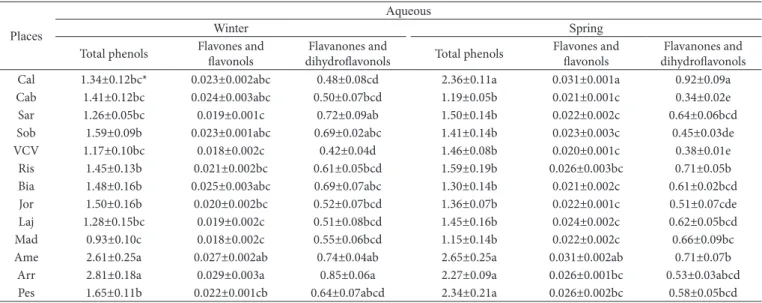
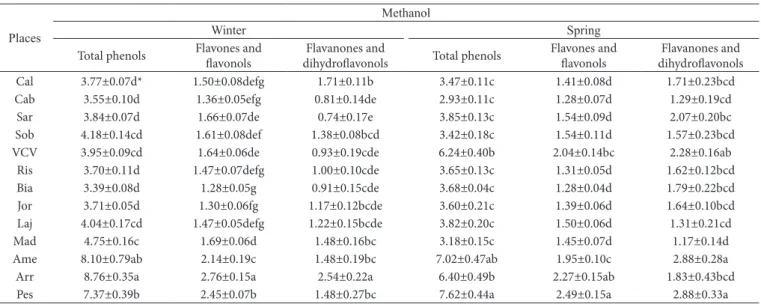
phenol content found in methanolic extracts were about 3-4 times higher than that found in the aqueous extracts. Park et al. (1998)also found that water was not a good solvent to extract phenols from propolis. Some authors (Park & Ikegaki, 1998) reported lower absorption in water extracts of propolis than in ethanolic extracts, in spite of similar absorption spectra at wavelengths in the range 200-500 nm. During spring, relative higher amounts of phenols in the aqueous extracts were found in samples from Ame (2.65 mg/mL), Arr (2.27 mg/mL), Pes (2.34 mg/mL), and Cal (2.36 mg/mL) (Table 2). In the same season, phenol amounts in the methanolic extracts of Ame (7.02 mg/mL), Arr (6.40 mg/mL), and Pes (7.62 mg/mL) were 6 mg/mL higher than those found during the winter (Table 3). The samples of VCV also had relatively higher amounts of total phenols (6.24 mg/mL).
The effects of the geographic origin on the chemical composition of propolis and its biological activities have already been reported (Bankova et al., 2000; Kumazawa et al., 2004; Bankova, 2005). In Portugal, extracts of propolis collected in Trás-os-Montes (Northest) and Beira Interior also had different phenol concentrations (Moreira et al., 2008). In the same region (Algarve), it was found in the present study that different places showed different phenol contents.
Flavanones and dihydroflavonols were 20-30 times higher compared to flavonols and flavones in the aqueous extracts (Table 2). In contrast, the values of these two groups of flavonoids were of the same order of magnitude in the methanolic extracts (Table 3). Owing to their phenolic nature, flavonoids are quite polar but are poorly water soluble, which can explain the higher concentrations of these two groups of flavonoids in methanolic extracts than in the aqueous extracts (Table 2 and 3). However, it is noteworthy that water was less effective in extracting flavones and flavonols than flavanones and dihydroflavonols. Comparing the concentrations of flavones plotting in a graphic the inhibition ratio against the content of
total phenols.
Chelating metal ions
The degree of chelating ferrous ions by propolis was evaluated according to the method described by Wang et al. (2004). The samples were incubated with 0.05 mL of FeCl2.4H2O (2 mM). The reaction was initiated by adding 5 mM ferrozine (0.2 mL) and after 10 min, absorbance was read at 562 nm. An untreated sample served as the control. The percentage of chelating ability was determined according to the formula: (A0-A1)/A0 × 100, where A0 is the absorbance of the untreated sample and A1 the absorbance of the propolis sample.
2.3 Statistical analysis
The significant differences between the antioxidant activities, phenols, and flavonoids of the different samples of propolis were determined by two-way ANOVA and Duncan’s Multiple-Range Test using the SPSS 16.0 software (SPSS Inc.). Correlations between phenol, flavonoids and antioxidant activity were determined by Pearson correlation coefficient. In each zone and for each season of the year six samples that served as replications were taken.
3 Results and discussion
The levels of phenols in the aqueous extracts of propolis from various areas of Algarve are shown in Table 2. During the winter, the highest amounts were found in the samples from Ame (2.61 mg/mL) and Arr (2.81 mg/mL), in contrast to those of Mad (0.93 mg/mL). In the same season, methanolic extracts from Ame (8.10 mg/mL) and Arr (8.76 mg/mL) also had higher amounts of phenols than that of the remaining methanolic extracts (Table 3). However, it is important to stress that the
Table 2. Concentration (mg/mL) ± standard error of total phenols, including flavones, flavonols, flavanones and dihydroflavonols in aqueous extracts of propolis collected in different places in the winter and spring. The total phenols and flavanone and dihydroflavonol contents are expressed as mg pinocembrin equivalents/mL. The flavone and flavonol contents are expressed as mg quercetin equivalents/mL.
Places
Aqueous
Winter Spring
Total phenols Flavones and flavonols
Flavanones and
dihydroflavonols Total phenols
Flavones and flavonols
Flavanones and dihydroflavonols Cal 1.34±0.12bc* 0.023±0.002abc 0.48±0.08cd 2.36±0.11a 0.031±0.001a 0.92±0.09a Cab 1.41±0.12bc 0.024±0.003abc 0.50±0.07bcd 1.19±0.05b 0.021±0.001c 0.34±0.02e Sar 1.26±0.05bc 0.019±0.001c 0.72±0.09ab 1.50±0.14b 0.022±0.002c 0.64±0.06bcd Sob 1.59±0.09b 0.023±0.001abc 0.69±0.02abc 1.41±0.14b 0.023±0.003c 0.45±0.03de
VCV 1.17±0.10bc 0.018±0.002c 0.42±0.04d 1.46±0.08b 0.020±0.001c 0.38±0.01e
Ris 1.45±0.13b 0.021±0.002bc 0.61±0.05bcd 1.59±0.19b 0.026±0.003bc 0.71±0.05b Bia 1.48±0.16b 0.025±0.003abc 0.69±0.07abc 1.30±0.14b 0.021±0.002c 0.61±0.02bcd Jor 1.50±0.16b 0.020±0.002bc 0.52±0.07bcd 1.36±0.07b 0.022±0.001c 0.51±0.07cde Laj 1.28±0.15bc 0.019±0.002c 0.51±0.08bcd 1.45±0.16b 0.024±0.002c 0.62±0.05bcd
Mad 0.93±0.10c 0.018±0.002c 0.55±0.06bcd 1.15±0.14b 0.022±0.002c 0.66±0.09bc
Ame 2.61±0.25a 0.027±0.002ab 0.74±0.04ab 2.65±0.25a 0.031±0.002ab 0.71±0.07b
Arr 2.81±0.18a 0.029±0.003a 0.85±0.06a 2.27±0.09a 0.026±0.001bc 0.53±0.03abcd Pes 1.65±0.11b 0.022±0.001cb 0.64±0.07abcd 2.34±0.21a 0.026±0.002bc 0.58±0.05bcd
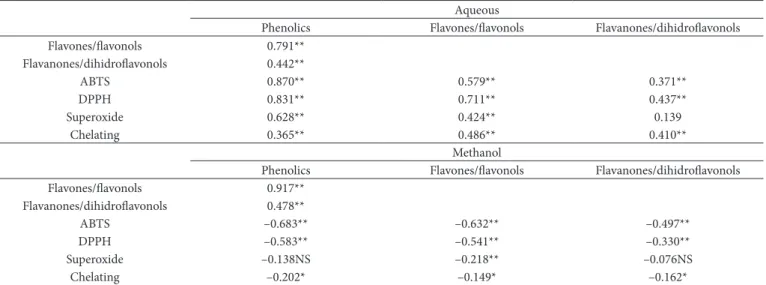
in aqueous or methanolic extracts (r=0.791 and r=0.917, respectively) at the P<0.01 level in a two-tailed Pearson correlation. Significant correlations between total phenols and flavanones and dihydroflavonols were also obtained (r=0.917 and r=0.478, respectively) (Table 4).
According to the results obtained in the present study, total phenols, flavanones, and dihydroflavonols showed significant differences between collection seasons in the methanolic extracts. They were significantly higher (P<0.05) for phenols in the winter than in the spring, while the opposite occurred for flavanones and dihydroflavonols. In the aqueous extracts such significant differences were only observed in flavones and flavonols, which were higher in the spring.
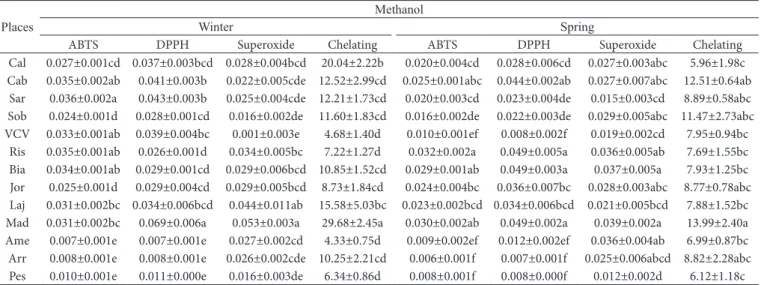
Tables 5 and 6 show the antioxidant activity of propolis samples, extracted with water and methanol, respectively, collected in different areas of Algarve, during the winter and spring.
In the majority of the aqueous samples, it was not possible to determine the concentration of phenols able to scavenge 50% of the free radicals; therefore the values were given as percentage of free radical scavenging ability of the samples when the same volume of extract was used (Table 4).
The aqueous extracts of propolis collected in Ame, Arr, and Pes, either in the winter or spring, had the best ability to scavenge ABTS and DPPH free radicals and the superoxide anion radical. In the spring, the VCV samples had similar capacity to scavenge superoxide anion radicals (Table 5). The best activity found in the propolis extracts from Ame, Arr, and Pes may be related to their higher content of phenols, including flavonoids (Table 2) (Kähkönen et al., 1999). The antioxidant ability of propolis from different origins has been reported: propolis from Argentine (Isla et al., 2001, 2005; Lima et al., 2009); Brazil (Nagai et al., and flavonols in both extraction solvents (Table 2 and 3), the
methanolic extracts had about 10 times more flavones and flavonols than the aqueous extracts, while for flavanones and dihydroflavonols, the values were twice as high.
The most commonly studied propolis types include those from Europe, North America, non-tropic regions of Asia, Russia, Brazil, Cuba, Venezuela, the Pacific region (Okinawa, Taiwan), and the Canary Islands (Bankova, 2005). Flavones, flavanones and cinnamic acids and their esters are the major constituents of the European propolis (Bankova, 2005). Cinnamic acids and their esters may constitute the remaining phenols present in the propolis samples of the present study, which were not quantified.
Aqueous extracts of propolis collected from Arr in the winter were the richest in flavones and flavonols and flavanones and dihydroflavonols (0.029 and 0.85 mg/ml, respectively), while in the spring, Cal was the place where higher amounts of those flavonoids were found (0.031 and 0.92 mg/mL, respectively) (Table 2). With regards to the methanolic extracts in the winter samples, those with the highest amounts of flavones and flavonols were found in the extracts from Ame (2.17 mg/mL), Arr (2.76 mg/mL), and Pes (2.45 mg/mL), whereas those from Arr (2.54 mg/mL) had significant higher levels of flavanones and dihydroflavonols than those of other areas (Table 3). In the spring, the samples from Pes had generally higher concentrations of flavones and flavonols, and flavanones and dihydroflavonols (2.49 mg/mL and 2.88 mg/mL, respectively) than those from the other places. The sole exception was the sample from Ame, which had the same concentration of flavanones and dihydroflavonols as the sample from Pes.
As for the concentrations of total phenols and flavonoids, it seems that an increase in phenols leads to an increase in flavonoids. In fact, a significant correlation between total phenols and flavones and flavonols was obtained either
Table 3. Concentration (mg/mL) ± standard error of total phenols, including flavones, flavonols, flavanones and dihydroflavonols in methanolic extracts of propolis collected in different places in the winter and spring. The total phenols and flavanone and dihydroflavonol contents are expressed as mg pinocembrin equivalents/mL. The flavone and flavonol contents are expressed as mg quercetin equivalents/mL.
Places
Methanol
Winter Spring
Total phenols Flavones and flavonols
Flavanones and
dihydroflavonols Total phenols
Flavones and flavonols
Flavanones and dihydroflavonols
Cal 3.77±0.07d* 1.50±0.08defg 1.71±0.11b 3.47±0.11c 1.41±0.08d 1.71±0.23bcd
Cab 3.55±0.10d 1.36±0.05efg 0.81±0.14de 2.93±0.11c 1.28±0.07d 1.29±0.19cd
Sar 3.84±0.07d 1.66±0.07de 0.74±0.17e 3.85±0.13c 1.54±0.09d 2.07±0.20bc
Sob 4.18±0.14cd 1.61±0.08def 1.38±0.08bcd 3.42±0.18c 1.54±0.11d 1.57±0.23bcd
VCV 3.95±0.09cd 1.64±0.06de 0.93±0.19cde 6.24±0.40b 2.04±0.14bc 2.28±0.16ab
Ris 3.70±0.11d 1.47±0.07defg 1.00±0.10cde 3.65±0.13c 1.31±0.05d 1.62±0.12bcd
Bia 3.39±0.08d 1.28±0.05g 0.91±0.15cde 3.68±0.04c 1.28±0.04d 1.79±0.22bcd
Jor 3.71±0.05d 1.30±0.06fg 1.17±0.12bcde 3.60±0.21c 1.39±0.06d 1.64±0.10bcd
Laj 4.04±0.17cd 1.47±0.05defg 1.22±0.15bcde 3.82±0.20c 1.50±0.06d 1.31±0.21cd
Mad 4.75±0.16c 1.69±0.06d 1.48±0.16bc 3.18±0.15c 1.45±0.07d 1.17±0.14d
Ame 8.10±0.79ab 2.14±0.19c 1.48±0.19bc 7.02±0.47ab 1.95±0.10c 2.88±0.28a
Arr 8.76±0.35a 2.76±0.15a 2.54±0.22a 6.40±0.49b 2.27±0.15ab 1.83±0.43bcd
Pes 7.37±0.39b 2.45±0.07b 1.48±0.27bc 7.62±0.44a 2.49±0.15a 2.88±0.33a
prenylated flavonoids (Kumazawa et al., 2007). In the present study, it was only possible to confirm the direct relationship between antioxidant activity and phenol content. In fact, a significant correlation between total phenols and scavenging free DPPH radicals (r=0.831), free ABTS radicals (r=0.870), and superoxide anion radicals (r=0.628) was obtained at the
P<0.01 level in a two-tailed Pearson correlation (Table 4). The same significant correlation was also observed when comparing flavones and flavonols with DPPH, ABTS, and superoxide scavenging ability (r=0.711, r=0.579 and r=0.424, respectively). With regards to the flavanones and dihydroflavonols, this correlation was only verified with ABTS (Table 3).
When the extraction was performed with methanol, higher quantity of phenols were extracted, as reported above, corresponding to higher antioxidant activity that allow 2003; da Silva et al., 2006; Cabral et al., 2009); China (Ahn et al.,
2007); Colombia (Palomino et al., 2009); Greece and Cyprus (Kalogeropoulos et al., 2009); Iran (Mohammadzadeh et al., 2007); Japan (Kumazawa et al., 2007); Korea (Ahn et al., 2004); Taiwan (Chen et al., 2008), and Turkey (Geckil et al., 2005). Recently, the antioxidant activity has also been reported for propolis from Northern and Southern Portugal (Moreira et al., 2008; Miguel et al., 2010).
Relating the biological activity of propolis extracts with the concentration of individual phenol components may be difficult according to some authors; hence, it is preferable to compare family of compounds with their biological activity (Bankova, 2005). Nevertheless, there are some authors that have been able to relate antioxidant activity to specific compounds, such as kaempferol and phenethyl caffeate (Kumazawa et al., 2004) or
Table 4. Pearson correlation coefficients and antioxidant activity of the compounds of the phenolics and flavones, flavonols, flavanones and dihydroflavonols.
Aqueous
Phenolics Flavones/flavonols Flavanones/dihidroflavonols
Flavones/flavonols 0.791**
Flavanones/dihidroflavonols 0.442**
ABTS 0.870** 0.579** 0.371**
DPPH 0.831** 0.711** 0.437**
Superoxide 0.628** 0.424** 0.139
Chelating 0.365** 0.486** 0.410**
Methanol
Phenolics Flavones/flavonols Flavanones/dihidroflavonols
Flavones/flavonols 0.917**
Flavanones/dihidroflavonols 0.478**
ABTS –0.683** –0.632** –0.497**
DPPH –0.583** –0.541** –0.330**
Superoxide –0.138NS –0.218** –0.076NS
Chelating –0.202* –0.149* –0.162*
Pearson Correlation significance levels: NS not significant; **significant at P<0.01; *significant at P<0.05.
Table 5. Antioxidant activity ± standard error of aqueous extracts of propolis from Algarve collected in different regions in the winter and spring. The values were expressed as percentage.
Places
Aqueous
Winter Spring
ABTS DPPH Superoxide Chelating ABTS DPPH Superoxide Chelating
Cal 40.28±1.34cde 52.30±5.96cde 74.10±2.74bc 67.27±4.22b 60.18±3.61a 87.70±2.67a 64.84±3.14bc 68.31±1.57ab Cab 38.74±1.04cde 57.59±6.29cd 64.09±3.90c 72.74±4.08b 26.40±1.35c 44.37±2.80cde 54.27±4.36cd 55.99±2.59de Sar 41.69±3.62bcde 49.90±3.08cde 69.31±1.78bc 69.53±1.45b 36.05±3.25bc 59.51±6.45bc 64.70±4.13bc 52.09±5.09e Sob 40.63±2.73cde 66.64±3.36bc 78.93±1.26ab 82.35±1.64a 33.81±3.62bc 55.43±7.76bcd 63.44±2.46bc 56.88±1.42cde VCV 31.20±1.22e 44.74±5.02de 68.10±4.10bc 55.42±3.07cd 36.73±2.54bc 67.64±2.78b 81.19±3.52a 41.11±3.31f
Ris 48.94±3.60bc 68.29±6.79bc 64.08±1.98c 68.32±2.59b 41.50±4.78b 62.71±8.48b 54.83±3.61bcd 64.03±2.60abcd Bia 47.81±2.60bcd 52.73±6.58cde 72.52±1.73bc 69.76±3.14b 31.62±2.94bc 41.95±4.69de 57.36±1.95bcd 61.38±2.60bcde Jor 36.56±2.75de 59.41±4.69cd 70.64±3.97bc 56.71±3.01c 30.36±2.38bc 51.42±5.00bcde 58.23±6.71bcd 61.11±2.72bcde Laj 38.45±1.66cde 48.78±7.77cde 65.27±6.41c 44.75±2.73ef 34.75±2.24bc 57.48±4.87bcd 67.04±4.11b 59.23±2.67bcde Mad 30.18±3.16e 35.76±6.45e 46.02±3.73d 43.92±3.67f 24.77±2.18c 38.16±4.87e 48.18±3.21d 59.38±2.61bcde Ame 78.75±7.34a 83.27±5.09ab 84.67±1.49a 68.26±0.99b 64.76±4.14a 89.77±1.97a 82.49±1.07a 71.34±3.22a
Arr 78.90±2.79a 92.28±0.49a 85.72±0.37a 54.13±3.87cde 64.44±3.20a 91.55±0.58a 84.79±0.93a 66.44±1.72ab Pes 52.99±4.89a 65.32±8.15bc 84.86±1.08a 46.57±2.00cde 60.53±8.83a 85.15±2.10a 84.45±0.61a 61.74±2.24abcde
this case, the samples from VCV, Pes, and Sar with phenol content ranging from 10-16 µg/mL were able to quench 50% of superoxide anion radical.
Phenols, flavanones and flavonols, and flavanones and dihydroflavonols correlated well with DPPH and ABTS, in both collection seasons; on the other hand, this was not so evident with superoxide anion radical, mainly when comparing the capacity for quenching these radicals with flavanones and dihydroflavonols content.
The chelating activity of the aqueous extracts of propolis was unexpectedly better than that of the methanolic assays (Tables 5 and 6); in perfect contrast to those found for free radical scavenging and also in contrast to that reported by some other authors (Geckil et al., 2005). Studying Turkish propolis, these authors found that ethanolic extracts were better chelating agents than the aqueous extracts. Some authors (van Acker et al., 1996), investigating the chelating activity of some individual flavonoids, found that naringin, pelargonidin, phloridzin, and hesperitin had no chelating activity, contrary to apigenin, diosmin, phloretin, fisetin, cyanidanol, taxifolin, and naringenin, which presented good chelating properties. Therefore, different phenolic components present in aqueous and methanolic extracts, as for example, flavonoids, may have contributed to these results.
In the winter and spring, the aqueous extracts from Sob and Ame presented the best chelating activities (82.35 and 71.34%, respectively), whereas the methanolic extracts from Mad (29.68 and 13.99% in winter and spring, respectively) showed the best activity independent on the collection season (Tables 5 and 6).
According to the results obtained in the present study, the capacity of methanolic extracts to scavenge free ABTS and DPPH radicals showed significant differences between the collection seasons; and it was significantly higher (P<0.05) in the spring than in the winter.
determining IC50 values, which was not possible when water was used as the extraction solvent. In methanol extracts, the samples from Ame, Arr, and Pes were the best in terms of scavenging free ABTS and DPPH radicals, either in the winter or spring (Table 6). In the spring, VCV revealed to be also a good scavenger of free radicals. As for the superoxide anion radicals, the extracts from VCV were the best for quenching this free radical in both collection seasons, along with samples from Pes and Sar, but only in the spring. The correlation between phenols and ABTS or DPPH does exist although it is an inverse correlation because the activity in this case is measured as the concentration of phenols able to scavenge free radicals; therefore, the lower concentration of phenols corresponds to the best activity. The correlations found between phenols and ABTS or DPPH were r= –0.683 and r= –0.583, respectively. For superoxide and phenols no significant correlation was found, neither for superoxide and flavanones and dihydroflavonols (Table 4). Flavones and flavonols correlated well with all free radicals assayed (Table 4).
The capacity of the methanolic extracts assayed in the present study to scavenge free radicals revealed that samples from Ame, Arr, and Pes were better than those reported by some authors for other propolis samples from different origins (China, Korea, Argentine, Brazil, China, Hungary, Thailand, Ukraine, Uzbekistan, Australia, Bulgaria, New Zealand, South Africa, and United States) (Kumazawa et al., 2004; Ahn et al., 2004; 2007). In our case, 7-12 µg/mL of phenol content in methanolic extracts was able to quench 50% of free ABTS and DPPH radicals, values significantly lower than those described by those authors that reported values ranging from 20 to 500 µg/mL.
Superoxide scavenging capacity of water extracts of Brazilian propolis has already been reported by some authors (Nagai et al., 2003). These authors found that 1 mg/mL propolis scavenged 87% of superoxide anion radicals. This value is relatively high when compared to the values found in the present study, mainly those resulting from methanolic extraction. In
Table 6. Antioxidant activity ± standard error of methanolic extracts of propolis from Algarve in different regions in the winter and spring. The values were expressed as IC50 (mg/mL) for ABTS, DPPH, and superoxide. The values of chelating activity are expressed as percentage.
Places
Methanol
Winter Spring
ABTS DPPH Superoxide Chelating ABTS DPPH Superoxide Chelating
Cal 0.027±0.001cd 0.037±0.003bcd 0.028±0.004bcd 20.04±2.22b 0.020±0.004cd 0.028±0.006cd 0.027±0.003abc 5.96±1.98c Cab 0.035±0.002ab 0.041±0.003b 0.022±0.005cde 12.52±2.99cd 0.025±0.001abc 0.044±0.002ab 0.027±0.007abc 12.51±0.64ab
Sar 0.036±0.002a 0.043±0.003b 0.025±0.004cde 12.21±1.73cd 0.020±0.003cd 0.023±0.004de 0.015±0.003cd 8.89±0.58abc Sob 0.024±0.001d 0.028±0.001cd 0.016±0.002de 11.60±1.83cd 0.016±0.002de 0.022±0.003de 0.029±0.005abc 11.47±2.73abc VCV 0.033±0.001ab 0.039±0.004bc 0.001±0.003e 4.68±1.40d 0.010±0.001ef 0.008±0.002f 0.019±0.002cd 7.95±0.94bc
Ris 0.035±0.001ab 0.026±0.001d 0.034±0.005bc 7.22±1.27d 0.032±0.002a 0.049±0.005a 0.036±0.005ab 7.69±1.55bc Bia 0.034±0.001ab 0.029±0.001cd 0.029±0.006bcd 10.85±1.52cd 0.029±0.001ab 0.049±0.003a 0.037±0.005a 7.93±1.25bc Jor 0.025±0.001d 0.029±0.004cd 0.029±0.005bcd 8.73±1.84cd 0.024±0.004bc 0.036±0.007bc 0.028±0.003abc 8.77±0.78abc Laj 0.031±0.002bc 0.034±0.006bcd 0.044±0.011ab 15.58±5.03bc 0.023±0.002bcd 0.034±0.006bcd 0.021±0.005bcd 7.88±1.52bc Mad 0.031±0.002bc 0.069±0.006a 0.053±0.003a 29.68±2.45a 0.030±0.002ab 0.049±0.002a 0.039±0.002a 13.99±2.40a Ame 0.007±0.001e 0.007±0.001e 0.027±0.002cd 4.33±0.75d 0.009±0.002ef 0.012±0.002ef 0.036±0.004ab 6.99±0.87bc Arr 0.008±0.001e 0.008±0.001e 0.026±0.002cde 10.25±2.21cd 0.006±0.001f 0.007±0.001f 0.025±0.006abcd 8.82±2.28abc Pes 0.010±0.001e 0.011±0.000e 0.016±0.003de 6.34±0.86d 0.008±0.001f 0.008±0.000f 0.012±0.002d 6.12±1.18c
Bankova, V. (2005). Chemical diversity of propolis and the problem of standardization. Journal of Ethnopharmacology, 100, 114–117. PMid:15993016. http://dx.doi.org/10.1016/j.jep.2005.05.004 Bankova, V. S., Castro, S. L. D., & Marcucci, M. C. (2000). Propolis:
recent advances in chemistry and plant origin. Apidologie, 31, 3-15. http://dx.doi.org/10.1051/apido:2000102
Cabral, I. S. R., Oldoni, T. L. C., Prado, A., Bezerra, R. M. N., & De Alencar, S. M. (2009). Composição fenólica, actividade antibacteriana e antioxidante da própolis vermelha brasileira. Quimica Nova, 32, 1523-1527. http://dx.doi.org/10.1590/S0100-40422009000600031
Cao, Y. H., Wang, Y., & Yuan, Q. (2004). Analysis of flavonoids and phenolic acid in propolis by capillary electrophoresis. Chromatographia, 59, 135-140.
Cardoso, S. M., Ribeiro, M., Ferreira, I. L., & Rego, A. C. (2011). Northeast Portuguese propolis protects against staurosporine and hydrogen peroxide-induced neurotoxicity in primary cortical neurons. Food and Chemical Toxicology, 49, 2862-2868. PMid:21864632. http://dx.doi.org/10.1016/j.fct.2011.08.010 Chen, Y.-W., Wu, S.-W., Ho, K.-K., Lin, S.-B., Huang, C.-Y., & Chen,
C.-N. (2008). Characterisation of Taiwanese propolis collected from different locations and seasons. Journal of the Science of Food and Agriculture, 88, 412-419. http://dx.doi.org/10.1002/jsfa.3101 Da Silva, J. F. M., De Souza, M. C., Matta, S. R., Andrade, M. R., &
Vidal, F. V. N. (2006). Correlation analysis between phenolic acids of Brazilian propolis extracts and their antimicrobial and antioxidants activities. Food Chemistry, 99, 431-435. http://dx.doi.org/10.1016/j. foodchem.2005.07.055
Dorman, H., & Hiltunen, R. (2004). Fe(III) reductive and free radical-scavenging properties of summer savory (Satureja hortensis L.) extract and subfractions. Food Chemistry, 88, 193-199. http://dx.doi. org/10.1016/j.foodchem.2003.12.039
Falcão, S. I., Vilas Boas, M., Estevinho L. M., Barros, C., Domingues, M. R. M., & Cardoso, S. M. (2010). Phenolic characterization of Northeast Portuguese propolis usual and unsual compounds. Analytical and Bioanalytical Chemistry, 396, 887-897. PMid:19902191. http:// dx.doi.org/10.1007/s00216-009-3232-8
Geckil, H., Ates, B., Durmaz, G., Erdogan, S., & Yilmaz, I. (2005). Antioxidant, free radical scavenging and metal chelating characteristics of propolis. American Journal of Biochemistry and Biotechnology, 1, 27-31. http://dx.doi.org/10.3844/ajbbsp.2005.27.31 Gómez-Caravaca, A. M., Gómez-Romero, M., Arráez-Román, D.,
Segura-Carretero, A., & Fernández-Gutiérrez, A. (2006). Advances in the analysis of phenolic compounds in products derived from bees. Journal of Pharmaceutical and Biomedical Analysis, 41, 1220-1234. PMid:16621403. http://dx.doi.org/10.1016/j.jpba.2006.03.002 Isla, M. I., Paredes-Guzman, J. F., Nieva-Moreno, M. I., Koo, H., &
Park, Y. (2005). K Some chemical composition and biological activity of Northern Argentine propolis. Journal of Agricultural and Food Chemistry, 53, 1166-1172. PMid:15713035. http://dx.doi. org/10.1021/jf040130h
Isla, M. I., Moreno, M. I. N., Sampietro, A. R., & Vattuone, M. A. (2001). Antioxidant activity of Argentine propolis extracts. Journal of Ethnopharmacology, 76, 165-170. http://dx.doi.org/10.1016/ S0378-8741(01)00231-8
Kähkönen, M. P., Hopia, A. I., Vuorela, H. J., Rauha, J.-P., Pihlaja, K., Kujala, T. S., & Heinonen, M. (1999). Antioxidant activity of plant extracts containing phenolic compounds. Journal of Agricultural and Food Chemistry, 47, 3954-3962. http://dx.doi.org/10.1021/jf990146l
In the aqueous extracts, the significant differences between the collection seasons were observed in ABTS, DPPH, and superoxide scavenging activities and also in the amounts of flavanones and dihydroflavonols.Nevertheless such variation was greatly dependent on the collection place. The other compounds studied did not show significant differences.
4 Conclusion
This study allowed concluding that phenols, flavones, flavonols, flavanones, and dihydroflavonols from propolis of Algarve were better extracted with methanol than with water. The capacity of water to extract flavones and flavonols was substantially lower than that of methanol (about ten times lower).
From the 13 places where the propolis samples were collected, only three (Ame, Arr, and Pes) proved the richest in phenols with consequent better capacity to scavenge free DPPH and ABTS radicals (Ame, Arr, Pes, and in some cases VCV). Ame, Arr, and Pes are part of zone in Algarve called Barrocal, from where the flora was not determined in the present study.
The chelating activity of the propolis samples was better in the aqueous extracts than in the methanolic extracts. In this case, the samples from Sob, Ame, and Mad proved the most effective in chelating metal ions.
In the methanolic extracts, significant differences between the winter and spring were observed in the content of total phenols, and flavanones and dihydroflavonols, in the scavenging of free ABTS and DPPH radicals and in chelating metal ions. As for the aqueous extracts, these differences were found in the content of flavanones and dihydroflavonols and in the scavenging of free ABTS, DPPH, and superoxide radicals.
Acknowledgments
The authors are grateful to Mr. Helder Guia for the propolis supply, to “Cruz Alta, Lda.” for granting the scholarship, and for the financial support provided by CDCTPV (Portugal). This study was also funded by CEOT and the Programa Nacional de Re-equipamento Científico (PNRC) - FCT (Fundação para a Ciência e a Tecnologia) (REEQ/601/EEI/2005) and the POCI 2010 – FEDER. Ana M. Cavaco is an assistant researcher of CEOT funded by FCT under Programa Ciência 2008 (Contratação de Doutorados para o Sistema Científico e Tecnológico Nacional).
References
Ahn, M.-R., Kumazawa, S., Hamasaka, T., Bang, K.-S., & Nakayama, T. (2004). Antioxidant activity and constituents of propolis collected in various areas of Korea. Journal of Agricultural and Food Chemistry, 52, 7286-7292. PMid:15563208. http://dx.doi.org/10.1021/jf048726s Ahn, M.-R., Kumazawa, S., Usui, Y., Nakamura, J., Matsuka, M., Zhu,
Park, Y. K., & Ikegaki, M. (1998). Preparation of water and ethanolic extracts of propolis and evaluation of the preparations. Bioscience, Biotechnology, and Biochemistry, 62, 2230-2232. http://dx.doi. org/10.1271/bbb.62.2230
Park, Y. K., Ikegaki, M., Abreu, J. A. S., & Alcici, N. M. F. (1998). Study of the preparation of propolis extracts and its applications. Ciência e Tecnologia de Alimentos, 18, 313-318. http://dx.doi.org/10.1590/ S0101-20611998000300011
Pietta, P. G., Gardana, C., & Pietta, A. M. (2002). Analytical methods for quality control of propolis. Fitoterapia, 73, S7-S20. http://dx.doi. org/10.1016/S0367-326X(02)00186-7
Popova, M., Bankova, V., & Butovska, D. (2004). Validated methods for the quantification of biologically active constituents of poplar-type propolis. Phytochemical Analysis, 15, 235-240. PMid:15311843. http://dx.doi.org/10.1002/pca.777
Salomão, K., Dantas, A. P., Borba, C. M., Campos, L. C., Machado, D. G., Aquino Neto, F. R., & De Casto, S. L. (2004). Chemical composition and microbicidal activity of extracts from Brazilian and Bulgarian propolis. Letters in Applied Microbiology, 38, 87-92. PMid:14746537. http://dx.doi.org/10.1111/j.1472-765X.2003.01458.x
Santos, F. A., Bastos, E. M. A., Uzeda, M., Carvalho, M. A. R., Farias, L. M., Moreira, E. S. A., & Braga F. C. (2002). Antibacterial activity of Brazilian propolis and fractions against oral anaerobic bacteria. Journal of Ethnopharmacology, 80, 1-7. http://dx.doi.org/10.1016/ S0378-8741(02)00003-X
Sforcin, J. M. (2007). Propolis and the immune system: a review. Journal of Ethnopharmacology, 113, 1-14. PMid:17580109. http://dx.doi. org/10.1016/j.jep.2007.05.012
Silva, J. C; Rodrigues, S., Féas, X., & Estevinho, L. M. (2012). Antimicrobial activity, phenolic profile and role in the inflammation of propolis. Food and Chemical Toxicology, 50, 1790-1795. PMid:22425940. http://dx.doi.org/10.1016/j.fct.2012.02.097 Singleton, V. L., & Rossi, J. R. (1965). Colorimetry of total phenols
with phosphomolybdic-phosphotungstic acid reagents. American Journal of Enology and Viticulture, 16, 144-158.
Tagliacollo, V. A., & Orsi R. O. (2011). Quality of propolis commercialized in the informal market. Ciência e Tecnologia de Alimentos, 31, 752-757. http://dx.doi.org/10.1590/S0101-20612011000300031
Valente, M. J., Baltazar, A. F., Henrique, R, Estevinho, L., & Carvalho, M. (2011). Biological activities of Portuguese propolis: protection against free radical-induced erythrocyte damage and inhibition of human renal cancer cell growth in vitro. Food and Chemical Toxicology, 49, 86-92. PMid:20934479. http://dx.doi.org/10.1016/j. fct.2010.10.001
Van Acker, S. A. B. E., Van Den Berg, D.-J., Tromp, M. N. J. L., Griffioen, D. H., Van Bennkom, W. P., Van Der Vijgh, W. J. F., & Bast, A. (1996). Structural aspects of antioxidant activity of flavonoids. Free Radical Biology and Medicine, 20, 331-342. http://dx.doi.org/10.1016/0891-5849(95)02047-0
Wang, B.-J., Lien, Y.-H., & Yu, Z.-R. (2004). Supercritical fluid extractive fractionation-study of the antioxidant activities of propolis. Food Chemistry, 86, 237-243. http://dx.doi.org/10.1016/j. foodchem.2003.09.031
Kalogeropoulos, N., Konteles, S. J., Troullidou, E., Mourtzinos, I., & Karathanos, V. T. (2009). Chemical composition, antioxidant activity and antimicrobial properties of propolis extracts from Greece and Cyprus. Food Chemistry, 116, 452-561. http://dx.doi.org/10.1016/j. foodchem.2009.02.060
Kumazawa, S., Hamasaka, T., & Nakayama, T. (2004). Antioxidant activity of propolis of various geographic origins. Food Chemistry, 84, 329-339. http://dx.doi.org/10.1016/S0308-8146(03)00216-4 Kumazawa, S., Ueda, R., Hamasaka, T., Fukumoto, S., Fujimoto, T.,
& Nakayama, T. (2007). Antioxidant prenylated flavonoids from propolis collected in Okinawa, Japan. Journal of Agricultural and Food Chemistry, 55, 7722-7725. PMid:17711339. http://dx.doi. org/10.1021/jf071187h
Lima, B., Tapia, A., Luna, L., Fabani, M. P., Schmeda-Hirschmann, G., Podio, N. S., Wunderlin, D. A., & Feresin, G. E. (2009). Main flavonoids, DPPH activity, and metal content allow determination of the geographical origin of propolis from the province of San Juan (Argentina). Journal of Agricultural and Food Chemistry, 57, 2691-2698. PMid:19334753. http://dx.doi.org/10.1021/jf803866t Martos, I., Cossentini, M., Ferreres, F., & Tomás-Barberán, F. A. (1997).
Flavonoid composition of Tunisian honeys and propolis. Journal of Agricultural and Food Chemistry, 45, 2824-2829. http://dx.doi. org/10.1021/jf9609284
Midorikawa, K., Banskota, A. H., Tezuka, Y., Nagaoka, T., Matsushige, K., Message, D., Huertas, A. A. G., & Kadota, S. (2001). Liquid chromatography-mass spectrometry analysis of propolis. Phytochemical Analysis, 12, 366-373. PMid:11793814. http://dx.doi. org/10.1002/pca.605
Miguel, M. G., Nunes, S., Dandlen, S. A., Cavaco, A. M., & Antunes, M. D. (2010). Phenols and antioxidant activity of hydro-alcoholic extracts of própolis from Algarve, South of Portugal. Food and Chemical Toxicology, 48, 3418-3423. PMid:20849908. http://dx.doi. org/10.1016/j.fct.2010.09.014
Mohammadzadeh, S., Sharriatpanahi, M., Hamedi, M., Amanzadeh, Y., Ebrahimi, S. E. S., & Ostad, S. N. (2007). Antioxidant power of Iranian propolis extract. Food Chemistry, 103, 729-733. http://dx.doi. org/10.1016/j.foodchem.2006.09.014
Moreira, L., Dias, L. G., Pereira, J. A., & Estevinho, L. (2008). Antioxidant properties, total phenols and pollen analysis of propolis samples from Portugal. Food and Chemical Toxicology, 46, 3482-3485. PMid:18804144. http://dx.doi.org/10.1016/j.fct.2008.08.025 Nagai, T., Inoue, R., Inoue, H., & Suzuki, N. (2003). Preparation and
antioxidant properties of water extract of propolis. Food Chemistry, 80, 29-33. http://dx.doi.org/10.1016/S0308-8146(02)00231-5 Nakajima, Y., Shimazawa, M., Mishima, S., & Hara, H. (2007). Water
extract of propolis and its main constituents, caffeoylquinic acid derivatives, exert neuroprotective effects via antioxidant actions. Life Science, 80, 370-377. PMid:17046025. http://dx.doi.org/10.1016/j. lfs.2006.09.017