DRIVERS OF CUSTOMER BRAND ENGAGEMENT:
AN APPLICATION TO VIRTUAL BRAND COMMUNITIES ON
by
Maria Amélia Machado Carvalho
Doctoral Thesis in Business and Management Studies
Marketing and Strategy
Supervisor
Professora Doutora Teresa Fernandes
i
Biographical note
Maria Amélia Carvalho was born in Guimarães in 1989. She has a degree in Economics from the Faculty of Economics of Porto University. In 2010, in order to continue to improve her personal and academic skills, she enrolled in the Master of Economics and Management of Cities from the same Faculty, defending the dissertation entitled “A Cultura como Estratégia de Redefinição da Imagem – O Caso da Cidade de Guimarães” in 2012.
In 2013, she started the PhD in Business and Management Studies from the Faculty of Economics of Porto University and, since then, she has participated in international conferences, where co-authored with Professora Doutora Teresa Fernandes, she exhibited her doctoral work. Participated in the 11th Global Brand Conference - Academy of Marketing's Brand, Identity and Corporate Reputation Special Interest Group held in April 2016 in Bradford (United Kingdom); the International Conference on Innovation Entrepreneurship in Marketing and Consumer Behaviour (ICIEMC) held in Lisbon (Portugal) in May 2016; and the European Marketing Academy Conference (EMAC) held in Oslo (Norway) in May 2016.
ii
Acknowledgment
The development and conclusion of this doctoral thesis was possible with the support of several people. Thus, this section is dedicated to all those who contributed to its realization along the way. To all of them I leave here my sincerest thanks.
Firstly, I would like to thank my advisor, Professora Dra. Teresa Fernandes, for all her help, guidance, encouragement, availability and dedication that she has given me over the past two years. I also thank her critical suggestions and constructive comments that improved the final result of this doctoral thesis.
Secondly, I would like to thank Professsor Dr. Pedro Campos for his suggestions and statistical guidance, as well as his careful review of the structured questionnaire in its initial phase.
Thirdly, I would like to thank all researchers, professors and colleagues who have enriched this work with constructive comments at various seminars and conferences. Your discussion, ideas, and feedback have been absolutely invaluable.
Finally, I would like to thank all the people who directly or indirectly, personal and academic helped me to achieve this goal. I would especially like to thank my mother for all her love, patience, unconditional support and constant encouragement, not only at this stage of my life, but throughout my whole life.
iii
Abstract
Customer brand engagement (CBE) has been gaining popularity among academics and practitioners as a central customer-brand relationship construct. The emergent literature on CBE, largely conceptual and focused on an individualist approach of the construct, offers a partial representation of CBE that neglects the analysis of its components, drivers and outcomes. For instance, to date, there has been no single study to solidly determine the drivers of CBE and explore their role in the CBE process. In this sense, the purpose of this doctoral thesis is to identify the key brand constructs related to the CBE process and integrate them into a comprehensive model. Drawing on quantitative methodology, the study examines the CBE drivers and tests whether and how they directly and indirectly influence CBE. In the same way, the study considered moderators that can improve or reduce the causal effects of the drivers. A survey of 799 customers provided data for empirical testing. The study identifies as drivers of CBE the involvement of the customer with the brand, the customer interactivity with the brand’s Facebook page and the customer flow experience in the brand’s Facebook page. Findings also show that customers who engaged with the brand in a community on Facebook are more likely to offer positive WOM, be satisfied and committed to the brand, and trust it. Additionally, customers who actively participate on the brand’s Facebook page are more likely to be engage with the brand when they have a strong and trusting connection with the social networking site of the brand, they perceive to have some knowledge about the brand or considered that the brand has a high reputation. Theoretically, the study offers new insights about the nomological network of CBE. Managerially, the research improves the understanding about the CBE process, which can be used to reinforce and redefine focused strategies and tactics.
iv
Resumo
Customer brand engagement (CBE) tem vindo a ganhar popularidade junto de académicos e profissionais como um factor central no relacionamento entre o consumidor e a marca. A literatura emergente sobre CBE, em grande parte conceptual e focada numa abordagem individualista, oferece uma representação parcial de CBE que negligencia a análise das suas componentes, drivers e outcomes. Por exemplo, até à data, não há nenhum estudo que determine de forma sistemática os drivers de CBE e explore o seu papel no processo de CBE. Neste sentido, o objectivo desta tese de doutoramento é identificar os constructos-chaves da marca relacionados com o processo de CBE e integrá-los num modelo abrangente. Com base numa metodologia quantitativa, o estudo examina os drivers de CBE, e analisa se e como eles influenciam directa e indirectamente CBE. Da mesma forma, o estudo considera moderadores que podem melhorar ou reduzir os efeitos causais dos drivers em CBE. Um questionário a 799 consumidores forneceu os dados para efectuar os testes empíricos. O estudo identifica como drivers de CBE o envolvimento do consumidor com a marca, a interactividade do consumidor com a página de Facebook da marca e a flow experience do consumidor. Os resultados também mostram que os consumidores que se envolveram com uma marca numa comunidade no Facebook são mais propensos a oferece WOM, a estarem satisfeitos e comprometidos com as marcas, e a confiar nela. Além disso, no caso dos consumidores que participam activamente na página de Facebook da marca, CBE será mais facilmente alcançado quando estes consumidores se identificam e têm confiança na rede social da marca, percebem que possuem algum conhecimento sobre a marca ou consideram que a marca tem uma elevada reputação. Teoricamente, o estudo oferece novos insights sobre a rede monológica de CBE. Ao nível da gestão, o estudo melhora a compreensão sobre o processo de CBE, o que pode ser usado para reforçar e redefinir estratégias e tácticas ao nível da marca.
v
Index
1. Introduction ... 1
1.1 Research Objectives ... 3
1.2 Research Questions ... 4
1.3 Strucure of the Doctoral Thesis ... 5
CHAPTER I - LITERATURE REVIEW AND CONCEPTUAL FRAMEWORK ... 6
2. Brands and customers ... 7
2.1 Introduction ... 7
2.2 Definitions and interpretations of brand ... 7
2.3 Categorization of brands ... 10
2.4 The relationship between brands and their customers in Social Media ... 15
2.5 Types of Brand Communities ... 20
2.6 Conclusion ... 25
3. Customer Brand Engagement ... 27
3.1 Introduction ... 27
3.2 Conceptual foundation of engagement ... 27
3.3 Definitions of the concept of CBE ... 31
3.4 Engagement measurement scales ... 34
3.5 Process and Moderators ... 41
3.6 Conclusion ... 45
4. Antecedents of Customer Brand Engagement ... 50
4.1 Introduction ... 50
4.2 Customer Involvement ... 50
4.3 Customer Participation ... 54
4.4 Customer Interactivity ... 58
4.5 Customer Flow Experience ... 61
4.6 Customer Advocacy ... 64
4.7 Customer Cumulative Satisfaction ... 68
4.8 Customer Trust ... 71
4.9 Customer Commitment ... 73
vi
5. Research questions and theoretical framework ... 80
5.1 Introduction ... 80
5.2 Review of the gaps on the literature ... 80
5.3 Research Questions ... 83
5.4 Theoretical framework ... 84
5.5 Conclusion ... 93
6. Characterization and relevance of the study context ... 94
6.1 Introduction ... 94
6.2 Facebook: history and presence ... 94
6.3 Facebook as a channel for digital marketing activities ... 96
6.4 Conclusion ... 99
CHAPTER II - EMPIRICAL RESEARCH ... 101
7. Methodology ... 102
7.1 Introduction ... 102
7.2 Determinants in the choice of the methodology ... 102
7.2.1 Theoretical framework ... 102
7.2.2 Objectives and research questions ... 103
7.3 Research strategy ... 104
7.4 Operationalization of the methodology ... 107
7.4.1 Data collection ... 107
7.4.2 Data analysis ... 111
7.5 Conclusion ... 123
8. Data Analysis and Results ... 124
8.1 Introduction ... 124
8.2 Preliminary analyses ... 124
8.3 Measurement model analysis ... 126
8.4 Causal model analysis: hypotheses testing... 129
8.4.1 Analysis of the CBE antecedents ... 129
8.4.2 Analysis of the direct and indirect effects on the nomological network of CBE ……….………….130
8.4.3 Analysis of the moderating effects on the nomological network of CBE ……….……….132
vii
8.6 Conclusion ... 144
CHAPTER III - DISCUSSION AND CONCLUSIONS ... 145
9. Conclusion ... 146
9.1 Summary of conclusions ... 146
9.1.1 What are the main drivers of CBE? ... 146
9.1.2 What are the factors that directly and indirectly influence the CBE process? ………..148
9.1.3 What moderating effects are expected to occur in the CBE process? ... 148
9.2 Contribution and implications ... 150
9.2.1 Theoretical implications ... 150
9.2.2 Managerial implications ... 151
9.3 Limitations and suggestions for future research ... 154
REFERENCES ... 156 APPENDICES ... 185 Appendix A ... 186 Appendix B ... 191 Appendix C ... 200 Appendix D ... 205 Appendix E ... 209 Appendix F ... 211 Appendix G ... 213 Appendix H ... 216 Appendix I ... 218 Appendix J ... 220 Appendix K ... 222 Appendix L ... 224 Appendix M ... 225 Appendix N ... 226 Appendix O ... 246
viii
Index of Figures
Figure 1 - Brand Box Model ... 12
Figure 2 – Theoretical Model ... 85
Figure 3 - Individuals using the internet for participating in social networks (% of individuals aged 16 to 74, 2015) ... 95
Figure 4 – Average of number of fans/followers of the 20 top brands in Portugal ... 96
Figure 5 - Procedural steps of the doctoral thesis ... 106
Figure 6 – Three phases of data analysis ... 111
Figure 7 – Problems screened during data preparation ... 112
Figure 8 – Steps of structural equation modeling (SEM) ... 115
Figure 9 – Estimation and respecification: different stages of analysis ... 116
Figure 10 – Scale reliability and validity of constructs ... 119
Figure 11 - Moderating effects: different stages of analysis ... 121
Figure 12 – Characterization of the sample ... 125
Figure 13 – Summary of conclusions of the first research question ... 139
Figure 14 - Summary of conclusions of the second research question: direct and mediating effects ... 140
Figure 15 - Summary of conclusions of the third research question: moderating effects ... 141
Figure 16 - Summary of conclusions of the third research question: female versus male customers ... 142
Figure 17 - Summary of conclusions of the third research question: brands perceived as low representativity and functionality versus brands perceived as high representativity and functionality ... 143
ix
Index of Tables
Table 1 – Sprott et al. scale, items used to measure brand engagement in self-concept 35
Table 2 – Calder et al. scale, items used to measure online engagement ... 35
Table 3 – Tait et al. scale, items used to measure engagement with mental health services ... 37
Table 4 - Schaufeli et al. scale, items used to measure work engagement ... 37
Table 5 - Dwivedi scale, items used to measure customer brand engagement ... 38
Table 6 - May et al. scale, items used to measure work engagement ... 39
Table 7 – Hollebeek et al., 10-item scale used to measure customer brand engagement ... 40
Table 8 – Vivek et al., 10-item scale used to measure customer engagement ... 40
Table 9 – Type of research, conceptualizations, definitions and dimensions of engagement in the marketing literature ... 46
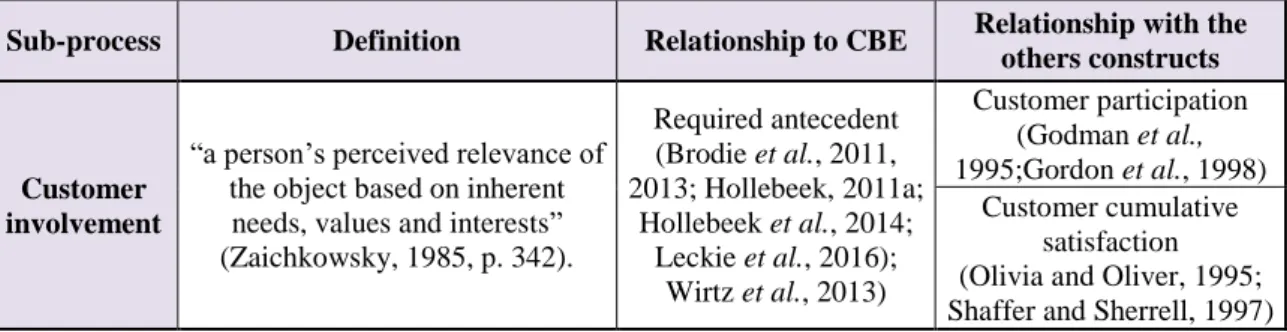
Table 10 – Sub-processes; definitions, relationship to customer engagement and others constructs ... 77
Table 11 – Primary and supporting Facebook features ... 99
Table 12 - Measurement items used to build the questionnaire ... 108
Table 13 - Moderators items presented in the empirical study ... 110
Table 14 – Model fit: absolute, relative and parsimony fit indices, and measures of population discrepancy ... 117
Table 15 – Multi-group analysis: models to assess invariance ... 122
Table 16 – Score reliability, composite reliability (CR), average variance extracted (AVE), standardized factor loadings and descriptive statistics ... 127
x Table 18 – Overview —hypothesis testing ... 130
Table 19 - Overview—indirect effects ... 132
Table 20 - Moderating effects: customer’s perception of brand reputation and brand
knowledge ... 133
Table 21 – Moderating effects: customer’s identification with the social networking site
and trust in that community ... 134
Table 22 – Group Differences: Female versus Male ... 135
Table 23 – Non-hierarchical classification: two clusters ... 136
Table 24 - Group Differences: brands perceived as lowly representational and functional
1
1. Introduction
Nowadays, with communication technologies and sophisticated information systems, it is possible to interact with and among customers (Brodie et al., 2013; Schamari and Schaefers, 2015). As a result, new forms of customer/companies interaction appeared and customers became an active and important part in the companies’ communication. In this matter, social media provides the opportunity to connect, share and exchange information with customers (Sashi, 2012). Moreover, the interactive nature of these digital media also allows customers to share and exchange information with one another (Gambetti et al., 2015) and talk to companies (Mangold and Faulds, 2009; Tsai and Men, 2013). Consequently, customers can generate content, create value and influence purchase decisions of others in peer-to-peer interactions. The traditional roles of seller and customer have changed (Sashi, 2012). The customer of the 21st century became a major factor in influencing various aspects of customer behavior, such as awareness, information acquisition, opinions, attitudes, purchase behavior, and post-purchase communication and evaluation (Brodie et al., 2013; Gambetti et al., 2015; Sashi, 2012; Tsai and Men, 2013).
Although customers interact with thousands of products and brands in their lives, they develop an intense connection to only a small subset of these objects. Gambetti and Graffigna (2010) identify three types of factors that underline the importance of customer brand engagement (CBE) on building and maintaining a strong relationship between the customer and the brand, as well as achieving competitive advantage. The factors are customer-related, media-related and company-related factors. In the current global market, customers are looking to satisfy composite needs, co-create brand content and value, as a way of self-expression, socialization with others and enjoyment of new experiences. Consequently, companies have to focus on these facets of customer behavior, as well as on the cognitive and emotional dimensions. In terms of media-related factors, the gradual fragmentation of audience and proliferation of new and improved media means are forcing companies to rethink their media mix. Finally, regarding company-related factors, a successful brand strategy should center on the company’s ability to pursue a marketing approach that supports a clear brand identity
2 overtime, and combines the principles of market proximity and customer experience management.
The advent of social media has resulted in a loss of control for companies, since customers are now more empowered to voice their ideas and to find a broad audience (Schamari and Schaefers, 2015). In this sense, CBE plays a key role in the new customer-centric marketing approach and is becoming a priority in branding strategies (Hollebeek, 2011a). Despite being a recent concept in the marketing literature, CBE is already considered a fundamental driver in the customer decision-making process (Bowden, 2009; Sprott et al., 2009). Customer brand engagement has emerged as a prominent construct that is capable to affect customer behavior with brands (Dwivedi, 2015). In addition, CBE goes further than satisfaction and loyalty, providing a real competitive advantage (Kumar et al., 2010). As customer engagement can be positive and negative, monitoring and managing customers interactions have become an important part of brand management (Schamari and Schaefers, 2015). In this sense, managers are increasingly concerned with how to best engage customers in order to develop favorable customer experiences (Marbach et al., 2016), which are essential in building sustainable differentiation and creating a long-term relationship between brands and customers (Vivek et al., 2012).
For these reasons, CBE is receiving an increasing attention in recent marketing literature. It was considered a key research priority (MSI, 2010; MSI, 2014) and has been the subject of several special issues in international academic journals (e.g. Journal of Service Research, 2010; Journal of Strategic Marketing, 2010; Journal of Product & Brand Management, 2014; Special Issue of the Journal of Marketing Management, 2016). Both from the academic and managerial point of view, CBE is considered the most desired quality in any customer-brand relationship (Baldus et al., 2015; Brodie et al., 2013; Dessart et al., 2015, 2016; France et al., 2016; Leckie et al. 2016; Maslowska et al., 2016). However, the current insights into CBE process in social media are limited and few (empirical) studies have investigated factors explaining CBE in this context. The majority of academic studies is conceptual and tends to focus on an individualistic approach of customer engagement. Moreover, the nomological network of the construct is embryonic and largely conceptual. As a result, studies offer a partial representation of CBE that neglects the analysis of its components and the context (social, cultural and
3 relational) in which the customer-brand encounter takes place. Additionally, very little empirical evidence exists to show what antecedents lead to a strong CBE. Although the concept of CBE sounds very appealing, conceptual studies and the few empirical studies have not clearly identified the different dynamics of the CBE process, which may not only account for different customers’ motivations, but also explain customers’ intentions to engage with brand. In particular, its specific drivers remain nebulous. Furthermore, to date, there has been no single study that has taken a complete examination of all antecedents of CBE, which have been theoretically investigated in the literature in a disperse way.
1.1 Research Objectives
Thus, there is a gap in the literature and an opportunity to gain a better understanding of the role that each antecedent plays in the CBE process by empirically examining key relationships that have theoretical and managerial implications. On the other hand, the study of CBE is also of pragmatic relevance, since engage customers with brand have emerged as a priority in marketers’ agenda (Keller, 2011). According to Schultz (2007), practitioners have been long devoting their energy to establish a strong and endure bond between brand and customers based on an ongoing effort of the brand to activate customers through interactions, shared values, experiential contents and rewards. Therefore, one of the key objectives of many marketing professionals is to have an engaged customer base (Dessart et al., 2015). Consequently, the reportedly drivers and positive implications of CBE on the customer behavior are driving the academic and practical interest in explaining and understanding the CBE process. Thus, more empirical evidence is required to provide a coherent picture of how CBE is affected (Hollebeek et al., 2014), particularly in social media (Dessart et al., 2016; France et al., 2016). As a result, the main contribution of this doctoral thesis is its consolidated and empirical approach to the study of the drivers of CBE. Unlike previous conceptualizations, the approach of this doctoral thesis considers the analysis of all antecedents as well as the impact of some crucial mediators and moderators. Additionally, by developing and testing a more comprehensive model of the simultaneous effects of several key drivers, this investigation is able to improve the understanding about CBE and contribute to this field of study with new insights.
4 Hence, the goal of this doctoral thesis is to move beyond domain-specific findings and individual brand constructs. i.e., to move beyond the analysis of case studies that only addresses one brand and a partial representation of the CBE nomological network. In this sense, the purpose is to identify the key brand constructs related to the CBE process and integrate them into a comprehensive model. So, by examining its antecedents and testing whether and how they impact CBE, identify and examine precisely which factors may be essential in the CBE process. As such, the doctoral thesis operationalizes the CBE as defined by Dwivedi (2015) and identifies as its antecedents the following constructs: customer involvement, customer participation, customer interactivity, customer flow experience, customer word-of-mouth communication, customer cumulative satisfaction, customer trust and customer commitment. In the same way, customer’s perceived brand reputation, customer’s perceived brand knowledge, customer’s identification with the social networking site and trust towards it are considered to be potential moderators of the CBE process. Additionally, the final model is tested based on the customer’s gender and type of brand perceived by the customer. The doctoral thesis also addresses the customer (an existing user of the brand) as the focal “engagement subject”, the brand as the “engagement object” and the social networking site Facebook as the “engagement context”.
1.2 Research Questions
Thus, the research questions of this study are the following: (i) What are the main drivers of CBE?; (ii) What are the factors that directly and indirectly influence the CBE process?; and (iii) What moderating effects are expected to occur in the CBE process?. The first research question aims to detect the main drivers to accomplishing CBE per se. By this manner, it turns possible to identify what are the main emotional, cognitive and behavior constructs in the CBE process. Based on the results of the first research question, the second research question purposes to clarify the interactions between the CBE drivers identified, as well as integrate them into a comprehensive model. So after examining the direct and indirect effects on the nomological network of CBE, the third research question aims to test the moderating effect on the CBE process. In the same way, the effects of the customer’s gender and the type of brand perceived by the customer on the CBE nomological network are also tested.
5 1.3 Strucure of the Doctoral Thesis
The doctoral thesis is organized as follows.
Chapter I is dedicated to the literature review of the main themes of this doctoral thesis and to the theoretical framework. Firstly, the different definitions and interpretations of brand are presented, as well as their categorization and relation with customers. Secondly, the engagement concept is explained from the point of view of other social sciences, such as sociology, psychology, educational psychology and organizational behavior. This section also presents the main definitions of customer engagement, characteristics and scales. Thirdly, the relevant sub-processes found in literature are presented, regarding the engagement process, and potential relations between them. Fourthly, based on the literature review, the theoretical framework of the analysis is developed. Finally, the study context is defined and characterized in terms of its relevance.
Chapter II is devoted to the empirical study, presentation of methodology, analysis of results and conclusions. Giving the nature of this investigation and its research questions, the methodology followed is quantitative. The multivariate technique choose to analyze the data collected through a structured questionnaire is structural equation modeling (SEM). Based on a random sample of 799 customers, the results show that customer involvement, customer interactivity and customer flow experience are required antecedents of CBE in the context of a social networking site (Facebook). Additionally, customer’s trust in the brand’s Facebook page improves the majority of the main causal effects along with the customer’s identification with the brand’s Facebook page. Moreover, this study shows that customer commitment, trust, WOM referrals and cumulative satisfaction are outcomes of CBE.
6
_________________________________________________________________________________
CHAPTER I
7
2. Brands and customers
2.1 IntroductionThis section (Section 2) aims to present a literature review of the main aspects of the customer-brand relationship and how this relationship is developed in the context of social media and online brand communities.
In this sense, this section presents the main definitions and interpretations of brand (Section 2.2), as well as the categorization of brands according with their features (Section 2.3), the relationship between customers and brands (Section 2.4) and the nature of brand communities (section 2.5). The last section (Section 2.6) is dedicated to conclusions.
2.2 Definitions and interpretations of brand
Brand is a complex phenomenon, because brands are omnipresent and penetrate almost every aspect of our life (Maurya and Mishra, 2012). In the two last decades, marketing science has evolved in a way to prioritize branding as one of the essential activities of businesses. For the reason that brands provide recognition and differentiation to companies, which in turn generates value for customers and the business itself (Keller, 2011).
Chernatony and McWilliam (1989) identified four interpretations of brand: (i) brand as a differentiating device; (ii) brand as a shorthand device for customers; (iii) brand as a promise of consistent quality; and (iv) brand as a mean of projecting self-image.
The interpretation of the brand as a differentiating device follows the American Marketing Association Committee definition. This way brand is a “name, term, design, symbol, or any other feature that identifies one seller's good or service as distinct from those of other sellers”1.
The second type of interpretation views the customer as an efficient information searcher and processor that relies on the brand as an informational chunk. As customers have limited cognitive capacities, through the use of the brand name, they are able to recall numerous attributes by interrogating memory. Despite being an improvement compared with the previous definition, this interpretation only recognizes how the myriad of marketing activities are integrated in customer’s mind to form the brand
8 entity. It does not enable the marketer to decide which brand’s attributes should be developed and associated with the brand’s name.
In the third interpretation, brand is used as a statement of consistent quality. The brand name is used as “the device to enable recognition of a company’s product and its specific quality level” (Chernatony and McWilliam, 1989, p. 161). Functional performance is sometimes the heart of what a brand has to offer and serve as the foundation which gives brands permission to engage with customer in an additional meaningful way (Keller, 2012). In many cases, customers have primarily utilitarian-based attitudes towards a brand and only value the brand for its functional role, associated benefits and inherent characteristics of brand attributes. Despite being an improvement on the interpretation of the brand, this meaning stresses quality without mentioning the other elements of the marketing mix that play a role in establishing the brand in the customer’s mind.
Finally, the last interpretation sees brands as “symbolic devices that have a personality which users value beyond their functional utility” (Chernatony and McWilliam, 1989, p. 163). This interpretation looks past functional brand considerations, such as effectiveness, efficiency, and focus on brand’s emotional considerations (Keller, 2012). Emotional considerations focus on symbolic benefits, on the social desirability of the brand and its self-expressive value, that satisfy customer's high level needs and engage them in additional meaningful ways (Hwang and Kandampully, 2012; Keller, 2012).
Following the work of Chernatony and McWilliam (1989), Chernatony and Riley (1998) established another categorization of the broad range of definitions of the brand. They identified twelve categories: (i) brand as a legal instrument; (ii) brand as a logo; (iii) brand as a company; (iv) brand as a shorthand; (v) brand as a risk reducer; (vi) brand as an identity system; (vii) brand as an image in customers’ minds; (viii) brand as a value system; (ix) brand as a personality; (x) brand as a relationship; (xi) brand as adding value; and (xii) brand as an evolving entity.
The notions of the brand as “legal instrument”, “logo”, “company” and “identity system” share a common orientation regarding the interpretation of the brand from an input frame of reference (Chernatony, 1993). In this context, brands are primarily seen as marketing resources needed to support marketers and consequently meet their goals.
9 Hence, brand as a legal instrument represents an investment of the company and their consequent ownership of the title as a way of protection against imitators, while brand as a logo is the visual feature as a basis for differentiation. The interpretation of the brand as a “legal instrument” and a “logo” correspond to the definition of brand proposed by the Oxford English Dictionary2 and the American Marketing Association, respectively. By considering the company as the brand, the product lines become as an extension of the corporate personality. As a result, a coherent focus across the brand portfolio and messages is achieved. Finally, brand as an identity system defines a brand in holistic terms. This interpretation emphasizes the brand’s identity as a structured whole of six integrated facets of culture, personality, self-projection, physique, reflection and relationship.
From an output frame perspective, “branding is not something done to consumers, but rather something they do things with” (Chernatony, 1993, p. 174). In this perspective brand can be interpreted as a “shorthand”, a “risk reducer”, an “image in consumers’ minds”, a “value system”, a “personality”, a “relationship” and as “adding value” (Chernatony and Riley, 1998). Similarly to the interpretation of Chernatony and McWilliam (1989), the interpretation of a brand as a shorthand sees brands as devices of functional and emotional characteristics that enables customers to recall information and facilitate a speedier purchasing decision. As customers perceive risk when they buy products or services, brands can also be seen as a risk reducer. This interpretation understands brands as a contract between the company and the customer, where marketers try to instill customer confidence through their brands. In this sense, brands can reduce risk by giving customers confidence that they know what they are getting and by establishing presumptions of quality (Jones and Bonevac, 2013). Other type of interpretation is the brand as an image in customer’s minds. In this sense, brand is a complex symbol that represents a variety of concepts and characteristics that tell to customers several things by the way it sounds and through the body of associations acquired over time. Other perspective (customer behavior theory) defends that customers’ decisions are influenced by personal and cultural values. Under this interpretation, individual brands are representations of unique clusters of value and the
2 “A type of product manufactured by a particular company under a particular name”, from
10 definition of brand comprises its functional capability, its embedded meanings and its relevance to customers of symbolic values. However, one thing is what the customers perceive and another is what the company communicates. Therefore, brand as an image is the way customers perceive the brand’s personality, while brand as a personality is the result of the company’s communication. Brand as a personality defines brands as symbolic devices with personalities that users value beyond their functional utility. In the process of choosing between brands, customers assess the fit between the brand’s personality and the personality they wish to project, ending up choosing the brand with higher value and best personality to them. Having a respected personality is a pre-requisite for a relationship between brands and customers, which in turns is a logical extension of brand’s personality. The recognition and respect for each other's personalities would lead to a strong bonding and attitude reinforcement along with repeat-usage. Finally, in the interpretation of brand as adding value, brands are said to add value to products. This value is perceived by customers as a relevant and unique added value that matches their needs more closely.
On the other hand, the interpretation of brand as an evolving entity argues that the definition of brand depends of the stage of development, especially for commodity products. Brands evolve in response to corporate actions, marketing campaigns, customer experience with products, changing customer’s preferences and alterations in the competitive landscape (Jones and Bonevac, 2013). At each stage, the emphasis of the brand gradually shifts from the company to customers, in such a way that brands develop into a personality, offering emotional appeals besides product benefits.
Based on these interpretations, Chernatony and Riley (1998) defined brand as “a multidimensional construct whereby managers augment products or services with values and this facilitates the process by which consumers confidently recognize and appreciate these values” (p. 427).
2.3 Categorization of brands
Gardner and Levy (1955) were the first to argue that brands should be divided into a technical capability and a personality dimension. Solomon (1983) also suggested that consumption of brands depended on two dimensions: the functional utility and social meaning.
11 This general way of thinking about brands has been continued by Chernatony and McWilliam (1989) and Chernatony (1993). According to them, brands can be described by the extent to which they satisfy performance needs (functionality) and personal expression needs (representationality). Functionality relates to a “brand’s ability to satisfy consumers' utilitarian performance needs in a given situation, through physical and service attributes” (Chernatony, 1993, p. 179). Chernatony and McWilliam (1989) define predominantly functional brands as the “names which marketers have developed to both distinguish between competing offerings and facilitate purchasers' and users' decision-making through rapid recall of consumer-relevant performance benefits” (p. 165). The value of these brands has more to do with the product's functional capabilities and physical attributes than with the purchaser's personality. Therefore, marketers made a continued investment and a promotional activity that stresses functionality, in order to maintain superiority. On the other hand, representationality describes a “brand's capabilities to express consumers' feeling about their personality, roles and emotions in a given situation to themselves, or to others, as well as enabling them to better understand other brand users” (Chernatony, 1993, p. 179). Brands which are predominantly representational are defined as having: “a set of consistent beliefs and meanings held by their purchasers and users which are associated with the product or service, but which exist over and above its obvious physical functioning” (Chernatony and McWilliam, 1989, p. 165). In this sense, this dimension is built on the idea that customer use brands to help them to express something about themselves. Consequently, the promotional strategy of these brands favors the communication of the type of person who would use the brand, instead of what the product does and is made of. However, it should be noted that brands are not only characterized by one of these dimensions, but by the combination of the two (Chernatony, 1993; Keller, 2003; Brito, 2010). No brand can be seen as entirely representational; there is always some dimension of functional quality inherent in any brand (Brito, 2010). This functional component depends on the quality perceived by the customer, their expectations regarding the performance of the brand and their analysis of characteristics and specific attributes of the brand such as price, quality or design (Hwang and Kandampully, 2012). Hence, customers discriminate between competing offers by the degree of representationality and functionality expressed by a particular brand. As a result,
12 Chernatony and McWilliam (1989) used the symbolic and functional dimensions to create the Brand Box Model (Figure 1).
Figure 1 - Brand Box Model
Adapted from Chernatony and McWilliam (1989, p. 166)
Brands with high representationality and functionality provide functional excellence and are very good vehicles for non-verbal communication. In the opposite corner (brands with low representationality and functionality), it would be correct to talk about commodities. They are bought by customers when they are not particularly concerned about expressing something about themselves or with their functional needs. Therefore, it is a merely transactional relationship. Customers do not perceive the brand as providing significant value relative to other brands and do not experience personal connections with the brand. Brands with low representationality and high functionality are bought by customers in order to satisfy their utilitarian needs. On the other hand, brands with a high representationality and a low functionality are used by customers who are less concerned with satisfying functional needs and primarily concerned about using these brands as symbolic devices. Customers in a mainly functional relationship with the brand have a true relationship, which values convenience, performance and other functional attributes of brand. Whereas customers in a mainly representational relationship are motivated by attitudinal factors related to personal connections, beliefs
13 about brand motives, the role of the brand in self-definition and the importance of the relationship.
In a similar way, Dhar and Wertenbroch (2000) argue that customer take decisions based on utilitarian and hedonic criteria attached to a product and brands position themselves accordingly (Hartmann et al., 2005). In this sense, utilitarian goods offer functional, instrumental and practical benefits to its customers, while hedonic goods offer aesthetic, experiential and enjoyment-related benefits (Pawle and Cooper, 2006). Broadly speaking, hedonic goods provide more experiential consumption, fun, pleasure, and excitement, whereas utilitarian goods are primarily instrumental and functional (Dhar and Wertenbroch, 2000). As a result, hedonic brands are primarily consumed for sensory gratification and affective purposes or for fun and enjoyment (Pawle and Cooper, 2006). Additionally, hedonic brands generate emotional arousal with benefits that are evaluated primarily on aesthetics, taste, symbolic meaning, and sensory experience (Hartmann et al., 2005). According to Hwang and Kandampully (2012), a customer with an emotional connection with a brand demonstrates more involvement, leading to a more lasting relationship and a strong cognitive and affective perception of the brand in his/her mind. Conversely, utilitarian-motivated customers pursue products which fulfill necessary functions, and more logical and rational features related to transactions (Pawle and Cooper, 2006). This type of brands possesses a rational appeal and is less arousing as they generally provide cognitively oriented benefits. Consequently, brands which are viewed as mainly utilitarian are assessed primarily based on their perceived functional and instrumental benefits. Thus, reflecting relatively non-emotive, ‘means-end’ consumer decision-making processes (Hartmann et al., 2005). Nevertheless, Okada (2005) remark that different products can be high or low in both hedonic and utilitarian attributes at the same time. Both hedonic and utilitarian brands may possess benefits that are hedonic or utilitarian in nature. In this way, a hedonic claim describes an affective benefit that satisfies hedonic needs for sensory pleasure, while a utilitarian claim concerns a pragmatic benefit. Therefore, in most situations, utilitarian consumption and hedonic consumption are both discretionary, and the difference between the two may be a matter of degree and perception (Dhar and Wertenbroch, 2000; Okada, 2005). Dhar and Wertenbroch (2000) demonstrate a fundamental asymmetry in how consumers trade off these dimensions in acquisition and
14 forfeiture choices. Their study shows an increase in the weight of the hedonic aspects in forfeiture choices. Other studies say that after meeting a specific level of functional attributes in the brand, the customer searches for hedonic dimension (Chitturi et al., 2007).
In contrast, Sheth et al. (1991) develop a theory of customer choice, which is based on the value that customers perceive in the brand. Therefore, they identify five components of value: (i) functional value, which is the perceived utility from performance; (ii) social value that is the perceived utility from the brand's association with certain social groups; (iii) emotional value, which is the perceived utility from feelings aroused by the brand; (iv) epistemic value, the perceived utility from curiosity; and (v) conditional value that is the perceived utility as a result of a specific situation. Functional value represents the value derived from effective task fulfillment and is depicted by two dimensions: monetary value and convenience value. The monetary value is derived from the “product due to the reduction of its perceived short term and longer term costs” (Sweeney and Soutar, 2001, p. 211) and the convenience value is derived from the “perceived quality and expected performance of the product” (op. cit., p. 211). Social value derives from the product or service use shared with others. As defined by Sweeney and Soutar (2001), social value is “the utility derived from the product’s ability to enhance social self-concept” (p. 211). Hence, social value is related to social approval and the enhancement of self-image among other individuals. The emotional value is acquired when a product/service stimulates feelings or sentimental states, such as enjoyment or fun. And the epistemic value is related to experienced curiosity, novelty or gained knowledge about a new product. The last type of value depends on the context in which the value judgment occurs and exists only within a specific situation. Therefore, conditional value is related to the concept of context that is based on the time, location and social environment, equipment available, technological environment and user specified criteria. Conditional value can be defined as “value existing in a specific context, where information that characterizes a situation related to the interaction between humans, applications, and the surrounding environment results in customized information according to the current location of the customer” (Pura, 2005, p. 517).
15 Therefore, the central idea is that customers establish relationships with brands not only because they provide functional benefits or because they like them. Customers tend to establish relationships with brands, because they also add value and meaning to their life (Fournier et al., 1998; Fournier, 1998). Some of these meanings can be functional in nature, but others may be emotional because of the feelings that they provide (Brito, 2010). According to Brito (2010), despite the customer-brand relationship has a functional and emotional component, “there is a growing tendency for companies to strengthen the emotional tie” (p. 59). Companies seek to manage their brands in order to develop a relationship with the customer that goes beyond the purely transactional logic and functional satisfaction. The relevance of the emotional component in the relationship manifests itself in terms of the involvement of the customer with the brand. These brands create an empathic relationship in an attempt to understand the inspirations, aspirations and circumstances of customers’ lives, consequently they are able to generate feelings of community among them.
2.4 The relationship between brands and their customers in Social Media
In the current marketing environment, “sustaining a competitive advantage on the basis of product differentiation often is an exhausting race to a constantly shifting finish line” (McAlexander et al., 2002, p. 51). Customers can literally encounter hundreds of brands in one single day, as a result is impossible for customers to develop deep, meaningful relationships with each of them (Fournier et al., 1998; Keller, 2011). Consequently, the relationships that organizations are able to manifest between customers and their brands have become an important focus in marketing (Hamzah et al., 2014; Hsieh and Wei, 2017; Saariluoma and Jokinen, 2014). Since relationships are, by definition, interactions over time, the essence of a relationship is some kind of interdependence between the entities involved (Fournier, 1998; Thomson et al., 2005). In this sense, researchers have argued that it is important to consider how customers build brand relationships and form brand communities similar to how they build relationships and communities in their personal lives (Fournier, 1998; McAlexander et al., 2002; Muniz and O’Guinn, 2001).
Moreover, Internet has fundamentally changed the way customers generate and obtain consumption-related information (Nisa and Whitehead, 2016; Yang et al., 2016).
16 Therefore, proximity with the customer is the effort of the brand to encounter its customers and enable them to explore and interact with the brand (Schultz, 2007). In doing so, companies allow customers to be the true protagonists and the leading character of the customer-brand relationship (Brodie et al., 2013). As a result, the current relational theory conceptualizes relationships as being highly experiential, interactive and inherently co-creative (Brodie et al., 2011, 2013; Hollebeek, 2011a, 2011b; Sashi, 2012). Customers have now several Internet-based information sources, including social media platforms that allow sharing information with others. Consequently, marketers are increasingly interested in using brands to build strong and lasting relationships with customers and in investing in multiple online marketing channels, including social media and search engine advertising.
Social media can be defined as the “group of internet based applications that builds on the ideological and technological foundations of Web 2.0, and it allows the creation and exchange of user-generated content’’(Kaplan and Haenlein, 2010, p. 61). By this way, brands can communicate with their different segments through online channels that allow to share and participate in a variety of activities (Murdough, 2009). Some of the most well-known social media networks include Facebook, Twitter and the popularity of social networks such as Facebook emphasizes the changes in media consumption (Nisa and Whitehead, 2016).
From a customer’s point of view and compared to traditional media, social media provide a platform for two-way dialogue between customers and brands (Yang et al., 2016). Customers value social media as a communication medium far more than the traditional communication method (Nisa and Whitehead, 2016) and are not a listening audience anymore (Yang et al., 2016). Instead of observers, they are initiators, participants, co-producers, co-creators always addressable and empowered. They interact not only with a brand but with other actors, such as customers and media (Maslowska et al., 2016). These social interactions within a brand community provide opportunities for customers to experience product benefits, share those experiences, meet with the previously faceless and nameless people behind the brand, and learn more about the brand's heritage and values (McAlexander et al., 2002). Through communities, customers share essential resources that can be cognitive, emotional or material in nature. Moreover, customers serve as brand missionaries and are motivated
17 to provide feedback. Additionally, they are more forgiving than others in regard to product failures or lapses of service quality. In the same way, social media provides a way to seek and discover new brands, compare alternative brands and read comments and reviews from other customers of the brand. Consequently, all of these interactions profoundly influence customers’ relationship with and towards the brand, their perceptions and actions (Algesheimer et al., 2005; McAlexander et al., 2002; Nisa and Whitehead, 2016).
From the company’s point of view, social media provide additional touchpoints with customers that encourage an ongoing interaction throughout the day. Hence, many brands have taken to social media networks to connect with customers, by using them to create valuable relationships before, during and after purchase (Nisa and Whitehead, 2016). Besides, these social interactions allow a rapid dissemination of the marketing message. Also allow companies to absorb customer evaluations of new offerings or competitive actions, and maximize opportunities to collaborate with customers (Algesheimer et al., 2005; Nisa and Whitehead, 2016). Consequently, this type of relationship can deepen customer–brand relationships, help marketers uncover common themes in customer feedback, and persuade customers to engage with the brand (Murdough, 2009). Additionally, applications on social media can be used throughout the customer cycle and over the product cycle. Social media allows brands to discover exactly what customers are interested in and then use this information to tailor their products and services in order to meet those needs (Nisa and Whitehead, 2016). Thus, social media can optimize costs of sales, marketing and service, since it can be used to: (i) make people aware of the brand, (ii) encourage them to buy in an easily and conveniently way, (iii) identify and solve issues and dissatisfaction, (iv) support the design of new products and increase their speed to market; or (v) understand the functions and features that customers most like (Thorbjørnsen et al., 2002). According to Ashley and Tuten (2015), marketers have several options within social media for branding. For instance, marketers can place paid display advertising, participate in social networks as a brand persona, develop branded engagement opportunities for customer participation within social networks, and publish brand-related content in social channels. Therefore, social media enables brands and companies to engage with
18 customers on their own terms and through their chosen channels (Stone and Woodcock, 2013).
Hence, research on brand relationships argues that customers engage in certain types of relationships with brands in the same way that engage in personal and intimate relationships with people (Aaker, 1997; Aaker et al., 2001; Fournier, 1998; Keller and Lehmann, 2006). Consequently, the brand relationship process can generate cognitive and emotional benefits that result in a bond between the brand and the customer (Keller and Lehmann, 2006). Aaker (1997) stresses that brands, like people, have personality traits and identifies five main dimensions: sincerity, excitement, competence, sophistication and ruggedness. Subsequently, Aaker et al. (2001) conducted the same study in Spanish and Japanese markets and reached to different conclusions, showing that the initial typology is not of easy generalization. Fournier (1998) views brand-relationship as multi-faceted and consisting of six dimensions beyond loyalty or commitment along which customer-brand relationships vary: (i) self-concept connection, (ii) commitment or nostalgic attachment, (iii) behavioral interdependence, (iv) love/passion, (v) intimacy, and (vi) brand-partner quality. In addition, the author suggests the following typology of metaphors to represent common customer-brand relationships: (i) arranged marriages, (ii) casual friends/buddies, (iii) marriages of convenience, (iv) committed partnerships, (v) best friendships, (vi) compartmentalized friendships, (vii) kinships, (viii) rebounds /avoidance-driven relationships, (ix) childhood friendships, (x) courtships, (xi) dependencies, (xii) flings, (xiii) enmities, (xiv) secret affairs, and (xv) enslavements. These forms of relationship are not mutually exclusive; in fact, they can be different aspects or facets of one overall relationship. In the same way, despite this typology contained most positive relationships, customer-brand relationships can also have a range of possible negative and neutral moods. One relationship includes exchange and communal aspects. Exchange aspects involve economic factors and offer primarily utilitarian benefits, while communal aspects of a relationship involve feelings and transcend self-interest.
In this sense, customers are more likely to relate to brands with which they feel a greater affinity in terms of personality (Keller and Lehmann, 2006). Additionally, brand relationships may be the result of imagination or actual participation in brand communities (Fournier, 1998; McAlexander et al., 2002; Muniz and O’Guinn, 2001).
19 The theoretical foundation of brand engagement on social media derives from Bourdieu’s social capital theory, which stresses that social networks have value and are dependent of the network size and interactivity (Yang et al., 2016). Additionally, research in psychology and information systems recognizes the importance of motivating engagement in virtual social contexts, such as online community networks. According to Thorbjørnsen et al. (2002), the two main applications that have the ability to develop strong customer-brand relationships are: personalized Web sites and customer communities. Personalized Web sites are “simply dynamic Web sites where each consumer can get personally tailored information through user profiles and identification” (op. cit., p. 19). On the other hand, customer community is “basically a Web site with possibilities of communication between multiple parties” (op. cit., p. 19). From a brand engagement perspective, it is easier to bind the customer to a brand in a brand community than in a personalized web site. The reason behind this is the fact that novices on Internet are not so motivated and familiar with the technical process and information details of Web sites as experienced users are (Thorbjørnsen et al., 2002).
Online brand communities have attracted considerable attention from both academics and marketers, because of their capability of creating, maintining and encouraging brand relationships (Hamzah et al., 2014; Saariluoma and Jokinen, 2014). When an online brand community adopts a para-social approach to the understanding, connection, interaction, sensing, and cocreation of value in personenetwork, personeperson, and personeorganization relationships, the online community can incorporate the brand as the core of value (Hsieh and Wei, 2017). Therefore, companies are increasingly using online brand communities to cocreate value for themselves and their customers.
Nevertheless, little is known about how to approach social media in a way that maximizes engagement. Although marketers receive advice regarding the execution of message delivery in social media, they receive little guidance on how different message strategies will affect processing and engagement (Ashley and Tuten, 2015). The benefits of cultivating these types of relationships to a company are many and diverse. However, as companies continue to leverage social media to better reach and engage with customers, they frequently treat online customers communities (e.g. Facebook) and
20 other online marketing strategies (e.g. search engine advertising) as stand-alone elements, rather than part of an integrated system (Yang et al., 2016).
2.5 Types of Brand Communities
According to some authors (e.g. Brodie et al., 2013; Dholakia et al., 2004; McAlexander et al., 2002), brand communities are one of the most important platforms for customers’ engagement behaviors. In the past, virtual brand communities used to emerged from customer initiatives, but now companies are also starting to create communities as part of brand management strategies (Gummerus et al., 2012). As result, an increasing number of companies are using virtual brand communities for commercial purposes with the intent to build relationships with customer, get feedback and strengthen the brand.
Broadly, brand communities can be defined as a collective of people with a shared interest in a specific brand, creating a subculture around the brand with its own values, myths, hierarchy, rituals and vocabulary (Cova and Pace, 2006). In the brand community literature, it is possible to find two main streams of research: studies that focus in the exploration of the nature of brand communities (Muniz and O’Guinn, 2001; Schau and Muniz, 2002; Ouwersloot and Odekerken-Schröder, 2008), and studies that deal with the outcomes of customers’ brands community engagement (McAlexander et al., 2002; Algesheimer et al., 2005).
Muniz and O’Guinn (2001) defined brand communities as “a specialized, non-geographically bound community, based on a structured set of social relationships among admirers of a brand” (p. 412). In addition, Muniz and O’Guinn (2001) assessed three core components of a brand community: consciousness of kind, shared rituals and traditions, and sense of moral responsibility. Consciousness of kind is the intrinsic connection that members feel towards one another and the collective sense of difference that separate themselves from outsiders. It is also the solid and strong connection of the members with the brand. All members share a way of thinking about things that is more than shared attitudes or perceived similarity; it is a shared knowing of belonging (Bagozzi and Dholakia, 2006). This portrays a triangular scheme brand-customer-customer (Muniz and O’Guinn, 2001) that later McAlexander et al. (2002) extended into four types of relationships: customer-brand, customer-product, customer-company and customer-customer. The second component (shared rituals and traditions)
21 perpetuates the community's shared history, culture, and consciousness (Muniz and O’Guinn, 2001). Through these social processes members create, diffuse, maintain and reinforce their own meaning of the community experience, which comprises a culture, and a set of behavioral norms, values, specific language, signs and symbols (Casaló et al., 2007; Muniz and O’Guinn 2001). Rituals and traditions also help in the celebration of brand history and sharing brand-related stories (Casaló et al., 2007). The last component (sense of moral responsibility) makes members of a community feel morally committed to its individual members and the community as a whole (Muniz and O’Guinn 2001). Consequently, they feel the duty or obligation to support members and integrate new members into the community. Likewise, old members support new members to enjoy a meaningful brand’s consumption experience.
The core factor of a brand community is the brand and its fundamental peculiarity resides in the ability of members to interact with each other. Typically, customers in a brand community share their interests for a specific brand exchanging information and knowledge (McAlexander et al., 2002). Ouwersloot and Odekerken-Schröder (2008) segmented brand community members into four categories based on consumption motivation. The first category is the “enthusiasts”. They like of everything related to the brand and are pointed out as “the very raison d’être of brand communities”. Secondly, the authors identified other type of members, the “users”. These are members who limit their interest to the product and do not develop a broader interest in the brand. The third category is the “behind-the-scenes” and corresponds to the members who are not interested in the social dimensions of the community or product information. The last category is the members called “not-me”. This kind of members is not dedicated to the brand, but they do not leave the community because of exit barriers or insufficient incentives. On the other hand, Schau and Muniz (2002) analyzed several brand communities and found four types of relationships between individual identity and community membership: (i) subsumed identity (members who partially or totally incorporate their identity in the community); (ii) super member (member who is evidenced by legitimacy and authority and an active and visible author identity); (iii) community membership as identity component (when the identity of the individual dominates membership in the community); and (iv) multiple memberships (when members have multiple community identities that merge into a physical self).
22 In contrast to these studies, the second stream of research examines the outcomes of customers’ engagement within a brand community. According to Algesheimer et al., (2005), customers who take part in brand communities have already a baseline relationship with the brand, which is further influenced by community participation. McAlexander et al. (2002) stress that brand communities increase customer loyalty and that transcendent customer experiences lead to stronger relationships with the brand, the product, the hosting company and other customers. In the same way, Algesheimer et al. (2005) showed that brand relationships lead to brand loyalty intentions, and that community engagement leads to membership continuance intentions. Although brand communities arise from strong emotional relationships that individuals have with brands, engagement behaviors can further reinforce and strength the brand relationship (Algesheimer et al., 2005; Bagozzi and Dholakia, 2006; Gummerus et al., 2012). Therefore, brand communities are important to both customer and managers. In addition, brand communities provide many benefits for the brand and marketers. For instance, they allow sharing information and keeping in touch with highly devoted customers (Andersen, 2005), and integrating customers into the brand identity (Andersen, 2005; McAlexander et al., 2002). They also allow sharing experiences, strengthening the cultural norms and values of the brand (Muniz and O’Guinn, 2001).
Based on these investigations, Carlson et al. (2008) classified brand communities into two groups: psychological brand communities and social brand communities. Psychological brand community is “an unbound group of brand admirers, who perceive a sense of community with other brand admirers, in the absence of social interaction” (op. cit., p. 285). Therefore, this conceptualization of brand community only exists in the mind of the individual. In contrast, social brand community is “a social community of brand admirers who acknowledge membership in the community and engage in structured social relations” (op. cit., p. 284). Individuals of this community may never interact face-to-face with other members, but they still acknowledge membership and engage in some social interactions (e.g. communication online) in the community. In this sense, brand communities can be offline and online brand communities, small-group brand communities, brandfests and virtual social network brand communities (Zaglia, 2013).
23 Small-group brand communities are socio-centric with members showing a strong identity with their group and a strong identification with the brand (Bagozzi and Dholakia, 2006). Therefore, they create a parallel social universe with its own myths, values, rituals, vocabulary and hierarchy (Cova and Pace, 2006).
In a different manner, brandfests are “corporate sponsored events provided primarily for the benefit of current customers” (McAlexander and Schouten, 1998, p. 378) and celebration of brand ownership. According to the authors, brandfest is “the ideal servicescape in which to cultivate lasting relationships with customers” (op. cit., p. 295). The extraordinary experiences will improve customers’ sense of appreciation and affection for the product. Activities consistent with their values will increase customers’ identification with the brand. Interactions will build mutual respect between the customers and the company. And, consequently, the entire positive experience will be perceived as added value. In this sense, brandfests are communities that only exist in the offline world.
A virtual social network brand community is a specialized, geographically dispersed community based on a structured and dynamic network of relationships among participants sharing a common focus (Dholakia et al., 2004). In the same way, Sicilia and Palazón (2008) define virtual brand community as “a group of individuals with common interests in a brand who communicate each other electronically in a platform provided by the company which supports the brand” (p. 257). Online social networks platforms are “web-based services that allow individuals to (1) construct a public or semi-public profile within a bounded system, (2) articulate a list of other users with whom they share a connection, and (3) view and traverse their list of connections and those made by others within the system” (Boyd and Ellison, 2008, p. 211). Consequently, this type of platforms allow people with similar interests to gather together to communicate, exchange contact details, build relations, share stories and discuss ideas in written form or visually (e.g. pictures, videos). Hence, this sense of high customer knowledge and companionship can influence customer behavior between users of social networks (Zaglia, 2013) and can lead to the formation of meaningful relationships (Tsai and Men, 2013). Moreover, social networks can serve as a platform for customers to demand improvements in products, services and corporate policies (Tsai and Men, 2013). Despite the juxtaposition of brand and virtual community