Do Financial Crises Impact Capital Structure?
Evidence From PIIGS
Athina Fotiadou
Católica Porto Business School
2019
Do Financial Crises Impact Capital Structure?
Evidence From PIIGS
Final work in the form of Dissertation presented to Universidade Católica Portuguesa as to obtain a master's degree in Finance
by Athina Fotiadou
under the guidance of the following Professors: João Novais and Ricardo Ribeiro
Católica Porto Business School, Universidade Católica Portuguesa March 2019
Acknowledgements
The present dissertation was possible due to the contribution of a group of people that supported me in multiple ways during the last months. Therefore, I would like to express my deepest gratitude to the team of supervisors Professor João Novais, Professor João Pinto, Professor Luís Pacheco, Professor Paulo Alves and Professor Ricardo Ribeiro for the guidance, the availability and helpful recommendations. A special thank you to Professor João Novais for the helpful and valued feedback, the motivation and encouragement provided during the entire process. A special thank you to Professor Ricardo Ribeiro for the countless support with the econometric doubts and for the so valuable feedback. Additionally, a special thank you to my family and friends, my husband and my three little girls that give me purpose and strength to bear with the challenging moments of life.
Abstract
This dissertation aims to study the relationship between both the firm and macroeconomic related variables and the capital structure in Portugal, Ireland, Italy, Spain and Greece (from now on PIIGS) as well as whether this relationship was affected by the 2008 financial crisis and its subsequent economic recession. The sample considers publicly traded firms over the period 2005-2017 and the results are presented by analysing and comparing the sub-periods before the financial crisis (2005-2007) and during the financial crisis (2008-2017). The market leverage was used as a proxy of the capital structure and the determinants tangibility, profitability, size, risk, market to book, free cash flow, nondebt tax shields, GDP per capita growth and inflation were set as the independent variables. The empirical results suggest that the global financial crisis did influence the capital structure of the publicly traded firms in PIIGS. The consistent and significant factors are profitability, size, market to book and GDP per capita growth. Tangible assets in PIIGS appear to have a greater influence on leverage during the period 2008-2017 than in the pre-crisis period where they present no influence at all. Size and market to book seem to affect leverage in both sub-periods under analysis, while free cash flow and inflation rate appear not to impact leverage at all. Finally, comparing the confidence intervals of the coefficients, we can infer that the 2008 financial crisis had no impact on tangibility, size, risk, market to book, free cash flow, nondebt tax shields and inflation, but did influence profitability and GDP per capita growth.
"How do firms choose their capital structures?"
"We don't know."
Resumo
Esta dissertação pretende estudar a relação entre ambas as variáveis relacionadas à empresa e macroeconómicas com a estrutura de capital em Portugal, Irlanda, Itália, Grécia e Espanha (a partir de agora PIIGS), assim como, perceber se o seu impacto foi afetado pela crise financeira de 2008 e sua subsequente recessão. A amostra considera empresas cotadas durante o período de 2005 a 2017 e os resultados são apresentados analisando e comparando os subperíodos, anterior à crise financeira (2005-2007) e durante a crise financeira (2008-2017). O endividamento (valores de mercado) foi utilizado como proxy para a estrutura de capital e os determinantes tangibilidade, rendibilidade, dimensão, risco do negocio, market to book, free cash flow, beneficios fiscais extra-dívida, crescimento do PIB per capita e inflação foram definidos como variáveis independentes. Os resultados empíricos sugerem que a crise financeira global influenciou a estrutura de capital das empresas cotadas em PIIGS. Os fatores consistentes e significativos são a rendibilidade, a dimensão, o market to book e o crescimento do PIB per capita. Os ativos tangíveis em PIIGS parecem ter uma influência maior sobre o endividamento durante o período 2008-2017 do que no período pré-crise, onde não apresentam qualquer influência. A dimensão e o market to book parecem ter influência no endividamento nos dois subperíodos analisados, enquanto o free cash flow e a taxa de inflação parecem não ter nenhum impacto no endividamento. Por fim, comparando os intervalos de confiança dos coeficientes, podemos inferir que a crise financeira de 2008 não teve impacto sobre a tangibilidade, a dimensão, o risco do negocio, o market to book, o free cash flow, os beneficios fiscais extra-dívidaa e a taxa de inflação, mas influenciou a rendibilidade e o crescimento do PIB per capita.
Index
Acknowledgements ... ii
Abstract ... iii
Resumo ... v
Index ... vi
Index of Tables ... vii
1. Introduction ... 1
2. Literature review ... 6
2.1 Capital structure: concept and theories ... 6
2.2 Capital structure: main determinants ...11
A. Leverage and Profitability ...11
B. Leverage and Firm Size...11
C. Leverage and Growth ... 12
D. Leverage and Tangibility... 12
E. Leverage and Taxes ... 12
G. Leverage and Industry ... 12
H. Leverage and Inflation ... 13
I. Leverage and GDP/capita ... 13
2.3 Financial crises: influence on capital structure ... 18
3. Data and Methodology ... 24
3.1 Data – Sources & sample selection ... 24
3.2 Variables & research question ... 26
3.3 Descriptive Statistics ... 29
3.4 Preliminary analysis ... 30
3.5 Methodology – estimation model ... 34
4. Empirical Results ... 37
5. Conclusion ... 46
6. Bibliography ... 48
Index of Tables
Table I - Data Description overall period 2005-2017 ... 29
Table II - Data Description before the financial crisis (2005-2007) ... 31
Table III - Data Description during the financial crisis (2008-2017) ... 31
Table IV - Pairwise correlations PIIGS ... 32
Table V – Panel Regression of Market Leverage ... 38
Table VI - Summary of results ... 44
1. Introduction
The capital structure of the firms has been thoroughly studied in the last decades and immense theories have emerged explaining the decision between internal and external financing. The most debated theories include the Trade-off Theory, the Pecking Order Theory and the Market Timing Theory. The Trade-off Theory supports the optimal capital structure and tries to determine it by a trade-off between the benefits and the costs of debt. The Pecking Order Theory distinguishes between the internal and external sources of finance and argues that firms prefer the internally generated funds followed by external funds due to the information asymmetries. The Market Timing theory supports the issuance of shares at high prices followed by a repurchase of shares when prices are low, exploiting this way the fluctuations in the cost of equity comparative to the cost of other forms of capital. Each of these theories is conditional and can only explain a part of the firm’s capital structure. “There is no universal theory of the debt-equity choice, and no reason to expect one. There are several useful conditional theories, however.” (Myers, 2001, p. 81).
The capital structure theories try to identify factors that influence the debt ratio choice of the firms and therefore aim to find the determinants that consistently and significantly affect that choice. The existing literature suggests that variation in capital structure is usually determined by country-specific factors, industry-specific factors, firm-specific factors as well as macroeconomic factors. Among the vast list of determinants, tangibility, profitability, firm size, growth, and tax related benefits seem to be the ones commonly used in plentiful studies. Which of the factors widely used in previous studies are reliably important for predicting leverage were in detail examined in the paper of Frank & Goyal (2009). They find reliable empirical patterns that account for a considerable part of the variation in market leverage and identify some core factors that have consistent and statistical significance even when alternative treatments of the data are in use
Their findings suggest that industry median leverage, tangibility and profitability remain reliable whether book or market leverage is studied. As to the effect of market-to-book, firm size and expected inflation, those lose their reliable impact when studying book leverage alone. Bancel & Mittoo (2004) highlight the importance of the country-specific factors when it comes to the capital structure choice while, on the other hand, Psillaki & Daskalakis (2009) support the importance of the firm-specific factors. Mokhova & Zinecker (2014) find significance in the macroeconomic factors showing their importance in the decision-making process regarding both, the capital structure and the source of financing.
The recent global financial crisis gave the opportunity to investigate the effect of a financial turmoil on the capital structure as well as to evaluate the performance of the existing capital structure theories¹. For example, Campello (2010) finds that financial crisis systematically affected real investment but unequally across firms, being the constrained firms much more affected than the unconstrained firms. Fosberg (2012) finds that the shift to more debt financing is a temporary artifact of the financial crisis and that the increase in the amount of debt in firms’ capital structures should be reversed in the subsequent years. Harisson & Widjaja (2014) find differences between pre and post crisis periods in the coefficients of profitability, market to book and firm’s size. Iqbal & Kume (2014) show a significant impact of the financial crisis on the firm’s leverage, concluding that firms with lower than industry-average debt ratios present an increase in debt ratios and, the firms with higher than industry-average debt ratios present a decrease in their debt ratio levels from pre to the post crisis periods. Alves & Francisco (2015) find an increase in leverage during the periods of financial crisis, in which the long-term debt is substituted by the short-term. While Balios et al. (2016) find no changes on the effects of capital structure determinants on leverage in an environment of economic crisis, Proença, Laureano & Laureano (2014) also conclude that the
impact of the financial crisis was not evident enough as initially expected. Zeitun, Temimi, & Mimouni (2017) highlight that the evidence of significant changes in the leverage ratios before and after the financial crisis is only important when the results are interpreted by industry, concluding that the impact of the financial crisis varies across countries, with some countries being more exposed than others to economic falls. Hoang, Gurau, Lahiani, & Seran (2017) show that firm-related factors such as size, tangible and intangible assets, growth, and profitability, affect the capital structure of French micro-enterprises before and during the financial and economic crises. The main objective of the present dissertation is to study the relationship between the firm and macroeconomic related variables and the capital structure in Portugal, Ireland, Italy, Spain and Greece (PIIGS) as well as whether this relationship was affected by the 2008 financial crisis and its subsequent recession. The selected sample include 442 public firms over the period 2005-2017 and based on the methodology of other studies related to the global financial crisis, the sample was also divided in two sub-periods, representing sub-period 2005-2007 as the one before the financial crisis and the sub-period 2008-2017 as the financial crises period (Harrison & Widjaja, 2014; Zeitun, Temimi, & Mimouni, 2017; Hoang, Gurau, Lahiani, & Seran, 2017).
Much of the empirical evidence on how the financial crisis influenced the capital structure concentrates in samples based on public US firms and European SMEs. Evidence from public firms in the Eurozone is still reduced. Hence, the reduction of this gap is the main purpose of the present dissertation: to provide a contribution to the capital structure literature by analysing the capital structure of public firms in PIIGS, the countries that were mostly affected by the 2008 financial crisis.
The market leverage (dependent variable) was used as a proxy of the capital structure and the factors tangibility, profitability, size, risk, market to book, free cash flow, nondebt tax shields, GDP
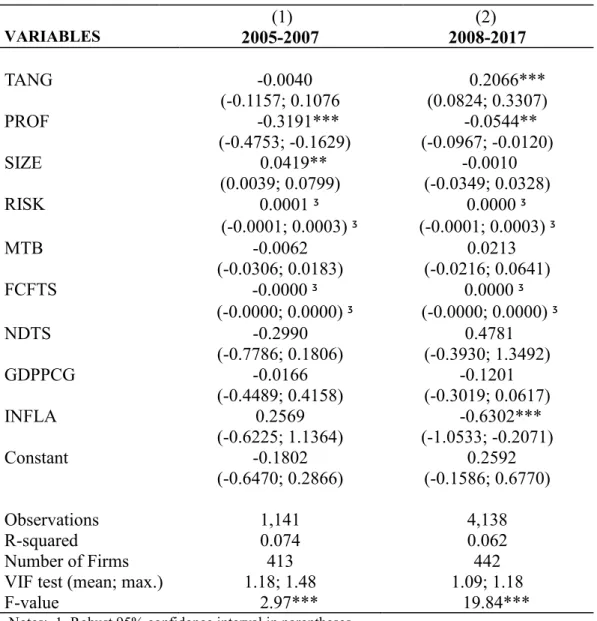
per capita growth and inflation were set as the independent variables. In order to answer the main objective of the dissertation, the coefficients associated to the different independent variables were estimated using regressions with firm fixed effects. The first part of the research question, understanding the relationship between the dependent and the independent variables, was answered by examining the estimates of the coefficients of the independent variables in both sub-periods under analysis. The second part of the research question, understanding whether the global financial crisis had impacted this relationship in PIIGS, was answered by comparing the estimates of the coefficients and their confidence intervals between the two sub-periods, the period before the financial crisis and the period during the financial crises.
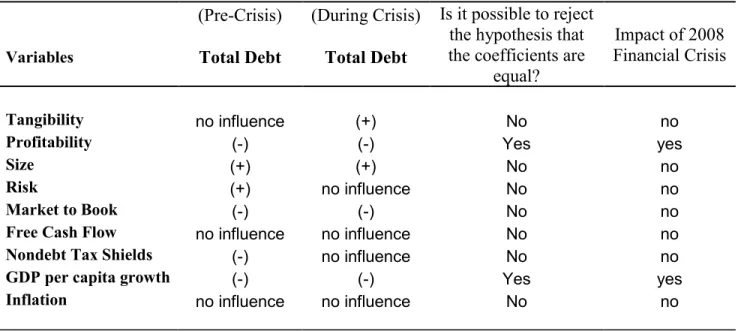
The results found suggest that the global financial crisis impacted the capital structure of the publicly traded firms in PIIGS. From the determinants chosen in the analysis, profitability, size, market to book and GDP per capita growth appear to be the factors that consistently and significantly determine firm leverage, independently the timeframe chosen. Tangible assets appear to have influence on leverage only during the financial crises period, while free cash flow and inflation rate appear to be statistically insignificant. Moreover, size and market to book appear to have influence on leverage in both sub-periods under analysis. Finally, comparing the confidence intervals of the coefficients in the two sub-periods, we can infer that the 2008 financial crisis had no impact on tangibility, size, risk, market to book, free cash flow, nondebt tax shields and inflation, but did influence profitability and GDP per capita growth.
The rest of this dissertation is organised as follows. A literature review of the main theories and the determinants of the capital structure is presented in Section 2. Data and Methodology are presented in Section 3. Empirical results are presented and discussed in Section 4. Finally,
conclusions are presented in Section 5, including the main limitations and the propositions for future research.
2. Literature review
2.1 Capital structure: concept and theories
Decades of research have been devoted to shed some light to the capital structure choice of the firms, mainly trying to figure out a model in order to explain it. What exactly is the capital structure and why is it so important to firms? “The study of capital structure attempts to explain the mix of securities and financing sources used by corporations to finance real investment” (Myers, 2001, p. 81). Therefore, the concept of capital structure is related to the decision of the appropriate mix of debt, equity and internal funds used to finance the investments of the firm. This mix of debt and equity seems to be important when it comes to the firm’s value.
One of the first theories to conceptualize and explain some questions related to the investment and capital cost was discussed back in 1952 by David Durand. His paper represents two extreme approaches to the problem of measuring the cost of debt and equity financing, i) the Net Income approach, according to which the firm can increase its value or lower the cost of capital by using the debt capital, and ii) the Net Operating Income where the value of the firm and the cost of capital are independent to the capital structure.
The seminal paper of Modigliani & Miller (1958), discussing the capital structure choice states that the way the firm chooses its financing doesn’t affect its value provided we are in perfect markets without transaction costs, taxes, bankruptcy costs, agency costs and asymmetric information. In 1977, Miller adds personal taxes and concludes that the deductibility of interests plays a favourable factor in the use of debt financing, but that result is offset by the more favourable tax treatment from stocks in the use of equity financing. Generalizing the Miller’s model, DeAngelo & Masulis (1980) include the existence of corporate tax shield substitutes for debt which implies a unique interior optimum leverage decision in market equilibrium.
Following the capital structure irrelevance model of M&M three major theories have been emerged attempting to describe the debt-equity choice mainly by studying evidence from US firms over different decades and different sectors. According to the Trade-off Theory, firms have one optimal debt ratio and try to determine their capital structure by a trade-off between the benefits and the costs of debt. The classical version of this theory goes back to Kraus & Litzenberger (1973), stating that the optimal leverage reflects a trade-off between the tax benefits of debt and the deadweight costs of bankruptcy. The Trade-off Theory is not limited to the “tax-bankruptcy” perspective, it also includes agency cost models such us Stulz (1990) and Morellec (2004), where they argue that agency conflicts affect capital structure. Morellec concludes that the manager-shareholder conflicts can explain low debt levels observed in practice as well as the fact that high growth option firms tend to use less debt, suggesting also that the impact of managerial discretion on leverage decisions does vary across firms and it is considerable. According to Stulz, managerial discretion has two costs, i) the overinvestment cost when management invests too much and ii) the underinvestment cost when management claims not being able to fund positive NPV projects with internal resources. “An equity issue that increases resources under management’s control reduces the underinvestment cost but worsens the overinvestment cost. Since debt and equity issues decrease one cost of managerial discretion and increase the other, there is a unique solution for the firm’s capital structure” (Stulz, 1990, p.23).
On the other hand, the Pecking Order Theory, clearly articulated by Myers (1984), has no optimal capital structure suggesting that firms prefer internal financing over debt. Moreover, this theory predicts a preference for a hierarchy in using the financial sources, first giving priority to the use of internally generated funds, then to the debt and as the last resort the issuance of equity. From an outside investor’s perspective equity has serious adverse selection since it is surely riskier
than debt. On the other hand, from the firm’s insider perspective, the retained earnings are a better option of financing than outside sources. According to Myers (2001) “Issuing debt minimizes the information advantage of the corporate managers. Optimistic managers, who believe the shares of their companies are undervalued, will jump at the chance to issue debt rather than equity. Only pessimistic managers will want to issue equity-but who would buy it? If debt is an open alternative, then any attempt to sell shares will reveal that the shares are not a good buy. Therefore, equity issues will be spurned by investors if debt is available on fair terms, and in equilibrium only debt will be issued. Equity issues will occur only when debt is costly-for example, because the firm is already at a dangerously high debt ratio where managers and investors foresee costs of financial distress. In this case, even optimistic managers may turn to the stock market for financing.” (p.92). Pecking Order Theory is commonly framed based on facts related to the asymmetric information, nevertheless it can result from other facts relevant to tax, agency or behavioural considerations (Frank & Goyal, 2009).
Market timing has gained popularity in academic literature in the last decades and refers to the practice of issuing shares at high prices and repurchasing at low prices with the intention to exploit temporary fluctuations in the cost of equity relative to the cost of other forms of capital (Baker & Wurgler, 2002). In their study Baker & Wurgler use the market to book ratio in order to measure the timing opportunities perceived by managers and argue that “low-leverage firms tend to be those that raised funds when their valuations were high, and conversely high-leverage firms tend to be those that raised funds when their valuations were low.” (p.29). According to their conclusions the Market Timing Theory of corporate capital structure appears to have substantial explanatory power.
tax-based theories from the study). Their paper surveys the theories developed in the previous 30 years from the first approaches to the topic, mainly based on the force driving the capital structure. They identify four categories of determinants which result in four different approaches:
• The agency approach related to the conflicts of interest among various groups with claims to the firm’s resources. According to the results of this approach, the leverage increases i) with decreases in profitability, ii) with the fraction of the cash flow that is unobservable, iii) with the lack of growth opportunities, iv) with decreases in free cash flow, v) with increases in liquidation value, vi) with decreases in investigation costs and vii) with increases in the importance of managerial reputation.
• The asymmetric information approach related to the mitigation of the adverse selection or the convey of the private information to capital markets. This approach supports that leverage increases with the extent of information asymmetry, with increases in profitability, and decreases in free cash flow.
• The approach related to the influence of the nature of the products or competition in the product/input of the market. This approach supports that leverage increases with the extent of strategic interaction in the product market, with elasticity of demand for the product, with the extent to which product is not unique, with the extent to which reputation for product quality is unimportant and also with the extent to which workers are unionized or have transferable skills.
• The approach related to the effect of the outcome of corporate control contests. This approach supports that leverage increases with potential gains to takeover and reductions in their costs as well as with the extent to which the firm is a takeover target or lacking anti-takeover measures.
More recent review of the empirical capital structure investigations is presented in the paper of Graham & Leary (2011). They survey studies published since 2005 documenting three dimensions of capital structure variation: cross-firm, cross-industry, and within-firm through time. After presenting how well the traditional approaches explain those sources of variation, they argue that the latter have important shortcomings and explain only a proportion of the observed capital structure behaviour. The solution of those shortcomings are the main goal of the recent studies and in summary they try to address issues related to the mis-measurement of important variables, the importance of the impact of leverage on non-financial stakeholders, the effect of the supply side of capital on corporate capital structure, the under-researched features of financial contracts, the modest value effects due to capital structure, the biased estimates of leverage adjustment speeds and the inadequate consideration of the capital structure dynamics. Their review concludes that there has been some progress in understanding what researchers were missing to investigate or were wrongly considering and tried to fix it in the recent studies. However, many questions remain unanswered. Some of them involve i) identifying which firm-specific/time invariant characteristics are missing from the models, ii) which of the directional effects of market frictions are most important for capital structure decisions, iii) if focusing in particular sub-set of firms could better explain the drivers of the financing decisions as well as iv) how leverage and debt structure decisions are related.
Summing up the above, we can conclude that diverse theories and ideas related to capital structure have been emerged in the last decades but as Myers (2001) refers “There is no universal theory of the debt-equity choice, and no reason to expect one. There are several useful conditional theories, however.” (p. 81).
2.2 Capital structure: main determinants
In the attempt to identify which factors influence leverage it is important to define leverage. One of the main concerns has been whether to examine market leverage (ratio of debt to the sum of book debt plus the market value of equity) or book leverage (ratio of debt to total assets book value). Several studies, older or recent, describe leverage based on book values like Shyam-Sunder & Myers (1999), Gungoraydinoglu & Oztekin (2011), while other papers give more attention to the market-based approaches of the leverage measurement or even test both as Hovakimian, Opler & Titman (2001). Frank & Goyal (2009) studied four alternative definitions of leverage mainly focusing on the ratio of total debt to market value of assets.
Factors that affect leverage and therefore the capital structure have been studied in numerous papers over the last years. Resuming the empirical evidence gathered from the main literature, the below selection of factors includes the ones that more frequently and consistently influence the corporate leverage.
A. Leverage and Profitability
There is no doubt that evidence supports the influence of profitability on leverage, positive or negative. Authors like Jensen (1986) support the positive relationship while other empirical studies from Titman & Wessels (1988) and Rajan & Zingales (1995) report a negative influence of profitability on leverage. Most recent papers based on studies in Europe suggest that profitability appears to be negatively related to leverage (Psillaki & Daskalakis, 2009; Serrasqueiro, Matias & Salsa, 2016).
B. Leverage and Firm Size
Firm size has been empirically proven that plays an important role as a determinant of the capital structure. Authors like Titman and Wessels (1988), Rajan and Zingales (1995), Booth et al.
(2001) and Frank and Goyal (2003) agree on the positive influence of the firm size on leverage, most of the time predicting that larger firms are likely to have relatively more debt.
C. Leverage and Growth
According to the Trade-off Theory, growth appear to reduce leverage (Long & Malitz, 1985; Titman & Wessels 1988; Rajan & Zingales, 1995; Booth et al., 2001; Frank & Goyal, 2003). On the other hand, the Pecking Order Theory predicts that growth opportunities are positively related to leverage (Shyam-Sunder & Myers, 1999; Chen, 2004).
D. Leverage and Tangibility
The empirical studies of Rajan & Zingales (1995) and Titman & Wessels (1988) conclude a positive relationship between tangibility and leverage. Firms that have more tangible assets tend to have more leverage according to the Trade-off Theory. However, Pecking Order Theory predicts the opposite since “Low information asymmetry associated with tangible assets makes equity issuances less costly. Thus, leverage ratios should be lower for firms with higher tangibility” (Frank & Goyal, 2009, p.9).
E. Leverage and Taxes
The Trade-off Theory predicts a positive relationship of taxes and leverage, since higher taxes lead to higher interest tax shields driving firms to issue more debt in order to take advantage. On the other hand, nondebt tax shields are substitutes for the tax benefits and should be negatively related to leverage (DeAngelo & Masulis, 1980).
G. Leverage and Industry
Under the Trade-off Theory higher industry median leverage should drive to higher debt. Evidence on that is supported by Hanousek & Shamshur (2011) that find strong positive relation of industry median leverage with capital structure. However, according to Frank & Goyal (2009)
the industry median leverage has influence only on the market leverage and in that case the firm that compete in industries with high median leverage tend to have high leverage as well.
H. Leverage and Inflation
The results of inflation as a factor that affects the capital structure choice are mixed. Studies such as Bastos, Nakamura & Basso (2009) argue that inflation does not influence the capital structure, on the contrary Hanousek & Shamshur (2011) support the strong and positive influence of inflation on the capital structure. The conclusion of Frank & Goyal (2009) provide evidence on a positive relation between inflation and the market leverage, but no effect on book leverage.
I. Leverage and GDP/capita
Macroeconomic factors such as GDP have been included in recent literature to understand the impact on the capital structure choice. The studies of Bokpin (2009), Bastos, Nakamura & Basso (2009) and Dincergok & Yalciner (2011) conclude a significant negative relation between corporate capital structure and GDP per capita.
Other determinants such us firm´s uniqueness, business risk, credit ratings, dividend payments etc. are also important and are likely to influence the leverage. Which of those factors widely used in previous studies are reliably important were in detail examined in the paper of Frank & Goyal (2009), concluding on the importance of six factors. According to them, industry median leverage, tangibility and profitability remain reliable whether book leverage is studied or market-based leverage. As regards to the effect of market-to-book, firm size and expected inflation, those lose their reliable impact when studying book leverage alone. Their study was based on American publicly traded firms, but do the same factors determine the capital structure in Europe? The paper of Antoniou, Guney & Paudyal (2002) investigates the determinants of leverage of publicly traded firms in France, Germany and UK using panel data and a model where the leverage
ratio is function of firm specific characteristics and market related variables. They conclude that the factors that seem to play essential role in determining the capital structure of the firm are profitability, size of the firm, book-to-market ratio, tangibility of assets, term-structure of interest rates and prior changes in share price, but the strength and the nature of the effect of those factors are dependent on the financial environment and tradition of the country.
More evidence on European publicly traded firms is presented in the survey of Bancel & Mittoo (2004). Their study focuses on comparing managerial views on determinants of capital structure across a sample of 16 European countries including Austria, Belgium, Greece, Denmark, Finland, Ireland, Italy, France, Germany, Netherlands, Norway, Portugal, Spain, Switzerland, Sweden, and the U.K. Their conclusions show that European and U.S. managers use similar factors for their financing decisions, presenting differences in a country level basis. Moreover, the quality of the country’s legal system as well as the country’s cost of capital explain cross-country variations of several important factors.
The approach of Jong, Kabir & Nguyen (2008) provides evidence on the roles of firm-and country-specific determinants. This study analyses 42 countries around the world in order to investigate the importance of the firm-specific and country-specific factors in the leverage choice, including in their analysis the impact of country-specific factors on the roles of firm-specific determinants of capital structure. The authors conclude that the assumption of the cross-country equality of firm-level determinants is unfounded and it is not valid to construct a model with a single pool of all companies in the world, suggesting as a potential solution the use of country dummies for the analysis of country-specific effect on leverage. As regards to the impact of firm- specific factors like tangibility, firm size, risk, growth and profitability on the capital structure, their results are significant and consistent with the conventional theories. In analysing the direct
impact of country-specific factors on leverage, their evidence suggests significant influence of creditor right protection, bond market development and GDP growth rate, while measuring the indirect impact the important factors contain the legal enforcement, creditor/shareholder right protection and macroeconomic measures (e.g. capital formation, GDP growth rate).
The capital structure determinants of Greek, French, Italian, and Portuguese small and medium-sized enterprises were examined in the paper of Psillaki & Daskalakis (2009). They argue that SMEs in these countries determine the capital structure in similar ways due to the commonality of the institutional and legal characteristics and attribute the differences to the firm-specific factors that appear to be more important than country-specific factors in explaining differences in capital structure choices. In reference to the variables that affect the leverage in this sample of SMEs, they find that size is positively related to leverage, growth statistically insignificant and asset structure, profitability and risk are negatively correlated. Similar study examining SMEs of eight European countries (Belgium, Germany, Spain, Ireland, Italy, Netherlands, Portugal and the UK) was also conducted by Hall, Hutchinson, & Michaelas (2004) and they showed the existence of variations in both, the capital structure of SMEs and the determinants of capital structure between the surveyed countries. They emphasize that the differences between countries cannot all be explained by differences in the determinants of capital structure saying that at the same time the variations exist due to country-specific factors such as different attitudes to borrowing, disclosure requirements, relationships with banks, taxation and other national economic, social and cultural differences.
Shedding some light into the determinants of capital structure of the Greek public firms, the study of Noulas & Genimakis (2011) provide additional empirical evidence of nine quantitative factors on book leverage. Their findings suggest significant positive correlations among firm’s
leverage and sales, growth rate, tangibility of assets, depreciation, profit volatility and credit rating. Regarding profitability and firm’s age they report significant negative impact on leverage, whereas the number of workers as a measure of firm size appear not influencing leverage.
Important findings were also reported by the study of Mokhova & Zinecker (2014) who investigated the impact of macroeconomic factors on corporate capital structure and showed their significance in the decision-making process regarding both, the capital structure and the source of financing. The sample used consists of manufacturing firms from seven European countries, Czech Republic, Slovakia, Poland, Hungary, France, Germany and Greece over the period of 2006-2010 and the analysis is based on macroeconomic factors represented by indicators of monetary and fiscal policies such us inflation rate, interest rates, government debt, tax revenue, income taxes, unemployment rate and GDP growth and their effect on leverage. According to the results obtained, the authors report strong variation of the determinants across countries that depend on the corporate debt structure. For example, the inflation rate affects negatively and significantly the leverage in Czech Republic while the impact in France is the opposite. Furthermore, the GDP growth has weak and insignificant relationship with leverage in all the investigated countries.
The recent study of Oztekin (2015) examines the international determinants of capital structure across 37 countries evaluating at the same time how the countries’ institutional differences affect the leverage and the adjustment speed toward target leverage. The results of this study suggest that firm size, tangibility, industry leverage, profitability and inflation are the reliable determinants of leverage. According to the author “These determinants provide a solid account of the basic patterns in the international data: i) larger firms, firms that have more tangible assets, and firms that compete in industries in which the median firm has high leverage tend to have high leverage; ii) firms that have more profits tend to have less leverage; and iii) firms operating in
inflationary environments tend to have low levels of leverage. Although these patterns are portable across many countries, specific institutional factors are also at work. Specifically, firm size does not have a significant influence on leverage in weak institutional settings.” (p. 319). Ultimately, she concludes that the institutional environment in which the firm operates is reflected in its capital structure.
2.3 Financial crises: influence on capital structure
The global financial crisis of 2008, consequence of problems in the subprime market in the United States, is considered as the most severe crisis since the Great Depression of 1929 (Kahle & Stulz, 2010). This financial crisis was a result of a sequence of events that drove banking system almost to collapse and had a major impact on the financial markets, reducing security issuance by firms and lending by financial institutions. Europe could not escape the effects of this global recession showing its first signs in mid-September 2008 with the collapse of Iceland's banking system and spread in 2009 mainly to Portugal, Italy, Ireland, Greece and Spain (PIIGS).
In 2009 Greece reports a budget deficit of 12.7% of GDP. Striving to avoid default and after the 3 attempts of fiscal austerity measures, proceeds to a loan request in April 2010. Follows Ireland in November 2010 by taking a bailout from the IMF, the European Commission and the bailout fund, the EFSF. Next comes Portugal in April 2011 requesting and receiving a bailout from the European Financial Stabilisation Mechanism, the European Financial Stability Facility and the IMF. Ultimately Spain and Italy end up requesting a bank bailout in 2012 to rescue financial sector and avoiding austerity measures attached to regular bailouts. The PIIGS were the main countries that needed the financial support in order to survive the crisis and to avoid the total collapse of their economies.
In times of financial crisis, the banking system is seriously affected and since it plays an important role, as intermediary, in determining the terms and conditions for corporate sector financing, it makes sense that bad times in the banking system would have some consequences to the firms’ choice of financing.
Questions arise when it comes to the impact of the macroeconomic conditions to the firm’s level decisions. Did the financial turmoil of the global financial crisis, and the European sovereign
debt crisis, has impact on capital structure? It seems an interesting question to investigate to provide some more evidence on how macroeconomic conditions affect the debt-equity choice of the firms operating in economies under severe stress.
According to the report of the European Central Bank (2013), external financing has been exceptionally weak during the crisis, indicating very subdued economic activity, high risk aversion of lenders in an environment of heightened uncertainty, a decline in firms’ creditworthiness and constraints in the supply of external funds, in particular bank financing. Moreover, annual total external financing transactions have been negative, on average during the crisis, in Spain, Greece and Ireland, while it declined substantially in 2012 in Italy and Portugal, indicating a deteriorating macroeconomic environment.
In the pre-crisis period, at the euro area level, debt financing contributed strongly to firms’ external financing. During the financial crisis, external financing growth and, in particular, debt financing growth, declined substantially. Average corporate debt financing growth declined notably between the pre-crisis and the crisis periods in the countries where debt financing had been booming up to the financial crisis, such as Spain and Greece, but also Ireland and Italy (ECB, Report August 2013, No151).
Previous studies have already shed some light into the impact of the financial crisis to the capital structure. The survey of 1.050 Chief Financial Officers in U.S., Europe and Asia concludes that financial crisis systematically affected the real investment but unequally across firms (Campello, 2010). It is an interesting approach to the impact of the credit constraints on real firm behaviour that separate unconstrained and constrained firms, providing evidence that the latter planned deeper cuts, burned through more cash and sold more assets to fund their operations. In contrast, the unconstrained firms were proved to be much less affected.
According to Fosberg (2012) one of the consequences of the disruption of the capital and lending markets caused by the financial crisis was to significantly increase the amount of debt in firm capital structures. He examined listed firms in the United States during the period 2001-2010 and his main findings suggest that the financial crisis significantly disrupted the new equity issuance market in 2008 but the effects of the financial crisis were completely reversed in 2009. Moreover, it appears to have had a significant effect on the new debt issuance market as debt issuance declined by 36% in 2008. Fosberg’s findings indicate that the shift to more debt financing is a temporary artifact of the financial crisis and that the increase in the amount of debt in firms’ capital structures should be reversed in the subsequent years.
Harisson & Widjaja (2014) examined companies from U.S. S&P 500 Index comparing the determinants of capital structure before and after the financial crisis of 2008. They divided the selected period into two sub-periods in order to represent the years before the crisis (2004-2007) and after the crisis (2008-2011) and tested tangibility, firm size, profitability, liquidity, and MTB ratio as determinants of leverage. Their evidence showed a significant increase in the coefficients of tangibility (positive relationship with leverage) and market-to-book ratio (negative relationship with leverage) in the post-crisis period, attributing the result respectively to the possible adverse selection problem faced by lenders and the preference of firms toward debt financing during the financial crisis. The coefficient of profitability (negative relationship with leverage) showed lower values in the post-crisis period, according to their explanation due to the weaker internal financing capacity during the severe period of 2008. Firm size variable changed sign from positive to negative coefficient in the post-crisis period, possibly reflecting the high information asymmetry that result in the smaller firms to present a higher leverage in their capital structure during the financial crisis.
The impact of the financial crisis on the capital structure decision was also studied in the paper of Iqbal & Kume (2014). They selected public firms from UK, France and Germany over 2006-2011 period, which was divided in three sub-periods 2006-2007 as the pre-crisis period, 2008-2009 as the crisis period, and 2010–2011 as the post-crisis period. The overall results of the study showed that the financial crisis had a significant impact on the firms’ leverage in the three countries, with leverage ratios in the post-crisis period reverting back to their pre-crisis levels. Moreover, the authors conclude that firms with lower than industry-average debt ratios present an increase in debt ratios and, those with higher than industry-average debt ratios, present a decrease in their debt ratio levels from pre- to the post-crisis periods.
The approach of Alves & Francisco (2015), concentrates on the importance of the institutional variables in understanding the financing choices of the firms during the recent financial crises. The diversified sample selected represents 43 countries around the world, containing among others developing and developed capital markets, countries with different levels of investor protection, growth and financial strength as well as bank-oriented and market-oriented countries over the period 2000-2011. According to the authors, the most important conclusion of the study indicates the increase of the leverage during the periods of financial crisis, in which the long-term debt is substituted by the short-term. With respect to the impact of the institutional variables on leverage, in general, the results are inconclusive, since those variables vary across the functional forms of leverage and across the countries, diverging even more during financial turmoil.
Some more evidence from the study of Greek SME’s during the period 2009-2012, conclude that the effects of capital structure determinants on leverage do not change in an environment of economic crisis (Balios et al., 2016). Furthermore, it identifies a downward trend to the firms’ debt ratios separating the impact of each determinant to capital structure, which according to their
results, does not seem to be affected by the changes in the macroeconomic environment. As regards to the determinants of leverage, the relationship between profitability and tangibility of assets with leverage continued to be negative, and growth was positively related to leverage.
Similar study on Portuguese SME’s during the period 2007-2010 (Proença, Laureano & Laureano, 2014), also reports a downward tendency on the firms’ debt ratios levels during the financial crisis, indicating that liquidity, asset structure and profitability are the most important determinants explaining the capital structure of Portuguese SMEs. It also concluded that the impact of the financial crisis was not evident enough as initially expected, attributing the cause to the limitation in the longevity of the sample.
The impact of the 2008 financial crisis on the dynamics of the corporate capital structure was also studied in the recent paper of Zeitun, Temimi, & Mimouni (2017). They analysed a sample of 270 listed firms in six GCC countries over the period 2003-2013 and tried to understand if the determinants of leverage changed after the financial crisis by comparing the data over the sub-periods 2003-2007 and 2009-2013. The authors attempt to identify differences in the financing behaviour of corporate firms concluding the study with the following findings: 1. Before the financial crisis, debt is mainly driven by demand while after the financial crisis the supply plays also an important role along with the demand in determining the leverage ratios, since lenders consider the size and the growth of the firm before approving loans. 2. In general, results do not present evidence of significant changes in the leverage ratios before and after the financial crisis unless the results are interpreted by industry. In industries such as Basic Materials & Chemicals as well as Oil & Gas, the leverage ratios increased significantly, while on the other hand, in Technology, Telecommunications and HealthCare industries presented a decrease. 3. Long-term industry prospects seem to influence more the leverage determination compared to the short-term
variation in earnings. 4. The impact of the financial crisis varies across countries, since some countries are more exposed than others to economic falls.
Similar study analysing the impact of the global financial crisis on the relationship between the firm-related factors and the capital structure was done by Hoang, Gurau, Lahiani, & Seran (2017). The authors selected a sample of French micro-enterprises and studied comparatively, the impact on the relationship between leverage and the factors size, tangible and intangible assets, growth, and profitability, over two sub-periods, before the crisis (2003-2007) and during the global financial crisis (2008-2013). The overall results of the authors suggest that the mentioned factors significantly affect the capital structure of the French micro-enterprises, indicating the Pecking Order Theory as the most relevant theory in predicting the financing decisions of this type of firms. According to the results, those firms seem to focus on the operational growth during the financial crisis, mainly financed through short-term debt. On the other hand, firm growth becomes insignificant in relationship with long-term debt, indicating the challenges raised by this type of financing for micro-enterprises.
Summarizing the above, prior empirical evidence supports the impact of financial crises on leverage as well as its determinants showing in some cases strong and in other cases weak effect. This effect seems to vary widely across different countries, different industries and different firms implying that country-specific and firm-specific factors remain important in the capital structure choices during financial instability.
3. Data and Methodology
3.1 Data – Sources & sample selection
This thesis is based on evidence in 5 countries of the European Union, Portugal, Italy, Ireland, Greece and Spain (PIIGS), namely the country members that were most affected by the global financial crisis of 2008. The information used in the study is a combination of various sources. For the firm-specific variables, the data were extracted from the Thomson Reuters – Datastream international database. It contains economic and financial information on European firms, including Portuguese firms listed in the Euronext Lisbon Index, Greek firms listed in the Athens Stock Exchange, Spanish firms listed in the Mercado Continuo Español, Italian firms listed in the Milan Stock Exchange and Irish firms listed in the Euronext Dublin. The data collected consist of Total Debt (WC03255), Total Assets (WC02999), Market Capitalization (WC08001), Total Liabilities (WC03351), Net Property, Plant & Equipment (WC02501), Earnings Before Interest & Taxes (WC18191), Depreciations & Amortizations (WC01151), Net Sales or Revenues (WC01001), Free Cash Flow per Share (WC05507), Common Shares Outstanding (WC05301) and official closing Price (P). All the values from Datastream are in Euro currency. For the macroeconomic variables the data was obtained from the following public sources. GDP per capita growth was collected from World Bank¹ and Inflation rates from Worldwide Inflation Data².
The initial sample consisted of a total of 507 firms in the 5 geographies. The selected period was 2005 to 2017, aiming to include the time frame before and during the 2008 financial crisis and its recession, known as the European sovereign debt crisis. Following the methodology of recent studies related to financial crises and the determinants of capital structure (Harrison & Widjaja, 2014; Zeitun, Temimi, & Mimouni, 2017; Hoang, Gurau, Lahiani, & Seran, 2017) the sample was
divided in two sub-samples, representing sub-period 2005-2007 as the one before the crisis and the sub-period 2008-2017 as the financial crises period. Following previous studies, financial and insurance firms were removed due to their uniqueness and incomparable nature of capital structure (Burgman, 1996; Frank & Goyal, 2009; Gungoraydinoglu & Oztekin, 2011; Serrasqueiro, Matias & Salsa, 2016). The data sample has been restricted to observations with the total debt value equal or smaller than the total asset value and observations with extreme values were also excluded (Harrison and Widjaja, 2014; Serrasqueiro, Matias & Salsa, 2016). There were also considered and included only observations with all the variables. Based on the above restrictions and considerations, 65 firms were excluded producing a final sample of 442 firms and 5,279 observations. Furthermore, the sub-sample of 2005-2007 produced 413 firms and 1,141 observations and the sub-sample of 2008-2017 produced 442 firms and 4,138 observations.
3.2 Variables & research question
The dependent variable of this study that measures the financial debt ratio, i.e., the capital structure, is the Total Debt to the sum of Total Debt and Market Capitalization (LEV) representing the market-based leverage as already used in other studies (Frank & Goyal, 2009; Alves & Francisco, 2015). Since market value data are available for the selected sample, market leverage is a more favourable measure of debt ratio based on the evidence provided by Frank & Goyal (2009), who concluded that some factors lose their reliable impact when studying book leverage.
Several independent variables have been selected based on previous vast empirical literature, mentioned in preceding sections. In line with this literature, the following factors were considered as the main determinants of capital structure in PIIGS: tangibility, profitability, size, risk, market to book, free cash flow, nondebt tax shields, GDP per capita growth and inflation. The variable Tangibility (TANG) was measured as the ratio of Property, Plant & Equipment to Total Assets (Titman & Wessels, 1988; Serrasqueiro, Matias & Salsa, 2016). The Trade-off Theory predicts a positive sign between tangibility and leverage, while the Pecking Order Theory predicts the opposite. Profitability (PROF) was measured as the ratio between Earnings Before Interest & Taxes and Total Assets. The theory about the influence of profitability on leverage is controversial but based on studies in Europe we would expect a negative relationship (Psillaki & Daskalakis, 2009; Noulas & Genimakis, 2011). The next explanatory variable used is the size of the firm (SIZE) and it was computed as the natural logarithm of Net Sales (Alves & Francisco, 2015). The Trade-off Theory predicts a positive relationship with leverage since larger and more mature firms have relatively more debt. The risk variable (RISK) was computed as the variance of stock returns on a yearly basis. Pecking Order Theory predicts that riskier firms would have higher leverage, while according to the Trade-off Theory the sign should be negative (Frank & Goyal, 2009).
Market to book variable (MTB) was considered as the ratio between Total Liabilities plus Market Capitalization and Total Assets and according to Alves & Francisco (2015) and Adam & Goyal (2008) this variable can be considered as a proxy for growth opportunities. The Market Timing Theory predicts a negative relationship between market to book and leverage. Firms with high market to book ratio tend to have low levels of market-based leverage (Frank & Goyal, 2009). The Free Cash Flow to Sales (FCFTS) was also included as independent variable and it was computed as the ratio of Free Cash Flow per Share multiplied by the Common Shares Outstanding and the Net Sales or Revenues. According to the Pecking Order Theory, firms with higher level of Free Cash Flow would use this source to fund their needs so we would expect leverage to be negatively related with this variable. The nondebt tax shields variable (NDTS) was measured as the ratio between Depreciations & Amortizations and Total Assets (Frank & Goyal, 2009; Serrasqueiro, Matias & Salsa, 2016) and appear to be negatively related to leverage according to the Trade-off Theory (DeAngelo & Masulis, 1980). Finally, two macroeconomic variables were included, the GDP per capita growth (GDPCG) and the Inflation rate (INFLA). Evidence exists on negative sign of GDP with leverage (Dincergok & Yalciner, 2011). As regards to the inflation rate, firms that operate in inflationary environments tend to have lower levels of leverage (Oztekin, 2015).
The above-mentioned studies investigate the impact of the recent global financial crisis on capital structure using samples from a variety of countries, some analysing a specific country, other a combination of countries. Moreover, some investigate the small and medium enterprises while other focus on large and publicly traded firms. The timeframes selected by the authors also vary conditional to the available data at the time of the investigation, some authors analyse the overall period of the financial crisis while other divide the sample into sub-periods using as a guideline the beginning of the financial crisis in 2008. This dissertation will provide evidence from publicly
traded firms of EU countries that were most affected by the 2008 financial crisis attempting to answer the following inter-related research questions: 1. What is the relationship between the firm and macroeconomic related variables and the capital structure in PIIGS? 2. Was this relationship affected by the 2008 financial crisis and its subsequent recession?
The answer to these questions will be provided by dividing the overall period of the sample in order to analyse the sub-periods before and during the financial crisis. Comparing the information collected between the sub-periods, we can observe which variables are related to the capital structure in PIIGS and then infer some conclusions whether the financial crisis of 2008 had any impact on that relationship. The comparison will be focused on the statistical significance of the variables in determining the capital structure (leverage), on the sign of the relationship between the dependent variable and each of the independent variables, as well as the change occurred in the value of the coefficients from the before financial crisis period to the during the financial crisis period.
3.3 Descriptive Statistics
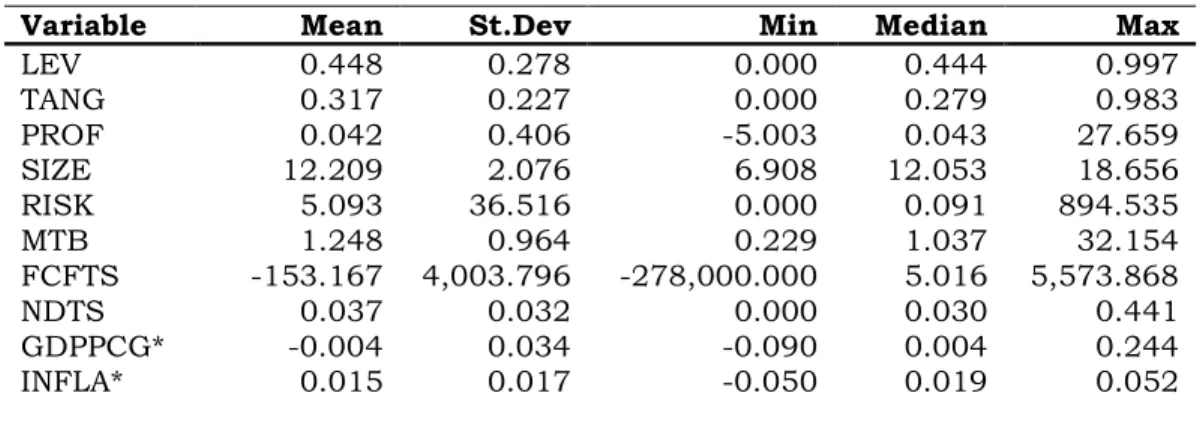
Table I summarises the descriptive statistics of the entire sample with the dependent and the independent variables for the overall period 2005-2017. According to the results, the median firm from the sample has a debt ratio of 44.4% not diverging much from the average firm that presents a ratio of 44.8% showing that debt represents a considerable amount as a financing source of the publicly-traded firms in the PIIGS countries.
Table I – Data Description for Publicly Traded, Nonfinancial companies from PIIGS overall period 2005-2017
Variable Mean St.Dev Min Median Max
LEV 0.448 0.278 0.000 0.444 0.997 TANG 0.317 0.227 0.000 0.279 0.983 PROF 0.042 0.406 -5.003 0.043 27.659 SIZE 12.209 2.076 6.908 12.053 18.656 RISK 5.093 36.516 0.000 0.091 894.535 MTB 1.248 0.964 0.229 1.037 32.154 FCFTS -153.167 4,003.796 -278,000.000 5.016 5,573.868 NDTS 0.037 0.032 0.000 0.030 0.441 GDPPCG* -0.004 0.034 -0.090 0.004 0.244 INFLA* 0.015 0.017 -0.050 0.019 0.052
1. The statistics presented are computed across 5,279 observations 2. *GDP per capita growth and Inflation rate vary by country by year
Over the selected period, the tangible assets of the median firm represent about 27.9% of total assets and the profitability of the median firm is about 4.3% of total assets. The size of the median publicly traded firm in PIIGS is approximately 171.6* million € in terms of sales, while the market to book ratio of the median firm is about 103.7%. Over the period of analysis, the risk of the median firm is 0.091, namely the stock of the median firm tends to vary about 0.30€ from its average price. The capacity of the median firm to turn sales to free cash flow is about 5 times and the nondebt tax shields of the median public firm is about 3% of total assets. The GDP per capita growth of the median firm is about 0.4% while the inflation rate of the median firm is about 1.9%.
3.4 Preliminary analysis
In order to examine how the financial crises impact the capital structure the Tables II and III present the summary statistics with the dependent and the independent variables divided in two sub-periods, before and during the 2008 financial crisis respectively. The data presented seem to suggest that the median firm has a debt ratio of 30.2% before the financial crisis and follows an increase during the financial crisis and its recession to 49.5%. The percentage of the median tangible assets to total assets seems to slightly decrease from the pre-crisis to the financial crisis period from 29.4% to 27.5%. The profitability of the median firm appears to decrease from 6.5% to 3.7% from the one period to the other. The median size of the firm seems to increase from 168.7 million € in terms of sales in the pre-crisis period to 172.7 million € during the financial crisis period. The median risk of the public firm before the financial crisis seems to be higher that the median risk during the financial crisis and its recession, suggesting that the median variation of the stock price tends to vary from the average price by 0.42€ in the first sub-period and only by 0.26€ in the second sub-period. The market to book ratio of the median firm suggests a large decrease from the 2005-2007 period to the 2008-2017 period, from 126.5% to 98.8% respectively. Moreover, the data suggest that the median free cash flow to sales had an increase from 2.8 to 5.6 from the pre-crisis period to the financial crisis period, indicating that the capacity of the median firm to turn sales to free cash flow during the financial crisis was doubled. The median nondebt tax shields seem to slightly increase during the financial crisis from 2.8% to 3.1% respectively. As regards to the median GDP per capita growth, it appears to present a sharp decrease from 1.7% to -0.6% during the 2008-2017 period. The median inflation rate seems to follow the tendency of the median GDP per capita growth presenting a sharp decrease from 2.7% to 0.9% from the pre-crisis period to the financial pre-crisis period.
Table II - Data Description for Publicly Traded, Nonfinancial firms from PIIGS before the financial crisis (2005-2007)
Variable Mean St.Dev Min Median Max
LEV 0.321 0.214 0.000 0.302 0.945 TANG 0.330 0.222 0.001 0.294 0.946 PROF 0.073 0.089 -0.558 0.065 0.758 SIZE 12.213 1.972 7.137 12.036 18.283 RISK 8.299 52.414 0.000 0.176 841.795 MTB 1.505 0.963 0.241 1.265 10.209 FCFTS -73.592 564.666 -9587.773 2.757 2271.508 NDTS 0.035 0.031 0.000 0.028 0.371 GDPPCG* 0.020 0.015 0.003 0.017 0.053 INFLA* 0.030 0.008 0.019 0.027 0.050
1. The statistics presented are computed across 1,141 observations 2. *GDP per capita growth and Inflation rate vary by country by year
Table III - Data Description for Publicly Traded, Nonfinancial firms from PIIGS during the financial crisis (2008-2017)
Variable Mean St.Dev Min Median Max
LEV 0.483 0.283 0.000 0.495 0.997 TANG 0.314 0.228 0.000 0.275 0.983 PROF 0.034 0.456 -5.003 0.037 27.659 SIZE 12.208 2.104 6.908 12.056 18.656 RISK 4.210 30.668 0.000 0.071 894.535 MTB 1.177 0.953 0.229 0.988 32.154 FCFTS -175.109 4512.375 -278000 5.580 5573.868 NDTS 0.038 0.033 0.000 0.031 0.441 GDPPCG* -0.011 0.035 -0.090 -0.006 0.244 INFLA* 0.011 0.016 -0.050 0.009 0.052
1. The statistics presented are computed across 4,138 observations
2. *GDP per capita growth and Inflation rate vary by country by year
To better demonstrate the relationship between the dependent and independent variables, in the before and during the financial crisis sub-periods, Table IV presents the Pearson correlation coefficients between leverage and the determinants described above, for the two sub-periods under analysis. The correlation coefficients are used to measure how strong a relationship is between two variables and Pearson’s correlation is the one commonly used. The results return values between -1 and 1, where value 1 indicates a perfect positive relationship, value -1 indicates
a perfect negative relationship and value zero indicates no relationship at all. P-values 0.01(*), 0.05(**) and 0.10(***) suggest the statistical significance of the relationship.
Table IV - Pairwise correlations PIIGS
*** p<0.01, ** p<0.05, * p<0.1
Based on the above criteria and comparing the correlations in the two sub-periods the most relevant results suggest the following: i) during the financial crisis period the dependent variable (leverage) is correlated with all the explanatory variables and it is statistically significant at 1% level for all the variables except for the free cash flow to sales that shows non-significance and therefore no relationship at all. On the other hand, before the financial crisis the insignificant factors appear to be those related to risk, free cash flow to sales and inflation, while size appears significant only at 5% level and the GDP per capita growth only at 10% level. ii) there is a positive correlation between leverage and tangibility in both periods, which is in accordance with the Trade-off Theory. iii) there is a negative correlation between the leverage and profitability in both periods, as predicted by the Pecking Order Theory. iv) the size seems to change sign from positive
Period 2005-2007 2008-2017
(before crisis) (during crisis)
Variables LEV LEV
TANG 0.195*** 0.168*** PROF -0.349*** -0.107*** SIZE 0.066** -0.049*** RISK 0.026 -0.046*** MTB -0.481*** -0.309*** FCFTS -0.031 0.016 NDTS -0.111*** -0.054*** GDPPCG -0.053* -0.165*** INFLA -0.026 0.040*** Observations 1,141 4,138
positively related to total debt as larger firms are likely to have relatively more debt. On the other hand, firm size can be negatively related with short-term debt during periods of financial crises as shown by Proença, Laureano & Laureano (2014) and Hoang, Gurau, Lahiani & Seran (2017). v) the risk variable appears to negatively affect the leverage during the financial crisis supporting the Trade-off Theory. vi) the correlation between leverage and market to book remains negative in both sub-samples, in accordance with the results of Frank & Goyal (2009) related to market leverage and market to book. vii) the nondebt tax shields present negative relationship with leverage in both either pre-crisis period or during the financial crisis period in accordance with other studies such as DeAngelo & Masulis (1980). viii) the GDP per capita growth appears to be negatively related with firm´s leverage in both sub-periods in line with the results of Alves & Francisco (2015). ix) the inflation factor appears to affect firm´s leverage only during the financial crisis period suggesting a positive relationship as predicted by Frank & Goyal (2009).
The preliminary analysis presented so far organise and summarize the data of the selected sample in a meaningful way, showing some patters and trends. However, since the analysis is univariate, those inferences may be biased. To confirm and validate these results, the next sections will provide analysis based on estimating the coefficients using a regression model.
3.5 Methodology – estimation model
As mentioned in section 3.2, this dissertation intentions to study the relationship between the dependent and the independent variables as well as if this relationship has been affected by the recent financial crisis. In addition to the preliminary analysis presented in the previous section, a panel regression of leverage was estimated based on the following multivariate regression model, which includes firm fixed effects:
LEVit = β0+ β1 TANGit + β2 PROFit + β3 SIZEit + β4 RISKit + β5 MTBit + β6 FCFTSit + β7 NDTSit + β8 GDPPCGct + β9 INFLAct +
ν
i +ε
itWhere:
LEVit = Market Leverage of firm i in the year t TANGit = Tangibility of firm i in the year t PROFit = Profitability of firm i in the year t SIZEit = Size of firm i in the year t
RISKit = Risk of firm i in the year t
MTBit = Market to book value of firm i in the year t FCFTSit= Free Cash Flow to Sales of firm i in the year t NDTSit = Nondebt tax shields of firm i in the year t
GDPCGct = GDP per capita growth of the country c in the year t INFLAct = Inflation rate of the country c in the year t
β0 = constant
β1… β9 = the estimated coefficients for the nine independent variables, respectively
ν
i = unobserved time-invariant firm-specific effectε
it = error term of firm i in the year ttime-the degrees of freedom and in time-the reduction of time-the collinearity among time-the explanatory variables (Hsiao, 2003).
Following other studies related with the impact of the financial crisis on the capital structure (Lemmon, Roberts & Zender, 2008; Harrison & Widjaja, 2014; Alves & Francisco, 2015; Serrasqueiro, Matias & Salsa, 2016) the OLS approach seems not to be an adequate method to explain the relationship between the debt and its determinants. The OLS regression does not control for the non-observable individual effects of the firms causing endogeneity issues and therefore produces estimates that may be biased and inconsistent (Wooldridge, 2002). If those individual effects generate endogeneity issues, the fixed effects model would be more adequate to overcome this econometric issue. On the other hand, if the regression model does not present endogeneity issues, the random effects would be the right approach.
To choose between the random effects and fixed effects model a Hausman specification test was conducted for the two sub-samples. This test compares the consistent estimator (the estimates from the fixed effects model) with the efficient estimator (the estimates from the random effects model) under the assumption that random effects specification is appropriate for the individual firm effects in the model. Under this specification the results of the tests in the two sub-periods indicate the rejection of the null hypothesis and, therefore, suggest that fixed effects approach is the adequate model for the panel data under analysis.
Furthermore, to control for the presence of heteroskedasticity, every regression was corrected using robust standard errors.
As regards to the multicollinearity issue, the sub-samples were tested using a Variance Inflation Factor (VIF) test. The results of the VIF tests for all the periods under analysis imply that multicollinearity among the variables in the model is relatively weak, since all values are