Water Resources Management
Coexistence and Conflict in Semiarid Brazil
Thiago Ferreira Dias1
Daniel Araújo Valença2
Iriane Teresa de Araújo3
Rayane Cristina de Andrade Gomes4
Ronaldo Moreira Maia Jr5
Summary
The paper analyzes water management in the Brazilian semiarid region with emphasis on aspects of coexistence and conflicts over access in rural areas. Experiences of social coexistence in semiarid technologies from the joint to the Brazilian semiarid (ASA) and water conflicts from cases of irrigated areas in the states of Ceará and Rio Grande do Norte are explained. For this purpose, we used a qualita-tive approach through the use of primary and secondary data. The cases provide concrete actions that articulate civil society and the State in favor of the common good. The results indicate that the policy articulated by the ASA there is a governance process in which there are links between the forums of civil society and the interfaces in the planning and implementation of public policies in building public agenda that can bridge the gap between planning, deployment, management and improvement of this policy. In the second case the policy is implemented exclusion and allocation of those communities, placing them on the margins of development, scrapping its links with the territory. The water is not seen from the perspective of the common good and the communities are perceived as an obstacle to
1 Doutorado em Administração pela Universidade Federal do Rio Grande do Norte (UFRN). É professor do Programa de Pós-Graduação em Gestão Pública da Universidade Federal do Rio Grande do Norte (UFRN). [email protected]
2 Mestre em Arquitetura e Urbanismo pela Universidade Federal do Rio Grande do Norte (UFRN) e doutorando em Ciências Jurídicas pela Universidade Federal da Paraíba (UFPB). Professor da Universidade Federal Rural do Semi-Árido (Ufersa). [email protected] 3 Mestre em Ambiente, Sociedade e Tecnologia pela Universidade Federal Rural do Semi-Árido (Ufersa). Assessora de fomento dos projetos vinculados a Universidade Aberta do Brasil (UAB/Ufersa) e Sistema Nacional de Formação Continuada (Sinafor/Ufersa). Professora da Faculdade Mater Christi. [email protected]
4 Aluna do curso de Direito da Universidade Federal Rural do Semi-Árido (Ufersa). [email protected]
5 Aluno do curso de Direito da Universidade Federal Rural do Semi-Árido (Ufersa). ronaldo_ [email protected]
of dependency, paternalism and clientelism high proportion of the population rural Brazilian semiarid.
Keywords: Public policy. Water resources. Semiarid Brazilian.
GESTÃO DOS RECURSOS HÍDRICOS:
CONVIVÊNCIA E CONFLITOS NO SEMIÁRIDO BRASILEIRO Resumo
O artigo analisa a gestão da água na região do semiárido brasileiro, com ênfase nos aspectos de convivência e conflitos sobre o seu acesso em áreas rurais. Experiências de convivência com um conjunto de tecnologias para o semiárido pela Articulação Semiárido Brasileiro (ASA) e conflitos pela água a partir de casos de áreas irrigadas nos estados do Ceará e Rio Grande do Norte são explicados. Para este efeito, foi utilizada uma abordagem qualitativa através da utilização de dados primários e secundários. Os casos fornecem ações concretas que articulam a sociedade civil eo Estado em favor do bem comum. Os resultados indicam que a política articulada pelo ASA há um processo de gover-nança em que existem ligações entre os fóruns da sociedade civil e as interfaces no planejamento e implementação de políticas públicas na construção de agenda pública que podem preencher a lacuna entre o planejamento, implantação, gestão e melhoria desta política. No segundo caso, a política implementada é de exclusão das comunidades, colocando-as à margem do desenvolvimento, e a demolição de suas ligações com o território. A água não é vista a partir da perspectiva do bem comum e as comunidades são vistas como um obstáculo ao “desenvolvimento”. Finalmente, esboça-se a partir dos casos em estudo, com a ideia de que a limitação do acesso à água no semiárido, reflete o precário bem-estar e perpetuação das relações de dependência, e o paternalismo e clientelismo em alta proporção sobre a população rural do semiárido brasileiro.
Water was regarded as an inexhaustible resource that could be wasted, drained or polluted in the name of wealth production. However, over the years it has become clear that this viewpoint was deeply mistaken and that water it is a limited resource.
According to the 2006 Human Development Report (Programa…, 2006) there is a striking resemblance between current perceptions that the world is facing a water resources crisis and fears about an impending global food shortage that attracted so much concern in previous eras. In the early nineteenth century, Thomas Malthus professed a bleak future for humanity. In his Essay on the Principle of Population, he predicted that exponential po-pulation growth would exceed the linear growth of agricultural production, which would in turn lead to an imbalance between the number of mouths to feed and the amount of food available. Malthus argued that food shortages would produce recurrent cycles of famine.
This catastrophic vision coincides with the pessimistic outlook on future scenarios regarding water availability. The World Water Council identified “the obscure arithmetic of water” as one of the greatest threats to Humanity (Programa…, 2006). It is projected that the shortage of water resources will be a crucial determinant of the quality of life for many hu-mans in the new century, possibly generating internal conflicts and even causing wars over ownership rights to water between different countries (Programa…, 2006).
Most countries have enough water to meet their own domestic, in-dustrial, agricultural and environmental needs. The problem resides in those aspects related to water resources management, including the distribution, preservation and maintenance of water sources.
Given the political relevance of this topic, several countries, mainly in Europe, have tried to develop mechanisms for the effective and efficient management of water (Programa…, 2006). France and Germany, for example, have developed models for participatory management, in which multiple
users stakeholders decide on the actions affecting the watersheds of which they are a part, defining investment planning in the basin, grants for access and applying charges for water usage (Programa…, 2006).
Bringing the water resources theme to the reality of Brazil, we empha-size that geographically it is a country of great continental extension (about 8.514 million km2). Brazil ranks fifth in total geographical area (representing 21% of the total territory of the Americas and 48% of South America), and is surpassed in this respect by only Russia, Canada, China and the United States of America. According to the Ministry of the Environment the territory of Brazil includes more than 15% of all liquid form fresh water in the world (Ministério…; Agência…; Programa…, 2007).
In Brazil, despite the comfortable situation at present, in terms of global water resources, there is an uneven spatial distribution of water resources in Brazil and 80% of the countries water supply is concentrated in the Amazon region, an area of very low population density and highly reduced levels of consumptive demand.
Regarding the legal framework for water resources, the first specific regulations date from the 1934 Water Code (Código das Águas), later passed as federal Law 9.433/97 and popularly known as the “Water Law” (Lei
das Águas). Based on the French model for water resource management, Law 9.433/97 established the National Policy on Water Resources (Política
Nacional de Recursos Hídricos) and created the National Water Resources Management System (Sistema Nacional de Gerenciamento de Recursos Hídricos).
Law 9.4333/97 brought about a paradigm shift in how water resources were treated in Brazilian society. The Lei das Águas also incorporated some fundamental concepts in a vision for sustainability in water usage, including the decentralized management of water resources, understanding water as a resource with economic value to induce new behaviors and promoting social participation and responsibility in its management. These were some
fundamental elements that connected the treatment of water resources in Brazil with contemporary thinking on sustainability and natural resources management (Ministério…; Agência…; Programa…, 2007).
Despite these thematic advances in caring about water resources and as a current theme in particular, it is largely failing in the semiarid region of Brazil, which is characterized by heavy rainfall concentrated over a four month period (February to May) and large inter-annual variability, with lower than average rainfall and a high rate of evapotranspiration, factors that combine to generate strong periods of drought that plague the region (Cirilo; Montenegro; Campos, 2010).
Accordingly, it is also a great challenge to maintain and expand the availability and use of water in the vast semiarid region of northeastern Brazil, even with a political infrastructure expected to focus on providing water to facilitate irrigation and ensure the well being of humans and animals. Ho-wever, political and social actions in the region remain insufficient at solving the most basic of problems arising from water shortages, reverberating as an impending sense of vulnerability among much of the population before the occurrence of each drought, particularly in poor and rural areas.
This study aims to analyze the management of water resources in the semi-arid region of northeastern Brazil, with an emphasis on coexistence and conflicts over access to water in rural areas. In this sense, the experiences of social technologies for coexistence in the semiarid region are explained according to the non-governmental organization Articulation for Semiarid Brazil (ASA – Articulação para o Semiárido Brasileiro) and cases of water conflict from irrigated areas in the states of Ceará and Rio Grande do Norte.
The presentation of this work is divided as follows: the introduc-tion traverses the theme and objectives to be achieved. The theoretical framework addresses the supporting foundations for the research that ex-plains the panorama of water resources in Brazil and economic ownership perspective for the common good. The methodological procedures of this
work will also be shown. The following section presents the results of an analysis of data collected about the experiences in management and conflicts over water in the semiarid region of Brazil.
Theoretical Framework
Water Resources: the common good
The conservation of natural resources is a constant theme in the re-alm of world debate, especially given the widespread acknowledgement of the concept’s importance to the quest for sustainable development. There is consistent interest on the part of governments and civil society to show that the sustainable use of natural resources has positive economic value, and that this value is often greater than the value derived from alternative resources that threaten biodiversity (Pearce; Moran, 1994).
The definition of ownership of resources (right) common, are related to two basic natural features: deleting and subtracting. Subtraction, in turn, If the common ownership of resources is defined as a class of resources for which the deletion (which refers to how difficult it is to control user access to the resource due to the physical nature of the resource) and use set in-volves subtraction (if wave resource use by an individual again, and that this process generates changes in resource availability to the other individuals who have benefited him) (Ostrom; Gardner; Walker, 1994).
Among natural resources, we consider water as non-renewable and as playing a significant role in economic and social development. Water resources have suffered from global population growth and increased in-dustrialization, which have both occurred with greater intensely during the twentieth century, and particularly after World War II.
Beginning in the 1970s, under pressure from the environmental movement, a discussion of how to utilize of water resources without com-promising environmental preservation and conservation was initiated (Tucci; Hespanhol; Netto, 2001). Thus, governments and societies, especially in developed countries, created mechanisms to control the environmental impact in approving development projects and monitoring their implemen-tation and operations. In the 1980s, the first environmental laws imposing pressure on the private sector to control the discharge of untreated indus-trial effluents into rivers and the excessive use of fresh water in production processes were ratified.
Already in the 1990s, there were efforts at managing water resources shared between the State and principle users of water in order to exercise control over the natural environments that are so vital to global economic and human development.
Water resources, according to the literature, are classified in terms of how they may be used in consumptive and non-consumptive applications. This classification scheme will be detailed in the following sections. Consumptive Use
According to Carrera-Fernandez and Garrido (2002) consumptive use consists of the water consumed through withdrawal from water sources via uptake or derivation, in other words, water that is effectively removed from a spring, making unavailable for other uses. There are different forms of consumptive use: the human water supply, water for livestock, industrial water supplies and agricultural irrigation.
Water is considered a vital asset for survival, where the human water supply has priority over all other uses. Thus, there is great concern for the preservation and conservation of water sources, especially those that meet the criteria for human consumption. We must point out that although the
demands on water for human consumption are not that significant in compa-rison to the demands for irrigation purposes, the supply of water for human consumption is limited by factors such as (Tucci; Hespanhol; Netto, 2001):
• the quality of surface and groundwater sources that meet the criteria for human use,
• the concentration of demand in large urban centers generated by population growth causes greater water consumption,
• a sewer system deficit, that facilitates the discharge of effluents into water sources, causes pollution and renders them unsuitable for human consumption.
The growth of, mainly intensive, livestock production in Brazil, espe-cially in the Central-Western (Centro-Oeste) region, imposes a consumption demand of 93% of the total water supply for this region (Tucci; Hespanhol; Netto, 2001). According to Law No. 9.433/97, in the event of a water shor-tage, water for sustaining livestock and water for human consumption are the top two priority uses.
Water is also an important element in industrial activity, to the ex-tent that in gauging the feasibility of an industrial project, one of the most important factors to consider is the existence of potential sources of water, because water has several purposes in the production process of many di-fferent industries, and according to Carrera-Fernandez and Garrido (2002) these include:
• As a heat absorbent; • As a cleaning agent;
• As part of mechanical transmission; • As an element for steam production; • As a raw material in production; • As a means of processing materials;
• As a solvent;
• For domestic uses in the factory;
• As a vehicle for disposing of liquid effluents.
Now, regarding irrigation for agricultural purposes in Brazil, this type of usage is concentrated in the Southeastern (Sudeste) and Southern (Sul) regions of the country, with about 74% of the total demand coming from the Paraná Basin (Bacia do Paraná) (Tucci, Hespanhol and Netto, 2001).
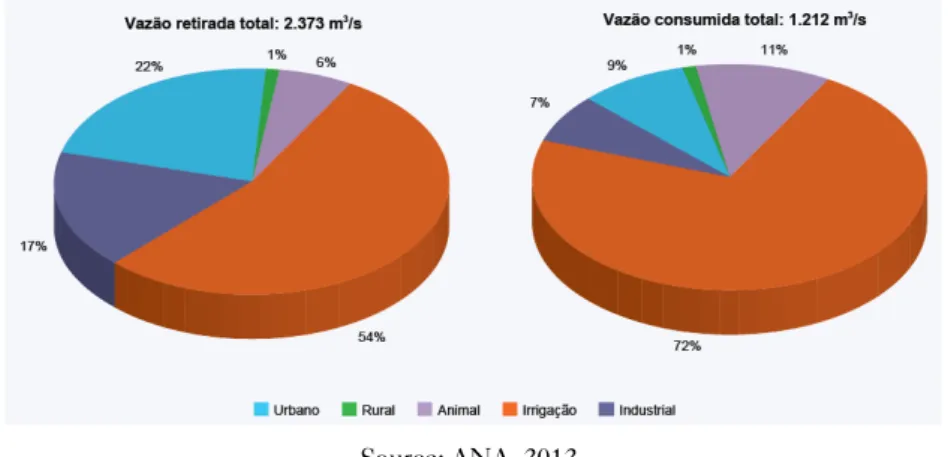
Figure 1 – Estimated demands on water resources by type of consumptive use
Source: ANA, 2012.
ANA (2012) data show the actual situation for estimated demands according to the type of consumptive use of water resources in 2010 (ANA, 2012). From these data we can see that the highest flow rates were due to removal of water for irrigation purposes, 1.270 m3/s, which corresponds to 54% of the total available water supply. This was followed by removal to meet the demand for urban drinking water supplies for purposes at a flow rate of 522 m3/s.
According to the ANA (2012), of the water supply removed and ac-tually consumed, which represents 51% of all water withdrawal, 72% met irrigation demands, followed by water for livestock (11%), urban drinking water supply (9%), industrial supply (7 %) and rural supply (1%).
According to the ANA (2012) the only type of consumptive use that showed a decrease in demand was that for the rural water supply, estimated in 2010 to be 34.4 m3/s, or 28% lower than estimates from the year 2000.
This is an interesting trend that deserves more attention.
In rural areas, it appears that irrigation still places the greatest demand on water resources in Brazil, which is not so surprising when we consider that the estimated irrigable land area currently used in agricultural production is about 29.6 million hectares. According to the ANA (2012) the estimated amount of irrigated land area in 2010 will have more 5.4 million hectares, which is 20% higher than that estimated for agricultural exploits in 2006.
Irrigated agricultural operations are a direct result of the facts of nature, which is to say that rainwater is insufficient to meet the needs of all crops and irrigation is required to enhance crop production and ensure a steady supply of agricultural products to reduce the inherent uncertainties of agricultural practices caused by such factors as climatic variation (Tucci; Hespanhol; Netto, 2001).
Furthermore, it may be observed that all the regions of Brazil showed an increase in irrigated land area devoted to agriculture, which signals the need to adopt irrigation techniques that result in the more efficient use of water in order to avoid conflicts over water use (ANA, 2012).
The main contributing factor to irrigation being the main consump-tive use of water resources in Brazil is the substantial affect it has on overall productivity by increasing the food supply and lowering prices for consumers, compared to crop production in non-irrigated areas. Additionally, irrigation constitutes an essential factor in much agricultural production, especially in regions where the water deficit is significant.
The largest investments in public irrigation projects aiming to promote regional development in areas suffering from serious social and environmental problems have been in the Northeast (Nordeste) region of Brazil. Such investments have contributed significantly to the expansion of horticulture practices in the region of the San Francisco River (Rio São
Francisco) and various other drought stricken areas in the northeastern region of the country.
On the other hand, it also appears that this mode of water usage can cause damage to water resources, particularly groundwater, particularly from the effects that inefficient drainage has on the salinization of salts in the subsoil. Irrigation projects have also contributed to the generation of conflicts over water rights in the countryside and served to intensify the inequalities suffered by rural populations, which is particularly pronounced in the semi-arid northeastern region of Brazil.
Non-consumptive use
Non-consumptive use, according to Carrera-Fernandez and Garrido (2002), is when water is used directly at the source or when, after it is cap-tured and utilized somehow, it is immediately returned to the source in a way that no actual consumption occurs. Thus, the water becomes available again for other uses. Within the modality of non-consumptive use are such applications as power generation, shipping, effluent dilution (within per-mitted levels), fishing and recreation.
Generating electricity represents a large portion of the non-con-sumptive use of water in Brazil, where 91% of all electricity is produced by hydropower. Therefore, there is a direct and strategic dependence on water resources to generate this crucial form of energy in the country. This level of dependence on water resources for electricity, however, could be reversed through greater investment by the Federal Government in alternative forms of energy production despite the higher unit costs to generate such energy, including thermoelectric power plants, wind and solar power.
Shipping is an important type of non-consumptive use that does not have an affect on the availability of water resources, but is greatly affected by the lack of the resource itself, since a minimum baseline flow is required to navigate. Shipping was also the first means of large-scale transport to be used in Brazil. Thus, inland waterways are of fundamental importance, particularly to those states and municipalities in the Northern (Norte) region of the country. The dilution of wastewater is considered to be another form of non-consumptive water use, where an agent releases effluents into water currents, which dilutes and transports the contaminated water away from the production site. To engage in this mode of water consumption it is necessary that the right be officially granted to the user. Attention must be given to the fact that this type of usage can contribute to the degradation of water resources, especially when a dilution site is in a place where the runoff affects any uncontaminated water sources or the concentrations of pollutants reach levels that are greater than what is permitted by law.
Fishing can also be a type of non-consumptive use with great econo-mic importance, and highly susceptible to water quality where the activity occurs. In this sense, it is linked with other uses of water and has relevant importance in contributing to food production, employment and economic gain (Carrera-Fernandez; Garrido, 2002).
When realized according to the principles of preservation and con-servation, these things can help maintain water quality and contribute to the economic development of a region, providing a better quality of life and fulfilling the purpose of enjoyment. In the following section we will explore the concept of water as an economic good in the context of economic science.
Nature and Economic Appropriation:
a look at water resources
When you start a thread that deals with the relationship between the nature and economic appropriation, it is necessary to discuss some key issues. Ostrom (1990) brings us an important question, how can we limit the
use of natural resources so as to ensure their long-term economic viability. We need to ensure the natural resources in the long term, but who competes the governance process of this issue, being that the policy has been at times a bit distant from that process. The author quoted above brings important elements to understand this process, by stating that the governance process concerns the self-organization of communities and, and there is a limit to this, because there is need for assistance from the actors of the State and the market itself (Ostrom, 2003). We need to understand the limitations of the governance process to better understand when we treat of a common good as water and as this process of appropriation.
Fits the political ecology treat conflicting or harmonious relations among social groups and the ecosystem. For Zimmerer (2000) socially constructed relations in scales, must emphasize the faces of power and conflicts from the appropriation of natural resources. Using these scales aim to understand the local changes from agricultural activities. To present this discussion specifically to the context of water resources, understand that changes in recent years in water governance practices, restricted to the water resource, has become a commodity with appropriation of common goods by the private market. These changes generate some changes in water governance practices with new institutional arrangements, which fits well Ostrom’s ideas above.
Getting to Know the Semiarid Region of Brazil
The semiarid landscape of Brazil covers an area of 879,000 km2, inclu-des 1,049 different municipalities, and corresponds to approximately 61.9% of the Northeast (Nordeste) region of the country (Ministério da Integração, 2005). The dominant biome in this vast area is known as caatinga and is characterized by below average rainfall and a high degree of
evapotranspi-ration, with subsoil composed of 70% crystalline rocks, another factor that hinders the formation of perennial sources of standing water and influences the quality of potable water, which is usually saline (Malvezzi, 2007).
According to Malvezzi (2007), even in the face of such an inhospitable situation, the semiarid region has experienced some intensive changes du-ring recent decades, transformations that have led us to rethink the economic models that have been adopted to guide development in the region so far. Historically speaking, the semiarid region of Brazil has been plagued by catastrophic events of severe droughts and flooding, while the general availability of water has been one of the major obstacles to development in the region. Developmental models have been largely based on “combating drought”, leaving aside the search for alternative models that might enable pe-ople to cope with this phenomenon by focusing directly on water management solutions that are more suitable to the current reality. According to Malvezzi (2007, p. 11) “the widespread image of the semiarid region, as a climate, has always been distorted. It sold the idea of an arid region, not semiarid.”
Policies related to combating drought were historically formulated in a disjointed manner with other social policies in the semiarid region, which further contributed to a character of emergency and creation of welfare po-licies (Albuquerque, 2010), This assertion gives us a false impression and discourse on policies judged to do away with the problem of limited water availability in the semiarid region, without observing that the region presents certain peculiarities that must be guided by thinking about public actions.
Such discourse came to be modified principally since the 21st century,
at which time discussions focused on development policies based on the concept of “coexistence with the semiarid climate” were initiated
Regarding coexistence, Malvezzi (2007) stated that:
The secret to coexistence is in understanding how the climate works and adapting to it. It is not about “ending the drought,” but adapting to it in an intelligent way. You need to interfere with the environment, of course, but respecting the laws of an ecosystem that, although fragile, has astonishing richness (p. 12).
This same author shows that the first law of coexistence in the se-miarid landscape is about capturing rainwater, an ancient practice that has been mostly abandoned in the region. However, not enough to store water, we need to prevent their evaporation process.
Appearing later, and as a result of this discussion, came greater ackno-wledgement of the need for building better infrastructure and management planning for water resources, which are the principle means necessary for creating a robust strategy for the coexistence of society with the nature of a semiarid climate.
According to Medeiros et al. (2011), the debate over water in the semiarid region brings forward some most significant dimensions: access to water by diffuse rural populations; efficient use of water resources in pro-duction processes; the precept of including new social actors stakeholders with local knowledge in the decision making process; managing conflicts and ensuring the operation of implanted infrastructures as the only means of potentially producing associated benefits.
Thus, the current work will address the dynamics of water usage in rural areas of the semiarid region of Brazil, featuring both a focus on experiences from coexistence in the semiarid region and on the conflicts generated between multiple users and interests over access to decidedly scare and valuable sources of water.
Social Technologies: public policy
For a region with climatic limitations as the Brazilian semi-arid region, coexistence with these limitations becomes the key to the growth and de-velopment of the region. For Moran (1994, p. 25) “the human adaptability tends to emphasize the flexibility of the human relationship to the environ-ment”, the idea of adapting is an ecological approach and coexistence the limitations imposed by their own natural environment. And in this process of adaptation that partner technologies emerge and gain strength in the
academic, political and social. These are techniques, materials and metho-dological procedures tested, validated, and with social impact evidenced, created from endogenous needs for endogenous solutions, by local social realities and considers are linked in a general way the collective organization, designing solutions for social inclusion and improvement of quality of life (Lassance Jr.; Pedreira, 2004).
With the launch of the “Declaration of the semi-arid”, the ASA (arti-culation of the Semi-Árido Brasileiro) has sought to establish and implement public policies to fine-tune with the semi-arid development project with equity and sustainability by incorporating the concepts of human adap-tability discussed by Moran. Their experiences have betted decidedly in social technologies for water storage. The implementation of these social technologies, stands the cistern of plate to capture rain water for human supplies under the programme one million cisterns (P1MC) and later the (P1 +2) a land program and two waters among others.
These experiments show the issue of governance of these resources and which actors are clearly involved cause significant changes to the semi--arid, where social technologies has led to a change of paradigm incorporating notions of participation, democracy and governance in the Semiarid Brazilian, via public policies and social mobility.
Partner Technologies and the Bank of Brazil Foundation
Adoption of a concept of social technology on the part of the Bank of Brazil Foundation began to draw in 1999, during the discussions on Science and technology held at the initiative of the institution. The Foundation has the design that integrates Social Technologies database solutions that can be known and consulted by subject, area of expertise, executing entity, target audience, region and State. The database includes information about problems solved, municipalities, resources required for implementing, among other details of the social technologies certified (Fundação Banco do Brasil, 2004).
It is therefore an important stock of social technologies that are in the process of affirmation, development and reapplication. Parallel the action cited above the Bank of Brazil Foundation is positioned on the front line in the process of dissemination and the reapplication of social technologies in the country starred along with other partnerships the feasibility of forming the Network of Social Technology (NST). The Bank of Brazil Foundation comprises a virtual network with local projects and initiatives of territorial Governments and civil organizations, around hundreds of demonstration projects (Fundação Banco do Brasil, 2004).
Methodology
The methodological tools used to investigate the motivating ques-tions of this study, conducted in the framework of the Brazilian semi-arid region, found by a search of qualitative nature for its ability to penetrate the social reality of the Unit searched, for both have character descriptive--exploratory, performed by means of a case study.
The case study, to Goldenberg (2004), is one of the types of qualita-tive research applied in the context of the social sciences, characterized by brief analysis of a particular experience in particular, with the objective of meeting the phenomena that will be studied, providing a deeper understan-ding of the social reality that would be obtained with the use of statistical methods. As a result of interest in investigating the internal dynamics of the network, with the purpose of relating the differences of women and their performance in the solidarity economy, and its development towards the capitalist hegemony.
The data were collected from the combination of direct observation (from may 2012-June 2013) in case of conflicts over water in the irrigated perimeter Santa Cruz do Apodi, joint actions for the Brazilian Semi-arid (ASA) and its social technologies of coexistence with the semi-arid and the actions in the Jaguaribe-Apodi Irrigation Perimeter through participation in
meetings and documentary and bibliographic research. Such records were carried out in the field notebook, activity reports, magazines and newsletters about the experience of the joint to the Brazilian Semi-arid (ASA) and its social technologies of coexistence with the semi-arid and water conflicts in rural areas from the cases of irrigated perimeters in the States of Ceará and Rio Grande do Norte.
For analysis of the data obtained after the analysis of documents, semi-structured interview and direct observation with social actors mem-bers of social movements and the University, where he was employed in a content analysis, understanding and perspective, description and analysis to assign a meaning to the complexity of the subject, without attachment to quantitative aspects, which would not bring significant collaborations to theoretical debate intended at this stage of the research (Dellagnelo; Silva, 2006). As limitation of the study is the lack of interviews with the executors of public policy in question, by the lack of accessibility, by limiting their positions official documents.
Analysis and Results
Management of Water Resources
and Coexistence in the Semiarid Region
Firstly, it must be stressed that policies to combat drought were historically formulated in a disjointed manner with other social policies in northeastern Brazil, which only contributed further to their emergency and welfare character. This realization forces us reflect on the wrong approach and divergent discourses on policy that predisposes resolving the issue of limited water resources.
Another factor derived from this premise is that current public policies should be coexistent with the semiarid region, as opposed to the historical policies which centered on large scale construction projects to combat
drought, especially the actions of the National Department of Construction Works Against Drought (DNOCS – Departamento Nacional de Obras Contra
a Seca). Projects such as dams, reservoirs and irrigation systems commonly generate social and environmental impacts, as well as serving the interests of a minority of businesses interested in generating capital from agriculture. Thus, there is a paradigm shift in perspective, away from the misgui-ded denial of physical characteristics (biological, climatic, etc.) associated with the discourse on combating drought, to a focus on the acceptance and appreciation of the physical and climatic characteristics of the semiarid region and prioritizing potentially positive local aspects.
Along with this change in perspective about the semiarid region, it is necessary to emphasize the role of articulations in social construction through the debate and dialogue that emerged in the forums of civil society organizations as a means of pressuring and searching for joint participation in public policy making.
Recalling that the scope of our main theme is water, advances began with the 1988 constitution and ratification of Law 9.433/97, along with the elaboration of the States Water Resources Laws (Leis Estaduais de Recursos
Hídricos) and the National Water Resources Plan (Plano Nacional de Recursos
Hídricos) which were important vectors in this process, enabling reform of the decision making processes through participatory democratic practices in the management of water resources.
The way of confronting and resolving issues related to water scarcity in the semiarid region is through management of water resources while also considering the social and qualitative aspects, because during the circulation process, water undergoes changes in quality that are a result of anthropo-morphic activities, as well as its interrelationship with the environment.
Concomitantly, dating back to 1993, another articulation process for civil society with social bias claim, especially with the emergence of the Superintendency for Development of the Northeast (Sudene –
Superin-tendência de Desenvolvimento do Nordeste) of integrated actions for coe-xistence in the semiarid region, given the context of drought that year, thus occurs the embryo of what in 1999 was called the Articulation of Semiarid Brazil (ASA – Articulação no Semiárido Brasileiro), bringing together various non-governmental organizations in northeastern Brazil with the proposal to “not combat drought, but coexist with the semiarid region.”
According to Albuquerque (2010), the ASA has succeeded by par-ticipating in some public forums for political mediation, such as in the National Food and Nutrition Security Council (Consea – Conselho Nacional
de Segurança Alimentar e Nutricional) and the National Council for Sustai-nable Rural Development (Condraf – Conselho Nacional de Desenvolvimento
Rural Sustentável), in numerous Municipal Councils for Rural Development (Conselhos Municipais de Desenvolvimento Rural) and also collaborating on the drafting and adoption of some laws, contributing proposals to the debate and in the construction of public policies aimed at the semiarid region, espe-cially regarding access to water resources, initially through the One Million Cisterns Program (P1MC – Programa Um Milhão de Cisternas).
In these ways, the ASA seeks to disseminate water related Social Technologies (Tecnologias Sociais) through sustainable alternatives to captu-ring and stocaptu-ring water in the semiarid region. In this sense, the constructive character, innovative and experimental, of the people of this region stands out. These so-called “social technologies”, easily replicated, simple, and address the problems of local society (Malvezzi, 2007).
Among the social technologies deployed, the slab cistern (cisterna de
placa), a covered and partially buried tank designed to capture and store rainwater for human usage, is one of the highlights of the One Million Cis-terns Program (P1MC – Programa Um Milhão de Cisternas) that has served residents of the nine states included in northeastern Brazil and in semiarid regions of Minas Gerais and Espírito Santo, transforming the reality of some 336,000 families. This quickly became a Federal Government program, with the main objective aspect of achieving results quickly and effectively.
A laborer in Sergipe invented this technology, before it was adopted and disseminated by the ASA to residents of rural communities, where it has proven to work very well throughout the semiarid region of Brazil.
The P1MC proposal is not limited to being an instrumental pers-pective on water access, but also aims to sow substantive values, such as participation and empowerment in the construction of citizenship and democracy in the semiarid region as an alternative to the paternalistic and clientelistic political practices that have developed over the years. This is especially significant where access to water has become a political instru-ment (as currency in exchange for votes) in so many places throughout the semiarid region of Brazil.
The concept of the P1MC is focused on the process of constructing cisterns via the actions of collective effort, in addition to seeking a parti-cipatory process for training and mobilizing local stakeholders in order to transfer this social technology to maximize the collection and storage of water during the short rainy season that characterizes the semiarid region.
Water collected in cisterns during the period of highest rainfall is stored in anticipation of the prolonged period when it does not typically rain and they are designed in a way that helps prevent, or at least minimize, water loss through evaporation so that people who historically suffered from a lack of drinking water, now have it.
It is in this context of coexistence and limitations of the semiarid cli-mate that we must understand any development project aiming to mitigate the possibility of living with such constraints, should be assumed, without distinction, to involve the participation of civil society, governmental and non-governmental organizations, and other actors in the formulation of public policies and development projects, in order to achieve conditions that offer a better quality of life for residents of the semiarid region.
Though the articulations of non-governmental organizations on the proposition for another way of life in the semiarid region, research points to certain limitations and successes by the P1MC.
Sabourin et al (2005) speculated that after the involvement of the Federal Government in institutionalizing the P1MC as public policy in partnership with the ASA, tensions occurred within the time required by the executor of the P1MC in Paraíba to develop training and mobilization activities for coexistence with the semiarid climate, also being hindered by tight deadlines between the release of federal funds and the accountability required by the federal government and other funding agencies. This fact suggests a mismatch between the time frame expectations of those who provided the funding, seeking results as quickly as possible, and the time to implement the project by the executor organizations and gauge results from the beneficiaries.
Another limitation was identified by the research of Santos, Ceballo and Sousa (2013), a study that focused on beneficiaries of the P1MC in Paraíba and found that, for the majority of subjects, their participation was reduced to a formal character, instrumental in not bringing a sense of co--responsibility and involvement by families and residents during the process of implementing the project. This finding may reflect, in part, tensions between the time afforded to realize the program and the time needed to sensitize and encourage empowerment in the community of beneficiaries.
However, it is not only these limitations that deserve visibility according to the research carried out within the P1MC. Luna et al (2010) conducted research in 21 municipalities in the Agreste zone of the state of Pernambuco and observed that the rate of cases of diarrhea was higher in rural households without cisterns (24.5%) than it was in households with cisterns (7.7%) installed as part of the P1MC. This fact made subsidies possible and the finding by Luna et al (2010) that in addition to providing water access to rural households, the P1MC also has the capacity to focus attention on health issues, and in this case, to reduce the rates of incidence of diarrhea.
The fact is that the P1MC is an innovative policy that, apart from disseminating social technologies and building spaces for participation, not only contributes to the (re)construction of citizenship and goes beyond
the mere physical instrumentality of creating cisterns, but to initiating the establishment of an innovative trend to incorporate the “substantive” into discourse and practices from the rebuilding of ties to solidarity and reci-procity, the basis for a participatory democracy which seeks to resolve the secular political practices contributing to water dependence in the semiarid region ob Brazil.
We will now discuss a second case study, the problematic Jaguaribe--Apodi Irrigation Perimeter (Perímetro Irrigado JaguaribeJaguaribe--Apodi).
The Jaguaribe Apodi Irrigation Perimeter in Ceará:
Water Resources, Agrarian Conjuncture, Agribusiness
and Development Model
The Apodi Plateau (Chapada do Apodi) is located northeast of the right bank of the Jaguaribe River (Rio Jaguaribe) in the state of Ceará, reaching close to 100 meters in elevation on its south side and slope with outcrops known as Açu and Jandaíra (Formações Açu e Jandaíra), according to Sampaio, Lima e Freitas (2011), and is located on the border between the states of Ceará and Rio Grande do Norte in extreme northeastern Brazil.
Also according to Sampaio, Lima e Freitas (2011), it has an area of 2421.8 km2 and encompasses several municipalities in the Jaguaribe Valley
(Vale do Jaguaribe), such as Aracati, Jaguaruana, Quixeré, Limoeiro do Norte, Tabuleiro do Norte, Alto Santo and Potiretama.
Until the 1970s, this area included medium and large properties used for the production of cotton, as well as complementing pasture for animals during the dry season. In the 1960s, the Federal Government of Brazil initiated a process to encourage agricultural production with the imple-mentation of public policies aimed at increasing the capital generated from agriculture, territorial adequacy and production to the standards imposed by
globalization. This context provoked various social changes and alterations in production relationships, ultimately affecting the general dynamics of rural areas. According to Elias (2002, p. 293):
Across the country, the necessary changes to industrial globalization culminated in the reorganization of production, distribution and con-sumption, as well as in substantial changes to the social relationships of production and the organization of agricultural areas.
Accordingly, there were a lot of interventions by the state in the Jaguaribe Valley, modifying community dynamics and restructuring the agrarian context of the region. One example of this is the construction works to combat drought (from 1981), where several dams and water works projects were realized to enable agricultural production in the Apodi Valley and Plateau.
At the beginning of the 20th Century, from a developmental
pers-pective, according to Elias (2002), several institutions that enabled state interventions were created, such as the Superintendency for the Develo-pment of the Northeast (Sudene – Superintendência de Desenvolvimento do
Nordeste) and the Bank of the Northeast (BNB – Banco do Nordeste), among others. Such institutions were crucial to the effectiveness of infrastructural production policies. Thus, “the implementation of planned activities by the state in northeastern Brazil were initiated, with a view to providing the socioeconomic conditions necessary for the expansion of capitalism in the region” (Elias, 2002, p. 294.).
At this point, the Chapada do Apodi became one of the most valued areas for implementing such projects, especially given the natural qualities of the soil and need for a space that could support a capitalist agro-export production experiment. According to Sampaio, Lima e Freitas (2011, p. 125), “we are referring, thus, to an area selectively chosen by hegemonic forces, because of its natural conditions, but above all for reasons of a social and political nature which deliberate and determine the actions of capital.”
In this way, following the increase of public policies addressing drought related issues in the Northeast, with irrigated fruit agriculture becoming a target of the state government for social “development” in the region, and the implementation of the Irrigation Program of the Northeast (Programa
de Irrigação do Nordeste) in the 1970s, the process of implanting “Irrigated Perimeters” began. These turned mainly to rural farmers.
In 1989 the Jaguaribe/Apodi Irrigated Perimeter (Perímetro
Irriga-do Jaguaribe/Apodi) was implemented, replacing irrigation policy mainly oriented towards a rural farming model with agroindustrial production, and attracting national and transnational companies. According to Sampaio, Lima e Freitas (2011, p. 125)
[...] By means of a policy decision of the State, in a federal context, the Apodi Plateau Unit (Unidade da Chapada do Apodi ) is completely changed, not to meet the yearnings of the local population, but in the interests of capital gain. Materialization of this was in constructing the Jaguaribe/Apodi Irrigated Perimeter in 1989, which now starts to include areas for agricultural enterprise, unlike those perimeters constructed in the 1970s, which were intended mainly for rural farmers.
Thus, the implementation of the irrigated perimeter under a new guise, directed at production by agricultural enterprise, restructured the
Chapada do Apodi. The situation of this agrarian space, first consisting of medium and large farms, characterized by traditional agricultural practices and extensive production, was replaced by a system of large, single owner estates practicing monoculture and producing agricultural commodities, and inviting transnational agribusinesses. The portion of the Chapada do Apodi in Ceará has undergone a process of expropriation and repossession, res-pectively. This indicates, according to Freitas (2010), a reterritorialization, which does not change the situation of the agrarian space (predominantly medium and large farms), but the logic of utilization and the subjects in-volved in this process.
Consequently, water policy in the state of Ceará was directed at the viability of irrigated perimeters and the industrialization of agriculture. The uses and exploitation of water resources were designated for business pro-duction, leaving hundreds of small farmers on the sidelines in the process of access to public policies.
Exploratory logic on which agroindustrial production is based does not take lifestyles, cultures and community traditions into account. These aspects were broken off and excluded from the process of “development.”
The irrigated perimeter brought about various changes in rela-tionships and work conditions, in the environment and health of populations of small farmers, as well as in the basic way of life for many communities. It should be noted that housing and access to land were relevantly changed by this process, as entire communities went extinct, with violence, such as in the case of community called KM 69 in Limoeiro do Norte.
At the same time, the intensive use of pesticides by multinational agrobusinesses led to various cases of contamination, whether it directly affected the workers themselves or natural resources, such as the Jandaíra Aquifer (Aquifero Jandaíra), located between the states of Ceará and Rio Grande do Norte. Studies by the Nucleus for Work, Environment and He-alth (Tramas/UFC – Trabalho, Meio Ambiente e Saúde), uncovered a serious public health problem, attributed to the fact that over 97% of agro workers in the area were being exposed to pesticides (Rigotto, 2011).
Thus, the Jaguaribe-Apodi Irrigated Perimeter had serious implica-tions on work, environment and health. Expropriaimplica-tions were conducted, farmers were evicted, entire communities were made to be virtually extinct, the intensive use of pesticides poisoned people and water, and, in this con-text, a dramatic severing of the emotional bond with the land and territory by its very inhabitants occurred.
This sort of process is inherent in the current model for developing and managing irrigated perimeters. The exploratory logic from the time of installation, operation, and until the end of activities is a modus operandi reiterated. In this way, projects that succeed bring identical characteristics in their wake, which serve as a substrate and experience for individual farmers to resist the economic model in force and defend their traditional ways of life and relationships with the land.
The Santa Cruz do Apodi Irrigation Project
– Water for whom? Farmer struggle and resistance
The historical process that occurred in the Chapada do Apodi, within the territory of Ceará, allows us to anticipate the impacts – economic, social and environmental – to be expected with the Santa Cruz do Apodi Irrigation Project, on the Rio Grande do Norte side of the Chapada do Apodi, specifically in the city of Apodi. This, for decades, has articulated its economy on tradi-tional agricultural production, on dry lands, with strong agroecological and sustainable experiences, as well as with livestock such as sheep and goats. Another element that stands out in the rural economy of Apodi is honey production, without the use of pesticides, which has generated income and improved the quality of life for many farmers in the region, and which, in most cases, was organized in cooperatives.
This context is strongly linked to the agrarian conjuncture of the city, characterized by small farms and the presence of numerous rural settlements, which enable the existence of family farms and peasant agriculture as the predominant livelihood. This situation is demonstrated by data from the Environmental Impact Assessment (EIA – Estudo de Impacto Ambiental) of the Santa Cruz do Apodi Irrigation Project:
The municipality of Apodi includes 100 rural communities (where 52% of all residents live in the countryside). Today there are more than 600 peo-ple living among 15 rural Agrarian Reform settlements and about 20 from land credit (Crédito Fundiário na Chapada do Apodi) (Brasil, 2009, p. 60).
As a result Apodi has excelled in the field of agricultural and livestock production in the territory of Rio Grande do Norte, figuring on the list of the five cities that excel most at these activities according to a study conducted by the IBGE in 2009. The Gross Domestic Product (GDP) of Rio Grande do Norte showed an increase in agricultural and livestock production, demons-trating the economic potential of agroecology and sustainable production in the valley and the Chapada do Apodi.
Concentrated in this area is also one of the strongest and most or-ganized supply chains in the state; particularly in the production of rice, fruits, vegetables, honey, cashews, goats, sheep, cattle, chickens, aquacul-ture projects and various other agricultural activities. Several articulated entities occur in this region, with social movements and non-governmental organizations, cooperatives and associations that help to strengthen agro-ecological production communities, modifying the ways in which people cope and live with the land.
Accordingly, the implementation of the Santa Cruz do Apodi Irriga-tion Project, directed at large irrigated fruit producIrriga-tion enterprises, and considering what occurred in Ceará, will constitute a disarticulation factor of agroecological and family farming experiences in the municipality.
One must reflect, a priori, on the clash between economic models and matrices of production between what has developed in Apodi, over a period of 50 years, and the project intended for installation. The first represents a traditional model, toolcarrier, that seeks coexistence with the semiarid region and agroecology in order to have sustainable production and reduce environmental impacts. The second prioritizes monoculture and
exploita-tion of large tracts of land, with the abundant use of pesticides, causing a variety of problems and having negative impacts on natural resources and the quality of human life.
Studies conducted in various universities and institutions, such as National Vigilance Agency (Anvisa – Agência Nacional de Vigilância) and the Brazilian Association of Public Health (Abrasco – Associação Brasileira de Saúde Coletiva), have shown the impacts on health and the environ-ment that are caused by the overuse of pesticides, pointing to the need for revisiting the current agricultural model that exploits natural resources and human beings (Carneiro et al., 2012).
Thus, it is clear that there is a great mismatch between production models, where agroindustry and agribusiness conflict with family farming and the traditional ways of life and production of small communities.
Additionally, the production enterprise can lead to rapid deforestation in a large area, having a major impact on beekeeping, which depends on the native vegetation to be function, as the use of pesticides will also com-promise the quality of honey produced in the region, robbing it of organic status because it may be contaminated by poisons since these chemicals are highly volatile and disperse through air, water and soil. According to a survey of Rigotto et al. (2008) in the region include the predominance of pineapple monoculture, and in research conducted the most pesticides detected in various locations were collecting Carbaryl, Procymidone, Carbofuran, Feni-trotiona, Tebuconazole, Cletodim, Tepraloxydim, Glyphosate, abamectin, Difenoconazole, Flumuioxazina, Fosetyl, Cyromazine and Endosulfan, all present in monocultures of pineapple, melon and banana, demonstrating the relationship between expansion of fruit growing and imposition of risk rural communities of Chapada do Apodi.
And, with regard to water resources, the Environmental Impact Re-port (RIMA– Relatório de Impacto Ambiental) published by the National Department of Public Works Against Drought (DNOCS – Departamento Nacional de Obras Contra as Secas) asserts:
The waters of the dam [Santa Cruz do Apodi] can only attend one third of the area to be irrigated, ie 3.000ha. (...) The net volume of the reservoir can meet the demands expected of it, only until the year 2020, respecting the established guarantees, or there will be faults after 2020 if new water sources are not contemplated (Brasil, 2009, p. 34).
The report is ambiguous with respect to water availability, and on page 03 it states that the viability of the project will depend on water transposed from the São Francisco River, going on to proclaim that water from the Rio
São Francisco will not feed the project:
Unlike the first study, the TECNOSOLO/HYDROS consortium opted to consider only water availability in the Rio Apodi watershed to the Santa Cruz dam, without any reinforcement from transposition of the Rio São
Francisco, because this does not represent a water infrastructure that is
available today (Brasil, 2009, p. 18).
Such imprecision takes on greater shape and significance when the RIMA itself attests to the difficulty of utilizing water resources in the region:
Observe the water balance in the Apodi region, where there is a monthly water deficit almost throughout the year. The period of greatest water stress, with values above 150 mm, occurs between the months of October and December, a fact that due to the high evapotranspiration potential, can reach values on the order of 180 mm, with low rainfall. Even during the months of March and April, when there is more intense rainfall, the accumulation is not enough to generate a water surplus (Brasil, 2009, p. 34) (added emphasis is our own).
First, that the water potential of the project will come from the Santa Cruz reservoir. And second, that the dam itself cannot provide security to meet the immense demand of an irrigation project such as this, which aside from its limited flow, is already used for many other purposes, as mentioned the RIMA (Dossiê-Denúncia, 2012, p. 15).
Regardless of which option is the right one, the RIMA itself certifies that the horizon for this proposal would be at least 50 years and goes against any sort of democratic perspective on land use.
Because of these exposed problems, rural farming communities and social movements in the region have strongly resisted the implementation of the project, thus creating an environmental conflict of territorial and social character since these subjects are defending a model of rural development based on agroecological alternatives, which is a great divergence from the agroindustrial model that would be installed in the Chapada do Apodi.
Thus, with the support of organizations and social movements a dos-sier was drawn up on the impacts of the project, to substantiate actions and public hearings. All of this mobilization aims to denounce the municipality of Apodi and affected communities with water requirements for production. However, the intrinsic logic of Irrigation Projects (Projetos de Irrigação) and public works against drought, reflects a proposal for water management that is inaccessible to rural farmers and does not meet the needs of the po-pulation. It is therefore necessary to ensure the viability of water resources for the population, but by valuing initiatives for coexisting with drought and practicing agroecological production. Of course, the irrigated perimeter plan does not include these sorts of initiatives either, and on the contrary, prevents the continuation of a sustainable model that has been developed for over half a century. While the first case study showed some elements of participation by civil society and shared management of water as a common good, configuring an inclusion perspective, the fundamentals of this policy
are geared towards the logic of exclusion: where water and territory appear at the core of a conflict and traditional communities are the most affected by policy that is cracked at its very foundations.
Concluding Remarks
In this paper attention was given to water as a vital element for human life, as well as a generator of conflicts given its multiple uses. Thus, the management of water resources should be aimed at resolving such conflicts, as well as maintaining and conserving this valuable natural resource.
The case studies examined here present concrete actions that arti-culate civil society and the State in favor of the common good. In reporting on the Articulation of the Semiarid of Brazil and the One Million Cisterns Program we can see that there is a process of governance in which there are ties between the forums of civil society organizations and the interfa-ces in planning and implementation of public policies in the public works agenda that are able to bridge the gap between planning, implementation, management and continuous improvement of policy, particularly in favor of its beneficiaries.
This dynamic is complex, while tensions exist between the times afforded by the State and that actually required by the executing organiza-tions and beneficiaries of policy. However, it is an innovation in the field of actions for the semiarid region, bringing to light not only an instrumental approach, through social technologies, but also the appropriate perspective on coexistence with the semiarid climate and seeking substantive progress through the mobilization and strengthening participatory processes social ties, trust and solidarity among the people of rural communities in the se-miarid region, to try and break clientelistic political practices and welfare dependency derived from the use of water as a tool.
Already in the second case, opposing elements to those studied in the first case appear: instead of “coexistence in the semiarid region”, participatory management and mobilization of traditional communities, contradictory policy is implemented to the exclusion and affectation of those communities, pushing them outside of the development process and severing the people’s connection to the land, and where water is not seen as a common good and communities are perceived as an obstacle to “development.” Therefore, conflicts arise in the interests of multiple users of water resources, in particular rural human consumption and irrigation for the purposes of agricultural production for export. As stated previously, such an experience actually reflects the reality of conflict behind the proposed irrigation scheme for the municipality of Apodi, which brings to bear the serious questions about policies related to agricultural development and water management.
Finally, rescuing the ideas of Sen (1999), which affirmed that the primary end point and principal means of development lies in the expansion of freedom, which is guaranteed to remove the limitations of choice and opportunities for the people. Thus, in the case studies examined here, the idea that a lack of access to water in the semiarid region, or its limitation, reflects a precarious welfare, the perpetuation of dependency, paternalism and clientelism, and a major source of deprived freedom for a significant portion of the rural population living in the semiarid region of Brazil. Thus, actions to overcome this situation are essential to responsible development and to the livelihoods of resident in the region, consequently reducing inequalities in the semiarid region of Brazil.
References
ALBUQUERQUE, Maria do Carmo. Novos paradigmas no semiárido brasileiro: a experiência da ASA na construção de novas modalidades de políticas públicas. São Paulo: Instituto Pólis, 2010. p. 144-177.
ANA. Conjuntura dos recursos hídricos no Brasil: informe 2012. Ed. Especial. Brasília: ANA, 2012.
ASA BRASIL. Articulação no semi-árido brasileiro. Disponível em: <http://www. asabrasil.org.br>. Acesso em: 1º jan. 2015.
BRASIL. Departamento Nacional de Obras Contra a Seca – DNOCS. Relatório de
Impacto Ambiental – Rima – referente à implantação do Projeto de Irrigação Santa
Cruz do Apodi, situado nos municípios de Apodi e Felipe Guerra, no Estado do Rio Grande do Norte. Acquatool Consultoria, 2009.
CARRERA-FERNANDEZ, José; GARRIDO, Raymundo-José. Economia dos
recursos hídricos. Salvador: Edufba, 2002.
CIRILO, J. A.; MONTENEGRO, S. M. G. L.; CAMPOS, J. N. B. A questão da água no semiárido brasileiro. In: BICUDO, C. E. de M.; TUNDISI, J.G.; SCHEUENS-TUHL, M. C. B. (Org.). Águas do Brasil – análises estratégicas. São Paulo: Instituto de Botânica, 2010. p. 81-91. V. 1.
CARNEIRO, F. F. et al. Dossiê Abrasco – um alerta sobre os impactos dos agrotóxicos na saúde. Abrasco, Rio de Janeiro, abr. 2012, 1ª parte.
DELLAGNELO, E. H. L.; SILVA, R. C. Análise de conteúdo e sua aplicação em pesquisa na administração. In: VIEIRA, M. M. F.; ZOUAIN, D. M. Pesquisa
quali-tativa em administração. Rio de Janeiro: FGV, 2006.
DOSSIÊ-DENÚNCIA. Projeto da morte: projeto de irrigação Santa Cruz do Apodi/ RN. Disponível em: <http://www.cut.org.br/sistema/ck/files/dossie.pdf>. Acesso em: 10 nov. 2012.
ELIAS, Denise (Org.). O novo espaço da produção globalizada – o Baixo Jaguaribe-CE. Fortaleza: Funece, 2002.
FUNDAÇÃO BANCO DO BRASIL. Tecnologia social: uma estratégia para o desen-volvimento. Rio de Janeiro: FBB, 2004.
FREITAS, B. M. C. Marcas da modernização da agricultura no território do Perímetro
Irrigado Jaguaribe-Apodi: uma face da atual reestruturação socioespacial do Ceará.
2010. Dissertação (Mestrado) – Uece, Fortaleza, 2010.
GOLDENBERG, Mirian. A arte de pesquisar: como fazer pesquisa. 8. ed. Rio de Janeiro: Record, 2004.
LASSANCE JR., A.; PEDREIRA, J. Tecnologias sociais e políticas públicas. In: FUNDAÇÃO BANCO DO BRASIL. Tecnologia social: uma estratégia para o desen-volvimento. Rio de Janeiro: FBB, 2004.
LUNA et al. Avaliação de impactos do Programa Um Milhão de Cisternas (P1MC) na saúde: ocorrência de episódios diarreicos na população rural do agreste Pernam-bucano. In: BATISTA FILHO, Malaquias; MIGLIOLI, Teresa Cristina. Viabilização
do semiárido no Nordeste: um enfoque multidisciplinar. Recife: Liceu, 2010.
MALVEZZI, Roberto. Semiárido: uma visão holística. Brasília: Confea, 2007. 140 p. (Pensar Brasil).
MEDEIROS, Salomão de Sousa et al. (Orgs.). Recuros hídricos em regiões áridas e
semiáridas. Campina Grande: Instituto Nacional do Semiárido, 2011.
MINISTÉRIO DA INTEGRAÇÃO. Nova delimitação do semi-árido brasileiro. Brasília, 2005.
MINISTÉRIO DO MEIO AMBIENTE. MMA. Lei 9.433/97. Brasília, 1997. ______. Código das águas. Disponível em: <http://www.mma.gov.br/index. php?ido=conteudo.monta&idEstrutura=73&idMenu=3382&idConteudo=3657>. Acesso em: 26 fev. 2007.
MINISTÉRIO DO MEIO AMBIENTE (MMA); AGÊNCIA NACIONAL DE ÁGUAS (ANA); PROGRAMA DAS NAÇÕES UNIDAS PARA O MEIO AMBIEN-TE (PNUMA). GEO Brasil: recursos hídricos – componente da série de relatórios sobre o Estado e perspectivas do meio ambiente no Brasil. Brasília: MMA; ANA; PNUMA, 2007.
MORAN, E. F. Adaptabilidade humana: uma introdução a antropologia ecológica. Trad. Carlos E. A. Coimbra Jr. e Marcelo Soares Brandão. São Paulo: Editora da Universidade de São Paulo, 1994. (Ponta; Vol. 10).
OSTROM, E.; GARDNER, R.; WALKER, J. Rules, Games, and Common-Pool
Re-sources. Ann Arbor: University of Michigan Press, 1994.
OSTROM, E. Governing the Commons: the evolution of institutions for collective action. UK, Cambridge University Press, 2003.
______. Governing the commons. The evolution of institutions for collective action. Cambridge: Cambridge University Press, 1990.
PEARCE, David; MORAN, Dominic. O valor económico da biodiversidade. Lisboa: Instituto Piaget, 1994.
Programa das Nações Unidas para o Desenvolvimento. UNDP. Relatório de
Desen-volvimento Humano 2006 – água para lá da escassez: poder, pobreza e crise mundial
RIGOTTO, Raquel Maria et al. Da primavera silenciosa às primaveras silenciadas: Conflitos sócio-ambientais no agronegócio da fruticultura e agrotóxicos no Baixo Jaguaribe-CE. In: Relatório Parcial da pesquisa Estudo epidemiológico da população da
região do Baixo Jaguaribe exposta à contaminação ambiental em área de uso de agrotóxicos.
Fortaleza: CNPq, 2008.
RIGOTTO, Raquel Maria. Os conflitos entre o agronegócio e os direitos das popu-lações: o papel do campo científico. Congresso Brasileiro de Agroecologia, 6., 2011, Fortaleza. Anais... Fortaleza, 12-16 dez. 2011.
SABOURIN, E. et al. O reconhecimento público dos atores coletivos da agricultura familiar no Nordeste. Cadernos de Ciência & Tecnologia, Brasília, v. 22, n. 2, p. 293-306, maio/ago. 2005.
SAMPAIO, J. L. F.; LIMA, A. E. F.; FREITAS, B. M. C. As bases geo-históricas do Baixo Jaguaribe. In: RIGOTTO, Raquel (Org.). Agrotóxicos, trabalho e saúde: vulne-rabilidade e resistência no contexto de modernização agrícola no Baixo Jaguaribe, CE. Fortaleza: Edições UFC, 2011.
SANTOS, Alisson Campos; CEBALLOS, Beatriz Susana Ovruski de; SOUSA, Cidoval Morais de. Políticas Públicas de Água e Participação no Semiárido: limites e tensões no P1MC. Revista Gesta, v. 1, n. 1, p. 139-155, 2013.
SEN, Amartya. Desenvolvimento como liberdade. São Paulo: Companhia das Letras, 1999.
SILVA, Roberto Marinho Alves da. Entre o combate à seca e a convivência com o semiárido: transições paradigmáticas e sustentabilidade do desenvolvimento. 2006, 298f. Tese (Doutorado) – Centro de Desenvolvimento Sustentável, Universidade de Brasília, Brasília, maio 2006.
TUCCI, Carlos E. M.; HESPANHOL, Ivanildo; NETTO, Oscar de M. Cordeiro.
Gestão das águas no Brasil. Brasília: Unesco, 2001.
ZIMMERER, K. S. The reworking of conservation geographies: non-equilibrium landscapes and nature-society hybrids. Annals of the Association of American
Geogra-phers, v. 90, p. 356-369, 2000.
Recebido em: 2/8/2014 Aceito em: 1º/6/2015