Revista Gaúcha
de Enfermagem
Relations between the primary care and
hospitalizations due to sensitive conditions
in a university hospital
Relações entre a atenção primária e as internações por condições sensíveis em um hospital universitário
Relaciones entre la atención primaria y las internaciones por condiciones sensibles en un hospital universitario
Lucia Aparecida de Souzaa,b Ricardo de Mattos Russo Rafaela,c Anna Tereza Miranda Soares de Mouraa,d Mercedes Netoc
ABSTRACT
Objective: To analyze the relations between the presence and orientation of the Primary Health Care and hospitalizations due to sensitive conditions to primary care in a university hospital.
Method: This is a sectional study with a sample of 197 subjects hospitalized from March to June 2016 in the medical clinic of a university hospital in Juiz de Fora. The assessment, conducted through interviews, used the Primary Health Care Assessment Tool, reduced version for adults, and the Brazilian list of sensitive conditions, edited by the Ministry of Health.
Results: The regular frequency of the Primary Care was associated with hospitalizations (OR:2,06), especially related to the low performance of the access attributes (OR:5,3) and the comprehensives (OR:4,7).
Conclusion: The low orientation of the Primary Care attributes suggests that only the coverage at this level may not be sufficient to reduce these hospitalizations, but the way it is organized and effective at the community level.
Keywords: Health evaluation. Primary healthcare. Hospitalization. Hospitals, university. Adult.
RESUMO
Objetivo: Analisar as relações entre a presença e a orientação da Atenção Primária à Saúde e as internações por condições sensíveis à atenção primária em um hospital universitário.
Método: Estudo seccional com amostra de 197 sujeitos internados, no período de março a junho de 2016, na clínica médica de um hospital universitário de Juiz de Fora. A aferição, realizada por meio de entrevistas, utilizou o Primary Health Care Assessment Tool, versão reduzida para adultos, e a lista brasileira de condições sensíveis, editada pelo Ministério da Saúde.
Resultados: A frequência regular à Atenção Primária esteve associada às internações (RP:2,06), especialmente frente ao baixo de-sempenho dos atributos de acesso (RP:5,3) e da integralidade (RP:4,7).
Conclusão: A baixa orientação dos atributos da Atenção Primária sugere que somente a cobertura deste nível talvez não seja sufi-ciente para reduzir estas internações, mas sim a forma em que ela se organiza e efetiva no nível comunitário.
Palavras-chave: Avaliação em saúde. Atenção primária à saúde. Hospitalização. Hospitais universitários. Adulto.
RESUMEN
Objetivo: analizar las relaciones entre la presencia y la orientación de la Atención Primaria de la Salud y las internaciones por condi-ciones sensibles a la atención primaria en un hospital universitario.
Método: estudio seccional con una muestra de 197 pacientes hospitalizados, en el período de marzo a junio 2016, en la clínica médica de un hospital universitario de Juiz de Fora. La evaluación, realizada a través de entrevistas, utilizó el Primary Health Care Assessment Tool, versión reducida para adultos, y la lista brasileña de condiciones sensibles, editada por el Ministerio de Salud.
Resultados: la frecuencia regular de la Atención Primaria se asoció con hospitalizaciones (RP:2,06), especialmente frente al bajo desempeño de los atributos de acceso (RP:5,3) y de integralidad (RP: 4,7).
Conclusión: la orientación baja de los atributos de la Atención Primaria sugiere que la cobertura de este nivel, por sí sola, no sea lo suficiente para reducir estas internaciones, pero sí la forma en que ella se organiza y efectiviza a nivel comunitario.
Palabras clave: Evaluación en salud. Atención primaria de salud. Hospitalización. Hospitales universitarios. Adulto.
How to cite this article:
Souza LA, Rafael RMR, Moura ATMS, Neto M. Relations between the primary care and hospitalizations due to sensitive conditions in a university hospital. Rev Gaúcha Enferm. 2018;39:e2017-0067. doi: https://doi.org/10.1590/1983-1447.2018.2017-0067.
a Universidade Estácio de Sá, Programa de
Pós-Gra-duação em Saúde da Família. Rio de Janeiro, Rio de Janeiro, Brasil.
b Universidade Federal de Juiz de Fora (UFJF), Hospital
Universitário. Juiz de Fora, Minas Gerais, Brasil.
c Universidade do Estado do Rio de Janeiro (UERJ),
Faculdade de Enfermagem, Departamento de En-fermagem de Saúde Pública. Rio de Janeiro, Rio de Janeiro, Brasil.
d Universidade do Estado do Rio de Janeiro (UERJ),
INTRODUCTION
The Primary Health Care (PHC) presents multiple con-ceptions that may be present - in an isolated or conjugated way - in the same health system model(1). These concep-tions classify the PHC as: selective, first-level care or as com-prehensive. The first is for restricted programs focused on needy populations or service packages aimed at controlling prevalent diseases. The second has the PHC as a gateway to the system and, to a certain extent, it is also directed at caring for the main diseases of the population. The latter conception, the comprehensive PHC, also understood as strategy, presupposes the (re)organization of the system through an approach that includes health as a human right, being crossed by social reflections, such as the understand-ing that the sanitation, food, and work are phenomena that also permeate the care of this level of attention(2).
In Brazil, the PHC has been structured according to the social-historical reforms of the health system. They have also been based on the care to the multiple local realities and, therefore, have not been developed in a linear man-ner and in the same proportion throughout the national territory. In view of the cultural plurality, the political-geo-graphical differences and the socioeconomic differences of the Brazilian regions, the PHC has been seen as a set of actions that keep a certain flexibility in the organization of the work, always guided by the principles of the multipro-fessionality and territorialization(1).
The PHC model adopted by the Brazilian Unified Health System (SUS) is based on the responsibility for the promo-tion, prevenpromo-tion, treatment, rehabilitation and harm reduc-tion acreduc-tions, aimed at the individual and collective needs of human aggregates, and having as mission the coordination of the care and the organization of the network. The PHC is expected to be guided by the principles of accessibility, linkage as a therapeutic and management tool, continuity and comprehensiveness of care, and co-responsibility of the user, goals that are still challenging for the diversity of scenarios that make up the country and the need of great-er financial and political support by the public sector(2-3).
This PHC model is based on seven attributes, four of which are essential - first contact access, longitudinality, comprehensiveness and coordination of care - and three derivatives - family-centered guidance, community guid-ance and cultural competence, the latter considered dif-ficult to assess. In order to increase the quality of the PHC and to recognize its limits and possibilities of action, much has been produced on health assessment in this field. The identification of the weaknesses of the services and the generation of subsidies for the planning of actions have of-ten been recommended by the Ministry of Health through
an internationally known instrument: the Primary Care As-sessment Tool - PCATool(3-4).
Another assessment possibility that has been carried out often is the investigation of the Hospitalizations due to Primary Care Sensitive Conditions (HPCSC) as a way of systematic monitoring of the PHC and the Care Network. Some authors state that a high number of these hospital-izations can be avoided with effective PHC actions(5). High rates of HPCSC can characterize operational failures in the system, either due to access barriers or due to the quality of care provided.
However, it is important to point out that the production of studies combining assessment strategies of these con-structs is still scarce. It is observed that, in general, inferences are made regarding the quality of the actions based on one of these attributes, which may be causing significant losses of analytical components and, to a certain extent, of the real association between the exposure - related to the presence of PHC - and the outcome - the reduction of HPCSC.
The greatest difficulty is to associate this analysis with an academic production environment - teaching, research and extension - along with the provision of care 24 hours a day: the university hospitals, which since their conception have been the target of disputes of care models and train-ers. On the one hand, the belief on the biomedical training that is centered on the specialty. On the other hand, an environment of creation, of high technological light-hard and hard density, and part of a complex care network, fact that would be integrated to the formation of the new health professionals(6).
Taking as a reference the daily challenge of building an expanded network that contemplates these hospitals as connected care points, we come up with the following research question: does the PHC performance reduce the hospitalizations due to sensitive conditions in these units? Understanding that one of the means of assessing perfor-mance at this level is in the way that specific and derived attributes are developed, this study aims at analyzing the relation between the presence and guidance of the Pri-mary Health Care and hospitalizations due to priPri-mary care sensitive conditions in a university hospital. It is expected, therefore, contributing to the debate regarding the assess-ment of the network from the eleassess-ments that are present in the daily life of these tools: hospitalizations and the dynam-ics of the PHC’s functioning.
METHODS
municipality and regions, performing activities at the second-ary level, consisting of specialized and tertisecond-ary outpatient clin-ics, composed of six hospitalization sectors. With 140 nursery beds, it reaches a monthly average of 300 hospitalizations.
The study population was composed of patients ad-mitted to the medical clinic unit of the university hospi-tal from March to June 2016. The inclusion criteria of the study were: hospitalization period longer than 24 hours, ac-cording to the standardization of the nomenclature of the hospital census(7) and to be 18 years old or over. Patients who were unable to participate due to clinical limitations, such as disorientation and sedation were excluded from the study, after systematical assessment made by the first author of the study.
For the sample size calculation, the average monthly admissions of 100 patients was considered, the estimated prevalence of 0.35, the 95% confidence interval and the ac-curacy level of 5%, making up the minimum sample of 187 subjects. Considering the difficulty associated to hospital surveys, an over-sample of 10 subjects was performed, making the final sample size of 197 subjects.
The selection of the participants was based on the list of hospitalizations of the last 48 hours, provided by the hospital hospitalization center. The invitation to participate in the study happened only after the inclusion criteria were applied, and it is always necessary to check the medical re-cord in order to assess possible cognitive limitations. The first author of this study, by means of a bedside approach, performed the data collection on alternate days and in the afternoon period, reconciling with visiting hours and avoiding interruptions to the interviews.
A multidimensional questionnaire was used, contain-ing instruments validated and adapted transculturally for its use in Brazil, as described in each dimension. The first dimension was composed of items that assessed the so-ciodemographic profile, such as age, gender, study time, marital status and housing. The assessment of the eco-nomic class, belonging to this dimension, was based on the Criteria of Economic Classification of the Brazilian As-sociation of Research Companies(8). In the second dimen-sion, the follow-up of the health services was present(9). It should be highlighted that the first two dimensions cap-tured possible confounding variables for the final model of analysis. In the third dimension, it was sought to assess the independent variables of the study, that is, the PHC at-tributes: affiliation (regular attendance at the PHC for the promotion of care); first contact access (access and use of the service by the user); longitudinality (attribute that presents the continuous relationship of the professionals with the users, that is, the same professional monitors the
patient in his/her specific health conditions over time); coordination (an attribute that responds to the viability of the continuity of the care through the integration of the health services); comprehensiveness (attribute that is characterized by the organization and articulation capac-ity of care in a network); and family guidance (recogni-tion of the context importance and the dynamics of the social-family relation in the health-disease process) and community guidance (recognition of the health needs of the community and, through this knowledge, the estab-lishment of care plans).
The third dimension was assessed with the Primary Care Assessment Tool (PCATool-Brazil), adult version, in its reduced form and validated for its use in Brazil(10). The tool is composed of 23 items of the Likert type, with four options of answers and values ranging from 1 (certainly not) to 4 (for sure), to “probably yes” and “probably not”. The answers “I do not know/I do not remember” were not considered for calculation purposes, as recommended by the tool manual(4).
The calculation of the scores was obtained by the sim-ple arithmetic average of the total items of each scale (attri-bute), as recommended by the tool manual(4). The general score, which evaluates the general guidance of the PHC given by the association of all the attributes, was calculated from the average score of each scale, including the degree of affiliation, and divided by the total of components. The essential score calculation, which accounts for the asso-ciation of the essential attributes of the PHC (first contact access, longitudinality, coordination, and comprehensive-ness), was carried out from the same method as the previ-ous score, except for considering only the degree of affilia-tion, first contact access, longitudinality, coordination and comprehensiveness. In all cases, there was the conversion of the values to scale, which ranged from zero – the lower orientation of the attribute of each scale - to 10, the greater orientation. Following the “Tool Manual for the Assessment of the Primary Health Care”, the cut-off point of 6.66 points was adopted to accept the “strong grade/orientation level” classification of each attribute(4).
The last dimension of the questionnaire sought to iden-tify the type of hospitalization of each participant, variable dependent on the study, classified as HPCSC and non-HPC-SC from the Brazilian list, edited by the Ministry of Health(11).
borderline when in the range of 0.05 and 0.1. It should be highlighted that the cut-off point of 0.25 was adopted for the entry into the non-conditional regression model, used for the adjustment of the PR. In order to test the possible interactions, the conditional logistic analysis technique was applied, using as an independent variable of interest the one that presented value lower than 0.05 in the bivari-ate statistics. The Likelihood Ratio Test was applied as a hy-pothesis test in the logistic models.
In order to comply with the ethical precepts estab-lished by CNS Resolution 466/2012, the research project was submitted and approved by the Ethics Committee under No. 1,427,653, and also used the Free and Informed Consent Term prior to data collection. In addition, all the interviewees have been clinically evaluated before and after the survey, in order to observe any psychobiologi-cal changes, such as changes in their blood pressure, de-gree of orientation and specific aspects of hospitalization. There were no complication records, but it is important to mention that the multiprofessional team (doctors, nurses,
nursing technicians) monitored the interview procedures as clinical support for the research.
RESULTS
Of the 400 admissions expected for the period, only 269 occurred. Of these, 42 (15.6%) users did not meet the selection criteria, 13 (4.8%) had previously participated in a hospitalization study, 13 (4.8%) individuals refused to participate, and only four (1.5%) were discharged before the data collection, being classified as follow-up losses.
The main sociodemographic characteristics of the sam-ple studied were women (53.8%), aged between 18 and 59 years old (62.9%), married (50.0%), with more than four years of schooling (80.7%), belonging to economic class C (57.9%), and residents of the urban area of Juiz de Fora (69.5%). The prevalence of the HPCSC in the studied popu-lation was 20.8% (n=41).
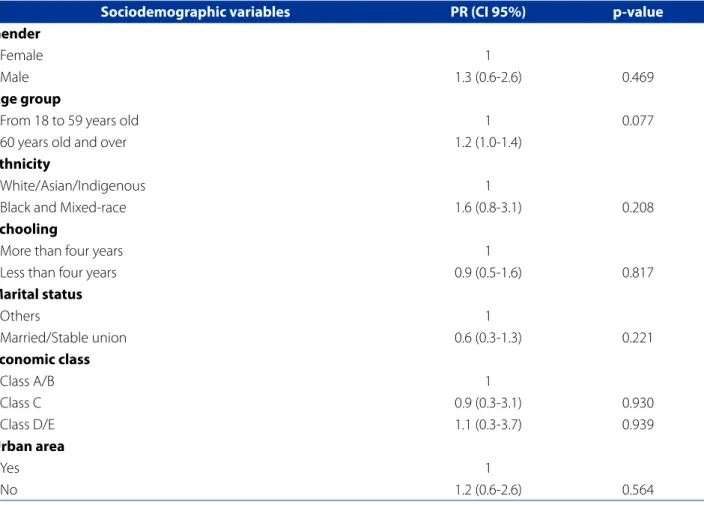
Table 1 presents the bivariate analysis between hospi-talizations and sociodemographic characteristics.
Table 1 - Bivariate analysis of the Primary Care Sensitive Conditions according to sociodemographic characteristics. Juiz de Fora, Minas Gerais, Brazil. 2016. (n=197)
Sociodemographic variables PR (CI 95%) p-value
Gender
Female 1
Male 1.3 (0.6-2.6) 0.469
Age group
From 18 to 59 years old 1 0.077
60 years old and over 1.2 (1.0-1.4)
Ethnicity
White/Asian/Indigenous 1
Black and Mixed-race 1.6 (0.8-3.1) 0.208
Schooling
More than four years 1
Less than four years 0.9 (0.5-1.6) 0.817
Marital status
Others 1
Married/Stable union 0.6 (0.3-1.3) 0.221
Economic class
Class A/B 1
Class C 0.9 (0.3-3.1) 0.930
Class D/E 1.1 (0.3-3.7) 0.939
Urban area
Yes 1
No 1.2 (0.6-2.6) 0.564
Source: Research data, 2016.
In Table 1, it was observed that only the age group was statistically significant in a borderline way, even presenting a PR close to 1.0. In continuity with the presentation of the
bi-variate analysis of the study, Table 2 presents the association between the hospitalizations due to primary care sensitive conditions and the patients’ health monitoring variables.
Table 2 - Bivariate and logistic regression analysis of the Primary Care Sensitive Conditions and health monitoring varia-bles. Juiz de Fora, Minas Gerais, Brazil. 2016. (n=197)
Variables Gross PR (CI 95%) Adjusted PR (CI 95%)
First service sought before the hospitalization
PHC 1 1
Others 1.1 (0.4-2.8) 0.9 (0.3-2.5)
p-value 0.905 0.869
Referred service
PHC 1 1
Others 1.3 (0.1-11.7) 1.3 (0.1-11.5)
p-value 0.800 0.835
Hospitalization option
Already performs follow-up or had a referral for the hospital 1 1
Regulated vacancy 0.6 (0.3-1.3) 0.5 (0.3-1.1)
p-value 0.195 0.092
Type of unit in the neighborhood
FHS 1 1
Others 1.1 (0.6-1.7) 1.0 (0.6-1.7)
p-value 0.793 0.925
Presence of the PHC (attends regularly)
No 1 1
Yes 2.6 (1.3-5.5) 2.7 (1.2-5.9)
p-value 0.009 0.013
Source: Research data, 2016.
Caption: PR - Prevalence Ratio; PR adjusted for age, schooling, marital status and type of unit in the neighborhood; CI - Confidence Interval; PHC - Primary Health Care; FHS - Family Health Strategy; p-values of the Fisher Exact and Likelihood Ratio.
Table 2 presents the association, even after the adjust-ment model, between the presence of PHC (PR: 2.6, 95% CI: 1.3/5.5) and hospitalizations for sensitive conditions.
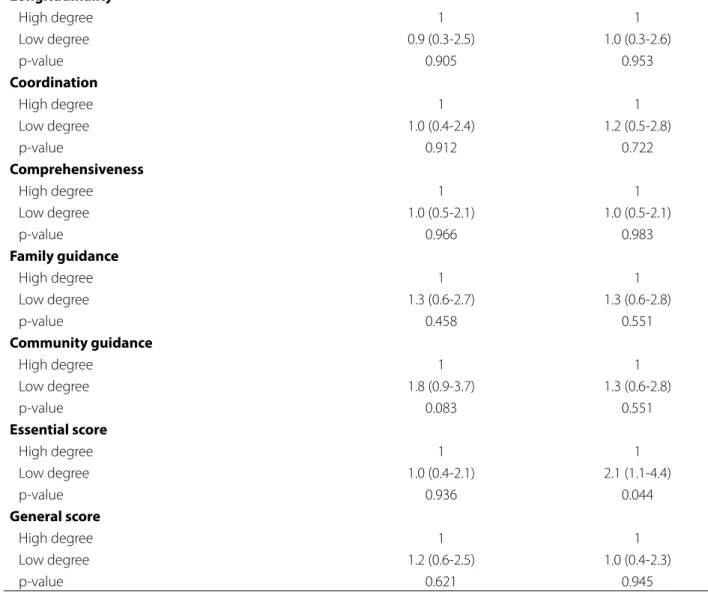
Table 3 presents the bi and multivariate analysis be-tween the low general score (PHC guidance) and essen-tial (essenessen-tial attributes), as well as the low guidance of the other attributes of the PHC and the HPCSC.
It should be highlighted that the adjusted model points out to a statistically significant relationship only in relation to the essential score (PR: 2.1, 1.1/4.4). Finally, Table 4 demonstrates, through the conditional logistic regression technique, the relationship between the pres-ence of the PHC and the HPCSC due to the low orienta-tion of the attributes.
Table 3 - Bivariate and logistic regression analysis of Primary Care Sensitive Conditions based on the perception on the extent and guidance of the PHC. Juiz de Fora, Minas Gerais, Brazil. 2016. (n=197)
Sociodemographic variables Gross PR (CI 95%) Adjusted PR (CI 95%)
First contact access
High degree 1 1
Low degree 1.1 (0.5-2.2) 1.1 (0.5-2.3)
Longitudinality
High degree 1 1
Low degree 0.9 (0.3-2.5) 1.0 (0.3-2.6)
p-value 0.905 0.953
Coordination
High degree 1 1
Low degree 1.0 (0.4-2.4) 1.2 (0.5-2.8)
p-value 0.912 0.722
Comprehensiveness
High degree 1 1
Low degree 1.0 (0.5-2.1) 1.0 (0.5-2.1)
p-value 0.966 0.983
Family guidance
High degree 1 1
Low degree 1.3 (0.6-2.7) 1.3 (0.6-2.8)
p-value 0.458 0.551
Community guidance
High degree 1 1
Low degree 1.8 (0.9-3.7) 1.3 (0.6-2.8)
p-value 0.083 0.551
Essential score
High degree 1 1
Low degree 1.0 (0.4-2.1) 2.1 (1.1-4.4)
p-value 0.936 0.044
General score
High degree 1 1
Low degree 1.2 (0.6-2.5) 1.0 (0.4-2.3)
p-value 0.621 0.945
Source: Research data, 2016.
Caption: PR - Prevalence Ratio; PR adjusted for age, schooling, marital status; p-values of the Fisher Exact and Likelihood Ratio values.
Table 4 - Conditional logistic analysis of the Primary Care due to low attribute extension. Juiz de Fora, Minas Gerais, Brazil. 2016. (n=197)
Low orientation of… PR (CI 95%) p-value
Essential Score (Essential attributes) 3.8 (1.4-10.6) 0.010
General Score (PHC Guidance) 3.6 (1.3-10.5) 0.017
First contact access 5.3 (1.7-16.6) 0.005
Longitudinality 3.4 (1.3-8.5) 0.011
Coordination 3.2 (1.2-8.5) 0.018
Comprehensiveness 4.7 (1.6-13.5) 0.004
Family guidance 3.3 (1.2-8.9) 0.020
Community guidance 2.3 (0.8-9.2) 0.106
Source: Research data, 2016.
It should be highlighted that the reference values are related to the “strong orientation” of the attributes. Atten-tion should be drawn to the interacAtten-tion in all models ex-cept when community guidance is involved.
DISCUSSION
The study pointed out to an association between the presence of the PHC and the higher chances of HPCSC (PR: 2.7, 1.2/5.9) in the hospital, in line with research conducted in Paraná(12) and in Distrito Federal(13). The lower potential of the health units, the low coverage of the Family Health Strategy and, as a consequence, the greater health fragility of the subjects are pointed out as possible elements that permeate this phenomenon of avoidable hospitalizations.
On the other hand, most of the ecological studies car-ried out refer to the presence of the PHC as a factor that is associated with the exponential reduction of hospitaliza-tions due to sensitive condihospitaliza-tions(14-15). And, on the opposite side, research groups provide information on the non-ob-servance of these relations, reflecting that only the HPCSC indicator is not sufficient to assess the PHC(16).
Even with the variety of positions and the multiple methodological paths adopted in the investigations, a strong trend indicates that the reduction of the hospital-izations is associated with the quality of the PHC actions and not merely the presence of the PHC. In an attempt to analyze the impact of the PHC on the tertiary care, some authors have associated the performance assessment with the type of hospitalizations(17). At this point, it is important to point out that the HPCSC, by almost all authors, are un-derstood as complex and avoidable events, depending on how the PHC operates in the territory(14-15,17).
It is believed that, to some extent, the reduction of hos-pitalizations is linked to the efficiency and resolution of this level of care and, above all, its ability to articulate with the other points of the Network. It is understood that this hy-pothesis gains strength in the results of this study, especial-ly regarding the increasing chances of hospitalizations due to the low degree of orientation in the essential attributes of the PHC – the access, the comprehensiveness, the longi-tudinality and the coordination of care –, which reinforces the idea that the dynamics of the teams’ performance may be related to the event.
The need for improvement in the configuration of the PHC services increases as the HPCSCs are frequently associ-ated with chronic diseases, which, as already mentioned by several authors, are associated with difficulties in accessing and adhering to treatment(18). It should be mentioned that the HPCSC bring losses both from the point of view of the
health system, since it increases public spending, as for the individual and for the society, resulting in psychobiological, psychosocial and economic damages(5).
The health system that is guided by a selective PHC and/or as a gateway has no impact on the reduction of hospitalizations, since they do not mobilize the territo-rial and systemic resources that are necessary to face the health problems of the population(19). That is, they end up concentrating work energy and knowledge to solve the diseases of the population. Although the Ministry of Health has adopted the PHC as a systems planning strategy, in some services, the presence of a low power, low guidance PHC is remarkable.
It should be highlighted that the coordination of care, an attribute that determines the feasibility of the continu-ity of care through the integration of health services(20) re-quires the inclusion and active participation of all the care points involved in the care process. The lack of effectively organized referral and counter-referral systems seems to amplify the unnecessary hospitalizations at the specialized level, especially for the strictly biomedical view that selec-tive PHC services tend to develop.
The weaknesses of articulation of the networks added to the dispute of the models between the PHC - that should be comprehensive - and the services of medium and high complexity can keep influences of macrostructural order that have not been captured in this study. The link between specialized services and users is also one of the aspects that can permeate the hospitalization relations, since univer-sity hospitals attract patients in search of solutions to their problems. Added to this are the difficulties also inherent to these institutions, which invariably face political and inclu-sion problems in the Care Networks, creating difficulties for patients to return to their services of origin.
CONCLUSIONS
The presence of PHC care was associated with a higher chance of HPCSC, especially due to the low degree of ori-entation of the essential attributes. It seems that the imple-mentation of actions at this level is not enough. The way that the PHC plays its role seems to influence directly avoid-able hospitalizations. In this way, thinking about the PHC resolution is also about reflecting on the necessary interre-lationship of the attributes that constitute it, and about the position it occupies in relation to the Care Network.
Even given these limitations, it is possible to think that the availability of beds in the university hospital, along with problems in the regulatory processes of vacancies, is influ-encing the hospitalization, which should be avoided at the first level of care. The literature points out that it is still per-sistent - even in multiprofessional teams – the idea that the hospital is the best place for the implementation of thera-peutic and diagnostic procedures, especially when it is a highly specialized place focused on teaching and research, as in the case of the study scenario. This thinking, guided by the desire to treat better, may be increasing the referrals of these patients by the PHC professionals. Another aspect is the link already established between users and the spe-cialized outpatient clinics, which can somehow force these referrals to be performed. In this way, the biomedical and hospitalization culture may be gaining strength due to the fragility in the organization of some PHC teams, increasing the chances of HPCSC.
At the limit of the study, it is possible to observe the presence and the organization of the PHC from the view of the individuals hospitalized in a university hospital. Therefore, it is important to reaffirm that the methodologi-cal option of this study does not allow the investigation of macrostructural aspects of the system, which stimulates the development of new productions that associate more factors to the analytical model of HPCSC and the perfor-mance attributes of the PHC.
REFERENCES
1. Mendes EV. O Cuidado das condições crônicas na atenção primária à saúde: imperativo da consolidação da estratégia da saúde da família. Brasília: Organi-zação Pan-Americana da Saúde; 2012.
2. Giovanella L, Mendonça MHM. Atenção primária à saúde. In: Giovanella L, Es-corel S, Lobato LVC, Noronha JC, Carvalho AI (organizadores). Políticas e sistemas de saúde no Brasil. 2. ed. Rio de Janeiro: Fiocruz; 2012. p. 493-577.
3. Macinko J, Harris MJ. Brazil’s family health strategy: delivering community-based primary care in a universal health system. N Engl J Med. 2015;372(23):2177-81. 4. Ministério da Saúde (BR). Manual do instrumento de avaliação da atenção
primária à saúde. Brasília: Ministério da Saúde; 2010.
5. Alfradique ME, Bonolo PF, Dourado I, Lima-Costa MF, Macinko J, Mendonça CS, et al. Internações por condições sensíveis à atenção primária: a construção da lista brasileira como ferramenta para medir o desempenho do sistema de saúde (Projeto ICSAP – Brasil). Cad Saúde Pública. 2009;25(6):1337-49.
6. Freund T, Campbell SM, Geissler S, Kunz CU, Mahler C, Peters-Klimm, et al. Strat-egies for reducing potentially avoidable hospitalizations for ambulatory care-sensitive conditions. Ann Fam Med. 2013:11(4):363-70.
7. Ministério da Saúde (BR). Padronização da nomenclatura do censo hospitalar. 2. ed. rev. Brasília: Ministério da Saúde; 2002.
8. Associação Brasileira de Empresas de Pesquisa. Critério de classificação econômica Brasil. São Paulo: ABEP; 2014.
9. Ferrer APC. Avaliação da atenção primária à saúde prestada a crianças e adoles-centes na região oeste do município de São Paulo [tese]. São Paulo (SP): Facul-dade de Medicina, UniversiFacul-dade de São Paulo; 2013.
10. Oliveira MMC, Harzheim E, Riboldi J, Duncan BB. PCATool-ADULTO-BRASIL: uma versão reduzida. Rev Bras Med Fam Comunidade. 2013;8(29):256-63. 11. Ministério da Saúde (BR). Portaria n. 221, de 17 de abril de 2008: dispõe sobre
a Lista Brasileira de Internações por Condições Sensíveis à Atenção Primária. Brasília; 2008 [citado 2016 dez 17]. Disponível em: http://bvsms.saude.gov.br/ bvs/saudelegis/sas/2008/prt0221_17_04_2008.html.
12. Petilin EB, Gutubir D, Molena-Fernandes CA, Pelloso SM. Sensitive female-spe-cific hospitalization in primary care. Ciênc Saúde Coletiva. 2015;20(2):441-8. 13. Sousa NP, Rehem TCMSB, Santos WS, Santos CE. Hospitalizations sensitive to
pri-mary health care at a regional hospital in the Federal District. Rev Bras Enferm. 2016; 69(1):118-25.
14. Muraro CF, Gigante LP, Nedel FB, Carvalho TGML, Domenech SC, Gevaerd MS. [The family health strategy in relation to hospitalization for primary care sensitive condi-tions in elderly]. Rev Baiana Saúde Pública. 2013:37(1):20-33. Portuguese. 15. Brasil VP, Costa JSD. Hospitalizations owing to ambulatory care sensitive
condi-tions in Florianopolis, Santa Catarina, Brazil:- an ecological study, 2001-2011. Epidemiol Serv Saúde. 2016;25(1):75-84.
16. Costa JP, Jorge MSB, Vasconcelos MGF, Paula ML, Bezerra IC. Resolubilidade do cuidado na atenção primária: articulação multiprofissional e rede de serviços. Saúde Debate. 2014;38(103):733-43.
17. Oliveira VB, Turci MA, Lima FF, Bonolo PF, Macinko J, Wong LLR, et al. Avaliação do impacto das ações do Programa de Saúde da Família na redução das in-ternações hospitalares por condições sensíveis à Atenção Básica em adultos e idosos. Belo Horizonte: Núcleo de Educação em Saúde Coletiva (NESCON); 2012. 18. Santos VCF, Kalsing A, Ruiz ENF, Roese A, Gerhardt TE. A profile of admittances to hospital due to non-contagious chronic diseases sensitive to primary health care among chronologically advantaged patients in the southern half of Rio Grande do Sul. Rev Gaúcha Enferm. 2013;34(3):124-31.
19. Rehem TCMSB, Ciosak SI, Egry EY. Ambulatory care sensitive conditions: general hospital of micro-region of São Paulo municipality, Brazil. Texto Contexto En-ferm. 2012;21(3):535-42.
20. Oliveira MAC, Pereira IC. [Primary Health Care essential attributes and the Family Health Strategy]. Rev Bras Enferm. 2013;66(esp):158-64. Portuguese.
Corresponding author: Ricardo de Mattos Russo Rafael E-mail: [email protected]